Category Archives: New Testament

Places to look out over Jerusalem

The Times of Israel has a nice illustrated article today entitled “Five Glorious places from which to look out over Jerusalem.” Aviva and Shmuel Bar-Am show photographs from the following five places. Click here for the complete article.

  1. Haas-Sherover Promenade
  2. Confederation House Overlook
  3. Mount Zion Promenade and Overlooks
  4. Mount Scopus Observation Decks
  5. Gandhi Overlook (many will recall this as the lookout from the Mount of Olives)

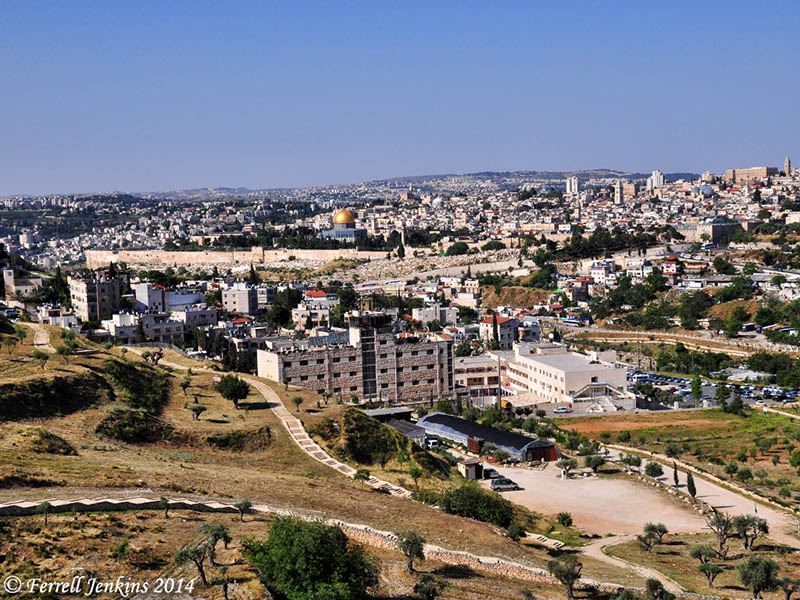
Our photo below slows the modern view of Jerusalem from the Mount Scopus overlook.

View of Jerusalem from the Mount Scopus Overlook. Photo by Ferrell Jenkins.

View of Jerusalem from the Mount Scopus Overlook. Photo by Ferrell Jenkins.


Cold-Case Christianity, free today

Cold-Case Christianity by J. Warner Wallace is available free in Kindle format March 10-11. The foreword is written by Lee Strobel. The publisher’s promo information says,


Written by an L. A. County homicide detective and former atheist, Cold-Case Christianity examines the claims of the New Testament using the skills and strategies of a hard-to-convince criminal.
Christianity could be defined as a “cold case”: it makes a claim about an event from the distant past for which there is little forensic evidence. In Cold-Case Christianity, J. Warner Wallace uses his nationally recognized skills as a homicide detective to look at the evidence and eyewitnesses behind Christian beliefs. Including gripping stories from his career and the visual techniques he developed in the courtroom, Wallace uses illustration to examine the powerful evidence that validates the claims of Christianity.
A unique apologetic that speaks to readers’ intense interest in detective stories, Cold-Case Christianity inspires readers to have confidence in Christ as it prepares them to articulate the case for Christianity.

Click on the book cover for more information, and to order.

HT: Brooks Cochran; Gospel eBooks.

Visualizing Isaiah 23: Tyre is laid waste

Isaiah 23 is an oracle concerning the famous Phoenician port city of Tyre. The Mediterranean world of Egypt, Tarshish, Cyprus, and the neighboring city of Sidon, would be affected by the fall of Tyre.

More details about the prophecy concerning Tyre are given in Ezekiel 26-28. Nebuchadnezzar is named as one of the kings who will bring about the fall of Tyre. He besieged Tyre for 13 years (585-572 B.C.), immediately after the destruction of Jerusalem. The people of Tyre fled from their mainland city to the island about ½ mile offshore. But Tyre was to be destroyed by many nations. Alexander the Great came to Tyre in 332 B.C. Most of the cities in his path surrendered, but the people of Tyre prepared to resist him. The more powerful Greeks used the debris of the desolate mainland city to build a causeway to the island. Alexander’s army captured the island city in seven months.

Ezekiel says the city “will be built no more” (Ezekiel 26:14). The mainland city has never been rebuilt. From my first visit to Tyre in 1967, I continued to visit the city until 1975, and then again in 2002. Political and military conditions have made it impossible to visit more times.

The diagram below hopefully will help to explain what we have briefly explained here. It was prepared by my friend Steven Sebree of Moonlight Graphic Works for one of my books which is currently out of print.

The mainland has not been rebuilt since the destruction by Nebuchadnezzar and the Babylonians (585-572 B.C.).

The mainland city has not been rebuilt since the destruction by Nebuchadnezzar and the Babylonians (585-572 B.C.). The causeway to the island was built by Alexander the Great in 332 B.C.

By 315 B.C. the island city was rebuilt, but was populated by Carians from SW Asia Minor. The present city of Tyre occupied the island and the causeway. The photo below shows a view to the west of a Roman arch built over the causeway built by the Greeks. The island city is visible beyond the arch.

A Roman arch built on the causeway built by Alexander the Great. View West. Photo by Ferrell Jenkins.

A Roman arch on the causeway built by Alexander the Great. The view is to the west and the modern island city. There is no city on the mainland. Photo by Ferrell Jenkins.

Grab ’em today – books in Kindle format

Neil Lightfoot’s How We Got the Bible, revised and expanded 3rd edition, is available today only for $1.99 in Kindle format.

This book is a wonderful beginning resource to help one understand how the Bible came to be in English. Today only. Learn about manuscripts, transmission of the text, the Canon, and other important topics.

Ray Summer’s Worthy Is the Lamb, commentary on the Book of Revelation, is available for a limited time for $2.99 in Kindle format. Summers discusses the historical background of the book of Revelation, methods of interpretation, and a commentary section. (HT: Brooks Cochran)

Reading the Blogs # 3

Michael J. Kruger (canon fodder) has written a review of each episode of the History Channel’s Bible Secrets Revealed. He says the series has reminded him of two critical truths:

1. Our popular culture is prone to distort and misrepresent the teachings of the Bible. I was struck again by how sensationalistic and misleading popular-level programming can actually be when it comes to the Bible.  Although this series had some good moments, as a whole I was disappointed to see the History Channel offer the standard Da Vinci Code-style approach to the Bible.

2. The church must be equipped to respond to these sorts of critiques.  Given the high-profile nature of the History Channel (and similar style programming), the average person we are trying to reach is going to be exposed to this type of material.  And we need to be ready to offer some answers if we expect non-Christians to give the biblical message a hearing.

The six reviews cover a wide variety of topics of interest to many people.

  1. Lost in Transmission
  2. The Promised Land
  3. The Forbidden Scriptures
  4. The Real Jesus
  5. Mysterious Prophecies
  6. Sex and the Scriptures

Begin here on canon fodder for links to each of the reviews.

Kruger is President and Professor of New Testament at Reformed Theological
Seminary, Charlotte. You will find much useful material on this blog.

HT: Brooks Cochran

Çatalhöyük. Polish archaeologists have discovered containers of barley, said to be 8,200 years old from the Neolithic period, at Çatalhöyük in Turkey.

The largest so far known in the Middle East amount of grain of the Neolithic period in a perfect state of preservation has been discovered by Polish archaeologists in Çatalhöyük, a famous archaeological site in Turkey. Çatalhöyük is one of the largest urban centers of first farmers and one of the most famous archaeological sites in the world.

Read the report, with photo, here.

Preserving Tal Al Umayri in Jordan. Many archaeological sites are in danger of destruction. Tal Al Umayri, south of Amman, Jordan, is going to become an archaeological park. The site is on private property. Now the owners have agreed to give the land for the project. Details here.

New Museum in Petra, Jordan. The report here says,

According  to the Petra National Trust, it was visited by around 450,000 people in  2013, though this was a significant drop from 2010’s record number of 975,000 visitors. Officials hope the new museum will encourage tourists to spend more time in the ancient city. It will present the history of Petra and the Nabataeans, as well as house antiquities, but it is unclear what this means for the site’s two existing museums: the Petra Nabataean Museum, opened in 1994, and the Petra Archaeological Museum, opened in 1963.

HT: Steven Braman
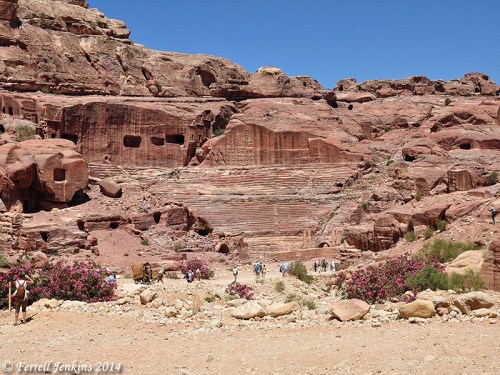
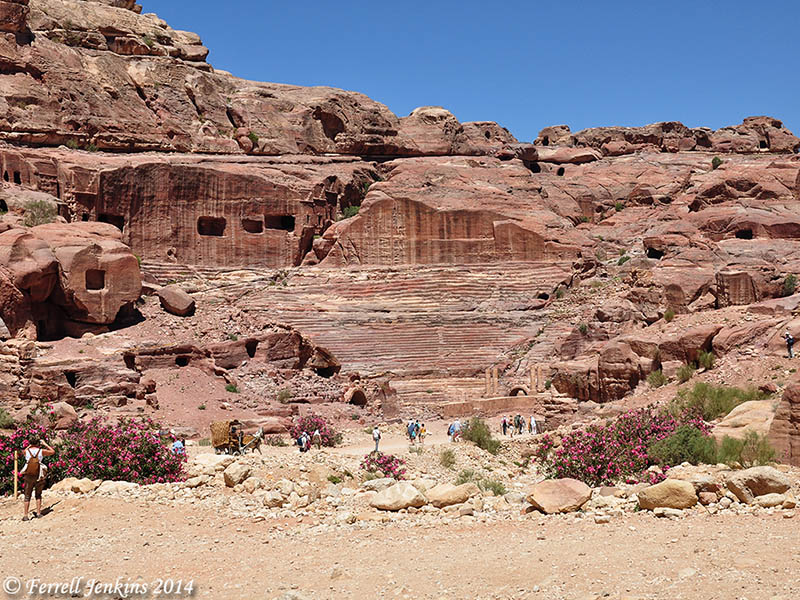
The Roman Theater at Petra. Photo by Ferrell Jenkins.

The Roman Theater at Petra. Photo by Ferrell Jenkins.

Old Testament Bibliography by Ray Clendenen. Here is the info from Charles Savelle at Bible X.

You can access Ray Clendenen’s recently revised 385-page Old Testament bibliography here. Note: you have to have an account with academia.edu to access it but if you don’t already have an account,signing up is free.

A Dictionary of the Bible. This five-volume set is now on Community Pricing at Logos. A bid of $15.00 will secure a set in Logos digital format. Information is here.
A Dictionary of the Bible, James Hastings.

A Dictionary of the Bible, James Hastings. The work will be in digital format for use with Logos Bible Software.

It is true that this is an old work first published between 1893 and 1905, but it contains some excellent material. The five volumes contain 4,718 page. The projected price of $15 is less than you might pay for a paperback with one good idea in it.

I have owned the hardback set for many years and am anxious to include these volumes in my Logos 5. Logos needs some more orders to produce this set of books. Let’s pull together. Once the work is published in digital format the price will be $99.95.

Visualizing Isaiah 12: wells of salvation

Isaiah describes the Messianic Age as one that will be characterized by many spiritual blessings. The pleasant waters of Shiloah had been rejected by God’s people, but in the time to come Judah would joyfully draw water from the wells of salvation.

With joy you will draw water from the wells of salvation. (Isaiah 12:3 ESV)

The term mayan (wells) is often used in the Old Testament of springs, fountains, wells, or pools of water.

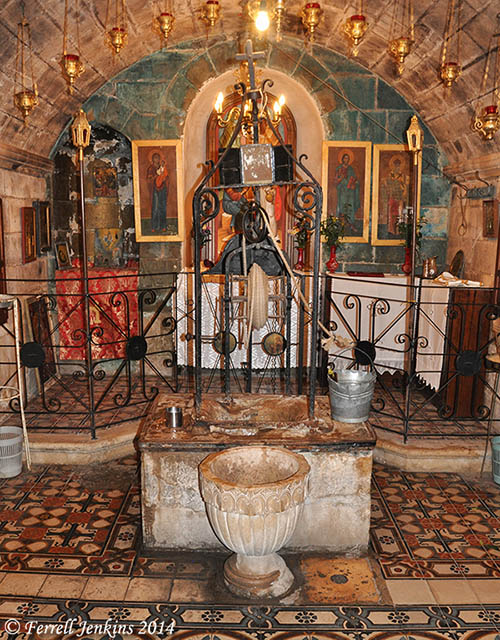
We might think of a well like the one where Jesus stopped at Sychar in Samaria.

Jesus answered her, “If you knew the gift of God, and who it is that is saying to you, ‘Give me a drink,’ you would have asked him, and he would have given you living water.” The woman said to him, “Sir, you have nothing to draw water with, and the well is deep. Where do you get that living water? Are you greater than our father Jacob? He gave us the well and drank from it himself, as did his sons and his livestock.” Jesus said to her, “Everyone who drinks of this water will be thirsty again, but whoever drinks of the water that I will give him will never be thirsty again. The water that I will give him will become in him a spring of water welling up to eternal life.” The woman said to him, “Sir, give me this water, so that I will not be thirsty or have to come here to draw water.” (John 4:10-15 ESV)

Jacob's well in Samaria. Photo by Ferrell Jenkins.

Jacob’s well in Samaria. Photo by Ferrell Jenkins.

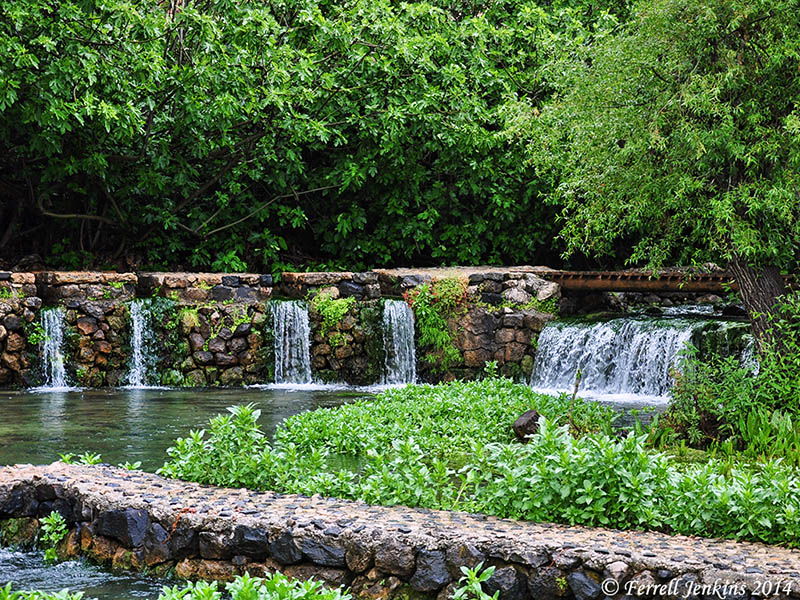
Or, we might think of a spring like the beautiful one at the source of the Banias River at Caesarea Philippi. This spring and river becomes a major source of the Jordan River.

The source of the Banias River, source of the River Jordan. Photo by Ferrell Jenkins.

The source of the Banias River. Photo by Ferrell Jenkins.


Visualizing Isaiah 8: the gentle flowing waters of Shiloah

Isaiah 8 teaches that the rejection of the LORD by His people would bring about severe punishment. To illustrate this, the LORD says His people “refused the waters of Shiloah that flow gently,” and that He would bring up against them “the waters of the River” [Euphrates], that is, the Assyrians. This would not be gentle flowing, but would flood even to the neck. It would be impossible to stay afloat when that happens.

The LORD spoke to me again: “Because this people has refused the waters of Shiloah that flow gently, and rejoice over Rezin and the son of Remaliah, therefore, behold, the Lord is bringing up against them the waters of the River, mighty and many, the king of Assyria and all his glory. And it will rise over all its channels and go over all its banks, and it will sweep on into Judah, it will overflow and pass on, reaching even to the neck, and its outspread wings will fill the breadth of your land, O Immanuel.” (Isaiah 8:5-8 ESV)

From the earliest days of the city, the water source for Jerusalem was the Gihon Spring. The well-known Hezekiah’s tunnel and the new pool that he built on the west side of the city of David would not be constructed for about 25 to 35 years (2 Kings 20:20; 2 Chronicles 32:30).

The Canaanites had cut a small tunnel through the rock to allow water to flow from the Gihon Spring into the valley on the east side of what would later be called the city of David.

The comment in The IVP Bible Background Commentary: Old Testament provides a good explanation of the tunnel and pool under consideration.

Hezekiah’s tunnel had not yet been constructed at this time. Water was conducted from the Gihon Spring (in the Kidron Valley on the east side of the city) toward the south through an aqueduct that brought the water to a reservoir at the southwestern tip of the city. This aqueduct is known as the Siloam Channel and in biblical times went by the name Shiloah.

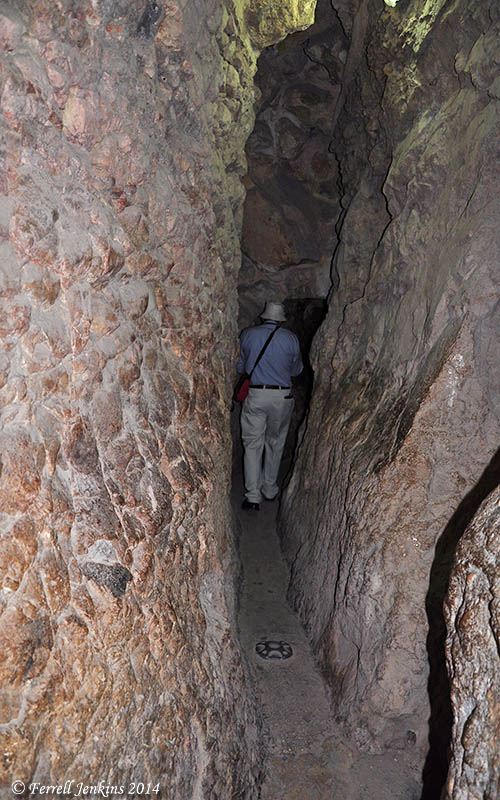
Since 1997 it has been possible for visitors to the source of the Gihon Pool to walk through the dry Canaanite tunnel and exit in the valley which is part of the Silwan village. (That exit is now within an enclosed park area known as the City of David (Jerusalem Walls) National Park.) Our photo below show a portion of that tunnel.

The Canaanite Tunnel through which the gentle "waters of Shiloah" once flowed. Photo by Ferrell Jenkins.

The Canaanite Tunnel through which the gentle “waters of Shiloah” once flowed. Photo by Ferrell Jenkins.

Visualizing Isaiah 4: the Branch of the LORD

The book of the prophet Isaiah promises the return of a remnant from captivity, but is also filled with Messianic expectation. After describing the terrible consequences of the conquest by foreign powers, Isaiah promises,

In that day the branch of the LORD shall be beautiful and glorious, and the fruit of the land shall be the pride and honor of the survivors of Israel. (Isaiah 4:2 ESV)

It should be pointed out that many of the popular English versions capitalize the word Branch (see NAU, NKJ, CSB, NIV, NRSV). The NET Bible understands the expression to refer to “crops given by the LORD.”

Edward J. Young says,

In the present passage the Sprout is that shoot which comes from the tree of David which has been cut down, and which springs to life from its fallen trunk and brings the tree to more glorious and wondrous heights than before. (The Book of Isaiah)

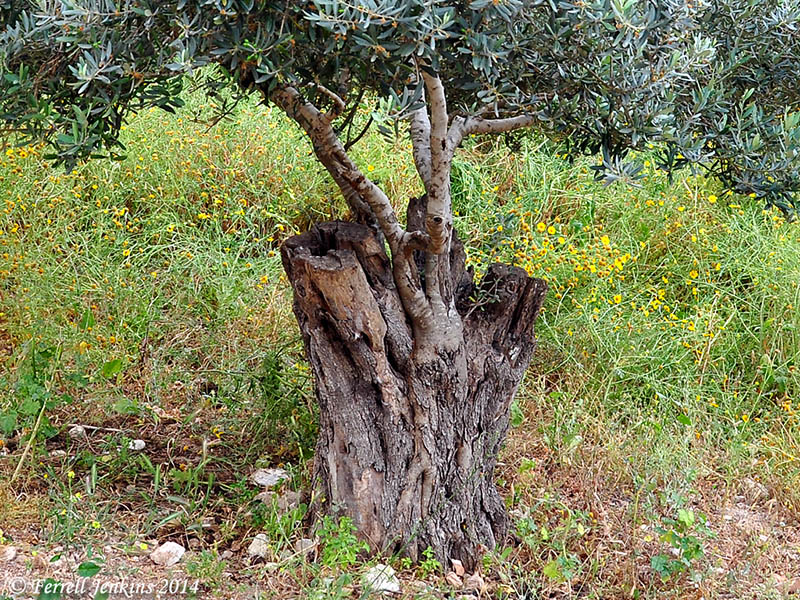
Our photo is intended to illustrate this truth. The tree of David was cut down; only a stump was left. But a shoot, Sprout, or Branch (the Messiah) sprang from it. Certainly a Divine act.

A Sprout comes forth from an olive stump at Nazareth Village. Photo by Ferrell Jenkins.

A Sprout comes forth from an olive stump at Nazareth Village. Photo by Ferrell Jenkins.

I understand this verse to be parallel to the following texts.

In that day the root of Jesse, who shall stand as a signal for the peoples– of him shall the nations inquire, and his resting place shall be glorious. (Isaiah 11:10 ESV; cf. Romans 15:12; Revelation 5:5; 22:16)

“Behold, the days are coming, declares the Lord, when I will raise up for David a righteous Branch, and he shall reign as king and deal wisely, and shall execute justice and righteousness in the land.” (Jeremiah 23:5)

See also Jeremiah 33:15 and Zechariah 3:8.

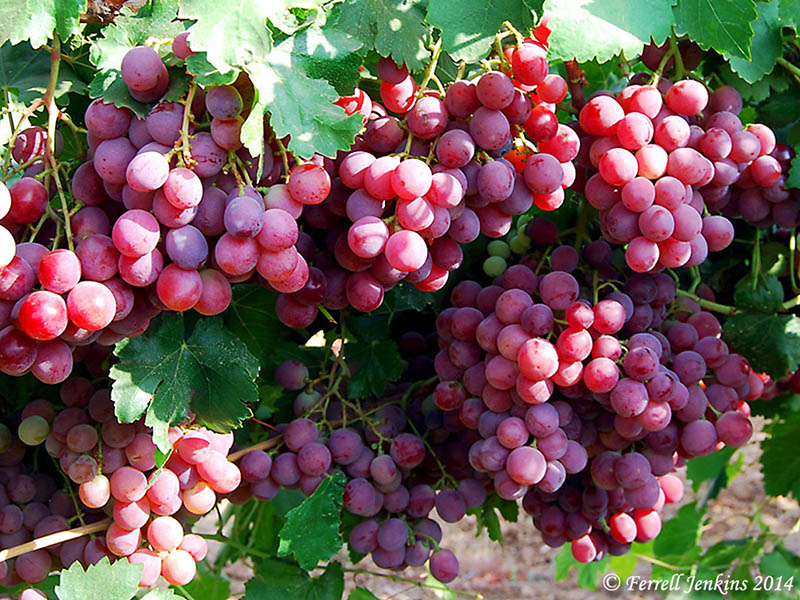
If you would like to think of an abundance of fruit, whether literal or figurative, I think this photo might help.

Abundant fruit in the vineyards of Lachish. Photo by Ferrell Jenkins.

Abundant fruit in the vineyards of Lachish. Photo by Ferrell Jenkins.

Visualizing Isaiah: a booth in a vineyard

Because the events of the Bible took place in the Ancient Near East, we expect it to use illustrations from that world. Many of these cultural practices are different from those we know, but others are similar.

The prophet Isaiah describes what will happen to Jerusalem as a result of their sin.

And the daughter of Zion is left like a booth in a vineyard, like a lodge in a cucumber field, like a besieged city. (Isaiah 1:8 ESV)

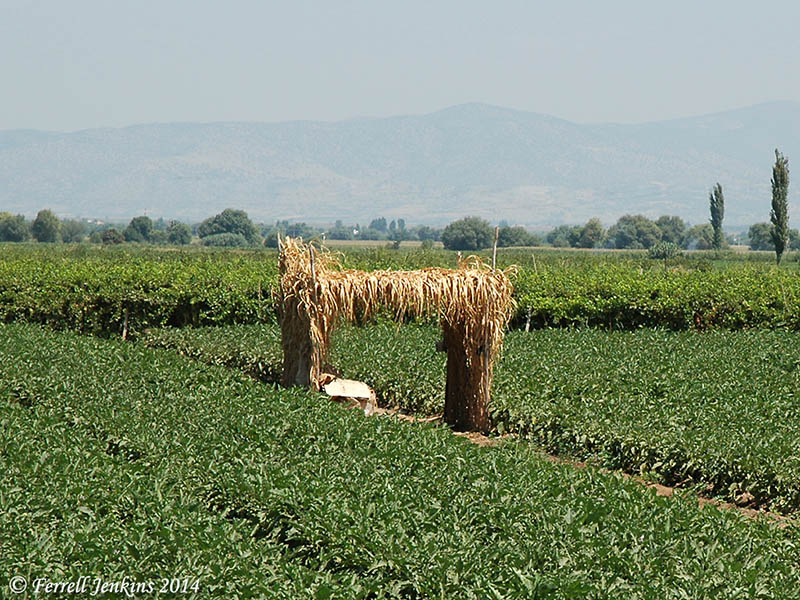
Almost everyone has seen a fruit or vegetable booth along a highway during the picking season. Months later we may see that same booth in disrepair. In Biblical times, watchtowers and temporary booths were set up in fields to provide a moment of shade for the workers.

Our photo today was made a few miles east of Sardis (Revelation 3:1) in modern Turkey. It is near a vineyard and set amidst another crop. One can easily image it still standing in disarray when the winter rains come.

A booth in the field, east of Sardis. Photo by Ferrell Jenkins.

A temporary booth in the field, east of Sardis. Photo by Ferrell Jenkins.

The Judeans of the 8th century B.C. could easily visualize what Isaiah was describing, and those who were living when the city was destroyed by the Babylonians would see it as a fact.

Jeremiah’s lament over the city after 586 B.C. illustrates the point:

How lonely sits the city that was full of people! How like a widow has she become, she who was great among the nations! She who was a princess among the provinces has become a slave. (Lamentations 1:1 ESV)

Church History book available for Kindle

Do you have a good book on Church History? I have observed that many church members are generally ignorant of church history. A few months ago I learned that two books by Zondervan were to be available in Kindle format for $3.99 each. The second volume in the series was available, but there was some delay in getting the first volume online. Volume two is available today for $3.99. For how long I do not know.

51YVjpXge3L

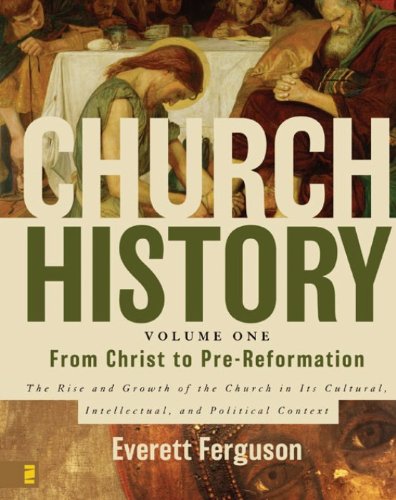
Everett Ferguson’s Church History ,Volume One: From Christ to Pre-Reformation: The Rise and Growth of the Church in Its Cultural, Intellectual, and Political Context: 1, is currently available for the Kindle for $3.99. The regular price for the Kindle edition is $44.99. This book begins with the historical setting for the coming of Christ and the establishment of the church. It ends at about 1300 A.D.
Ferguson is widely respected as a scholar in early church history. With a Ph.D. from Harvard, he is professor emeritus of Bible and distinguished scholar-in-residence at Abilene Christian University. He is author of several books on early Christianity.

An eBook like this could be helpful for travelers visiting the Bible lands. In Turkey, for example, one sees the development of the Church Councils. In Italy there is the rise of the papacy and Catholicism. The Crusades involved numerous countries, including Israel. Sections on monasticism and the rise of Islam can be helpful as well. Ferguson also covers the “Dark Ages” and sets the stage for the earliest Reformation efforts.

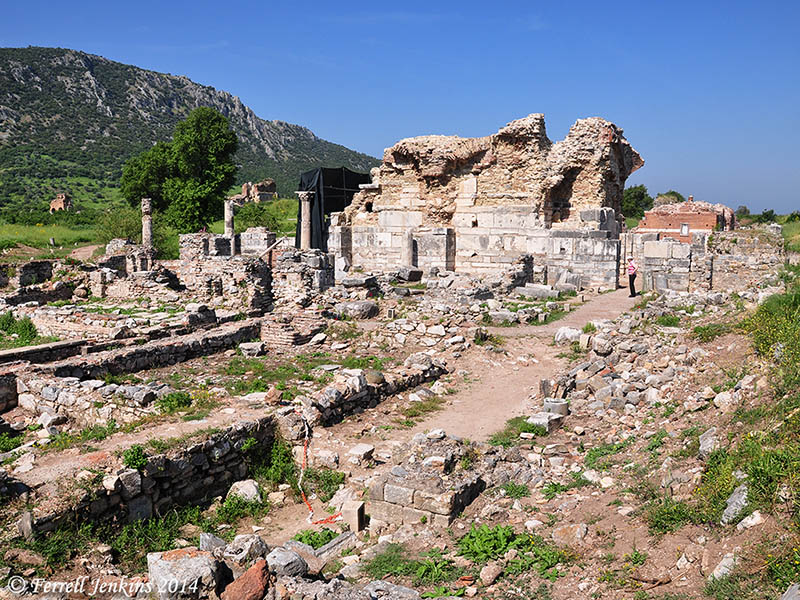
Our photo shows ruins of The Church of Mary, also called the Church Council Church, at Ephesus. In A.D. 431 the Council of Ephesus was conducted here.

Church Council Church at Ephesus. Photo by Ferrell Jenkins.

Church of Mary (Church Council Church) at Ephesus. Photo by Ferrell Jenkins.

HT: Brooks Cochran