Category Archives: New Testament

New books from Carta Jerusalem

Carta Jerusalem, publisher of some wonderful resources about the Bible, Biblical History, and the Bible Land, recently sent me several new books. I will make brief mention of these books in hope that you will check the Carta online catalog to learn more. The books also are available from Amazon and some other publishers.

Understanding Hezekiah of Judah (Rebel King and Reformer) by Mordechai Cogan. This full-color paperback is 9″ x 11¾”, 40 pages. The book is based on the Bible and extra-biblical sources including archaeological discoveries. $14.95.

Carta Jerusalem's new Understanding Hezekiah of Judah.

Carta Jerusalem’s new Understanding Hezekiah of Judah.

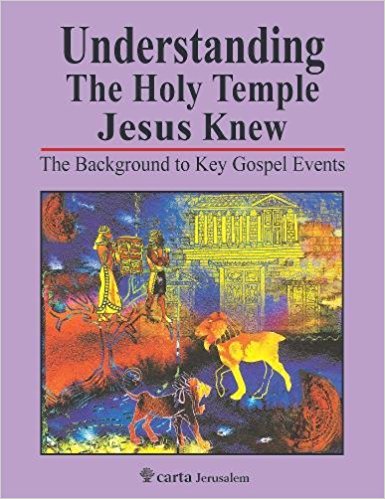
Understanding the Holy Temple Jesus Knew (The Background to Key Gospel Events) by Leen and Kathleen Ritmeyer. This full-color paperback is 9″ x 11¾”, 48 pages. $14.95. We have frequently mentioned the superb work of the Ritmeyer’s on the temple that Jesus knew.

Leen and Kathleen Ritmeyer's Understanding the Holy Temple Jesus Knew.

Leen and Kathleen Ritmeyer’s Understanding the Holy Temple Jesus Knew.

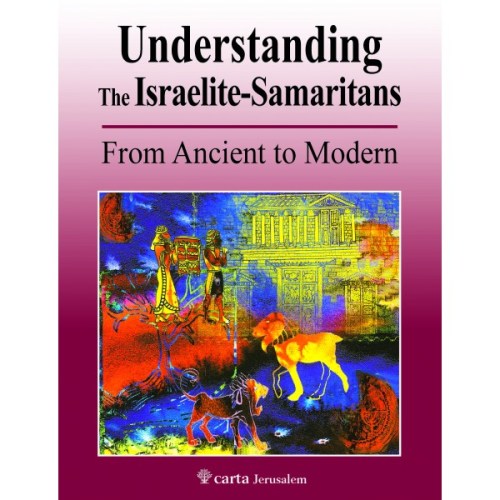
Understanding the Israelite-Samaritans (From Ancient to Modern) by BenyamimTsedaka. This full-color paperback is 9″ x 11¾”, 40 pages. The author is an Elder of the Samaritan community living in Israel. Having visited the Samaritan community on Mount Gerizim, I found this work to be extremely interesting. $14.95.

Understanding the Israelite-Samaritans by Carta Jerusalem.

Understanding the Israelite-Samaritans by Carta Jerusalem.

The Carta books mentioned above are lavishly illustrated with photos, drawings, and maps.

In a future post or two I will mention a few more of the new books supplied by Carta Jerusalem.

Now Available: Photo Companion to the Bible

If you received the Bible Places Newsletter today you already know about the Photo Companion to the Bible: The Gospels. For those who may not be subscribed to the Newsletter I wish to direct you to information about this new, highly significant resource.

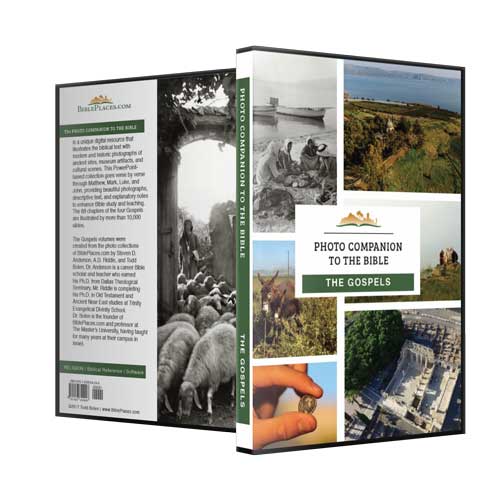
This PowerPoint-based resource provides illustrations for almost every verse of the text. The advertisement describes the Photo Companion to the Bible this way:

More than 10,000 images illustrating Matthew, Mark, Luke, and John with modern and historic photographs of ancient sites, museum artifacts, and cultural scenes.

Cover of the Photo Companion to the Bible: The Gospels.

Cover of the Photo Companion to the Bible: The Gospels.

You may already own the Pictorial Library of Bible Lands and the Historic Views of the Holy Land. This new resource has photos, including many new ones, organized by chapter and verse for each of the four gospels. In fact, each chapter is illustrated by 40 to 230 photographs. The entire set contains more than 10,000 images.

When I looked through Matthew 4 I was impressed with the large number of illustrations. This means the teacher or preacher will be able to use these PowerPoint images to enhance his or her presentation. The audience will see and understand things about the text that they have never quite understood before.

There is a brief YouTube video illustrating what the Photo Companion to the Bible is and how it works. There are two chapters available for free download.

BiblePlaces.com is offering a deep discount price from now through August 21. I urge you to take advantage of it.

This new resource has been created by a team of professors and scholars under the direction of Dr. Todd Bolen who lived and taught in Israel for a decade or more and has traveled extensively in the Bible Lands. He is now a professor at Master’s University in California.

I have heard very few sermons or classes that could not have been greatly improved by the proper use of these illustrations of Bible lands and customs.

During my years of teaching and preaching I often paid for my own resources, but the positive response from the audience made it worthwhile. I hope to learn that many of you will be ordering this set.

All the information you need to place an order may be found here.

To subscribe to the BiblePlaces Newsletter see here.

To see a copy of the August 14, 2017 BiblePlaces Newsletter click here.

The significance of Megiddo and the Jezreel Valley

From Tel Megiddo one has a good view of the Jezreel Valley. Our panorama is composed of three photos made from the same spot at Megiddo. The Jezreel Valley lies before us to the north (and slightly east). Nazareth is located in the mountains of lower Galilee. The valley continues east between the Hill of Moreh and Mount Gilboa to Beth-Shean, the Jordan Valley, and the mountains of Gilead. The valley was known by the Greek name Esdraelon in New Testament times.

It was almost inevitable that those traveling from Babylon, Assyria, the territory of the Hittites, or Syria to Egypt, would travel through the Valley of Jezreel. The site of Jezreel is between the Hill of Moreh and Mt. Gilboa. (More about this at another time.)

Panorama of Jezreel Valley from Megiddo. Photo by Ferrell Jenkins.

Panorama of Jezreel Valley from Megiddo. Photo by Ferrell Jenkins.

For teaching purposes you may wish to use this annotated panoramic photograph. Click on the photos for the larger size suitable for Powerpoint.

Annotated panorama of Jezreel Valley from Megiddo. Photo by Ferrell Jenkins.

Annotated panorama of Jezreel Valley from Megiddo. Photo by Ferrell Jenkins.

The vicinity of the Valley of Megiddo (Jezreel/Esdraelon) was the scene of many significant historical battles. In The Battles of Armageddon Eric H. Cline lists 35 battles fought or still to come in the Jezreel Valley. Many of these battles have to do with the Romans versus the Jewish Resistance, the Muslims and the Crusaders, and a few 19th century battles. I am listing some of the more significant battles affecting Biblical history.

  • Thutmose III of Egypt fought Syrian forces – 1468 B.C.
  • Joshua defeated the King of Megiddo – Joshua 12:21.
  • Deborah and Barak defeated the Kings of Canaan – Judges 5:19.
  • Gideon defeated the Midianites – Judges 7.
  • Saul was defeated by the Philistines – 1 Samuel 28-31.
  • Ahaziah, king of Judah, died there – 2 Kings 9:27.
  • King Josiah was slain in a battle against Pharaoh Neco of Egypt – 2 Kings 23:29-30; 2 Chronicles 35:20-27.

Megiddo, the tell overlooking the valley, became typical of national grief and a symbol of decisive battles, similar to modern Waterloo, the Alamo, or Pearl Harbor. No wonder it provides the symbolism for the decisive battle in Revelation 16.  John’s Greek Har-Magedon becomes the English Armageddon.

The NAU transliterates harmagedon as Har-Magedon. Other English versions use something similar to the ESV.

And they gathered them together to the place which in Hebrew is called Har-Magedon. (Revelation 16:16 NAU)

And they assembled them at the place that in Hebrew is called Armageddon. (Revelation 16:16 ESV)

This valley has been significant even in modern times. Here are just a few of those battles laying the foundation for the modern State of Israel.

  • Napoleon advanced against the Turks in 1799.
  • General Allenby and the British defeated the German-Turkish coalition in 1918.
  • British officer Orde Wingate trained Jewish defense forces in this valley in the 1930s. Later leaders of the War of Independence (1948-1949), including Moshe Dayan and Yigal Alon, were trained by Wingate.

General Allenby read the historical survey about the importance of the valley in G. A. Smith’s Historical Geography prior to his battle against the German-Turkish coalition in 1918. In the later editions of his book Smith included that battle.

In a future post, perhaps later this week, I plan to discuss the water system at Megiddo.

What do you know about Tisha B’Av?

Tuesday, August 1, 2017, many of the Jewish people recently will observe Tisha B’Av. This phrase, strange to Christians, means the Fast of the Ninth. The observance “is a day of mourning to commemorate the many tragedies that have befallen the Jewish people” (Judaism 101). According to this source, five terrible events took place on or near the ninth day of the month Av, the fifth month of the Jewish calendar.

The most significant of these events are the destruction of the Temple by the Babylonians in 586 B.C. (2 Kings 25:8-9; Jeremiah 52:12-13), and the destruction by the Romans in A.D. 70.

In the past half century a considerable amount of evidence has come to light concerning the destruction of Jerusalem by the Babylonians. The temple destroyed in 586 B.C. had been constructed by King Solomon in about 966 B.C. It was rebuilt by those who returned from the Babylonian Exile (530-516 B.C.).

In the previous post we published the Israel Antiquities Authority release about additional evidence of the Babylonian destruction of Jerusalem found in the City of David. Take a look at the additional photos there.

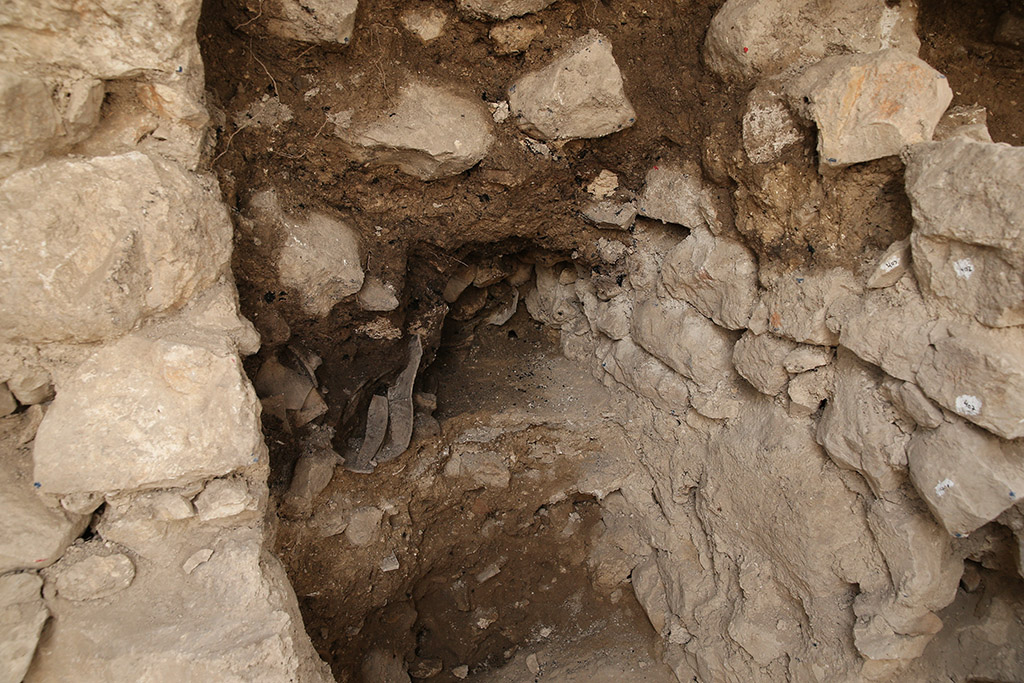
The structure in which shattered jugs were found, attesting to the destruction of Jerusalem by the Babylonians. Picture: Eliyahu Yanai, Courtesy of the City of David Archive.

The structure in which shattered jugs were found, attesting to the destruction of Jerusalem by the Babylonians. The darker area near the center of the photo shows the burn level when the city was destroyed. Picture: Eliyahu Yanai, Courtesy of the City of David Archive.

Herod the Great began about 19/20 B.C. to rebuild the temple. This work was still in progress during the ministry of Jesus.

Then the Jewish leaders said to him, “This temple has been under construction for forty-six years, and are you going to raise it up in three days?” (John 2:20 NET)

Christians take seriously the prophecy of Jesus.

Now as Jesus was going out of the temple courts and walking away, his disciples came to show him the temple buildings. And he said to them, “Do you see all these things? I tell you the truth, not one stone will be left on another. All will be torn down!” (Matthew 24:1-2 NET)

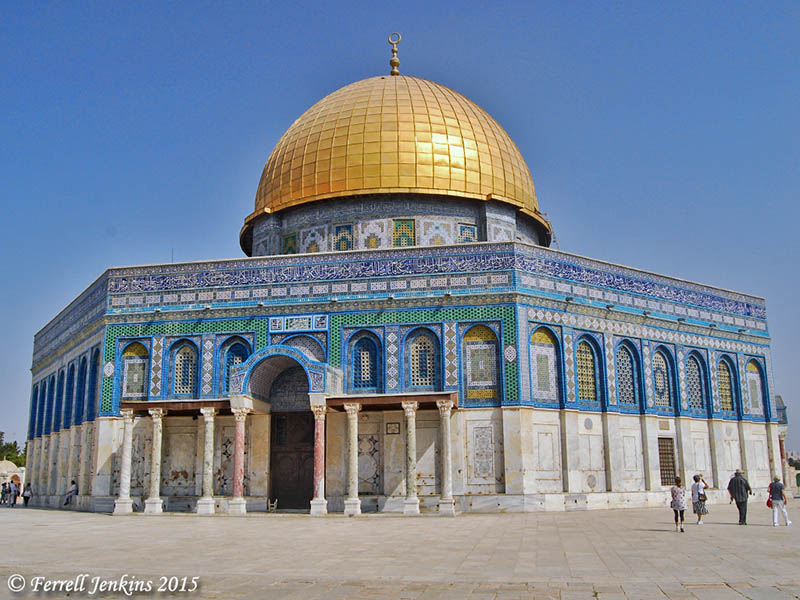
There is no archaeological evidence of the temple building itself. The site where the temple once stood is now covered with paving stones and the Dome of the Rock which was constructed by the followers of Mohamed in the 7th century A.D.

The Dome of the Rock stands where Solomon’s Temple was built. Photo by Ferrell Jenkins.

The Dome of the Rock stands where Solomon’s Temple was built. Photo by Ferrell Jenkins.

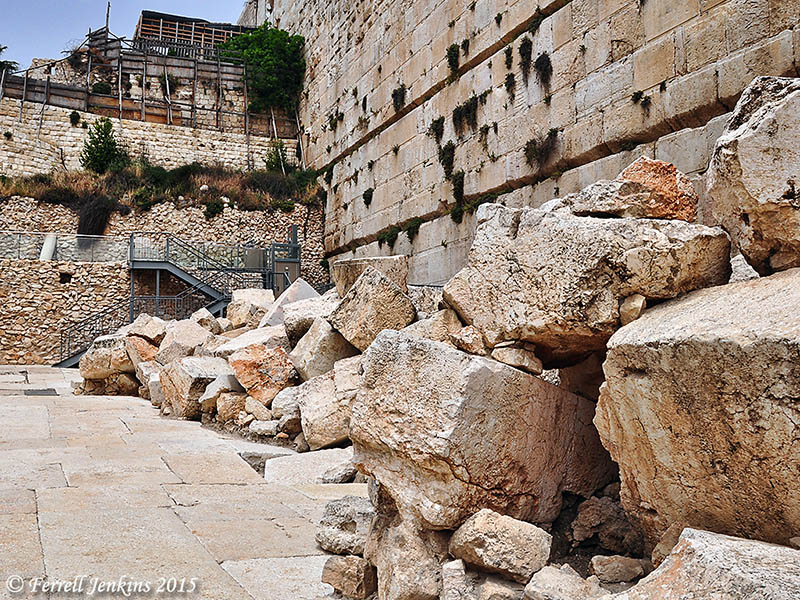
Vivid evidence of the Roman destruction of Jerusalem was discovered at the SW corner of the temple area in the Tyropean Valley. Some of the rubble can still be seen on the street which was probably built by Agrippa II in the 60s of the first century.

Stones that fell, or were pushed, from the Temple Mount to the street below in A.D. 70 at the time of the destruction by the Romans. Photo by Ferrell Jenkins.

Stones that fell, or were pushed, from the Temple Mount to the street below in A.D. 70 at the time of the destruction by the Romans. Photo by Ferrell Jenkins.

Wayne Stiles recently wrote an article here on this topic with several excellent photos from the Burnt House in Jerusalem, a house burned during the Roman destruction in A.D. 70.

The shepherd and the sheepfold

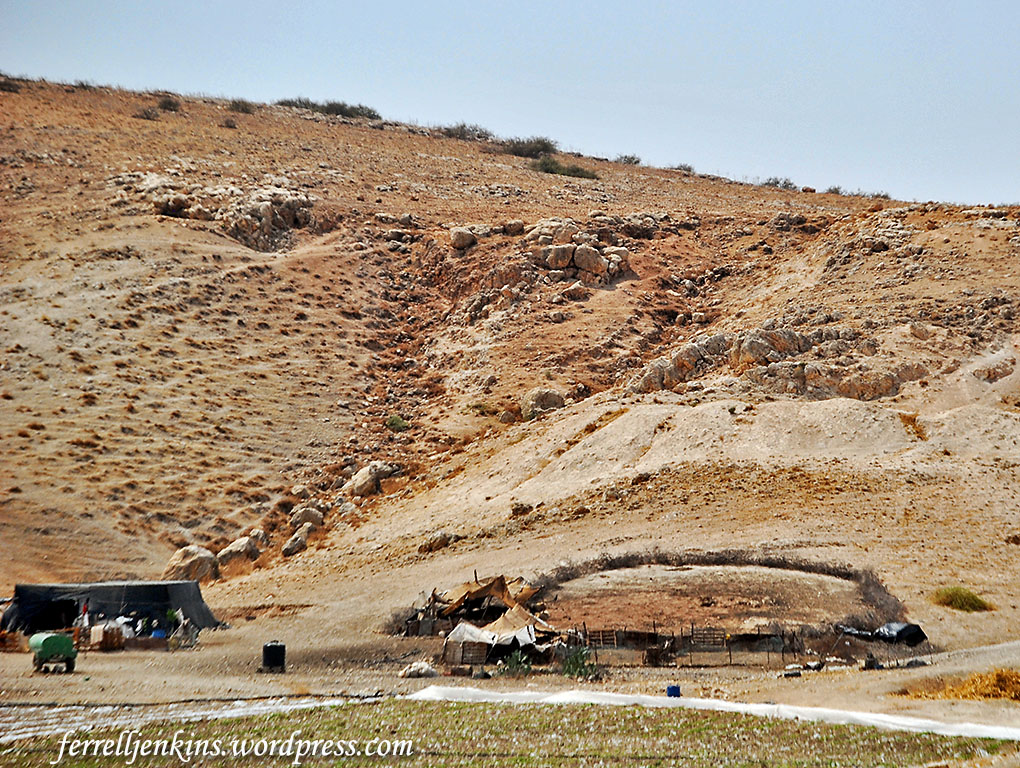
We still see scenes in the Bible world today of shepherds, sheep, and sheepfolds. The scene pictured below was made in the Jordan Valley in late August, a time that is extremely dry in the area.

Bedouin camp and sheepfold in the Jordan Valley in late August. Photo by Ferrell Jenkins.

Bedouin tent and sheepfold in the Jordan Valley. Photo by Ferrell Jenkins.

Scenes such as these remind us of the Biblical patriarchs who moved about from place to place with their flocks. Abraham and Lot provide an example.

And Lot, who went with Abram, also had flocks and herds and tents, (Genesis 13:5 ESV)

There are several biblical references to the sheepfold, or the fold of the sheep (Jeremiah 50:6; Micah 2:12; John 10:1, 16). Jesus used an illustration involving the sheepfold:

Truly, truly, I say to you, he who does not enter the sheepfold by the door but climbs in by another way, that man is a thief and a robber. But he who enters by the door is the shepherd of the sheep. (John 10:1-2 ESV)

Greek Orthodox church sells property. You may be surprised.

The Times of Israel ran an article Tuesday stating that,

The Roman Amphitheater and the hippodrome in the ancient Israeli coastal city of Caesarea have been sold off, in secret, to a mysterious overseas holding company by the Greek Orthodox Patriarchate.

Earlier we had read that the Greek Orthodox sold the land where about 1,500 owners of leased property in Jerusalem live.

The Greek Orthodox Church acquired some 4,500 dunams (1,110 acres) of real estate in the center of Jerusalem during the 19th century, primarily for agriculture. In the 1950s, just after Israel’s independence, it agreed to lease its land to the JNF for 99 years — with an option to extend. Even Israel’s parliament, the Knesset, is built on Greek Orthodox-owned land.

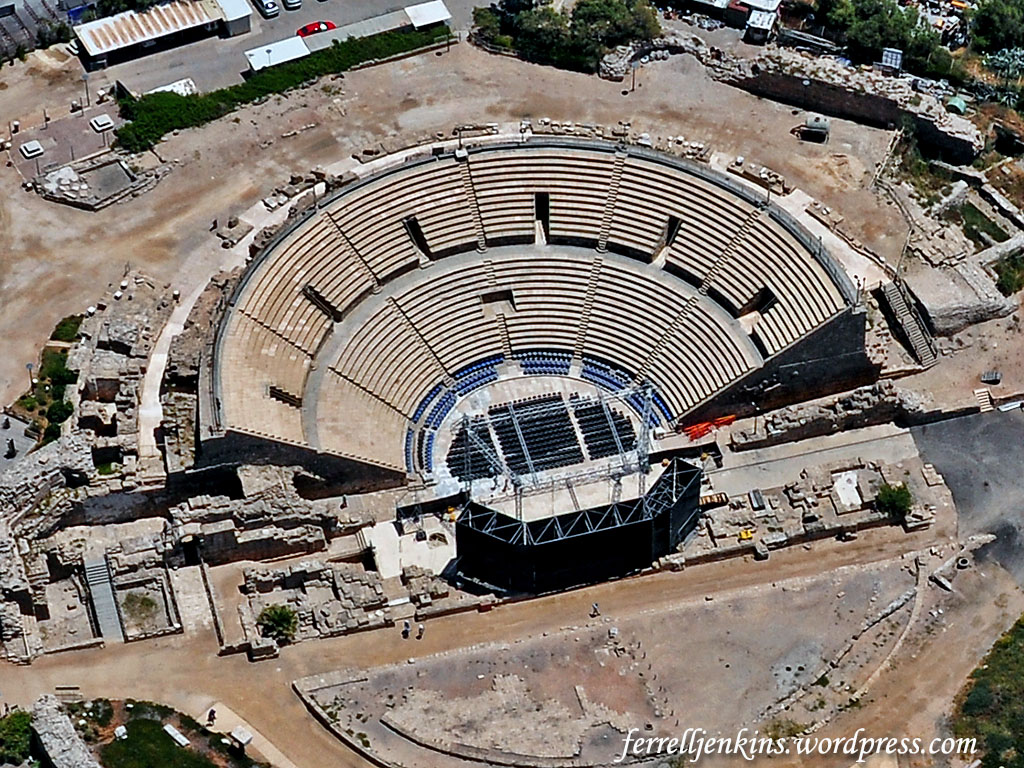
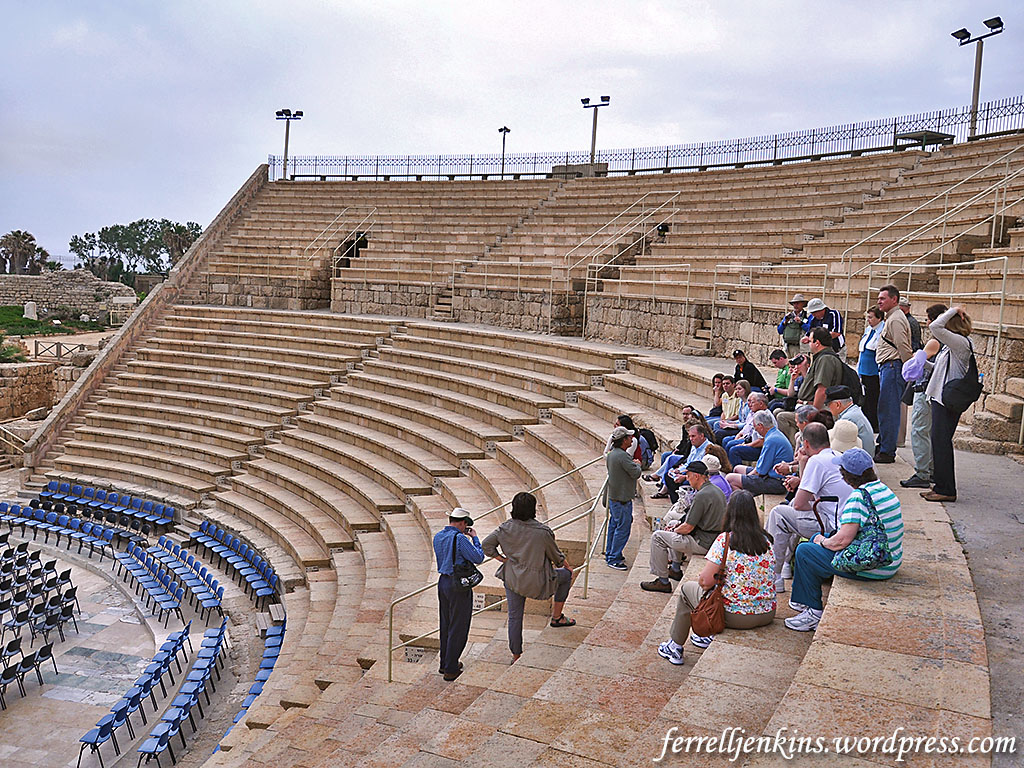
Almost anyone who has made a tour to Israel has visited the theater at Caesarea Maritima. The theater was built originally by Herod the Great but was added to and modified in later centuries. The seating capacity in its final stage was about 4,000.

This aerial photo shows the position of the theater (facing west) toward the Mediterranean Sea.

Herodian theater at Caesarea. Photo by Ferrell Jenkins.

The reconstructed theater at Caesarea. Photo by Ferrell Jenkins.

Don’t let the new seating fool you. Most of the seating has been restored since the excavation in the early 1960s. Beginning here, groups continue to the palace of the procurators, the hippodrome, and the Crusader fortress at Caesarea.

A tour group in the theater listens as the guide begins to tell them about the important of Caesarea. Photo by Ferrell Jenkins.

A tour group in the theater listens as the guide begins to tell them about the importance of Caesarea. Photo by Ferrell Jenkins.

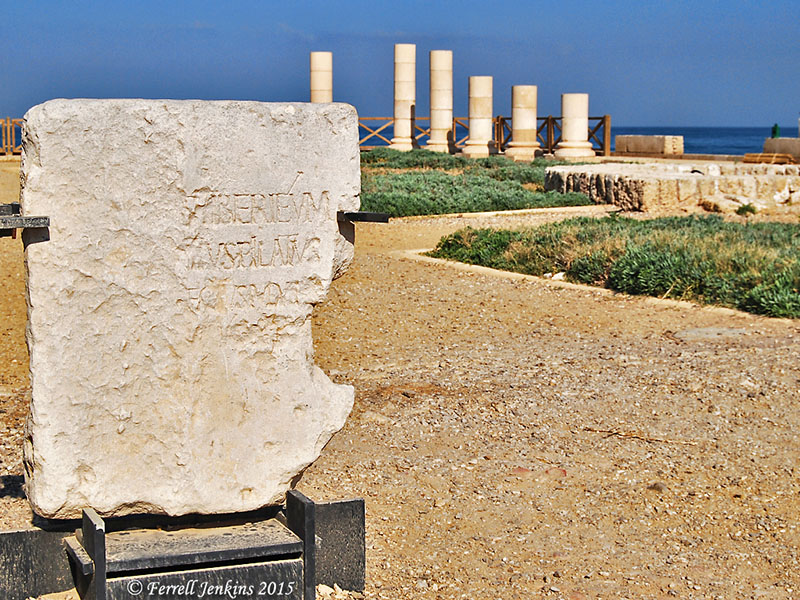
An inscription bearing the name of Pontius Pilate was found at Caesarea Maritima June 15, 1961 during the excavation of the Roman theater. The stone on which the inscription is found had been reused in the theater. The photo below shows a replica of the inscription displayed in the building described by Murphy-O’Connor as the Palace of the Procurators. The original inscription is in the Israel Museum.

Pilate inscription displayed in the Palace area at Caesarea. Photo by Ferrell Jenkins.

Pilate inscription displayed in the Palace area at Caesarea. Photo by Ferrell Jenkins.

For more information about this inscription see here.

The two articles from The Times of Israel will provide much additional information. You may locate them here and here.

Improved look of the Holy Sepulchre edicule

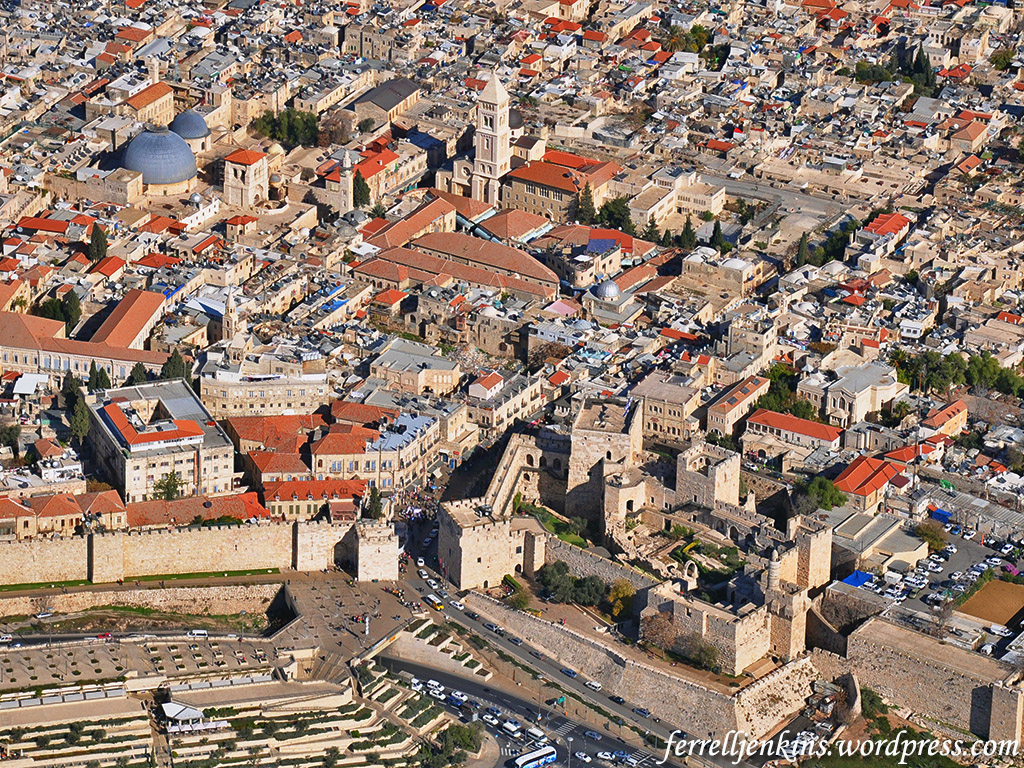
The dome of the Holy Sepulcher (Sepulchre) is easily recognizable to all visitors of the Old City of Jerusalem. It is the larger of two gray domes seen in the photo below. The smaller dome marks the traditional site of Calvary, the place where Jesus was crucified. The Church of the Holy Sepulcher was built by the Roman Emperor Constantine after his mother Helena visited Jerusalem. Murphy-O’Connor dates the dedication of the building to September 17, 335.

The aerial photo below shows Jaffa Gate at the bottom center. The Citadel is in the bottom right. The traditional Holy Sepulchre (larger gray dome) and the site of Calvary (smaller gray dome) are visible in the upper left corner of the photo. Evidence leads us to conclude that the Holy Sepulchre was outside the city wall at the time of Jesus. The Old City is now enclosed by a 16th century A.D. Ottoman (Turkish) wall.

Aerial view of Jaffa Gate. Photo by Ferrell Jenkins.

Aerial view of Jaffa Gate area. Photo by Ferrell Jenkins.

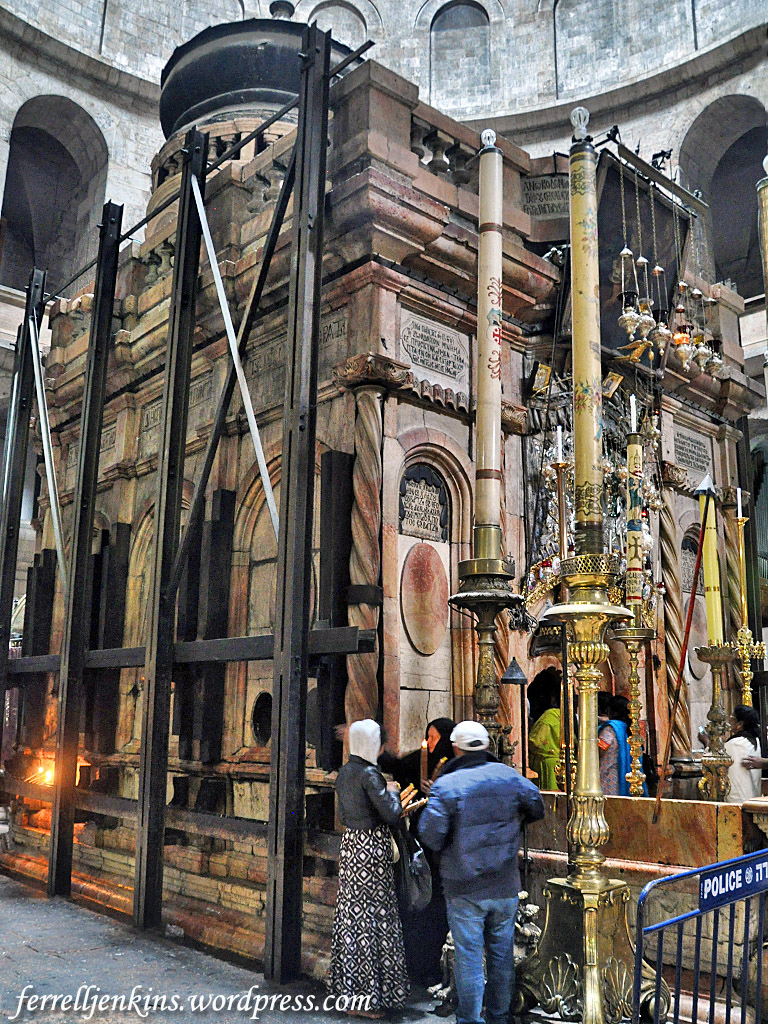
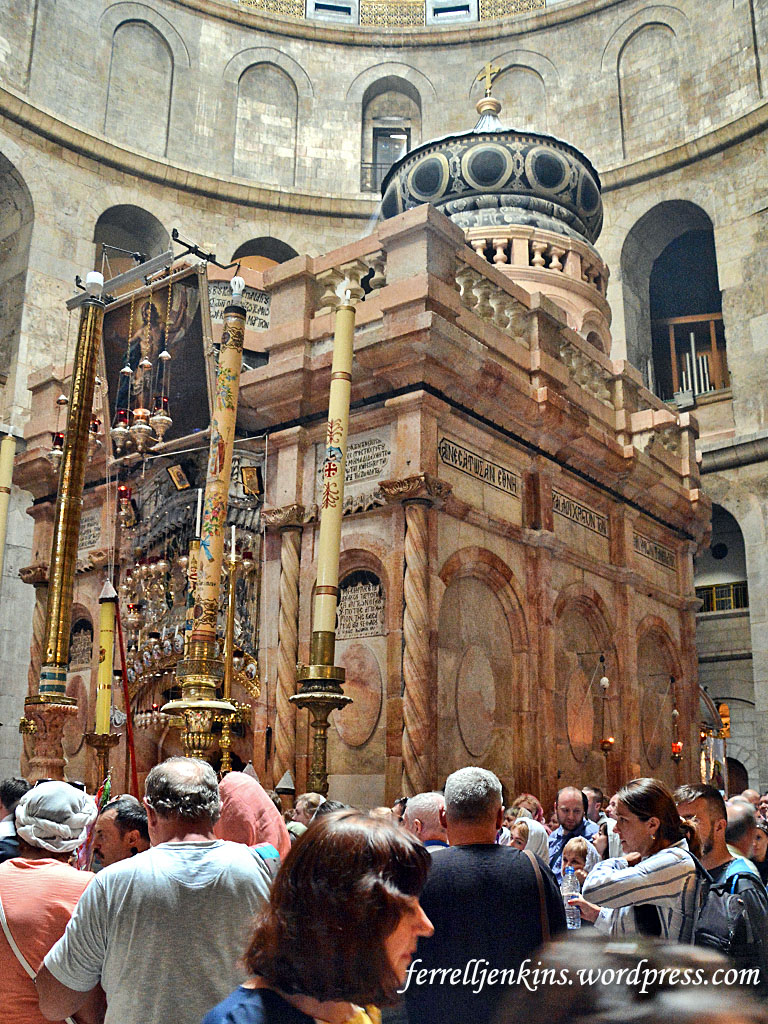
An edicule or small building within the church is said to cover the tomb in which Jesus was laid after the crucifixion, that is, the tomb of Joseph of Arimathea (Matthew 27:57-60). The photo below shows some of the metal scaffolding used to secure the structure in recent years.

For years it was known that the structure needed to be repaired. Finally, someone donated $1.3 million dollars to be sure the work could begin.

A view of the edicule with scaffolding to hold it up prior to the recent reconstruction work. Photo by Ferrell Jenkins.

A view of the edicule with scaffolding to hold it up prior to the recent reconstruction work. Photo by Ferrell Jenkins.

Below is the photo I made in late April, 2017.

A view of the edicule in late April, 2017, after the refurbishing. Photo by Ferrell Jenkins.

A view of the edicule in late April, 2017, after the refurbishing. Multitudes line up daily to have an opportunity to go inside for a moment. Photo by Ferrell Jenkins.

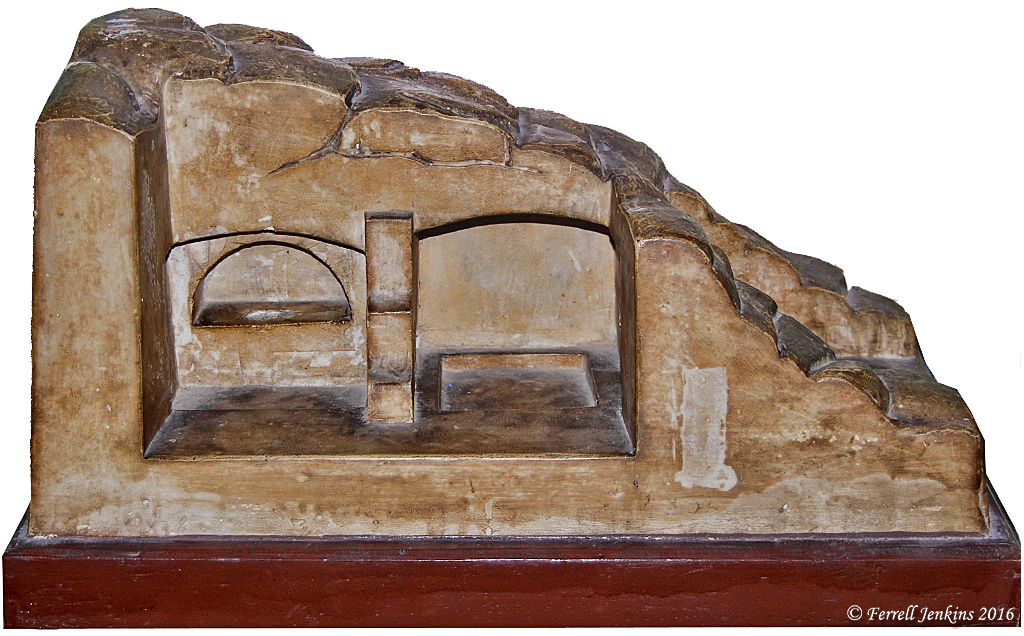
Only a few people saw the area of the original tomb during the renovation. Again the original tomb is covered by stone. The Franciscan Museum in the Old City of Jerusalem has a model to show what the original tomb looked like.

Photo by Ferrell Jenkins.

Cross section model of the tomb at the Holy Sepulchre in the Franciscan Museum, Jerusalem. Photo by Ferrell Jenkins.

Jerome Murphy-O’Connor, the late Catholic scholar, asks the question, “Is this the place where Christ died and was buried?” He answers, “Yes, very probably.”

But Murphy-O’Connor also describes vividly the situation one finds today.

One expects the central shrine of Christendom to stand out in majestic isolation, but anonymous buildings cling to it like barnacles. One looks for numinous light, but it is dark and cramped. One hopes for peace, but the ear is assailed by a cacophony of warring chants. One desires holiness, only to encounter a jealous possessiveness: the six groups of occupants—Latin Catholics, Greek Orthodox, Armenian Orthodox, Syrians, Copts, Ethiopians—watch one another suspiciously for any infringement of rights. The frailty of humanity is nowhere more apparent than here; it epitomizes the human condition. The empty who come to be filled will leave desolate, those who permit the church to question them may begin to understand why hundreds of thousands thought it worthwhile to risk death or slavery in order to pray here. (The Holy Land, 5th Ed., p. 49).

Our faith in the resurrected Christ does not depend on the actual tomb in which He was placed after being taken down from the cross. It depends rather on the testimony of those reliable witnesses who saw Him after the resurrection. Luke reports that eyewitness testimony (Luke 1:1-4). Here is what he says the women who went to the tomb on the first day of the week were told when they found the empty tomb.

He is not here, but has risen. Remember how he told you, while he was still in Galilee,  that the Son of Man must be delivered into the hands of sinful men and be crucified and on the third day rise.” (Luke 24:6-7 ESV)

Did Philip baptize the Ethiopian at ’Ain ed-Dirweh?

Note: This post replaces one from June 22 which was taken down when I learned that I had incorrectly equated two obscure places that should not have been. You will need to read this entire post to get the correct story.

Though the Bible does not specify a place, scholars and religious leaders like to point out possible places where significant events transpired. Such has been true of the place where Philip baptized the government official from Ethiopia (Acts 8:26-39).

One reader asked if this really matters. Those of us who believe in the accuracy of the Bible look for the land and the Book to agree. I think in this instance we have several possible places where the baptism could have taken place.

Ain el-Haniyeh (see here) in the Rephaim Valley is not the only place suggested as the location of the baptism of the Ethiopian eunuch. In fact, Baedeker’s Palestine and Syria, 4th ed., 1906, says,

The tradition that Ain el-Haniyeh was the spring in which Philip baptized the Eunuch of Ethiopia (Acts viii. 36) dates from 1483, before which the scene of that event was placed near Hebron.

The place near Hebron is known as ’Ain ed-Dirweh. My only visit there was in 1979, but it has been associated with Philip’s work since the early Christian centuries. After visiting Bethlehem, The Bordeaux Pilgrim (A.D. 333) went to “Bethasora” (footnote: Bethzur, Beit Sur) where, he says,

There is the fountain in which Philip baptized the eunuch

Baedeker says,

… we reach the spring of ‘Ain ed-Dirweh, above which are a Mohammedan house and a praying-place. In the time of Eusebius [of Caesarea; c. 265 – c. 339] the spring in which Philip baptized the eunuch was pointed out here (comp. p. 93), and it is so marked on the mosaic map of Madeba. The traces of an ancient Christian church were formerly visible.

The Madaba Map (also spelled Madeba or Medeba), dated between about A.D. 560 and 565, provides a glimpse into the understanding of the Christians of that time about the location of certain biblical events.

Here I cite the information from the Franciscan Cyberspot’s The Madaba Mosaic Map web site. The map shows “a conventional church” and a “disk circled in black with a yellow centre. It is the basin related to the inscription.”

The inscription, above the letters OYDA (ouda, in Iouda = Judah), is translated as follows:

The (church) of Saint Philip, where they say that the eunuch Candaces was baptized.

Go to the Discussion page here and read the comments by various scholars who have examined the matter. I note that some (e.g. Avi-Yonah) suggest that the makers of the map are expressing doubt about the place of the event in the 6th century A.D. by writing “where they say.”
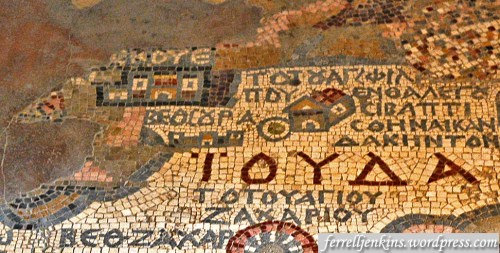
The portion of the Madaba Map (late 6th century A.D.) showing Bethsora [Bethzur) in Judah). Photo by Ferrell Jenkins.

The portion of the Madaba Map (late 6th century A.D.) showing Bethsora and the place where it was said that Philip baptized the eunuch of Candace. Photo by Ferrell Jenkins.

To the left of the church building you will see the Greek for the word BETHSURA. This site is often identified with the Beth-zur of Joshua 15:58. Eusebius referred to it as Bethsoro. The Survey of Western Palestine has Bt. Sur. These two places, Bethsura and ’Ain edh-Dhirweh, are essentially the same.
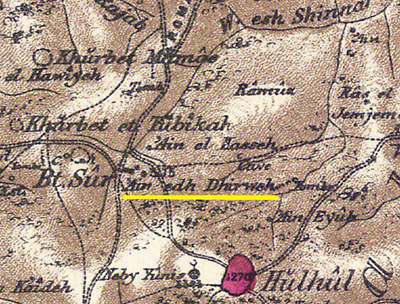
Portion of Survey of Western Palestine map. Courtesty of BiblePlaces.com.

Portion of Survey of Western Palestine map showing Bt. Sur and ‘Ain edh Dhirweh. Courtesty of BiblePlaces.com.

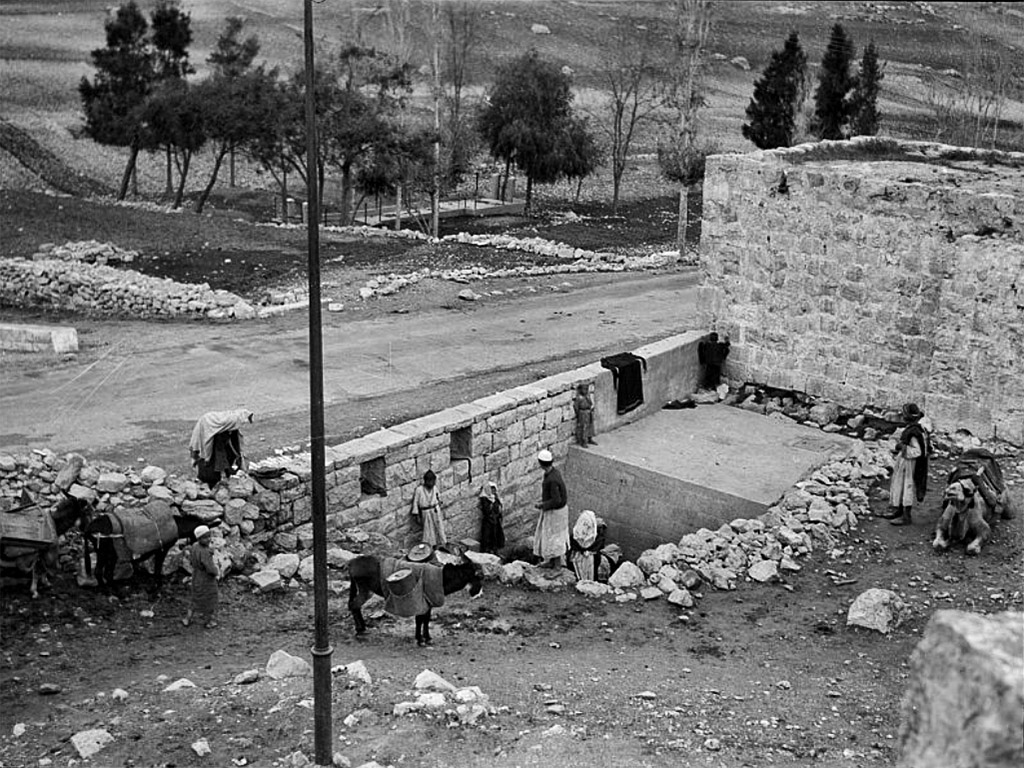
The famous Matson Photograph Collection includes at least two photos of Ein el-Dirweh. The first one was made between 1934 and 1939.
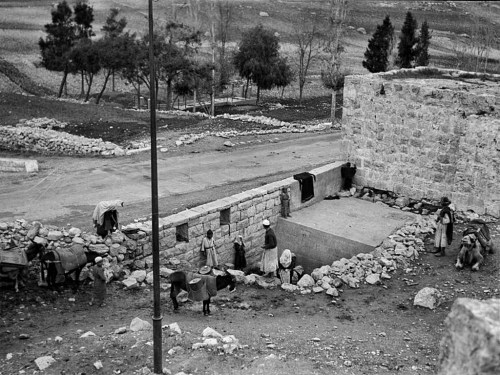
Ein el-Dirweh, Philips Fountain at it looked between 1934 and 1939. Matson Photographic Collection now in the Library of Congress.

Ein el-Dirweh, Philips Fountain as it looked between 1934 and 1939. Matson Photographic Collection now in the Library of Congress.

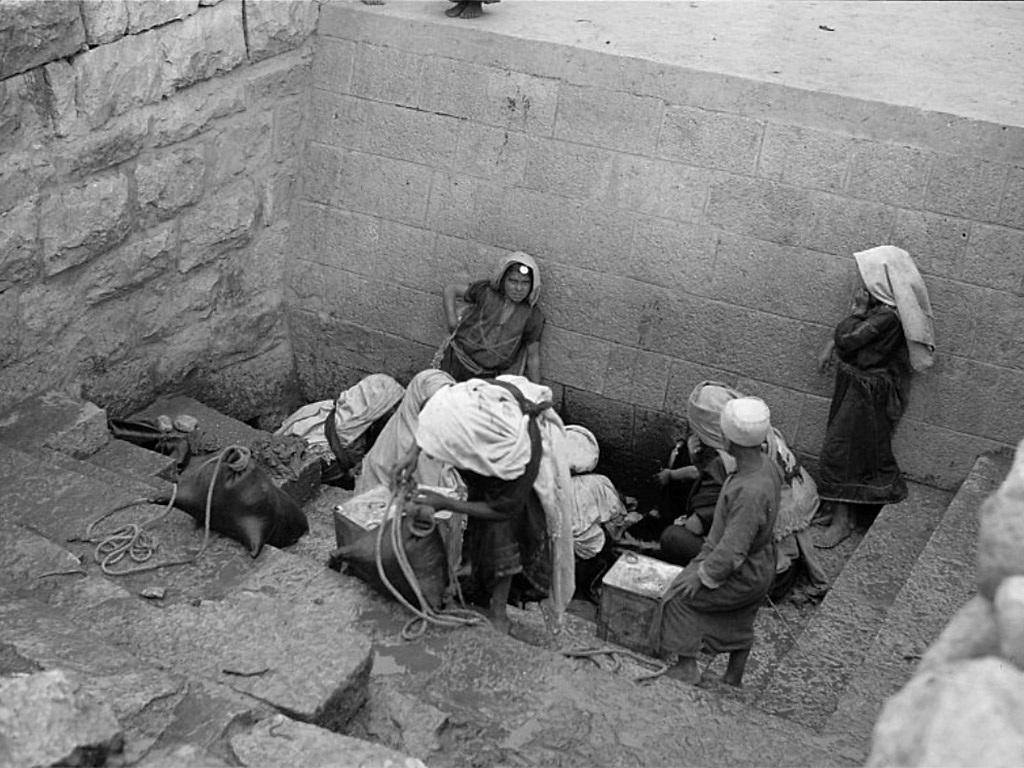
In the next photo we see those who have brought containers to get water for their homes. Notice on the top step where containers are placed there are two water skins being used to collect water. These photos can be enlarged by clicking on them, and even larger images are available on the web site. Go to https://www.loc.gov/ and search for Philips fountain.
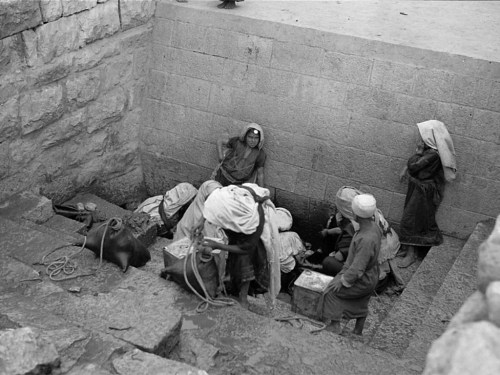
Ein el-Direh, Philips Fountain, at it looked between 1934 and 1939. Matson Photographic Collection, now in the Library of Congress.

Ein el-Dirweh, Philips Fountain, at it looked between 1934 and 1939. Matson Photographic Collection, now in the Library of Congress.

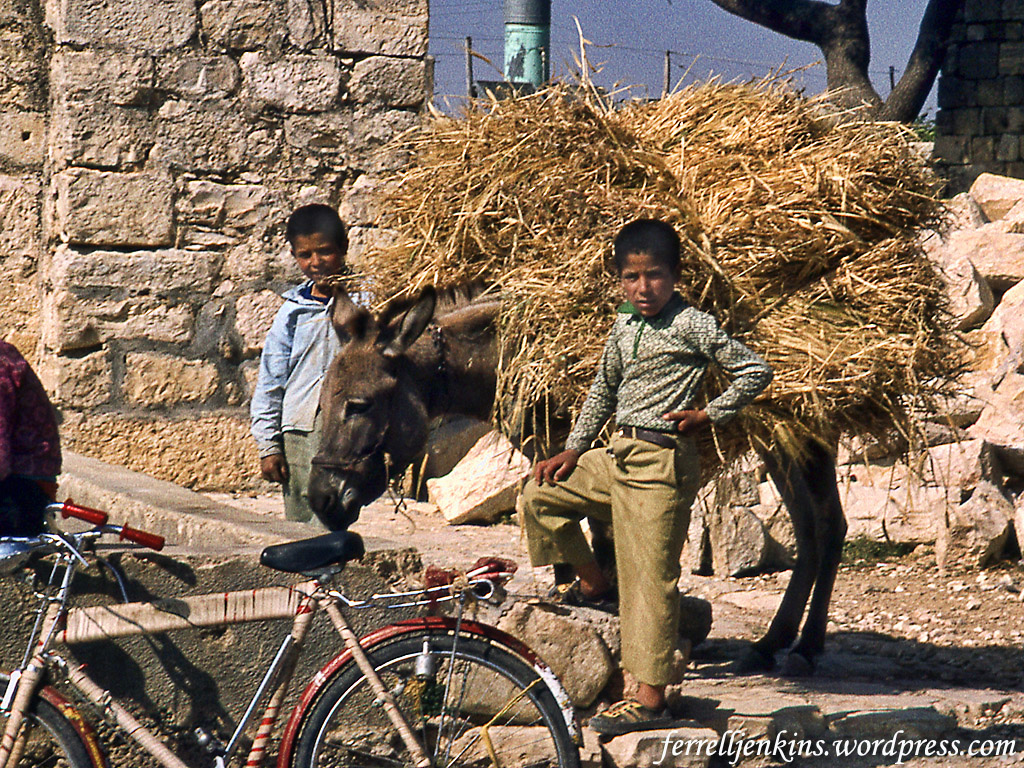
And finally, here is a photo I made in 1979. At the time there was very little water in the pool, but it seemed to be a good place for boys to stop on their way home. The site was so unimpressive to me that I never returned.
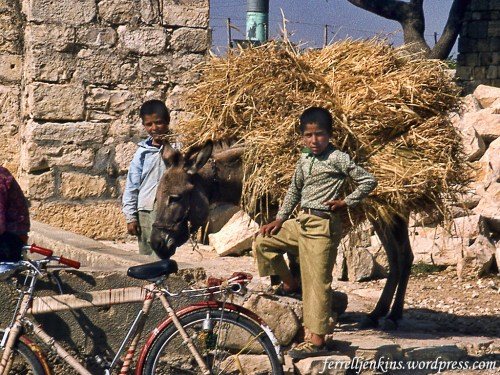
Philips Fountain between Bethlehem and Hebron in 1979. Photo by Ferrell Jenkins.

Philips Fountain between Bethlehem and Hebron in 1979. Photo by Ferrell Jenkins.

We still do not know the answer to the question, “Where did Philip baptize the Ethiopian Eunuch?,” but this is an older tradition than the site at Ain el-Haniyeh.

Rasmussen, in his Zondervan Atlas of the Bible, says,

The site of this event is difficult to locate precisely, but since the Ethiopian was riding in a chariot it seems that he must have been traveling on a developed road. It may be that he was traveling on the road that led from Bethlehem to the Valley of Elah, the route that David had taken when he carried supplies to his brothers (1 Sam 17) and the one that the Romans eventually paved and marked with milestones. This road led south from the Valley of Elah through the low rolling hills of the Shephelah to Betogabris and continued from there west to Gaza. (p. 217)

On a modern Israeli road from Bethlehem to the Valley of Elah this would be highway 375.

Notley cites Eusebius, but thinks it is unlikely that Philip continued as far south as Beth-zur. He says,

Southwest of Bethlehem the ancient route divides. The watershed route continues to Beth-zur and Hebron, while a western spur follows the Hushah ridge and descends into the Elah Valley (Wadi es-Samt). The Romans paved this descent and evidence of these efforts can still be seen in steps cut into the Judean hills. (Rainey and Notley. The Sacred Bridge: Carta’s Atlas of the Biblical World, p. 371).

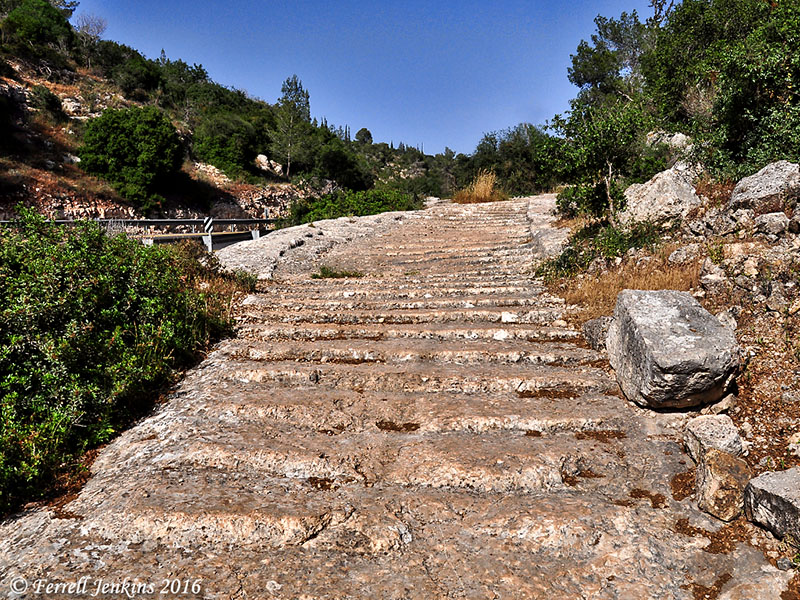
The photo here shows the steps along the road cut into the rock near the Elah Valley. Just a personal thought. I think one might prefer to get out of a chariot and walk down the steps instead of remaining in the chariot.
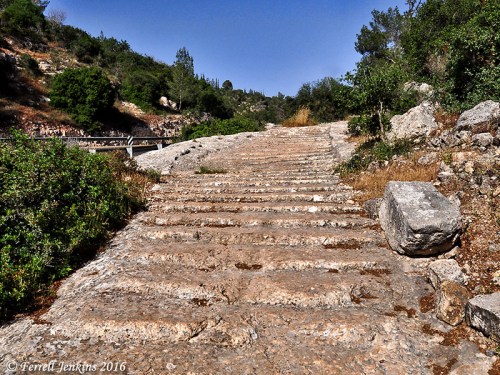
Roman Road 4.2 km W of Mata on Hwy 375. S of Hwy. Photo by Ferrell Jenkins.

Roman Road 4.2 km W of Mata on Hwy 375. S of Hwy. Photo by Ferrell Jenkins.

Notley thinks the baptism may have taken place at one of the numerous springs in the Elah Valley before Philip and the Ethiopian separated to take different routes, Philip to Azotus and the Ethiopian to Gaza and beyond.

And there are other suggestions, but I will leave those for your own study.

A note about spelling. One difficulty in searching for information about some of these ancient places is the various spellings we find. Even in this article I have used ’Ayn ed-Dirweh and Ein el-Dirweh. The Franciscan website uses ’Ayn al-Dhirwah and ’Ain Dhirwe. Hachetts’s The Middle East uses Ain Dirweh. Vilnay uses Ein Dirwa. The Survey of Western Palestine uses ’Ain edh Dhirweh. And on and on it goes.

Sources. There are helpful ways you can access the old, detailed maps included in the Survey of Western Palestine. (1) Buy your own digitized set from Life in the Holy Land. (2) Use the information collected on Ancient Locations here.

Thanks to Tom Powers for many helpful hints in the production of this post. Some of his work may be accessed at his View From Jerusalem website. I keep a link to it at the site listed below under Blogs.

At the BiblicalStudies.info Scholarly page, under Map of Bible Lands, I keep a list of various maps that are helpful.

Where had Mary and Joseph stopped when they missed Jesus?

After his presentation in the Temple, there is no record of Jesus returning to Jerusalem until he is 12 years of age.

Now his parents went to Jerusalem every year at the Feast of the Passover.  And when he was twelve years old, they went up according to custom.  (Luke 2:41-42 ESV)

When the Feast of the Passover ended, his parents began the return to Nazareth. We can easily imagine that a large caravan of people were traveling together on this trip that would take several days. Jesus stayed behind in Jerusalem spending time among the teachers, “listening to them and asking them questions.” Because Mary and Joseph had relatives and acquaintances in the caravan they assumed that Jesus was among them until the end of the first day.

Keener provides some background on caravan travel.

Caravans, which afforded protection from robbers, were common on pilgrimages for the feasts in Jerusalem. Traveling with a caravan, in which neighbors from their town would watch the community children together, Mary and Joseph might assume that the near-adult Jesus was with companions, especially if by now they had younger children to attend to. If we assume a pace of twenty miles per day (though perhaps slower, depending on transportation and the children), Nazareth would be a little over three days’ journey along the shortest route. (Keener, C. S., The IVP Bible background commentary: New Testament)

Where did Mary and Joseph stop at the end of that first day of travel? We can not be certain of the route taken from Jerusalem to Nazareth. Travel from Galilee to Jerusalem was often through Perea on the eastern side of the Jordan Valley. We later find Jesus traveling north along the central mountain range through Samaria (John 4).

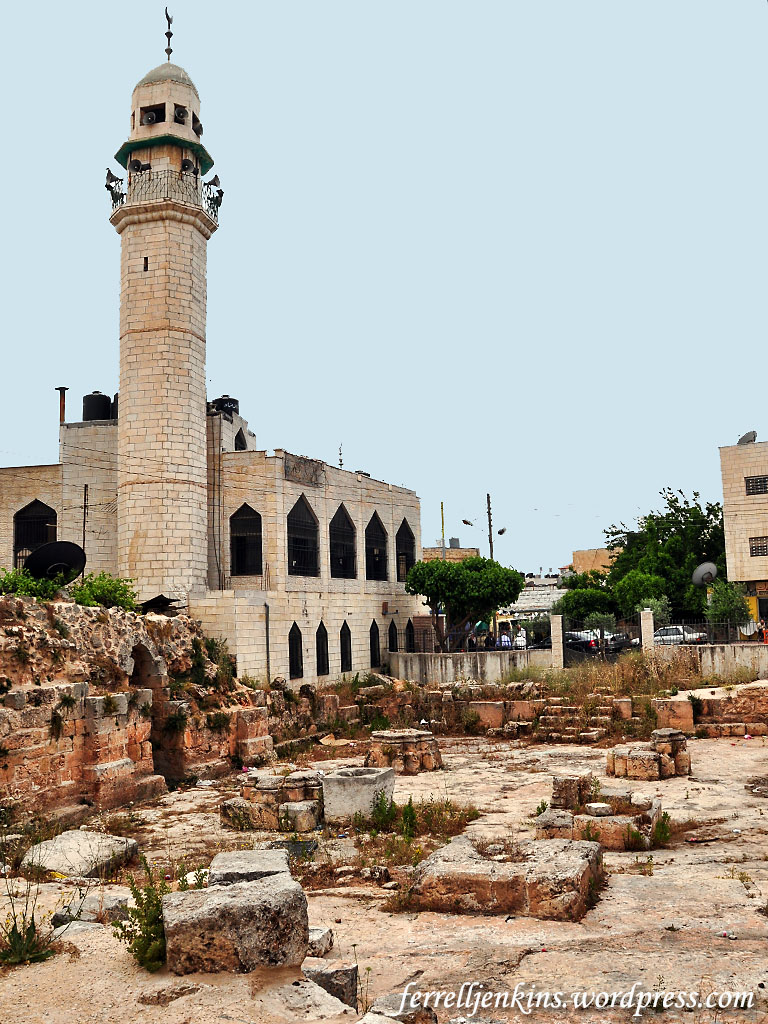
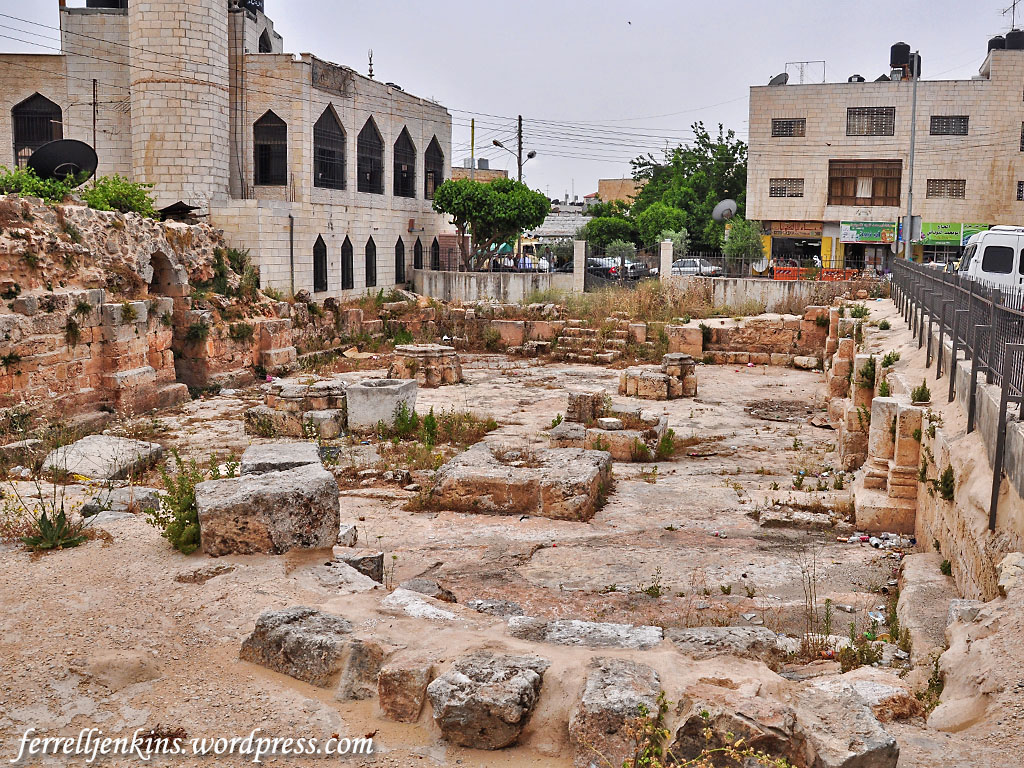
Ruins of medieval church beneath a Mosque in El Bireh. Photo by Ferrell Jenkins.

Ruins of medieval church beneath a Mosque in El Bireh. Photo by Ferrell Jenkins.

Tradition identifies the stop at el-Bireh (El Bira). Tradition has it that the first day’s stop after leaving Jerusalem was at a place now known as El Bira (or Bireh) east of Ramallah. El Bira is an Arab town. There is a spring and ruins of a medieval church. The Hachette World Guides: The Middle East (1966) says that the tradition associating this event with El Bireh dates to the 16th century. Eugene Hoade says it is probable that this church was built in 1146 “in memory of” the event mentioned in Luke 2. (Guide to the Holy Land). The apse of the church is visible in the photo below. The Hachette World Guide says the building was destroyed in 1915 and the stones were used for building bridges along the mountain route.

Ruins of medieval church beneath a Mosque in El Bireh. Photo by Ferrell Jenkins.

Ruins of medieval church beneath a Mosque in El Bireh. Photo by Ferrell Jenkins.

This site is only about 8 miles north of Jerusalem, but with a large caravan including women and children it is possible that a short distance was covered the first day. It was necessary to stop where water and various food supplies were available (John 4:6-8; Luke 9:51-53).

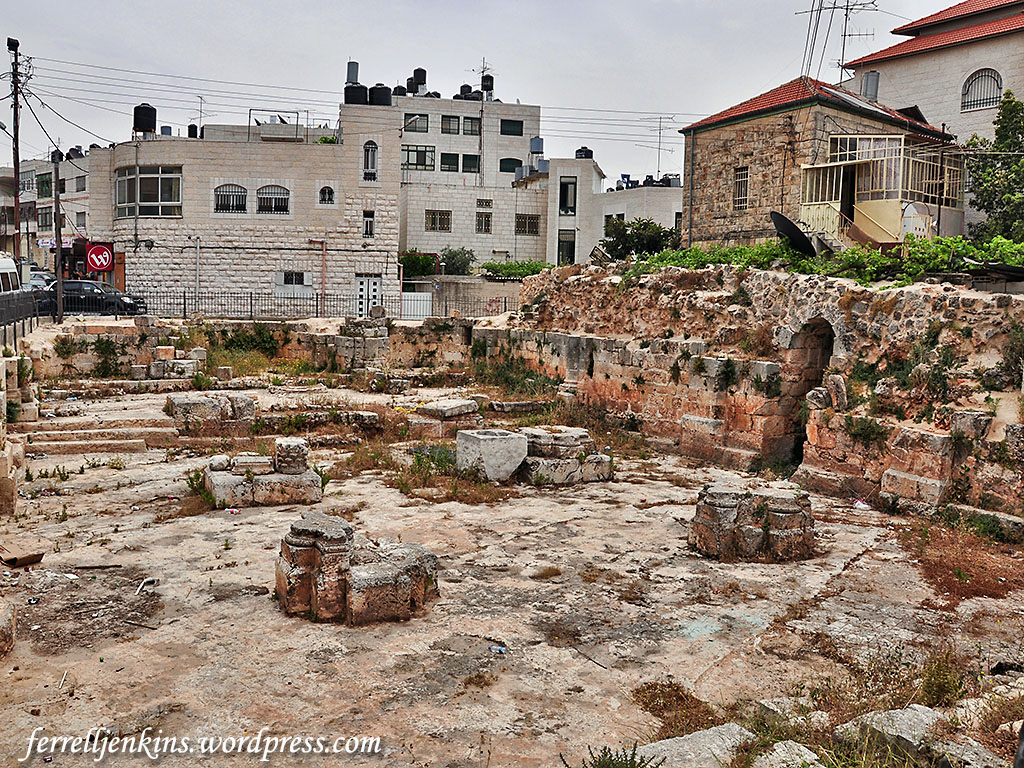
View of the ruins of the church at El Bireh. The apse is visible in the foreground. Photo by Ferrell Jenkins.

View of the ruins of the church at El Bireh. The apse is visible in the foreground. Photo by Ferrell Jenkins.

Is this Beeroth? Since the time of explorer Edward Robinson (1867), some scholars have identified El Bireh with the Old Testament Gibeonite city of Beeroth. The word Beeroth indicates the presence of a well. Biblical references include Joshua 9:17, 18:25, Ezra 2:25, and Nehemiah 7:29. Beeroth was considered part of the tribe of Benjamin (2 Samuel 4:2).

The late David Dorsey, after surveying the scholarship on the matter, says,

At present, therefore, the site of biblical Beeroth remains a matter of dispute. The most likely candidate would still seem to be the one originally proposed by Robinson, i.e., el-Bireh. (The Anchor Yale Bible Dictionary)

Where did Philip baptize the Ethiopian eunuch?

Note of Correction

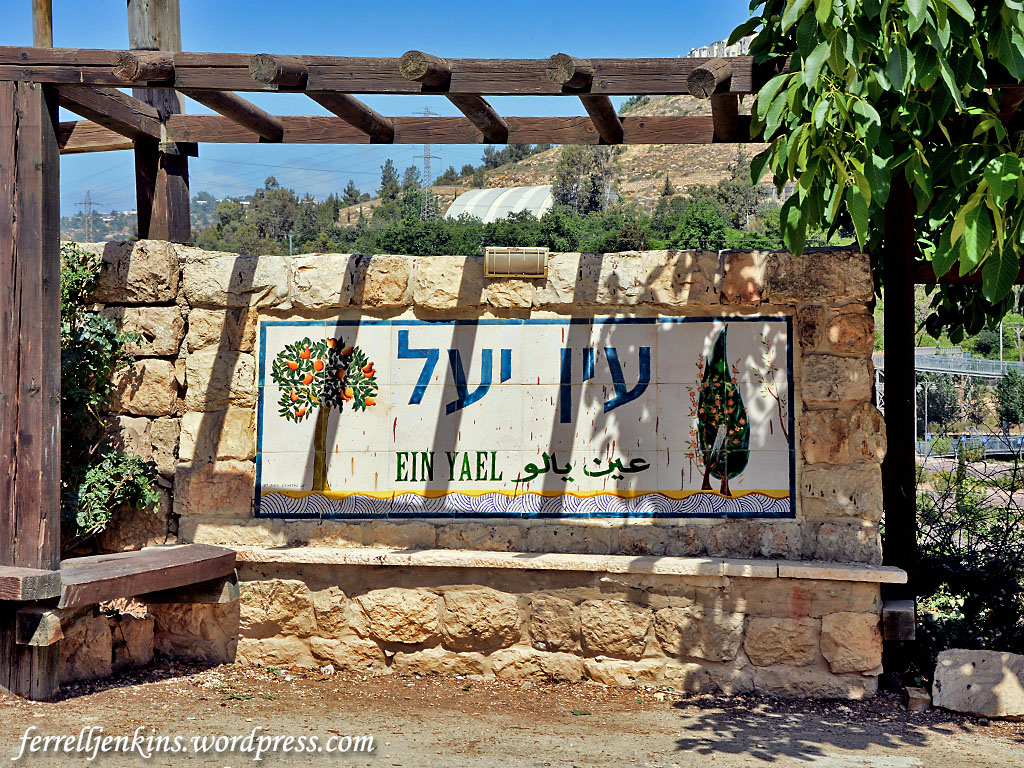
In the comments below by Outremer (Tom Powers) you will see that I made a mistake in equating Ein Yael and Ein El-Haniyeh. I could see a difference in my photos and the site pictured in the video or the drawings in Thomson, The Land and the Book, but I thought the passing of time might have made the difference. I also misunderstood the statement by Vamosh that the spring was “just past the entrance to the Ein Yael Living Museum.” I understood it to mean that the spring was in that park.

Well, this is embarrassing. Under some circumstances I could delete the post, but about 2500 individuals receive an Email every time I post.

Tom’s comments also involve political matters that I understand, but for the purpose of this blog prefer not to go into. I write primarily for a group of Christians who study the Bible, but who have little knowledge of the Bible lands and customs. This blog tries to bridge that gap. Of course, I am always delighted when others find the material useful.

One of the “Must see” places for my next visit to Israel is to see Ein El-Haniyeh!

— The Original Article —

One of the “Must see” places I had on my list during the last visit to Israel was a site called Philip’s Fountain or Philip’s Spring. Miriam Feinberg Vamosh describes the location.

The spring is located about one mile southwest of the entrance to the Rephaim Valley portion of Jerusalem Park, just past the entrance to the Ein Yael Living Museum. The Rephaim Valley is mentioned frequently in the Bible, as one of the borders of the tribe of Judah (Josh. 15:5) and the scene of a battle between David and the Philistines (2 Sam. 5:17–22). (www.haaretz.com, tourist tip #302; the page is no longer available online)

The entrance to Ein Yael, there the spring and pool is located. Photo by Ferrell Jenkins.

The entrance to Ein Yael, where the spring and pool are located. Photo by Ferrell Jenkins.

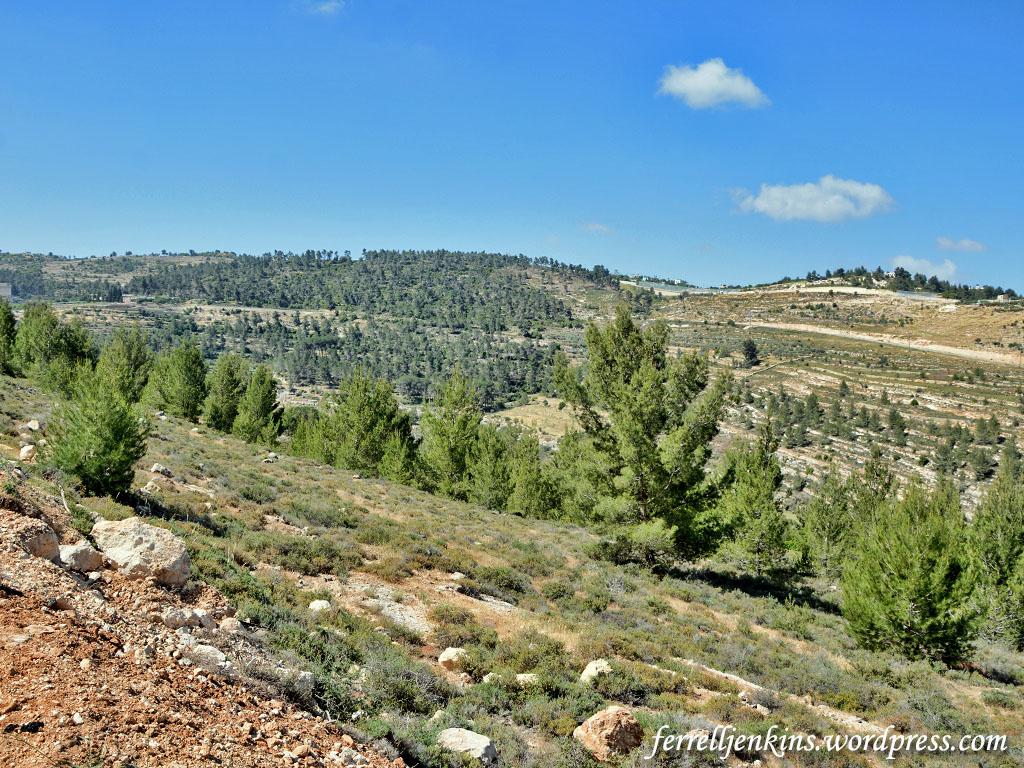
Just before we entered the park, as well as from the park, we had some nice views of the Rephaim Valley. The northeastern end of the valley (on our left) ends at approximately the northern end of the Valley of Hinnom.

A view of the Rephaim Valley from near the entry of Ein Yael park. Photo by Ferrell Jenkins.

A view of the Rephaim Valley from near the entry of Ein Yael park. Photo by Ferrell Jenkins.

Vamosh continues,

The New Testament site of Philip’s Spring, known in Arabic as Ein El-Haniyeh is here as well, in this southern portion of the park. It is located at the foot of the Palestinian village of Walajeh, whose people have been tilling the ancient terraces in this area for generations.

She says Christian pilgrims have been coming to Ein el-Haniyeh to recall the story recorded in Luke’s history of the early church. In Acts 8:26-39 we learn that Philip, one of the seven [deacons] who had been chosen to care for the needy disciples in Jerusalem later went to Samaria to preach (Acts 8:5). After what many preachers call a successful “work” in Samaria he was returning to Jerusalem.

Now an angel of the Lord said to Philip, “Rise and go toward the south to the road that goes down from Jerusalem to Gaza.” This is a desert place. (Act 8:26 ESV)

Whether the road itself ran through a deserted area, or the destination was at that time deserted is a matter of discussion among scholars.

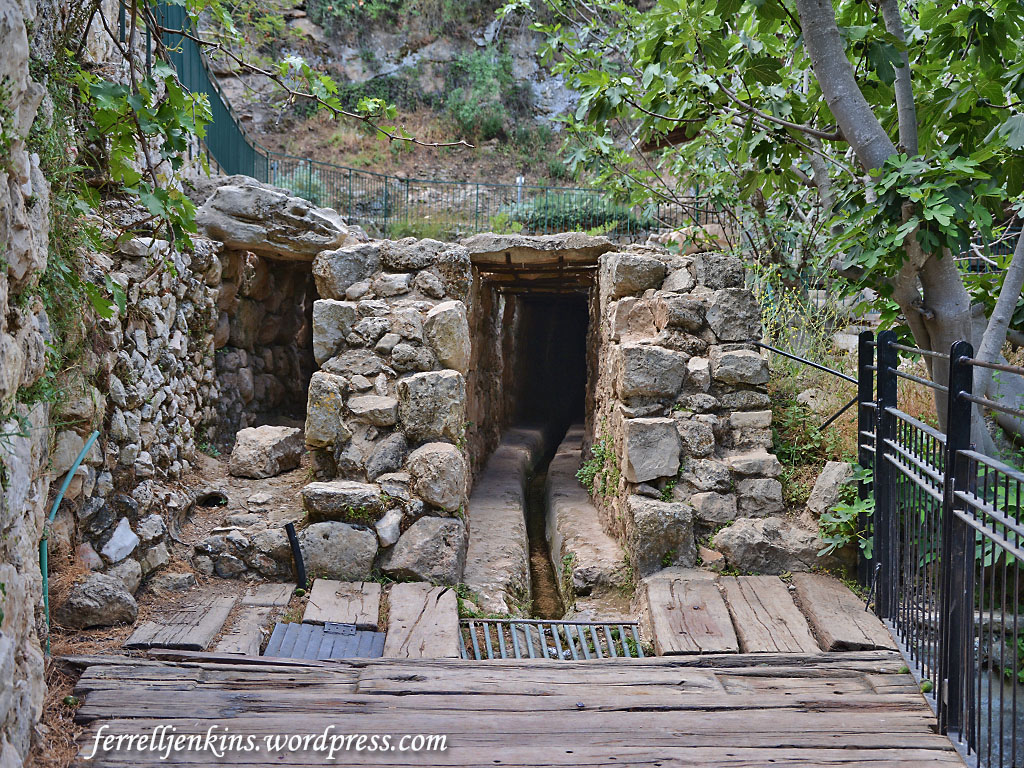
The spring begins from the hillside above the Rephaim Valley. Today the water is diverted to for use in the park, but you can see a channel through which some of it flows to a nearby pool. Photo by Ferrell Jenkins.

The spring begins from the hillside above the Rephaim Valley. Today the water is diverted for use in the park, but you can see a channel through which some of it flows to a nearby pool. Photo by Ferrell Jenkins.

It is true that the Rephaim Valley was used as one of the main entries to Jerusalem from the coastal area, but was this where the court official of the Ethiopian queen said, “See, here is water! What prevents me from being baptized?” (Act 8:36 ESV).

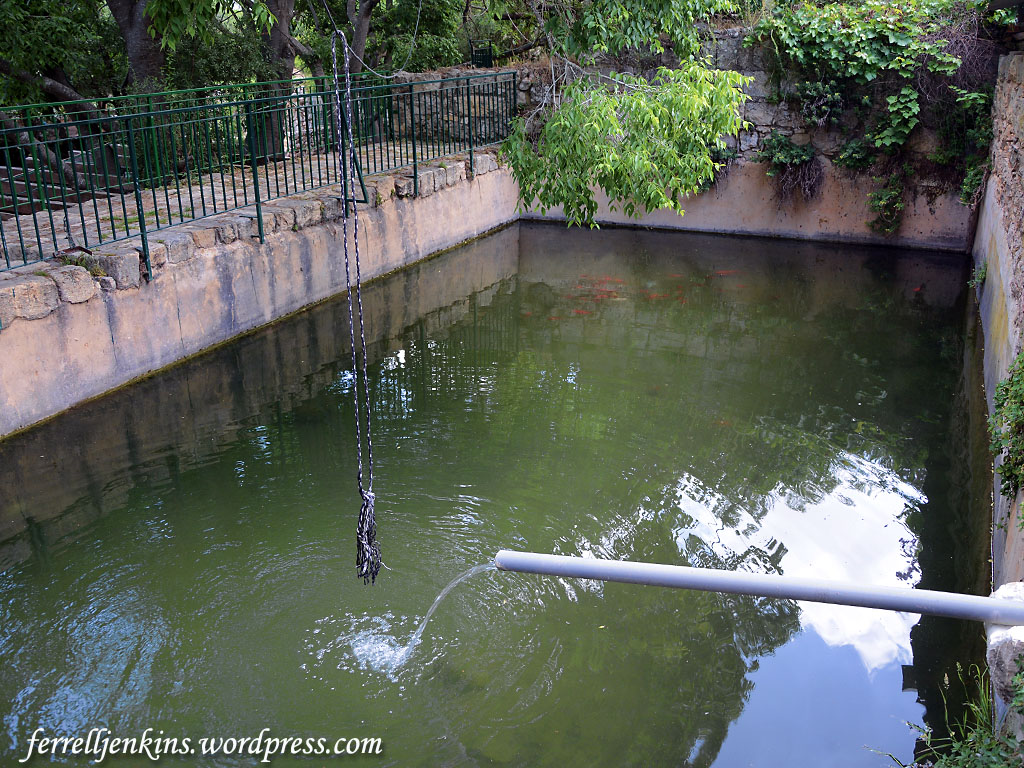
Our next photo show an old pool where water from the spring is collected. Some goldfish can be seen in the far end of the pool. In spite of a nearby “Swimming is Prohibited” sign in three languages, the rope hanging over the pool indicates that boys still use it was for swimming on occasion.

Some identify the pool here as Philip's Fountain, the site where Philip immersed the Ethiopian. Photo by Ferrell Jenkins.

Some identify the pool here as Philip’s Fountain, the site where Philip immersed the Ethiopian. Photo by Ferrell Jenkins.

A nice YouTube video here shows the site prior to the development of the park, with a cameo appearance by Shimon Gibson. In it you may see the pool in its original state.

William M. Thomson, in his The Land and the Book, mentions this site and says that it was identified “by monkish legend St. Philip’s Fountain, where he baptized the Ethiopian eunuch.” Thomson includes a drawing of ruins resembling a church at the site (The Land and the Book, 1882, pp. 55-56). This is the volume covering Southern Palestine and Jerusalem.

In a following post we will take a look at another site called Philip’s Fountain.