Category Archives: Jordan

Extreme weather in the Middle East

Most parts of the United States have severely cold weather tonight. Even here in Florida we are expecting record cold tonight and tomorrow night. One of the cruise ships was unable to enter the Tampa port today due to strong winds.

All of that reminded me about the extreme weather in the eastern Mediterranean and various parts of the Middle East. The network news showed conditions on the cruise ship that was unable to enter the harbor at Alexandria. The photo below show the breakwater at the entrance to the Alexandria harbor. The flat looking building to the right on the shore is the famous new library of Alexandria.
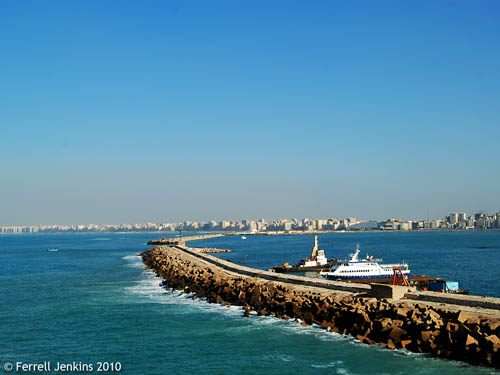
Breakwater at entrance to Alexandria harbor. Photo by Ferrell Jenkins.

Breakwater at entrance to Alexandria harbor. Photo by Ferrell Jenkins.

RFIenglish has the following summary:

Twenty-six ships were barred from entering the Suez Canal and 29 vessels delayed for three hours. The waterway was hit by poor visibility and winds of up to 40 knots an hour, said an official at the canal, which is Egypt’s third-largest source of foreign revenue after tourism and remittances from expatriate workers.

Red Sea and Mediterranean ports were closed for a second day on Sunday, while an Italian container ship, Jolly Amaranto, was stranded off the north-western coast after its engines broke down.

Visibility at Cairo airport was reduced to 300 metres.

As a long drought that affected the region came to an end, temperatures plummeted and storms hit Lebanon, Syria, Jordan, the Palestinian territories and Israel:

* In Lebanon seaside roads and ports have been closed after a 45-year-old woman was killed by a falling tree hitting her car – the year’s first snowstorm hit the country’s mountains;
* Off Israel a Moldovan freighter went down near the port of Ashdod but its crew of 11 Ukrainians was rescued.
* Syria’s capital Damascus was hit by snowstorms;
* Jordan suffered sandstorms and was braced for heavy rain and snow, which could lead to flooding.

Forecasters expect the bad weather to continue on Monday and have advised people to stay indoors due to a sandstorm that has blanketed the Egyptian capital.

Read also the BBC report here, or the Breitbart coverage which Todd Bolen mentioned here.

The Israel National News reports on snow in the Jerusalem area. Haaretz says the precipitation is a boon to the Sea of Galilee which has been extremely low in recent months.
Uriah’s trip from Jerusalem to Rabbah

Last evening I was looking at the biblical account of David’s battles against the Ammonites (2 Samuel 10-11).

In the spring of the year, at the time when kings normally conduct wars, David sent out Joab with his officers and the entire Israelite army. They defeated the Ammonites and besieged Rabbah. But David stayed behind in Jerusalem. (2 Samuel 11:1 NET)

You probably know the rest of the story. David is attracted to Bathsheba, commits adultery, learns Bathsheba is pregnant, calls Uriah home in hope that he will spend the night with Bathsheba. Uriah acted in the true warrior way by not enjoying the benefits of the marriage bed while his companions were camping in the open field. David sent Uriah back to the battle with a letter to Joab to put Uriah in the forefront of the battle.

Have you thought about the journey made by Uriah and the other Israelite soldiers as they traveled from Jerusalem to Rabbah and back? You know where Jerusalem is located. It is situated on the eastern side of the water parting ridge of Israel at an elevation of about 2400 feet above sea level. Numerous times we have discussed the journey from Jerusalem to the Jordan Valley. See here and here.

The distance from Jerusalem to the Dead Sea is not more than 20 miles. The elevation drops from about 2600 feet at the Mount of Olives to (currently) about 1384 feet below sea level at the surface of the Dead Sea. The point of crossing at the Jordan River would be a little higher. From there one must go up into the Transjordan Tableland to reach Rabbah. The general elevation of the Transjordan Tableland is about 3000 feet above sea level. Amman is about 2500 feet above sea level. That makes this a difficult route of travel.

Rabbah (Rabbath), the capital of ancient Ammon, is the site we now know as Amman, capital of Jordan. During the Hellenistic period the city was renamed Philadelphia.

The total distance from Jerusalem to Rabbah is about 40 miles as the crow flies. Men rarely travel like crows. The distance by road is longer and more difficult.

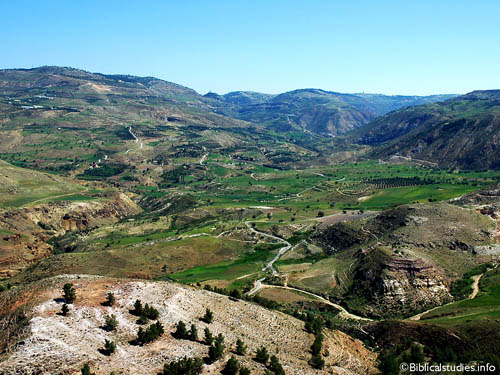
The photo I wish to share today was made in early April. It was made along a road a little east of the Jordan Valley and the Plains of Moab. From here you can see the terrain David’s men, including Joab and Uriah, had to travel on their way from Jerusalem to Rabbah. Modern Amman is located in the mountains we see on the horizon.

View looking east toward Amman. Photo by Ferrell Jenkins.

View looking east toward Amman. Photo by Ferrell Jenkins.

Learning routes of travel is one of the most important values in visiting the Bible lands. I hope this photo will help you with your study of the biblical account.

Attending the Near East Archaeological Society

For the past few days I have been attending the annual meeting of the Near East Archaeological Society and the Evangelical Theological Society. NEAS is a small organization which meets in association with the ETS each year. This gives one the opportunity to attend meetings of either society. ETS has grown tremendously over the years that I have attended — first about 1976, I think. This year more than 2600 persons registered for the meeting. Even though I no longer teach, I like to attend these meetings in order to keep abreast of recent scholarship in areas in which I have special interest.

Among the lectures I heard at NEAS are the following:

Douglas Petrovich (University of Toronto) presented an impressive lecture on “More signs of societal upheaval in Egypt during the days of Joseph.”

Randall Price (Liberty University) was scheduled to make a presentation on Messiah in the Temple: A New 3-D Digital Computer Model of the Second Temple based on historical and archaeological data,” but his co-presenter was not able to make the trip from Germany. Dr. Price gave a presentation in refutation of the recent claims of a Chinese group who claimed they had found Noah’s ark on Mount Ararat.

Mark Wilson (Asia Minor Research Center) and Nadin Burkhardt (University of Frankfurt) spoke about the new excavation of the Priene synagogue (in Western Turkey).

Steven Ortiz (Southwestern Baptist Seminary) spoke about the most recent excavations at Gezer. Dr. Ortiz is one of the directors of the dig where much evidence from the 9th and 10th century B.C. is coming to light.

Eric Mitchell (Southwestern Seminary) told about the landscape archaeology associated with the current excavations at Gezer.

Bryant G. Wood (Associates for Biblical Research) presented the finds from the 2009 and 2010 seasons at Khirbet el-Maqatir. Wood thinks that this site is an excellent candidate to be identified with biblical Ai, rather than the generally accepted site at Et-Tell. Wood is director of this dig in the Palestinian West Bank.

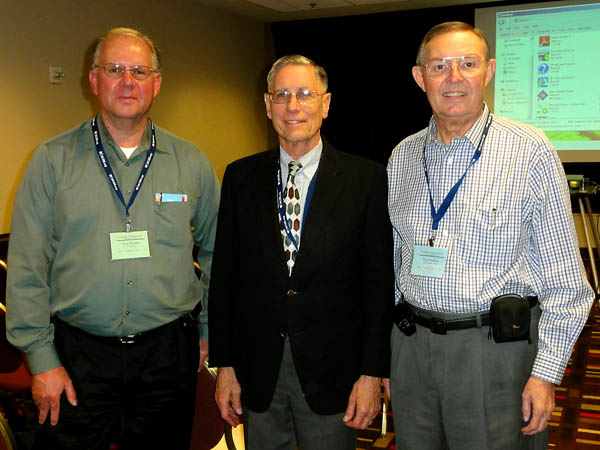
I asked Michael Luddeni, photographer for Bible and Spade and several excavation projects, to make a photo of Leon Mauldin and me with Dr. Bryant Wood.

Leon Mauldin, Dr. Bryant Wood, Ferrell Jenkins at NEAS annual meeting.

Leon Mauldin, Dr. Bryant Wood, Ferrell Jenkins at NEAS annual meeting.

Steven Collins (Trinity Southwestern University) made an excellent presentation on the rise and ruin of a bronze age city-state at Tall el-Hammam, Jordan. Collins is director of this dig.

James H. Charlesworth (Princeton Theological Seminary) was an invited speaker who gave a lecture on two Herodian pools north and south of the Jerusalem temple as they relate to the Gospel of John (chs. 5 and 9). These, of course, were the pools of Bethesda and Siloam. He argued that both pools were mikvaoths (ritual pools) at the time.

There were other good lectures at NEAS. Some of these scholars make similar presentation at the ASOR or SBL meetings.

Among the lectures I heard at ETS, I found these two to be extremely good:

British scholar N. T. Wright (St. Andrews University) spoke on “Justification yesterday, today and tomorrow.”

Eugene H. Merrill (Dallas Theological Seminary) gave the presidential address at the banquet on “Old Testament Scholarship and the man on the street: whence and whither?”

When I was still teaching I attended lectures dealing primarily with the subjects I was actively teaching. Now I attend anything that strikes my fancy. Because I frequently travel to the Middle East I enjoy keeping up with the archaeological excavations in those areas.

Ritmeyer’s Image Library now online

Dr. Leen Ritmeyer is well know for his archaeological drawings of the biblical era buildings, especially the temple. He now has much of his material online for immediate download. The Image Library is described this way:

The Image Library of Ritmeyer Archaeological Design contains authoritative reconstruction drawings and models which you will not find on any other website. The photos of ancient sites in the lands of the Bible have also been taken through the informed lens of an archaeological architect. A treasure-trove for teachers, pastors, lecturers and picture editors, it is the result of years of experience digging and researching in Israel and traveling in the surrounding countries.

The Image Library is arranged in different categories and is fully searchable. The different categories are designed to help you find the picture you are looking for easily. All preview illustrations are watermarked, but these won’t appear on the downloads.

For ease of use, each image comes with a descriptive note and, where applicable, full Scripture references. With the explosion of information coming from excavations, we hope that this will become an ever-expanding resource vital for all who wish to incorporate both beauty and authenticity into their portrayal of the Bible background.

Go here for additional information, and to browse the collection. The architectural drawings are $5 each, and the photographs are $3 each.

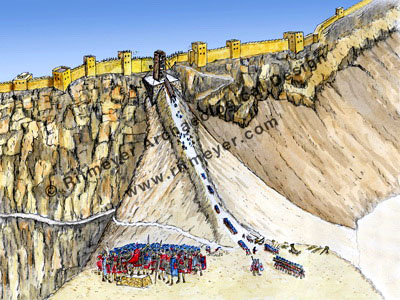
Here is a small sample of one of the drawings. This one shows the siege ramp built by the Romans at Masada in A.D. 72.

Roman siege ramp at Masada. Ritmeyer Image Library.

Roman siege ramp at Masada. Ritmeyer Image Library.

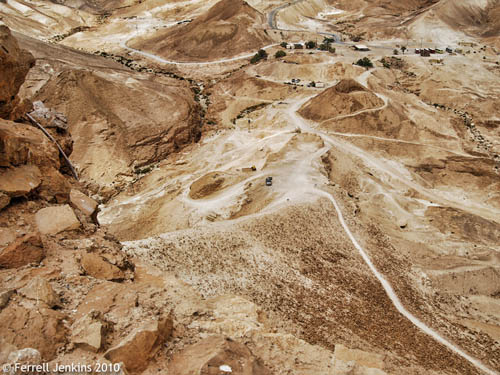
Here is one of my photos showing the siege ramp from above. The wall of Masada is visible in the left of the image.

The siege ramp at Masada. Photo by Ferrell Jenkins.
The Roman siege ramp at Masada from above. Photo by Ferrell Jenkins.

Certainly there is no excuse for presenting a dull, image deprived Bible class lesson or sermon.

The apostles as gladiators

The apostle Paul compared the work of the apostles to that of gladiators in the arena. In writing to the Corinthians he says,

For I think that God has exhibited us apostles as last of all, like men sentenced to death, because we have become a spectacle to the world, to angels, and to men. (1 Corinthians 4:9 ESV)

As the last event of the day, the gladiator’s who were condemned to death were brought into the arena as a spectacle for the excited crowd. The word spectacle translates the Greek theatron, easy enough for everyone to understand the reference.

Leon Morris (Tyndale New Testament Commentary) calls attention to James Moffatt’s translation of this text.

The imagery is derived from the arena, as Moffatt’s rendering brings out, ‘God means us apostles to come in at the very end, like doomed gladiators in the arena!’

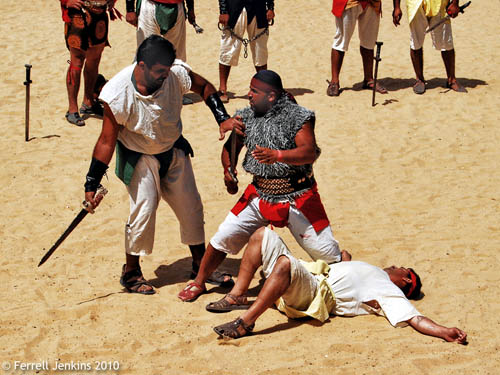
The photo below shows gladiators in the Roman hippodrome at the RACE (Roman Army and Chariot Experience)  show at Jerash, Jordan.

Gladiators in the Roman hippodrome at Jerash, Jordan. Photo by Ferrell Jenkins.

Gladiators in the Roman hippodrome at Jerash, Jordan. Photo by Ferrell Jenkins.

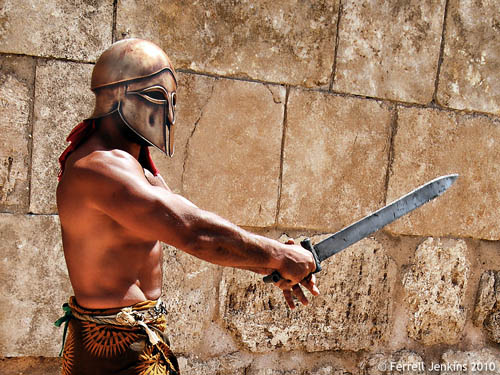
Here is a close up of one of the gladiators.

Gladiator in the RACE show, Jerash, Jordan. Photo by Ferrell Jenkins.

Gladiator in the RACE show, Jerash, Jordan. Photo by Ferrell Jenkins.

Both photos are available in a larger size suitable for use in teaching. Just click on the images.

David Padfield has several photos of gladiators here.

Roman soldiers in Decapolis

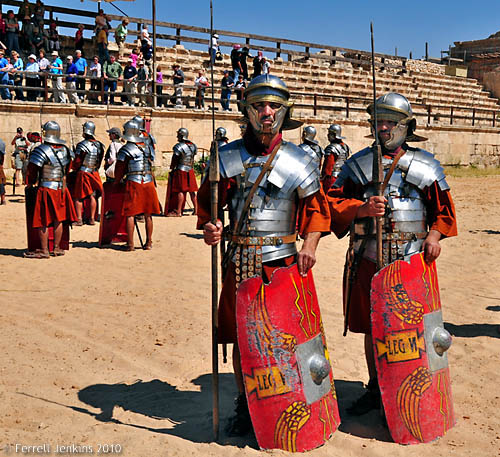
The RACE show at Jerash, Jordan, is a must if you have the opportunity to visit the area. RACE stands for Roman Army and Chariot Experience. You will see actors in authentic dress as armed legionaries, gladiators, and a short chariot race. The show takes place in the Roman hippodrome of Jerash. The view of the city ruins in the vicinity make this a wonderful setting for the performance. Full details may be found here. I have seen the program three times. On the last visit, earlier this year, I thought the performers showed less discipline and the show was not quite as good as on my previous visits.

Jerash was the second largest city of the Decapolis (after Damascus) in New Testament times. People from the Decapolis followed Jesus during His ministry in Galilee (Matthew 4:23-25). When Jesus traveled through the Decapolis he possibly visited the area around Jerash (Mark 7:31).

The photo shows the Roman soldiers of the 6th Legion from the time of the Emperor Hadrian (A.D. 117-138). A visit to this show provides several good photographs to illustrate New Testament times.

Roman soldiers at Jerash, Jordan. Photo by Ferrell Jenkins.

Roman soldiers at Jerash, Jordan. Photo by Ferrell Jenkins.

A larger image, suitable for presentations, is available by clicking on the photo.

Iron Age Hadad temple found in Jordan

Major news sources are reporting the discovery of a 3,000-year-old Iron Age temple from Khirbet ‘Ataroz near the town of Madaba (close to Mount Nebo and about 20 miles SW of Amman). The head of the Jordanian Antiquities Department said the find dates to the 8th century B.C. (a little shy of the 3,000 years mentioned by the news sources). Here are a few comments from the AP article.

He said the complex boasts a main room that measures 388 square feet (36 square meters), as well as two antechambers and an open courtyard.

The sanctuary and its artifacts — hewn from limestone and basalt or molded from clay and bronze — show the complex religious rituals of Jordan’s ancient biblical Moabite kingdom, according to al-Saad.”

Today we have the material evidence, the archaeological proof of the level of advancement of technology and civilization at that period of time,” he said.

The Moabites, whose kingdom ran along present-day Jordan’s mountainous eastern shore of the Dead Sea, were closely related to the Israelites, although the two were in frequent conflict. The Babylonians eventually conquered the Moabites in 582 B.C.

Archaeologists also unearthed some 300 pots, figurines of deities and sacred vessels used for worship at the site. Al-Saad said it was rare to discover so many Iron Age items in one place.

The article continues,

Among the items on display Wednesday, there was a four-legged animal god Hadad, as well as delicate circular clay vessels used in holy rites. Al-Saad said the objects indicate the Moabites worshipped many deities and had a highly organized ritual use of temples.

The AP report, with small photos of some of the artifacts, may be read here. The typical news reports fail to give adequate information about the discovery. In these cases, we wait for scholarly information.

Below I have a quotation from the revised ISBE giving a brief explanation about Hadad.

An alternative name for Baal, the head of the Canaanite pantheon, whose worship was expressed in fertility rites. The storm-god Hadad is mentioned in Assyrian inscriptions, and called on the monolith of Shalmaneser “the god of Aleppo.” In the Assyrian inscriptions he is identified with the air-god Rimmon. The union of the two names in Zec. 12:11 suggests this identity. (Hovey and Harrison, The International Standard Bible Encyclopedia, Revised (Eerdmans, 1988; 2002). 2:590-591.)

Several thing should be noted by the Bible student.

  • Hadad is the Baal of the Old Testament.
  • Hadad is called the “god of Aleppo.”
  • Hadad is identified with Baal from discoveries at Ras Shamra (Ugarit).
  • The Israelites were warned not to “inquire about” the gods of the nations of Canaan, saying “How did these nations serve their gods?–that I also may do the same” (Deuteronomy 12:30). If you are reading this post you probably know what happened.

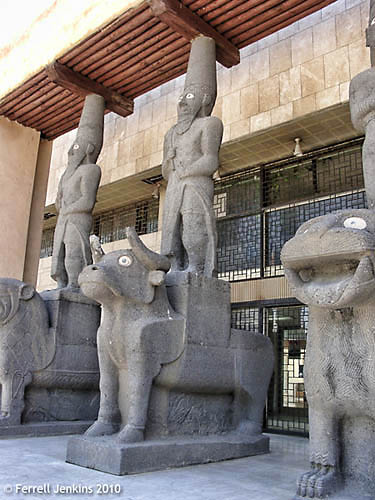
A few years ago I visited the archaeological museum in Aleppo. The entrance is decorated with replicas of the god Hadad (think Baal) standing on a bull

Hadad on a Bull. Aleppo Syria Museum. Photo by Ferrell Jenkins.

Hadad on a Bull. Aleppo Syria Museum. Photo by Ferrell Jenkins.

HT: Joseph Lauer

The Writing of the Dead Sea Scrolls

The Writing of the Dead Sea Scrolls is scheduled for tonight on the National Geographic Channel. More information is available here.

This promises to be a better than usual program, featuring Dr. Robert R. Cargill and other well known scholars.

HT: Joseph Lauer

Elisha’s Fountain at Jericho

When we think of the Old Testament prophets, we likely think first of the literary prophets such as Isaiah, Daniel, Jeremiah, Amos, et al. We may also think of Elijah and Elisha, two of the oral prophets. These two men served the Lord in the last part of the ninth century B.C.

The first reference to Elisha is when Elijah is told to anoint Elisha as his successor (1 Kings 19:16-21). Elisha is plowing with oxen when Elijah comes by and throws his mantle over him, a symbolic way of showing that Elisha was being called to serve in the prophetic office. Elisha’s sacrifice of his oxen shows that he accepted the call.

The next reference to Elisha does not come until the time when Elijah is taken into heaven (2 Kings 2). Elijah’s mantle (cloak) is used this time to strike the Jordan River. The waters were divided and the two prophets crossed into Transjordan on dry ground, just as the Israelites had crossed in the opposite direction centuries earlier.

When it becomes clear that Elisha will see Elijah no more, he returned and stood on the bank of the Jordan. He took Elijah’s mantle and struck the waters. They were divided and Elisha crossed back to the west bank.

The men of Jericho came to Elisha and explained the situation of their city. They said, “the situation of this city is pleasant…but the water is bad and the land is unfruitful” (2 Kings 2:19). The prophet asked for a jar. He told the men to put salt in it. He threw salt in the waters and they were purified. The writer says they have been purified to this day.

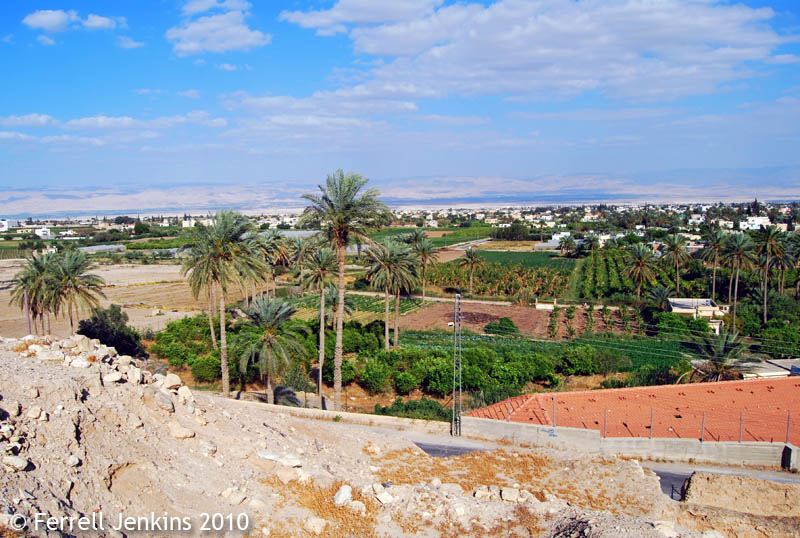
View east from Tell es-Sultan/Jericho. Photo by Ferrell Jenkins.

View east from Tell es-Sultan/Jericho. Photo by Ferrell Jenkins.

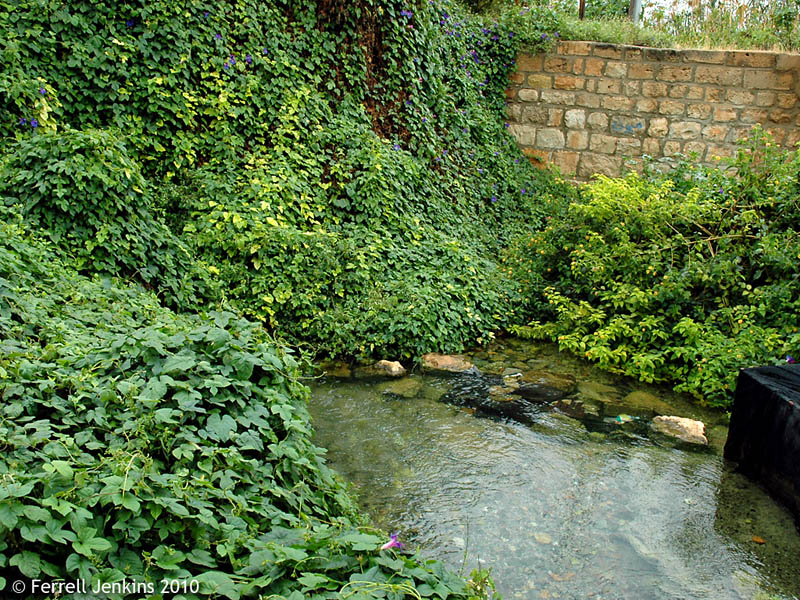
Jericho is still a city of palm trees (Deuteronomy 34:3). Below the ancient mound (Tell es-Sultan) to the east there is a spring called Elisha’s Fountain. The photo above was made from the tell with a view to the east. The mountains of Transjordan can be seen in the distance. Close to the tell there is a building with a red tile roof. This is the pumping station that provides water for modern Jericho. The next photo shows the spring as it exits the ground [at the present time]. Perhaps this is the same spring mentioned in the Bible.

Elisha's Fountain at Jericho. Photo by Ferrell Jenkins.

Elisha's Fountain at Jericho. Photo by Ferrell Jenkins.

This article was published in Biblical Insights, August, 2009.

A beautiful backdrop for a photo

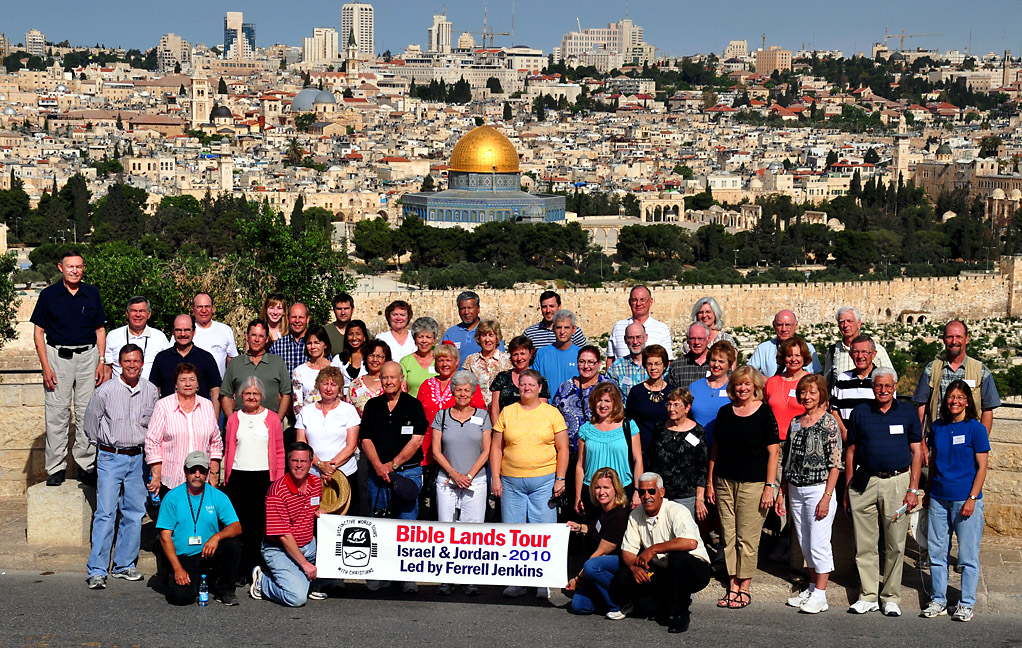
The city of Jerusalem provides a beautiful backdrop for a group photo. We almost always have a photo made of the group from the Mount of Olives with the city of Jerusalem in the background.

Bible Land Tour Group in Jerusalem - May 8, 2010.

Bible Land Tour Group in Jerusalem - May 8, 2010.

At this time of year there are no clouds to be seen, but the sky is clear. Click on the photo of our group of 46 travelers, plus our guide and driver, for a larger image. This will allow you to pick out any of the persons you may know. These folks are from numerous states ranging from the Northwest to Florida and Southern California to the Midwest.

We crossed out of Israel into the region controlled by the Palestinian Authority to visit Bethlehem. There we visited the Church of the Nativity and (one of) the Shepherd’s Fields. Tourists always enjoy shopping in Bethlehem. Specialties include olive wood carvings, mother of pearl, and jewelry. In the past I have enjoyed visiting a store operated by two brothers, but in the years of the Second Intifada they closed the store and moved to the USA where they had gained citizenship.

Today we visited a shop with some history — the Kando Store. One does not have to read very much about the early history of the Dead Sea Scrolls to encounter the name Kando. He was the shopkeeper who bought some of the original scrolls from the bedouin. In those years he operated a store directly across from the American Schools of Oriental Research (now the Albright Institute) in East Jerusalem (then in Jordan). I think it was 1969 (or 1970 or 1971) when Melvin Curry and I went to Kando’s antiquities shop and purchased about $1,000 worth of antiquities for Florida College. Those antiquities are now displayed in the Chatlos Library on the campus in Temple Terrace, FL.  They have been used in the Bible and Archaeology class many times. Today $1,000 would buy only about 4 good Herodian lamps, but we got a nice collection back then.

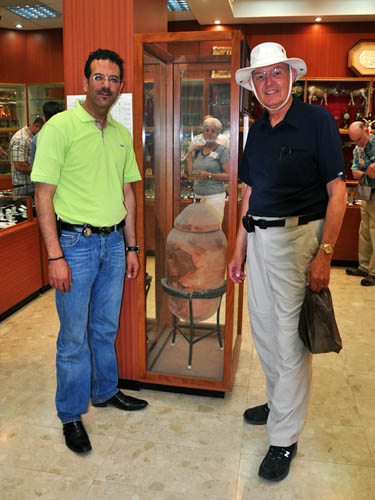
Kando was a Syrian Christian whose full name was Khalil Iskander Shahin. His name appears many times on the page describing the Dead Sea Scrolls in the Schøyen Collection. His family now operates the Kando Store in Bethlehem. All of the scrolls, and things pertaining to the scrolls, that came to the hands of Kando, have now been disposed of except for the original jar in which the Temple Scrolls was found.

I was pleased to meet Shibly, the grandson of Kando, and have my photo made with him. You can see the original jar in the case between us.

Shibly, grandson of Kando, the Temple Scroll Jar, and Ferrell Jenkins.

Shibly, grandson of Kando, the Temple Scroll Jar, and Ferrell Jenkins.

It was 1956-57 when I began reading about the Dead Sea Scrolls. Being in the Kando Store today was an added excitement to any already great day of touring.