Category Archives: Israel

Touring Israel again

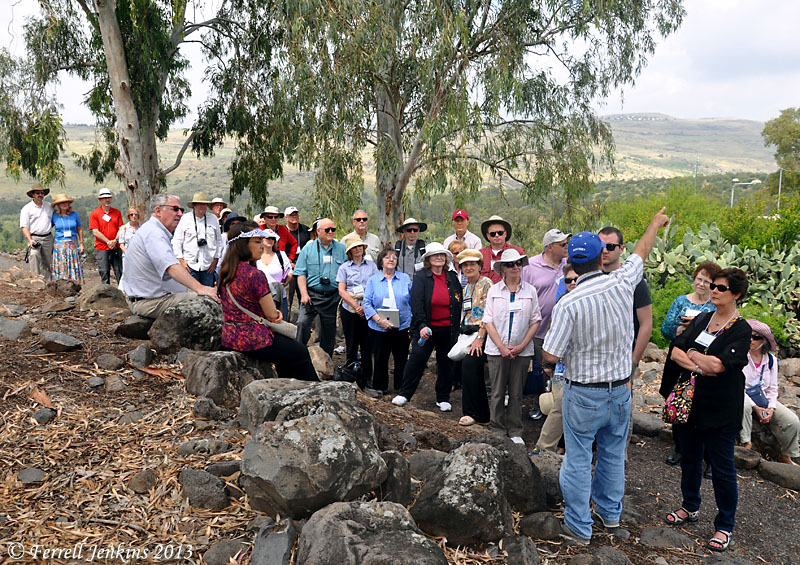
We completed our second full day of study in Israel today. The photo below shows our guide explaining the geographical/topographical features of the area around a site northeast of the Sea of Galilee. The site is known as et-Tell, and is identified by some as the New Testament site of Bethsaida, and perhaps the Old Testament site of Geshur.

Bethsaida is listed in the New Testament as the home of Andrew, Peter, and Philip (John 1:44; 12:21).

The land of Geshur was located in this same area. David married Maacah, the daughter of Talmai, king of Geshur (2 Samuel 3:3). Absalom, the son of David and Maacah, spent three years in Geshur after he killed his half-brother Amnon (2 Samuel 13:30-38; cf. 14:23, 32).

Tour group at "Bethsaida". Photo by Ferrell Jenkins.

Tour group at et-Tell. Photo by Ferrell Jenkins.

While traveling I do not have time to elaborate on the arguments about the identity of this site with Bethsaida.

Don’t mess around with nature

Shmuel Browns has a nice article here on Agamon (Hula) Lake in northern Israel. Perhaps we all know that Lake Hula (Hulah; Huleh) is the small body of water about 10 miles north of the Sea of Galilee.

Browns tells how the lake came to be drained a few decades back, and the reason for its reclamation. I was especially impressed with the number of “creatures” found in the area around the lake. And also of the number of species lost as a result of the draining of the lake.

Josephus refers to Lake Hula by the Roman name of Lake Semechonitis (Ant. 5.199; Jewish Wars 3:515; 4:3).

My earliest association for the site (about 60 years ago) was to identify it as the Waters of Merom (Joshua 11), because this is what Hurlbut suggested in A Bible Atlas. This identification is doubtful, and many modern atlases pass over the issue.

In the new Satellite Bible Atlas, Bill Schlegel says the Canaanites gathered at

…  the Waters of Merom, of uncertain location. The name is preserved at a spring and mountain in Upper Galilee. If this is its location, the Canaanite gathering there is the only significant event described in the Bible that occurred in Upper Galilee. (Map 3-7).

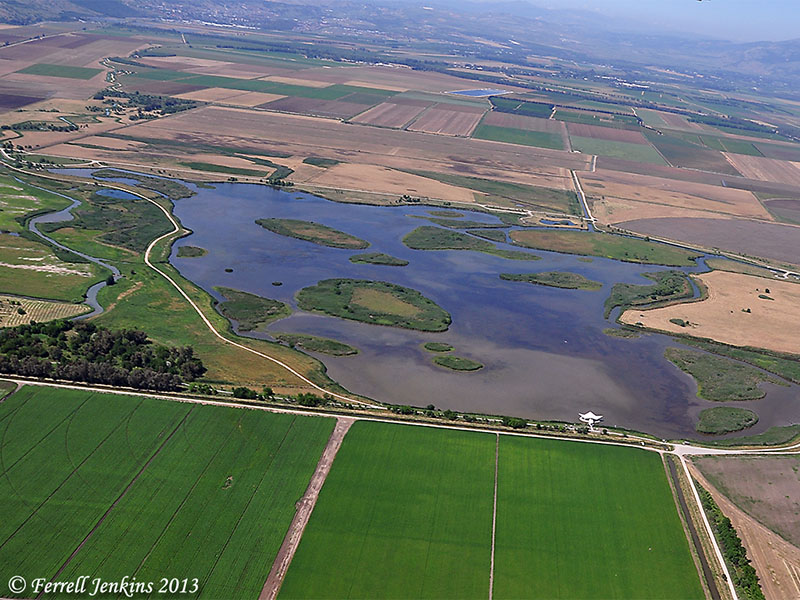
Shmuel shows you some good land photos, and I will show you an aerial photo I made of the reclaimed lake now known as Agamon (Hula) Lake.

Reclamation of Lake Hula. Aerial photo by Ferrell Jenkins.

Reclamation of Lake Hula. Aerial photo by Ferrell Jenkins.

In the late 1960s, I saw the former location of Lake Hula. By that time there was a line of trees standing where the shore had once been.

Mysterious structure in the Sea of Galilee

Scientists report the discovery of a mysterious structure in the Sea of Galilee on the SW “corner” near the site of Bet Yerah.

According to Live Science here, this structure is made of large basalt blocks. These volcanic stones are common in the region.

A giant “monumental” stone structure discovered beneath the waters of the Sea of Galilee in Israel has archaeologists puzzled as to its purpose and even how long ago it was built.

The mysterious structure is cone shaped, made of “unhewn basalt cobbles and boulders,” and weighs an estimated 60,000 tons the researchers said. That makes it heavier than most modern-day warships.

Rising nearly 32 feet (10 meters) high, it has a diameter of about 230 feet (70 meters). To put that in perspective, the outer stone circle of Stonehenge has a diameter just half that with its tallest stones not reaching that height.

You will need to check the Live Science report, or the original scholarly article from International Journal of Nautical Archaeology (Vol. 42: Issue 1; March 2013) here or here (pdf). There you will find a map, photos and drawings of the structure.

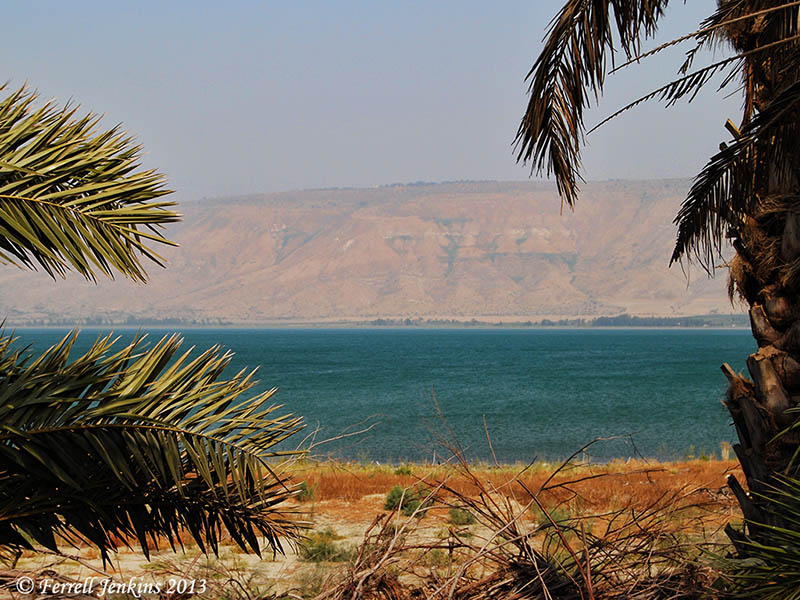
I stopped very near the spot of the structure to make some photos of ripe date palms a few years ago.

The Sea of Galilee near Bet Yerah. The view is to the east across this narrow southern end of the lake. Photo by Ferrell Jenkins.

The Sea of Galilee near Bet Yerah. The view is to the east across this narrow southern end of the lake. Photo by Ferrell Jenkins.

Whatever this structure and it purpose, it seems to have existed long before any of the biblical activity recorded in the region.

HT: Joseph I. Lauer

Photos worth 1000 words (or more)

Locusts

Shmuel Browns, Israel guide and photographer, has posted the best photo of a locust that I have seen. And the photos of flowers in the Judean Desert are something most tourists never get to see. Look here.

From the top of the Great Pyramid

Carl Rasmussen, at his HolyLandPhoto’s blog, calls attention to some photos made by some Russians from the top of one of the Great Pyramid of Giza here. There you will find links to the Mail Online (British) and English Russia.

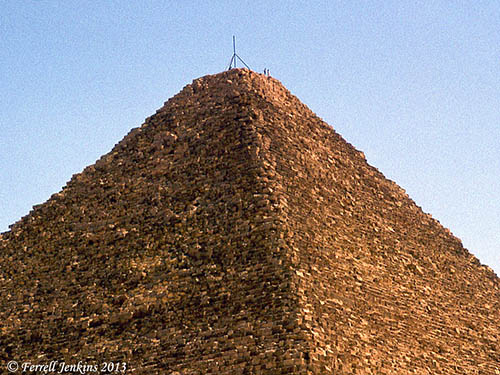
I suppose I never wished to climb the Great Pyramid, but I had two men with me in 1978 who wanted to do so. In the photo below you might be able to make out two men (Jim Puterbaugh and Bob Lyman) to the right of the marker showing the original height of the structure. Click on the photo for a larger image.

Two climbers on top of the Great Pyramid in 1978. Photo by Ferrell Jenkins.

Two climbers on top of the Great Pyramid in 1978. Photo by Ferrell Jenkins.

The Great Pyramid of Cheops (or Khufu) was constructed about 2500 B.C. No, not by the Israelites. That is even earlier than the biblical Patriarchs. It is said to contain more than 2,300,000 blocks of stone, each weighing an average of 2½ tons. The height was originally 479 feet, but now is 449½ feet.

It is April 1, but this is no joke.

Jerusalem Panorama

Look at this great high resolution panorama of Jerusalem from the Mount of Olives here. Spend some time with it. (HT: Bible Places Blog.)

Crucified skeleton found near Jerusalem

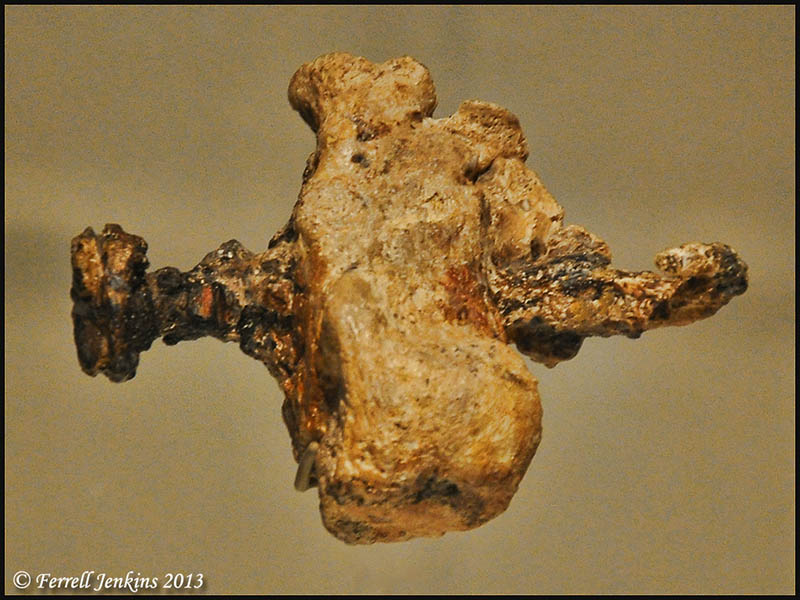
The Romans were adept at crucifixion, according to many historical sources. The first archaeological evidence of crucifixion was uncovered in 1978 [1968; see comments] when an ossuary (bone box, or receptacle) was found north of Jerusalem containing the bones of a man who had been crucified. His name was “Yehohanan, the son of Hagakol.” He is thought to have been between 24 and 28 years of age, and was about 5 feet 6 inches in height.

Both the ossuary and a replica of the heel bone are displayed in the Israel Museum. When Yehohanan was removed from the cross the nail pulled away from the wood.

Ankle bone of a man crucified outside Jerusalem in Roman times. Photo by Ferrell Jenkins.

Nail through the heel bone of a man crucified outside Jerusalem in Roman times. Display in Israel Museum. Photo by Ferrell Jenkins.

On Pentecost, Peter proclaimed the truth about Jesus. He said,

This man was handed over to you by God’s deliberate plan and foreknowledge; and you, with the help of wicked men, put him to death by nailing him to the cross. (Acts 2:23 NIV)

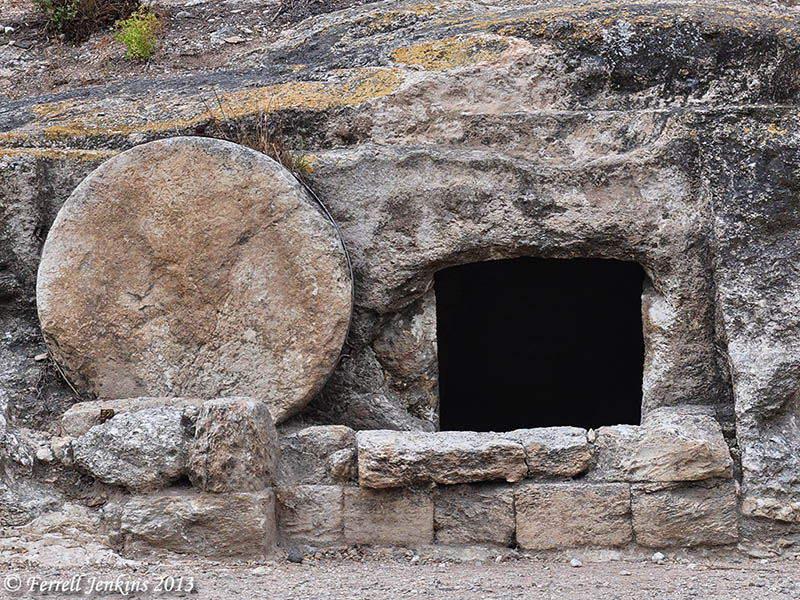
No ossuary, or bones belonging to Jesus, have ever been found. The angel at the empty tomb of Jesus announced to the women who had gone to complete the burial,

He is not here, for he has been raised, just as he said. Come and see the place where he was lying. (Matthew 28:6 NET)

Rock tomb with rolling stone near Jezreel Valley. Photo by Ferrell Jenkins.

Rock tomb with rolling stone near Jezreel Valley. Photo by Ferrell Jenkins.

SourceFlix has posted a nice brief video of Passion Week Archaeology here.

Logos Community Pricing

Logos Bible Software has a feature called Community Pricing. It works like this. A book (or set) is chosen for publication. Interested persons are asked to place a bid on the completed digital publication. When there are enough bids to pay for publication the book is published. After the initial publication, the price goes up. I have purchased many Logos publications using Community Pricing and Pre-Publication Specials.

To use the Community Pricing or Pre-Pub specials you must already have Logos (or the older Libronix) on your computer. You may purchase a base package from Logos (here), or buy a relatively inexpensive set of books from someone like Rejoice Christian Software. I suggestion you buy something like the  Baker New Testament Commentary ($79.95 here), the Norman Geisler Apologetics CD-Rom Library ($29.95 here), or one of the other great specials they offer.

thompson_land-and-the-bookHere is a Community Pricing special too good to miss for anyone interested in the land of the Bible: The Land and the Book by William M. Thomson. This is an old work that is rich in information about the land and the culture of the Bible land.

Rich with scriptural landmarks and filled with hundreds of beautiful pen-and-ink illustrations, Thomson’s The Land and the Book has been a popular classic for over 100 years. Learn more about the people, places, and historical events behind the text you’re studying. Incorporate pictures, illustrations, and graphics into sermons, school papers, or Sunday school lesson plans. Whether you are a student, pastor, scholar, or layperson, the 3-volume Land and the Book is a must-have resource for Bible study or reading.

A work like this does not replace current studies, but it supplements them. Just go to Logos (here) and bid $18 on this work. If it sells for less you will pay less.
In the next post I will share another special pre-pub bargain.

Locusts video from Israel

Recently we mentioned the plague of locusts that devastated crops in Egypt. The southern portion of Israel might have been affected except for the effective use of pesticides.

When Joel Kramer, Executive Director of SourceFlix, learned that the locusts were in the southern part of Israel he drove from Jerusalem through the Negev and wilderness to photograph the locusts near the Egyptian border. He shares this with us in a high quality video here.

Joel includes wording from the book of Exodus 10 to remind us of the biblical plague of locusts in the time of Moses.

The writer of Proverbs describes the locusts this way:

 the locusts have no king, yet all of them march in rank; (Proverbs 30:27 ESV)

In studying the book of Revelation, I am impressed at the way in which locust plagues, which were (and still are) common in the Middle East, are used in the sounding of the fifth trumpet (Revelation 9:1-11). The comparison between the locusts and a literal army in their movement and damage is impressive.

 In appearance the locusts were like horses prepared for battle: on their heads were what looked like crowns of gold; their faces were like human faces,
8 their hair like women’s hair, and their teeth like lions’ teeth;
9 they had breastplates like breastplates of iron, and the noise of their wings was like the noise of many chariots with horses rushing into battle.
10 They have tails and stings like scorpions, and their power to hurt people for five months is in their tails. (Revelation 9:7-10 ESV)

HT: Bible Places Blog.

“Rejoice and be glad” you are not in Jerusalem

U.S. President Barack H. Obama plans a visit to Israel, the West Bank, Jordan, beginning Wednesday. Preparations are already under way. Arutz Sheva 7 reports here on the problems already evident.

In addition to the fact that Jerusalem is now one of the most difficult cities to navigate (my opinion based on 47 years of travel experience), the Passover is approaching. Jewish families must make many special preparations.

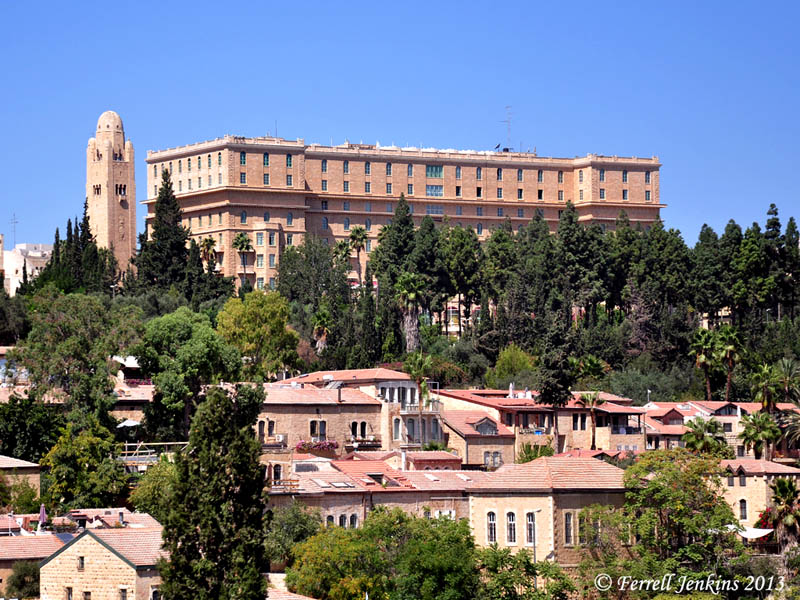
The President will be staying at the famous King David Hotel. If you planned to visit the Herodian Family Tomb behind the hotel, just forget it for a few days.

Over 5,000 police will be directly involved in providing security for Obama and his entourage, while hundreds of others will be helping out in indirect ways. For example, over 100 officers will be added to the police help line specifically to deal with issues called in by citizens relating to the Obama visit. Police will keep citizens updated on all aspects of the visit by phone and through social media.

Over 1,000 police alone will be deployed around the King David Hotel, where Obama will be staying, and will follow Obama around as he pays visits to people and institutions during his three day visit here.

Here is a photo of the King David Hotel from across the western part of the Hinnom Valley. It was taken either from the Protestant Cemetery, the Campus of Jerusalem University College, or a few meters to the north of that.

King David Hotel from the slope of Mount Zion. Photo by Ferrell Jenkins.

King David Hotel from the slope of Mount Zion. Photo by Ferrell Jenkins.

Take a look at some of the traffic problems.

Already on Sunday, long before Obama arrives, traffic in Jerusalem was extremely choked, as police began setting up barricades, and many Jerusalemites took to the road to finish their Passover shopping while the roads are still open.

Among the roads to be closed sporadically during Obama’s visit will be Road 1, between Ben Gurion Airport and the entrance to Jerusalem, as well as main Jerusalem thoroughfares such as Herzl Boulevard and Derech Hevron [Hebron Road]. Police said they will make every effort to ensure that roads are closed only of absolutely necessary.

Several years ago I was in Jerusalem when President Clinton came to visit. Our hotel was far from the Old City, but policemen were stationed about a block apart. Nations normally enjoy these high level visits, but I am not sure this current one means very much, but it keeps Air Force One running. (O.K., you have a right to your opinion.)

HT: Barry Britnell

Video about King Herod exhibit

CBN.tv has a nice brief video about the King Herod exhibit at the Israel Museum. This video features the exhibit as well as commentary by James Snyder, Israel Museum Director, and Dr. Sylvia Rozenberg, the Senior Curator. Here you will learn the rationale behind the million dollar exhibit that emphasizes Herod as a builder.

Click here for the short video.

For previous links to King Herod and this exhibit click here, or type the word Herod in the Search Box.

HT: the Book & the Spade.

Locusts still plague the Bible lands

References to locusts in the Bible are scattered from the time when the Israelites were in Egyptian bondage to the book of Revelation. Several Hebrew terms are used to describe locusts, perhaps of different species, or because of the various stages through which the locusts grow.

The prophet Joel uses the illustration of a locust invasion upon the land.

What the cutting locust left, the swarming locust has eaten. What the swarming locust left, the hopping locust has eaten, and what the hopping locust left, the destroying locust has eaten. (Joel 1:4 ESV)

Was he speaking of literal locusts, or of the invasion of a foreign enemy?

The prophet Amos speaks of the punishments brought by the LORD upon the northern kingdom of Israel prior to the Assyrian invasion.

“I struck you with blight and mildew; your many gardens and your vineyards, your fig trees and your olive trees the locust devoured; yet you did not return to me,” declares the LORD. (Amos 4:9 ESV)

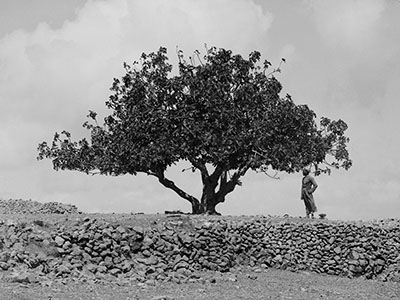
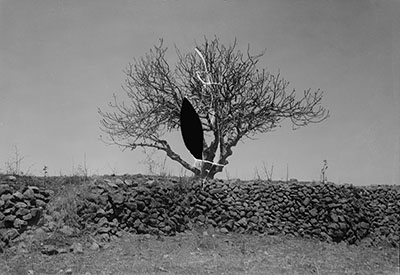
Notice that Amos makes specific reference to the fig trees and the olive trees. We have examples of this same thing happening during the 1915 locust plague. It was documented for National Geographic magazine by the photographs of Lewis Larson with a descriptive article by John D. Whiting. Here is a fig tree prior to the Locust plague.

Fig tree before the 1915 locust plague.

Fig tree before the 1915 locust plague.

And here is the way the same tree looked after the plague.

Fig tree after the 1915 locust plague.

Fig tree after the 1915 locust plague.

These two images are from the collection of 4,000 high-resolution photographs taken by resident photographers at the American Colony in Jerusalem from 1898 to the 1940s. The full set is available at Life in the Holy Land here. In addition to the photos in the collection, the photos are included in PowerPoint presentations. Descriptive information is included with many of them.

Several articles have appeared in the past week or so about a modern locust plague that affected Egypt and southern Israel. See here for Egypt. Some Jews, especially those from Yemen, gathered the photos [it was late; I meant locusts] for eating (see here). Some rabbis warned that the locusts may not be kosher (see here).

Just a reminder that some species of locusts were acceptable for the Israelites to eat.

Of them you may eat: the locust of any kind, the bald locust of any kind, the cricket of any kind, and the grasshopper of any kind. (Leviticus 11:22 ESV)

I know you can’t forget the diet of John the Baptist.

Now John wore a garment of camel’s hair and a leather belt around his waist, and his food was locusts and wild honey. (Matthew 3:4 ESV)

Seth Rodriquez provides more info about the 1915 plague here.