Category Archives: Flora and Fauna

Some flowers of Mount Gilboa

Mount Gilboa figures prominently in the death of Saul and Jonathan. At this time in the appropriate season there are many beautiful flowers scattered here and there among the rocks.

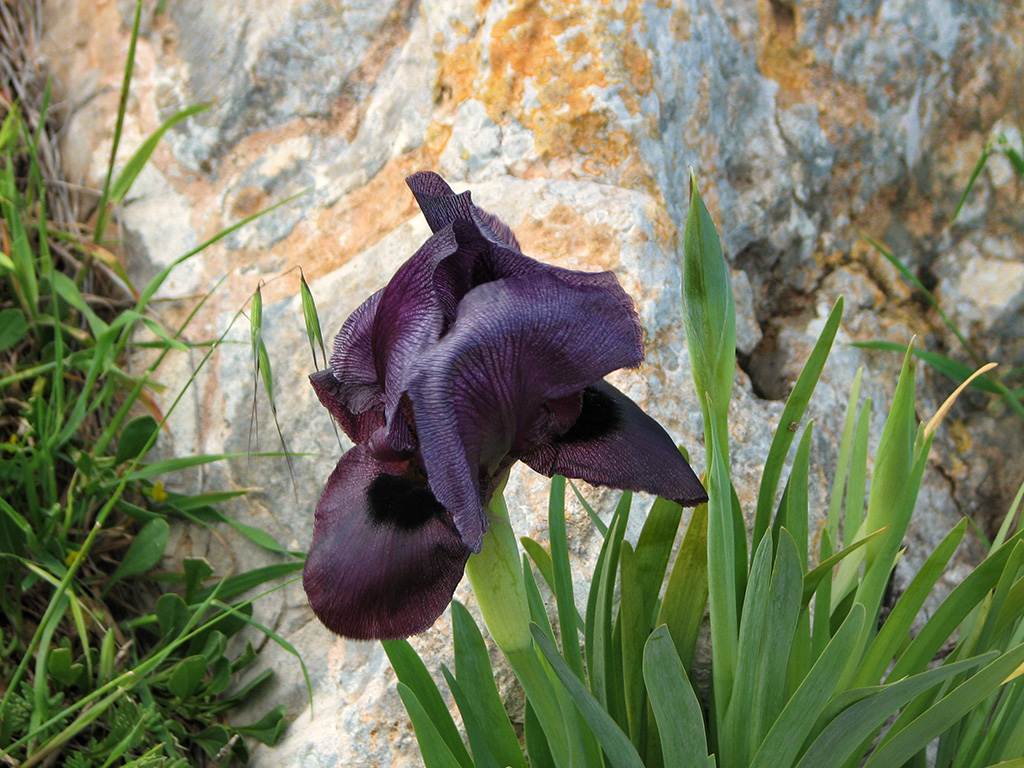
The most famous flower of Mount Gilboa is the Gilboa Iris (Iris haynei). When a guide friend saw me at the hotel and asked where I had been he asked if I had seen the black Iris. My answer is still no, but I would like to. The photo below is available on Wikipedia. It is one of those flowers I wish I had made.

The Gilboa Iris. udi Steinwell / CC BY (https://creativecommons.org/licenses/by/2.5)

Here I am treading on floral landmines and I will gladly defer to several people I know who are much better informed about the flora of Israel. But I wanted to share a couple of photos that I made on Mount Gilboa.

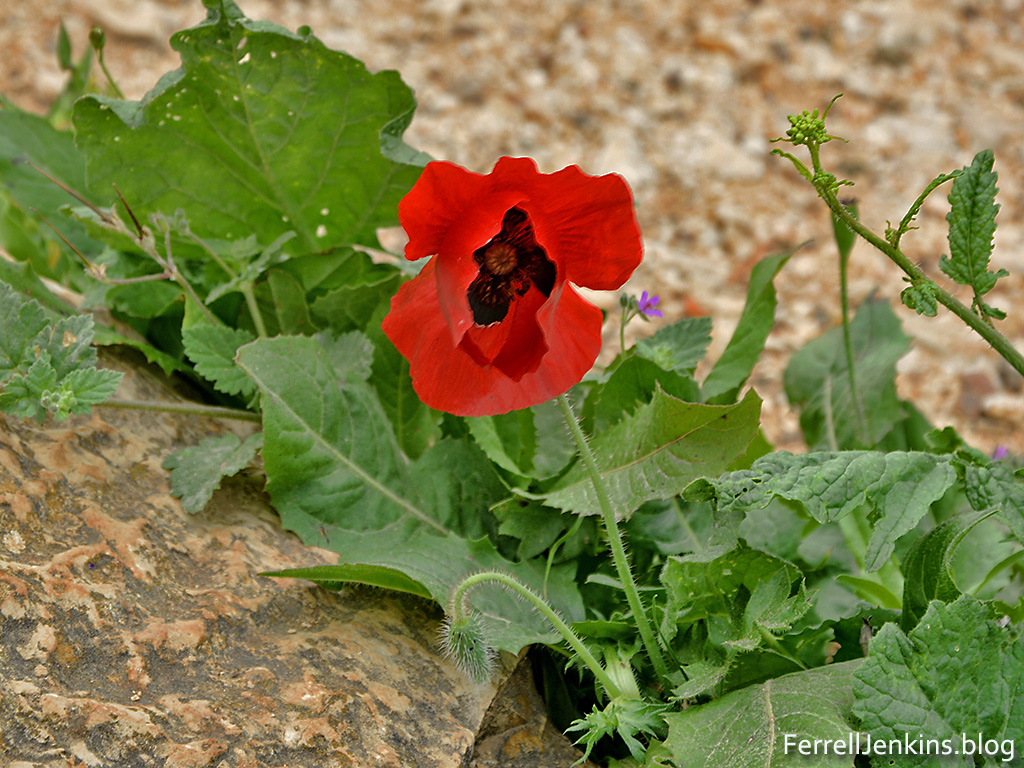
Spring flower on Mount Gilboa. Photo: ferrelljenkins.blog.

Spring flower, possibly a Crown Anemone, on Mount Gilboa. Photo by Ferrell Jenkins

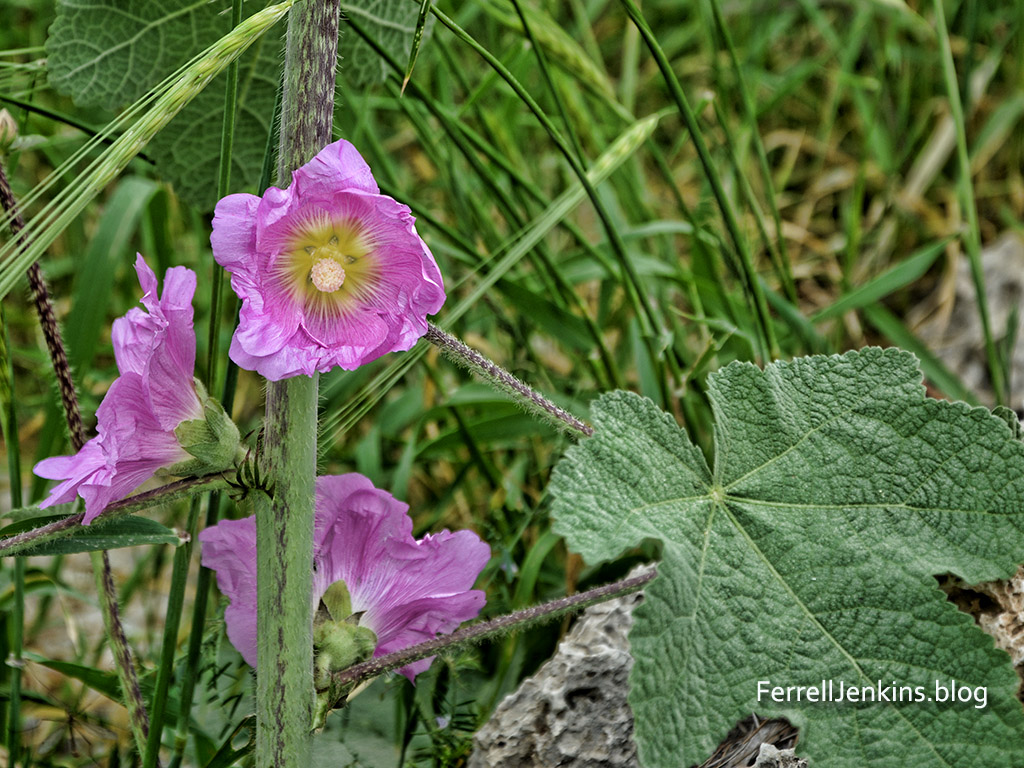
Spring flower on Mount Gilboa. Photo: ferrelljenkins.blog.

Perhaps a Hollyhock on Mount Gilboa in the spring. Photo by Ferrell Jenkins.

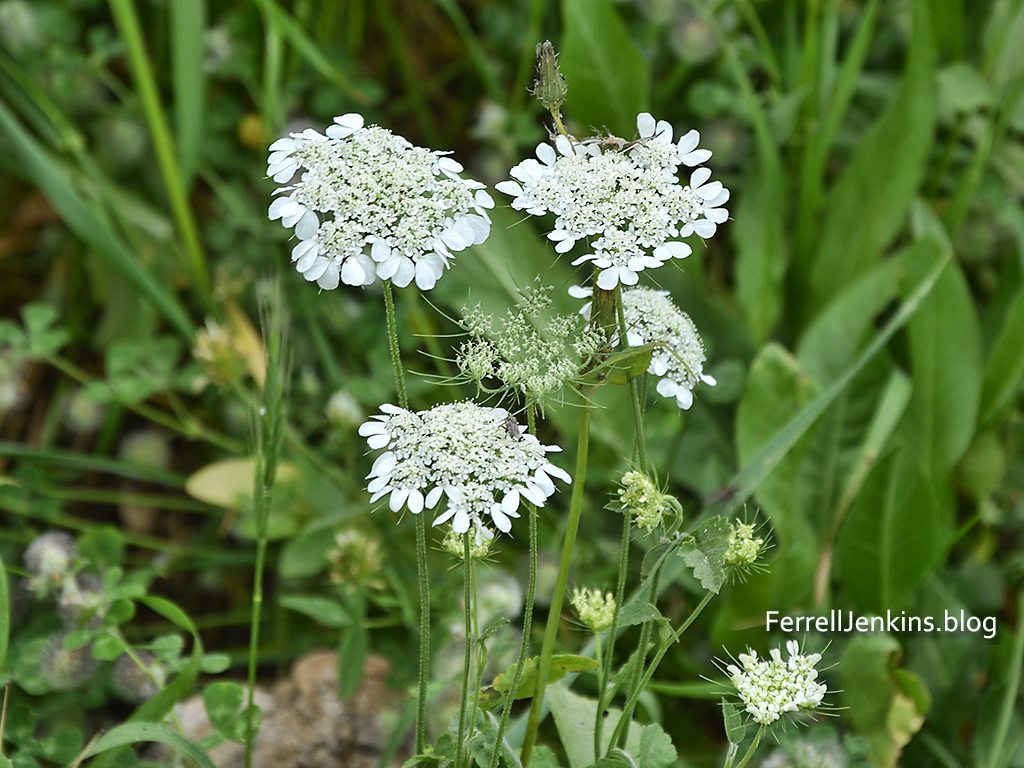
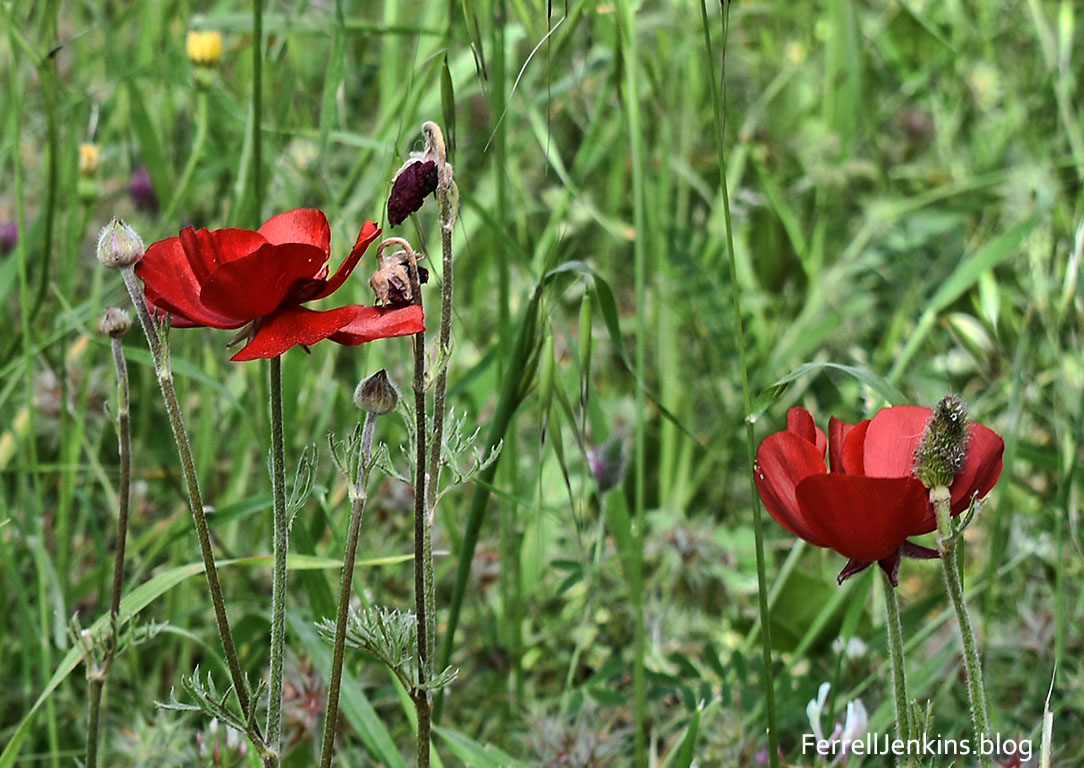
Spring flowers on Mount Gilboa. Photo: ferrelljenkins.blog.

White spring flowers, possibly in the Ainsworthia group, growing on Mount Gilboa. Photo by Ferrell Jenkins.

Kind comments are now open.

Agreement of Book and Land: Have you heard of the Atad tree?

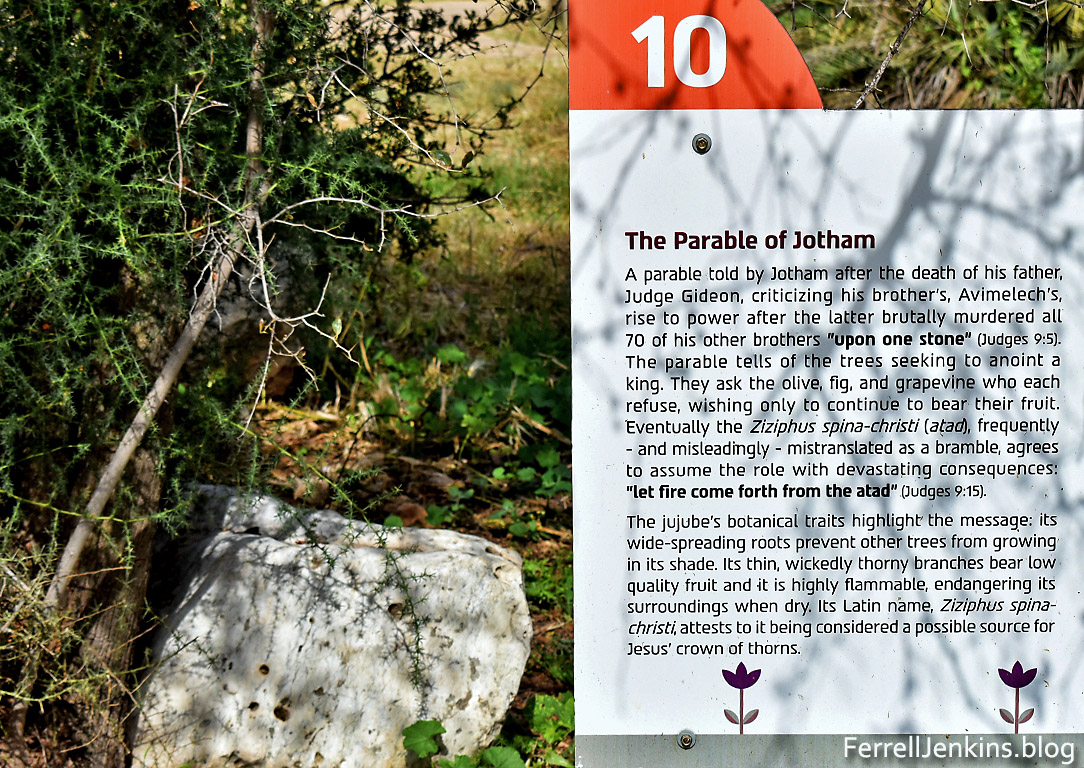
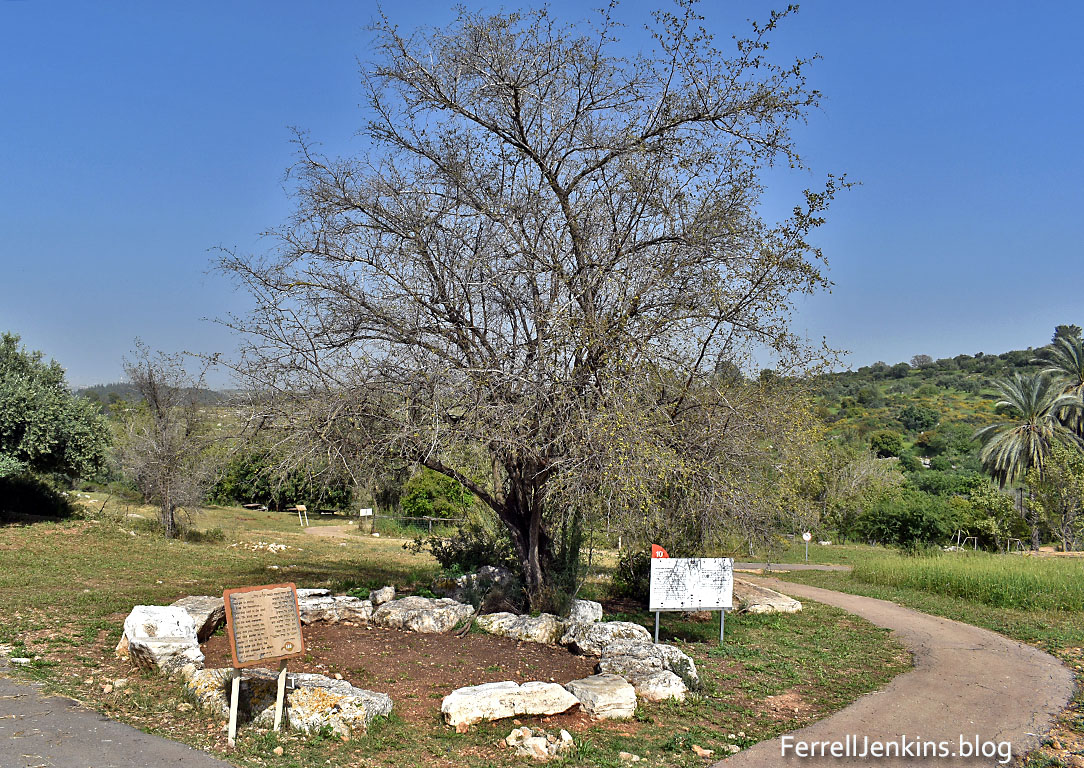
At Neot Kedumim most of the trees are identified by name and often with references to biblical events. I enjoyed seeing the Atad tree. The sign at the base of the tree explains an important biblical event which names the atad tree.

The atad tree in the parable of Jotham. Photo: ferrelljenkins.blog

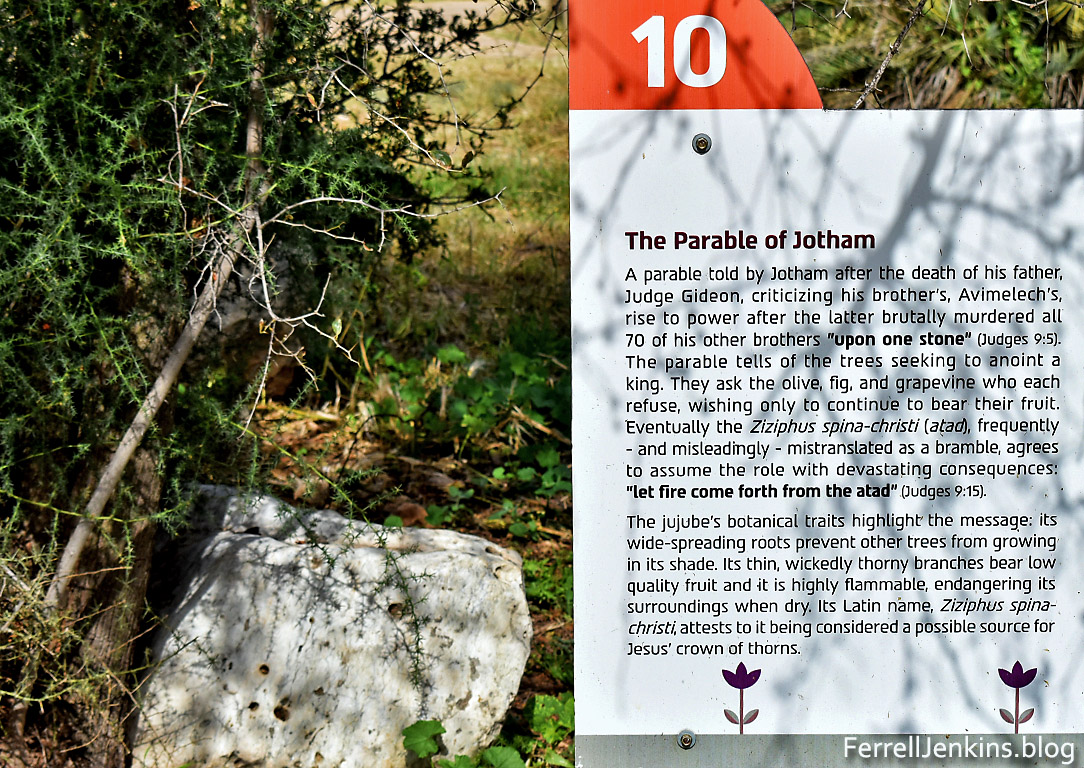
This sign explains the biblical reference to the atad tree in the parable of Jotham in Judges 9. Photo by Ferrell Jenkins.

For ease of reading here is the first paragraph of the sign. Some of the spellings have been changed to make the information more easily understood by English readers.

A parable told by Jotham after the death of his father, Judge Gideon, criticizing his brother Abimelech’s rise to power after the latter brutally murdered all 70 of his other brothers “upon one stone” (Judges 9:5). The parable tells of the trees seeking to anoint a king. They ask the olive, fig, and grapevine who each refuse, wishing only to continue to bear their fruit. Eventually the Ziziphus spina-christi (atad), frequently – and misleadingly – mistranslated as a bramble, agrees to assume the role with devastating consequences: “let fire come forth from the atad” (Judges 9:15).

The Hebrew text uses the term atad for the plant. Common English translations include bramble, thronbush, and thorn bush. Some writers think of the atad as a tree, such as the one you see here.

The Atad tree at Neot Kedumim. Photo: ferrell jenkins..blog.

The Atad tree at Neot Kedumim. Photo by Ferrell Jenkins.

For other references to the Ziziphus spina-christi see our photos and information here and here (note the last photo in that post).

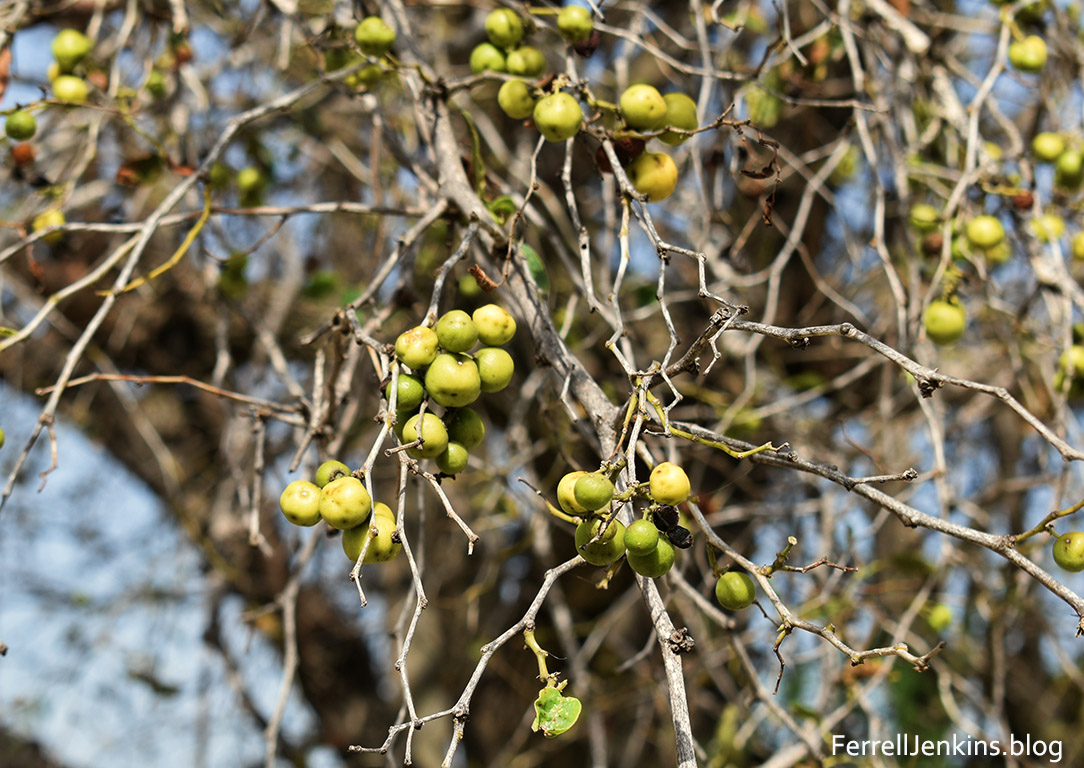
The next photo shows some of the worthless fruit on the atad tree at Neot Kedumim. In contrast the fruit of the olive, the fig and the grape vine was very useful.

The fruit of the Atad tree of Joshua 9:14-15. Photo by Ferrell Jenkins at Neot Kedumim.

The fruit of the Atad tree of Joshua 9:14-15. Photo by Ferrell Jenkins at Neot Kedumim.

Ferrell’s Favorite Foto # 32 – the beauty of the simple

The water of Laodicea, site of one of the seven churches mentioned in the book of Revelation, came from hot springs immediately south of the city. By the time the water reached Laodicea it was lukewarm.  Jesus described the church as being like the water supply of the city.

“I know your works: you are neither cold nor hot. Would that you were either cold or hot! So, because you are lukewarm, and neither hot nor cold, I will spit you out of my mouth.” (Revelation 3:15-16 ESV)

Laodicea was one of three cities of the Lycus River Valley in Asia Minor (Colossians 2:1; 4:15-16). Today this area is in Turkey. Toward the end of the first century the book of Revelation was sent to several churches of Asia (Revelation 1:11).

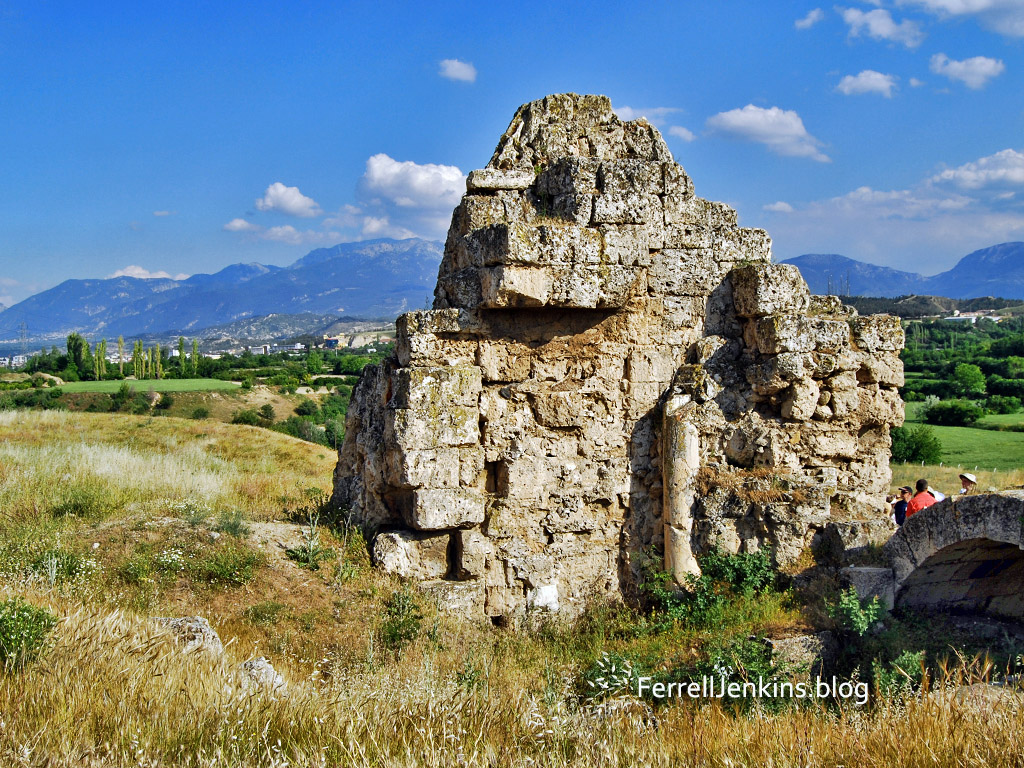
This photo shows part of the water distribution tower at ancient Laodicea. Mount Cadmus, location of Laodicea, is seen in the distance.

Part of the water distribution system of ancient Laodices in Asia Minor (modern Turkey). Photo: ferrelljenkins.blog.

Ruins of the ancient water distribution system at Laodicea. Mount Cadmus, the location of Colossae, is visible in the distance. Photo by Ferrell Jenkins.

Notice in the previous photo to the right of the ruins you will see several people gathered. They are looking at the calcified clay pipes that once distributed water to the residences of Laodicea. When the water left the spring it was warm, but by the time it arrived at Laodicea it was lukewarm.

How here is our favorite foto for today.

Some fern, grain and tiny flowers grown in the calcified pipe that once brought water to Laodices. Photo: ferrelljenkins.blog.

This picture shows one of the broken clay pipes in the water distribution system, now calcified. But notice the little plants growing in the pipe. Photo by Ferrell Jenkins.

A florist could hardly do better. This pipe apparently became so clogged that dirt could settle in it and provide a bed for these little plants.

Ferrell’s Favorite Foto # 30 – the cedars of Lebanon

We have written several posts about the cedars of Lebanon which you may find by putting the word cedar in the search box. Possibly the best article to begin with is here.

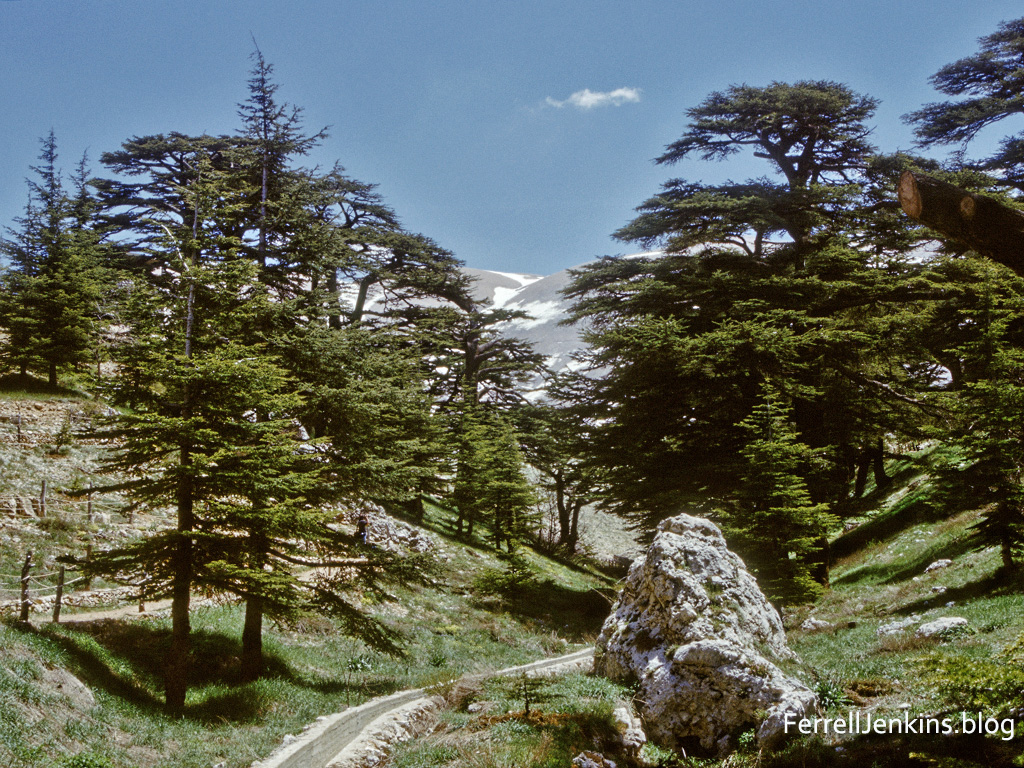
I ran across this photo made in 2002. It shows part of the clump of famous trees at Besharre, Lebanon, with a view of the mountain still partially covered with snow in May.

The Cedars of Lebanon. ferrelljenkins.blog.

Besharre, Lebanon. Photo by Ferrell Jenkins.

Some photos are favorites because of the events surrounding the taking of the photo. Only twice have I been able to see the cedars. Once was in 1967 when my wife and I were joined by Louis and Margie Garrett and Joe Corley on a free half day to visit the area. As we strolled though the old trees we enjoyed some sun, then a sudden shower. A shop keeper opened and allowed us to warm up in his place. He even prepared some meat (something like spam I recall) wrapped in pita bread, Under the circumstance it was really good. This was not an easy trip to forget.

David McClister and I made a personal trip to the area May 8, 2002 and this slide is from that trip.

This is one of the places I would like to revisit.

The photo is sized for use in PPT for teaching purposes.

David leaves 200 men at the Brook Besor

In addition to the tours I led between 1967 and 2016 I have made numerous personal study trips with a variety of friends beginning as early as 1984. The largest number of those trips have been made with Leon Mauldin. On these trips we visit places that are difficult to reach by bus or take an unusual amount of time to reach — too time consuming for a group looking to see all they can in a typical 10-12 day tour.

In September, 2011, Leon and I spent some time in the south of Israel. One of the fascinating places we visited was the Brook Besor. Israelis call it Nahal Besor. Various English versions of the Bible use the terms Brook, brook or Wadi to describe the stream. For anyone who might wish to visit the area I will explain how we got there.

Using the modern maps at your disposal locate Beersheba (Be’er Sheva), then take highway 25 NW to highway 241 and turn left. Our first photo was made on the north side of highway 241 after we crossed the Besor.
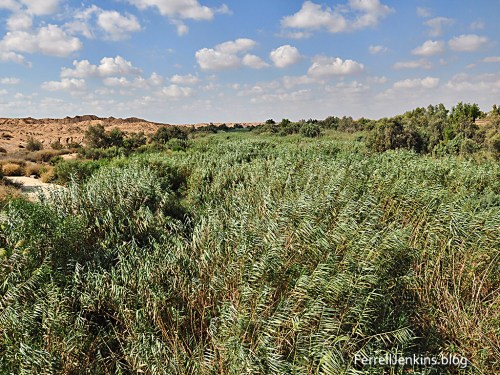
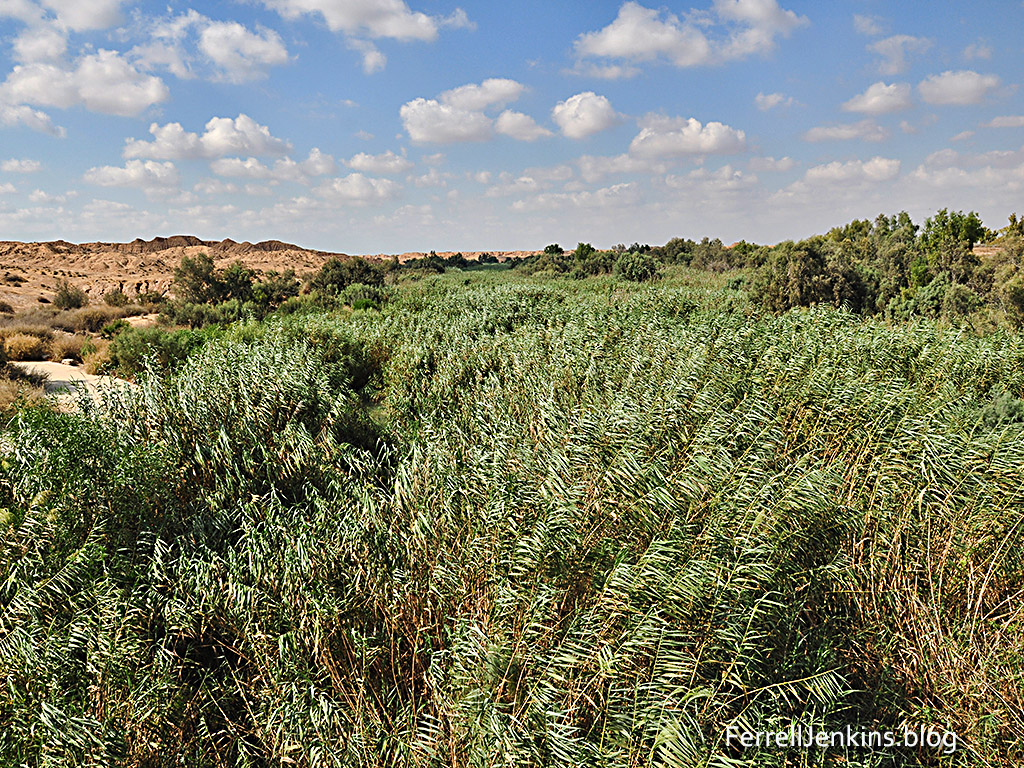
Brook Besor on the north side of highway 241. Photo: ferrelljenkins.blog.

The Brook Besor on the north side of highway 241. Notice the typical dry terrain of the Negev in the background. Photo by Ferrell Jenkins.

Water is flowing somewhere among these reeds and during the winter rains we may be sure that the water is visible. Notice the dry terrain in the distance.

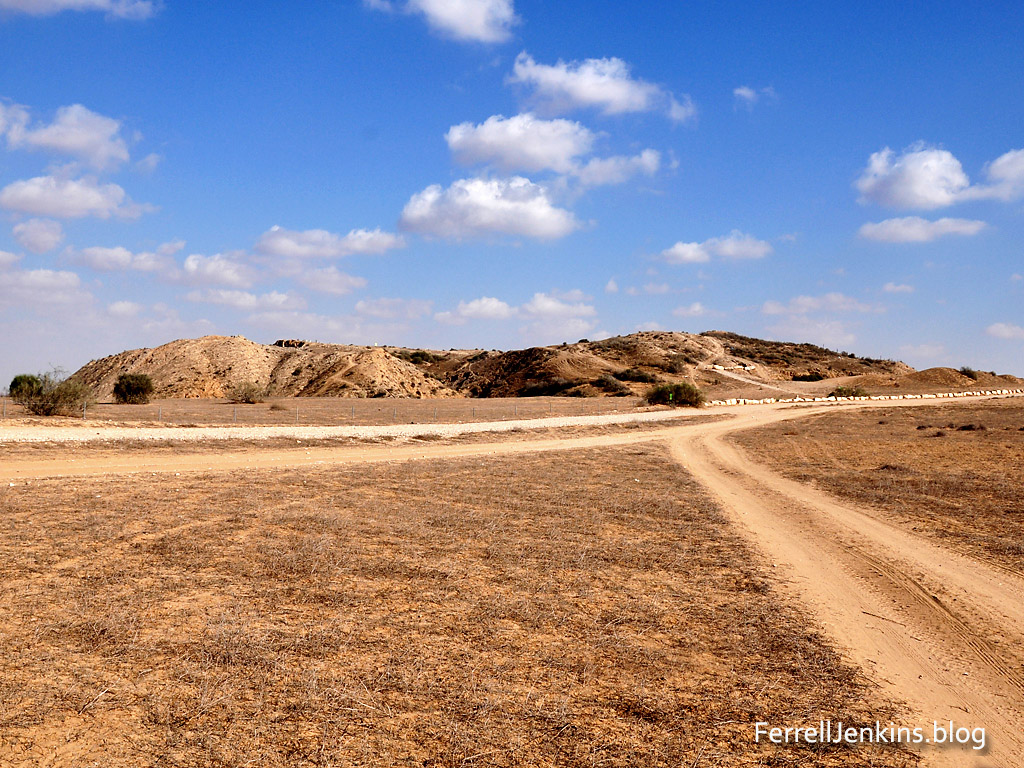
A short distance from the location of this photo, on the south side of the highway we saw this impressive mound. It is easy to reach, at least in dry weather, using the road across the fields.
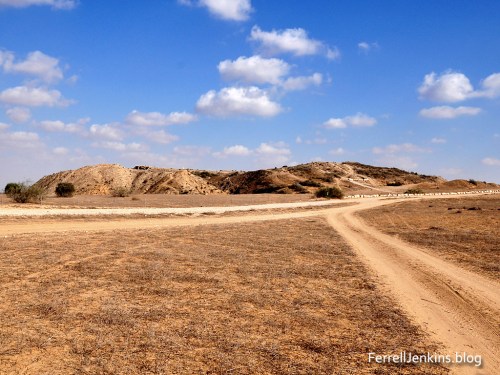
Tel Sharuhen on the banks of Nahal Besor. ferrelljenkins.blog.

Tel Sharuhen on the banks of Nahal Besor. Most of the reeds like those we have shown in the photo above are on the opposite side of the tel. Photo by Ferrell Jenkins.

The Arab name for this archaeological mound is Tell el-Farah (South) to distinguish it from Tell el-Farah (North), the site of biblical Tirza near Shechem (1 Kings 15:33).

The Archaeological Encyclopedia of the Holy Land (1990) entry begins with this description of the Tell el-Farah (South).

The site is some 14 miles south of Gaza and 16 miles west of Beer-Sheba, near the ancient Via Maris (Roads) connecting Egypt and Mesopotamia. W.M.F. Petrie identified Tell el-Farah with Beth-Pelet (Josh. 15:27; Authorized Version: ‘Beth-Palet’), but W.F. Albright’s identification with Sharuhen (Josh. 19:6) is now accepted by most scholars. Apart from the biblical reference, Sharuhen appears three times in Egyptian sources of the New Empire: in the description of the Hyksos expulsion from Egypt, when Amosi besieged the Hyksos for three years at Sharuhen; in the records of the first campaign of Tuthmosis III; and in those of the campaign of Pharaoh Sheshonq.

Sharuhen is mentioned only once in the Bible as a city of the tribe of Simeon (Joshua 19:1-8; see especially verse 6).

This area looks rather hidden from society, but it was on two major international highways in biblical times.

Leon and I were looking for the possible site where David left 200 men who were too exhausted to make the trek to chase those who had burned Ziklag and taken several captives including two wives of David (1 Samuel 30; see especially verses 9, 10, and 21). I can easily envision this area being the place of the crossing of the Besor.
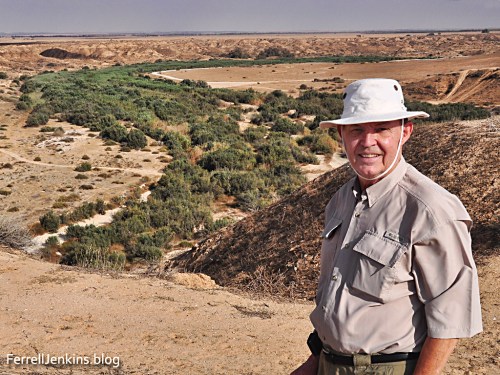
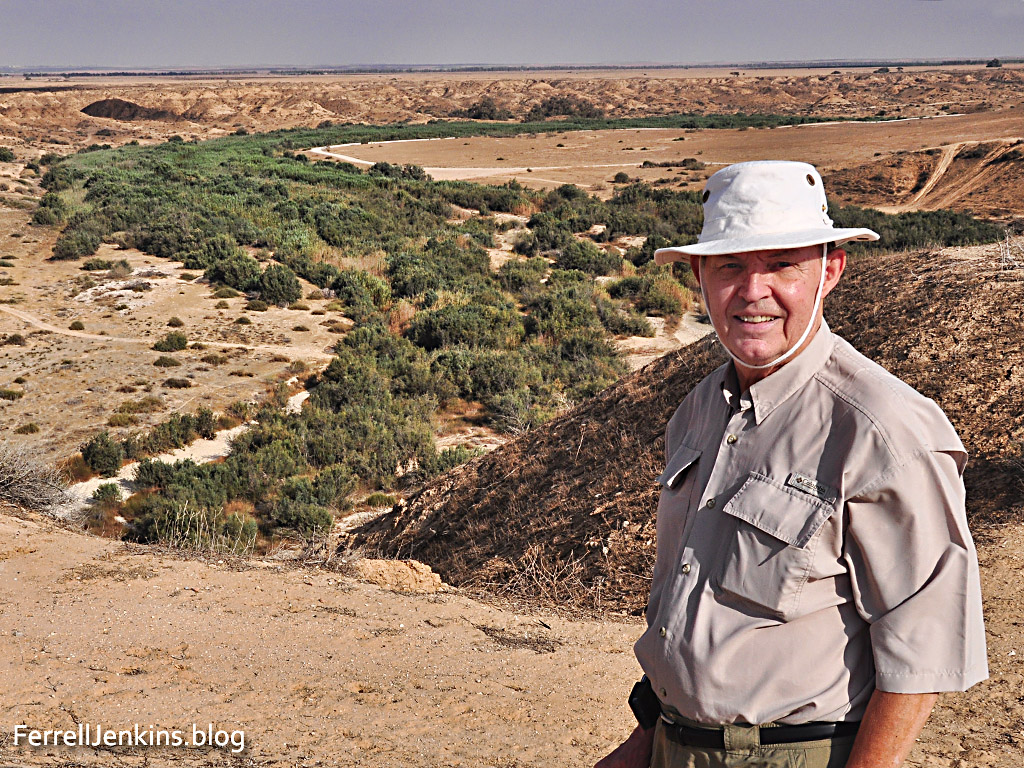
Ferrell Jenkins at Tel Sharuhen. ferrelljenkins.blog.

Brook Besor on the north side of Tel Sharuhen. This picture including Ferrell Jenkins was apparently made by Leon Mauldin. You have a nice view of the Brook Besor. Photo: ferrelljenkins.blog.

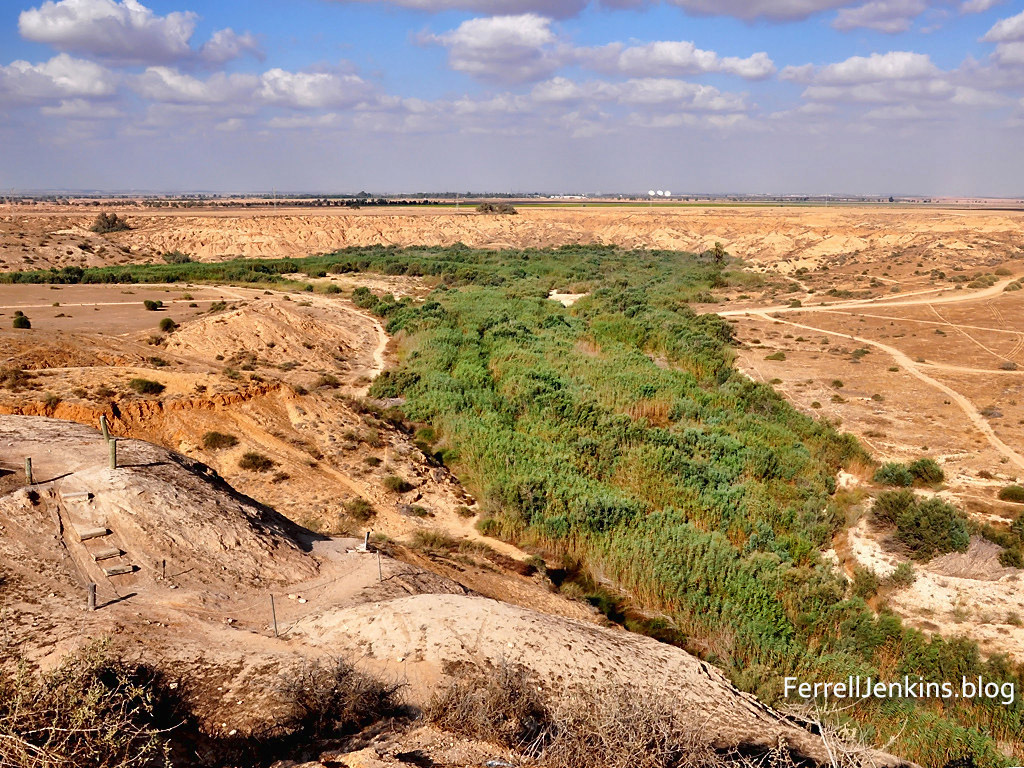
From the south side of the tel we took the steps (lower left corner of the photo) to the top.
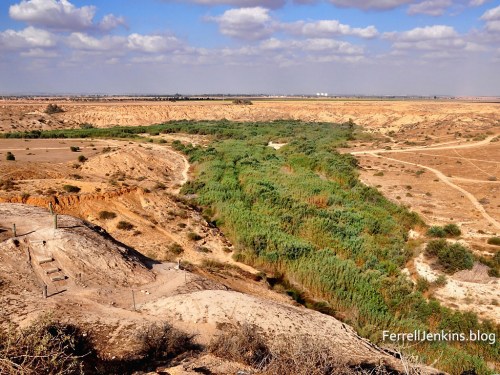
Approach to Tel Shuarhen from the south. View of Brook Besor. Photo ferrelljenkins.blog.

Approach to Tel Sharuhen from the south. View of Brook Besor. Photo by Ferrell Jenkins.

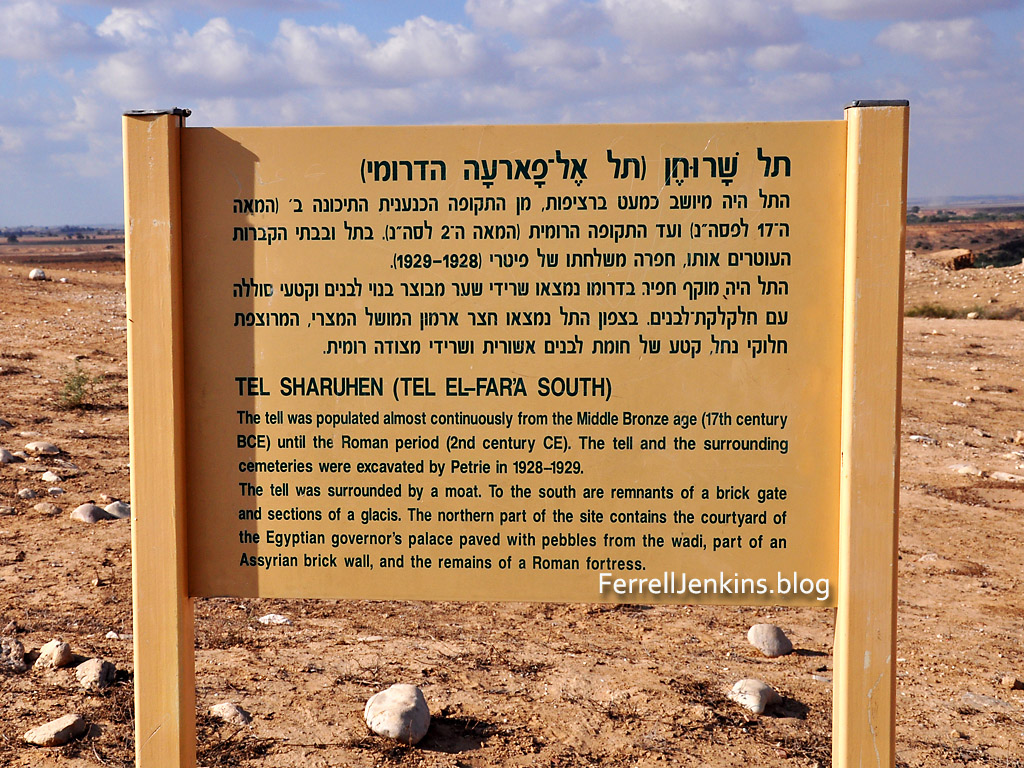
The following signs in Hebrew and English identify the site as Tel Sharuhen.
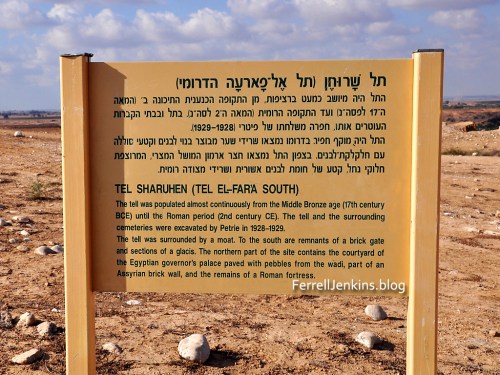
Sign identifying Tel Sharuhen. Photo: ferrelljenkins.blog.

A nice sign identifying the tel as Tel Sharuhen. Photo by Ferrell Jenkins.

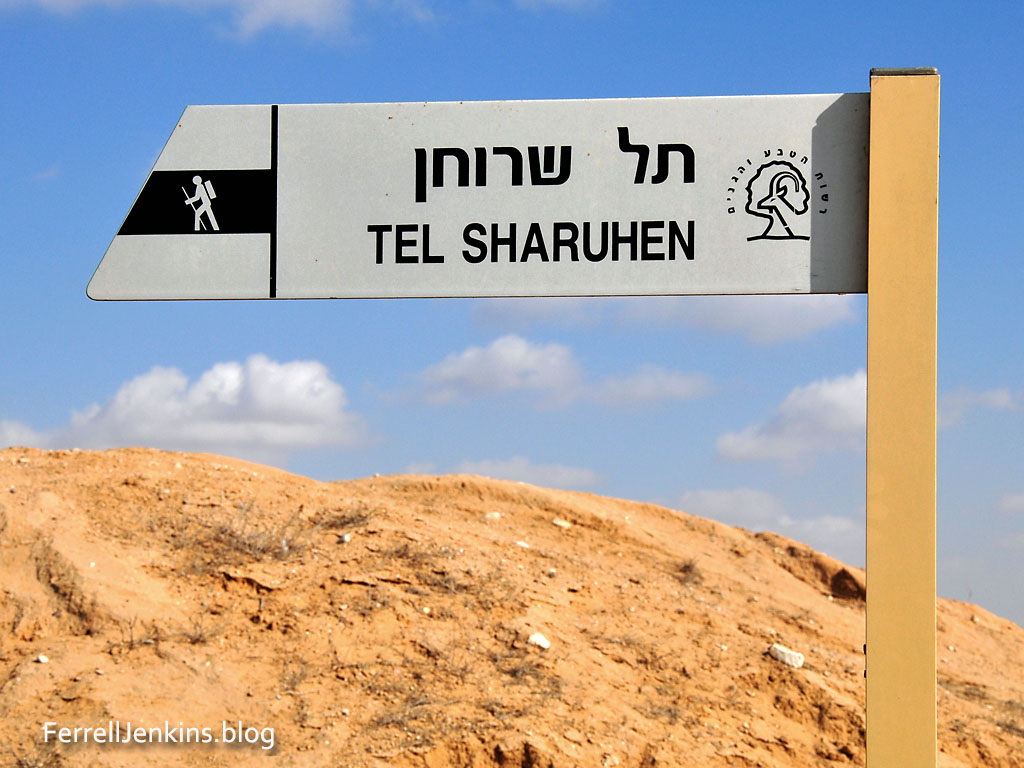
I was delighted when I saw these signs were  new.
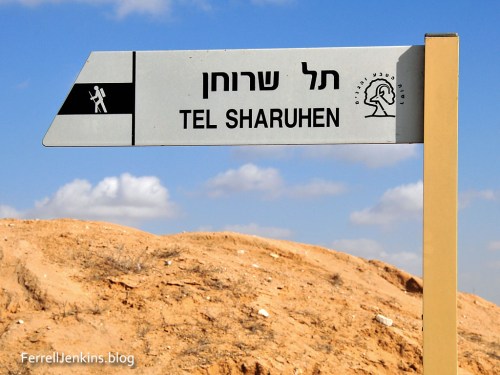
Sign identifying Tel Sharuhen. Photo: ferrelljenkins.blog.

Sign in Hebrew and English identifying the mound as Tel Sharuhen. Photo by Ferrell Jenkins.

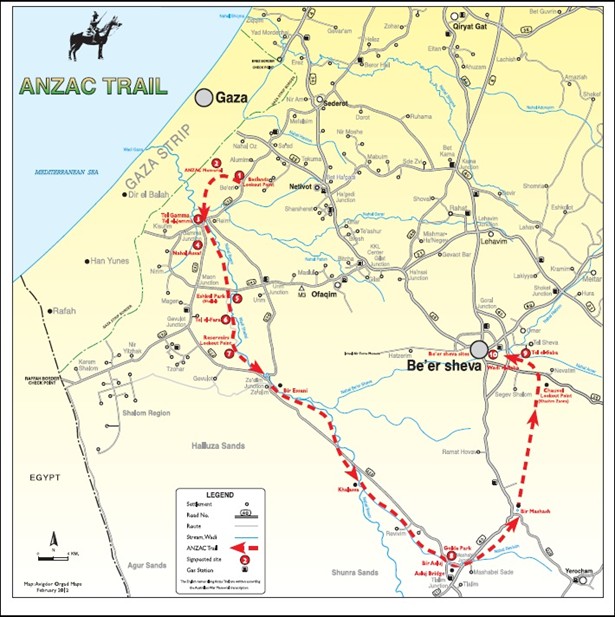
There are also signs at the site identifying Tel Sharuhen as part of the ANZAC Trail. This trail was made famous in 1917 when a light horse brigade of mostly Australian and New Zealand aboriginals defeated the Germans in the region.
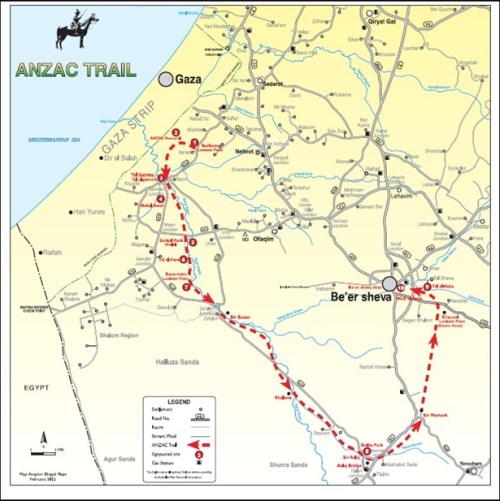
The Anzac Trail of 1917. Tel Sharuhen is marked as number 6.

For those with further interest in the historic battle of 1917 I suggest two links. This link in the Times of Israel tells about the centennial retracing the route of the battle by descendants of the Aboriginal ANZAC soldiers in 2017.

More general information about the ANZAC Trail, including directions and a PDF of the map above, may be read here.

The seven photos in this post are sized suitable for use in a PowerPoint presentation for teaching.

Agreement of Book and Land – # 1

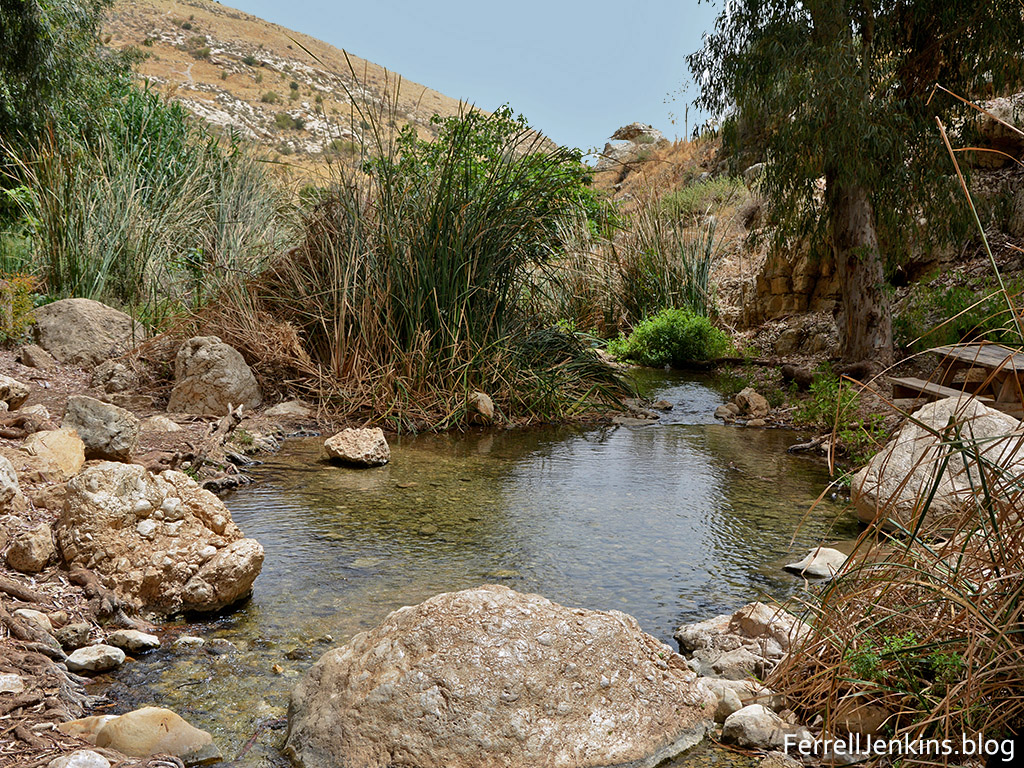
The Scripture and photo below of a perennial stream from En Prat illustrates perfectly the person described in Psalm 1.

Blessed is the man who walks not in the counsel of the wicked, nor stands in the way of sinners, nor sits in the seat of scoffers; but his delight is in the law of the LORD, and on his law he meditates day and night. He is like a tree planted by streams of water that yields its fruit in its season, and its leaf does not wither. In all that he does, he prospers. (Psalm 1:1-3 ESV)

Trees planted by the river. ferrelljenkins.blog.

En Prat where Wadi Kelt begins to flow down past Jericho and to the Jordan Valley. Photo by Ferrell Jenkins.

Ferrell’s Favorite Foto #22

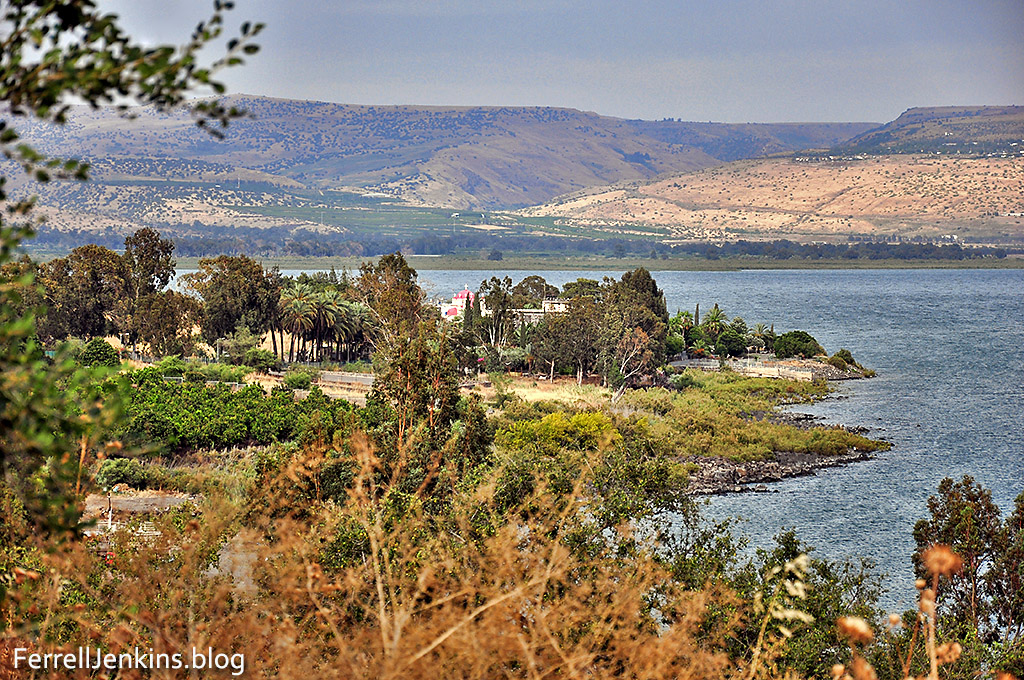
This unusual photo of Capernaum was made from the hill above, up toward the Mount of Beatitudes. The photo shows the northeast corner of the Sea of Galilee with the Golan Heights visible.

Capernaum became the Galilean center for the ministry of Jesus.

And leaving Nazareth he went and lived in Capernaum by the sea, in the territory of Zebulun and Naphtali, (Matthew 4:13 ESV)

Capernaum from above the location on the Sea of Galilee. Photo: ferrelljenkins.blog.

View to the east of Capernaum from above the site. Photo by Ferrell Jenkins.

This photo was made May 15, 2010. The sky was fairly clear and the eastern shore of the Sea of Galilee is visible with perhaps a portion of the Plain of Bethsaida. Those are dried thistles in the foreground of the photo.

Olive installation at Neot Kedumim

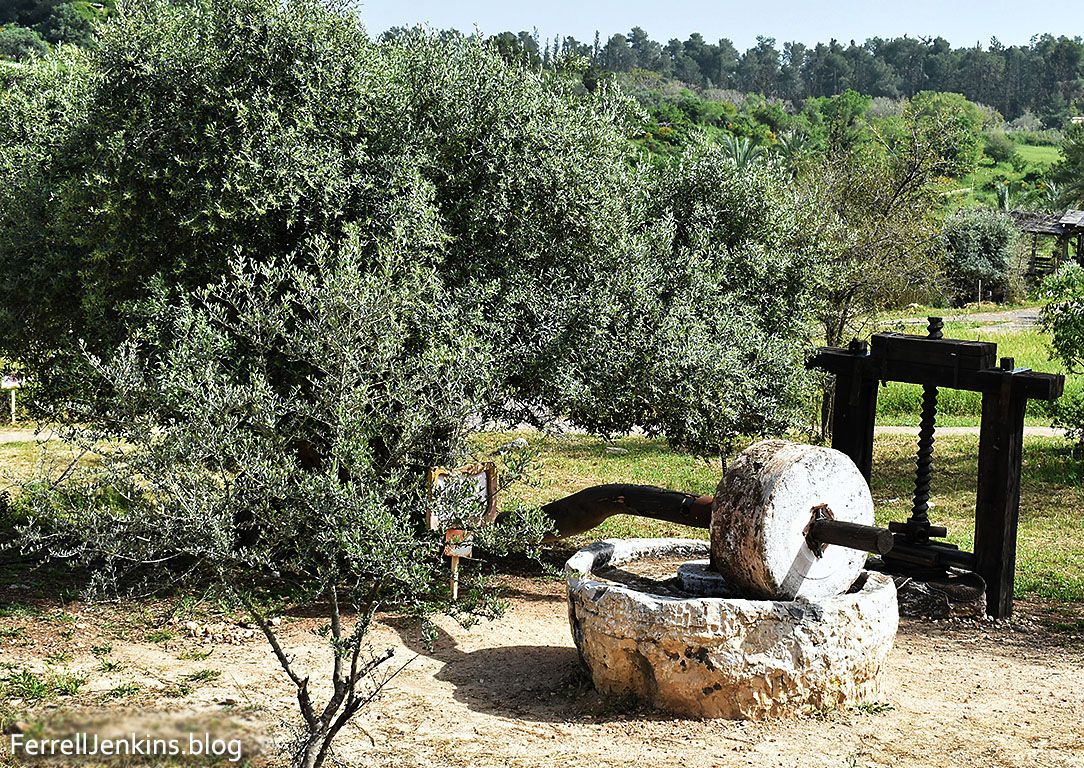
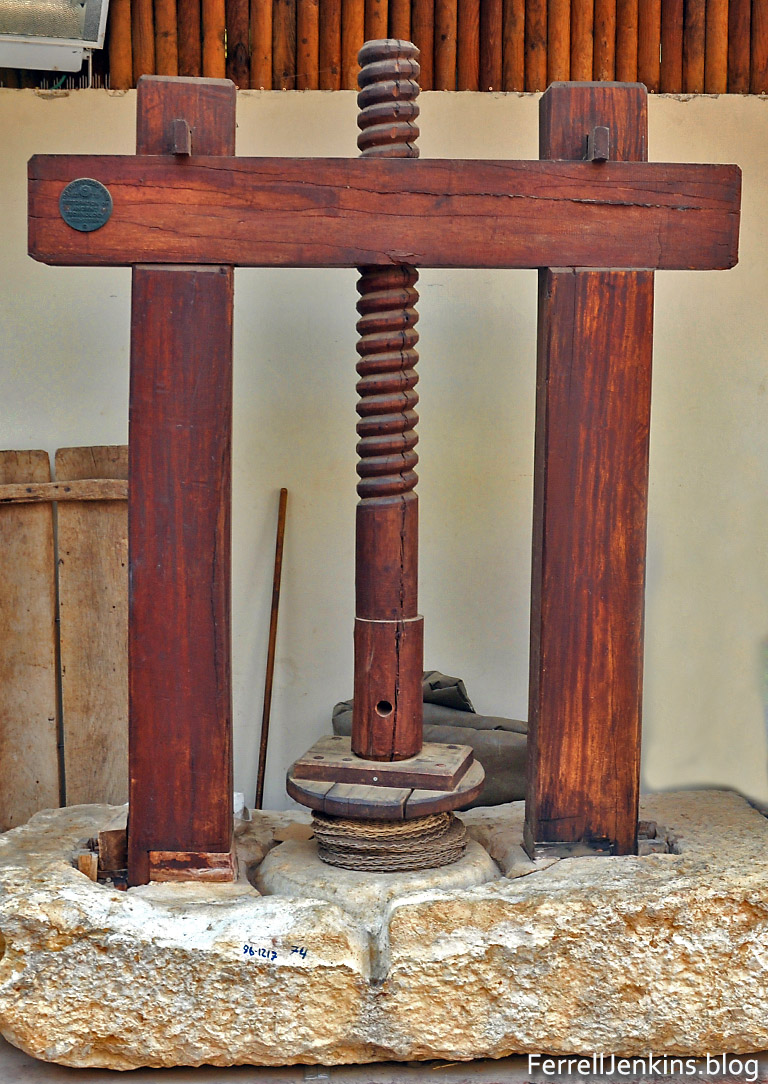
For millennia olives have been so important in Israel and the West Bank that we see ancient crushing installations at various places we visit. Some of the presses are in small museums. I was impressed with the installation in the park at Neot Kedumim. At a distance it had an idyllic look.

Olive tree, crushing stone, and press at Neot Kedumim. Photo: ferrellJenkins.blog.

Olive tree, crushing stone, and press at Neot Kedumim. Photo by Ferrell Jenkins.

It is possible that some families had their own setup for producing olive oil. First, there was an olive tree, certainly large enough to produce a lot of olives, then a crushing stone that could be rolled over the olives by a person or pulled by an animal. It was also essential that they have a press. In this case the press was of the screw type. The crushed olives were placed in bags and then pressed.

Lucas P. Grimsley explains the importance of various agricultural products, including olive oil, produced in Palestine.

By NT times, Palestine was a part of the Greco-Roman world, and it played an important role in Rome’s trade network in the east. Ancient records indicate that Palestine primarily imported luxury goods (wine from Italy, beer from Media, baskets from Egypt, sandals from Laodicea), in addition to natural resources such as wood and metal. Exports continued to be primarily agricultural (olive oil, wheat, honey, figs). Despite the difference in goods, the trade balance was generally in favor of Palestine.
Specific references to trade are limited in the NT, but they attest to the fact that trade was a part of  everyday life. (Dictionary of Daily Life in Biblical and Post-Biblical Antiquity, Vol. IV: 299-300).

Below is a photo of the same type olive press. It is one of several types of presses displayed at the Ein Dor Museum of Archaeology.

Olive Press at Ein Dor Archaeological Museum. Photo: ferrelljenkins.blog.

An olive press displayed at Ein Dor Museum of Archaeology. Photo by Ferrell Jenkins.

While browsing the recent Dictionary of Daily Life in Biblical and Post-Biblical Antiquity I came across this survey of the olive and its importance in Bible times.

The olive is one of the first trees mentioned in the Bible ( Gen 8: 1 1 ), in the passage in which the dove returns to Noah with an olive branch. The olive (Heb. zayit; Olea europaea) is the best-known and one of the most important trees of the Mediterranean Basin and Middle East. Olives were highly valued, and the harvesting and pressing out of olives was a significant part of the life of rural families. The pulp contains about 40 percent oil, which was used for lamps, cooking, and medicinal purposes, as well as
anointing in religious ceremonies. The psalmist proclaims that he is like an olive tree because he trusts in God’s unfailing love (Ps 52:8). (GCT, Dictionary of Daily Life in Biblical and Post-Biblical Antiquity, Vol. 4, p. 309.)

Over the years we have posted several times about olives and the olive trees. Check our index page on the subject here.

Learning from the Wildflowers of the Field

Thanks to a number of new followers we are only 25 shy of 3000. Thanks to those who shared my note about this. Here is the post I promised about the flowers of the field.

— • —

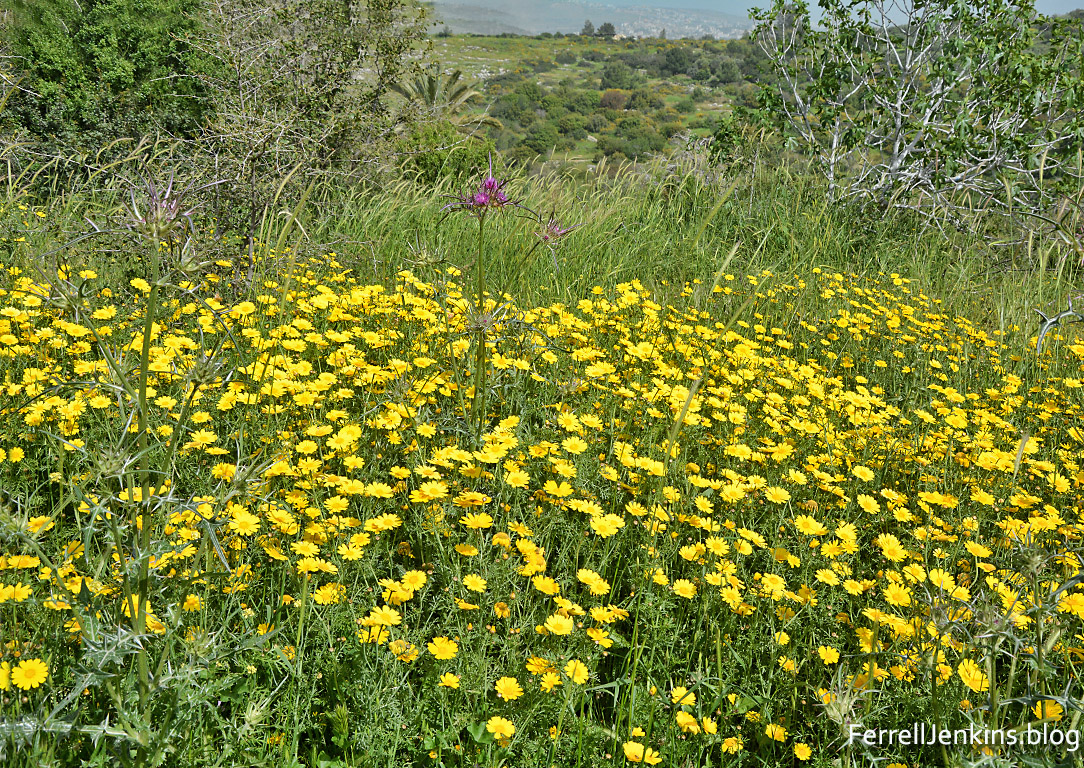
In the spring of the year many beautiful flowers adorn the fields in Israel. After a winter of heavy rains, I think the flowers I saw in late March and early April this year were the most abundant. Jesus spoke of the flowers of the field.

And why are you anxious about clothing? Consider the lilies of the field, how they grow: they neither toil nor spin, (Matthew 6:28 ESV)

Louw-Nida Lexicon says the Greek word krinon, which is often translated lilies, is “any one of several types of flowers, usually uncultivated – ‘wild flower.'” After listing several possibilities, BAGD says, “Perhaps Jesus had no definite flower in mind, but was thinking of all the wonderful blooms that adorn the fields of Galilee.

Here are a couple of English versions that reflect the understanding of the lexicons.

Why do you worry about clothing? Think about how the flowers of the field grow; they do not work or spin. (Matthew 6:28 NET)

And why do you worry about clothes? Learn how the wildflowers of the field grow: they don’t labor or spin thread. (Matthew 6:28 CSB)

Without much comment I will show you a few of the flowers I saw at Neot Kedumim. For a larger image suitable for use in teaching just click on each photo.

Flowers of the field at Neot Kedumim. ferrelljenkins.blog.

Beautiful yellow flowers adorn the hillsides at Neot Kedumim. Photo by Ferrell Jenkins.

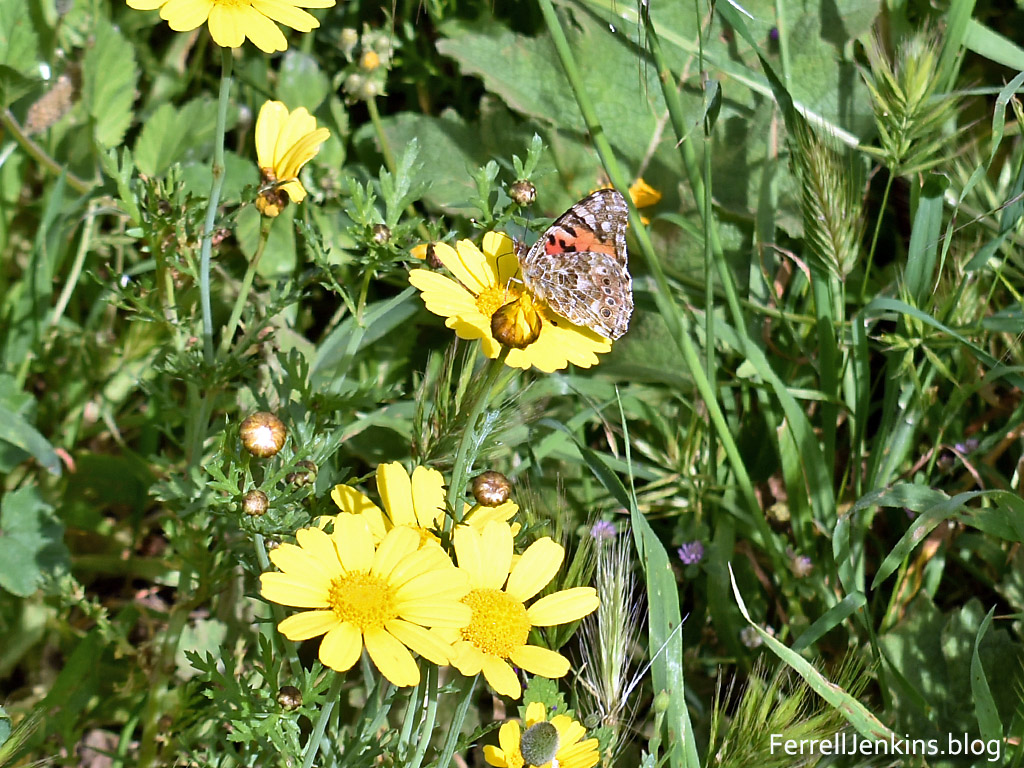
Look closely and you will see a butterfly enjoying the flowers.

Flowers at Neot Kedumim.

Butterflies enjoy the wildflowers of the field at Neot Kedumim. Photo by Ferrell Jenkins.

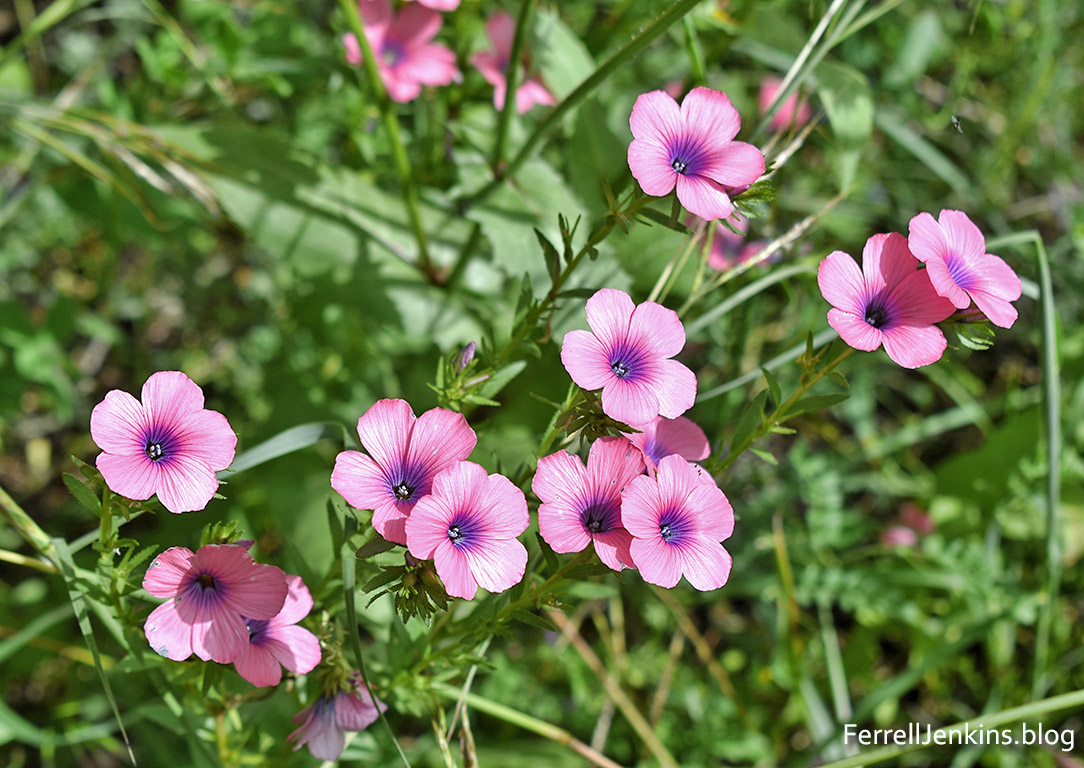
Pink is a nice color, too.

Wildflowers of the Field. ferrelljenkins.blog.

Pink flowers of the field at Neot Kedumim. Photo by Ferrell Jenkins.

It is common to associate the Anemone with the “lily” of the field Jesus mentioned.

Flowers of the field. ferrelljenkins.blog.

The Anemones were scattered here and there along the trail at Neot Kedumim. Photo by Ferrell Jenkins.

Now, notice how Jesus used the flowers of the field to teach about worry and over concern about the things of this life.

Can any of you add a single cubit to his height by worrying?
28 And why do you worry about clothes? Learn how the wildflowers of the field grow: they don’t labor or spin thread.
29 Yet I tell you that not even Solomon in all his splendor was adorned like one of these!
30 If that’s how God clothes the grass of the field, which is here today and thrown into the furnace tomorrow, won’t He do much more for you– you of little faith?
31 So don’t worry, saying, ‘What will we eat? ‘ or ‘What will we drink? ‘ or ‘What will we wear?’
32 For the idolaters eagerly seek all these things, and your heavenly Father knows that you need them.
33 But seek first the kingdom of God and His righteousness, and all these things will be provided for you.
34 Therefore don’t worry about tomorrow, because tomorrow will worry about itself. Each day has enough trouble of its own. (Matthew 6:27-34 CSB)

The next time you see beautiful flowers think about this.

Cedar and Hyssop

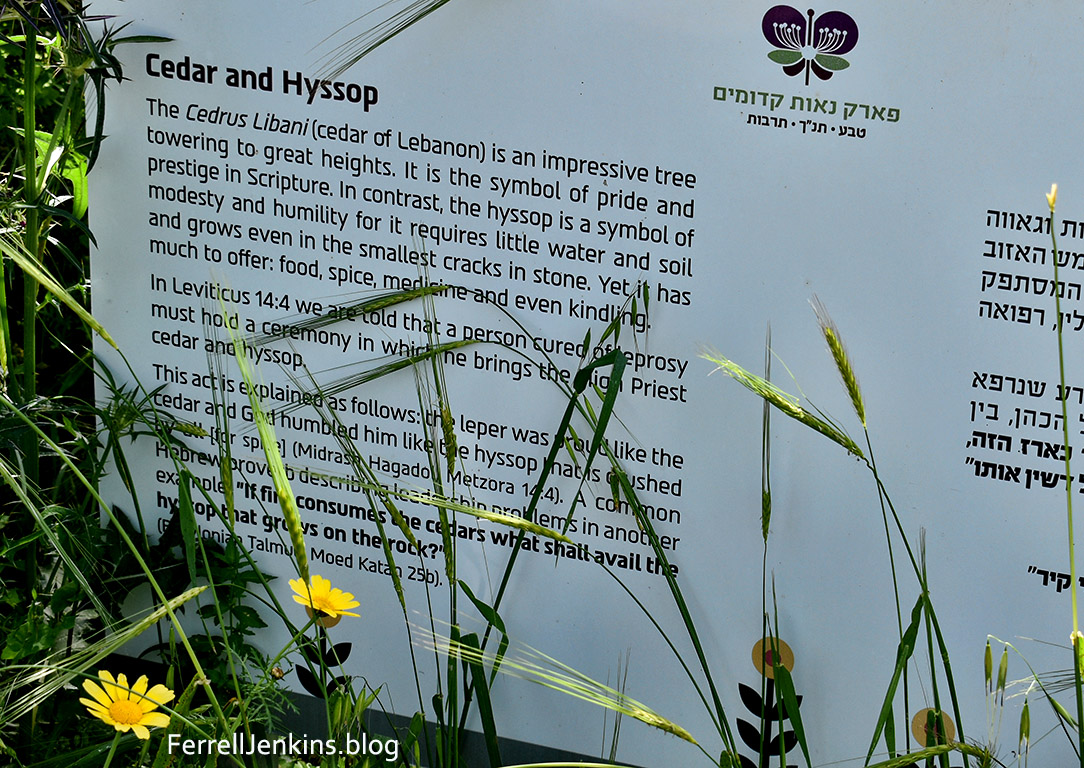
At Neot Kedumim the sign identifying the Cedar also mentions Hyssop which is growing among the trees.

You may click on the image for a larger one. Here is a copy of the text:

Cedar and Hyssop

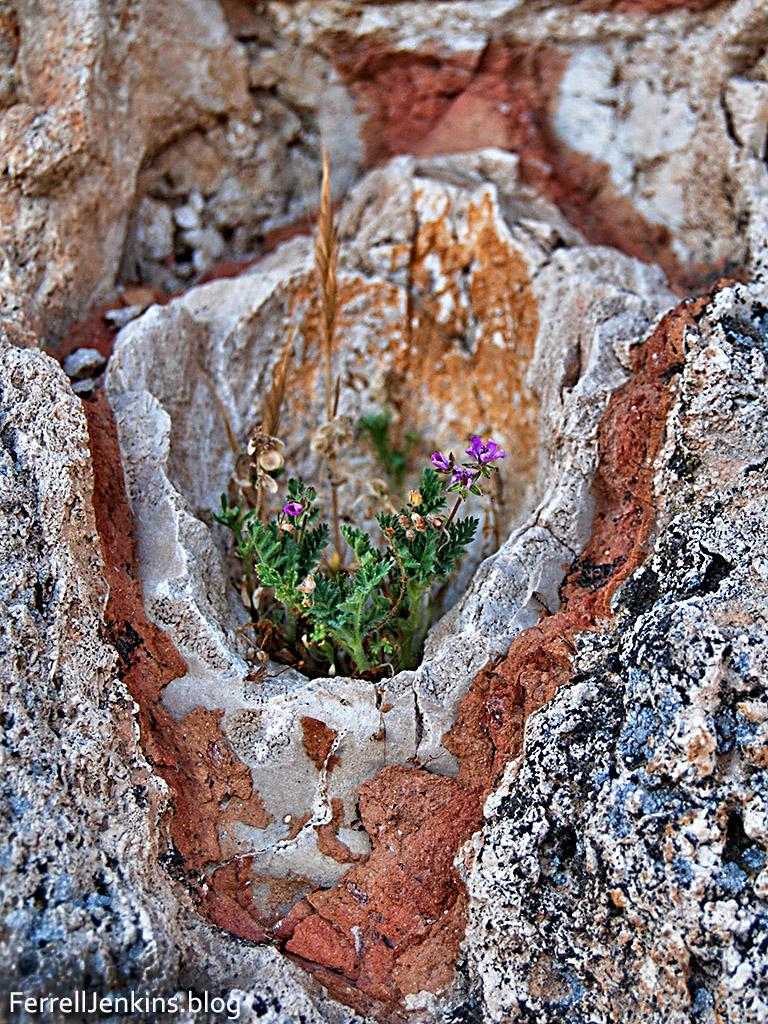
The Cedrus Libani (cedar of Lebanon) is an impressive tree towering to great heights. It is the symbol of pride and prestige in Scripture. In contrast, the hyssop is a symbol of modesty and humility for it requires little water and soil and grows even in the smallest cracks in stone. Yet it has much to offer: food, spice, medicine and even kindling.

In Leviticus 14:4 we are told that a person cured of Leprosy must hold a ceremony in which he brings the High Priest cedar and hyssop.

This act is explained as follows: the leper was proud like the cedar and God humbled him like the hyssop that is crushed by all [for spice] (Midrash Hagadol Metzora 14:4). A common Hebrew proverb describing leadership problems in another example: “If fire consumes the cedars what shall avail the hyssop that grows on the rock?” (Babylonian Talmud Moed Katan 25b).

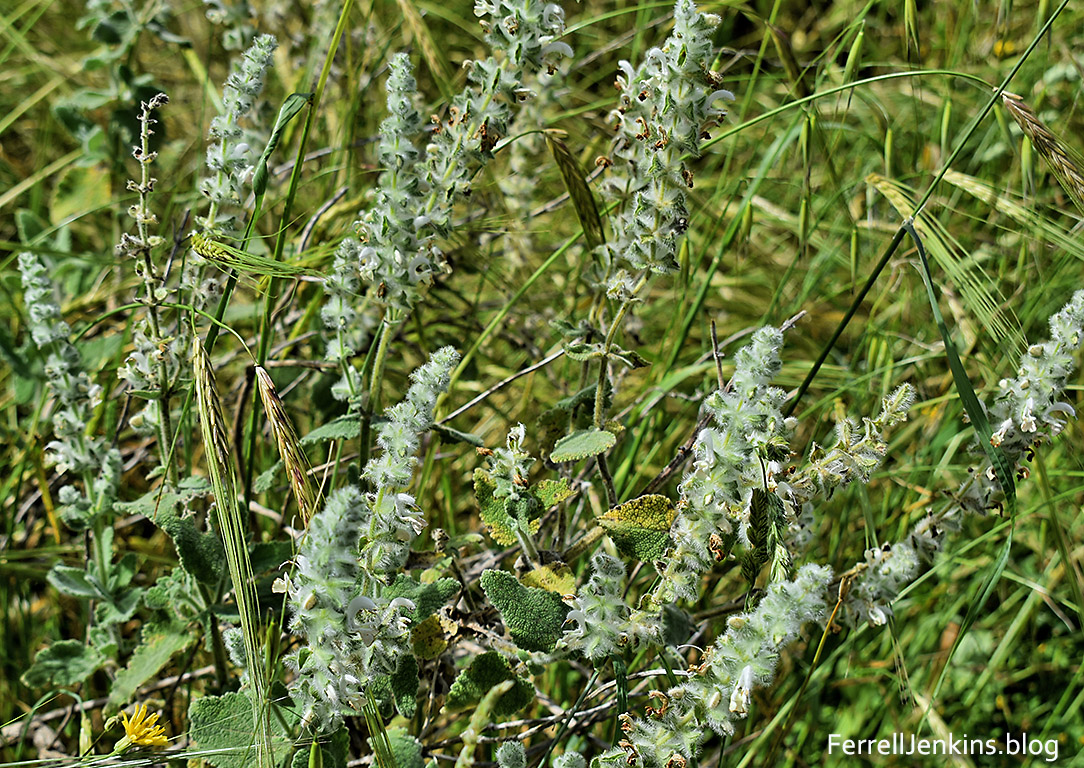
This hyssop is identified as Majorana syriaca or Organum syriacum. Frenkley says it is “a grayish shrub with thin woody branches” (see previous article here for the reference). She says,

It can survive with very little soil and water, sometimes growing out of the smallest cracks in stone, as though literally “out of the rock.” The hyssop is one of the most important edible plants of the Middle East, highly valued for its fragrance and flavor. It is used as a spice, as food, as a medicinal plant, and its dry branches make excellent kindling. Unassuming in size and color, useful in so many ways, the hyssop came to symbolize modesty and humility—in direct contrast to the haughty and glamorous cedar of Lebanon.

Hyssop at Neot Kedumim. Photo: ferrelljenkins.blog.

Hyssop growing near Cedar trees at Neot Kedumim. Photo by Ferrell Jenkins.

Hyssop is mentioned 12 times in the Bible and no less than seven of these times in association with cedar wood.

  • The Israelites in Egypt were to use hyssop branches dipped in blood to place it on the lentil and doorposts of their houses (Exodus 12:22).
  • The Mosaic law commanded that the offering for the cleansed leper included two clean birds, cedar wood and scarlet yarn and hyssop” (Leviticus 14: 1-9).
  • King Solomon  spoke of both the cedar of Lebanon and the hyssop that grows in the wall (1 Kings 4:33).
  • Solomon imported cedar for his building projects in Jerusalem (2 Chronicles 2:7-10). He also planted cedars in abundance in Jerusalem (1 Kings 10:27). Cedar was a symbol of power; something kings could be proud of (Jeremiah 22:15).

At Neot Kedumim Hyssop is planted among the rocks and under the cedar trees. The tall, stately cedars stand in stark contrast to the lowly hyssop growing in the rocks.