Category Archives: Bible Study

Aleppo National Museum – #3

See our previous articles on Aleppo here, here, and here.

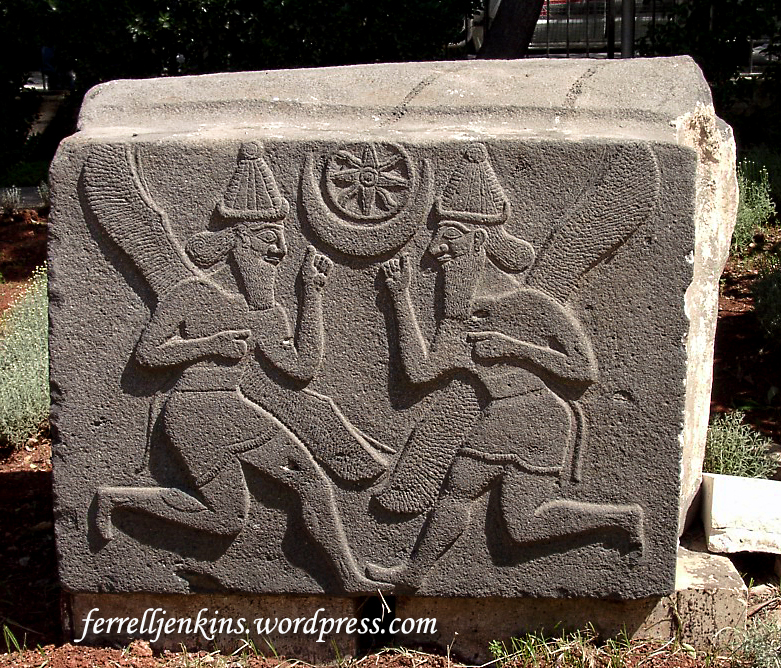
We have one more nice Neo-Hittite piece displayed in the courtyard of the Aleppo National Museum. It shows genii with the symbols of the sun and the moon. These symbols are typical on Neo-Hittite and Assyrian reliefs.

Neo-Hittite genii with image of sun and moon on a basalt block in the courtyard of the Aleppo National Museum. Photo by Ferrell Jenkins.

Neo-Hittite genii with image of sun and moon on a block in the courtyard of the Aleppo National Museum. Photo by Ferrell Jenkins.

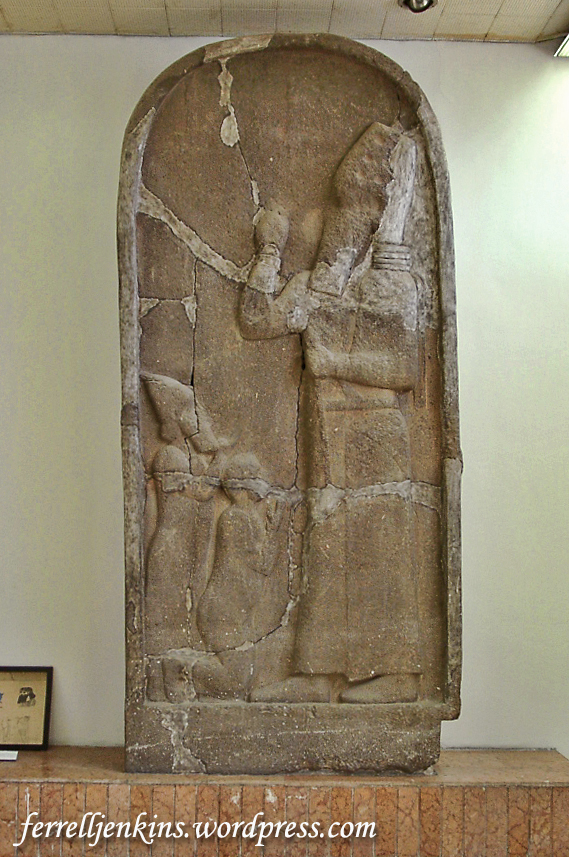
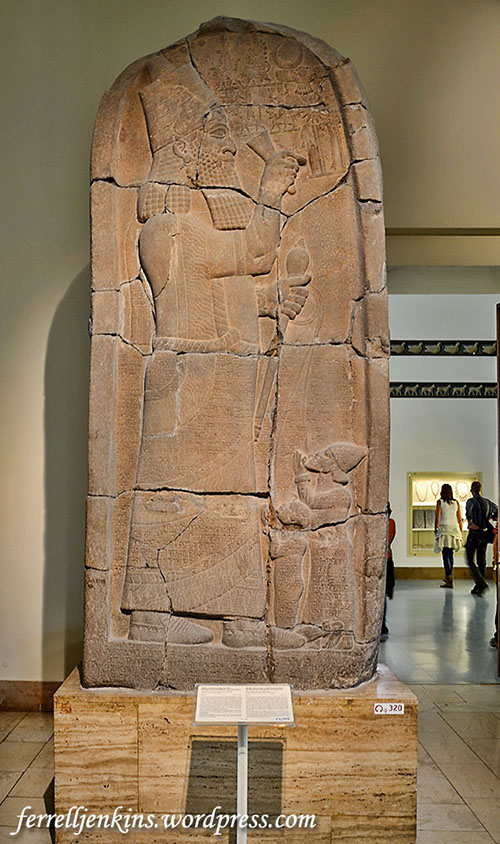
Assyrian. The museum has one stele depicting Esarhaddon, the son of Sennacherib and his successor as king of Assyria (680-559 B.C.; 2 Kings 19:37; Isaiah 37:38; Ezra 4:2). I am not certain about the identity of the rulers who are bowing before Esarhaddon, but I suspect this represents the same persons as the much better stele in the Berlin museum. The stele there depicts the king holding ropes leading to the lips of Tirhakah of Egypt and Ethiopia [Cush] (in ANET, 293, he is referred to as king of Nubia) and Ba’alu of Tyre. If so, then the bowing figure with Negroid features was an ally of Hezekiah against the Assyrians (2 Kings 19:9. The Berlin stele comes from Zinjirli and was discovered in 1888.

First, here is the Aleppo stele.

A broken relief showing Esarhaddon with two captured rulers, one on bended knee, before him. Photo by Ferrell Jenkins.

A broken relief showing Esarhaddon with two captured rulers, one on bended knee, before him. Photo by Ferrell Jenkins.

And here is the Berlin stele (VA 2708).

Stele of Esarhaddon displayed in the Pergamum Museum, Berlin. VA 2708. Photo by Ferrell Jenkins.

Stele of Esarhaddon displayed in the Pergamum Museum, Berlin. VA 2708. Photo by Ferrell Jenkins.

I have the impression that the stele displayed in Aleppo may be one made by a beginner and was never finished. Notice the lack of proportion in the legs of the kneeling figure, and the absence of clear decorations at the top.

One final post on the Museum coming next.

Aleppo National Museum – #2

See our previous post on Aleppo here. Our #1 on the Aleppo National Museum is here.

In the first post on Aleppo I posted a photo of the Hittite Storm god Teshub standing on the back of a bull. I should have mentioned at the time that a large temple of the storm god from the Late Bronze and Early Iron ages has been excavated underneath Islamic buildings at the Aleppo Citadel. A well illustrated article by Kay Kohlmeyer states,

The storm god, first venerated as Hadda, then as Addu, Teshub, Tarhunta, and Hadad, played a supra-regional role in the ancient Near East, which explains the enormous size of his temple at Aleppo and the brilliance of its relief decoration. (Near Eastern Archaeology 72;4 (2009).

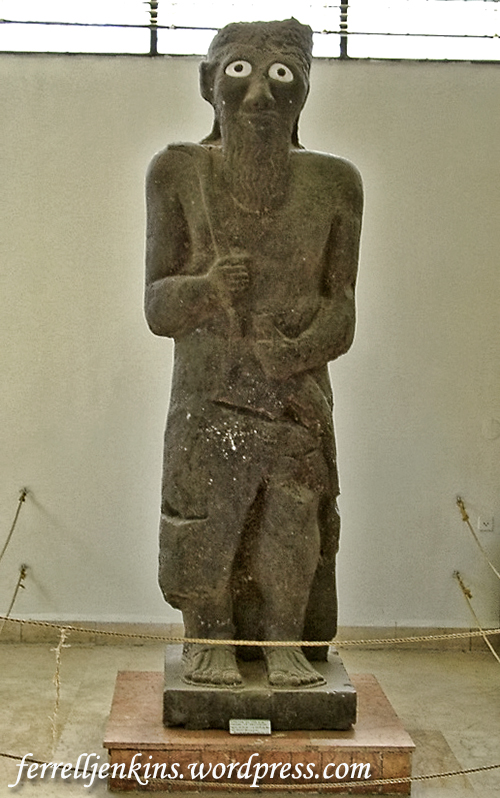
A statue of Hadad of poor quality is also displayed in the museum.

Statue of Hadad displayed in the Aleppo National Museum. Photo by Ferrell Jenkins.

Statue of Hadad displayed in the Aleppo National Museum. Photo by Ferrell Jenkins.

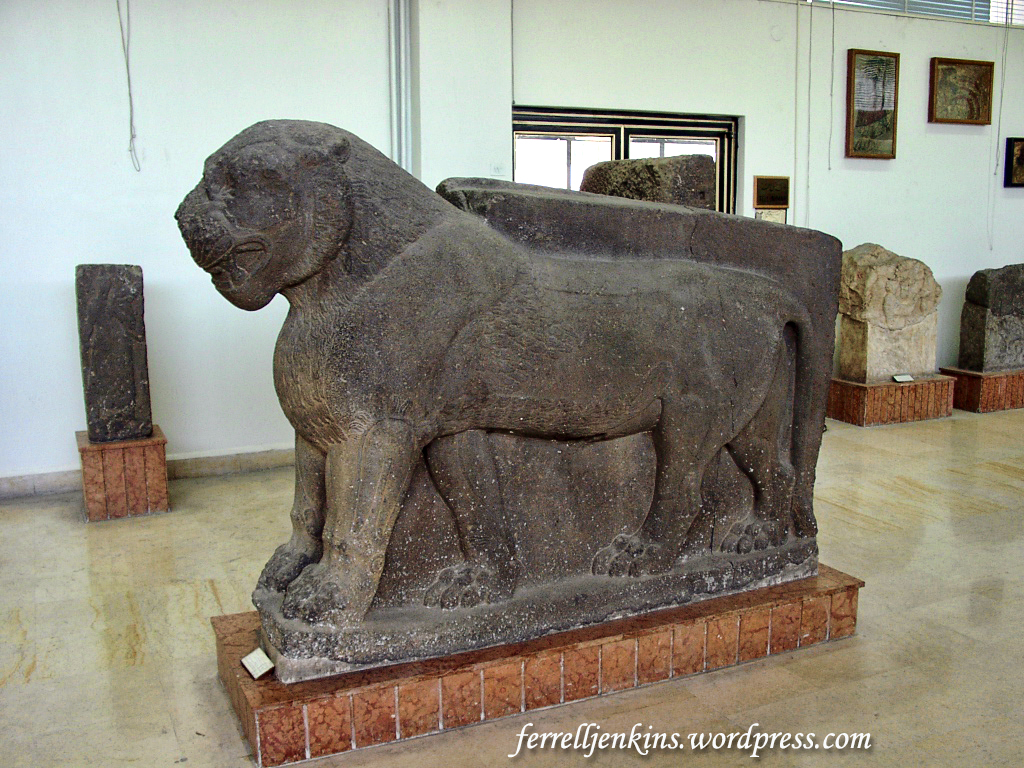
There are several other Neo-Hittite artifacts in the Aleppo National Museum. This first I am showing is a basalt lion with a slight wing relief. This is likely part of a pair that stood along an entrance to some building. Here you will notice that the lion is represented as having five legs. This allows the passerby to see at least four legs from almost any direction. We have become familiar with the huge winged bulls from Assyria that are made in the same fashion. I do not have the original source of the lion, but there are numerous Neo-Hittite sites  to the north of Aleppo in Syria and Turkey.

Lion from the Neo-Hittite Period in the Aleppo National Museum. Photo by Ferrell Jenkins.

Lion from the Neo-Hittite Period in the Aleppo National Museum. Photo by Ferrell Jenkins.

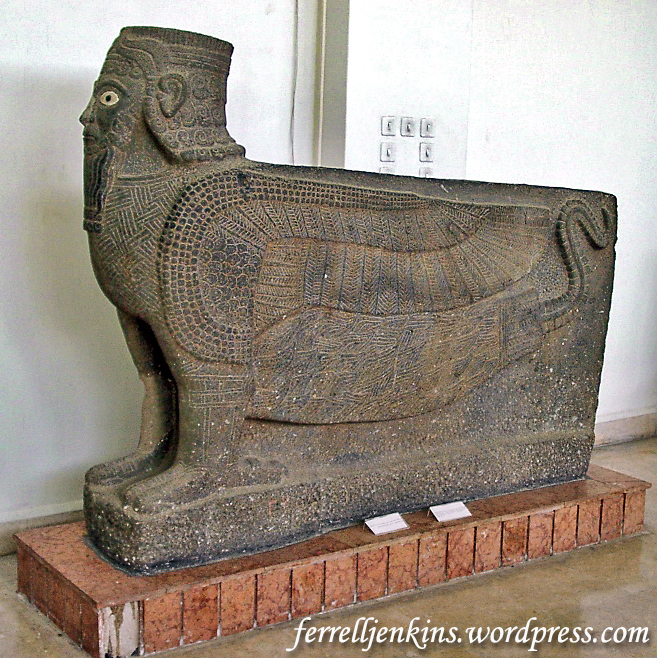
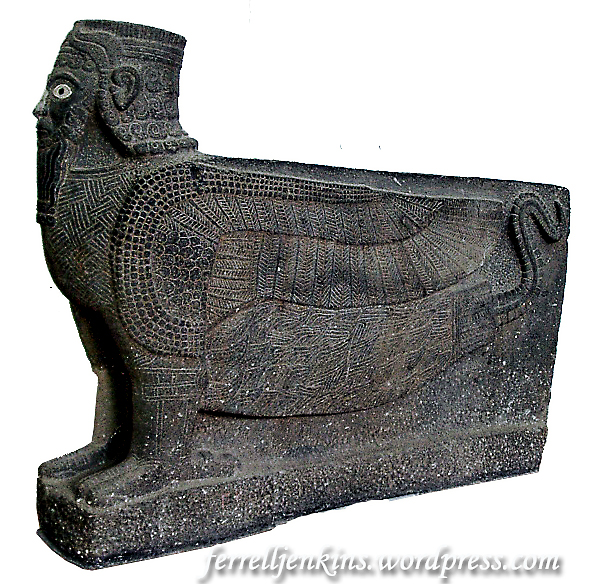
The next image is a fascinating one from the palace of Karara at Tell Halaf. It shows a composite creature of basalt consisting of the head of a man with the feet and wings of a bird, and the tail of a scorpion.

Composite creatures were common during the Hittite, Assyrian, and Babylonian periods of Old Testament history, and many of them have been found in the extended region. They provide us some insight into the background of apocalyptic literature. We find these creatures especially in the Old Testament books of Daniel, Ezekiel, and Zechariah, and in the New Testament book of Revelation (the Apocalypse). See a previous post, “Apocalyptic imagery is not strange,” here.

The composite creature here brought to my mind the events of the sounding of the fifth trumpet in Revelation 9:1-11.

Composite creature showing the head of a man, body and feet of a bird, and the tail of a scorpion. Photo by Ferrell Jenkins.

Composite creature showing the head of a man, body and feet of a bird, and the tail of a scorpion. Photo by Ferrell Jenkins.

I am adding an additional image that I was able to enhance to show a little better sharpness.

aleppo-museum-composite-creature-fjenkins051302_09en

 1 And the fifth angel blew his trumpet, and I saw a star fallen from heaven to earth, and he was given the key to the shaft of the bottomless pit.
2 He opened the shaft of the bottomless pit, and from the shaft rose smoke like the smoke of a great furnace, and the sun and the air were darkened with the smoke from the shaft.
3 Then from the smoke came locusts on the earth, and they were given power like the power of scorpions of the earth.
4 They were told not to harm the grass of the earth or any green plant or any tree, but only those people who do not have the seal of God on their foreheads.
5 They were allowed to torment them for five months, but not to kill them, and their torment was like the torment of a scorpion when it stings someone.
6 And in those days people will seek death and will not find it. They will long to die, but death will flee from them.
7 In appearance the locusts were like horses prepared for battle: on their heads were what looked like crowns of gold; their faces were like human faces,
8 their hair like women’s hair, and their teeth like lions’ teeth;
9 they had breastplates like breastplates of iron, and the noise of their wings was like the noise of many chariots with horses rushing into battle.
10 They have tails and stings like scorpions, and their power to hurt people for five months is in their tails.
11 They have as king over them the angel of the bottomless pit. His name in Hebrew is Abaddon, and in Greek he is called Apollyon. (Revelation 9:1-11 ESV)

Knowing that such imagery was common in the ancient Near East should assist us in our understanding of the nature of apocalyptic literature of the Bible.

Aleppo National Museum – #1

See our previous post on Aleppo here.

In this post we will continue to look at some of the interesting artifacts displayed in the Aleppo National Museum at the time of our visit in 2002.

The Amorites. The Amorites are described as “the inhabitants of the land west of the Euphrates River, which included Canaan, Phoènicia, and Syria” (Youngblood, Bruce, and Harrison, Nelson’s new illustrated Bible dictionary 1995).

Here is a summary of information about the Amorites from the same article.

  • Amorites were one of the major tribes, or national groups, living in Canaan. The Old Testament frequently uses “Amorites” as a synonym for Canaanites in general. The Book of Genesis cites Canaan as the ancestor of the Amorites (Gen. 10:16).
  • Before 2000 B.C. the Amorites lived in the wilderness regions of what today is western Saudi Arabia and southern Syria.… Beginning about 2000 B.C., they migrated eastward to Babylonia in large numbers. There they captured major cities and regions from the native Mesopotamians. “Abram” is an Amorite name, and Abraham himself may have been an Amorite.
  • Throughout Old Testament times, other Amorites remained in Syria, Phoenicia, and the desert regions to the south (Joshua 13:4). A significant number, however, settled in the land of Canaan itself, eventually occupying large areas both east and west of the Jordan River (Judges 11:19–22). These Amorites spoke a dialect that was closely related to Canaanite and Hebrew. Occasionally, the Amorites were identified as a Canaanite tribe (Genesis 10:16). At other times they were called the people of Canaan (Deuteronomy 1:27).
  • During the invasion of Canaan, Joshua and the Israelites defeated Amorite kings Sihon and Og, rulers east of the Jordan River (Joshua 12:1-6).
  • Various cities west of the Jordan—Jerusalem, Hebron, Jarmuth, Lachish, and Eglon—also were called “Amorite” cities (Joshua 10:5), even though Jerusalem was also known as a Jebusite city.
  • While conquering Canaan, the Israelites frequently fought with the Amorites. After the Israelites prevailed, the Amorites who had not been killed remained in Canaan and became servants to the Israelites (1 Kings 9:20–21).
  • Much of our knowledge about the Amorites and their culture comes from clay tablets discovered at Mari, a major Amorite city situated on the Euphrates River in western Mesopotamia. [Numerous artifacts from Mari are displayed in the Damascus National Museum.]

A significant text in Ezekiel 16:3 says to the Israelites of Judea,

… Thus says the Lord GOD to Jerusalem: Your origin and your birth are of the land of the Canaanites; your father was an Amorite and your mother a Hittite. (ESV)

The IVP Bible Background Commentary Old Testament suggests that when the land was conquered, the Israelites were supposed to have purified the land “of its idolatrous traditions (Deut. 7:1-5), but instead the people became just like the nations  they were supposed to displace.”

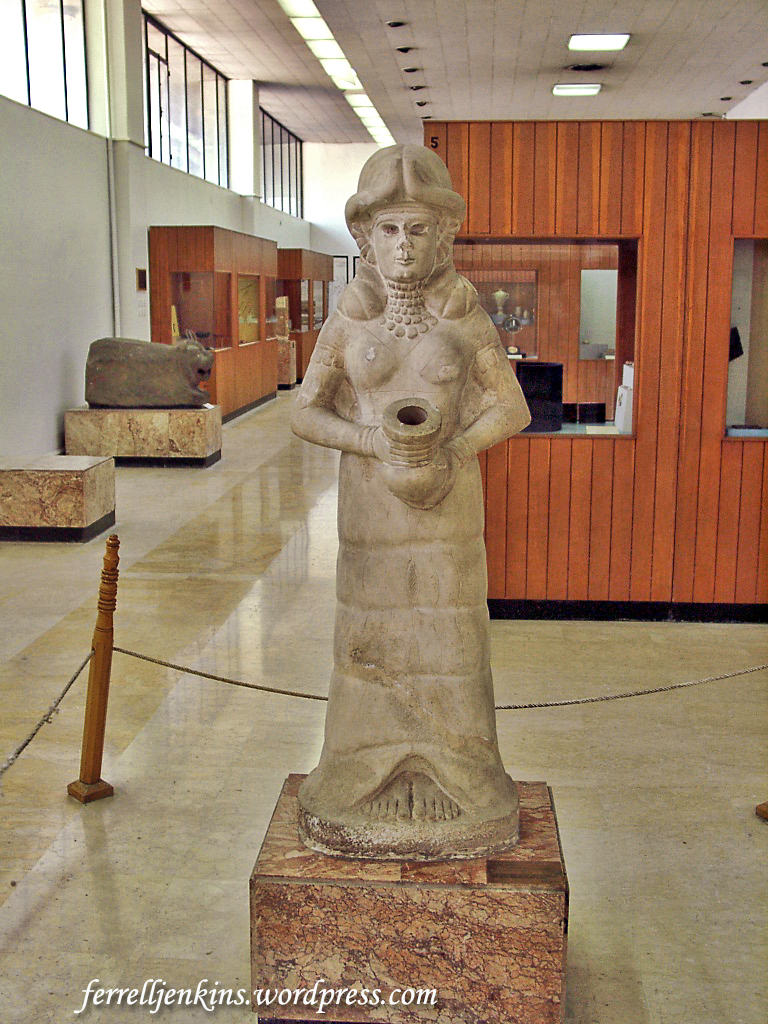
The Amorite Spring Goddess from the 18th century B.C. When I walked in the door of the Museum and saw the impressive statue of an Amorite Spring Goddess I recalled the work of French Archaeologist André Parrot and his comments about the Gushing Vases of Mesopotamia that are displayed in the Louvre.

Amorite Spring Goddess displayed near the main entry of the Aleppo Museum. Photo by Ferrell Jenkins.

Amorite Spring Goddess from the 18th century B.C. displayed near the main entry of the Aleppo National Museum. Photo by Ferrell Jenkins.

In his book Land of Christ, Parrot calls attention to the statement of Jesus in John 7:37-38.

On the last day of the feast, the great day, Jesus stood up and cried out, “If anyone thirsts, let him come to me and drink. Whoever believes in me, as the Scripture has said, ‘Out of his heart will flow rivers of living water.'”  (John 7:37-38 ESV)

Parrot says this passage,

“is an extraordinary and impressive reminiscence of Mesopotamian iconography: monuments from the 3rd, 2nd, and 1st millennia often have representation of male or female deities holding waist-high, in both hands, a vase from which water flows. Rivers literally flow from the heart of the personage represented. Two scholars, Rudolph Bultmann and Millar Burrows, have made the same comparison. They do not explain it, nor do we, but it is nonetheless striking” (page 102).

In our next post on this subject we will show some of the Hittite artifacts.

Aleppo

Aleppo (pronounced ə-leʹpō in the revised ISBE).

A single word. What does it mean to you? An ancient city of Syria. The largest city of Syria prior to the recent war. A place of warfare. A place of untold suffering and killing. A humanitarian crisis. A symbol of failure for numerous governments and world bodies.

Or, a place you are pleased to have visited in better days?

In 2002, a year after I retired from teaching, I asked one of my former colleagues at Florida College to join me for three weeks traveling in Lebanon, Syria, and Jordan, a trip I labeled LeSyJo for my files. David McClister agreed to do that. I had been to most of the sites that we wished to visit several times before beginning in 1967, and I had crossed the Anti-Lebanon mountains to visit Damascus a few times. But this time we wanted to see several major historical sites in Syria.

Our itinerary in Syria included Damascus, Hama (Hamath), Homs, Riblah, Latakia, Ras Shamra (Ugarit), Qarqar, Ebla, Aleppo, and an excursion to the Euphrates River NE of Aleppo. South of Damascus we traveled the road “from Damascus” past Mount Hermon as close to the border with Israel as possible. On the way to Jordan we stopped by Bosra for a visit. We wanted to visit Palmyra, Mari, and a few other places, but our schedule did not permit it.

David and I both had reasonably nice 35mm cameras, but I was carrying a Casio QV3000EX 4 million megapixel camera. What else could anyone want? Unfortunately these original images are only 1024 x 768 pixels. They do fairly well for a visual presentation, but very disappointing if one wants to use them in a publication. As technology has improved cameras we could wish to return and make new, more, and better photos. I think that not many readers will have had the opportunity to travel to Aleppo, so I will share a few photos from the Aleppo National Museum.

Aleppo is not mentioned by name in the Bible, but it was likely visited by Abraham (Genesis 12:4), Jacob (Genesis 25:20ff.; 35:22-27), and other Old Testament characters who traveled from Paddan-aram to the land of Canaan.

Aleppo, once named Halab, was famous as “a sacred city of the weather/storm god—Teshub or Tarhuns to Hurrians or Hittites, Hadad or Baal to the Aramaens” (K. A. Kitchen, New International Dictionary of Biblical Archaeology). Alalakh was a major satellite-city of Aleppo in the second millennium, according to Kitchen.

Rasmussen places Aleppo on a major international highway.

One of the major international routes ran approximately 1,770 miles from Ur in southern Mesopotamia to Thebes in southern Egypt. Along the way it passed through great urban centers such as Babylon, Mari, Tadmor, Aleppo, Ebla, Damascus, Hazor, and Gaza. It does not appear that this route as a whole had a name, but it was made up of shorter segments that ran from city to city, and in all probability these shorter stretches had special names (Zondervan Atlas of the Bible. Revised Edition. Grand Rapids, MI: Zondervan, 2010.)

In 2002 the use of the Internet was still outlawed in Syria. We had learned that there were a few Internet cafes that we might use. One in Damascus was operated by a Syrian man who lived in the USA, but was back visiting family. In many places we had to log in long distance through Beirut in order to send and receive Email. Some hotels would allow Internet access via AOL, and others via a service called Excite. When we arrived in Aleppo I wrote this note to my wife:

Also visited Ebla and came to Aleppo. Hotel is a 4-star, not 5-star as last night. [These would not be by American standards.] Last night [in Latakia] we were in a new floor of the hotel overlooking [the Mediterranean]. This hotel is in center of city. Aleppo reminds me more of Turkey than Damascus does. Hotel personnel are helpful and friendly. I am not able to go to AOL, or Excite to get mail. A backroom manager type allowed me to use the hotel email to write.

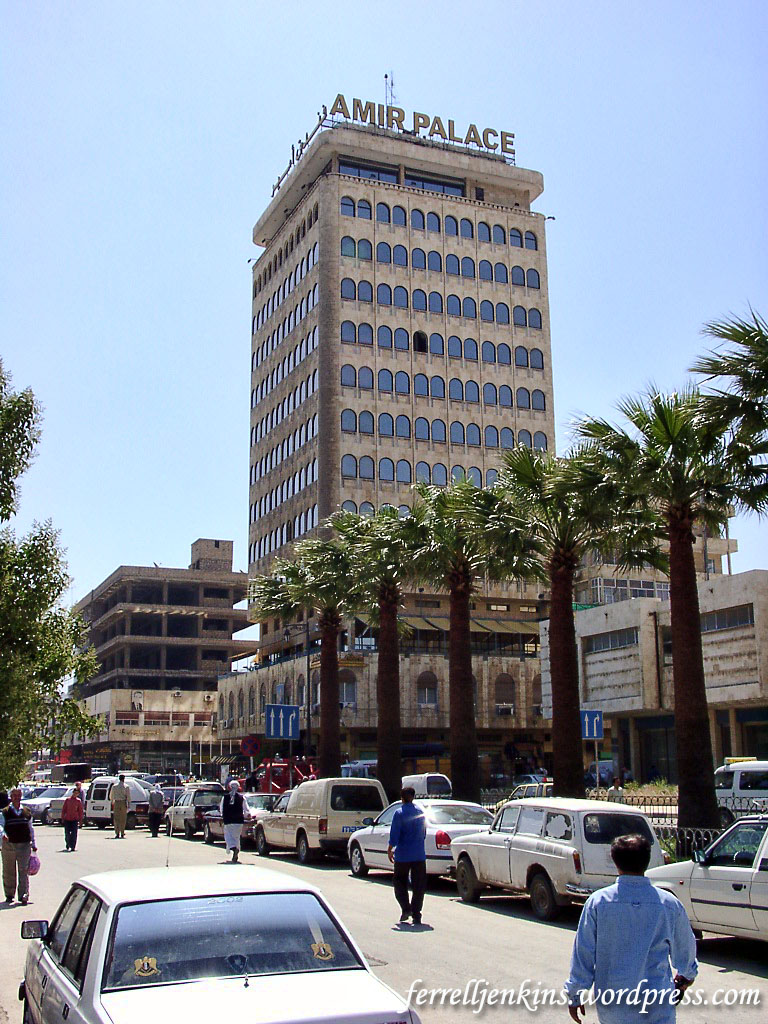
Our hotel was the Amir Palace. Two men went with us to our room. I recall it as being rather small — not a place one would wish to spend a lot of time. The men showed us how to turn on the TV. There was not much in English, but one of the men pointed out, with a smile, that we could watch news on Al Jazeera.

Amir Palace Hotel in Aleppo, Syria, May, 2002. Photo by Ferrell Jenkins.

Amir Palace Hotel in Aleppo, Syria, May, 2002. Photo by Ferrell Jenkins.

After dinner, David offered to buy me a candy bar at a little kiosk across from the hotel. We walked over in great anticipation, but soon learned that none of the candy bars were sweet. Spoiled Americans!

The next day I included this note in my brief email back home:

This morning we went to the Aleppo National Museum which was directly across the street from the hotel. Spent about 1 ½ hours there. Even though photos are not permitted I was able to get several good ones.

There are numerous items in the museum and adjoining yard from Tell Halaf, the ancient site of Gozan located northeast of Aleppo near the Turkish border. (Do not confuse Tell Halaf with Tel Halif in southern Israel.) Tell Halaf is identified with the city of Gozan to which Israelites were deported by the Assyrians (1 Chronicles 5:26).

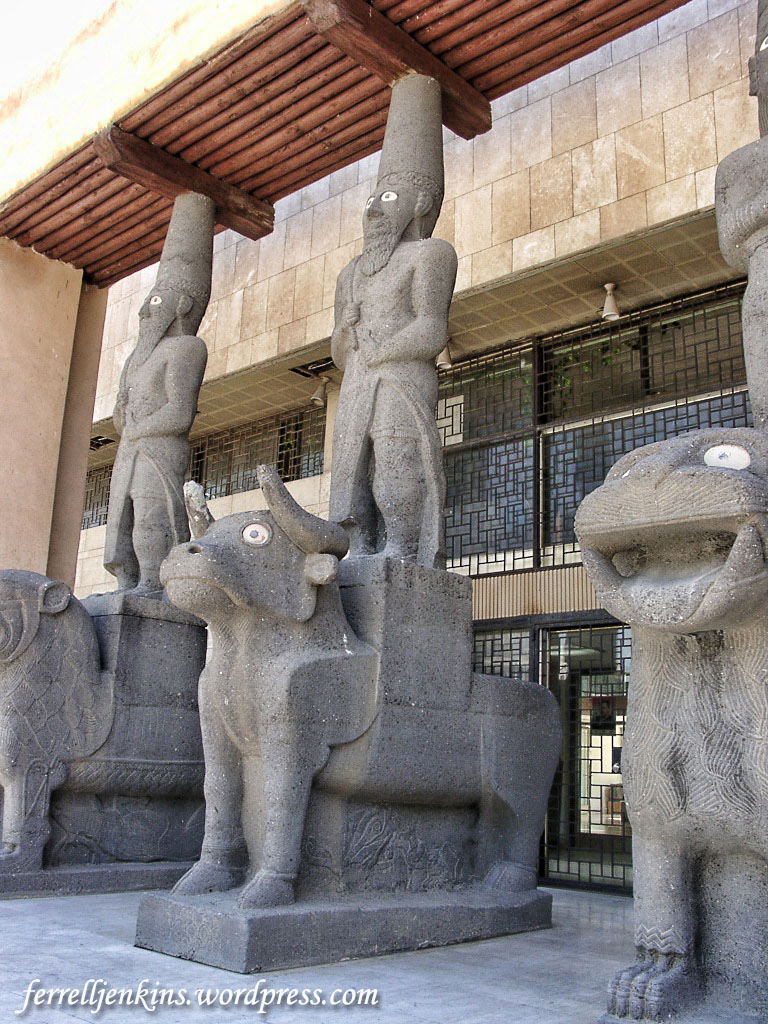
To enter the Aleppo National Museum one must walk past three basalt caryatids in the likeness of Hadad from Tell Halaf. The central one is standing on the back of a bull and the others are standing on the back of lions.

Entrance to Aleppo National Museum in 2002. Photo by Ferrell Jenkins.

Entrance to Aleppo National Museum in 2002. Photo by Ferrell Jenkins.

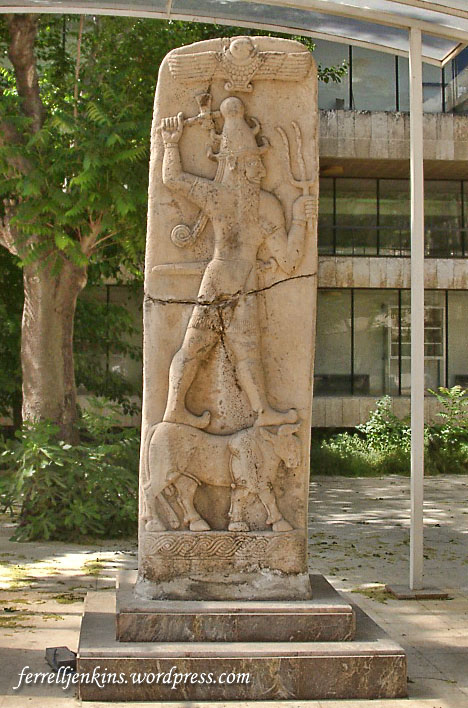
In the courtyard there were at least two images of Teshub, the neo-Hittite storm god from Tell Ahmar.

Teshub, the neo-Hittite storm god, standing on a bull. Photo by Ferrell Jenkins.

Teshub, the neo-Hittite storm god, standing on a bull. Photo by Ferrell Jenkins.

The Aleppo National Museum, established in 1931, suffered severe damage to the building in 2016, but SANA (Syrian Arab News Agency) reports in July “that the archaeological collections in the museum suffered little damages.”

I have several photos prepared for another post (or two?) to help you get some idea about the treasures in this museum.

The greatest tragedy in the recent crisis in Aleppo is the inhumanity of man and the loss of life. But the destruction of many historical treasures in Syria is a loss for all of us.

The great lesson of the book of Daniel is that the LORD rules in the kingdoms of men, even when evil men think they are in charge. Nebuchadnezzar, the Babylonian king, was driven from the great city he had built and made to live like an ox until he learned  “that the Most High rules the kingdom of men and gives it to whom he will” (Daniel 4:32 ESV)

Recall the admonition of Peter when he cut off the ear of one of those who came to arrest Jesus in the Garden.

Then Jesus said to him, “Put your sword back into its place. For all who take the sword will perish by the sword. (Matthew 26:52 ESV)

Bethlehem and the birth of Jesus – Index of articles

Bethlehem and the Birth of Jesus.  Our total number of posts has now grown to more than 1800 [1960] and this makes it difficult to locate a post you may need. This index is prepared to assist you in your study of the birth of Jesus in ancient Bethlehem. Most, if not all, of the posts include at least one photo illustrating the lesson.

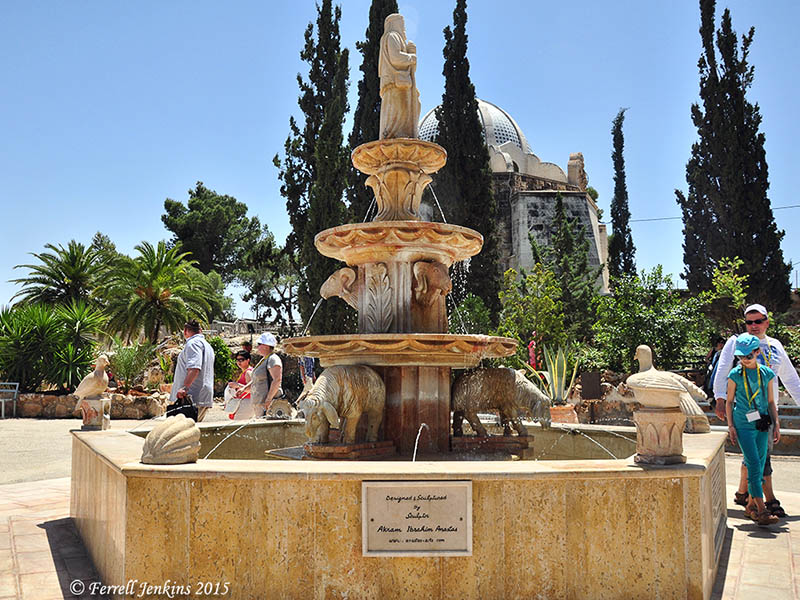
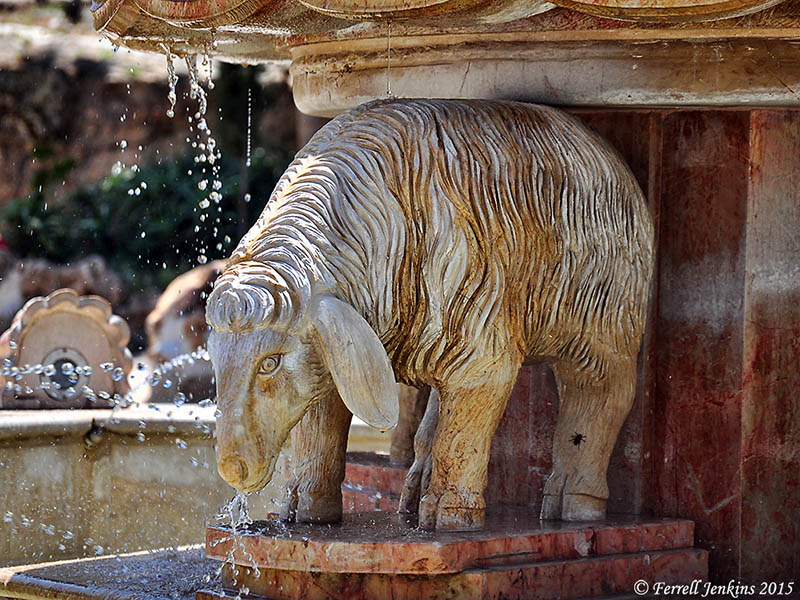
Fountain at Franciscan Custody Shepherd’s Field near Bethlehem.

Fountain at Franciscan Custody Shepherd’s Field near Bethlehem.

Sheep at fountain of Franciscan custody Shepherd’s Field near Bethlehem.

Sheep at fountain of Franciscan custody Shepherd’s Field near Bethlehem.

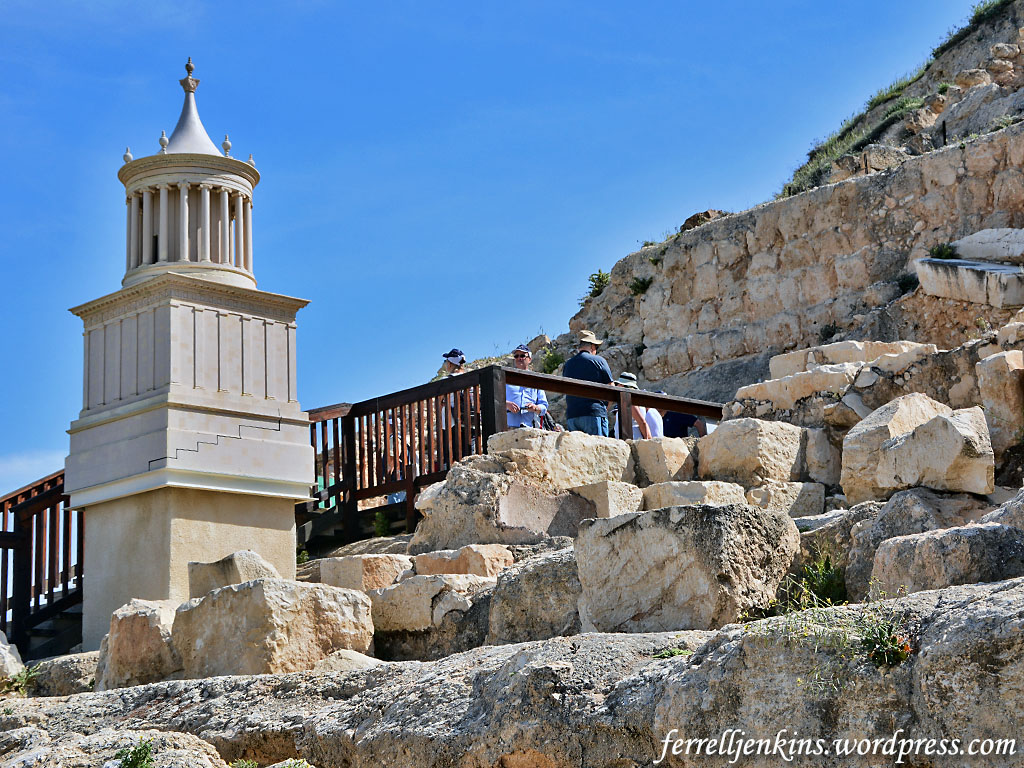
Other places near Bethlehem. Most of the links below are related to Herod the Great and the fortress he built near Bethlehem. I see that I have normally used the spelling Herodium, but sometime Herodion.

This photo was made on the side of the Herodion where remnants of the tomb of Herod the Great has been located. Photo by Ferrell Jenkins.

This photo was made on the side of the Herodion where remnants of the tomb of Herod the Great have been located. Photo by Ferrell Jenkins.

Historical Connections to Modern Christmas Celebrations. These post are post-biblical, historical references to customs associated with Christmas.

When other posts on this subject are written I will try to remember to update the list.

Roman soldiers in the region of Decapolis

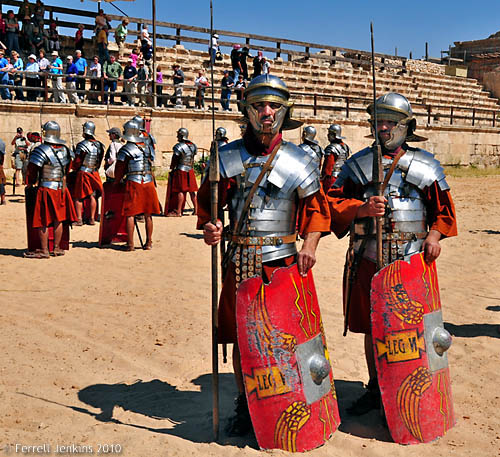
The RACE show at Jerash, Jordan, is a must if you have the opportunity to visit the area. RACE stands for Roman Army and Chariot Experience. You will see actors in authentic dress as armed legionaries, gladiators, and a short chariot race. The show takes place in the Roman hippodrome of Jerash. The view of the city ruins in the vicinity make this a wonderful setting for the performance. Full details may be found here. I have seen the program three times. On the last visit, earlier this year, I thought the performers showed less discipline and the show was not quite as good as on my previous visits.

Jerash was the second largest city of the Decapolis (after Damascus) in New Testament times. People from the Decapolis followed Jesus during His ministry in Galilee (Matthew 4:23-25). When Jesus traveled through the Decapolis he possibly visited the area around Jerash (Mark 7:31).

The photo shows the Roman soldiers of the 6th Legion from the time of the Emperor Hadrian (A.D. 117-138). A visit to this show provides several good photographs to illustrate New Testament times.

Roman soldiers at Jerash, Jordan. Photo by Ferrell Jenkins.

Roman soldiers at Jerash, Jordan. Photo by Ferrell Jenkins.

Repeat from October 8, 2010.

Roman inscription of formerly unknown governor of Judea discovered

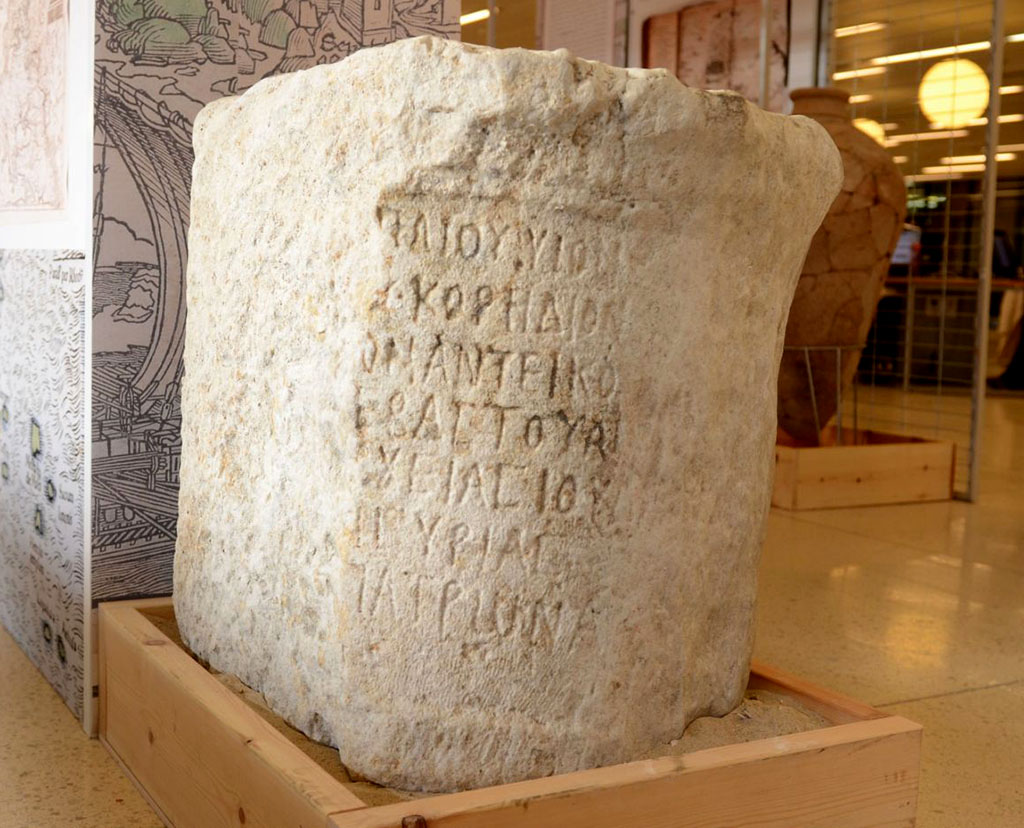
Phillippe Bohstrom has written a fascinating and informative article about the discovery of a Roman inscription mentioning the province of Judea and a previously unknown Roman governor.

This Marcus Paccius ruled Judea before the Bar Kochba Revolt (about A.D. 135).

There were nearly 20 Roman prefects or governors during the first century A.D., but we learn only the names of Pontius Pilate (the trial of Jesus), Felix (Acts 23-24), and Festus (Acts 25-26) in the New Testament.

Haifa University underwater archaeologists found this inscription off the coast of Dor.

The newly found inscription, carved on the stone in Greek, is missing a part, but is thought to have originally read: “The City of Dor honors Marcus Paccius, son of Publius, Silvanus Quintus Coredius Gallus Gargilius Antiquus, governor of the province of Judea, as well as […] of the province of Syria, and patron of the city of Dor.”

The inscription is now on display in the Haifa University Library.

Stone inscription with the name of Marcus Paccius, governor of the province of Judea and Syria. Photo by Jenny Carmel in HaAretz.

Stone inscription with the name of Marcus Paccius, governor of the province of Judea and Syria. Photo by Jenny Carmel in HaAretz.

Read Bohstrom’s article with photos here.

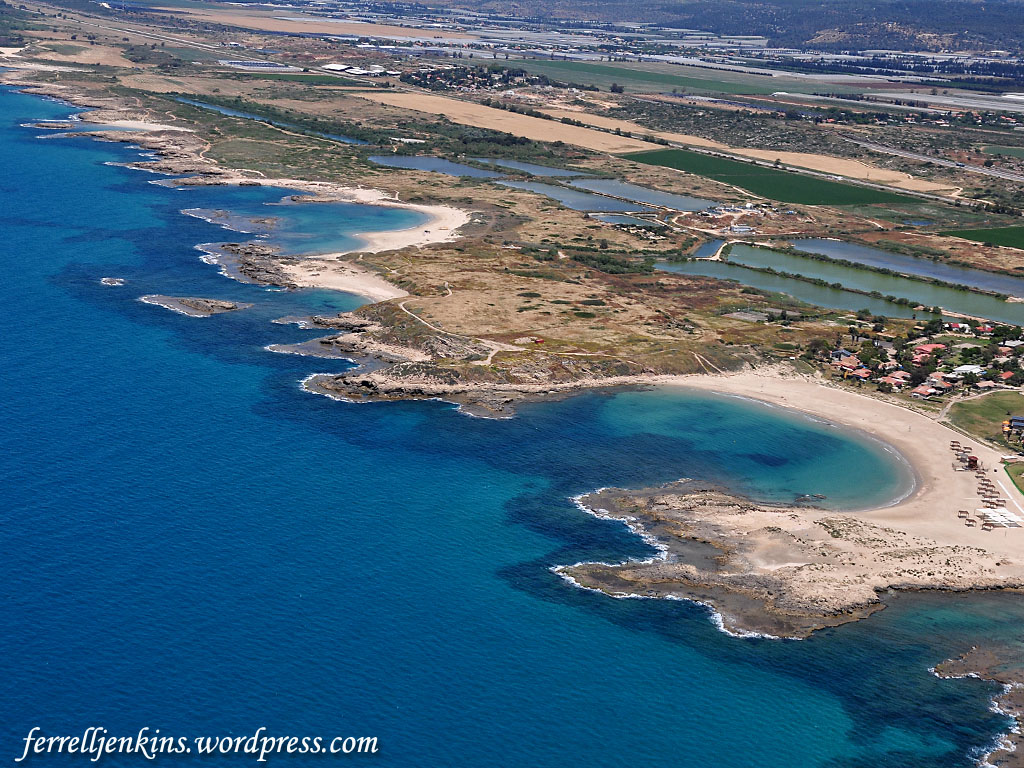
Our photo below shows the area around ancient Dor.

Aerial view of Dor. Photo by Ferrell Jenkins.

Aerial view of Dor. Photo by Ferrell Jenkins.

For a list of Old Testament reference to Dor click here.

Harbor of Pharaoh Cheops reported found on Red Sea

Philippe Bohstrom has a fascinating article this morning in HaAretz about the discovery of a harbor on the Red Sea and an archive of papyri dating to the time of Pharaoh Cheops (about 2500 B.C.).

The oldest known harbor in the world has been discovered by archaeologists diving off the Red Sea site of Wadi el-Jarf. The site was found near a huge archive of papyri – which is also the oldest known to date, and which describe how the harbor was built and used by the great King Cheops to import materials to build his flagship monument, the Great Pyramid of Giza.

The monumental harbor discovered under the waves at Wadi el-Jarf has been dated to 4600 years ago, right in Cheops’ time.

Cheops, also known by his Egyptian name Khufu, reigned from 2580 to 2550 B.C.E. He had the harbor erected 180 kilometers south of Suez, in the foothills of the desert mountains.

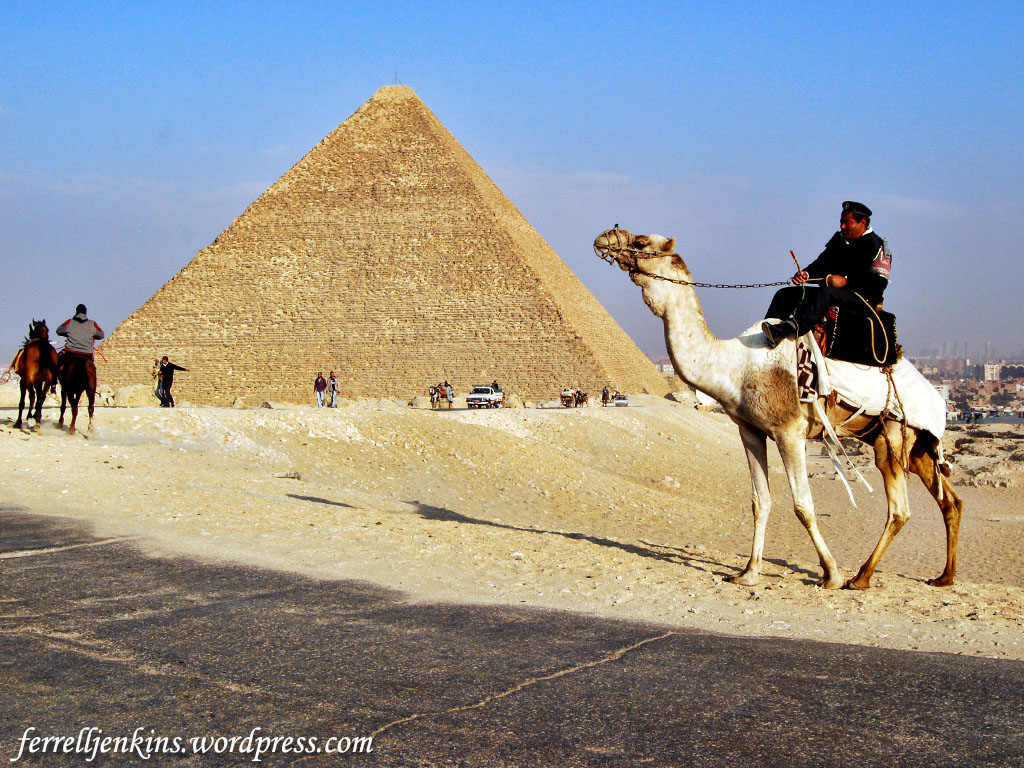
Many have been fascinated by the Great Pyramid (or Pyramid of Cheops – or Khufu), dating to about 2500 B.C. Perhaps we are not surprised to learn of this impressive shipping enterprise on the Red Sea.

The Great Pyramid of Pharaoh Cheops (Khufu) at Giza. Photo by Ferrell Jenkins.

The Great Pyramid of Pharaoh Cheops (Khufu) at Giza. Photo by Ferrell Jenkins.

I encourage you to check Bohstrom’s article here with numerous photos and a map to locate the discovery on the Red Sea.

Again, I would remind our readers that the Pyramids of Giza were built long before the time of Abraham, and the later Israelites.

A wadi along the King’s Highway

The King’s Highway is mentioned by name in Numbers 20:17 and 22. As the Israelites made their slow trek toward the promised land (Genesis 12:7; 15:7) they asked permission to go through the land of Edom.

 17 Please let us pass through your land. We will not pass through field or vineyard, or drink water from a well. We will go along the King’s Highway. We will not turn aside to the right hand or to the left until we have passed through your territory.”
18 But Edom said to him, “You shall not pass through, lest I come out with the sword against you.”
19 And the people of Israel said to him, “We will go up by the highway, and if we drink of your water, I and my livestock, then I will pay for it. Let me only pass through on foot, nothing more.”
20 But he said, a”You shall not pass through.” And Edom came out against them with a large army and with a strong force.
21 Thus Edom refused to give Israel passage through his territory, so Israel turned away from him. (Numbers 20:17-21 ESV)

After going around Edom, Israel sent messengers to the Amorites with a request to go through their land.

“Let me pass through your land. We will not turn aside into field or vineyard. We will not drink the water of a well. We will go by the King’s Highway until we have passed through your territory.” (Numbers 21:22 ESV)

Rasmussen suggests that the first reference is to the East-West route from Kadesh Barnea to Edom. He says,

The second reference is possibly to a portion of the N-S Transjordanian route that connects Edom/Arabia with points to the N. (Zondervan Atlas of the Bible, p. 290).

Sihon, the king of the Amorites, went out to fight Israel. According the the biblical account Israel was successful and settled in cities of the Amorites. Reference is made to Heshbon and the Arnon, now known as the Arnon Gorge or Wadi el-Mujib. As a point of reference the Arnon is about 35 miles south of modern Amman, Jordan.

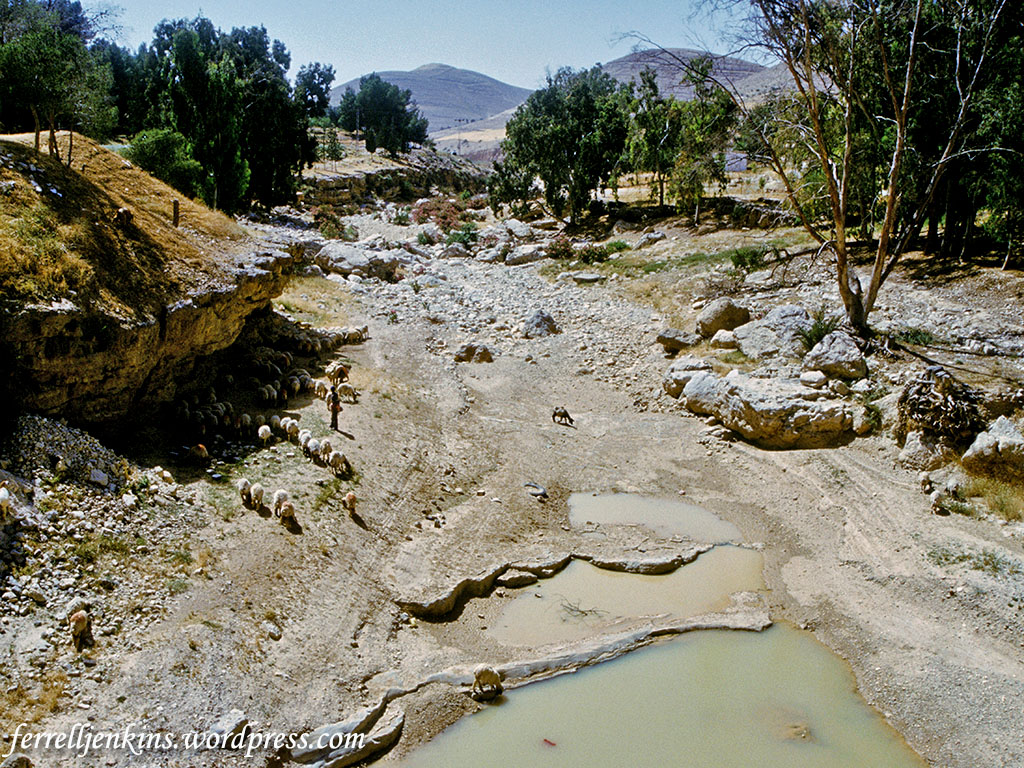
Our photo shows a wadi along the King’s Highway between Heshbon and the Arnon.

A wadi between Madaba and the Arnon Gorge along the King's Highway in transjordan. Photo by Ferrell Jenkins.

A wadi between Heshbon and the Arnon Gorge along the King’s Highway in transjordan. Photo by Ferrell Jenkins.

This photo was made in mid-May. The shepherd finds shade for his sheep, and a place where some water remains. I think the overhanging rock gives us some indication how high the stream gets when it rains. (NB: I wonder if perhaps this water has been brought in by truck for the sheep.)

Thomas Levy reminds us that “Nahal, incidentally, is Hebrew for a dry river bed or valley that flows at most a few times a year. In Arabic, the word is wadi. The two words are used interchangeably in Israel today.” The wadi is similar to the arroyo of the American southwest. (Biblical Archaeology Review, 1990).

Under the jail – a visit to the Kishle

Read The Citadel of Jerusalem here.
Read Views from the Citadel of Jerusalem here.

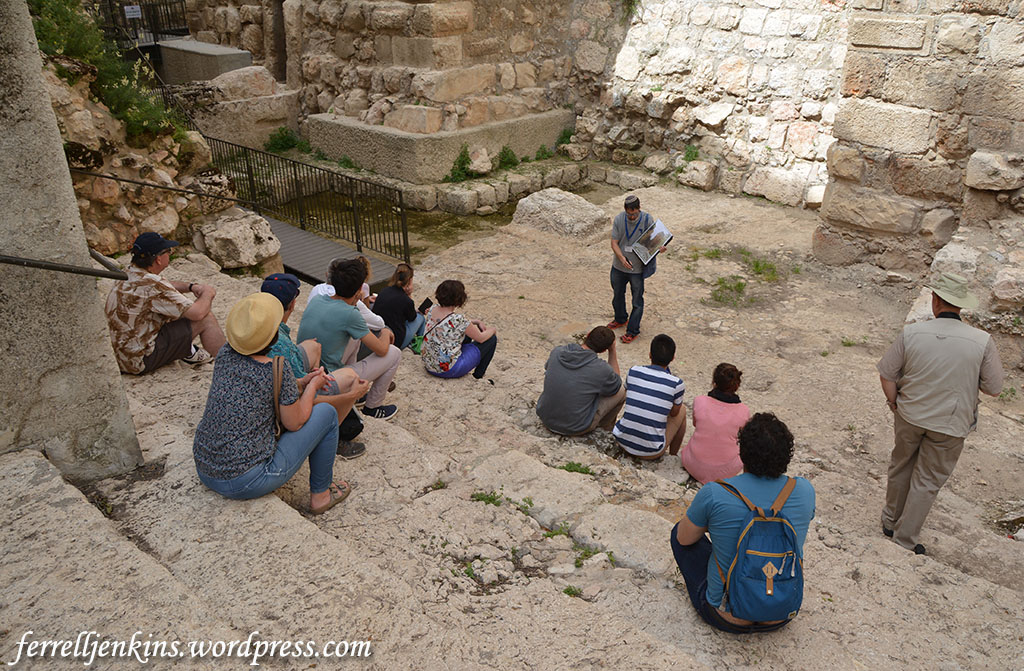
After our visit to see Jerusalem from the roof of the Citadel we made our way through the recently cleared dry moat to the steps and pool from the time of Herod the Great. Our guide, David, used a variety of visual aids to explain where we were and how this might have looked in the time of Herod.
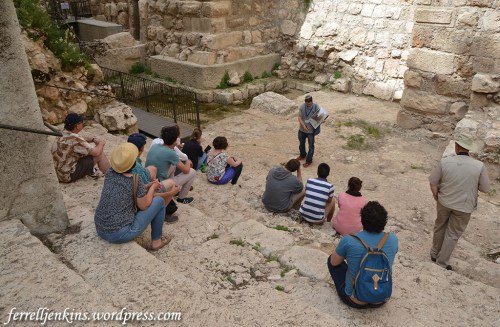
Herodian steps at the Citadel. Photo by Ferrell Jenkins.

Herodian steps at the Citadel. Photo by Ferrell Jenkins.

From there David led us to the Kishle (Turkish word for Barracks, and many use it as Prison). The Tower of David web site has this brief explanation of the Kishle.

The site known as the “Kishle” is adjacent to the Citadel and Tower of David Museum complex. The structure was erected in 1834 by Ibrahim Pasha who governed the Land of Israel (Palestine) from Egypt.

When the Ottoman Turks regained the area in 1841, the “Kishle” continued to serve as a military compound. During the period of the British mandate, it was used as a police station and prison where some members of the Jewish underground were also incarcerated.

In an article in Archaeological Diggings, Caroline Shapiro (Nov. 2015) explains how this excavation came about.

The Kishle Building, as it is called, stands adjacent to the Tower of David, the ancient citadel that guards Jerusalem’s Old City at the Jaffa Gate entrance. It was built in 1860 as an Ottoman prison or army barracks. The prison was then used as such by the British during Mandate times and then left desolate until the Tower of David Museum decided to clean up the iron prison cells and create a new wing for the Education Department. It housed members of the pre-State underground, the Irgun, the evidence of which is scratched on the walls.

As with any digging in Jerusalem, the clearing up became an excavation and close to 3000 years of history was discovered under its floorboards. The excavations were carried out in 1999–2000 by Amit Re’em, Jerusalem District Archeologist, together with a team from the Israel Antiquities Authority (IAA), but since then the building has been left untouched. Entrance to the Kishle is via the newly opened moat where visitors walk down the impressive Herodian steps leading down into a Hasmonian pool that would have been the lavish pool connected to King Herod’s palace. (These are the only excavations of King Herod’s Palace; huge foundation walls can be seen as well as an impressive water sewage system.)

The whole site has been dug down some 10 metres (33 ft) deep and about 50 metres (165 ft) long to reveal the various strata. With an arched, cross-vaulted Ottoman ceiling, it is a cavernous, silent cathedral of ancient stones that had been untouched by daylight for millennia.

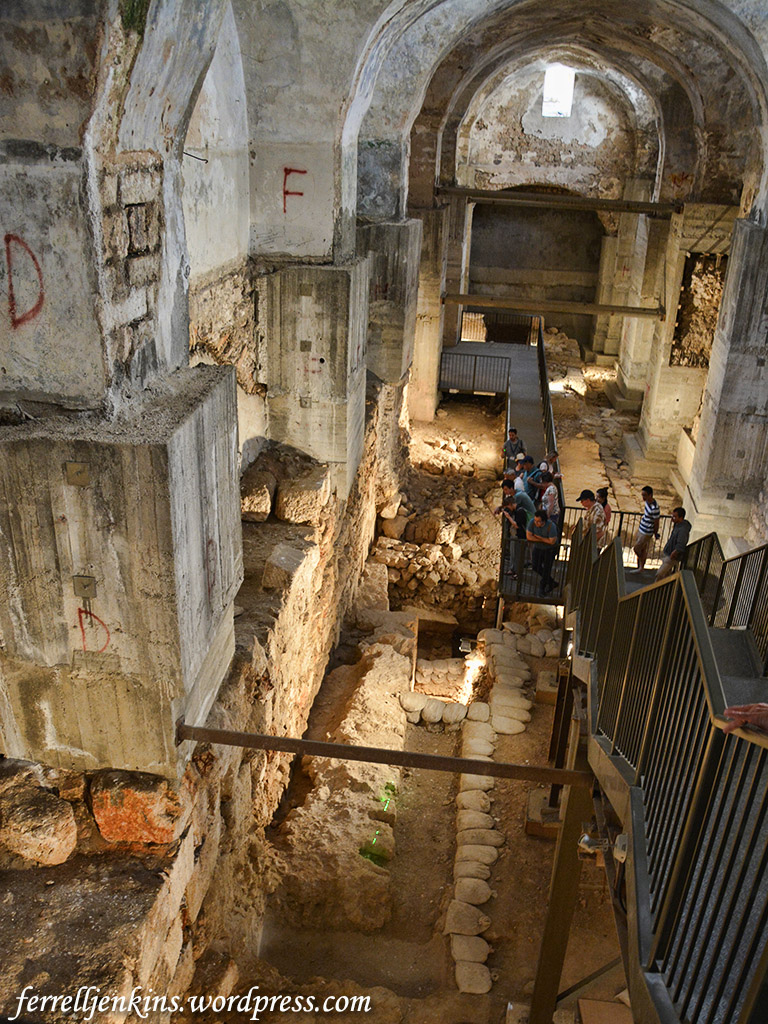
This is our first view of the excavation as we enter the Kishle. I think it is not incorrect to say that ancient ruins will be found anywhere archaeologists dig in Jerusalem. Many sites of importance are in basements.
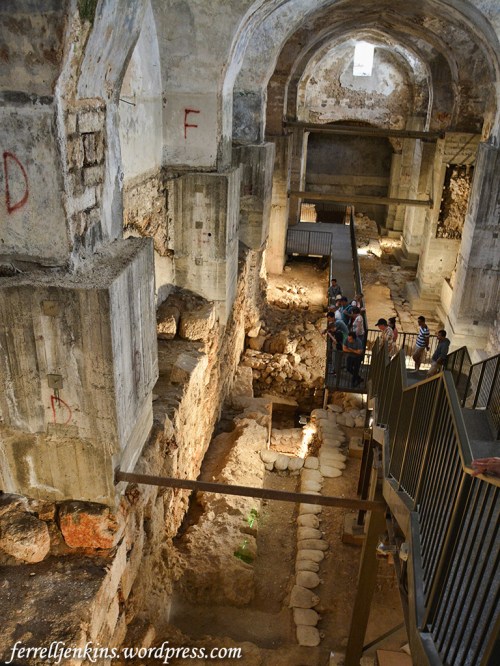
General view of the archaeological excavation of the Kishle. Photo by Ferrell Jenkins.

General view of the archaeological excavation of the Kishle. Photo by Ferrell Jenkins.

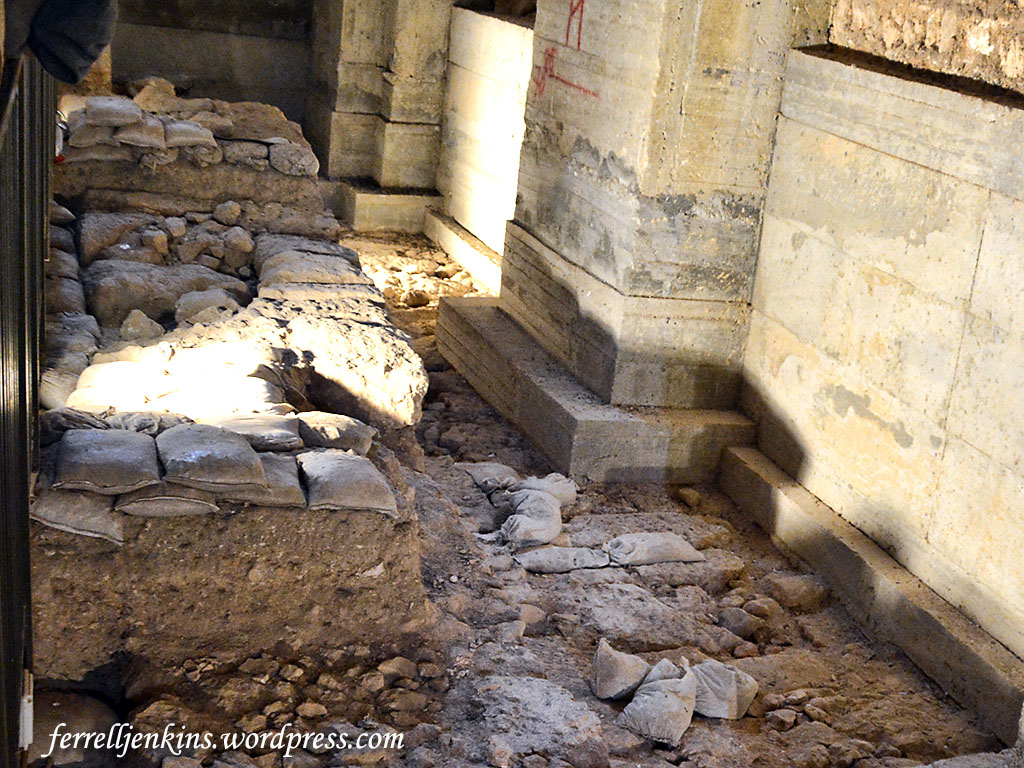
On the far right of the photo above, and below, you will see a stretch of wall from Herod’s palace.
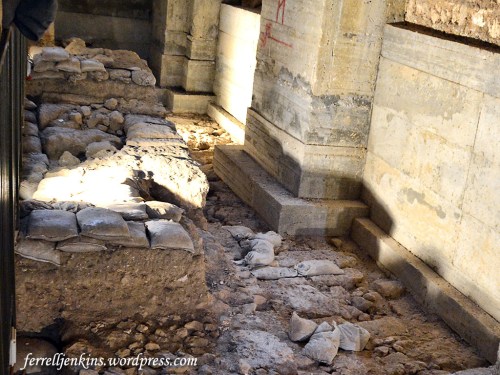
Herodian ruins in the Kishle. Photo by Ferrell Jenkins.

Herodian walls in the Kishle. Photo by Ferrell Jenkins.

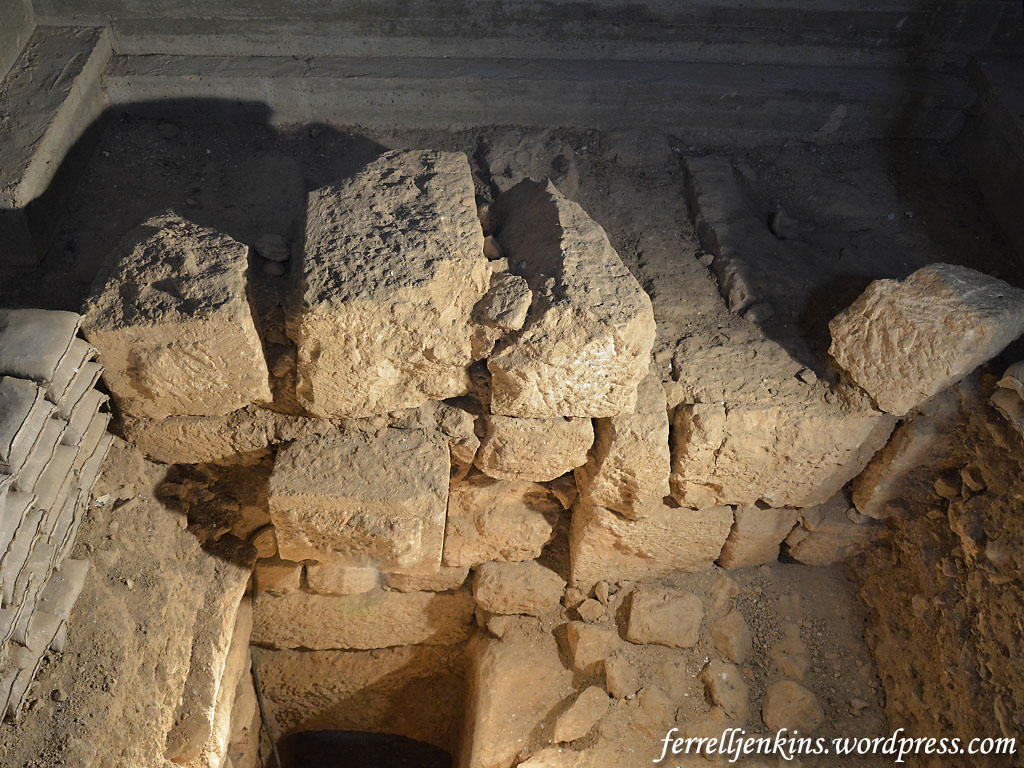
The oldest ruins uncovered during the excavation belong to the 8th century B.C. Perhaps these ruins belong to the time of Hezekiah, King of Judah (729-686 B.C., McKinny).
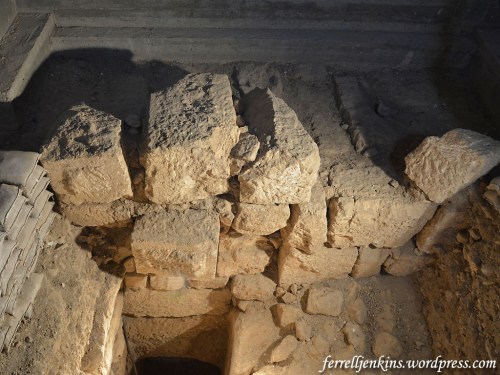
Ruins from the 8th century B.C., possibly from the time of King Hezekiah. Photo by Ferrell Jenkins.

Ruins from the 8th century B.C., possibly from the time of King Hezekiah. Photo by Ferrell Jenkins.

The Bible describes the work Hezekiah did in response to the Assyrian threat.

He set to work resolutely and built up all the wall that was broken down and raised towers upon it, and outside it he built another wall, and he strengthened the Millo in the city of David. He also made weapons and shields in abundance. (2 Chronicles 32:5 ESV)

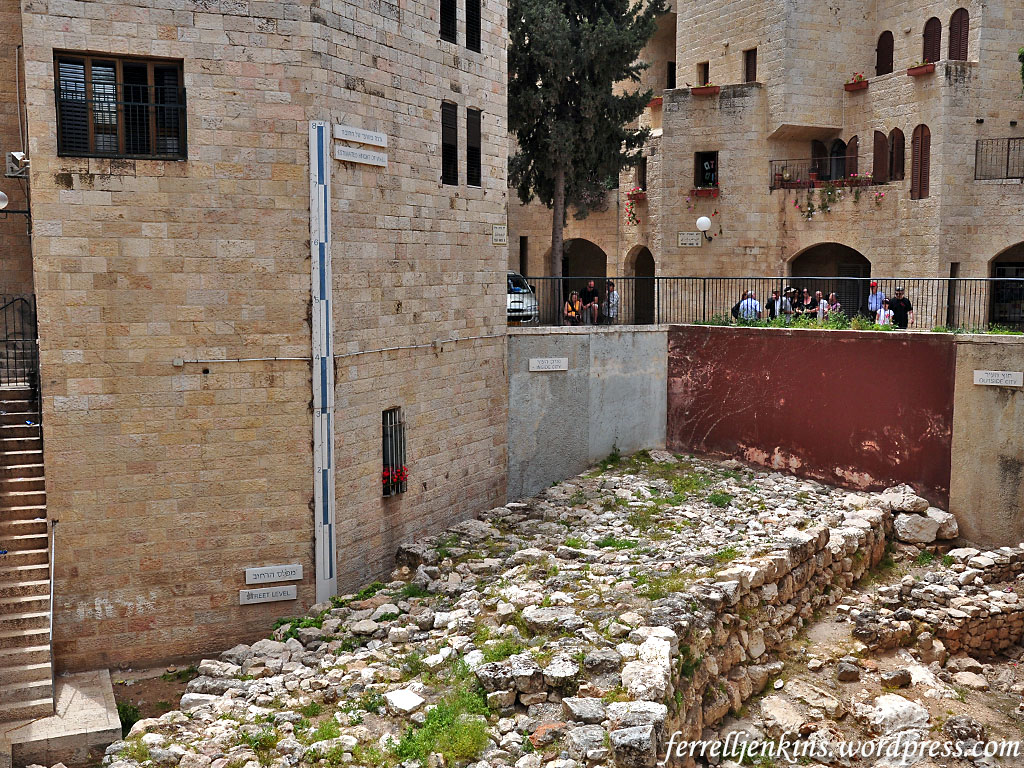
The Jewish Quarter Excavations began in 1969 under the direction of Professor Nahman Avigad of Hebrew University. Shapiro says he uncovered a 130-foot long section of stone wall that was 23 feet wide and probably 27 feet high. This is the wall we now call the Broad Wall (Nehemiah 3:8; 12:38).
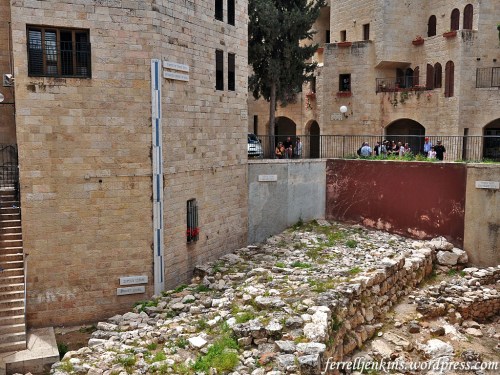
The Broad Wall excavated by Avigad. Photo by Ferrell Jenkins.

The Broad Wall excavated by Avigad. Photo by Ferrell Jenkins.

The wall within the Kishle is even further to the west, on the top of the western ridge of the Old City.

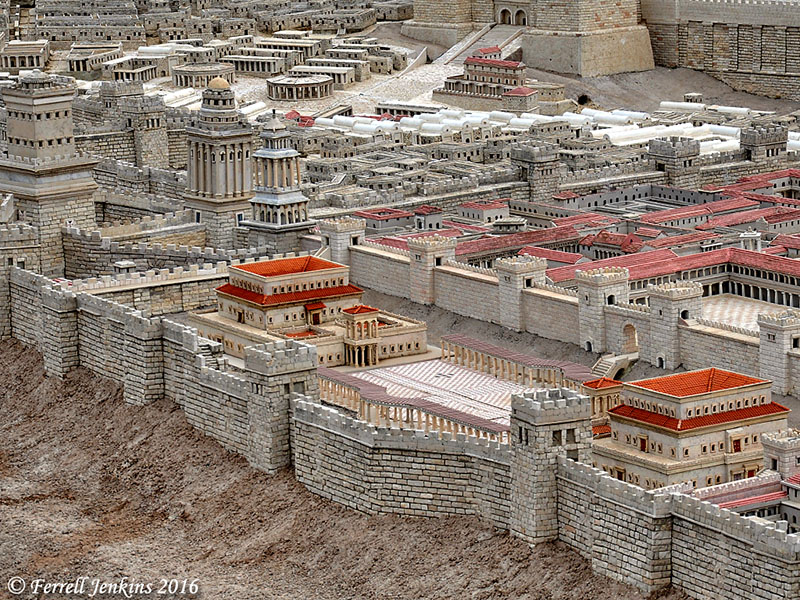
Re’em Amit, the archaeologists in charge of the dig, argues that this is the palace of Herod the Great, and the location of the Praetorium where the trial of Jesus took place (John 19:13). When I first began to visit Jerusalem we thought the paved area in the Sisters of Zion was the Praetorium. We still visit the site if time permits because it is important in understanding the Roman destruction of Jerusalem, but we now know that the pavement there belongs to the second century A.D.

The Roman Prefect, such as Pilate, would make his residence in Herod’s Palace on his visits to Jerusalem from Caesarea. Herod Antipas, the son of Herod the Great, and Pontius Pilate, the governor [prefect] of Judea were both in Jerusalem at the time of the crucifixion of Jesus (Luke 3:1; 23:4-16). And they were both staying at the best “hotel” in town.
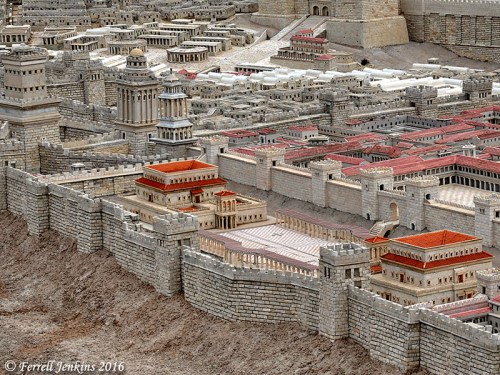
Herod's Palace in the Second Temple model at the Israel Museum. Photo by Ferrell Jenkins.

Herod’s Palace in the Second Temple model at the Israel Museum. The Fortress of Antonio is visible at the top/right of the photo. Photo by Ferrell Jenkins.

This is not a new hypothesis, but it does provide new evidence to sustain the view. Shimon Gibson has written extensively on this for several years. Gibson, with an allusion to the writing of Josephus, says,

After the grandeur of the Jewish Temple, Herod’s palace was reportedly the most amazing building complex in Jerusalem. (Final Days of Jesus, 93)

Gibson has a essay on this subject in The World of Jesus and the Early Church, edited by Craig A. Evans. In both of these articles Gibson includes drawings of the area under consideration.

Visiting the Kishle:

The Tower of David is open with English guides Sundays to Thursdays at 11 a.m. At other times one may visit with an audio guide. Adult admission is 40 NIS (about $11).

The guided tour including the Kishle (From Herod’s Palace to British Prison) is available in English on Fridays at 10 a.m. for 45 NIS.

Dates, hours, and admission prices change from time to time. Check the Tower of David web site for current information.


Josephus Elaborates on the Palace

— “ —

176 Now as these towers were themselves on the north side of the wall, the king had a palace inwardly thereto adjoined, which exceeds all my ability to describe it;
177 for it was so very elaborate as to lack no cost nor skill in its construction, but was entirely walled about to the height of thirty cubits, and was adorned with towers at equal distances, and with large bedchambers, that would contain beds for a hundred guests a piece,
178 in which the variety of the stones is not to be expressed; for a large quantity of those who were rare of that kind were collected together. Their roofs were also wonderful, both for the length of the beams, and the splendour of their ornaments.
179 The number of the rooms was also very great, and the variety of the figures that was about them was prodigious; their furniture was complete, and the greatest part of the vessels that were put in them was of silver and gold.
180 There were besides many porticoes, one beyond another, all around, and in each of those porticoes elaborate pillars; yet were all the courts that were exposed to the air everywhere green.
181 There were, moreover, several groves of trees, and long walks through them, with deep canals and cisterns, that in various parts were filled with brazen statues, through which the water ran out. There were with this many dove courts {a} of tame pigeons about the canals.  (Jewish War 5:176-181 or 5.4)

— ” —


Selected Sources:

AP You Tube video featuring Re’em Amit, the Jerusalem District Archaeologist of  the IAA in charge of the excavations of the Kishle. In this video Amit seems to be explaining in English and someone else is translating in another language.

Rasmussen, Carl. Kishle Tour. Photos included.

Rotem, Itay (guide), Tower of David Museum. You Tube.

Shapiro, Caroline. “Doorway to the Past.” Archaeological Diggings, Nov. 2015.

Tower of David web site. Here you will find several links to popular articles about the new excavation.

Ziese, Mark. “The Barracks.”

________.  “What Lies Beneath.”  In both articles Ziese includes some historic photos bringing to mind the use of the Kishle during the British period.