Category Archives: Bible Study

Samaritans want Mount Gerizim site opened to public

The Samaritians want the archaeological site at the peak of Mount Gerizim opened to the public.

At the peak of Mount Gerizim in the West Bank is a fenced-off archeological site, where a dig conducted under the auspices of the Israel Defense Forces Civil Administration recently uncovered a well-preserved 2,000-year-old city, once home to 10,000 people.

Although the site is off-limits to the public, the dig has revealed streets flanked by houses as well as a city center, all of which make it a potentially important tourist destination. The Civil Administration made a decision in May to keep the site closed to visitors, for the time being.

Mount Gerizim is a holy site to the Samaritan community, an ancient sect closely related to Judaism. According to Samaritan tradition, the mountain is the site of the ancient Tabernacle. The archaeological excavations at the site were undertaken in 1982, and continued for 22 years at an investment of tens of millions of shekels, revealing new finds on a daily basis.

Benny Katzover, who served for many years as head of the Samaria Regional Council, said the excavations began in an effort to find what the Samarians regard as their Holy Temple. Katzover said the ancient historian Joseph Flavius [Josephus] explained that, following disputes with the Jews, the Samaritans moved their spiritual center to Mount Gerizim, near what is now the West Bank city of Nablus, and built their temple on a scope identical to the one in Jerusalem.

“The finds,” he said, “reveal a high standard of living, including baths and ceramic tile and heating and mosaics… You can see that it was the capital of a whole kingdom.”

The article, in its entirety, may be read here.

Last December I visited Mount Gerizim. A fence surrounds the archaeological site and makes it impossible to get photos of specific areas. Here is a photo I made from the fence.
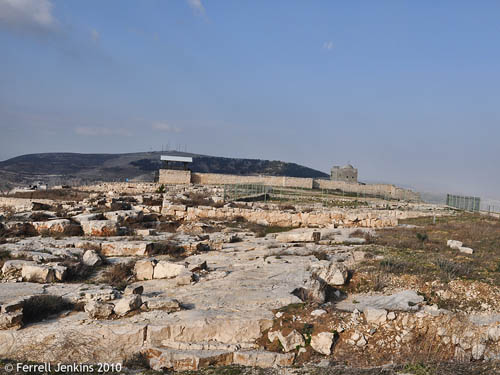
Archaeological Excavations on Mount Gerizim. Photo by Ferrell Jenkins.

Archaeological Excavations on Mount Gerizim. Photo by Ferrell Jenkins.

From another point it is possible to see Nablus below in the valley between Gerizim and Ebal. Click for a larger image.
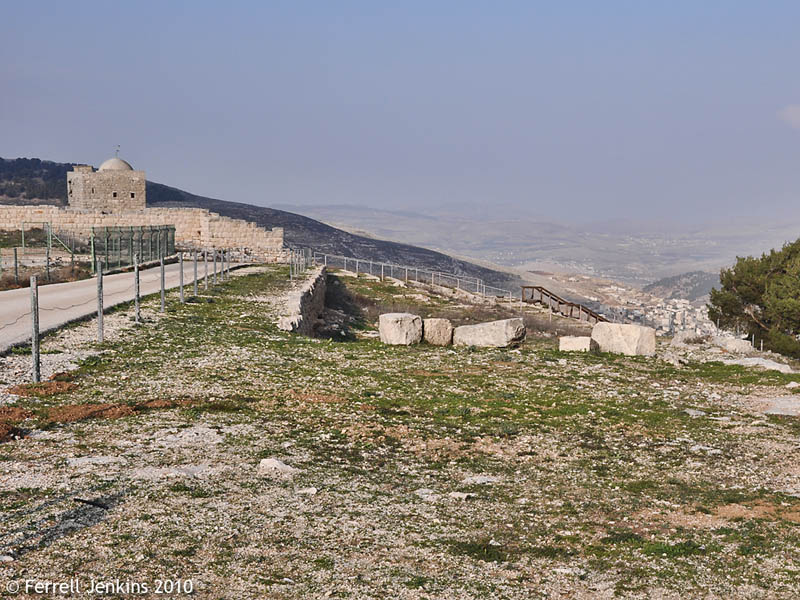
View of Nablus from Mount Gerizim. Photo by Ferrell Jenkins.

View of Nablus from Mount Gerizim. Photo by Ferrell Jenkins.

The blessings of the Law of Moses were read from the slopes of Mount Gerizim as the Israelites assembled in the valley between Mount Gerizim and Mount Ebal.

33 And all Israel, sojourner as well as native born, with their elders and officers and their judges, stood on opposite sides of the ark before the Levitical priests who carried the ark of the covenant of the LORD, half of them in front of Mount Gerizim and half of them in front of Mount Ebal, just as Moses the servant of the LORD had commanded at the first, to bless the people of Israel. 34 And afterward he read all the words of the law, the blessing and the curse, according to all that is written in the Book of the Law. 35 There was not a word of all that Moses commanded that Joshua did not read before all the assembly of Israel, and the women, and the little ones, and the sojourners who lived among them. (Joshua 8:33-35 ESV)

HT: Joseph I. Lauer
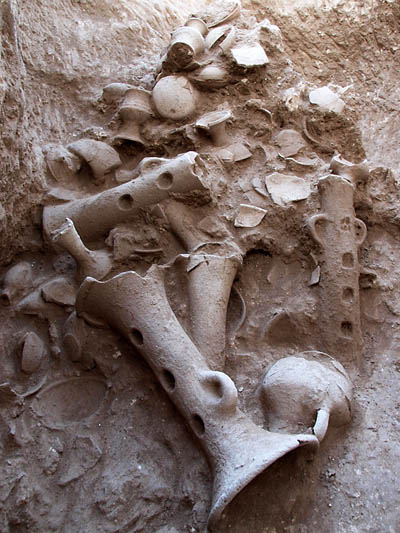
3,500 year old discovery at Tell Kassis (Qassis)

The Israel Antiquities Authority reports here today on the discovery of more than 100 ancient cultic vessels in a natural hollow in the bedrock next to the Tishbi (Yokneam) junction

In an excavation the Israel Antiquities Authority is conducting along the route of the northern gas pipeline planned by the Israel Natural Gas Lines Company

A natural hollow in the bedrock that was exposed in archaeological excavations by the Israel Antiquities Authority prior to the installation of the northern gas pipeline by the Israel Natural Gas Lines Company, at the foot of Tel Qashish (Tell el Qassis [or Tell Kassis]), did not cease to provide ancient surprises. For two weeks archaeologists of the Israel Antiquities Authority excavated the contents of the rock-hollow and removed from it more than 100 intact cultic vessels and other extraordinary items that are c. 3,500 years old. Again and again, every time the excavators thought they reached the bottom of the cavity a new and fascinating layer of complete vessels was discovered beneath the one that was previously dismantled.

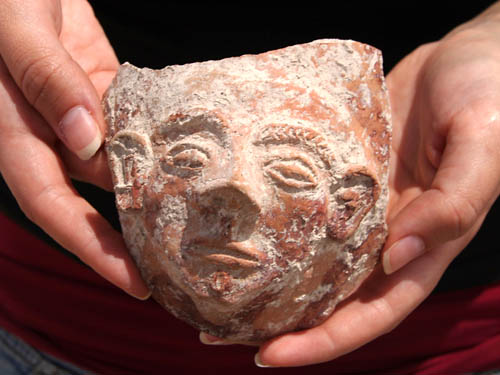
In the past the ancients would descend into the rock-hollow by way of two broad, hewn steps. Inside the cavity whole vessels were found piled one atop the other and other vessels were broken by those that had been placed upon them. Among the finds that were recovered: a cultic vessel that was used for burning incense, a sculpted face of a woman that was part of a cultic cup used in dedicating a libation to a god, goblets and bowls with high bases and tableware that was intended for eating and drinking. Other vessels that were found had been brought from Mycenae in Greece, including a storage vessel for precious oils – evidence of the ancient trade relations that existed with Greece.

According to archaeologists Uzi Ad and Dr. Edwin van den Brink, the excavation directors on behalf of the Israel Antiquities Authority, this is an extremely rare discovery. Until now no such pits as these have been found from 3,500 years ago. It is also extraordinary to find scores of vessels that are in such a good state of preservation. In most excavations fragments of pottery vessels are found, whereas here the vessels were removed from the rock-hollow intact. Each object was removed with the greatest of care, was drawn and documented and revealed beneath it a wealth of other finds. The vessels are numbered and their precise location in the heap is recorded for future research. According to the archaeologists, it is obvious that considerable time and thought were invested in the placement of the vessels in the rock-hollow, as evidence by the different kinds of vessels that were buried separately.

Archaeologists van den Brink and Ad have various theories regarding the purpose of the rock-hollow. “In this period, before the Bible, the children of Israel were still in Egypt or the desert, and it would appear that the vessels were used in a pagan cult that worshiped idols. During this period it was customary that each city had a temple of its own where special cultic vessels were used”.

At the end of the Late Bronze Age (the Canaanite period) the region was vanquished, including Tel Qashish, which was destroyed by a fierce conflagration, along with nearby Tel Yoqneʽam.  Therefore, one of the theories is that the vessels were buried in order to protect them from the impending destruction.

Another possibility is that the cultic vessels that were employed in the rituals practiced in the temple were buried after they were no longer used. Since these artifacts were part of the ritual ceremonies a special place was allocated for them and unlike other vessels they were not discarded in the garbage.

Cultic Verssels at Tell Kassis. Photo: Assaf Peretz, IAA.

Cultic Verssels at Tell Kassis. Photo: Assaf Peretz, IAA.

The next photo shows a cultic cup with the face of a woman.

Cultic Cup discovered at Tell Kishbi. Photo: Assaf Peretz, IAA.

Cultic Cup discovered at Tell Kassis. Photo: Assaf Peretz, IAA.

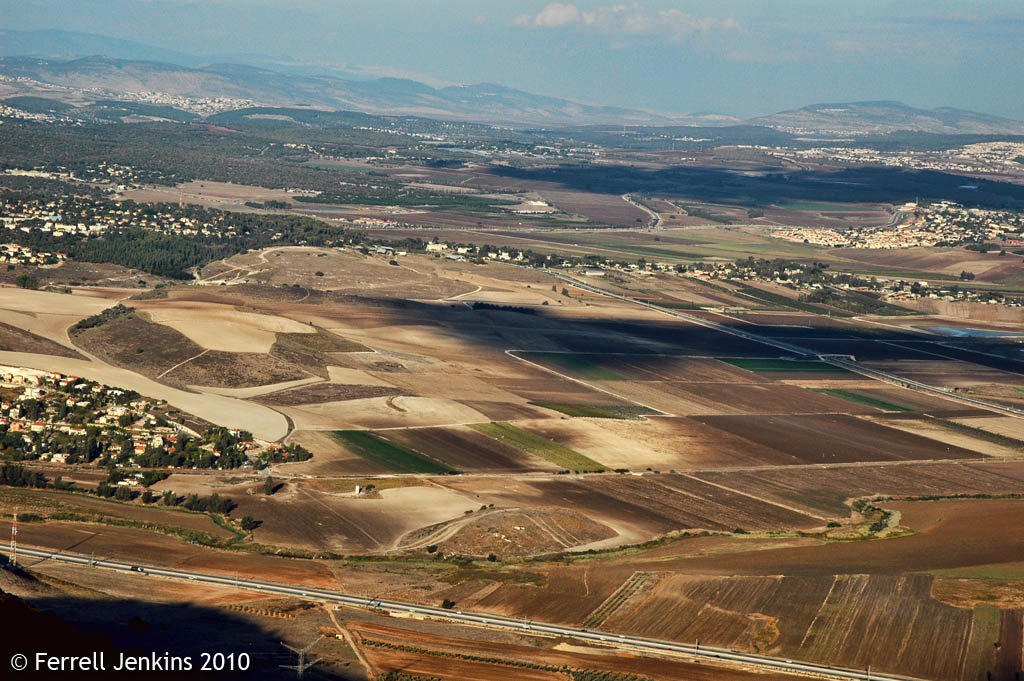
Those who have visited the site of Murakah on Mount Carmel have seen this tell and the Kishon River in the Jezreel Valley. The photo below shows the eastern end of the Jezreel Valley. The tell is in the center of the photo at the bottom. You can make out the line of the Kishon River below the tell. The dark areas in the photo are shadows of passing clouds. Click for a larger image.

Tell Kassis and the Kishon in the Jezreel Valley. Photo by Ferrell Jenkins.

Tell Kassis and the Kishon in the Jezreel Valley. Photo by Ferrell Jenkins.

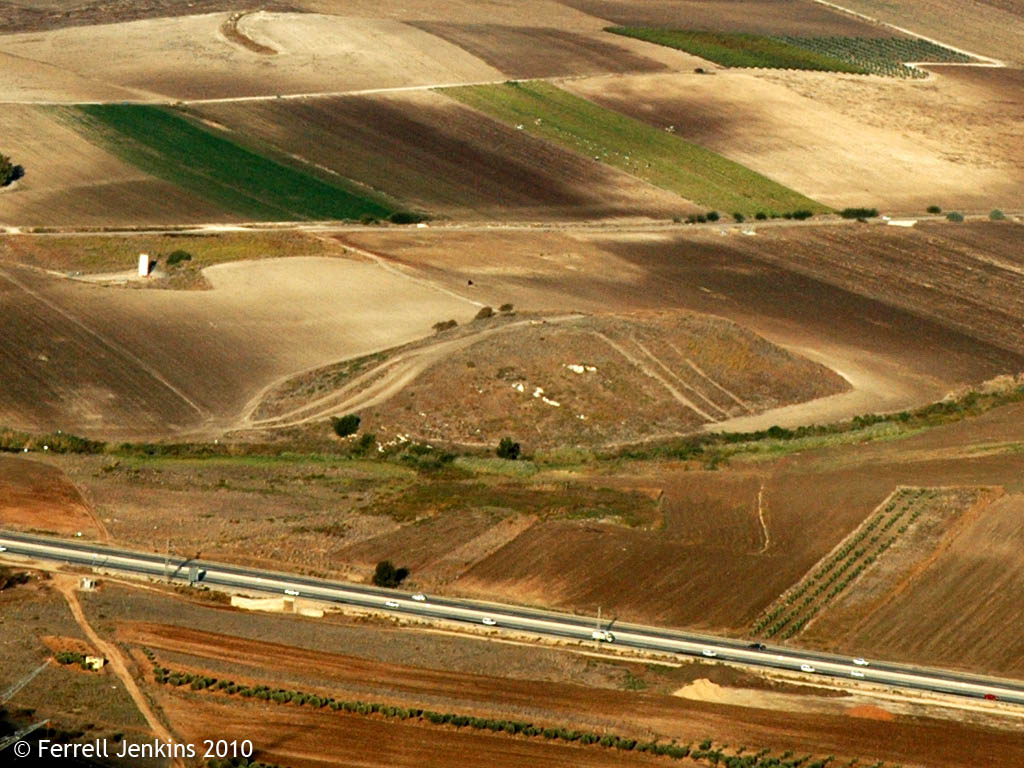
This photo is a cropped portion of the previous photo. The tell is clearly visible.

Tell Kassis and the Kishon River from Mount Carmel. Photo by Ferrell Jenkins.

Tell Kassis and the Kishon River from Mount Carmel. Photo by Ferrell Jenkins.

Tell Kassis (or Tell el-Qasis) is thought by some scholars to be the Biblical Helkath. Helkath was a town belonging to the tribe of Asher (Joshua 19:25), and one of the Levitical cities (Joshua 21:31). This area is also associated with the battle of Deborah and Barak against the Canaanites (Judges 4-5). After the contest on Mount Carmel, Elijah had the prophets of Baal killed at the Brook Kishon.

And Elijah said to them, “Seize the prophets of Baal; let not one of them escape.” And they seized them. And Elijah brought them down to the brook Kishon and slaughtered them there. (1 Kings 18:40 ESV)

Rotem, the young lady who is webmaster for Bible Walks, lives only a few kilometers from the site. She has included many great photos of the mound and of the recent emergency excavations here.

HT: Joseph I. Lauer

Goshen and the Great Bitter Lake

The land of Goshen is fascinating because it is much different from the Egypt that so many of us studied in elementary school. Instead of sand, river, and pyramids, Goshen is a flat agricultural region in the eastern Nile Delta.

Perhaps Goshen is most fascinating as the long-time home of the sons of Israel. Joseph told his brothers,

You shall dwell in the land of Goshen, and you shall be near me, you and your children and your children’s children, and your flocks, your herds, and all that you have. (Genesis 45:10 ESV)

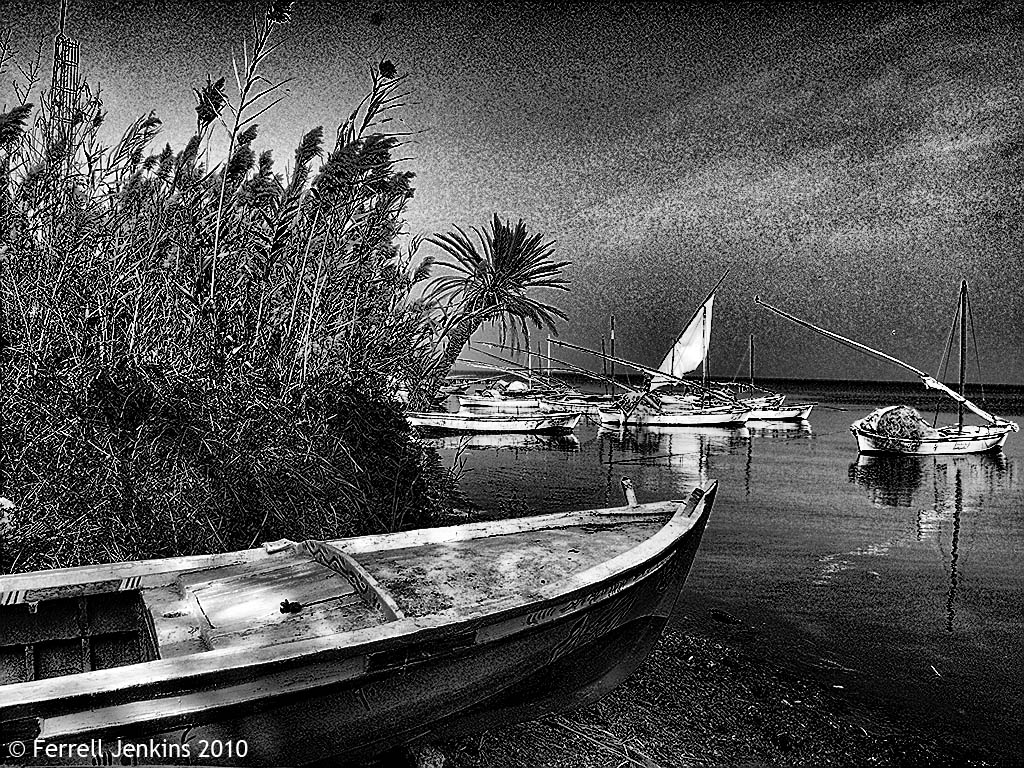
The photo below  shows reeds (bulrushes) growing on the banks of the Great Bitter Lake. This is the largest of a chain of lakes through which the Suez Canal runs. I have used a Photoshop plug-in called Topaz Adjust to turn this photo into a sketch that more resembles a photo made at night. If you think it might be useful in a lesson, you may click on the photo for a larger image.

Reeds (bulrushes) growing in the Great Bitter Lake. Photo by F. Jenkins.

Sketch of Reeds (bulrushes) growing in the Great Bitter Lake. Photo by F. Jenkins.

There are several good suggestions for the place of the exodus recorded in Exodus 14. This vicinity may be the sea described in Exodus 14:9.

Then the Egyptians chased after them with all the horses and chariots of Pharaoh, his horsemen and his army, and they overtook them camping by the sea, beside Pi-hahiroth, in front of Baal-zephon.

Other scholars suggest a location associated with Lake Timsa which is a few miles to the north.

Remembering the Dead

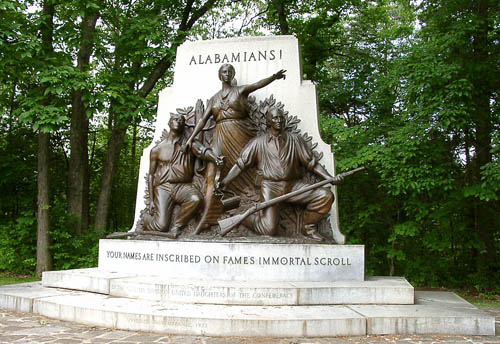
Memorial Day, originally called Decoration Day, is a day of remembrance for those who have died in our nation’s service. There are many stories as to its actual beginnings, with over two dozen cities and towns laying claim to being the birthplace of Memorial Day. (Memorial Day History)

When I was a kid, growing up in the American South, the day we now call Memorial Day was called Decoration Day. Families went to the local cemeteries to clean up the grave sites of relatives and leave fresh flowers. If it was known that there were no family members left in the community, those graves also were cleaned. I don’t recall when I first began to hear, or think, that the day was intended to honor those fallen in war.

Like many holidays, the original purpose has changed. Memorial Day, Independence Day, Labor Day, Christmas, Easter, and other holidays, have become times for picnics, trips, vacations, and assorted non-related practices. Every holiday has become a time for stores to have sales.

I like the idea of Memorial Day. I am pleased to join in the remembrance of troops fallen in battle, and all of the dead who have played a significant role in my life.

Honoring the Fallen from Alabama at Gettysburg. Photo by Ferrell Jenkins.

Honoring the Fallen from Alabama at Gettysburg. Photo by Ferrell Jenkins.

Our header today is a photo I made at Normandy a few years ago.

For Christians, every Lord’s Day is a special day of remembrance. We gather to remember the death of the Lord Jesus for our sins.

23 For I received from the Lord that which I also delivered to you, that the Lord Jesus in the night in which He was betrayed took bread;
24 and when He had given thanks, He broke it and said, “This is My body, which is for you; do this in remembrance of Me.”
25 In the same way He took the cup also after supper, saying, “This cup is the new covenant in My blood; do this, as often as you drink it, in remembrance of Me.”
26 For as often as you eat this bread and drink the cup, you proclaim the Lord’s death until He comes. (1 Corinthians 11:23-26 NAU)

Useful photo and information sites

Because I maintain the Biblical Studies Info Page, I don’t list a lot of links on this page. I suggest you check the Scholarly page, and then click on the Blogs and Photos. Here are a few sites dealing with archaeology and the Bible World that should be of special interest to readers of this blog. I am not listing the better known sites such as Bible Places Blog, Bible Places, and Holy Land Photos.

  • Through the Land of Israel III. Laju Paul is publishing hundreds of photos from all over Israel.
  • Photographs of Bible Lands. David Padfield, a friend who has traveled with me several times, has a great collection of photos available for download.
  • Leon’s Message Board. Leon Mauldin, a friend who has traveled with me several times, is posting good photos of the Seven Churches of the Book of Revelation and other places he has visited.
  • Bible Walks. Rotem, a young lady who lives in lower Galilee, has posted more than 2500 photos with maps, historical, and biblical information.
  • See the Holy Land. This site, the retirement work of a journalist in New Zealand, intends to serve as a guide to visitors of the Holy Places. (HT: Bible Places Blog)
  • Sacred Destinations. Religious and cultural sites around the world.
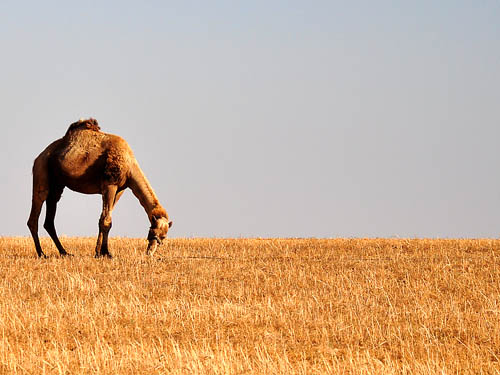
A camel along the road from Beersheba to Arad. Photo by Ferrell Jenkins.

A camel along the road from Beersheba to Arad. Photo by Ferrell Jenkins.

And for her sake he [Pharaoh] dealt well with Abram; and he had sheep, oxen, male donkeys, male servants, female servants, female donkeys, and camels. (Genesis 12:16 ESV)

Pictures of Ancient Egypt

A slide show of nearly photos of Ancient Egypt in Pictures is maintained at Fox News here. I have called attention to this before, but continue to receive the link from readers. In about two months the number of photos has increased from 47 to 58. I assume it may continue to grow as new discoveries are made.

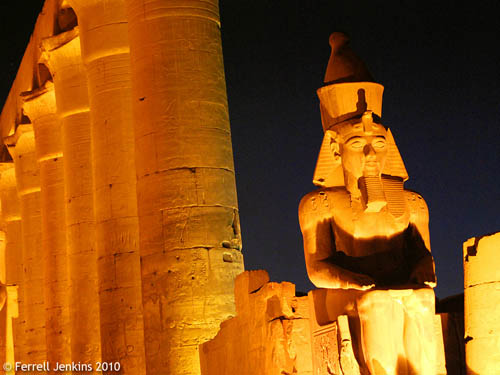
This gives me an opportunity to share a photo I made at Luxor in 2009.

Rameses at floodlight. Luxor Temple. Photo by Ferrell Jenkins.

Rameses by floodlight. Luxor Temple. Photo by Ferrell Jenkins.

Luxor was known as Thebes in Old Testament times. Both Jeremiah and Ezekiel prophesied the Lord’s judgment of the city. Jeremiah says,

The LORD of hosts, the God of Israel, says, ‘Behold, I am going to punish Amon of Thebes, and Pharaoh, and Egypt along with her gods and her kings, even Pharaoh and those who trust in him’” (Jeremiah 46:25; see also Ezekiel 30:14-16).

A visit to the ruined and unoccupied temples of Karnak and Luxor, where Amon (or Amun) was worshipped as a great god, certainly convinces us of the fulfillment of this prophecy. Shortly after the time of Jeremiah (about 586 B.C.), Egypt and Thebes began to decline as a world power.

HT: David Padfield (has 3 collections of Egypt photographs online); Brooks Cochran

Beth-shemesh from another vantage point

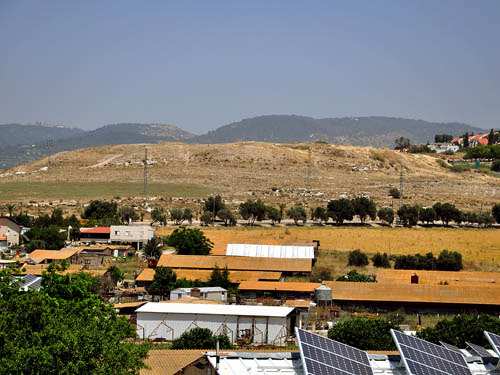
The weather changes every few days (or hours?) in Israel. One day may be hot and hazy, and another day may be cool and clear. The day our group went to the Sorek Valley and Beth-shemesh the sky was thick with haze. Two days later it was clear. Elizabeth and I went back to try to get a few photos to share with our group. We drove into the village (kibbutz) of Yishi to locate a good vantage point for the photo.

It’s true that there are a lot of rooftops in the foreground, but it still gives us a nice view of the mound.

Beth-shemesh from the west. Photo by Ferrell Jenkins.

Beth-shemesh from the west. Photo by Ferrell Jenkins.

The Israelites took the ark of the covenant from the tabernacle at Shiloh to the battle field at Ebenezer when they were fighting with the Philistines (1 Samuel 4). The ark was captured by the Philistines and taken to Ashdod, then to Gath, and finally to Ekron before they decided to get rid of it. The ark was returned to Beth-shemesh (Beth Shemesh, Bethshemesh; 1 Samuel 4-6).

Now the people of Beth-shemesh were reaping their wheat harvest in the valley, and they raised their eyes and saw the ark and were glad to see it. The cart came into the field of Joshua the Beth-shemite and stood there where there was a large stone; and they split the wood of the cart and offered the cows as a burnt offering to the LORD. (1 Samuel 6:13-14 NAU)

There is a small grain field between the row of trees and the first buildings of the kibbutz. This makes it easy enough to visualize the biblical event.

Samson and the Sorek Valley

Samson is often described as a man of great physical strength, but one lacking in moral character. After outwitting the Gazites and taking away the door of the gate of the city he became involved with a Philistine woman named Delilah.

After this he loved a woman in the Valley of Sorek, whose name was Delilah. (Judges 16:4 ESV)

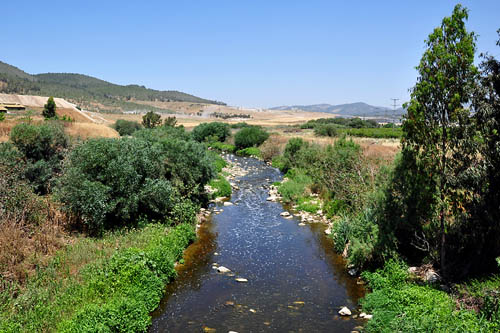
The Sorek River flows east from the mountains of Judea through the Sorek Valley, past Beth-shemesh and Timnah. Today the brook is polluted, as you may be able to detect in the photo. At this point, near Beth-shemesh, there is a terrible odor associated with the area around the river. I think it comes from the chicken or turkey farms in the valley.

No longer a nice place to take a date.

The Sorek River in the Sorek Valley near Beth-shemesh. Photo by Ferrell Jenkins.

Sorek River in the Sorek Valley near Beth-shemesh. Photo by Ferrell Jenkins.

Roman altar excavated at Ashkelon

It happens with regularity in Israel. Someone is building. The builder encounter ancient ruins. The Israel Antiquities Authority is called. (I wonder how many times they are not called.) Construction is halted while an emergency excavation is conducted. Amazing discoveries are often uncovered.

This time it happened at Ashkelon during construction of an Emergency Room at the Barzilai Hospital. Here is the account provided by the IAA.

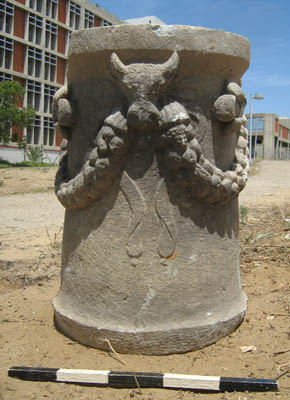
The development work for the construction of a fortified emergency room at Barzilai Hospital, which is being conducted by a contractor carefully supervised by the Israel Antiquities Authority, has unearthed a new and impressive find: a magnificent pagan altar dating to the Roman period (first-second centuries CE) made of granite and adorned with bulls’ heads and a laurel wreaths. The altar stood in the middle of the ancient burial field.

According to Dr. Yigal Israel, Ashkelon District Archaeologist of the Israel Antiquities Authority, “The discovery further corroborates the assertion that we are dealing with a pagan cemetery. It is an impressive find that has survived 2,000 years. The altar is c. 60 centimeters [24 inches] tall and it is decorated with bulls’ heads, from which dangle laurels wreaths. There is a strap in the middle of each floral wreath and bull’s head. The laurel wreaths are decorated with grape clusters and leaves. This kind of altar is known as an “incense altar”. Such altars usually stood in Roman temples and visitors to the temple used to burn incense in them, particularly myrrh and frankincense, while praying to their idols. We can still see the burnt marks on the altar that remain from the fire. The altar was probably donated by one of the families who brought it to the cemetery from the city of Ashkelon”.

Roman altar discovered at Ashkelon. Photo: IAA.

Roman altar discovered at Ashkelon. Photo: IAA.

More information is available from the IAA here.

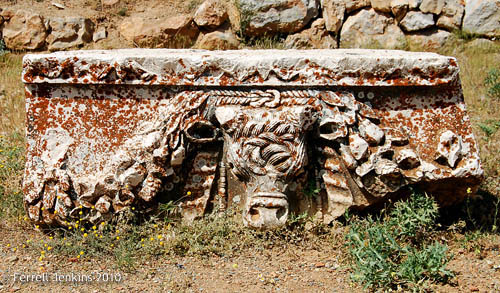
The motif on this altar is common in the Greco-Roman world. The photo below shows a similar bull’s head on what appears to be part of an architectural frieze in the Augustan Imperial Sanctuary at Pisidian Antioch.

From Augustan Imperial Sanctuary at Pisidian Antioch. Photo by Ferrell Jenkins.

From Augustan Imperial Sanctuary at Pisidian Antioch. Photo by Ferrell Jenkins.

The Archaeological Museum in Thessalonica exhibits an altar from the Roman Imperial age (35 B.C.) that, according to the inscription on it, was reused as a pedestal in the temple of Isis in the 2nd century A.D.

Roman Imperial Altar. Thessalonica, Greece, Museum. Photo by Ferrell Jenkins.

Roman Imperial Altar. Thessalonica Museum. Photo: Ferrell Jenkins.

These stones showing garlanded animals remind me of what happened to Paul and Barnabas at Lystra in Lycaonia.

And the priest of Zeus, whose temple was at the entrance to the city, brought oxen and garlands to the gates and wanted to offer sacrifice with the crowds. (Acts 14:13 ESV)

HT: Joseph Lauer and numerous blogs. Note especially the comments on the current religious/political comments by Jim West and Aren Maeir about the Ashkelon altar at Zwinglius Redivivus.

Pentecost morning at Nebi Samwil

Last evening at sundown the Jews began to celebrate their modern interpretation of  Pentecost (Shavu’ot). Christians know this from the Old Testament scriptures as the feast of weeks (Leviticus 23:15; Deuteronomy 16:9).

The church had it beginning with the preaching of the gospel in its fullness on the first Pentecost after the resurrection of Christ (Acts 2).

When we noticed that the sky was clear with a few nice clouds, we decided to go to Nebi Samwil (Prophet Samuel), a site suggested as the location of Mizpah by some scholars. Others suggest Tell en-Nasbeh, a mound located at Al Bira in the West Bank. I will have to postpone commenting further due to the fact that my flight will soon be called.

Samuel, the last judge of Israel, called all of the people of Israel to Mizpah and judged them (1 Samuel 7:5-6). Samuel also anointed Saul to be the first king of Israel at Mizpah (1 Samuel 10:1). Mizpah became the headquarters of Gedaliah as governor of Judah after the Babylonian destruction of Jerusalem  (2 Kings 25:23).

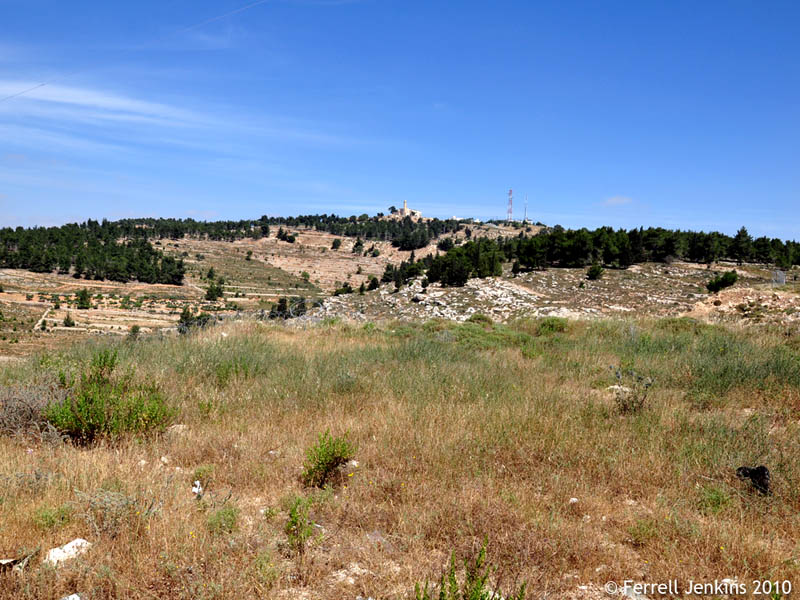
Back to Pentecost. Pentecost is celebrated in much the same way as a sabbath. I said all of that to say, there was very little traffic this morning as we made our way to Nebi Samwil. This distant photo shows how clear the view was on the southern side of the ridge where Nebi Samwil sits. The view on the north side of the territory of Benjamin was not quite as clear, but it was still nice.

Nebi Samwil on the Ridge. Photo by Ferrell Jenkins.

Nebi Samwil on the Ridge. Photo by Ferrell Jenkins

The lady in the photo below is my lovely wife of more than 55 years. She has been with me on numerous tours to Israel, but she has made two trips when it was just the two of us. I must say that she is not that much into tells. A day or two ago I took her to Tell Jerusalem Mall, and that made up for a lot. 🙂  We have had a great time these past 9 days since our group returned home.

Elizabeth at Nebi Samwil. Photo by Ferrell Jenkins.

Elizabeth at Nebi Samwil. Photo by Ferrell Jenkins.

Thanks for sharing this trip with us. Please continue to read the travel blog on a regular basis. If there is some particular photo you would like to see let me know by leaving a comment.