Category Archives: Bible Places

Lesbos, Syrian refugees, and “Come before winter”

A recent evening news report on the Syrian refugees trying to reach some semblance of safety in Europe shows the dangers they face trying to get from Turkey to the Greek island of Lesbos. Some of the heavily loaded rafts and small boats have overturned in the rough sea. Why is that? It is because of the approach of winter. Keep that thought in mind and we will return to it.

Our first photo shows the ruins of the temple of Athena at Assos. The Aegean island of Lesbos is visible across the strait.
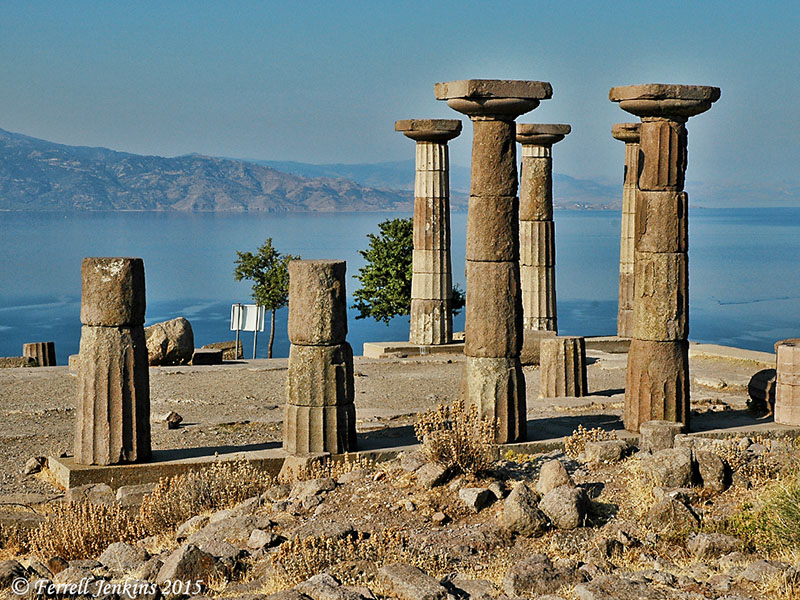
A view of Lesbos across the strait from Assos and the temple of Apollo. Photo by Ferrell Jenkins.

A view of Lesbos across the strait from Assos and the ruins of the temple of Athena. Photo by Ferrell Jenkins.

The apostle Paul undoubtedly saw the temple of Athena when he traveled the approximate 20 miles from Alexandria Troas to Assos by land. His companions had traveled by boat from Troas to Assos. The historical account reads this way:

But going ahead to the ship, we set sail for Assos, intending to take Paul aboard there, for so he had arranged, intending himself to go by land. And when he met us at Assos, we took him on board and went to Mitylene. (Acts 20:13-14 ESV)

The island across the strait is Lesbos. Follow the island coastline south and you will come to the town of Mitylene.
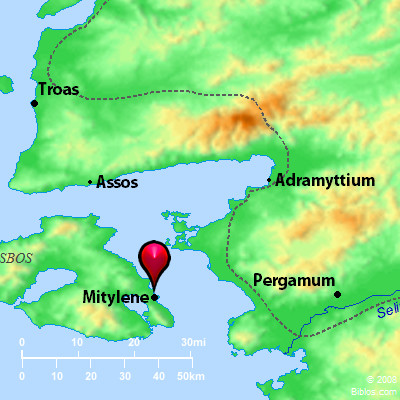
The island of Lesbos is close to modern Turkey. Credit: biblos.com.

The Greek island of Lesbos is close to modern Turkey. Credit: biblos.com.

Now, back to the danger of the sea in winter. There is a valid reason why Paul would encourage Timothy, after picking up his cloak and parchments at Troas [see the map] to come to him in Rome “before winter.”

Do your best to come before winter.  (2 Timothy 4:21 ESV)

Paul, having experienced his own shipwreck on the way to Rome, knew of the danger of traveling too late in the year. We are told that there were 276 persons aboard the ship that wrecked on Malta (Acts 27:37).
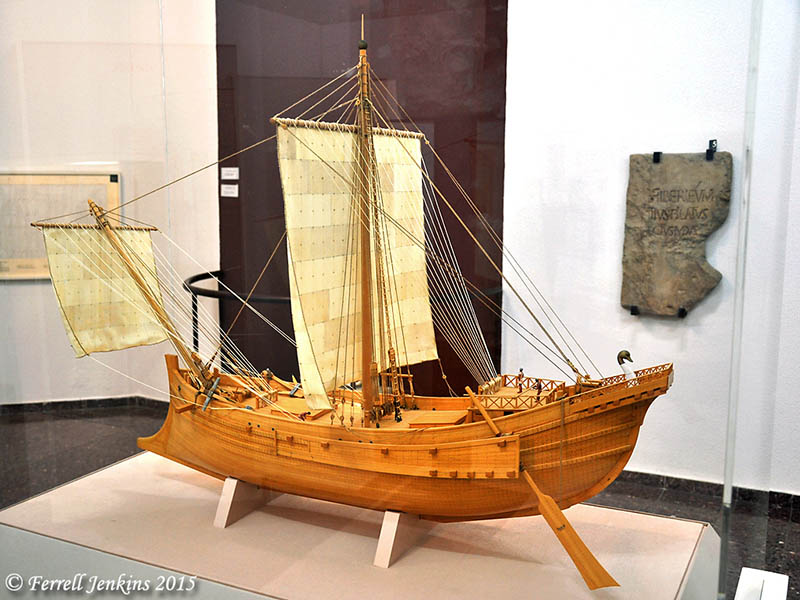
Model of ship like Paul would have used on his voyage to Rome. Rali Museum, Caesarea, Israel. Photo by Ferrell Jenkins.

Model of ship like Paul would have used on his voyage to Rome. Rali Museum, Caesarea, Israel. Photo by Ferrell Jenkins.

The ships that regularly cruise the Aegean Sea are only about half the size of those we are accustomed to in the Caribbean. They sail from April through mid-November. After that the sea is too rough.

Imagine the horror of taking one’s family out on the sea in a small raft during the winter season?
Jesus rides a donkey from Bethphage to Jerusalem

Bethphage is mentioned in the New Testament in only one incident from the ministry of Jesus (Matthew 21:1, Mark 11:1; Luke 19:29).

And when he had said these things, he went on ahead, going up to Jerusalem.  When he drew near to Bethphage and Bethany, at the mount that is called Olivet, he sent two of the disciples,   saying, “Go into the village in front of you, where on entering you will find a colt tied, on which no one has ever yet sat. Untie it and bring it here.  If anyone asks you, ‘Why are you untying it?’ you shall say this: ‘The Lord has need of it.'”  So those who were sent went away and found it just as he had told them.  And as they were untying the colt, its owners said to them, “Why are you untying the colt?”  And they said, “The Lord has need of it.”  And they brought it to Jesus, and throwing their cloaks on the colt, they set Jesus on it. (Luke 19:28-35 ESV)

John records the event but does not mention Bethphage (John 12:12ff.).

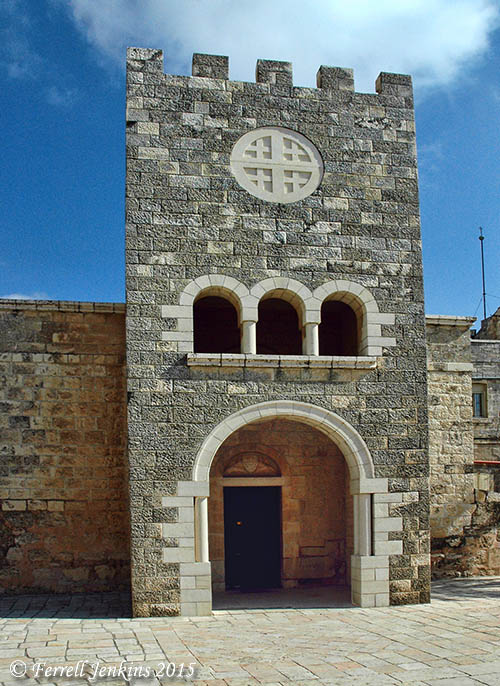
The exact site of Bethphage is not known, but it certainly was not far from Kefr et Tur, the place of Byzantine traditions. The present Franciscan chapel was built there in 1883.

Franciscan chapel at Bethphage. Photo by Ferrell Jenkins.

Franciscan chapel at Bethphage. Photo by Ferrell Jenkins.

The Roman road from Jericho to Jerusalem went over the Mount of Olives between Mount Scopus and the Mount of Olives. Before reaching the top of the mountain a spur or bypass turned south to Bethphage and Bethany.

A colt at Nazareth Village. Photo by Ferrell Jenkins.

A colt at Nazareth Village. Photo by Ferrell Jenkins.

In a 1975 article in Biblical Archaeologist (Vol. 38, No. 1), John Wilkinson wrote about “The Way from Jerusalem to Jericho.” He and his party tried to trace out known remnants of the old Roman road between the two cities. This 12½ mile trip from Jericho up to Jerusalem took 7 hours and forty-nine minutes.

Fishing all night and the Galilee sunrise

Sunrise on the Sea of Galilee (Lake Kinneret; Sea of Tiberias) evokes many memories of the ministry of Jesus and His disciples. No matter how many photos one takes, each one is unique.

I usually make these sunrise photos with two cameras, using multiple settings. The photo today is one that I especially like because I was able to catch the fisherman heading to harbor after a night of fishing.

Sunrise on the Sea of Galilee, May 17, 2015, 5:54 a.m. Photo by Ferrell Jenkins.

Sunrise on the Sea of Galilee, May 17, 2015, 5:54 a.m. Photo by Ferrell Jenkins.

Notice this text detailing the third appearance Jesus made to His disciples after the resurrection.

 1 After this Jesus revealed himself again to the disciples by the Sea of Tiberias, and he revealed himself in this way.
2 Simon Peter, Thomas (called the Twin), Nathanael of Cana in Galilee, the sons of Zebedee, and two others of his disciples were together.
3 Simon Peter said to them, “I am going fishing.” They said to him, “We will go with you.” They went out and got into the boat, but that night they caught nothing.
4 Just as day was breaking, Jesus stood on the shore; yet the disciples did not know that it was Jesus.
5 Jesus said to them, “Children, do you have any fish?” They answered him, “No.”  (John 21:1-5 ESV)

Read the rest of the story and the miraculous catch of fish in John 21:6-14.

The Jordan River

Bible students enjoy visiting the Jordan River for several reasons.

  • The ancient Israelites crossed the Jordan to enter the land that had been promised to the seed of Abraham (Joshua 3).
  • Elijah and Elisha crossed the river (2 Kings 2).
  • John baptized in the Jordan (Matthew 3:6ff.; Mark 1:5-9; John 1:28; 10:40).
  • Jesus was baptized in the Jordan (Matthew 3:13).
  • Naaman, the Aramean [Syrian] military commander, dipped in the Jordan at a site further north (2 Kings 5).

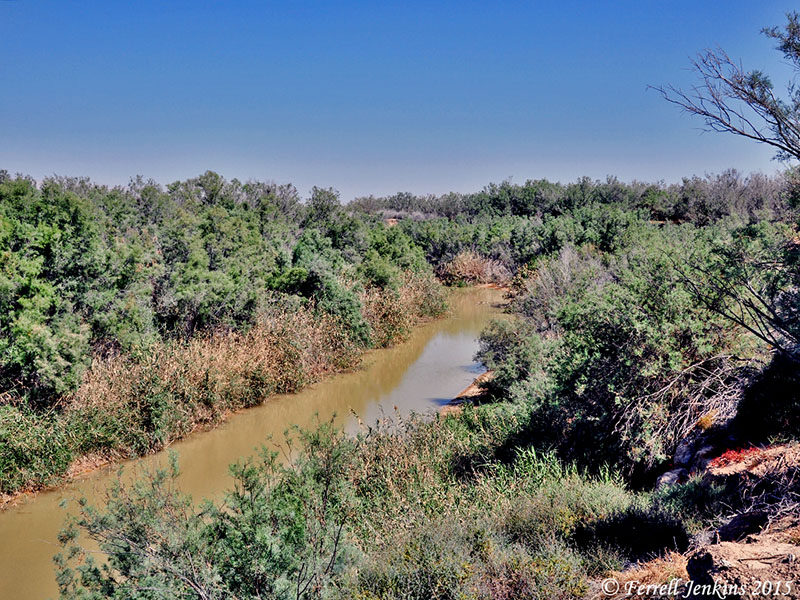
This photo of the Jordan River was made from Bethany Beyond the Jordan, in Jordan, May, 2010.

The Jordan River at Bethan Beyond the Jordan. Photo by Ferrell Jenkins.

The Jordan River at Bethany Beyond the Jordan. Photo by Ferrell Jenkins.

At this point the river is about 405 meters (1330 feet) below sea level.

Plans to excavate Tel Shimron

Tel Shimron is located in the ancient territory of the Israelite tribe of Zebulun. There are only two references to the site in the Bible, both in the book of Joshua.

  • When Jabin, king of Hazor, heard of the successes of Joshua in the south of Canaan he sent word to the kings of the region to form an alliance. The king of Shimron was included in the group (Joshua 11:1).
  • The other reference lists Shimron as one of the cities of Zebulun (Joshua 19:15).

Location. Shimron is located about five miles due east of Nazareth at the intersection of highway 7626 with the main east-west highway 75. This is the NW side of the Jezreel Valley. The tel is 2.4 miles SE of Beit Lehem HaGelilit (Bethlehem of Galilee) which is also within the territory of Zebulun. See here and here.

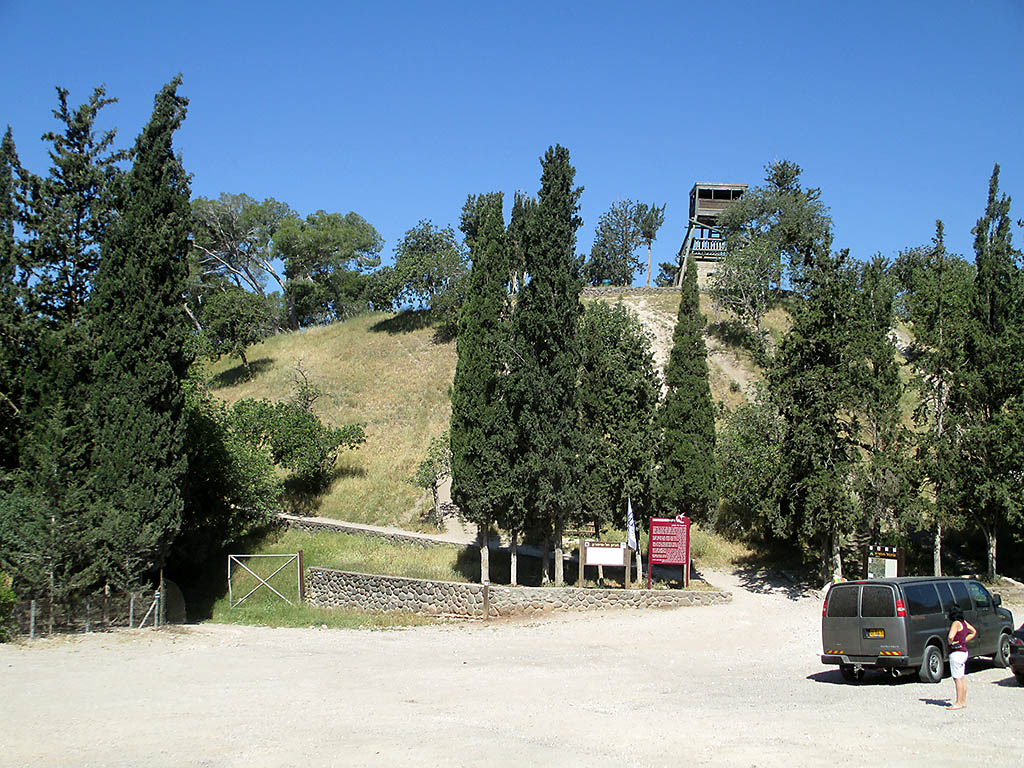
Tel Shimron. Photo: Dr. Avishai Teicher, Pikiwiki Iserael.

Tel Shimron. Photo: Dr. Avishai Teicher, Pikiwiki Israel [CC BY 2.5 (http://creativecommons.org/licenses/by/2.5)%5D, via Wikimedia Commons.

Word comes, through a combination of sources, that the Museum of the Bible (scheduled to open in Washington, D.C., in the fall of 2017), the Israel Antiquities Authority, Wheaton College, and perhaps the Albright Institute, will be working together on this project. See the Museum of the Bible announcement here.

Wheaton College will still be working at Ashkelon in 2016, but will conduct an archaeological survey and a Ground Penetrating Radar (GRP) survey of Tel Shimron in 2016, with plans to begin an excavation in 2017. The program leaders are Dr. Daniel Master and Dr. Adam Miglio. More information here.

A brief YouTube video (here) featuring Cary Summers, president of the Bible Museum, with Matthew J. Adams, Dorot Director of the W. F. Albright Institute, talking about the significance of Tel Shimron at the site.

I have been close, but never to Tel Shimron. The Pictorial Library of Bible Lands has one photo of the mound in the disc on Galilee and the North. BibleWalks.com has a nice collection of photos as well as maps and historical information here.

HT: Trent and Rebekah Dutton

Sheaves in the field

Joseph had a dream in which he was elevated above his brothers. It involved something common in an agrarian society — binding sheaves in the field.

Now Joseph had a dream, and when he told it to his brothers they hated him even more. He said to them, “Hear this dream that I have dreamed: Behold, we were binding sheaves in the field, and behold, my sheaf arose and stood upright. And behold, your sheaves gathered around it and bowed down to my sheaf.” His brothers said to him, “Are you indeed to reign over us? Or are you indeed to rule over us?” So they hated him even more for his dreams and for his words. (Genesis 37:5-8 ESV)

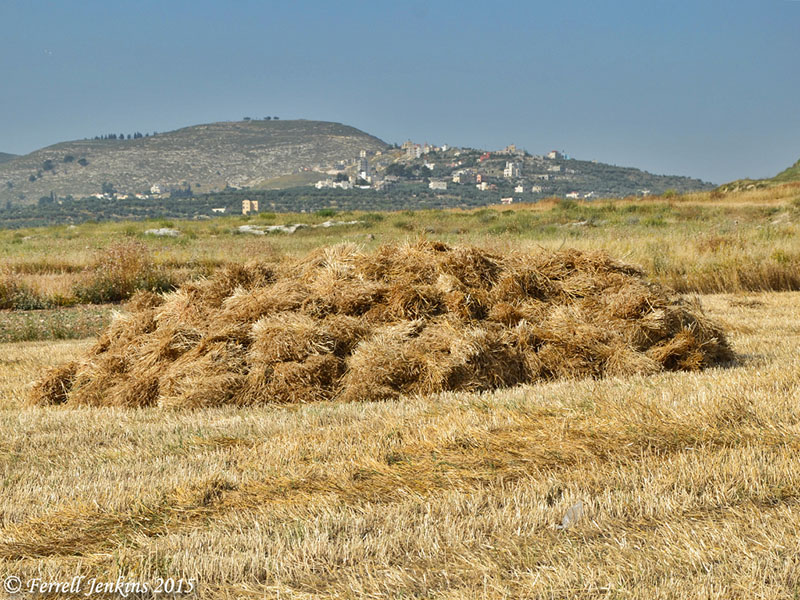
The following photos were made in the region of Samaria, and near the ancient city of Samaria. The first shows sheaves that have been gathered in the field.

Sheaves in the field near Samaria. Photo by Ferrell Jenkins.

Sheaves in the field near Samaria. Photo by Ferrell Jenkins.

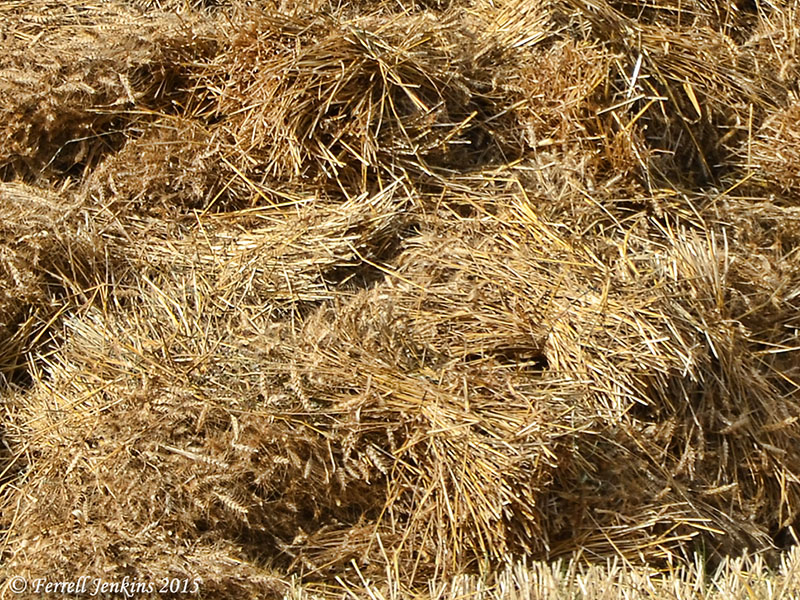
The next photo is a cropped closeup in which you can see the strings binding some of the sheaves.

Closeup to show the string around the sheaf of grain. Photo by Ferrell Jenkins.

Closeup to show the string around some of the sheaves. Photo by Ferrell Jenkins.

Possibly the best known instance of sheaves in the Bible is the story of the young Moabite woman named Ruth. She requested permission to pick up what was left after the reapers went through the field of Boaz.

She said, ‘Please let me glean and gather among the sheaves after the reapers.’ So she came, and she has continued from early morning until now, except for a short rest.” Then Boaz said to Ruth, “Now, listen, my daughter, do not go to glean in another field or leave this one, but keep close to my young women.
(Ruth 2:7-8 ESV)

And that’s how the story of King David begins…

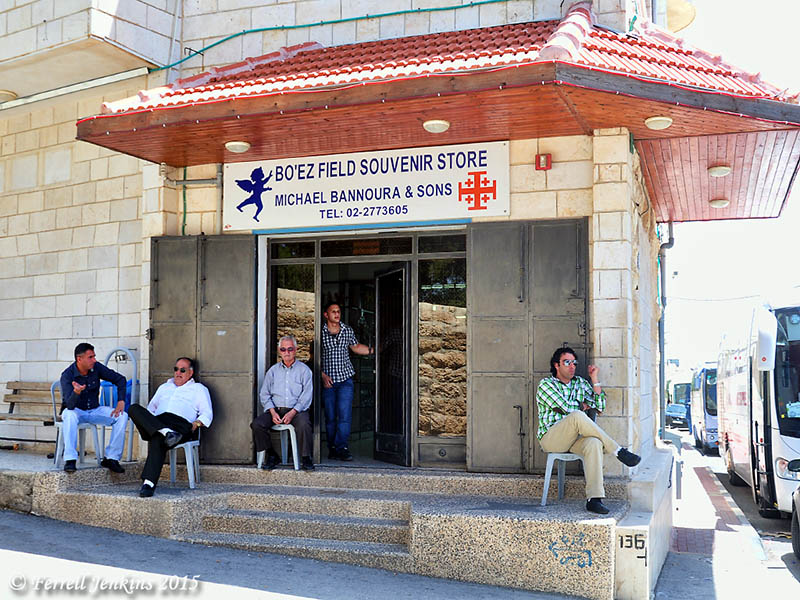
Entrepreneurs take advantage of the Biblical stories. This store, which I did not visit, is located in the vicinity of the traditional Shepherd’s fields near Bethlehem. The salesmen are just waiting for the next bus load of tourists.

Boaz Field store in Bethlehem. Photo by Ferrell Jenkins.

Boaz Field souvenir store near Bethlehem. Photo by Ferrell Jenkins.

Since childhood I have loved to sing Knowles Shaw’s spiritual song, “Bringing in the Sheaves.” By the time of my childhood we already had a mechanized way of baling the hay, but the lesson was easy to understand.

Index of articles about Peter’s Epistles

Pontus and Peter’s Epistles. [Amasus, Amisos, Samsun, Black Sea coast]

Persecution of Christians in Pontus. [Pliny, Sinope, Sinop, Pontus, Bithynia, Pontus]

Black Sea coastal town of Sinop.

Sinop is the northernmost city of Asia Minor (now Turkey).

Some famous Sinopeans. [Diogenes the Cynic, Serapis]

More famous Sinopeans. [Aquila (2nd century), Marcion, Phocas (Phokas), Sinop Gospels]

The Halys (Kizilirmak) River.

The delivery of Peter’s Epistles.

The Samsun Archaeological Museum.

Hidden treasure. [Samsun, Turkey]

Visiting the Black Sea coast of Turkey. [Samsun, Sinop, Pontus, Aquila]

The Bosphorus – “a liquid line”.

Selected Related Posts Pertaining to Peter’s Epistles

Cappadocia was home to early Christians.

Cappadocian sunrise.

The Bosphorus. [Bythinia]

Elaborate hairstyles in New Testament times.

A nostalgic remembrance

In May, 1984 I directed at tour to Israel, Egypt, and Rome. With the group ready to return from Rome to the USA, I went to Athens to meet two of my Florida College colleagues, Melvin Curry and Phil Roberts. The next day we took a flight to Samos, Greece and a ferry to Kusadasi, Turkey. There we picked up a car and visited the sites of the seven churches of Revelation, and other biblical-related places, in western (or Aegean) Turkey.

The photo below was made at Colossae. It was difficult to get to Colossae in those days, but we had come a long way and did not want to be denied. I had read an article by Dr. Harold Mare about a visit to the site and the wish that an excavation could be undertaken. We followed the dirt road to the bank of the Lycus River where this photo was made. Beyond the tell (huyuk, in Turkish) of Colossae is the snow covered Mount Cadmus. The city of Honaz is hidden from view by the mound.

Melvin Curry and Ferrell Jenkins at Colossae. Photo by Phil Roberts.Melvin Curry and Ferrell Jenkins at Colossae in 1984. Photo by Phil Roberts.

After our visit in Turkey we took a variety of boats to Samos, Patmos, Rhodes, and Crete. From there we took a flight back to Athens to complete our tour together.

Melvin served as chair of Biblical Studies at Florida College prior to my stint. We see each other occasionally and enjoy a short visit now and then. Phil succumbed to pancreatic cancer at the young age of 57 in 2005.

After Phil’s passing, Marty Pickup, a younger teacher at Florida College, and I prepared brief tributes to him. I am posting, for the first time, a link to these tributes at BibleWorld.com here. Former students and friends might enjoy reading these after a 10 year lapse. Marty died suddenly at the age of 53 in 2013.

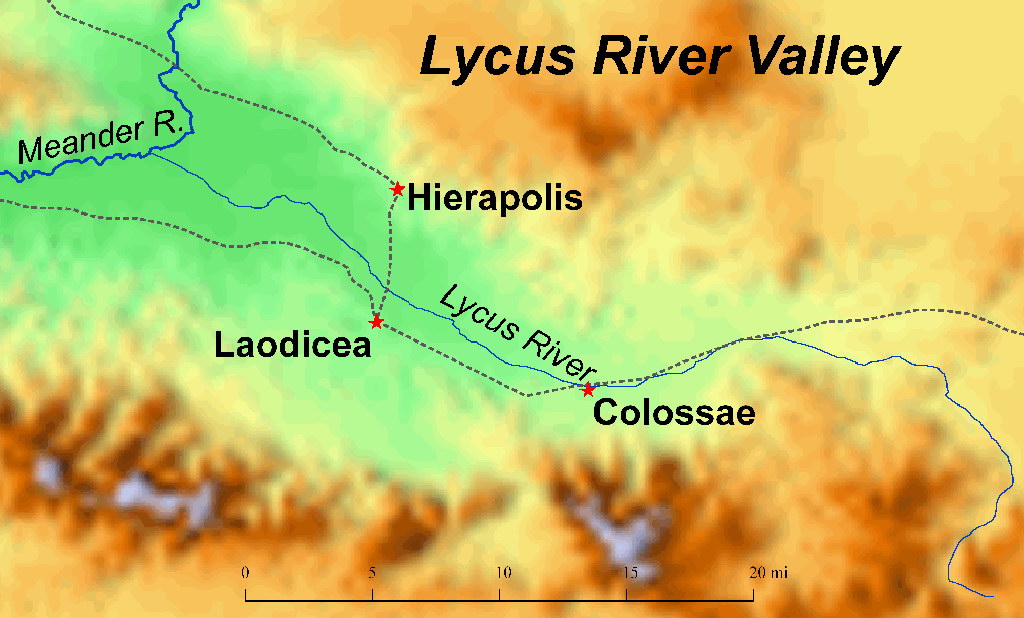
Three cities of the Lycus River valley are significant to New Testament studies. The saints at Colossae were the recipients of one of Paul’s epistles (Colossians 1:1-2). Hierapolis is mentioned in Colossians 4:13. Laodicea is mentioned in Colossians (2:1; 4:13-16), and was the recipient of one of the letters of the Book of Revelation (Revelation 1:11; 3:14).

Cities of the Lycus River Valley.

Cities of the Lycus River Valley. Made with Bible Mapper.

That was a wonderful trip, and one of many such personal study trips I have been blessed to make in the Bible World.

Watch out for camels

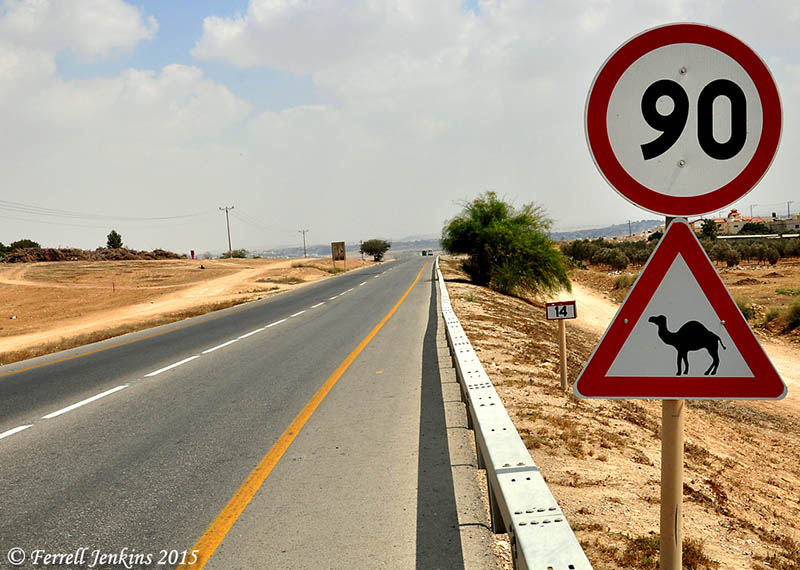
This post is not intended as a summary of information about camels in the Bible. It is just calling attention to the terrain and kind of signs one sees in Israel’s Negev (Negeb). The NKJV uses the directional term South.

Abraham and Isaac lived in the Negev. When Abraham was old he sent his most trusted servant back to Padan Aram, where Abraham had lived before coming to Canaan, to get a wife for Isaac (Genesis 24). After arrangements were made for Rebekah to return with the servant to Canaan, the Biblical account reads as follows,

Then Rebekah and her young women arose and rode on the camels and followed the man. Thus the servant took Rebekah and went his way. Now Isaac had returned from Beer-lahai-roi and was dwelling in the Negeb. And Isaac went out to meditate in the field toward evening. And he lifted up his eyes and saw, and behold, there were camels coming. And Rebekah lifted up her eyes, and when she saw Isaac, she dismounted from the camel and said to the servant, “Who is that man, walking in the field to meet us?” The servant said, “It is my master.” So she took her veil and covered herself. And the servant told Isaac all the things that he had done. Then Isaac brought her into the tent of Sarah his mother and took Rebekah, and she became his wife, and he loved her. So Isaac was comforted after his mother’s death. (Genesis 24:61-67 ESV)

Camel warning sign in the Negeb (Negev). Photo by Ferrell Jenkins.

Camel warning sign in the Negeb (Negev). Photo by Ferrell Jenkins.

Absalom, rebel son of king David, caught his head in a great oak tree

While David was at Mahanaim, his son Absalom and those of Israel who were aligned with him camped in the land of Gilead (2 Samuel 17:26-27). David remained at the gate of the city while his men went out to fight the rebels. The Biblical account says,

So the army went out into the field against Israel, and the battle was fought in the forest of Ephraim. And the men of Israel were defeated there by the servants of David, and the loss there was great on that day, twenty thousand men. The battle spread over the face of all the country, and the forest devoured more people that day than the sword. And Absalom happened to meet the servants of David. Absalom was riding on his mule, and the mule went under the thick branches of a great oak, and his head caught fast in the oak, and he was suspended between heaven and earth, while the mule that was under him went on.  (2 Samuel 18:6-9 ESV)

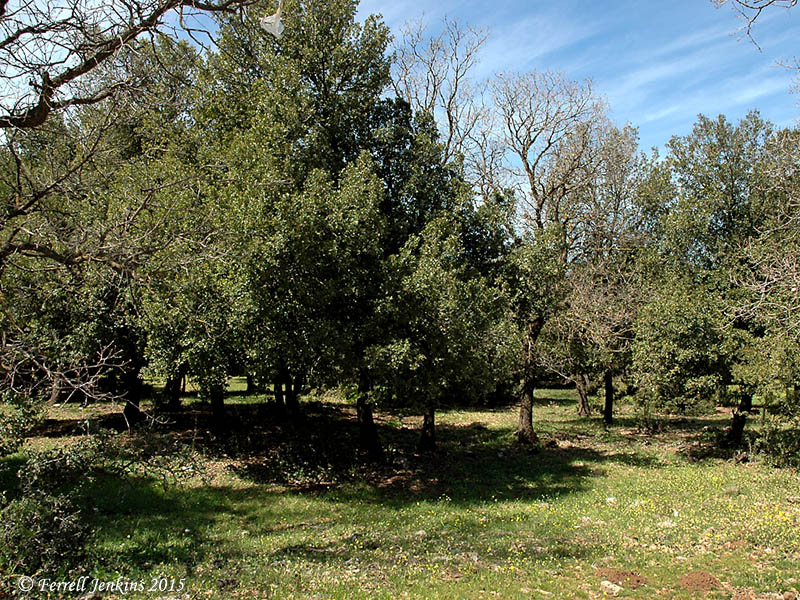
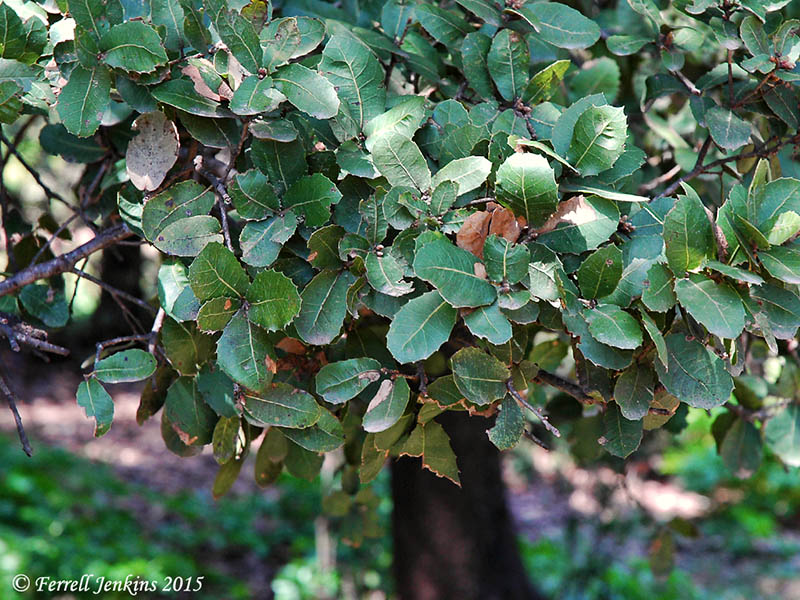
Even though many trees have been used by various invaders over the centuries, some forests of oaks may still be seen in both Cisjordan (territory west of the Jordan River) and Transjordan (territory east of the Jordan River). The photos below were made in a grove of trees growing the Golan Heights a short distance south of the junction of Highways 98 and 99 south of Mas’ada.

These trees may be much smaller than the “great oak” in which Absalom caught his head, but they could be quite dangerous to a person trying to make a fast getaway on a mule.

Oaks growing in the Golan Heights. Photo by Ferrell Jenkins.

Oaks growing in the Golan Heights. Photo by Ferrell Jenkins.

Here are the leaves of this variety of tree.

Close view of oaks growing in the Golan Heights. Photo by Ferrell Jenkins.

The leaves of oaks growing in the Golan Heights. Photo by Ferrell Jenkins.

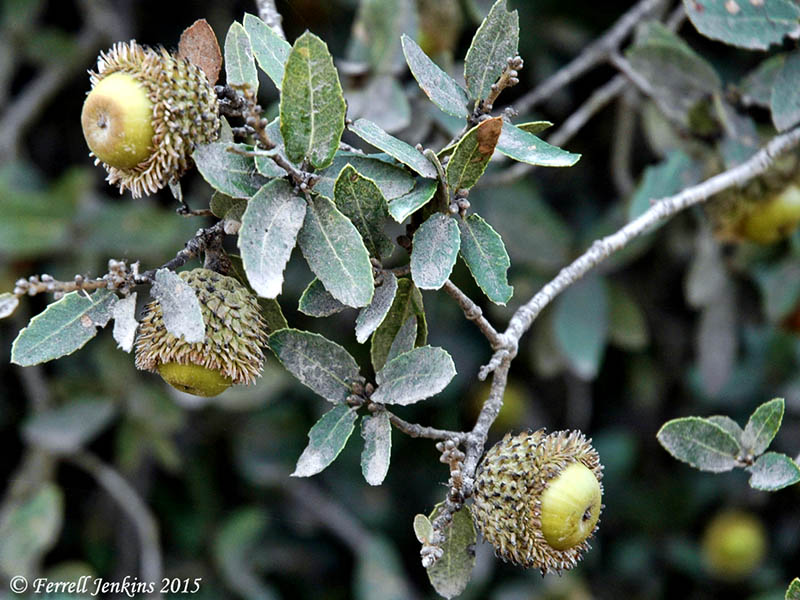
And the large acorns it grows.

Acorns on the oaks of Bashan. Photo by Ferrell Jenkins.

Acorns on the oaks of Bashan. Photo by Ferrell Jenkins.

The oaks of Bashan are mentioned by the prophets of Israel several times (Isaiah 2:13; Ezekiel 27:6; Zechariah 11:2).

The technical name for the oak shown here is Querqcus ithaburensis, and is known as the Tabor oak. Dr. David Darom, in Beautiful Plants of the Bible, say this about the tree,

The Tabor oak, being a large deciduous tree that dominates its surroundings, was often associated with ritual and religious customs. Tabor oak forests once covered large areas of the northern Coastal Plain, the Lower Galilee, the Hulah Valley and
the slopes of the Golan. Most of the trees were cut down during the ages so their excellent wood could be used in buildings, furniture and boats. (p. 44)

William M. Thomson, back in 1880, described a walk in one of the “grand old forests” near the Crocodile River between Caesarea and Dor.

I had a delightful ramble early the next morning in those grand old forests, and then understood perfectly how Absalom could be caught by the thick branches of an oak. The strong arms of these trees spread out so near the ground that one cannot walk erect beneath them; and on a frightened mule, such a head of hair as that vain but wicked son polled every year would certainly become inextricably entangled: and it is interesting to know that the region east of the Jordan, that “wood of Ephraim” where the battle was fought, is still covered with thick oaks, tangled bushes, and thorny creepers growing over ragged rocks, and ruinous precipices, down which the rebel army plunged in wild dismay, horses and men crushing each other to death in remediless ruin. Thus twenty thousand men perished in that fatal wood, which “devoured more people that day than the sword devoured.” (The Land and the Book or Biblical Illustrations Drawn from the Manners and Customs, the Scenes and Scenery, of the Holy Land: Southern Palestine and Jerusalem. New York: Harper & Brothers, 1880. Print.)

To be precisely Biblical, it was Absalom’s head that caught in the oak, but the excessive hair might have contributed to his misfortune.

Absalom was killed by Joab and his armor-bearers (2 Samuel 18:14-15). Balwin comments on Absalom’s ignominious end:

All that remains is to bury there and then in the forest the body of the rebel, his grave marked only by a huge cairn of field stones, which would in a relatively short time cease to be identifiable. It was an ignominious end. (Baldwin, Joyce G. 1 and 2 Samuel: An Introduction and Commentary. Vol. 8. Downers Grove, IL: InterVarsity Press, 1988. Print. Tyndale Old Testament Commentaries.)