Category Archives: Bible Lands

6 year old palm from 2000 year old seed

A few date palm seed were uncovered by Professor Yigael Yadin during his excavation of Masada. Six years ago one of these seed was planted at the Arava Institute in Israel. The seed sprouted, and has grown into a nice little six year old palm.

Yishai Fleisher of EyeOnZionTV interviews Dr. Elaine Solowey at the Arava Institue about this seed and plant. In addition to the information about the palm, I especially like the way Dr. Solowey refuses to fall for some of the speculative journalistic questions.

The photo below shows one of the modern date palms on the southwestern shore of the Sea of Galilee.

Date Palm growing near the Sea of Galilee. Photo by Ferrell Jenkins.

Date Palm growing near the Sea of Galilee. Photo by Ferrell Jenkins.

Jericho is mentioned as “the city of palm trees” in Deuteronomy 34:3.

The righteous are compared to the palm tree.

The righteous flourish like the palm tree and grow like a cedar in Lebanon. (Psalm 92:12 ESV)

HT: Jack Sasson

“From the Land of Black Tents”

In his book The Apostle: A Life of Paul, noted biographer John Pollock begins his book with information about Paul’s background at Tarsus. He calls the first chapter, “From the Land of Black Tents.”

His father most likely was a master tentmaker, whose craftsmen worked in leather and in cilicium, a cloth woven from the hair of the large long-haired black goats that grazed (as they still do) on the slopes of the Taurus. The black tents of Tarsus were used by caravans, nomads, and armies all over Asia Minor and Syria.

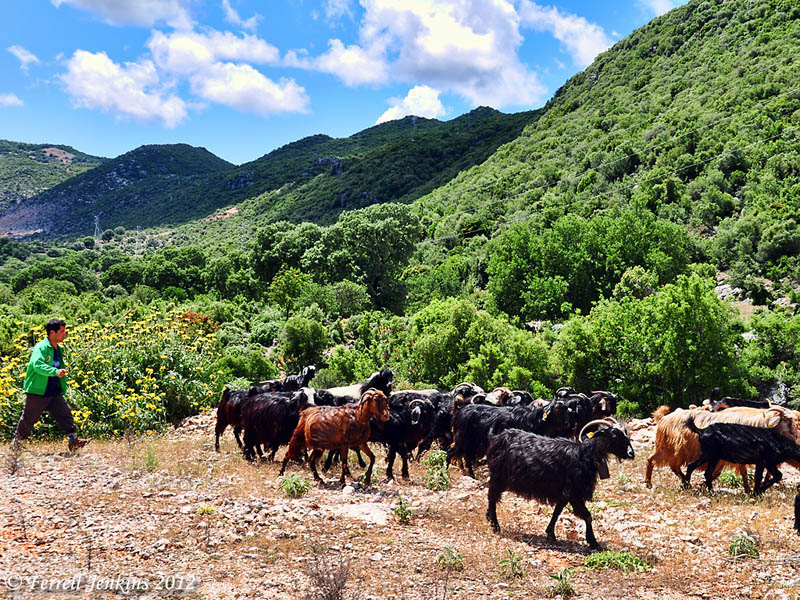
We still see these herds of long-haired black goats in many parts of Turkey. The photo below was made east of Myra near the Mediterranean coast of Turkey.

Goats with long black hair, east of Myra, Turkey. Photo by Ferrell Jenkins.

Goats with long black hair east of Myra, Turkey. Photo by Ferrell Jenkins.

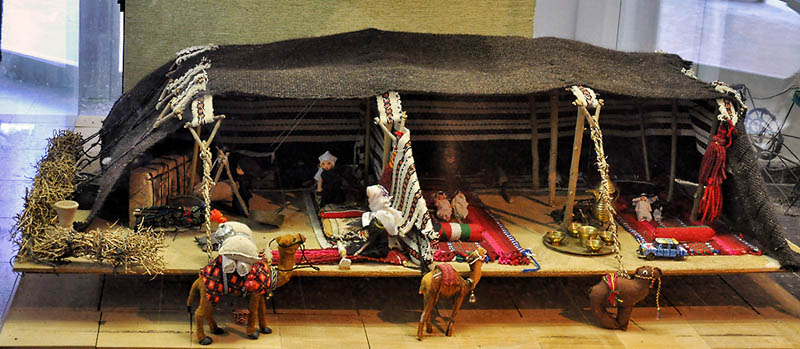
The Museum for Beduin Culture at Kibbutz Halav in the Negev of Israel displays a small model of a beduin (bedouin) tent. This museum intends to preserve the memory of the original bedouin life that is quickly being replaced by a permanent life and housing.

Bedouin Tent Model displayed at the Museum for Beduin Culture. Photo by Ferrell Jenkins.

Tent Model displayed at the Museum for Beduin Culture. Photo by Ferrell Jenkins.

Paul said,

But Paul said, “I am a Jew of Tarsus in Cilicia, a citizen of no insignificant city; and I beg you, allow me to speak to the people.” (Acts 21:39 NAU)

Thomson’s “The Land and the Book” on Logos community pricing

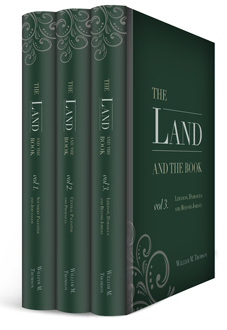
William Thomson’s 3-volume set, The Land and the Book, is now on community pricing at Logos.

http://www.logos.com/product/26753/the-land-and-the-book

Thomson - The Land and the Book

The Land and the Book

This set of books was published by Harper & Brothers between 1880 and 1886.

Thomson spend many years living in Beirut and traveling throughout the region. This is one of the excellent books telling of travel in those days, and of the then-current understanding of the location of various sites.

I am delighted that this book is now on community pricing for $18. If enough people place a bid the price could be lower. Place your bid today.

HT: Brooks Cochran

Understanding the Land

Charles Savelle, over at Bible X calls attention to a Wall Street Journal article on the importance of geography in understanding world affairs. Read the article here. It might help you to understand better some of the situations going on in Russia, China, Iran, and Syria.

Later, Charles quotes from a new book on Joshua about the same subject and adds his comments about the importance of geography here. I want to share the paragraph he cites from Coleson’s commentary on Joshua in the Joshua, Judges, Ruth (Cornerstone Biblical Commentary)

“Because humans live on the surface of the earth, geography is always important. Because every ancient Israelite, humble or great, lived in close and intimate relationship with the land, if we wish to understand ancient Israel, we need to learn ancient Israel’s geography. Canaan was the Land of Promise God gave to Israel through the events recorded in Joshua; if we want to understand the message of Joshua, we need to study both the physical and the human geography of ancient Israel God’s grand plan of redemption for the human race may transcend both time and space, but God has so far worked it out in a very definite, limited place through a sequence of events in history. To understand God’s plan and its fulfillment, it helps to understand the timeline and the map” (Joshua, Judges, Ruth, p. 33).

I could not agree more.

David — the sweet psalmist of Israel

As a young man, David played the harp (lyre, Hebrew kinnor) for King Saul.

So it came about whenever the evil spirit from God came to Saul, David would take the harp and play it with his hand; and Saul would be refreshed and be well, and the evil spirit would depart from him. (1 Samuel16:23 NAU)

Later, David is called the “sweet psalmist of Israel.” We have many examples in the collections of Psalms.

Now these are the last words of David. David the son of Jesse declares, The man who was raised on high declares, The anointed of the God of Jacob, And the sweet psalmist of Israel, (2 Samuel 23:1 NAU)

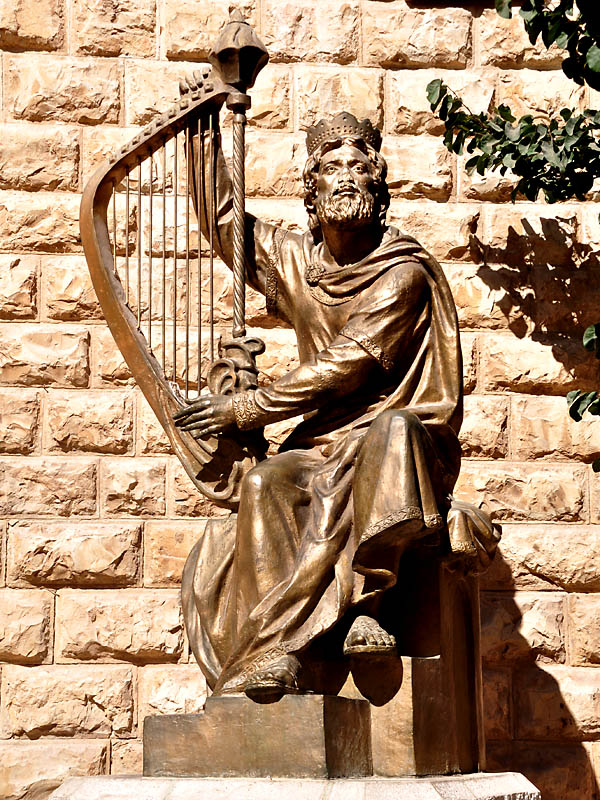
On traditional Mount Zion, near the traditional Tomb of David there is a statue of King David playing the harp (lyre).

Statue of King David on Mount Zion, Jerusalem. Photo by Ferrell Jenkins.

Statue of King David on Mount Zion, Jerusalem. Photo by Ferrell Jenkins.

Our time in the Bible World has come to an end once more. It has been a profitable trip. I still learn something each time I come to this part of the world. Looking forward to next year in Jerusalem.

Our numbers have been extremely good during the past three weeks. I hope that you will continue to check the blog from time to time. Why not subscribe and receive a notification each time we post something new?

The archaeologist who lost his head

July 30th was the 70th anniversary of the death of Sir Flinders Petrie.

On [July 30, 2012] the Israeli Antiquities Authority conducted an unusual memorial service, to mark the 70th anniversary of the death of the British archaeologist and Egyptologist Flinders Petrie. Only one of the people who attended the ceremony at the Protestant Cemetery on Jerusalem’s Mount Zion, Israeli archaeologist Shimon Gibson, had ever met the deceased – or at least his head. In 1989, while Gibson was working at the Palestine Exploration Fund in London, he was contacted by the Royal College of Surgeons. “They asked me,” Gibson said at the ceremony, “to help identify a head preserved in a jar. They weren’t sure it belonged to Petrie,” Gibson related.

Gibson explains how he was able to identify Petrie’s head.

Petrie was born in England in 1853 and died in Jerusalem in 1942. His headless body was buried in the Protestant Cemetery on Mount Zion. He is widely regarded as the progenitor of modern archaeology. He laid the foundations for Egyptology, the study of ancient Egypt, and was the first biblical archaeologist in Palestine.

The story of how it came to be that Petrie’s body is in Jerusalem, and his head in London, is explained briefly in the Haaretz article here.

Petrie is sometimes described at the “father of archaeology.” He is noted for his discovery of the Merneptah Stele in Egypt. This is the stele that contains the name of Israel. For the importance of the stele to biblical studies, see here.

But Petrie’s most important contribution to archaeology is the knowledge that pottery can be used to date the layers of a tell (archaeological mound).

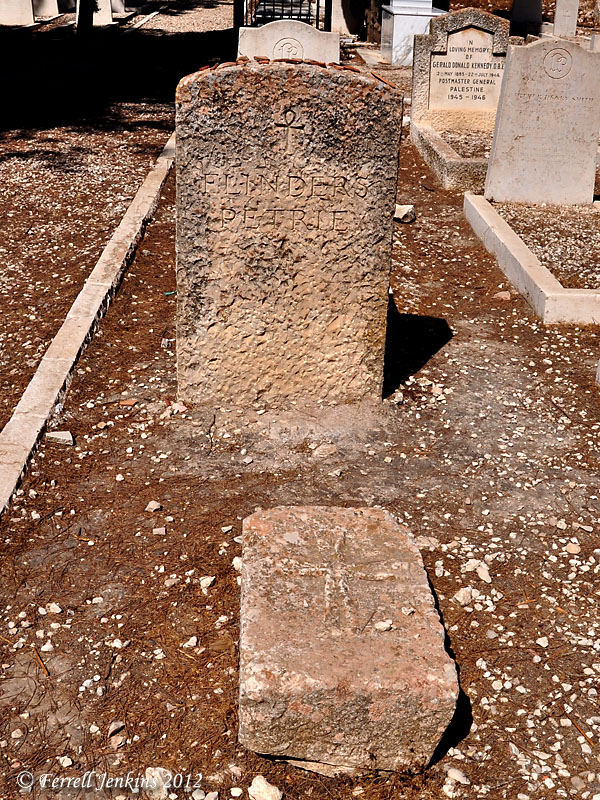
Today I visited the Jerusalem Protestant Cemetery to see the tomb of Petrie, as well as several other well-known persons of the past. Here is a photo of Petrie’s grave marker.

Grave marker for Flinders Petrie in Jerusalem Protestant Cemetery. Photo by Ferrell Jenkins.

Grave stone for Flinders Petrie, Jerusalem Protestant Cemetery. Photo: Ferrell Jenkins.

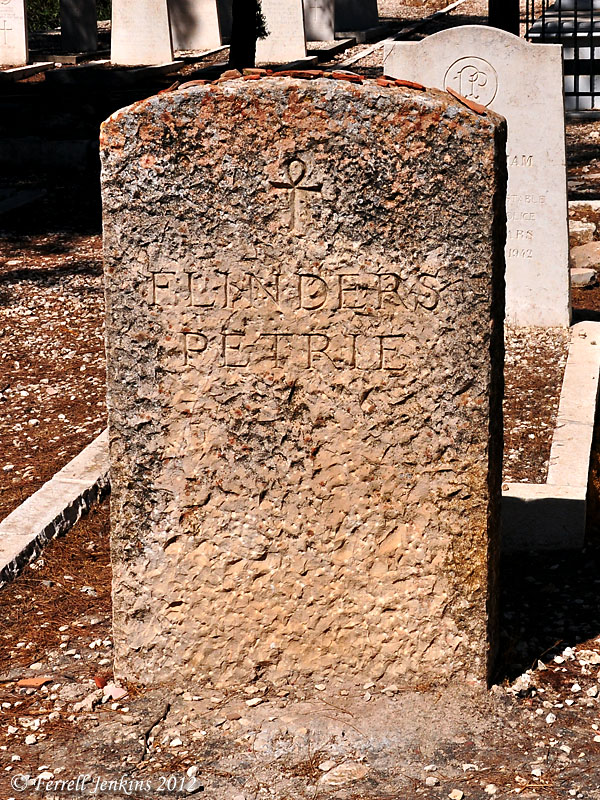
Besides the simplicity of the marker — only his name, there are two other things I find interesting. There is an ankh symbol (the life symbol) from ancient Egypt above the name. When Jews visit a tomb, small stones are left to show respect. Instead of stones, this marker has potsherds, pieces of broken pottery, on the top of it. I suspect that these were left by the visitors on the anniversary of his death.

Flinders Petrie Grave in Jerusalem. Photo by Ferrell Jenkins.

Close up of Petrie’s grave marker in Jerusalem. Photo by Ferrell Jenkins.

In another post, perhaps later, I plan to tell you about some of the other persons of interest who are buried in the same cemetery

Traveling in Israel

This afternoon we arrived in Israel. My first tour was in 1967, a few weeks before the Six-Day War when Jerusalem was in Jordan. The traditional site of the baptism of Jesus by John the Baptist was easily accessible.  That changed after the War, and we had no access to the River until Jordan opened a site thought to be the location of Bethany Beyond the Jordan (John 1:28). By 2006 we were able to visit the site.

Last year (2011) Israel opened access to the river, by special permission, on the west side. I understand the site is now open to anyone who wishes to visit.

Then Jesus came from Galilee to the Jordan to John, to be baptized by him.  John would have prevented him, saying, “I need to be baptized by you, and do you come to me?”  But Jesus answered him, “Let it be so now, for thus it is fitting for us to fulfill all righteousness.” Then he consented.  And when Jesus was baptized, immediately he went up from the water, and behold, the heavens were opened to him, and he saw the Spirit of God descending like a dove and coming to rest on him;  and behold, a voice from heaven said, “This is my beloved Son, with whom I am well pleased.” (Matthew 3:13-17 ESV)
The River Jordan at the Israel-Jordan border north of the Dead Sea. Photo by Ferrell Jenkins.

Jordan River at the traditional site of the baptism of Jesus. Photo by Ferrell Jenkins.

This will be my eightieth foreign tour to direct in these past 46 years. Not all of these have been to Israel, but I’ve led tours to the land so central in the Biblical story almost annually except for those years when political conditions made it impossible. Occasionally there was a second tour the same year. I have made numerous personal study trips in addition to the tours I lead. I’m still learning, and still making efforts to see places I have not yet visited. Last year I spent about six weeks in the country.

Through this blog I have tried to share a little bit of information and a few of the photos I have accumulated. Over the next two or three weeks I hope to share a bit of the excitement of this tour.

Tell your friends about the blog.

At least three blogs are being written about the tour. You might enjoy them, especially if you know someone traveling with us.

Steven Braman — Braman’s Wanderings
http://bramanswanderings.wordpress.com

Barry Britnell — Exploring Bible Lands
http://exploringbiblelands.com

Trent and Rebekah Dutton
http://www.trentandrebekah.com

Our flight from New York was delayed due to bad weather in New York and connecting cities. We were too late to visit Joppa today. Trent and Rebekah Dutton arrived in Israel yesterday. I see they have already posted some information about Joppa.

Tonight all 39 tour members are settled on the Mediterranean coast at Netanya, Israel. Looking forward to a great day of learning tomorrow.

Good tips for any day

Over at the HolyLandPhotos’ Blog, Prof. Carl Rasmussen has begun a series of Travel Tips each Tuesday about places you should visit. So far all of them are in Israel.

  1. The newly opened baptism site at the Jordan River (here).
  2. Notre Dame restaurant [hotel, too] in Jerusalem. Many groups have their days full of activity with dinner provided at the hotel. The collection of artifacts and replicas, including the stone table from Magdala, make it worth a visit. I haven’t been there, but now it is on my bucket list. See here.
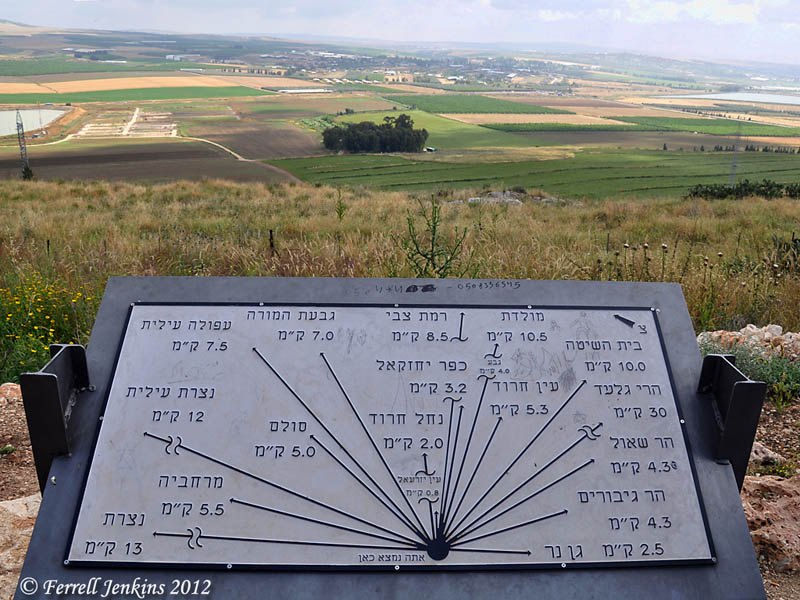
  3. Jezreel. Carl provides a list of important biblical events that transpired in the vicinity of Jezreel. See here.
The sign at the Jezreel pointing to historical sites in the area. Photo by Ferrell Jenkins.

The sign at Jezreel pointing to historical sites in the area. Photo by Ferrell Jenkins.

Free Book. Logos is offering The Epistle to the Hebrews by Brooke Foss Westcott as the free book for August. This book is from the 14-volume Classic Commentary on the Greek New Testament. Click here.

Todd Bolen’s Roundup. Todd Bolen’s Bible Places Blog is the best place on the Internet to keep up with a wide variety of archaeological work and other significant news from the Bible world. He usually has a Weekend Roundup, and sometimes a Midweek Roundup. The other days provide a more in depth look at Bible Places.

Shmuel Browns, a licensed Israel Tour Guide, is an accomplished photographer. Take a look here at his recent pictures from the desert, Mount Gerizim, Mar Saba Monastery in the wilderness of Judea, etc.

Makhtesh Ramon in the Wilderness of Zin

Mitzpe Ramon is situated on a cliff overlooking Makhtesh (Crater) Ramon. According to Alon, the crater is…

“about 30 km [18.64 miles] long, up to 8 km [5 miles] wide and some 400 m [1,312 ft.] deep. Its outer rim reaches about 1,000 m [3,280 ft.] above sea level. The crater floor has been hollowed down to its earliest geological strata” (Israel National Parks & Nature Reserves, 420).

Ibex enjoy the view at Mitzpe Ramon in the Wilderness of Zin. Photo by Ferrell Jenkins.

Ibex enjoy the view at Mitzpe Ramon in the Wilderness of Zin. Photo by Ferrell Jenkins.

Makhtesh Ramon is located within the region known as the wilderness (Hebrew midbar, desert) of Zin. The children of Israel lived in this region during the period we commonly call the wilderness wandering. From here the spies were sent to spy out the promised land.

So they went up and spied out the land from the wilderness of Zin to Rehob, near Lebo-hamath. (Numbers 13:21 ESV)

Another PLBL Giveaway

Todd Bolen, over at the Bible Places Blog, is giving away another five volumes of the Pictorial Library of the Bible Lands. Any five you choose. The entry period ends Friday. Check details here.