Category Archives: Bible Lands

Scenes around Tell Ḥesbân (Heshbon)

The photo below was made from the top of Tell Ḥesbân in Transjordan. It provides us a view of the general area of Moab during the period of the United Kingdom of Israel, and the Divided Kingdoms of Israel and Judah.

Sheepfold on the slope of Tell Ḥesbân. View of territory of Moab. Photo by Ferrell Jenkins.

Sheepfold on the slope of Tell Ḥesbân. View of territory of Moab. Photo by Ferrell Jenkins.

There are several biblical references to the sheepfold, or the fold of the sheep (Jeremiah 50:6; Micah 2:12; John 10:1, 16). Jesus used an illustration involving the sheepfold:

Truly, truly, I say to you, he who does not enter the sheepfold by the door but climbs in by another way, that man is a thief and a robber. But he who enters by the door is the shepherd of the sheep. (John 10:1-2 ESV)

We associate the land of Moab with Ruth the grandmother of King David.

So Naomi returned, and with her Ruth the Moabitess, her daughter-in-law, who returned from the land of Moab. And they came to Bethlehem at the beginning of barley harvest. (Ruth 1:22)

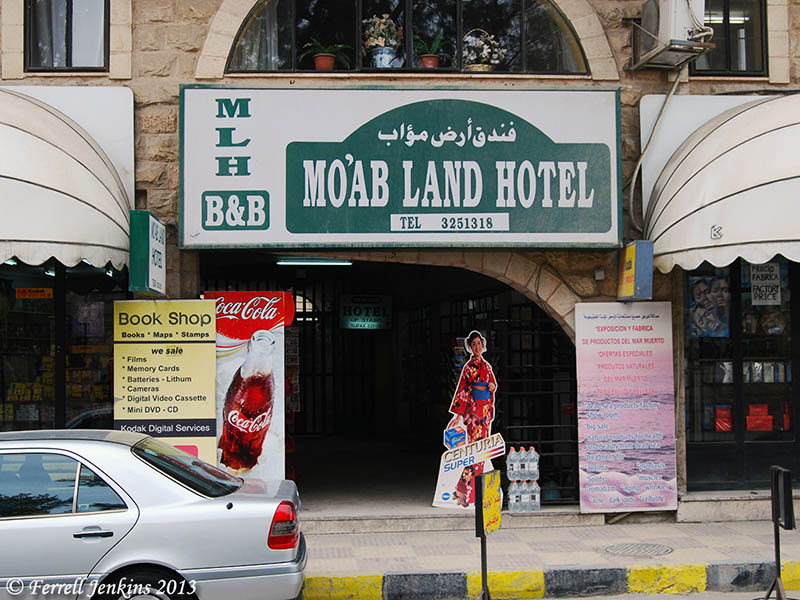
I find it fascinating that the modern locals pick up on the ancient names in order to attract the tourists who visit the area. At Madaba, about six miles south of Ḥesbân, there is a small hotel named Mo’ab Land Hotel. How appropriate.

The Moab Land Hotel in Madaba, Jordan. Photo by Ferrell Jenkins.

The Moab Land Hotel in Madaba, Jordan. Photo by Ferrell Jenkins.

Is Tell Ḥesbân Heshbon?

S. H. Horn describes the biblical significance of Heshbon.

A city of Transjordan strategically located at the main north-south road, called the King’s Highway in the Bible, some 15 mi. (c. 24 km.) southwest of “Amman (Palestine Under Joshua and the Judges). The Israelites captured it from Sihon, an Amorite king, who had taken it from the Moabites and made it his capital (Num 21:25–30). The city was given to the Reubenites and rebuilt by them (Num 21:34; 32:37; Jos 13:17). However, since it lay on the border between Reuben and Gad, the latter tribe seems eventually to have occupied it (Jos 13:26). It was later assigned, as a town of Gad, to the Levites (Jos 21:39; 1 Chr 6:81). The Moabites reconquered the city in the period of the divided kingdom and occupied it in the time of Isaiah and Jeremiah (Is 15:4; 16:8, 9; Jer 48:2, 33, 34). However, during Jeremiah’s lifetime it seems to have changed hands again, since he refers to it as an Ammonite city in one of his later oracles (Jer 49:2, 3). The Ammonites seem to have taken it during an invasion of the Moabite territory referred to in Ezekiel (ch 25:9, 10). It was in the possession of Alexander Jannaeus in the time of the Maccabees, and was later ruled by Herod the Great (Jos. Ant. xiii. 15. 4; xv. 8. 5), who fortified it and made it into a garrison city called Esbus. Later it became a Christian city and seat of a bishop. Several bishops of Heshbon are known by name. In 614 the city suffered greatly during the Persian invasion, when its 3 churches—so far excavated—were destroyed. The Arabs who some 20 years later occupied the country made the city, then called Ḥesbân, the capital of the district. After the 13th cent. the city is never mentioned again.

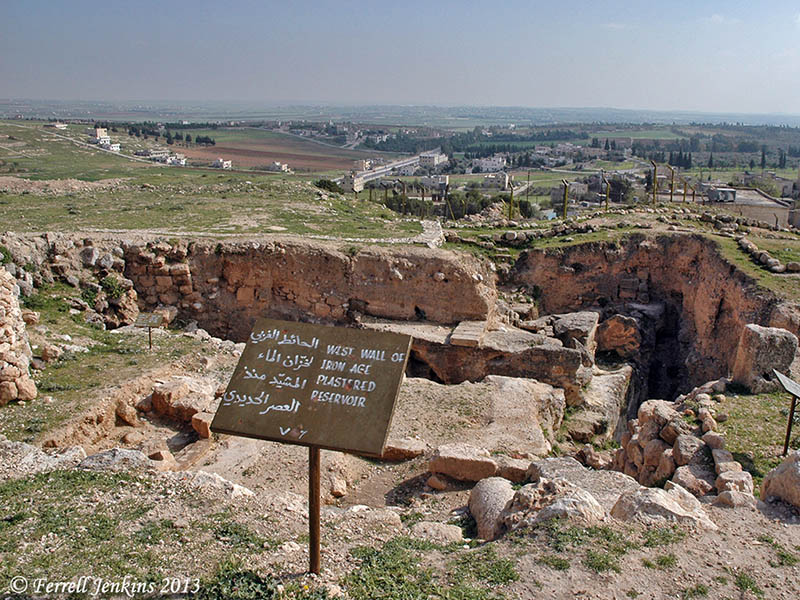
Excavations were conducted at Tell Ḥesbân under the direction of Siegfried Horn and Larry Gerarty from 1968 to 1976. A large open-air reservoir dating to the Iron Age, the period of the Israelite kings was uncovered. The pool measured about 50 ft. x 50 ft., and was 18 ft. deep. It was large enough to hold 300,000 gallons of water.

The Iron Age Pool at Heshbon. Photo by Ferrell Jenkins.

The Iron Age Plastered Reservoir at Heshbon. View West. Photo by Ferrell Jenkins.

Horn says this was “probably a pool to which Song 7:4 refers.”

Your neck is like an ivory tower.
Your eyes are pools in Heshbon,
by the gate of Bath-rabbim.
Your nose is like a tower of Lebanon,
which looks toward Damascus. (Song of Solomon 7:4)

I have followed the information by S. H. Horn in The Seventh-day Adventist Bible Dictionary. In a post to come I hope to explain why Tell Ḥesbân may not be biblical Heshbon.

Canaanite Wine Cellar discovered at Tel Kabri

Tel Kabri is a Canaanite site located a few miles east of Nahariya in the Plain of Akko in northern Israel. Excavations have been conducted at the site for several years under the direction of Prof. Eric H. Cline of Washington University and scholars from the University of Haifa, Israel.

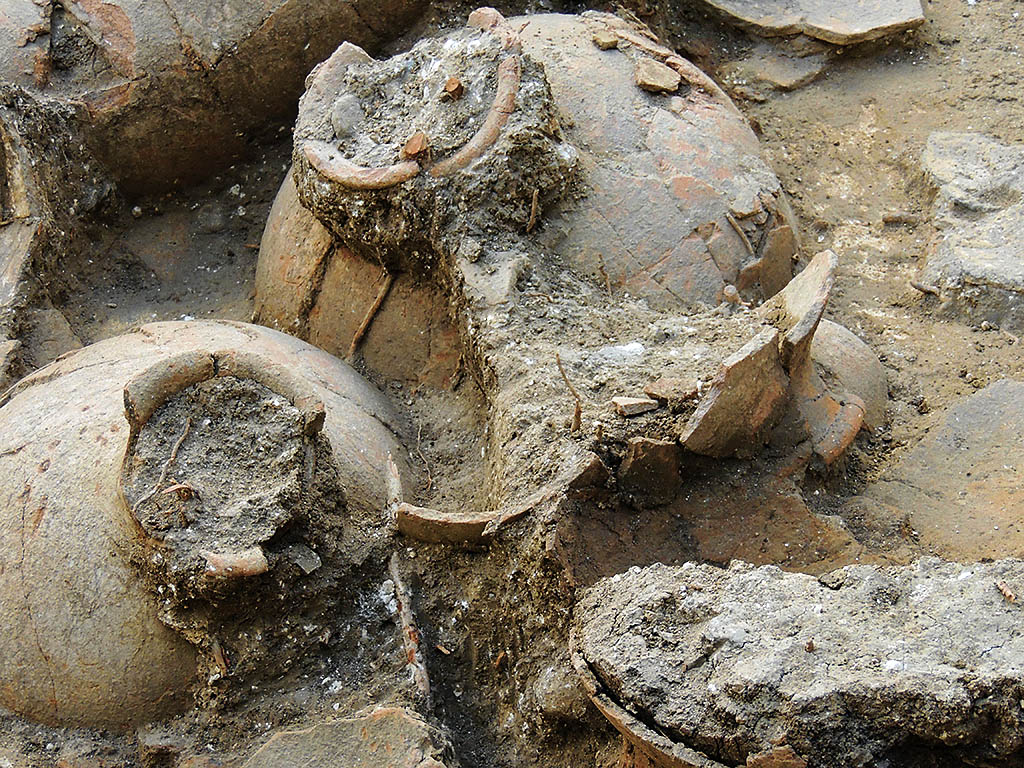
A total of forty clay jars were discovered. Each have a capacity of 13 gallons. You may read more about the discovery here and here.

Wine jars at Tel Kabri. Credit: Prof. Eric H. Cline & Tel Kabri Excavation.

Wine jars at Tel Kabri. Credit: Prof. Eric H. Cline and the Tel Kabri Excavation.

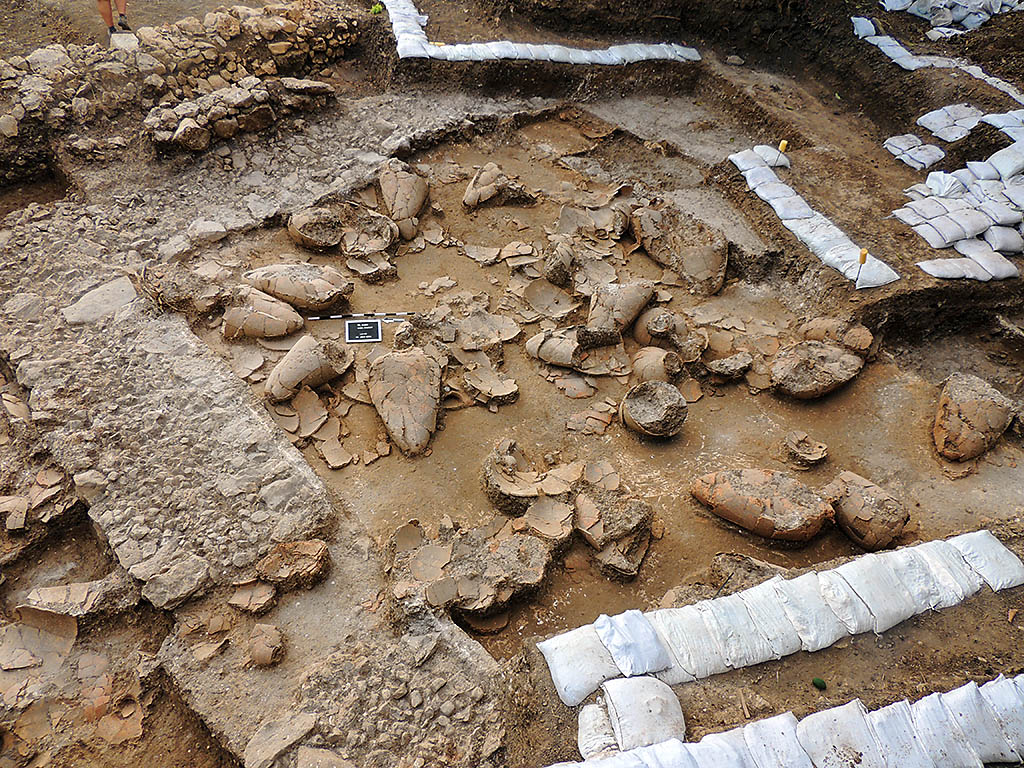
The photo below shows a room in the Canaanite palace at Tel Kbri. The excavators date this structure to 1700 B.C.

Wine cellar at Tel Kabri. Credit: Prof. Eric H. Cline and Tel Kabri Excavation.

Wine cellar at Tel Kabri. Credit: Prof. Eric H. Cline and the Tel Kabri Excavation.

This discovery reminds us of the wine cellars discovered at El-Jib (Gibeon) by James Pritchard in 1959. Sixty-three cellars with a possible capacity of 25,000 gallons were excavated (Pritchard, Gibeon, 79-99).

HT: Joseph Lauer

Damage Reported at Mari in Syria

The French archaeologist André Parrot (1901-1980) carried out several excavations at Mari between 1933 and 1960. Having read about recent damage to the ancient buildings of Mari, I wanted to share a couple of photos of artifacts from the site.

The first statue is of the Iku-Shamagan, King of Mari. It dates to about 2650 B.C. and is from the temple of Ishtar in Mari. The statue is about 47 inches high and was displayed in the Damascus Museum in 2002 when I made this photograph.

King of Mari statue in Damascus Museum. Photo by Ferrell Jenkins 2002.

Iku-Shamagan, King of Mari, praying. Statue in Damascus Museum. Photo by Ferrell Jenkins 2002.

The small (about 20 inches high) statue of Ebih-II, the superintendent of Mari, was discovered in the temple of Ishtar. It dates to the period of about 2900-2750 B.C. and is made of gypsum, with eyes of shells and lapis lazuil. This artifact, along with several others, is displayed in the Louvre.

Attendant to Ebih II of Mari. Louvre. Photo by Ferrell Jenkins.

Statue of Ebih II superintendent of Mari. Louvre. Photo by Ferrell Jenkins.

Mari is located far east in Syria near the Euphrates River. The city was located on the main route between Assyria and Babylon. If Abraham first lived in south Mesopotamia then he might have passed this way on the trip to Haran (Genesis 11:27 – 12:5).

Project Syrian Archaeology has some photos of poor quality showing damage to historical sites at their Facebook page here.

Jerome Murphy-O’Connor – 1935-2013

The École Biblique et Archéologique in Jerusalem announced Monday the death of Jerome Murphy-O’Connor (1935-2013).

Fr. Jerome Murphy-O’Connor, O.P., passed away peacefully on Monday, November 11, 2013. He was 78 years old.

Fr. Murphy-O’Connor taught for more than four decades at the École Biblique et Archéologique. He was a world-renowned biblical scholar and author of numerous books on St. Paul and the Holy Land. Many throughout the world counted him their friend.

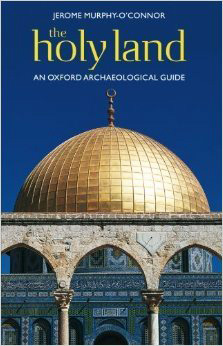
The writings of Murphy-O’Connor have been helpful to me. I have especially enjoyed The Holy Land An Oxford Archaeological Guide which is now in its 5th edition. In my recommendations of books for those traveling to Israel I have annotated this book with the words “Excellent. The Best.” I am pleased to say that I have seen several tour members using their copy of the book. I see the book is now available for the Kindle.

Holy Land

St. Paul’s Corinth: Texts and Archaeology (Good News Studies, Vol. 6) has been helpful in studying about Corinth. His article about traveling conditions in the first century in the second issue of (the now defunct) Bible Review has been extremely helpful in studying Paul’s journeys. (Murphy-O’Connor. “On the Road and on the Sea with St. Paul.” Bible Review 1:2 (1985).

HT: Jack Sasson; Bible Places Blog.

Report by Gordon Franz on the “International Noah and Judi Mountain Symposium” – Sirnak, Turkey

Gordon Franz sent me the report on his recent visit to southeastern Turkey and the “International Noah and Judi Mountain Symposium.” He said, “If you want to post it on your site, you are more than welcome.” This is an issue of much importance, and I am delighted to share it with our readers and help give it wide distribution.

Twice I have visited Eastern Turkey. In 2007 I was aware of the argument for Cudi Dagh (or Mount Judi), but was advised by my Turkish tour operator not to go to the mountain. Still hopeful of seeing the mountain someday.

Here is the first part of Gordon’s report:

Report on the “International Noah and Judi Mountain Symposium” – Sirnak, Turkey

By Gordon Franz

Introduction
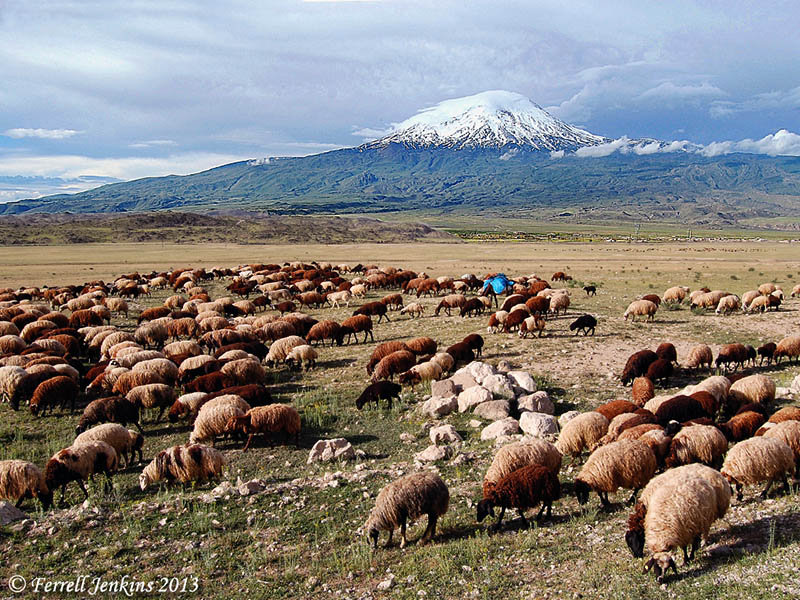
The “International Noah and Judi Mountain” symposium was held in Sirnak, Turkey, under the auspices of Sirnak University. One of the purposes of this conference was to set forth the case for Cudi Dagh, the mountain just to the south of Sirnak, as the landing-place of Noah’s Ark in South East Turkey. This mountain is not to be confused with the (late) traditional Mount Ararat, called Agri Dagh, in northeastern Turkey.
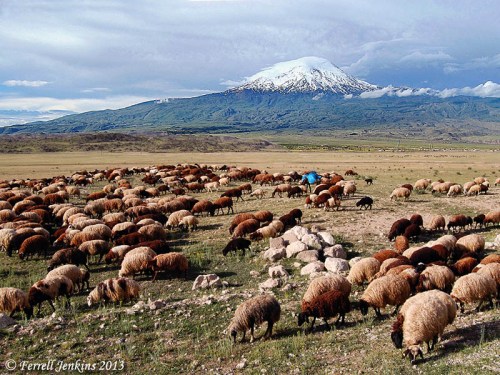
Ararat (Agri Dagh) in north eastern Turkey. Photo by Ferrell Jenkins.

Traditional Mount Ararat (Agri Dagh) in north eastern Turkey. Photo by Ferrell Jenkins.

Interestingly, at this conference I learned of another mountain that allegedly Noah’s Ark landed on. It is located at Mount Gemikaya in Azerbaijan. By my count, that is the sixth mountain vying for the honors of this historical event: two in Turkey, three in Iran, and one in Azerbaijan. The Iranian and Azerbaijani sites are far outside the Land of Ararat / Urartu, and in the case of the Iranian sites, deep inside the Land of Media. We can safely dismiss these mountains as the place where Noah’s Ark landed according to the Bible. To be truthful, Agri Dagh must be dismissed as well because it is a post-Flood volcanic peak in a plain, and not within the “mountains (plural) of Ararat” (Gen. 8:4).

The Setting of the Symposium
The symposium was held at the Sehr-I Nuh Otel (translation: Noah’s City Hotel) in Sirnak, just north of Cudi Dagh (Cudi or Judi Mountain). This mountain is within the “mountains of Ararat” (Gen. 8:4) where Noah’s Ark landed. The facilities at the hotel were first class, the food was absolutely delicious, and we had a spectacular view of Cudi Dagh from the panorama view windows as we ate our meals.
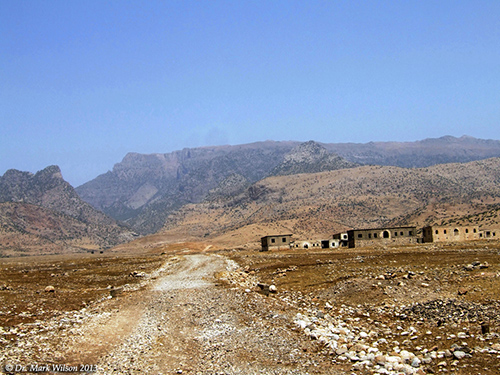
Cudi Dagh (Mount Judi). Photo courtesy of Dr. Mark Wilson.

Cudi Dagh (Mount Judi). Photo courtesy of Dr. Mark Wilson.

Special thanks goes to Dr. Mehmet Ata Az, a philosophy professor at Sirnak University, for coordinating the speakers and making sure our needs were met. He truly has a servant’s heart and our best interest in mind. Thank you my friend!

— ♦ —

At this point Gordon gives a synopsis of select papers, including his own on the topic, “Did Sennacherib, King of Assyria, Worship Wood from Noah’s Ark?

Read the report in its entirety at Gordon’s Life and Land Seminars site. I think you will be profited, and perhaps enlightened, by doing so.

More on the Vandalization of the Protestant Cemetery in Jerusalem

This is a brief follow-up on our report here of the vandalization of the Protestant Cemetery. Trent Dutton, “Our man in Jerusalem”, reports that once AP released a story about the vandalism, several Middle East and American news outlets have come to the cemetery for photographs, and have re-posted the story.

Fox News: http://www.foxnews.com/world/2013/10/09/vandals-damage-graves-in-jerusalem-in-latest-attack-against-christians/?intcmp=latestnews

Washington Times: http://www.washingtontimes.com/news/2013/oct/9/jerusalem-grave-vandals-set-christians-edge/

Ma’an News (Jordanian) discusses this in the context of the general problem faced by some Arabs: http://www.maannews.net/eng/ViewDetails.aspx?ID=634823

YouTube: http://www.youtube.com/watch?v=4GY6D02dksI

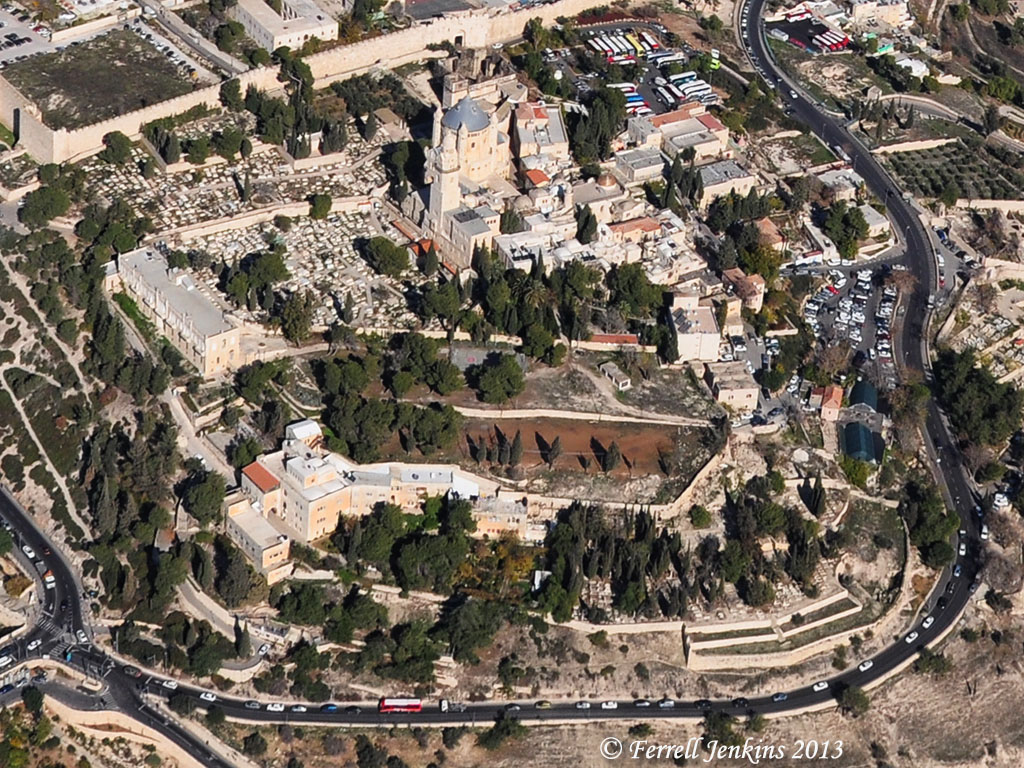
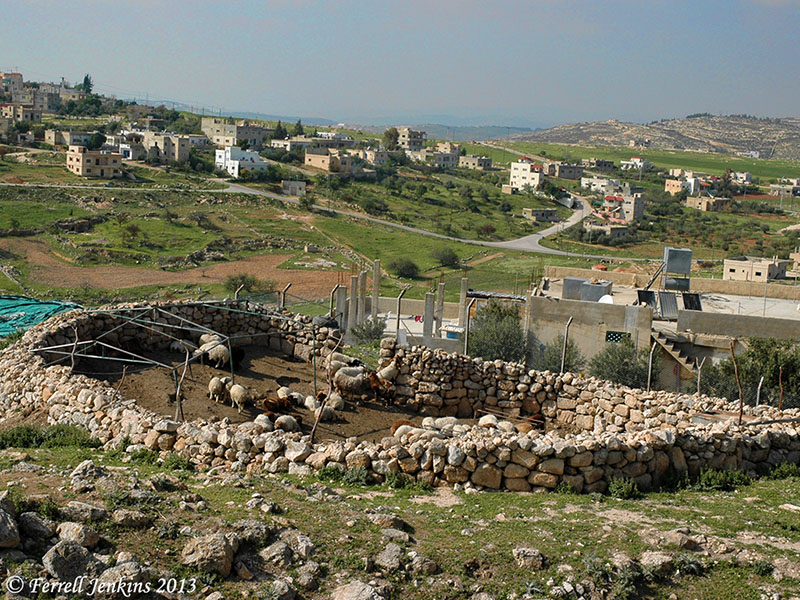
The aerial photo below shows the Church of the Dormitian, the Catholic, Armenian, and Greek cemeteries in the upper left portion. Along the bottom of the photo, overlooking the road along the south of the Old City where it joins with the Hebron Road, is the Jerusalem University College. The Protestant Cemetery can be seen among the trees just above our copyright notice. Click on the photo for a larger image.

Aerial photo of the Protestant Cemetery. Photo by Ferrell Jenkins.

Aerial photo of the Protestant Cemetery. Photo by Ferrell Jenkins.

You can probably see that it would be rather easy for one to enter the cemetery from the road below.

HT: Trent Dutton

Joseph’s Tomb at Shechem

Before Joseph died in Egypt, he exacted a promise from the sons of Israel that when God visited them to deliver them from bondage they would carry his bones from Egypt. Upon his death he was embalmed and placed in a coffin in Egypt (Genesis 50:25-26). This is what we would expect in Egypt.

The request regarding his bones manifests an understanding of the promise that the LORD would give to the descendants of Abraham the land where Abraham dwelt (Genesis 15:13-16). It also manifests a strong faith regarding the fulfillment of that promise.

Moses took the bones of Joseph with the Israelites when they fled Egypt. This was the strangest thing one can imagine — transporting the mummified body of Joseph through forty years of wilderness wandering.

Moses took the bones of Joseph with him, for Joseph had made the sons of Israel solemnly swear, saying, “God will surely visit you, and you shall carry up my bones with you from here.” (Exodus 13:19 ESV)

Eventually, Joseph’s bones were buried at Shechem.

As for the bones of Joseph, which the people of Israel brought up from Egypt, they buried them at Shechem, in the piece of land that Jacob bought from the sons of Hamor the father of Shechem for a hundred pieces of money. It became an inheritance of the descendants of Joseph. (Joshua 24:32 ESV)

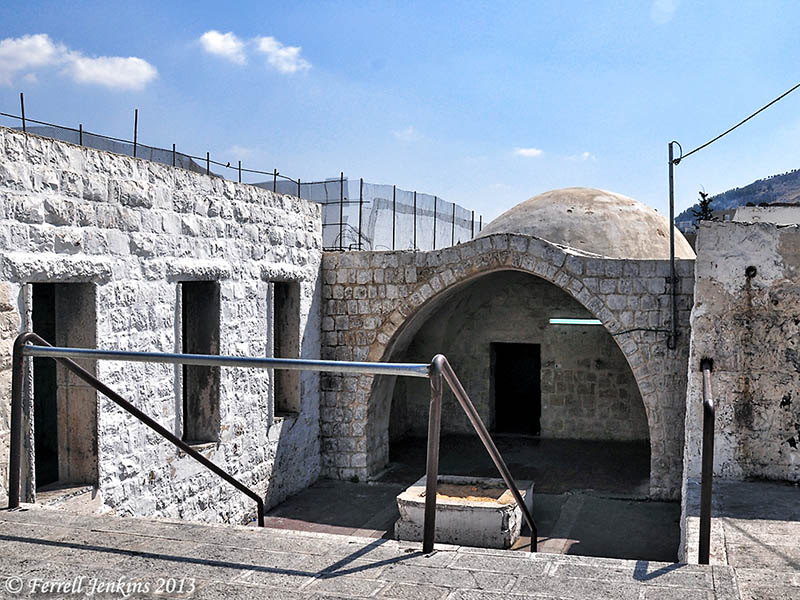
Tomb of Joseph near Shechem. Photo by Ferrell Jenkins.

Tomb of Joseph near Shechem. Photo by Ferrell Jenkins.

The building pictured above is a fairly recent structure that is called the Tomb of Joseph. Jewish settlers come to the empty building, now within the Palestinian territory, frequently. Sometimes fights erupt. One of the recent clashes is described here.

Looting and vandalism in Petra

Looting and vandalism of historic or archaeological sites is nothing new. We have reported on vandalism in Israel, but especially in the war-torn countries of Syria and Iraq.

Heritage Daily has an article here on looting and vandalism at Petra. Petra was designated a UNESCO World Heritage Site in 1985. Archaeologists from Brown University have been working in Petra since 2009. They have been able to photograph excavated area each year. Now they report on signs of recent vandalism. The article says,

The damage caused by looting is nothing new and some of the more iconic buildings at Petra bear witness to this. A giant urn carved above the entrance to the Monastery bears the marks of hundreds of gunshots. The local Bedouin tribesmen living in and among the ancient ruins say the damage was caused when local men would open fire with rifles, seeking the loot thought to be inside the urn which is actually made of solid stone.

Heritage Daily has established from sources at Brown University that they are lobbing for additional security at the site and robust investigation to target the individuals concerned. However lack of funds for the Petra Archaeological Park and the isolated rugged area is hindering this work.

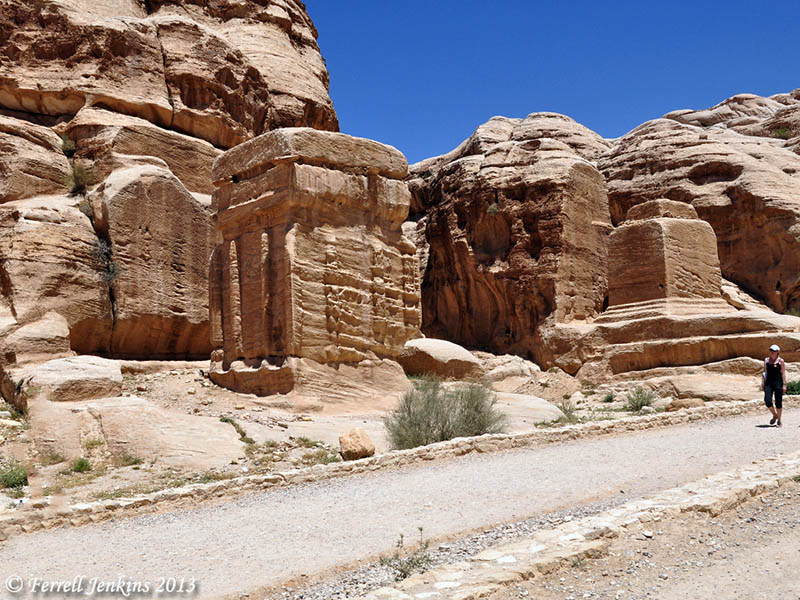
There is a considerable amount of natural wear over the centuries. In some cases we must imagine how the stones looked when they were carved by the Nabateans who lived in the area.

Nabatean Djinn blocks at Petra. Photo by Ferrell Jenkins.

Nabatean Djinn blocks at Petra. Some sources refer to these as god-blocks.Photo by Ferrell Jenkins.

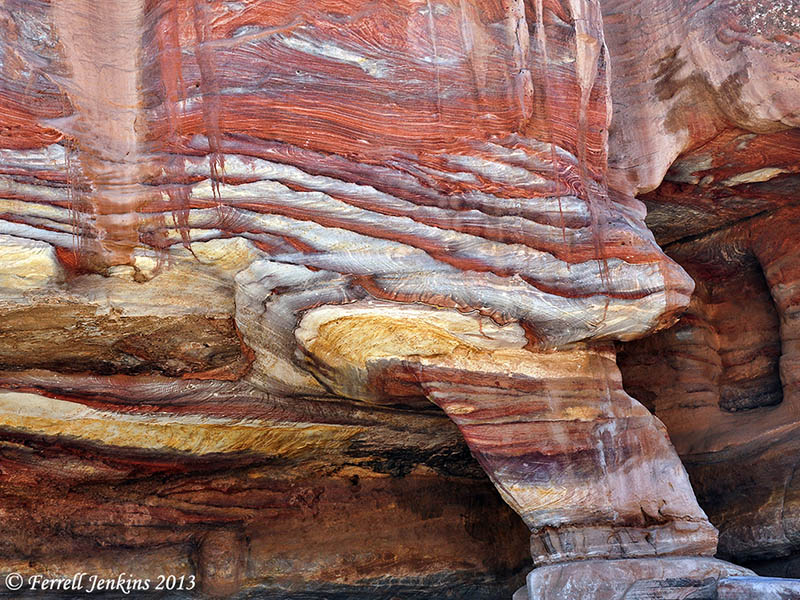
I have noticed erosion in the structures cut from the beautiful sandstone at Petra since my first visit in 1967. Some of this may have been caused by those who fill little bottles with the various colors of sand to sell to the tourists.

Natural erosion is evidence in these structures cut from the beautiful sandstone structures of Petra. Photo by Ferrell Jenkins.

Natural erosion is evidenced in these structures cut from the beautiful sandstone structures of Petra. Photo by Ferrell Jenkins.

This territory was once inhabited by the Biblical Edomites, but the structures we see today were carved from stone by the Nabateans who inhabited the area from about the fourth century B.C. to the early second century A.D.

One of the most famous Nabatean rulers was Aretas IV (about 9 B.C. to A.D. 40). It was during his reign, which extended at far north as Damascus, when Paul escaped Damascus (2 Corinthians 11:32-33). See here.

HT: Jack Sasson

Solomon’s Seaport at Ezion-geber

The cedar from Lebanon was brought by sea to Joppa for the building of Solomon’s temple (2 Chronicles 2:16). But that port was not adequate to meet Israel’s needs. Scripture informs us that Solomon built a fleet of ships at Ezion-geber.

King Solomon built a fleet of ships at Ezion-geber, which is near Eloth on the shore of the Red Sea, in the land of Edom. And Hiram sent with the fleet his servants, seamen who were familiar with the sea, together with the servants of Solomon. And they went to Ophir and brought from there gold, 420 talents, and they brought it to King Solomon. (1Kings 9:26-28 ESV)

Then Solomon went to Ezion-geber and Eloth on the shore of the sea, in the land of Edom. And Hiram sent to him by the hand of his servants ships and servants familiar with the sea, and they went to Ophir together with the servants of Solomon and brought from there 450 talents of gold and brought it to King Solomon. (2 Chronicles 8:17-18 ESV)

Ezion-geber is said to be near Eloth (Elat, Elath, in some English versions). We pointed out in the previous post that Nelson Glueck thought he had located Ezion-geber at Tell el-Kheleifeh and that it was the same as Eloth. In 1962 Beno Rothenberg demonstrated that the installation at Tell el-Kheleifeh could not have been for copper smelting. In 1965 Glueck wrote an article in which he agreed with Rothenberg. This means that Tell el-Kheleifeh may not be Ezion-geber.

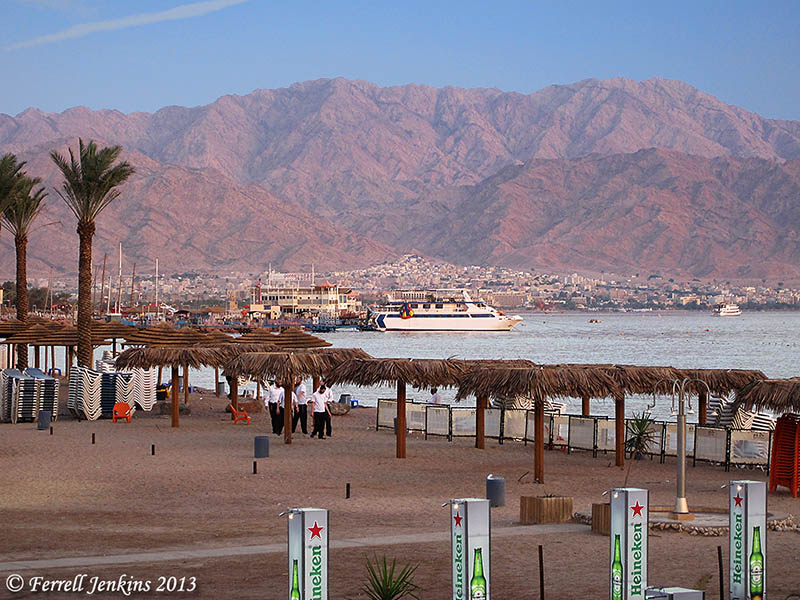
The north end of the Gulf of Eilat.Aqabah. The view is to the east and the city of Aqabah, Jordan. Tell el-Kheleifeh is only a few blocks north of the shore. Photo by Ferrell Jenkins.

The north end of the Gulf of Eilat/Aqabah. The view is to the east and the city of Aqabah, Jordan. Tell el-Kheleifeh is only a short distance north of the shore in Jordan. Photo by Ferrell Jenkins.

Alexander Flinder says the coastline at Tell el-Kheleifeh is a “sandy beach, with shallow water – totally unsuitable for small craft, let alone for a substantial merchant fleet” (“Is This Solomon’s Seaport?” BAR, July/August 1989, p. 38). Flinder has suggested that Ezion-geber may have been on a small island in the Gulf of Eilat/Aqabah called Jezirat Faraun (Pharaoh’s Island). It is located about seven miles south of modern Eilat, but now under Egyptian control. Flinder’s study shows that there has been an artificial harbor at this location in several historical periods and that it was characteristic of other known Phoenician ports. See the complete article for more details and photos.

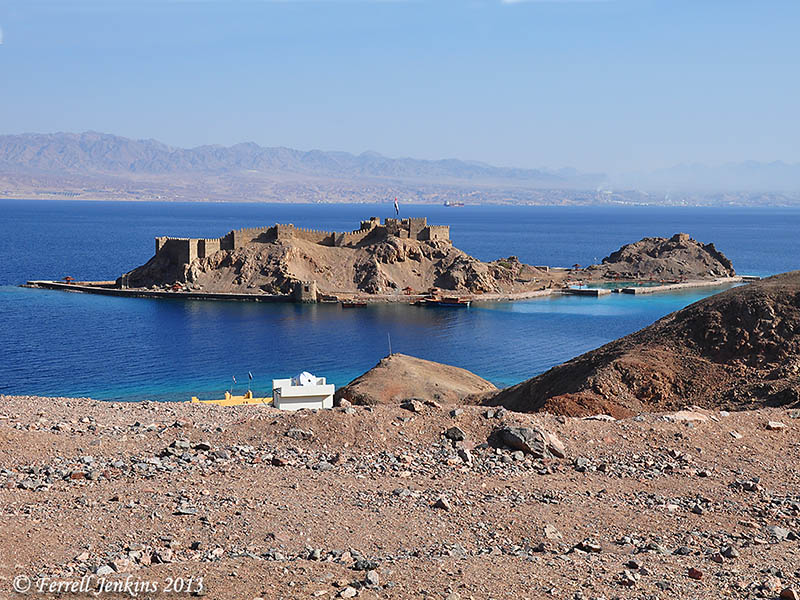
Pharaoh's Island in the Gulf of Eilat/Aqabah from the west. Photo by Ferrell Jenkins.

Pharaoh’s Island in the Gulf of Eilat/Aqabah from the west. Photo by Ferrell Jenkins.

Meir Lubetski, ABD, says,

Unique were the underwater archaeological findings which established the existence of an artificial enclosed harbor bordering a sizable natural anchorage, with jetties built out into the water to influence currents opposite the island on the shore of the mainland.

I can only point to a suggestion regarding the identity of Ezion-geber with Eloth (Elath). Kenneth A. Kitchen (New Bible Dictionary, 3rd ed., 1996, p. 305). says the two places were,

  • Separate stations during the Israelite wandering (Numbers 33:35-36; Deuteronomy 2:8).
  • Ezion-geber appears to be mentioned alone in the 10th-9th centuries, and is the point from which Solomon sent ships.
  • Jehoshaphat’s planned expedition from Ezion-geber was wrecked (1 King 22:48; 2 Chronicles 20:36-37).
  • King Uzziah of Judah captured Elath/Eloth from Edom and rebuilt it in the 8th century (2 Kings 14:22).
  • Ahaz lost the port to the Edomites (2 Kings 16:6).
View of Pharaoh's Island from the west. The view looks east across the Gulf of Eilat/Aqabah. The land in the distance is Saudi Arabia, the Biblical land of Midian. Photo by Ferrell Jenkins.

View of Pharaoh’s Island from the west. The view looks east across the Gulf of Eilat/Aqabah to Saudi Arabia, the Biblical land of Midian. Photo by Ferrell Jenkins.

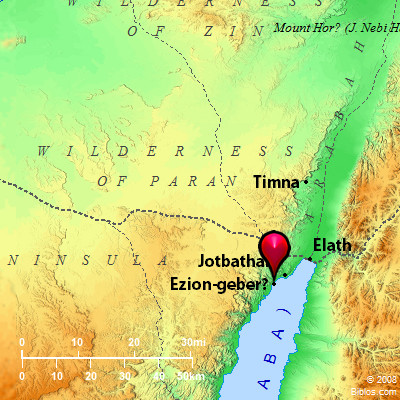
The map at BibleAtlas.org shows the places we have discussed in this and the previous post. Notice the location of Ezion-geber is indicating, with a question mark, the location of Pharaoh’s Island.

Map of Ezion-geber, Elath, and Timnah. BibleAtlas.org.

Map of Ezion-geber, Elath, and Timnah. BibleAtlas.org.