
After the LORD struck down 185,000 of the Assyrians who were camped outside Jerusalem, Sennacherib returned home and lived at Nineveh. In the final verse of this chapter we are told that his sons killed him and fled to the land of Ararat.
Then Sennacherib king of Assyria departed and returned home and lived at Nineveh. And as he was worshiping in the house of Nisroch his god, Adrammelech and Sharezer, his sons, struck him down with the sword. And after they escaped into the land of Ararat, Esarhaddon his son reigned in his place. (Isaiah 37:37-38 ESV; see also 2 Kings 19:37)
The Biblical land of Ararat (Urartu) is located in modern eastern Turkey. We might think of the land of Urartu being centered in Lake Van. From Nineveh to Van is an air distance of about 150 miles. The map below is from the Wikipedia entry on the Urartu-Assyria War. Click the map to enlarge. Lake Van is 5737 feet above sea level.
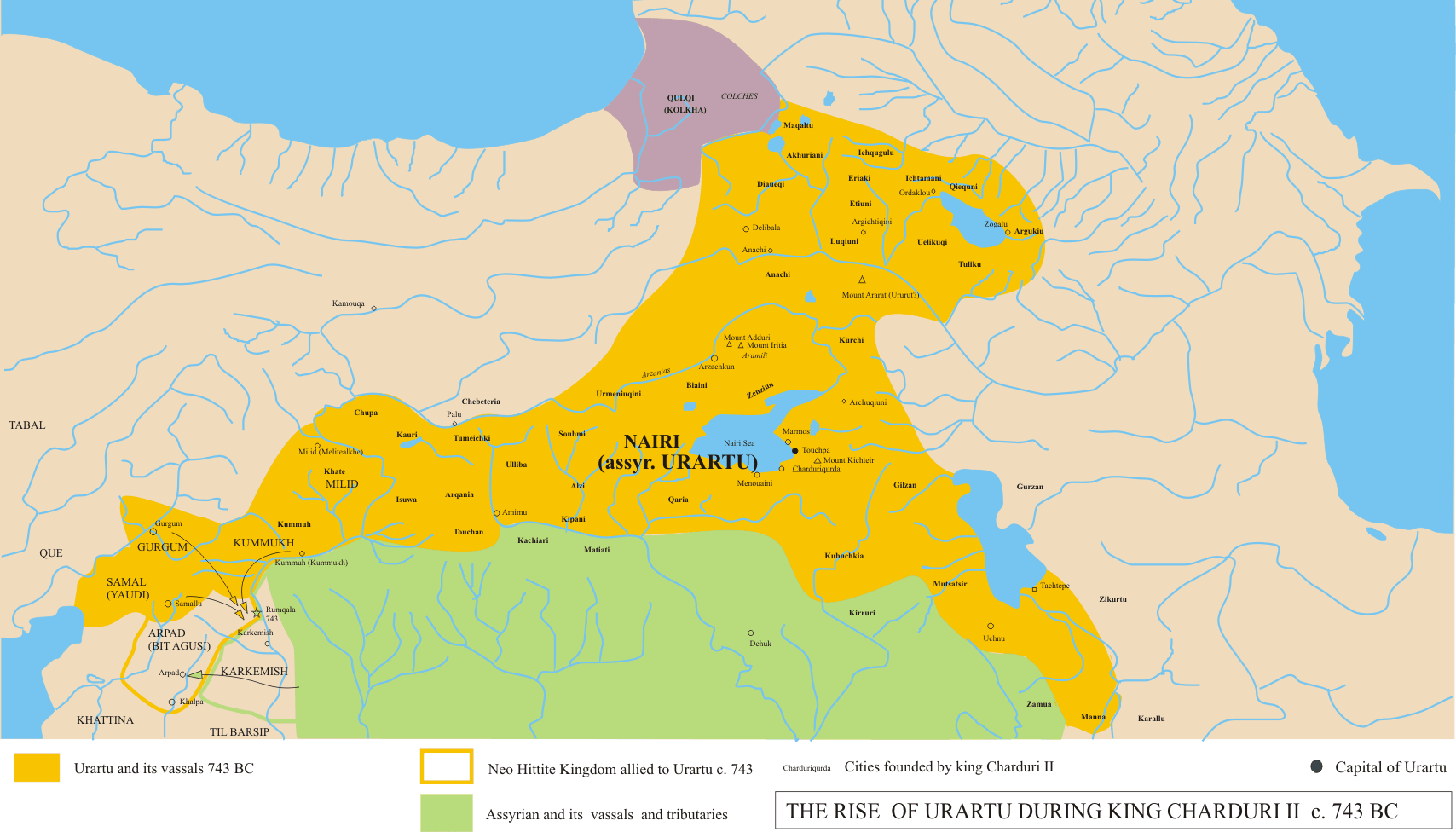
Map of the Urartu-Assyrian war in 743 B.C. Wikimedia Commons.
The entirety of the land of Urartu is mountainous. Our photo below shows the region between Van and Batman in Turkey. Note the snow-covered slopes in the distance.
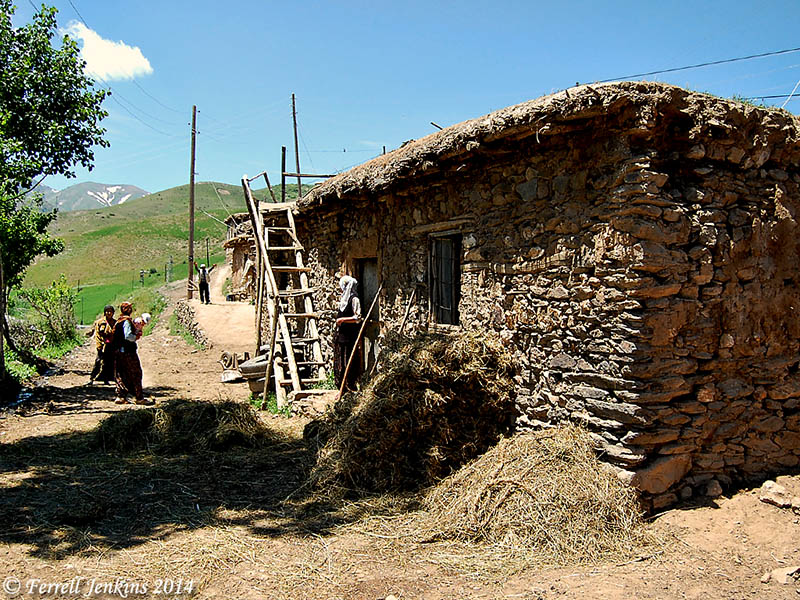
A house in Turkey between Van and Batman. In ancient times the area was known as Urartu (Biblical Ararat). Photo by Ferrell Jenkins.
Use our search box to look for more entries dealing with Urartu. Remember that the ark built by Noah came to rest on the “mountains of Ararat” (Genesis 8:4).
The photo below was taken in the Anatolian Civilizations Museum in Ankara, Turkey. It shows (the metal legs of) some Urartian furniture. In the left bottom corner you should see some of the ivory pieces that decorated walls and furniture.
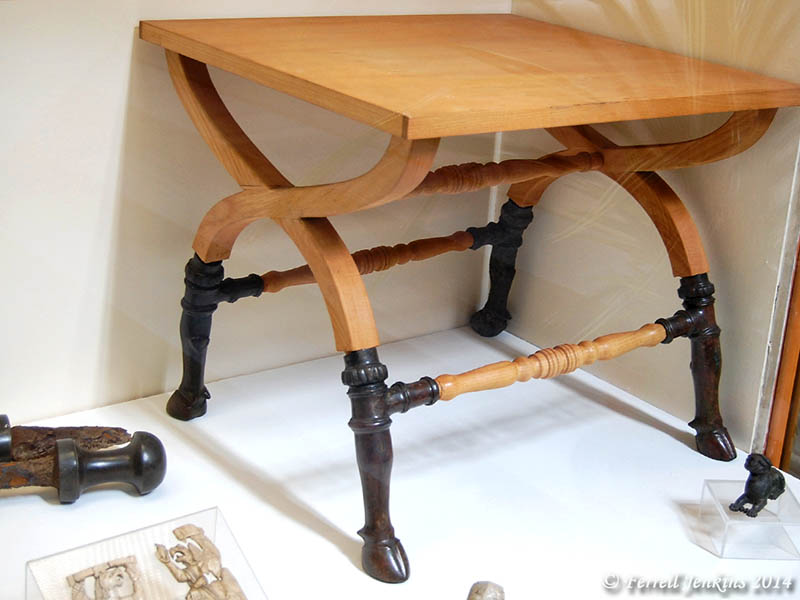
Urartian furniture displayed in the Anatolian Civilization Museum. Photo: F. Jenkins.
 Ferrell's Travel Blog
Good reading for the weekend
Noah
There has been much discussion in the past few weeks about the Noah movie. In last Saturday’s roundup, Todd Bolen called attention to the blog of Dr. Brian Mattson. In a post entitled “Sympathy for the Devil” Mattson comments about the movie. He reminds us of the following important point: The Bible is not the text for this movie. Several writers, and speakers, have pointed out that about the only things in common between the Noah movie and the Noah/Flood story of the Bible are a man named Noah, an ark, and water.
Mattson claims and documents the philosophical background of the director of the movie in Gnosticism and Kabbalah. I am certain that many people will see the movie and have no awareness of that, just as many ready Paul’s epistle to the Colossians, and John’s epistles without understanding how they are responding to early Gnostic doctrines.
Here is the link to Mattson’s articles:
The Wife of Jesus, again.
It is almost Easter, so we can expect a rerun on various strange views about Jesus. I first called attention to this speculation about the wife of Jesus back in September, 2012, here. Todd Bolen recently commented on the same material that is now getting new attention. Here, he provides links to the article in the New York Times, and the Harvard Theological Review article by Dr. Karen King (available for download). The Times of Israel article is available here.
The GJW (Gospel of Jesus Wife) papyrus fragment possibly claiming that Jesus had a wife. Photo: Harvard University, Dr. Karen L. King.
Bolen summarizes the pertinent material, showing that the document tells us nothing about 1st century events:
Larry Hurtado has written three posts about the papyrus document. Begin here and then scroll back for the other two.
Wild Boar at Caesarea Philippi
Carl Rasmussen’s recent Israel student group encountered a herd of about 15 wild boar at Caesarea Philippi. He provides some nice photos to back up his claim, and discusses the various Biblical references about swine. Access the HolyLandPhotos’ Blog here.
Using Google Books
Rob Bradshaw is making many books and journals available in PDF format. I check his BiblicalStudies.org.uk site regularly for materials that might be helpful in my study. Recently he called attention to a short video by Tim Bulkeley on how to access Bible commentaries without a library. The helpful, brief video is here.
2 Comments
Posted in Bible Lands, Bible Study, Biblical Studies, blog, Books, Culture, Israel, New Testament, Old Testament, Photography, Travel
Tagged Commentaries, Noah, Todd Bolen, Wife of Jesus