Category Archives: Bible Lands

Tithing anise and overlooking weighty matters

Jesus used illustrations His hearers understood from their daily activities. In announcing woes on the religious leaders of His time, he spoke of spices that were used in cooking.

“Woe to you, teachers of the law and Pharisees, you hypocrites! You give a tenth of your spices– mint, dill and cumin. But you have neglected the more important matters of the law– justice, mercy and faithfulness. You should have practiced the latter, without neglecting the former. (Matthew 23:23 NIV)

Instead of dill, the KJV and NKJV versions have used the term anise.

The Illustrated Manners and Customs of the Bible has a brief explanation about anise.

The term anise mentioned in Matthew 23:23 is derived from the Greek word It refers either to the dill or to the true anise. Both plants are similar and of the same plant family. Both grow about 91 cm. (3 ft.) high with clusters of yellow flowers. The seeds, leaves, and stem are used for medicine and cooking, and were a part of the ancient temple tithe. (Jesus denounced the Jews of His day for carefully obeying small laws, such as the spice tithe, and forgetting the more important ones.) Anise was cultivated in ancient Egypt and other Mediterranean countries, and still grows there today. (Packer and Tenney, Eds. Illustrated Manners and Customs of the Bible, p. 249.)

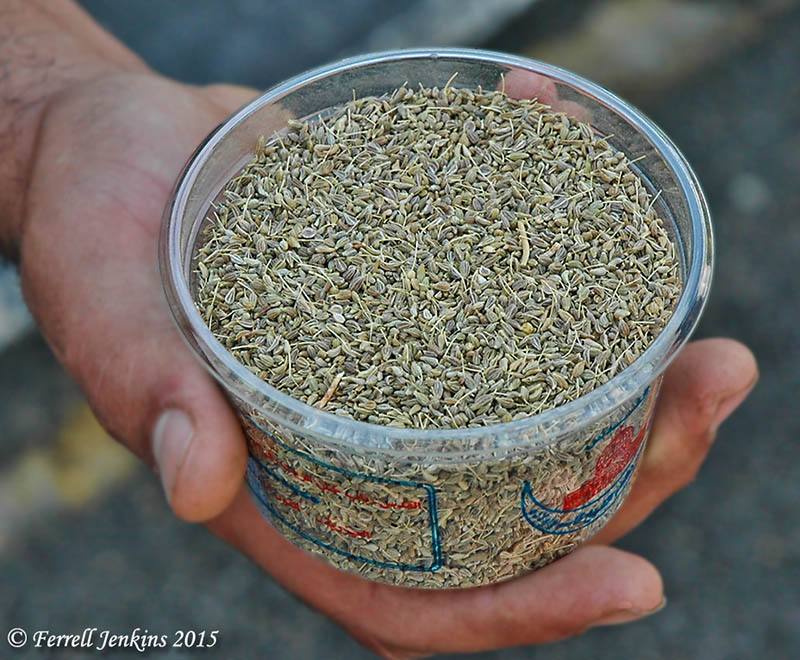
Many of the stores in the Old City of Jerusalem and other cities in Israel and the West Bank sell spices. The photo of anise (dill) below was made at Jericho.

A salesman at Jericho shows anise. Photo by Ferrell Jenkins.

A salesman at Jericho shows anise. Photo by Ferrell Jenkins.

Imagine counting out one of every 10 seed but overlooking justice, mercy, and faithfulness. Jesus told the experts in the law and the religious leaders,

You should have practiced the latter, without neglecting the former.

I think there is a lesson here for many of us today.

Sheepfolds are still in use in the Bible World

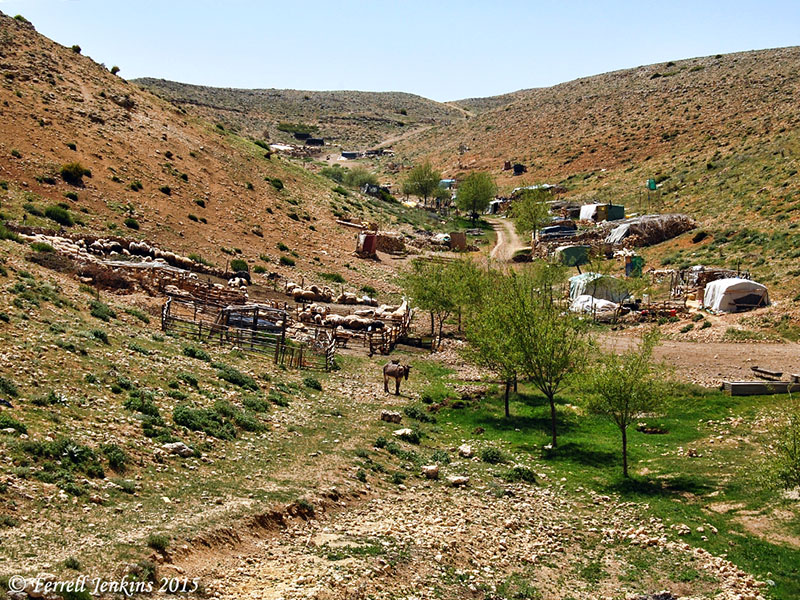
Recently we had a request from a person publishing a Bible class book for a photo of a sheepfold. We did not have exactly what the person requested but we did satisfy their need. At the time I commented that I had seen sheepfolds of all sorts in various parts of the Bible World. Tonight I was looking through some photos made in the Tarus mountains of Turkey. The location is a few miles south of Karaman, Turkey. These shepherds move about from place to place in order to find food for their animals.

The sheepfold in this photo is on the left side of the valley.

Shepherds and sheepfold near Karaman, Turkey. Photo by Ferrell Jenkins.

Shepherds and sheepfold near Karaman, Turkey. Photo by Ferrell Jenkins.

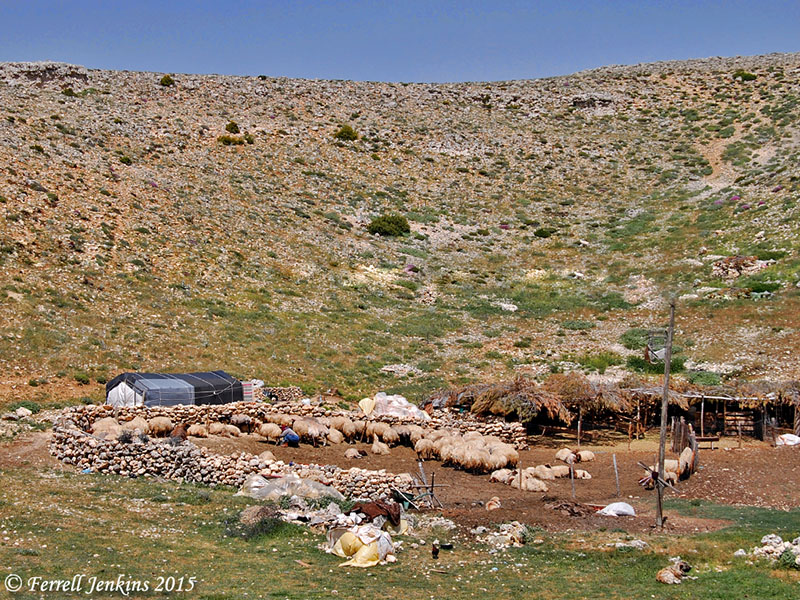
A short distance away is a different sheepfold. If you click on the photo, in the larger image you will see at least two dogs keeping watch and a woman milking a sheep.

A sheepfold near Karaman, Turkey. Photo by Ferrell Jenkins.

A sheepfold near Karaman, Turkey. Photo by Ferrell Jenkins.

Scenes such as these remind us of the Biblical patriarchs who moved about from place to place with their flocks. Abraham and Lot provide an example.

And Lot, who went with Abram, also had flocks and herds and tents, (Genesis 13:5 ESV)

There are several biblical references to the sheepfold, or the fold of the sheep (Jeremiah 50:6; Micah 2:12; John 10:1, 16). Jesus used an illustration involving the sheepfold:

Truly, truly, I say to you, he who does not enter the sheepfold by the door but climbs in by another way, that man is a thief and a robber. But he who enters by the door is the shepherd of the sheep. (John 10:1-2 ESV)

Jesus rides a donkey from Bethphage to Jerusalem

Bethphage is mentioned in the New Testament in only one incident from the ministry of Jesus (Matthew 21:1, Mark 11:1; Luke 19:29).

And when he had said these things, he went on ahead, going up to Jerusalem.  When he drew near to Bethphage and Bethany, at the mount that is called Olivet, he sent two of the disciples,   saying, “Go into the village in front of you, where on entering you will find a colt tied, on which no one has ever yet sat. Untie it and bring it here.  If anyone asks you, ‘Why are you untying it?’ you shall say this: ‘The Lord has need of it.'”  So those who were sent went away and found it just as he had told them.  And as they were untying the colt, its owners said to them, “Why are you untying the colt?”  And they said, “The Lord has need of it.”  And they brought it to Jesus, and throwing their cloaks on the colt, they set Jesus on it. (Luke 19:28-35 ESV)

John records the event but does not mention Bethphage (John 12:12ff.).

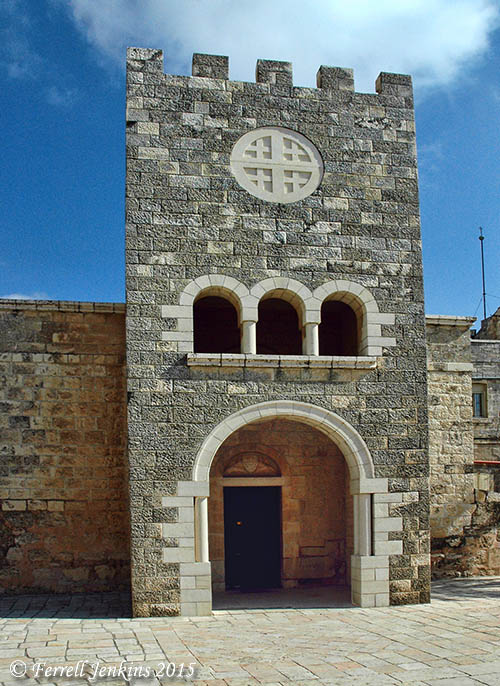
The exact site of Bethphage is not known, but it certainly was not far from Kefr et Tur, the place of Byzantine traditions. The present Franciscan chapel was built there in 1883.

Franciscan chapel at Bethphage. Photo by Ferrell Jenkins.

Franciscan chapel at Bethphage. Photo by Ferrell Jenkins.

The Roman road from Jericho to Jerusalem went over the Mount of Olives between Mount Scopus and the Mount of Olives. Before reaching the top of the mountain a spur or bypass turned south to Bethphage and Bethany.

A colt at Nazareth Village. Photo by Ferrell Jenkins.

A colt at Nazareth Village. Photo by Ferrell Jenkins.

In a 1975 article in Biblical Archaeologist (Vol. 38, No. 1), John Wilkinson wrote about “The Way from Jerusalem to Jericho.” He and his party tried to trace out known remnants of the old Roman road between the two cities. This 12½ mile trip from Jericho up to Jerusalem took 7 hours and forty-nine minutes.

Index of articles about Peter’s Epistles

Pontus and Peter’s Epistles. [Amasus, Amisos, Samsun, Black Sea coast]

Persecution of Christians in Pontus. [Pliny, Sinope, Sinop, Pontus, Bithynia, Pontus]

Black Sea coastal town of Sinop.

Sinop is the northernmost city of Asia Minor (now Turkey).

Some famous Sinopeans. [Diogenes the Cynic, Serapis]

More famous Sinopeans. [Aquila (2nd century), Marcion, Phocas (Phokas), Sinop Gospels]

The Halys (Kizilirmak) River.

The delivery of Peter’s Epistles.

The Samsun Archaeological Museum.

Hidden treasure. [Samsun, Turkey]

Visiting the Black Sea coast of Turkey. [Samsun, Sinop, Pontus, Aquila]

The Bosphorus – “a liquid line”.

Selected Related Posts Pertaining to Peter’s Epistles

Cappadocia was home to early Christians.

Cappadocian sunrise.

The Bosphorus. [Bythinia]

Elaborate hairstyles in New Testament times.

Watch out for camels

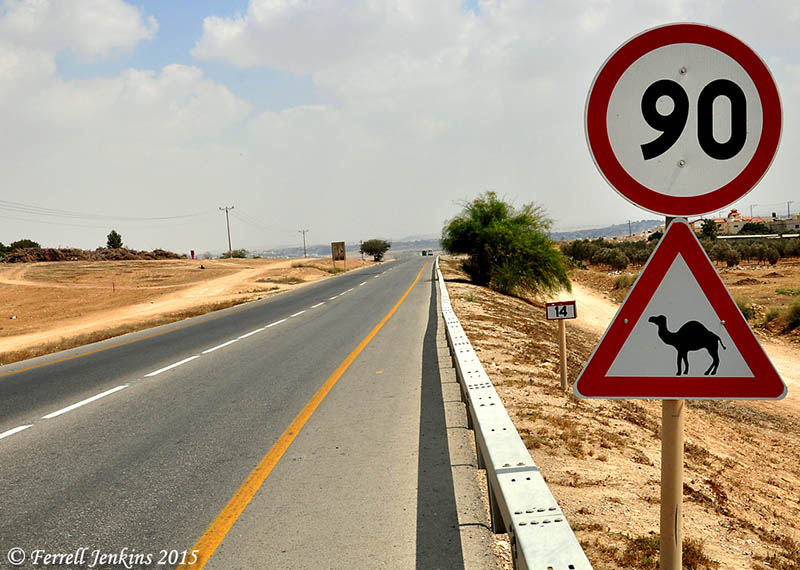
This post is not intended as a summary of information about camels in the Bible. It is just calling attention to the terrain and kind of signs one sees in Israel’s Negev (Negeb). The NKJV uses the directional term South.

Abraham and Isaac lived in the Negev. When Abraham was old he sent his most trusted servant back to Padan Aram, where Abraham had lived before coming to Canaan, to get a wife for Isaac (Genesis 24). After arrangements were made for Rebekah to return with the servant to Canaan, the Biblical account reads as follows,

Then Rebekah and her young women arose and rode on the camels and followed the man. Thus the servant took Rebekah and went his way. Now Isaac had returned from Beer-lahai-roi and was dwelling in the Negeb. And Isaac went out to meditate in the field toward evening. And he lifted up his eyes and saw, and behold, there were camels coming. And Rebekah lifted up her eyes, and when she saw Isaac, she dismounted from the camel and said to the servant, “Who is that man, walking in the field to meet us?” The servant said, “It is my master.” So she took her veil and covered herself. And the servant told Isaac all the things that he had done. Then Isaac brought her into the tent of Sarah his mother and took Rebekah, and she became his wife, and he loved her. So Isaac was comforted after his mother’s death. (Genesis 24:61-67 ESV)

Camel warning sign in the Negeb (Negev). Photo by Ferrell Jenkins.

Camel warning sign in the Negeb (Negev). Photo by Ferrell Jenkins.

Absalom, rebel son of king David, caught his head in a great oak tree

While David was at Mahanaim, his son Absalom and those of Israel who were aligned with him camped in the land of Gilead (2 Samuel 17:26-27). David remained at the gate of the city while his men went out to fight the rebels. The Biblical account says,

So the army went out into the field against Israel, and the battle was fought in the forest of Ephraim. And the men of Israel were defeated there by the servants of David, and the loss there was great on that day, twenty thousand men. The battle spread over the face of all the country, and the forest devoured more people that day than the sword. And Absalom happened to meet the servants of David. Absalom was riding on his mule, and the mule went under the thick branches of a great oak, and his head caught fast in the oak, and he was suspended between heaven and earth, while the mule that was under him went on.  (2 Samuel 18:6-9 ESV)

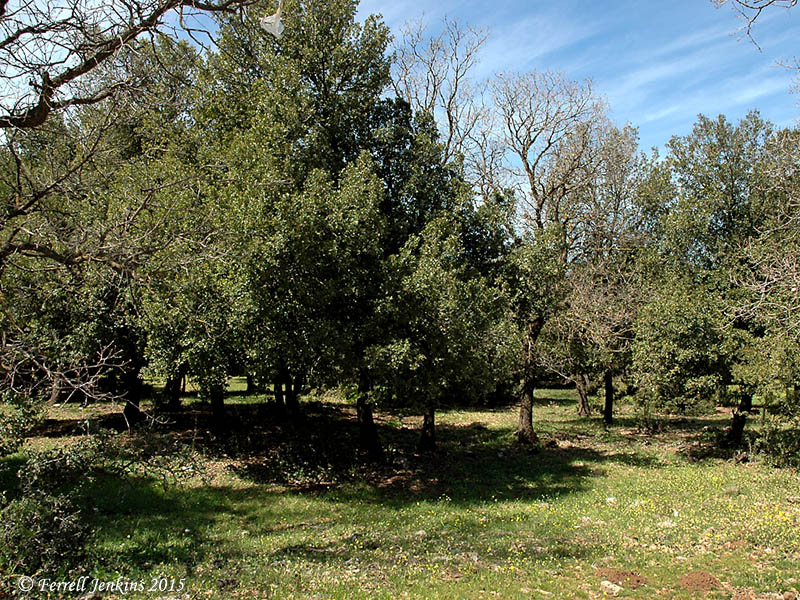
Even though many trees have been used by various invaders over the centuries, some forests of oaks may still be seen in both Cisjordan (territory west of the Jordan River) and Transjordan (territory east of the Jordan River). The photos below were made in a grove of trees growing the Golan Heights a short distance south of the junction of Highways 98 and 99 south of Mas’ada.

These trees may be much smaller than the “great oak” in which Absalom caught his head, but they could be quite dangerous to a person trying to make a fast getaway on a mule.
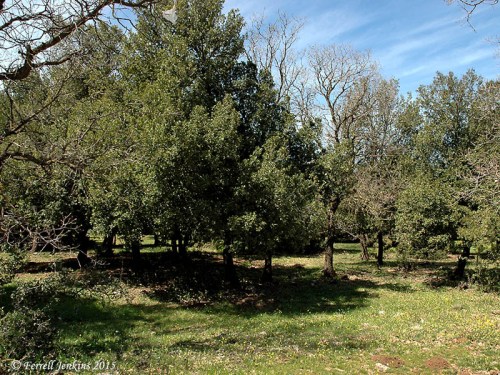
Oaks growing in the Golan Heights. Photo by Ferrell Jenkins.

Oaks growing in the Golan Heights. Photo by Ferrell Jenkins.

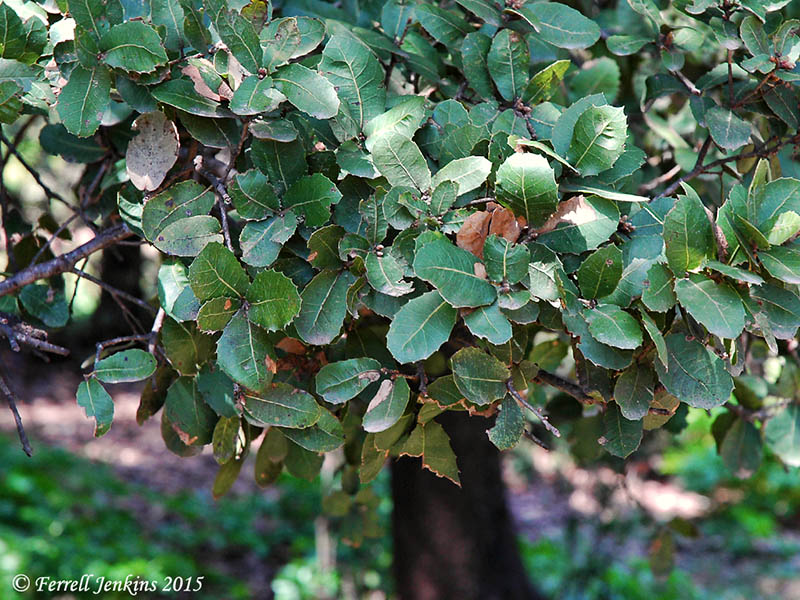
Here are the leaves of this variety of tree.
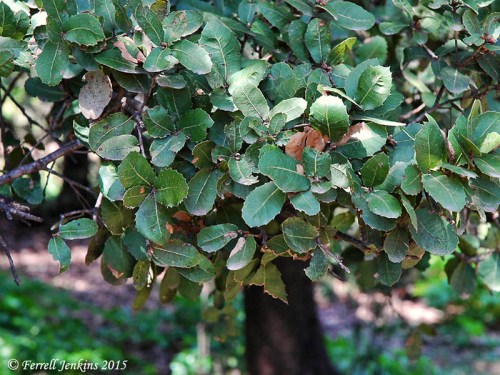
Close view of oaks growing in the Golan Heights. Photo by Ferrell Jenkins.

The leaves of oaks growing in the Golan Heights. Photo by Ferrell Jenkins.

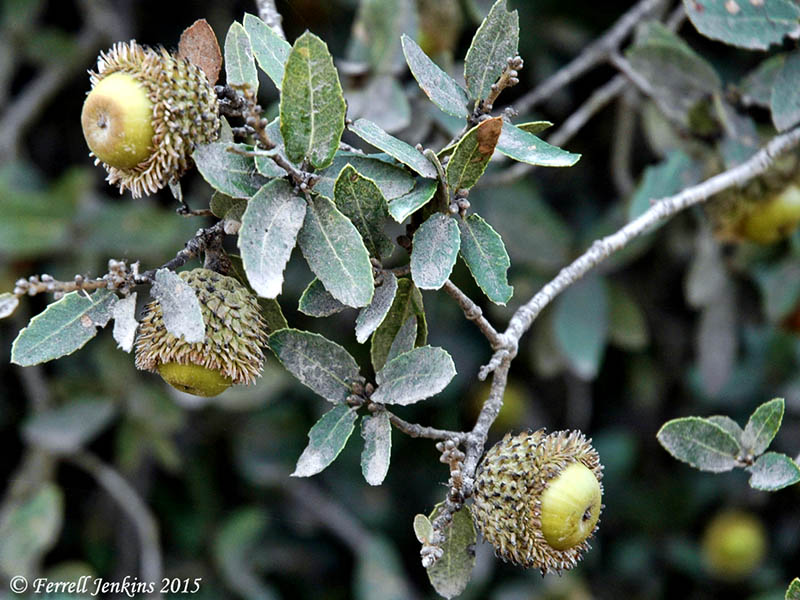
And the large acorns it grows.
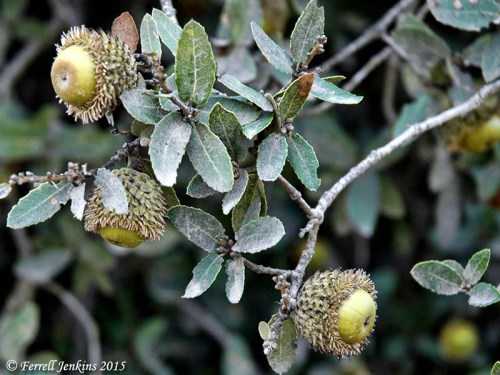
Acorns on the oaks of Bashan. Photo by Ferrell Jenkins.

Acorns on the oaks of Bashan. Photo by Ferrell Jenkins.

The oaks of Bashan are mentioned by the prophets of Israel several times (Isaiah 2:13; Ezekiel 27:6; Zechariah 11:2).

The technical name for the oak shown here is Querqcus ithaburensis, and is known as the Tabor oak. Dr. David Darom, in Beautiful Plants of the Bible, say this about the tree,

The Tabor oak, being a large deciduous tree that dominates its surroundings, was often associated with ritual and religious customs. Tabor oak forests once covered large areas of the northern Coastal Plain, the Lower Galilee, the Hulah Valley and
the slopes of the Golan. Most of the trees were cut down during the ages so their excellent wood could be used in buildings, furniture and boats. (p. 44)

William M. Thomson, back in 1880, described a walk in one of the “grand old forests” near the Crocodile River between Caesarea and Dor.

I had a delightful ramble early the next morning in those grand old forests, and then understood perfectly how Absalom could be caught by the thick branches of an oak. The strong arms of these trees spread out so near the ground that one cannot walk erect beneath them; and on a frightened mule, such a head of hair as that vain but wicked son polled every year would certainly become inextricably entangled: and it is interesting to know that the region east of the Jordan, that “wood of Ephraim” where the battle was fought, is still covered with thick oaks, tangled bushes, and thorny creepers growing over ragged rocks, and ruinous precipices, down which the rebel army plunged in wild dismay, horses and men crushing each other to death in remediless ruin. Thus twenty thousand men perished in that fatal wood, which “devoured more people that day than the sword devoured.” (The Land and the Book or Biblical Illustrations Drawn from the Manners and Customs, the Scenes and Scenery, of the Holy Land: Southern Palestine and Jerusalem. New York: Harper & Brothers, 1880. Print.)

To be precisely Biblical, it was Absalom’s head that caught in the oak, but the excessive hair might have contributed to his misfortune.

Absalom was killed by Joab and his armor-bearers (2 Samuel 18:14-15). Balwin comments on Absalom’s ignominious end:

All that remains is to bury there and then in the forest the body of the rebel, his grave marked only by a huge cairn of field stones, which would in a relatively short time cease to be identifiable. It was an ignominious end. (Baldwin, Joyce G. 1 and 2 Samuel: An Introduction and Commentary. Vol. 8. Downers Grove, IL: InterVarsity Press, 1988. Print. Tyndale Old Testament Commentaries.)

David at the cave of Adullam

Adullam is significant in several biblical accounts. Here are a few.

Judah stayed with an Adullamite man named Hirah. He married the daughter of a Canaanite man named Shua.

At that time Judah left his brothers and stayed with an Adullamite man named Hirah. There Judah saw the daughter of a Canaanite man named Shua. Judah acquired her as a wife and had marital relations with her. (Genesis 38:1-2 NET)

The episode of Onan and his failure to fulfill his responsibility to bring up children to his deceased brother (the Levirate marriage; Genesis 38:3-10).

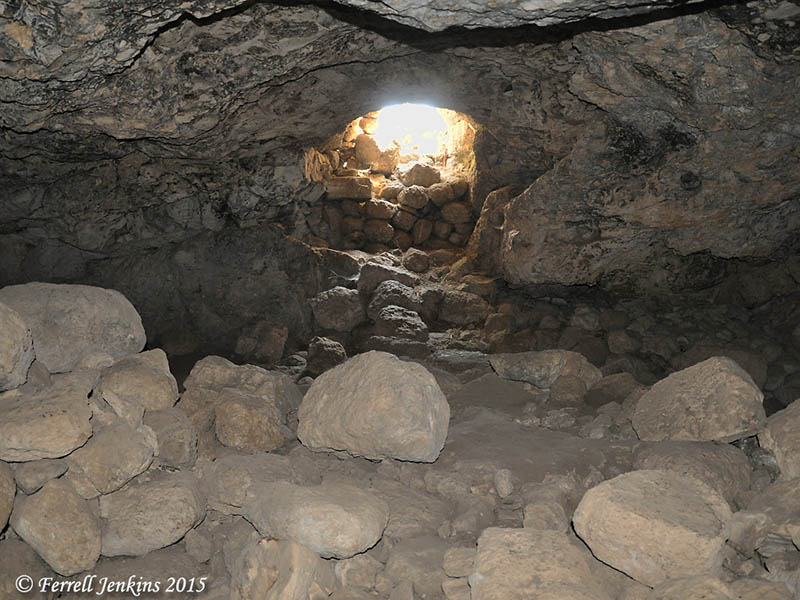
One of the entrances to the cave of Adullam with a view of the area to the southeast. Photo by Ferrell Jenkins.

One of the entrances to the cave of Adullam (in the foreground) with a view of the area to the east toward the central mountain range. Without detailed maps it is difficult to show this location, but the border road would lead generally to the Jaba border crossing on Highway 367. This road, after many twists and turns, leads to Highway 60 south of Bethlehem near the modern Israeli settlement of Efrat (or Efrata). Photo by Ferrell Jenkins.

Joshua defeated the king of Adullam during the Conquest (Joshua 12:15), and became one of the Shephelah (lowland) cities of the tribe of Judah (Joshua 15:35).

The cave of Adullam may be best know because of its association with David. When he left Gath he went to Adullam before sending his parents to Moab for safety.

So David left there and escaped to the cave of Adullam. When his brothers and the rest of his father’s family learned about it, they went down there to him. (1 Samuel 22:1 NET)

In fact, David spent much time at Adullam. I suggest you read the entire account in 2 Samuel 23:13ff.

Interior of the cave of Adullam. Photo by Ferrell Jenkins.

Interior of the cave of Adullam. Photo by Ferrell Jenkins.

When the prophet Micah warned Judah about the coming Assyrian invasion he said,

…the leaders of Israel shall flee to Adullam (Micah 1:15 NET)

Just like David did about three centuries earlier.

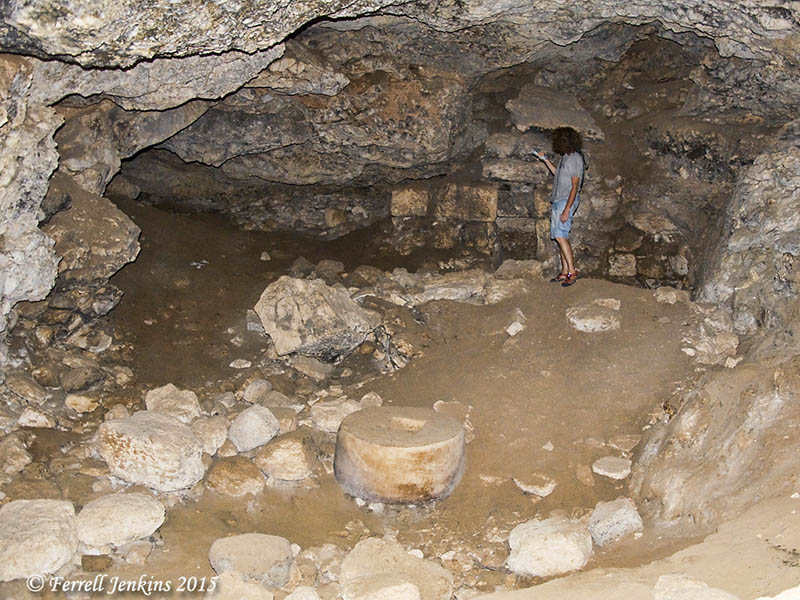
Interior of the cave of Adullam lighted by flash. Photo by Ferrell Jenkins.

Interior of the cave of Adullam lighted by flash. During more recent time the cave was used for a olive press installation. One of the crushing stones is visible in the center foreground. Photo by Ferrell Jenkins.

One more point. Jesus was a descendant of David and Judah, both of whom had an association with Adullam (Revelation 5:5).

Note: if you wish to locate the Adullam cave on Google Earth, search for Aderet, Israel, and then look for the cave. A photo of the cave is identified at 31°39’02.33 N, 35°00’08.53 E.

An earlier post, with two different photos, may be read here.

I hope that our material will make this part of the life of David a bit more real for you as you study the Bible.

Joab and Uriah travel from Jerusalem to Rabbah

Last evening I was looking at the biblical account of David’s battles against the Ammonites (2 Samuel 10-11).

In the spring of the year, at the time when kings normally conduct wars, David sent out Joab with his officers and the entire Israelite army. They defeated the Ammonites and besieged Rabbah. But David stayed behind in Jerusalem. (2 Samuel 11:1 NET)

You probably know the rest of the story. David is attracted to Bathsheba, commits adultery, learns Bathsheba is pregnant, calls Uriah home in hope that he will spend the night with Bathsheba. Uriah acted in the true warrior way by not enjoying the benefits of the marriage bed while his companions were camping in the open field. David sent Uriah back to the battle with a letter to Joab to put Uriah in the forefront of the battle.

Have you thought about the journey made by Uriah and the other Israelite soldiers as they traveled from Jerusalem to Rabbah and back? You know where Jerusalem is located. It is situated on the eastern side of the water parting ridge of Israel at an elevation of about 2400 feet above sea level. Numerous times we have discussed the journey from Jerusalem to the Jordan Valley. See here and here.

The distance from Jerusalem to the Dead Sea is not more than 20 miles. The elevation drops from about 2600 feet at the Mount of Olives to (currently) about 1384 feet below sea level at the surface of the Dead Sea. The point of crossing at the Jordan River would be a little higher. From there one must go up into the Transjordan Tableland to reach Rabbah. The general elevation of the Transjordan Tableland is about 3000 feet above sea level. Amman is about 2500 feet above sea level. That makes this a difficult route of travel.

Rabbah (Rabbath), the capital of ancient Ammon, is the site we now know as Amman, capital of Jordan. During the Hellenistic period the city was renamed Philadelphia.

The total distance from Jerusalem to Rabbah is about 40 miles as the crow flies. Men rarely travel like crows. The distance by road is longer and more difficult.

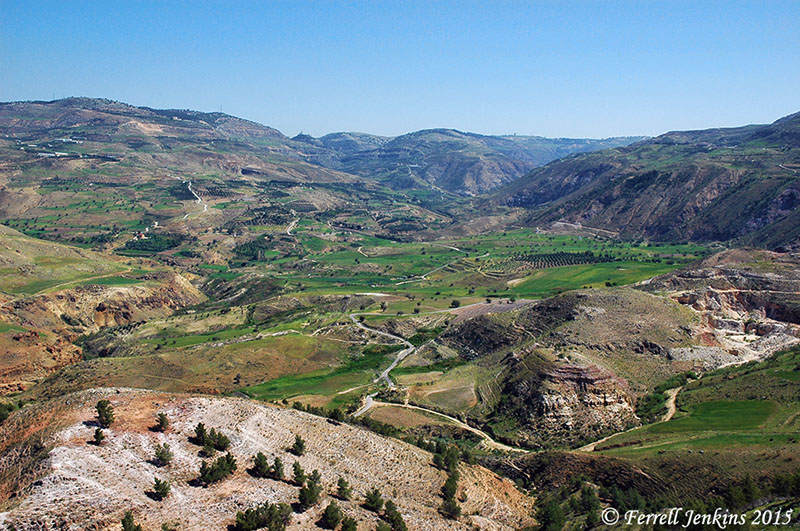
The photo I wish to share today was made in early April. It was made along a road a little east of the Jordan Valley and the Plains of Moab. From here you can see the terrain David’s men, including Joab and Uriah, had to travel on their way from Jerusalem to Rabbah. Modern Amman is located in the mountains we see on the horizon.

View looking east toward Amman. Photo by Ferrell Jenkins.

View looking east toward Amman. Photo by Ferrell Jenkins.

Learning routes of travel is one of the most important values in visiting the Bible lands. I hope this photo will help you with your study of the biblical account.

Reprint from 12/2/10.

A sower went out to sow…

One of the best known parables of Jesus is the parable of the sower and the soils. Note the account recorded in Mark.

 Again he began to teach beside the sea. And a very large crowd gathered about him, so that he got into a boat and sat in it on the sea, and the whole crowd was beside the sea on the land. And he was teaching them many things in parables, and in his teaching he said to them: “Listen! Behold, a sower went out to sow. And as he sowed, some seed fell along the path, and the birds came and devoured it. Other seed fell on rocky ground, where it did not have much soil, and immediately it sprang up, since it had no depth of soil. And when the sun rose, it was scorched, and since it had no root, it withered away. Other seed fell among thorns, and the thorns grew up and choked it, and it yielded no grain. And other seeds fell into good soil and produced grain, growing up and increasing and yielding thirtyfold and sixtyfold and a hundredfold.” And he said, “He who has ears to hear, let him hear.” (Mark 4:1-9 ESV)

Jesus used this simple, easily understood illustration to teach about the word of God and the hearts of men. Read the full account in Matthew 13:3-23, Mark 4:1-20, and Luke 8:5-15.

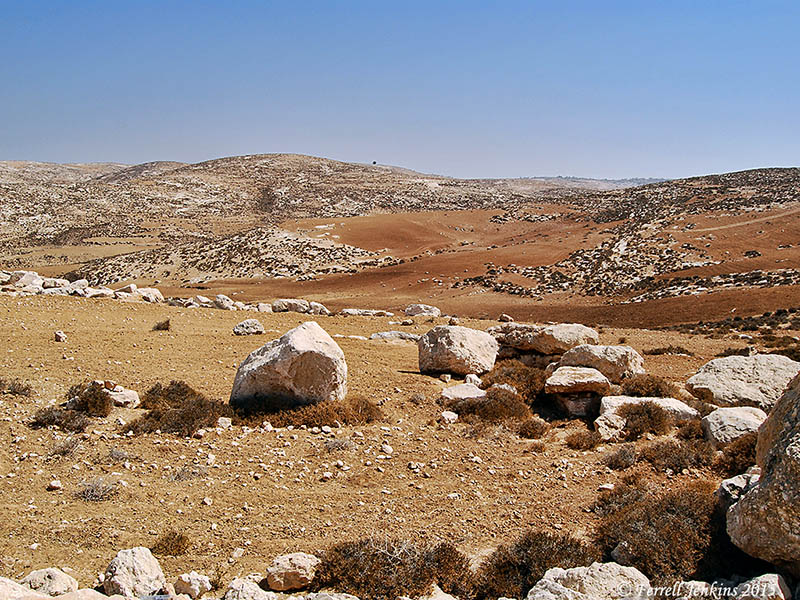
A few years ago I was traveling in the vicinity of Hebron in late August and saw these fields that had been plowed and readied for planting. I assume the crop would be barley or wheat. I was standing on the road. You can see the rocks (be sure the soil is rocky), the weeds (if not thorns), and the good ground. In the time of Jesus seed would be broadcast, scattered by hand. Seed would fall on all the areas, but only that which fell on good ground would bring forth an acceptable crop. Many of the fields in the central mountain range north of Bethlehem are much smaller, but each field has the four elements of good soil, rocks, thorns, and road. How would you describe your heart?

A field showing good soil, rocks, and weeds. Photo by Ferrell Jenkins.

A field showing good soil, rocks, and weeds. Photo by Ferrell Jenkins.

For photos of the area where Jesus likely taught this and other parables, see this post on The Cove of the Sower here.

Egyptian culture evident in discovery near Tel Halif

TTel Halif is located between Hebron and Beersheba in the Negev (Negeb, Negev region, South land or South country).

Abram continually journeyed by stages down to the Negev. (Genesis 12:9 NET)

Now Isaac had returned from Beer-lahai-roi and was dwelling in the Negeb. (Genesis 24:62 ESV)

Tel Halif (= Arabic, Tell el-Khuweifeh). In an article about the Biblical identity of Tel Halif, Oded Borowski points out that this was territory allotted “to the tribe of Simeon (Joshua 19:1-9) and later to the tribe of Judah (Joshua 15:20-32).” He discusses various efforts to equate the site with a site named in the Bible. Borowski narrows his discussion to four main candidates: Sharuhen, Hormah, Ziklag, and Rimmon. He think Rimmon (= En-Rimmon) is the correct choice (Biblical Archaeology Review, Vol. 51, Issue 1). Rimmon is mentioned five times in the Bible (Joshua 19:7; 1 Chronicles 4:32; Joshua 15:32; Nehemiah 11:29; Zechariah 14:10). I am not in a position to venture even a guess.

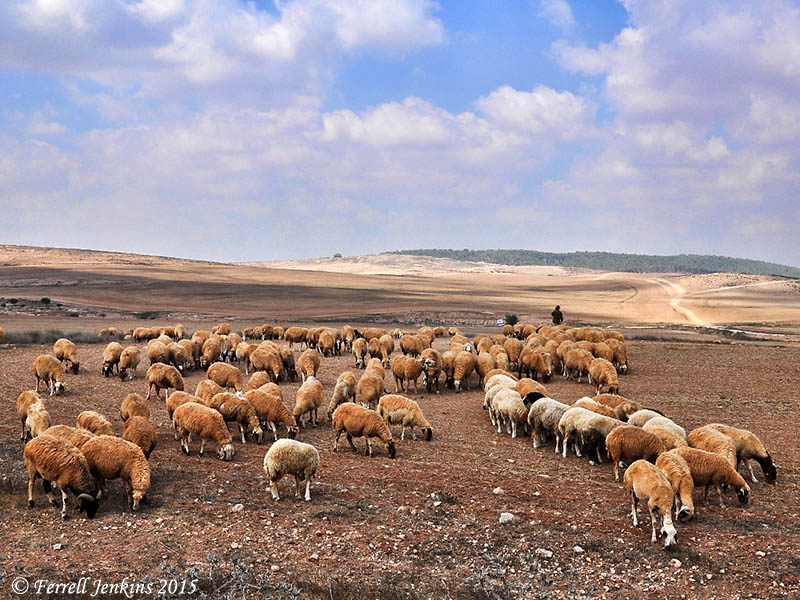
The photo below shows the terrain near Tel Halif, north of Beersheba.

Sheep in the Negev near Tel Halif. Photo by Ferrell Jenkins.

Sheep in the Negev near Tel Halif. Photo by Ferrell Jenkins.

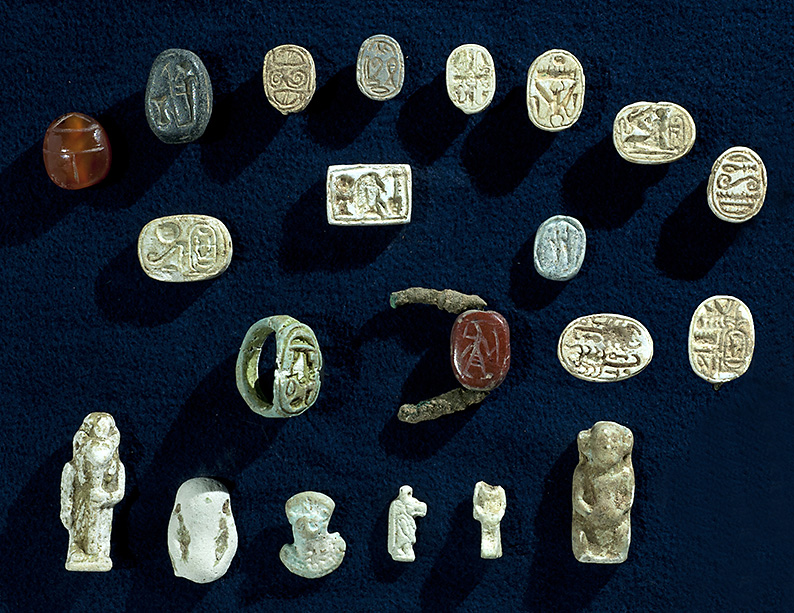
The Israel Antiquities Authority announced today the discovery of artifacts excavated from a cave near Tel Halif, in the region of Kibbutz Lahav, in the south of Israel.

The artifacts included “seals, seal rings, figurines and amulets in the image of gods sacred to the Egyptian culture.” The archaeologists say,

The collection indicates “the presence of an administrative center that existed in the region.”

Other artifacts discovered included seal rings made of faience and a wealth of figurines and amulets in the image of gods sacred to the Egyptian culture.

A collection of artifacts with characteristics of the Egyptian culture, which were discovered in the excavation. Photographic credit: Clara Amit, courtesy of the Israel Antiquities Authority.

A collection of artifacts with characteristics of the Egyptian culture, which were discovered in the excavation. Photographic credit: Clara Amit, courtesy of the Israel Antiquities Authority.

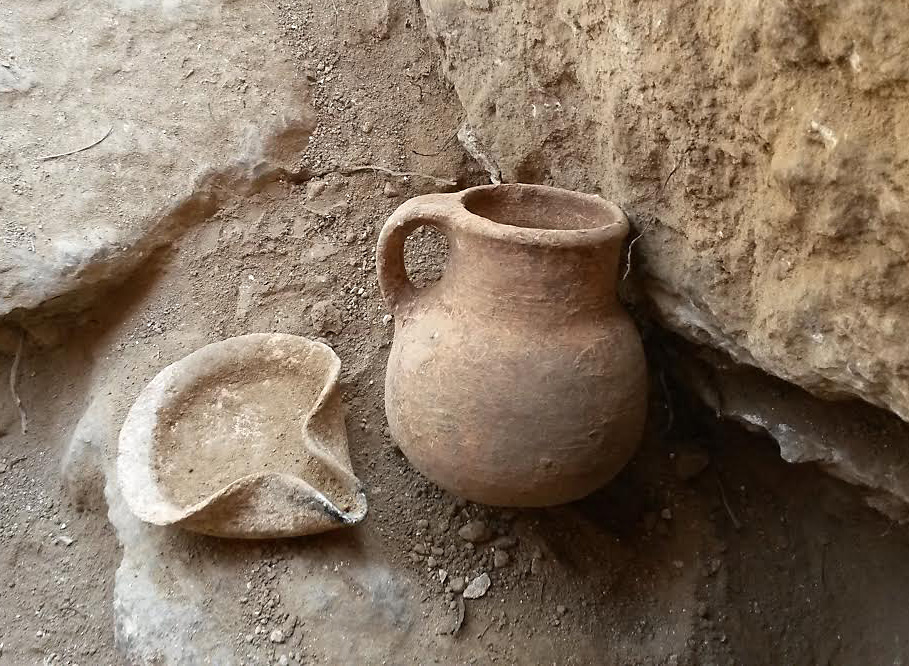
Items dating as late as the Iron Age were also found during the excavation conducted by the Unit for the Prevention of Antiquities Robbery of the IAA. The excavation followed the discovery that the cave had been plundered.

An oil lamp and a ceramic jar that date to the Iron Age, which were discovered in the cave. Photographic credit: the Unit for the Prevention of Antiquities Robbery of the Israel Antiquities Authority.

An oil lamp and a ceramic jar that date to the Iron Age, which were discovered in the cave. Photographic credit: the Unit for the Prevention of Antiquities Robbery of the Israel Antiquities Authority.

According to Dr. Daphna Ben-Tor, curator of Egyptian archaeology at the Israel Museum,

“Most of the scarab seals found in the excavation date to the fifteenth–fourteenth centuries BCE. During this period Canaan was ruled by Egypt”. Dr. Ben-Tor adds, “The names of kings appeared on some of the seals. Among other things, we can identify a sphinx lying opposite the name of the pharaoh Thutmose who reigned from about 1504–1450 BCE. Another scarab seal bears the name of Amenhotep who reigned from about 1386–1349 BCE. Still another scarab depicts Ptah, the principal god of the city of Memphis.”

The Biblical record indicates Egyptian influence in Israel as late as the Iron Age.

 (Pharaoh, king of Egypt, had attacked and captured Gezer. He burned it and killed the Canaanites who lived in the city. He gave it as a wedding present to his daughter, who had married Solomon.) (1 Kings 9:16 NET)

The prophet Isaiah warned about reliance on Egypt in the 8th century B.C. (Isaiah 30:1-5).

HT: Joseph Lauer