Category Archives: Archaeology

The Arabah – Keturah, the home of Methuselah

Methuselah is the oldest man mentioned in the Bible, but his namesake now lives at Keturah in the Arabah.

Thus all the days of Methuselah were 969 years, and he died. (Genesis 5:27 ESV)

His namesake is a male date palm grown from a seed discovered during the excavations by Prof. Yigal Yadin at Masada in the 1960s.

Getting to Keturah to see the palm is rather easy if you are traveling south (or north) on Highway 90.
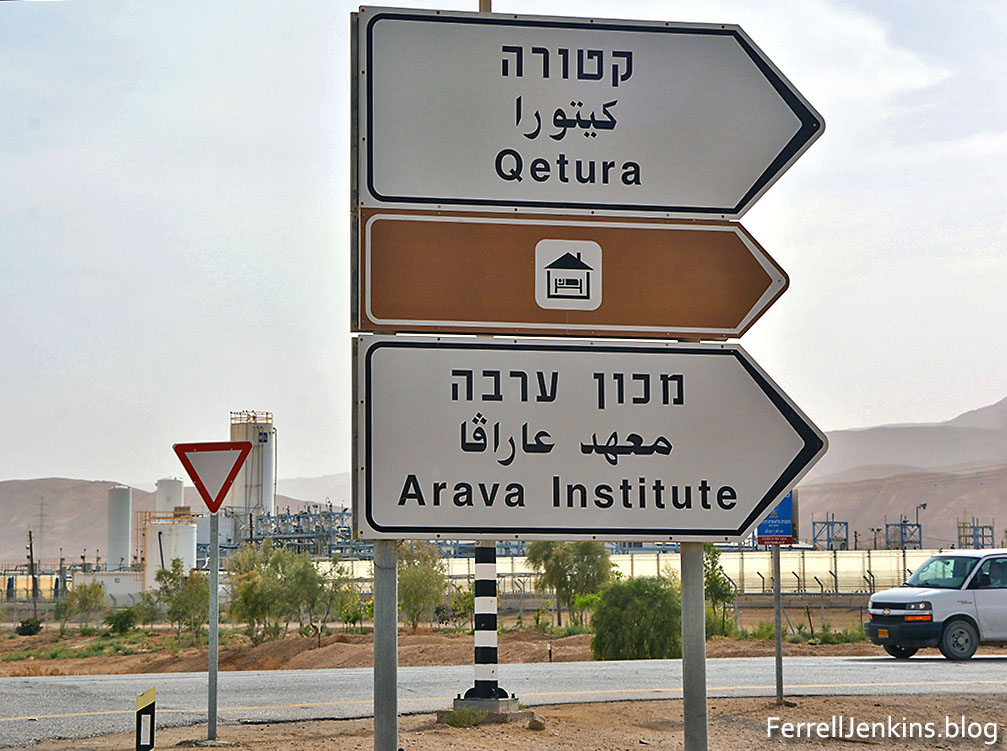
This sign on Highway 90 prominently marks the entrance to the Arava Institute. Photo by Ferrell Jenkins.

This sign on Highway 90 prominently marks the entrance to the Arava Institute. Notice the spelling of Ketura with a Q.. Photo by Ferrell Jenkins.

If you are using your phone or other device as a GPS you can just ask for directions to the “Ketura Ancient Palm” and it should direct you to the right place. (Disclaimer: it worked for us.) Note the spelling of Ketura as Qetura.

My GPS on the camera shows 29 58.0659’N, 35 3.5999’E, and here is the location on Google Earth Pro.
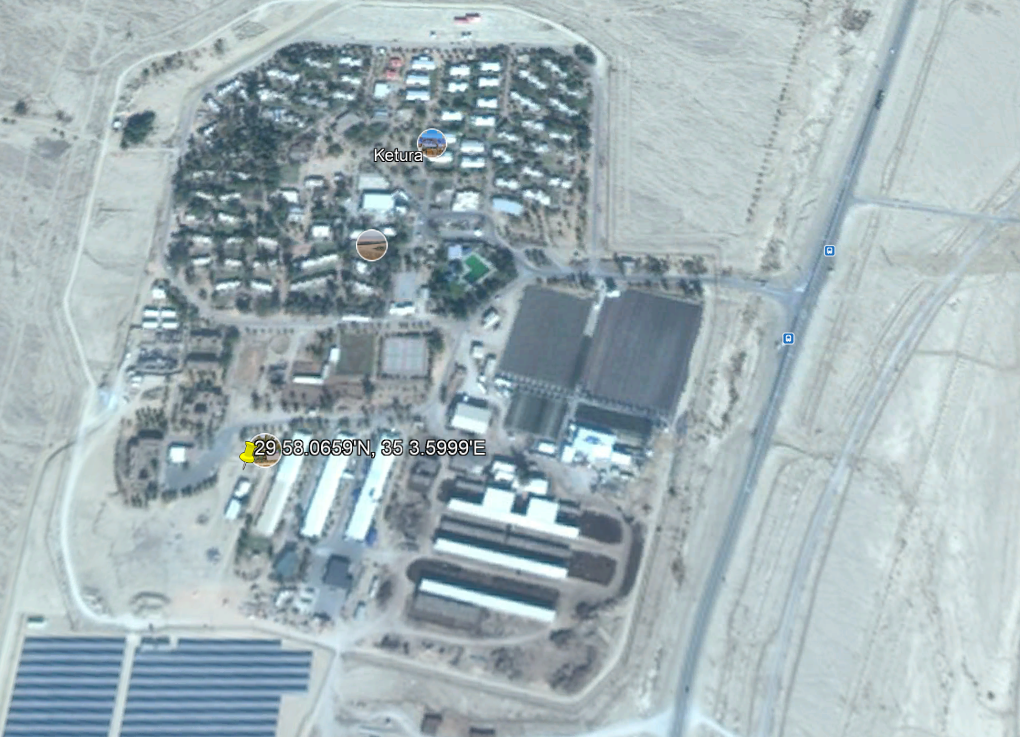
The Google Earth Pro location for the Ancient Palm.

The Google Earth Pro location for the Ancient Palm.

But, I am a little ahead of myself. As we drove into the village from Hwy. 90 we noticed a lady dressed in white walking on the left side of the street. We stopped, asked about the ancient palm and were told to continue to a parking lot and the palm would be on our left. Best directions we received the entire trip. Most people just say “go straight and then ask.”

After we arrived at our destination we saw the woman who had given us directions coming our way. She was Dr. Elaine Solowey, director of the Arabah Institute. Leon Mauldin and I were delighted to hear firsthand from her the things we had read about the palm.
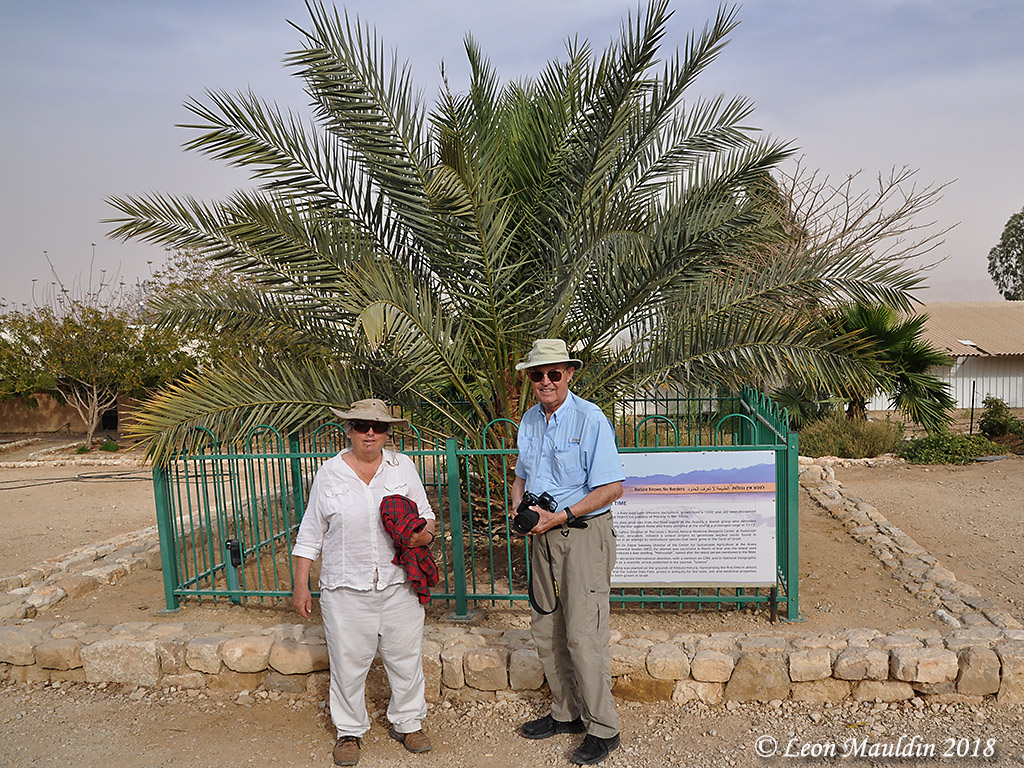
Ferrell Jenkins listening to the history of "Methuselah" from Dr. Elaine Solowey. Photo by Leon Mauldin.

Ferrell Jenkins listening to the history of “Methuselah” from Dr. Elaine Solowey.

A sign attached to the fence around the palm tells the story more succinctly than I can. It is titled “A Date With Time.”

—  “ —

“Methuselah” – a male date palm {Phoenix dactylifera}, grown from a 1,900 year old seed discovered during Prof. YigalYadin’s excavations of Masada in the 1960s.

It is likely that this date seed was from the food supply of the Zealots, a Jewish group who defended the fortress during the war against Rome and finally perished at the end of a prolonged siege In 73 CE.

In 2005, Dr. Sarah Sallon, Director of The Louis L. Borick Natural Medicine Research Center at Hadassah Medical Organization, Jerusalem, initiated a unique project to germinate ancient seeds found in archaeological sites in an attempt to reintroduce species that once grew in the Land of Israel.

In conjunction with Dr. Elaine Solowey, Director of the Center for Sustainable Agriculture at the Arava Institute for Environmental Studies (AIES), the attempt was successful. In March of that year the oldest seed ever germinated produced a date seedling, “Methuselah”, named after the oldest person mentioned in the Bible.

“Methuselah” then attracted International attention, with a mention on CNN and in National Geographic Magazine as well as a scientific article published in the journal, “Science”.

In 2011, the seedling was planted on the grounds of Kibbutz Ketura, representing the first time in almost two millennia that the Judean Date Palm, prized in antiquity for the taste, size and medicinal properties of its fruit, has been grown in Israel.

—  ” —

In additional reading, I have picked up a few interesting points that our readers will appreciate.

A 2017 article by Stephanie Buck in Timeline reports that the seed found in the jar at Masada was tested by carbon dating.

Back at the lab, scientists broke off tiny chips of the seeds’ shells; carbon dating estimated their origin between 155 BC and 64 CE.

More interesting facts from the Timeline article:

Solowey got to work. First, she soaked the seeds in hot water to activate absorption. From there, she bathed them in nutrients and fertilizer made from seaweed. She chose the Jewish holiday, New Year for Trees, which in 2005 fell on January 25, as the day to plant. After a few months, she noticed a crack in the soil…then a sprout.”

In 2011 the palm flowered, but because it is male there was no fruit.

Solowey and her team “mated him with modern female date plants. His seed is healthy. ‘We got fruit and some 50% ancient date trees,’ says Solowey.”

Solowey explained to us that shoots from this palm could also be planted. When they are able to mate him with a female, then the fruit will be 100% ancient.

“Both the Bible and the Koran praise the date palm. The tree provided shade, food, and medicine. In the “land of milk and honey,” dates were the honey. The fruit was large, dark, and very sweet, says Solowey. It had good “shelf life” and was in high demand in Rome.”

“Roman emperors wanted Judean dates for their tables,” Solowey told Timeline. “Since they had absolutely nothing else good to say about Jews, Judea, or Judaism, I assume they were very good dates.”

“The ancient fruit made tonics for longevity, laxatives, and aphrodisiacs; lore claims they could cure infections. The date was so important to the region that it featured on ancient coinage, and even on Israel’s 10-shekel coin today. But 800 years ago, crusaders destroyed the last Judean palm and rendered the plant extinct. Dr. Sallon hopes Methuselah is the key to medicinal remedies once lost to history.”

When the Romans captured Judea and destroyed the temple the emperors portrayed the captives siting under a date palm. Earlier, Herod the Tetrarch (Luke 23:7), some of the Roman prefects, including Felix (Acts 23-25),  used the palm on their coins. We also see it on the Israeli 10 New Shekel coin.
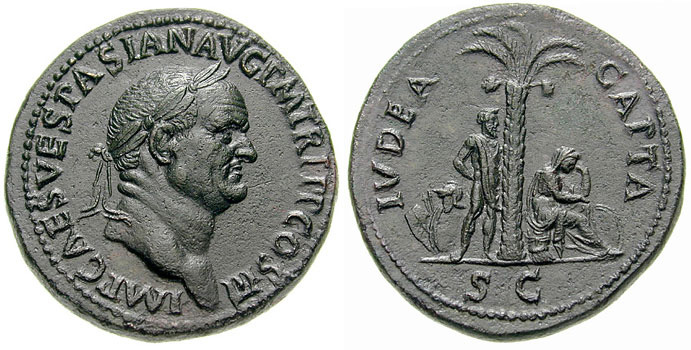
Vespasiano_Sesterius_Iudaea_Capta-RIC_0424

Vespasiano_Sesterius_Iudaea_Capta-RIC_0424. From Wikimedia Commons.

Dr. Solowey ask if we would like to see some frankincense, balm, and myrrh plants in the hothouse. We were astonished when we entered the hothouse and saw those as well as several young potted palms.
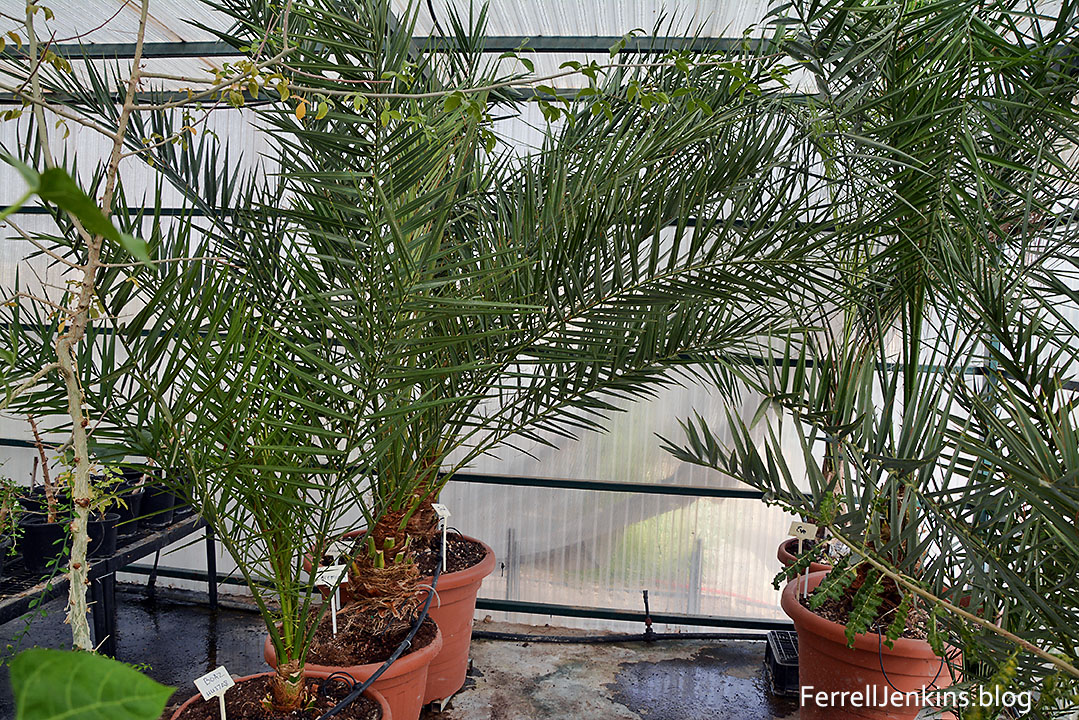
In the hothouse at Ketura we saw these growing young palms. Photo by Ferrell Jenkins.

In the hothouse at Ketura we saw these growing young palms. Photo by Ferrell Jenkins.

The names were fascinating. I assumed the one named Eve was the first female plant. Others were labeled Ruthi, Boaz, Jeremiah, and Judah. We will patiently await the mating of Methuselah with one of these girls.

There is more to tell about other plants we saw in the hothouse, but that will need to wait for another time. I will tell you that Dr. Solowey mentioned one of her books to us. Trees of Fragrance and Mystery is available from Kindle. I have enjoyed the portions that I have read, especially about frankincense, balm, and myrrh.

We saw and learned more than we had hoped for at Keturah. I want to go back in a few years in the summer as my wife and I did in 2008 and see Methusaleh’s “wife” like this.
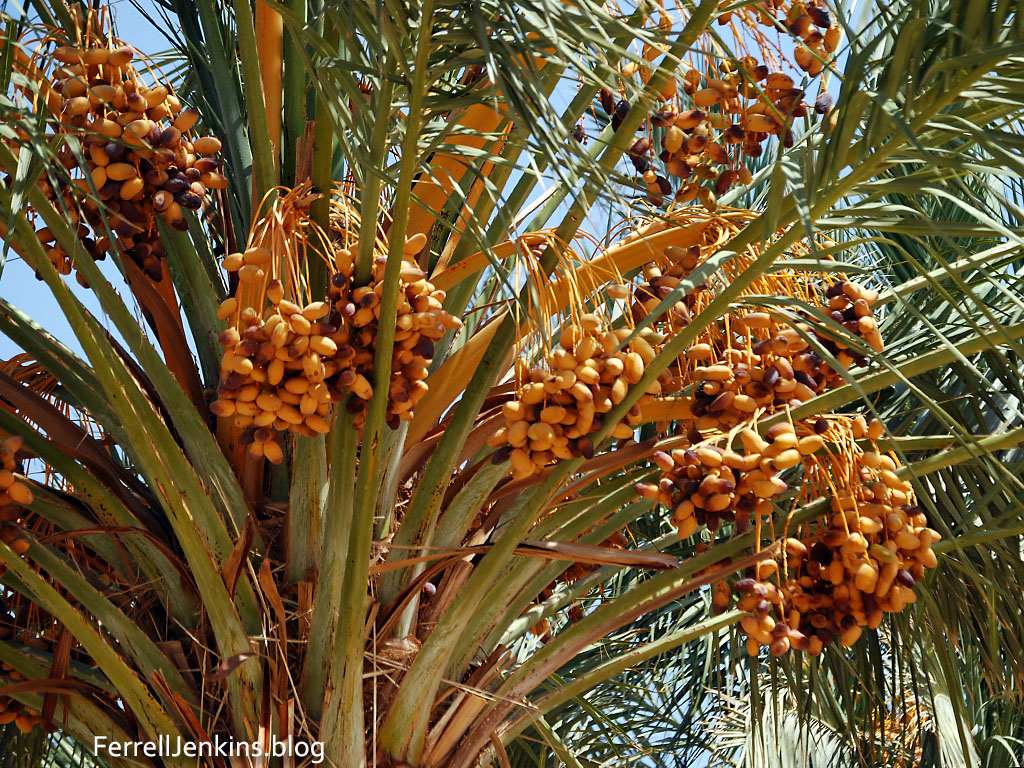
Arabah date palm in August 2008. Photo by Ferrell Jenkins.

Arabah date palm in August 2008. Photo by Ferrell Jenkins.

I wanted to add one more thought about dates being the honey of the Bible. There is little evidence for beekeeping in the promised land, but the discovery of a commercial apiary at Tel Rehov in the Jordan Valley has provided more information. Here is the summary by the excavators, Mazar and Panitz-Cohen.

The term “honey” appears fifty-five times in the Bible, sixteen of which as part of the metaphor of Israel as “the land of milk and honey.” This honey has been always understood as having been produced from fruits, such as dates and figs, with bees’ honey mentioned explicitly only twice, both times in relation to wild bees (Judg 14:8–9 and 1 Sam 14:27). However, careful reading of biblical metaphors mentioning honey led Forti (2006) to suggest that they refer mostly to bee’s honey, through in her view, due to the lack of agriculture in the Bible, the references are to honey collected in nature. Indeed, in no case does the Bible mention bee rearing as a productive industry. The discovery of the beehives at Tel Rehov shows that this was a well developed economic branch during the First Temple period. We can now assume that at least some of the notations of honey in the Bible pertain to bees’ honey. (Mazar, Amihai and Nava Panitz-Cohen. “It is the Land of Honey: Beekeeping at Tel Rehov.” Near Eastern Archaeology 70:4 (2007): 213-214.

Rehov was not an Israelite site.

We are headed to Eilat, the southernmost tip of the Arabah in Israel. I am not sure if our next post will be about Eilat or if we will stop at Timna on the way. Thanks for following the blog.
The Arabah: Has Tamar, Solomon’s desert fortress, been located?

The Tamar Biblical Park is located about 20 miles south of the southern end of the Dead Sea. We can suggest several reasons why the site was settled in many biblical periods. The spring at the site made it immediately attractive to travelers, and in fact the site was “the central gateway from Edom and Arabia enroute to Beershebe and Ashkelon for incense and copper trade” (Bowman, Biblical Tamar, Bible and Interpretation).

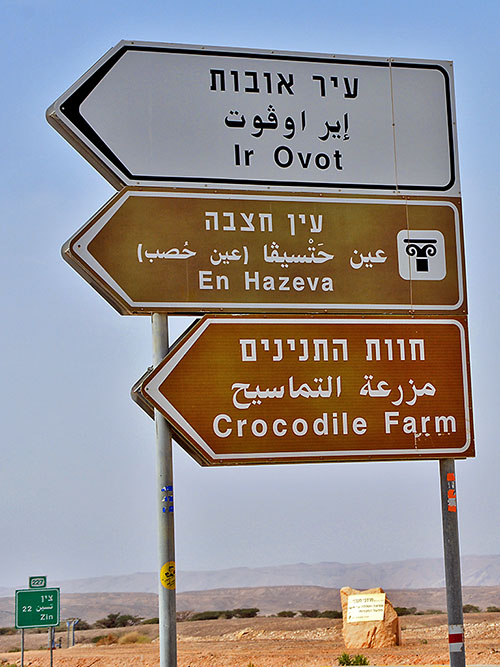
Road sign on Hwy 90 at the junction with Hwy 227. The site is at Hazeva. Photo by Ferrell Jenkins.

Road sign on Hwy 90 at the junction with Hwy 227. The Biblical Tamar Park is at En (spring) Hazeva. In earlier years there was a now-defunct kibbutz named Ir Ovat because the founders thought this was the site of biblical Oboth, one of the places the Israelites camped when they wandered in the wilderness (Numbers 21:10). Photo by Ferrell Jenkins.

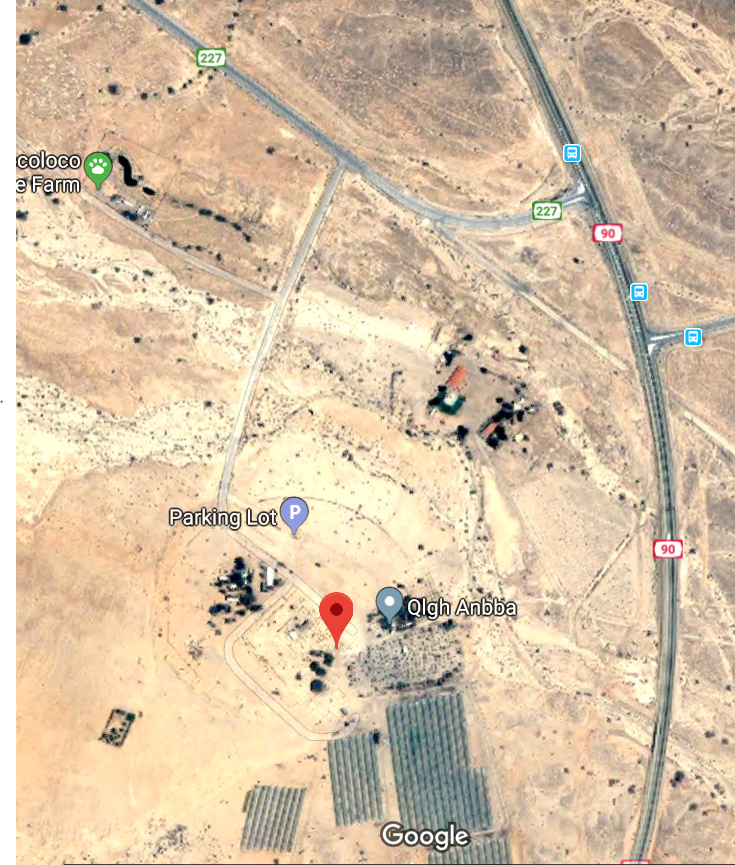
I have a Promote GPS device which I sometimes use with my camera. If I am patient and take time for it to connect to satellites I can usually be assured of about one out of four shots showing the location as well as the elevation. The elevation here is 137 meters (about 450 feet) below sea level.

The GPS location of Tamar Biblical Park.

The GPS location of Tamar Biblical Park.The red pointer is at the Iron Age gate. Enter 29 58.0659’N, 35 3.599 9’E in Google Earth.

The Biblical Tamar Park is curated by a private Christian group called Blossoming Rose, but excavations were carried out under the direction of the Israel Antiquities Authority. A source tells me that the IAA did not show much interest in the site even though they acknowledge the importance of the discoveries. One can understand why a site like this which is not on the main tourist routes would be of less interest than those that are.

The Blossoming Rose organization has placed nice signs to identify the various periods under consideration. Instead of just referring to the Bronze Age or the Iron Age, Blossoming Rose mentions the seven historic periods that are identifiable here. (1) Abrahamic Period; (2) Moses Period; (3) Israelite Period; (4) Roman-Christian Period; (5) Islamic Period; (6) British Period; (7) Israeli Period.

The Bible says that Solomon built Tamar in the wilderness.

so Solomon rebuilt Gezer) and Lower Beth-horonand Baalath and Tamar in the wilderness, in the land of Judah, (1 Kings 9:17-18 ESV)

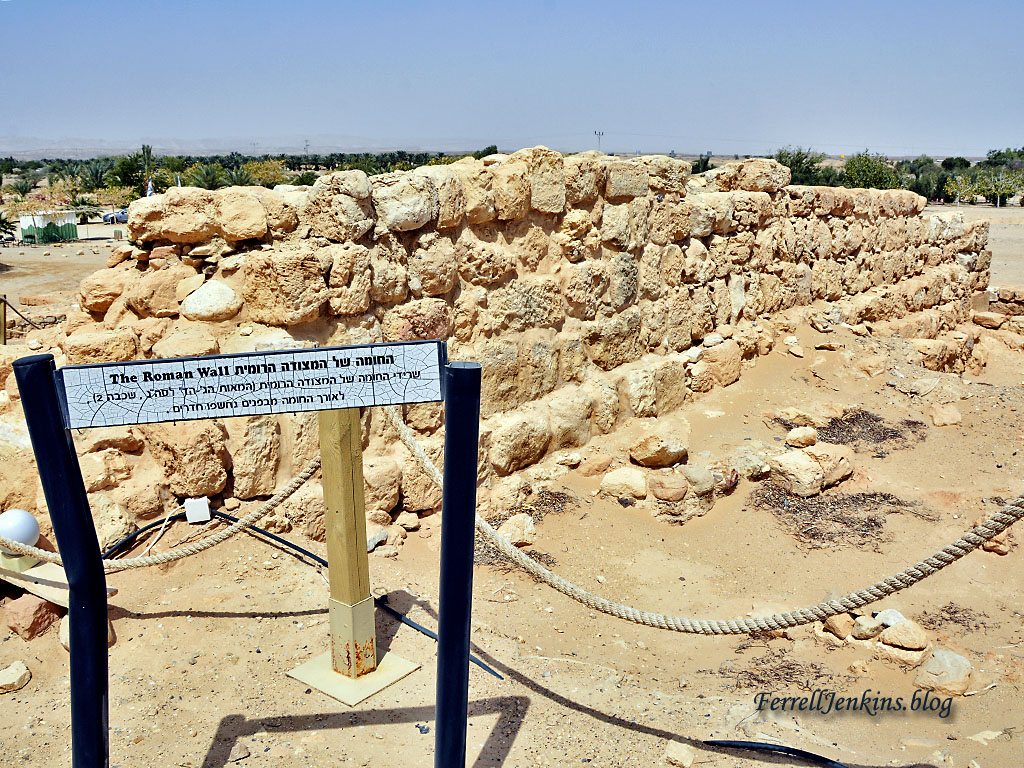
Could this be that site? It is possible. I must be selective in the photos I present. Here goes. The first one is of a Roman period wall. There is also a large cistern dating to this period. And, yes, the Romans built a bath at Tamar.

A Roman Wall at Tamar Biblical Park. Photo by Ferrell Jenkins.

Portion of a Roman wall at Tamar. Photo by Ferrell Jenkins.

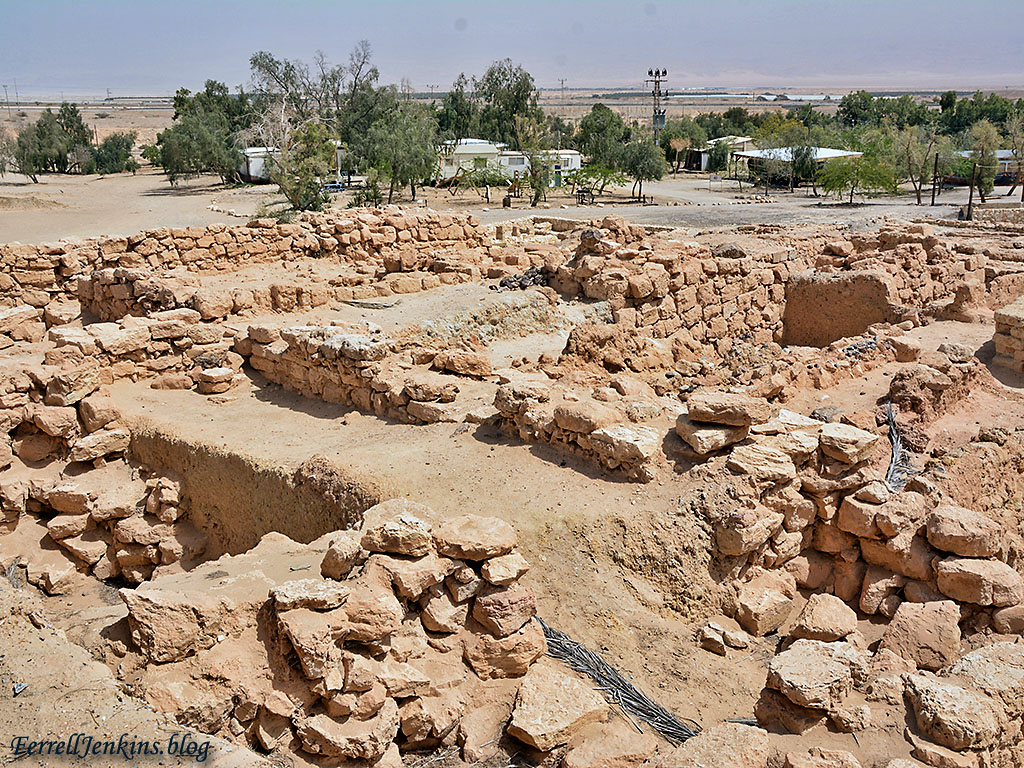
The next photo shows the ruins of what is called the Hazeva Fort, a structure said to date to the 10th century B.C., the time of King Solomon.

An Iron Age fortress at Tamar. Photo by Ferrell Jenkins.

Fortress dating to the time of King Solomon at Tamar. Photo by Ferrell Jenkins.

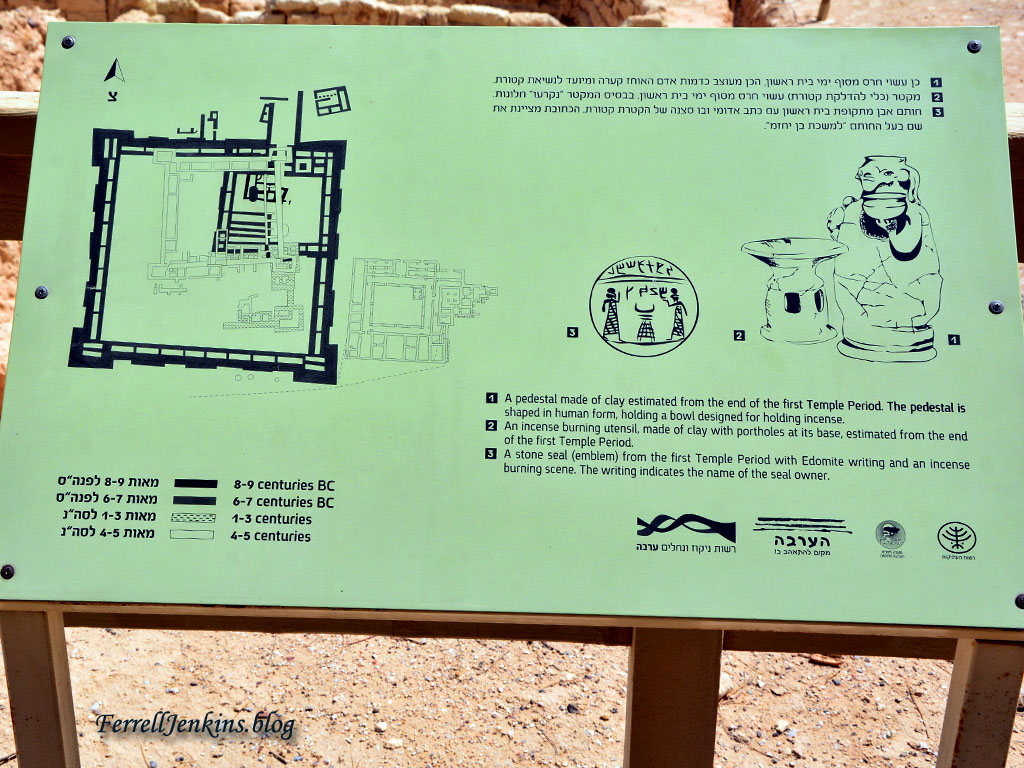
This sign shows the footprint of the fortress during various periods as well a drawing of an Edomite stone seal from the first Temple Period with Edomite writing and an incense burning scene.

Sign at Tamar showing layout of the Iron Age fortress. Photo by Ferrell Jenkins.

Sign at Tamar showing layout of the Iron Age fortress and some artifacts belonging to the Edomites. Photo by Ferrell Jenkins.

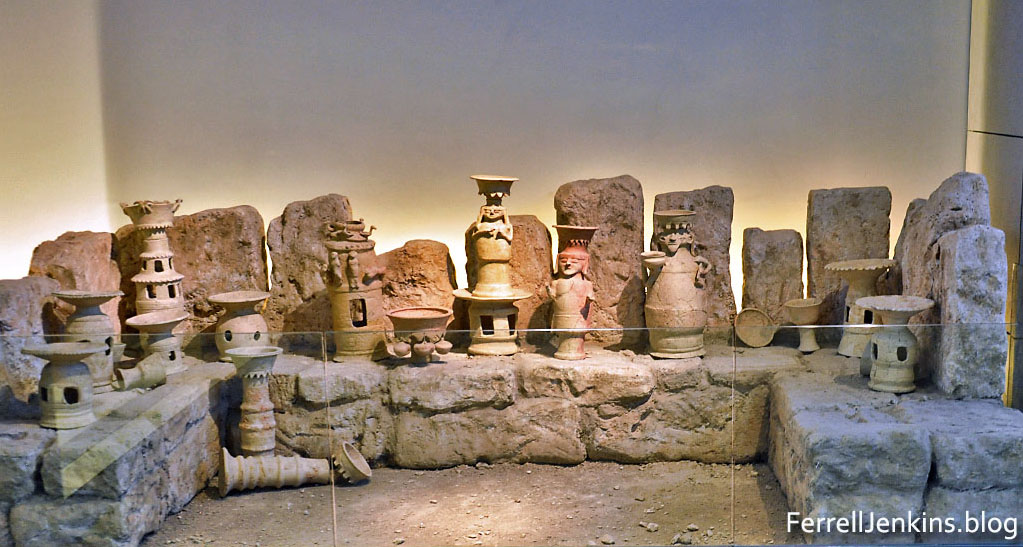
On the right side of the sign above there is a drawing of “an incense burning utensil.” The Edomite shrine is displayed in the Israel Museum, Jerusalem. The Chronicles of the Land: Archaeology in The Israel Museum Jerusalem says,

Tangible evidence for foreign cults has been revealed at Hazeva in the Arava, where a pit containing ritual objects from an Edomite shrine was discovered. The objects, offerings brought to the shrine, had been deliberately smashed after they could no longer be used and buried in the pit. Among them were human shaped ritual stands, which may have represented the worshipers themselves. These objects highlight one of the sharp contrasts between Edomite and Judahite public worship, the latter avoiding the human image. (p.77)

Many see this destruction in the light of the reforms of King Josiah of Judah (2 Kings 23).

The ritual stands found here date to the late 7th – early 6th century B.C. Our next photo shows the display in the Israel Museum.

Edomite shrine assemblage from Hazeva (Tamar) in the Israel Museum. Photo by Ferrell Jenkins.

Edomite shrine assemblage from Hazeva (Tamar) in the Israel Museum. Photo by Ferrell Jenkins.

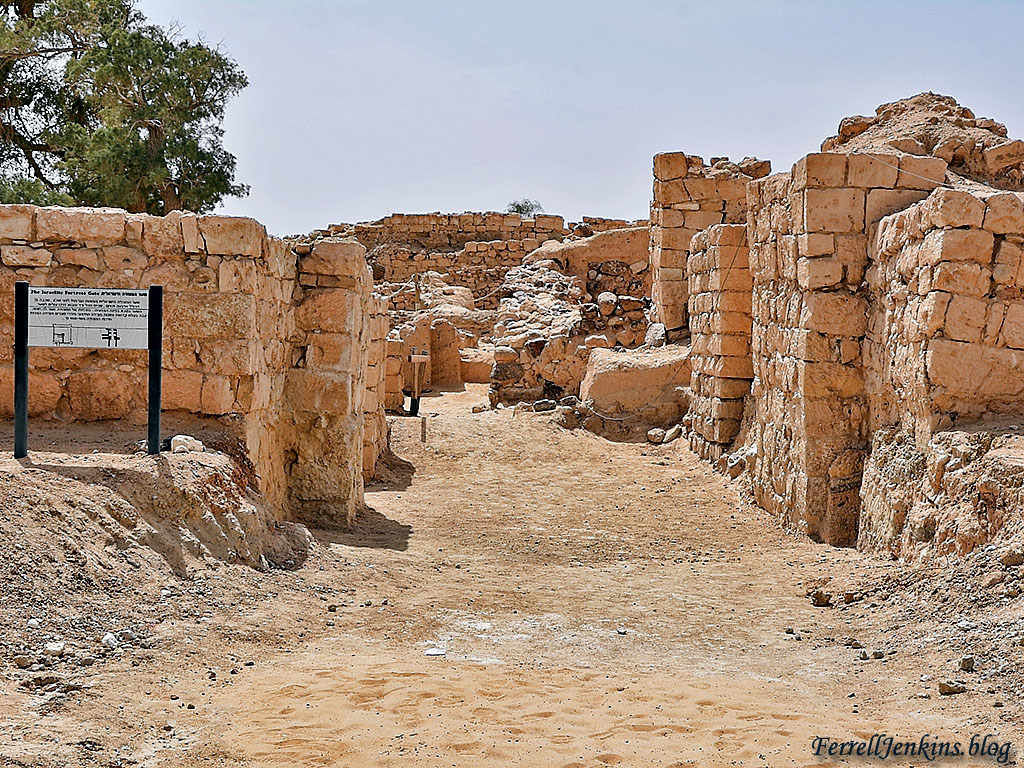
The next photo may show the prize of Tamar, a four chamber gate which is labeled as the Israelite Fortress Gate.

Iron Age gate, possibly Solomonic, at Tamar. Photo by Ferrell Jenkins.

Iron Age gate, possibly Solomonic, at Tamar. Photo by Ferrell Jenkins.

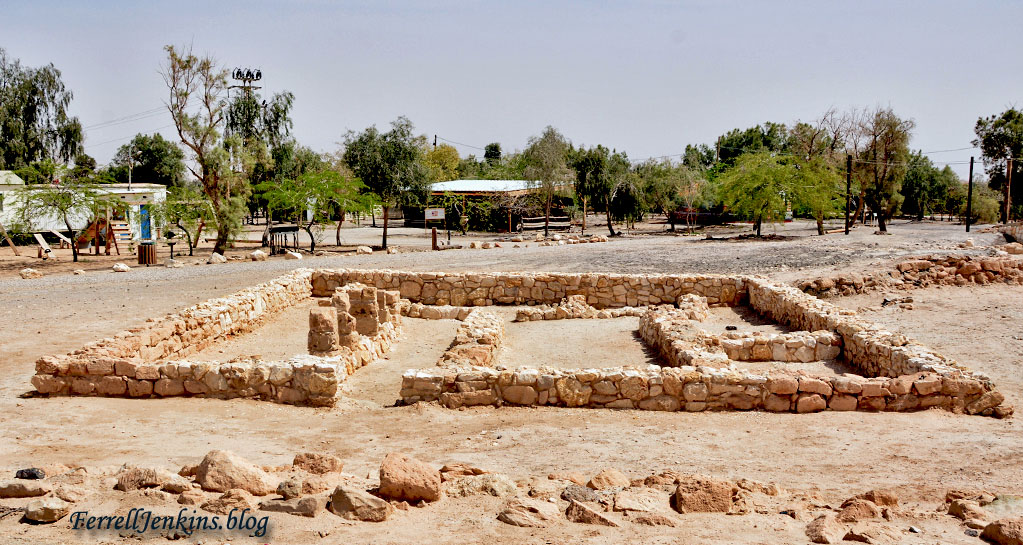
I was impressed with the four-room house. Avraham Faust describes the four-room house.

The term four-room house is a generic term which refers to a new type of house which became extremely popular and dominant during the Iron Age. The “ideal type” of this structure is a long house with four main spaces or areas: a broad room at the back, and three long spaces stemming forward from it. These long rooms were typically (though not always) divided by a combination of stone pillars and walls. The entrance was usually located in the central (long) room. Not all houses, however, follow precisely this “ideal” plan, and there is some variation, mainly in the number of long rooms. One can therefore refer to three-, four-, and five-room houses (though all subtypes are usually referred to by the name “four-room house”). Variation also exists in the form of inner division(s) of the rooms, due probably to the lifecycle of the family. Apart from this, the basic plan is quite rigid and easy to identify. (Encyclopedia of the Bible, p. 564).

Four room house at Tamar. Photo by Ferrell Jenkins.

Four room house at Tamar. Photo by Ferrell Jenkins.

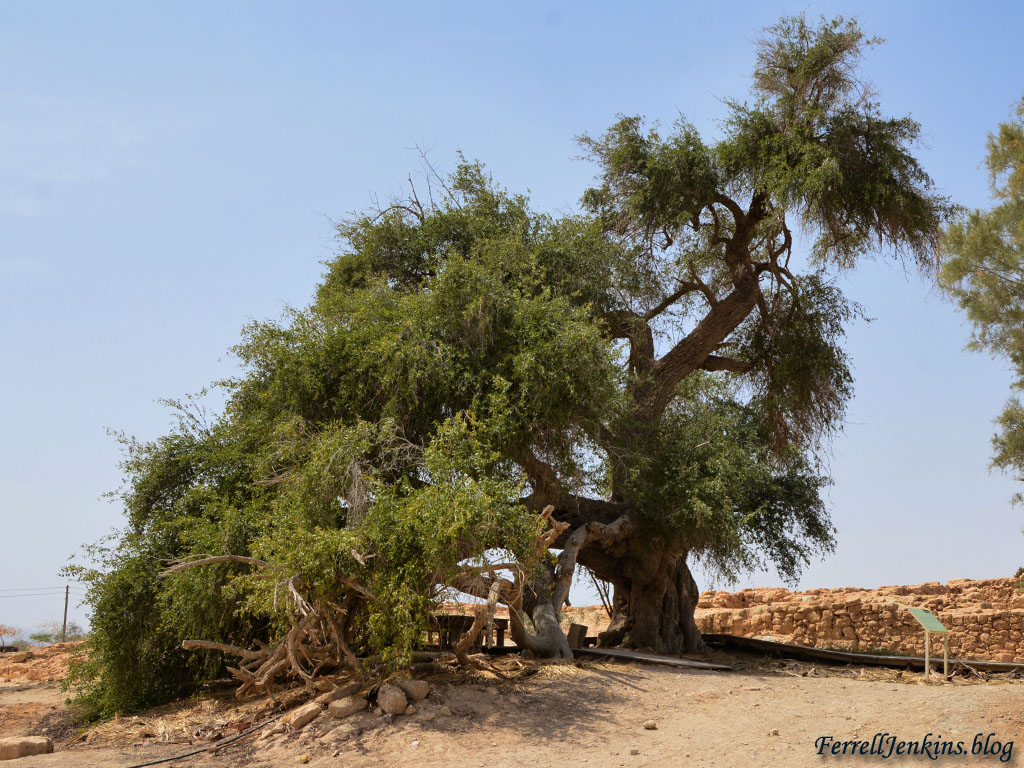
Next to water, shade is one of the most important things for settlers and travelers. There is a large Jujube tree, better known by  it’s technical name Ziziphus spina-christi, Christ’s thorn Jujube. Ami Tamir includes a photo and description of this tree in his Sacred Flowers: Holy Trees & Blessed Thorns (pp. 89-92). We reviewed this Carta Guide Book here. Tamir explains how the thorns develop on the tree.

A Jujube tree at Tamar, said by some to be the oldest tree in Israel. Photo by Ferrell Jenkins.

A Jujube tree (Ziziphus spina christi) at Tamar, said by some to be the oldest tree in Israel. The popular name for this tree is Thorn of the Messiah. Photo by Ferrell Jenkins.

The Pictorial Library of the Bible Lands includes several good photos of Tamar in the volume on Negev and the Wilderness. See details here.

BibleWalks.com includes several good drone aerial photos in their discussion of Tamar.

I trust you have enjoyed our lengthy visit to Tamar Biblical Park. Our next stop is planned for Keturah where we will see the ancient palm named Methuselah.

Some recommended resources

Sale Deadline on The Book of Ruth collection

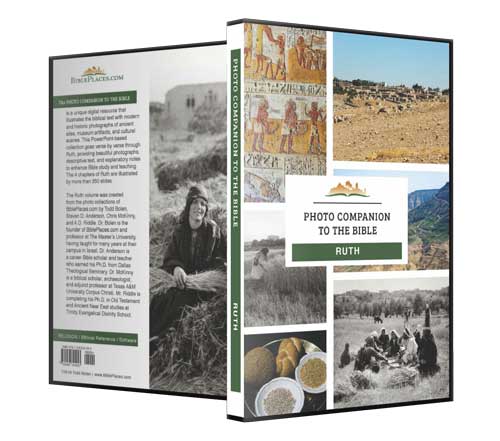
If you received the BiblePlaces Newsletter for April  a few days ago you already know about the new volume in the Photo Companion of the Bible series. This one is on The Book of Ruth. I received a complimentary advance copy and found some of this material to be helpful on the recent study trip to Jordan. I am confident that anyone studying or teaching the book of Ruth will find the material helpful. You can download the recent BiblePlaces Newsletter filled with much helpful information here.

Available through April 22 for $20.

There are 350 images in PowerPoint to illustrate the four chapters of the Book of Ruth. The collection is on sale until midnight April 22 for $20. Bolen says, “Shipping is free in the US and satisfaction is guaranteed.” Go here for ordering information. Take a look at the four volume set on the Gospels.

Appian Media Producing New Series

Our friends at Appian Media have already produced a wonderful set of high-quality videos entitled Following the Messiah. They will soon be returning to Israel to film a new series dealing what many of us call the Biblical period of the United Kingdom. The series will be called Searching for a King.

Appian Media Searching for a King

Filming for this series begins very soon.

Appian Media provides membership access to their material, and they are seeking donations to assist in the work. See details here. Some videos are available for viewing on the website.

A New Video on Lachish

Lachish: The Epic Unearthed, a 48 minute video about the history and excavations of the biblical city of Lachish has been produced by Dr. Robert Henry and Rachel Martin. Henry summarizes the film:

This documentary brings you into the exciting world of Biblical Archaeology as it reveals the history of one of the largest Old Testament cities and tells the story of the volunteers who dig it up. This epic story reveals the turbulent warfare of the first temple period of Biblical history, the discoveries that expand the Biblical narrative and the impact this experience had on the people who came to Israel to dig. Watch as these determined volunteers unearth a Biblical land mark that hasn’t been touched in over two thousand five hundred years.

The video features comments by Prof. Yosef Garfinkle and Prof. Michael Hasel, directors of the fourth excavation at Lachish, as well as interviews with some of those working on the dig including my friend Luke Chandler.

Some viewers will be unfamiliar with the pronunciation of such sites as Lachish and Azekah. Instead of Lake-ish and ah-ZECK-ah, you will hear LAH-KISH and AZ-e-kah, pronunciations more common in Israel.

I am thankful to have provided a few of my aerial photographs for the video. Henry and Martin encourage you to use this video in your teaching and for personal study free of charge.

Walking the Bible Lands with Dr. Wayne Stiles

Wayne Stiles, whose web site we have mentioned several times, is now developing a video series called Walking the Bible Lands. This is old hat for Wayne who had been traveling to the Bible lands, teaching and writing about them for many years.

Wayne’s new material is available on a membership arrangement. Detailed information is available at his Walking the Bible Lands website here. You will find some samples there.

Has the seal of Isaiah the prophet been found?

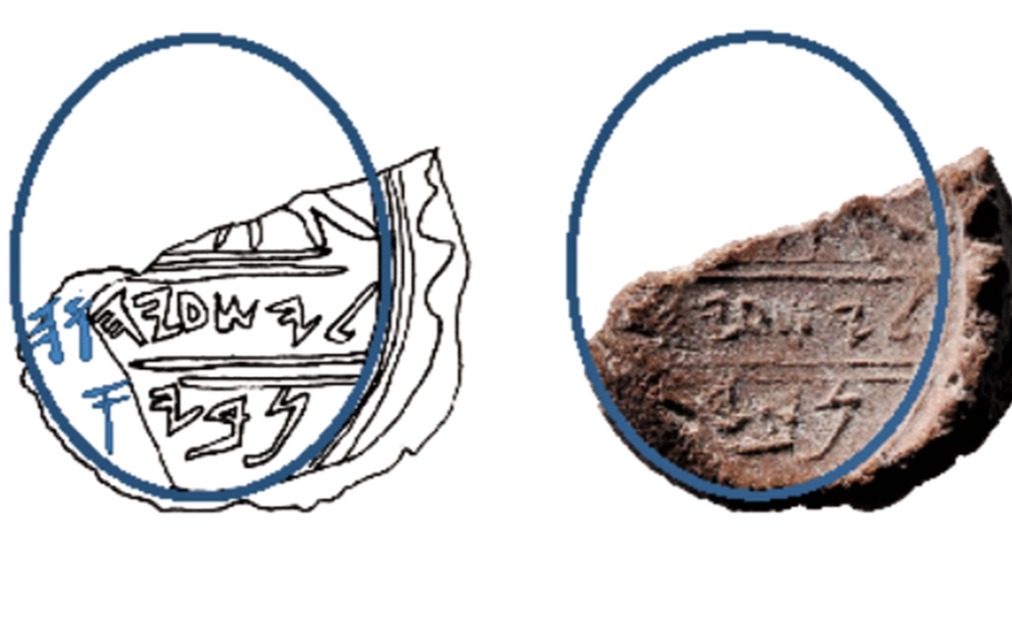
The discovery of a bulla (seal impression) possibly bearing the name of the prophet Isaiah is announced by Eilat Mazar in the current issue of Biblical Archaeology Review (44:2, March/April; May/June 2018). I am not sure if this article is available to non-members of the BAS Library, but you may try this link.

This discovery was made nearly 10 years ago in the Ophel area south of the Temple Mount. Mazar announced the discovery of a bulla bearing the inscription “Belonging to Hezekiah [son of] Ahaz king of Judah” in 2015, and we reported it here with a nice photograph of the seal impression.

Now, imagine the excitement when the researchers found the name Isaiah on a bulla. Mazar says that Isaiah was a common name, but with the possibility that this particular Isaiah is called the prophet, that is super exciting.

Just one problem. One, or possibly two letters, are missing from the word for prophet. A National Geographic article by Kristin Romey explains,

The seal is impressed in Old Hebrew script with the name Yesha‘yah[u] (the Hebrew name of Isaiah), followed by the word nvy.

Because the seal is damaged at the end of the word nvy, Mazar suggests that our reading may be incomplete. If nvy was originally followed by the Hebrew letter aleph, the result would be the word “prophet,” rendering the reading of the seal as “Belonging to Isaiah the prophet.”

Drawing by Reut Livyatan Ben-Arie of the Isaiah Bulla, a 2,700-year-old clay seal impression which potentially belonged to the biblical prophet Isaiah. (Illustration: Reut Livyatan Ben-Arie/© Eilat Mazar; Photo by Ouria Tadmor/© Eilat Mazar)

Drawing by Reut Livyatan Ben-Arie of the Isaiah Bulla, a 2,700-year-old clay seal impression which potentially belonged to the biblical prophet Isaiah. (Illustration: Reut Livyatan Ben-Arie/© Eilat Mazar; Photo by Ouria Tadmor/© Eilat Mazar)

Could this last word on the bulla be the name of the Novi family, or the name of a town (Nob, is suggested)?

The discovery of the bulla with the name of Isaiah just ten feet from the one bearing the name of Hezekiah is significant. Mazar is quoted as saying,

The names of King Hezekiah and the prophet Isaiah are mentioned in one breath 14 of the 29 times the name of Isaiah is recalled (2 Kings 19–20; Isaiah 37–39). No other figure was closer to King Hezekiah than the prophet Isaiah. (TOI)

The Trumpet has published a well-done YouTube 13 minute video that will be of interest to some readers. The article in The Trumpet contains photos and drawings of the bulla.

The article in today’s The Times of Israel contains several good photos here.

HT: Joseph I. Lauer, et al.

“I will make your enemies your footstool” – # 2

In the previous post we discussed the common motif found in the Ancient Near East showing a monarch with his foot on the neck of a subdued enemy. We discussed how this helps us visualize certain Biblical texts.

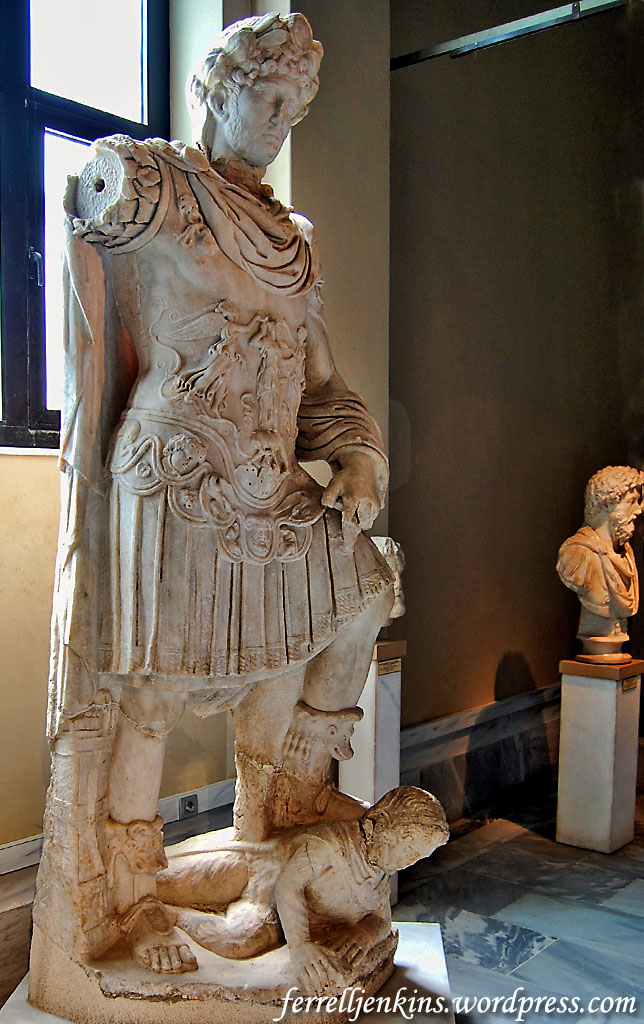
Here I wish to add an illustration from the Roman world shortly after New Testament times. In the statue below we see the Emperor Hadrian (A.D. 117-138) with his foot on the neck of an enemy.

Hadrian has his foot on the neck of an enemy. Istanbul Archaeology Museum. Photo by Ferrell Jenkins.

Hadrian has his foot on the neck of an enemy. Istanbul Archaeology Museum. Photo by Ferrell Jenkins.

This statue is displayed in the Istanbul Archaeology Museum in Istanbul, Turkey. It is made of marble and is said to have come from Hierapitna, Crete.

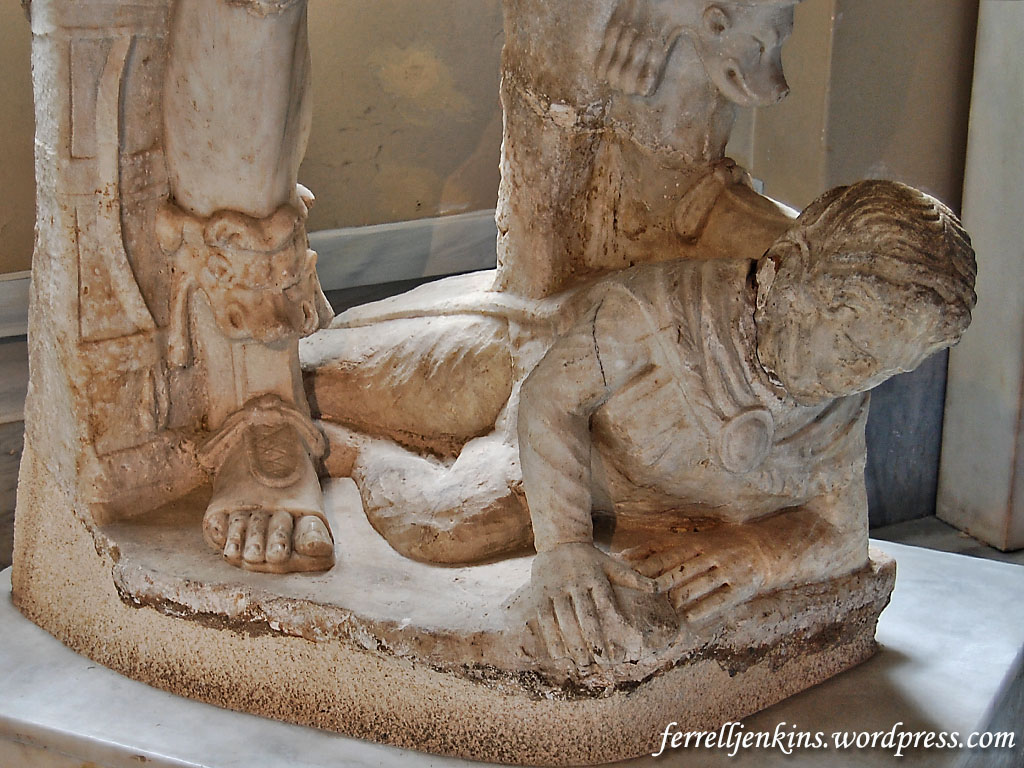
The photo below is a closeup of the captive with the Emperor’s foot on his neck.

Closeup of Hadrian with his foot on the neck of an enemy. Photo by Ferrell Jenkins.

Closeup of Hadrian with his foot on the neck of an enemy. Photo by Ferrell Jenkins.

In the New Testament, Peter quotes Psalm 110:1 to show that Jesus is now seated on the throne of David at the right hand of God (Acts 2:35).

The apostle Paul understood this. He said of Jesus,

For he must reign until he has put all his enemies under his feet. (1 Corinthians 15:25 ESV)

The last enemy is death (1 Corinthians 15:26).

The illustrations here and in the previous post are suitable for use in PowerPoint presentations for sermons and Bible classes. We only ask that you leave our credit line intact so others will know how to reach our material.

“I will make your enemies your footstool”

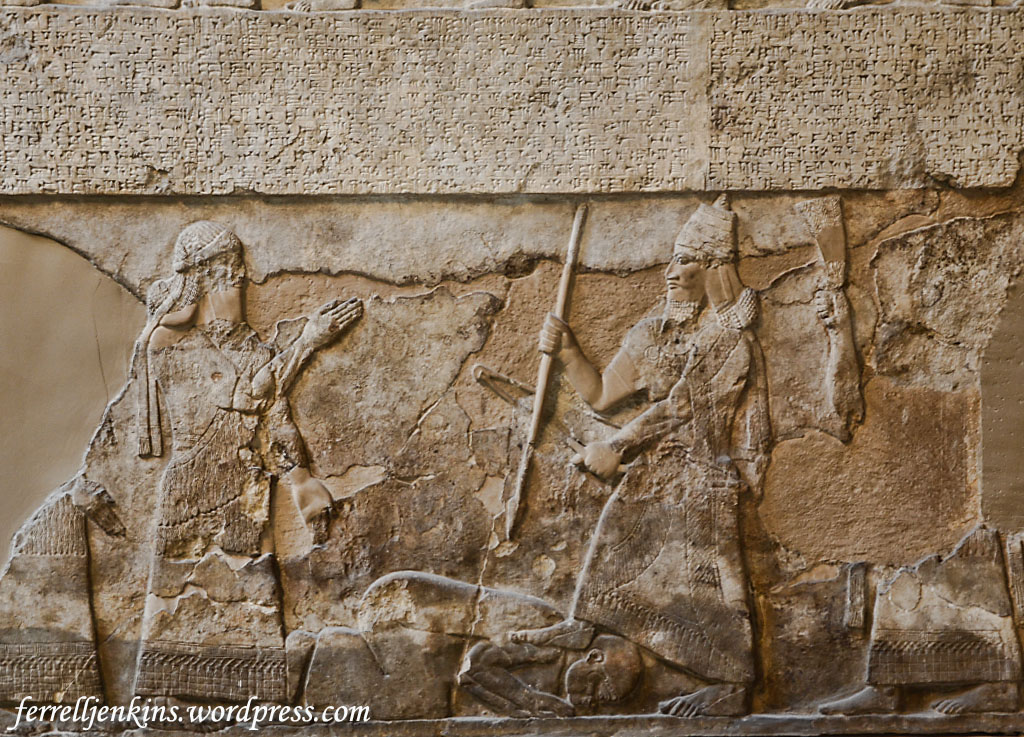
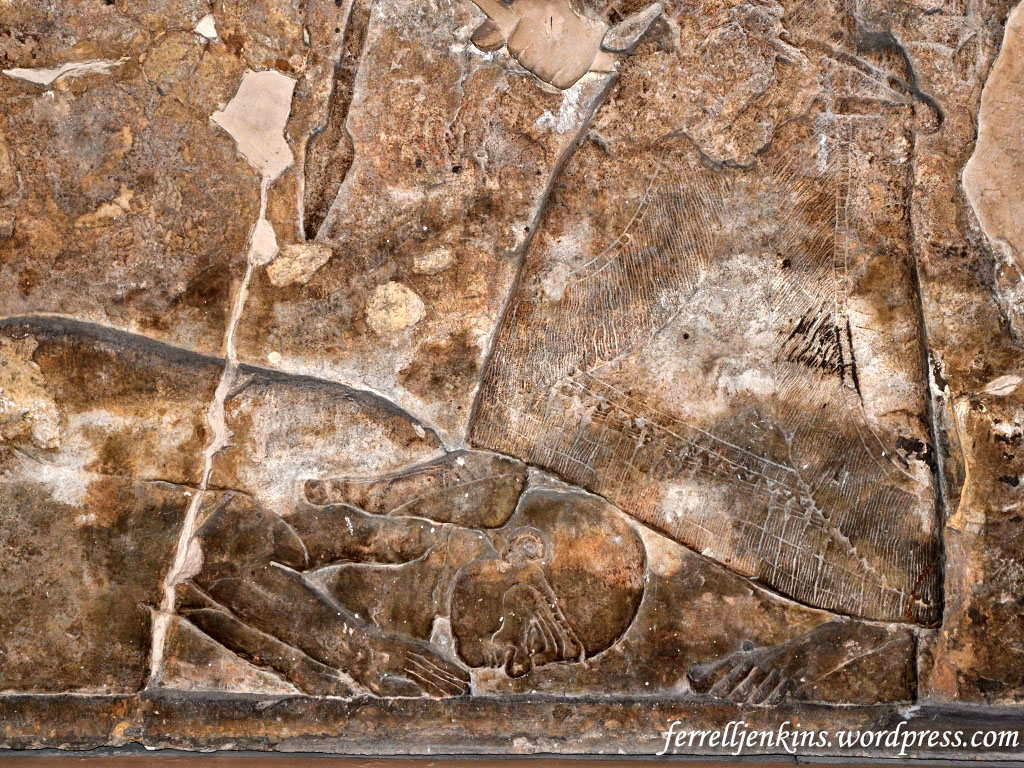
A common motif found in Ancient Near East reliefs shows a monarch placing his foot on his enemy. One illustration of this is the large relief showing the Assyrian King Tiglath-Pileser III (reigned 745-727 B.C.) with his foot on the neck of an enemy. Tiglath-Pileser III is known as Pul in the Bible.

Pul the king of Assyria came against the land, and Menahem gave Pul a thousand talents of silver, that he might help him to confirm his hold on the royal power. (2 Kings 15:19 ESV)

So the God of Israel stirred up the spirit of Pul king of Assyria, the spirit of Tiglath-pileser king of Assyria, and he took them into exile, namely, the Reubenites, the Gadites, and the half-tribe of Manasseh, and brought them to Halah, Habor, Hara, and the river Gozan, to this day. (1 Chronicles 5:26 ESV)

The Assyrian relief below is displayed in the British Museum.

Tiglath-Pileser III Subjugates an Enemy. British Museum. Photo by Ferrell Jenkins

Tiglath-Pileser III Subjugates an Enemy. Note the spear held above the body of the enemy. British Museum. Photo by Ferrell Jenkins

Here is a closeup of what we are seeking to illustrate.

Tiglath-Pileser III Puts His Foot on the Neck of an Enemy. BM. Photo by Ferrell Jenkins.

Tiglath-Pileser III Puts His Foot on the Neck of an Enemy. BM. Photo by Ferrell Jenkins.

Several biblical passages come to mind in this connection.

And when they brought those kings out to Joshua, Joshua summoned all the men of Israel and said to the chiefs of the men of war who had gone with him, “Come near; put your feet on the necks of these kings.” Then they came near and put their feet on their necks. (Joshua 10:24 ESV)

The LORD says to my Lord: “Sit at my right hand, until I make your enemies your footstool.” (Psalm 110:1 ESV)

Peter quotes Psalm 110:1 to show that Jesus is now seated on the throne of David at the right hand of God (Acts 2:35).

And Paul says,

For he must reign until he has put all his enemies under his feet. (1 Corinthians 15:25 ESV)

The last enemy is death (1 Corinthians 15:26).

Note: This post is a repeat of one we published October 21, 2011, but we have exchanged the photos for more recent ones.

In the next post we plan to show an illustration from the Roman world.

Seal impression mentioning “governor of the city” discovered near Temple Mount

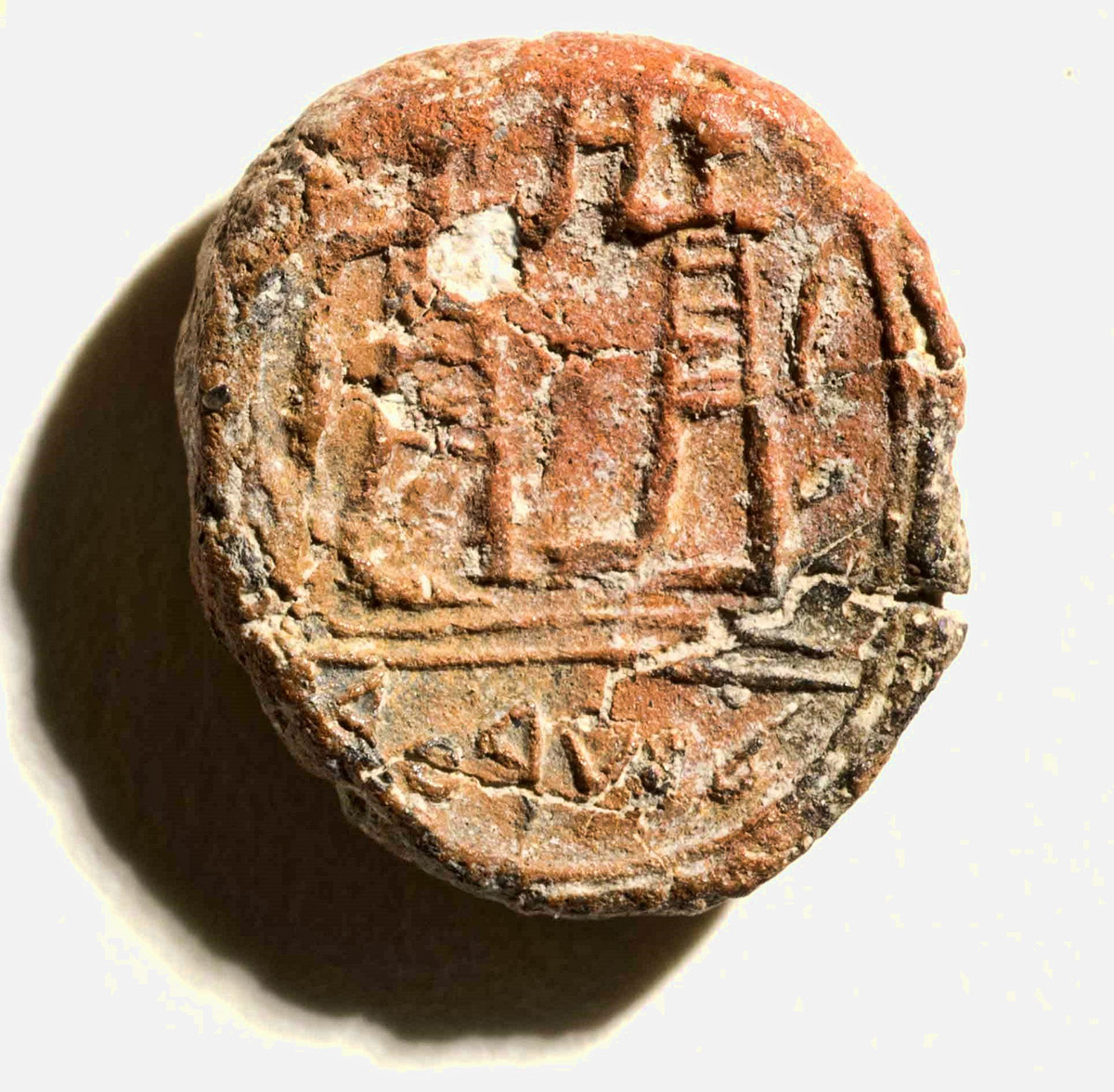
The Israel Antiquities Authority began the year with a great announcement yesterday. Many tourists to the Western Wall may have seen a covered area on the western side of the Western Wall Plaza. Here the archaeologists uncovered a 7th century B.C. four-room house. In it there was a seal impression which they refer to as a docket (also called a bulla) showing two men and a Hebrew inscription bearing the words translated as “governor of the city.”

Dr. Shlomit Weksler-Bdolah, excavator of the site located in the northwestern part of the western Wall Plaza, on behalf of the IAA, believes that “the sealing had been attached to an important transport and served as some sort of logo, or as a tiny souvenir, which was sent on behalf of the governor of the city.”

Seal impression showing two men and bearing the inscription "governon of the city." IAA photo by Clara Amit.

Seventh century B.C. seal impression showing two men and bearing the inscription “governor of the city.” IAA photo by Clara Amit.

Prof. Tallay Ornan of the Hebrew University, and Prof. Benjamin Sass of Tel Aviv University, studied the sealing and describe it thus: “above a double line are two standing men, facing each other in a mirror-like manner. Their heads are depicted as large dots, lacking any details. The hands facing outward are dropped down, and the hands facing inward are raised Each of the figures is wearing a striped, knee-length garment. In the register beneath the double line is an inscription in ancient Hebrew: לשרער, with no spacing between the words and no definite article. It denotes לשר העיר, i.e., “belonging to the governor of the city.” Prof. Ornan and Prof. Sass add, that “the title ‘governor of the city’ is known from the Bible and from extra-biblical documents, referring to an official appointed by the king. Governors of Jerusalem are mentioned twice in the Bible: in 2 Kings [23:8], Joshua is the governor of the city in the days of Hezekiah, and in 2 Chronicles [34:8], Maaseiah is the governor of the city in the days of Josiah.

The original seal that made this impression may have belonged to one of these men, or to some other person not named in Scripture.

This discovery is another in a long list of those illustrating the historical setting and accuracy of the Bible.

Todd Bolen reported on this discovery, including a different photo of the seal impression, and several interesting links here.

HT: Joseph Lauer

Gadara described as a town “without a soul.”

Ancient Gadara has been described by a former Jordanian villager who once lived there as a town “without a soul.”  The reason for his description is explained by Sunny Fitzgerald in a recent issue of BBC Travel.

In the 1960s, Jordan’s Department of Antiquities declared Gadara an archaeological site; it’s now awaiting consideration for Unesco World Heritage status.

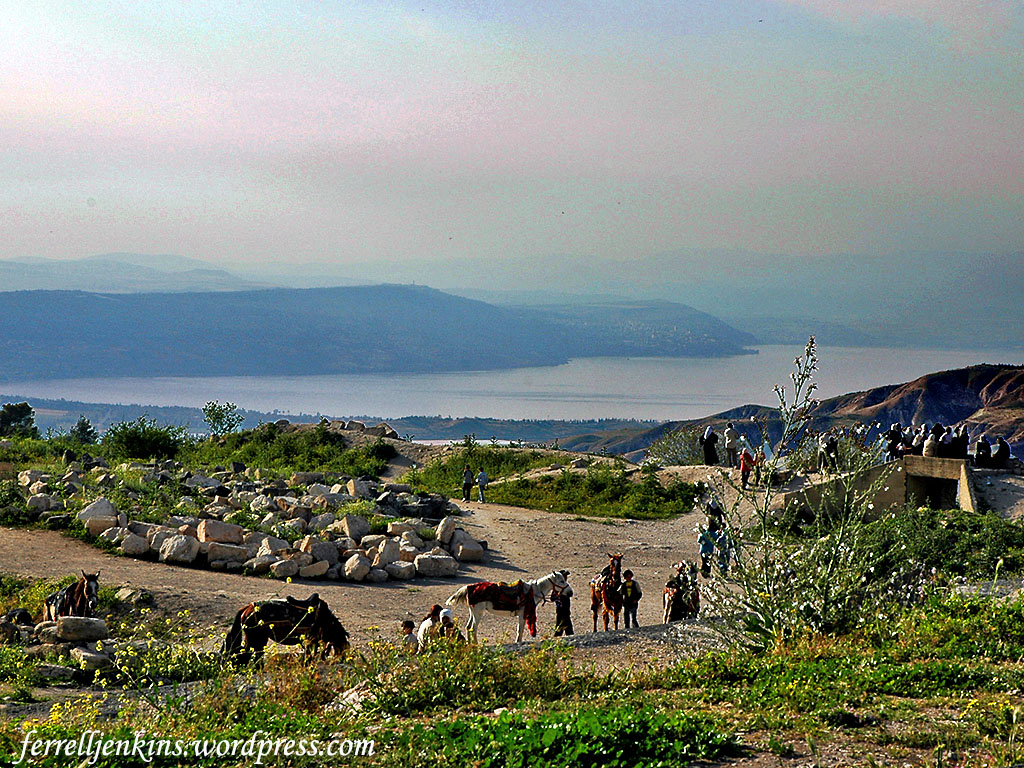
The local citizens were moved from the ancient site, but they still visit it for the beautiful scenes of the Sea of Galilee and the Yarmuk valley below Umm Qais.

View of the Sea of Galilee in the late afternoon from Umm Qais (Gadara). Notice the slight red sky showing through the haze. Photo by Ferrell Jenkins.

View of the Sea of Galilee in the late afternoon from Umm Qais (Gadara). Notice the slight red sky showing through the haze. Photo by Ferrell Jenkins.

Fitzgerald’s illustrated article is a fascinating one that I highly recommend that you read it.

Umm Qais (a common spelling; also Umm Qeis and Um Qays) is the site of Gadara, one of the cities of the Greco-Roman Decapolis. The late Mendel Nun discovered 16 ancient ports around the Sea of Galilee, including one for the city of Gadara. The port is located at Tel Samra on the southeast corner of the Sea of Galilee at the modern Ha-on Holiday Village (Mendel Nun. “Ports of Galilee.” Biblical Archaeology Review 25:04; July/Aug 1999).

From Umm Qais (Gadara) one has a great view of the Sea of Galilee and the Yarmuk River valley. We are told that Jesus visited the region of Decapolis.

Then he returned from the region of Tyre and went through Sidon to the Sea of Galilee, in the region of the Decapolis. (Mark 7:31 ESV)

The Gospel of Matthew informs us about the healing by Jesus of two demon-possessed men in the country of the Gadarenes (Matthew 8:28). Mark puts this event in the country of the Gerasenes (Mark 5:1-20). Luke adds that they “sailed to the country of the Gerasenes, which is opposite Galilee” (Luke 8:26).

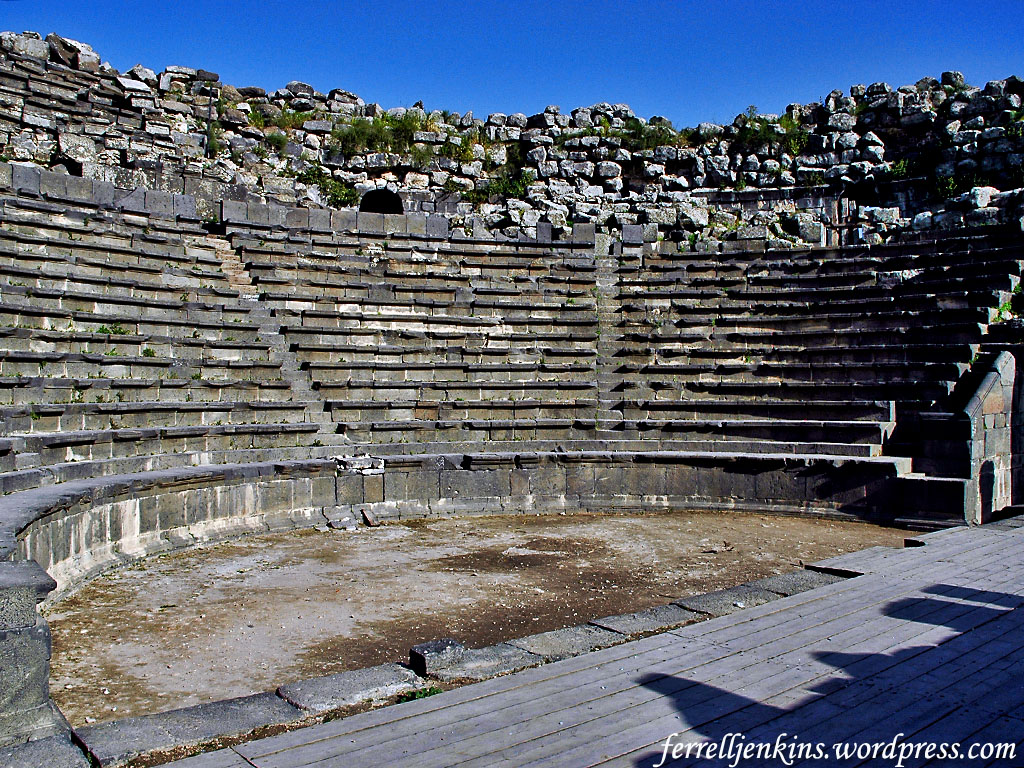
Umm Qais is made of the local basalt. Photo by Ferrell Jenkins.

The Roman theater at Umm Qais is made of the local basalt. Photo by Ferrell Jenkins.

The term Decapolis was used to describe a group of ten cities established by the Greeks. Many of them claimed to have been founded by Alexander the Great. The number of cities may have been ten at some time, but the exact number varies from list to list. The cities include Abila [Lysanias was tetrarch of Abilene, Luke 3:1], Gadara [Umm Qeis], Gerasa [Jerash], Hippos, Philadelphia [Amman], Scythopolis [Beth-shan], Pella, et al. These cities are located mostly south of the Sea of Galilee, and all except Scythopolis are east of the Jordan River. Damascus is included in some lists. In the first century A.D. they were part of the Roman province of Syria.

HT: Agade

Was this pillar intended for the Temple?

In the Jerusalem area we have evidence of numerous quarries from which stones and pillars (columns) were taken for the Biblical Temple and other buildings. Much of the area now covered by the Church of the Holy Sepulchre, including Golgotha, was once a quarry. In a series of post we discussed the so-called Solomon’s Quarries here and here.

It is also known that an area now referred to as the Russian Compound was a quarry in Biblical times. This is the location of the Russian Orthodox Cathedral of the Holy Trinity, the central police station and the law courts.

The area lies on the northwest corner of the Old City of Jerusalem, and us bounded on the south by Jaffa Road and the Street of the Prophets on the north. It is often referred to as the area of the Assyrian Camp, referencing the occasion when Sennacherib, king of Assyria from 704 to 681 B.C., sent two of his commanders with “a great army from Lachish to Jerusalem” (2 Kings 18:17).

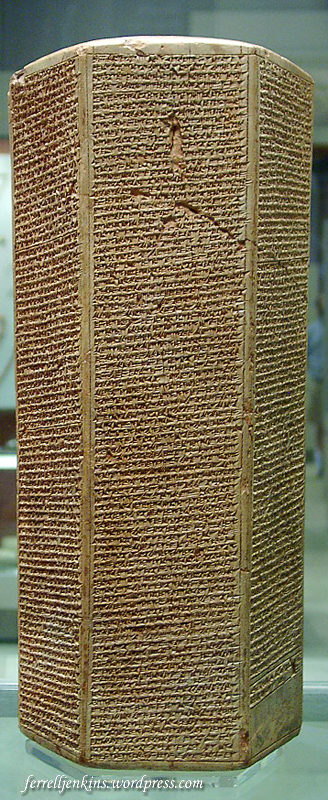
The Taylor Prism reports that Hezekiah was shut up in Jerusalem like a caged bird. Photo by Ferrell Jenkins.

The Taylor Prism reports that Hezekiah was shut up in Jerusalem like a caged bird. Photo by Ferrell Jenkins.

The Taylor Prism, found at Nineveh, and now displayed in the British Museum, claims that Hezekiah did not submit to his y0ke, but was “shut up in Jerusalem” like a caged bird.

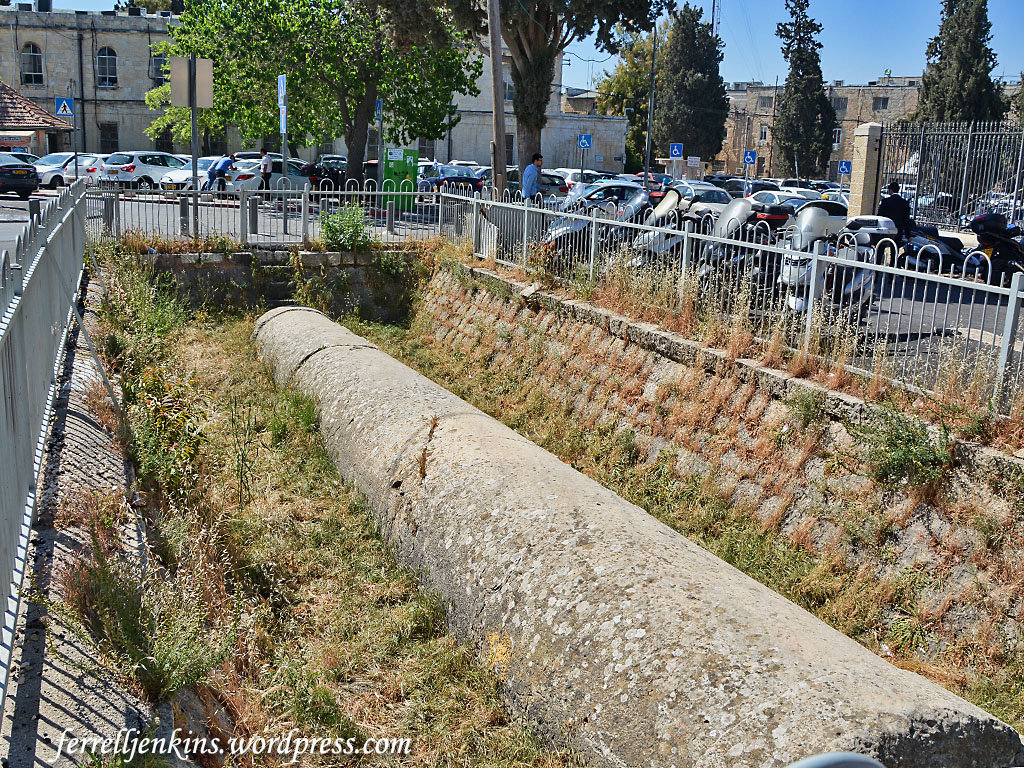
Only one column remains visible in the quarry of the Russian Compound. It is 12.15 meters (almost 40  feet) long and has a mean diameter of about 1.75 meters (5.74 feet). It is greater at the base than at the head.

Pillar left in the quarry at the Russian Compound, Jerusalem. Photo by Ferrell Jenkins.

Pillar left in the quarry at the Russian Compound. Photo by Ferrell Jenkins.

The Blue Guide Jerusalem says,

[The 19th century French scholar] Clermont-Ganneau suggested that the size agreed with that of the columns of the Royal Portico of the Temple of Herod the Great (1 C BC), and may have been one of the engaged columns placed adjacent to the wall.

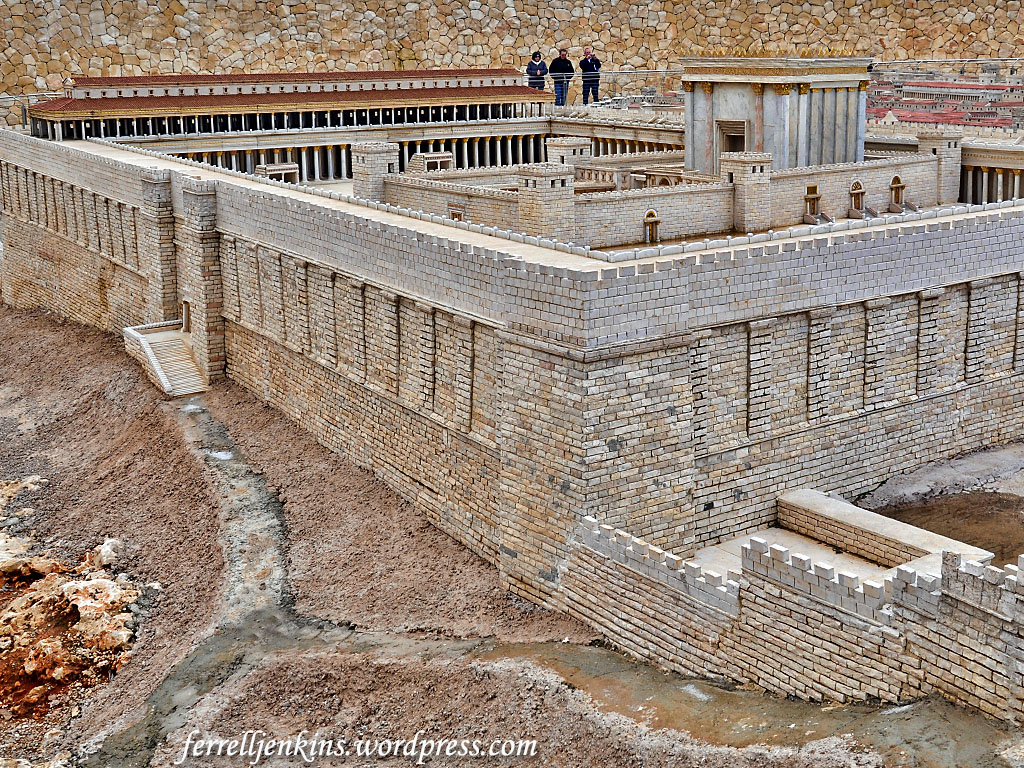
Our photo below shows a model of the Temple precinct built by Herod the Great with work continuing for many years (John 2:20) . The view is from the northeast. The three people viewing the model are standing at the southwest corner of the Temple precinct. The Royal Stoa is to their right on the south side of the model. They appear to be standing at the location of Robinson’s Arch, the stairway that provided entrance to the Royal Stoa.

The Herodian Temple in the Second Temple Model at the Israel Museum. Photo by Ferrell Jenkins.

The Herodian Temple in the Second Temple Model at the Israel Museum. Photo by Ferrell Jenkins.

Though we have here a pillar or column rather than a stone, I think we have a nice reminder of the prophecy of Psalm 118:22.

The stone that the builders rejected has become the cornerstone. (Psalm 118:22 ESV)

Jesus made reference to this text in His teaching (Matthew 21:42; Mark 12:10; Luke 20:17). The Apostle Peter cited the same text and applied it to Jesus.

This Jesus is the stone that was rejected by you, the builders, which has become the cornerstone. (Acts 4:11 ESV).

See also his extended discussion in 1 Peter 2:4-10, and think seriously about the consequences of rejecting the LORD’S chosen stone.

Archaeologists locate Idumean Palace or Temple in the Lachish region

Archaeologists working with the Israel Antiquities Authority and Hebrew University have uncovered an Idumean palace or temple in the Lachish region of the Judean Shephelah. I understand the news release to place this discovery south of the Beit Guvrin/Maresha National Park, and east of Lachish, in a military area. This area was allotted to the tribe of Simeon, but by the second century B.C. it had become part of Idumea, the residence of ancient Edomites who were pushed out of the area of Edom (the location of Petra in Jordan) by the Nabateans.

Herod the Great was an Idumean. Some have suggested Maresha as his hometown. He ruled over the Jews from 47 to 4 B.C., and his dynasty continued throughout most of the first century A.D. Herod was known for his fabulous building program that included the temple, the temple platform and the surrounding wall (John 2:20). He was a cruel ruler who sought to destroy the infant Jesus (Matthew 2:16).

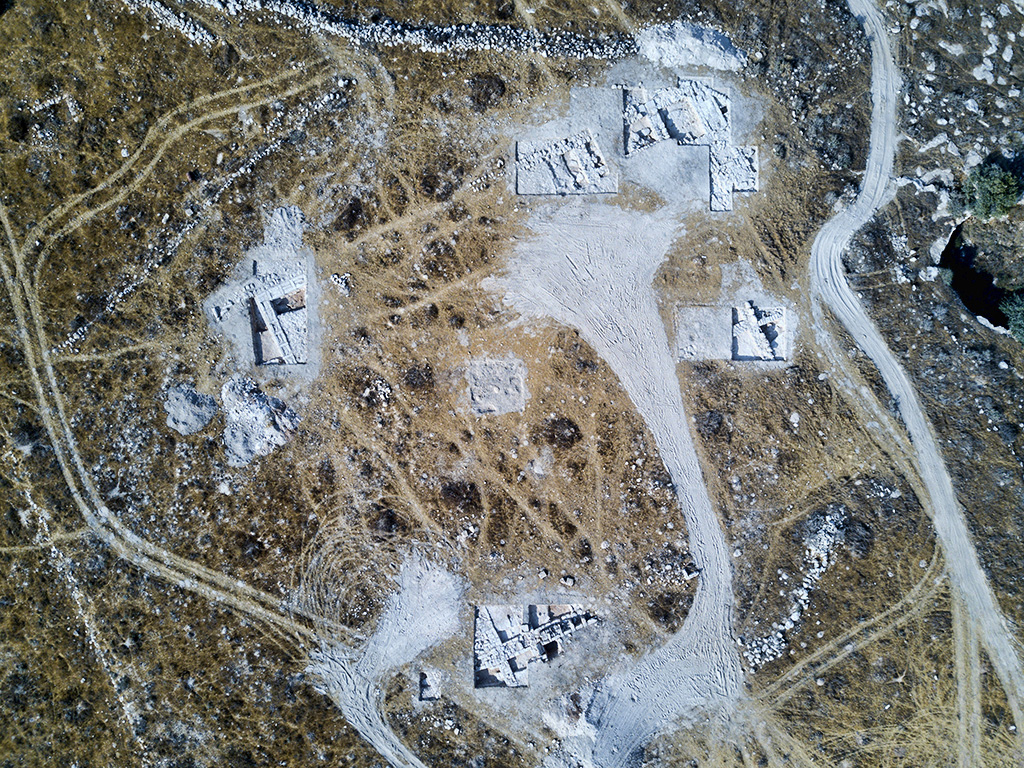
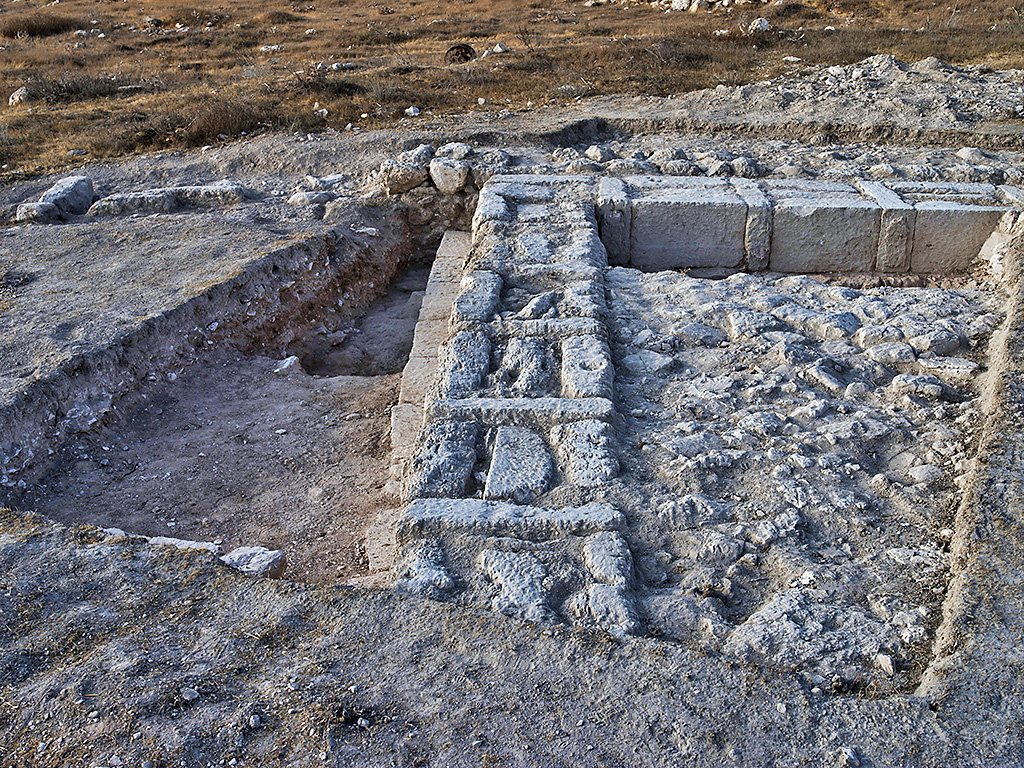
The drone photo below shows portions of the large structure recently discovered.

Area of the large structure, possibly a temple or palace, uncovered in the dig – aerial photograph (photo: Dane Christensen)

Area of the large structure, possibly a temple or palace, uncovered in the dig – aerial photograph (photo: Dane Christensen)

The scholars working on the project say this is a 2200-year-old structure that was “apparently dismantled intentionally, perhaps during the Hasmonean conquests of the region.”

The release continues,

— “ —

An impressive 2200-year-old (Hellenistic period) structure, possibly an Idumean palace or temple, was uncovered during Sukkot in archaeological excavations at the site of Horvat ‘Amuda, situated at the heart of a military training area in the Lachish region.

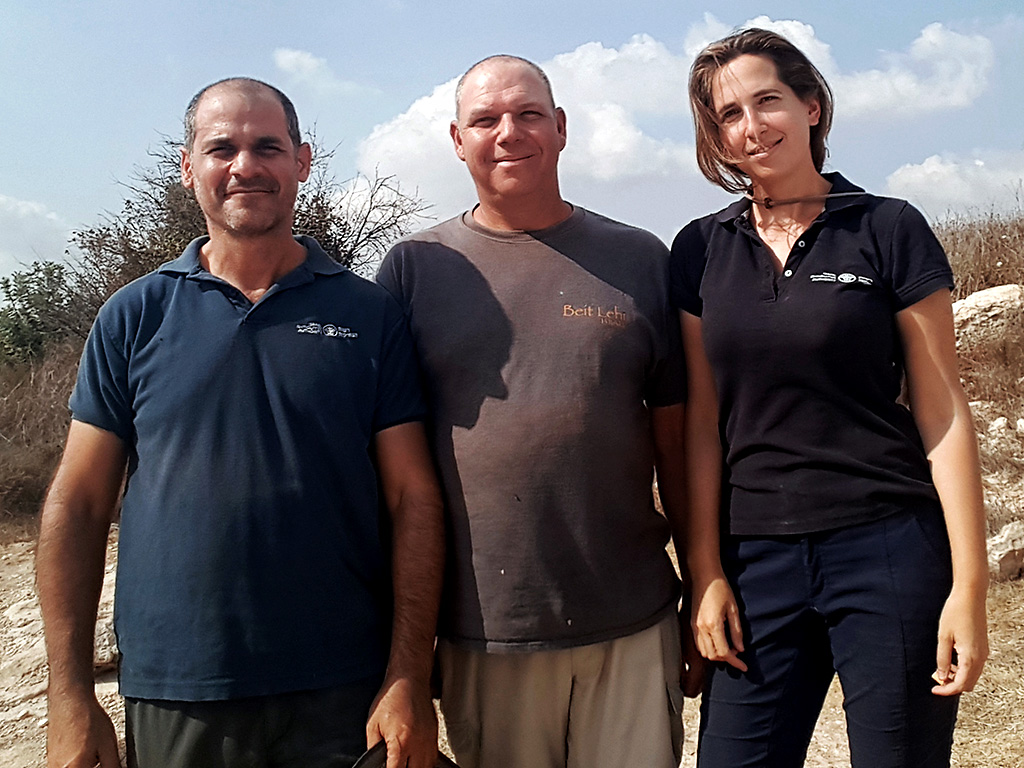
The excavation directors (from right to left): Dr. Oren Gutfeld, Michal Haber, and Pablo Betzer (photo: Israel Antiquities Authority)

The excavation directors (from right to left): Dr. Oren Gutfeld, Michal Haber, and Pablo Betzer (photo: Israel Antiquities Authority)

According to the excavation directors, Dr. Oren Gutfeld of the Hebrew University, and Pablo Betzer and Michal Haber of the Israel Antiquities Authority: “If this was indeed an Idumean palace or temple, it is a rare and exciting find – similar structures in this country can be counted on the fingers of one hand. It seems that the building was intentionally dismantled, possibly during the Hasmonean conquest of the region.”

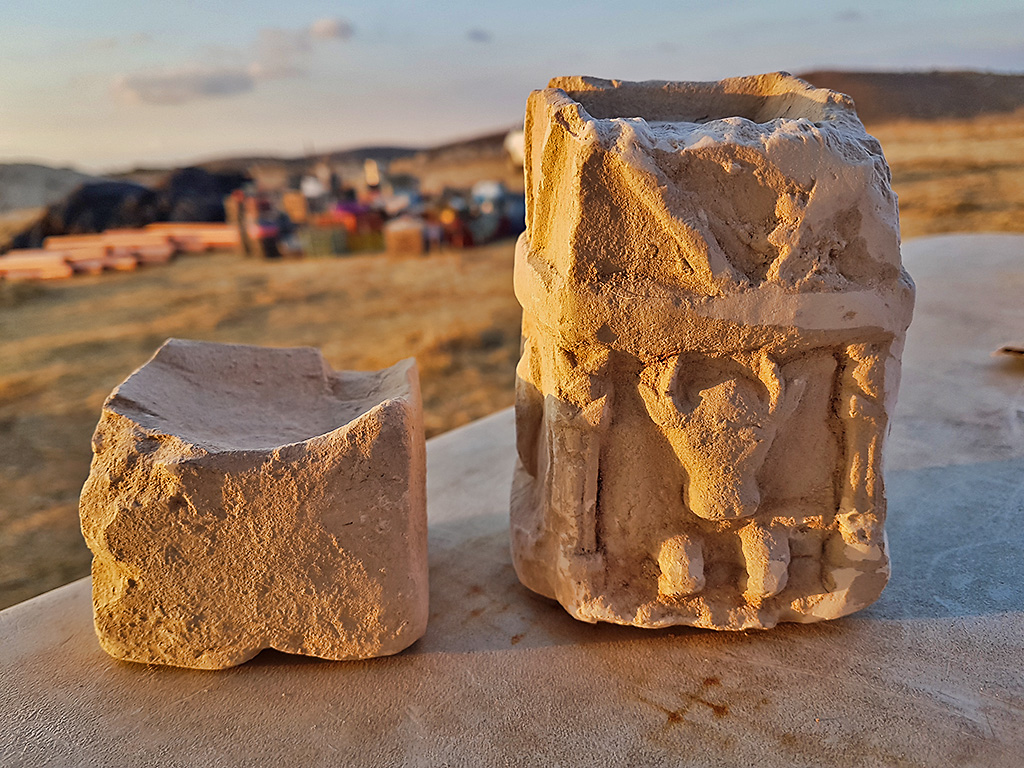
Two cultic incense altars found in one of the rooms of the structure (photo: Michal Haber, Israel Antiquities Authority)

Two cultic incense altars found in one of the rooms of the structure (photo: Michal Haber, Israel Antiquities Authority). These altars are small enough to be held in one’s hand.

Two stone incense altars were discovered in one of the rooms. One of them, bearing the carved image of a bull, is depicted as standing in what is apparently the façade of a temple adorned with magnificent columns. According to the archaeologists, the altar is “a unique and rare find in terms of its decoration.” The bull, they say, “may have symbolized a deity worshipped by the Idumeans.” In addition to the incense altar, delicate pottery vessels were also uncovered, including painted bowls, juglets and oil lamps.

Also found at the site are numerous underground spaces, used as quarries or to house ritual baths (miqvaot), oil presses and dovecotes. Hiding tunnels from the time of the Jewish revolts against the Romans were also discovered; one of these contained an intact cooking pot from the time of the Bar Kokhba Revolt (132–135 CE).

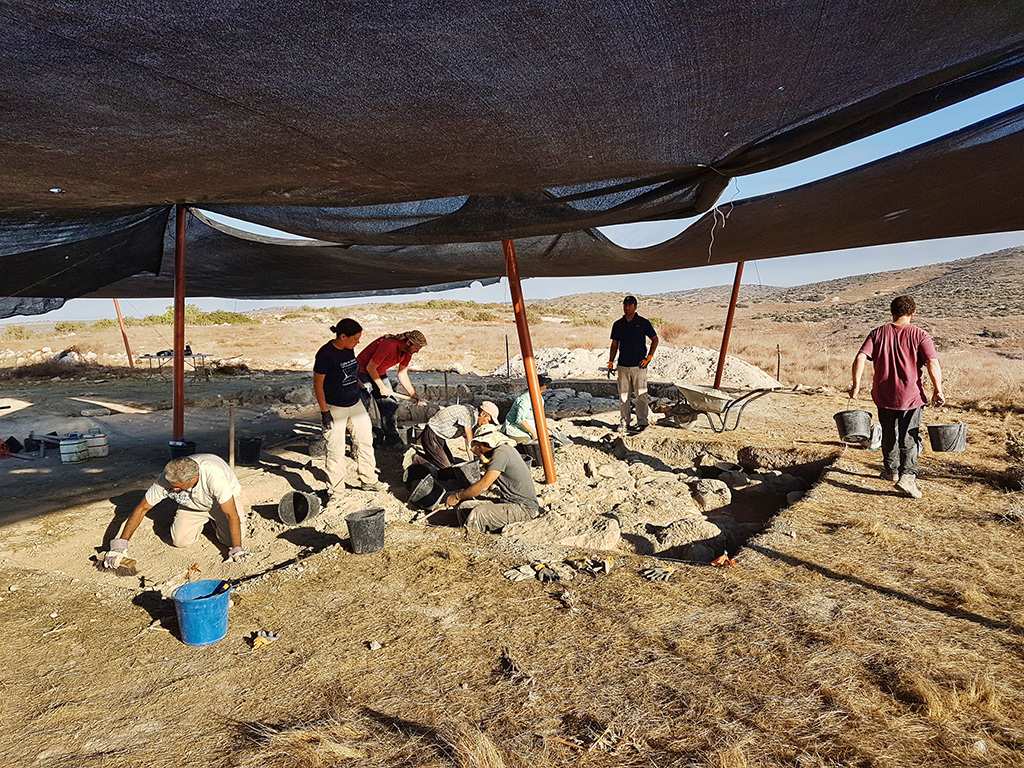
Uncovering the structure (photo: Michal Haber, Israel Antiquities Authority)

Uncovering the structure (photo: Michal Haber, Israel Antiquities Authority)

The new discovery came to light with the help of camera-equipped drones – technology that has become part of the archaeologists’ tool box in recent years. As part of an extensive archaeological research project of the area between Bet Guvrin and Maresha in the north and Moshav Amatzia in the south, the drone cameras photographed the archaeological remains from high above, subsequently revealing hints of the structure now under excavation. Calling the discovery a research breakthrough, the archaeologists say: “This technology helped us choose where to focus our excavation probes, and, indeed, it very quickly emerged that this was in fact a unique discovery. We hope that our continued excavation of the site in the spring will uncover more of the story told here.”

Remains of the structure indicate that it was intentionally dismantled, possibly by the Hasmoneans (photo: Dane Christensen)

Remains of the structure indicate that it was intentionally dismantled, possibly by the Hasmoneans (photo: Dane Christensen)

The excavation at Horvat ‘Amuda, which was funded by the Beit Lehi Foundation and the Israel Antiquities Authority, was carried out with the participation of archaeology students from the Hebrew University, Bar-Ilan University, as well as a group of volunteers from the United States.

During the Hellenistic period Horvat ‘Amuda was apparently one of the agricultural satellite settlements of Maresha, which had by now become the Idumean district capital (today it is part of Bet Guvrin-Maresha National Park). Prior to that, in the fifth century BCE (the Persian period), the Idumeans – a Semitic people originating in southern Jordan – settled in the Judean Shephelah (foothills). After the area was conquered by the Hasmoneans in 112 BCE, the Idumeans converted and subsequently blended into the Judean population.

— ” —

HT: Joseph Lauer