Category Archives: Archaeology

Jerome Murphy-O’Connor – 1935-2013

The École Biblique et Archéologique in Jerusalem announced Monday the death of Jerome Murphy-O’Connor (1935-2013).

Fr. Jerome Murphy-O’Connor, O.P., passed away peacefully on Monday, November 11, 2013. He was 78 years old.

Fr. Murphy-O’Connor taught for more than four decades at the École Biblique et Archéologique. He was a world-renowned biblical scholar and author of numerous books on St. Paul and the Holy Land. Many throughout the world counted him their friend.

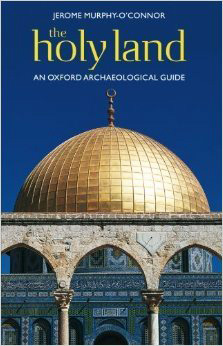
The writings of Murphy-O’Connor have been helpful to me. I have especially enjoyed The Holy Land An Oxford Archaeological Guide which is now in its 5th edition. In my recommendations of books for those traveling to Israel I have annotated this book with the words “Excellent. The Best.” I am pleased to say that I have seen several tour members using their copy of the book. I see the book is now available for the Kindle.

Holy Land

St. Paul’s Corinth: Texts and Archaeology (Good News Studies, Vol. 6) has been helpful in studying about Corinth. His article about traveling conditions in the first century in the second issue of (the now defunct) Bible Review has been extremely helpful in studying Paul’s journeys. (Murphy-O’Connor. “On the Road and on the Sea with St. Paul.” Bible Review 1:2 (1985).

HT: Jack Sasson; Bible Places Blog.

Caesarea Maritima – Palace and Hippodrome

Caesarea Maritima was a first century Roman capital and seaport. The gospel was first preached to the Gentiles here when Peter came from Joppa to Caesarea to tell Cornelius words by which he could be saved (Acts 10, 11).

Herod the Great built a city on the site of Strato’s Tower and named it Caesarea in honor of Caesar Augustus. It became a center of Roman provincial government in Judea. The city had a harbor and was located on the main caravan route between Tyre and Egypt. This city is called Caesarea Maritima (on the sea) to distinguish it from Caesarea Philippi.

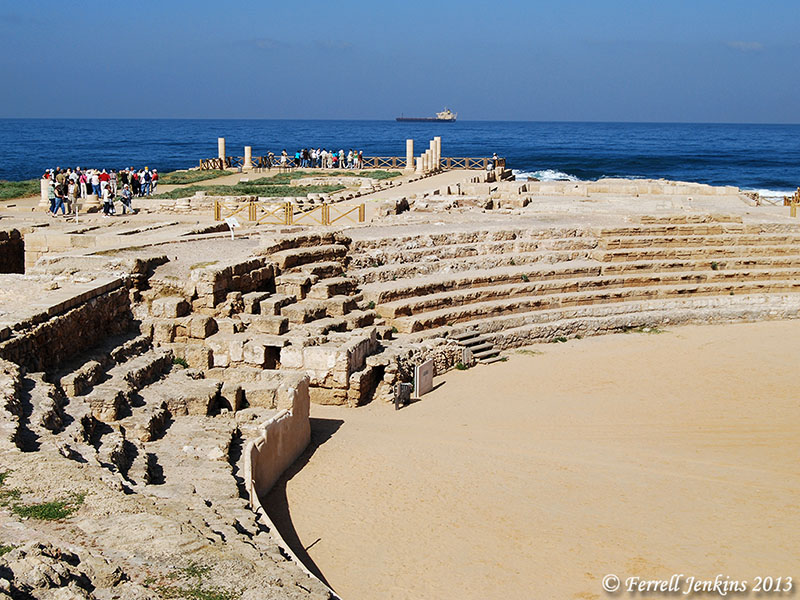
The setting of the city on the Mediterranean is beautiful. The photo below shows the south end of the excavated hippodrome and the palace of the procurators.

Palace of the Procurators and the south end of the Hippodrome. Photo by Ferrell Jenkins.

Palace of the Procurators and the south end of the Hippodrome. Photo by Ferrell Jenkins.

An inscription with the name of Pontius Pilate, the Roman procurator, was found during the reconstruction of the theater June 15, 1961.

The Apostle Paul used the harbor at Caesarea several times. He was imprisoned here for two years before departing for Rome (Acts 24:27; 27:1), perhaps in the palace of the procurators.

Excitement at Carchemish

It must have been exciting to be at Carchemish in 605 B.C. when Pharaoh Neco came all the way from Egypt to this city now on the border between Syria and Turkey. On an earlier excursion from Egypt to Carchemish in 609 B.C., Neco killed Josiah, king of Judah, at Megiddo.

Pharaoh Neco came to assist the Assyrians as they fought the Babylonians. But the emerging world power from the southern Euphrates city of Babylon overpowered the Assyrians and the Egyptians and sent Neco running back to Egypt. Nebuchadnezzar, king of Babylon, chased Neco to the border of Egypt.

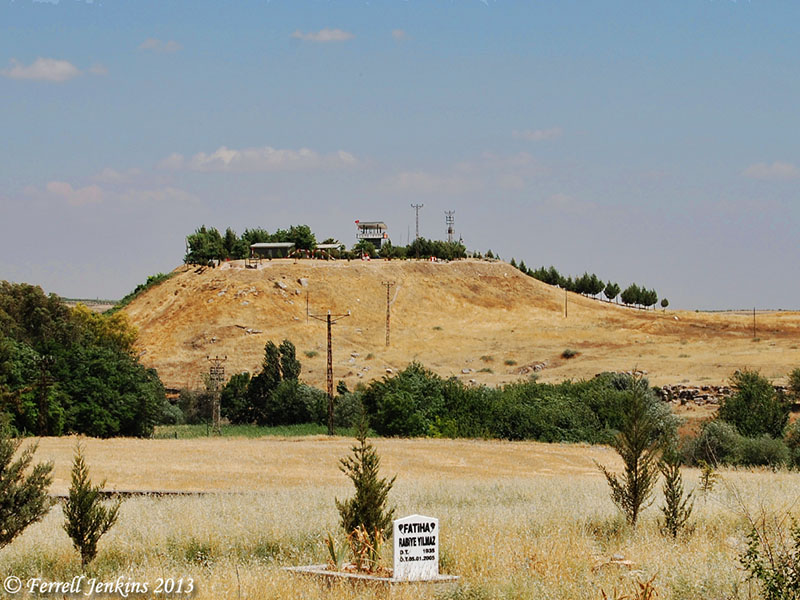
It is still exciting at Carchemish. I have been within sight of Carchemish once. The military installations were clearly visible on top of the tell. The tour operator handling my tour in Turkey a previous time advised me not to go to Carchemish (Karkamis) because it is “zero on the border” of Turkey and Syria.
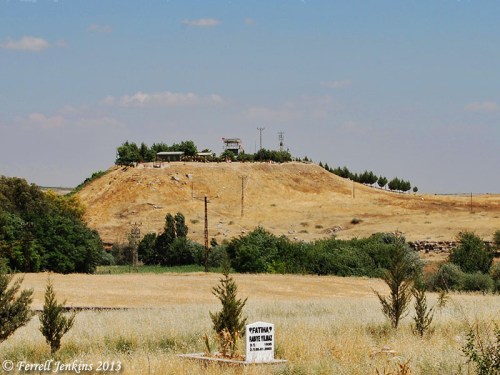
Carchemish with a Turkish military base on top. Photo by Ferrell Jenkins 2007.

Carchemish with a Turkish military base on top. Photo by Ferrell Jenkins 2007.

We were excited to learn that new excavations had begun at Carchemish. That was before the recent “uncivil war” in Syria. Now, two reports give a little glimpse into the archaeological work there.

The first report from the WorldBulletin reports:

What could be the largest discovered inscribed tablet (stele), dating to the reign of Babylonian king Nebuchadnezzar II between 605-562 BC, has been discovered in the Turkish city of Karkamis on the military zone along the Turkey-Syria border.

Noting that the excavations sites are untroubled despite their proximity to the Syrian civil war, Dr. Nicola Marchetti said the Karkamis archeological museum is scheduled to open next year.

“Excavations are right on a military zone with 55 hectares in Turkey and 35 in Syria,” said Marchetti, the head of the Turkish and Italian excavation teams, at a press conference held in the Assembly Hall of the Metropolitan Municipality.

Excavations this year also unearthed a cuneiform tablet at the palace of Carchemish king Katuwa dating to 800 BC, as well as over 300 sculptures, a Luwian hieroglyphic inscription and a mosaic.

Read the full report here. I assume the work described in this report is somewhere other than the top of the high mound.

A report from ANSAmed used a few more words about the stele dating to the reign of Nebuchadnezzar.

Marchetti is proudest of a stele, or commemorative slab, carved with the face of Babylonian King Nebuchadnezzar, the conqueror of Karkemish. He destroyed Jerusalem and the Temple of Salomon in 587 BC, and built the Hanging Gardens of Babylon, which were the seventh wonder of the ancient world.

”It’s a beautiful, compact piece of limestone”, Marchetti enthuses of this unique, historic find.

This report may be read here. It continues to tell about some recent al-Qaeda activity near the border in Syria affected by the excavation.

While it’s an almost peaceful cohabitation, it is also true that the dig is within a Turkish military base. This offers the Italians a relative sense of safety – except on September 3, when al-Qaeda attacked the Syrian town of Jarabulus, eventually wresting it from the ”official” anti-Assad Free Syrian Army (FSA) insurgents. ”It was hell on earth. Bullets were flying everywhere”, says Marchetti, who teaches Near Eastern archeology at Bologna University.

”Luckily, archeologists dig holes. We dove in. We kept digging inside the deeper ones. The Turkish military kept telling us, stay down”. Calm was restored once the FSA fighters gave themselves up to the Turks in order to flee al-Qaeda. An armed truce has held since, allowing the Italian team to unearth new treasures.

Now we know why archaeologists dig trenches and holes.

I look forward to seeing that new archaeological museum at Karkamis. Karkamis is a small town of less than 5000 population.

HT: Jack Sasson

The Meat Market at Corinth

Paul taught the saints at Corinth to,

Eat whatever is sold in the meat market without raising any question on the ground of conscience. (1 Corinthians 10:25 ESV)

The Greek word used here for “meat market” is makellon. Archaeological discoveries at Corinth include inscriptions mentioning the meat market and the fish market.

Henry J. Cadbury writes about visiting the Corinth excavations in July, 1933. He says he especially wanted to see “first hand the Erastus inscription….” Some of his comments in the article are still interesting today.

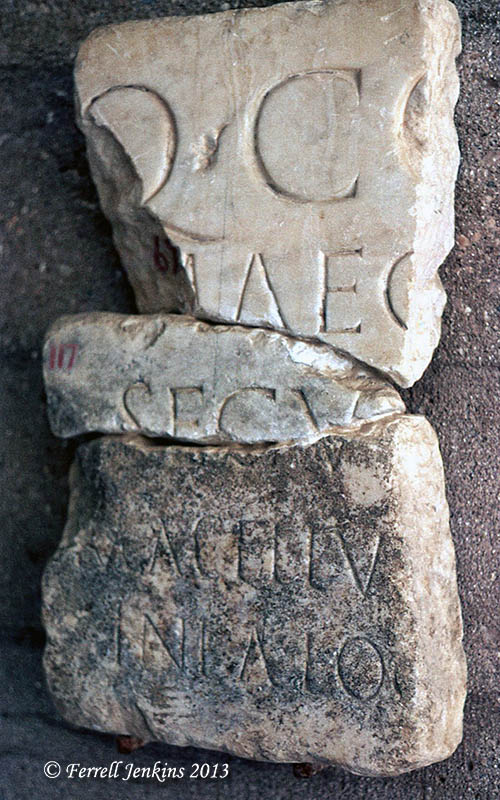
But what was particularly unexpected by me was to note among the inscribed fragments of marble in the new museum one containing quite clearly MACELLV.

As the piece has only seven other letters and these quite unintelligible the discovery of this single word is extremely tantalizing. But since the fragment in question was found in 1898, now thirty-five years ago, while so far as I know its one clear word has never been brought into connection with Paul’s reference to a Corinthian macellum, it is worth while now to do so. And the fragment does not stand quite alone; nine other fragments of the same inscription have been found, and furthermore another copy apparently of a similar inscription is represented by eleven fragments.

Citing A. B. West and L. R. Taylor, Cadbury says the various inscriptions mentioning the macellum at Corinth date to the “last years of Augustus or to the reign of Tiberias.”

In my earliest years of traveling to Corinth I saw this inscription each time I was there. Below is a digitized slide photo from 1971. This inscription was in an open hall surrounding the courtyard of what Cadbury called in 1934 “the new museum” at Corinth. At some point, perhaps in the 1990s the inscription was no longer on display. My guide at the time was well informed and had likewise seen the inscription. Inquiry in the office of the museum provided no information. Finally, a few years ago (probably 2008 or 2012) I found one of the workers preparing for the renovation of  a “newer” museum at Corinth. She informed me that the inscription was in their storeroom and that it would eventually be displayed again.

In the photo below you will see the Latin word MACELLV[M] in the fourth line from the top. Paul used the same Greek word in 1 Corinthians 10:25.

Makellum inscription at Corinth Museum in 1971. Photo by Ferrell Jenkins.

Makellum inscription at Corinth Museum in 1971. Photo by Ferrell Jenkins.

Cadbury refers to published inscriptions from Corinth. This is No. 124. It is thought to have consisted of three blocks. The beginning of the five lines in the first block of No. 124 reads as follows:

Q . C O
M A E C
S E C V
M A C E L L V
I N E A . L O C

New Testament Christians did not live in a vacuum, and the books of the New Testament were not written in a vacuum. Understanding the historical and social context of these writings helps us to better apply them to our own time.

Documentation: Henry J. Cadbury. “The Macellum of Corinth.” JBL 53:2 (1934): 134-141.

The Erastus inscription at Corinth

Even though the relationship between the Apostle Paul and the Corinthians was always a strained one, we know the names of numerous saints at Corinth who were helpful to Paul in his ministry.

Paul calls attention to a person named Erastus who was a “city treasurer.” He would be one of the few (“not many”) Christians who were among the socially elite at Corinth (1 Corinthians 1:26). A person named Erastus is mentioned three times in the New Testament. Whether these are two or three different persons, or all the same person, I do not know. Here are the biblical references:

  1. “And having sent into Macedonia two of his helpers, Timothy and Erastus, he himself stayed in Asia for a while.” (Acts 19:22 ESV)
  2. “Gaius, who is host to me and to the whole church, greets you. Erastus, the city treasurer, and our brother Quartus, greet you.” (Romans 16:23 ESV) [We understand that Romans was written from Corinth. The Greek term for “city treasurer” is oikonomos.]
  3. “Erastus remained at Corinth, and I left Trophimus, who was ill, at Miletus.” (2 Timothy 4:20 ESV)

It is of interest that during the 1929 archaeological excavation of the area near the theater (see here), a plaza was located that contained a stone inscription bearing the name of Erastus and indicating that he was a public official.

Ferrell Jenkins points to the Erastus Inscription at Corinth.

Ferrell Jenkins points to the Erastus Inscription at Corinth.

John McRay says the pavement in which this inscription was found dates to before A.D. 50. The letters are 7 inches high. The complete inscription reads:

ERASTVS-PRO-AEDILIT[at]E S-P-Stravit
In full: Erastus pro aedilitate sua pecunia stravit.

The English translation of the inscription is, “Erastus in return for his aedileship laid (the pavement) at his own expense.” (Archaeology and the New Testament, 331).

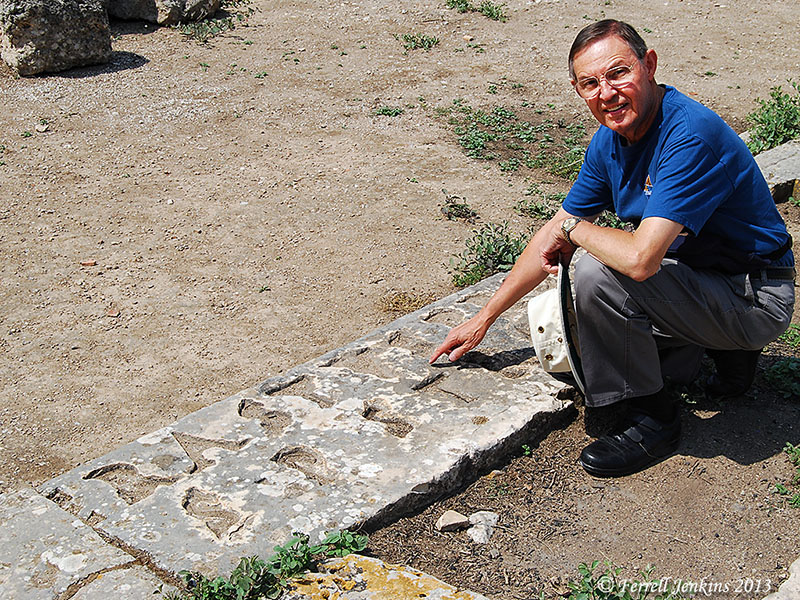
Originally the letters were filled with bronze, but most of that was removed long ago. The name ERASTVS is seen in the closeup below.

The name Erastus in the inscription near the theater. Photo by Ferrell Jenkins.

The name Erastus in the inscription near the Corinth theater. Photo by Ferrell Jenkins.

For those who have interest in a more technical discussion of this inscription may find it in David W.J. Gill, “Erastus The Aedile.” Tyndale Bulletin 40.2 (1989): 298. Gill asks,

Are we to identify the Erastus inscription with the Erastus of Romans? It needs to be pointed out that the evidence will not allow a certain identification or a certain rejection.

We are not able to answer the question with certainty, but the possibility that this man was among the disciples at Corinth, and a friend of Paul, is intriguing.

Paul stood before Galilo at Corinth

Luke records, in the book of Acts, an important historical event involving Paul during the 18 months he worked at Corinth

12 But when Gallio was proconsul of Achaia, the Jews made a united attack on Paul and brought him before the tribunal,
13 saying, “This man is persuading people to worship God contrary to the law.”
14 But when Paul was about to open his mouth, Gallio said to the Jews, “If it were a matter of wrongdoing or vicious crime, O Jews, I would have reason to accept your complaint.
15 But since it is a matter of questions about words and names and your own law, see to it yourselves. I refuse to be a judge of these things.”
16 And he drove them from the tribunal.
17 And they all seized Sosthenes, the ruler of the synagogue, and beat him in front of the tribunal. But Gallio paid no attention to any of this. (Acts 18:12-17 ESV)

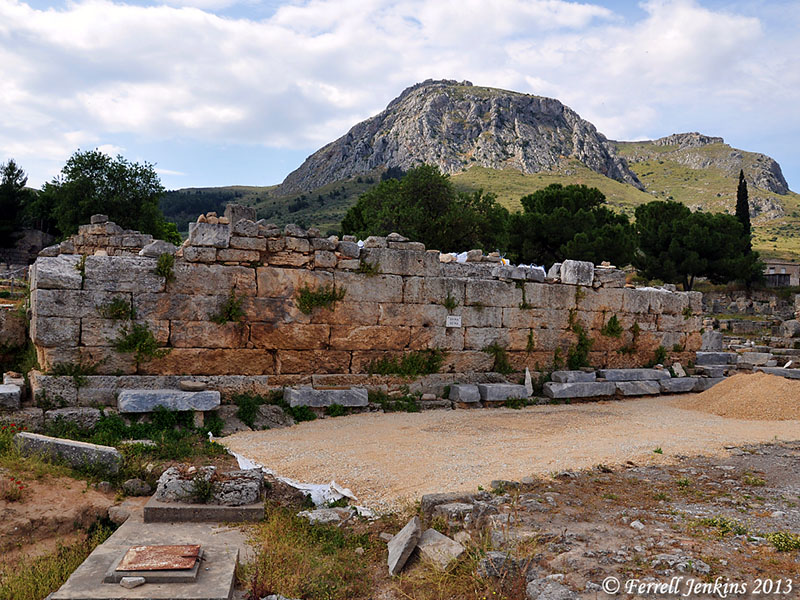
The photo below shows the actual platform or bema mentioned in Acts 18. Popular English versions use the terms tribunal, judgment seat, place of judgment, or judge’s bench.

The bema in the agora of Corinth. The Acrocorinth is in the distance. Photo by Ferrell Jenkins.

The bema in the agora of Corinth. Photo by Ferrell Jenkins.

The bema dates to A.D. 44, but could be as early as the time of Augustus (Murphy-O’Connor, St. Paul’s Corinth, 28).

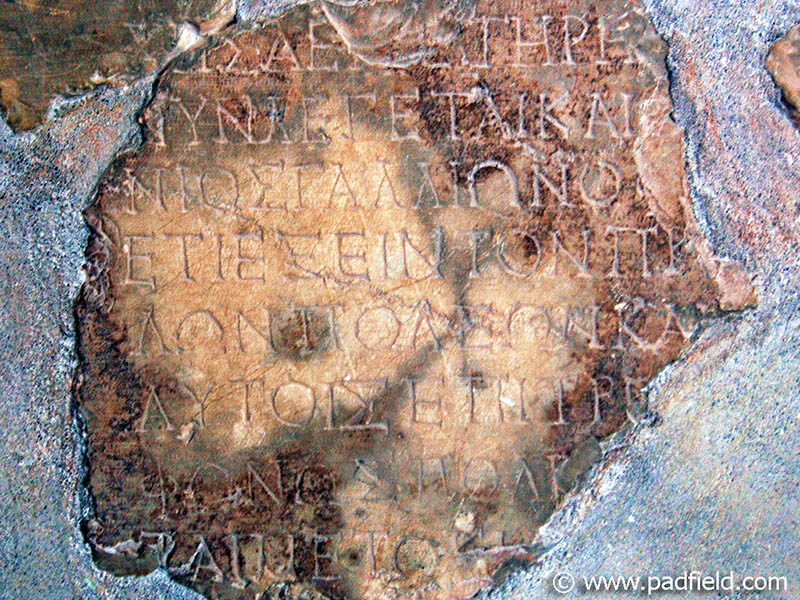
An inscription found at Delphi names Gallio the proconsul of Achaia. Gallio was the brother of the famous Roman Stoic philosopher Seneca. Gallio’s terms as proconsul of Achaia is usually dated to either A.D. 51/52 or 52/53. This is an important chronological help in our study of Paul’s journeys. In the largest fragment of the inscription, the name of ΓΑΛΛΙΩ (GALLIO)  may be seen in the center of the third line from the top.

The Delphi (Gallio) inscription. Photo by David Padfield.

The Delphi (Gallio) inscription. Photo by David Padfield.

I have been to Delphi at least two times, but the broken pieces of the Gallio Inscription were in a storage room. I did have written permission to see the fragment, but the slides I made were of poor quality. Thanks to David Padfield for permission to use the nice photo above which is now displayed in the museum at Delphi.

Jehoash Tablet must be returned to owner

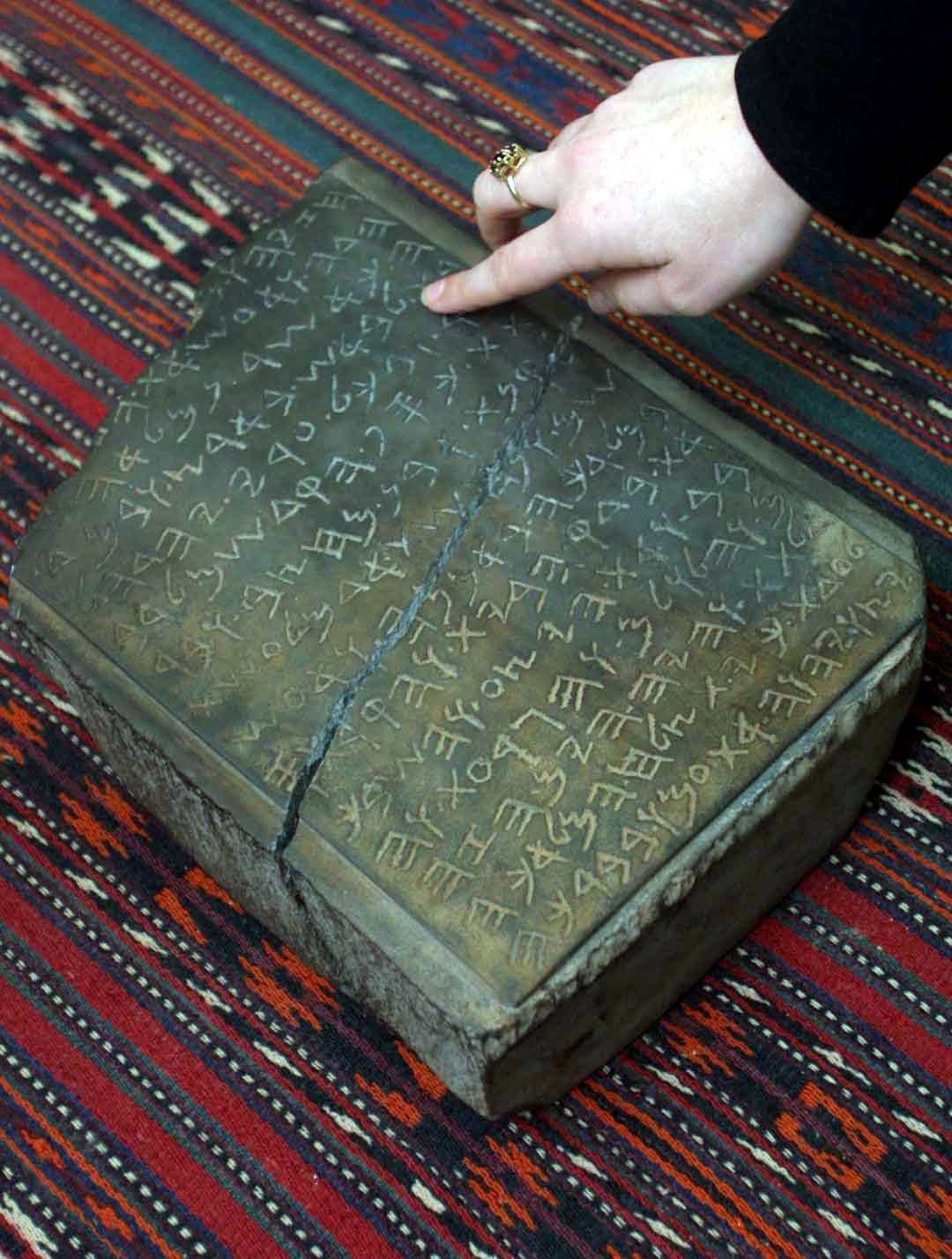
The Supreme Court of Israel ordered that the Jehoash Tablet, a 9th century inscription about repairs to the temple in the days of King Jehoash of Judah, must be returned to the owner.

The Jerusalem District Court had earlier ruled that he state had not proved that this  inscription was a forged document.

Chiseled in ancient Hebrew and dated to the ninth century BCE, the tablet describes renovations of the First Temple – which is said to have been built by King Solomon – ordered by Jehoash. It corresponds to the account in II Kings 12:1-17, in which the king laments the state of the temple and commands that money the priests collect from the people be used to fix it up.

îùøã äçéðåêThe Jehoash Tablet

Read the account in today’s Haaretz here.

Matthew Kalman has been keeping abreast of this decade-long case and reports at Bible and Interpretation here.

Like the James Ossuary, we will probably never know if this document is authentic.

Report by Gordon Franz on the “International Noah and Judi Mountain Symposium” – Sirnak, Turkey

Gordon Franz sent me the report on his recent visit to southeastern Turkey and the “International Noah and Judi Mountain Symposium.” He said, “If you want to post it on your site, you are more than welcome.” This is an issue of much importance, and I am delighted to share it with our readers and help give it wide distribution.

Twice I have visited Eastern Turkey. In 2007 I was aware of the argument for Cudi Dagh (or Mount Judi), but was advised by my Turkish tour operator not to go to the mountain. Still hopeful of seeing the mountain someday.

Here is the first part of Gordon’s report:

Report on the “International Noah and Judi Mountain Symposium” – Sirnak, Turkey

By Gordon Franz

Introduction
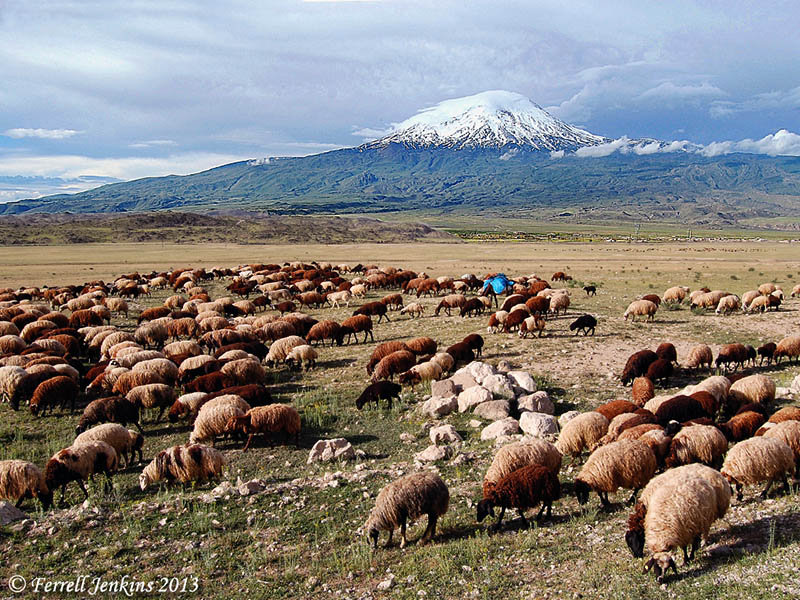
The “International Noah and Judi Mountain” symposium was held in Sirnak, Turkey, under the auspices of Sirnak University. One of the purposes of this conference was to set forth the case for Cudi Dagh, the mountain just to the south of Sirnak, as the landing-place of Noah’s Ark in South East Turkey. This mountain is not to be confused with the (late) traditional Mount Ararat, called Agri Dagh, in northeastern Turkey.

Ararat (Agri Dagh) in north eastern Turkey. Photo by Ferrell Jenkins.

Traditional Mount Ararat (Agri Dagh) in north eastern Turkey. Photo by Ferrell Jenkins.

Interestingly, at this conference I learned of another mountain that allegedly Noah’s Ark landed on. It is located at Mount Gemikaya in Azerbaijan. By my count, that is the sixth mountain vying for the honors of this historical event: two in Turkey, three in Iran, and one in Azerbaijan. The Iranian and Azerbaijani sites are far outside the Land of Ararat / Urartu, and in the case of the Iranian sites, deep inside the Land of Media. We can safely dismiss these mountains as the place where Noah’s Ark landed according to the Bible. To be truthful, Agri Dagh must be dismissed as well because it is a post-Flood volcanic peak in a plain, and not within the “mountains (plural) of Ararat” (Gen. 8:4).

The Setting of the Symposium
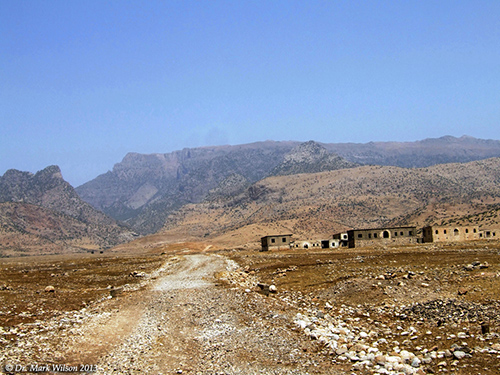
The symposium was held at the Sehr-I Nuh Otel (translation: Noah’s City Hotel) in Sirnak, just north of Cudi Dagh (Cudi or Judi Mountain). This mountain is within the “mountains of Ararat” (Gen. 8:4) where Noah’s Ark landed. The facilities at the hotel were first class, the food was absolutely delicious, and we had a spectacular view of Cudi Dagh from the panorama view windows as we ate our meals.

Cudi Dagh (Mount Judi). Photo courtesy of Dr. Mark Wilson.

Cudi Dagh (Mount Judi). Photo courtesy of Dr. Mark Wilson.

Special thanks goes to Dr. Mehmet Ata Az, a philosophy professor at Sirnak University, for coordinating the speakers and making sure our needs were met. He truly has a servant’s heart and our best interest in mind. Thank you my friend!

— ♦ —

At this point Gordon gives a synopsis of select papers, including his own on the topic, “Did Sennacherib, King of Assyria, Worship Wood from Noah’s Ark?

Read the report in its entirety at Gordon’s Life and Land Seminars site. I think you will be profited, and perhaps enlightened, by doing so.

The Fountain of Glauke at Corinth

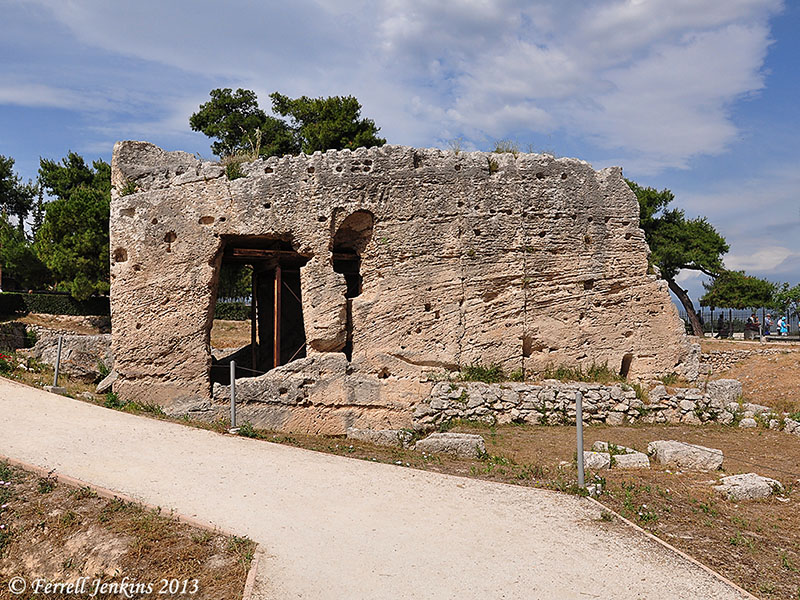
In addition to the Spring (or Fountain) of Peirene, Corinth had another significant water supply — the Fountain of Glauke. Reddish and Fant describe the fountain:

To the west of the temple [of Apollo] and on a lower level lies the Fountain of Glauke, supplied with water by a conduit from the Acrocorinth, virtually nothing of which remains except four reservoirs cut in the rock. It was named for the legendary daughter of a king of Corinth who threw herself into its waters to escape the flames of the magical robe sent her by Medea. Originally the fountain was covered by a building approximately 45 feet long and 40 feet wide. (A Guide to Biblical Sites in Greece and Turkey, 59).

The Fountain of Glauke at Corinth. Photo by Ferrell Jenkins.

The Fountain of Glauke at Corinth. Photo by Ferrell Jenkins.

Among the Christians at Corinth during the time of the Apostle Paul, we can certainly imagine that some of them visited these sites we have learned about as a result of the archaeological excavations over the past century. See Acts 18; 1 Corinthians; 2 Corinthians.

The Fountain of Peirene at Corinth

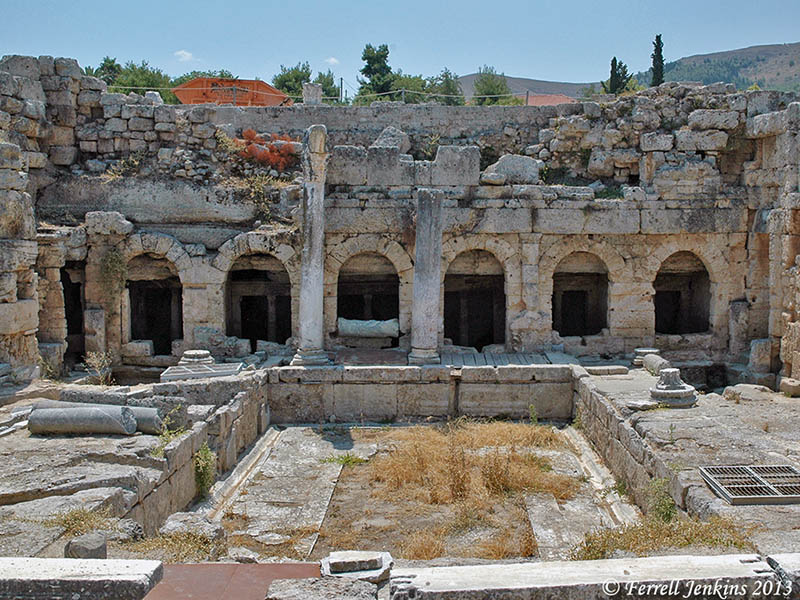
In the first century A.D. Corinth was the capital of the Roman province of Achaia and had direct communication with Rome. This was a wonderful place for Paul to teach the gospel of Christ (Acts 18).

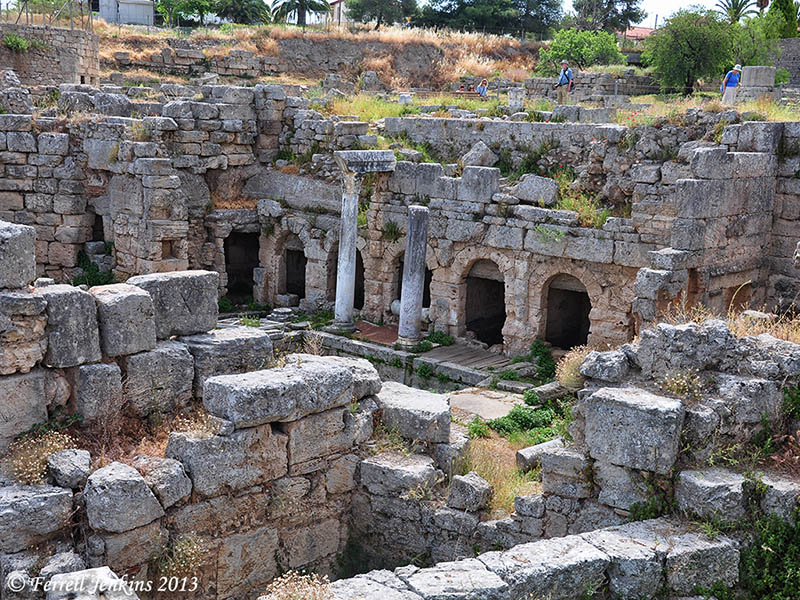
A large city such as Corinth needed a good water supply. Water from subterranean springs flowed underneath the city and was captured in a reservoir with a capacity of over 81,000 gallons. The Fountain of Peirene was the city’s most important water supply. Even now, if one stands anywhere near the openings in the once impressive structure he can hear the water flowing in the natural spring underneath the city.

The Fountain of Peirene at Corinth. Photo by Ferrell Jenkins.

The Fountain of Peirene at Corinth. Photo by Ferrell Jenkins.

An ornamental fountain once welcomed those who made the turn off the Lechaion Road to the Spring of Peirene.

An ornamental fountain in front of the spring. Photo by Ferrell Jenkins.

An ornamental fountain in front of the spring. Photo by Ferrell Jenkins.