Author Archives: Ferrell Jenkins

The number of New Testament textual variants

This note is not about travel, but it is about an extremely important subject. Sometime during 2008 Daniel Wallace wrote a series of articles on the subject of Textual Variants. Due to a crash these articles were lost. Recently the one on “The Number of Textual Variants: An Evangelical Miscalculation” was recovered and posted at Parchment and Pen. Go directly to the post here.

At the bottom of his post you will see links to several Related Posts.

Earlier I posted a note about two recent lectures by Dr. Daniel Wallace here.

A visit to the Siegfried H. Horn Museum

Andrews University in Berrien Springs, Michigan, has long been associated with archaeological work, especially in Jordan. This work is carried out under the name of the Institute of Archaeology.

The interesting history of the Siegfried H. Horn Museum may be read here. The name of Siegfried H. Horn is well known to anyone who had read about biblical archaeology in modern times.

Last week I was at Valparaiso, Indiana, presenting a series of lessons on Bible History and Archaeology. I had long wanted to visit the Horn Archaeological Museum. When we learned that we were slightly more than an hour away, Mark Russell, Steve Wolfgang and I made the trip one morning. The Museum is hopeful of moving into a new facility as soon as the project can be funded. At this time the small museum is open only on Saturday afternoon, but they will open by appointment, as they did for us.

The Siegfried H. Horn Archaeological Museum houses over 8,500 artifacts, but only a small portion of those are on display. There are replicas of a few famous artifacts such as the Black Obelisk of Shalmannessar II and the Moabite Stone

There are significant original pieces from most areas of the Bible world with Mesopotamia and Transjordan being featured. There is a mummified Ibis from Egypt. The Egyptian god Thoth was portrayed with the head of an Ibis. I never see representations of these gods without thinking of Paul’s description of the Roman world prior to the coming of Christ.

Claiming to be wise, they became fools, and exchanged the glory of the immortal God for images resembling mortal man and birds and animals and creeping things. (Romans 1:22-23 ESV)
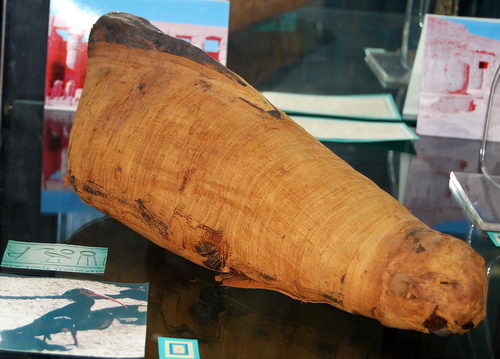
Mummfied Ibis from Egypt. Photo by Ferrell Jenkins.

Mummified Ibis from Egypt. Photo by Ferrell Jenkins.

In the main exhibit hall there is a life-size Bedouin tent. This makes a good background for explaining patriarchal life.
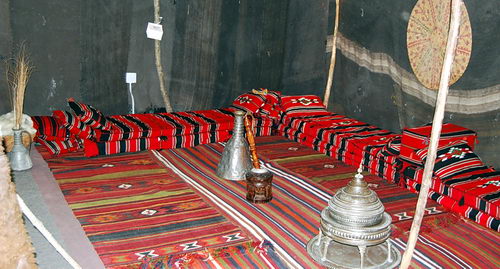
Authentic Bedouin Tent at Horn Museum. Photo by Ferrell Jenkins.

Authentic Bedouin Tent at Horn Museum. Photo by Ferrell Jenkins.

By faith Abraham obeyed when he was called to go out to a place that he was to receive as an inheritance. And he went out, not knowing where he was going. By faith he went to live in the land of promise, as in a foreign land, living in tents with Isaac and Jacob, heirs with him of the same promise. For he was looking forward to the city that has foundations, whose designer and builder is God. (Hebrews 11:8-10 ESV)

Two other things should be mentioned. There are some wonderful models. One that impressed me was of the Roman rolling-stone tomb at Heshbon. The murals covering biblical and modern church history are impressive.

I recommend that anyone traveling in the vicinity of Berrien Springs, or those living within driving distance, take advantage of this opportunity to visit. Bible class teachers would do well to become familiar with this Museum and arrange for their students to see it.

Our thanks to Jody Washburn, an Administrative Assistant at the Institute of Archaeology, for her help in making our visit pleasant.

The Oriental Institute

Yesterday I visited the Oriental Institute of the University of Chicago.  When I visit a museum such as this I am not only looking for items with a specific connection to a biblical account, such as the prism which mentions Hezekiah, but also for artifacts that might illustrate daily life in Bible times.

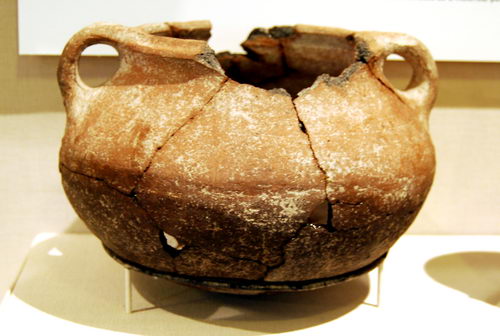
Cooking pots are mentioned several times in the Scripture. One such reference is a sort of proverb.

It is better for a man to hear the rebuke of the wise than to hear the song of fools.  For as the crackling of thorns under a pot, so is the laughter of the fools; this also is vanity. (Ecclesiastes 7:5-6 ESV)

This cooking pot is from Iron IIc at Megiddo (732-600 B.C.).

Cooking pot from Megiddo. OIUC. Photo by Ferrell Jenkins.

Cooking pot from Megiddo. OIUC. Photo by Ferrell Jenkins.

Notice the interesting account from the days of the prophet Elisha.

When Elisha returned to Gilgal, there was a famine in the land. As the sons of the prophets were sitting before him, he said to his servant, “Put on the large pot and boil stew for the sons of the prophets.” Then one went out into the field to gather herbs, and found a wild vine and gathered from it his lap full of wild gourds, and came and sliced them into the pot of stew, for they did not know what they were. So they poured it out for the men to eat. And as they were eating of the stew, they cried out and said, “O man of God, there is death in the pot.” And they were unable to eat. But he said, “Now bring meal.” He threw it into the pot and said, “Pour it out for the people that they may eat.” Then there was no harm in the pot.  (2 Kings 4:38-41 NASB)

One wonders what might have been cooked in that now-broken pot from Megiddo.

The Oriental Institute at the University of Chicago

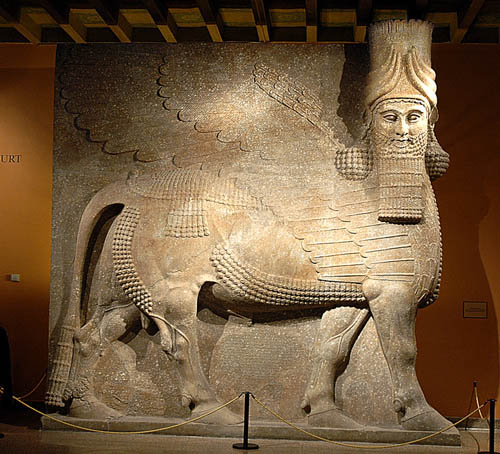
The Oriental Institute at the University of Chicago is one of the great museums of biblically related artifacts in the world. The University of Chicago excavated at the Neo-Assyrian city of Khorsabad from 1928 to 1935. This site was the fortress of King Sargon II (721-705 B.C.).

Assyrian winged bull, OIUC. Photo by Ferrell Jenkins.

Assyrian winged bull, OIUC. Photo by Ferrell Jenkins.

The OIUC web page describes the winged bull this way:

This colossal sculpture was one of a pair that guarded the entrance to the throne room of King Sargon II. A protective spirit known as a “lamassu”, it is shown as a composite being with the head of a human, the body and ears of a bull, and the wings of a bird. When viewed from the side, the creature appears to be walking; when viewed from the front, to be standing still. Thus it is actually represented with five, rather than four, legs.

Sargon II is mentioned only once in the Bible (Isaiah 20:1). There was a time when some critics denied the existence of Sargon II and suggested that the Bible writer made up the name. The great museums, Oriental Institute, British Museum, and the Louvre, have abundant evidence of his existence.

Photography is allowed in the museum.

The museum website will provide all the info you need to plan your visit to the Oriental Institute Museum.

Bronze Age gate at Dan opened

Ha’aretz announces the opening of the Bronze Age gate at Dan after restoration.

The Nature and National Parks Protection Authority yesterday opened “Abraham’s Gate” at Tel Dan in the north, for visits by the public.

The ancient structure from the Canaanite period of the Bronze Age is made of mud and is thought to have been built around 1750 B.C.E. The authority named the archaeological site for Abraham, the first patriarch of the Jewish people, indicating that it dates from the period of Abraham.

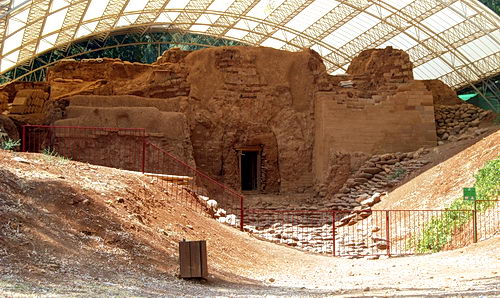
The gate was uncovered in 1979 but more recently underwent restoration. It is composed of three arches and constructed of sun-dried mud brick on a foundation of large basalt stones. The gate, which in ancient times stood seven meters tall, has been restored to its original height. It features two towers and a horizontal structure linking them below the arches, the oldest arches ever found in the Land of Israel.

Read the full article here.

This photo shows the condition of the gate August 31, 2008. I don’t know what has been done to “open” the gate to the public.

Bronze age gate at Dan. Photo by Ferrell Jenkins.

Bronze age gate at Dan. Photo by Ferrell Jenkins.

This gate was dubbed “Abraham’s Gate” in the Ha’aretz headline. We have no way of knowing that Abraham saw this gate, but he might have. The Bible records that when the kings of the east took Lot captive, Abraham pursued them as far as Dan (Genesis 14:14).

HT: Joseph I. Lauer

Mount Hor

The Scripture records that Aaron was buried on Mount Hor (Numbers 20:25-29). We wrote about this here. A few interesting questions have been left in a comment. I am away from home for the week and do not have access to all the materials I might check, but here is a brief response.

1. How long would it take to walk unaided up Mt. Hor? Are there clearly marked-out historical trails?

Hikers make the trek. My recollection is that one should allow between a half and a full day for the trip up and down. A guide book such as Lonely Planet would surely answer this question. Perhaps some reader has made the climb and will tell us.

2. Do you know anything about the history of the Muslim shrine at the summit? I’m sure there have been quite a bit of academic research into this over the years, but I’m hoping for a simple answer about how reliable is this tradition about the exact location of Mt. Hor?

Not really. There are many “traditional” places identified by Jews, Christian, and Muslims, but a large number of them are without any historical foundation. Todd Bolen has this comment, along with a nice photo, at Bible Places.

In Bedouin tradition, Jebel Haroun is Mt. Hor where Moses’ brother Aaron was buried.  Most scholars reject this, locating Mt. Hor near Kadesh-barnea to the west.

I trust this will be helpful.

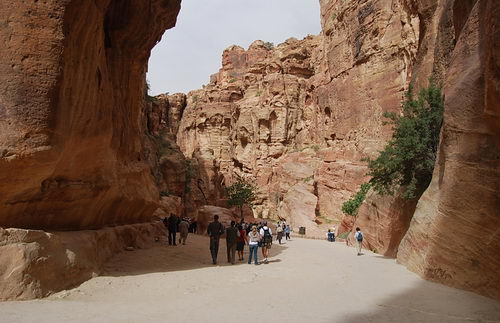
Here is a photo of the beginning of the Siq at Petra. Almost everyone likes to show the photos of the narrow part. It is beautiful, even from the beginning.

The beginning of the Siq at Petra. Photo by Ferrell Jenkins.

The beginning of the Siq at Petra. Photo by Ferrell Jenkins.

Ireland and St. Patrick

Thoughts turn toward the Emerald Isle on St. Patrick’s Day, especially for those with Irish roots. The truth about St. Patrick is shrouded in Irish mist. He is said to have brought Christianity to Ireland, perhaps in the latter part of the fifth century.

I do not celebrate St. Patrick’s day, but for whatever good he may have done I am thankful. I thought this would be a good opportunity to share a photo from Ireland with you.

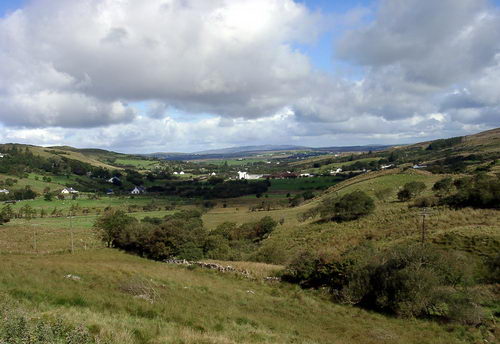
Ireland is a beautiful place to visit. The photo below of Finn Valley was made near Donegal Bay. The area is noted for beautiful hills, a magnificent coastline, majestic mountains, deep glens, and shimmering lakes.

Ireland's Finn Valley. Photo by Ferrell Jenkins.

Ireland's Finn Valley. Photo by Ferrell Jenkins.

One branch of my family came from County Wicklow on the south eastern side of the island.

Longest underground Roman aqueduct

A recent article in Spiegel Online reports on the discovery of “The Ancient World’s Longest Underground Aqueduct.”

Roman engineers chipped an aqueduct through more than 100 kilometers of stone to connect water to cities in the ancient province of Syria. The monumental effort took more than a century, says the German researcher who discovered it.

When the Romans weren’t busy conquering their enemies, they loved to waste massive quantities of water, which gurgled and bubbled throughout their cities. The engineers of the empire invented standardized lead pipes, aqueducts as high as fortresses, and water mains with 15 bars (217 pounds per square inch) of pressure.

In the capital alone there were thousands of fountains, drinking troughs and thermal baths. Rich senators refreshed themselves in private pools and decorated their gardens with cooling grottos. The result was a record daily consumption of over 500 liters of water per capita (Germans today use around 125 liters).

However, when the Roman legions marched into the barren region of Palestine, shortly before the birth of Christ, they had to forgo the usual splashing about, at least temporarily. It was simply too dry.

The article by Matthias Schulz says,

This colossal waterworks project supplied the great cities of the ‘Decapolis’ – a league originally consisting of 10 ancient communities — with spring water. The aqueduct ended in Gadara, a city with a population of approximately 50,000. According to the Bible, this is where Jesus exorcized demons and chased them into a herd of pigs.

The full story may be read here. There are some nice photos and diagrams.

The identification of the “country of the Gadarenes” (Matthew 8:28-34), and the “country of the Gerasenes” (Mark 5:1; Luke 8:26-39), and the exact place where the swine rushed down the steep cliff into the Sea, is a difficult one.  And I don’t have the time to work on it today.

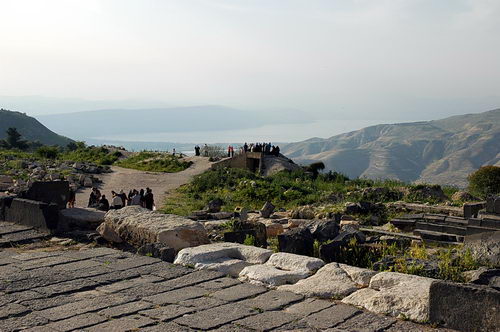
View of Sea of Galilee from Umm Queis. Photo by Ferrell Jenkins.

View of Sea of Galilee from Umm Queis. Photo by Ferrell Jenkins.

We know that Gadara had a port on the Sea of Galilee, and that Roman coins of the city portrayed ships.

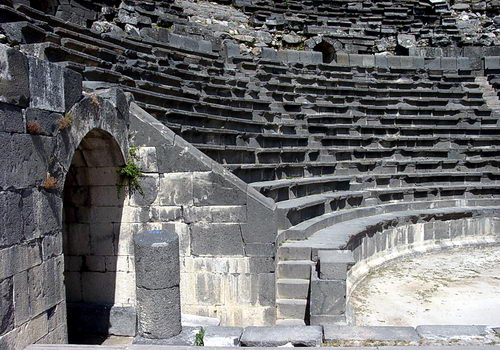
Here is a photo of the Roman theater of Umm Queis. The earliest buildings of this city are made of basalt, the volcanic rock common in the area.

The basalt theater at Umm Queis. Photo by Ferrell Jenkins.

The basalt theater at Umm Queis. Photo by Ferrell Jenkins.

HT: Joe Lauer

Happy Birthday to the WWW

The World Wide Web is now 20 years old. There are still a lot of people who are at least 20 years behind. Read the full account and links to related topics here.

In March 1989, Sir Tim Berners-Lee, then a scientist at CERN, the European Organisation for Nuclear Research, published a paper, entitled Information Management: A Proposal, which aimed to provide a framework for academic institutions to organise and share electronic documents across the internet, and were crucial in the creation of the world wide web.

“Tim pulled together ideas of a markup language, getting files on the internet and hypertext,” said Wendy Hall, a professor in the computer science department at the University of Southampton. “The things that made it work were open standards and protocols so anyone could set up their own web server and HTML documents, the fact that it was completely distributed and scalable, and that it worked over the network.”

Sir Tim will mark the occasion with a speech to scientists and technologists in Geneva, exploring the history of the web, and future applications of internet technology.

Earlier this week, Sir Tim warned a parliamentary round-table that allowing advertisers to target internet users by tracking their browsing habits was akin to putting a “spy camera” in people’s homes.

When I first began to use the WWW I would go to the CERN site, long before Google, to search for links to information. I remember telling my students in the 1990s that if they started reading all the pages on the WWW they would never finish. How much more today! Of course, most of the pages are probably not worth reading.

My first web page of biblical information, established May 14, 1996, later became the domain BiblicalStudies.info. BibleWord.com went online September 26, 1998.

On our recent trip to Alexandria, Egypt, we visited the famous new library. One of the guides showed us the computers that store about 85  —  web pages archived since 1998. Try it here. You can see what Bible World looked like in 1999.

Wayback computers in the library at Alexandria, Egypt. Photo by F. Jenkins.

Wayback computers in the library at Alexandria, Egypt. Photo by Ferrell Jenkins.

BTW, Al Gore was Vice President of the United States from 1993 to 2001.

HT: Paleojudaica

Pigeons

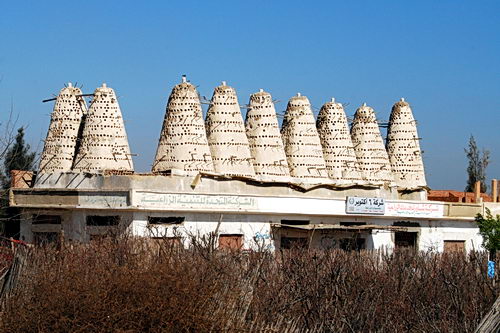
While traveling in Egypt we noticed pigeon roosts several places, but especially in the eastern Delta region (the biblical land of Goshen). The photo below was made along the desert road between Cairo and Alexandria.

Pigeons may serve many purposes: food, eggs, making fertilizer, message carriers, etc. Our guide explained that many people thought of the pigeon as an aphrodisiac.

Pigeon roosts near Alexandria, Egypt. Photo by Ferrell Jenkins.

Pigeon roosts near Alexandria, Egypt. Photo by Ferrell Jenkins.

Every reference to pigeons in the Bible is related to sacrifices. Most of the references are in Leviticus (1:14; 5:7, 11; 12:6, 8; 14:22, 30; 15:14, 29). Note two other references:

  • When the LORD made the land covenant with Abram at Shechem, He asked Abram to bring “a three year old heifer, and a three year old female goat, and a three year old ram, and a turtledove, and a young pigeon” (Genesis 15:9). The Hebrew word here is different. Fox, in The Five Books of Moses, uses the term fledgling.
  • Mary’s offering of purification in Jerusalem was “a pair of turtledoves or two young pigeons” (Luke 2:24).