Monthly Archives: July 2009

Flag faux pas

We have been flying our flag since a few days before Memorial Day.

When traveling outside the United States it is fairly common to see the flag of the USA displayed in front of hotels that cater to citizens of the USA. Dozens of boats carry tourists across the Sea of Galilee from one port to another. This is an important part of our tours to give the travelers some sense of the elevation of the sea, and of the quietness of its water.
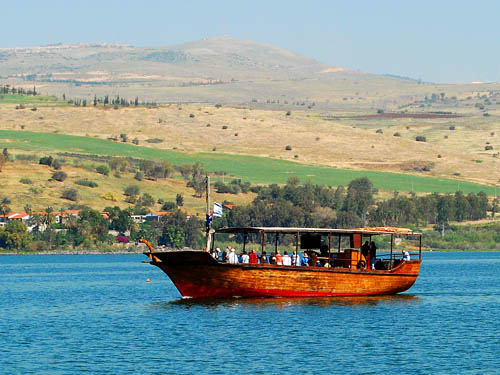
Tourist boat on Sea of Galilee. View to East. Photo by Ferrell Jenkins.

Tourist boat on Sea of Galilee. View to East. Photo by Ferrell Jenkins.

It is fairly typical of these boats to hoist a flag of the country from which its passengers come. In 2006 the boat we were on had inadvertently hoisted the USA flag upside down. The rules of etiquette for the display of the flag say that the flag should be flown upside down only as a distress signal. Fortunately we did not have a storm like the one mentioned in the gospels. Such storms still occur when the strong winds come down upon the sea from the surrounding mountains. In that case I suppose a distress signal might have been helpful.

But as they were sailing along He fell asleep; and a fierce gale of wind descended on the lake, and they began to be swamped and to be in danger. They came to Jesus and woke Him up, saying, “Master, Master, we are perishing!” And He got up and rebuked the wind and the surging waves, and they stopped, and it became calm. (Luke 8:23-24 NAU)
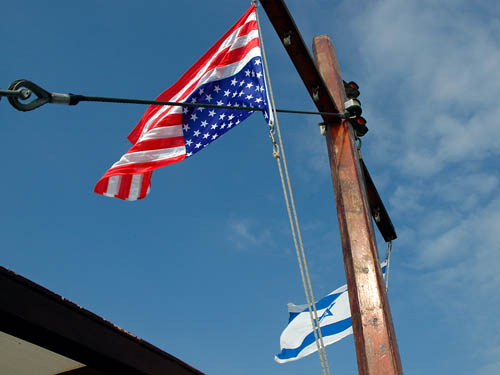
United States flag upside down on Israeli boat. Photo by Ferrell Jenkins.

United States flag upside down on Israeli boat. Photo by Ferrell Jenkins.

Happy fourth of July to my USA friends. Fly your flag proudly, but don’t turn it upside down!
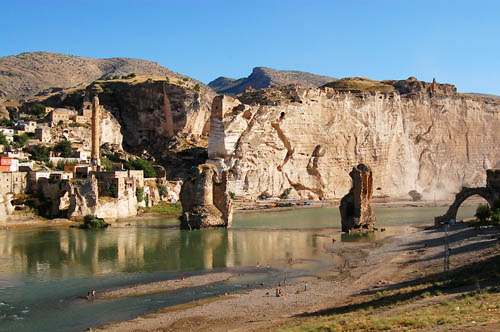
The Hasankef Dam on the Tigris River halted

The Biblical Archaeology Review Daily News for June 26, 2009, reports a halt in the building of the dam on the Tigris River in southeastern Turkey. BAR calls attention to an report by the BBC about the halting of the project. Note this portion of the report:

Insurers have suspended their support for a controversial dam project in southeastern Turkey amid concern about its environmental and cultural impact.Export credit insurers in Austria, Germany and Switzerland said on Tuesday they had told suppliers to suspend work on the Ilisu dam on the Tigris river.

They are giving Ankara 180 days to meet standards set by the World Bank. The ancient Hasankeyf fortress is in the area that would be flooded and more than 50,000 people would have to move.

The hydroelectric project near Turkey’s borders with Syria and Iraq is part of a scheme to develop the mainly Kurdish region, which has suffered for decades from poverty, neglect and conflict.

Environmentalists say the dam would destroy archaeological treasures, including Roman remains. The dam consortium plans to create a culture park on the edge of the reservoir and transfer key monuments from Hasankeyf there.

The full (brief) report may be read here. See information about the history of the site here.

I had the opportunity to visit this area in June, 2007. This is one of the most fascinating places I have visited. The site of ancient Nineveh is less than 125 miles south of Hasankef on the Tigris.

Tigris River at Hasankief. Ruins of Roman bridge. Photo by Ferrell Jenkins.

Tigris River at Hasankef. Note ruins of Roman bridge. Photo by Ferrell Jenkins.

The Tigris River formed the eastern border of Mesopotamia, the land between the rivers (Tigris and Euphrates). It is mentioned by name only twice in the Bible.

  • The Tigris was the third of the rivers flowing from the Garden of Eden. It is said to be east of Assyria (Genesis 2:14). Was this in the north near the source of the river in the mountains of Ararat? Or was it in the south near the Persian Gulf? I don’t know.
  • The prophet Daniel was by the bank of the great river, the Tigris (Daniel 10:4). This would have been further south in present Iraq.

The Sea of Galilee

A boat ride on the Sea of Galilee is one of the highlights of a trip to Israel for most Christian tourists. They enjoy seeing the lake and recognizing the places they have read about so much in their Bible study: Tiberias, Magdala, the Mount of Beatitudes, Capernaum. They reflect on the accounts of Jesus walking on the water and stilling the tempest, etc.

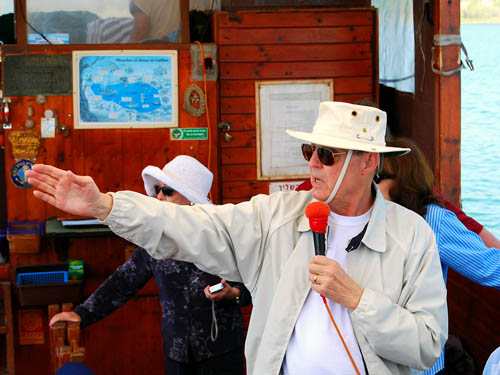
My wife had someone shooting photos while I was pointing out sites of interest along the shores of Galilee. I think I was pointing out the possible location of the account of the swine rushing down the steep bank into the sea (Matthew 8:28 – 9:1).

Ferrell Jenkins pointing out sites of interest on the shore of Galilee.

Ferrell Jenkins pointing out sites of interest along the shore of Galilee.

Luke calls the Sea of Galilee a lake (Luke 5:1-2; 8:22-23,33).

Now Jesus was standing by the Lake of Gennesaret, and the crowd was pressing around him to hear the word of God. (Luke 5:1 NET)