Everyone is well

It is a bit disappointing that I am unable to upload photos from my hotel in Jerusalem. Two other bloggers on our group are having the same problem.

So, this note is just to let you know that everyone is doing well at the end of the day, Monday, April 7.

Sunday evening in Jerusalem

I was unable to post an entry yesterday due to a weak signal here at the hotel in Jerusalem. We had a busy day both Saturday and Sunday. Perhaps later tonight, or by tomorrow, I will be able to include more photos. Everyone in the group is doing well.

Hazor, Dan, Caesarea Philippi, Golan Heights

Today we visited sites north of the Sea of Galilee. We began at Hazor, a site overlooking the Hulah Valley. The Israelites came to this large city and defeated the inhabitants and burned the city.

However, Israel did not burn any cities that stood on their mounds, except Hazor alone, which Joshua burned. (Joshua 11:13)

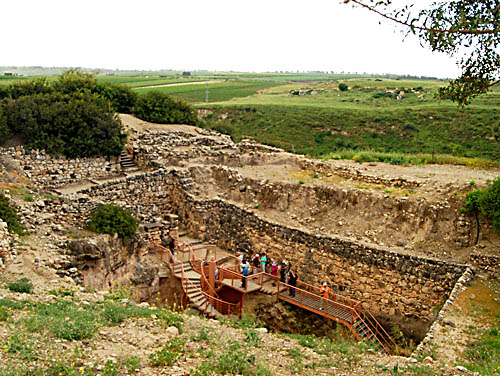
This photo shows the water shaft due in the days of King Ahab of Israel. Gates and walls were for protection, and food and water were a necessity for survival.

The water shaft at Hazor. Photo by

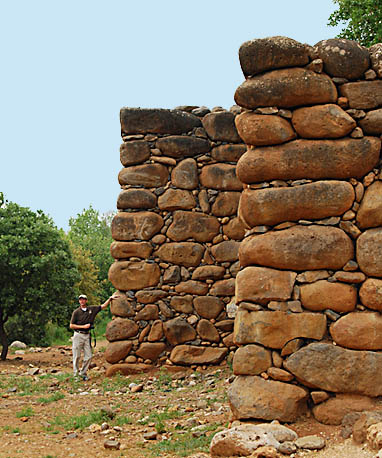
We continued north to the Israeli-Lebanese border at Metulla. Afterwards we went to Tel Dan. In order to get to the tel it is necessary to walk through a nature park, much of it along the Dan River, the strongest source of the Jordan River. Here is a photo of a stretch of reconstructed wall near the city gate.

Reconstruction of the City Wall at Tel Dan. Photo by Ferrell Jenkins.

We continued a short distance east to Banias, the biblical Caesarea Philippi, where Jesus made His promise to build the church upon His own deity.

Now when Jesus came into the district of Caesarea Philippi, He was asking His disciples, “Who do people say that the Son of Man is?” And they said, “Some say John the Baptist; and others, Elijah; but still others, Jeremiah, or one of the prophets.” He said to them, “But who do you say that I am?” Simon Peter answered, “You are the Christ, the Son of the living God.” And Jesus said to him, “Blessed are you, Simon Barjona, because flesh and blood did not reveal this to you, but My Father who is in heaven. “I also say to you that you are Peter, and upon this rock I will build My church; and the gates of Hades will not overpower it. “I will give you the keys of the kingdom of heaven; and whatever you bind on earth shall have been bound in heaven, and whatever you loose on earth shall have been loosed in heaven.” (Matthew 16:13-19)

We made a short stop at Birket Ram, a lake in an extinct crater below Mount Hermon. There was almost no snow on the mountain today. Often a small amount of snow can still be seen by this time of year. We continued to Tiberias through the Golan Heights (biblical Bashan), where one of the cities of refuge was located (Joshus 20:8).

We closed the tour day with a short visit to Mount Arbel for a view of the Sea of Galilee.

The Shabat (Sabbath) has begun in Israel. Jews pour into the hotels for the Shabat to have their meal prepared for them by someone else. We are near a pedestrian street with a number of restaurants. The music is loud, indicating very little in the way of a spiritual significance to the Sabbath. A far cry from the commands of the Torah.

A day in Galilee

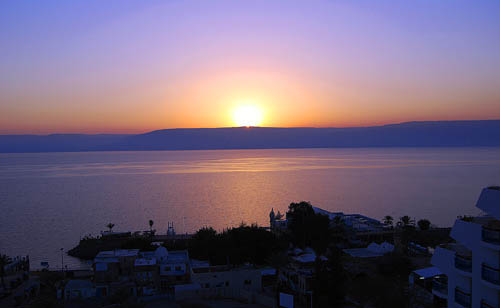
is is the way I began the day by viewing the sunrise over the Sea of Galilee from my hotel window at Tiberias. This is always a beautiful view. It brings to mind many of the teaching of Jesus in the Galilee area. Jesus met his disciples on the shores of Galilee after His resurrection. John 21:12 records that Jesus prepared breakfast for the disciples.

Sunrise on the Sea of Galilee. Photo made from Tiberias by Ferrell Jenkins. April 3, 2008.

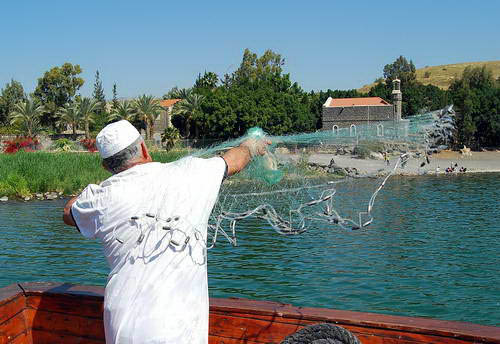
We always include a boat ride on the Sea of Galilee as part of ou tour. One of the men on our boat showed how nets were cast in bible times. This was in the area where Jesus appeared to the disciples. Here is the account in the Gospel of John:

But when the day was now breaking, Jesus stood on the beach; yet the disciples did not know that it was Jesus. 5 So Jesus said to them, “Children, you do not have any fish, do you?” They answered Him, “No.” 6 And He said to them, “Cast the net on the right-hand side of the boat and you will find a catch.” So they cast, and then they were not able to haul it in because of the great number of fish. (John 21:4-6).


Fisherman casting a net on the Sea of Galilee. Photo by Ferrell Jenkins.

We visited Capernaum, Tabgha, the Mount of Beatitudes, and Bethsaida. We drove along the eastern side of th Sea of Galilee and saw the area where the swine ran down the steep cliff into the sea.(Matthew 8:32). We stopped at En Gev and made a photo of the tell of Hippos. We made a few photos at the new excavations at Tiberias. In December excavations were renewed at Magdala. We stopped at the site, but the entire area is locked and it was practically impossible to make any decent photos of the site due to the fencing around the site. Perhaps in future years the site will be open to the public. Magdala was the home of Mary Magdalene.

Everyone in the group seems to be having a good time learning more about the land of Jesus.

Two of our ladies are publishing blogs that are very informative and are filled with human interest. We learned that the 3rd grade class at Athens Bible School is following our tour as one of their projects. There are four women on our tour who are grandmothers of children in the class. Here are the links to the other blogs.

gowithjo.blogspot.com

Caesarea Maritima, Mount Carmel, and Nazareth

After a good night of rest along the beautiful Mediterranean we left Netanya and headed a few miles north to Caesarea Maritima. Caesarea was a first century Roman capital and seaport. The gospel was first preached to the Gentiles here when Peter came from Joppa to Caesarea to tell Cornelius words by which he could be saved (Acts 10, 11).

Herod the Great built a city on the site of Strato’s Tower and named it Caesarea in honor of Caesar Augustus. It became a certer of Roman provincial government in Judea. The city had a harbor and was located on the main caravan route between Tyre and Egypt. This city is called Caesarea Maritima (on the sea) to distinguish it from Caesarea Philippi.

Paul used the harbor at Caesarea several times. He was imprisoned here for two years before departing for Rome (Acts 24:27; 27:1). This photo shows the area of Herod’s Palace with the replica of the Pilate inscription. This inscription was found in the theater in 1961. Pilate was the Roman procurator of Judea from A.D. 26-36.

Caesarea. Palace of Herod. Pilate Inscription. Photo by Ferrell Jenkins.

After visiting other sites of the city we continued north to Mount Carmel to visit the site associated with Elijah and the prophets of Baal (1 Kings 18). We crossed the Valley of Jezreel (the Armageddon of Rev. 16:16), and came to Nazareth, the boyhood home of Jesus. One of the highlights of the day was a visit to the Nazareth Village. This is a wonderful place to see authentic illustrations of life in the time of Jesus.

Nazareth Village is built on the site of a first century farm. We saw a wine press cut into rock, a watchtower, a carpenter at work a woman spinning wool, a reconstructed synagogue, etc. I would encourage anyone coming to this area to visit Nazareth Village. I keep a link to their web site at Biblical Studies Info Page. Here is a direct link to Nazareth Village. This beautiful photo shows the shepherd with his sheep.

Nazareth Village - Sheperd with sheep. Photo by Ferrell Jenkins.

Tonight we are at Tiberias on the shores of the Sea of Galilee.

Landing amid snipper fire!

About the time we were ready for landing the pilot began what seemed link some diversionary tactics, first turning to the left, and then to the right. We knew that this was an area that had seen conflict for several millennial.

When the pilot had the plane safely on the tarmac we all jumped out and hunkered down to avoid the sniper fire from all sides. The greeting that had been planned for us had to be cancelled.

So much for April fool’s day! (I haven’t heard anything about the presidential campaigns since leaving the USA.)

We made the trip safely, but several pieces of luggage were missing. Once these reports had been filed we left the airport and went to Joppa.

Joppa is located on the Mediterranean Sea. Joppa is now part of Tel Aviv-Yaffo. The site is associated with several important evens from biblical times. Solomon traded wheat, barley, oil, and wine to Hiram of Tyre for the timber of Lebanon to be used in Solomon’s building projects, including the temple.

“Now then, let my lord send to his servants wheat and barley, oil and wine, of which he has spoken. We will cut whatever timber you need from Lebanon and bring it to you on rafts by sea to Joppa, so that you may carry it up to Jerusalem.” (2 Chroinicles 2:15-16).

Jonah took a ship from Joppa toward Tarshish in a feeble attempt disobey the Lord (Johan 1:3). Peter raised Dorcas (Tabitha) at Joppa (Acts 9:36-43). While in the city, Peter received messengers from Cornelius of Caesarea (Acts 10-11). Part of the account in Acts reads this way:

“And he reported to us how he had seen the angel standing in his house, and saying, ‘Send to Joppa and have Simon, who is also called Peter, brought here; and he will speak words to you by which you will be saved, you and all your household.” (Acts 11:13-14).

Our photo today is made from the site of Joppa, looking toward the modern city of Tel Aviv. We plan to see Caesarea tomorrow.

Tel Aviv from the site of ancient Joppa. The Mediterranean Sea. Photo by Ferrell Jenkins.

In the air and on the road again

We are off to Israel and Jordan.

Soon we will be leaving our hotel and heading for Lufthansa at the JKF International Airport to meet our group. There were at least eight of us at this hotel last night. We have an intermediate stop at Frankfurt, and then on to Tel Aviv. If we arrive on time we will be able to visit Joppa before sunset. Our overnight stay will be at Netanya, along the beautiful Mediterranean.

If possible we will connect to the Internet at Frankfurt. Otherwise, expect our first post from Netanya. We hope to give you a brief behind the lense look at the places we visit in Israel and Jordan. Our time in Israel and Jordan will be seven hours ahead of EDT.

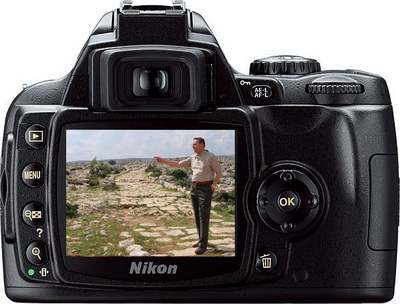
Nikon D40X and Ferrell Jenkins on Roman Road near Tarsus.

Greek NT Manuscripts Discovered in Albania

Daniel B. Wallace reports on the discovery of what is being called a “treasure trove” of Greek New Testament manuscripts. Wallace heads up the Center for the Study of New Testament Manuscripts (www.csntm.org). Last summer a team went to the National Archive in Tirana, Albania, to photograph some manuscripts.

According to Wallace, there are now 5752 New Testament manuscripts known and catalogued. These range from the small John Rylands fragment of the Gospel of John to complete manuscripts of the New Testament.

Seventeen formerly lost manuscripts were found to be in the Albanian archive. This was not the most exciting part of the discovery in Albania. Wallace explains,

This was not the only good news of the day, nor even the most momentous. The catalog revealed several other Greek New Testament manuscripts that had never been catalogued by western scholars. Simple arithmetic told us this: There were forty-seven Greek New Testament manuscripts listed in the National Archive catalog, while the K-Liste noted only thirty in Albania (thirteen plus the seventeen that had been presumed lost). Thus, Tirana was housing at least seventeen manuscripts unknown to western scholarship and as many as thirty-four! Since the dawn of the 21st century, an average of two or three Greek New Testament manuscripts is brought to light each year. A cache of 17 to 34 manuscripts is a remarkable find, regardless of the age and pedigree of the manuscripts.

Codex Beratinus from the 6th century was the oldest manuscript in the Archive.

The oldest manuscript in the collection is Codex Beratinus, a codex that had been dyed in purple, with silver and gold letters written on it. Containing only Matthew and Mark today, this codex, written in the sixth century, is very rare because it is a royal codex. Only a handful of purple biblical codices still exist.

You may read the complete account here.

Wallace mentions one of the manuscripts that does not contain the account of the woman taken in adultery (John 7:53-8:11). He gives us a good discussion of how textual critics deal with this question.

The Parchment and Pen blog has carried a series of articles on textual criticism. To find all of these worthwhile articles scroll down and look for Dan Wallace Contra Mundane in the left column. Click here and look for these good articles.

Back to travel. The whole issue of determining the original text of the New Testament comes down to some practical issues. A visit to Israel and Jordan might include the following places:

  • Bethany beyond the Jordan (John 1:28). Or should it be Bethabara?
  • The Pool of Betheda (John 5:2). Or should it be Bethzatha, Bethsaida, or Belzetha? And should that verse (4) about the stirring of the water even be in the text?
  • The country of the Gadarenes (Matthew 8:28). Or should it be Gergesenes or Gerasenes?

A news release about the Albanian manuscript discovery may be read here. A PDF copy is available here.

Added Note: Video report. WFAA, Dallas, aired a brief report about Dr. Wallace and the Albanian discovery. I could not get it to work in Firefox, but it is o.k. in Explorer. Click here. I wish TV and newspaper reporters could think of something better than “a modern Indiana Jones!”

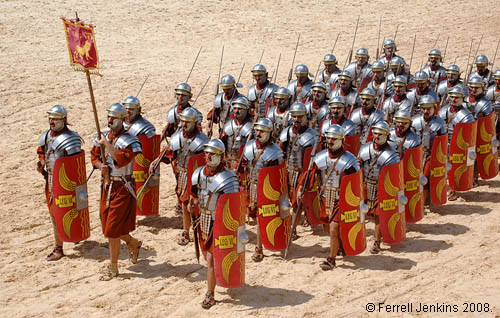
Roman soldiers and chariot races at Jerash

If you have an opportunity to visit Jordan you should make an effort to see the RACE show at Jerash. RACE stands for Roman Army and Chariot Experience. You will see actors in authentic dress as armed legionaries, gladiators, and a short chariot race. The show takes place in the Roman hippodrome of Jerash. The view of the city ruins in the vicinity make this a wonderful setting for the performance. Full details may be found here.

Jerash was the second largest city of the Decapolis (after Damascus) in New Testament times. People from the Decapolis followed Jesus during His ministry in Galilee (Matthew 4:23-25). When Jesus traveled through the Decapolis he possibly visited the area around Jerash (Mark 7:31).

The photo shows the Roman soldiers of the 6th Legion from the time of the Emperor Hadrian (A.D. 117-138). A visit to this show provides several good photographs to illustrate New Testament times.

The 6th Roman Legion at Jerash, Jordan. Photo by Ferrell Jenkins.

The Suez Canal and Egyptian peddlers

USA Today has an AP report today that a ship under contract to the U.S. Navy fired shots at a small Egyptian boat. The article explains why the small boats would approach a ship going through the canal. The full article is here.

Small boats selling cigarettes and other products often swarm civilian ships moving through the canal. These waterborne merchants know not to approach military vessels but the Global Patriot looked like a civilian vessel, said the security official, speaking on customary condition of anonymity.

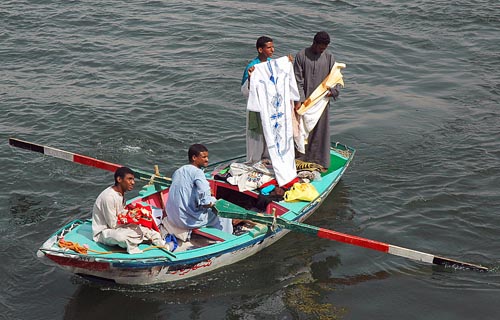
Egyptian peddler’s are among the most persistent in the world. Many Americans are caught off guard, and even frightened, by the persistence of these men (and children). Americans are accustomed to going into a store, picking up what they want, and saying “How much?” It isn’t that way in many parts of the world, especially in Egypt. You may say, “I don’t need that,” or “I don’t want that.” “Leave me alone.” The response you get is like that of a three-year old, “Why you don’t need that?” And the persistence continues until you are safely inside the security of the tour bus and driving away. Even then the salesman may hold on to the side of the bus as it leaves his area.

The photo below was made at Edfu during a Nile Cruise. I think these men are Nubians, but I have several other photos of Egyptians doing the same thing.

Nubian peddlers on the Nile River at Edfu. Photo by Ferrell Jenkins.