Category Archives: Photography

“A new beginning” in the Muslim world

United States President Obama calls for “a new beginning” in the Muslim world in Cairo today.

We watched the presidential inauguration on Al Jazeera in Egypt last January. The Egyptian men were all excited about this change in America. For a day or two afterward we would be greeted with big smiles and chants of  “Obama, Obama.” One camel driver told a member of our group, “I like Obama; he’s my color.”

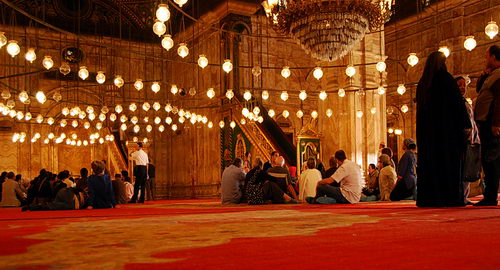
The Obama party is making visits to the pyramids and the Mohammed Ali Mosque. Typical tourist things to do. See our comments about the Mosque and a photo of the exterior of the building here. Below is a photo I made inside the mosque using a tiny tripod (about 6 inches high) on the floor of the mosque. Tourist groups are sitting on the floor listening to the history of the mosque.

Interior of Mohammed Ali Mosque in Cairo. Photo by Ferrell Jenkins.

Interior of Mohammed Ali Mosque in Cairo. Photo by Ferrell Jenkins.

Understanding is good. Let’s hope that this “new beginning” allows freedom for those in the Muslim world who profess Christ.

The full text of President Obama’s speech is available from The Guardian.

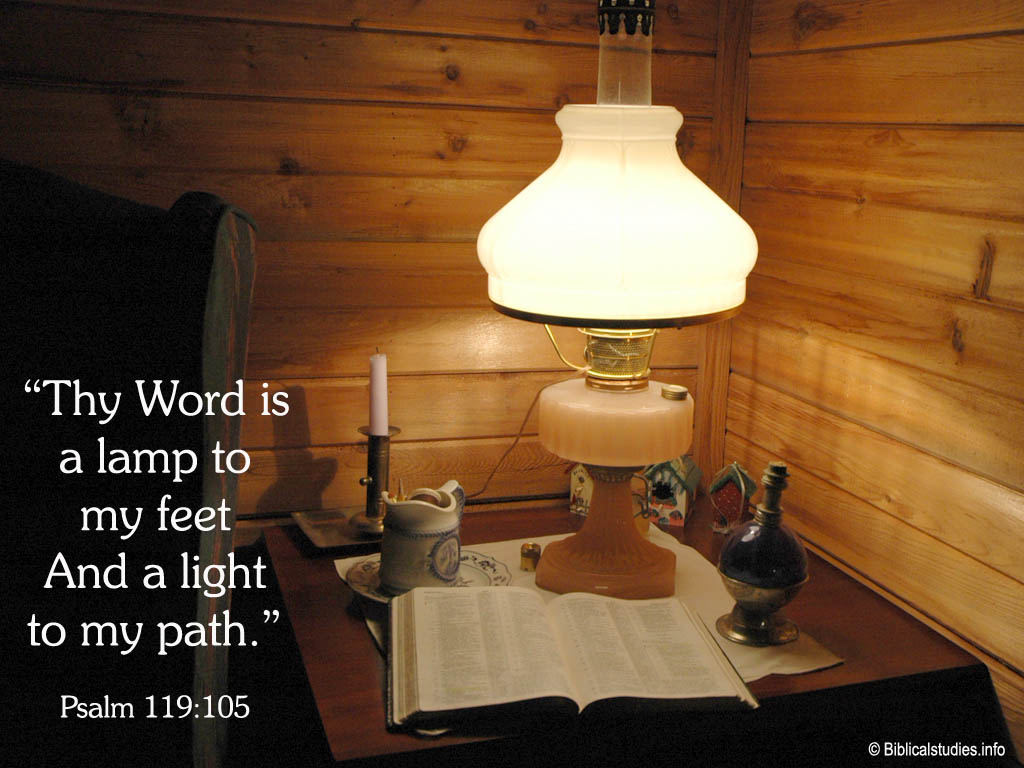
The Aladdin Lamp gave light to all in the house

The New Dictionary of Cultural Literacy, provides this information about the Aladdin Lamp:

The subject of a story in the Arabian Nights. The young boy Aladdin acquires a magic lamp that, when rubbed, brings forth a genie, who grants Aladdin’s wishes to win the hand of the sultan’s daughter and to build a palace. The magician who first gave Aladdin the lamp steals it back, but Aladdin regains the lamp, and he and the sultan’s daughter live happily ever after.

The lamp that Americans of the 1930s and 1940s came to know as the Aladdin Lamp was already in use in Germany during the early part of the 20th century. The flat wick kerosene lamp was common in the rural south when I was a youngster, but the Aladdin Lamp provided much more light because the flame heated a frameless mantle that hung over the flame. We had one Aladdin Lamp which we kept in the “big room” where both my parents and I slept until during my earliest grammar school years. This was literally our “living room.”

All of my evening school work was done in the light of the bright Aladdin Lamp. I thought that was the brightest light I had ever seen at night, and it was.

A few years ago, during a speaking engagement, I stayed with a fine family in Cullman, Alabama. They had the largest collection of Aladdin Lamps I have seen. Many of them have been refitted with electric fittings to make them usable today, like the one in our photo. I asked if he knew how much “wattage” one of the original lamps provided. He told me that it was about 60 watts.
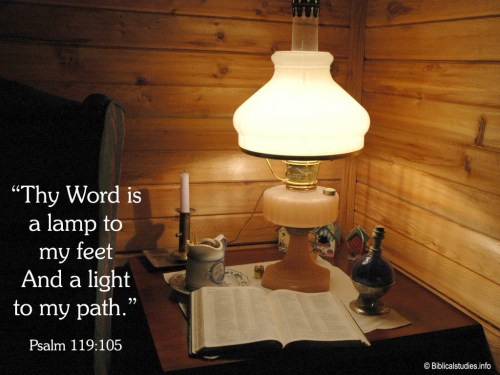
The Aladdin Lamp provided light for all in the house. Photo by Ferrell Jenkins.

The Aladdin Lamp provided light for all in the house. Photo by Ferrell Jenkins.

Lamps like this provide us with a reminder of the wonderful illustration used by Jesus.

Again Jesus spoke to them, saying, “I am the light of the world. Whoever follows me will not walk in darkness, but will have the light of life.” (John 8:12 ESV)

And, we recall the illumination and guidance provided by the LORD and His word.

Your word is a lamp to my feet And a light to my path. (Psalm 119:105 NAS)

This photo has been prepared in a size large enough to be used in PowerPoint presentations by my preaching/teaching friends. Just click on the image for a larger one.

A place called Fair Havens

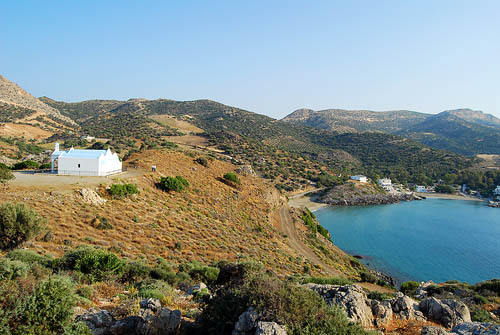
Last year I wrote here about a visit to Fair Havens on the island of Crete. I have been thinking about the rugged beauty of that place and decided to share a different photo with you. This one emphasizes the mountains surrounding the harbor of Fair Havens. The white Greek Orthodox chapel adds to the beauty of the area today.

Mountains surrounding Fair Havens in Crete. Photo by Ferrell Jenkins.

Mountains surrounding Fair Havens in Crete. Photo by Ferrell Jenkins.

Crete is associated with Paul’s voyage to Rome. The biblical account is found in Acts 27:7-15. Note verses 7 and 8.

When we had sailed slowly for a good many days, and with difficulty had arrived off Cnidus, since the wind did not permit us to go farther, we sailed under the shelter of Crete, off Salmone; and with difficulty sailing past it we came to a place called Fair Havens, near which was the city of Lasea.

The ship sailed under the shelter of Crete and came to Kali Limenes (Fair Havens) near the city of Lasea. Because Fair Havens was not a suitable harbor for wintering, the pilot and captain of the ship decided to sail on in hopes of reaching “Phoenix, a harbor of Crete, facing southwest and northwest,” and spend the winter there. Because of a severe wind, called Euraquilo, which came down from the land, they were driven by the wind and eventually wrecked on the island of Malta.

The Oriental Institute at the University of Chicago

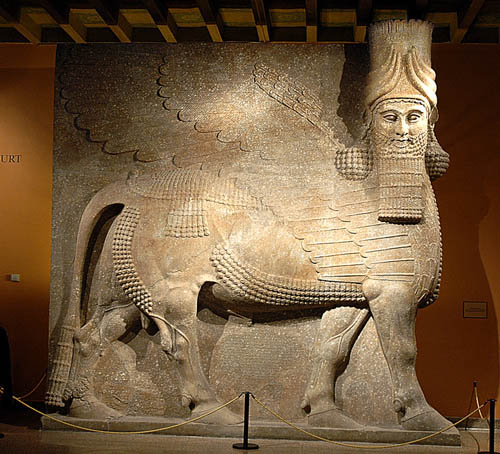
The Oriental Institute at the University of Chicago is one of the great museums of biblically related artifacts in the world. The University of Chicago excavated at the Neo-Assyrian city of Khorsabad from 1928 to 1935. This site was the fortress of King Sargon II (721-705 B.C.).

Assyrian winged bull, OIUC. Photo by Ferrell Jenkins.

Assyrian winged bull, OIUC. Photo by Ferrell Jenkins.

The OIUC web page describes the winged bull this way:

This colossal sculpture was one of a pair that guarded the entrance to the throne room of King Sargon II. A protective spirit known as a “lamassu”, it is shown as a composite being with the head of a human, the body and ears of a bull, and the wings of a bird. When viewed from the side, the creature appears to be walking; when viewed from the front, to be standing still. Thus it is actually represented with five, rather than four, legs.

Sargon II is mentioned only once in the Bible (Isaiah 20:1). There was a time when some critics denied the existence of Sargon II and suggested that the Bible writer made up the name. The great museums, Oriental Institute, British Museum, and the Louvre, have abundant evidence of his existence.

Photography is allowed in the museum.

The museum website will provide all the info you need to plan your visit to the Oriental Institute Museum.

Ireland and St. Patrick

Thoughts turn toward the Emerald Isle on St. Patrick’s Day, especially for those with Irish roots. The truth about St. Patrick is shrouded in Irish mist. He is said to have brought Christianity to Ireland, perhaps in the latter part of the fifth century.

I do not celebrate St. Patrick’s day, but for whatever good he may have done I am thankful. I thought this would be a good opportunity to share a photo from Ireland with you.

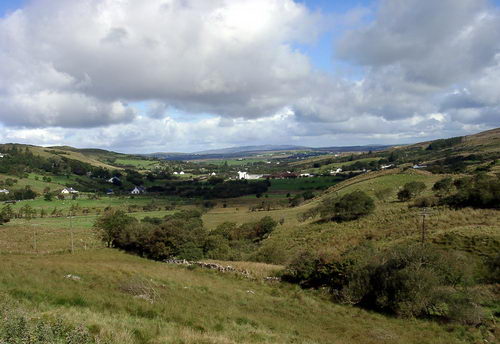
Ireland is a beautiful place to visit. The photo below of Finn Valley was made near Donegal Bay. The area is noted for beautiful hills, a magnificent coastline, majestic mountains, deep glens, and shimmering lakes.

Ireland's Finn Valley. Photo by Ferrell Jenkins.

Ireland's Finn Valley. Photo by Ferrell Jenkins.

One branch of my family came from County Wicklow on the south eastern side of the island.

A final visit to the Sphinx and Pyramids

For the past six days my wife and I have been staying at a hotel near the famous Giza Pyramids as we traveled in the area to visit various sites. Children from the early grades learn about the Pyramids of Egypt. Our four-year-old grandson stayed with us shortly before we left for this tour. Early one morning he said, “What were the pyramids?” I tried to explain.

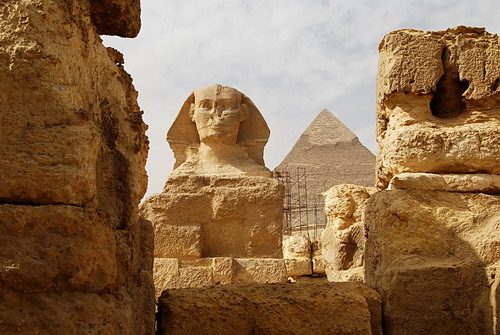
This morning Elizabeth and I went to the Pyramid Plateau for one last view.  Our first visit here was 1967. We never fail to be impressed with the enormity of the structures, and the motivation that caused them to be built.

The sphinx and the pyramid of Cheops. Photo by Ferrell Jenkins.

The sphinx and the pyramid of Cheprern. Photo by Ferrell Jenkins.

The Giza Pyramids were built about 2400-2600 B.C. Biblical characters such as Abraham, Joseph, and Moses likely saw these structures. Obviously the biblical Israelites, who lived in the country nearly a millennium later, had nothing to do with their building.

Alexandria, Egypt

Today we visited Alexandria on the Mediterranean coast. The drive from our hotel in Giza takes about 3 hours along the high desert road. The weather was fine, and the light and sky was good for photography.

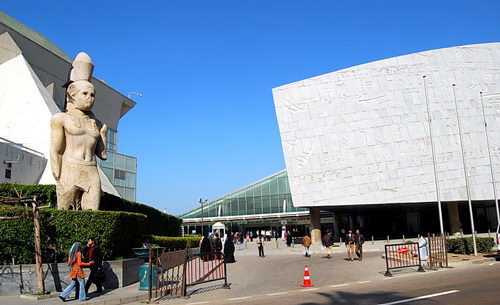
Alexandria was founded by Alexander the Great. The library of ancient Alexandria was the most famous in the world at the time. Originally it was established in the 4th century B.C. by Ptolemy Soter I, or a few years later by his son. About 220 languages are presented on the granite wall that surrounds the library.

The new Bibliotheca Alexandria. Photo by Ferrell Jenkins.

The new Bibliotheca Alexandrnia. Photo by Ferrell Jenkins.

The new library, the Bibliotheca Alexandrina, opened in 2003. It may not be the best library of the world today, but it is likely one of the most beautiful. A statue of Ptolemy stands outside the entrance to the modern Library.

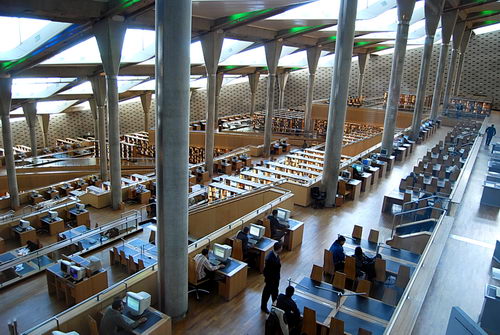
The reading room is impressive.

Reading room of the new Bibliotheca Alexandria. Photo by Ferrell Jenkins.

Reading room of the new Bibliotheca Alexandrina. Photo by Ferrell Jenkins.

The Hebrew scriptures were translated into Greek under the Ptolemaic rulers, beginning about 280 B.C. There are four references to Alexandria or the Alexandrians in the  New Testament.

  • Alexandrians were among those who disputed with Stephen (Acts 6:9).
  • Apollos was an Alexandrian by birth (Acts 18:24).
  • The ship Paul sailed on from Myra toward Rome was an Alexandrian ship. Eventually the ship was wrecked off the island of Malta (Acts 27:5ff.).
  • The ship used for the final leg of Paul’s voyage to Rome was an Alexandrian ship (Acts 28:11).

Thoughts on the Nile during the Inauguration

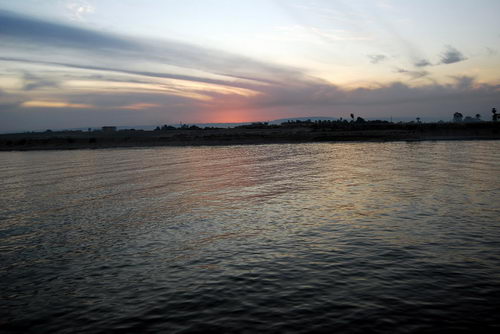
Shortly before sunset I made a few photos of the Nile River looking toward the west bank of the river. I thought I would share this one with you.

Sunset on the Nile. Photo by Ferrell Jenkins.

Sunset on the Nile. Photo by Ferrell Jenkins.

We are anchored on the Nile a few miles south of Luxor. From my cabin on the Tu Ya cruise boat I am watching the Al Jazeera Network live coverage of the inauguration ceremonies in Washington. The choice of the majority of voters on November 2 was not my choice, but I must say that I am proud at this moment to be an American.

The American ideal of freedom and justice for all is a noble one. Surely there are times when this ideal is not met, but it remains the dream that holds us together, many as one. The diversity of our nation is a testimony to the vitality of that dream.

The inaugural ceremony is the same whether watching it live in Washington, on Al Jezeera in Egypt, or on NBC, CNN, Fox, or one of the other networks in the United States. Well, maybe. The thing that makes the difference is the commentary afterwards and the news chosen to run underneath the live event.

Luxor, Egypt

We boarded our cruise boat today shortly before noon. After lunch we spent a few hours at Karnak where the great temple complex is located.

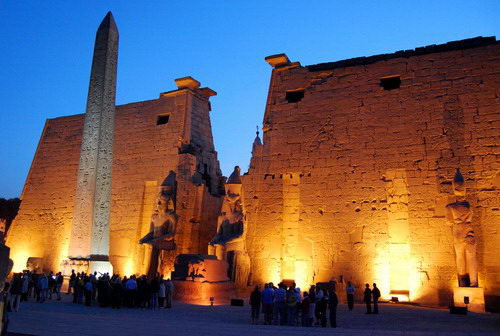
In the late afternoon we went to Luxor temple. This is the temple of Ramses II situated on the banks of the Nile River. I tried making a few photos of the beautifully lit entrance with the statues of the Pharaoh and the obelisk. Here is one of those.

Luxor was known as Thebes in the Old Testament.

Luxor Temple in Egypt. Photo by Ferrell Jenkins.

Luxor Temple in Egypt. Photo by Ferrell Jenkins.

It is difficult for me to write more or post more photos at this time because there are only a couple of computers on the cruise ship and the cost is steep — about $10 for 30 minutes. I simply wanted all of our readers, especially those with family members and friends on the tour, to know that everyone in our group is doing well.

Our boat remains docked at Luxor tonight. Tomorrow morning we visit the Valley of the Kings. At about 1 p.m. the boat departs for destinations along the Nile River.

Daydreaming a little

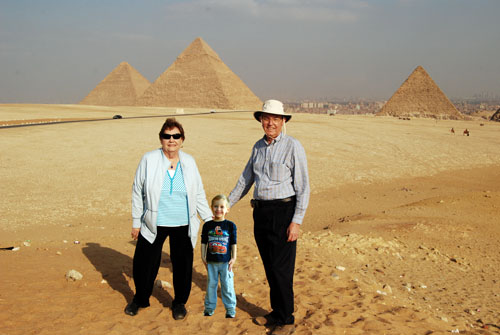
Family and friends who know us personally know that our greatest joy for the past four years has been our grandson. He stayed overnight with us recently prior to this tour. Almost the first question after he woke up was, “What were the pyramids?” I think his mind was satisfied when I finished the explanation. I promised that I would put him in a picture with us at the pyramids. He willingly posed for me to get a suitable photo.

Traveling with our grandson in our heart.

Traveling with our grandson in our heart.

We sent this photo to him yesterday, and he emailed back his hearty approval. He said that he read the sign in front of the group all by himself. Maybe someday he can come to Egypt with us. What a joy that would be.

And this fits in well with our recent theme of composite creatures. Let him who has understanding receive it.