Category Archives: Photography

Hadrian’s arch in Athens

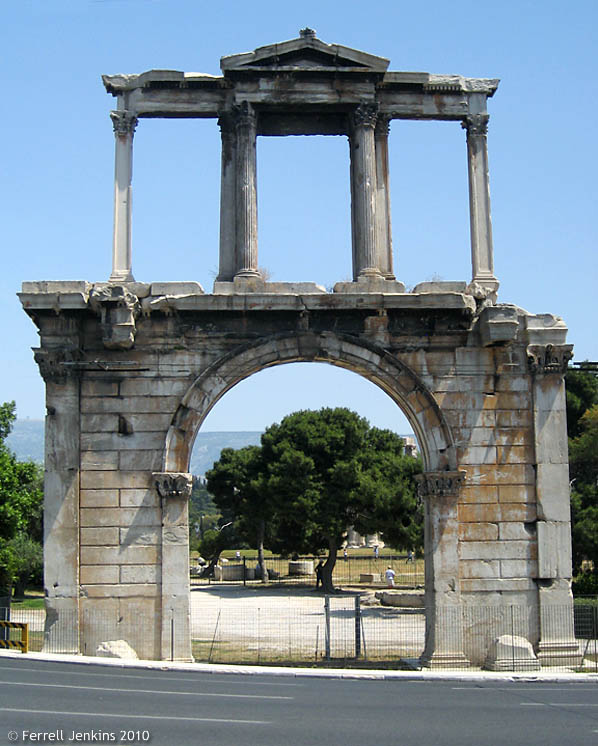
The Roman emperor Hadrian (A.D. 117-138) left arches in many cities he visited. The arch in Athens marks the entry to the Temple of Zeus. Rant and Reddish describe the arch:

The imposing Arch of Hadrian was constructed in honor of the emperor following the completion of the temple [to Zeus], and Hadrian himself walked through it to attend the dedication of the temple in 131 C.E. The western side of the arch (toward the old city) carries the inscription “This is Athens, the city of Theseus.” The inscription on the eastern side of the arch facing the temple (and toward a section of Athens that had been newly renovated by Hadrian) states, “This is the city of Harrian and not of Theseus. (A Guide to Biblical Sites in Greece and Turkey, 33)

To get a photo like this one requires some good footwork. The arch faces one of the busiest streets in Athens, but one must move out into the street between cars to get an unobstructed view.

Arch of Hadrian in Athens. Photo by Ferrell Jenkins.

Arch of Hadrian in Athens. Photo by Ferrell Jenkins.

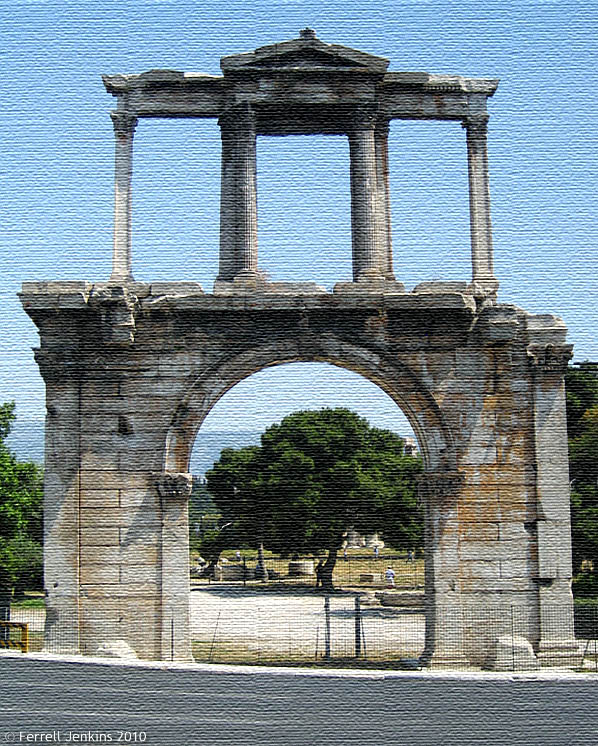
Photoshop, and some other photo editing programs, provide the opportunity to manipulate photos in unusual ways. Here is the same photo textured as if it were painted on canvas.

Arch of Hardrian on canvas. Photo by Ferrell Jenkins.

Arch of Hadrian on canvas. Photo by Ferrell Jenkins.

The fourth major persecution of the church by the Roman Empire came in the days of Hadrian.

Armenians gather in Turkey

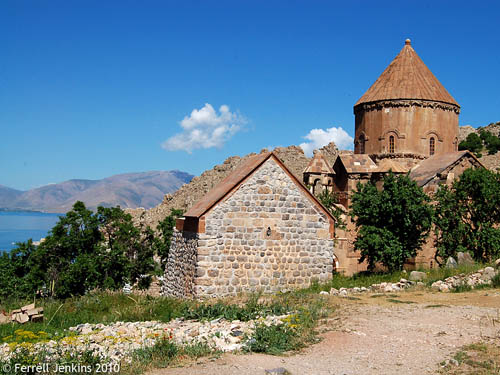
The 10th century Armenian church on Akdamar Island in Lake Van (Turkey) was restored and reopened as a museum by the Turkish government in 2007.  About three months after the opening I was able to visit the church.

Armenian Church on Akdamar Island in Lake Van. Photo by Ferrell Jenkins.

Armenian Church on Akdamar Island in Lake Van. Photo by Ferrell Jenkins.

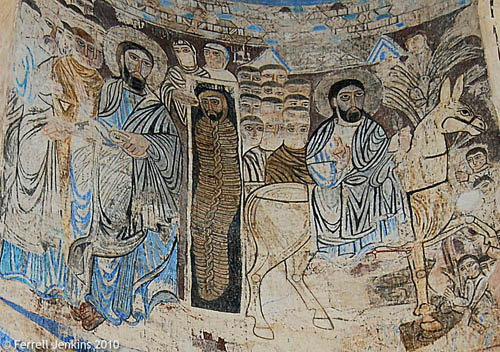
There are some marvelous frescoes and carvings of Bible stories inside and outside the church. The one pictured below shows the raising of Lazarus (John 11) and the Triumphal Entry of Jesus into Jerusalem (John 12). Scenes such as these served to remind those who saw them of the biblical accounts. An Armenian translation of the (Greek) Septuagint Old Testament “was made for the Christian communities of eastern Asia Minor” about A.D. 400 (Price, The Ancestry of Our English Bible, 3rd rev. ed., 119). The New Testament translation was made about the same time (198). Price says,

Armenian manuscripts are very numerous, probably more numerous than those of any other version except the Latin Vulgate.

Bible stories in the Akdamar Island church. Photo by Ferrell Jenkins.

Bible stories in the Akdamar Island church. Photo by Ferrell Jenkins.

Earlier this week USA Today reported that the Turkish government allowed several Armenian Christian pilgrims to visit the Akdamar church last Sunday. This was the first time a service had been held in the church since it was “abandoned during the mass killings of Armenians 95 years ago.”

The media has directed much attention lately to the problems of minority religions in Turkey. The CBS news show 60 Minutes included a feature about restrictions on the Greek Orthodox in Turkey a few weeks ago.

The region around Lake Van in eastern Turkey was the ancient region of Urartu, known as Ararat in the Bible.

  • Noah’s ark landed on the mountains of Ararat (Genesis 8:4).
  • The men who assassinated the Assyrian king Sennacherib fled into the land of Ararat (2 Kings 19:37 = Isaiah 37:38).
  • The kingdoms of Ararat may have joined other nations in the capture of Babylon (Jeremiah 51:27).

Royal theater box at the Herodium

Last week reports began to circulate about Herod’s royal theater box at the Herodium. Here are some excepts from the News Release published by the Hebrew University of Jerusalem.

Royal box uncovered at Herodium reveals further evidence of luxurious lifestyle of famed King of Judea

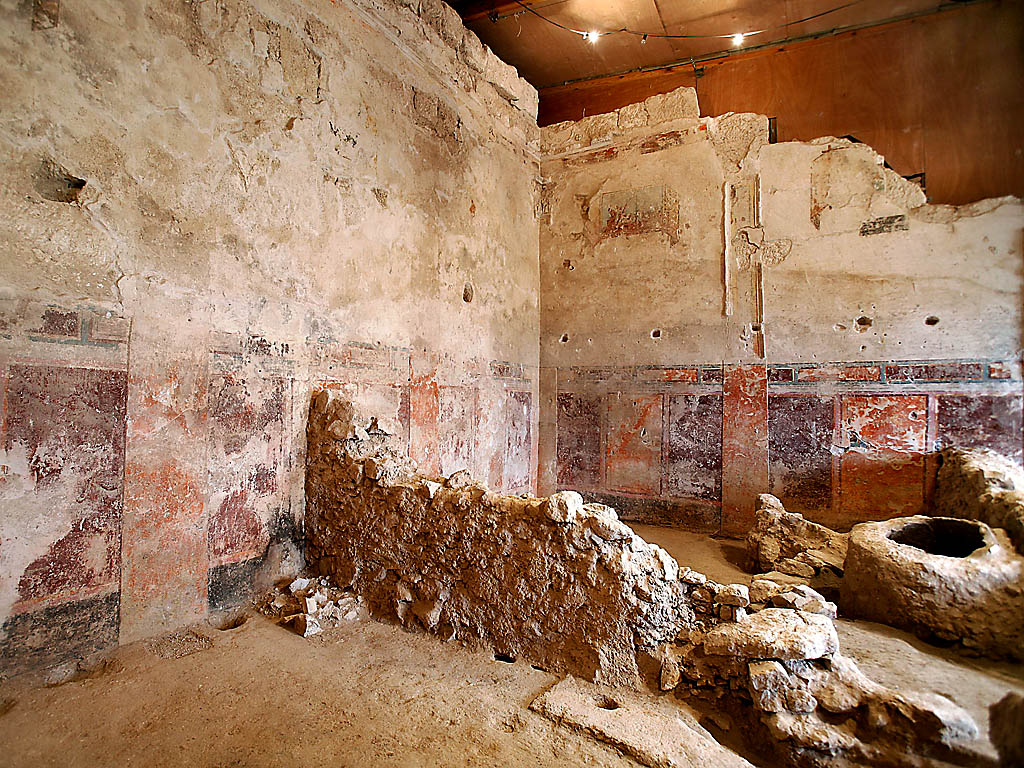
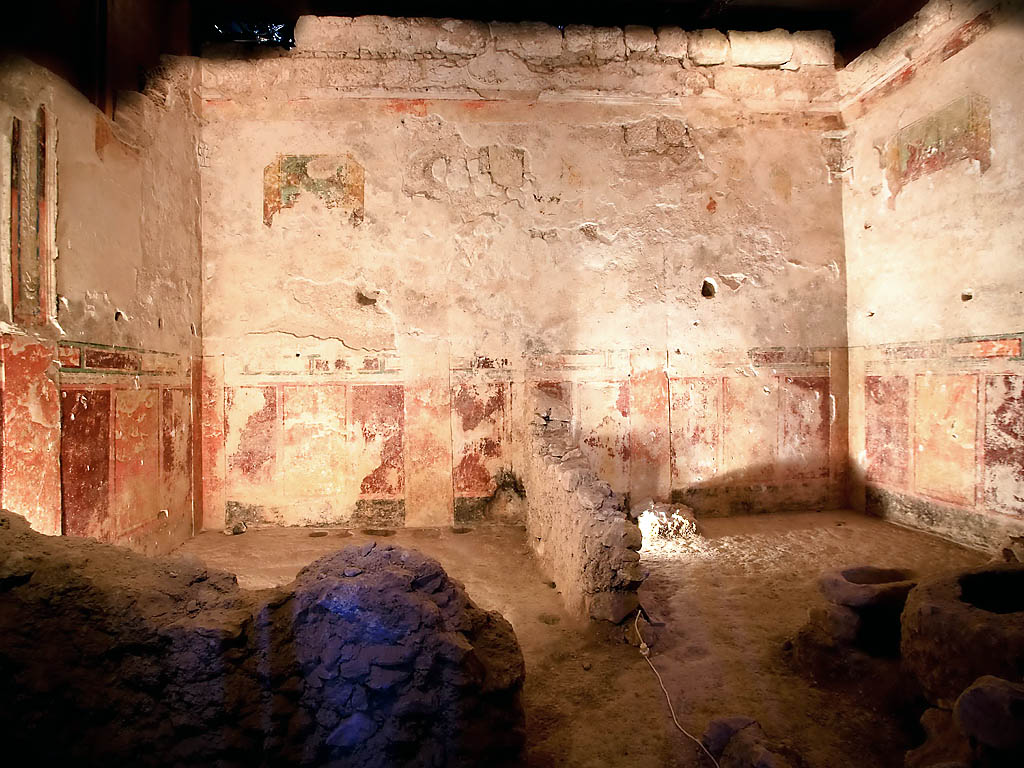
A “royal box” built at the upper level of King Herod’s private theater at Herodium (Herodion in Greek) has been fully exposed in recent excavations at the site, providing a further indication of the luxurious lifestyle favored by the famed Judean monarch.

The excavations, in the frame of Herodium’s National Park at the eastern edge of Gush Etzion, were conducted by Prof. Ehud Netzer under the auspices of the Hebrew University of Jerusalem Institute of Archaeology.

The theater, first revealed during the years 2008-2009, is located halfway up the hill close to Herod’s mausoleum, whose exposure in 2007 aroused worldwide attention. The highly decorated, relatively small theater was built in approximately 15 B.C.E., which was the year of the visit to Judea of Marcus Agrippa, second in the hierarchy of the Roman Empire, said Prof. Netzer, who has been assisted in the excavations by Yakov Kalman, Roi Porath and Rachel Chachy.

The royal box (measuring eight by seven meters and about six meters high) is the central space among a group of rooms attached to the upper part of the theater’s structure. This impressive room doubtlessly hosted the king, his close friends and family members during performances in the theater and was fully open towards the stage.

Its back and side walls are adorned with an elaborate scheme of wall paintings and plaster moldings in a style that has not been seen thus far in Israel; yet, this style is known to have existed in Rome and Campania in Italy during those years. This work, therefore, was no doubt executed by Italian artists, perhaps sent by Marcus Agrippa, who a year before his visit to Judea met Herod on the famous Greek island of Lesbos said Netzer.

On the upper parts of the walls are the room’s highlights: a series of unique “windows” painted with outfolded shutters on either side and various naturalistic landscapes within. They include scenes of the countryside, the Nile River and a nautical scene featuring a large boat with sails. One can identify features of trees, animals and human beings. Some of these windows have survived intact on the walls, whereas others were found in fragments on the floor and are undergoing restoration in the Israel Museum’s laboratory.

Painted windows with shutters appear in the late Second Pompeian Style in Italy, and mainly depict unrealistic views like theater settings and still-life. The closest parallels for the windows at Herodium are known from the “Villa Imperiale” at Pompeii, dated to the early Third Style, 15 to 10 B.C.E.

The News Release may be read in its entirety here.

Joseph I. Lauer secured the available photos and has been kind enough to share them.
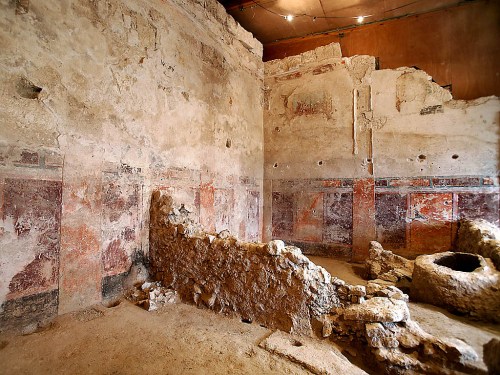
Herodium theater royal box. Photo by Gabi Laron, Hebrew University.

Herodium theater royal box. Photo by Gabi Laron, Hebrew University.

The Hebrew University report says,

The data accumulated during the excavation proves that the theater’s lifetime was very short, less than ten years. Slightly before Herod’s death, It was deliberately destroyed in order not to disrupt the conic shape of the artificial hill. During the construction of the artificial hill (as well as the famous monumental stairway which begins at the bottom of the hill), parts of the theater, including the “royal box,” were temporarily used by the builders, leaving their footsteps in the form of subdivision walls, cooking installations and graffiti.
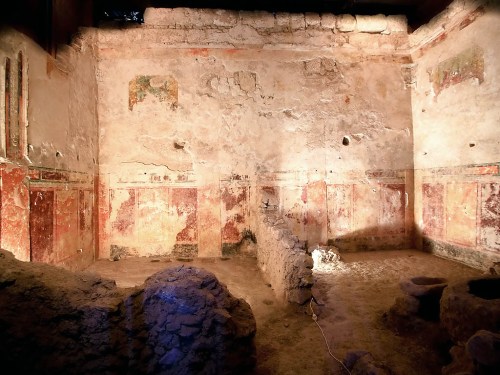
Herodium royal box. Photo by Tal Rogovski, Hebrew University.

Herodium theater royal box. Photo by Tal Rogovski, Hebrew University.

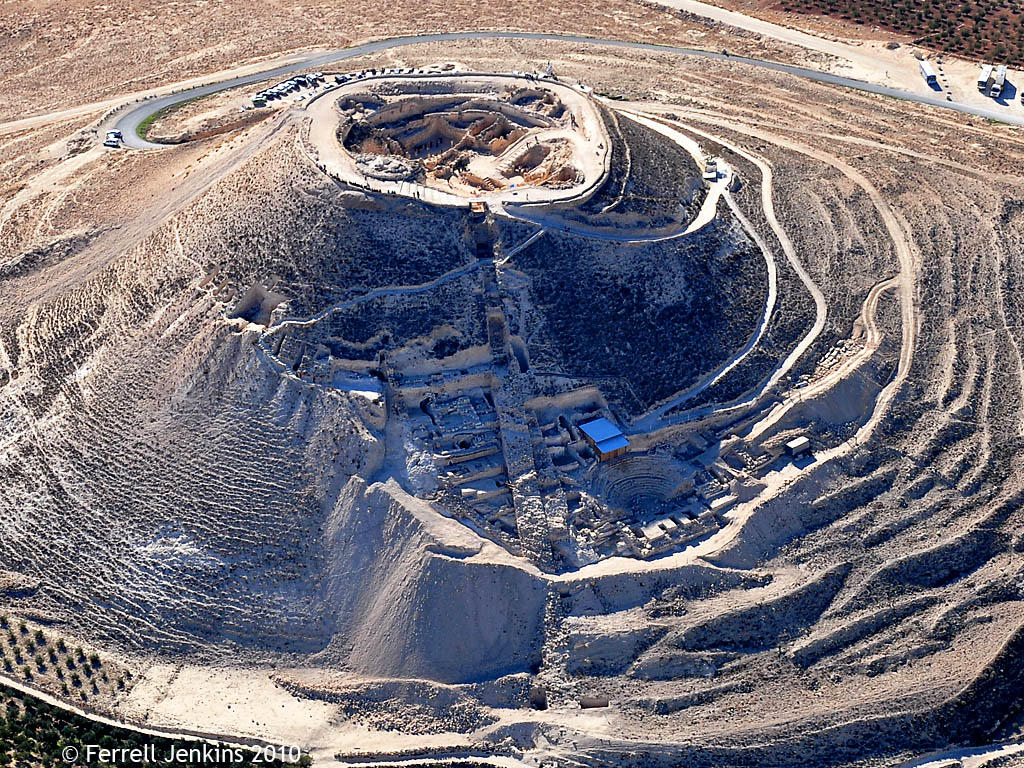
I had the opportunity to make some aerial photos of the Herodium December 15, 2009. Shadows were on the north side of the Herodium, but the massive area of the excavation can be seen. Note especially the theater. I feel certain that the royal box described above is under the blue roof. Click on the image to for a larger photo.
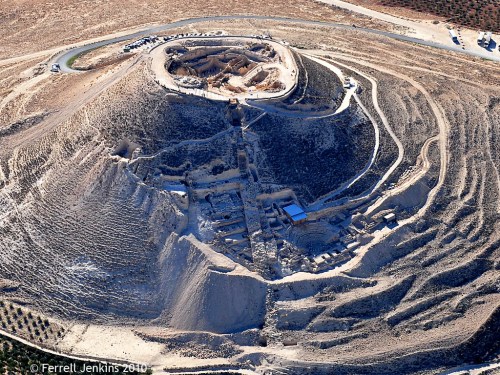
Aerial photo of the Herodium. Photo by Ferrell Jenkins.

Aerial photo of the Herodium. Photo by Ferrell Jenkins.

The Herodium is located about four miles southeast of Bethlehem. When we think of these two places together we recall Herod’s frantic attempt to kill Jesus.

Then Herod, when he saw that he had been tricked by the wise men, became furious, and he sent and killed all the male children in Bethlehem and in all that region who were two years old or under, according to the time that he had ascertained from the wise men. (Matthew 2:16 ESV)

All of the photos are suitable for use in teaching presentations.

Uchisar in Cappadocia

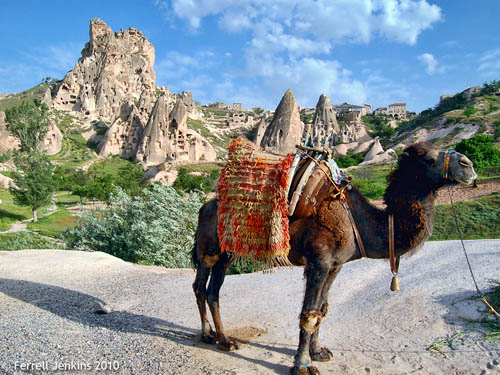
This photo was made in Uchisar in the region of Cappadocia in Turkey.

Uchisar in Cappadocia, Turkey

A camel at Uchisar in the region of Cappadocia. Photo by Ferrell Jenkins.

The Bible tells us that Jews of Cappadocia were present in Jerusalem on the day of Pentecost (Acts 2:9). Peter wrote his epistles to saints scattered throughout Cappadocia and other places in Roman Asia Minor (modern Turkey).

Peter, an apostle of Jesus Christ, To those who are elect exiles of the dispersion in Pontus, Galatia, Cappadocia, Asia, and Bithynia,  2 according to the foreknowledge of God the Father, in the sanctification of the Spirit, for obedience to Jesus Christ and for sprinkling with his blood: May grace and peace be multiplied to you. (1 Peter 1:1-2)

Abel Beth Maacah — a mother in Israel

No sooner had King David put down the rebellion of his son Abaslom when a Benjamite by the name of Sheba led a rebellion against him. The men of Israel rebelled against David and followed Sheba, but the men of Judah remained loyal to the king.

Realizing that Sheba was a greater threat than Absalom had been, David called on Abishai to take servants (warriors) and capture Sheba. Joab’s men went out from Jerusalem to capture Sheba. This pursuit took Joab’s men all the way to the north of the Israelite territory, to a town named Abel-Beth-Maacah. Some English versions use Abel Beth Maacah, or a similar variant. In modern Israel this town is almost on the border with Lebanon between Kiryat Shmona and Metulla.

Sheba passed through all the tribes of Israel to Abel of Beth-maacah. All the Berites came together and followed him. Joab’s troops came and besieged Sheba in Abel of Beth-maacah. They built an assault ramp against the outer wall of the city. While all the troops with Joab were battering the wall to make it collapse, a wise woman called out from the city, “Listen! Listen! Please tell Joab to come here and let me speak with him.” (2 Samuel 20:14-16 CSB)

Abel Beth Maacah. Photo by Ferrell Jenkins.

Abel Beth Maacah - a mother in Israel. Photo by Ferrell Jenkins.

Our photo, looking east, shows the massive mound thought to be the site of Abel-Beth-Maacah. This photo was made in early May. The tell stands out distinctly from the surrounding apple orchards. The Beka Valley and the anti-Lebanon mountain range can be seen beyond the tel.

The wise woman reasons with Joab. She tells him that this town formerly was a place where people would ask for advice to end a dispute. She said,

I am a peaceful person, one of the faithful in Israel, but you’re trying to destroy a city that is like a mother in Israel. Why would you devour the LORD’s inheritance?” (2 Samuel 20:19 CSB)

Joab agreed that he would not destroy the city if she would hand over Sheba. She agreed to throw the head of Sheba over the wall. She did what she promised and the destruction was averted. Joab went back to the king in Jerusalem.

Abel-beth-Maacah is mentioned in at least two other passages.

  1. The city was conquered by Ben-hadad, king of Aram [Syria] (1 Kings 15:20).
  2. The city was captured by Tiglath-pileser, king of Assyria, in the days of Pekah of Israel.

Note. This is a revision of a post from December 19, 2008 with a more recent photo.

A real Word Press

Monday I visited the Ulster-American Folk Park in County Tyrone, Northern Ireland. This is a marvelous open-air museum with old houses, some of which have been moved from their original place to the Park for preservation. One of the houses belonged to Judge Thomas Mellon,  founder of the Pittsburgh banking dynasty.

One of the houses that caught my attention was the house of a common (poor) family of about 1790. I wrote about it in a different blog here.

The park traces the movement of immigrants from Ireland to America. Having been interested in printing since taking a course in letter press printing during my Junior year in high school, I found the print shop of interest.

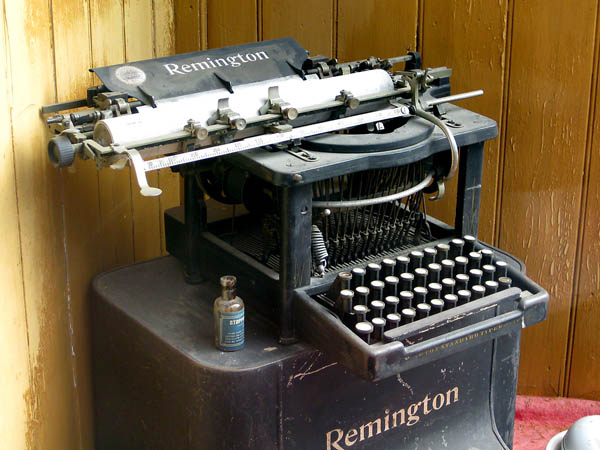
There was an old Remington typewriter in the window of the print shop.

Typewriter at Ulster-American Folk Park

Typewriter at Ulster-American Folk Park. Photo by Ferrell Jenkins.

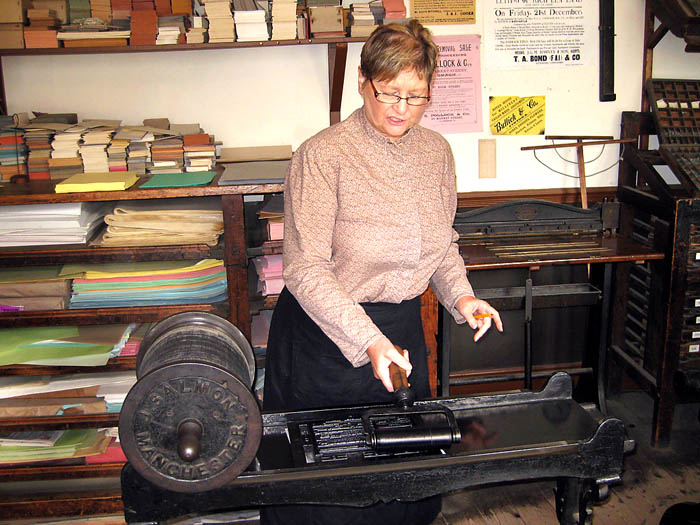
The lady printer is operating a proof press. She actually printed a contract of passage for me to board a ship and sail for the New World.

Proof press at ulster-American Folk Park. Photo by Ferrell Jenkins.

Proof press at Ulster-American Folk Park. Photo by Ferrell Jenkins.

Now that’s a real Word Press.

Only today and tomorrow

Todd Bolen is offering the Picturesque Palestine 4-volume set of photos and engravings for only $20 with free shipping. That price is available only today and tomorrow.

He also tells you how to get his current Bible Places Newsletter, and I can tell you that it offers a great slide show on Samaria that you can download.

Get details here.

The Ostrich in Bible Times

The ostrich is listed among the unclean birds for the Israelites in Leviticus 11:16 and Deuteronomy 14:15. Job laments that he is “a companion of ostriches” (Job 30:29). The longest section of scripture mentioning the ostrich is in the the response by the LORD.

“The wings of the ostrich wave proudly, but are they the pinions and plumage of love? For she leaves her eggs to the earth and lets them be warmed on the ground, forgetting that a foot may crush them and that the wild beast may trample them. She deals cruelly with her young, as if they were not hers; though her labor be in vain, yet she has no fear, because God has made her forget wisdom and given her no share in understanding. When she rouses herself to flee, she laughs at the horse and his rider. (Job 39:13-18 ESV)

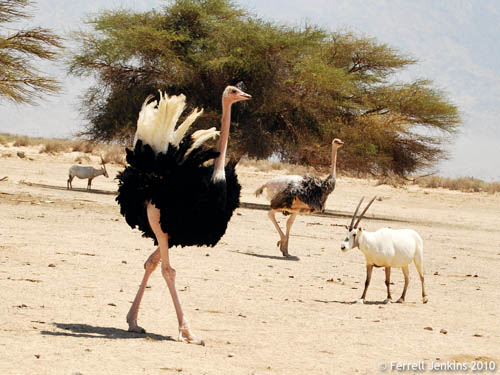
Ostrich at the Hai Bar Nature Reserve. Photo by Ferrell Jenkins.

Ostriches at the Hai Bar Nature Reserve. Photo by Ferrell Jenkins.

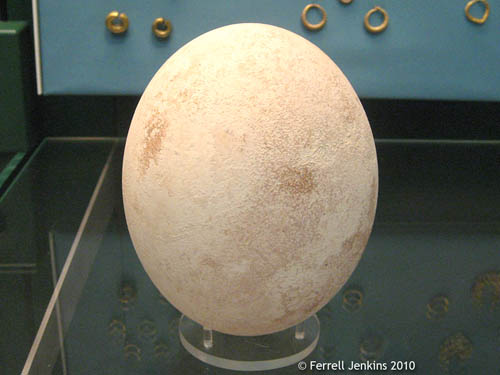
Archaeologists uncovered this ostrich egg pictured below from the MB II level (1750–1550 B.C.) at Lachish. The sign with the display at the British Museum says,

Ostriches were native to the Levant and their eggs, plain or decorated were often included in tomb deposits.

Ostrich Egg discovered at MB II Lachish. British Museum. Photo by Ferrell Jenkins.

Ostrich Egg discovered at MB II Lachish. British Museum. Photo by Ferrell Jenkins.

After the destruction of Jerusalem in 586 B.C., Jeremiah lamented that “the daughter of my people has become cruel, like the ostriches in the wilderness.” (Lamentations 4:3 ESV)

Cyrus Cylinder loaned to Iran

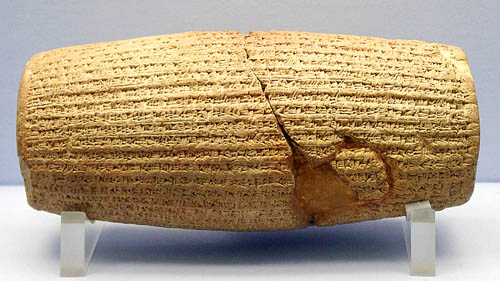
The Cyrus Cylinder came from ancient Persia. Now the British Museum, where it has been housed for many years, is loaning the artifact to the museum in Tehran, Iran.

Todd Bolen calls attention the the agreement, the historical significance of the Cyrus Cylinder, and the biblical reference (Ezra 1:1-4) to one of the events mentioned in the Cylinder.

The the account at the Bible Places Blog here, and be sure to follow the link to his list of the British Museum: Top 10, yeah 15.

If you plan to visit London, and you are interested in Bible study, be sure to download my short list of “Some Biblically Related Artifacts in the British Museum” here.

The Cyrus Cylinder in the British Museum. Photo by Ferrell Jenkins.

The Cyrus Cylinder in the British Museum. Photo by Ferrell Jenkins.

Remembering 9/11

A few days ago we visited the Waterford Crystal Factory to see the various stages involved in the making special Waterford pieces.

Perhaps everyone remembers the famous ball dropped in Times Square on New Years’ Eve, and the special sports trophies made by Waterford. Another piece at the factory caught my attention. At this time I want to share this one special piece.

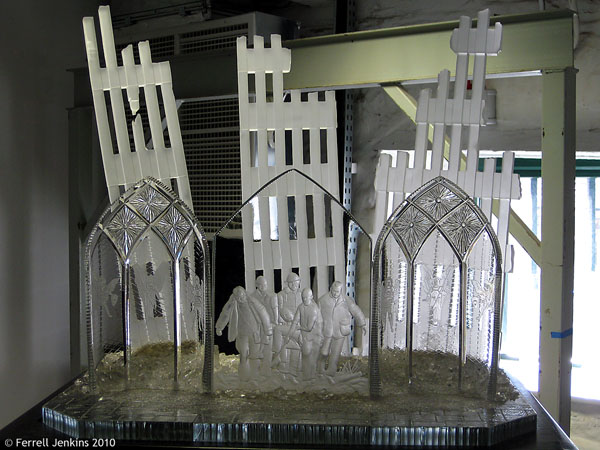
Waterford Crystal - Dedicated to 9-11 Rescue Workers

Waterford Crystal - Dedicated to 9-11 Rescue Workers

The plaque below this poignant piece says, “This piece was made in remembrance of Fr. Mychal Judge, who was one of the 343 FDNY, 37 PAPD & 23 NYPD Officers who lost their lives on September 11th 2001 while trying to save others.” The final line says,

This piece is dedicated to all the Rescue Workers.

The tragic events of 9/11 should never be forgotten by Americans or any other peace loving peoples. We remember all, whether rescue workers or not, who lost their lives on that day.