Category Archives: Photography

The olive shoots

The Bible is filled with illustrations from the agricultural practices and daily life activities of ancient Israel. We frequently pass over these images because we no longer understand the practices.

Here is an interesting one. In describing the happy home, one of the Psalms of Ascent says this,

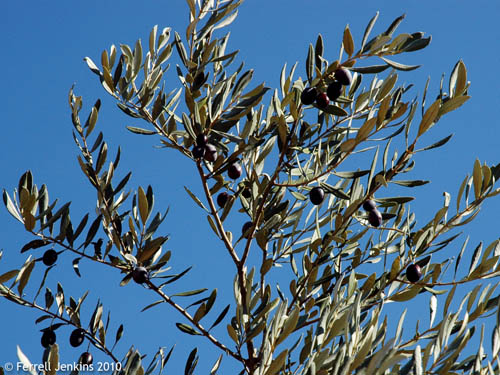
Your wife will be like a fruitful vine within your house; your children will be like olive shoots around your table. (Psalms 128:3 ESV)

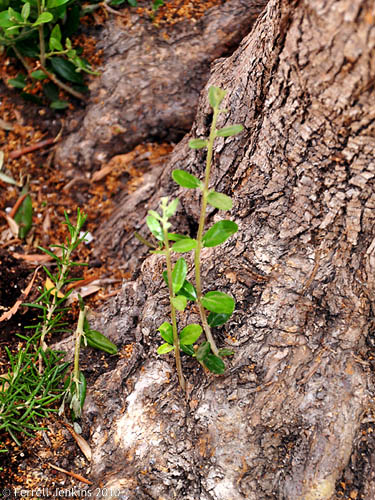
I must have photographed a dozen different examples of what the writer is alluding to. Perhaps this one will help you to enjoy it a little better.

Olive shoots coming from an olive tree. Photo by Ferrell Jenkins.

Olive shoots coming from an olive tree. Photo by Ferrell Jenkins.

The Olive Tree

What is the first tree mentioned by name in the Bible? After a visit to the art museum one might say, “the apple.” But there is nothing about the apple in Genesis. I don’t mean the “tree of the knowledge of good and evil” either.

The first is the fig. Adam and Eve tried to cover their nakedness by sewing together fig leaves.

Then the eyes of both were opened, and they knew that they were naked. And they sewed fig leaves together and made themselves loincloths (Genesis 3:7 ESV)

I really want to write about the second tree named in Scripture. It is the 0live. After the flood, Noah sent out a dove to see if the water had receded.

And the dove came back to him in the evening, and behold, in her mouth was a freshly plucked olive leaf. So Noah knew that the waters had subsided from the earth. (Genesis 8:11 ESV)

The land of Canaan, promised by the LORD to Abraham and his descendants, was to be a land that included figs and olives.

a land of wheat and barley, of vines and fig trees and pomegranates, a land of olive trees and honey (Deuteronomy 8:8 ESV)

Olive trees flourish in the mountainous terrain of the land of Canaan/Israel/Palestine (this is not a political discussion). Here are some photos of olive trees. The first is one of the older trees in the traditional Garden of Gethsemane on the Mount of Olives. In fact, it appears that two trees grew together.

An older Olive trees in the traditional Garden of Gethsemane. Photo by Ferrell Jenkins.

An older Olive trees in the traditional Garden of Gethsemane. Photo by Ferrell Jenkins.

Here are a few trees at Sepphoris in Galilee.

Olive Trees at Sepphoris in Galilee. Photo by Ferrell Jenkins.

Olive Trees at Sepphoris in Galilee. Photo by Ferrell Jenkins.

And this photo is a close up of a branch and some of the leaves. The photo was made at Neot Kedumim in the Shephelah of Israel.

Olive Branches at in the Shephelah of Israel. Photo by Ferrell Jenkins.

Olive Branches at in the Shephelah of Israel. Photo by Ferrell Jenkins.

Later we will follow up with more about the uses of the olive.

Friday variety

Israel Photos. J P vd Giessen has been posting photos from a trip to Israel over the past few weeks at his Aantekeningen bij de Bijbel [Notes on the Bible] blog. You will find photos of Megiddo, Caesarea Maritima, Capernaum, Gamla and other places. Start here. I know, the blog is in Dutch. I follow the blog regularly. When I see something that is of special interest I go to Google Translate and paste in the article for a translation. It is not ideal, but it helps.

Turkey Photos. Ben Witherington III is posting photos of a recent trip to Greece and Turkey at his Bible and Culture blog. You will find photos of Corinth (Acts 18), Sagalassos, Assos (Acts 20:13-14), Alexandria Troas (Acts 16:8), Patara (Acts 21:1), Myra in Lycia (Acts 27:5), Cappadocia (Acts 2:9; 1 Pet. 1:1), and others. The site is not very user friendly, but you may find something of interest. Start here and then use the search box.

Tell es-Safi/Gath. Prof. Aren Maeir has posted several aerial photos of Tell es-Safi/Gath made at the end of the 2010 archaeological excavation season. If you look soon you may just scroll back through the photos here.

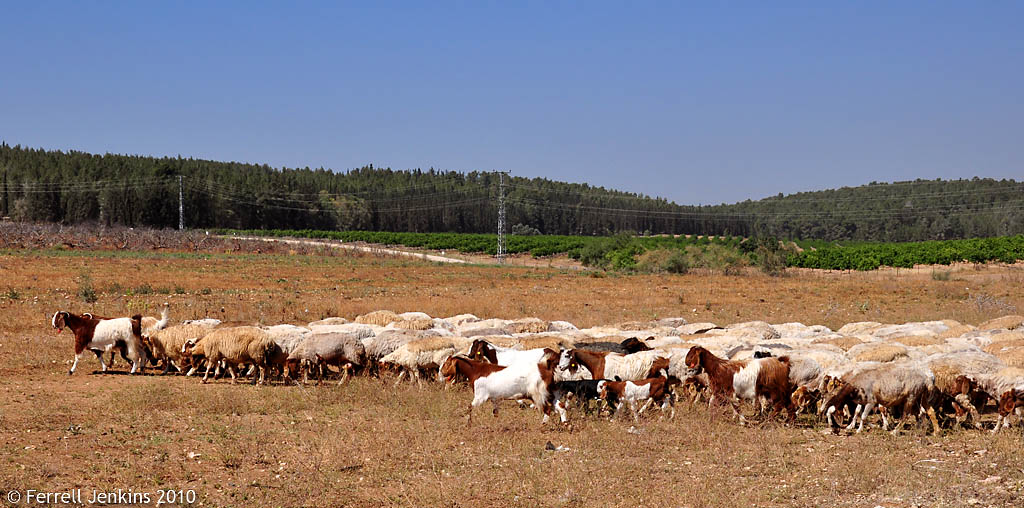
Our photo was made just below Tell es-Safi/Gath just after crossing the Elah brook. This shows the beginning of the coastal plain.

Sheep and goats at Tell es-Safi/Gath. Photo by Ferrell Jenkins.

Sheep and goats at Tell es-Safi/Gath. Photo by Ferrell Jenkins.

Greek, anyone? Rod Decker, a professor of Greek and New Testament, calls attention to some classic essays on using Greek in ministry. Perhaps some readers might find this helpful. Click here.

The Valley of Beracah

The Bible may be understood on many levels. Folks with little technical knowledge often understand the fundamental lesson of a biblical account. Others, with an understanding of the historical setting of an event will have a better understanding. Some knowledge of the original biblical languages will add more insight. We have emphasized repeatedly that an understanding of the land of the event will provide an even richer understanding. We are hopeful that the photos we use, and the comments we include, will assist in this way.

During the reign of Jehoshaphat, King of Judah (870/69–848 B.C.), a coalition of Moabites, Ammonites, and Edomites came up against Judah. The enemies came from the east, across the [Salt] sea and camped at Hazazon-tamar (that is, Engedi or En Gedi). Engedi would be an ideal place for such an encampment. See photo and info here.

Jehoshaphat understood the potential danger that camped a day’s march away. I am not suggesting that he failed to prepare for the battle, but the most important thing is that he sought the LORD, who he recognized as the ruler over all the kingdoms of the nations. I suggest you read the entire account in 2 Chronicles 20.

The Spirit of the LORD came upon Jahaziel and he instructed Jehoshaphat:

And he said, “Listen, all Judah and inhabitants of Jerusalem and King Jehoshaphat: Thus says the LORD to you, ‘Do not be afraid and do not be dismayed at this great horde, for the battle is not yours but God’s. Tomorrow go down against them. Behold, they will come up by the ascent of Ziz. You will find them at the end of the valley, east of the wilderness of Jeruel. (2 Chronicles 20:15-16 ESV)

From Engedi the ascent of Ziz goes up to the wilderness of Jeruel (v. 16), which may be the same as the wilderness of Tekoa (v. 20).

Meanwhile, Ammon and Moab turned against Mt. Seir (Edom) and this led to a civil war ending in disaster for the coalition. When Judah came to the watchtower of the wilderness (v. 24) they saw the terrible slaughter. They spent three days gathering the spoil. On the fourth day Judah assembled at the Valley of Beracah.

On the fourth day they assembled in the Valley of Beracah, for there they blessed the LORD. Therefore the name of that place has been called the Valley of Beracah to this day. (2 Chronicles 20:26 ESV)

Our photo shows the valley we think is described in the text.  The view is to the east toward the Salt Sea and Moab/Edom.

The Valley of Beracah near Tekoah. Photo by Ferrell Jenkins.

The Valley of Beracah near Tekoah. View to the East. Photo by Ferrell Jenkins.

The men of Judah, with Jehoshaphat at their head, returned to Jerusalem with joy and there praised the LORD at the temple.

Israel Museum now open

The Israel Museum has been closed to the public while undergoing a complete renovation. We have noted this with construction photos here.

The museum is once again open. Here are links to a couple of reports about the refurbished museum.

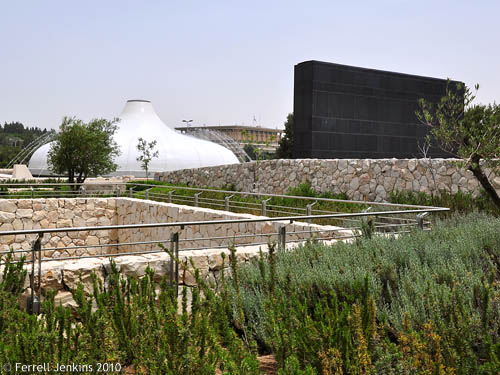
The already impressive location of the Museum campus with the Shrine of the Book, the Second Temple Model and the nearby Israeli Knesset building is sure to be even more impressive. I anticipate my next visit.

The Shrine of the Book at the Israel Museum. Photo by Ferrell Jenkins.

The Shrine of the Book at the Israel Museum. Photo by Ferrell Jenkins.

The Shrine of the Book and the Second Temple Model has been open during the museum renovation.

David … saw from the roof a beautiful woman bathing

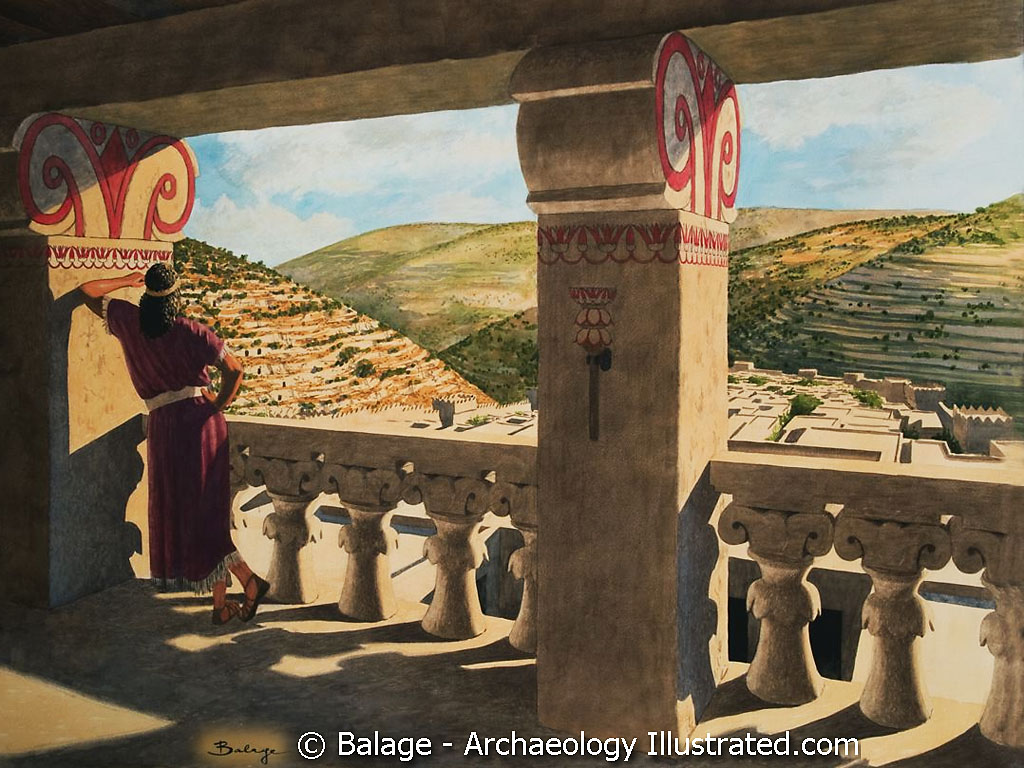
Well, I suppose everyone who reads this blog knows the story. It is the story of David and Bathsheba. Perhaps some wonder how this could be possible. The terrain of Jerusalem tells the story. This photo shows the location of the City of David where the railing is at the top. One can easily envision King David looking down from his roof to houses below.

City of David from below. Photo by Ferrell Jenkins.

The City of David from below. Photo by Ferrell Jenkins.

In the spring of the year, the time when kings go out to battle, David sent Joab, and his servants with him, and all Israel. And they ravaged the Ammonites and besieged Rabbah. But David remained at Jerusalem. It happened, late one afternoon, when David arose from his couch and was walking on the roof of the king’s house, that he saw from the roof a woman bathing; and the woman was very beautiful. (2 Samuel 11:1-2 ESV)

Read the full account in 2 Samuel 11. A hi-res image is available by clicking on the photo.

Artist Balage Balogh has illustrated this biblical story for us in the image below. Take a look at his work at Archaeology Illustrated.

King David on his balcony. Illustration by Balage Balogh.

King David on his balcony. Illustration by Balage Balogh.

Philistine temple found at Tell es-Safi/Gath

We have commented several times about discoveries from the Tell es-Safi/Gath project. One reason for this is that Prof. Aren Maeir keeps us informed about significant developments  during the excavation season. He also posts good photos suitable for use in teaching.

Gath is important because of several significant biblical accounts.

  • The ark of the covenant was taken to this place by the Philistines – 1 Samuel 5:8.
  • It, along with Ashdod, Gaza, Ashkelon, and Ekron, was one of the five major cities of the Philistines – 1 Samuel 6:17.
  • Goliath was from Gath – 1 Samuel 17:4.

Prof. Maeir is now confident that he has found a Philistine temple. Let him tell the story:

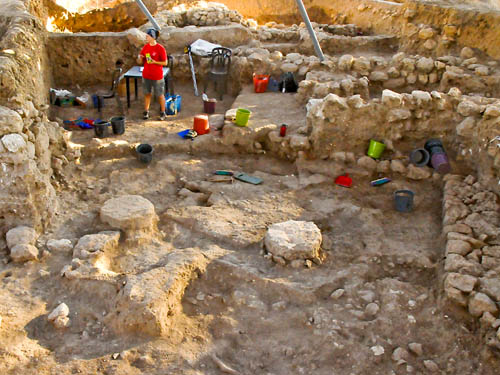
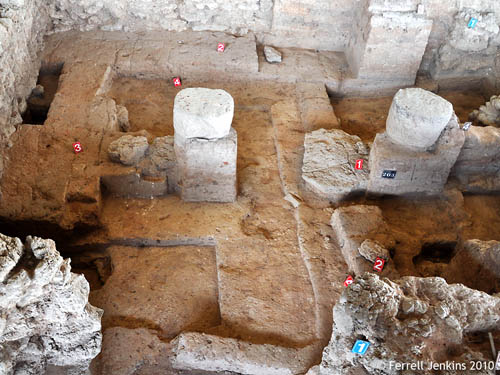
The first [photo] is a working view of the structure which I believe we can now firmly claim to be a temple! The structure, which has at its center two large pillar bases, and some of the exterior walls, had various cult related objects found in its vicinity. In addition, a metallurgical working area was found right next to it. It should be noted that it is located right under a cultic “corner” of St. A3 (9th cent. BCE). Of interest of course is the similarity to the Philistine temple at Qasile, St. X, with the two pillars in the center of the structure. As noted in the past, this floor plan might be reflected in the Samson story, where the architectural imagery of an Iron Age Philistine temple with two pillars might have served as the background for narrative of Samson standing between two pillars etc. And just to make sure that this is not mis-understood: 1) This does not mean that this story occurred here (in the Bible it occurs in Gaza); 2) And this in itself is not proof that the story happened! Rather, this might reflect a cultural awareness on the part of the biblical story of what a Philistine temple of the early Iron Age might have looked like.

I am including a small photo from the Tell es-Safi/Gath Excavation weblog. You may read the full report and find a hi-res photo here.

Tell es-Safi/Gath Philistine temple with pillar bases. Photo: Bar Ilan U.

The Philistine temple with pillar bases at Tell es-Safi/Gath. Photo: Bar Ilan University.

Perhaps, for the benefit of those who do not read much about archaeology, I should explain that the “St.” above refers to the stratum or layer in which the discovery was made. Stratum A3 is dated to the 9th century B.C.

The discovery of a Philistine temple is exciting because it may provide another illustration to help with a better understanding of the biblical account of Samson in the temple of Dagon at Gaza (Judges 16:23-31). Note these verses:

Samson took hold of the two middle pillars that supported the temple and he leaned against them, with his right hand on one and his left hand on the other. Samson said, “Let me die with the Philistines!” He pushed hard and the temple collapsed on the rulers and all the people in it. He killed many more people in his death than he had killed during his life. (Judges 16:29-30 NET)

We already have one illustration from Tel Qasile where three Philistine temples were found in the first excavation after the founding of the state of Israel. Tel Qasile is situated on the north side of the Yarkon River in Tel Aviv. These temple are said to belong to the 12th-11th centuries B.C. Here is a photo of a portion of the Philistine temple at Tel Qasile.

Philistine Temple at Tel Qasile - Eretz Israel Museum at Tel Aviv U.

Philistine Temple at Tel Qasile. Photo by Ferrell Jenkins.

This temple at Tel Qasile is located on the grounds of the Eretz Israel Museum at Tel Aviv University. More about Tel Qasile at a later time. A photo suitable for teaching is available here.

Passing through the grainfields

All three of the Synoptic Gospels record the incident of Jesus and His disciples passing through the grainfields on a Sabbath.

On a Sabbath, while he was going through the grainfields, his disciples plucked and ate some heads of grain, rubbing them in their hands. But some of the Pharisees said, “Why are you doing what is not lawful to do on the Sabbath?” (Luke 6:1-2 ESV)

I thought I would put together some photos to help you visualize what happened here. First, we have a photo of a wheat field below Mount Tabor. The photo is made looking north west from near the site of ancient En-dor. The area is famous as the home of the medium visited by King Saul (1 Samuel 28:7).

Wheat field below Mount Tabor. Photo by Ferrell Jenkins.

Wheat field with view NW to Mount Tabor. Photo by Ferrell Jenkins.

Now, imagine the disciples taking grain in their hands.

Picking heads of grain. Photo by Ferrell Jenkins.

Picking heads of grain. Photo by Ferrell Jenkins.

And then rubbing the heads to separate the grain from the chaff.

Rubbing grain to separate the head from the chaff. Photo by Ferrell Jenkins.

Rubbing grain to separate the head from the chaff. Photo by Ferrell Jenkins.

The last two photos were made in the vicinity of Mount Nemrut in eastern Turkey. Larger images, suitable for use in teaching, are available by clicking on the photos.

The Gate at Dan

The late Avraham Biran worked for several decades at the city of Dan. In addition to locating the massive city walls, the high place, and the house of David inscription, he found a pedestal or rostrum within the gate where it is thought the king would sit when he visited Dan. Here is a view of the pedestal as we see it today. Note the standing stone to the left of the podium. Click on the photo for an image large enough for use in presentations.
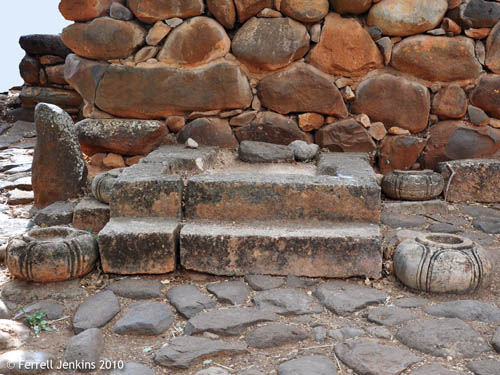
Rostrum inside the gate at Dan. Photo by Ferrell Jenkins.

Rostrum inside the gate at Dan. Photo by Ferrell Jenkins.

Prof. Carl Rasmussen has a photo showing a canopy built over the podium several years ago at Holy Land Photos. Just search for Dan, and you will also see some photos showing details of certain parts of the podium.

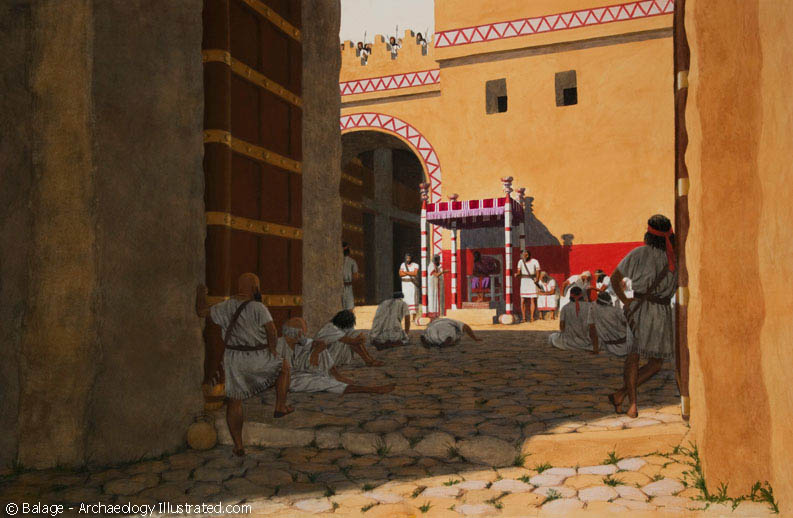
Balage Balogh has provided us with an illustration showing the way this area of the gate might have looked in biblical times. The illustration is based on information gleaned from the excavation at Dan. Take a look at other illustrations at Archaeology Illustrated. [At the moment this page is slow in loading. It is worth the wait.]
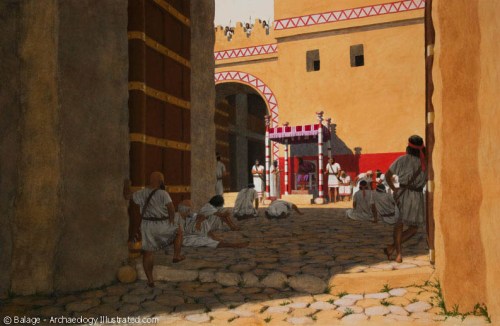
© Dan City Gate. Illustrated by Balage Balogh.

In several places in the Old Testament we have examples of the king sitting in the gate of a city. David sat in the gate at Jerusalem after the death of Absalom.

Then the king arose and took his seat in the gate. And the people were all told, “Behold, the king is sitting in the gate.” And all the people came before the king. Now Israel had fled every man to his own home. (2 Samuel 19:8 ESV)

The officials of the king of Babylon sat in the middle gate at Jerusalem.

Then all the officials of the king of Babylon came and sat in the middle gate: Nergal-sar-ezer, Samgar-nebu, Sar-sekim the Rab-saris, Nergal-sar-ezer the Rab-mag, with all the rest of the officers of the king of Babylon. (Jeremiah 39:3 ESV)

Eli, the judge, had a seat at the gate of Shiloh.

As soon as he mentioned the ark of God, Eli fell over backward from his seat by the side of the gate, and his neck was broken and he died, for the man was old and heavy. He had judged Israel forty years. (1 Samuel 4:18 ESV)

The king of Israel and the king of Judah sat at the entrance of the gate of Samaria.

Now the king of Israel and Jehoshaphat the king of Judah were sitting on their thrones, arrayed in their robes, at the threshing floor at the entrance of the gate of Samaria, and all the prophets were prophesying before them. (1 King 22:10 ESV)

I trust the photo and illustration with make these biblical texts more vivid when you read them in the future.

The Explorations in Antiquity Center at LaGrange, Georgia, has a wonderful display of the various aspects of the city gate. We reported on the Center along with two reviews by David Padfield here, and here, and here. the Explorations in Antiquity web site may accessed here. The photo is provided by David Padfield.
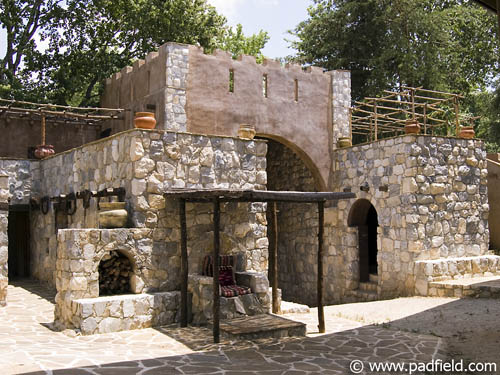
The city gate at the Exploration in Antiquity Center. Photo by David Padfield.

The city gate at the Exploration in Antiquity Center. Photo by David Padfield.

Tired of watching the second hand on your watch?

Well, now your troubles are over. You can watch the Tell es-Safi/Gath Excavation in progress each day (Monday through Friday) at 6 a.m. to 1 p.m., and on Sunday through Thursday from 2:30 p.m. to 4:30 p.m. That is Israel time, which is 7 hours ahead of Eastern time in the USA.

In the Eastern time zone in the USA the live video feed may be seen from 11 p.m. to 6 a.m. (Monday-Friday) and 6:30 a.m. to 8:30 a.m. (Sunday-Thursday). Not the best times for the working American. But, what if it were the World Cup? Same response.

Well, I hope to catch the show beginning tonight at 11 p.m. I will get to watch those young college age volunteers wiping the matter from the corners of their eyes. This all reminds me of the conversations I have with my wife when I travel in Israel and she remains at home. I usually talk at 6 a.m., and she talks at 11 p.m. I say “Good Morning!” and she says “Goood Niighht…”.

Can’t make the show at all? Then go back to other exciting things like watching the second hand on your watch.

Seriously, this is a great thing. I suppose it is a first. Digging into the past streaming live. Dr. Aren Maeir, the director of the Tell es-Safi/Gath dig, keeps us updated on the progress of the dig.

Go to the Bar Ilan University web page and look for the banner about the streaming video here.

The direct URL to the feed is: http://media.motion-stream.com/biulive.

The dig blog may be read here.

Last December I made some aerial photographs above Tell es-Safi. Here is a photo showing a view to the southeast. This ancient Philistine city is located at the point where the coastal plain (to the west) meets the Shephelah (to the east). You should be able to make out the line of the Elah brook along the bottom and right of the photo.

Today we are trying to post these photos in a 1024 x 768 pixel size to make this more usable in PowerPoint presentations. Let us know if this is helpful. It require more time and attention, but we may be able to do this occasionally if you find it useful.

Tell es-Safi - Gath. Aerial SE view by Ferrell Jenkins.

Aerial view of Tell es-Safi/Gath looking SE. Photo by Ferrell Jenkins.

Dr. Maeir posted an aerial view of the tell at the end of the 2009 season here. Our next photo is a close look at Areas E (left) and A (right). Both areas continue to be worked this season.

Tell es-Safi/Gath Areas E and A. Photo by Ferrell Jenkins.

This site is important for those interested in the biblical history of Israel. Gath was one of the five cities of the Philistines, and the home of Goliath (Joshua 13:3; 1 Samuel 6:17; 17:4).