Category Archives: Old Testament

Some things you may not hear about Myrrh in a sermon

Myrrh is described in Fauna and Flora of the Bible, a publication of the United Bible Societies, as follows:

Myrrh is a dark-red gum with a strong aroma and a bitter taste. It exudes from a bush or tree belonging to a family of the burseraceæ which grows in Arabia, Abyssinia and on the Somali coast of East Africa. It is not native to Palestine. This tree or bush has a great number of knotted branches. The gum exudes from the branch as a thick light-coloured paste which, when exposed to the atomsphere, soon hardens and takes on a brownish colour. The finest myrrh was the resin secreted of itself (rather than by artificial incision) through the bark… (147)

When the secretion is collected directly from the bark it can be used as an ingredient in ointments.

When Ismaelites (Midianites) came from Gilead into the Dothan valley on their way to Egypt, Joseph’s brothers sold him to them (Genesis 37:27, 36). The Bible describes the caravan and the goods the Midianites were transporting.

a caravan of Ishmaelites was coming from Gilead, with their camels bearing aromatic gum and balm and myrrh, on their way to bring them down to Egypt. (Genesis 37:25 NAU)

In previous posts we have written about the Incense Route which was used by the Nabateans. This event was much earlier, and we see the caravan coming from the east (Gilead). The famous King’s highway ran through Gilead.

Myrrh is listed as a product of the land of Canaan when Jacob prepares his gift basket to be taken to Joseph (Genesis 43:11). This differs from what we normally read about myrrh. I do not know the solution to the problem at the moment. Perhaps it had been purchased from traveling merchants and was included with local products in the gift basket.

Myrrh could be in a liquid form. The ointment used in the anointing of priests had myrrh in it (Exodus 30:23). Oil of myrrh was in the cosmetics used by Esther (Esther 2:12). See also Song of Solomon 5:5.

The young man is advised to avoid the prostitute. He is told that she will entice him by saying,

I have sprinkled my bed
With myrrh, aloes and cinnamon. (Proverbs 7:17 NAU)

The young lady in the Song of Solomon thinks of her lover as a pouch or sachet of myrrh that lies all night between her breasts (1:13). She thinks of his lips as dripping with liquid myrrh (5:13).

The young man dreams of the time when he can approach her, and perhaps thinks of her breasts as the mountain of myrrh and the hill of frankincense.

Until the day breathes and the shadows flee, I will go away to the mountain of myrrh and the hill of frankincense. (Song of Solomon 4:6 ESV)

Myrrh displayed at Avdat, a stop on the Incense Route. Photo by Ferrell Jenkins.

Myrrh displayed at Avdat, a stop on the Incense Route. Photo by Ferrell Jenkins.

The wine offered to Jesus on the cross was mixed with myrrh (Mark 15:23).

Nicodemus brought about 75 pounds (= 100 Roman pounds) of myrrh and aloe for the burial of Jesus (John 19:39). We may conclude from this that Nicodemus, like Joseph of Arimathea (Matthew 27:57 NAU), was a wealthy man.
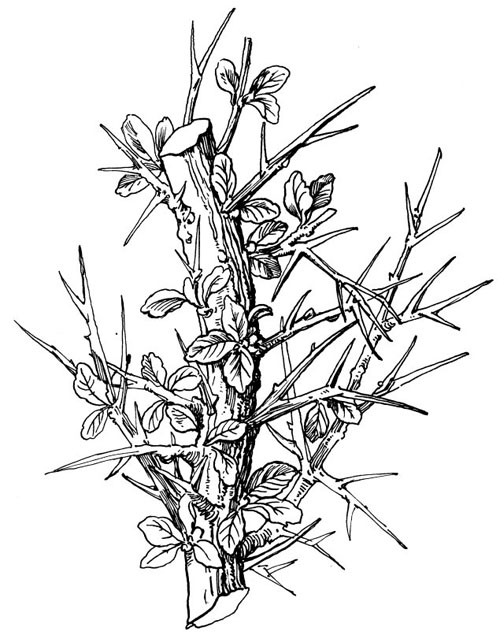
Myrrh branch. From 1000 Bible Images (Logos digital edition).

Myrrh branch. From 1000 Bible Images (Logos digital edition).

The wise men brought rare and expensive gifts to Jesus (Matthew 2:11). I trust that this brief discussion over the past three days has enhanced your understanding and appreciation of those gifts. What have we to give Him?

J. P. Van de Giessen has an article on Myrrh here, and a photo of the tree here.
Frankincense comes from a tree

In the previous post we looked at a few Biblical references that mention both frankincense and myrrh. We called attention to the Incense Route which ran from Arabia through Petra (now in Jordan) and Avdat in the Negev. In New Testament times this route was controlled by the Nabateans.

Frankincense is described in the Fauna and Flora of the Bible:

Frankincense is a balsamic gum exuding from the wood of different species of shrubs and trees belonging to the genus Boswellia. The bark is incised, and the finest quality of resin is obtained if this is done not too early in the year. The different species of Boswellia are native to India, the Somali coast and Arabia; the Midianites imported frankincense from Ephah and Sheba, Is 60:6; Jer. 6:20. Whether the Boswellia was grown in Palestine is rather doubtful. (121-122)

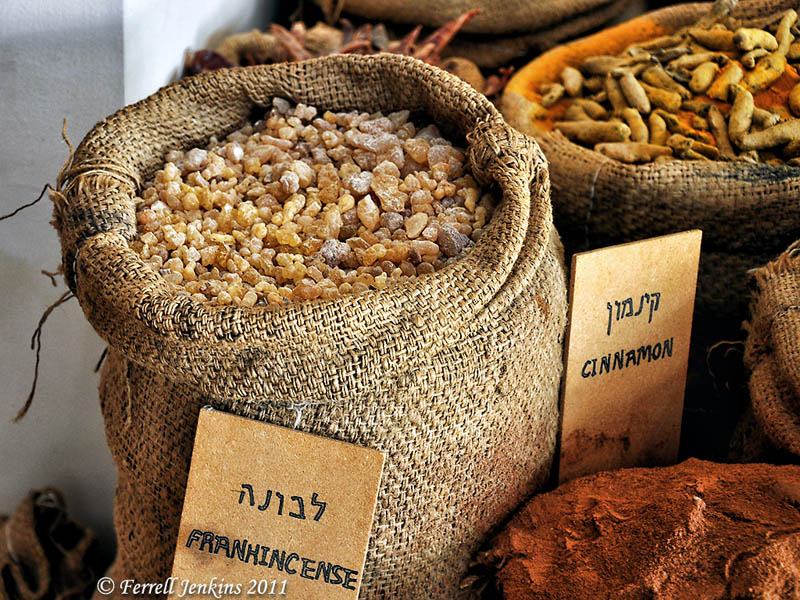
Frankincense is displayed at Avdat, stop number 62 on the famous Incense Route. Click on the photo for a larger image.

Frankincense at Avdat on the Incense Route. Photo by Ferrell Jenkins.

Frankincense at Avdat on the Incense Route. Photo by Ferrell Jenkins.

The Bible indicates several uses for frankincense.

  • Used in the incense associated with the anointing of the priests (Exodus 30:32).
  • Placed on a grain offering (Leviticus 2:1-2).
  • Placed on the bread for the tabernacle (Leviticus 24:7).

Levites were appointed to take care of the frankincense used in the temple (1 Chronicles 9:29). Eliashib the priest hid Tobiah in a large room where frankincense and other sacrificial items were stored (Nehemiah 13:5, 9).

Gold is mentioned with frankincense in Isaiah 60:6 and Matthew 2:11. Both are mentioned among the goods the merchants could no longer sell because of the fall of Babylon (Revelation 118:11-13).

The illustration showing the frankincense tree comes from 1000 Bible Images (Logos digital edition).

Frankincense Tree. 1000 Bible Images.

Frankincense Tree. 1000 Bible Images.

Our current header photo was made at Avdat, and indicates the importance of the city as an important stop on the Incense Route.

Frankincense and Myrrh

Frankincense and myrrh are mentioned together in the Song of Solomon and in the account of the visit of the magi from the east to see Jesus. Several significant things can be learned from these Biblical verses.

Look first at Song of Solomon 3:6.

“What is this coming up from the wilderness Like columns of smoke, Perfumed with myrrh and frankincense, With all scented powders of the merchant? (Song of Solomon 3:6 NAU)

  • Myrrh and frankincense are associated with the wilderness (desert; Hebrew, midbar).
  • Perhaps incense used in sacrifice or offering, “like columns of smoke.”
  • Associated with perfume and scented or fragrant powders.
  • Something traveling merchants would bring from the wilderness.

Song of Solomon 4:13-14 provides more insights.

“Your shoots are an orchard of pomegranates With choice fruits, henna with nard plants,  Nard and saffron, calamus and cinnamon, With all the trees of frankincense, Myrrh and aloes, along with all the finest spices. (Song of Solomon 4:13-14 NAU)

  • Associated with trees, and classified with spices.

The reference in the New Testament is in the account of the birth of Jesus (Matthew 2:1-11).

  • Frankincense and myrrh are in the category with gold, and offered as gifts to one who is considered a king and is being worshiped.
  • The magi have come from east of Jerusalem and Bethlehem.
  • Gold, frankincense, and myrrh are considered treasures.

All of these tips harmonize with what is known about frankincense and myrrh. The plants or trees from which these come are known to grow in the desert regions. They are not native to Biblical Israel. Traveling merchants from Arabia traveled long distances across the desert, making stops at Petra, Avdat, and other places on their way to Gaza and other Mediterranean ports where the products could be shipped throughout the Mediterranean world.

The photo below was made at Avdat, a Nabatean site in the Negev. The city was especially significant in the first century B.C. and the first century A.D. Avdat was stop number 62 on the famous Incense Route. It is now part of Israel’s National Park system, and a World Heritage Site. A display at the ticket office and shop explains about the Incense Route and shows some of the goods that were transported across the desert. This photo shows little packets of frankincense and myrrh that may be bought as souvenirs of your visit. Gold is still costly, but the market for frankincense and myrrh has fallen drastically since Bible times. The price in New Israeli Shekels is less than $4.

Frankincense and myrrh on the Incense Route at Avdat. Photo by Ferrell Jenkins.

Frankincense and myrrh on the Incense Route at Avdat. Photo by Ferrell Jenkins.

More to follow, hopefully.

Dead Sea Scrolls exhibition in Times Square, New York

Are you traveling to New York in the next few months? The Dead Sea Scrolls: Life and Faith in Biblical Times exhibition at the Discovery Times Square building in New York City is worth a visit.

Gordon Franz, a Bible teacher and archaeologist, has written about the exhibition on his Life and Land blog here. Gordon is known to the regular readers of this blog. We have called attention to several of his articles, especially those about “cracked pot archaeology.”

In addition to giving the details about the exhibition and how to get a $5 discount on your ticket, Franz tells you how to access his 39-page guide which he has written specifically from a Christian perspective. Actually, it should be helpful for any serious student of the Bible.

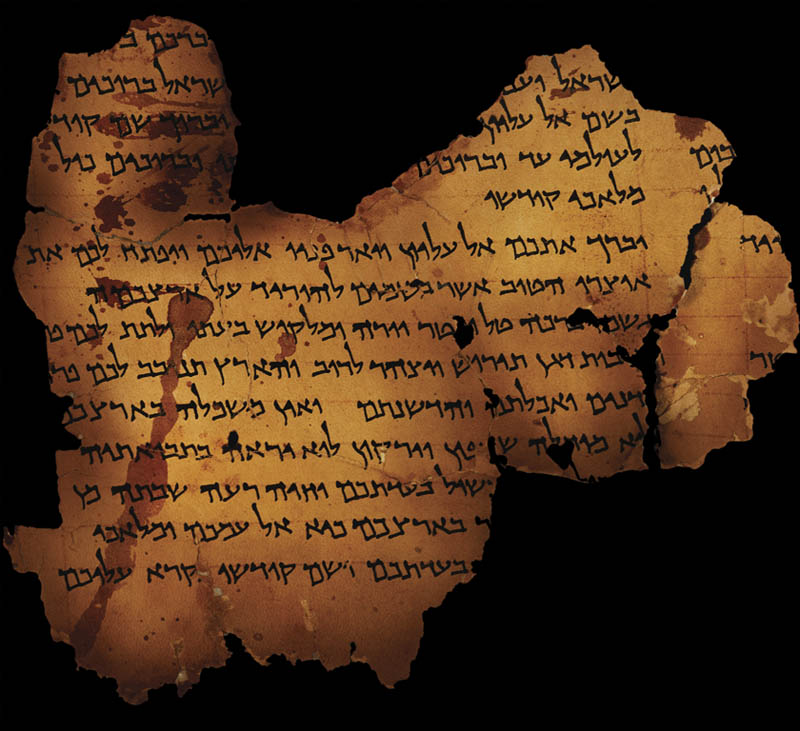
War Scroll displayed at the Discovery Times Square in New York City.

War Scroll displayed at the Discovery Times Square in New York City.

This exhibition is much more than a few fragments of the Dead Sea Scrolls. Artifacts, ossuaries, pottery, lamps, seals, and a stone from the wall build around the Temple Mount are included among the 500 items on display. The exhibition is on loan from the Israel Antiquities Authority. The exhibition runs until April 15, 2012. After that it moves to Philadelphia’s Franklin Institute for a few months beginning in May.

Dead Sea Scrolls - Life and Faith in Biblical Times display

Dead Sea Scrolls - Life and Faith in Biblical Times display.

If you have the opportunity to visit this exhibition, you should read Gordon’s guide written from a Christian perspective. His guide will be helpful to anyone interested in Bible life and times, even if you don’t get to visit the exhibition. The link to the guide is located at his Life and Land website here.

Thanks to Gordon Franz for giving me a heads-up on his guide.

Illustrations from Lystra

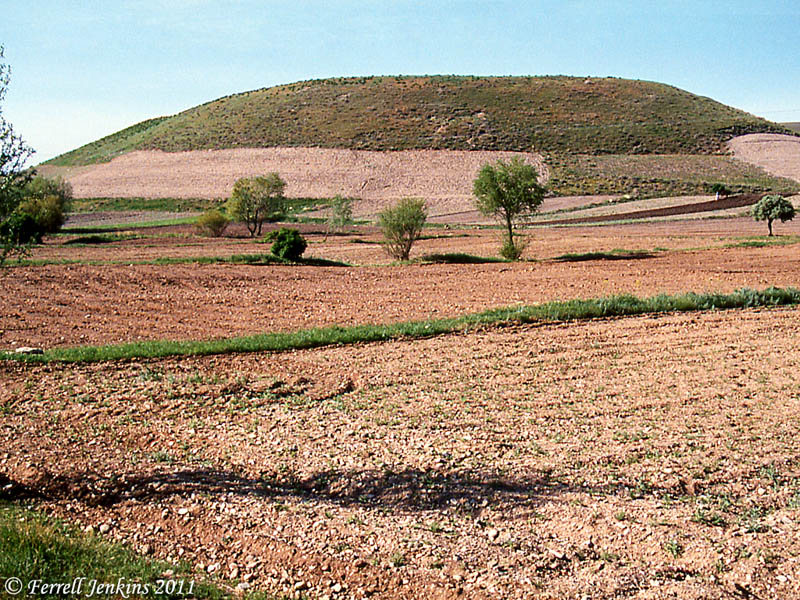
Looking through some slides, I found a nice photo of Lystra. In this photo from 1987 you will see that farmers have plowed the slopping side of the tell as far as practical. Often we see crops growing on the top of a tell, especially one that has not been excavated.

Lystra. 1987 Photo by Ferrell Jenkins.

Lystra. 1987 Photo by Ferrell Jenkins.

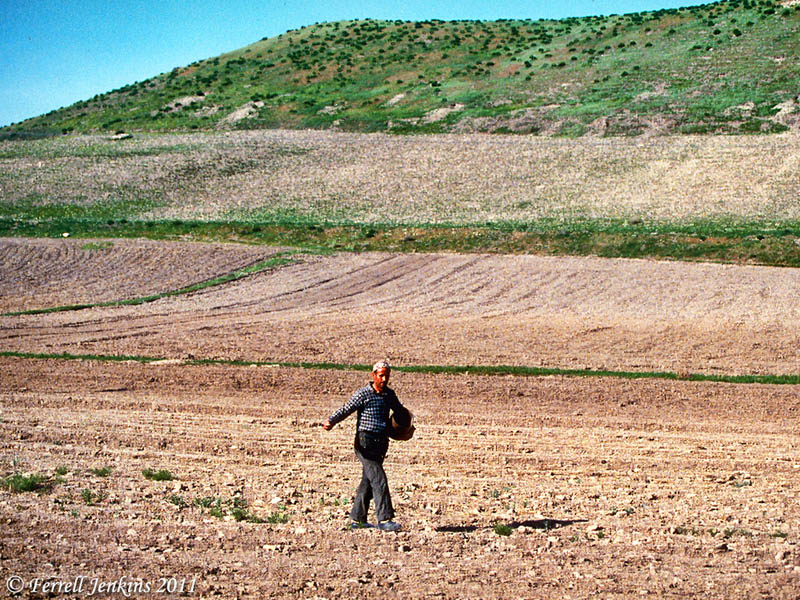
From another year, likely in the 80s, the sower is broadcasting seed. This is a practice that I saw frequently while growing up in the rural South. We rarely see this practice in the modern days of mechanization either in the USA or in the Bible World.

Sower at Lystra. Photo by Ferrell Jenkins.

Sower scattering seed at Lystra. Photo by Ferrell Jenkins.

The practice of the sower scattering seed is mentioned several times in the Bible. Notice Isaiah 55:10-11.

For as the rain and the snow come down from heaven, And do not return there without watering the earth And making it bear and sprout, And furnishing seed to the sower and bread to the eater;  So will My word be which goes forth from My mouth; It will not return to Me empty, Without accomplishing what I desire, And without succeeding in the matter for which I sent it.  (Isaiah 55:10-11 NAU)

Notice Paul’s use of the Isaiah text in 2 Corinthians 9:10.

We think also of the parables of Jesus.

3 And He spoke many things to them in parables, saying, “Behold, the sower went out to sow;  4 and as he sowed, some seeds fell beside the road, and the birds came and ate them up.  5 “Others fell on the rocky places, where they did not have much soil; and immediately they sprang up, because they had no depth of soil.  6 “But when the sun had risen, they were scorched; and because they had no root, they withered away. 7 “Others fell among the thorns, and the thorns came up and choked them out. 8 “And others fell on the good soil and yielded a crop, some a hundredfold, some sixty, and some thirty.  9 “He who has ears, let him hear.” (Matthew 13:3-9 NAU)

Thanksgiving — 2011

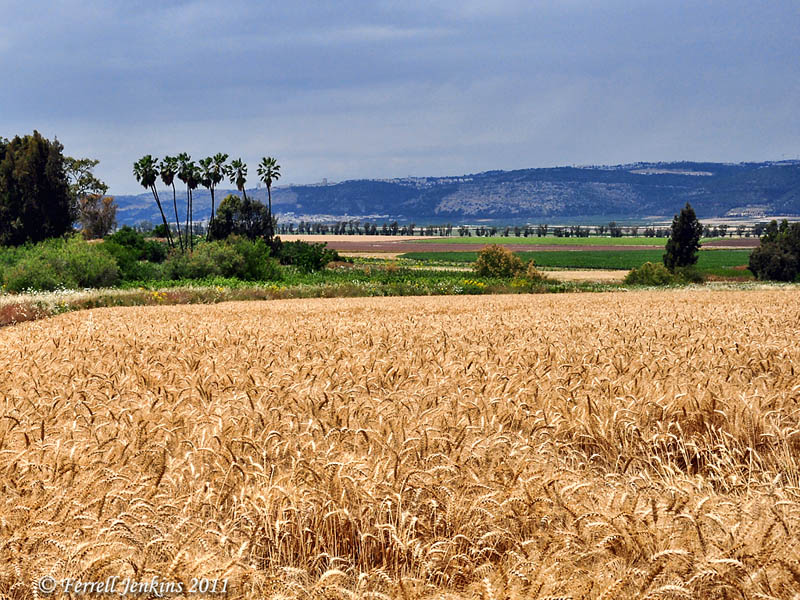
Abundant wheat fields near biblical Endor. Photo by Ferrell Jenkins.

Abundant wheat fields near biblical Endor. Photo by Ferrell Jenkins.

I will give thanks to the LORD with all my heart; I will tell of all Your wonders. (Psalm 9:1 NAU)

Enter His gates with thanksgiving And His courts with praise. Give thanks to Him, bless His name. (Psalm 100:4 NAU)

Let us come before His presence with thanksgiving, Let us shout joyfully to Him with psalms. (Psalm 95:2 NAU)

I will praise the name of God with song And magnify Him with thanksgiving. (Psalm 69:30 NAU)

Be anxious for nothing, but in everything by prayer and supplication with thanksgiving let your requests be made known to God. (Philippians 4:6 NAU)

New insights into the clothing of the Qumran inhabitants

The recent edition of Dead Sea Discoveries has an article by Orit Shamir and Naama Sukenik on “Qumran Textiles and the Garments of Qumran’s Inhabitants.” The article costs $35 from Brill. To order click here. Here is the abstract.

Among the Qumran textiles that were kept at the Rockefeller Museum was a group of textiles that were unusual for Qumran. Most of them were made of wool, and some were dyed or decorated. Their marking QCC—Qumran Christmas Cave indicates their origin. In 2007 the cave was investigated by Porat, Eshel, and Frumkin. The cave is located in the bottom section of Kidron valley and doesn’t belong to Qumran caves. It can now be determined that all of the textiles from Qumran are made solely of linen. They were free of any colored decoration, except for scroll wrappers that decorated in blue. This, and the simplicity and whiteness of the textiles from Qumran, is compatible with the literary sources. It appears that the people of Qumran wished to differentiate themselves from the rest of the population also on the basis of their style of garments.

A popular article based on the technical paper appears in LiveScience here. Some speculation about the writers of the scrolls is based on the cloths found with the scrolls. Look also for an Image Album of 8 captioned photos including the textiles from Qumran and the Christmas Cave.

Most of the cloth wrappings found at Qumran were white and made of linen. The wrappings found at Christmas Cave were colorful and made of wool. The Mosaic law was clear about the clothing to be worn by the Israelites.

Do not wear clothes made of both wool and linen. (Deuteronomy 22:11 CSB)

Jodi Magness cites the War Scroll to illustrate that the “Qumran sectarian clothing must be made entirely of linen” (Stone and Dung, Oil and Spit, 116).

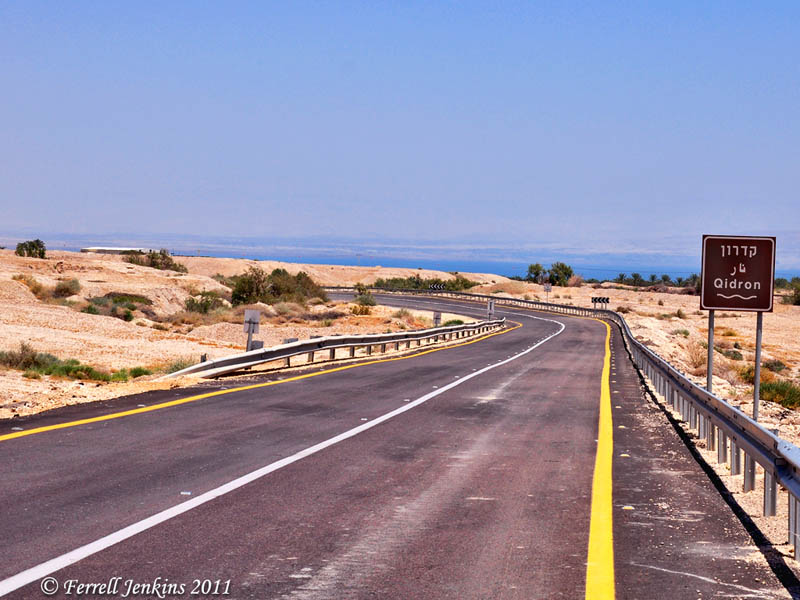
Most Bible students probably think of the Kidron valley running north to south between Jerusalem and the Mount of Olives. That is correct, except that the brook joins with the Hinnom valley and continues east to the Dead Sea.

The photo below was made about 4.25 miles south of Qumran along the Dead Sea Road (Hwy. 90) as it crosses the brook Kidron (Qidron). The Christmas Cave mentioned in the article is to the west (left) of the highway as the brook comes down from Jerusalem. (Click on the photo for a larger image.)

Location of the Brook Kidron on Dead Sea Road (view north). Photo by Ferrell Jenkins.

Crossing Brook Kidron on Dead Sea Road (view northeast). Photo by Ferrell Jenkins.

When David fled from Jerusalem at the time of Absalom’s rebellion, he crossed the Kidron “toward the way of the wilderness.”

Everyone in the countryside was weeping loudly while all the people were marching past. As the king was crossing the Kidron Valley, all the people were marching past on the road that leads to the desert. (2 Samuel 15:23 CSB)

HT: Joseph I. Lauer

The Patriarchs lived in the Negev

English Bibles translate the Hebrew word negev in a variety of ways.

  • South — KJV; NKJV
  • “the South [country]” is the Translator’s Note in the NET Bible. A study note says, “Negev is the name for the southern desert region in the land of Canaan.”
  • Negeb — ESV
  • Negev — most modern English versions.
  • eremos — the word for desert or wilderness is used in the LXX. This word does not describe the Negev precisely enough.

I am away from home and most of my resources, but I recall hearing the late Anson Rainey describe the Negev like the figure 8. Turn the 8 horizontal with Beersheba in the center. The area is one that is often subject to drought and famine.

The Patriarchs, Abraham, Isaac, and Jacob spent much time in the Negev (Genesis 12:9; 13:1,3; 20:1; 24:62).

The Israelite spies were sent by Moses from the Sinai to investigate Canaan. The text makes it clear that they had to go through the Negev to get to the hill country and Hebron. Hebron is only about 25 miles north of Beersheba. Once we head south from Hebron we begin to notice a change from the hill country to a more dry clime.

When Moses sent them to investigate the land of Canaan, he told them, “Go up through the Negev, and then go up into the hill country (Numbers 13:17 NET)

When they went up through the Negev, they came to Hebron… (Numbers 13:22 NET)

The Canaanite king of Arad lived in the Negev (Numbers 21:1). Arad is located east of Beersheba as the land slopes down to the Dead Sea.

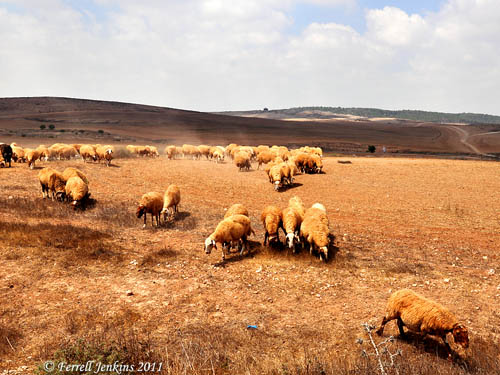
Our photo today was made a few miles north of Beersheba. I think it illustrates the typical dryness of the region.

Sheep in the Negev. Photo by Ferrell Jenkins.

Sheep in the Negev. Photo by Ferrell Jenkins.

Keep your lamps burning

Light is necessary for life and growth. We are introduced to light in the biblical account of creation.

And God said, “Let there be light,” and there was light.  And God saw that the light was good. And God separated the light from the darkness.  God called the light Day, and the darkness he called Night. And there was evening and there was morning, the first day.  (Genesis 1:3-5 ESV)

Of Jesus, the Gospel of John says, “In him was life, and the life was the light of men” (John 1:4 ESV).

David spoke of meditating on God during the watches of the night (Psalm 63:6). He watched his sheep by night, but most work was not done in the night prior to the introduction of electric power. We used one Aladdin lamp and a few kerosene lamps in our home in the rural South until I was about 8 or 10 years old. Then we began to use a single electric bulb in a room when we needed to be in the room.

Jesus said,

We must work the works of of him who sent me while it is day; night is coming, when no one can work.  As long as I am in the world, I am the light of the world” (John 9:4-5 ESV).

Herodian period lamp burning. Photo by Ferrell Jenkins.

Herodian period lamp from the time of Jesus. Photo by Ferrell Jenkins.

The photo above is one of the Herodian period lamps I have purchased in the Bible lands over the past 44 years. Two or three times I have used some olive oil (or Wesson oil, or a small piece of a candle) to show how much light the lamp gives.

In the parable of the watchful slaves Jesus said,

“Stay dressed for action and keep your lamps burning,  and be like men who are waiting for their master to come home from the wedding feast, so that they may open the door to him at once when he comes and knocks. (Luke 12:35-36 ESV)

The Apostle Paul commanded the saints at Philippi to shine as lights in the world.

Do all things without grumbling or questioning,  that you may be blameless and innocent, children of God without blemish in the midst of a crooked and twisted generation, among whom you shine as lights in the world, (Philippians 2:14-15 ESV)

Finally got the photo uploaded

I was unable to upload one of the photos about goats in the Sinai peninsula earlier. Finally got it uploaded. If you missed seeing the photo of the nanny goat caring for the newborn kid, please take a look now.