Category Archives: Old Testament

Wallace: Fifteen Myths about Bible Translation

Prof. Daniel B. Wallace discusses “Fifteen Myths about Bible Translation.” Wallace is a well known and respected scholar dealing with issues pertaining to the Greek language and Textual Criticism.

Wallace says,

Perhaps the number one myth about Bible translation is that a word-for-word translation is the best kind.

Whatever your current level of knowledge about Bible translations, you are sure to learn something from these “Fifteen Myths” even if you don’t agree with all of them.

Read the full article here.

HT: BibleX

6 year old palm from 2000 year old seed

A few date palm seed were uncovered by Professor Yigael Yadin during his excavation of Masada. Six years ago one of these seed was planted at the Arava Institute in Israel. The seed sprouted, and has grown into a nice little six year old palm.

Yishai Fleisher of EyeOnZionTV interviews Dr. Elaine Solowey at the Arava Institue about this seed and plant. In addition to the information about the palm, I especially like the way Dr. Solowey refuses to fall for some of the speculative journalistic questions.

The photo below shows one of the modern date palms on the southwestern shore of the Sea of Galilee.

Date Palm growing near the Sea of Galilee. Photo by Ferrell Jenkins.

Date Palm growing near the Sea of Galilee. Photo by Ferrell Jenkins.

Jericho is mentioned as “the city of palm trees” in Deuteronomy 34:3.

The righteous are compared to the palm tree.

The righteous flourish like the palm tree and grow like a cedar in Lebanon. (Psalm 92:12 ESV)

HT: Jack Sasson

New Assyrian town discovered in northern Iraq

An article in Al Arabiya informs us that foreign archaeologists have discovered a new Assyrian site near the Arbil (Erbil) city center. Arbil is located southeast of the modern Kurdish city of Mosul, the area of Assyrian cities such as Nineveh, Calah, and Khorsabad.

Archeologists working in northern Iraq have discovered a new Assyrian site in the vicinity of the historic Arbil city center, the head of the antiquities office in the Kurdish Province of Arbil, Haydar Hassan, was quoted as saying in an Iraqi newspaper.

The Assyrian civilization flourished in northern Iraq between 1000-700 B.C., archeologists were led to discover the site when they exhumed a burial ground, complete with mud brick grave heads.

To further unearth this site the foreign archeological team had to study and remove two more layers of civilization under which the Assyrian structure was buried, according to a report published by Iraq’s al-Zaman on Monday.

The excavations have shown that the Assyrian graves were covered by remains belonging to the Sassanid Persian Dynasty that ruled Iraq before being dislodged by Muslim Arab tribes from the Arabian desert in the 7th century A.D., said Haydar Hassan.

So far only the brick arches and corridors of the Assyrian layer have been brought to the surface.

Although archaeological teams from Italy, the U.S., Germany, Holland, Poland and Greece are currently working in northern Iraq, Hassan did not say which foreign archaeologists were working on the newly discovered Assyrian site in Arbil.

The article may be accessed here.

Assyria was a threat to Israel from 853 B.C., when they defeated Ahab at the battle of Qarqar, until the LORD defeated them at Jerusalem in 701 B.C., and the final defeat at the battle of Carchemish in 605 B.C. The prophet Isaiah warned the people of God about the Assyrian threat.

Therefore thus says the Lord GOD of hosts: “O my people, who dwell in Zion, be not afraid of the Assyrians when they strike with the rod and lift up their staff against you as the Egyptians did. For in a very little while my fury will come to an end, and my anger will be directed to their destruction.  (Isaiah 10:24-25 ESV)

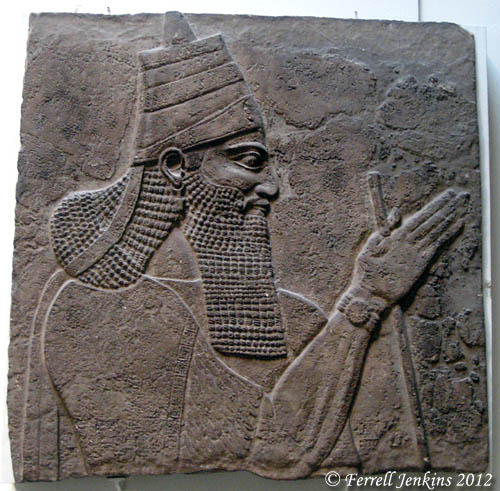
The photo below is of the Assyrian king Tiglath-Pileser III (745-727 B.C.). It was discovered in the central palace at Nimrud, and is now displayed in the British Museum.Tiglath-Pileser III is mentioned in 2 Kings 16:7, 15:29, and a few other references.

Who knows what new things may come from other cities yet to be excavated?

Tiglath-Pileser III, king of Assyria, from Nimrud's central palace. Now displayed in the British Museum. Photo by Ferrell Jenkins.

Tiglath-Pileser III, king of Assyria, from Nimrud. Now displayed in the British Museum. Photo by Ferrell Jenkins.

HT: Agade List

Understanding the Land

Charles Savelle, over at Bible X calls attention to a Wall Street Journal article on the importance of geography in understanding world affairs. Read the article here. It might help you to understand better some of the situations going on in Russia, China, Iran, and Syria.

Later, Charles quotes from a new book on Joshua about the same subject and adds his comments about the importance of geography here. I want to share the paragraph he cites from Coleson’s commentary on Joshua in the Joshua, Judges, Ruth (Cornerstone Biblical Commentary)

“Because humans live on the surface of the earth, geography is always important. Because every ancient Israelite, humble or great, lived in close and intimate relationship with the land, if we wish to understand ancient Israel, we need to learn ancient Israel’s geography. Canaan was the Land of Promise God gave to Israel through the events recorded in Joshua; if we want to understand the message of Joshua, we need to study both the physical and the human geography of ancient Israel God’s grand plan of redemption for the human race may transcend both time and space, but God has so far worked it out in a very definite, limited place through a sequence of events in history. To understand God’s plan and its fulfillment, it helps to understand the timeline and the map” (Joshua, Judges, Ruth, p. 33).

I could not agree more.

David — the sweet psalmist of Israel

As a young man, David played the harp (lyre, Hebrew kinnor) for King Saul.

So it came about whenever the evil spirit from God came to Saul, David would take the harp and play it with his hand; and Saul would be refreshed and be well, and the evil spirit would depart from him. (1 Samuel16:23 NAU)

Later, David is called the “sweet psalmist of Israel.” We have many examples in the collections of Psalms.

Now these are the last words of David. David the son of Jesse declares, The man who was raised on high declares, The anointed of the God of Jacob, And the sweet psalmist of Israel, (2 Samuel 23:1 NAU)

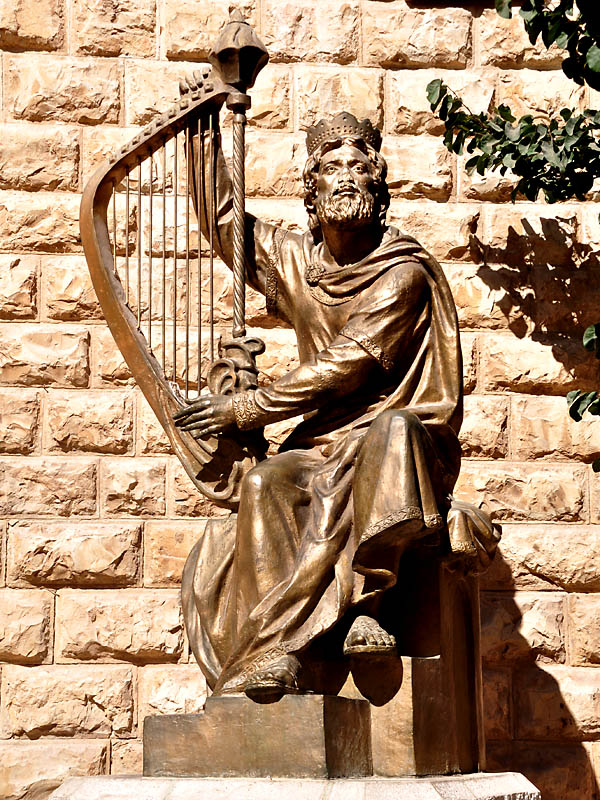
On traditional Mount Zion, near the traditional Tomb of David there is a statue of King David playing the harp (lyre).

Statue of King David on Mount Zion, Jerusalem. Photo by Ferrell Jenkins.

Statue of King David on Mount Zion, Jerusalem. Photo by Ferrell Jenkins.

Our time in the Bible World has come to an end once more. It has been a profitable trip. I still learn something each time I come to this part of the world. Looking forward to next year in Jerusalem.

Our numbers have been extremely good during the past three weeks. I hope that you will continue to check the blog from time to time. Why not subscribe and receive a notification each time we post something new?

Camels figure prominently in the life of Isaac

When Abraham’s servant went from Canaan to far-away Mesopotamia to arrange a bride for Isaac, he took ten camels with him. These camels figure prominently in the account in Genesis 24.

Then the servant took ten of his master’s camels and departed with all kinds of gifts from his master at his disposal. He journeyed to the region of Aram Naharaim and the city of Nahor. (Genesis 24:10 NET)

The Hebrew Aram Naharaim of the text is often translated Mesopotamia in English versions.

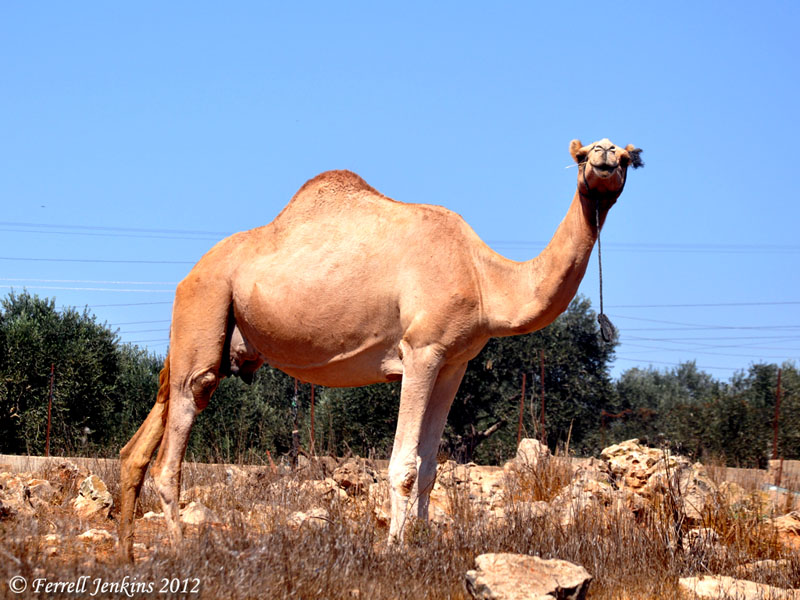
Yesterday I saw a nursing camel with her big “baby” as we drove north from Jerusalem toward Shiloh. This was a little east of the main north-south highway. I took the photo to share with my grandson, but I thought I would share it with you also.

A camel in the West Bank near the edge of the wilderness. Photo by Ferrell Jenkins.

A camel in the West Bank near the edge of the wilderness. Photo by Ferrell Jenkins.

Today we traveled south from Jerusalem past Bethlehem, Hebron, and into the Negev. We went west to the site of Gerar and Wadi Gerar. Later I will try to prepare some of the photos from these regions for the blog.

Visiting Mount Gerizim

Today we rented a car that could be driven in the West Bank and drove north to Nablus (site of ancient Shechem) and Mount Gerizim, the home of the Samaritans. Samaritans believe the temple was to be built on Mount Gerizim rather than Jerusalem. They think Abraham offered Isaac on the mountain. They accept only the first five books (the Pentateuch) of the Old Testament.

The blessings and curses of the Mosaic Law were to be read on Mount Gerizim and Mount Ebal once the children of Israel crossed into the promised land.

“It shall come about, when the LORD your God brings you into the land where you are entering to possess it, that you shall place the blessing on Mount Gerizim and the curse on Mount Ebal.” (Deuteronomy 11:29 NAU) cf. Joshua 8:33-35.

It is fairly easy to get to the new archaeological park except for a few bad places in the road in the modern Samaritan village of Kiryat Luza.

Rather than deal with the archaeological information, I thought I would share a couple of photos of some places of significant to the Samaritans. These are within the park.

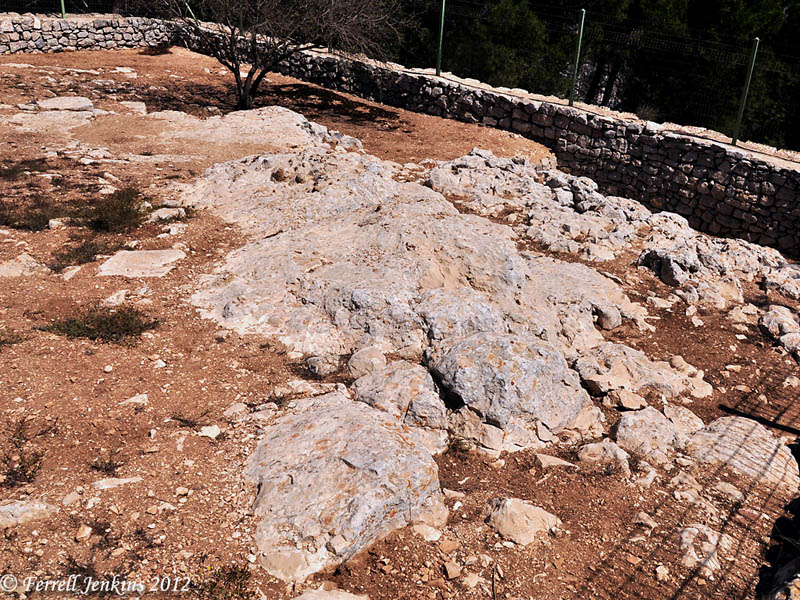
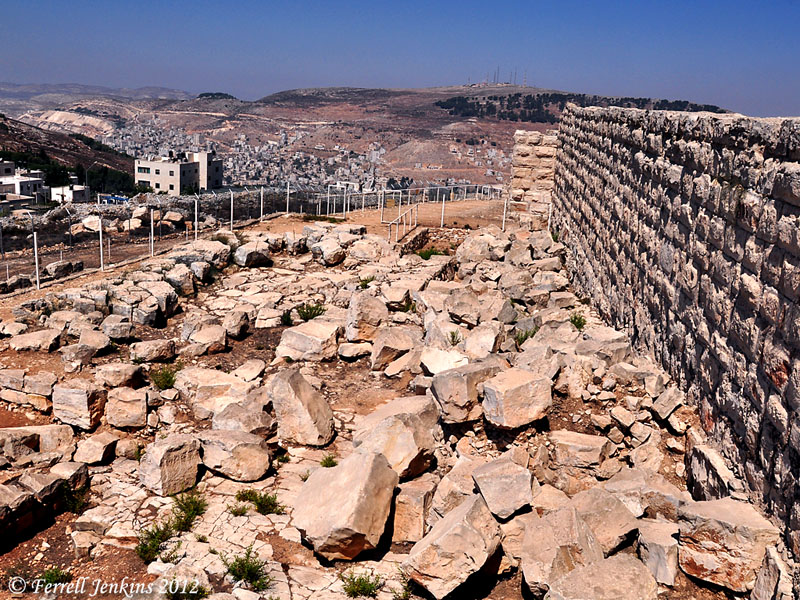
The first photo shows what according to Samaritan tradition is the altar on which Abraham was commanded to offer Isaac (Genesis 22:1-3). Remember that the Samaritans believe that this is Mount Moriah.
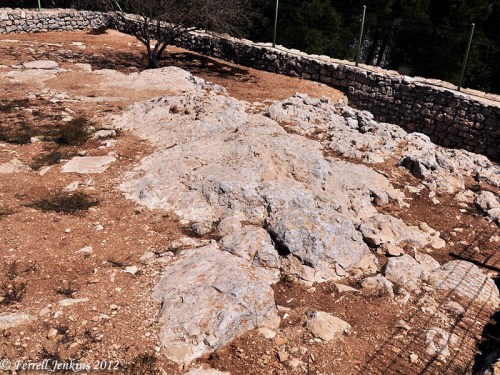
Altar of Isaac on Mt. Gerizim (Samaritan View). Photo by Ferrell Jenkins.

Samaritan tradition identifies this rock as the Altar of Isaac where Abraham began to offer Isaac. Photo by Ferrell Jenkins.

The next photo shows what the Samaritans call the “Twelve Stones.” Samaritans says that the Israelites built the altar they were commanded to built when they crossed the Jordan (Deuteronomy 27:4).
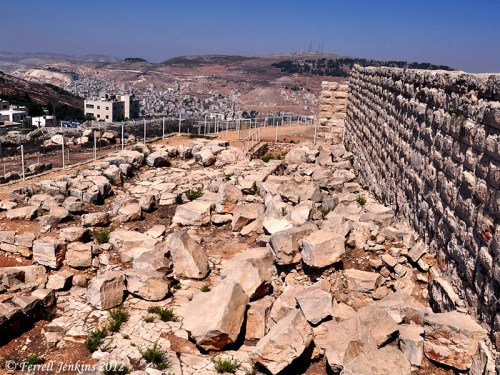
The Twelve Stones, according to Samaritan tradition. Photo by Ferrell Jenkins.

The Twelve Stones, according to Samaritan tradition. Photo by Ferrell Jenkins.

For more information about the archaeological park and the Samaritans see here. The park is under the direction of the Judea and Samaria Civil Administration and the (or of the) Israel Nature and Park Authority.

If you have an interest in the historical information about the temples on Mount Gerizim, check this article by Yitzhak Magen, the recent excavator, here. An attractive brochure is available at the entrance to the park with text by Magen. It is a pleasure to see a brochure written by a knowledgeable person.

Let the New Year begin

This evening at sundown the New Year began according to the Jewish calendar. Today is known as Rosh HaShanna — the head or first of the year.

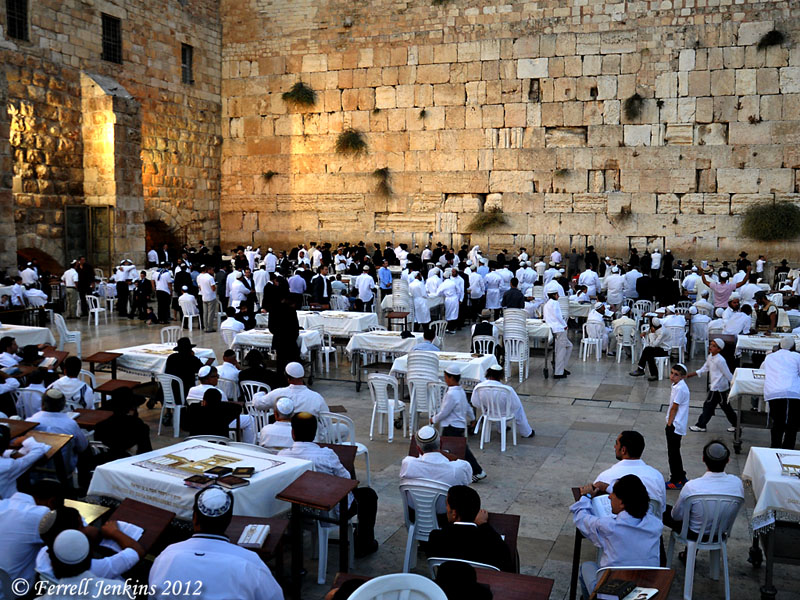
Late this afternoon I went to the Western Wall to observe some of the festivities of the beginning of the New Year.

The Western Wall on Rosh HaShanna. Photo by Ferrell Jenkins.

The Western Wall on Rosh HaShanna. Photo by Ferrell Jenkins.

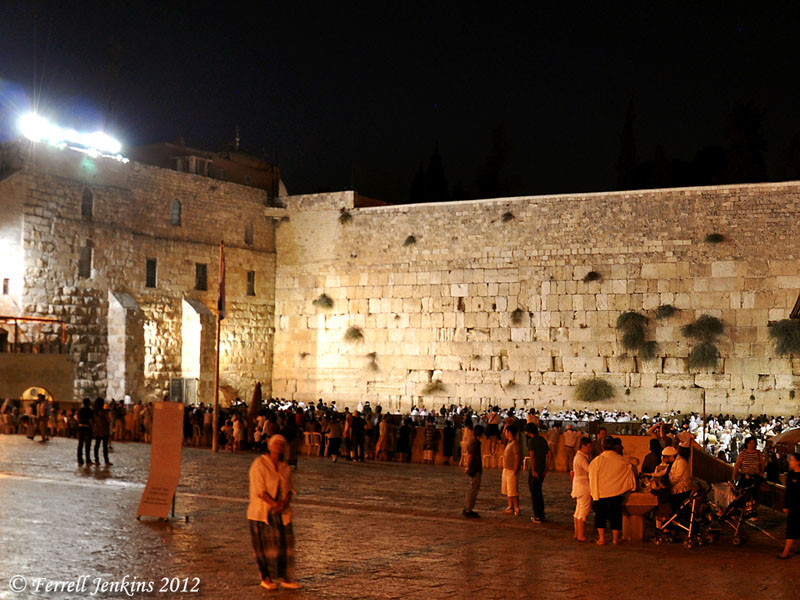
Finally, when the sun went down just a few minutes after 7 p.m., the new year had arrived to the sound of chanting and dancing.

The Western Wall at the beginning of Rosh HaShanna. Photo by Ferrell Jenkins.

The Western Wall at the beginning of Rosh HaShanna. Photo by Ferrell Jenkins.

Now in the seventh month, on the first day of the month, you shall also have a holy convocation; you shall do no laborious work. It will be to you a day for blowing trumpets. (Numbers 29:1 NAU)

Blow the trumpet at the new moon, At the full moon, on our feast day.
(Psalm 81:3 NAU)

We expect to hear the blowing of shophars during the next couple of days.

No work is to be done this day. Our hotel was again filled with Jews celebrating the New Year. The head waiter told me there were approximately 900 served in the dining room this evening.

Modern Jews no longer follow the commands of the following verses in Number 29 requiring the offering of a burnt offering, a grain offering, a drink offering, etc.

The horn or trumpet under consideration is the shophar or ram’s horn. For more about the ram’s horn, see here.

The Shephelah and the Coastal Plain

Today was an easy day of travel, but an extremely important one.We left Jerusalem headed for the Shephelah (lowland; Deuteronomy 1:7). We made a brief stop at Beth-shemesh where the ark of the covenant was returned from the Philistines to Israel (1 Samuel 6). This was also the territory of Samson (Zorah and Esthaol (Judges 13).

We drove through the Valley of Elah (1 Samuel 17) and called attention to the sites located in the area (Socoh, Azekah, and Khirbet Qeiyafa). We made a stops at Tel Goded, Maresha, Tel Burna, Lachish, and Tell es-Safi/Gath for photographs.

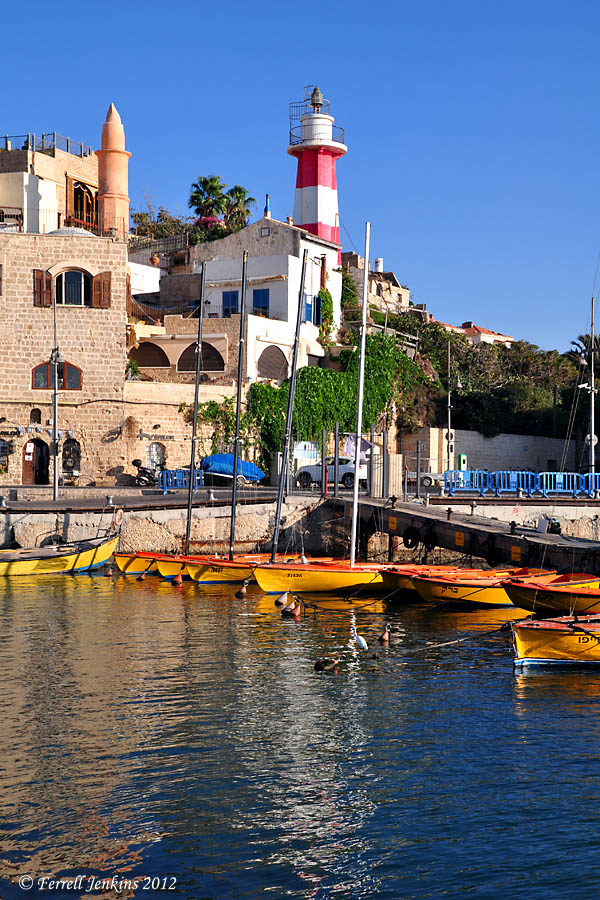
Our final stop was at Joppa (Yaffo). This is the site we intended to begin with, but our flight was delayed leaving New York and we were not able to go there on the first day of the tour. The photo below is of the fishing port and lighthouse at Old Joppa.

The fishing port and lighthouse at Old Joppa. Photo by Ferrell Jenkins.

The fishing port and lighthouse at Old Joppa. Photo by Ferrell Jenkins.

Joppa is located in the Plain of Sharon and served as the seaport for Jerusalem which is about 35 miles away. The city is now called Jaffa, or Yafo. Joppa was a walled town as early as the reign of Pharaoh Thutmose III (1490-1435 B.C.) who mentions Joppa in his town lists.

Here are a few of the biblical highlights for Joppa.

  • Joppa was assigned to the tribe of Dan, but was not controlled by the Israelites till the time of David (Joshua 19:46).
  • Hiram of Tyre floated cedar from Lebanon to Joppa for Solomon’s Temple (2 Chronicles 2:16).
  • Jonah sought a ship for Tarshish at Joppa to avoid going to Nineveh (Jonah 1:3).
  • Cedars from Lebanon again were floated to Joppa for the rebuilding of the temple (520-516 B.C.; Ezra 3:7). The port of the city is behind St. Peter’s Church.
  • Tabitha (Dorcas) lived in Joppa. When she died the disciples sent for Peter who was a Lydda. He came to Joppa and raised Dorcas (Acts 9:36-42). (Acts 10:6).
  • Peter stayed many days in Joppa with Simon the tanner (Acts 9:43). His house was by the sea (Acts 10:6). A house near the port is shown as the house of Simon, but there is no way to know this with certainty.
  • Peter received the housetop vision and learned that he was to go to Caesarea to preach the gospel to the Gentiles at the house of the Roman centurion Cornelius (Acts 10:23).

Benjamin plateau, Israel Museum, and the Garden Tomb

This morning we went out to Nebi Samwil [prophet Samuel], a site suggested as the location of Mizpah by some scholars. Others suggest Tell en-Nasbeh, a mound located at Al Bira in the West Bank. (See Jeffrey Zorn, “Mizpah: Newly Discovered Stratum Reveals Judah’s Other Capital.” BAR 23:05 (Sep/Oct 1997).

  • Samuel, the last judge of Israel, called all of the people of Israel to Mizpah and judged them (1 Samuel 7:5-6).
  • Samuel also anointed Saul to be the first king of Israel at Mizpah (1 Samuel 10:1).
  • Mizpah became the headquarters of Gedaliah as governor of Judah after the Babylonian destruction of Jerusalem  (2 Kings 25:23).

From the hill, we were able to look north to the Benjamin plateau. Both King Saul and Saul of Tarsus (Paul) were from the tribe of Benjamin. El Jib, the tell of Gibeon, is also visible from Nebi Samwil.

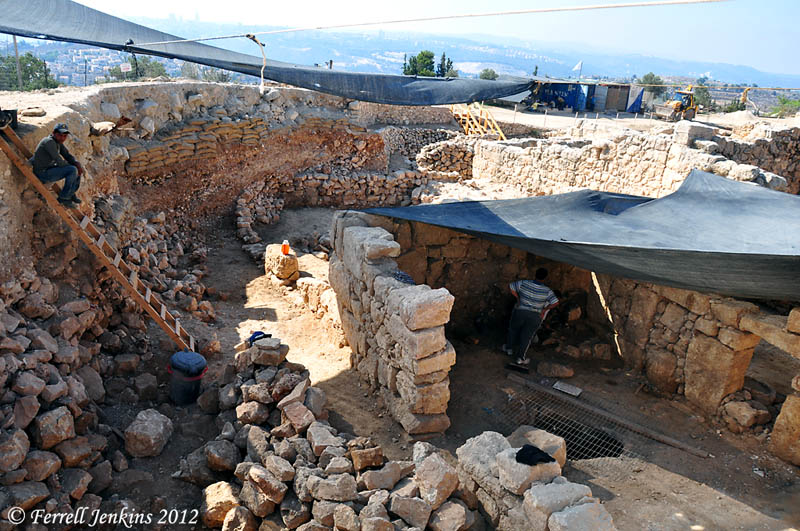
Some new excavations were underway under the direction of the National Parks Authority. We were told that Hasmonean ruins has been excavated, and there was some evidence from the Persian and Babylonian periods.

Excavations at Nebi Samwil - Sept. 13, 2012. Photo by Ferrell Jenkins.

Excavations at Nebi Samwil – Sept. 13, 2012. Photo by Ferrell Jenkins.

After Nebi Samwil we went to the Israel Museum campus for a visit of the Second Temple Model, the Shrine of the Book, and the Israel Museum. This is the first time I have been in the Museum since photos (without flash) have been allowed.

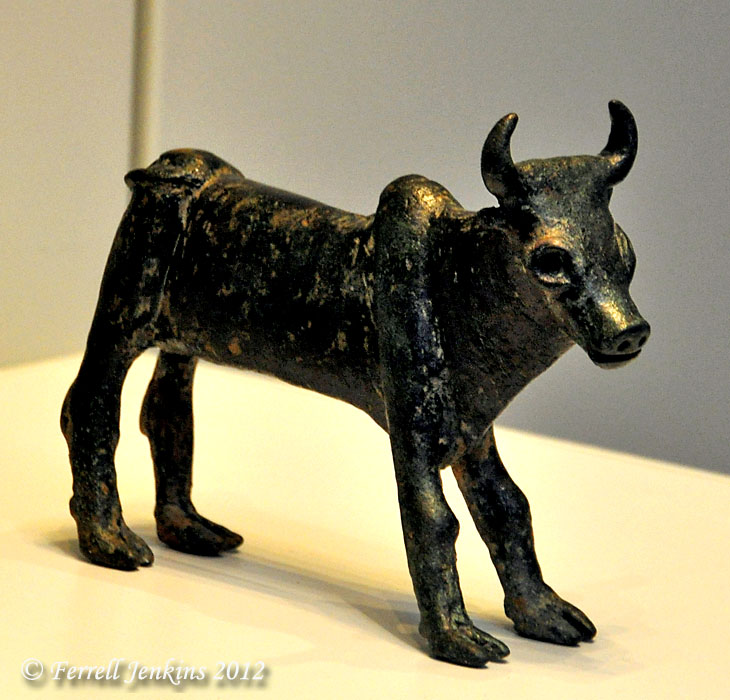
I will share one photo that I am pleased to have in my collection. It shows a bronze bull, dating to the 12th century B.C., found in the Samaria region.

Bronze Bull from Samaria Region - Israel Museum. Photo by Ferrell Jenkins.

Bronze Bull from Samaria Region – Israel Museum. Photo by Ferrell Jenkins.

This bull, and others those that have been found at Ashkelon and Hazor, remind us of the calf at Sinai (Exodus 32:24) and the calves set up by Jeroboam at Dan and Bethel (2 Kings 10:29).

The information posted with the statuette says,

Canaanite in inspiration, it attests to Israelite adoption of Canaanite motif. For the Israelites it may have symbolized God, or the pedestal of an unseen God.

Thank you, Israel Museum, for allowing photos.

In the late afternoon we visited The Garden Tomb. While this tomb is clearly not the tomb of Jesus, it provides a good illustration in a natural setting — far different from the Holy Sepulcher.