Category Archives: Old Testament

Reading the Blogs

Charles Savelle (Bible X) tells about his enjoyable afternoon at Southwestern Baptist Theological Seminary to visit the Dead Sea Scrolls and the Bible Exhibit (Fort Worth).  He describes the entire visit, step by step, including a list of “the scroll fragments and other manuscripts and Bibles” including a list of the Biblical verses included in the scroll fragments. A Qumran simulated dig is part of the exhibit. Charles includes a a hi-res photo of himself standing in a nice replica of a mikvah (ritual bath) at Qumran. Read the complete report here. The exhibit runs through January 13, 2013.

I enjoyed lunch with Charles one day at the recent ETS annual meeting. I find his Bible X blog helpful.

Luke Chandler reports here that a different Dead Sea Scrolls Exhibit is now open at the Cincinnati Museum Center. This exhibit includes about “600 biblically-related artifacts on loan from the Israel[i] Antiquities Authority.” Read more here. This exhibit which runs through April, 2013, has already been in New York and Philadelphia. Check our link to the New York exhibition here. The 39 page guide to the exhibit by Gordon Franz is still available.
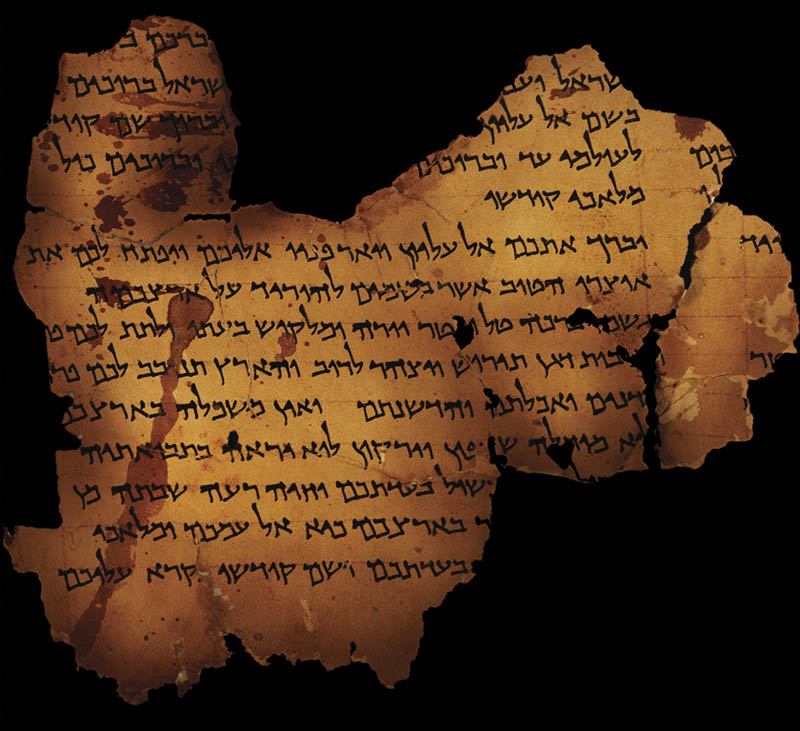
The War Scroll displayed at the Cincinnati Museum.

The War Scroll displayed at the Cincinnati Museum Center.

Luke also comments on a recent comment by Dr. William Dever regarding the lack of evidence for the “Low Chronologyhere.

It was only yesterday that I came caught up with a post by Seth Rodriquez (Wild Olive Shoot)  written the day after the U.S. presidential election. He has some important words for those who may have been disappointed in the outcome of the election. See here.
Professor Maeir on the cease fire and Tell es-Safi/Gath

Earlier in the week at the SBL meeting I visited a few minutes with Prof. Aren Maeir, excavator of Tell es-Safi/Gath. He is back home in Israel, and writes this morning about the cease fire between Gaza and Israel.

Well, thank g-d a cease fire has been declared and that it appears to be holding.

I have heard an unconfirmed report that the Palestinians even shot a missile at Tell es-Safi/Gath! I’ll have to check this out, but perhaps someone in the Hamas does not like what we are finding at the site? (is nothing sacred? 🙂

UPDATE: Uri Kaizer, the warden for the Tell es-Safi/Gath region from the Israel Nature and Parks Authority has informed me that the missile did not hit the site, but rather fell a km or two to the west.

In any case, I pray that things will stay quiet and we can all get back to living our regular lives.

I would be nice if in the future, when describing the period following this last round of fighting, the following could be said: “The land was quiet for forty years”…

Follow his blog here.

You will recognize the last phrase in Maeir’s post as the common refrain from the book of Judges.

So the land had rest forty years. (Judges 3:11a ESV)

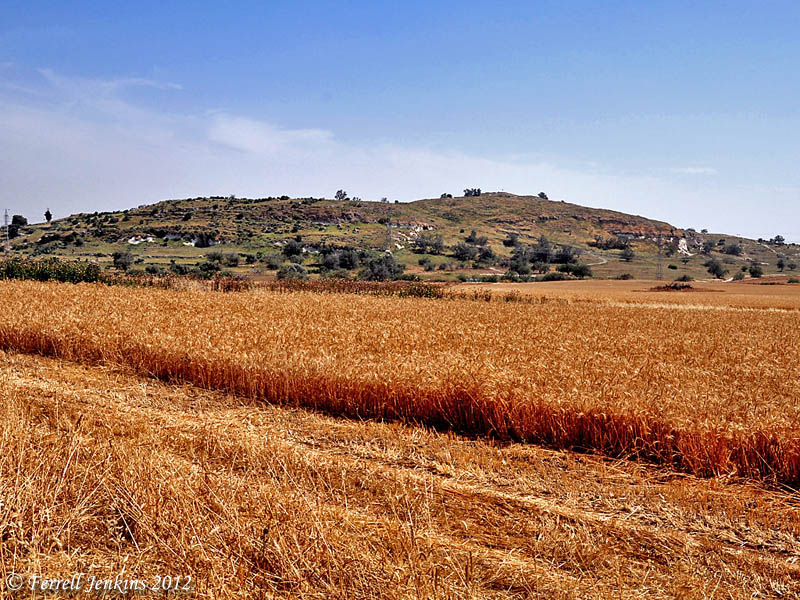
The following photo of Tel es-Safi/Gath shows the abundant wheat fields in the plain to the west of the tel.

Tel es-Safi/Gath with wheat fields in the plain to the west. Photo by Ferrell Jenkins.

Tel es-Safi/Gath with wheat fields in the plain to the west. Photo by Ferrell Jenkins.

The Annual Meetings # 2 (NEAS)

Attending the annual meetings of professional organizations allows one to keep up with the latest scholarly efforts of various scholars. When I was teaching I attended sessions dealing with the subjects I was teaching. I have always attended sessions dealing with archaeology because these help be to keep abreast of the field. On my tours, I am often able to tell the guides about discoveries that they have not yet learned about.

Some affiliated smaller organizations meet under the auspices of the larger one. The NEAS (Near East Archaeological Society) meets with ETS. I attended most of the sessions of the NEAS. Let me give you some idea about what I heard.

Charles Ailing, Did Moses Learn His Monotheism From Akhenaten? Mostly likely not. According to the Biblical chronology, Moses was earlier than Akhenaten.

Douglas Petrovich, Identifying the Tower of Babel and (Re-)Locating the Site of Its Construction. He suggested Eridu. Doug began his paper with a prayer in which he said, “Thank you for the thrill of learning, and thank you for the truth.”

Randall Price reported on “the Final Season of Excavation on the Qumran Plateau.” I did not hear his presentation about the search for Noah’s Ark. Seth Rodriquez looked at how archaeology provides insights into Psalm 144.

Morten Jensen, from Denmark, spoke about “Religious Motivation in the Archaeological Record of First-century Israel.” A paper on Metallurgy was read for a scholar who was unable to arrive from Germany.

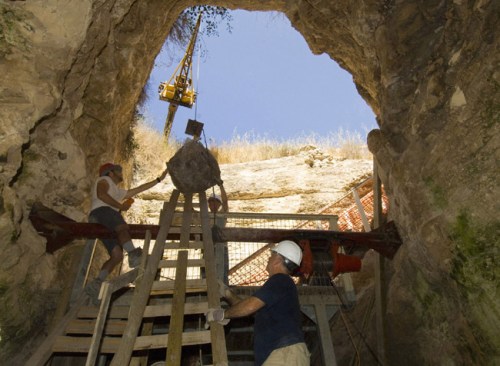
We had two presentations by excavators at Gezer. Steven Ortiz spoke about the recent excavations. Daniel Warner spoke about the fabulous new find of the Gezer Water System. See our earlier report on this water system here.

Gezer Water System

Excavating Gezer Water System. Photo: Art Beaulieu. Courtesy BP & NOBTS.

The sessions last about three hours and have at least five presenters in each. One session was devoted to Wheaton College’s Contribution to Biblical Archaeology from Joseph P. Free to the Present. Alfred J. Hoerth, who served as chair of the department of archaeology, spoke of the contributions from Free to the present. Other speakers, all of whom attended and/or taught at Wheaton included Daniel Master (Ashkelon), John Monson, and Tom Davis. This was an extremely worthwhile session.

Free is known for his book about archaeology, but also for his excavation of the biblical site of Dothan. One interesting tidbit: Free purchased the tell of Dothan from the Jordanian landowner. I think this would be impossible today.

Dothan is known as the place where Joseph’s brothers sold him into slavery (Genesis 37:12-36).

Perhaps I can get to a few comments about the SBL meeting after I return home.

ETS Plenary Sessions Online

Charles Savelle reports that the video of the plenary sessions at the recent ETS meeting are available online here Individual links are listed below. Zondervan Academic, the provider of the videos, includes advertising that you may skip to get directly to the lecture.

The general theme of the 2012 annual meeting was Caring for Creation. In these four lectures you will find four competent scholars presenting differing views on a subject that is important to each of us.

Calvin Beisner “Creation Care and Godly Dominion: The Search for a Genuinely Biblical Earth Stewardship”

Russell Moore “Heaven and Nature Sing: How Evangelical Theology Can Inform the Task of Environmental Protection, and Vice-Versa”

Richard Bauckham “Reading the Bible in the Context of the Ecological Threats of our Time”

Douglas J. Moo “Biblical Theology and Creation Care”

HT: Charles Savelle @ Bible X

The Annual Meetings # 1

Each year in November professional meetings pertaining to the field of biblical studies are held in a major U.S. city. The largest meeting is the SBL/AAR meeting. That is the Society of Biblical Literature and the American Academy of Religion. Together these organizations attract maybe eight thousand persons who are involved in teaching and researching in the fields of Biblical Studies and Religious Studies.

ASOR, the American Schools of Oriental Research, meets separately a few days ahead of the other meeting. This organization attracts those who are teaching and active in the field of Near Eastern archaeology.

The Evangelical Theological Society (ETS) currently meets at the same time as ASOR. I think in some recent years as many as 2000 members attend ETS. This organization attracts scholars who are admittedly conservative in their approach toward the Scriptures. Most of them teach in seminaries or religious schools.

Some international scholars attend each of these meetings.

From time to time I have someone ask me why I attend. I will suggest a couple of reasons based on the current ETS meeting, and these reasons will be true of both meetings.

Books, Books, Books. I do not buy as many books as I once did, but I still like to see what is being published. The ETS book exhibit has grown from a few tables several years back to a large exhibit hall this year. Many of the major religious publishers offer deep discounts to the members. They know that these teachers may use their books, or at least recommend them, in their classes. Only members with the proper ID are allowed in the exhibit hall.

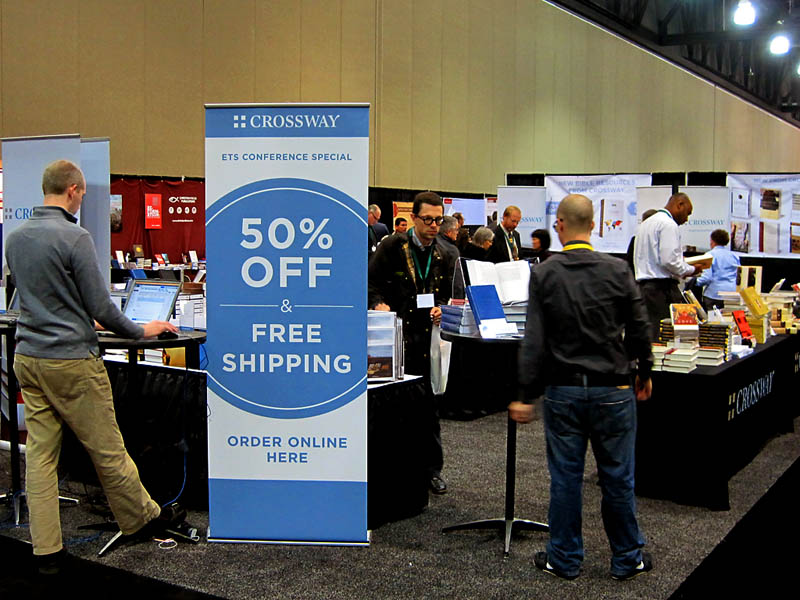
The Crossway display. Crossway is the publisher of the ESV bible.

The Crossway display. Crossway is the publisher of the ESV bible.

The books on display are mainly the current publications along with a few of the previous best sellers.

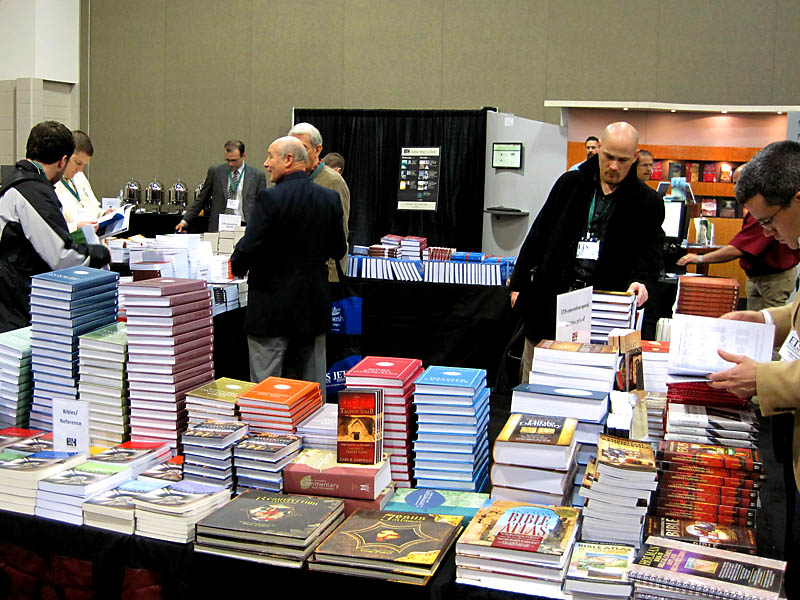
A portion of the B&H display.

A small portion of the B&H display.

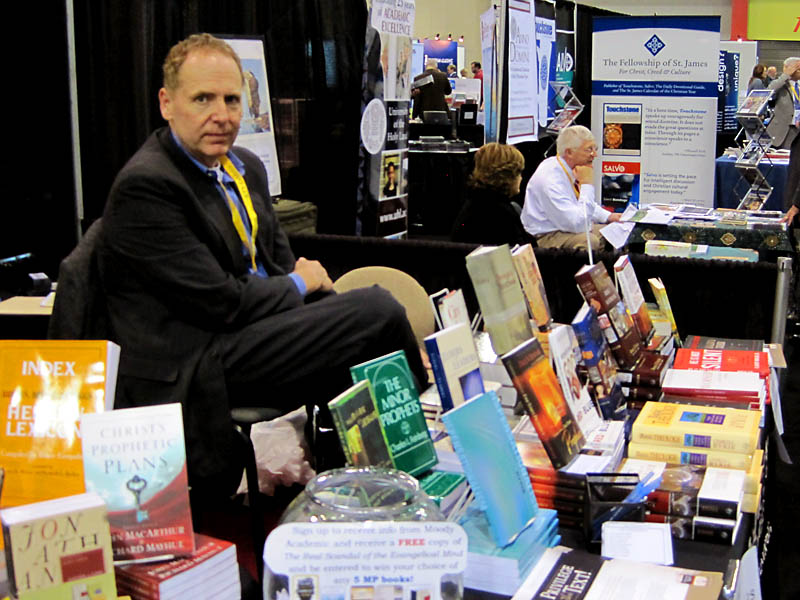
Friends. Another reason I attend the meetings to to see old friends and make new ones. Jack is now a freelance representative. This week he was working for Moody Press.

Promoting Moody Press books at the ETS meeting.

Promoting Moody Press books at the ETS meeting.

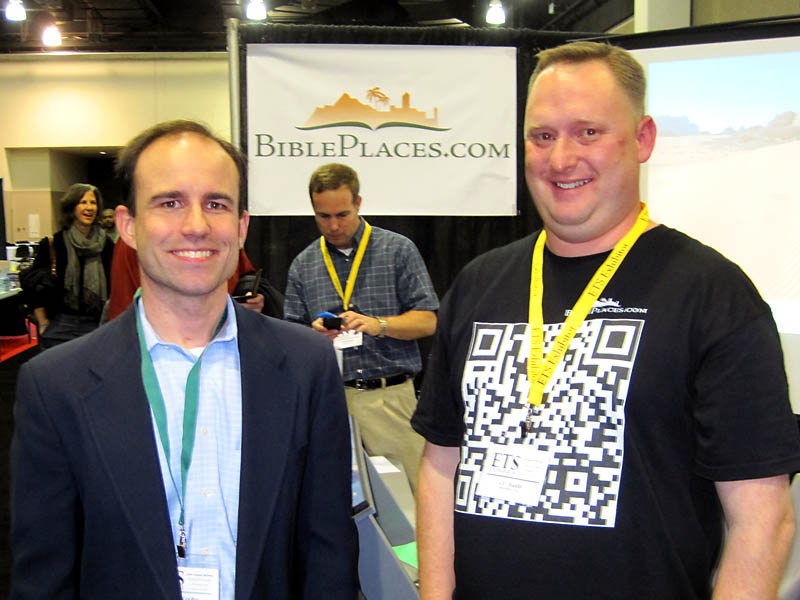
For the first time, Todd Bolen had a display of his Pictorial Library of the Bible Lands. We have written about this series here.

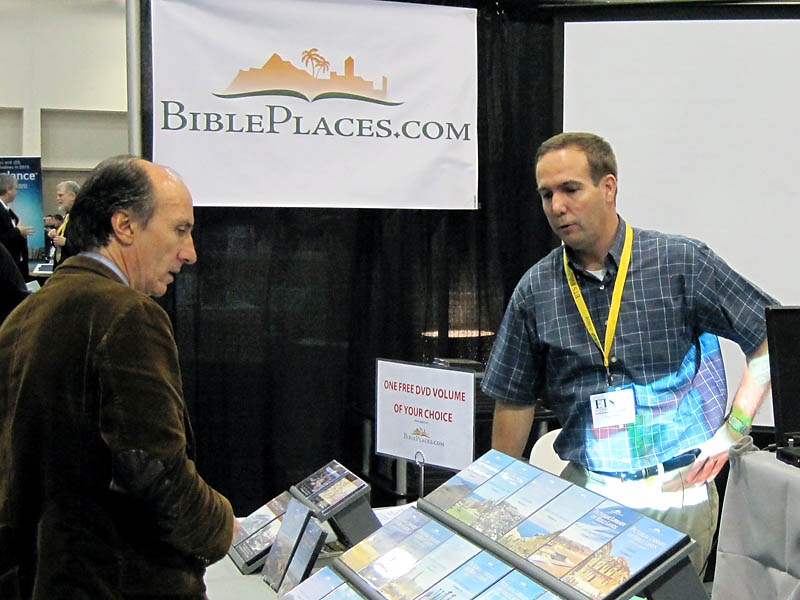
Todd Bolen, Bible Places.com, talks with a customer.

Todd Bolen (right), Bible Places.com, talks with a customer.

A. D. Riddle made new maps for the revised PLBL. He was helping at the booth. A customer is on the right. Bolen is in the background. This was my first time to meet A. D., he has been helpful to me several times via correspondence.

A.D. Riddle, who supplied new maps for the revised series.

A.D. Riddle (right), who supplied new maps for the revised series, takes a break from talking with an ETS member about the PLBL series.

I ran across Mark Wilson, author of Biblical Turkey: A Guide to the Jewish and Christian Sites of Asia Minor. Mark lives in Turkey part of each year, and has spoken to one of my groups. Everyone who plans a trip to Turkey, or who just wants to know more about the Biblical places in Turkey, should have this book.
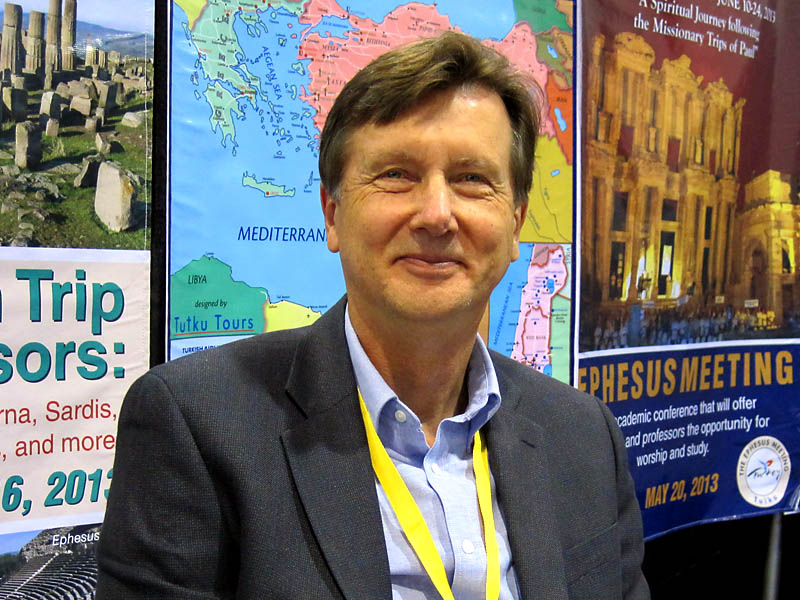
Mark Wilson mans the Tutku Travel booth.

Mark Wilson mans the Tutku Travel booth.

Other friends I saw included Steve Wolfgang, former students Rusty Taylor and Randy Murphy.

In another post I will mention some of the papers I heard.

He “guided them in the wilderness like a flock.”

The Psalmist describes the LORD’S care for His people under the figure of a shepherd and his sheep.

But He led forth His own people like sheep And guided them in the wilderness like a flock;  He led them safely, so that they did not fear; But the sea engulfed their enemies.  So He brought them to His holy land, To this hill country which His right hand had gained. (Psalm 78:52-54 NAU)

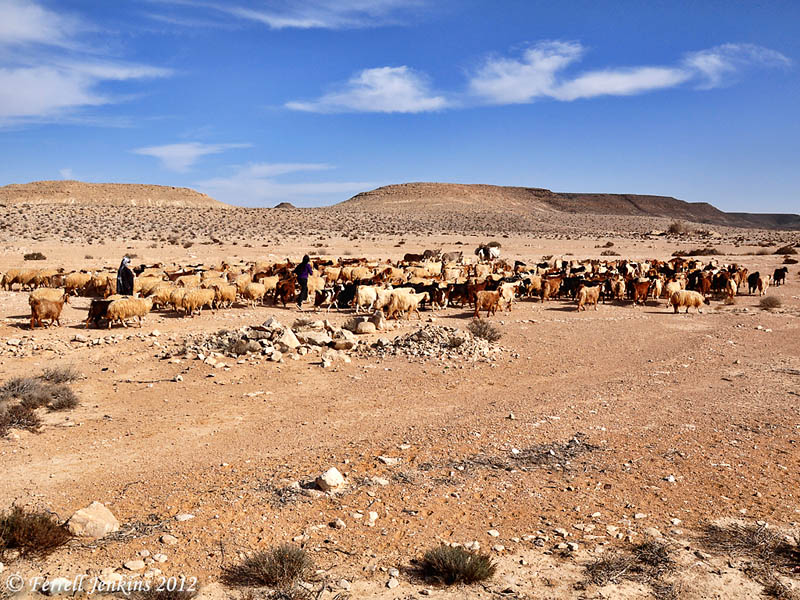
Shepherds south of Avedat in the Wilderness of Zin. Photo by Ferrell Jenkins.

Shepherds south of Avedat in the Wilderness of Zin. Photo by Ferrell Jenkins.

The photo above was made a few miles south of Avedat, Israel, in the Wilderness of Zin. The Israelites lived in this wilderness (or desert) prior to entry into the land that the LORD promised to the seed of Abraham (Genesis 12:7).

Acts 21 # 2 — Photo Illustrations – Tyre

Luke records the journey from Patara to Tyre in these words:

 2 and having found a ship crossing over to Phoenicia, we went aboard and set sail.  3 When we came in sight of Cyprus, leaving it on the left, we kept sailing to Syria and landed at Tyre; for there the ship was to unload its cargo.  4 After looking up the disciples, we stayed there seven days; and they kept telling Paul through the Spirit not to set foot in Jerusalem.  5 When our days there were ended, we left and started on our journey, while they all, with wives and children, escorted us until we were out of the city. After kneeling down on the beach and praying, we said farewell to one another.  6 Then we went on board the ship, and they returned home again.  7 When we had finished the voyage from Tyre, we arrived at Ptolemais, and after greeting the brethren, we stayed with them for a day.  (Acts 21:2-7 NAU)

Tyre was well known to the Old Testament writers, especially the prophet Ezekiel. In Ezekiel 26-28 you will find a proclamation against Tyre, a prophetic lamentation over the fall of the city, and a proclamation against the king of Tyre.

The ministry of Jesus took Him to the district of Tyre and Sidon (Matthew 15:21).

The disciples, with wives and children, escorted Paul and his companions out of the city. The group kneeled and prayed on the beach before saying farewell to one another.

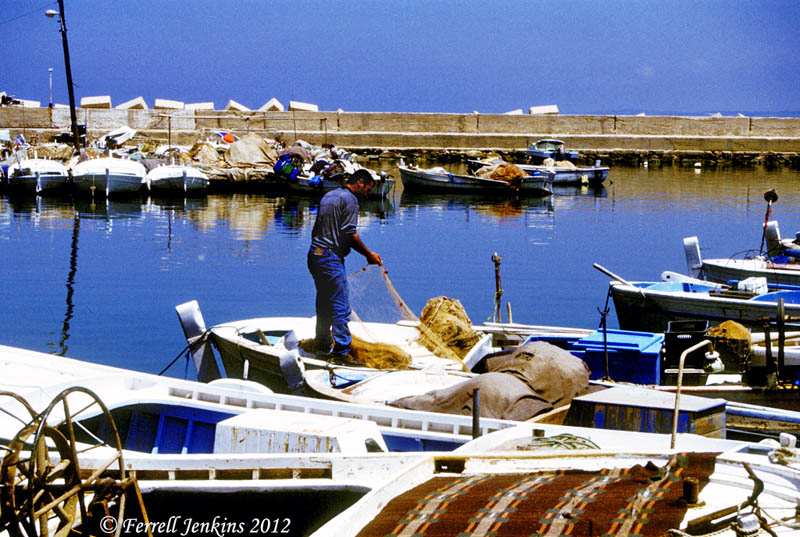
Tyre was once an important Phoenician city, but is now a small town known as Sur in Lebanon. It has a small fishing port that you see in the photograph below.

A fisherman works with his nets in the small harbor of Tyre. Photo by Ferrell Jenkins.

A fisherman works with his nets in the small harbor of Tyre. Photo by Ferrell Jenkins.

The early rain damages Hai-Bar Yotvata Nature Reserve

According to The Jerusalem Post’s Sharon Udasin, heavy rains caused damage to the Hai-Bar Yotvata Nature Reserve located in the Arabah (Arava) north of Eilat.

The heavy rains that drenched the Eilat mountains and southern Arava region on Sunday night led to the flooding of the Hai-Bar Yotvata Nature Reserve, the Israel Nature and Parks Authority (INPA) said on Monday.

Over the course of the night, park workers evacuated animals that were in danger of drowning, and others worked all night to rebuild fences that had collapsed during the flood.

By Tuesday, the nature reserve will be open as usual to visitors, an INPA statement said.

Despite the damage caused to the nature reserve, the rains brought with them “many blessings” as they watered the acacia trees – which are “a source of life in the desert” – and created a “rare, breathtaking site,” according to the INPA.

“The desert is now beautiful and gleaming, and this is the best time to hike in it and to enjoy the rich and spectacular landscape it has to offer,” said Doron Nissim, the Eilat district manager at the INPA.

More information about the weather expectations for this year is available here.

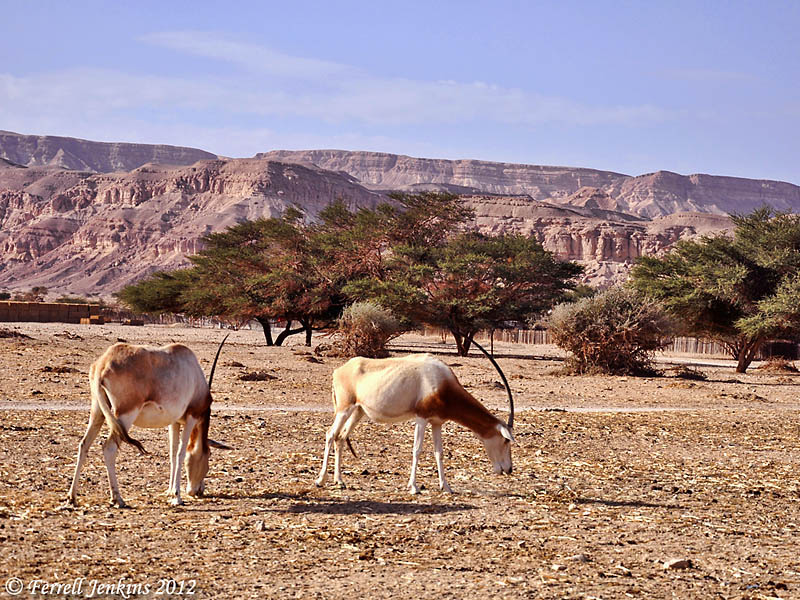
The photo below shows the Arabian Oryx, thought to be the reem of the Hebrew Bible. English versions typically translate this word with “wild ox” (Numbers 23:22; 24:8; Deuteronomy 33:17, et al. The King James Version uses the word unicorn.

Arabian Oryx at Hai-Bar Nature Reserve. Photo by Ferrell Jenkins.

Arabian Oryx at Hai-Bar Nature Reserve. Photo by Ferrell Jenkins.

If one travels in the desert during the summer months he will see a dry, desolate bad land with only an isolated acacia or tamarisk tree or a shrub where the last water of the winter rain flowed. In the winter it can be different. Israel has two dominant seasons: winter and summer. The summer is dry and the winter is wet. The early rains begin about mid-October and continue till the late rains of early April. See Deuteronomy 11:14; Psalm 84:6; Joel 2:23; James 5:7.

 “And if you will indeed obey my commandments that I command you today, to love the LORD your God, and to serve him with all your heart and with all your soul,  he will give the rain for your land in its season, the early rain and the later rain, that you may gather in your grain and your wine and your oil.  And he will give grass in your fields for your livestock, and you shall eat and be full. (Deuteronomy 11:13-15 ESV)

You might enjoy reading our earlier post about “Rivers in the Desert” here.

HT: Todd Bolen, Bible Places Blog. This Wednesday Roundup is especially full of helpful information.

“You could feel the wheels turning”

Obituaries for Frank Moore Cross (1921–2012) are beginning to appear in various sources. William Yardley writes in The New York Times about Cross:

Dr. Cross studied culture, religion and politics of the period in which the Hebrew Bible, or Old Testament, was written and revised, and he traced the ways different nations and cultures had translated its early texts. He also traced the evolution of ancient script and developed expertise in dating documents by the slightest shifts in writing style.

“That we know that a particular scroll comes from 100 B.C. and not 50 A.D. is almost entirely due to the study of the scripts and their development that he worked out,” Mr. Machinist said. “That may seem like a trivial point, but if you don’t have a sense of when these texts are dated, you have no sense of their historical importance.”

Once, several colleagues said, after carbon dating confirmed dates that he had established through script analysis, Dr. Cross joked that he was happy to hear that his script studies had validated the practice of carbon dating.

The article mentions the study habits of Dr. Cross.

Dr. Cross often sequestered himself in his study at home until late into the night.

“He was very intense, and we would just kind of tiptoe by the study,” Ms. Gindele [one of his daughters] recalled. “My mother liked to say you could feel the wheels turning and not to bother him.”

The full article may be read here.

Hershel Shanks, editor of Biblical Archaeology Review, writes here about the life and influence of Cross under the title, “The End of an Era.”

Jim Davila, who wrote a dissertation under Cross, offers some interesting reminiscences here.

HT: Jack Sasson and Joseph Lauer

Visiting the Lynn H. Wood Archaeological Museum

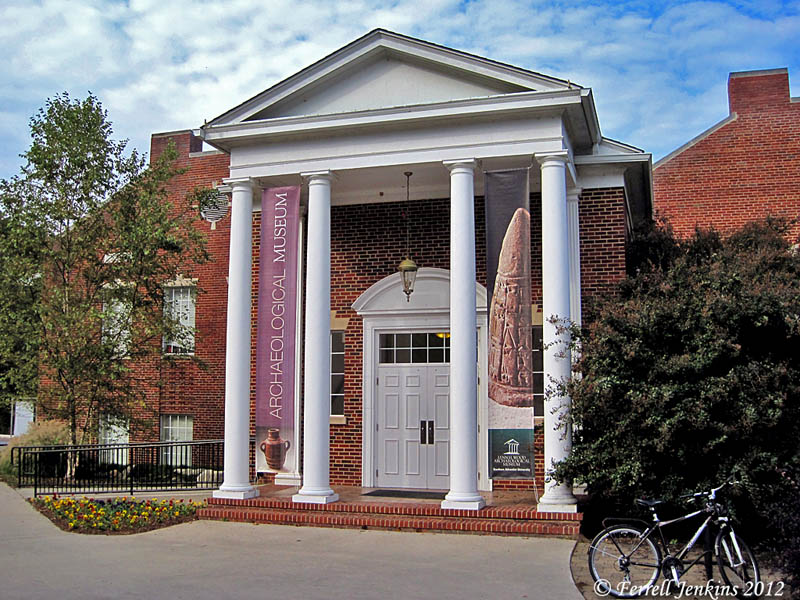
You might never expect to find an excellent archaeological museum nearly hidden in the woods of eastern Tennessee. But that is what you will find at the Lynn H. Wood Archaeological Museum on the campus of  Southern Adventist University in Collegedale, Tennessee.

When we arrived on campus we asked a student the location of the Museum. After walking up a long series of steps that some students were skipping up (ah, youth!), we asked two other students. Each of them offered to show us. And, neither had been to the Museum. Everyone on campus that we spoke with was friendly and helpful.

Inside Hackman Hall is housed a wonderful educational exhibit.

The Lynn H. Wood Archaeological Museum is located in this building.

The Lynn H. Wood Archaeological Museum is located in this building.

A few years ago William G. Dever gave his research library of nearly 3000 volumes and a large collection of archaeological artifacts to Southern. The artifacts are built into an award-winning exhibition under the title Vessels in Time: A Journey Into the Biblical World. Archaeology Professor Dr. Michael G. Hasel serves as curator of the Museum.

Iron Age IIA (1000-900 B.C.) Pottery in the Lynn H. Wood Museum.

Iron Age IIA (1000-900 B.C.) Pottery in the Lynn H. Wood Museum.

The exhibits follow a chronological order from the early days in Mesopotamia to New Testament times.  Each display has a good timeline which coordinates the archaeological periods with the Biblical record. The photo above shows some pottery from the Iron Age IIA (1000-900 B.C.). This is the period of the United Kingdom (or Monarchy). The bowl on the left has been slipped and shinned. The accompanying information explains that during this period vessels were sometimes dipped “into red watery clay” to create the colored slip. The bowl was then hand burnished with a stone like the one shown above it.

Three examples of dipper juglets from the period are shown:

  1. A Phoenician import.
  2. A simple local juglet.
  3. A black-slipped, burnished juglet.

There is a nice model of Solomon’s Temple in the same room.

If your travels take you anywhere near Chattanooga, Tennessee, I suggest you take time to drive a few miles east to Collegedale and visit the Lynn H. Wood Archaeological Museum.

Full information about the Museum including visiting hours may be found here.