Category Archives: Old Testament

Biblical History Center – LaGrange, Georgia

The Explorations in Antiquity Center, in LaGrange, Georgia, now in its tenth year, has changed the name to Biblical History Center. The new website with detailed information is available here.
New Logo for the Biblical History Center, LaGrange, Georgia.

New Logo for the Biblical History Center, LaGrange, Georgia.

The Biblical History Center is the brainchild of Dr. James (Jim) Fleming, well-known for his teaching in Israel.

Dr. Fleming established Biblical Resources in 1975, for the purpose of producing educational materials and aids for teaching the historical, geographical, and archaeological background of the Bible.

It was wonderful to have these resources together at one place in Israel, but it is beneficial to many more to have the resources available in the Southeastern United States.

We have mentioned the Center prominently here, here, and here.

My wife and I had the opportunity to stop by the Biblical History Center last November. Several significant changes have taken places since our earlier reports. The BHC now has a Biblical Life Artifacts Gallery displaying 250 artifacts from the National Treasures of Israel. Instead of having these items displayed in cases with a sign telling what they are, they are exhibited in life-like settings.
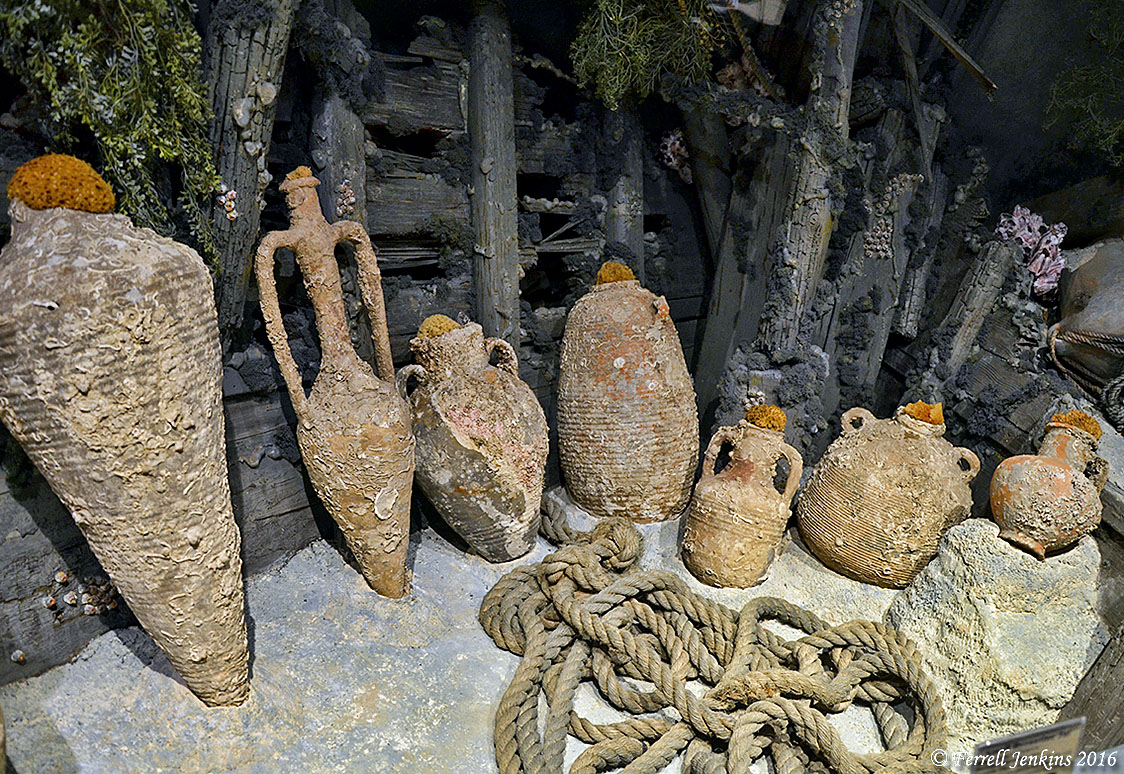
Genuine artifacts from a shipwreck off the coast of Israel displayed in a life-like setting. Photo by Ferrell Jenkins.

Genuine artifacts from a shipwreck off the coast of Israel displayed in a life-like setting. Photo by Ferrell Jenkins.

The new Biblical Life Artifacts Gallery is housed underneath the seating of the Roman theater.
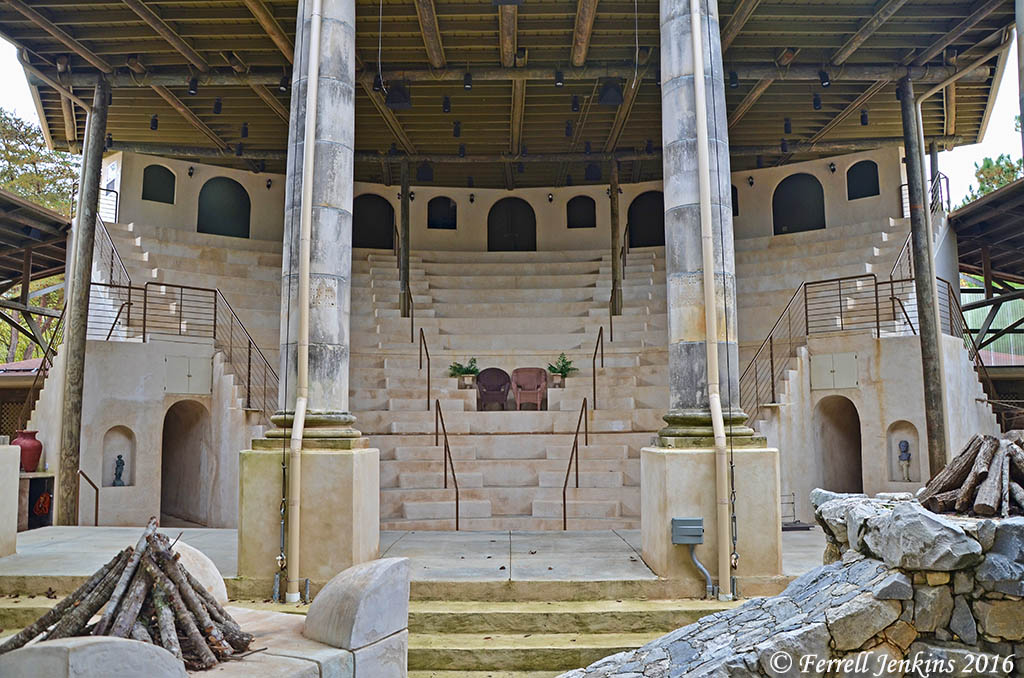
Roman theater at Biblical History Center.

Roman theater at the Biblical History Center. Photo by Ferrell Jenkins.

Of course, there are other important things at BHC. The photo below might remind one of the Middle Bronze Age gate at Tel Dan, and the canopy to the left of the gate recalls the Iron Age gate at the same city. This is where the king or judge sat in the gate to receive the people (2 Samuel 19:8). Other features of housing from biblical times are also shown in this structure.
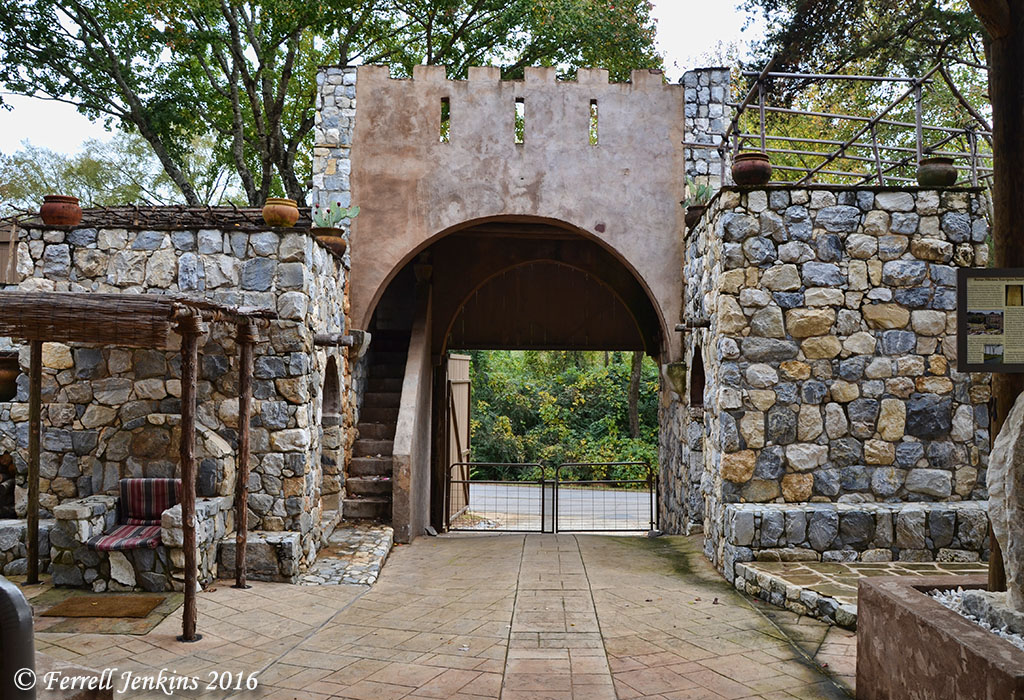
The gate at the Biblical History Center. Photo by Ferrell Jenkins.

The gate at the Biblical History Center. Photo by Ferrell Jenkins.

Other artifact pertains to farming, shepherding, fishing, the process of dying and weaving cloth, storage, glass production, coins, foods, games – to name a few.

The Biblical History Center is a family place with guided tours. They even have a place where kids can participate in an archaeological dig. And you can arrange for a biblical meal and learn what it means to “recline at table” (Matthew 26:7).
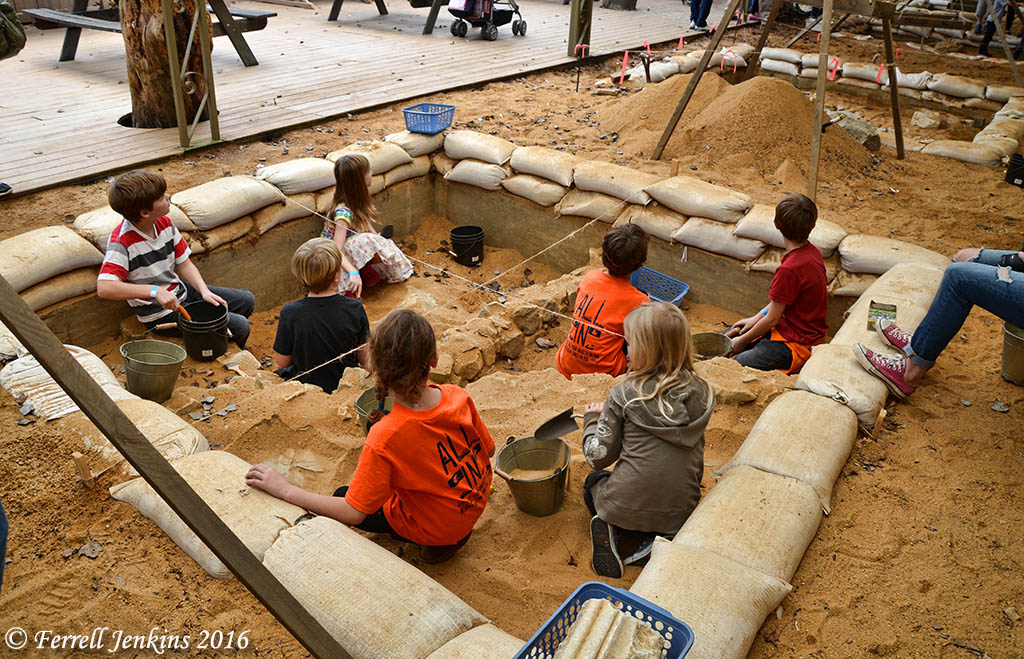
Kids learning about archaeology at the Biblical History Center.

Kids learning about archaeology at the Biblical History Center.

Check the BHC web site for complete information about the various exhibits and hours of operation. If you live close enough, this is a wonderful place to take an entire Bible class or church group. The teachers of the children’s Bible classes at one church I know about went as a group to learn more about Bible times and customs.

Want to see the types of altars mentioned in the Bible? What about crosses or tombs, wine presses or threshing floors? It’s all there.

When I walked into the BHC ticket office I handed my card to Mrs. Crenshaw. She said, “You have written about our Center.” I explained that I had recommended the Center because I knew of the work of Dr. Fleming in Israel. I had met him there and at Professional meetings, but had never been to the Center. In the earlier reviews I used photos made by David Padfield and Jane Britnell. She sold me a ticket for my wife and said, “There will be no charge for you.” Later we had an opportunity to speak with Jim Fleming for a few minutes.

This is a great facility that I highly recommend.
“It is the Land of Honey” – Tel Rehov discoveries on display at Eretz Israel Museum

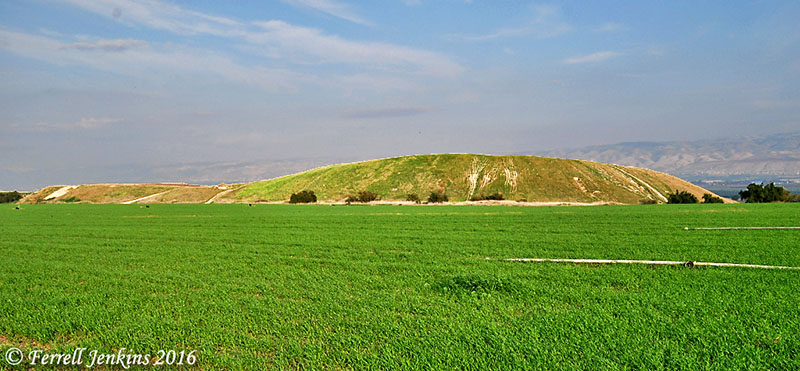
Tel Rehov is located about three miles south of Beth-Shean (Beth-Shan) on the east side of Highway 90. Rehov is not mentioned in the Old Testament, but it is known from Pharaoh Shishak’s city list on the wall of the temple of Amun in the Karnak Temple at Luxor, Egypt. This campaign is also mentioned in the pages of the Bible (1 Kings 14:25-28; 2 Chronicles 12:2-9).

Tel Rehov was occupied during the Bronze Age and the Iron Age. The city may be one of those not captured by Israel when they entered the Land under the leadership of Joshua.

The men of Manasseh did not conquer Beth Shan, Taanach, or their surrounding towns. Nor did they conquer the people living in Dor, Ibleam, Megiddo or their surrounding towns. The Canaanites managed to remain in those areas. Whenever Israel was strong militarily, they forced the Canaanites to do hard labor, but they never totally conquered them. (Judges 1:27-28 NET; cf. Joshua 17:12)

The city was destroyed by the Assyrians in the eighth century B.C. as they made their steady trek south.

Archaeological excavations were conducted at Tel Rehov from 1997 to 2012 under the direction of Prof. Amihai Mazar and Dr. Nava Panitz-Cohen of the Hebrew University of Jerusalem. For information and photos see the excavation website here.

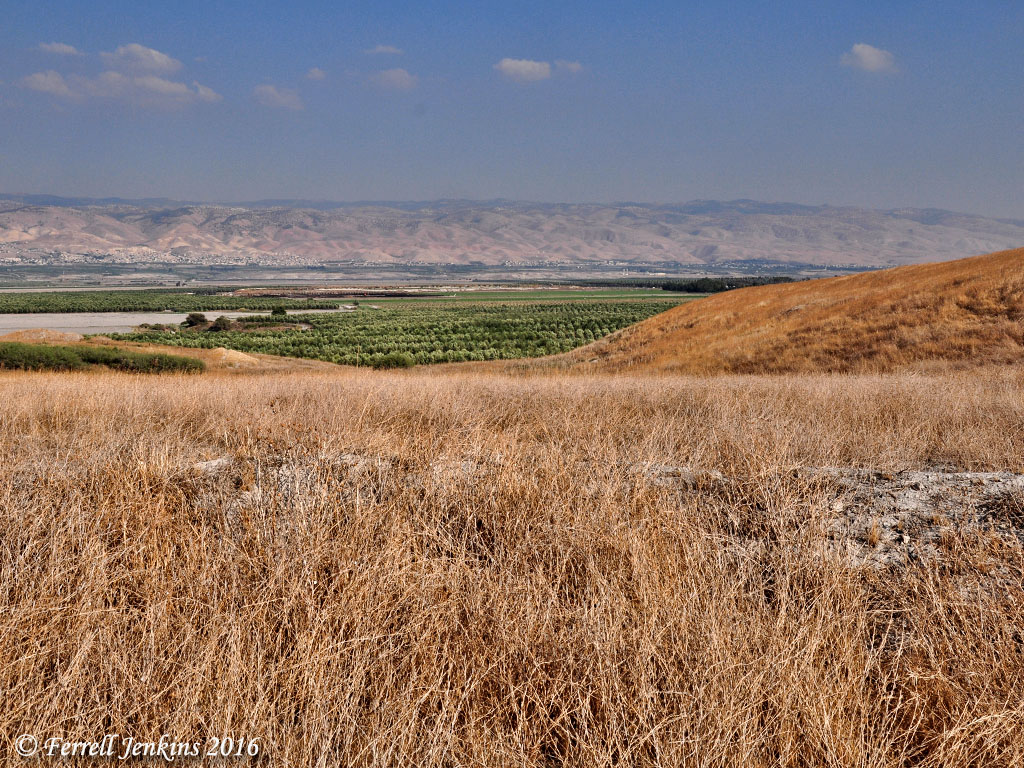
View east of Tel Rehov in the Beth Shean Valley. Photo by Ferrell Jenkins.

Tel Rehov in the Beth-Shean Valley to the east of Highway 90. The mountains of Gilead are visible in the distance. Photo by Ferrell Jenkins.

The next view takes us to the top of the mound. From there we see the Jordan Valley and a nice view of the Gilead mountains in modern Jordan.

View east from atop Tel Rehov. We see the Jordan Valley and the Gilead mountains. Photo by Ferrell Jenkins.

View east from atop the north end of Tel Rehov. We see the Jordan Valley and the Gilead mountains in the distance. Photo by Ferrell Jenkins.

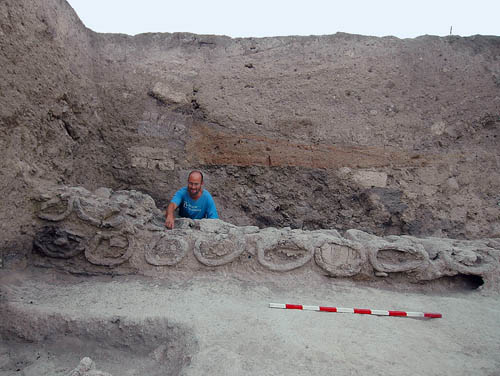
Many artifacts, including numerous household and cult objects, were uncovered at Tel Rehov. Perhaps the most unusual find was an industrial apiary. The small photo below from the excavation web site shows some of the beehives made of clay.

 Apiary at Tel Rehov, the eastern row of hives © Copyright - The Beth-Valley Archaeological Project, Hebrew University of Jerusalem,

Apiary at Tel Rehov, the eastern row of hives. © Copyright – The Beth-Shean Valley Archaeological Project, Hebrew University of Jerusalem,

From January 12 to October 31, 2016, items from Tel Rehov are exhibited at the Eretz Israel Museum in Tel Aviv under the title It Is the Land of Honey. I had the opportunity to visit this exhibition in April. The Museum website provides detailed information about the exhibition and a few small photos here.

The houses at Tel Rehov during Iron Age IIA differed from the typical houses found in known Israelite cities. According to the Museum website,

A salient feature of the Iron Age IIA city was the exclusive use of mudbrick to construct all buildings, incorporating wooden beams in walls and floors. Each building was unique in its architectural plan, and did not resemble any of the common blueprints of the Iron Age II, such as four-room houses or pillared buildings.

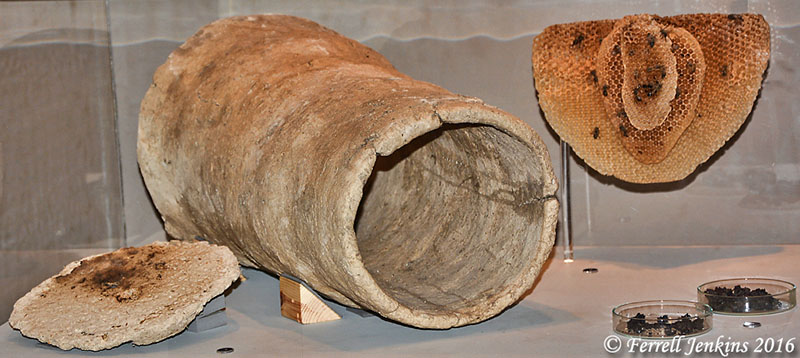
The photo below shows one of the clay beehives. A reconstruction of a honeycomb is visible on the right. Some of the bees found in the hives were determined to be from Anatolia, modern central Turkey. This adds one more piece of evidence showing how interconnected the nations of the ancient Middle East were. Some of the bees found in charred honeycombs are in the petri dishes in the front right of the photo. The lid of the beehive, with a hole in the center, is to the left of the hive. Click on the photo for a larger image.

One of the beehives from the Tel Rehov apiary. Eretz Israel exhibit. Photo by Ferrell Jenkins.

One of the beehives from the Tel Rehov apiary. Eretz Israel exhibition. Photo by Ferrell Jenkins.

The exhibition includes a large display of items from Tel Rehov. I will list just a few.

  • Several four horned altars made of clay.
  • A wide variety of household pottery, including an oven of the period.
  • One of the mud bricks of which the houses were constructed.
  • A reconstructed loom with weights found during the dig. Several others items from the “House of Elisha” are on display. The ostracon with the name of Elisha written on it in red ink is not displayed, but there is information about it in the exhibition book. There were several altars in this house.
  • A storage jar had the name Nimshi inscribed on it – the name identical to that of King Jehu’s grandfather (1 Kings 19:16; 2 Kings 9:2).
  • Some iron blades, arrow heads, and possibly a sickle.
  • Some typical Canaanite clay fertility goddesses.
  • Stamped jar handles unique to Tel Rehov.
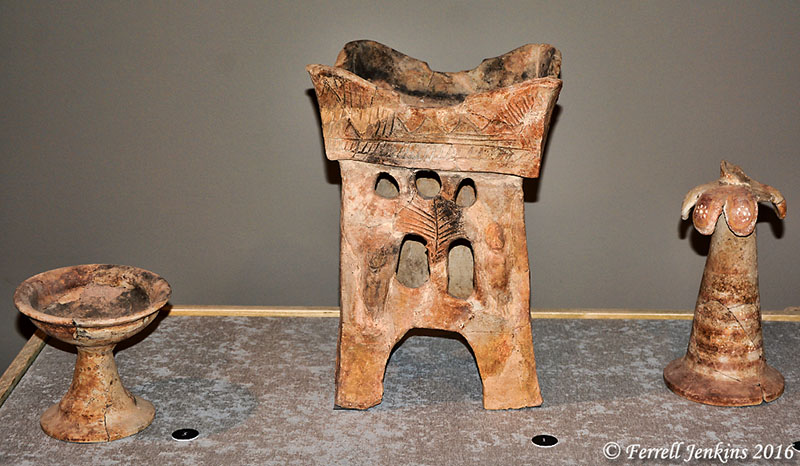
Horned altar and chalices from Tel Rehov. Photo by Ferrell Jenkins.

Tower shaped horned altar and chalices from Tel Rehov found in the area of the apiary. This altar is listed as being on loan from the Israel Museum in the exhibition book. If you miss the exhibition in Tel Aviv, perhaps you can see it later in the Israel Museum. Photo by Ferrell Jenkins.

The Museum has produced a nice 256-page book in Hebrew and English about Tel Rehov and the exhibition. I don’t see it listed at Amazon, but if you visit the exhibition you will probably wish to purchase a copy at the Museum shop.

Mazar and Panitz-Cohen published a brief article, with several photos of Tel Rehov artifacts, under the title “To What God? Altars and a House Shrine from Tel Rehov Puzzle Archaeologists” in the July/August 2008 Biblical Archaeology Review.

Sinuhe takes a trip through Canaan

The earliest description of Canaan comes from an Egyptian literary text. In The Story of Sinuhe (see-NUU-hay) written in the 20th century B.C., a traveler tells of his pleasant stay in northern Canaan (possibly the Beka Valley of Lebanon). He describes the land as follows:

Figs were in it, and grapes. It had more wine than water. Plentiful was its honey, abundant its olives. Every (kind of) fruit was on its trees. Barley was there, and emmer. There was no limit to any (kind of) cattle. (qtd. in Pritchard, Ancient Near Eastern Texts, 19)

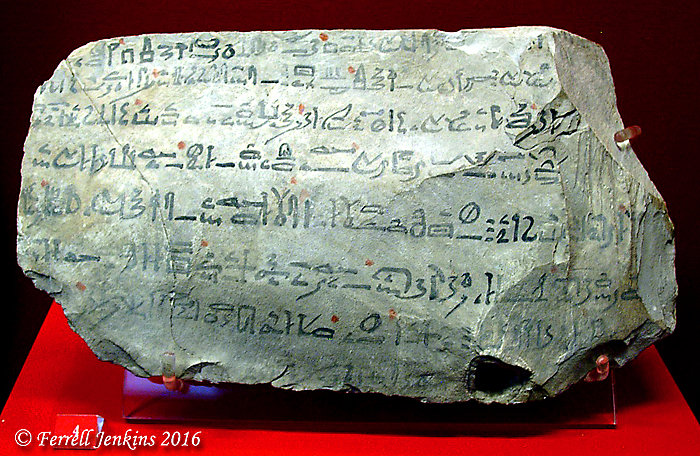
This description reminds one of the promise God made to the Israelites to bring them into a land flowing with milk and honey (Exodus 3:8). A copy of The Story of Sinuhe written on stone is on display in the Ashmolean Museum, Oxford, England. The stone below, now in the British Museum, contains the final stanza of the Story or Tale.

A portion of the Tale of Sinuhe. British Museum. Photo by Ferrell Jenkins.

A portion of the Tale of Sinuhe. British Museum. Photo by Ferrell Jenkins.

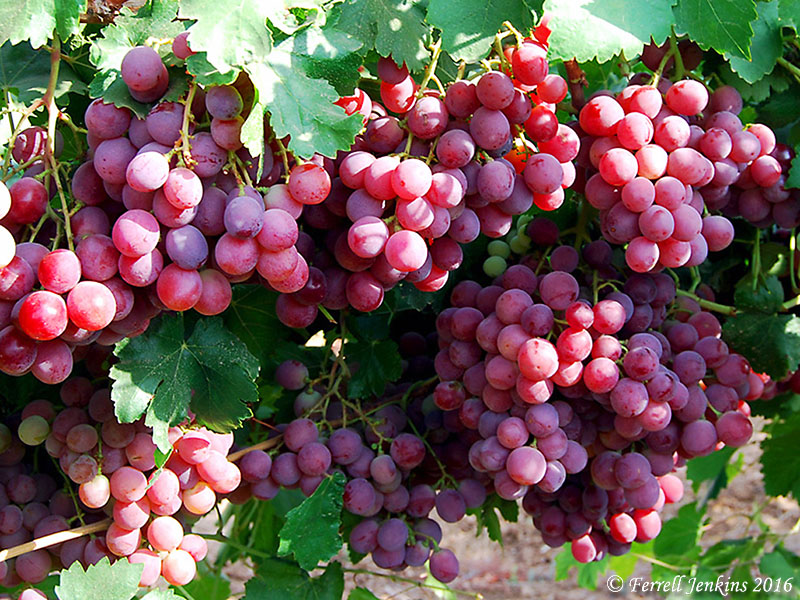
The photo of grapes from Lachish reminds us of the abundance of the land through which Sinuhe traveled.

Ripe grapes near Lachish in the Shephelah. Photo by Ferrell Jenkins.

Grapes on the vine near Lachish in the Shephelah. Photo by Ferrell Jenkins.

Cache of coins from Hasmonean Period discovered at Modi‘in

An excavation at Modi‘in under the direction of the Israel Antiquities Authority has uncovered a hoard of silver coins dating to the Hasmonean period (126 B.C.). The coins were found within an agricultural estate already uncovered at the site of a new neighborhood. Here are some excerpts and photos from the  IAA news release.

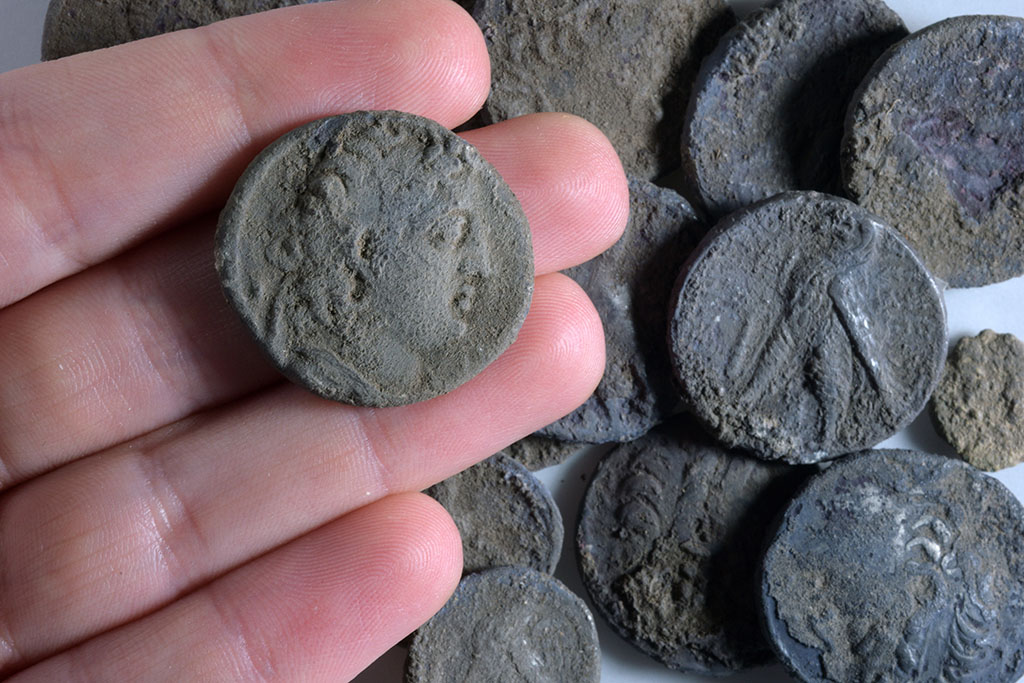
According to Avraham Tendler, director of the excavation on behalf of the Israel Antiquities Authority, “This is a rare cache of silver coins from the Hasmonean period comprised of shekels and half-shekels (tetradrachms and didrachms) that were minted in the city of Tyre and bear the images of the king, Antiochus VII and his brother Demetrius II. The cache that we found is compelling evidence that one of the members of the estate who had saved his income for months needed to leave the house for some unknown reason. He buried his money in the hope of coming back and collecting it, but was apparently unfortunate and never returned. It is exciting to think that the coin hoard was waiting here 2,140 years until we exposed it”.

A coin of Antiochus VII against the background of the rest of the coins that were exposed – studio photograph: Clara Amit.

A coin of Antiochus VII against the background of the rest of the coins that were exposed – studio photograph: Clara Amit.

Dr. Donald Tzvi Ariel, head of the Coin Department at the IAA,

“The cache, which consists of 16 coins, contains one or two coins from every year between 135–126 BCE, and a total of nine consecutive years are represented. It seems that some thought went into collecting the coins, and it is possible that the person who buried the cache was a coin collector. He acted in just the same way as stamp and coin collectors manage collections today”.

Tendler added,

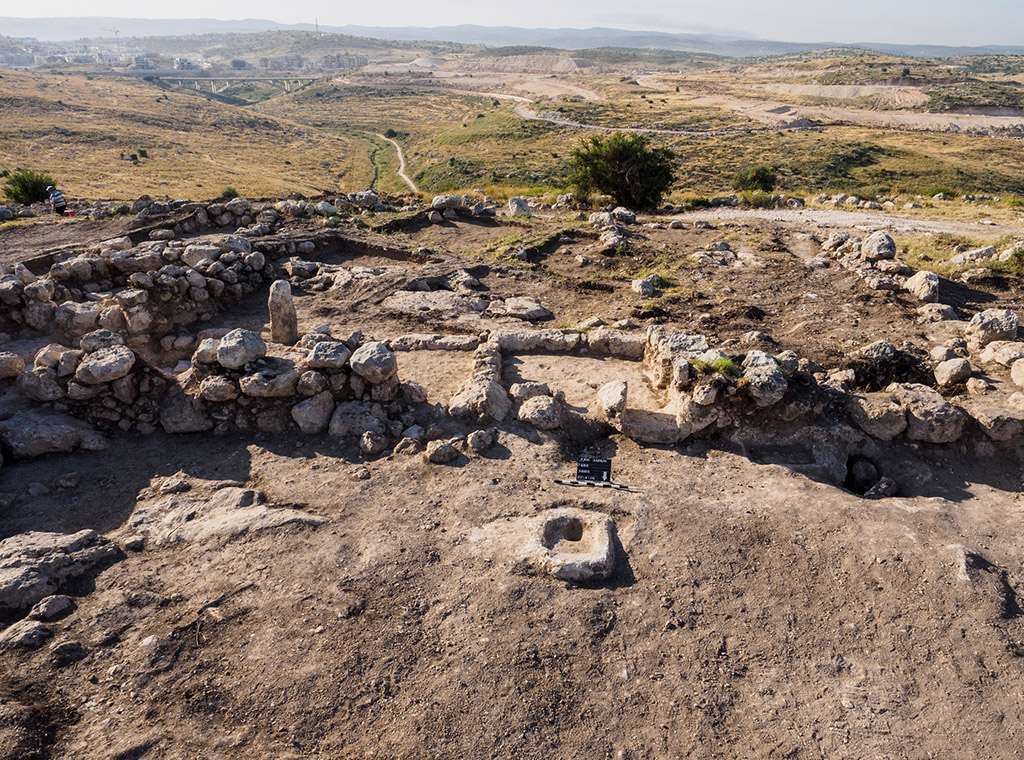
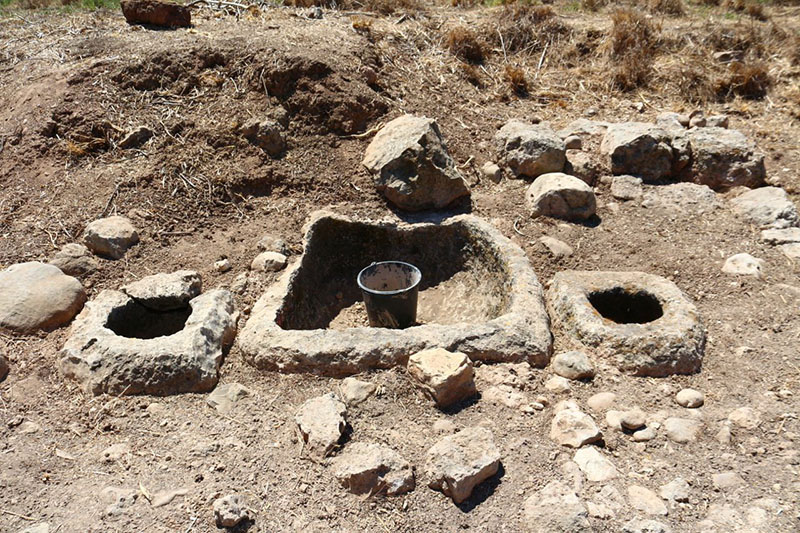
“The findings from our excavation show that a Jewish family established an agricultural estate on this hill during the Hasmonean period. The family members planted olive trees and vineyards on the neighboring hills and grew grain in valleys. An industrial area that includes an olive press and storehouses where the olive oil was kept is currently being uncovered next to the estate. Dozens of rock-hewn winepresses that reflect the importance of viticulture and the wine industry in the area were exposed in the cultivation plots next to the estate. The estate house was built of massive walls in order to provide security from the attacks of marauding bandits.

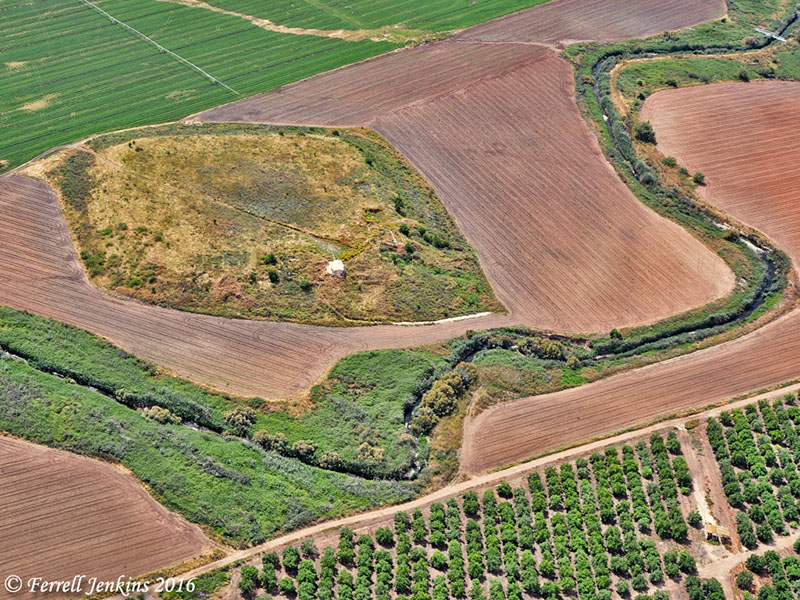
Aerial photograph of the Hasmonean estate house. Photographic credit: Griffin Aerial Photography, courtesy of the Israel Antiquities Authority.

Aerial photograph of the Hasmonean estate house. Photographic credit: Griffin Aerial Photography, courtesy of the Israel Antiquities Authority.

Numerous bronze coins minted by the Hasmonean kings were also discovered in the excavation. They bear the names of the kings such as Yehohanan, Judah, Jonathan or Mattathias and his title: High Priest and Head of the Council of the Jews. The finds indicate that the estate continued to operate throughout the Early Roman period. The Jewish inhabitants of the estate meticulously adhered to the laws of ritual purity and impurity: they installed ritual baths (miqwe’ot) in their settlement and used vessels made of chalk, which according to Jewish law cannot become ritually unclean.

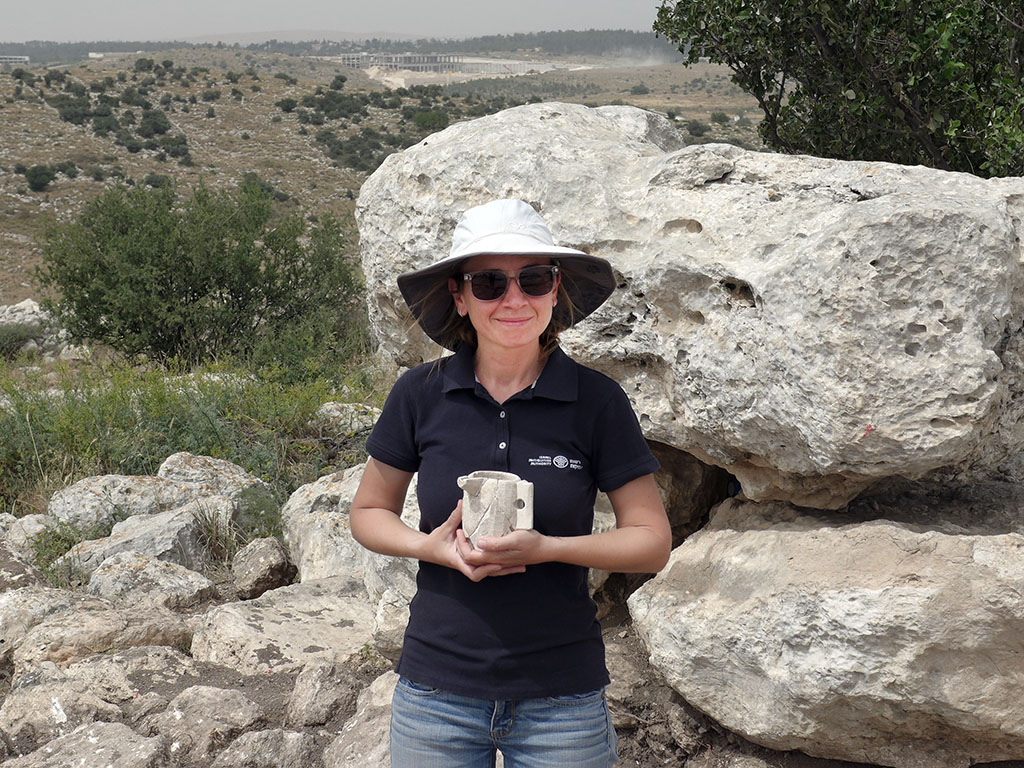
. IAA archaeologist Jenny Marcus holding a chalk cup from the time of the Second Temple period which was discovered in the estate house. Photographic credit: Avraham Tendler.

. IAA archaeologist Jenny Marcus holding a chalk cup from the time of the Second Temple period which was discovered in the estate house. Photographic credit: Avraham Tendler.

Evidence was discovered at the site suggesting that the residents of the estate also participated in the first revolt against the Romans that broke out in 66 CE: the coins that were exposed from this period are stamped with the date “Year Two” of the revolt and the slogan “Freedom of Zion”. The estate continued to operate even after the destruction of the Temple in 70 CE. “It seems that local residents did not give up hope of gaining their independence from Rome, and they were well-prepared to fight the enemy during the Bar Kokhba uprising”, said Tendler. “During the excavation we saw how prior to the uprising the inhabitants of the estate filled the living rooms next to the outer wall of the building with large stones, thus creating a fortified barrier. In addition, we discovered hiding refuges that were hewn in the bedrock beneath the floors of the estate house. These refuge complexes were connected by means of tunnels between water cisterns, storage pits and hidden rooms. In one of the adjacent excavation areas a miqwe [mikveh] of impressive beauty was exposed; when we excavated deeper in the bath we discovered an opening inside it that led to an extensive hiding refuge in which numerous artifacts were found that date to the time of the Bar Kokhba uprising”.

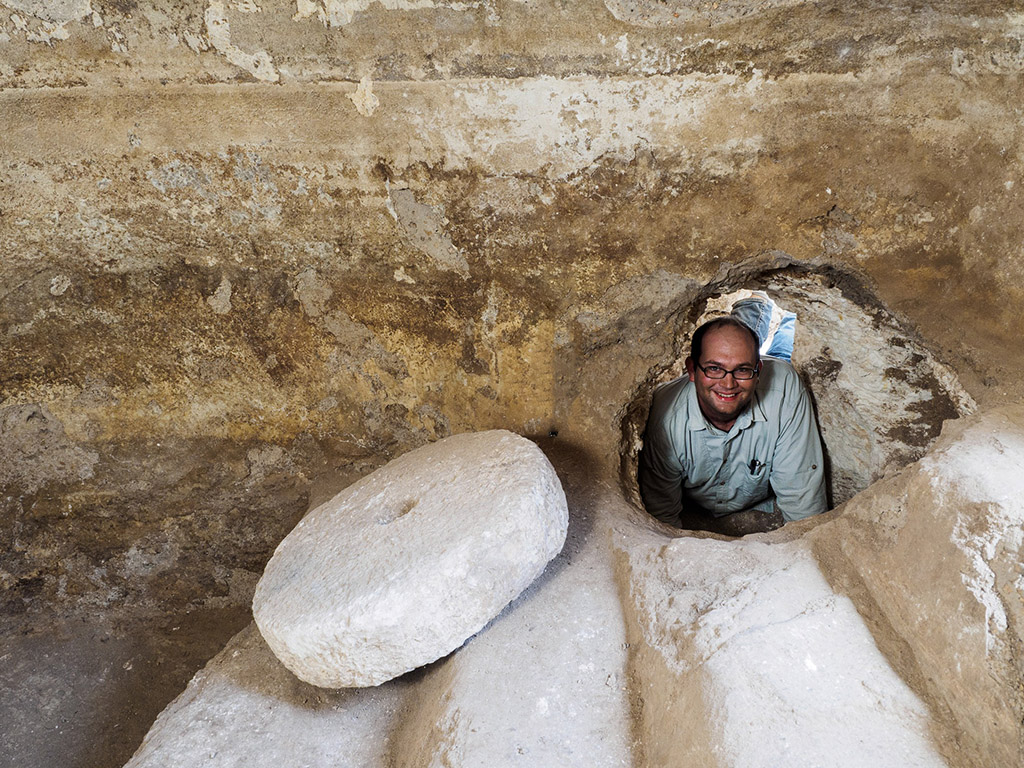
Abraham Tendler, the excavation director, inside a hiding refuge that was connected to a ritual bath (miqwe) during the Bar Kokhba uprising. Photographic credit: Assaf Peretz, courtesy of the Israel Antiquities Authority.

Abraham Tendler, the excavation director, inside a hiding refuge that was connected to a ritual bath (miqwe) during the Bar Kokhba uprising. Photographic credit: Assaf Peretz, courtesy of the Israel Antiquities Authority.

And here is a short film clip in English made by EYECON, courtesy of the Israel Antiquities Authority.

Discoveries such as these provide insight into the period between the Old Testament and the New Testament, as well as background for the Jewish struggle against the Roman occupation we know from the New Testament and the writings of Josephus.

HT: Joseph Lauer

Learn by looking and listening

The Internet has provided information from all types of sources to satisfy the needs of almost every type of interest. Some of us might dismiss most of it as useless and time-wasting. On the other hand, we find it helpful in many ways.

A person with a basic education can become informed in many areas through the use of the Internet. The problem is that most have no guidance when it comes to vetting the material that is online. In college, through lectures, text books, and selected readings the student become familiar with reliable tools and learns how to avoid the unreliable ones.

Recently I have been looking at some materials that can be extremely helpful to those who wish to come to a better understanding of the Bible through an understanding of the Land of the Bible. At our Biblical Studies Info Page (under Scholarly, then Blogs) we keep links to some very helpful blogs. We have a few great links on this page also.

Today I wish to share a few links that should be helpful.

The Lanier Theological Library in Houston presents several top-notch lecturers each year, and the videos remain online for those not able to attend. The lecture I wish to point you to today is Dr John Monson – Physical Theology: The Bible in its Land, Time and Culture. Monson lived in Israel as a child and learned the importance of the land in understanding the Biblical text. Plan to spend a few hours in listening, pausing to take notes, or to listen again to one of his points. I had the pleasure of hearing this lecture a few years ago at a professional meeting. Monson current teaches at Trinity International University.

Now, here is a brief view. David Pettegrew, at Corinthian Matters, calls attention to Ancient Corinth via Drone. Those who have visited Corinth will find this video extremely interesting. It also includes some identifying captions.

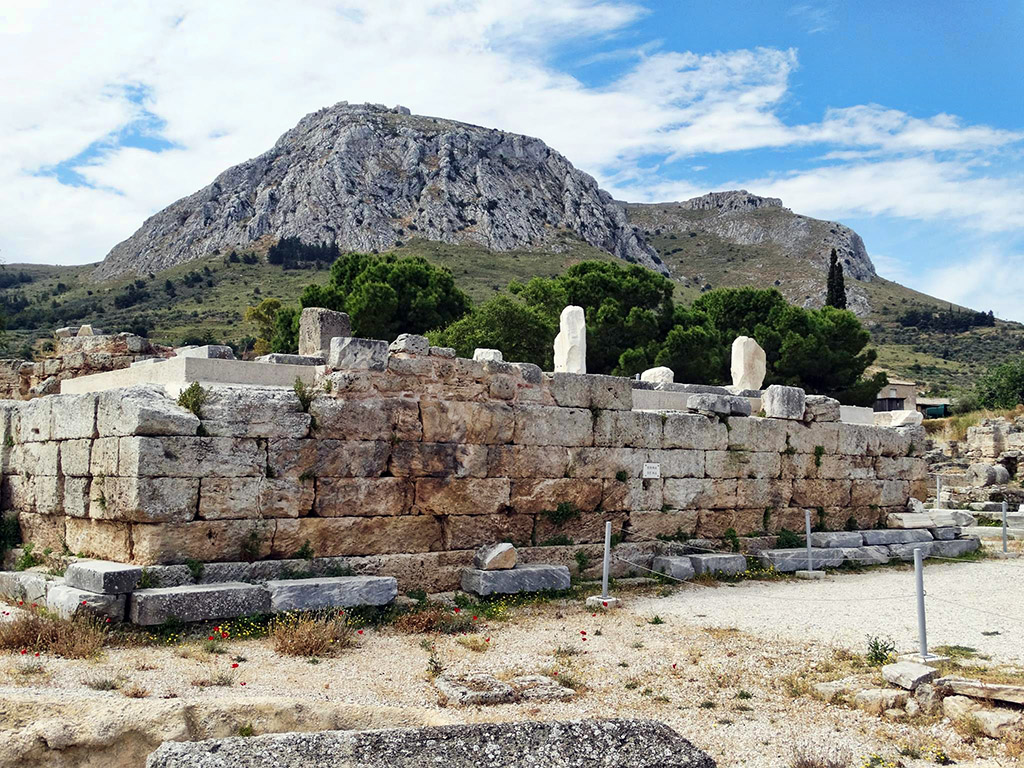
I was getting ready to post this blog and noticed that Charles Savelle (Bible X) was posting some pictures on FB of his current trip in Greece. He has granted permission for me to share this beautiful photo of the Bema in the Agora at Corinth, with the Acrocorinth in the background. This is where the Apostle Paul stood before Gallio (Acts 18). If you do not frequent Bible X, do so now. Lot’s of helpful information, especially for students, teachers, and ministers.

The Bema (judgment seat) in the Corinth agora, with the Acrocorinth in the distance. Photo by Charles Savelle.

The Bema (judgment seat) in the Corinth agora, with the Acrocorinth in the distance. Photo by Charles Savelle.

Bill Schlegel, author of Satellite Bible Atlas (available here), has been making short drone videos of various portions of Israel to be used with his atlas. So far he has posted 13 videos on YouTube here. Bill is Associate Professor of Bible at The Master’s College, Israel Bible Extension (IBEX) and he uses some of his students to add explanatory notes to the videos. When you purchase the Satellite Bible Atlas you receive access to all of the maps in .jpg format, and 70 photos made from the drone. These include several places rarely included in photo collections. This atlas can be very helpful for anyone visiting Israel, or studying the Bible at home.

After almost 70 years, still searching for scrolls in the Judean Desert Caves

The Dead Sea Scrolls were discovered in caves along the western shore of the Dead Sea in 1947. In the years that followed, documents from the time of Bar Kochba’s revolt (A.D. 135) were discovered. At least some of the biblical texts and those from the second century A.D. can be seen at the Shrine of the Book in Jerusalem.

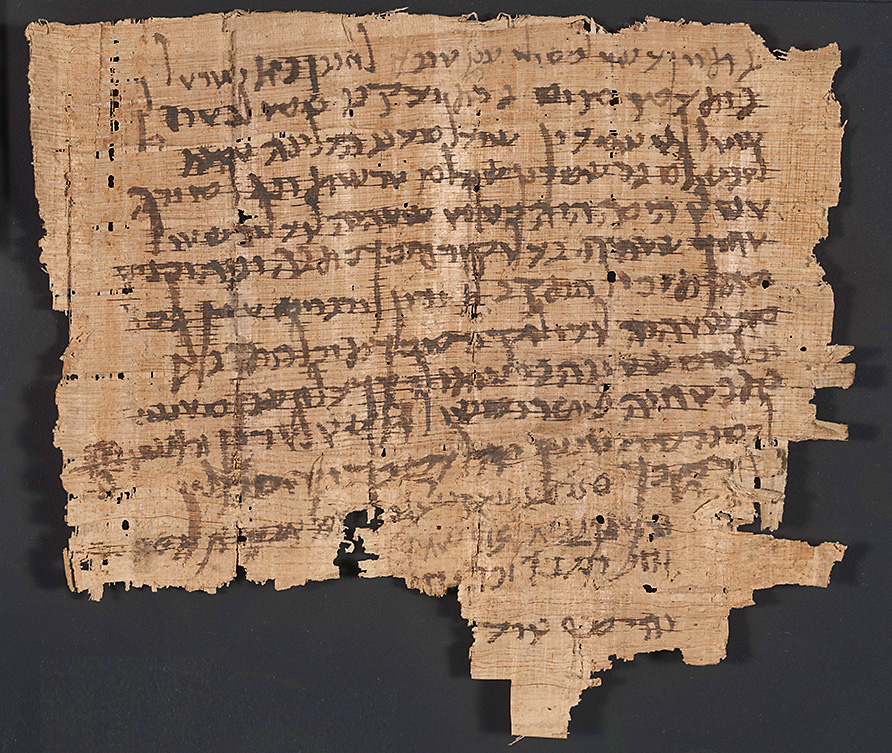
Time has not caused robbers to stop searching for materials in the Judean caves – not just at Qumran, but all along the eastern edge of the Judean Desert. Israel has been cracking down on the dealers in antiquities that fill the Old City of Jerusalem and other places. Recently the document below was seized in a joint operation by the Unit for the Prevention of Antiquities Robbery and the Israel Police. It dates to Year Four of the Destruction of the House of Israel (A.D. 139). We think of the Bar Kochba Revolt as reaching it’s culmination in A.D. 135. The Anchor Yale Bible Dictionary entry by Isaac and Oppenheimer says,

The rebels were united under the leadership of one man: Simeon Bar Kokhba. The revolt resulted in the emergence of a short-lived independent state marked by the organization of local authorities, the issue of coinage, and the leasing of state land.

The ancient text that dates to the Year Four of the Destruction of the House of Israel (139 CE), which was seized in a joint operation by the Unit for the Prevention of Antiquities Robbery and the Israel Police. Photographic credit: Shai Halevi, courtesy of the Leon Levy Digital Library, Israel Antiquities Authority.

The ancient text that dates to the Year Four of the Destruction of the House of Israel (139 CE), which was seized in a joint operation by the Unit for the Prevention of Antiquities Robbery and the Israel Police. Photographic credit: Shai Halevi, courtesy of the Leon Levy Digital Library, Israel Antiquities Authority.

Israel Hasson, director-general of the Israel Antiquities Authority, says,

“We plan on saving our most important heritage and cultural assets which have been plundered for years.”

The effort currently underway involves archaeologists and volunteer workers searching for pottery, scrolls, fragments, etc. in caves at Nahal Tse’elim, a site about 1½ miles north of Masada.

I prepared some of the photos provided by the Israel Antiquities Authority last evening, but did not have time to work on the post. This morning I see that Todd Bolen, Bible Places, has posted info. I decided to go ahead with this post for the 5 people who don’t read the Bible Places Blog and include different photos that others might enjoy and find useful.

A general photograph of Nahal Tse’elim. Photographic credit: Yoli Shwartz, courtesy of the Israel Antiquities Authority.

A general photograph of Nahal Tse’elim. Photographic credit: Yoli Shwartz, courtesy of the Israel Antiquities Authority.

The climb up (or down) to the cave is difficult.

Access to the cave is complicated and for safety’s sake requires the use of rappelling equipment. Photographic credit: Yoli Shwartz, courtesy of the Israel Antiquities Authority.

Access to the cave is complicated and for safety’s sake requires the use of rappelling equipment. Photographic credit: Yoli Shwartz, courtesy of the Israel Antiquities Authority.

Volunteers sift the dusty soil in hopes of finding some little scrap of a document or some other valuable item.

Volunteers at work in the archaeological excavation. Photographic credit: Yoli Shwartz, courtesy of the Israel Antiquities Authority.

Volunteers at work in the archaeological excavation. Photographic credit: Yoli Shwartz, courtesy of the Israel Antiquities Authority.

The IAA release included a video with the narration in Hebrew. Bolen calls attention to a brief video with English explanation at Arutz Sheva here.

Some archaeological projects keep their best stuff hidden away for decades. A word of thanks to the IAA for making material like this available to a wider audience.

HT: Joseph I. Lauer

Location, location, location – Shechem valley

“Location, location, location” is a phrase commonly used by realtors to describe the ideal plot or house for the prospective buyer. For some it means being near shopping. For others it means being near work. And for others it may mean being near recreational facilities, good schools, etc.
Last Sunday I was teaching John 4 regarding Jesus’ travel through Samaria and his stop at Jacob’s well. I mentioned that it is difficult now to get a good photo of the valley flanked by Mount Gerizim and Mount Ebal. I used this photo that I made in 2011 that provides a reasonably good view. I suggest you click on the photo for a larger image.
View west of the valley between Mount Gerizim (left-south) and Mount Ebal (right-north). Photo by Ferrell Jenkins.

View west of the valley between Mount Gerizim (left-south) and Mount Ebal (right-north). Photo by Ferrell Jenkins.

 This valley was an ideal location for many biblical events. Some of the significant events associated with the area are listed below.
  • Shechem is the first city of Canaan mentioned in the Bible. The land promise to Abraham was restated here (Genesis 12:6-7).
  • Jacob and his family settled at Shechem (Genesis 33:18). Jacob purchased a parcel of ground and erected an altar here.
  • Joseph’s brothers had gone from Bethlehem to near Shechem to graze their flocks (Genesis 37:12-13).
  • After entering Canaan, the Israelites gathered at Shechem on Mount Gerizim and Mount Ebal to hear Joshua read the blessings and curses of the Law (Joshua 8:30-34; cf. Deuteronomy 28-30).
  • Shechem was within the territory of Ephraim and served as a city of refuge (Joshua 20:7; 21:21).
  • Joseph was buried in a parcel of ground bought by Jacob (Joshua 24:32).
  • The Shechemites supported Abimelech in his bid to be ruler and gave him money from their temple of Baal-berith (Judges 8:33; 9). Jotham’s addressed the people of Shechem from Mount Gerizim with a fable (Judges 9:7ff.).
  • After the Exile, Shechem became a major religious center of the Samaritans. Their temple was built on Mount Gerizim (John 4:20-21).
  • Jesus visited Jacob’s Well near Shechem (John 4).

The general vicinity around Shechem was associated with the northern kingdom of Israel after the death of Solomon.

  • Shechem served as the temporary headquarters for the northern kingdom (1 Kings 12:25) beginning about 931 B.C.
  • The capital of Israel was moved to Tirzah during the reign of Baasha (908-886 B.C.; 1 Kings 15:21; 16:16).
  • After six years at Tirzah, king Omri (885-874 B.C.) purchased the hill of Samaria for his capital (1 Kings 16:24). The capital remained there until the city was captured by the Assyrians in 722 B.C.
  • (Dates are those from Mckinny, The Regnal Chronology of the Kings of Judah and Israel: An Illustrated Guide.)

Tirzah is located about 7 miles northeast of Shechem, and Samaria is about 7 miles northwest of Shechem.

Judges 9:37 recounts people “coming down from the center of the land” as they came down from Mount Gerizim. Bernhard W. Anderson uses the term navel says,

In the ancient period it was claimed that Shechem was the center of Canaan. (BA 20:1, 1957)

In introducing the series of articles on Shechem in the same issue of Biblical Archaeologist, G. Ernest Wright used the title “Navel of the Land.” That makes it fairly easy for us to remember it’s location on the map.

Talk about location!

For additional posts on Shechem, Gerizim, Jacob’s Well, or the Samaritans, type one of the terms in the search box.

The Valley of Aijalon (Ayalon) and Joshua’s Long Day

The events of Joshua 9 and 10 are likely well-known to all readers of this page. After the Israelites entered Canaan and captured Jericho and Ai, the inhabitants of Gibeon acted craftily to deceive the Israelites into making an alliance with them. Even though Israel had been deceived they kept their end of the bargain when the Gibeonites were threatened. Adoni-zedek, king of Jerusalem, headed up a group of Amorite kings to fight against Gibeon.

The LORD helped Israel by sending large hailstones upon the enemy. Joshua spoke to the LORD in the presence of Israel: “O sun, stand still at Gibeon, And O moon in the valley of Aijalon” (Joshua 10:12). Gibeon sits on the central mountain range about 6 miles north, and slightly west, of Jerusalem. As one makes the descent from Gibeon westward toward the coastal plain he goes through the valley of Aijalon.

When we travel on the modern highway from Jerusalem down to the Ben Gurion Airport we cross over the valley of Aijalon. Our photo of the valley is made below traditional Emmaus (Nicopolis) looking northwest. The terrain shows the Shephelah, or as many English versions indicate, the lowland. To the right is the way up to Gibeon. To the left one continues past the towns of Aijalon and Gezer down to the coastal plain.

Aijalon Valley from the Latrun Interchange on Highway 1. Photo by Ferrell Jenkins.

Aijalon Valley from the Latrun Interchange on Highway 1. 2005 Photo by Ferrell Jenkins.

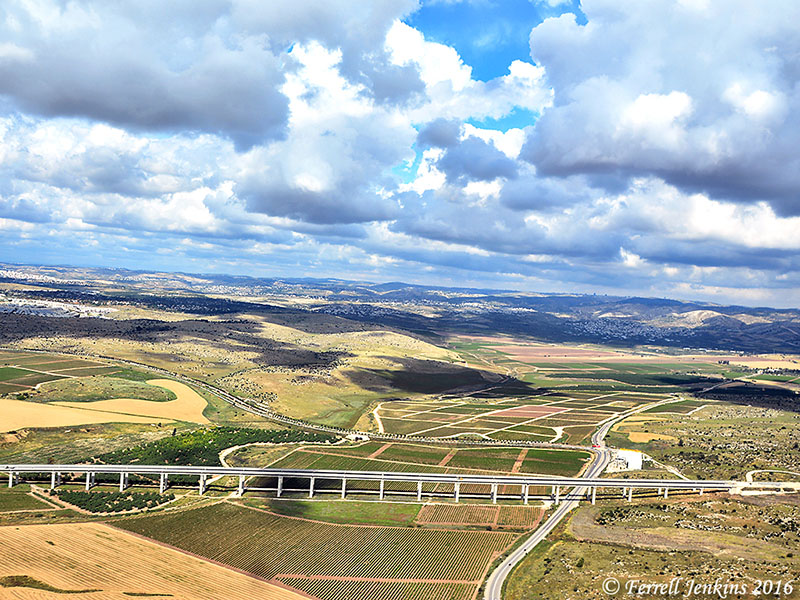
In April I flew over the Aijalon Valley in approximately the same area. This perspective provides a better view of the valley. We were avoiding the afternoon storm clouds on our way from Jerusalem to the Sde Dov Airport at Tel Aviv.

Aerial view of Aijalon (Ayalon) Valley. The view is to the north. The bridge is for the yet-to-open Tel Aviv-Jerusalem railway. Photo by Ferrell Jenkins.

Aerial view of Aijalon (Ayalon) Valley. The view is to the north. The bridge is for the yet-to-open Tel Aviv-Jerusalem railway. Photo by Ferrell Jenkins

Three east-west valleys divide the Shephelah and provide access between the plain and the mountains. To the north is the valley of Aijalon. Further south is the valley of Sorek, and then the valley of Elah. Significant battles took place in the valley of Aijalon and the valley of Elah.

The town of Aijalon which overlooks the valley was allotted to the tribe of Dan (Joshua 19:42), but Dan moved to the northern part of the country and Aijalon was considered one of the cities of Judah and Benjamin (2 Chronicles 11:5-12). In the days of King Ahaz the city had fallen under Philistine control (2 Chronicles 28:16-20).

Have scientists discovered Joshua’s long day?

In 1969 an article began to be circulated in church bulletins, and later by Email, claiming that scientists had found evidence of the missing day of Joshua 10. Harry Rimmer had reported a similar story in The Harmony of Science and Scripture in 1936. There is no truth to this claim. I have an article written in response to it available at BibleWorld.com. An article by Dr. Bryant Wood is available at the ABR web site here.

This article is a revised reprint from 2009

Timnah – where Samson met his first love

Perhaps the most memorable event of Timnah recorded in the Bible is that of the affair between Samson and a Philistine woman.

Samson went down to Timnah, where a Philistine girl caught his eye. (Judges 14:1 NET)

Delilah, the most famous of Samson’s three wives, is said to have lived in the Sorek Valley, but Timnah is not specifically named (Judges 16:4).

The LORD had commanded Israel not to become involved in mixed marriages with the people of the land (Exodus 34:16; Deuteronomy 7:3). But Samson had the misfortune of living too close to the border of Israel’s enemies, the Philistines. And he lacked the determination to abide by the commands of the LORD.

There were other significant events associated with Timnah. Here is a brief list.

  • Judah went up to Timnah to his sheep shearers, at which time he mistook Tamar, his own widowed daughter-in-law, for a prostitute. She conceived and bore twin sons (Genesis 38:12-30).
  • Timnah is mentioned as being a town of the tribe of Judah (Joshua 15:10, 57).
  • A little later the territory had transferred to the tribe of Dan (Joshua 19:40-46).
  • By the time of King Ahaz (735-715 B.C., McKinny), Timnah was in the hands of the Philistines (2 Chronicles 28:18).

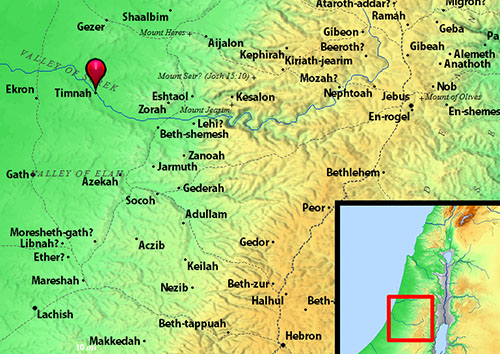
Timnah is identified with Tel Batash in the Sorek Valley, about 4 miles northwest of Beth-Shemesh. Ekron (Tel Miqne) is about 3½ miles west of Timnah. The Sorek River flows past both cities on its way to the Mediterranean.

Tel Batash was excavated by New Orleans Baptist Theological Seminary for three seasons (1977-79). Between 1981-89, the site was excavated under the direction of George L. Kelm of Southwestern Baptist Theological Seminary and Amihai Mazar of Hebrew University. The site was occupied from the Middle Bronze IIB (18th or 17th centuries B.C.), through the Late Bronze Age and the Iron Age. In Iron Age I, Timnah was a Philistine city.

Kelm and Mazar wrote Timnah A Biblical City in the Sorek Valley (Eisenbrauns 1995) to provide a report of their excavations.

Map showing Timnah. Credit: BibleHub.com.

Map showing Timnah. Credit: BibleHub.com.

Timnah is off the beaten track and very few people visit it. Easy routes to the site have been blocked by the farmers in the Valley. Leon Mauldin and I searched for, and eventually located, Timnah in the rich alluvial Sorek Valley in 2011. Unlike Lachish, Mareshah, Gath, or Azekah the tel is unimpressive.

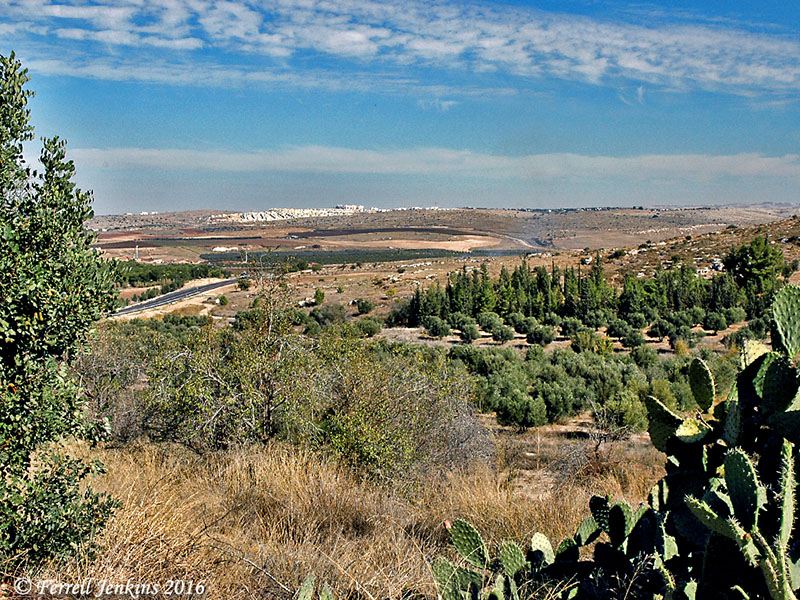
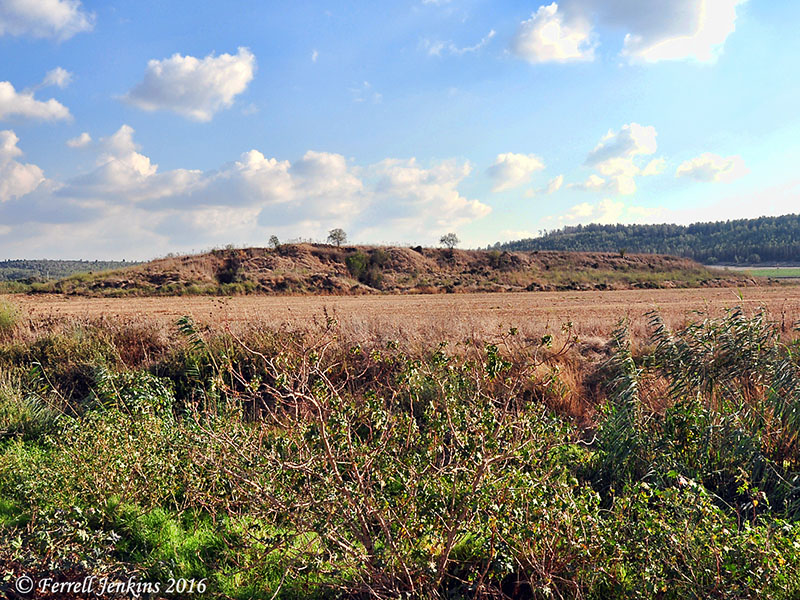
Timnah, beyond the brook Sorek, in August, 2011. Photo by Ferrell Jenkins.

Timnah, on the southern bank of the Sorek, in August, 2011. Photo by Ferrell Jenkins.

In 2013 our friends Trent and Rebekah Dutton were trying to locate Timnah when they saw two shade tents and the Israel Antiquities Authority flag on a small rise in the fields. The IAA was doing some work at the site and explained to them the restoration work they were doing. Here is a photo the Dutton’s shared of the reconstructed Oil Press from the 7th century B.C. See Kelm and Mazar, pp. 150-152, for the way this looked at the time of the dig. An architect’s (Leen Ritmeyer) drawing of the installation is found on page 87. Some finds are intentionally covered by the excavators at the end of a season or the completion of a dig. This appears to be one such example.

The Oil Press installation at Timnah. Photo by Trent & Rebekah Dutton.

The Oil Press installation at Timnah. Photo by Trent & Rebekah Dutton.

Earlier this month Leon and I had the opportunity to fly over the Sorek Valley. I don’t think our pilot had ever seen the site before, but our previous experience on the ground, Google earth, and the excavation report allowed us to locate it from the air.

Aerial view of Timnah. Photo by Ferrell Jenkins.

Aerial view of Timnah and the Sorek (April, 2016). Photo by Ferrell Jenkins.

I think the little white building covers the Oil Press installation. After a quarter of a century the excavated areas are now covered with natural growth.

It is a long story, but this is where Samson met his first Philistine wife, and maybe another. There is always a danger when one lives too close to the border.

If you do not already have Brad Gray’s Make Your Mark: Getting Right What Samson Got Wrong, now might be time to take a look at our earlier review.
My late friend and colleague, James Hodges, served as an Area Supervisor at Timnah in 1977.

The shepherd and his sheep

When my traveling friend Leon and I left Jerusalem last Saturday the temperature reached a high of about 82 degrees. On the way to Tiberias we began to notice that the sky was hazy; it was filled with sand coming up from the south. This wind is known as the hamsin. The sand could be seen on the cars.

This morning we noticed that the sunrise would not be visible over the Sea of Galilee. When I checked the weather online, I found that a slow-moving storm was bringing flash floods (from the west) throughout the Mid-East. The weather yesterday in Galilee was hot, but this morning it was chilly – in the low 50s.

As we drove south through the Jordan Valley to Jerusalem we had periods of rain, and periods of beautiful sky and brilliant colors. As we approached Jericho we even had rain falling in the wilderness. This is a rare event.

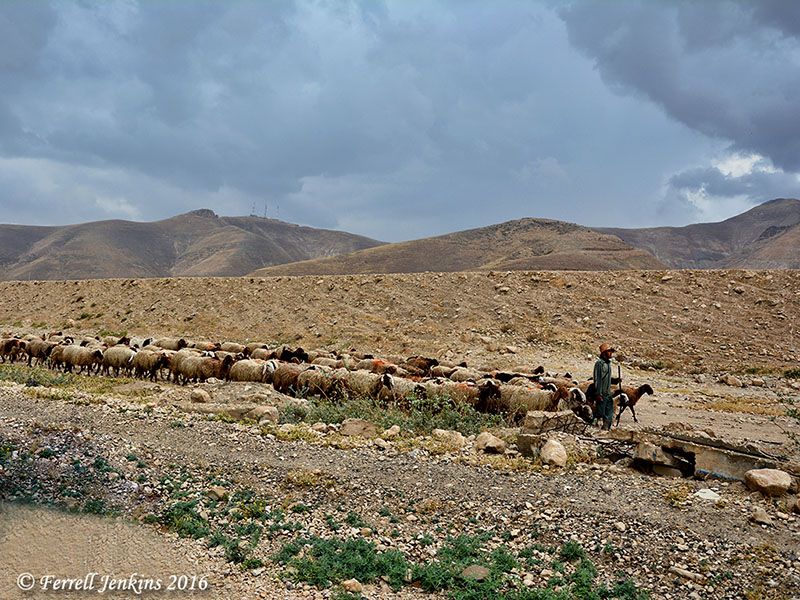
The light rain settled the dust and made the landscape more photogenic. Here is a photo I made of a shepherd leading his sheep in the wilderness. Notice the heavy clouds to the East.

When we arrived in Jerusalem about 5 p.m. the temperature was 58 degrees.

A shepherd leads his sheep in the wilderness. Photo by Ferrell Jenkins.

A shepherd leads his sheep in the wilderness. Photo by Ferrell Jenkins.

The analogy of shepherd and sheep is used throughout the Bible. Psalm 23 is familiar even to many non-religious people.

1 The LORD is my shepherd; I shall not want.
2 He makes me lie down in green pastures. He leads me beside still waters.
3 He restores my soul. He leads me in paths of righteousness for his name’s sake.
4 Even though I walk through the valley of the shadow of death, I will fear no evil, for you are with me; your rod and your staff, they comfort me. (Psalm 23:1-4 ESV)