Category Archives: New Testament

Reggio di Calabria is Rhegium of Acts 28:13

Yesterday I mentioned crossing the Strait of Messina by hydrofoil. Here is a rather unusual photo that I made from the stern of the hydrofoil as we left Messina, Sicily, toward Reggio di Calabria in Italy.
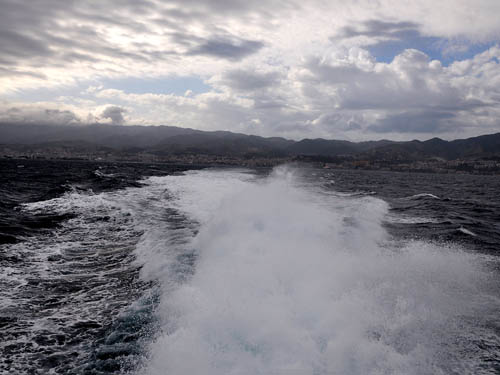
Crossing the Strait of Messina by hydrofoil. Photo by Ferrell Jenkins.

Crossing the Strait of Messina by hydrofoil. Photo by Ferrell Jenkins.

Once we arrived in Reggio we walked a few meters to our 3-star hotel. This little hotel, the Continental, has been recently refurbished. The elevator was new, and everything in the room, including the bathroom, was also new. The biggest disadvantage is that they did not have any Internet connection. I think this is the first hotel on this entire trip that did not provide some kind of access to the Internet. Eventually I paid 5 Euro (about $7.50) for one hour on the Internet at another hotel. But that is a good price compared to the hotel I am in tonight in Rome. The charge for one hour is 10 Euro (about $15.00).

We walked into town to visit the Archaeological museum and find something to eat. The museum, like the one in Syracuse, had nice displays of small items. I did not see anything of great helpfulness.

Reggio is situated along the strait and up the slope of a mountain. Only the main street and the promenade is level. Local advertising says that the area has been described as “the most beautiful kilometer in Italy.” From my limited experience in Italy, I would agree.

According to Luke, the Alexandrian ship Paul was on stayed only one day in Rhegium before a south wind allowed them to sail north through the Strait of Messina. It must have been a good wind. The next stop was Puteoli which is located in the Naples area.

We put in at Syracuse and stayed there three days. From there we cast off and arrived at Rhegium, and after one day a south wind sprang up and on the second day we came to Puteoli. (Acts 28:12-13 NET)

The modern port at Reggio is an artificial one. I tried to get some photos to illustrate where the natural port might have been. Elizabeth made this photo, look north along the Italian coast.
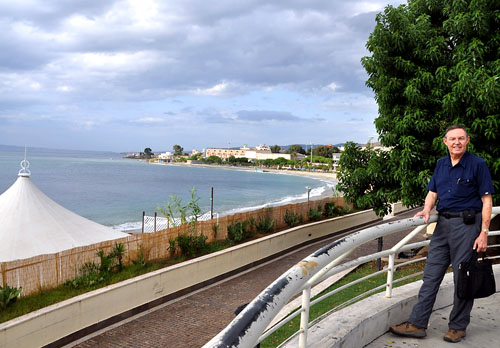
Looking north along the Italian coast at Reggio. Photo by Elizabeth Jenkins.

Looking north along the Italian coast at Reggio. Photo by Elizabeth Jenkins.

This morning we got up early and took the 6:46 a.m. Eurostar train from Reggio to Rome. The trip took a little over 5 and one half hours. We had about 6 brief stops between Reggio and Naples. From there it was non-stop to Rome. Mount Vesuvius was visible from the window of the train. Obviously I wished that time would permit a stop in Naples to visit Puteoli, Pompeii, and Mount Vesuvius.
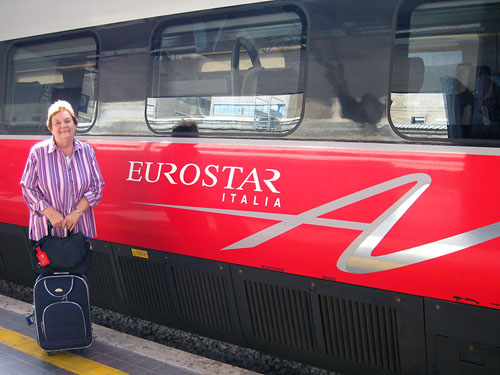
Elizabeth and I enjoyed the Eurostar trip. Photo by Ferrell Jenkins.

Elizabeth and I enjoyed the Eurostar trip. Photo by Ferrell Jenkins.

This afternoon we were able to visit several sites in Rome with good sunshine and clouds. Maybe tomorrow we will be able to share some of those photos.

Thanks for following along with us on this journey.
Leaving Syracuse and Crossing the Strait of Messina

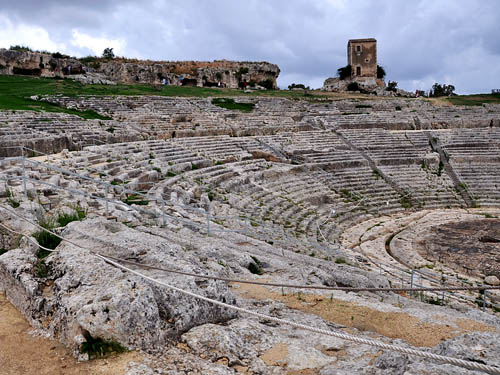
In Syracuse we visited the Archaeological Park. Here is a photo of the Greek theater which dates back to the 3rd century B.C. We know that it is something that was in existence at the time Paul stopped in the city. It doesn’t seem likely that a prisoner would be allowed to go sightseeing in the city.

The 3rd Century Greek theater at Syracuse. Photo by Ferrell Jenkins.

The 3rd Century Greek theater at Syracuse. Photo by Ferrell Jenkins.

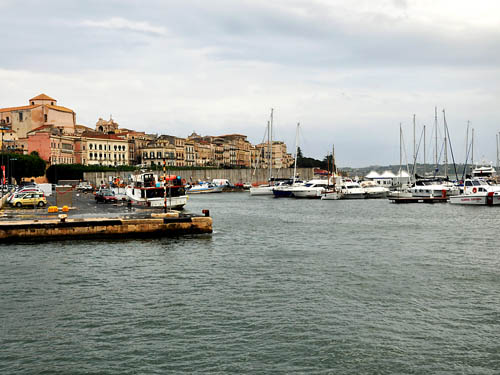
This morning before leaving I tried to catch a few minutes of sunshine to get some photos at the Grand Harbor. This is a natural harbor that was likely in use at the time of Paul.

The Grand Harbor at Syracuse. Photo by Ferrell Jenkins.

The Grand Harbor at Syracuse. Photo by Ferrell Jenkins.

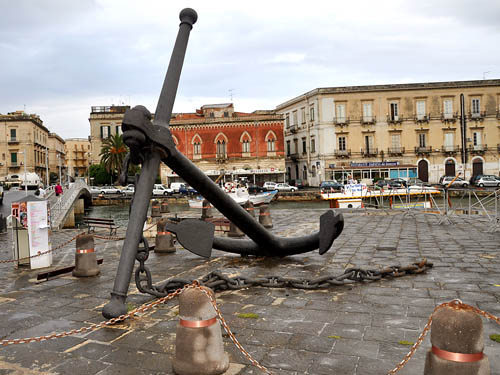
Here is another shot that I thought conveyed the idea of this being the harbor of the city.

A large anchor at the Grand Harbor of Syracuse. Photo by Ferrell Jenkins.

A large anchor at the Grand Harbor of Syracuse. Photo by Ferrell Jenkins.

Incidentally, the sun did not shine until we were in the taxi headed from the hotel to the train station. Life is fun.

Crossing the Strait of Messina. Today we left Syracuse by train intending to go as far as Villa San Giovani in Italy. Then we would take a train to Reggio di Calabria (Rhegium of the New Testament). Instead, we left the train at Messina and took the hydrafoil direct to Reggio. This was a real thrill to me to be able to actually cross this body of water at this point. It is sort of like being on the Sea of Galilee. You know it happened somewhere nearby. “It” being either something Jesus did, or something Paul did.

We put in at Syracuse and stayed there three days.  From there we cast off and arrived at Rhegium, and after one day a south wind sprang up and on the second day we came to Puteoli. (Acts 28:12-13 NET).

Tonight we are in Reggio. Early tomorrow morning we take the train to Rome. Puteoli is near Naples. I wish we had time to stop there and photograph the Colosseum, but time does not allow that on this trip. I was at Puteoli some years back, but would like to get better photographs.

In Syracuse, Sicily

We took the ferry from Malta to Sicily yesterday morning. It was a nice 90 minute ride on the Mediterranean. The ferry was very nice, having been put into service in 2006. At Pozzalo, Sicily, we located a taxi driver who offered to take us to Syracuse along with 3 other passengers who wanted to travel north. One was a retired school teacher from Ohio who was traveling without any reservations. We enjoyed visiting with him.

In Syracuse we checked into our hotel and then went to the archaeological park to see Greek and Roman remains. It rained on us some, but I got a few good photos. Hopefully we will be able to make a few more this morning before leaving by train for Italy. We are here studying the places Paul visited on his voyage to Rome. He stayed in Syracuse three days (Acts 28.12). It is dark around this keyboard and I can not locate the colon on the keyboard.

The hotel is either new or newly refurbished. The rooms are great, but the Internet connection for wireless is not yet ready. I am using the computer in the hotel lobby, but do not have the ability to upload any photos.

Just wanted those who are following our journey to know that we are doing well.

More later.

Visiting Malta

Yesterday we arranged for a car and driver to take us to the places we wanted to go on Malta. It is possible to rent cars, but the driving is after the British style (one the left side of the road), and few roads are straight. Many are not marked. I know we got to a few places were would not have found on our own. Our driver was an older gentleman who was a native of the area. Except for St. Thomas Bay, he seemed to be well aquainted with the area and the good places to stop for photos.

We visited a spot near St. Paul’s Islands for photos. This is the traditional spot of the shipwreck involving Paul and Luke. Poor Luke gets no attention here, but there are churches dedicated to Paul in many places. Then we had a nice view from a high spot to see Mellieha Bay. This is the most northern of the bays and is thought by some to satisfy Luke’s description of the shipwreck being at the place where two seas meet (Acts 27:41). We also vsited St. Thomas Bay and Salina Bay.

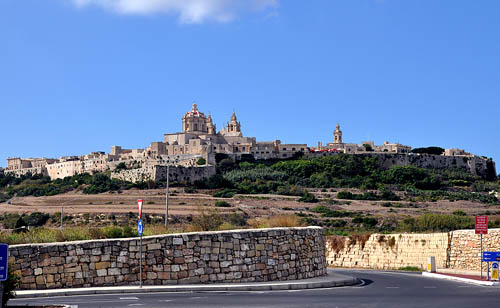
Our driver took us to a few places we would not have gone had we been on our own, but we really enjoyed the short time we had at each one. We could have used more time, of course. The photo below is of Mdina. The Lonely Planet guide for Malta says,

The citadel of Mdina was fortified from as long ago as 1000 BC when the Phoenicians built a protective wall here and called their settlement Malet, meaning ‘place of shelter’. The Romans built a large town here and called it Melita. It was given its present name when the Arabs arrived in the 9th century – medina is Arabic for ‘walled city’. They built strong walls and dug a deep moat between Mdina and its suburbs (known as rabat in Arabic).

Mdina, Malta. Photo by Ferrell Jenkins.

Mdina, Malta. Photo by Ferrell Jenkins.

I think most of the current building in Mdina date from the 18th century. St. Paul’s Cathedral is said to have been built on land belonging to Publius.

Now in the region around that place were fields belonging to the chief official of the island, named Publius, who welcomed us and entertained us hospitably as guests for three days. (Acts 28:7 NET)

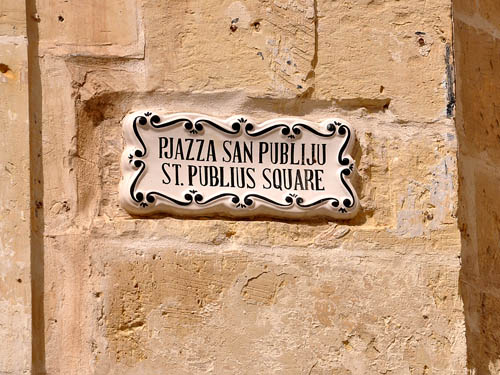
This photo shows the beautiful marker in the Maltese language and in English.

St. Publius Square in Mdina. Photo by Ferrell Jenkins.

St. Publius Square in Mdina. Photo by Ferrell Jenkins.

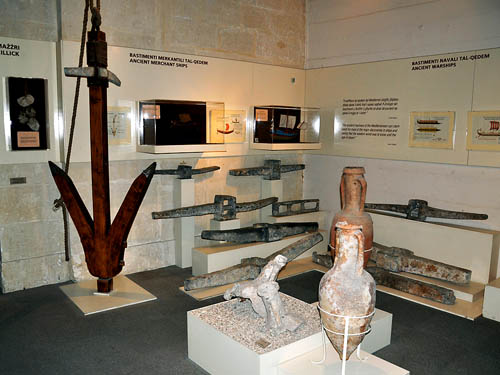
I also made a quick stop at the Maritime Museum in Vittoriosa, on the south side of the Grand Harbor at Valleta, to see the Roman anchors that have been found in Maltese waters.

Because they were afraid that we would run aground on the rocky coast, they threw out four anchors from the stern and wished for day to appear.(Acts 27:29 NET)

Roman Anchors found in Maltese Waters. Photo by Ferrell Jenkins.

Roman Anchors found in Maltese Waters. Photo by Ferrell Jenkins.

St. Paul’s Bay in Malta

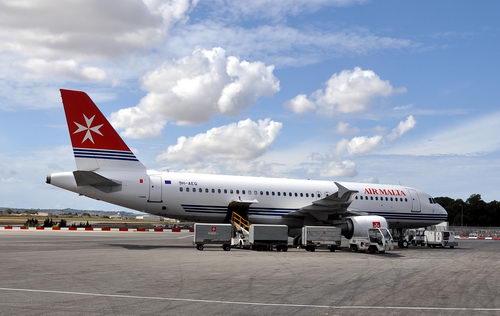
We said goodbye to our group early this morning at the Rome airportas they prepared to depart for the USA. Elizabeth and I went to another terminal to wait for our noon flight to Malta.This was my first time to fly Air Malta. The planes bear the distinctive Maltese Cross on the tail.Malta is renowned for its association with the 12th century Knights of Malta (also know as the Knghts of Rhodes, and the Knights of St. John). They were also called the Hospitalers. I think they built the first hospital in Jerusalem at a site now near the Church of the Holy Sepulcher.

Air Malta planes display the Maltese Cross. Photo by Ferrell Jenkin in Malta.

Air Malta planes display the Maltese Cross. Photo by Ferrell Jenkin in Malta.

Malta is a popular resort and is still in the high season. We are staying at a hotel on the southern side of St. Paul’s Bay. My purpose in coming here is to photograph possible sites associated with Paul’s shipwreck.

After we had safely reached shore, we learned that the island was called Malta.  2 The local inhabitants showed us extraordinary kindness, for they built a fire and welcomed us all because it had started to rain and was cold. (Acts 28:1-2).

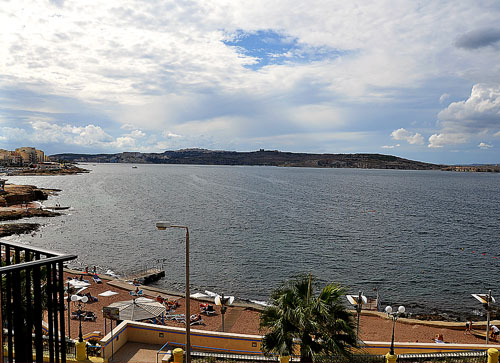
This is one of the first photos I made from our hotel balcony.

View of St. Paul's Bay. Photo by Ferrell Jenkins.

View of St. Paul's Bay. Photo by Ferrell Jenkins.

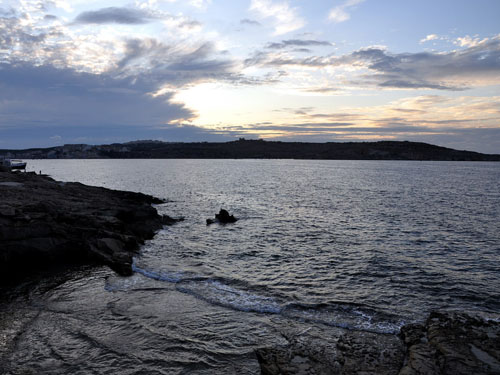
The next photo was made at sunset and shows a portion of the rocky coast even in an area now filled with shops and seaside restaurants.

The rugged coast of St. Paul's Bay at Sunset. Photo by Ferrell Jenkins.

The rugged coast of St. Paul's Bay at Sunset. Photo by Ferrell Jenkins.

Be careful where you start a fire

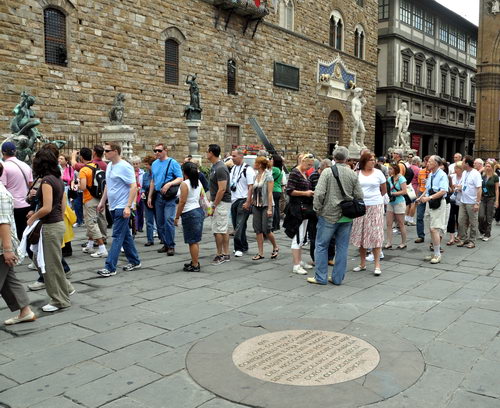
Piazza della Signoria in Florence with Savonarola marker showing. Photo by Ferrell Jenkins.

Piazza della Signoria in Florence with Savonarola marker showing. Photo by Ferrell Jenkins.

Yesterday morning I visited the Piazza della Signoria in Florence, Italy. I think many people walk through this Piazza to get to the Uffizi Gallery and never notice the plaque about Savonarola. Sometimes groups of people were standing on the plaque. When it was clear, one man walked up and said to his companions “Who’s that?” The group walked on without an answer.

Daniel M. Madden says,

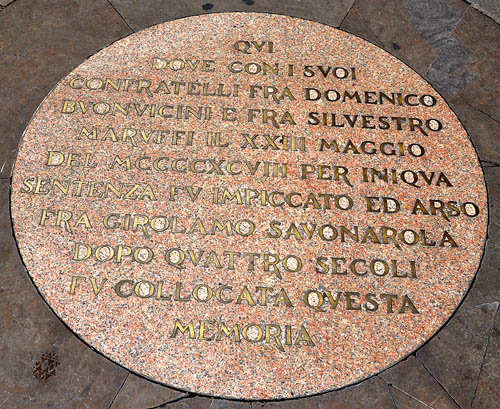
In the lovely Piazza della Signoria, the political forum of Florence in all ages, Savonarola arranged a huge bonfire in 1497 so that penitents won over by his words could do away with their wigs, perfumes, lotions, powers and other accouterments of an easy way of life. He himself was burned to death in the same piazza a year later as a heretic. The spot where he died is marked with a plaque. It is not far from the copy of Michelangelo’s statue of “David.” (A Religious Guide to Europe)

One may say anything he wishes as long as he does not step on the toes of those in authority. Jesus faced this problem when He dealt with the Jewish leaders in Jerusalem.

“If we let him go on like this, everyone will believe in him, and the Romans will come and take away both our place and our nation.” (John 11:48 ESV)

Here is a closeup of the plaque marking the spot where Savonarola died.

Plaque marking spot where Savonarola died. Photo by Ferrell Jenkins.

Plaque marking spot where Savonarola died. Photo by Ferrell Jenkins.

Todd Bolen announces the Jerusalem CD

Todd Bolen has announced the publication of Jerusalem: Volume 2 of The American Colony and Eric Matson Collection. We mentioned this marvelous set of photographs earlier here. For more information on the current CD on Jerusalem click here

Third Man of the Reformation

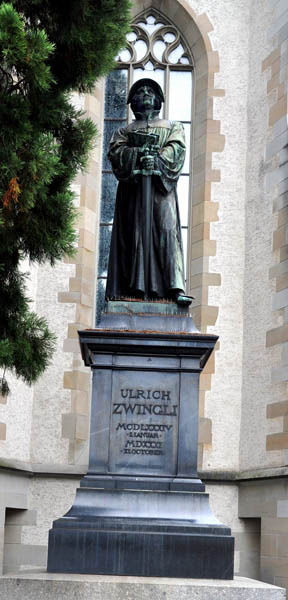
Ulrich (or Huldrich) Zwingli was born January 1, 1484, about 50 days after the birth of Martin Luther. Zwingli is sometimes called the “third man of the Reformation” after Luther and Calvin (Jean Rilliet, Zwingli: Third Man of the Reformation).

Zwingli Statue in Zurich. Photo by Ferrell Jenkins.

Zwingli Statue in Zurich. Photo by Ferrell Jenkins.

Zwingli was born in a small town in eastern Switzerland. His family was able to provide a good education for him. He first attended the University of Vienna and then the University of Basel. Dr. Dan Petty describes one of the influences that led him away from Catholicism.

“His education brought him into contact with humanistic studies and he became an ardent admirer of Erasmus of Rotterdam. This emphasis tended to lead Zwingli away from the Scholastic theology of medieval Catholicism, and toward the study of the Bible.”

Church historians have described the difference between Zwingli and Luther in their respective attitude about the silence of the Scriptures.

“While Luther was disposed to leave untouched what the Bible did not prohibit, Zwingli was more inclined to reject what the Bible did not enjoin” (George P. Fisher, The Reformation, 145).

“Luther said we may do what the Bible does not forbid. Zwingli said what the Bible does not command we may not do, and on that account he gave up all images and crosses in the churches.  In this respect he was like the Iconoclasts.  Organs in church also were given up. The Lutherans loved to sing around the organ. The Zwinglians, if they sang at all, did so without any instrument” (Roland H. Bainton, The Church of Our Fathers, 143-144).

The Zurich city council called Zwingli to serve at the cathedral there. Darrell Turner, in a Religious News Service article commemorating Zwingli’s 500th birthday in 1984, said:

“His first Sunday in the pulpit of Zurich’s Grossmuenster Cathedral was also Zwingli’s 35th brithday. He shocked his listeners by announcing that instead of following the prescribed liturgy, he would preach through the Gospel of Matthew on a weekly basis.”

That was a simple. unique, and powerful things for Zwingli to do. Folks don’t like you messing with the order of service, as many a young minister has learned. But there was much more involved here. Zwingli was making a break from what Rome prescribed to be done. Going back to the Bible is always a noble thing.

Perhaps we can post more later about Heinrich Bullinger, the successor to Zwingli, in Zurich.

Second Temple period synagogue discovered at Magdala

Israel Antiquities Authority announces the discovery of one of the oldest synagogues known.

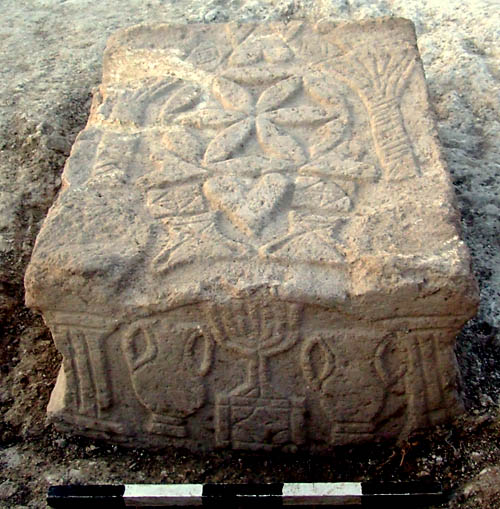
A synagogue from the Second Temple period (50 BCE-100 CE) was exposed in archaeological excavations the Israel Antiquities Authority is conducting at a site slated for the construction of a hotel on Migdal [Magdala] beach, in an area owned by the Ark New Gate Company. In the middle of the synagogue is a stone that is engraved with a seven-branched menorah (candelabrum), the likes of which have never been seen. The excavations were directed by archaeologists Dina Avshalom-Gorni and Arfan Najar of the Israel Antiquities Authority.

The town of Magdala is not mentioned in the Bible, but Mary Magdalene is mentioned a total of 12 times in the four gospels. This place may have been her birthplace or her home. A few late manuscripts mention Magdala (Matthew 15:39 KJV), but earlier manuscripts read Magadan. Magdala is located about 4 miles north of Tiberias on the western shore of the Sea of Galilee.

Josephus had his headquarters at Magdala during the first Jewish Revolt against Rome (A.D. 66-70). He was able to get a group of at least 230 boats to go from Magdala to Tiberias (Jewish Wars 2.635-637). Vespasian attacked the town from the sea and destroyed it.

IAA reports the following facts about the new discovery.

The main hall of synagogue is c. 120 square meters in area and its stone benches, which served as seats for the worshippers, were built up against the walls of the hall. Its floor was made of mosaic and its walls were treated with colored plaster (frescos).

A square stone, the top and four sides of which are adorned with reliefs, was discovered in the hall. The stone is engraved with a seven-branched menorah set atop a pedestal with a triangular base, which is flanked on either side by an amphora (jars).

The decorated stone depicting . Phoo: Moshe Hartal, IAA.

The decorated stone depicting seven-branch Menorah. Phoo: Moshe Hartal, IAA.

The complete IAA report may be read here.

HT: Joseph Lauer

Piper: “I want all the words”

John Piper is doubtless one of today’s most respected evangelical leaders. He is a scholar and preaches like a scholar, but with a broad appeal. That is not an easy combination. To say Piper is a Calvinist is an understatement. I am not a Calvinist, but I often profit from the lessons of John Piper. One always comes away challenged.

In this video clip Piper takes on versions that do not allow the reader to know all the words of a text. Many read to get the idea and never learn the details. This can be misleading. I think preachers who never grapple with textual problems and leave their hearers in the dark do them a great disservice.

Piper is discussing John 4:44-45. Here is how it reads in the NASB:

44 For Jesus Himself testified that a prophet has no honor in his own country. 45 So when He came to Galilee, the Galileans received Him, having seen all the things that He did in Jerusalem at the feast; for they themselves also went to the feast.

Here is the NIV rendering of the same text:

44 (Now Jesus himself had pointed out that a prophet has no honor in his own country.) 45When he arrived in Galilee, the Galileans welcomed him. They had seen all that he had done in Jerusalem at the Passover Feast, for they also had been there.

Listen and think.