Category Archives: New Testament

Traveling to Egypt

The first biblical reference to Egypt is in Genesis 12:10.

There was a famine in the land, so Abram went down to Egypt to stay for a while because the famine was severe. (Genesis 12:10 NET)

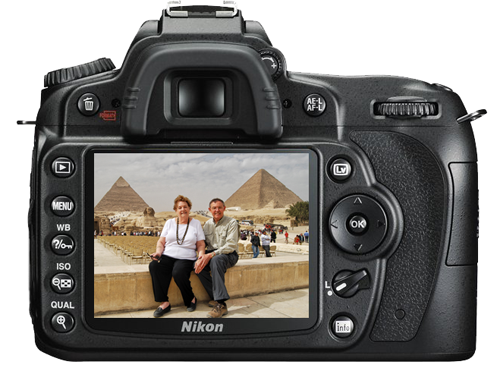
Untold multitudes of people have traveled to Egypt before and after the time of Abram, and for a variety of reasons — to find food, to find refuge, to conquer, to search for treasures, to study history, to make photographs, naming just a few. Our purpose in going to Egypt is not only to enjoy the culture of Egypt, but to study the history at it relates to biblical history. In the next couple of weeks we will try to highlight some of these things. We hope you will travel with us through this blog.

We may not be able to post every day, and due to the time change, it may be at an unusual time of the day. Our non-stop flight is scheduled to depart from New York in less than two hours. The flight takes about 11 hours.

Biblical Studies Info Page

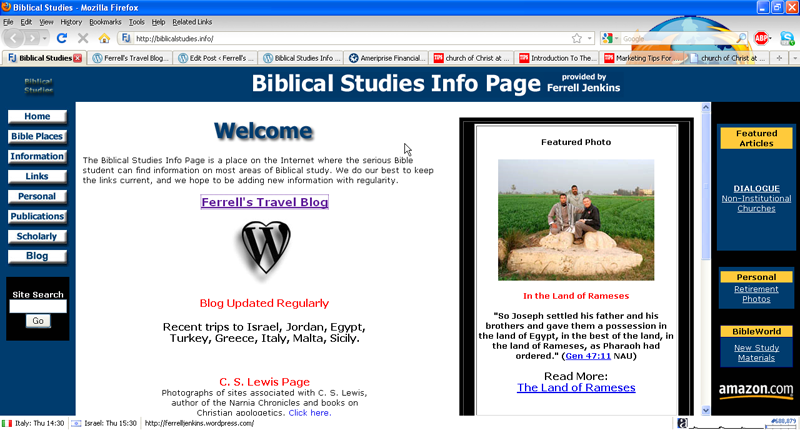
Biblical Studies Information Page. For the past ten years I have maintained the Biblical Studies Info Page here. The site was established under another name about four years earlier, then transferred to my own domain. While there are some articles posted there, the site is mostly a series of links to material that I consider worthwhile, especially for the person who has a limited number of sources available in his/her own library. I have fewer hits now than I did several years ago. I think one major reason is that people use search engines such as Google and Yahoo.

Let me suggest that there is still a value to using the Biblical Studies Info Page. The material is divided into several categories which are noted on the left side of the home page. The Links page is of primary interest to readers associated with churches of Christ. The Bible Places category can be very helpful if one is looking for information on biblical sites. (Incidentally, to my knowledge this page was online a few months prior to the highly popular Bibleplaces.com.)

Biblical Studies Info Page

Front page of the Biblical Studies Info Page.

Probably the most important category is marked Scholarly. This page is not scholarly in the sense of doctoral dissertation’s are scholarly (or should be!). I envisioned it as a page of material that a “lay” person could read and be able to have some confidence in. Sometimes there are two links to differing views on a subject. I intend for people to think, examine, and draw their own conclusions. The categories within the page are important: Apologetics, Culture; Archaeology & the Bible; Bible Study Software & Tools; Bibles Available Online; Biblical Backgrounds; Biblical Criticism: Manuscripts & Translations; Blogs and News Pertaining to Biblical Studies; Books; Church History; Documenting Your Online Research; Evangelism; Greek Studies; Judaism; Maps of Bible Lands; Museums and Traveling Exhibits; New Testament Background; Old Testament Materials; Patristics; Periodicals: Scholarly Journals; Photos and Art; Resource Indices; Restoration Movement (history); Study Materials: Online; Theology.

A Video Surprise

By surprise one day I received an Email from Tony Eldridge, a young author and book marketing expert. Tony writes a blog filled with good tips for people who have books to promote. Begin with his home page here, and move on to the blog.

What surprised me was that Tony had prepared a short video explaining the value of the Biblical Studies Info Page for members of the church where he is a member. You might enjoy his introductory video here. He also reviews other web sites that he considers helpful to Bible students.

Our thanks to Tony.

Traditional baptism site to open in Israel

The traditional site where John the Baptist baptized Jesus has been closed for more than four decades. In the past few years pilgrims and tourists have been able to visit the site known as Bethany Beyond the Jordan from the Jordanian side of the Jordan River.

In those days Jesus came from Nazareth of Galilee and was baptized by John in the Jordan. (Mark 1:9 ESV)

These things took place in Bethany across the Jordan, where John was baptizing. (John 1:28 ESV)

Now word comes, after a year’s delay, that the site will open on the Israeli side.

Kasr al-Yehud, the probable site where John the Baptist baptized his cousin Jesus of Nazareth, will be opened to the public with a special ceremony on January 18 after 42 years as a closed military zone which pilgrims could only visit after coordinating with the Civil Administration for Judea and Samaria. The site is located in the Jordan Valley in the West Bank, but starting on the 18th it will be operated by the jurisdiction of the Israel’s Nature and Parks Authority, after Israeli authorities invested millions of shekels to build facilities there to handle a large number of tourists. The 18th is significant because it is the traditional day when Greek and Russian Orthodox Christians make an annual pilgrimage to the site to celebrate the Feast of the Epiphany. Vice Premier Silvan Shalom, who was instrumental in the project, said he hoped Kasr al-Yehud would become a symbol for cooperation among Israel, Jordan and the Palestinian Authority, as it would be a major attraction for tourists who would also want to visit other Biblical sites in the area. (ICEJ news)

Last May my group visited the Jordan River at the Jordanian site that is suggested as Bethany beyond the Jordan. Construction of a visitor’s center on the Israeli side seemed to be almost finished. That day a group, perhaps mostly military, was at the site, but it was not open to the general public. You can see workers on the steps leading down to the water.
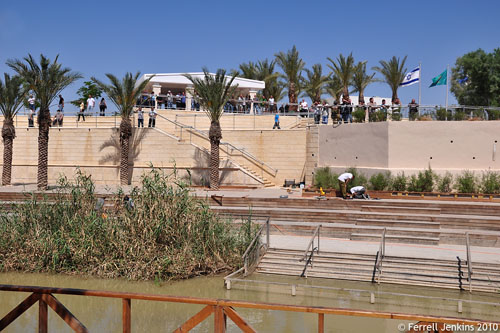
Jordan River baptism site. View from Jordan to the west. Photo by Ferrell Jenkins.

Jordan River baptism site. View from Jordan to the west. Photo by Ferrell Jenkins.

The Israeli visitor’s center is actually in the West Bank, but under Israeli control.

My first trip to the Bible Lands was in April and May of 1967. At that time the western side of the Jordan River was open to tourists. Of course, the site was still in Jordan at the time. Take a look at my group of 19 tour members. It is true that in those days most of the men wore suits, dress shirts and ties, even in the hot weather. The women wore dressy clothes, hosiery and other feminine attire no longer in use.

Just a flash from the past. Take a look at the old photo made on the western bank of the Jordan.
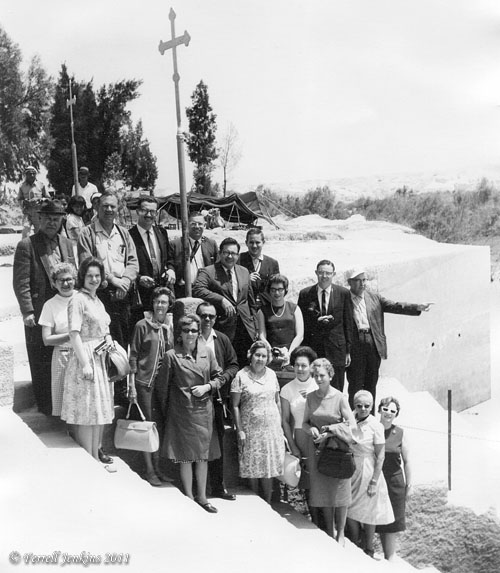
Ferrell Jenkins group at the traditional baptism site on the Jordan River.

1967 group at the traditional baptism site on the west bank of the Jordan River.

Did you notice those purses the women are carrying? In those days that was allowed as a carry-on on the airplanes. Many of the men carried a camera bag of similar size. That was it. No rolling suitcases. Oh, for the good ole days.

HT: BiblePlaces Blog.

Where will you travel in 2011?

Many people never travel because they put it off. Some people plan to see a lot of the places in the United States before they travel to a foreign destination. And most of these people never travel anywhere much. I don’t know how many times I have told someone that there is no way to drive to Israel and the other Bible lands. Young couples spend money to take skiing trips and other vacations, but they never think about saving to travel to the Holy Land. Usually they do not go.

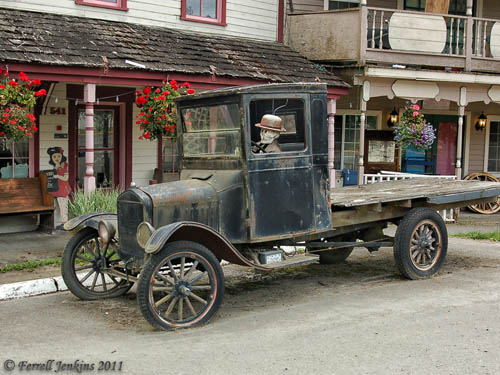
An old truck at Wilkeson, Washington. Photo by Ferrell Jenkins.

An old truck at Wilkeson, Washington. Photo by Ferrell Jenkins.

The Northern Pacific Railroad opened a sandstone quarry in Wilkeson, Washington, in the last quarter of the 19th century. The little town with a population of about 400 is now practically a ghost town and one of the entries near Mount Rainier. There are several old buildings and vehicles left from the last century or earlier.

Wilkeson shows us what can happen to a town, a church, a school, or other organization, or even an individual when we allow the life to ebb away. The guy in the old truck isn’t going anywhere.

Where are you going this year? I hope you will understand this in a spiritual way, as well as thinking about literal travel.

8 Owe no one anything, except to love each other, for the one who loves another has fulfilled the law.
9 For the commandments, “You shall not commit adultery, You shall not murder, You shall not steal, You shall not covet,” and any other commandment, are summed up in this word: “You shall love your neighbor as yourself.”
10 Love does no wrong to a neighbor; therefore love is the fulfilling of the law.
11 Besides this you know the time, that the hour has come for you to wake from sleep. For salvation is nearer to us now than when we first believed. (Romans 13:8-11 ESV)

Wishing you a fruitful and pleasant New Year

The beginning of a New Year gives us an opportunity to correct the mistakes we made in the previous year and try more diligently to do better in the future.

I trust that your New Year will be one of fruitfulness and pleasantness as you seek to honor the Creator of the universe and all men.

A fruit kiosk at the port of Akko (Roman Ptolemais). Photo by Ferrell Jenkins.

A fruit kiosk at the port of Akko (Roman Ptolemais). Photo by Ferrell Jenkins.

1 How blessed is the man who does not walk in the counsel of the wicked, Nor stand in the path of sinners, Nor sit in the seat of scoffers!
2 But his delight is in the law of the LORD, And in His law he meditates day and night.
3 He will be like a tree firmly planted by streams of water, Which yields its fruit in its season And its leaf does not wither; And in whatever he does, he prospers.
4 The wicked are not so, But they are like chaff which the wind drives away.
5 Therefore the wicked will not stand in the judgment, Nor sinners in the assembly of the righteous.
6 For the LORD knows the way of the righteous, But the way of the wicked will perish. (Psalm 1:1-6 NAU)

Here and there — Tuesday 12/28/2010

Roman Soldier Photos. We have used a few photos by J. P. vd Giessen of the Roman Festival, Nijmegen, Netherlands. Jan Pieter informs me that he is  now making these photos available for everyone to view. He has a total of 480 images available here. In fact, all of the photos that have appeared on his blog are available in the Gallery. Check his Dutch language Aantekeningen bij de Bijbel blog.

Bible Reading Schedule. Mark Roberts is making his 2011 Five Day Bible Reading Schedule available free in PDF for individuals and churches who wish to use it. This program allows the reading of the entire Bible or just the New Testament during the year. Details available as the Bible Class Materials web site here. Notice the Quick Links on the right. Check the other available materials while you are there.

Other Bible Reading Plans. The ESV online site displays the ESV text, the study notes, maps, charts, and other resources. Look to the right top of the page at the word DEVOTIONS. There you will see a pull down menu with Reading Plans. There about a dozen, including a Chronological plan. Your chosen plan may be downloaded for printing. You may use one of the plans with your own version of choice.

Bethlehem — home of David and Jesus

A little more than two years ago we wrote about Bethlehem as the birthplace of Jesus here. We will follow the example of Paul, Peter and Jude to remind our readers of some things we already know (Romans 15;15; 1 Corinthians 4:17; 2 Timothy 2:14; 2 Peter 1:12; Jude 1:5; et al.).

  • During the Patriarchal period the town we know as Bethlehem was called Ephrath (Genesis 48:7; 35:9-27).
  • Later, as part of the territory allotted to the tribe of Judah, it was the home of Ruth and Boaz and became the birthplace and early home of David (1 Samuel 17:12, 15).
  • The town was sometimes called the “city of David” (Luke 2:4, 11), but is most famous as the birthplace of Jesus (Micah 5:2; Luke 2:4-15; Matthew 2:1-16).

When one visits the Bible lands today he must realize that 2,000 years of history, involving both repeated building and the destruction of what has been built, has left nothing to remind one of the original place where Jesus was born. Justin Martyr (ca. A.D. 160) said Joseph “took up his quarters in a certain cave near the village.” Origen (mid-third century) said the cave where Jesus was born was being shown and even the enemies of the faith were talking of it. Jerome, a resident of Bethlehem (A.D. 386-420), tells how the birthplace of Jesus and other places associated with the ministry of Jesus were defiled from the time of Hadrian to the reign of Constantine. The Church of the Nativity now stands at this spot.

This photo shows the exterior of the Church of the Nativity.

Exterior of the Church of the Nativity, Bethlehem. Photo by Ferrell Jenkins.

Exterior of the Church of the Nativity, Bethlehem. Photo by Ferrell Jenkins.

My wife saved a portion of our local paper for me last Sunday. The headline says, “Peace swells Bethlehem tourism.” All of the town’s hotel rooms are booked solid for Christmas. Last year 70,000 visited Bethlehem for Christmas, but the number is expected to be “up strongly” this year.

If you have more interest in learning about the origin of the celebration of Christ, take a look here. A more detailed study of the historical aspects of the celebration is available in PDF here.

Opportunity to win Pictorial Library

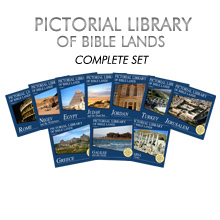
We have repeatedly recommended the Pictorial Library of the Bible Lands. Todd Bolen is giving away two 10-volume sets of this valuable resource. You have until Sunday at 5 p.m. to enter the drawing.

The Pictorial Library is being offered at a 20% discount for the first time. This offer extends through Sunday.

Full details are available at the Bible Places Blog here.

Another shipwreck in the Mediterranean

We see more reports of bad weather in the Mediterranean and the effect it is having on shipping. Note today’s report in Hürriyet, Turkey’s English Daily here.

Stormy weather in Antalya caused a cargo ship to run aground Thursday, leaving one person missing, and may also have contributed to the death of a woman whose body was found in the area.

The vessel, named “Seabright,” had been en route from the Tarsus Port in Adana province to Egypt with a crew of 18 people when it crashed into the rocks in a central part of the Mediterranean province of Antalya, the Anatolia news agency reported Friday.

Did you notice the references to Tarsus and Antalya? This brings to mind the work of the Apostle Paul. Tarsus in Cilicia was the home of Paul (Acts 9:11; 21:39; 22:3). Antalya is identified with Attalia, a coastal city a short distance west of Tarsus (Acts 14:25). Perga, mentioned in the same verse, is nearby.

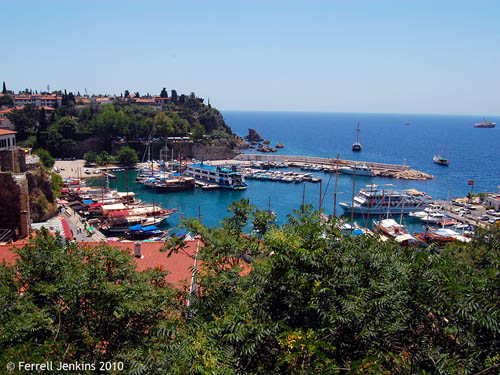
Pleasure harbor at Antalya, Turkey. Photo by Ferrell Jenkins.

Pleasure harbor at Antalya, Turkey. Photo by Ferrell Jenkins.

Mark Wilson writes of Antalya,

The modern city covers the ancient site so few ancient ruins are visible. Those remaining are around the harbor in the old city called Kaleiçi. (Biblical Turkey, 81).

When Paul sailed from Caesarea to Rome his ship went along the southern coast of Asia Minor, modern Turkey. Imagine the effect of this type of storm on a ship dependent on sails for its navigation.

Earlier in the week we noted the effect of dangerous storms in the Eastern Mediterranean. Scroll down for posts about Caesarea, Ashkelon, and Alexandria.

Caesarea National Park closed due to storm damage

The recent storm in the eastern Mediterranean caused damage to the breakwater at Caesarea and led Israeli authorities to temporarily close the Caesarea National Park. Haaretz reports here.

The head of the Israel Antiquities Authority, Shuka Dorfman, yesterday toured Caesarea National Park to take stock of the damage to the antiquities by last weekend’s storm.

Calling the damage “a national disaster,” Dorfman noted that the breakwater, which was broken in three areas by high waves during the storm, now leaves the antiquities exposed to damage from any future high waves.

Dorfman expressed concern that the storm expected this weekend could further damage the antiquities.

“The damage from the storm is huge all along the coast, from Ashkelon in the south the Acre in the north,” Dorfman said adding that if the situation is not remedied immediately through extensive conservation efforts, erosion of the cliff along the beach would continue until it collapses, leading to “the destruction of many ancient cultural treasures of Israel.”

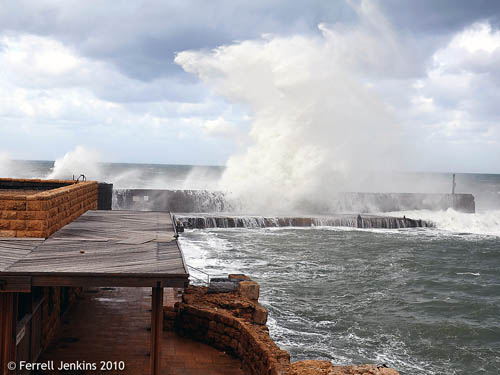
A year ago I wrote about a stormy day at Caesarea Maritima here. I think you might enjoy the photos there. Here is a new one.

High waves at Caesarea Maritima - 12/12/09 - Photo by Ferrell Jenkins.

High waves at Caesarea Maritima - December 12, 2009 - Photo by Ferrell Jenkins.

Caesarea Maritima was a first century Roman capital and seaport. The gospel was first preached to the Gentiles here when Peter came from Joppa to Caesarea to tell Cornelius words by which he could be saved (Acts 10, 11).

Herod the Great built a city on the site of Strato’s Tower and named it Caesarea in honor of Caesar Augustus. It became a center of Roman provincial government in Judea. The city had a harbor and was located on the main caravan route between Tyre and Egypt. This city is called Caesarea Maritima (on the sea) to distinguish it from Caesarea Philippi.

The Apostle Paul used the harbor at Caesarea several times. He was imprisoned here for two years before departing for Rome (Acts 24:27; 27:1).