Category Archives: New Testament

The Parthenon — in Athens, Greece, and in Athens of the South

The Parthenon in Athens, Greece, is one of the most famous architectural landmarks on earth. The building was erected on the Acropolis in the fifth century B.C. According to Fant and Reddish, “the cult statue of Athena stood in the east cella, surrounded by a colonnade of twenty-three columns and an entrance portico with six columns.”

Completed in 438 B.C.E. the statue of Athena was designed and constructed by Phidias himself. On its base it stood nearly 40 feet tall, supported by a massive post. The face and hands were of ivory. According to Thucydides, more than 40 talents of gold (approximately 250 lbs.) were used to plate the remainder of the enormous statue. These plates were removable so that the weight of the gold could be checked periodically. The goddess stood upon a large platform upon which the Pandora myth was depicted. Her left hand rested upon her shield, her spear leaned against her left shoulder, and in her right hand she held a small image of Nike. The statue eventually was carried off to Constantinople and destroyed there in 1203 C.E. (Fant and Reddish, A Guide to Biblical Sites in Greece and Turkey, Oxford, 30-31)

Nashville, Tennessee, had nicknamed itself the Athens of the South by the mid 19th century. In 1897 a replica of the Greek Parthenon was built in Nashville’s Centennial Park. After yesterday’s post about the original Parthenon, my friend Ken Green, who lives in Nashville, wrote that he was sure I had seen the Parthenon, but wondered if I had seen the 42-foot statue of Athena which was unveiled to the public in 1990. In earlier years I have lived in Alabama and Kentucky, with frequent trips through Nashville, but I have not seen the Athena statue. Fortunately, my friend David Padfield visited Nashville last year and made some nice photos (as usual). He has graciously allowed me to share a couple of these photos with our readers.

The first photo shows the exterior of the Nashville Parthenon.
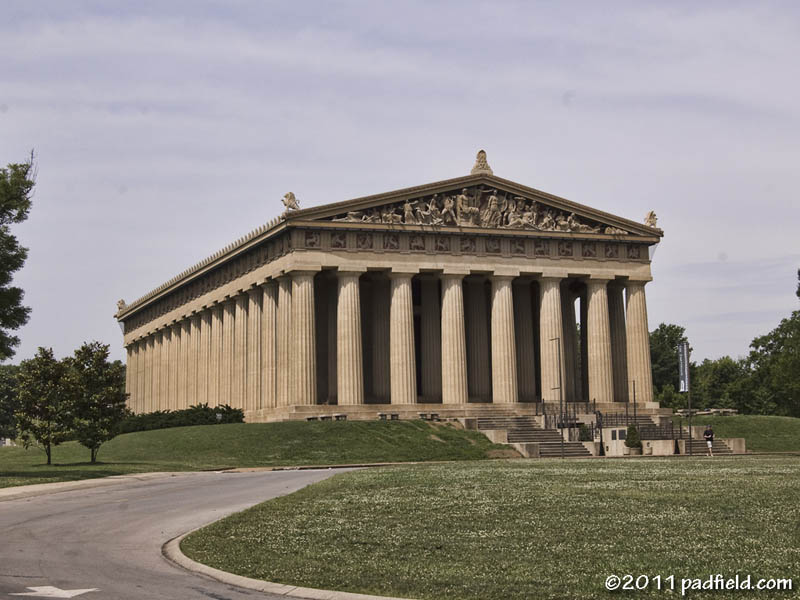
The Parthenon in Nashville, Tennessee. Photo by David Padfield.

The Parthenon in Nashville, Tennessee. Photo by David Padfield.

The next photo shows the statue of Athena as it is displayed in the Parthenon.

Athena in the Parthenon in Nashville, Tennessee. Photo by David Padfield.

Athena in the Parthenon in Nashville, Tennessee. Photo by David Padfield.

Think of the glory of the original Parthenon and the statue of Athena on the Acropolis in Athens. Paul certainly saw the building and may have seen the statue of Athena that was then inside the building.

Now while Paul was waiting for them at Athens, his spirit was being provoked within him as he was observing the city full of idols. (Acts 17:16 NAU)

“Being then the children of God, we ought not to think that the Divine Nature is like gold or silver or stone, an image formed by the art and thought of man. (Acts 17:29 NAU)

You may read more about the Nashville Parthenon at the official city website here.
Athens — a “city full of idols”

While the Apostle Paul waited for his companions to come from Macedonia his spirit was provoked or upset because he observed “the city full of idols” (Acts 17:16).

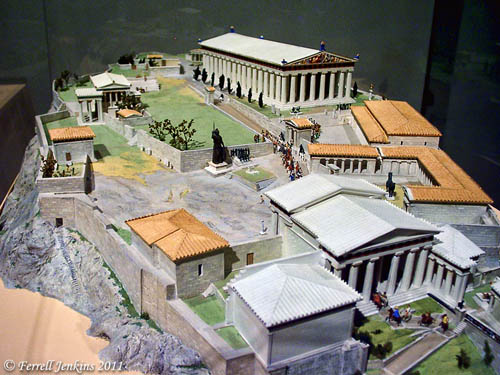
There were many idols in Athens, but none more impressive than those on the Acropolis. The word acropolis means the “high point of the city.” The name was applied to any fortified strong hold or citadel overlooking a populated area. It served as a place of refuge and defense. The Acropolis is 512 ft. high.

The Royal Ontario Museum in Toronto has a nice exhibit of Greek artifacts and a helpful model of the Acropolis with its magnificent buildings. Click on the photo for an image suitable for use in teaching.

Athens - Acropolis - ROM, Toronto.

Model of the Acropolis at Royal Ontario Museum. Photo by Ferrell Jenkins.

Here is a list of significant monuments Paul might have visited:

  1. The Parthenon where the goddess Athena was worshiped was built between 447 and 438 B.C.
  2. Temple of Athena Nike (Wingless Victory, 5th cent. B.C.).
  3. The Erechtheion with its porch of Caryatids was built between 421 and 406 B.C. An olive tree beside the building commemorates the first olive tree planted by Athena.
  4. Temple of Rome and Augustus.

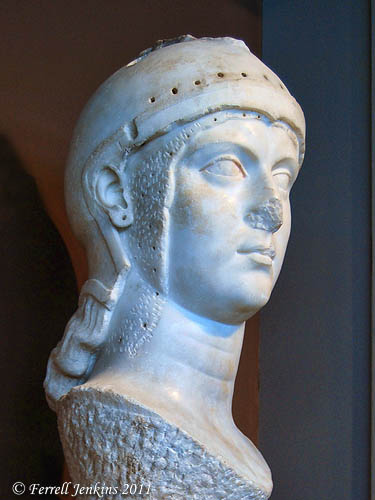
Temples were built to Athena all over the Roman Empire. This photo of a bust of Athena was made in the Archaeology Museum of Thessalonica (Thessaloniki, Greece).

Athena. Archaeology Museum of Thesaloniki, Greece. Photo by Ferrell Jenkins.

Athena. Archaeology Museum of Thesaloniki. Photo by Ferrell Jenkins.

Paul described gods and goddesses like Athena as having been formed by man.

Being then the children of God, we ought not to think that the Divine Nature is like gold or silver or stone, an image formed by the art and thought of man. (Acts 17:29 NAU)

As Paul writes to the Corinthians, he says,

For even if there are so-called gods whether in heaven or on earth, as indeed there are many gods and many lords,  yet for us there is but one God, the Father, from whom are all things and we exist for Him; and one Lord, Jesus Christ, by whom are all things, and we exist through Him. However not all men have this knowledge;  (1 Corinthians 8:5-7a NAU)

Paul in the midst of the Areopagus in Athens

When Paul arrived in Athens, the intellectual capital of his day, he had some time alone in the city to view its monuments.

So Paul, standing in the midst of the Areopagus, said: “Men of Athens, I perceive that in every way you are very religious. For as I passed along and observed the objects of your worship, I found also an altar with this inscription, ‘To the unknown god.’ What therefore you worship as unknown, this I proclaim to you. (Acts 17:22-23 ESV)

Luke tells us that Paul stood in the midst of the Areopagus which was the most venerable of Athenian institutions (Bruce, Paul: Apostle of the Heart Set Free, 238). It derived its name from the original meeting place on the Areopagus, the hill of Mars (Ares), west of the Acropolis. Tenney says,

Whether the `areopagus’ of Acts 17 referred to the hill or to the court which in Paul’s day met in one of the colonades near the Agora cannot be determined exactly (Tenney, New Testament Times, 265).

In Roman times the court held most of its meetings in the Royal Portico (stoa basileios) in the agora, but we don’t know whether Paul addressed the court in the Royal Portico or on the Areopagus (Bruce 238).

Blaiklock says,

the Court of the Areopagus seems to have exercised some supervision over itinerant preachers, and the invitation to Paul was by way of being a courteous command (Cities of the New Testament, 52).

The first recorded convert in Athens was Dionysius the Areopagite (a member of the court) (17:34). Tradition has it that Dionysius became bishop of Athens and suffered martyrdom during the persecutions of Domitian. He is today venerated as the patron saint of Athens by the Eastern Greek Orthodox Church.

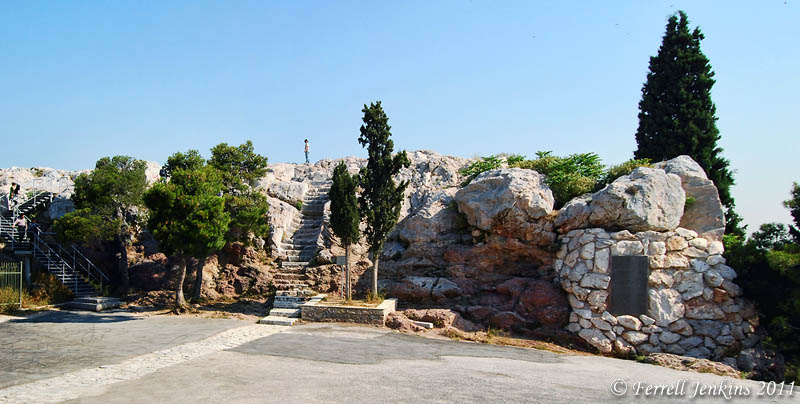
Our photo shows the traditional Areopagus at the base of the Acropolis. From the top of the hill there is a wonderful view of the buildings of the Acropolis and of the agora where Paul may have spoken.

The traditional Areopagus at the base of the Acropolis in Athens. Photo by Ferrell Jenkins.

Traditional Areopagus at the base of the Acropolis in Athens. Photo by Ferrell Jenkins.

On the right side of the photo you will see a bronze plaque in the rocks with Paul’s speech in Greek.

Plan to sacrifice to Paul and Barnabas at Lystra

It is often been pointed out that the common designation of The Acts of the Apostles is a bit of an overstatement. Primarily the book of Acts is the story of some of the acts of the apostles Peter and Paul. Luke seems to be telling us that Paul is every bit as genuine an apostle as Peter. Peter can heal a man lame from his mother’s womb (Acts 3:2). So can Paul (Acts 14:8-10).

When the Lystrans saw the healing of the lame man they began to call Barnabas, Zeus, and Paul, Hermes. Luke’s account says that the priest of Zeus prepared to offer sacrifices with the crowds.

13 The priest of Zeus, whose temple was just outside the city, brought oxen and garlands to the gates, and wanted to offer sacrifice with the crowds. 14 But when the apostles Barnabas and Paul heard of it, they tore their robes and rushed out into the crowd, crying out (Acts 14:13-14 NAU)

The photo below provides a good illustration of what happened at Lystra. It is an architectural relief fragment showing preparation for a sacrifice. The large marble fragment belongs to the early part of the second century. It comes from Rome, but is now displayed in the Louvre.

The bull is being brought for sacrifice. It is thought that this represents only part of the original scene. A panel to the right should show the priest and the altar. Perhaps the laurel wreaths worn by the two characters on the left indicates the departure or return of the Roman emperor.

Roman architectural relief shows preparation for sacrifice. Louvre. Photo by Ferrell Jenkins.

Roman relief shows preparation for sacrifice. Louvre. Photo by Ferrell Jenkins.

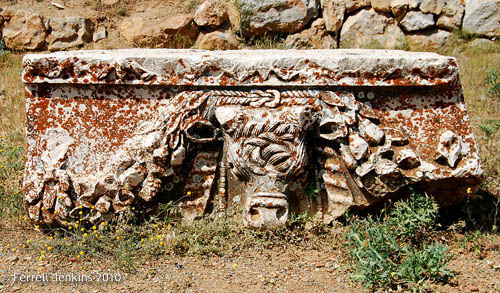
The motif on this altar is common in the Greco-Roman world. The photo below shows a similar bull’s head on what appears to be part of an architectural frieze in the Augustan Imperial Sanctuary at Pisidian Antioch.

Frieze from the Augustan Imperial sanctuary at Pisidian Antioch. Photo by F. Jenkins.

Frieze from the Augustan Imperial sanctuary at Pisidian Antioch. Photo by F. Jenkins.

Lystra — Barnabas is Zeus and Paul is Hermes

G. Walter Hansen comments on the religious life of Galatia and the importance of Zeus and Hermes to the people who lived there.

Zeus was the most widely worshipped god in Galatia; temples to Zeus were ubiquitous. Zeus was often linked with other gods. In the territory of Lystra there are carvings and inscriptions which show Zeus accompanied by Hermes. An inscription found near Lake Sugla is a dedication to Zeus of a sundial and a statue of Hermes. The names of the dedicators are Lycaonian. A stone altar near Lystra is dedicated to “the Hearer of Prayer [presumably Zeus] and Hermes.” A relief near Lystra depicts Hermes with the eagle of Zeus. In Lystra a stone carving shows Hermes with two other gods, G and Zeus. (Gill and Gempf, The Book of Acts in its First Century Setting, Vol. 2: Graeco-Roman Setting, 393)

This evidence, says Hansen, provides the setting for the events of Paul and Barnabas at Lystra. Luke describes the reaction of the Lystrans when they saw Paul heal a lame man.

When the crowds saw what Paul had done, they raised their voice, saying in the Lycaonian language, “The gods have become like men and have come down to us.”  And they began calling Barnabas, Zeus, and Paul, Hermes, because he was the chief speaker.  The priest of Zeus, whose temple was just outside the city, brought oxen and garlands to the gates, and wanted to offer sacrifice with the crowds.  (Acts 14:11-13 NAU)

Bruce reminds us that “Zeus was the chief god in the Greek pantheon; Hermes, the son of Zeus by Maia, was the herald of the gods” (The Book of the Acts, NICNT, 292).

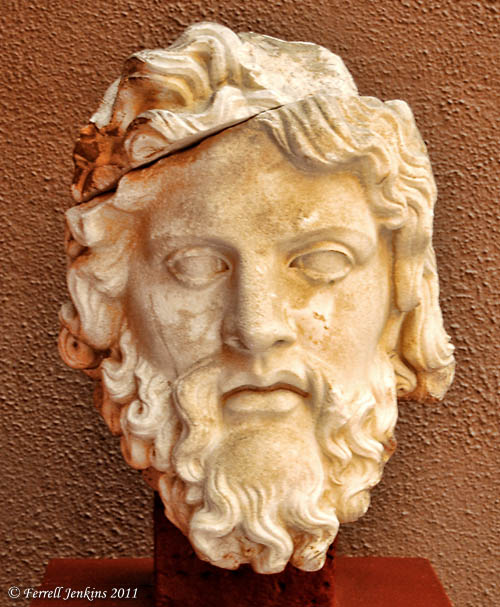
Our photo of Zeus is of a bust displayed in the archaeological museum at Ephesus.

Bust of Zeus in the Ephesus Museum. Photo by Ferrell Jenkins.

Bust of Zeus in the Ephesus Museum. Photo by Ferrell Jenkins.

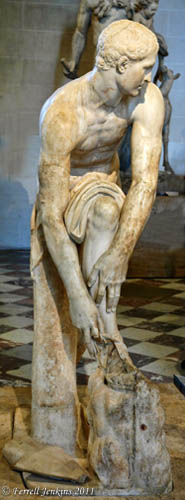
Paul was called Hermes because he was the chief speaker. Hermes was the messenger of the gods. How appropriate that our word hermeneutics, coming from the name Hermes, is used to describe the important work of interpreting the Scriptures. I have heard some speakers make fun of the word and then proceed to say that a certain phrase in the Scripture means … ! The photo below shows Hermes tying on his sandal in preparation for delivering a message. Some may recognize Hermes as the Latin Mercury, who is used as the symbol for the floral industry.

Hermes Putting on Sandal. Louvre. Photo by Ferrell Jenkins.

Hermes Putting on Sandal. Displayed in the Louvre. Photo by Ferrell Jenkins.

The King James Version used the Latin terms Jupiter and Mercurius in Acts 14:12. Bruce says this is “due to an old and foolish fashion of replacing Greek proper names by their Latin equivalents in English translations from the Greek.”

Identifying Lystra

Biblical sites are identified several ways. A few sites have been known for millennial. For example, Jerusalem (earlier Jebus, 1 Chronicles 11:4-5; and Salem, Genesis 14:18), Damascus, Athens, and Rome.

Some scholars have identified sites on linguistic grounds. For example, Edward Robinson identified biblical Bethel with Beitin in 1938. This proposal had been generally accepted until David Livingston suggested, in the last few decades, that Bethel should be identified with el- Bireh. Some names have remained virtually unchanged. Modern Anata is thought to be biblical Anathoth (Jeremiah 1:1). I note that the Syrian town of Ribleh is identified with biblical Riblah (2 Kings 25:6). After all these centuries only one letter is different.

Other sites are identified on the basis of inscriptions. Such is true of Gezer, Thyatira, and Lystra. This brings me to my topic today.

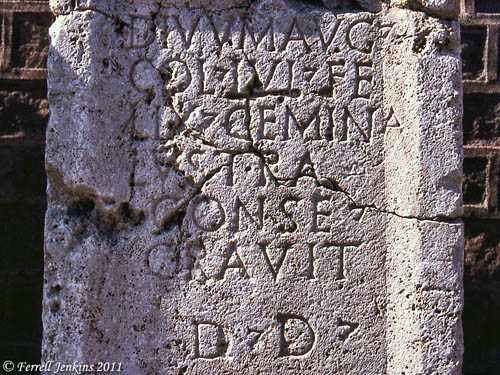
The identification of Lystra was made by J. R. S. Sterrett in 1855 on the basis of a Latin inscription found at the site. The inscription is now displayed at the archaeological museum in Konya (biblical Iconium).

Inscription with the name Lystra. Photo by Ferrell Jenkins.

Inscription with the name Lystra. Photo by Ferrell Jenkins.

The inscription includes the full Roman name Colonia Iulia Felix Gemina Lustra. See Mark Wilson, Biblical Turkey, 173. We called attention to this inscription, with a photo of the entire stone as it is displayed at Konya more than four years ago, during the first month of this blog, here.

The brethren of Lystra and Iconium spoke well of young Timothy at the time Paul chose him to join his preaching party.

Paul came also to Derbe and to Lystra. And a disciple was there, named Timothy, the son of a Jewish woman who was a believer, but his father was a Greek,  and he was well spoken of by the brethren who were in Lystra and Iconium. (Acts 16:1-2 NAU)

I have failed to say recently that archaeological mounds (tells) in Turkey are identified by the Turkish word höyük (pronounced who-youk).

Illustrations from Lystra

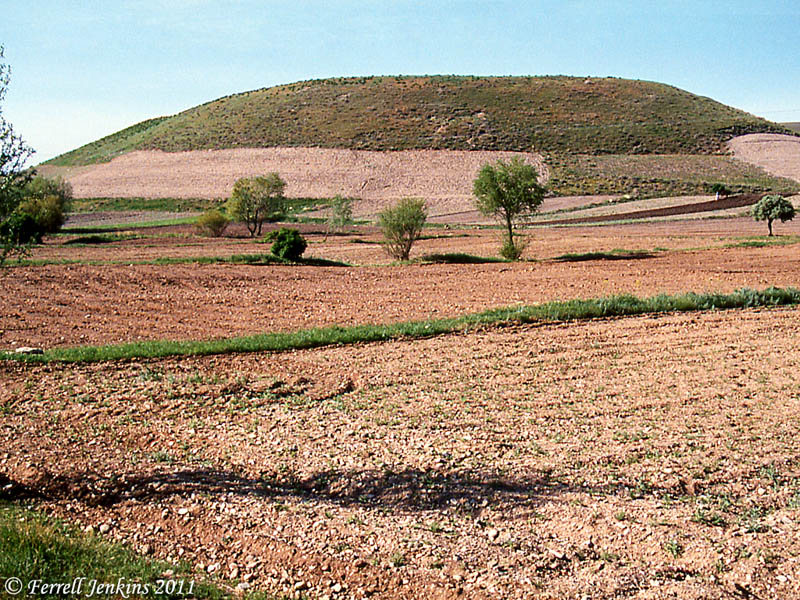
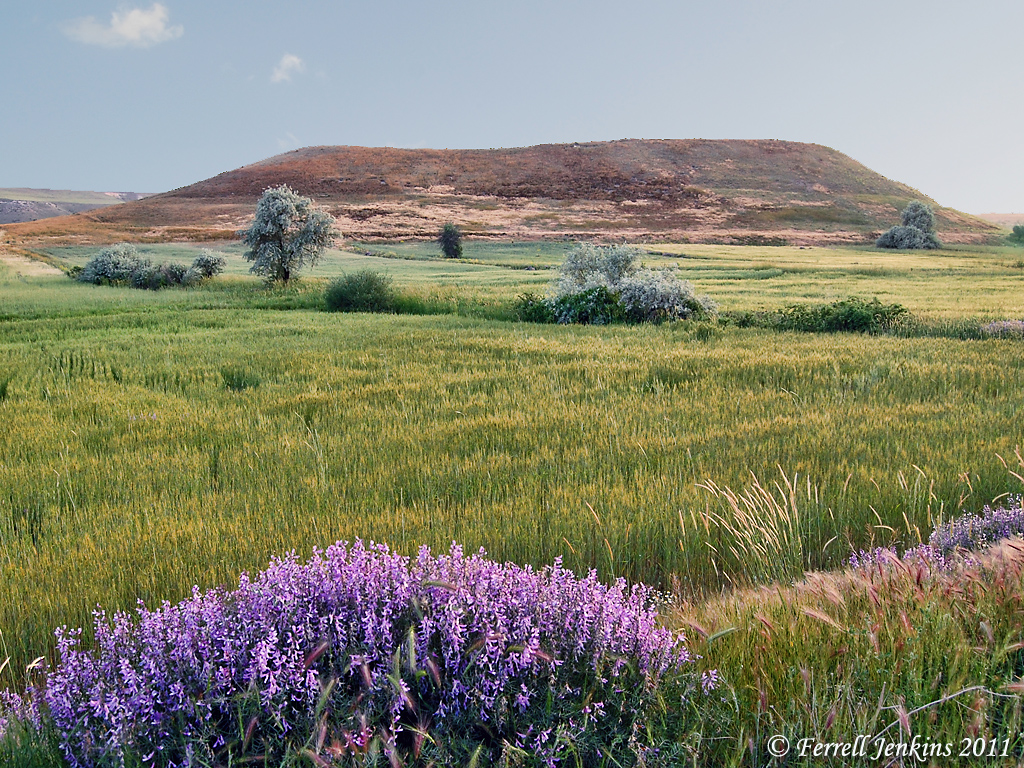
Looking through some slides, I found a nice photo of Lystra. In this photo from 1987 you will see that farmers have plowed the slopping side of the tell as far as practical. Often we see crops growing on the top of a tell, especially one that has not been excavated.

Lystra. 1987 Photo by Ferrell Jenkins.

Lystra. 1987 Photo by Ferrell Jenkins.

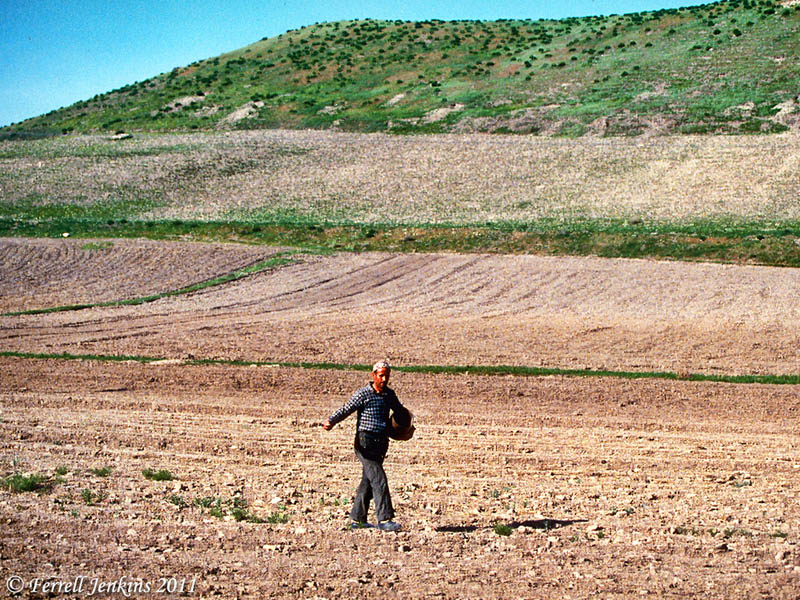
From another year, likely in the 80s, the sower is broadcasting seed. This is a practice that I saw frequently while growing up in the rural South. We rarely see this practice in the modern days of mechanization either in the USA or in the Bible World.

Sower at Lystra. Photo by Ferrell Jenkins.

Sower scattering seed at Lystra. Photo by Ferrell Jenkins.

The practice of the sower scattering seed is mentioned several times in the Bible. Notice Isaiah 55:10-11.

For as the rain and the snow come down from heaven, And do not return there without watering the earth And making it bear and sprout, And furnishing seed to the sower and bread to the eater;  So will My word be which goes forth from My mouth; It will not return to Me empty, Without accomplishing what I desire, And without succeeding in the matter for which I sent it.  (Isaiah 55:10-11 NAU)

Notice Paul’s use of the Isaiah text in 2 Corinthians 9:10.

We think also of the parables of Jesus.

3 And He spoke many things to them in parables, saying, “Behold, the sower went out to sow;  4 and as he sowed, some seeds fell beside the road, and the birds came and ate them up.  5 “Others fell on the rocky places, where they did not have much soil; and immediately they sprang up, because they had no depth of soil.  6 “But when the sun had risen, they were scorched; and because they had no root, they withered away. 7 “Others fell among the thorns, and the thorns came up and choked them out. 8 “And others fell on the good soil and yielded a crop, some a hundredfold, some sixty, and some thirty.  9 “He who has ears, let him hear.” (Matthew 13:3-9 NAU)

Lystra — the home of Timothy

The mound of Lystra, now called Zordula, is located about 18 miles south of Konya (biblical Iconium), Turkey, near the village of Hatunsaray.

Lystra was visited by Paul and Barnabas on the First Missionary or Preaching Journey (Acts 14). Lystra and Derbe were towns of Lycaonia (Acts 14:6). The locals spoke the Lycaonian language. They called Barnabas, Zeus, and Paul, Hermes (14:12). Inscriptions have been found that identify these particular gods with Lycaonia.

This was the home of young Timothy,  “the son of a Jewish woman who was a believer, but his father was a Greek” (Acts 16:1). Timothy accepted the invitation of Paul to join him on the second journey. Two of Paul’s epistles were written to Timothy.

The mound of Lystra, 18 miles south of modern Konya. Photo by Ferrell Jenkins.

The mound of Lystra, 18 miles south of modern Konya. Photo by Ferrell Jenkins.

After Paul healed a lame man, the residents of Lystra wanted to worship Paul and Barnabas as gods. Paul preached one of two sermons to Gentiles recorded in the Book of Acts (Acts 14 at Lystra; Acts 17 at Athens). The Jews of Pisidian Antioch who rejected the gospel message followed Paul to Lystra and persuaded the people against Paul. Paul was stoned, presumed dead, and dragged outside the city (Acts 14:19).

In the second letter to Timothy, Paul says that Timothy knows about the persecution he endured at Lystra.

10 You, however, have followed my teaching, my conduct, my aim in life, my faith, my patience, my love, my steadfastness, 11 my persecutions and sufferings that happened to me at Antioch, at Iconium, and at Lystra–which persecutions I endured; yet from them all the Lord rescued me. 12 Indeed, all who desire to live a godly life in Christ Jesus will be persecuted, 13 while evil people and impostors will go on from bad to worse, deceiving and being deceived. 14 But as for you, continue in what you have learned and have firmly believed, knowing from whom you learned it 15 and how from childhood you have been acquainted with the sacred writings, which are able to make you wise for salvation through faith in Christ Jesus. 16 All Scripture is breathed out by God and profitable for teaching, for reproof, for correction, and for training in righteousness, 17 that the man of God may be complete, equipped for every good work. (2 Timothy 3:10-17 ESV)

Here is a brief summary of the events at Lystra during the visit of Paul and Barnabas (Acts 14:6-20).

  • Healing of a lame man.
  • Priest of Zeus and the crowd wanted to offer sacrifice to Barnabas and Paul.
  • Sermon on the witness of God in nature.
  • Paul was stoned and dragged outside the city for dead.

In previous posts we have discussed the significance of Lystra in the work of Sir William Ramsay here and here.

Thanksgiving — 2011

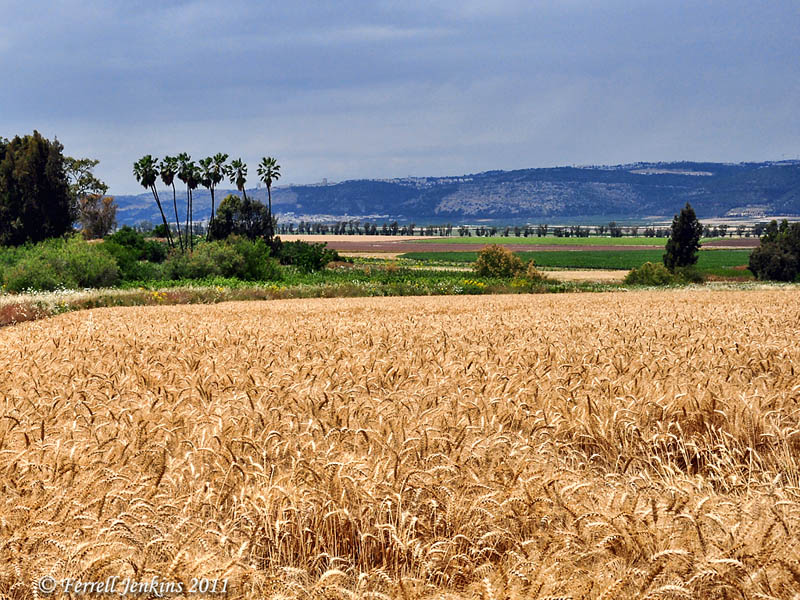
Abundant wheat fields near biblical Endor. Photo by Ferrell Jenkins.

Abundant wheat fields near biblical Endor. Photo by Ferrell Jenkins.

I will give thanks to the LORD with all my heart; I will tell of all Your wonders. (Psalm 9:1 NAU)

Enter His gates with thanksgiving And His courts with praise. Give thanks to Him, bless His name. (Psalm 100:4 NAU)

Let us come before His presence with thanksgiving, Let us shout joyfully to Him with psalms. (Psalm 95:2 NAU)

I will praise the name of God with song And magnify Him with thanksgiving. (Psalm 69:30 NAU)

Be anxious for nothing, but in everything by prayer and supplication with thanksgiving let your requests be made known to God. (Philippians 4:6 NAU)

Herod the Great didn’t do it all

Archaeologists in Jerusalem announced yesterday a new discovery that changes popular thinking about the building of the walls around the Temple Mount. It is not much of a surprise. We already knew that the Roman Street found at the SW corner of the wall dates to the period just before the destruction of Jerusalem by the Romans in A.D. 70. The last paragraph of the press release mentions that what was found was in harmony with the account of Josephus.

I have understood John 2:20 to be saying that work on the temple precinct was continuing as late as A.D. 26/27. That is a major reason this is not a surprise.

Then the Jewish leaders said to him, “This temple has been under construction for forty-six years, and are you going to raise it up in three days?” (John 2:20 NET)

Here is a portion of the press release issued by the Israel Antiquities Authority. I am leaving it full width for easier reading.

— • —

Professor Ronny Reich of the University of Haifa and Eli Shukron of the Israel Antiquities Authority: A ritual bath exposed beneath the Western Wall of the Temple Mount shows that the construction of that wall was not completed during King Herod’s lifetime.

Who built the Temple Mount walls? Every tour guide and every student grounded in the history of Jerusalem will immediately reply that it was Herod. However, in the archaeological excavations alongside the ancient drainage channel of Jerusalem a very old ritual bath (miqwe [mikve]) was recently discovered that challenges the conventional archaeological perception which regards Herod as being solely responsible for its construction.…

In an excavation beneath the paved street near Robinson’s Arch, sections of the Western Wall’s foundation were revealed that is set on the bedrock — which is also the western foundation of Robinson’s Arch — an enormous arch that bore a staircase that led from Jerusalem’s main street to the entrance of the Temple Mount compound.

According to Professor Reich, “It became apparent during the course of the work that there are rock-hewn remains of different installations on the natural bedrock, including cisterns, ritual baths and cellars. These belonged to the dwellings of a residential neighborhood that existed there before King Herod decided to enlarge the Temple Mount compound. The Jewish historian Josephus, a contemporary of that period, writes that Herod embarked on the project of enlarging the compound in the eighteenth year of his reign (that is in 22 BCE) and described it as “the largest project the world has ever heard of.”

When it was decided to expand the compound, the area was confiscated and the walls of the buildings were demolished down to the bedrock. The rock-cut installations were filled with earth and stones so as to be able to build on them. When the locations of the Temple Mount corners were determined and work was begun setting the first course of stone in place, it became apparent that one of the ritual baths was situated directly in line with the Western Wall. The builders filled in the bath with earth, placed three large flat stones on the soil and built the first course of the wall on top of this blockage.

While sifting the soil removed from inside the sealed ritual bath, three clay oil lamps were discovered of a type that was common in the first century CE. In addition, the sifting also yielded seventeen bronze coins that can be identified. Dr. Donald Ariel, curator of the numismatic collection of the Israel Antiquities Authority, determined that the latest coins (4 in all) were struck by the Roman procurator of Judea, Valerius Gratus, in the year 17/18 CE. This means that Robinson’s Arch, and possibly a longer part of the Western Wall, were constructed after this year – that is to say: at least twenty years after Herod’s death (which is commonly thought to have occurred in the year 4 BCE).

This bit of archaeological information illustrates the fact that the construction of the Temple Mount walls and Robinson’s Arch was an enormous project that lasted decades and was not completed during Herod’s lifetime.

This dramatic find confirms Josephus’ descriptions which state that it was only during the reign of King Agrippa II (Herod’s great-grandson) that the work was finished, and upon its completion there were eight to ten thousand unemployed in Jerusalem.

— • —

If you wish to see the complete press release click here.

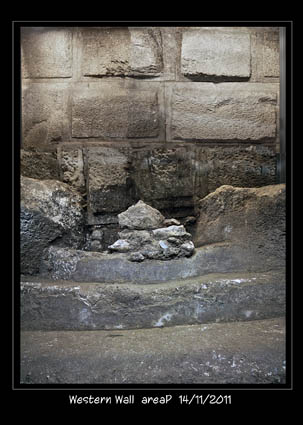
Below are a few of the photos provided by the IAA. The first shows the lowest course of the wall resting on bedrock.

The first course of the wall resting on the bedrock. Photograph: Vladimir Naykhin.

The first course of the wall resting on the bedrock. Photograph: Vladimir Naykhin.

The next photo shows one of the coins dating to the time of Roman Procurator Valerius Gratus in the year A.D. 17/18. He was procurator A.D. 15-26, and followed by the better known Pontius Pilate (A.D. 26-36).

A coin of the Roman procurator Valerius Gratus, which helped in dating the construction of Robinson’s Arch.

A coin of the Roman procurator Valerius Gratus, which helped in dating the construction of Robinson’s Arch. Courtesy IAA.

The third photo shows some of the workers excavating the area.

Archaeologists working at bedrock below Robinson's Arch. Photo: IAA.

Archaeologists working at bedrock below Robinson's Arch. Photo: IAA.

After writing my post, I see that Todd Bolen accuses the IAA of being “desperate for headlines.” See his comments here.

HT: Joseph I. Lauer