Category Archives: New Testament

Free Ebook for Kindle

How the Bible Came to Be is an Ebook short (about 60 pages) from The Baker Illustrated Bible Handbook. It is available free today only (May 25). The link I am including is only good for the United States.

Here is a list of the subjects covered.

  • Inspiration
  • Production and Shaping of the Old Testament Canon
  • Writing, Copying, and Transmitting the New Testament Text
  • The Canon of the New Testament
  • The Dead Sea Scrolls
  • The Septuagint
  • Bible Translation and the English Bible
  • Translations for the World

Use this link.

HT: Brooks Cochran

The land of Gennesaret and the travel route west

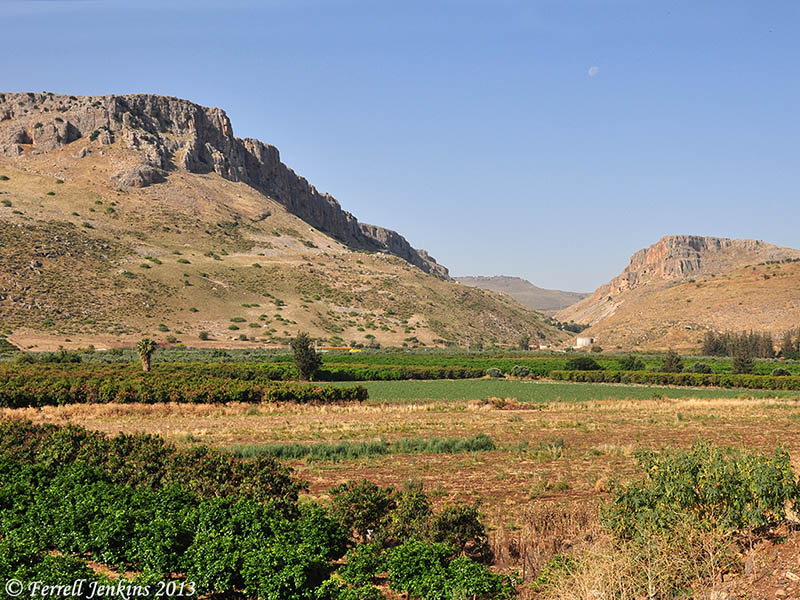
The Sea of Galilee is called the “lake Gennesaret” by Luke (Luke 5:1). The area on the northwest corner of the Sea of Galilee is called the “land at Gennesaret.” In the view below we see the land of Gennesaret and the Via Maris. The travel route here leads to the Beit Netofa Valley and the sites of Khirbet Cana, Sepphoris, Nazareth, Yodfat (Jotapata), and Ptolemais (Akko). Yodfat was fortified by Josephus during the Jewish revolt against Rome. Josephus, commander of the Jewish rebels, surrendered to the Roman Emperor Vespasian at Yodfat.

Mount Arbel and the Plain of Genessaret. Photo by Ferrell Jenkins.

Mount Arbel and the Plain of Gennesaret. Photo by Ferrell Jenkins.

Many of the miracles of Jesus were performed in this area.

When they had crossed over, they came to land at Gennesaret. And when the men of that place recognized Him, they sent word into all that surrounding district and brought to Him all who were sick; and they implored Him that they might just touch the fringe of His cloak; and as many as touched it were cured. (Matthew 14:34-36 NAU)

A new tool for tour leaders

Near the end of January when I received my copy of The Satellite Bible Atlas, I decided that I would secure a copy for each member of my April tour group. Arrangements were made to have the books delivered to my tour operator in Jerusalem so that they would be available for use by the group at the beginning of the tour.

Ideally, it would be good for tour groups to meet together for classes prior to the tour. I have never been able to do this because my groups have come from many states, and sometimes a foreign country.

The first morning of touring I had the driver stop on the kurkar ridge along the Mediterranean Sea a few miles north of Netanya while we handed out the “surprise” books and explained them to the tour members. I asked them to turn to the maps that showed the area where we would be traveling that day. This procedure continued throughout the tour.

By the end of the tour the group members were talking about how the SBA would help them in their studies when they returned home.

On the last day of the tour we stopped by Yad HaShmona where Bill Schlegel works with the IBEX (Israel Bible Extension) program. Bill met our group and gave us a brief geographical orientation of the location and the importance of geography in the biblical story. From Yad HaShmona one can see the site of Kiriath-jearim (see here) to the east, and the coastal plain to the west. Todd Bolen includes a brief description of Yad HaShmona at BiblePlaces.com (here).

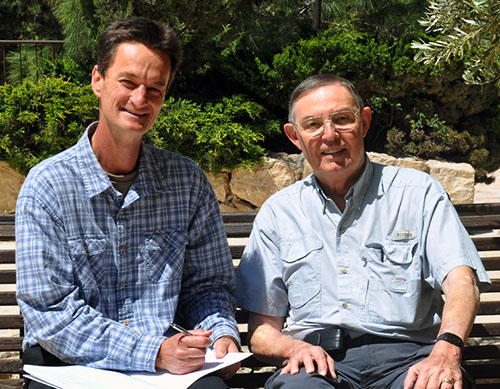
Bill Schlegel autographs a copy of The Satellite Bible Atlas for Ferrell Jenkins.

Bill Schlegel autographs a copy of The Satellite Bible Atlas for Ferrell Jenkins.

I can highly recommend the use of the SBA in connection with tours anywhere in Israel. Details about the publication, and how to order your own copy, may be found here.

The Satellite Bible Atlas is not to replace a standard Bible atlas such as the Zondervan Atlas of the Bible by Carl Rasmussen, or The New Moody Atlas of the Bible by Barry Beitzel. In fact, get all three. You will find each of them useful.

Wool and flax used in weaving

Proverbs 31 describes the Capable Wife as one who looks for the wool and the flax to use in weaving.

She obtains wool and flax, and she is pleased to work with her hands. (Proverbs 31:13 NET)

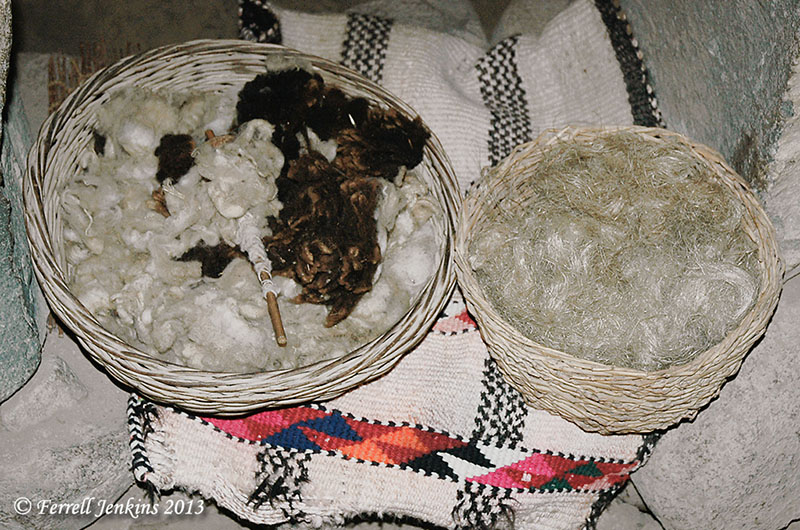
In the reconstructed house at Qatzrin (in Israel’s Golan Heights), wool and flax are waiting to be spun, and then made into clothing.

Wool and flax were used in the making of clothes in Bible times. Photo by Ferrell Jenkins.

Wool & flax were used in the making of clothes in Bible times. Photo by Ferrell Jenkins.

The two other texts where wool and flax are mentioned together are in the prophet Hosea. Israel, in her unfaithfulness to the LORD, is described as getting here wool and flax, along with other household goods, from her lovers (Hosea 2:5). The LORD makes it clear that he is the source of her supplies.

Therefore, I will take back my grain during the harvest time and my new wine when it ripens; I will take away my wool and my flax which I had provided in order to clothe her. (Hosea 2:9 NET)

Jesus wore a tunic (Greek, chiton) that was woven in one piece (John 19:23). The chiton was a garment worn next to the skin by both men and women.

We have posted several articles about weaving at the following links:

The Bet Qama discovery

Numerous discoveries are made in Israel during the process of building a house, a road, or some other construction project. It becomes necessary to call the Israel Antiquities Authority so that an emergency excavation can be conducted.

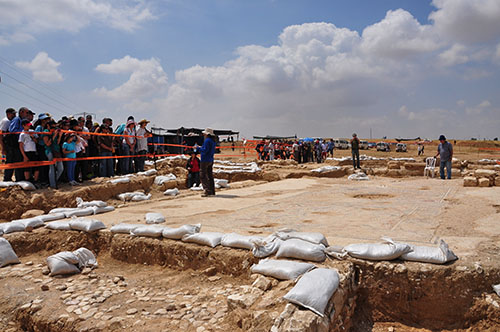
Israel has a wonderful toll road (Highway 6) running from Galilee to the Negev. During preparatory work to extend the highway to the south, a settlement covering almost 1½ acres was uncovered in the fields of Kibbutz Bet Qama (Beit Kama) a few miles north of Beersheba. Shmuel Browns, Israel guide and blogger, attended a briefing by the IAA earlier in the week. He describes the discovery:

The site seems to have consisted of a large estate that included a tower, a church, residential buildings, presumably an inn for travelers, and storerooms, a large cistern, a public building and pools surrounded by farmland. Also found was a stone with a Byzantine cross in secondary usage.

Browns think this would be a good candidate for a monastery. He has granted permission for us to share this photo that he made during the IAA briefing.

The IAA explains the Beit Qama discovery. Photo by Shmuel Browns.

The IAA reports on the Beit Qama discovery. Photo by Shmuel Browns.

Take a look at the blog post with a half dozen nice photos by Shmuel Browns here.

The Press Release by the IAA may be read here.

I see that Carl Rasmussen has posted a blog here about the 5th century synagogue that was discovered during construction work in 1993 at Sepphoris. This site is only 3½ miles north of Nazareth, the early home of Jesus.

There is still a lot to be uncovered in the Near East. See my post about “Know but mostly unknown” here.

Does “Abba” mean “Daddy”?

You have heard it many times. Many of the things a preacher reads or hears sound good. So, he repeats it the next time he is speaking on a related topic. Then the members of the congregation begin to repeat it to their friends.

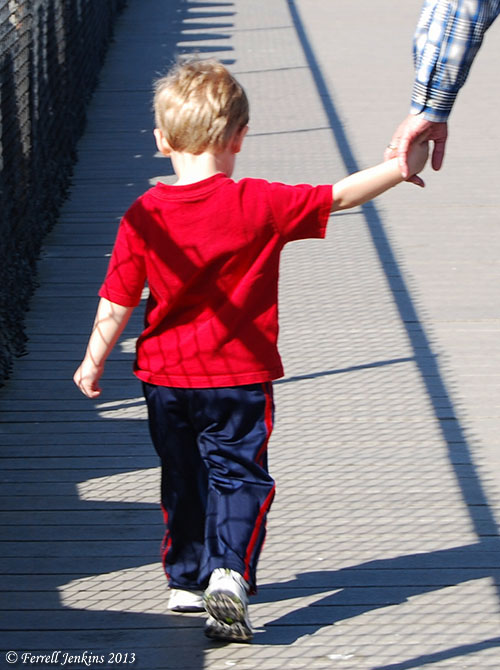
Child holding hand of adult.

But, is it true that Abba means something like daddy or papa?

In a series of posts beginning with the word FactChecker, Glenn T. Stanton  tracks down the origin of this idea to the German Lutheran New Testament scholar Joachim Jeremias in 1971. He also shows that several other reputable scholar responded in a scholarly way to the claim.

One of the sources he cites is a 1988 article by James Barr:

But in any case it was not a childish expression comparable with ‘Daddy’: it was a more solemn, responsible, adult address to a Father.

Ministers should read Stanton’s blog (here) before completing Sunday’s sermon.

And he said, “Abba, Father, all things are possible for you. Remove this cup from me. Yet not what I will, but what you will.” (Mark 14:36 ESV)

For you did not receive the spirit of slavery to fall back into fear, but you have received the Spirit of adoption as sons, by whom we cry, “Abba! Father!” (Romans 8:15 ESV)

And because you are sons, God has sent the Spirit of his Son into our hearts, crying, “Abba! Father!” (Galatians 4:6 ESV)

HT: BibleX

Here and there in Lower Galilee

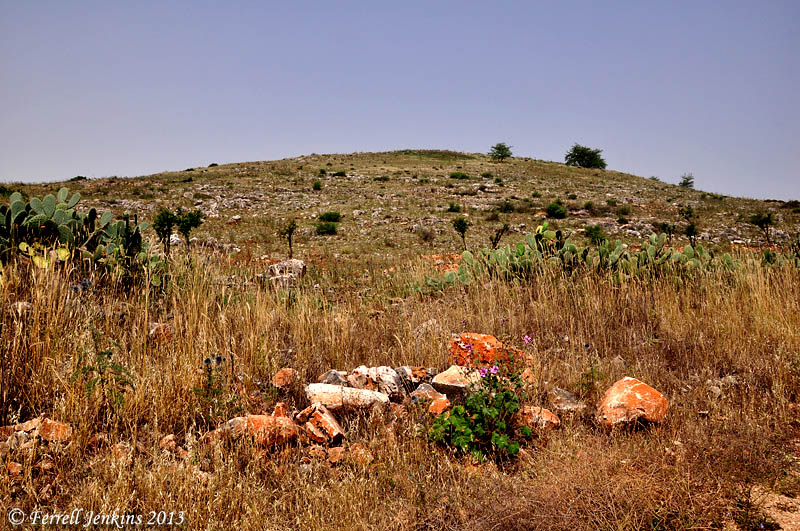
This morning we set out from Tiberias to reach Khirbet Kana, the likely site of the Cana of Galilee mentioned in John 2. The site along the highway from Nazareth to Tiberias that many tourists visit is the traditional site known as Kafr Kana. Jesus attended a marriage at Cana of Galilee (John 2:1-11), and met the royal official (John 4:46-54).

Traveling as we are, and being extremely tired at night, I have neither the materials or the inclination to go into detail about the matter. Here is a view of the rocky hill located on the north side of the Bet Netofa Valley. The ancient road ran in the valley below the city.

View of Khirbet Kana from the SE. Photo by Ferrell Jenkins.

View of Khirbet Kana from the SE. Photo by Ferrell Jenkins.

This is not the sort of visit one may take lightly. It probably took us 45 minutes in from the main road, and 45 minutes out. (We should have had a Jeep-type vehicle. We spent about an hour walking up one side of the hill and down another. (I hope no one will ask directions!).

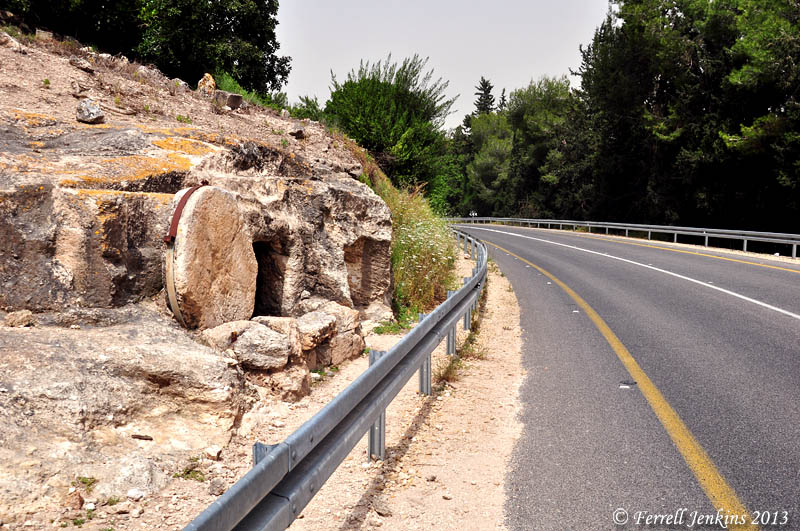
Later we made a short stop at Hannathon (Joshua 19:41), and then through Nazareth and Megiddo Junction to see again the Rolling Stone tomb on the south side of the Jezreel Valley. This tomb can no longer be photographed easily by tourists in a bus. There is no room for the bus to stop. Our little car could pull off the road, and we could get close enough to avoid the new railing that has been installed. This is what it looks like and how close the cars, buses, and trucks, come to it.

Rolling Stone tomb near Jezreel Valley. Photo by Ferrell Jenkins.

Rolling Stone tomb near Jezreel Valley. Photo by Ferrell Jenkins.

We were able to get photos similar to the one you see here.

Another brief stop allowed us to take a photo of Tell Jokneam (Joshua 12:22; 19:11; 21:34). On the way back to our home at the Ron Beach Hotel in Tiberias we visited the possible site of En Dor (En-Dor; 1 Samuel 28:7), where Saul visited the medium of En Dor. Our last stop was at the modern town of En Dor where we visited the En Dor Archaeology Museum. It is a great little museum. More about it later.

North of the Sea of Galilee

Most of our visits today were north of the Sea of Galilee. Here are some of the stop we made.

The fishing port of Tiberias, where we saw fishermen bringing in some large fish. One of the owners of the Ron Beach Hotel told us these large fish were used for fish oil.

Hazor.

Senir (Hasbani) River. One of the sources of the Jordan.

Dan. To photograph the Middle Bronze city gate (19th-18th century B.C.).

Beit Ussishkin Museum at Dan. The museum is mostly about the flora and fauna of the region, but there are a few pieces from the Dan excavations.

Hermon Stream Nature Reserve (or Banias River). To see the waterfall.

Omrit. Site of possible Herodian temple to Augustus. The road is horrible, and there is still a long walk to visit the site. It is really not prepared or intended for the casual visitor. Someday it should be.

Abel-beth-maacah (or Abel of Beth-maacah). A city called “a mother in Israel” (2 Samuel 20:19). We had a view of Mount Hermon with a small amount of snow still on the top.

Abel-beth-maacah and Mount Hermon. View toward east. Photo by Ferrell Jenkins.

Abel-beth-maacah and Mount Hermon. View toward east. Photo by Ferrell Jenkins.

Metula. This Israeli town is on the border with Lebanon. We looked over into Lebanon.

Hula Lake/Agamon Lake. This is the restoration of a portion of Hula Lake that had been drained in the mid-20th century. Birds from Asia and Europe travel through the Great Rift and their way to Africa and back. This lake is a favorite stopping place for many of them.

It was a hot day, but an enjoyable one.

A miscellany of sites on Monday

There are numerous small museum scattered across Israel. I had read about the Beit Sturman Museum at En Harod and had wanted to visit it. The Israel Museum Guide describes the museum in these terms:

Beit Sturman Museum is one of the biggest archaeological museums of the country. Rich collection of flora and fauna of the region. History of Jewish settlements in Israel valley. The museum is named in honour of one of the founders of kibbutz – Haim Sturman.

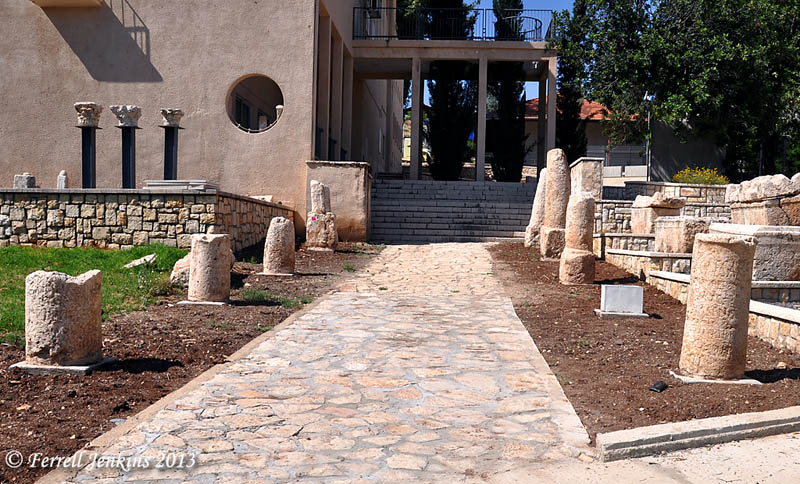
What really caught my attention was when I read that the Museum had a large collection of Roman milestones that were found in the Jezreel Valley.

Only seven milestones are visible in the photo below but there are dozens of others in the courtyard of the Museum. Many of them are broken, and very few of them have any visible inscription. I thought I recognized TR on one of them. I think this would indicate a milestone erected during the reign of the Emperor Trajan in the early 2nd century A.D.
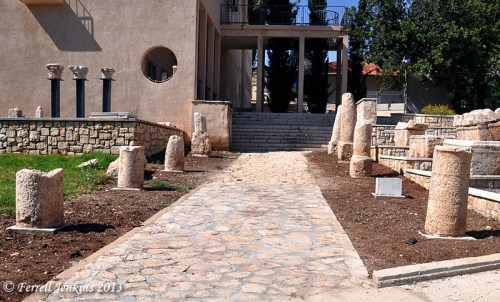
Roman Milestones at Beit Sturman Museum, En Harod, Israel. Photo by Ferrell Jenkins.

A few of the Roman Milestones displayed at the Beit Sturman Museum, En Harod, Israel. Photo by Ferrell Jenkins.

The museum has a display of flora and fauna of the Jezreel Valley, several cases of pottery from sites in the area, and a display of agricultural practices including the first bale of cotton grown in Israel. That brought back a lot of childhood memories of when I picked cotton and went to the gin with my father or grandfather in North Alabama.

Earlier we tried to visit the Spring of Harod, the place where Gideon gathered the 300 men to fight the Midianites (Judges 7:1-8). This site was closed when my group were scheduled to visit a few days ago. We thought, at the time, that there might be some flooding in the area. However, it was still closed today. Dan and I tried to enter through a hotel or guest house, but they refused us entry. When we asked why the park was closed they just said “bureaucracy.” I suggested it might be a form of “sequestration.”

We also visited Tell Shalim, thought to be the site of Salim in the duo Aenon near to Salim, where John the Baptist baptized after Bethany Beyond the Jordan (John 3:23; 1:28). This is a place that would be impossible for a tour bus to go. It is about 8 miles south of Beth-shan, near the Jordan River.

There were a few other stops. We were disappointed when we were unable to get to the Roman Road at Golani Junction. A new road has been built east from the McDonald’s with a metal rail and a ditch that I didn’t think I would want to try to cross. Some individual travelers will be disappointed in this change.

Saturday and Sunday around Jerusalem

We have had two busy days. Yesterday we made arrangements to visit the so-called Solomon’s Pools south of Jerusalem, and a few other places in the Bethlehem area. The last time I was at the site was probably in the 70s. This is the sort of place that it would not be advisable to take a large tour group in a bus. Later I plan to show you some of the photos that I made and explain about the sites.

In the late afternoon we went down into the Shephelah to visit Khirbet Qeiyafa, the fortress overlooking the Elah Valley. I did not see many changes since my last visit in 2012.

This morning we visited the Israel Museum. I was just there last week, but enjoyed the time making some additional photos that I had overlooked before. Dan also visited the Herod the Great exhibit.

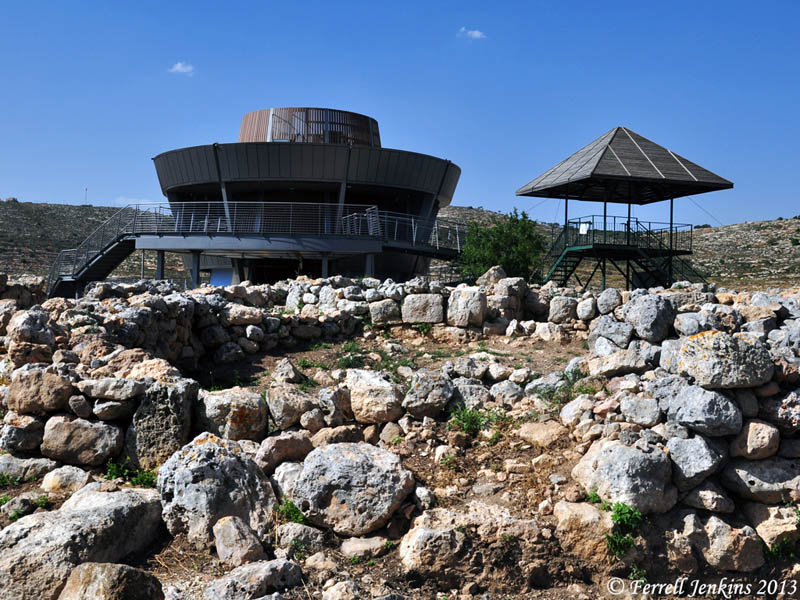
In the afternoon we drove north to Shiloh, the place where the tabernacle rested after the children of Israel entered the promised land (Joshua 18). A new viewing tower has been built, but is not yet ready for visitors. A young lady at the ticket booth/shop said they hope to have it open this month.

The old and new viewing towers at Shiloh. Photo by Ferrell Jenkins.

The old and new viewing towers at Shiloh. Photo by Ferrell Jenkins.

I thought the 27 NIS (about $8) was high for the condition of the site. A few of the older signs are visible, but no new ones. A small brochure was the only help the visitor has. Maybe this will improve with time.

We also visited Taybeh, a possible candidate for the site of Ephraim. This is the place to which Jesus retired prior to his crucifixion (John 11:54).

Jesus therefore no longer walked openly among the Jews, but went from there to the region near the wilderness, to a town called Ephraim, and there he stayed with the disciples. (John 11:54 ESV)

From Taybeh on the edge of the wilderness we continued to the Jordan Valley, then back up to Jerusalem.

The weather. Those who were with me last Sunday in Jerusalem, when it was chilly and rainy, will find it difficult to believe that it was 99 degrees here today with bright sunshine. Last week I had the heat on in the room. Tonight I have on the air.