Category Archives: New Testament

The Citadel of Jerusalem

The Citadel at Jaffa (Joppa) Gate in the west wall of the Old City of Jerusalem provides one of the most distinctive and memorable views of the city.
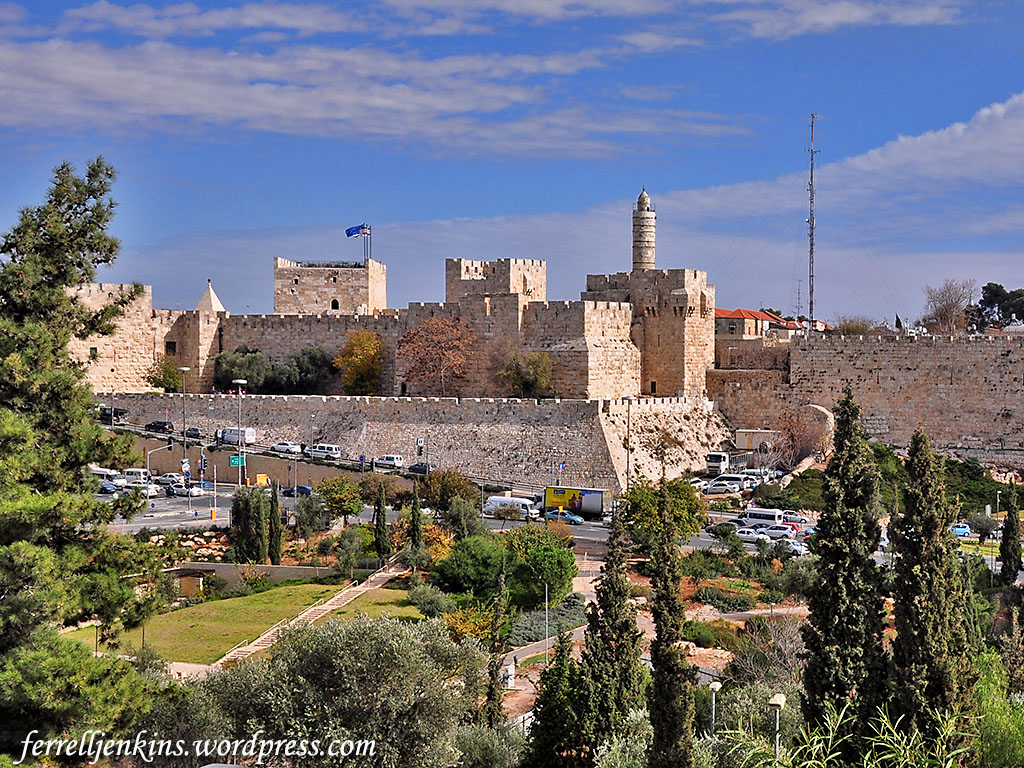
This view of the Citadel was made from the west, looking across the Hinnom Valley. Photo by Ferrell Jenkins.

This view of the Citadel was made from the west, looking across the north-south stretch of the Hinnom Valley. Photo by Ferrell Jenkins.

The distinctive square tower (with the flag) is popularly known as the Tower of David, even though the Citadel never had anything to do with David.

The photo below shows the towers of the citadel as they are reconstructed in the Second Temple Model at the Israel Museum. The informative booklet describing the model identifies the towers as follows:

  • Left: The tower of Phasael, Herod’s brother. This is the tower now known as the Tower of David. It has been dated to the Herodian period, but scholars differ over whether it should be identified with Phasael or Hippicus towers. Herod the Great reigned from 37-4 B.C., but his “period” could be thought of as continuing until the destruction of Jerusalem by the Romans in A.D. 70, and overlapping with the Roman period. The Roman period could be considered from the entrance of Rome into the country to the beginning of the Byzantine period (64 B.C. to A.D. 324).
  • Center: The tower of Hippicus, Herod’s friend.
  • Right: The tower of Mariamne, named for the favorite wife of Herod whom he later murdered.

Josephus describes these towers in The Jewish War V:161-183.
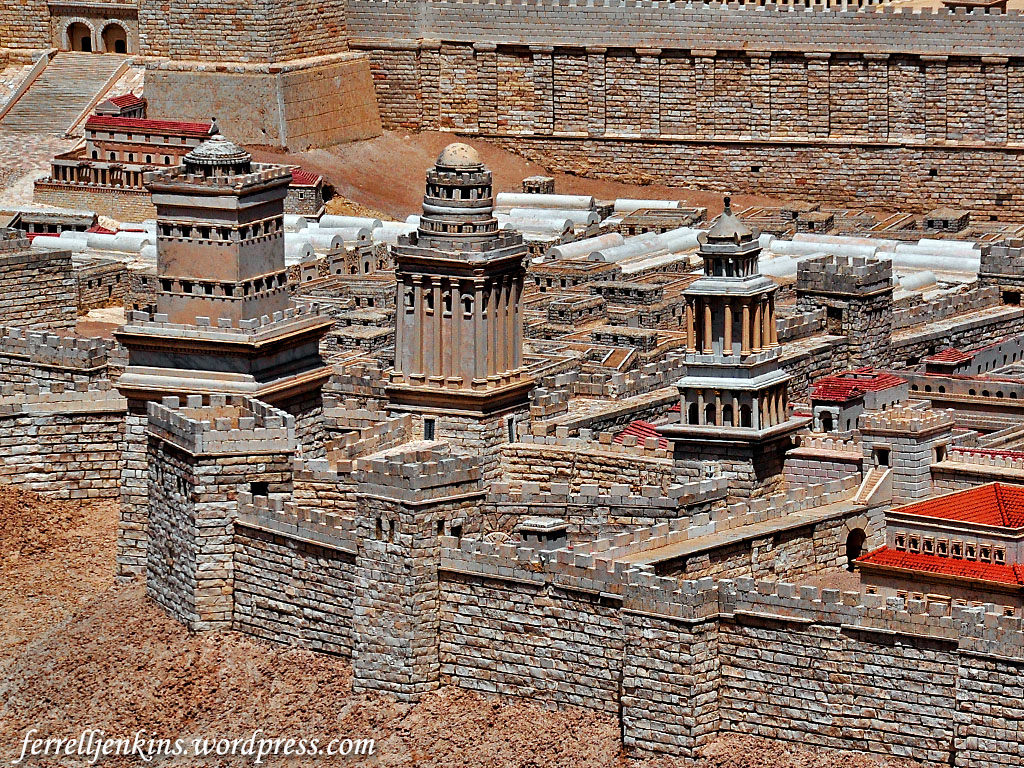
The three towers of the Citadel from the time of Herod the Great. Photo by Ferrell Jenkins.

The three towers of the Citadel from the time of Herod the Great. Photo by Ferrell Jenkins.

Our next photo provides a nice aerial view of the present condition of the Citadel. On the left you see Jaffa Gate, the only entrance to the Old City from the west. Notice the red-roofed building on the extreme right of the photo, with parking further to the right. That is the Kishle, the Old City Police Station. More about that in a future post. The Tower of David Museum is housed in the Citadel. The TOD web site may be accessed here. Click on Citadel for information related to this post.
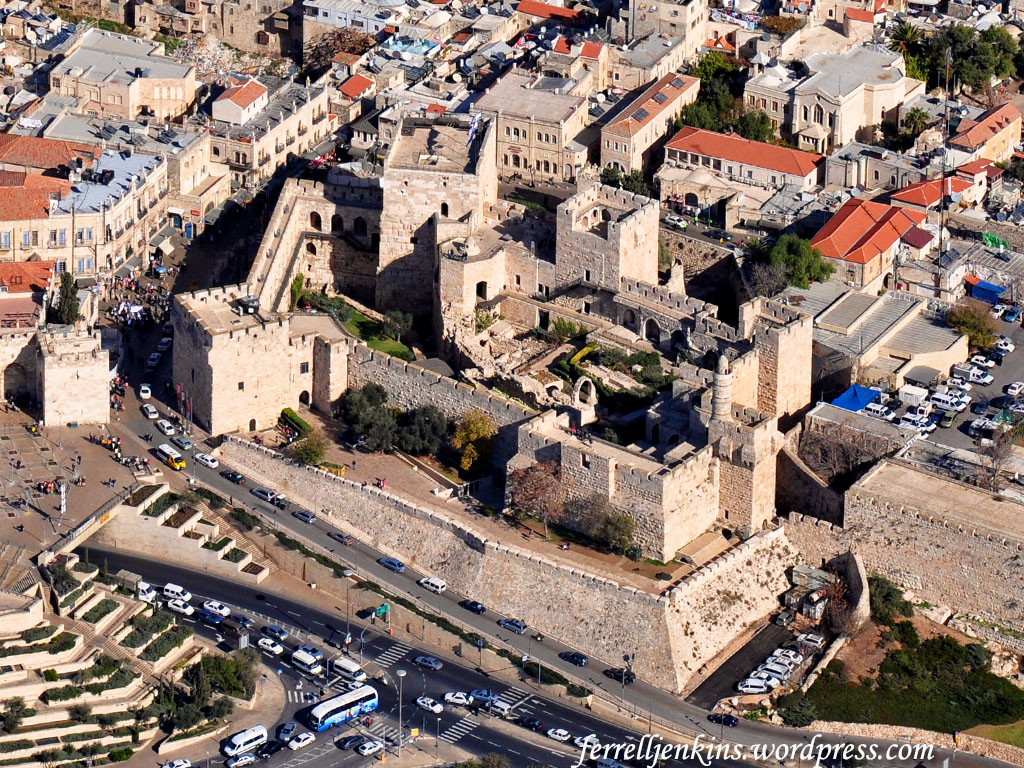
Aerial photo of the Citadel. Photo by Ferrell Jenkins.

Aerial photo of the Citadel. Photo by Ferrell Jenkins.

The Citadel has undergone several archaeological excavations. Here is a brief list as discussed by Renée Sivan and Giora Solar in Ancient Jerusalem Revealed, ed. by Hillel Geva (1994).

  • Extensive survey by Conrad Shick in 1898.
  • The first archaeological excavation was conducted by C. N. Johns, on behalf of the British Mandatory Department of Antiquities, 1934-1947. Jones “exposed the outer north and west faces of the First Wall (8th century B.C.) comprising four phases of construction.” On the eastern, inner side of the wall, he found material from the Roman period.
  • R. Amiran and A. Eitan excavated in the Citadel courtyard in 1968-1969. They uncovered Hasmonean buildings (late 2nd to early 1st century B.C.) “overlaid by a complex of walls which they interpreted as part of the foundations of Herod’s palace.”
  • Hillel Geva excavated the southern part of the Citadel courtyard between 1976-1980.
  • Sivan and Solar excavated several portions of the Citadel.

To summarize, within the Citadel we have ruins which belong to the Iron Age (8th century B.C.), Hasmonean Period (late 2nd to early 1st century B.C.), Herodian Period (late 1st century B.C. to A.D. 70), Roman Period (64 B.C. to A.D. 324), Byzantine Period (4th to 7th centuries A.D.), the Early Arab Period (8th-9th centuries A.D.), the Crusader Period (A.D. 1099-1260), the Mamluk (A.D. 1260-1517) and Ottoman Periods A.D. 1517-1918). See the chapter by Hillel Giva in Jerusalem Revealed (1994) for more details. (Dates are those used by Max Miller, Introducing the Holy Land).

The photo below provides a view of the interior of the Citadel from the Tower of David. Within this area we have ruins from the various archaeological/historical periods mentioned above, covering a period of about 2700 years.
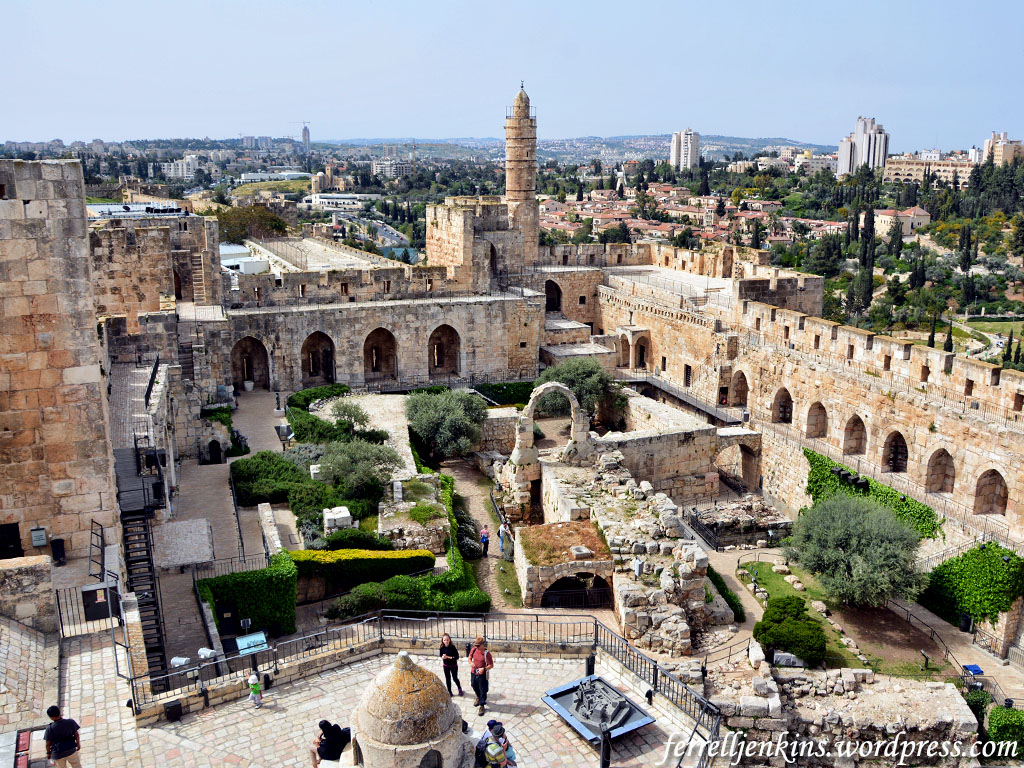
Interior southwest view of the interior of the Citadel from the Tower of David. Photo by Ferrell Jenkins.

Interior southwest view of the interior of the Citadel from the Tower of David. Photo by Ferrell Jenkins.

Before leaving the article by Sivan and Solar, allow me to mention that the Tower of David was exposed to the bedrock during their excavation, “except for its north-western corner which was built on small stones and debris.” The bedrock at this point is 766.65 meters (2515.26 feet) above sea level.

Everyone who reads this blog probably knows that the walls surrounding the Old City of Jerusalem date to the Turkish period, built in the 16th century A.D.

More about the Citadel and a visit to the Kishle in post(s) to come. The photos in this post are sized for use in PowerPoint presentations for the classroom. I hope some of you will find them useful. Publication requires the usual licensing.
Where the Romans breached Jerusalem wall

There is abundant evidence of the presence of the Romans in Jerusalem and the land they would later call Palestine. Now comes specific evidence of the place where Titus’ army breached the Third Wall of the city.

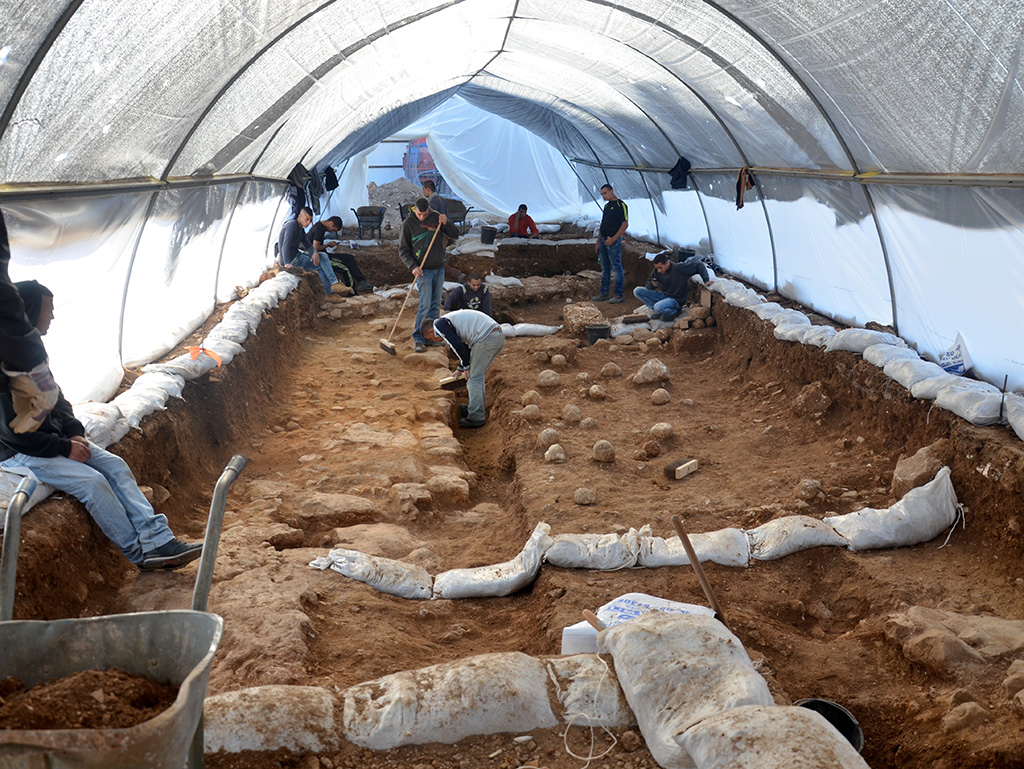
The excavation site in the Russian Compound. One can see the sling stones on the floor, which are tangible evidence of the battle that was waged here 2,000 years ago. Photographic credit: Yoli Shwartz, courtesy of the Israel Antiquities Authority.

The excavation site in the Russian Compound. One can see the wall and sling stones on the floor, which are tangible evidence of the battle that was waged here 2,000 years ago. Photographic credit: Yoli Shwartz, courtesy of the Israel Antiquities Authority.

The Israel Antiquities Authority released this information earlier today.

— “ —

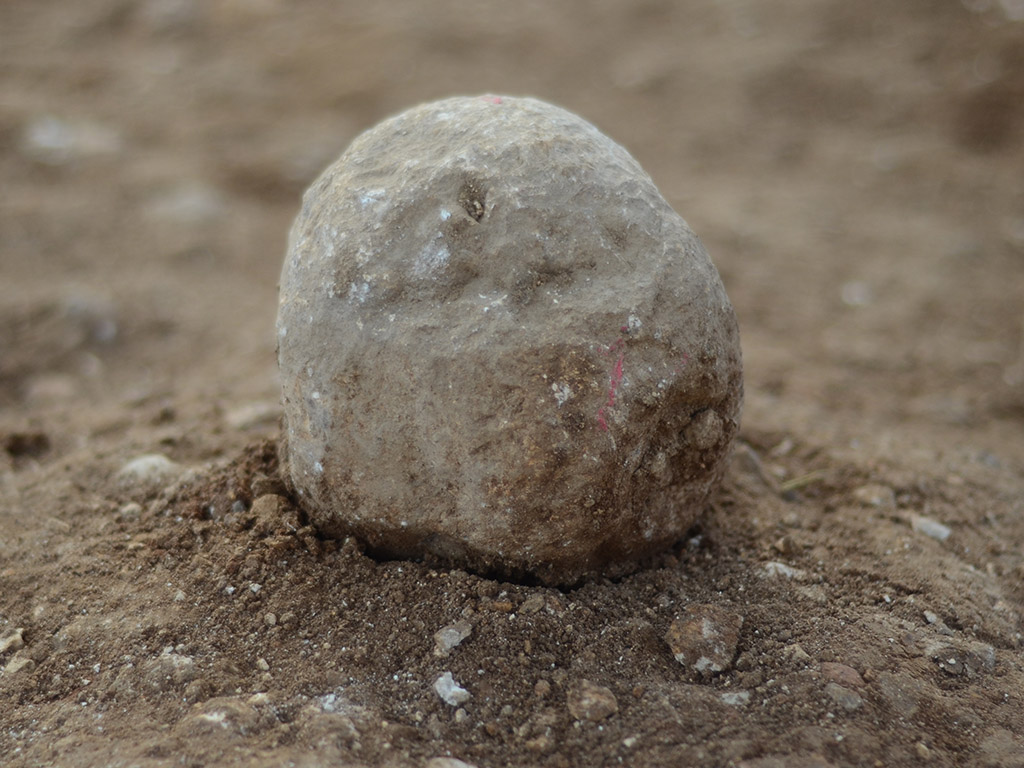
Impressive and fascinating evidence of the battlefield and the breaching of the Third Wall that surrounded Jerusalem at the end of the Second Temple period was uncovered last winter in the Russian Compound in the city center. The finds were discovered in an archaeological excavation the Israel Antiquities Authority conducted in the location where the new campus of the Bezalel Academy of Arts and Design is slated to be constructed.  During the course of the excavation archaeologists discovered the remains of a tower jutting from the city wall. Opposite the tower’s western facade were scores of ballista and sling stones that the Romans had fired from catapults towards the Jewish guards defending the wall, who were stationed at the top of the tower.

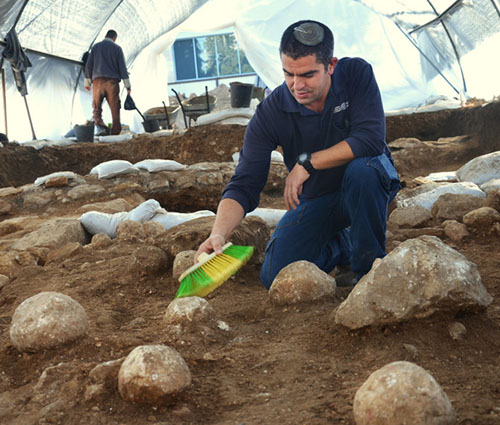
Kfir Arbib, excavation director on behalf of the Israel Antiquities Authority, cleans one of the sling stones. Photographic credit: Yoli Shwartz, courtesy of the Israel Antiquities Authority.

Kfir Arbib, excavation director on behalf of the Israel Antiquities Authority, cleans one of the sling stones. Photographic credit: Yoli Shwartz, courtesy of the Israel Antiquities Authority.

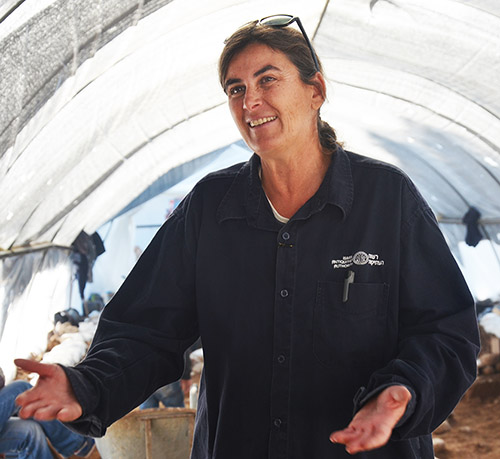
According to Dr. Rina Avner and Kfir Arbib, excavation directors on behalf of the Israel Antiquities Authority, “This is a fascinating testimony of the intensive bombardment by the Roman army, led by Titus, on their way to conquering the city and destroying the Second Temple. The bombardment was intended to attack the sentries guarding the wall and provide cover for the Roman forces so they could approach the wall with battering rams and thereby breach the city’s defenses”. The historian Josephus, an eye witness to the war, provided many details about this wall. According to him, the wall was designed to protect the new quarter of the city that had developed outside its boundaries, north of the two existing city walls. This quarter was named Beit Zeita. The building of the Third Wall was begun by Agrippa I; however, he suspended its construction so as not to incur the wrath of Emperor Claudius and to dispel any doubts regarding his loyalty. The construction of the Third Wall was resumed some two decades later by the defenders of Jerusalem, as part of fortifying the city and the Jewish rebels’ preparations for the Great Revolt against Rome.

. Dr. Rina Avner, excavation director on behalf of the Israel Antiquities Authority. Photographic credit: Yoli Shwartz, courtesy of the Israel Antiquities Authority.

. Dr. Rina Avner, excavation director on behalf of the Israel Antiquities Authority. Photographic credit: Yoli Shwartz, courtesy of the Israel Antiquities Authority.

Josephus described in detail the route of the wall that began at Hippicus Tower, which is now identified with David’s Citadel. From there the wall continued north to the enormous Psephinus Tower, which defended the northwestern corner of the city wall. At that point the wall turned east and descended toward the Tomb of Queen Helena, which is identified with the place known as the Tombs of the Kings. [Jewish Wars 5:147]

The excavation site in the Russian Compound. One can see the sling stones on the floor, which are tangible evidence of the battle that was waged here 2,000 years ago. Photographic credit: Yoli Shwartz, courtesy of the Israel Antiquities Authority.

One of the sling stones on the floor, tangible evidence of the battle that was waged here 2,000 years ago. Photographic credit: Yoli Shwartz, courtesy of the IAA.

An unresolved debate among researchers has been going from the early twentieth century up until the current excavation as to the identity of the Third Wall and the question concerning Jerusalem’s boundaries on the eve of the Roman onslaught led by Titus. It seems that the new discovery in the Russian Compound is proof of the wall’s existence in this area.

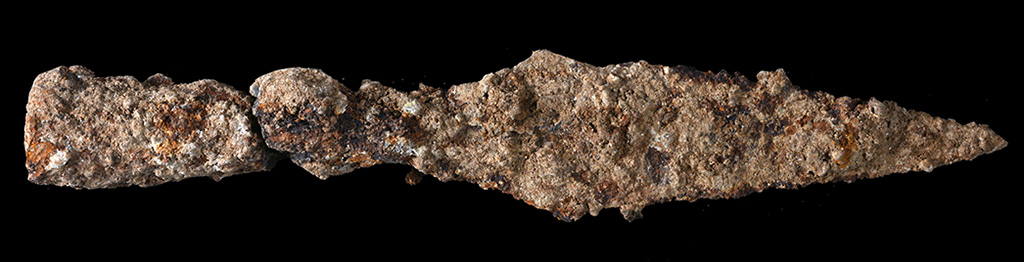
. A spearhead from the battle against Titus’ army. Photographic credit: Clara Amit, courtesy of the Israel Antiquities Authority.

. A spearhead from the battle against Titus’ army. Photographic credit: Clara Amit, courtesy of the Israel Antiquities Authority.

— ” —

Christians see the A.D. 70 destruction of Jerusalem as a fulfillment of the prophecy of Jesus.

“But when you see Jerusalem surrounded by armies, then know that its desolation has come near.” (Luke 21:20 ESV; see also Matthew 24 and Mark 13)

Some of the photos can be enlarged by clicking on the image.

HT: Joseph Lauer, several Israeli newspapers.

What is that building?

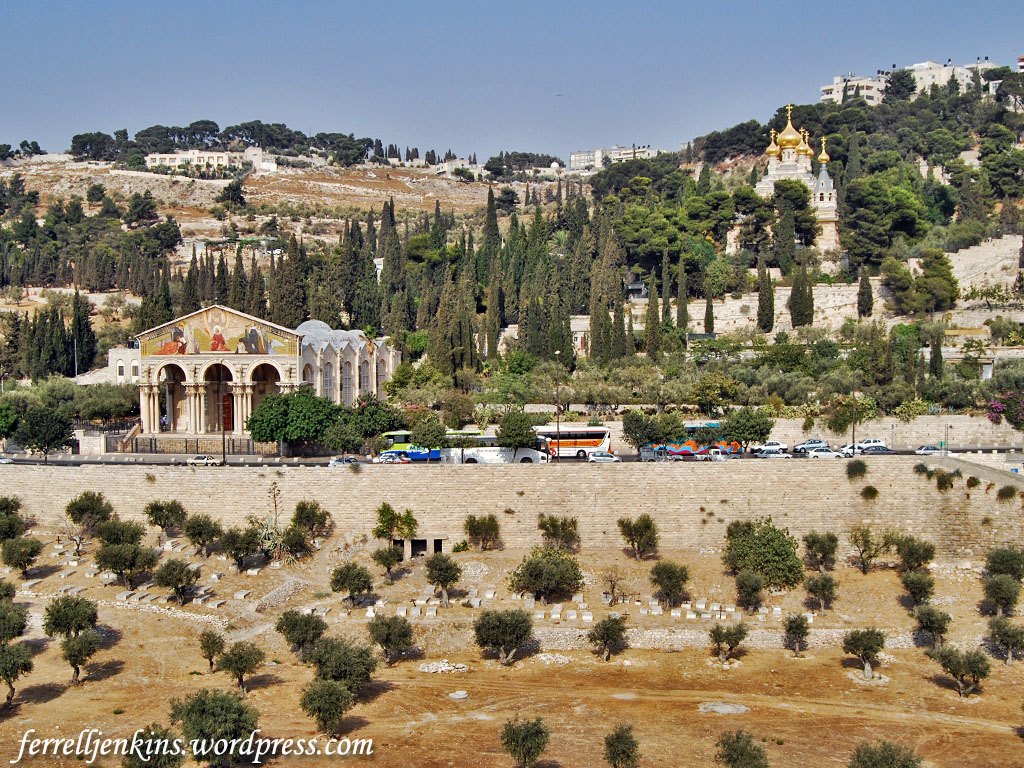
Frequently over the years I have had tour members ask me, “What is that building?” as they pointed to the building with golden onion tops. The simple answer is that this is the Russian Garden of Gethsemane. More specifically, the building is known as the Church of St. Mary Magdalene.

The Church of All Nations (left) and the Church of St. Mary Magdalene on the Mount of Olives. Photo by Ferrell Jenkins.

The Church of All Nations (left) and the Church of St. Mary Magdalene on the Mount of Olives. Photo by Ferrell Jenkins.

Many will recognize the Church of All Nations and its’ Garden of Gethsemane. Murphy-O’Connor says,

No one can be sure of the exact spot at which he prayed, but this limited area was certainly close to the natural route leading from the Temple to the summit of the Mount of Olives and the ridge leading to Bethany. (The Holy Land, 5th ed., p. 147).

The New Testament account explains that the disciples of Jesus went with him to the Mount of Olives (Matthew 26:30), to a placed called Gethsemane.

Then Jesus went with them to a place called Gethsemane, and he said to his disciples, “Sit here, while I go over there and pray.” (Matthew 26:36 ESV)

The Church of St. Mary Magdalene has received quite a bit of attention in the Israeli newspapers because Prince Charles, Prince of Wales, went there after attending the funeral of former Israeli President Shimon Peres. The paternal grandmother of Prince Charles, Princess Alice of Battenberg, died in 1969 but was transferred to the Mount of Olives according to her request in 1988. The Times of Israel explains,

Alice of Battenberg was recognized by Israel’s Yad Vashem Holocaust Memorial as a “Righteous Among the Nations” and by the British government as a “Hero of the Holocaust.”

Prince Phillip is said to have visited the Church in 1994.

The web site of the Russian Ecclesiastical Mission in Jerusalem says,

Princess Andrew of Greece (Princess Alice of Battenberg), mother of the Duke of Edinburgh visited the church and stayed in the monastery in the 1930s. Her wish was to be buried near her Aunt ‘Ella’, the Grand-Duchess Elizabeth whose devotion to the church and to nursing and charitable service she strove to emulate. Princess Andrew died at Buckingham Palace in 1969. Her wish to be buried at the Convent of Saint Mary Magdalene in Gethsemane was finally realized in 1988 when her remains were transferred to her final resting place in a crypt below the church.

The church stands in the Garden of Gethsemane, the place where Jesus spent His last night on earth. Also found on the convent grounds are the remnants of a pre-Roman road, the biblical entry to Jerusalem. Not far from this road is a large stone on to which the Mother of God dropped her cincture to Apostle Thomas on the third day following her Dormition.

A different sunrise on the Sea of Galilee

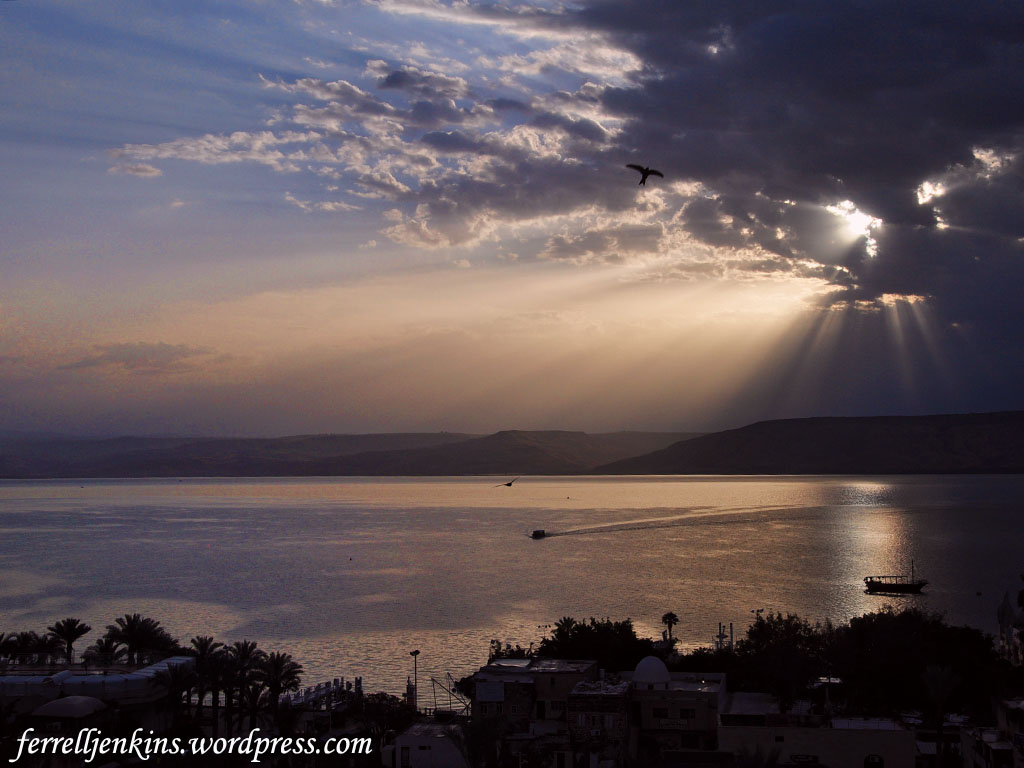
In looking through some photos from 2011, I noticed that the photos I made one morning were different from most sunrise photos I have taken. I thought some readers might enjoy seeing this. Click on the image for a larger photo.

Sunrise on the Sea of Galilee in 2011. Photo by Ferrell Jenkins.

Sunrise on the Sea of Galilee in 2011. Photo by Ferrell Jenkins.

We know that Jesus utilized the evening cool and the early morning in His ministry.

32 That evening at sundown they brought to him all who were sick or oppressed by demons.
33 And the whole city was gathered together at the door.
34 And he healed many who were sick with various diseases, and cast out many demons. And he would not permit the demons to speak, because they knew him.
35 And rising very early in the morning, while it was still dark, he departed and went out to a desolate place, and there he prayed.  (Mark 1:32-35 ESV)

Visiting Iznik (Nicea, Nicaea), Turkey – Part 8

In the vicinity of Iznik

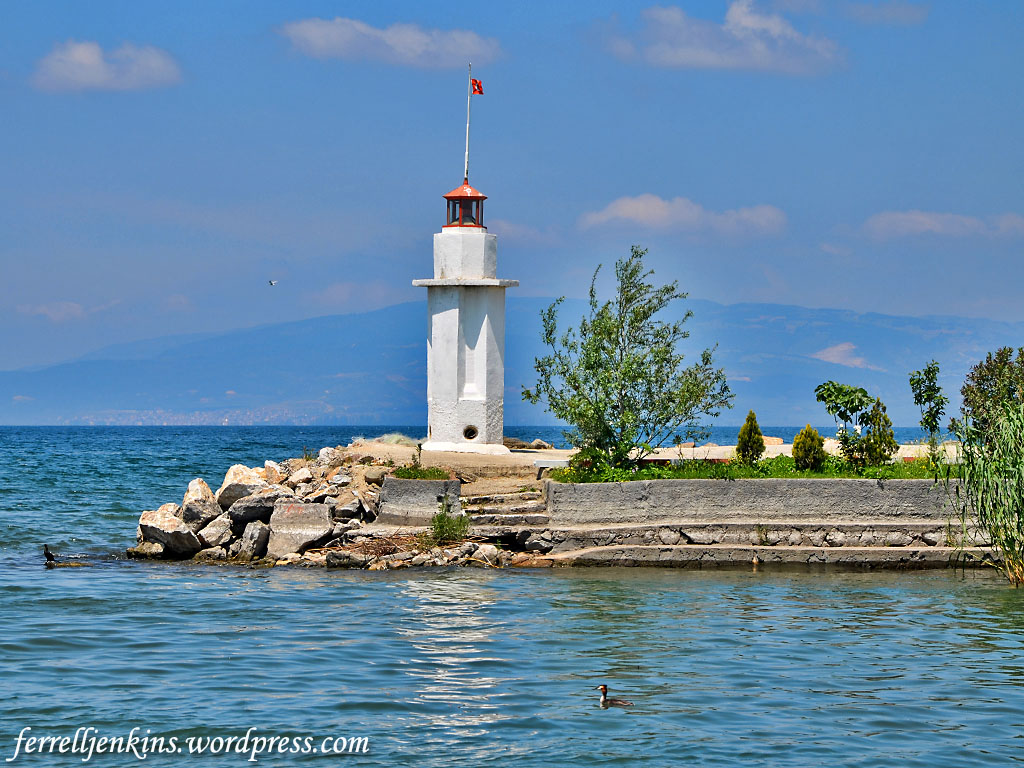
In an earlier article we posted photos of Lake Ascania (Iznik Gölü) at the place where the first Ecumenical Council met. Nearby there is a beautiful view of a small lighthouse with the mountains of Bithynia in the distance.

Lighthouse in Lake Ascania at Iznik. Photo by Ferrell Jenkins.

Lighthouse in Lake Ascania at Iznik. Photo by Ferrell Jenkins.

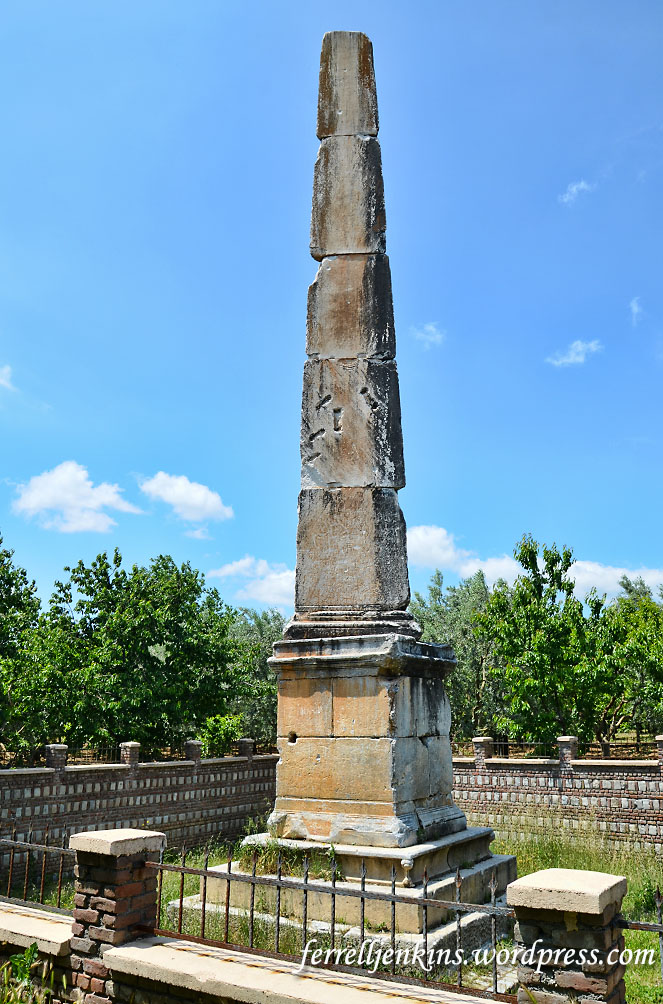
About 3 miles north of Iznik where the Roman road to Nicomedia once ran, in an orchard of olive and fruit trees, there is a stone obelisk from the early second century A.D. The Iznik promotional brochure says,

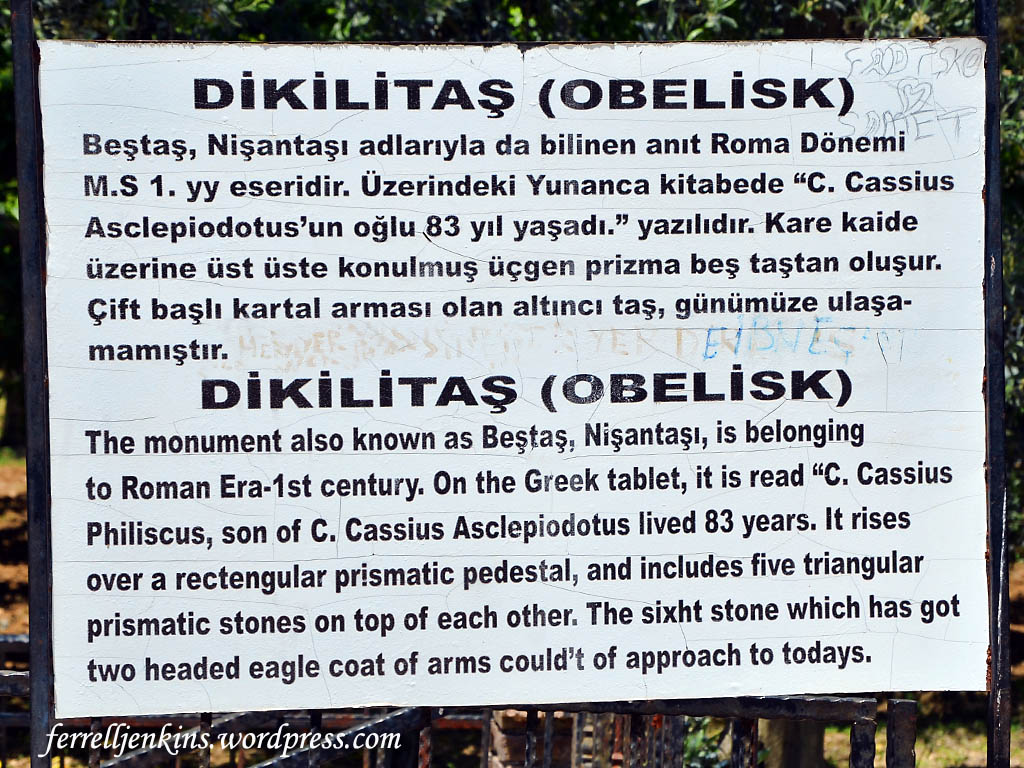
Its inscription in Greek reveals that the obelisk was built by C. Cassius Philiscus in the 1st century. It rises over a rectangular prismatic pedestal, and includes five triangular prismatic stones one over the other.

The inscription on the first of the triangular prismatic stones is in poor condition. The second stone indicates that something was once attached to the obelisk. Some suggest that it was a life-size human figure. Wilson says the obelisk is 39 feet tall.

The stone obelisk on the road from Nicea to Nicomedia. Photo by Ferrell Jenkins.

The stone obelisk on the road from Nicea to Nicomedia. Photo by Ferrell Jenkins.

A sign at the site describes the monument in Turkish and English. I think you may agree with me that the last English sentence doesn’t make much sense.

The sign identifying the obelisk from the Roman period. Photo by Ferrell Jenkins.

The sign identifying the obelisk from the Roman period. Photo by Ferrell Jenkins.

Before closing this series I think a few words on the historical background of Iznik/Nicea are appropriate. We have frequently recommended Biblical Turkey by Mark Wilson as an excellent source for those who travel to Turkey. The following points are summarized from the second edition (pp. 371-2).

  • Antigonus founded the Hellenistic city of Antigonia here in 316 B.C.
  • Lysimachus captured the city in 301 B.C. and re-founded it, naming it after his first wife Nicea.
  • During the Roman period the city vied with Nicomedia for the distinction of being the principal city of Bithynia.
  • Augustus authorized a sanctuary of Roma and the deified Julius Caesar to be built at Nicea.

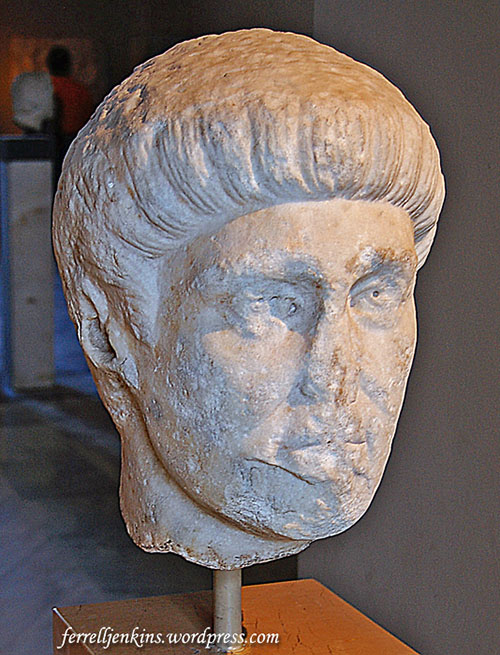
The bust of Lysimachus was photographed in the Ephesus Museum at Selçuk, Turkey, in 2008.

Bust of Lysimachus in the Selçuk,Turkey. Photo by Ferrell Jenkins.

Bust of Lysimachus displayed in Ephesus Museum, Selcuk, Turkey.

Wilson is emphatic that Nicea would have been on the route of the messenger carrying the epistle of 1 Peter.

This is the final article in the series on Iznik/Nicea. Hopefully there will be some who will find it useful in the months to come. I think all of the photos are large enough for use in PowerPoint class presentations.

Visiting Iznik (Nicea, Nicaea), Turkey – Part 7

The modern city of Iznik

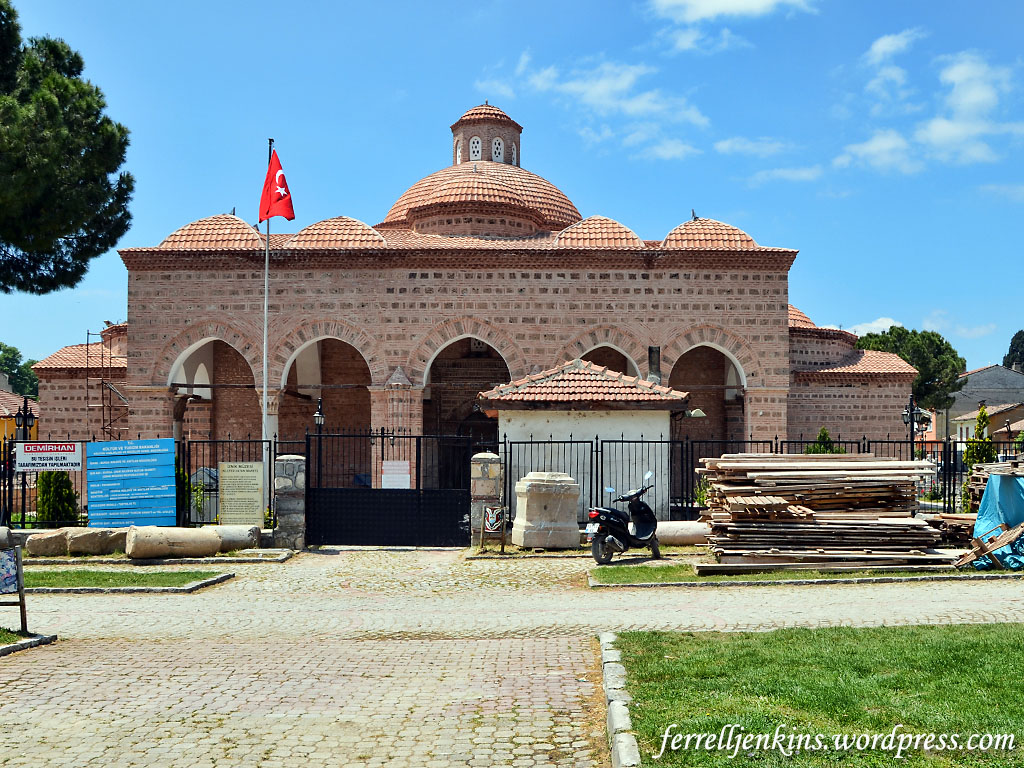
The museum of Iznik is noted for its collection of Blue Tiles for which the city is famous. In 2014 I found many of the museums in Turkey, or certain exhibits, closed for remodeling. Even with a polite request we were not allowed to visit the various monuments displayed in the yard of the museum.

The museum of Iznik was closed for remodeling in 2014. Photo by Ferrell Jenkins.

The museum of Iznik was closed for remodeling in 2014. Photo by Ferrell Jenkins.

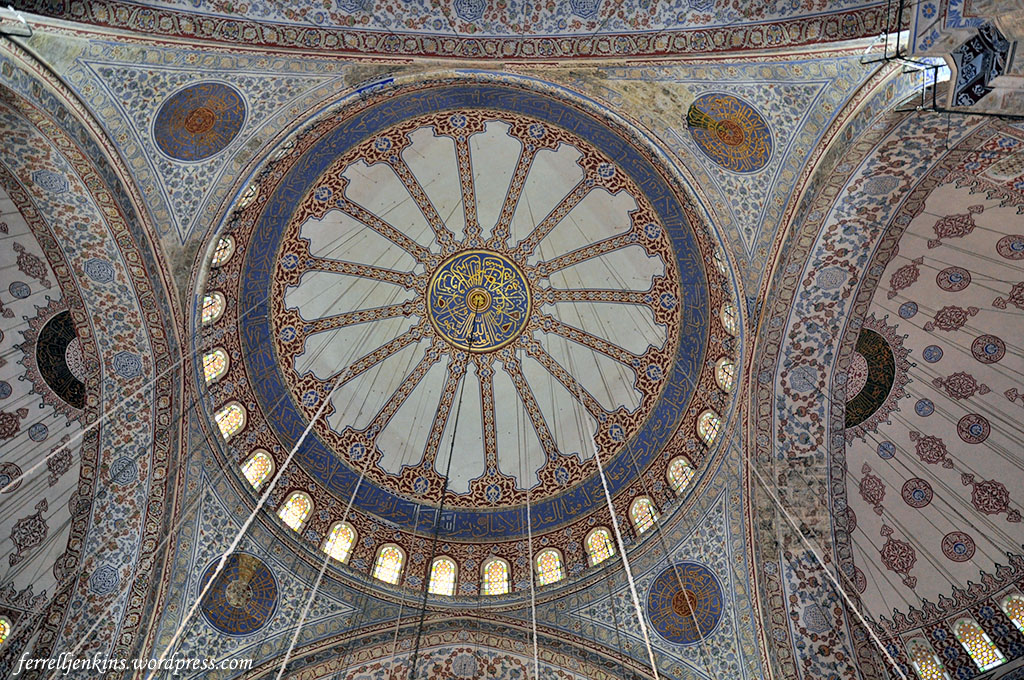
Missing the tile work for which the city is famous was not a great loss. Tile work from Iznik may be seen in the ceiling of the Blue Mosque, in the Topkapi Palace, and other buildings in Istanbul.

In the ceiling of the Blue Mosque is a good example of the tile of Iznik. Photo by Ferrell Jenkins.

The ceiling of the Blue Mosque is a good example of the Iznik tile. Photo by F. Jenkins.

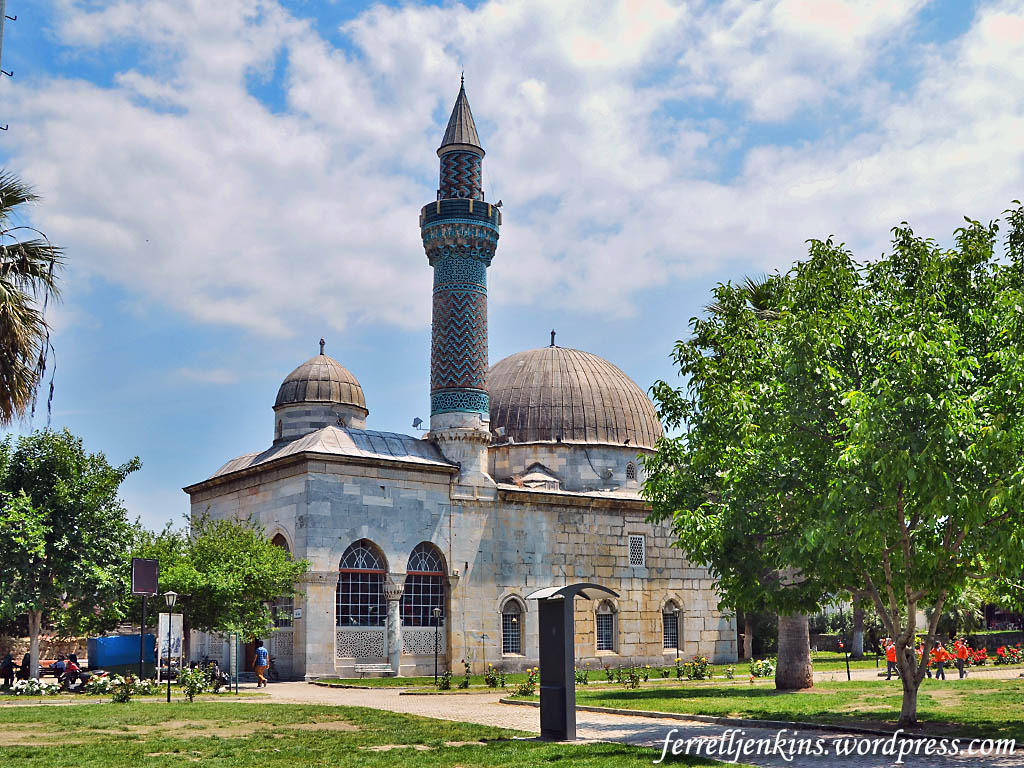
One expects to see mosques in any Turkish city. I am including this photo of the Yeşil (Green) Mosque. The promotional tourism information includes this information about the mosque.

Recognised as the symbol of İznik, the Yeşil Mosque takes its name from the turquoise coloured İznik tiles and bricks of its minaret which are a fine reflection
of Seljuk minaret style in Ottoman art. Built by the architect Hacı Musa between 1378 and 1392 upon the request of Halil Hayrettin Pasha, this mosque is
undoubtedly the most magnificent of the single domed mosques of the Ottoman Period. Its unique minaret is on the right corner of the mosque. While its niche displays rich stone work, its body is covered with blue and green coloured tiles in zigzag mosaic style.

The Green Mosque in Iznik. Photo by Ferrell Jenkins.

The Green Mosque in Iznik. Photo by Ferrell Jenkins.

The Biblical Connection

The events we have described in this series on Iznik/Nicea are post apostolic, but the general area does have two connections to the New Testament.

  • On the outbound portion of Paul’s third journey he attempted to go into Bithynia, but was not permitted to do so.

And when they had come up to Mysia, they attempted to go into Bithynia, but the Spirit of Jesus did not allow them. (Acts 16:7 ESV)

  • We have already pointed out that the epistles of Peter were written to saints in various Roman provinces including Bithynia.

Peter, an apostle of Jesus Christ, To those who are elect exiles of the Dispersion in Pontus, Galatia, Cappadocia, Asia, and Bithynia, (1 Peter 1:1 ESV)

I plan to show you one more famous landmark on the outskirts of Iznik as the eighth in this series.

Visiting Iznik (Nicea, Nicaea), Turkey – Part 3

The First Ecumenical Council

If the New Testament is the complete and final revelation of God’s will to man, as it claims (2 Timothy 3:16-17), then no council of men, of whatever rank, has the right to change the apostolic order.

But as the churches grew and became popular, they began to imitate the government in leadership and they became more important to the leaders of the Roman Empire. When a controversy concerning the nature of Christ threatened to divide the Christians, the Emperor Constantine the Great (A.D. 307-337) called a council to meet at Nicea (or Nicaea, modern Iznik in Turkey) to discuss the issues.

Arian (c. A.D. 250-336), a presbyter of the church in Alexandria, Egypt, taught that Jesus was a created being inferior to God the Father. We speak of those who followed his teaching as Arians. It was this teaching that prompted the convening of the Council of Nicea in A.D. 325. Most works on church history covering this period will have a section devoted to Arian and the Council of Nicea.

Certain Latin terms entered the language of Christendom at that time.

  1. Homoousios – meaning that Jesus was of the same essence as God. This was the position taken by those gathered at the Council of Nicea.
  2. Homoiousios – meaning that Jesus was of like essence as God.
  3. Heteroousios – meaning that Jesus was of a different essence or substance than God. This view which relegated Jesus to a secondary god beneath the Father was the view of Arian and his followers.

There had been other councils, but this was the first that was to represent all of Christendom. In this sense the gathering failed. Of the 200 to nearly 400 church leaders (the numbers vary depending on the source) gathered at Nicea only a handful of them were from the West (the Latin or Roman church). The vast majority were from the East (the Greek church).

Constantine…

supplied postal wagons to transport bishops to Nicaea, as well as food and lodging during their trips. While they were in the city he took care of their needs and provided a large building for their sessions. (Cambridge History of Christianity, II:73.)

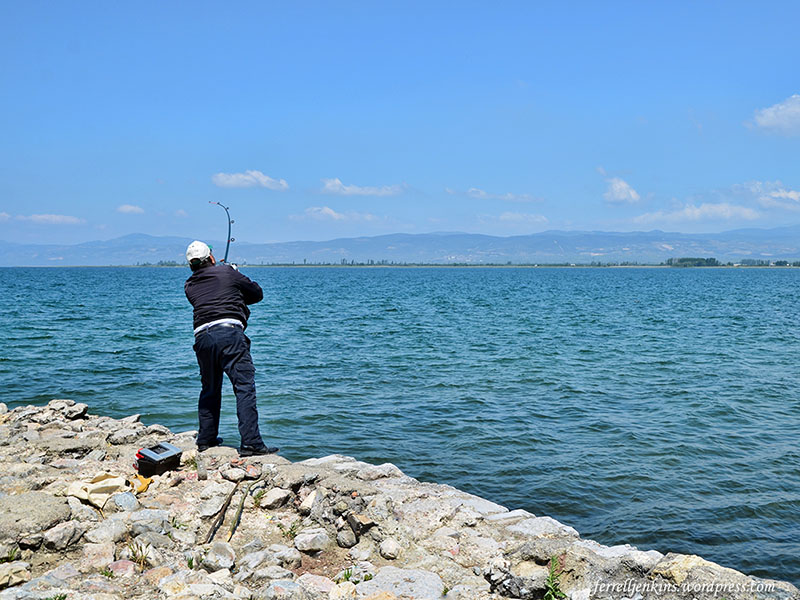
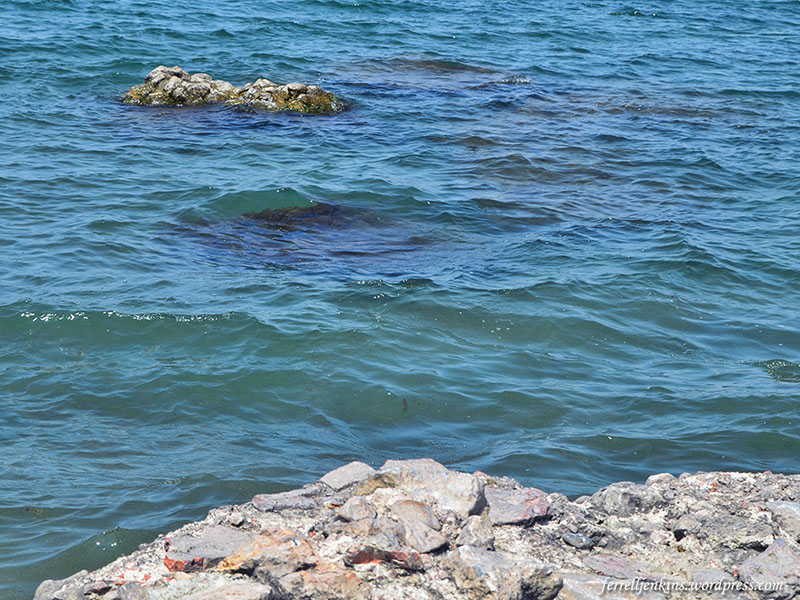
The imperial palace, located on the shore of Lake Ascania (Iznik), now lies nearly ten feet below water due to earthquakes (“Underwater basilica in Iznik to shed light on Roman era.” Hurriyet Daily News, July 25, 2016). Our guide took us to the location outside the Lake Gate where a few ruins could be seen. Ben Witherington says,

Unfortunately for this city, earthquakes struck in A.D. 358, 362, and 368, ruining many of the monumental buildings and structures (http://benwitherington.blogspot.com/2008/06/historic-nicea-iznik.html).

A fisherman stands on some of the ruins of the ancient imperial palace. Photo by Ferrell Jenkins.

A fisherman stands on some of the ruins of the ancient imperial palace. Photo by Ferrell Jenkins.

Notice a few stones above the current water level and the dark shadow of some ruins below the surface in the next photo.

A few ruins of the palace where the first council met can be seen underneath the water. Photo by Ferrell Jenkins.

A few ruins of the palace where the first council met can be seen underneath the water. At least one portion of stone emerges from the water. Photo by Ferrell Jenkins.

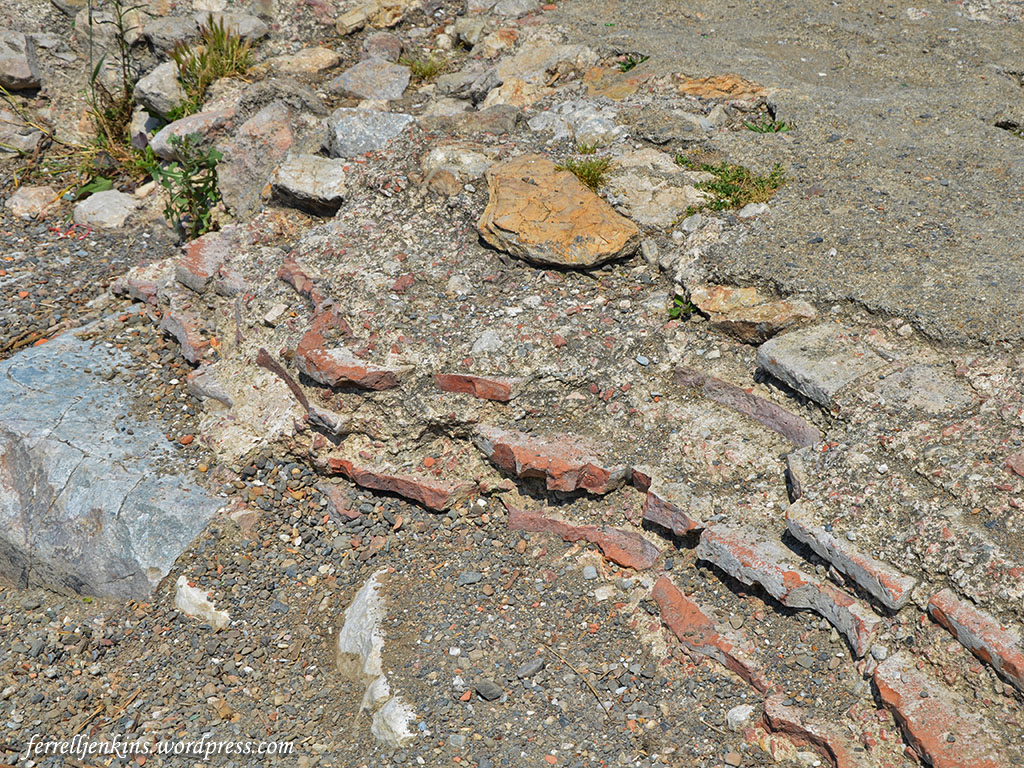
In our last photo you will see some of the red tile (or brick) typical of the late Roman/early Byzantine period, as well as part of a marble column.

Late Roman and early Byzantine material. Photo by Ferrell Jenkins.

Late Roman and early Byzantine material. Photo by Ferrell Jenkins.

In case you have read or heard that the Council of Nicea is responsible for the content of the canon of the New Testament I suggest you read Justin L. Petersen’s 2011 article (Petersen, Justin L. “Making (up) History: Fact, Fiction, and the First Council of Nicaea.” Ed. Wayne A. Detzler. Christian Apologetics Journal 9.1 (2011): 67-77).

Visiting Iznik (Nicea, Nicaea), Turkey – Part 2

Read Part I here.

The Testimony of History Regarding
Church Government

Churches and religious doctrines were not always what they are today. In fact, in New Testament times (during the first century A.D.) there were no major branches of Christendom, no denominations. There was no church organization larger than a single local church overseen by a plurality of bishops (overseers), elders, or shepherds. These terms were used interchangeably. Today, however, one encounters hundreds of denominational groups, and universal organizations. What has happened since the first century to bring about this change? It did not happen suddenly, but was a gradual process over the centuries.

The Apostles of Christ warned in their sermons and letters of departures or apostasy from apostolic teaching and practice. See Acts 20:29-30, 2 Thessalonians 2:3, and 1 Timothy 4:1 as examples. Notice Paul’s warning to the elders of the church at Ephesus barely a quarter of a century after the establishment of the church in Jerusalem in A.D. 30.

I know that after my departure fierce wolves will come in among you, not sparing the flock;  and from among your own selves will arise men speaking twisted things, to draw away the disciples after them.  (Acts 20:29-30 ESV)

Emperor Constantine the Great (A.D. 507-337). Statue in Istanbul Archaeological Museum. Photo by Ferrell Jenkins.

Emperor Constantine the Great (A.D. 307-337). Statue in Istanbul Archaeological Museum. Photo by Ferrell Jenkins.

Historian Philip Schaff wrote about the changes in church government which were evident by the second century:

“We cannot therefore assume any strict uniformity. But the whole church spirit of the age tended towards centralization; it everywhere felt a demand for compact, solid unity; and this inward bent, amidst the surrounding dangers of persecution and heresy, carried the church irresistibly towards the episcopate…. Such a unity was offered in the bishop, who held a monarchical, or more properly a patriarchal relation to the congregation…. And in proportion as every church pressed towards a single centre, this central personage must acquire a peculiar importance and subordinate the other presbyters to itself…” (History of the Christian Church, II:142-143).

“Among the city bishops the metropolitans rose above the rest, that is, the bishops of the capital cities of the provinces” (Schaff, II:153).

Immediately after the discussion of the monarchal episcopate, Schaff discussed “Germs of the Papacy.” In A.D. 588, John the Faster, patriarch of Constantinople [later known as Istanbul], assumed the title of “universal bishop.” The emperor, in A.D. 606, took the title from John and conferred it upon Boniface III, bishop of Rome. This was the first pope, almost 600 years after the establishment of the New Testament church.

F. F. Bruce says,

“There was in apostolic times no distinction between elders (presbyters) and bishops such as we find from the second century onwards: the leaders of the Ephesian church are indiscriminately described as elders, bishops (i.e. superintendents) and shepherds (or pastors)” (Bruce, The Book of Acts, 415).

By the fourth century enough changes had taken place that the Roman emperor Constantine called together the bishops of the churches, mostly from the eastern part of his empire, to discuss various issues that were dividing the churches.

The Arch of Constantine with the Colosseum in the background. Photo by Ferrell Jenkins.

The Arch of Constantine with the Colosseum in the background. Photo by Ferrell Jenkins.

This is where Iznik (ancient Nicaea or Nicea) enters the picture. In A.D. 325 the first of seven Ecumenical councils was held here. After five more councils in Constantinople, Ephesus, and Chalcedon, the seventh of these councils was held again in Nicea.

In the next post we will begin our visit of Nicea.

Visiting Iznik (Nicea, Nicaea), Turkey – Part 1

This is the first in a series of posts about Nicea, the site of the first and seventh ecumenical councils.

My travels in Turkey – A brief survey

A couple of years ago I wrote a little piece here about why a Bible student should want to visit Turkey. In a category entitled Post New Testament church history I said,

The Ecumenical Councils met in the place we now call Turkey in the following cities: Nicaea, Constantinople, Ephesus, Chalcedon.

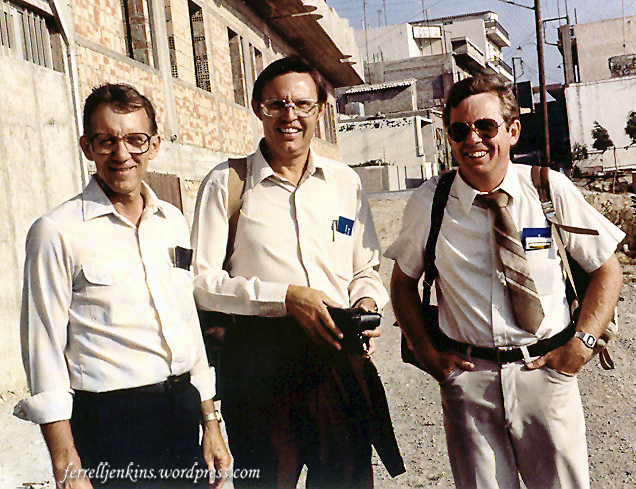
My first trip to Turkey was in 1968 when I visited the area of the seven churches of the book of Revelation and the city of Istanbul. It was not until 1984 that I went back to the area with Melvin Curry and Phil Roberts, a couple of teaching colleagues, for a more detailed study. We also visited several of the Greek islands mentioned in the Bible. Then in 1985 I put together a tour I called, from that time forward, Steps of Paul and John. This tour included biblical sites in Greece and Turkey. At the end of that tour Raymond Harris, a fellow preacher, and I visited all of the sites associated with Paul’s first journey with the exception of Cyprus – a place I had already visited.

Melvin Curry, Ferrell Jenkins, Phil Roberts in Heraklion, Crete.

In Heraklion, Crete, we stayed with a former student and her family during the 1984 trip. My recollection is that she made this photo as we left for the airport to go to Athens. Left to right: Melvin Curry, Ferrell Jenkins, Phil Roberts.

In 1987 I conducted my first Ancient Crossroads tour to include the Hittite territory of Anatolia, Cappadocia, and the sites associated with Paul’s first journey. In 1995 the Steps of Paul and John tour included a cruise of the Greek islands. This cruise, touching at places like Patmos, Rhodes, and Crete, would be repeated several times over the years.

I had been able to visit most New Testament sites in Turkey, but certain Old Testament sites had eluded me because they were far away in eastern Turkey near the borders of Syria, Iraq, Iran and the Soviet Union (now Armenia). In 1995 I was joined by Curtis Pope with whom I taught, and his brother Kyle, for a visit in eastern Turkey. We picked up a car in Adana, visited sites associated with Abraham and the Patriarchs, and went through the region of Urartu as far as the traditional Mount Ararat.

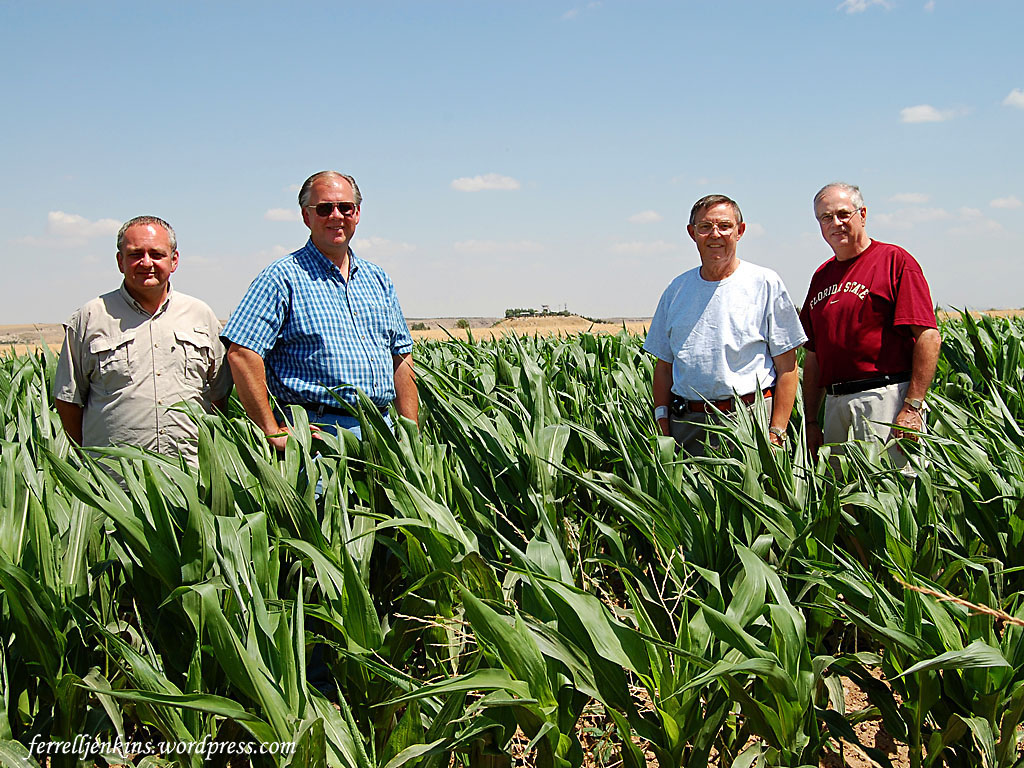
That is an excursion I would repeat in more detail in 2007 with Leon Mauldin, David Padfield, and Gene Taylor. Leon and I went back to the region of Paddan-Aram in 2014. In 2007, we had visited the Black Sea region of Turkey to explore the cities that might have been visited by the messenger who delivered the Epistles of Peter. See this Index of Articles dealing with this subject. This included the Roman provinces of Pontus and Bithynia.

Eastern Turkey tour by Padfield, Mauldin, Jenkins, and Taylor (left to right). Carchemish in the background.

Eastern Turkey tour by Padfield, Mauldin, Jenkins, and Taylor (left to right). Carchemish is in the background center. We joked that we were out, standing in our field.

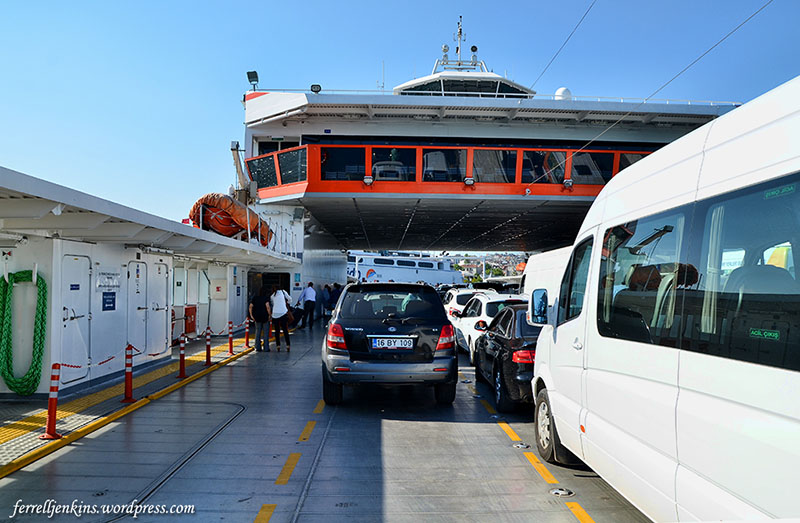
Now it was time to visit the site of two of the Ecumenical Councils in Bithynia. Leon and I arranged to do this in 2014. From Istanbul it is possible to rent a car and travel to Iznik (Nicaea, Nicea) across one of the bridges connecting Europe with Asia. That would take a lot of time. We decided to hire a guide/driver to pick us up at our hotel in Istanbul in Europe, take a ferry across the Sea of Mamara to the Asian side into ancient Bithynia, and visit Iznik in one day. This excursion would cost us almost $900.

The return ferry from Nicea to Istanbul. Photo by Ferrell Jenkins.

The return ferry from Nicea to Istanbul. Photo by Ferrell Jenkins.

Here is where I hope to pick up in the next article and begin to tell you about the visit to Iznik. There will probably be about seven articles in the series, with lots of photos. I trust you will find them interesting and profitable.

Consider the lilies of the field

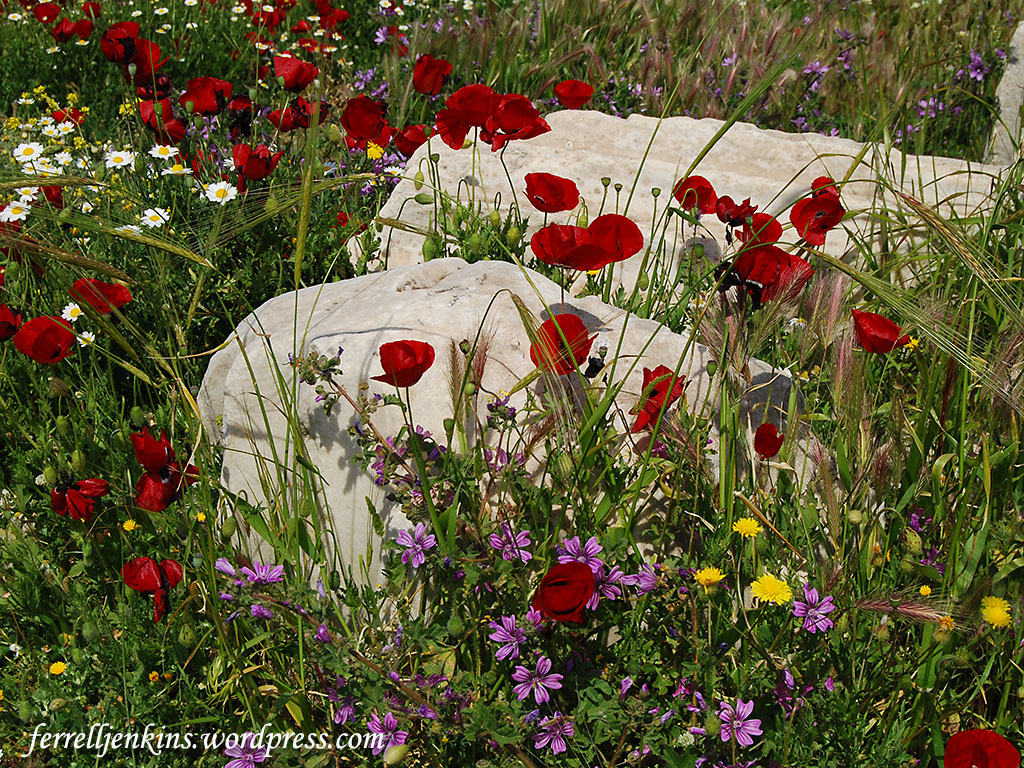
The wild flowers covered the acropolis of ancient Pergamum like a carpet the day we were there in 2008. Pergamum is mentioned only in Revelation 1:11 and 2:12.

Wild flowers growing at ancient Pergamum. Photo by Ferrell Jenkins.

Wild flowers growing at ancient Pergamum. Photo by Ferrell Jenkins.

Jesus said,

 28 And why are you anxious about clothing? Consider the lilies of the field, how they grow: they neither toil nor spin,
29 yet I tell you, even Solomon in all his glory was not arrayed like one of these.
30 But if God so clothes the grass of the field, which today is alive and tomorrow is thrown into the oven, will he not much more clothe you, O you of little faith?
31 Therefore do not be anxious, saying, ‘What shall we eat?’ or ‘What shall we drink?’ or ‘What shall we wear?’
32 For the Gentiles seek after all these things, and your heavenly Father knows that you need them all.
33 But seek first the kingdom of God and his righteousness, and all these things will be added to you.
34 “Therefore do not be anxious about tomorrow, for tomorrow will be anxious for itself. Sufficient for the day is its own trouble. (Matthew 6:28-34 ESV)