Category Archives: Israel

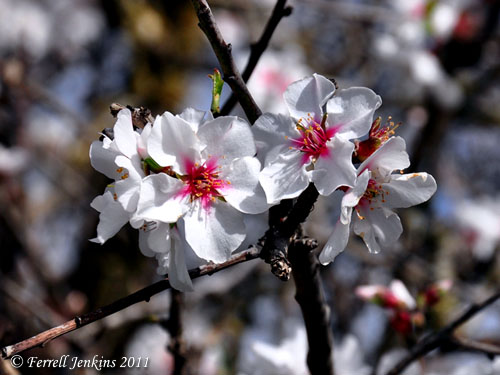
Almond trees in blossom

Friday evening we stayed in Beersheba. Friday night and Saturday (the Jewish Sabbath) is a time when many Jewish families stay in a hotel. I think we were the only Goyim (non-Jews) in the hotel. Beersheba does not attract many tour groups for overnight stays.

We made a side trip into the Shephelah with brief stops here and there. Near the Valley of Elah, on the east side of Azekah we saw a few almond trees in full blossom.

Almond tree in bloom near Azekah. Photo by Ferrell Jenkins.

Almond tree in bloom near Azekah. Photo by Ferrell Jenkins.

Jacob ordered his sons to take some of the best products of the land of Canaan, including almonds, to the man in Egypt (Joseph).

Then their father Israel said to them, “If it must be so, then do this: take some of the best products of the land in your bags, and carry down to the man as a present, a little balm and a little honey, aromatic gum and myrrh, pistachio nuts and almonds. (Genesis 43:11 NAU)

The blooms of the almond are beautiful.

Almond blossoms near Azekah. Photo by Ferrell Jenkins.

Almond blossoms near Azekah. Photo by Ferrell Jenkins.

The lampstand for the tabernacle was to have cups shaped like almond flowers.

On the lampstand there were four cups shaped like almond flowers with buds and blossoms, (Exodus 37:20 NET)

The LORD demonstrated his choice of Aaron as high priest in this way:

On the next day Moses went into the tent of the testimony– and the staff of Aaron for the house of Levi had sprouted, and brought forth buds, and produced blossoms, and yielded almonds! (Numbers 17:8 NET)

Life in the wilderness of Zin

Yesterday we drove north from Eilat to Beersheba (Be’er Sheva). Beersheba, the ancient home of the patriarch Abraham, is the heart of the Negev (the Southland in some English versions).

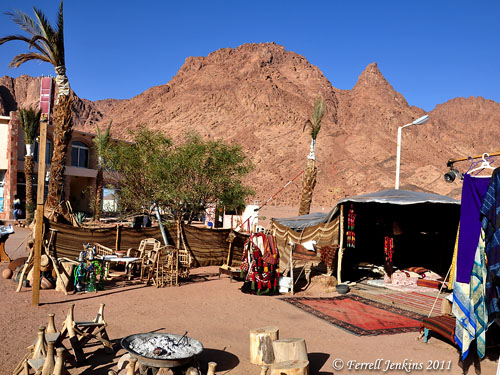
In the wilderness of Zin, where the ancient Israelites wandered (Numbers 33:36), we saw two female shepherds bringing their large flock of sheep and goats across the main highway 40. This photo shows them after they had crossed the highway on their way to their community of Bedouin. We saw the tents in the distance a little further south.

If you can not see the photo click here.

Sheep in the Wilderness of Zin. Photo by Ferrell Jenkins.

Sheep in the Wilderness of Zin. Photo by Ferrell Jenkins.

The wilderness of Zin included Kadesh Barnea and was the southern boundary for the tribe of Judah.

The land allotted to the tribe of Judah by its clans reached to the border of Edom, to the Wilderness of Zin in the Negev far to the south. (Joshus 15:1 NET)

We enjoyed a Big Mac at the McDonald’s at Avdat, an important town along the Nabatean spice route between Petra and Gaza.

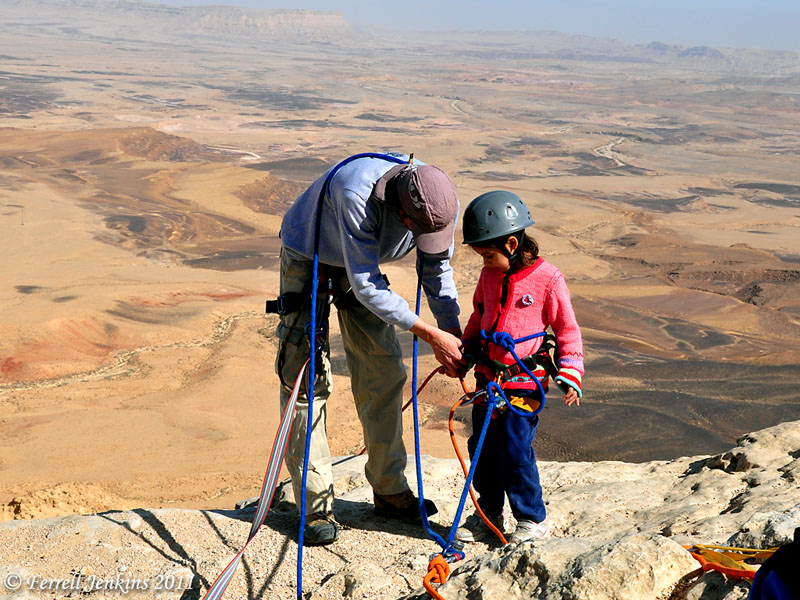
We continued along the way north to Makhtesh Ramon Crater. This crater, about fifty miles south of Beersheba, is said to be the largest crater in the world. We went to the observation point to take a look at the crater. Several people were preparing to rappel the cliff. The most interesting one was a little girl who was not quite six years old. After watching her be instructed in how to handle the rope, we saw her begin down the cliff. We went down to a lower point to see her. By the time we got there she was almost at the bottom and was being helped by (possibly) her mother who had come down before her.

(I am having a little problem uploading photos. If the photo below does not show, click here link to see it.)

Young girl gets ready to rappel at Makhtesh Ramon Crater. Photo by Ferrell Jenkins.

Young girl gets ready to rappel at Makhktesh Ramon Crater. Photo by Ferrell Jenkins.

Personal note about unrest in Egypt

A few friends have asked about the safety of our group in relation to the unrest in Egypt. Most of our group returned to the USA from Egypt Monday evening. They are safely at home. Three other tour members went with us to Sinai. Two of them went home Wednesday evening. They were diverted from JFK due to the bad weather, but arrived home safely. One tour member went to Abu Simbel Thursday. He is in Heliopolis at the hotel across from the airport now.

I just spoke to my guide/friend in Egypt who told me that last evening his kids were out and having a good time. They went to McDonald’s and a movie. He said the demonstrations were limited to downtown Cairo and in Suez city (the town at the southern end of the Suez Canal).

Elizabeth and I leave Eilat shortly to drive through the Wilderness of Zin. We plan to be at Beersheba in the evening.

Egyptian miners had a temple at Timna

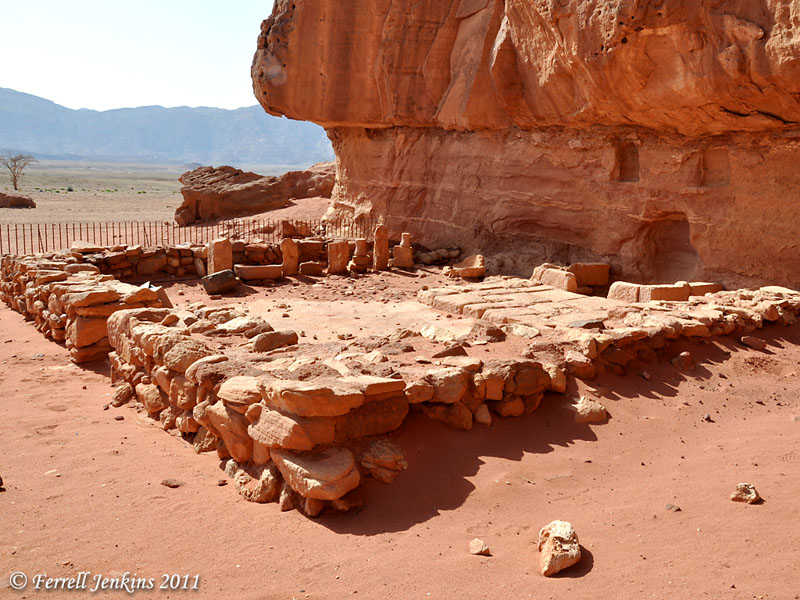
Timna is located about 20 miles north of Eilat in Israel. The Rothenberg Expedition discovered a cultic temple used by Egyptian miners at a time when the Egyptians were actively mining copper in the region.

One of the main deities worshiped at the site was Hathor. Having recently seen numerous images of Hathor in Egypt, I thought this was an appropriate follow up.

Cultic temple at Timna devoted to Hathor, et al. Photo by Ferrell Jenkins.

Cultic Temple at Timna devoted to Hathor, et al. Photo by Ferrell Jenkins.

Those who have visited Petra will notice a similarity in the color of the rocks and soil.

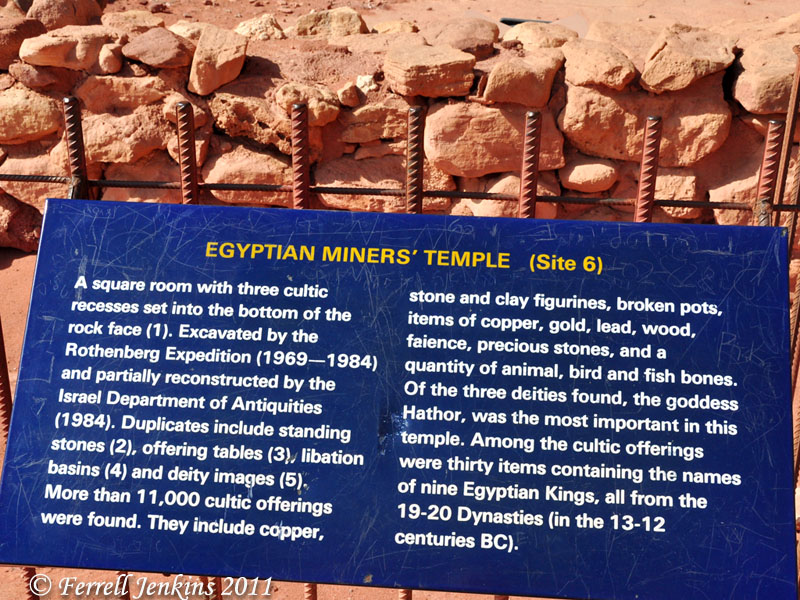
The sign at the site gives a brief summary of the excavation and the items discovered.

Timna Hathor Temple Sign

Sign at Cultic Temple in Timna. Photo by Ferrell Jenkins.

The LORD promised the Israelites that they would dwell in a land that included copper and iron. It is impossible to say whether this is one of those places.

… a land whose stones are iron, and out of whose hills you can dig copper. (Deuteronomy 8:9 ESV)

Traveling across the Sinai Peninsula

Over the past two days my wife and I have traveled through the Sinai Peninsula. We left Cairo Tuesday morning and traveled somewhat along the traditional route of the Israelites in the wilderness to Jebel Musa (Mount Sinai/Horeb).

Tuesday night we stayed at the Morganland Hotel near Saint Catherine’s Monastery. This photo was made Wednesday morning from the hotel grounds.

View of the granite mountains of Sinai. Photo by Ferrell Jenkins.

I am reminded of the stanza in Deborah’s song:

The mountains trembled before the LORD, the God of Sinai; before the LORD God of Israel. (Judges 5:5 NET)

After visiting Saint Catherine’s Monastery, we continued east to the Gulf of Aqaba/Eilat to Tabah, Egypt. Then, moving north, we crossed into Israel at Eilat. We were traveling in a van. The trip from Sinai to Tabah took more than 2 and 1/2 hours, but by the time we cleared all of the customs things in Egypt and Israel it took a total of 4 hours.

We enjoyed the two weeks in Egypt, but delighted to be in Israel again.

Free book about the James ossuary trial

Herschel Shanks, editor of Biblical Archaeology Review, reminds us that the trial brought by the Israel Antiquities Authority against Oded Golan and Robert Deutsch is about to come to an end.

If you are interested in this subject you should click here and sign up for the book entitled James, Brother of Jesus: Forged Antiquities and the Trial of Oded Golan and Robert Deutsch.

The book is described this way.

After five years, the “forgery trial of the century” has concluded in a Jerusalem courtroom. Defendants Oded Golan and Robert Deutsch await the judge’s verdict, and so does the rest of the world. Even if the verdict is “not guilty,” the question of authenticity of several ancient artifacts will still remain. In this free e-book, Hershel Shanks explains why he believes the now-famous “James Ossuary” inscription is authentic. Plus, he provides behind-the-scenes analysis of the trial and its key players.

Herschel also promises an English translation of the trial verdict as soon as it is released.

Understand that this is likely a book to be downloaded, and that in signing up for it you indicate that you wish to receive the BAR Companion newsletter. Not a bad trade-off in my judgment.

The vineyard of the man lacking sense

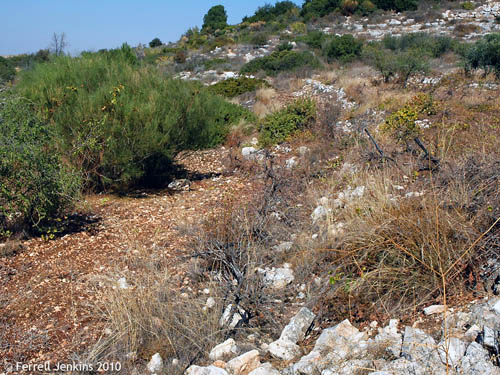
I passed by the field of the sluggard And by the vineyard of the man lacking sense, And behold, it was completely overgrown with thistles; Its surface was covered with nettles, And its stone wall was broken down. When I saw, I reflected upon it; I looked, and received instruction. “A little sleep, a little slumber, A little folding of the hands to rest,” Then your poverty will come as a robber And your want like an armed man. (Proverbs 24:30-34 NAU)

Neglected vineyard at Neot Kedumim. Photo by Ferrell Jenkins.

Neglected vineyard at Neot Kedumim. Photo by Ferrell Jenkins.

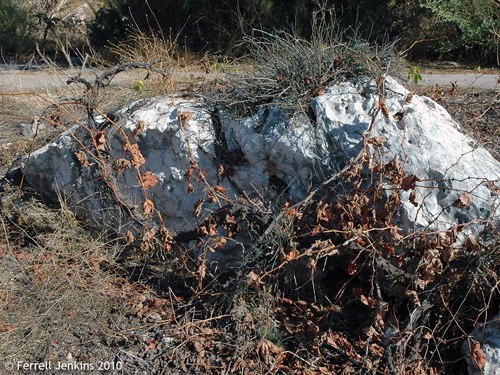
A broken stone wall of the vineyard. Photo by Ferrell Jenkins.

A broken stone wall of the vineyard. Photo by Ferrell Jenkins.

These images might also provide some insight into the statement of the Shulammite girl.

Do not stare at me because I am swarthy, For the sun has burned me. My mother’s sons were angry with me; They made me caretaker of the vineyards, But I have not taken care of my own vineyard. (Song of Solomon 1:6 NAU)

Many worthwhile applications may be drawn from the Scriptural truth illustrated by these photos. I hope you will take a little time today to meditate on these things.

Larger photos suitable for use in sermons and Bible classes are available by clicking on the image.

Traditional baptism site to open in Israel

The traditional site where John the Baptist baptized Jesus has been closed for more than four decades. In the past few years pilgrims and tourists have been able to visit the site known as Bethany Beyond the Jordan from the Jordanian side of the Jordan River.

In those days Jesus came from Nazareth of Galilee and was baptized by John in the Jordan. (Mark 1:9 ESV)

These things took place in Bethany across the Jordan, where John was baptizing. (John 1:28 ESV)

Now word comes, after a year’s delay, that the site will open on the Israeli side.

Kasr al-Yehud, the probable site where John the Baptist baptized his cousin Jesus of Nazareth, will be opened to the public with a special ceremony on January 18 after 42 years as a closed military zone which pilgrims could only visit after coordinating with the Civil Administration for Judea and Samaria. The site is located in the Jordan Valley in the West Bank, but starting on the 18th it will be operated by the jurisdiction of the Israel’s Nature and Parks Authority, after Israeli authorities invested millions of shekels to build facilities there to handle a large number of tourists. The 18th is significant because it is the traditional day when Greek and Russian Orthodox Christians make an annual pilgrimage to the site to celebrate the Feast of the Epiphany. Vice Premier Silvan Shalom, who was instrumental in the project, said he hoped Kasr al-Yehud would become a symbol for cooperation among Israel, Jordan and the Palestinian Authority, as it would be a major attraction for tourists who would also want to visit other Biblical sites in the area. (ICEJ news)

Last May my group visited the Jordan River at the Jordanian site that is suggested as Bethany beyond the Jordan. Construction of a visitor’s center on the Israeli side seemed to be almost finished. That day a group, perhaps mostly military, was at the site, but it was not open to the general public. You can see workers on the steps leading down to the water.
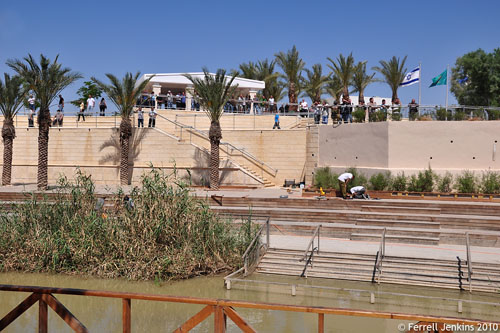
Jordan River baptism site. View from Jordan to the west. Photo by Ferrell Jenkins.

Jordan River baptism site. View from Jordan to the west. Photo by Ferrell Jenkins.

The Israeli visitor’s center is actually in the West Bank, but under Israeli control.

My first trip to the Bible Lands was in April and May of 1967. At that time the western side of the Jordan River was open to tourists. Of course, the site was still in Jordan at the time. Take a look at my group of 19 tour members. It is true that in those days most of the men wore suits, dress shirts and ties, even in the hot weather. The women wore dressy clothes, hosiery and other feminine attire no longer in use.

Just a flash from the past. Take a look at the old photo made on the western bank of the Jordan.
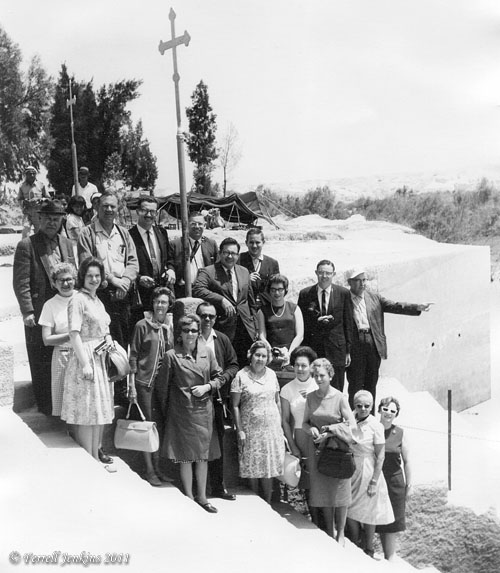
Ferrell Jenkins group at the traditional baptism site on the Jordan River.

1967 group at the traditional baptism site on the west bank of the Jordan River.

Did you notice those purses the women are carrying? In those days that was allowed as a carry-on on the airplanes. Many of the men carried a camera bag of similar size. That was it. No rolling suitcases. Oh, for the good ole days.

HT: BiblePlaces Blog.

Can you identify the hill in our new header?

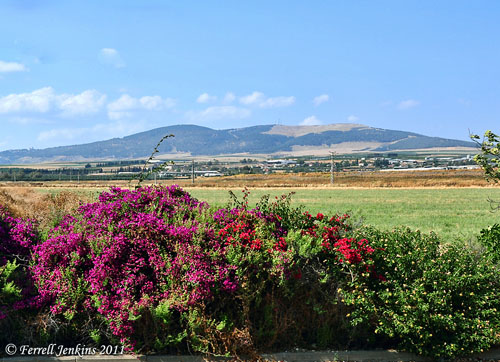
Have you noticed our new header photograph? Can you identify the location? It is a photo of the hill of Moreh mentioned in Judges 7.

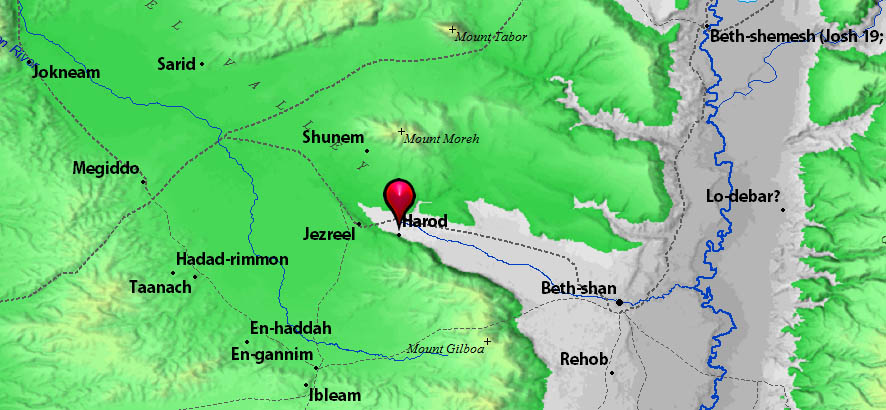
I’m sure you know the story. The Israelites were oppressed by the Midianites who lived east of the Jordan River. In fact, the Midianites camped by the hill of Moreh in the Jezreel valley north of the Israelites (Judges 6:33). Gideon and his people camped beside the spring of Harod (Ein Harod). Our photo was made from Ein Harod, looking north toward the hill of Moreh.

Then Jerubbaal (that is, Gideon) and all the people who were with him, rose early and camped beside the spring of Harod; and the camp of Midian was on the north side of them by the hill of Moreh in the valley. (Judges 7:1 NAU)

The Hill of Moreh from En Harod. Photo by Ferrell Jenkins.

The Hill of Moreh from Ein Harod. Photo by Ferrell Jenkins.

The map below from BibleAtlas.org will help you locate Ein Harod and the hill of Moreh (Mount Moreh). Click on the map for a larger image.

Map showing Ein Harod and Mount Moreh.

Map showing Ein Harod and Mount (hill of) Moreh. BibleAtlas.org

Wishing you a fruitful and pleasant New Year

The beginning of a New Year gives us an opportunity to correct the mistakes we made in the previous year and try more diligently to do better in the future.

I trust that your New Year will be one of fruitfulness and pleasantness as you seek to honor the Creator of the universe and all men.

A fruit kiosk at the port of Akko (Roman Ptolemais). Photo by Ferrell Jenkins.

A fruit kiosk at the port of Akko (Roman Ptolemais). Photo by Ferrell Jenkins.

1 How blessed is the man who does not walk in the counsel of the wicked, Nor stand in the path of sinners, Nor sit in the seat of scoffers!
2 But his delight is in the law of the LORD, And in His law he meditates day and night.
3 He will be like a tree firmly planted by streams of water, Which yields its fruit in its season And its leaf does not wither; And in whatever he does, he prospers.
4 The wicked are not so, But they are like chaff which the wind drives away.
5 Therefore the wicked will not stand in the judgment, Nor sinners in the assembly of the righteous.
6 For the LORD knows the way of the righteous, But the way of the wicked will perish. (Psalm 1:1-6 NAU)