Category Archives: Israel

The Cyrus Cylinder may not be as tolerant as some suggest

Dr. Jacob L. Wright, Candler School of Theology, offers a warning about using the Cyrus Cylinder as a model of toleration. He says,

As most historians who specialize in early Persian history would readily point out, the chief objective of Cyrus and his successors was no different than that of other imperial powers: to maintain control of their vast empire and to exploit the wealth of its subjects. Palace reliefs at Persepolis and Susa express this “vision of peace” in dramatic visual form: Delegations from various peoples are shown solemnly bearing precious gifts up to the enthroned king.

This perspective is in response to the lecture by Neil MacGregor, director of the British Museum, that we called attention to here.

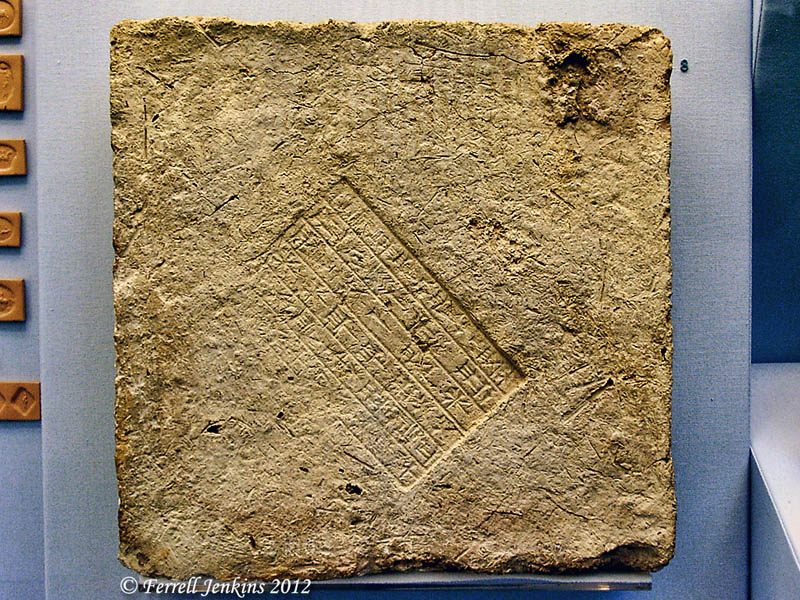
The photo below shows a brick from Ur, in Southern Mesopotamia. According to the display sign in the British Museum the inscription in Babylonian cuneiform reads:

Cyrus, king of the world, king of Anshan, son of Cambyses, king of Ansham. The great gods delivered all the lands into my hand, and I made this land to dwell in peace.

The Biblical account of Cyrus allowing the Jews to return to their land and rebuild their temple is recorded in 2 Chronicle 36: 22-23 and Ezra 1:1-4.

Brick bearing name of Cyrus. British Museum. Photo by Ferrell Jenkins.

Brick with Babylonian inscription bearing name of Cyrus. British Museum. Photo by Ferrell Jenkins.

Wright concludes his article with these words,

The values of tolerance that the Cyrus Cylinder has come to represent today must be held high. Yet in doing so, we must also heed the voices of those who opposed Persia’s imperial reach. Otherwise, we lose sight of the danger posed by any power that would organize the world primarily for the purpose of greater control, exploitation and expansion.

The complete article is available in The Huffington Post Religion section here.

HT: Jack Sasson

James Ossuary verdict due March 14

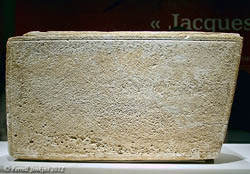
Bible History Daily, a news/advertising newsletter of the Biblical Archaeology Society, announces that the Israel court verdict on the James Ossuary and other artifacts will be released March 14.

James Ossuary at Royal Ontario Museum - Nov. 22, 2002

James, the brother of Jesus, ossuary. Photo by Ferrell Jenkins.

The Israeli court system is different from the one we are accustomed to in the United States. This case was brought against Oded Golan, Robert Deutsch, and others 5 years ago. The judge listens to all of the evidence and then makes the decision.

You might be interested in getting a free eBook about the James Ossuary and the other suspected artifacts. It will be made available along with an English translation of the court verdict shortly after the decision is announced. Click here for the link to the eBook and more info on the case. Be assured that by signing up for this booklet you will received regular Emails from the BAS.

In late December 2004, four Israelis and one Palestinian Arab were indicted in Jerusalem on charges of running a massive forgery ring over several decades. The Israel Antiquities Authority (IAA) and the Israeli police claimed the ring had created a host of Biblically-related ancient artifacts with forged inscriptions involving millions of dollars, some of which are exhibited in the prestigious Israel Museum. The trial opened in September 2005 and continued for five years through 116 sessions, 133 witnesses, 200 exhibits, and close to 12,000 pages of testimony from witnesses.

In October 2010, closing arguments finally wrapped up in “the forgery trial of the century,” to determine whether or not the James Ossuary, the Yehoash tablet and other ancient artifacts were forged by two defendants. Trial judge Aharon Farkash pored through the evidence over the past 15 months, and is ready to deliver his verdict in the upcoming days.

The judge will be deciding whether the case’s two remaining defendants, Tel Aviv collector Oded Golan and antiquities dealer and scholar Robert Deutsch, are guilty of creating and selling forged antiquities, most notably the now-famous first-century C.E. bone box (or ossuary) inscribed “James, son of Joseph, brother of Jesus,” a small inscribed ivory pomegranate allegedly used in Solomon’s Temple, and the Yehoash tablet, which, if authentic, would be the first royal inscription of an Israelite king ever found.

After the verdict is devoured by readers around the world there will still be differences of opinion.

Yodfat (= Jotapata) — where Josephus commanded Galilean forces against Rome

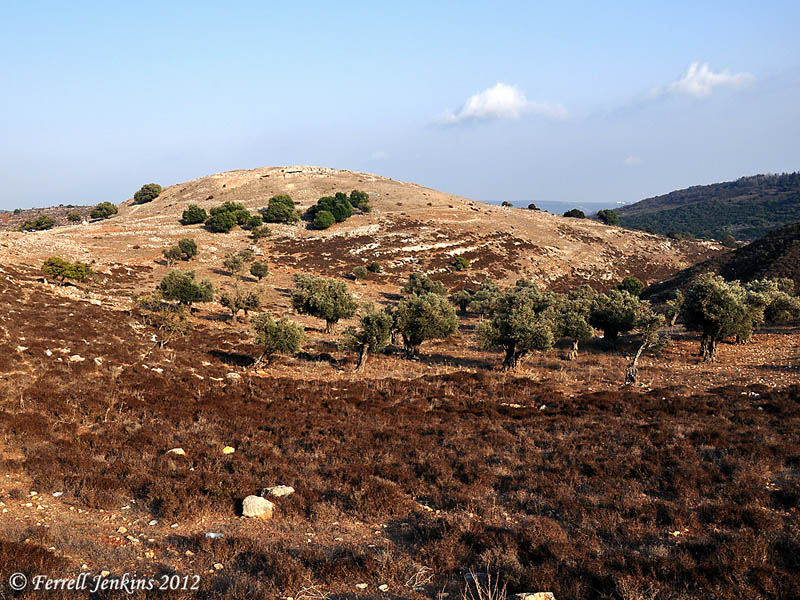
Yodfat (or Yodefat) may be better known to English readers as Jotapata. It was here that Josephus, later known as a significant historian of first century Judaism, commanded the Galilean forces against Rome in A.D. 66.

Josephus wrote about the significant battle at Yodfat in his Wars of the Jews (Bk. III:141-339). Yodfat is located about 20 miles inland from Ptolemais (modern Akko) along the main route from Ptolemais to Magdala on the shore of the Sea of Galilee.
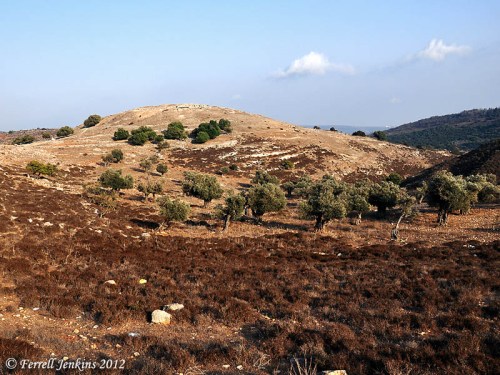
View of Yodfat from the west. Photo by Ferrell Jenkins.

View of Yodfat from the west. Photo by Ferrell Jenkins.

The map below from BibleAtlas shows Nazareth, Sepphoris, [Khirbet] Cana, and Jotapata. Notice that Jotapata and Cana are situated on the north side of the Beit Netofa Valley. A main road ran from Ptolemais to Magdala through the Beit Netofa Valley.
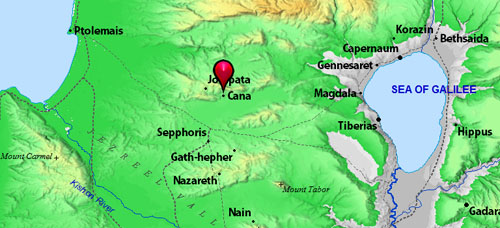
Map showing Nazareth, Sepphoris, Cana, and Jotapata. BibleAtlas.org.

Map showing Nazareth, Sepphoris, Cana, and Jotapata. BibleAtlas.org.

Josephus commanded the rebel Jewish forces who were trying to stop the Roman soldiers from reaching Jerusalem. He took refuge at Yodfat. When it was clear that Rome, under the leadership of Vespasian and his son Titus, had the upper hand, some of the troops committed suicide rather than submit to the Romans. Many of the Jewish rebels were slain, but the life of Josephus was spared when he predicted that Vespasian would eventually become Emperor of the Roman Empire.

Bonnie Rochman reports that bones discovered in 1997 may be those of men who died in the battle with Rome.

Bones from at least 30 people were discovered this past summer in a cistern in the Galilee, giving strong support to Josephus’s account of a bloody battle there between Jews and Romans in 67 A.D. The bones are thought to be the remains of residents of the nearby city of Yodfat, which was besieged by Roman troops en route to Jerusalem to suppress the First Jewish Revolt. The Roman forces captured Yodfat (also written Yodefat and Jotapata and even Iotape) after battling the city’s Jews for 47 days. (Biblical Archaeology Review. 23:06 (Nov/Dec 1997).

Josephus records that 40,000 died in the conflict, and and that 1200 were enslaved. Some scholars believe this number is an exaggeration. Whatever the exact number, it was a significant battle in the Jewish War.

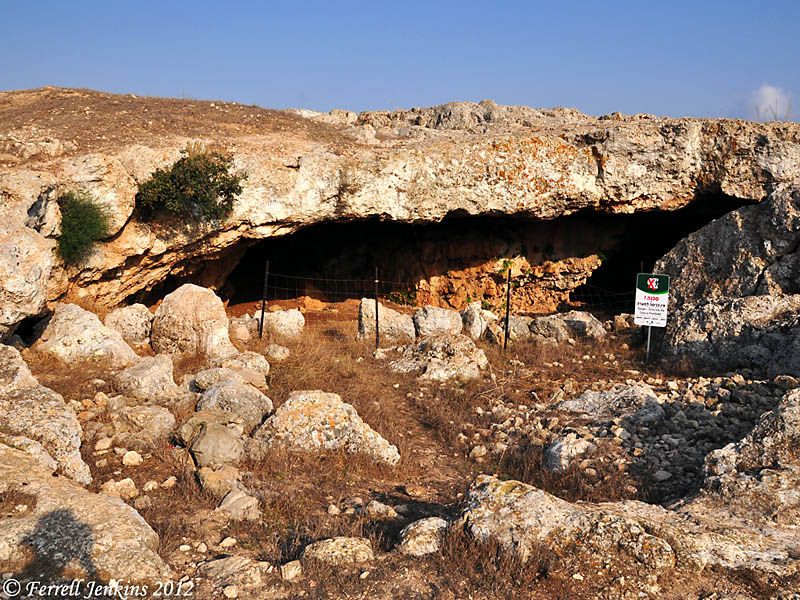
Yodfat differs from the typical tel (archaeological mound). It is mostly a rock, with few remains on the surface. The site is filled with numerous caves in which the Jewish soldiers hid, and cisterns that provided water for them. The photo below shows the entrance to one of the caves on the south side of the site.
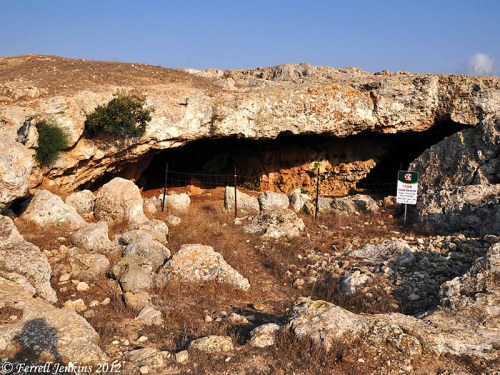
One of many caves at Yodfat. Photo by Ferrell Jenkins.

One of many caves at Yodfat. Photo by Ferrell Jenkins.

The Encyclopedia Judaica provides a short summary here about the excavations at Jotapata

Excavations were conducted at the site in 1992 by D. Edwards, M. Aviam, and D. Adan-Bayewitz, revealing remains dating from the Hellenistic period through to medieval times. A fortification wall from the Ptolemaic period was uncovered with three phases of construction evident. To the northwest were the remains of a ramp dating from the time of the Roman siege in 67 C.E. The finds included remains from the battle including ballista balls and iron bow and catapult arrowheads. Rubble walls built at this location seem to have been part of the Jewish preparations prior to the arrival of the Romans. An oil press, pottery kilns, and several ritual baths (mikva’ot) were uncovered. The lower part of the site was reoccupied in the late first or early second centuries C.E., and there were also signs of occupation of medieval date.

Some scholars have identified Jotapata with the Jotbah of 2 Kings 21:19. Jotbah was the birthplace of the mother of the Judean King Amon. The town may be mentioned in the annals of Tiglath-pileser III (New Bible Dictionary; Anchor Yale Bible Dictionary).

The Jerusalem Syndrome

Each year about 50 visitors to Jerusalem have to be taken to a psychiatric ward because they are overcome with what they experience in the Holy City. In the worst cases individuals have come to believe that they are the Messiah, or that they are preparing the way for Him. Psychiatrists call this phenomenon the “Jerusalem Syndrome.”

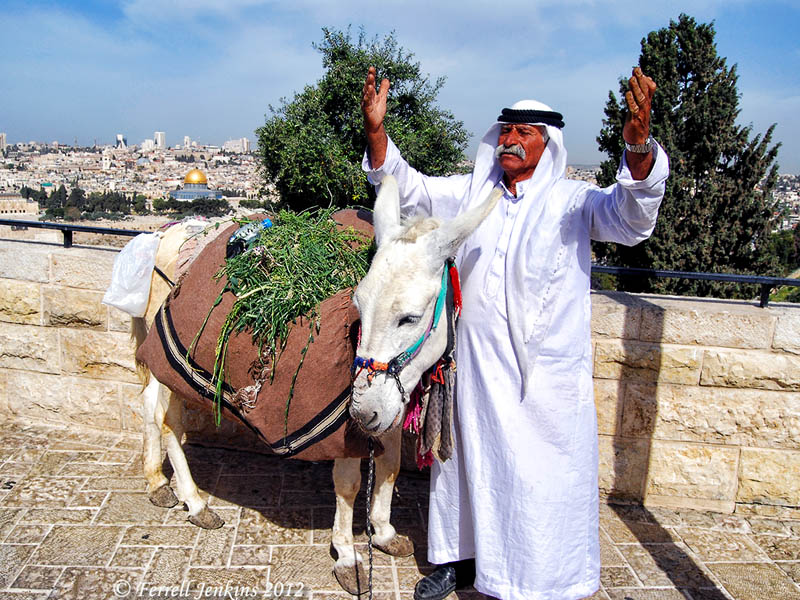
I have no idea who the fellow below thinks he is imitating, but I have dubbed him an “actor” — not someone who has been overcome with the Jerusalem Syndrome. Some might say that he is “John the Baptist, others say Elijah, and others Jeremiah or one of the prophets.” (Matthew 16:14 ESV)

An "actor" on the Mount of Olives. Photo by Ferrell Jenkins.

An "actor" on the Mount of Olives poses as a biblical character. Photo: Ferrell Jenkins.

Wired Magazine recently ran a fascinating article by Chris Nashawaty dealing with the Jerusalem Syndrome. He interviews Dr. Pesach Lichtenberg, head of the men’s division of psychiatry at Herzog Hospital in Jerusalem. Lichtenberg and Nashawaty visit the Old City of Jerusalem in search of a likely prospect for Jerusalem Syndrome. Read the article in its entirety here.

I had been unaware that visitors to Florence, Italy, experience a similar phenomenon when they “are overwhelmed by powerful works of art.” There, it is called Stendhal syndrome after the writer who described it in the early 19th century. Japanese tourists are especially subject to Paris syndrome while visiting the City of Light.

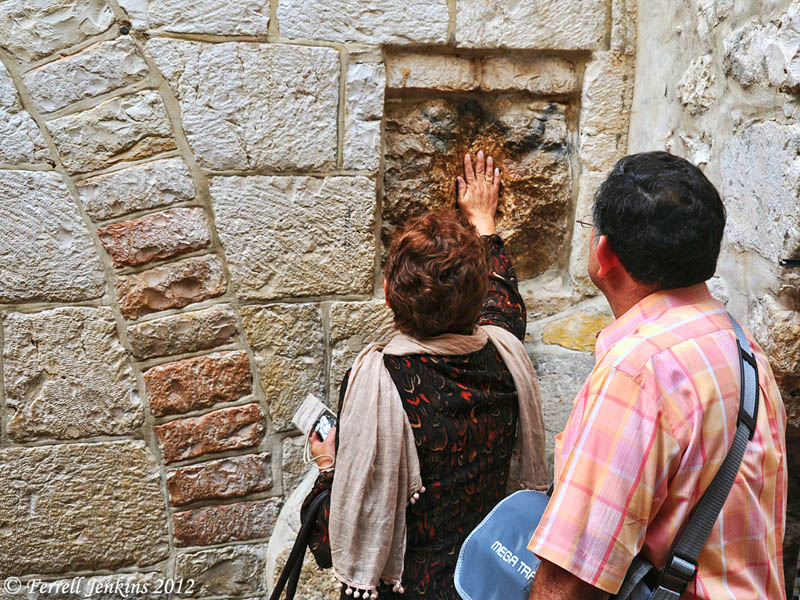
The sights of Jerusalem are truly impressive, and some tourists who tend to be emotional are often brought to tears by what they see and hear.

A woman places her hand on a stone at the fifth station of the cross. Photo by Ferrell Jenkins.

A woman places her hand on a stone at the fifth station of the cross. Some say this is a stone touched by Jesus on His way to the crucifixion. Photo by Ferrell Jenkins.

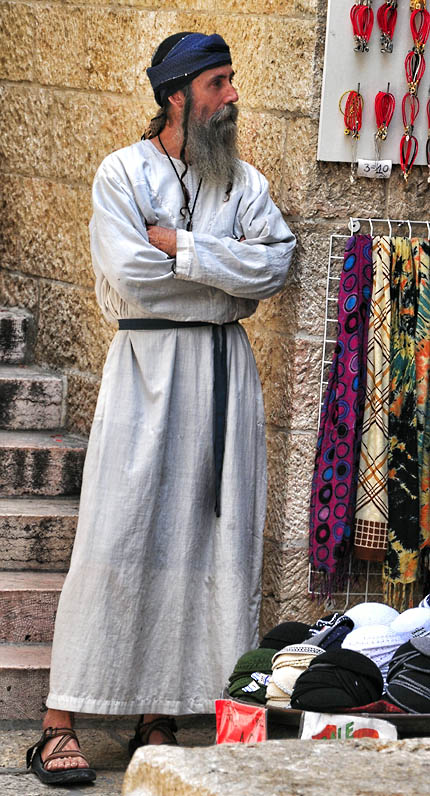
It is not every day that you see someone like this selling jewelery and souvenirs.

Vendor in the Jewish Quarter of Jerusalem. Photo by Ferrell Jenkins.

Vendor in the Jewish Quarter of Jerusalem. Photo by Ferrell Jenkins.

We ran a brief note about the Jerusalem Syndrome about four years ago here.

HT: Either Jack Sasson or Joseph Lauer (perhaps both), but I have misplaced the Email.

Has the tomb of a pre-70 A.D. Christian been found?

It happens either before Christmas or Easter. A tremendous discovery has been made that will support or undermine Christianity. Everything we have always thought about Jesus, the early Christians, and the Bible will undergo a radical change as soon as the book by the discoverers and the TV program is released. (I have some friends who think so literally that I am fearful they will not understand my attempt to be satirical.)

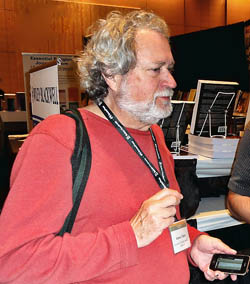
James Tabor at SBL, Atlanta, 2010.

Prof. James Tabor at SBL, 2010.

If I say nothing about this, some readers will send me links to it and ask my opinion. Rather than dig into all of this material about the discovery by Prof. James Tabor and filmmaker Simcha Jacobovici, I am going to direct my readers to Todd Bolen’s Bible Places Blog. Todd will do a much better job with this than I could. You might prefer to begin with the bottom link and move up. Then check for updates for the next few days.

Bolen has already posted three significant blogs ahead of the onslaught of media attention. Read, and examine carefully.

  • More Reports on the Jerusalem Fish Ossuary here.
  • Jesus Discovery: Early Christian Burial in Jerusalem here.
  • Tomorrow: The Jesus Discovery here.

The words of an early Christian apostle would be appropriate here.

But examine all things; hold fast to what is good. (1 Thessalonians 5:21 NET)

UPDATE: Todd Bolen has now commented on Dr. Tabor’s preliminary report here. The complete 46-page report is available in PDF here.

Let the media begin. Fox News just ran a report about this discovery. See link here. Trace Gallagher informed us that “the gospels date to 200 or 300 years after Jesus.” Poor guy. I think he means well, but has left his area of expertise.

UPDATE  Feb. 29: Bible Places Blog includes a report here by Gordon Franz who was present at the press conference. Franz says,

My initial impression is that the “fish” looks like an ornamental glass vessel, perhaps a pitcher or flask of some sort.

An illustration is included.

Another Update: See “Talpiot Tomb Updates” here.

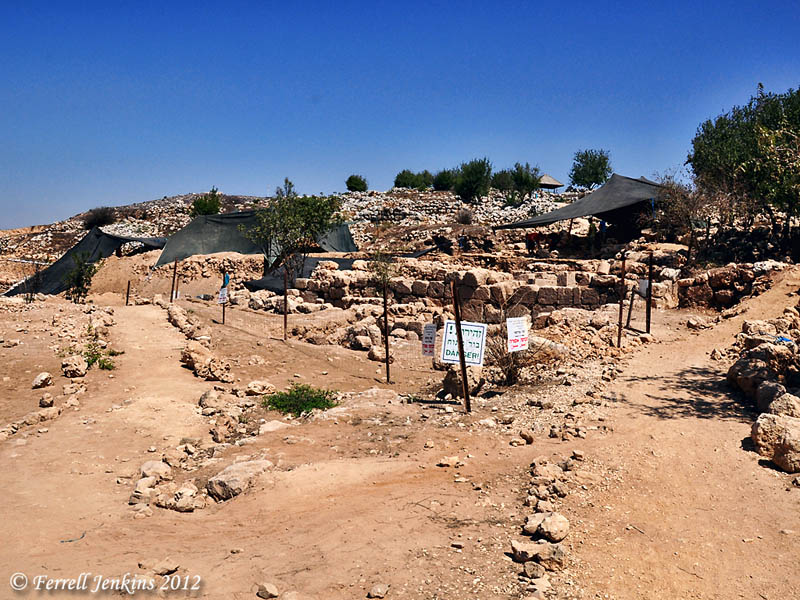
Israel government plans to preserve Tel Shiloh

Haaretz announces that the “Israeli government allocates NIS 5 million to preserve Tel Shiloh in West Bank.” According to the article, a large tourist center is planned at the site.

This is a precedent-setting decision, since Israeli governments up to now have not allocated funds for renovation and preservation of the site, located within the area of the Binyamin Regional Council. The committee’s decision to embark on the project states that “Tel Shiloh is a unique heritage asset” for the Jewish people, and mention was made of the fact that work at the site will be backed by supplementary funds totaling some NIS 10 million, to be provided by private sources.

The full article may be read here. For our US readers, 5 million NIS [New Israeli Shekels] equals approximately $1,338,000.

Some archaeological work was already underway last September when Leon Mauldin and I visited Tel Shiloh. The new excavation at the base of the mound dates to the Byzantine and Islamic period.

Tel Shiloh. New excavations at the base of the mound. Photo by Ferrell Jenkins.

Tel Shiloh. New excavations at the base of the mound. Photo by Ferrell Jenkins.

Shiloh is highly significant in Biblical history.

  • The tabernacle was set up at Shiloh, and it was here that the final division of the land among the tribes took place (Joshua 18).
  • Shiloh is located in specific terms.

However, there is an annual festival to the LORD in Shiloh, which is north of Bethel (east of the main road that goes up from Bethel to Shechem) and south of Lebonah.” (Judges 21:19 NET)

  • The Israelites took the ark of the covenant to the battle field near the coastal plain (1 Samuel 4). The ark never returned to Shiloh.
  • Shiloh was the home of Samuel (1 Samuel 1-3).

More info about Shiloh, with earlier photos, may be seen here.

HT: Joseph Lauer

Neil MacGregor: 2600 years of history in one object

A friend just forwarded a link to a fascinating talk by Neil MacGregor, Director of the British Museum, about the Cyrus Cylinder. MacGregor took the Cyrus Cylinder from the British Museum to Iran when it was loan to the museum in Tehran.

What I learned was the use made of the Cyrus Cylinder by the Jews at the time of the Balfour Declaration, and the use made of it by the Shah of Iran.

MacGregor speaks of the Cyrus Cylinder as a “major player in the politics of the Middle East.”

Follow this link. The film is about 20 minutes old.

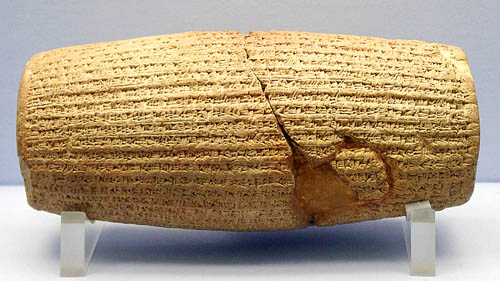
Now in the first year of Cyrus king of Persia, that the word of the LORD by the mouth of Jeremiah might be fulfilled, the LORD stirred up the spirit of Cyrus king of Persia, so that he made a proclamation throughout all his kingdom and also put it in writing:  “Thus says Cyrus king of Persia, ‘The LORD, the God of heaven, has given me all the kingdoms of the earth, and he has charged me to build him a house at Jerusalem, which is in Judah. Whoever is among you of all his people, may the LORD his God be with him. Let him go up.'” (2 Chronicles 36:22-23 ESV)

The Cyrus Cylinder in the British Museum. Photo by Ferrell Jenkins.

The Cyrus Cylinder in the British Museum. Photo by Ferrell Jenkins.

Check some of our previous links to the Cyrus Cylinder here and here. Use the search box to locate others.

Cooking at 4th century Qatzrin

Golan in Bashan is first mentioned in the Bible in connection with the priestly cities of refuge that were appointed to Israel east of the Jordan (Deuteronomy 4:43; cf. Joshua 20:8; 1 Chronicles 6:71).

After modern Israel captured the Golan Heights from Syria in 1967, considerable efforts was made to identify Jewish villages that may have existed in the area. One such village was Qatzrin (pronounced kats-REEN). Archaeologist Anne Killebrew spent a decade or more working at the site and directing the reconstruction of the site which included a synagogue and several houses.

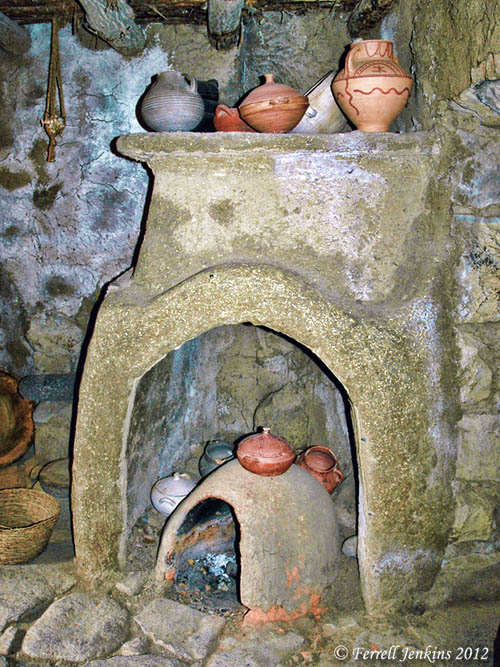
Qatzrin was originally built in the 4th century A.D. and remained in use till the mid-8th century. I wanted to show you the oven that we have from that village. The photo below shows a small clay oven placed within a mud-brick chimney. The chimney took the smoke out of the house and provided heat for the second floor bed room as well as for the kitchen. Not quite a microwave, but it wasn’t terribly different from the wood-burning stoves I knew as a child. (No, not in the 4th century!)

An oven inside a chimney at Qatzrin. Photo by Ferrell Jenkins.

An oven inside a mud-brick chimney at Qatzrin. Photo by Ferrell Jenkins.

Killebrew and Steven Fine wrote about “Qatzrin—Reconstructing Village Life in Talmudic Times” in Biblical Archaeology Review 17:03 (May/June 1991). The reconstruction of the oven and chimney are explained in a sidebar to the article.

The kitchen of the House of Rabbi Abun, seen on our cover, can be understood as a microcosm of the painstaking effort that went into the reconstruction of the whole house. The small domed oven at center stands within a mudbrick chimney. Excavated remains of this indoor oven—employed both for heating the house and for cooking in bad weather, when outdoor cooking was difficult—indicated the size and shape of the oven, a type still used by the Druze (a Moslem sect residing in the area). A portion of the chimney exits the roof in the corner, behind the period pottery on the chimney’s mantle, and rises high enough above the roof to create a draw that effectively pulls smoke out of the house. No remains of the original chimney were found, but the reconstruction was built, as was the rest the house, by Druze workmen using traditional styles and methods. Experiments have shown that this chimney works well.

Both Matthew and Luke record the statement of Jesus,

But if God so clothes the grass of the field, which today is alive and tomorrow is thrown into the oven, will he not much more clothe you, O you of little faith? (Matthew 6:30; cf. Luke 12:28 ESV)

The Greek word for oven or furnace (in a few English versions) is klibanos. According to BDAG it is used of “an oven (made of pottery),” exactly what you see in the photo.

Louw-Nida explains further:

a dome-like structure made of clay, in which wood and dried grass were burned, and then after being heated, was used for baking bread – ‘oven.’… ‘the grass of the field which is alive today and tomorrow is cast into the oven’ Mt 6.30. The function of klibanos may be described as ‘a place heated for baking bread,’…

After one gets the fire going with grass or other kindling, it was often kept going with dung cakes. See Ezekiel 4:15 for a biblical example.

Baking bread in Bible times

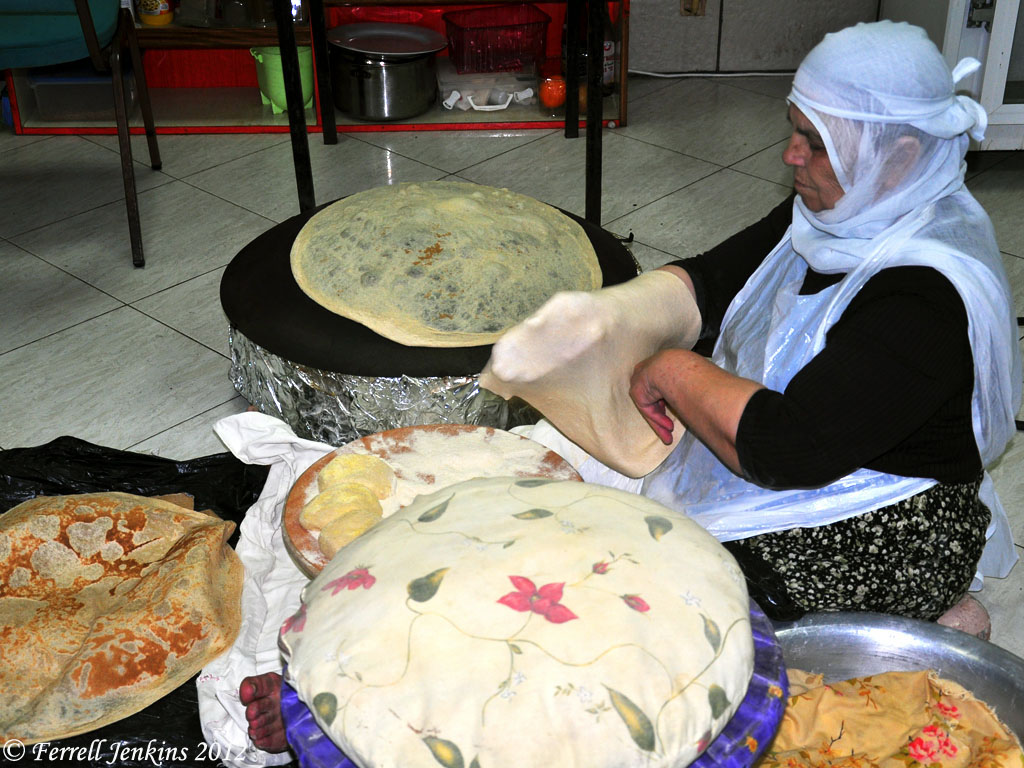
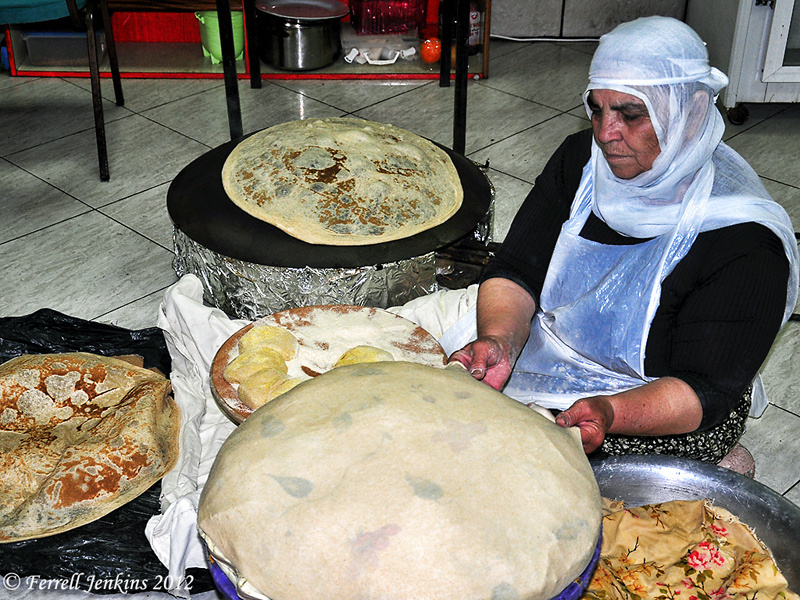
The Druze are especially noted in Israel for baking bread on a convex griddle. There are Druze villages on Mount Carmel and in the Golan Heights where the border with Israel and Syria come together. The photo below slows a woman preparing the dough for baking at a restaurant in the north of the Golan Heights at Birket Ram.

Druze woman preparing bread for baking at Birket Ram. Photo by Ferrell Jenkins.

Druze woman preparing bread for baking at Birket Ram. Photo by Ferrell Jenkins.

She will first place the dough on a rounded cushion which looks like a pillow (at the bottom of the photo).

After that she will turn it over on the griddle at the top of the photo. There you see bread cooking. To the left there is bread that has been taken from the griddle. Your chosen ingredients of meal and/or vegetables will be rolled in the thin bread.

Druze woman preparing bread for baking at Birket Ram. Photo by Ferrell Jenkins.

Druze woman preparing bread for baking at Birket Ram. Photo by Ferrell Jenkins.

I certainly am not an expert on cooking, nor even an expert on how this type of cooking might compare with some bread baking in Bible times. Ovens were often used by people of the Bible world, but some bread was cooked on a plate or griddle made of clay or iron.

King and Stager say,

“When a griddle (mahabat) of clay or iron (Ezek. 4:3) was used, it was set on stones over a pit in which a fire was kindled; then the dough was baked directly on the griddle” (Life in Biblical Israel, 66).

There are a few biblical references in which this type of griddle seems to be in mind.

And if your offering is a grain offering baked on a griddle, it shall be of fine flour unleavened, mixed with oil. (Leviticus 2:5; see also 6:21; 7:9 ESV)

For a visual aid, Ezekiel was told to take an iron griddle (plate, frying pan) and use it as an iron wall between himself and the city.

And you, take an iron griddle, and place it as an iron wall between you and the city; and set your face toward it, and let it be in a state of siege, and press the siege against it. This is a sign for the house of Israel. (Ezekiel 4:3 ESV)

Holladay’s Hebrew lexicon defines the Hebrew word for griddle as “(metal) plate, griddle for roasting & frying.”

I would write more, but I think I will go eat.

Great deal for Logos (or Libronix) users

Logos has a feature called Community Pricing. It works like this. A book (or set) is chosen for publication. Interested persons are asked to place a bid on the completed digital publication. When there are enough bids to pay for publication the book is published. After the initial publication, the price goes up. I have purchased many Logos publication using Community Pricing and Pre-Publication Specials.

To use the Community Pricing or Pre-Pub specials you must already have Logos (or Libronix) on your computer. You may purchase a base package from Logos, or buy a relatively inexpensive set of books from someone like Rejoice Christian Software. I suggestion you buy something like the  Baker New Testament Commentary ($50 here), the Norman Geisler Apologetics CD-Rom Library ($25 here), or one of the other great specials they offer.

Back to the Community Pricing. The Travels through Bible Lands Collection (15 vols.) is now available for $15 (and it might go lower if more people purchase before noon Friday). I bid $20 several months ago. Just saved $5.

Travel through Bible Lands collection. Only in digital format.

Travel through Bible Lands collection. Only in digital format.

Here is some info about the set of nearly 7,000 pages. Just the four volumes by Tristram and Layard are worth far more than the asking price. The works are all old, but sometimes old is good.

The Dead Sea. Bethlehem. The Sea of Galilee. Jericho. Babylon. Cairo. These are but a few of the places visited by these courageous writers in the Travels through the Bible Lands Collection (15 Vols.). During the turn of the nineteenth century, traveling to and across the Holy Land was a dangerous and arduous journey for a Westerner. These diverse explorers—missionaries, writers, cartographers, theologians, ethnographers, diplomats, archeologists—risk the danger to trek the deserts between Egypt and Turkey, survey the caves of the Dead Sea, dig in the dirt of Babylon, fight disease in Beirut, spread the gospel in Turkey, and stand in awe of the pyramids of Egypt.

These fifteen volumes embody some of the best travel writing of the nineteenth century. After two failed expeditions, Henry Baker Tristram finally gets his chance to explore the east shore of the Dead Sea with the help of a prominent sheik and his armed men. Charles Warner chronicles his winter-long voyage through Egypt, culminating in an unforgettable Christmas spent on the Nile River. Austen Henry Layard and his team survive a perilous journey to The Holy Land, and make historical discoveries at the ruins of Nineveh and Babylon for their efforts. Ella Sykes, exploring the alleyways of Tehran and the beauty of the Indian desert, becomes one of the first European women to travel across Persia. William Wittman, a British surgeon, battles unfamiliar diseases as he treats patients from Turkey to Egypt on his long expedition with the British Army.

Each volume in this collection is rich with Scriptural landmarks, highlighting some of the most significant places from the Bible. Full of adventure and inspiration, Travels through Bible Lands Collection (15 Vols.) is a fascinating window into history that is perfect for any Logos collection.

Logos is also giving away a free book each month. The free one for February is The Works of B. B. Warfield, Vol. 1: Revelation and Inspiration.

To check out either offer, just go to Logos.com, and then click on the appropriate tab.