Category Archives: Israel

Church History book available for Kindle

Do you have a good book on Church History? I have observed that many church members are generally ignorant of church history. A few months ago I learned that two books by Zondervan were to be available in Kindle format for $3.99 each. The second volume in the series was available, but there was some delay in getting the first volume online. Volume two is available today for $3.99. For how long I do not know.
51YVjpXge3L

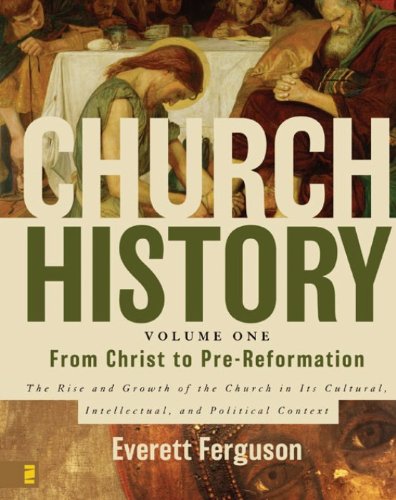
Everett Ferguson’s Church History ,Volume One: From Christ to Pre-Reformation: The Rise and Growth of the Church in Its Cultural, Intellectual, and Political Context: 1, is currently available for the Kindle for $3.99. The regular price for the Kindle edition is $44.99. This book begins with the historical setting for the coming of Christ and the establishment of the church. It ends at about 1300 A.D.

Ferguson is widely respected as a scholar in early church history. With a Ph.D. from Harvard, he is professor emeritus of Bible and distinguished scholar-in-residence at Abilene Christian University. He is author of several books on early Christianity.

An eBook like this could be helpful for travelers visiting the Bible lands. In Turkey, for example, one sees the development of the Church Councils. In Italy there is the rise of the papacy and Catholicism. The Crusades involved numerous countries, including Israel. Sections on monasticism and the rise of Islam can be helpful as well. Ferguson also covers the “Dark Ages” and sets the stage for the earliest Reformation efforts.

Our photo shows ruins of The Church of Mary, also called the Church Council Church, at Ephesus. In A.D. 431 the Council of Ephesus was conducted here.
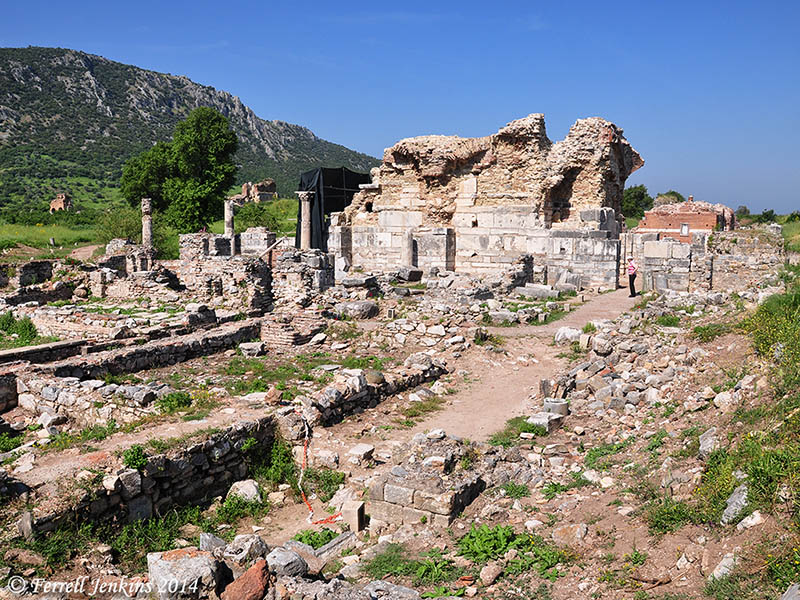
Church Council Church at Ephesus. Photo by Ferrell Jenkins.

Church of Mary (Church Council Church) at Ephesus. Photo by Ferrell Jenkins.

HT: Brooks Cochran
Children in the Marketplaces

To those dissatisfied with both Jesus and John the Baptist, Jesus used a simple illustration that must have happened many times in each city of ancient Israel.

“But to what shall I compare this generation? It is like children sitting in the marketplaces and calling to their playmates, “‘We played the flute for you, and you did not dance; we sang a dirge, and you did not mourn.’ For John came neither eating nor drinking, and they say, ‘He has a demon.’ The Son of Man came eating and drinking, and they say, ‘Look at him! A glutton and a drunkard, a friend of tax collectors and sinners!’ Yet wisdom is justified by her deeds.” (Matthew 11:16-19 ESV; see also Luke 7:31-34) Some English versions use market places).

Keener, in The IVP Bible Background Commentary: New Testament, explains:

Spoiled children who pretend to have weddings and funerals (one later game was called “bury the grasshopper”) stand for Jesus’ and John’s dissatisfied opponents; dissatisfied with other children who will not play either game, they are sad no matter what. The term for “mourn” here is “beat the breast,” a standard mourning custom in Jewish Palestine. Custom mandated that bystanders join in any bridal or funeral processions.

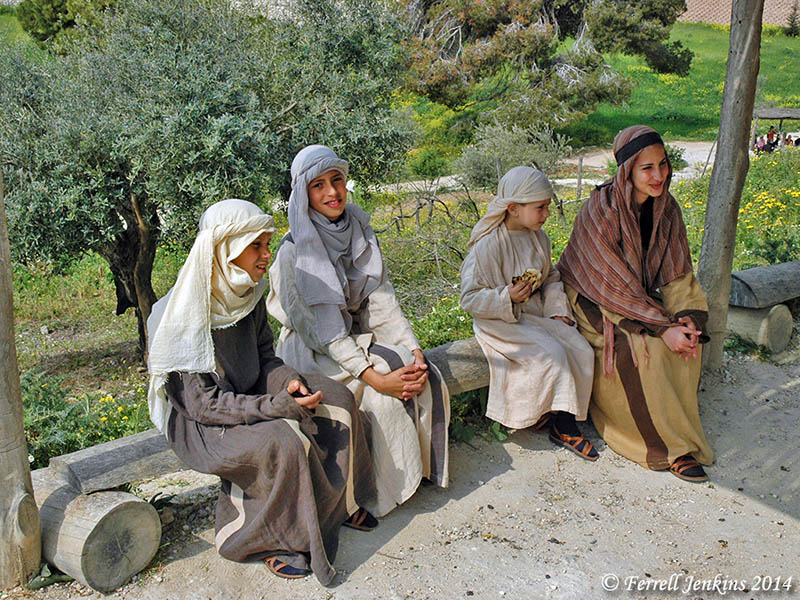
This photograph made at Nazareth Village helps to illustrate the Biblical text.

Children at Nazareth Village. Photo by Ferrell Jenkins.

Children at Nazareth Village. Photo by Ferrell Jenkins.

Archaeological Conferences in Houston

The Dunham Bible Museum at Houston Baptist University will host an Archaeological Conference devoted to Khirbet el-Maqatir, proposed site for Biblical Ai, Saturday, February 8, 2014. Speakers include Dr. Bryant Wood, Dr. Eugene Merrill, Dr. Scott Stripling, and Dr. Leen Ritmeyer.

Information about the conference and registration details may be found here.

From January 21 – December 19, 2014, the Dunham Bible Museum will display a special exhibit, Khirbet el-Maqatir – History of a Biblical Site. This is in cooperation with the Associates for Biblical Research. Details here.

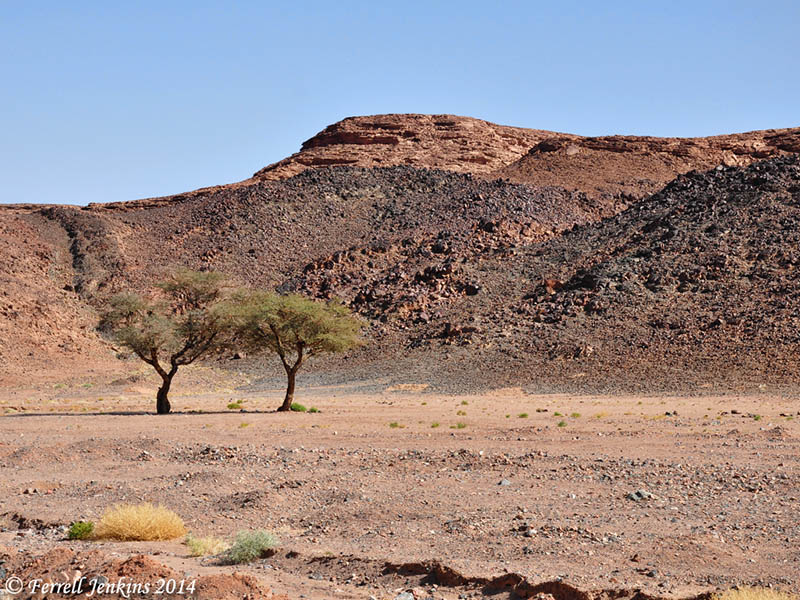
A scene in the eastern Sinai wilderness. Photo by Ferrell Jenkins.

A scene in the eastern Sinai wilderness. Photo by Ferrell Jenkins.

The Lanier Theological Library announces a lecture by James Hoffmeier and Stephen Moshier dealing with the exodus and the location of Mount Sinai. The titles for the January 18th lecture are,

  • Moses Did Not Sleep Here!
  • A Critical Look at Some Sensational Exodus and Mt. Sinai Theories

Registration information is here. (HT: Bible Places Blog).

The lectures by Hoffmeier and Moshier are the climax of a two day Consultation on the Historicity and Authenticity of the Exodus and Wilderness Traditions in a Post Modern Age. Details here.

Speakers include Richard Hess, Steven Ortiz, Alan Millard, Richard Averbeck, Lawson Youngers, Jr., and others.

Hiking Abraham’s footsteps

The full title of this Haaretz article is “Hiking in Abraham’s footsteps, from Turkey to the Holy Land.” Sounds incredible at the moment. To hike this complete trail from Haran (Genesis 12:4) to Beersheba (Genesis 21:31) (not to mention the trip to Egypt) requires travel in Turkey, Syria, Jordan, Israel, and the Palestinian Authority (West Bank).

Among the leaders back of the concept is David Landis and his wife Anna Dintaman, developers of the Jesus Trail from Nazareth to the Sea of Galilee. Their book, Hiking the Jesus Trail and Other Biblical Walks in the Galilee, is worthwhile even for those who do not plan to walk the trail.
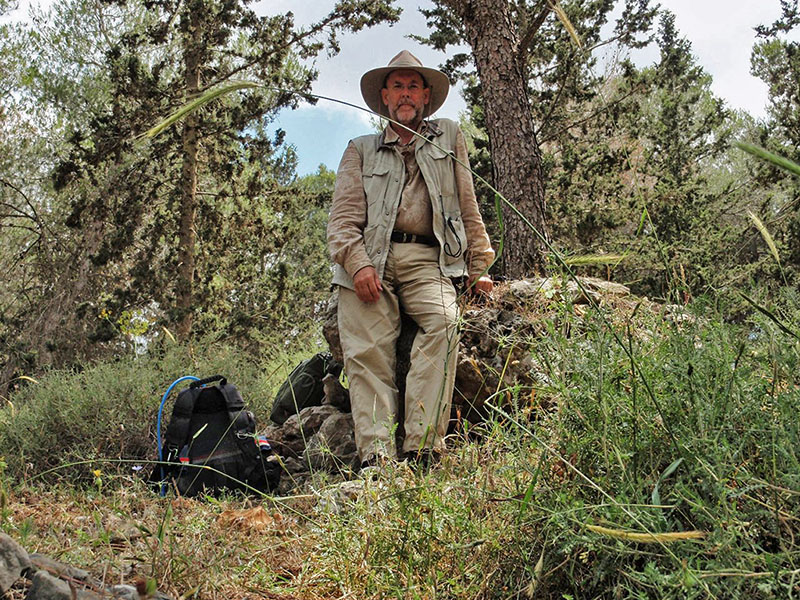
Larry Haverstock walked the Jesus Trail in 2011. I see that Larry’s posts about the experience is still available on his blog. See the 3rd Journey. You will find some fascinating stories along with beautiful photos you may never see from a bus or car.

Larry Haverstock in the Zippori Forest north of Nazareth.

Larry Haverstock in the Zippori Forest north of Nazareth.

The link to the Haaretz article may be accessed here. In order to read the full article you must register for free access to 10 articles a month.

Don’t expect to walk the Abraham Path from Haran (in Turkey) to Beersheva [Beersheba], but you might be able to walk small portions of the trail everywhere except the part going through Syria.

There are many hiking trails in Israel, but most of these avoid contact with the Palestinian Authority. The new plan seeks to involve the local people in the development of facilities useful to hikers.

If you like hiking, or if you appreciate the geography of the Bible lands you will probably enjoy the article. Abraham Path has a nice web site with maps and photos here.

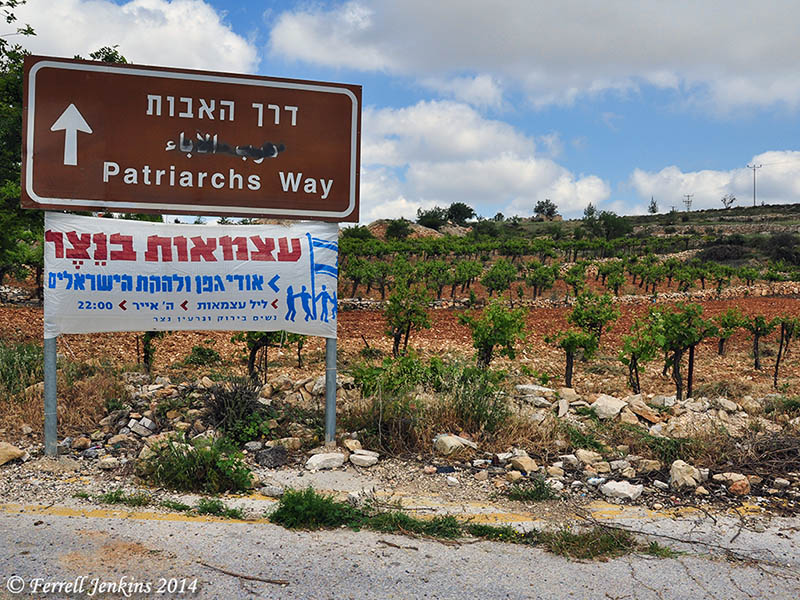
I don’t know what, if any, relationship there is between the Abraham  Path and the Patriarchs Way, a trail that is said to run from Beersheba to Nazareth. The defacing of the sign to eradicate the Arabic indicates one of the problems either trail might face. One often sees this sort of thing on signs pointing to Christian sites.

Sign pointing to Patriarchs Way off Hebron Road (Hwy. 60) south of Bethlehem . Photo by Ferrell Jenkins.

Sign pointing to Patriarchs Way off Hebron Road (Hwy. 60) south of Bethlehem . Photo by Ferrell Jenkins.

Walk the Land : A Journey on Foot through Israel, by Judith Galblum Pex, is a fascinating account of a couple who walked the Israel Trail from Eilat to Dan.
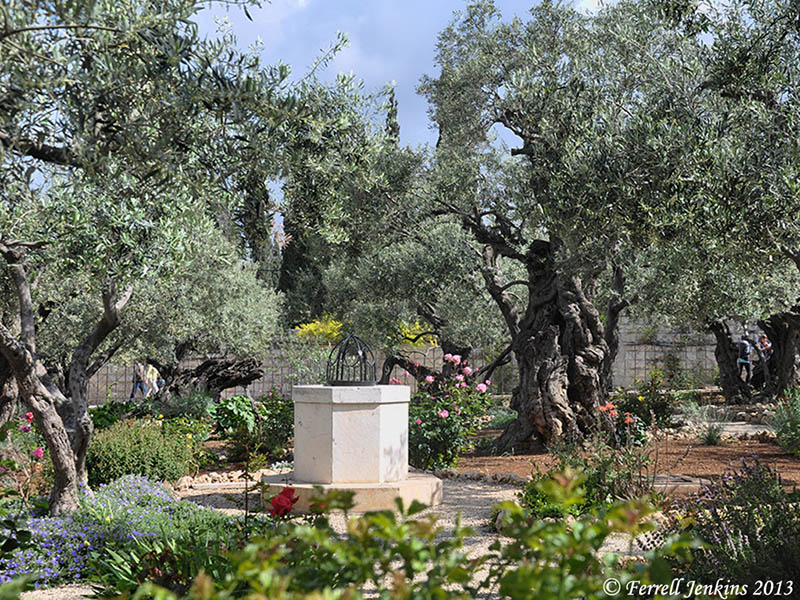
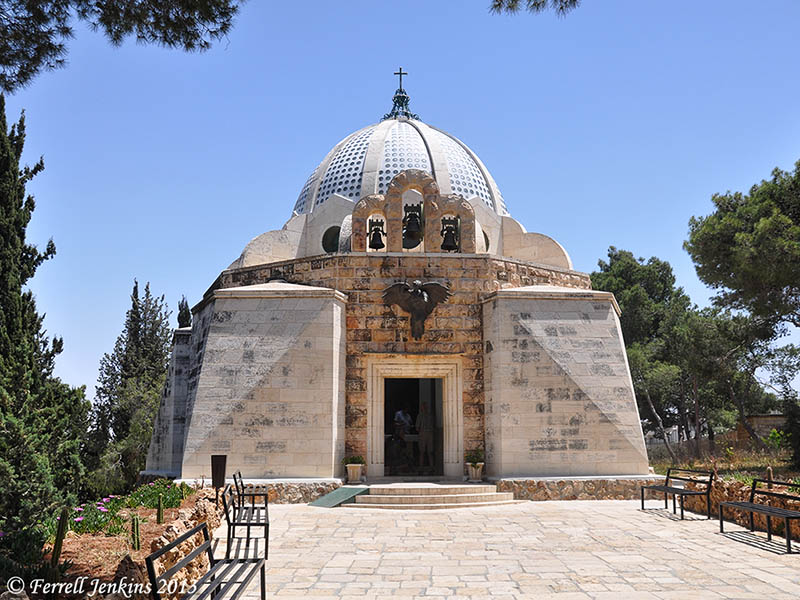
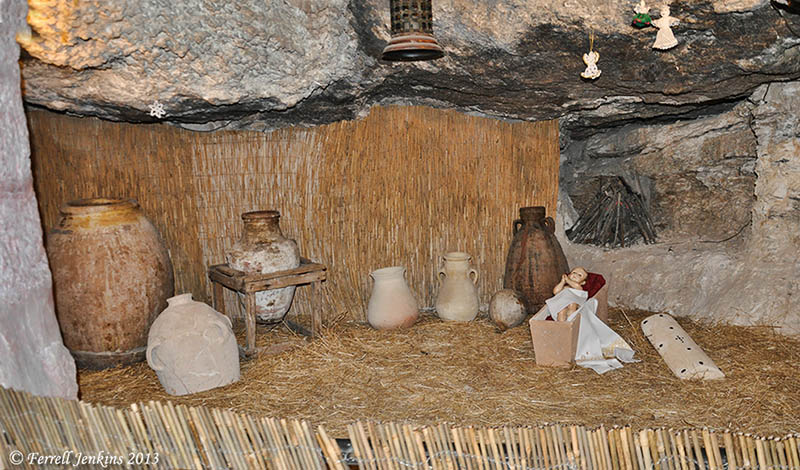
Photo of the year 2013 – Gethsemane

As we approached the end of the year 2013 I began to think of the wonderful places I visited and the photos I made. What photo stands out as the “photo of the year”? I have some unique photos, and I have other photos from places I have photographed many times. I won’t say that this is the best photo I made during the year, but it is one with great meaning to multitudes of Christians.

This photo that I wish to share with you is of the traditional Garden of Gethsemane. One thing is for sure. If the “place” mentioned in the New Testament is not here, it could not have been very far away.

Gethsemane is a place well known in the minds of Christians, for according to the Gospels it was there that Jesus prayed alone to the Father before his arrest and trial. The word Gethsemane means oil-press. It is the name of an olive orchard on the Mount of Olives. Not many olive trees remain on the mountain originally named for them. This photo was made in the modern Garden at the Church of All Nations.

As a gift to our faithful readers I want to share a hi-res image suitable for teaching and preaching presentations. Click here for the larger image.

A place called Gethsemane. Photo by Ferrell Jenkins, 2013.

Mark’s account of Jesus’ visit to Gethsemane begins this way:

And they went to a place called Gethsemane. And he said to his disciples, “Sit here while I pray.” And he took with him Peter and James and John, and began to be greatly distressed and troubled. And he said to them, “My soul is very sorrowful, even to death. Remain here and watch.” And going a little farther, he fell on the ground and prayed that, if it were possible, the hour might pass from him. (Mark 14:32-35 ESV)

Read the following verses for the complete story.

I visited several places in 2013 that I have not yet written about. Hopefully I will be able to get to some of these in the following months.

Visiting the shepherd’s fields near Bethlehem

After the birth of Jesus in Bethlehem, Luke records that an announcement of His birth was made to shepherds in the field at night.

And in the same region there were shepherds out in the field, keeping watch over their flock by night. And an angel of the Lord appeared to them, and the glory of the Lord shone around them, and they were filled with great fear. And the angel said to them, “Fear not, for behold, I bring you good news of great joy that will be for all the people. For unto you is born this day in the city of David a Savior, who is Christ the Lord. (Luke 2:8-11 ESV)

There was enough distance that the shepherds said, “Let us go over to Bethlehem and see this thing that has happened, which the Lord has made known to us.” (Luke 2:15 ESV)

We do not know the exact time of the birth of Jesus. We have a reasonable degree of certitude about the place of His birth, but places such as the field of the shepherds are not certain. As a result, traditions have risen about the place. Here I will mention three places that one can visit a short distance east of Bethlehem, near the wilderness of Judea. This area is known as Beit Sahour.

The first place is the Shepherd’s Field of the Franciscan Custody of the Holy Land (a Roman Catholic site). The photo shows the modern church built over a cave.

The Shepherd's Field of the Franciscan Custody of the Holy Land. Photo by Ferrell Jenkins.

The Shepherd’s Field of the Franciscan Custody of the Holy Land. Photo: F. Jenkins,

Under the church there is a large cave. These caves are not uncommon in the central mountain range. A display illustrating the birth of Jesus can be seen in the cave. One little note of interest. It is often pointed out that the manger of Luke 2:7 might be a feeding trough cut from stone. In this display the baby is placed in an ossuary! Notice the lid to the right.

Display in cave at Shepherd's Field. Photo by Ferrell Jenkins.

Display in cave at Shepherd’s Field. Photo by Ferrell Jenkins.

Outside one sees fields and olive groves.

Shepherd's fields at Beit Sahour. Photo by Ferrell Jenkins

Shepherd’s fields at Beit Sahour. Photo by Ferrell Jenkins.

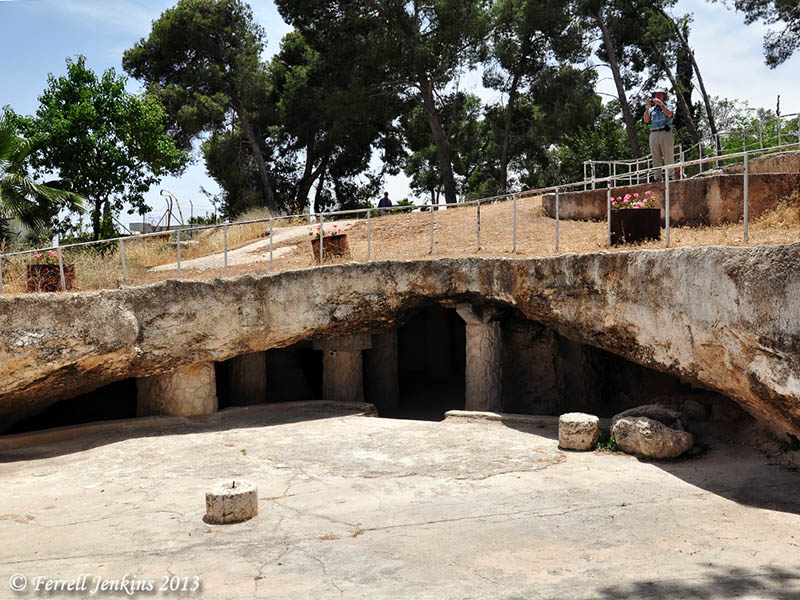
Not far away is the Shepherd’s Field of the YMCA. Some call it the Protestant Shepherd’s Field. There is a large cave on the property overlooking the fields of the region.

Caves at YMCA Shepherd's Field. Photo by Ferrell Jenkins.

Caves at YMCA Shepherd’s Field. Photo by Ferrell Jenkins.

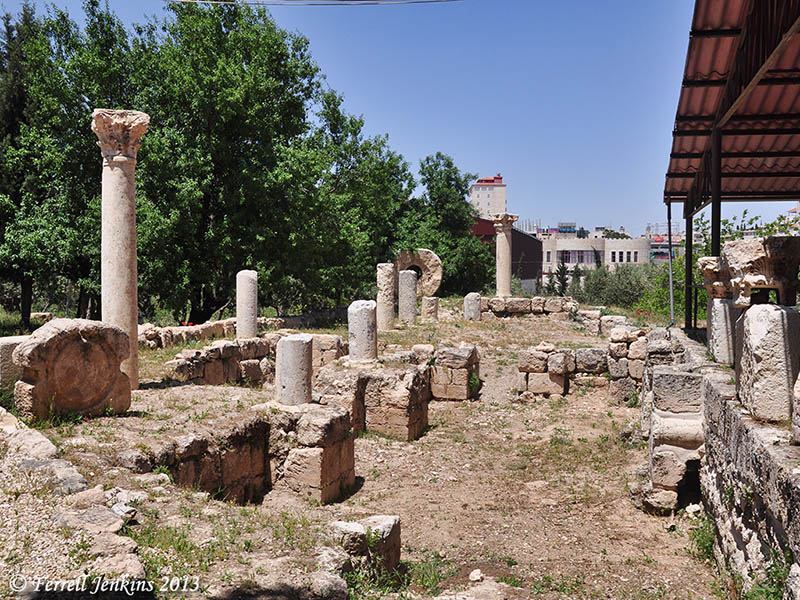
The Greek Orthodox site features ruins of a Byzantine church dating from the 5-7th centuries.

Byzantine church ruins at the Greek Orthodox site of the Shepherd's field. Photo by Ferrell Jenkins.

Byzantine church ruins at the Greek Orthodox site. Photo by Ferrell Jenkins.

Carl Rasmussen wrote about the “3 Christmases in Bethlehem” here, and Mark Ziese wrote about the Milk Grotto here. We have written about the Church of the Nativity several times, including here.

Reading the blogs #2

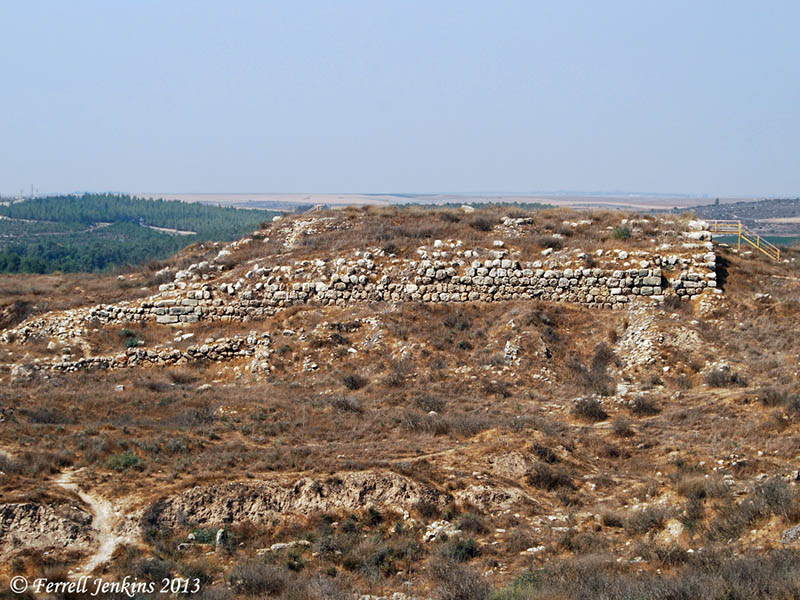
Michael G. Hasel of Southern Adventist University will join Yosef Garfinkel and Martin G. Klingbeil as co-directors of The Lachish Expedition in 2014. Southern has begun a web site devoted to the dig here. Categories include Project Overview, Goals and Strategy, History of Research, and Staff. We wrote about the Lynn H. Wood Archaeological Museum, at Southern, here.

The Judean fort at Lachish. Photo by Ferrell Jenkins.

The Judean palace-fort at Lachish is the largest Iron Age structure in Israel. Photo by Ferrell Jenkins.

Associates for Biblical Research announced here the death of ABR founder Dr. David Livingston. An issue of Bible and Spade devoted to the work of Dr. Livingston has been made available in PDF. Dr. Livingston gave much attention to locating Biblical Ai. I am hopeful Ancient Days, the web site devoted to his writings, will be maintained here.

Check ORBIS here. This is the Stanford Geospatial Network Model of the Roman World. Lot’s of possibilities here in studying Paul’s journeys.

The BBC reports on how some maps of the modern Middle East were drawn here.

Tom Powers has left Jerusalem for North Carolina. Hopefully he will maintain his View From Jerusalem web site. Now would be a good time to check “My Articles” and download his research material on the ancient aqueduct system, Conrad Schick, American Colony, and some ossuaries.

My friend Steve Wolfgang is trained as a historian and is a minister with a wide range of interests. This is reflected in his blog, ἐκλεκτικός.

I enjoy Larry Hurtado’s Blog. Check “Where did Earliest Christians Meet?” here. If you thought they always met in private homes, you might learn something.

One of my favorite blogs, checked regularly, is Charles Savelle’s Bible X, a blog devoted to all things Bible Exposition. Charles surveys material helpful to teachers and ministers. He recently included a link to online tools for creating Infographics, Self-Editing for Better Writing, and lots of brief book reviews.

I like to check on Dr. Rod Decker’s NT Resources. Rod has been diagnosed with cancer. One of his colleague’s is dealing with TN — “a nonterminal condition that produces some of the most excruciating pain known to medical science, and that on a very frequent basis.” Recently the two of them spoke in chapel before their students on the general theme “When Your World Crashes Down.” Their comments are available for download.

For sure I have mentioned Biblical Studies and technological Tools by Mark Hoffman. This is a great resources. The most recent post evaluates online backup and data syncing options.

For a few years now I have been using Dropbox for syncing material between my study computer and my traveling laptop. If you click here you will get 2.25 gig free, and I will get .25 gig addition. Click here.

Reading the blogs

The majority of the content of this blog deals with biblical studies, archaeology, travel and photography. Concentration is especially on travel in the Bible World. As a result of this I follow several blogs that are extremely helpful. These include:

Bible Places Blog. Todd Bolen’s Weekend Roundup, and Midweek Roundup are extremely helpful, as are his insightful comments on recent archaeological announcements.

HolyLandPhotos’ Blog by Carl Rasmussen covers numerous lesser known places. Recently he has covered some sites visited, or probably visited, by Paul on his journeys through Asia Minor (modern Turkey).

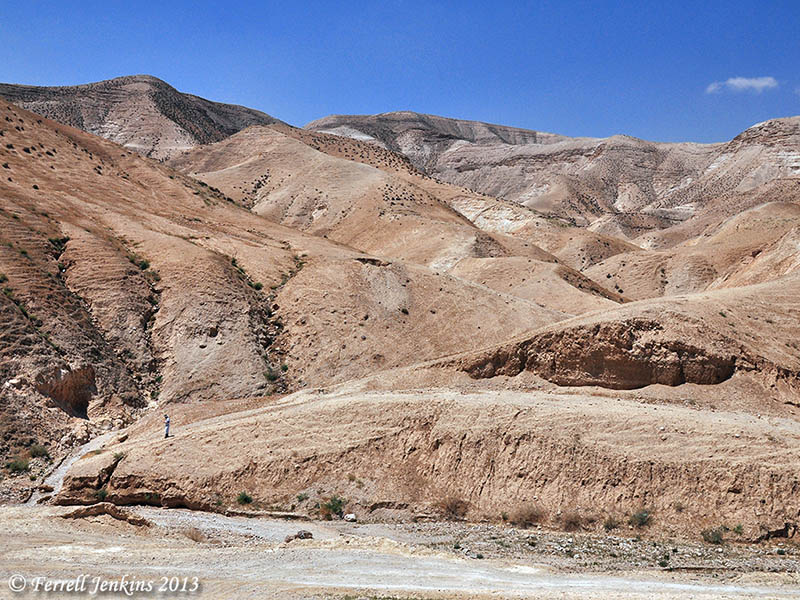
The wilderness of Judea. Photo by Ferrell Jenkins.

The wilderness of Judea. Photo by Ferrell Jenkins.

I have a few former students  who write about these areas. You might enjoy taking a look at Leon’s Message Board (Leon Mauldin), Exploring Bible Lands (Barry Britnell), Luke Chandler’s Blog. Leon recently posted photos of the gathering of olives at Shechem. Trent and Rebekah, former tour members, have posted some helpful articles during their six months in Israel.

Gordon Franz writes less frequently on his Life and Land Seminars, but most of his material reflects a considerable amount of research. As part of his ongoing Cracked Pot Archaeology series he posted a response to the theory that the Arabia of “Mount Sinai in Arabia” (Galatians 4:25) is in modern Saudi Arabia.

Leen Ritmeyer,  Ritmeyer Archaeological Design, writes about the way the buildings looked in Bible times as well as recent discoveries and developments.

Wayne Stiles seeks to connect the Bible and its Lands to Life. In a recent post he discussed the “Top 5 Gifts for Bible Lands Study.”

Shmuel Browns, Israel-tourguide, has an interesting blog with great photos. A recent post features fascinating photos of Nahal Prat or Wadi Qelt. This may be where Jeremiah was told to go and bury his loincloth (shorts) (Jeremiah 13:4-7). Most English versions use the word Euphrates for the Hebrew term Perath. The NET Bible transliterates the term. Nahal Prat is near Jeremiah’s hometown Anatot (Anathoth). We wrote about a morning with Shmuel here.

Recently I learned of two new blogs dealing with the Bible lands and customs. Mark Ziese writes Bible Lands Explorer. Mark’s most recent post is about the Milk Grotto in Bethlehem. Yep, a place dedicated to Mary feeding baby Jesus. Willis Britt writes on Lessons From The Land. A recent series deals with Preaching and the Land.

Believe me, there is quite an education in reading these blogs.

I keep links to these and other blogs on the Scholarly page at the Biblical Studies Info Page.

Elah River flooding at Tell es-Safi/Gath

Several times we have commented on the wonderful photos supplied by Prof. Aren Maeir about the archaeological excavations at Tell es-Safi/Gath, both during the season and throughout the year.

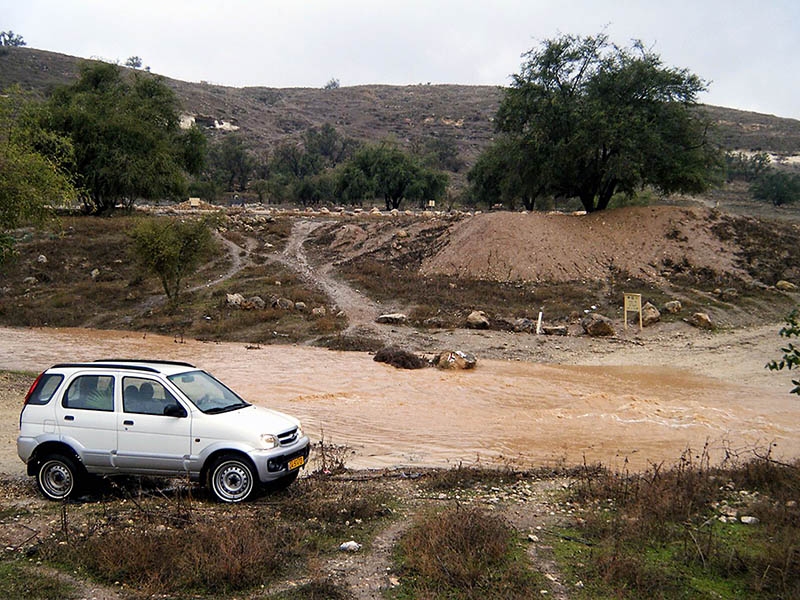
For the past two days Maeir has posted photos of the Elah River flooding at Safi/Gath. English readers will relate to the word brook. The Hebrew is nahal. This is the same brook we read about in the account of David choosing five smooth stones when he went to fight Goliath (1 Samuel 17:40). The term used here is equivalent to the Arabic wadi.

A stream like this is dry most of the year, but flows freely during the rainy, winter season.

The photo below is from the Tell es-Safi/Gath blog here. It was made by Uri Yehuda, a student in Prof. Maeir’s department at Bar Ilan University. Those who have visited Gath during the dry season should find it instructive.

Flooding of the Elah River next to Safi. Photo by Uri Yehuda.

Flooding of the Elah River next to Safi. Photo by Uri Yehuda.

You may locate this photo in hi-resolution, and another made by Aren on the blog. The best picture may be in video format with a young lady telling us it is the “flood of December.” The link to all of this material is here.

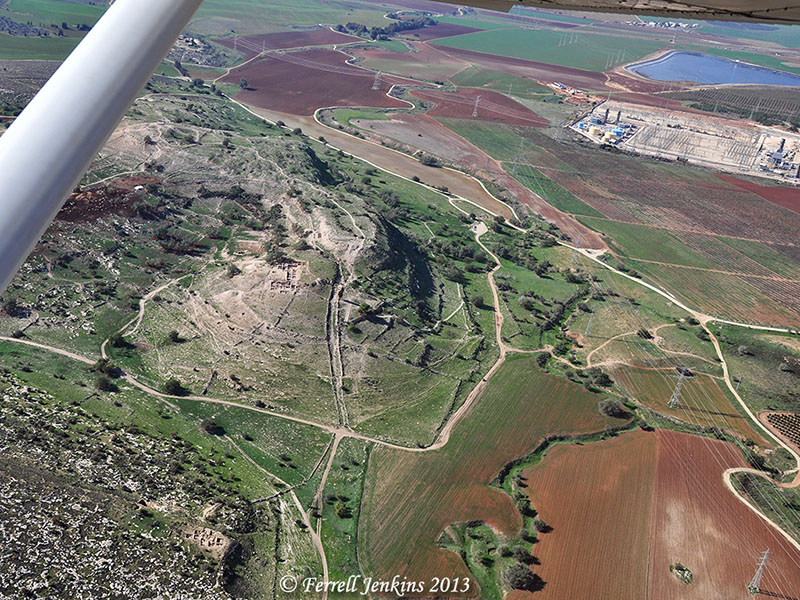
The Brook of Elah begins below Adulam, flows through the valley bearing its name, around Azekah, past Gath, and into the Mediterranean Sea.

In the aerial photo below you will see Tell es-Safi/Gath just to the left of the center of the photo. The Elah River (Brook) can be seen in the lower right corner of the photo. This photo was made December 15, 2009. The river bed is green because there had been earlier rains, but nothing like the recent storm seen in Israel.

Aerial view of Gath and the Elah Brook. Photo by Ferrell Jenkins.

Aerial view of Gath and the Elah Brook. Photo by Ferrell Jenkins.

A snow house in Jerusalem

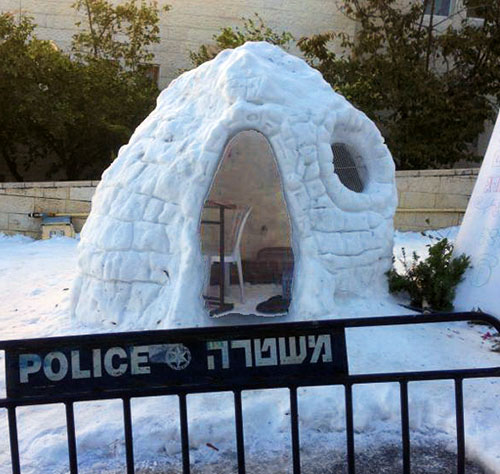
Elie sent me a photo he made this morning of a snow house in Jerusalem. If you know Jerusalem you know that the houses are built of stone (some of Jerusalem stone). The person building this snow house made it in imitation of the stone houses. It’s always good to have police protection!

Snon house in Jerusalem appears to be made of snow stone. Photo by EMB. Dec. 16, 2013.

Snow house in Jerusalem appears to be made of snow stone. Photo by EMB. 12/16/13.

Benaiah the son of Jehoiada, one of David’s mighty men “went down and struck down a lion in a pit on a day when snow had fallen” (1 Chronicles 11:22 ESV)