Category Archives: Culture

“It is the Land of Honey” – Tel Rehov discoveries on display at Eretz Israel Museum

Tel Rehov is located about three miles south of Beth-Shean (Beth-Shan) on the east side of Highway 90. Rehov is not mentioned in the Old Testament, but it is known from Pharaoh Shishak’s city list on the wall of the temple of Amun in the Karnak Temple at Luxor, Egypt. This campaign is also mentioned in the pages of the Bible (1 Kings 14:25-28; 2 Chronicles 12:2-9).

Tel Rehov was occupied during the Bronze Age and the Iron Age. The city may be one of those not captured by Israel when they entered the Land under the leadership of Joshua.

The men of Manasseh did not conquer Beth Shan, Taanach, or their surrounding towns. Nor did they conquer the people living in Dor, Ibleam, Megiddo or their surrounding towns. The Canaanites managed to remain in those areas. Whenever Israel was strong militarily, they forced the Canaanites to do hard labor, but they never totally conquered them. (Judges 1:27-28 NET; cf. Joshua 17:12)

The city was destroyed by the Assyrians in the eighth century B.C. as they made their steady trek south.

Archaeological excavations were conducted at Tel Rehov from 1997 to 2012 under the direction of Prof. Amihai Mazar and Dr. Nava Panitz-Cohen of the Hebrew University of Jerusalem. For information and photos see the excavation website here.
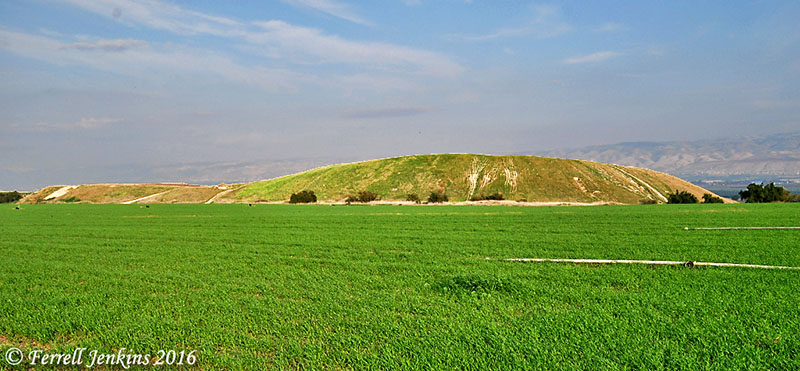
View east of Tel Rehov in the Beth Shean Valley. Photo by Ferrell Jenkins.

Tel Rehov in the Beth-Shean Valley to the east of Highway 90. The mountains of Gilead are visible in the distance. Photo by Ferrell Jenkins.

The next view takes us to the top of the mound. From there we see the Jordan Valley and a nice view of the Gilead mountains in modern Jordan.
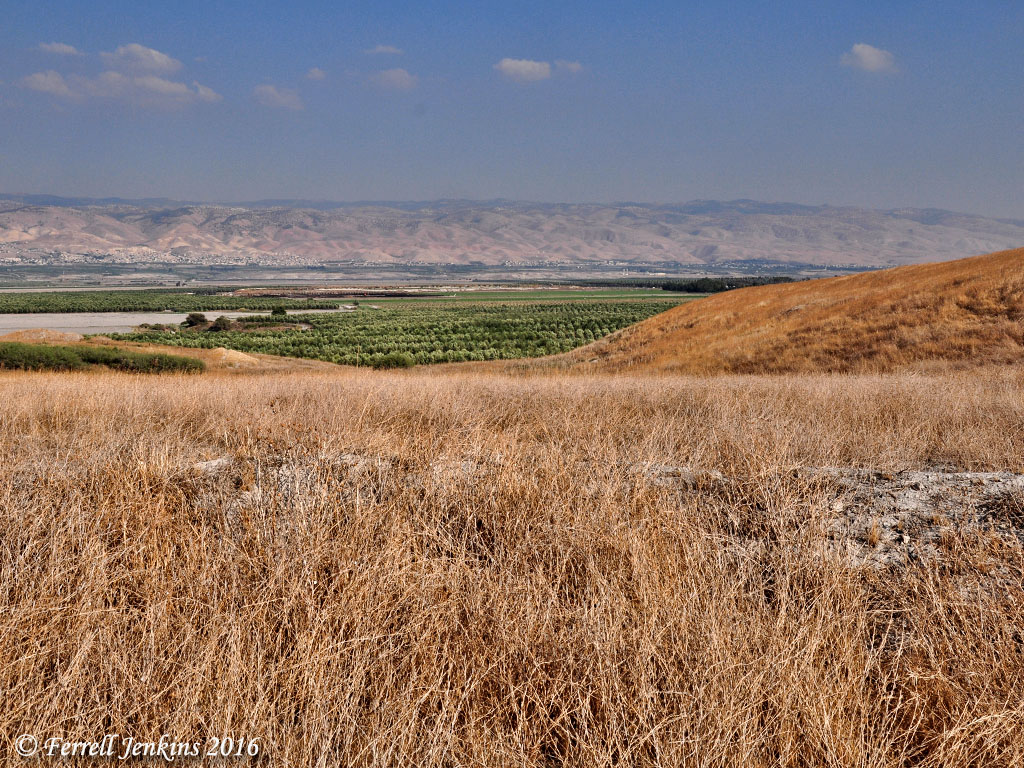
View east from atop Tel Rehov. We see the Jordan Valley and the Gilead mountains. Photo by Ferrell Jenkins.

View east from atop the north end of Tel Rehov. We see the Jordan Valley and the Gilead mountains in the distance. Photo by Ferrell Jenkins.

Many artifacts, including numerous household and cult objects, were uncovered at Tel Rehov. Perhaps the most unusual find was an industrial apiary. The small photo below from the excavation web site shows some of the beehives made of clay.
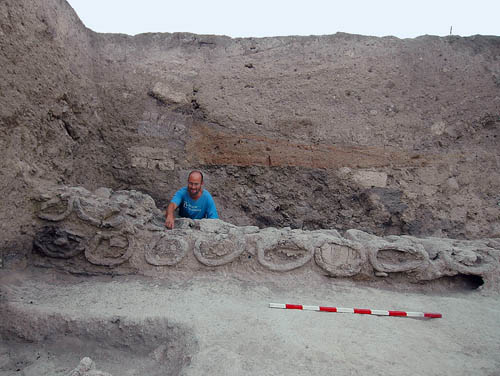
 Apiary at Tel Rehov, the eastern row of hives © Copyright - The Beth-Valley Archaeological Project, Hebrew University of Jerusalem,

Apiary at Tel Rehov, the eastern row of hives. © Copyright – The Beth-Shean Valley Archaeological Project, Hebrew University of Jerusalem,

From January 12 to October 31, 2016, items from Tel Rehov are exhibited at the Eretz Israel Museum in Tel Aviv under the title It Is the Land of Honey. I had the opportunity to visit this exhibition in April. The Museum website provides detailed information about the exhibition and a few small photos here.

The houses at Tel Rehov during Iron Age IIA differed from the typical houses found in known Israelite cities. According to the Museum website,

A salient feature of the Iron Age IIA city was the exclusive use of mudbrick to construct all buildings, incorporating wooden beams in walls and floors. Each building was unique in its architectural plan, and did not resemble any of the common blueprints of the Iron Age II, such as four-room houses or pillared buildings.

The photo below shows one of the clay beehives. A reconstruction of a honeycomb is visible on the right. Some of the bees found in the hives were determined to be from Anatolia, modern central Turkey. This adds one more piece of evidence showing how interconnected the nations of the ancient Middle East were. Some of the bees found in charred honeycombs are in the petri dishes in the front right of the photo. The lid of the beehive, with a hole in the center, is to the left of the hive. Click on the photo for a larger image.
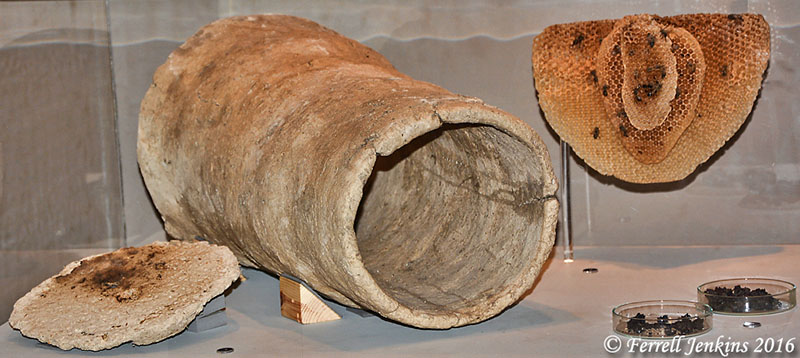
One of the beehives from the Tel Rehov apiary. Eretz Israel exhibit. Photo by Ferrell Jenkins.

One of the beehives from the Tel Rehov apiary. Eretz Israel exhibition. Photo by Ferrell Jenkins.

The exhibition includes a large display of items from Tel Rehov. I will list just a few.

  • Several four horned altars made of clay.
  • A wide variety of household pottery, including an oven of the period.
  • One of the mud bricks of which the houses were constructed.
  • A reconstructed loom with weights found during the dig. Several others items from the “House of Elisha” are on display. The ostracon with the name of Elisha written on it in red ink is not displayed, but there is information about it in the exhibition book. There were several altars in this house.
  • A storage jar had the name Nimshi inscribed on it – the name identical to that of King Jehu’s grandfather (1 Kings 19:16; 2 Kings 9:2).
  • Some iron blades, arrow heads, and possibly a sickle.
  • Some typical Canaanite clay fertility goddesses.
  • Stamped jar handles unique to Tel Rehov.
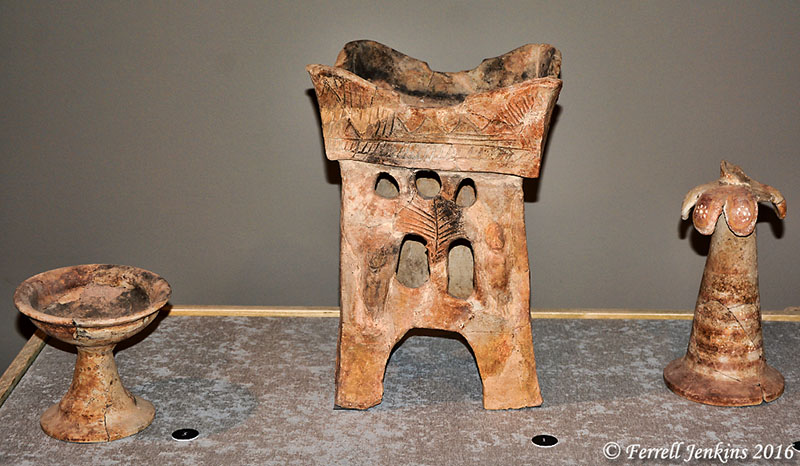
Horned altar and chalices from Tel Rehov. Photo by Ferrell Jenkins.

Tower shaped horned altar and chalices from Tel Rehov found in the area of the apiary. This altar is listed as being on loan from the Israel Museum in the exhibition book. If you miss the exhibition in Tel Aviv, perhaps you can see it later in the Israel Museum. Photo by Ferrell Jenkins.

The Museum has produced a nice 256-page book in Hebrew and English about Tel Rehov and the exhibition. I don’t see it listed at Amazon, but if you visit the exhibition you will probably wish to purchase a copy at the Museum shop.

Mazar and Panitz-Cohen published a brief article, with several photos of Tel Rehov artifacts, under the title “To What God? Altars and a House Shrine from Tel Rehov Puzzle Archaeologists” in the July/August 2008 Biblical Archaeology Review.
Sinuhe takes a trip through Canaan

The earliest description of Canaan comes from an Egyptian literary text. In The Story of Sinuhe (see-NUU-hay) written in the 20th century B.C., a traveler tells of his pleasant stay in northern Canaan (possibly the Beka Valley of Lebanon). He describes the land as follows:

Figs were in it, and grapes. It had more wine than water. Plentiful was its honey, abundant its olives. Every (kind of) fruit was on its trees. Barley was there, and emmer. There was no limit to any (kind of) cattle. (qtd. in Pritchard, Ancient Near Eastern Texts, 19)

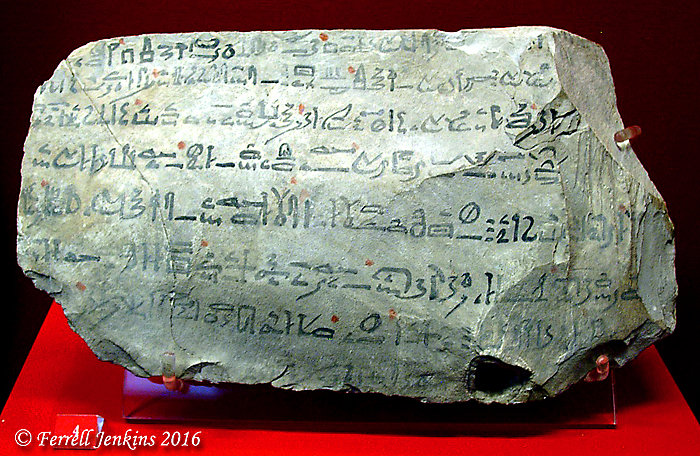
This description reminds one of the promise God made to the Israelites to bring them into a land flowing with milk and honey (Exodus 3:8). A copy of The Story of Sinuhe written on stone is on display in the Ashmolean Museum, Oxford, England. The stone below, now in the British Museum, contains the final stanza of the Story or Tale.

A portion of the Tale of Sinuhe. British Museum. Photo by Ferrell Jenkins.

A portion of the Tale of Sinuhe. British Museum. Photo by Ferrell Jenkins.

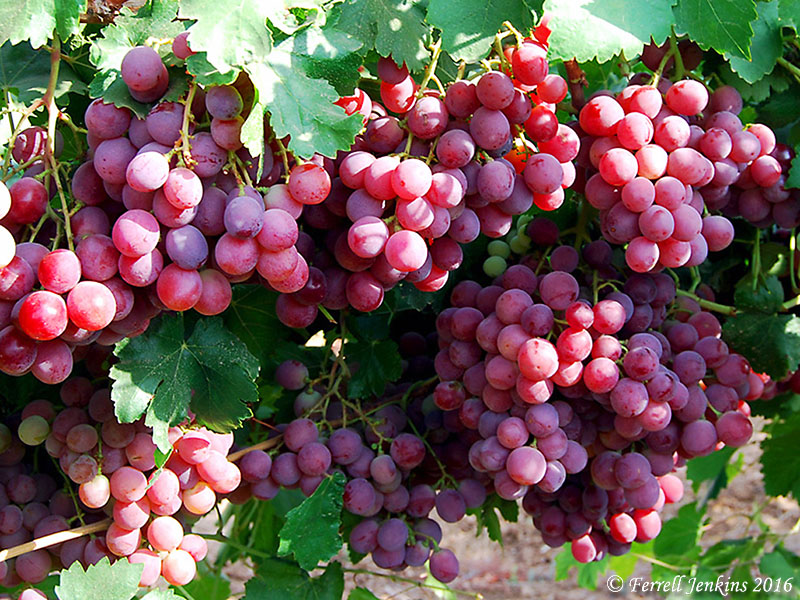
The photo of grapes from Lachish reminds us of the abundance of the land through which Sinuhe traveled.

Ripe grapes near Lachish in the Shephelah. Photo by Ferrell Jenkins.

Grapes on the vine near Lachish in the Shephelah. Photo by Ferrell Jenkins.

Measuring the Nile and your taxes

We have often heard the adaptation of Herodotus’ statement that Egypt is the gift of the Nile. The flooding of the Nile in ancient times was the key to the prosperity of the Nile Valley.

All along the Nile there are still examples of the Nile-o-meters that were used to measure the flooding. The higher the flood water, the more taxes that would be paid into the temple coffers.

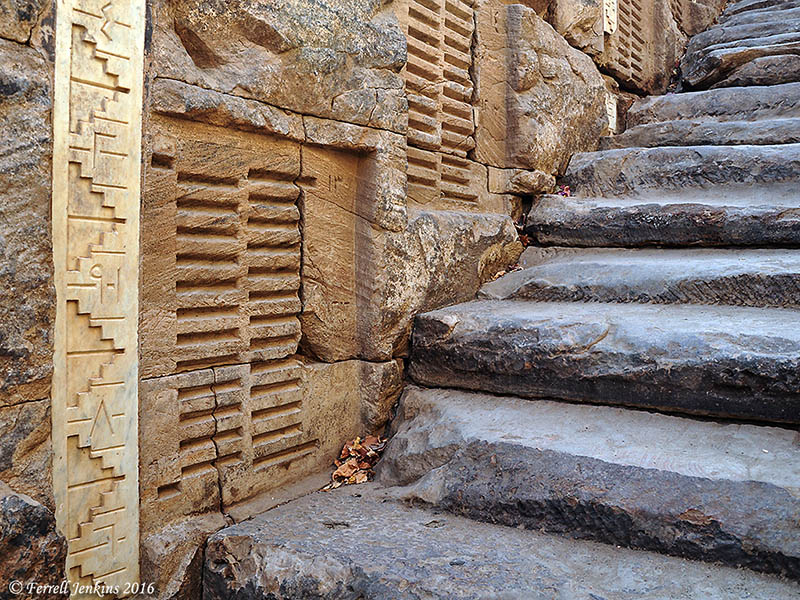
In the photo below we see the meter on the Nile at Elephantine Island at Aswan. Notice the water lines along the rock structure. Entrance to the Nile-o-meter is from above, or from the opening to the right of center.

Elephantine Island at Aswan, Egypt. Photo by Ferrell Jenkins.

Nile-o-meter on Elephantine Island at Aswan, Egypt. Photo by Ferrell Jenkins.

The photo below provides a better view of the Nile-o-meter.

Nile-o-meter and steps on Elephantine Island at Aswan, Egypt. Photo by Ferrell Jenkins.

Nile-o-meter and steps on Elephantine Island at Aswan, Egypt. Photo by Ferrell Jenkins.

The principle is the same today. We pay taxes based on the amount we have earned within a year.

Therefore one must be in subjection, not only to avoid God’s wrath but also for the sake of conscience. For because of this you also pay taxes, for the authorities are ministers of God, attending to this very thing. Pay to all what is owed to them: taxes to whom taxes are owed, revenue to whom revenue is owed, respect to whom respect is owed, honor to whom honor is owed. (Romans 13:5-7 ESV)

Two sparrows for a small copper coin

To illustrate His lessons, Jesus used illustrations about the grass and flowers of the field, and sparrows to teach God’s care for us.

Are not two sparrows sold for a penny? And not one of them will fall to the ground apart from your Father.  But even the hairs of your head are all numbered.  Fear not, therefore; you are of more value than many sparrows. (Matthew 10:29-31 ESV)

The penny, cent, or copper coin mentioned here is used for the Greek term assarion. The King James farthing represents a coin of the United Kingdom common in the 17th century, but withdrawn from circulation in 1961.

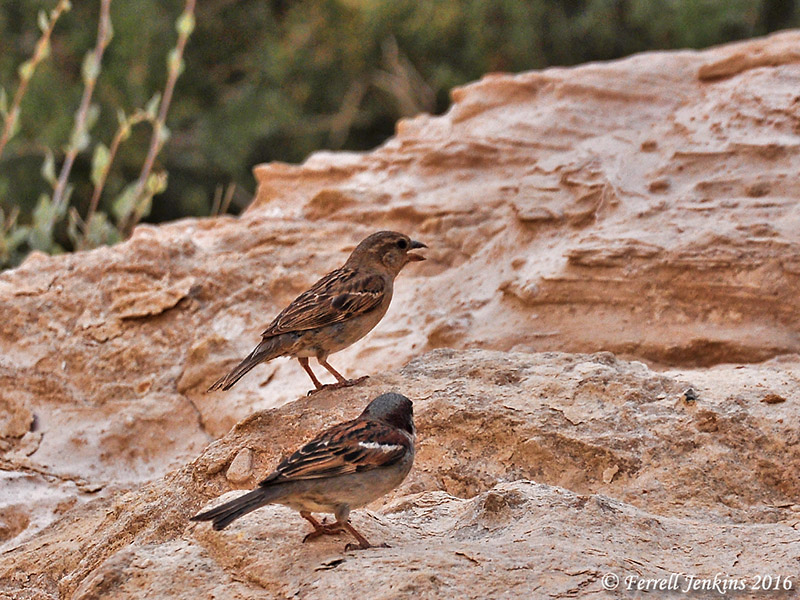
Two sparrows at En Avedat in Israel's Negev. Photo by Ferrell Jenkins.

Two sparrows at En Avedat in Israel’s Negev. Photo by Ferrell Jenkins.

This Roman copper assarion was worth 1/16 denarius. Some numismatists say this was a quadran, but others say it was larger than the quadran and usually bore the picture of the emperor. This is the term translated farthing in the KJV. The denarius was a Roman silver coin equivalent to the day’s wage for a common laborer (Matthew 20:1-16). Because our currency values vary by the day it is difficult to translate the terms describing coins of Jesus’ time.

One could buy two sparrows for a cent (assarion) (Matthew 10:29) or five sparrows for two cents (Luke 12:6). Citing a document from the time of Diocletian (ruled A.D. 284-305), Deissmann says if we analyze this account as an economic document of the Roman Imperial period we learn three things:

  1. Sparrows were a very cheap article sold in the market as food for the poor.
  2. They were sold by the pair or in fives.
  3. The market price was two sparrows for an assarion.

Deissmann comments about Jesus,

“Even in small things Jesus is great. The unerring eye for actualities that asserts itself so repeatedly in the gospel parables comes out also in the saying about the sparrows… Jesus was in his true element in the market-place, watching a poor woman counting her coppers to see if she could still take five or ten sparrows home with her. Poor, miserable little creatures, fluttering there, such numbers of them, in the vendors’ cages! A great many can be had for a very small sum, so trifling is their value. And yet each one of them was loved by the Heavenly Father. How much more will God care for man, whose soul is worth more than the world!” (Light From the Ancient East 272-5).

If the Lord cares for the sparrow, he certainly cares for youand me.

Over the years I have eaten my share of fried chicken while visiting with my brethren (and I love it), but I would need to be real hungry to eat the pulley bone (it’s a southern thing) of a little sparrow.

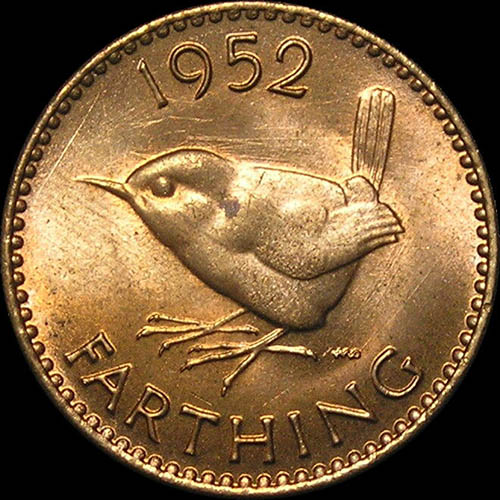
If you have never seen a farthing, just search the Internet for farthing images and you will locate many. Instead of a sparrow, they carry the image of a wren on the reverse side. The one here is from the web page of wybrit.com, a source from which one may buy farthings.

Reverse of a UK farthing minted in 1952. The obverse carries the image of King George VI. Photo: wybrit.com

Reverse of a United Kingdom farthing minted in 1952. The obverse carries the image of King George VI. Photo from wybrit.com.

Jesus went among the villages teaching

Jesus left the shores of the Sea of Galilee and Capernaum to return to Nazareth to teach the people there.

 And when Jesus had finished these parables, he went away from there, and coming to his hometown he taught them in their synagogue, so that they were astonished, and said, “Where did this man get this wisdom and these mighty works?  (Matthew 13:53-54 ESV)

When he left Nazareth He “went about among the villages teaching” (Mark 6:6).

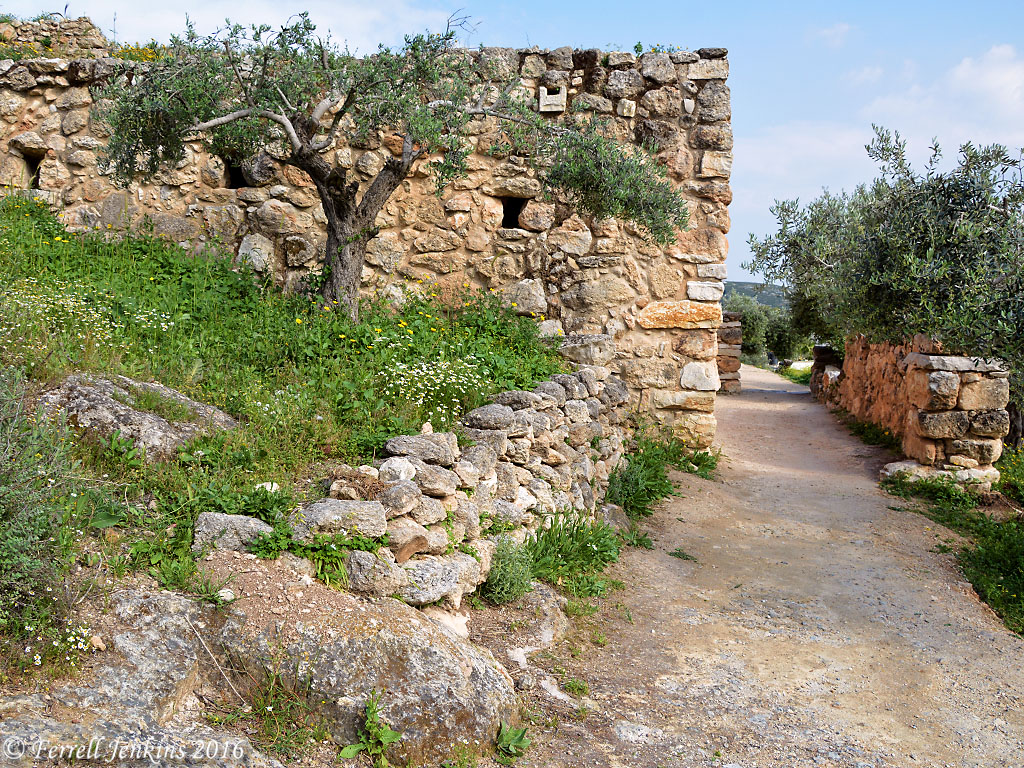
When I see the scene depicted at Nazareth Village of the stone house, the olive trees, and the dusty path, I recall the visits Jesus and His disciples made throughout Galilee.

A dirt path and one of the houses at Nazareth Village. Photo by Ferrell Jenkins.

A dirt path and one of the houses at Nazareth Village. Photo by Ferrell Jenkins.

Lois Tverberg, in her excellent book Walking in the Dust of Rabbi Jesus, has written a helpful work about Jesus and His teaching drawing on the Jewish concept of the rabbi and his disciples.

The way Jesus taught his first disciples was not unique but part of a wider tradition in Judaism that began a few centuries before his time. Jesus didn’t hand his disciples a textbook or give them a course syllabus. He asked each one of them to follow him— literally, to “walk after” him. He invited them to trek the byways at his side, living life beside him to learn from him as they journeyed. His disciples would engage in life’s activities along with him, observing his responses and imitating how he lived by God’s Word.

Out of this unusual teaching method arose a well-known saying: you should learn from a rabbi by “covering yourself in his dust.” You should follow so closely behind him as he traveled from town to town teaching that billows of sandy granules would cling to your clothes. As you walked after your rabbi, your heart would change. This will be our task in this book, to stroll through Jesus’ ancient world at his side, listening to his words with the ears of a disciple. (Walking in the Dust of the Rabbi Jesus, Zondervan, p. 28)

There must have been a buzz of excitement when Jesus and His disciples walked the dusty paths of Nazareth, and indeed, of all Galilee.

When Jesus came to Nazareth He entered the synagogue on the Sabbath day and participated in the study.

Synagogue reconstruction at Nazareth Village. Photo by Ferrell Jenkins.

Synagogue reconstruction at Nazareth Village. Photo by Ferrell Jenkins.

Lee Levine of Hebrew University summarizes the archaeological evidence for known first century synagogues.

Solid archaeological evidence for the first-century synagogue is attested at eight sites in Judea: Masada, Herodium, Jerusalem (the Theodotos inscription from the City of David), Qiryat Sefer, and Modi’in (both in western Judea), with a possible additional site at Horvat ‘Etri, south of Bet Shemesh. In the Galilee, it is found at Gamla, Migdal, and quite probably Khirbet Qana, with considerably less certain remains from Capernaum, Chorazin, and at a second site in Migdal. (Lee I. Levine, “The Synagogues of Galilee” in Fiensy and Strange, Galilee in the late second temple and mishnaic periods, Vol. I. Minneapolis: Fortress Press, 2014. 129-150.)

The New Testament writers mention other synagogues such as the one at Nazareth.

It is unfortunate that the residents of Nazareth did not want to get dusty. Are you dusty from following Jesus?

Timnah – where Samson met his first love

Perhaps the most memorable event of Timnah recorded in the Bible is that of the affair between Samson and a Philistine woman.

Samson went down to Timnah, where a Philistine girl caught his eye. (Judges 14:1 NET)

Delilah, the most famous of Samson’s three wives, is said to have lived in the Sorek Valley, but Timnah is not specifically named (Judges 16:4).

The LORD had commanded Israel not to become involved in mixed marriages with the people of the land (Exodus 34:16; Deuteronomy 7:3). But Samson had the misfortune of living too close to the border of Israel’s enemies, the Philistines. And he lacked the determination to abide by the commands of the LORD.

There were other significant events associated with Timnah. Here is a brief list.

  • Judah went up to Timnah to his sheep shearers, at which time he mistook Tamar, his own widowed daughter-in-law, for a prostitute. She conceived and bore twin sons (Genesis 38:12-30).
  • Timnah is mentioned as being a town of the tribe of Judah (Joshua 15:10, 57).
  • A little later the territory had transferred to the tribe of Dan (Joshua 19:40-46).
  • By the time of King Ahaz (735-715 B.C., McKinny), Timnah was in the hands of the Philistines (2 Chronicles 28:18).

Timnah is identified with Tel Batash in the Sorek Valley, about 4 miles northwest of Beth-Shemesh. Ekron (Tel Miqne) is about 3½ miles west of Timnah. The Sorek River flows past both cities on its way to the Mediterranean.

Tel Batash was excavated by New Orleans Baptist Theological Seminary for three seasons (1977-79). Between 1981-89, the site was excavated under the direction of George L. Kelm of Southwestern Baptist Theological Seminary and Amihai Mazar of Hebrew University. The site was occupied from the Middle Bronze IIB (18th or 17th centuries B.C.), through the Late Bronze Age and the Iron Age. In Iron Age I, Timnah was a Philistine city.

Kelm and Mazar wrote Timnah A Biblical City in the Sorek Valley (Eisenbrauns 1995) to provide a report of their excavations.

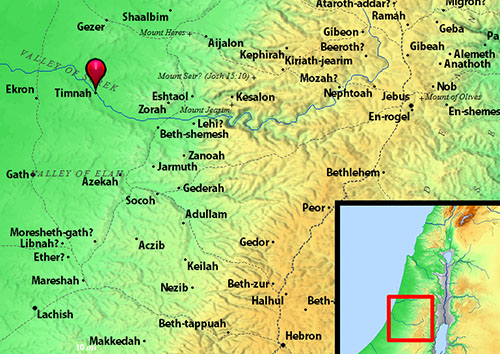
Map showing Timnah. Credit: BibleHub.com.

Map showing Timnah. Credit: BibleHub.com.

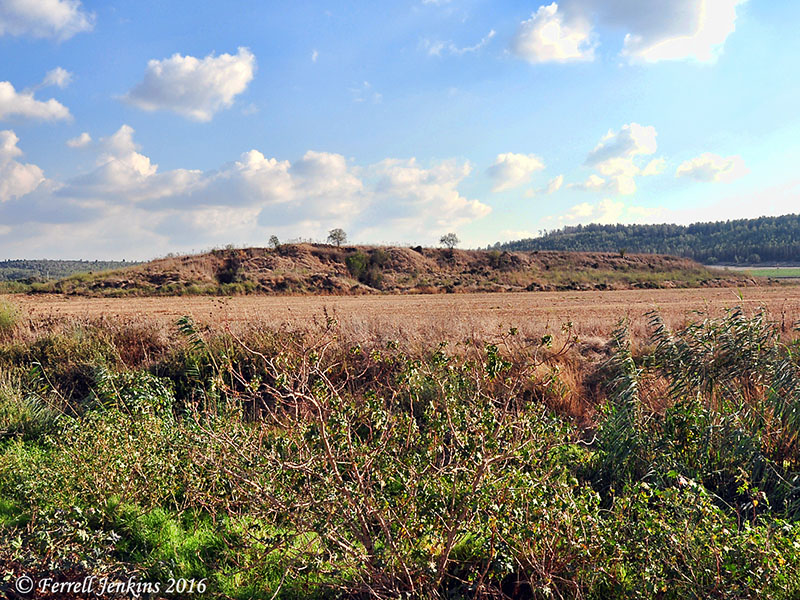
Timnah is off the beaten track and very few people visit it. Easy routes to the site have been blocked by the farmers in the Valley. Leon Mauldin and I searched for, and eventually located, Timnah in the rich alluvial Sorek Valley in 2011. Unlike Lachish, Mareshah, Gath, or Azekah the tel is unimpressive.

Timnah, beyond the brook Sorek, in August, 2011. Photo by Ferrell Jenkins.

Timnah, on the southern bank of the Sorek, in August, 2011. Photo by Ferrell Jenkins.

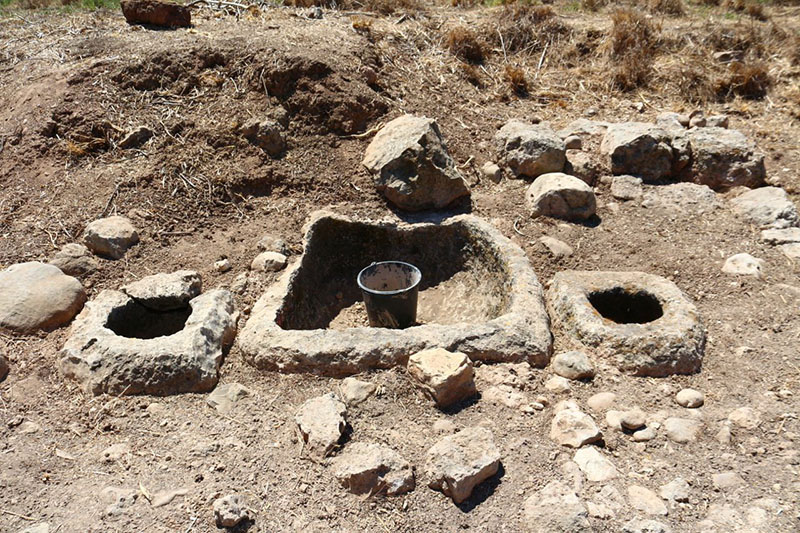
In 2013 our friends Trent and Rebekah Dutton were trying to locate Timnah when they saw two shade tents and the Israel Antiquities Authority flag on a small rise in the fields. The IAA was doing some work at the site and explained to them the restoration work they were doing. Here is a photo the Dutton’s shared of the reconstructed Oil Press from the 7th century B.C. See Kelm and Mazar, pp. 150-152, for the way this looked at the time of the dig. An architect’s (Leen Ritmeyer) drawing of the installation is found on page 87. Some finds are intentionally covered by the excavators at the end of a season or the completion of a dig. This appears to be one such example.

The Oil Press installation at Timnah. Photo by Trent & Rebekah Dutton.

The Oil Press installation at Timnah. Photo by Trent & Rebekah Dutton.

Earlier this month Leon and I had the opportunity to fly over the Sorek Valley. I don’t think our pilot had ever seen the site before, but our previous experience on the ground, Google earth, and the excavation report allowed us to locate it from the air.

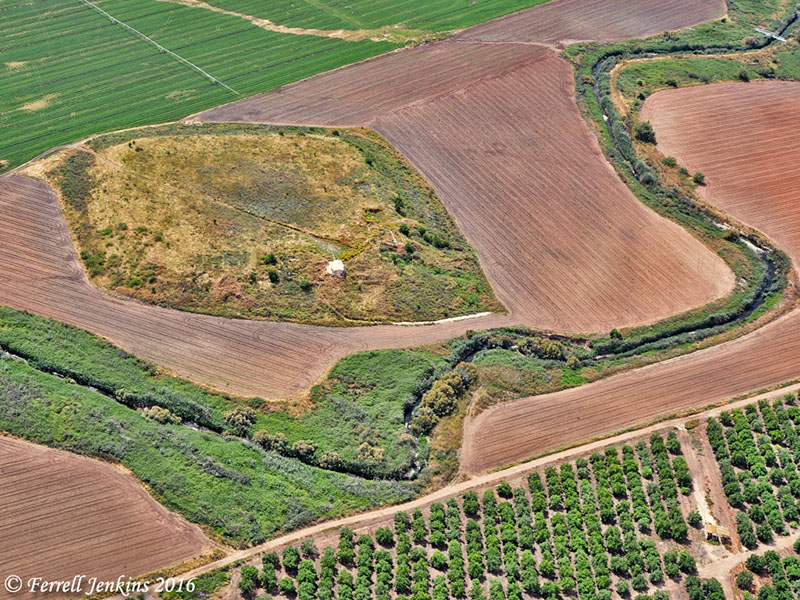
Aerial view of Timnah. Photo by Ferrell Jenkins.

Aerial view of Timnah and the Sorek (April, 2016). Photo by Ferrell Jenkins.

I think the little white building covers the Oil Press installation. After a quarter of a century the excavated areas are now covered with natural growth.

It is a long story, but this is where Samson met his first Philistine wife, and maybe another. There is always a danger when one lives too close to the border.

If you do not already have Brad Gray’s Make Your Mark: Getting Right What Samson Got Wrong, now might be time to take a look at our earlier review.
My late friend and colleague, James Hodges, served as an Area Supervisor at Timnah in 1977.

Only one example of Roman crucifixion discovered

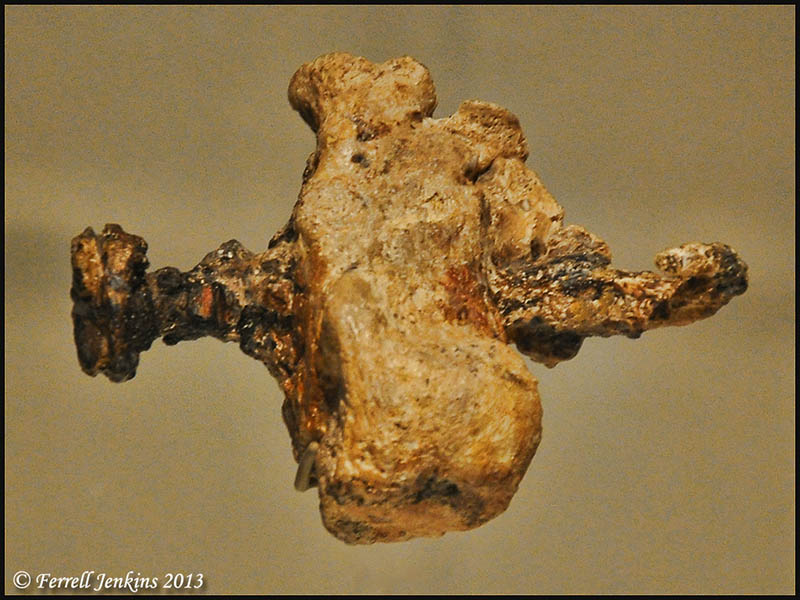
The Romans were adept at crucifixion, according to many historical sources. The first archaeological evidence of crucifixion was uncovered in 1968 when, during a controlled archaeological dig under the direction of the late Vasillios Tzaferis, an ossuary (bone box, or receptacle) was found north of Jerusalem containing the bones of a man who had been crucified. His name was “Yehohanan, the son of Hagakol.” He is thought to have been between 24 and 28 years of age, and was about 5 feet 6 inches in height.

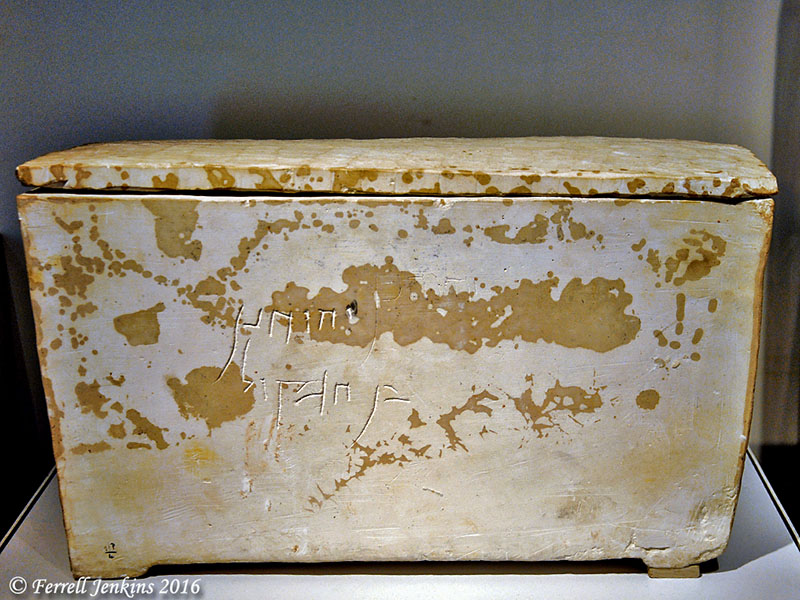
Ossuary of Yehohanan, son of Hagkol. Dates to first century A.D., and is made of soft limestone. Israel Museum. Photo by Ferrell Jenkins.

Ossuary of Yehohanan, son of Hagkol. Dates to first century A.D., and is made of soft limestone. Israel Museum. Photo by Ferrell Jenkins.

Both the ossuary and a replica of the heel bone are displayed in the Israel Museum. When Yehohanan was removed from the cross the nail pulled away from the wood. He was buried with the nail in his heel.

Ankle bone of a man crucified outside Jerusalem in Roman times. Photo by Ferrell Jenkins.

Ankle bone replica of  Yehohanan, son of Hagkol, who was crucified outside Jerusalem in Roman times. Display in Israel Museum. Photo by Ferrell Jenkins.

On Pentecost, Peter proclaimed the truth about Jesus. He said,

This man was handed over to you by God’s deliberate plan and foreknowledge; and you, with the help of wicked men, put him to death by nailing him to the cross. (Acts 2:23 NIV)

No ossuary or bones belonging to Jesus have been found. I am aware of the speculation that a tomb in the Talpiot neighborhood of Jerusalem contained the family of Jesus, and possibly even the ossuary of Jesus. One summary of this speculation was published by Bible Places Blog here.

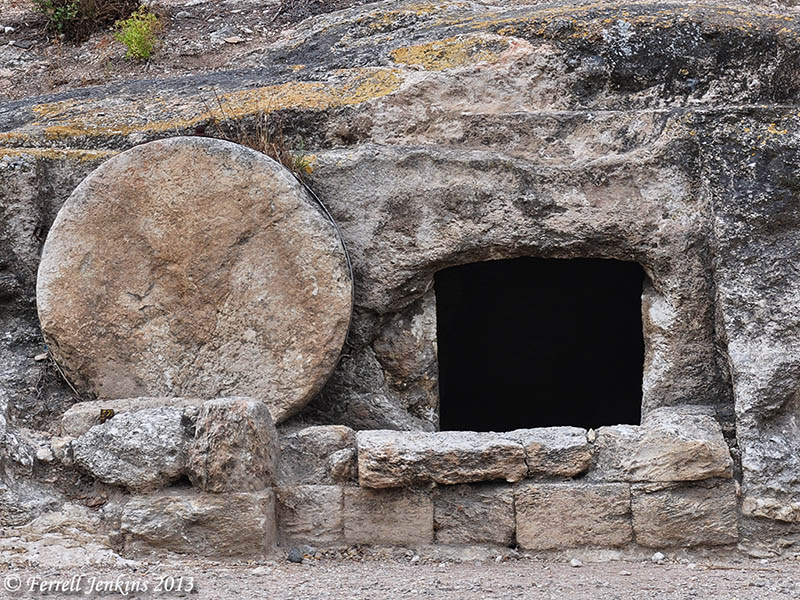
The angel at the empty tomb of Jesus announced to the women who had gone to complete the burial,

He is not here, for he has been raised, just as he said. Come and see the place where he was lying. (Matthew 28:6 NET)

Rock tomb with rolling stone near Jezreel Valley. Photo by Ferrell Jenkins.

Roman period rock tomb with rolling stone near Jezreel Valley. Photo by Ferrell Jenkins.

SourceFlix has posted a nice brief video of Passion Week Archaeology here.

Post updated from March, 2013.

Bringing in the sheaves

From the time I was a child I recall the song “Bringing in the Sheaves” by Knowles Shaw. I see it was written in 1874, already an old song when I first sang it. I really miss the old songs. Some song leaders seem to forget that it is the repetition of songs that allows the children to learn them – just like they recall all of the TV jingles. Here are the words, now in public domain.

  1. Sowing in the morning, sowing seeds of kindness,
    Sowing in the noontide and the dewy eve;
    Waiting for the harvest, and the time of reaping,
    We shall come rejoicing, bringing in the sheaves.

    • Refrain:
      Bringing in the sheaves, bringing in the sheaves,
      We shall come rejoicing, bringing in the sheaves;
      Bringing in the sheaves, bringing in the sheaves,
      We shall come rejoicing, bringing in the sheaves.
  2. Sowing in the sunshine, sowing in the shadows,
    Fearing neither clouds nor winter’s chilling breeze;
    By and by the harvest, and the labor ended,
    We shall come rejoicing, bringing in the sheaves.
  3. Going forth with weeping, sowing for the Master,
    Though the loss sustained our spirit often grieves;
    When our weeping’s over, He will bid us welcome,
    We shall come rejoicing, bringing in the sheaves.

The meaning is clear. We continue to do kind deeds when times are good and when they are bad. Eventually “we shall come rejoicing, bringing in the sheaves.”

What are sheaves, and what is the basis of this encouraging song?

Perhaps the author recalled young Joseph’s dream of binding sheaves in the field when his sheaf stood upright and the sheaves of the brothers gathered around it and bowed down (Genesis 37:7).

Or, maybe it was the experience of Ruth gathering the left over grain among the sheaves in the field of Boaz at Bethlehem (Ruth 2:7, 15).

It seems that Shaw knew the words of Psalm 126:6.

He who goes out weeping, bearing the seed for sowing, shall come home with shouts of joy, bringing his sheaves with him. (Psalm 126:6 ESV)

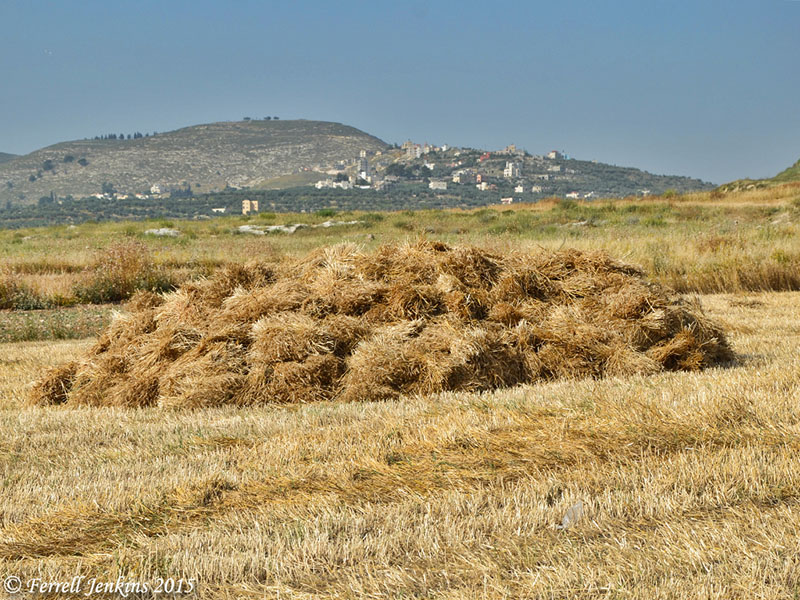
Toward the end of May last year, in the vicinity of Samaria, we saw sheaves in the field ready to be brought in for storage and use for the remainder of the year.

Sheaves in the field near ancient Samaria. Photo by Ferrell Jenkins.

Sheaves in the field near ancient Samaria. Photo by Ferrell Jenkins.

If you click on this photo and look carefully at the larger image you will see that the sheaves have been bound to hold them together.

Sheaves bound in the field, ready to be taken from the fields. Photo by Ferrell Jenkins.

Sheaves bound in the field, ready to be taken from the fields. Photo by Ferrell Jenkins.

I fear that many of our folks today just dismiss the older songs that have themes they don’t readily understand. If we use this as an excuse, it is a reflection on our knowledge of the Bible. Perhaps its time to learn.

Bertha Spafford Vester explains how the early American Colony residents of Jerusalem made a living by engaging in various projects from weaving cloth to growing wheat. She recounts an interesting story about cutting grain and binding sheaves.

Our Swedish and American farmers had tilled these bits of ground so well that there was evidence of excellent crops. Some Orthodox Jews came to inspect the wheat and offered us a higher than usual price for it to make matzoth (unleavened bread) for their Feast of the Passover on condition that we harvested it under their supervision. We agreed.

We had no machinery; it was harvested by hand. One stipulation they made was that we should not begin work until the sun had risen and dried any moisture from dew fallen during the night. After breakfast we all went out to work in the field, our Jewish overseers keeping watch. As our custom was when working, washing dishes, or over the washtub, or at any other task, we sang hymns. So now we started in the harvest field. Singing helped the work, which went with a swing. But we were not allowed to sing by these Orthodox Jews. Peradventure a bit of moisture might fall from our mouths and cause fermentation. It would no longer be unleavened. So we gathered the sheaves silently. (Our Jerusalem, 190-191)

Are you sowing seeds of kindness?

HT: Timeless Truths for lyrics info.

Turning from idols to serve the living God

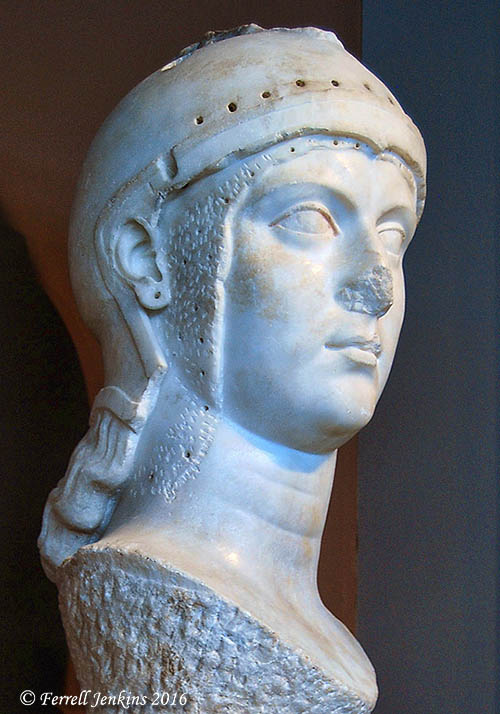
Recently I was browsing through photos made in the Archaeological Museum of Thessaloniki (Salonica, Thessalonica), Greece, in 2008. I was impressed with the images of various gods and goddesses that were known in the city in the first century A.D. There were statues and busts of Egyptian gods such as Isis, Serapis, and Harpokrates/Horus. Greek gods and goddesses such as Dionysus, Hades, Apollo, Athena, Aphrodite, Demeter, and the mother of the gods often associated with Kybele (Cybele) were known. And there were others.

Athena. Archaeology Museum of Thessaloniki. Photo by Ferrell Jenkins.

Athena. Archaeology Museum of Thessaloniki. Photo by Ferrell Jenkins.

Immediately my mind was drawn to Paul’s commendation of the saints at Thessalonica in the middle of the first century A.D.

 6 And you became imitators of us and of the Lord, for you received the word in much affliction, with the joy of the Holy Spirit,
7 so that you became an example to all the believers in Macedonia and in Achaia.
8 For not only has the word of the Lord sounded forth from you in Macedonia and Achaia, but your faith in God has gone forth everywhere, so that we need not say anything.
9 For they themselves report concerning us the kind of reception we had among you, and how you turned to God from idols to serve the living and true God,
10 and to wait for his Son from heaven, whom he raised from the dead, Jesus who delivers us from the wrath to come.  (1 Thessalonians 1:6-10 ESV)

But there were other “gods” known to the Thessalonians. The deified Alexander, considered a son of Zeus, was represented in the museum. Another significant form of idolatry was the Cult of the Emperor of Rome. A sign associated with one display says,

The cult of the emperor was both an instrument of imperial policy propaganda and a means for the transmission of Roman culture. The image of the emperor gives a concrete form to the abstract idea of the Empire. Whether a full-length statue or a bust, it makes his presence felt everywhere: in outdoor and indoor spaces, in fora, in villas, and in libraries.

Here is a statue of Octavian Augustus, the first emperor of Rome (27 B.C. – A.D. 14). Augustus was emperor at the time of the birth of Christ (Luke 2:1).

Statue of Augustus, Archaeology Museum of Thessaloniki. Photo by Ferrell Jenkins.

Statue of Augustus, Archaeology Museum of Thessaloniki. Photo by Ferrell Jenkins.

Claudius, Vespasian, Titus, and other emperors were represented in the museum displays.

An interesting temporary exhibition was about the discovery of an important archaeological site known as Kalindoia. The site is located about 48 km (30 miles) southeast of Thessalonica. Paul traveled a few miles north of Kalindoia when he went from Philippi, via Amphipolis and Apollonia, to Thessalonica (Acts 17:1). Below is the drawing of the chamber of the imperial cult. A temple for imperial worship was located here from the 1st century B.C. to the 3rd century A.D.

Artist conception of the chamber of the Imperial Cult. Photo by Ferrell Jenkins.

Artist conception of the chamber of the Imperial Cult. Photo by Ferrell Jenkins.

The sign associated with this drawing states that there were pedestals for statues here. “One of them was the statue of Emperor Octavian Augustus.” The Cult of the Emperor was especially pervasive in the eastern part of the Roman Empire and may have some bearing on understanding the man of lawlessness (sin) in 2 Thessalonians 2. It is certainly helpful in understanding the background of the book of Revelation.

But that’s not all. Another sign mentions the eponymous local heroes such as war heroes, deified mythological figures, or the heroized dead “were also worshipped.”

The gospel of Christ has power to touch the hearts of men and inform them about the difference between idols made of “gold or silver or stone, an image formed by the art and imagination of man,” and the God who does not dwell in temples made by man (Acts 17:29 ESV).

Canaanite citadel exposed in Nahariya

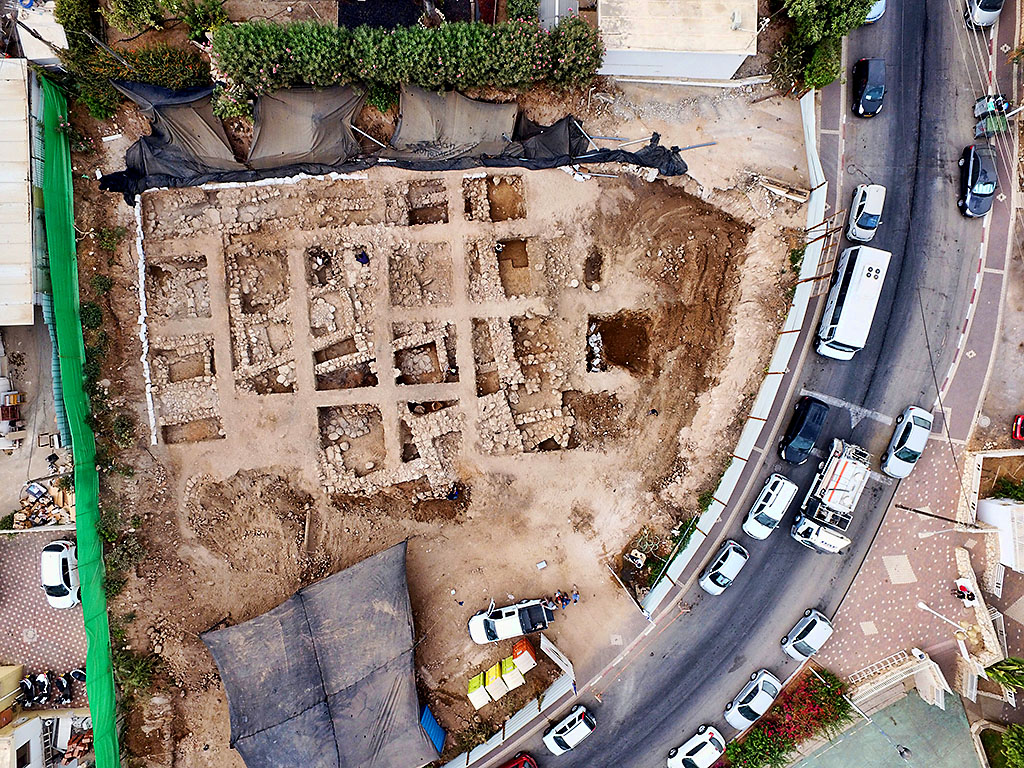
Announcement was made this week of the discovery of a Canaanite citadel in the middle of the Israeli northern coastal town of Nahariya. The Israel Antiquities Authority and the University of Haifa announced an agreement that would allow construction on a high-rise apartment building to continue with the inclusion of the Canaanite ruins to remain in the basement.

An aerial photograph of the excavation. Photographic credit: Guy Fitoussi, courtesy of the Israel Antiquities Authority.

An aerial photograph of the excavation. Photographic credit: Guy Fitoussi, courtesy of the Israel Antiquities Authority.

The IAA announcement reads,

In an agreement reached between the director of the Israel Antiquities Authority, Mr. Israel Hasson, and the director of the Kochav Company, Ltd., Mr. Danny Kochav, remains of a 3,400 year old citadel that were recently uncovered in an archaeological excavation will be integrated in an apartment high-rise that the Kochav Company is building on Balfour Street in Nahariya, close to the beach.

The large excavation, which the Israel Antiquities Authority conducted together with youth groups, including students from the Shchakim High School in Nahariya, was carried out as part of a project by the Kochav Company to build a residential high-rise with underground parking. Given the extraordinary nature and quality of the finds, the Israel Antiquities Authority sought a solution that would allow the conservation of some of the remains for the benefit of the public. Thus, with the assistance of Architect Alex Shpol, planner for the Interior Ministry’s regional committee for planning and construction, it was decided that part of the citadel would be preserved in the building’s basement level where it will be displayed for the enjoyment of the residents and visitors.

According to Nimrod Getzov, Yair Amitzur and Dr. Ron Be’eri, excavation directors on behalf of the Israel Antiquities Authority, “It seems that the citadel which we uncovered was used as an administrative center that served the mariners who sailed along the Mediterranean coast 3,400 years ago. There was probably a dock alongside the citadel. Numerous artifacts were discovered in its rooms, including ceramic figurines in form of humans and animals, bronze weapons and imported pottery vessels that attest to the extensive commercial and cultural relations that existed at that time with Cyprus and the rest of the lands in the Mediterranean basin”.

The fortress was destroyed at least four times by an intense conflagration, and each time it was rebuilt. An abundance of cereal, legumes and grape seeds were found in the burnt layers, which are indicative of the provisions the sailors would purchase.

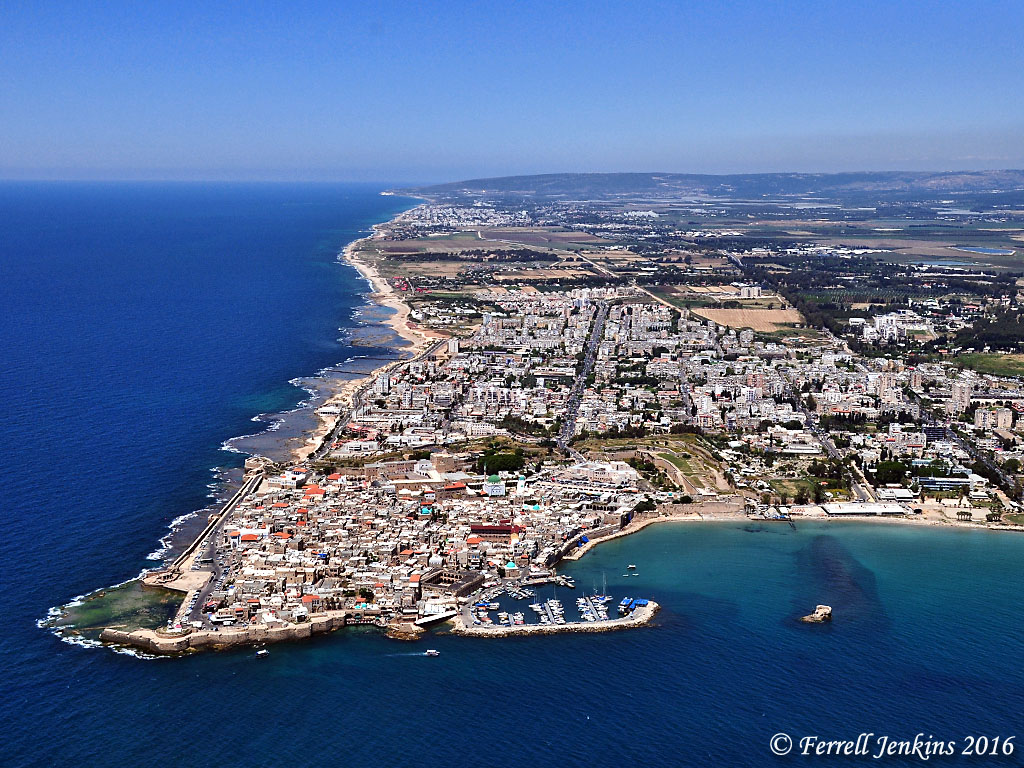
Nahariya is not mentioned in the Bible by name. The city is located along the Mediterranean coast of the Plain of Acco about 5 or 6 miles north of Acco (Acre). This territory was allotted to the Israelite tribe of Asher, but they were not able to maintain control over the Canaanites in the region.

Asher did not drive out the inhabitants of Acco, or the inhabitants of Sidon or of Ahlab or of Achzib or of Helbah or of Aphik or of Rehob, (Judges 1:31 ESV)

The book of Judges describes the territory of Asher as being along the seashore.

Asher remained on the seacoast, he stayed by his harbors. (Judges 5:17 NET)

Aerial view of the plain of Acco, territory of the Biblical tribe of Asher ran from Haifa (Mount Carmel) north. Photo by Ferrell Jenkins.

Aerial view of the plain of Acco, territory of the Biblical tribe of Asher ran from Haifa (Mount Carmel) north. Photo by Ferrell Jenkins.

In the far north of this photo you will see a small horizontal white line extending into the sea. That is known as the Ladder of Tyre. The cluster of buildings between Acco and the Ladder of Tyre is Nahariya.

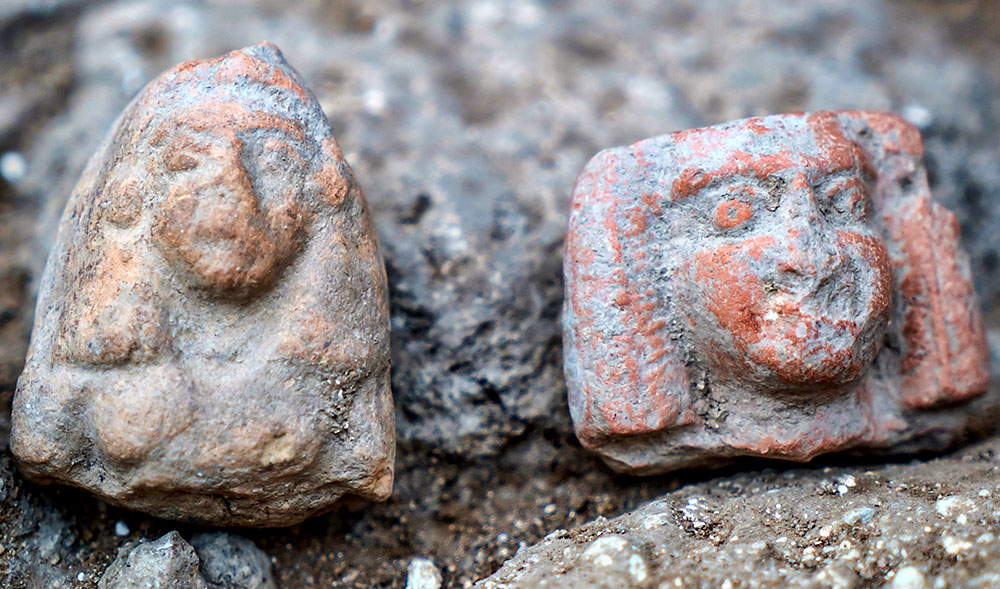
During earlier excavations at Nahariya a Cannanite temple with a mold for making images of the goddess Asherah had been uncovered. Beginning with Ahab, numerous kings of Israel were responsible for worshiping Asherah. I suggest you use a Bible concordance to locate all the reference to Asherah, Asherim, Asheroth, and Ashtoreth.

Solomon also worshiped Ashtoreth the goddess of the Sidonians in Jerusalem (1 Kings 11:5; 2 Kings 23:13).

Female figurines dating to the Late Bronze Age. Photographic credit: Eran Gilvarg, courtesy of the Israel Antiquities Authority

Female figurines dating to the Late Bronze Age. Photographic credit: Eran Gilvarg, courtesy of the Israel Antiquities Authority

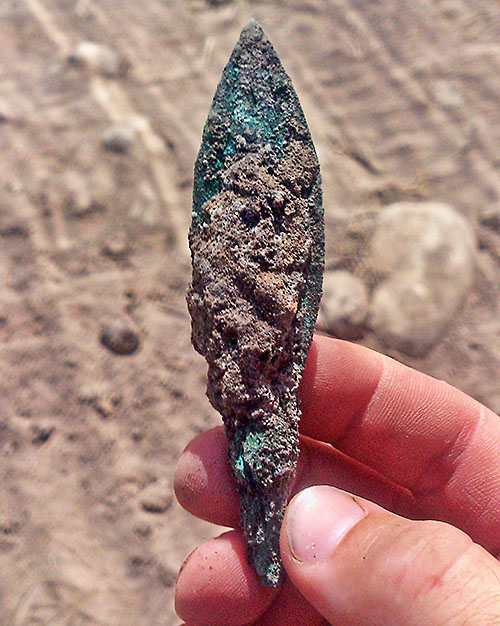
The IAA news release simply says that the recent discoveries at Nahariya date to 3400 years ago, i.e., about 1400 B.C. This period is known as the Late Bronze Age (about 1550 to 1200 B.C.). Bible students will recognize this as the period of the conquest of Canaan by the Israelites. The bronze arrowhead is a good reminder of the conflict in the land at that time.

An arrowhead made of bronze. Photographic credit: Eran Gilvarg, courtesy of the Israel Antiquities Authority.

An arrowhead made of bronze. Photographic credit: Eran Gilvarg, courtesy of the IAA.

I find these photos so fascinating that I want to share more of them with you.

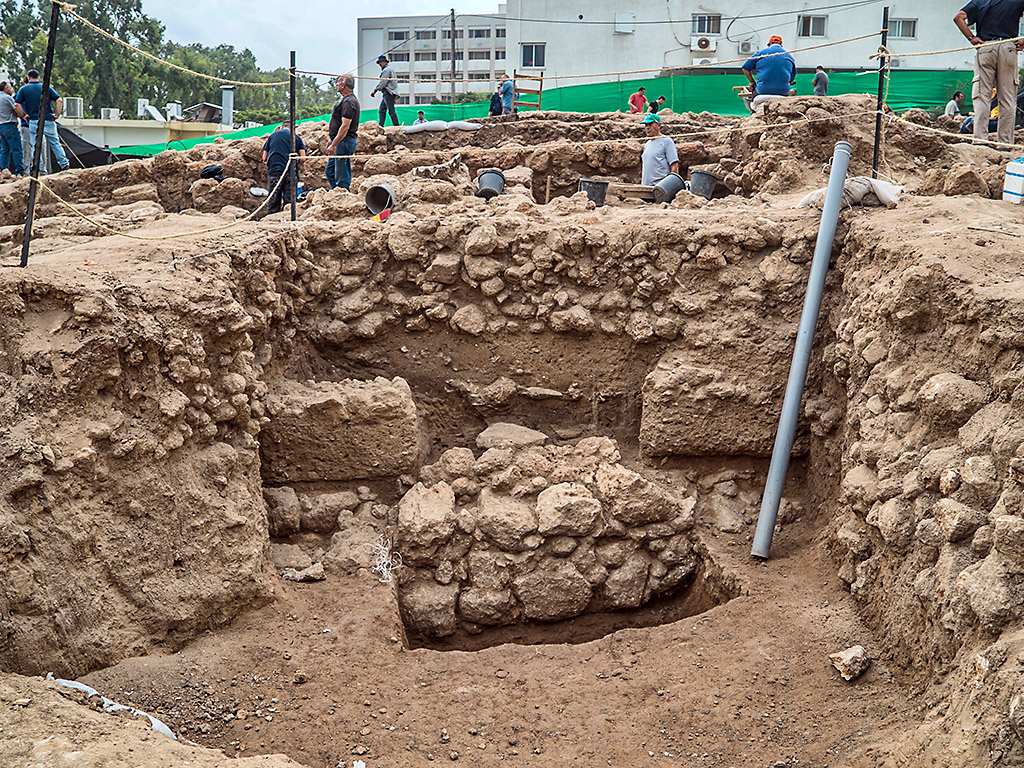
Photograph of the work being conducted at the site. Photo: IAA.

Photograph of the work being conducted at the site. Photo: IAA.

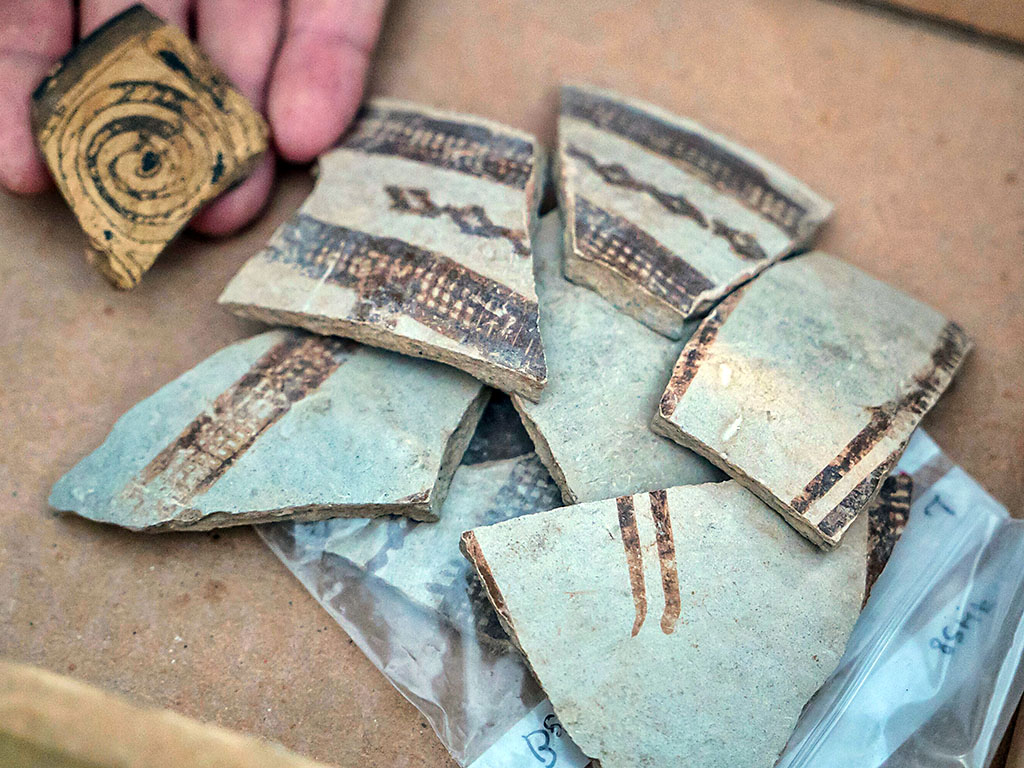
Imported pottery from Cyprus and Greece was found at the site.

Fragments of decorated pottery vessels imported from Cyprus and Greece 3,400 years ago. Photo: IAA.

Fragments of decorated pottery vessels imported from Cyprus and Greece 3,400 years ago. Photo: IAA.

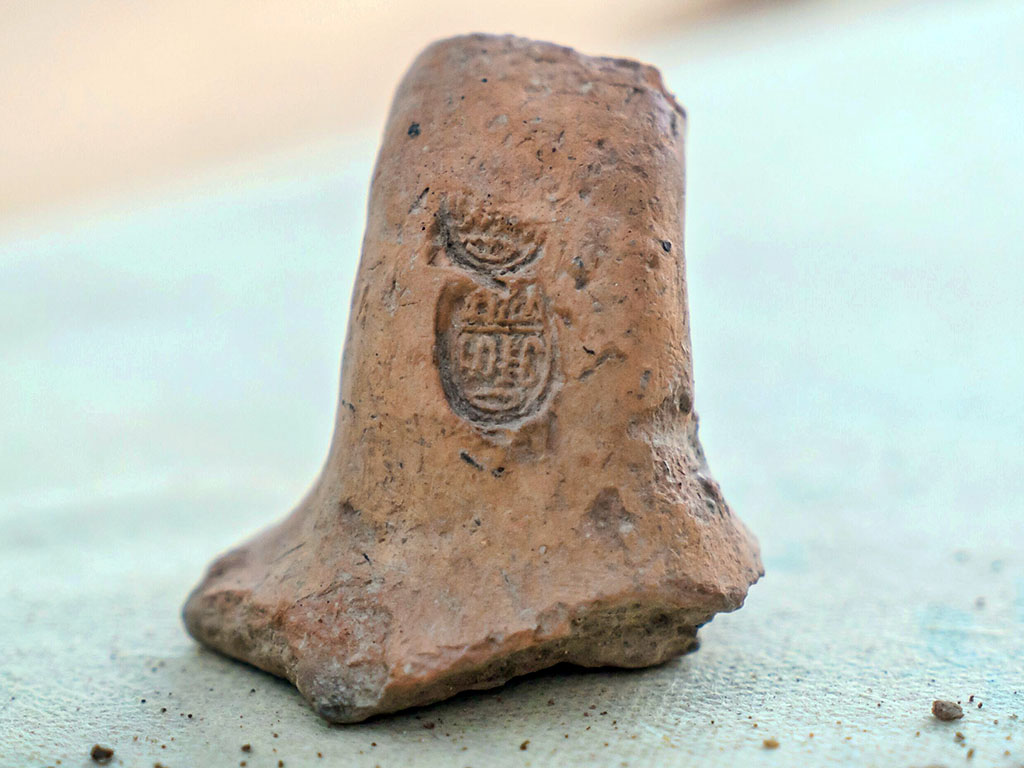
A stamped jar handle is dated to the Middle Bronze Age (about 2100 to 1550 B.C.). I look forward to some insight into the reading of the impression.

A stamped jar handle dating to the Middle Bronze Age. Photo: IAA.

A stamped jar handle dating to the Middle Bronze Age. Photo: IAA.

We never know what may be dug up tomorrow.

HT: Joseph Lauer