Category Archives: Culture

Lighting up the sky

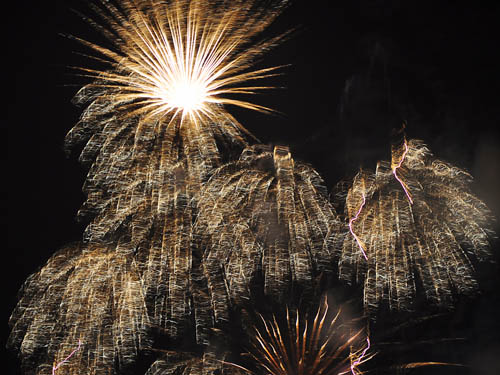
We enjoyed the fireworks in Temple Terrace, Florida, with our grand son Saturday evening.

Firewords in Temple Terrace, FLorida, July 3, 2010.

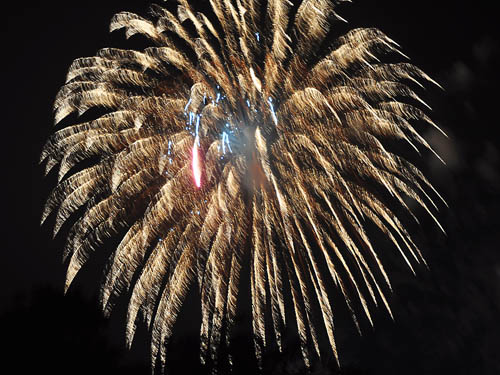
Firewords in Temple Terrace, Florida, July 3, 2010.

The camera was hand held, but the results were interesting.

Firewords in Temple Terrace, Florida. Photo by Ferrell Jenkins.

Firewords in Temple Terrace, Florida, July 3, 2010.

As the floodlights were dimmed I said to my 5½ year old grandson, “It looks like they are ready to begin. Are you ready.” He said, “I am soooo ready!”

Freedom is precious

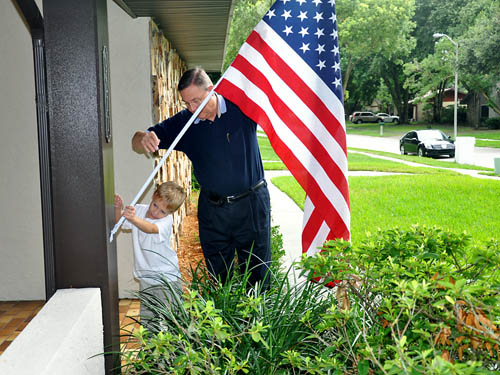
Putting up the flag for July 4, 2010.

Putting up the flag for July 4, 2010.

Go Southeast, Old Man!

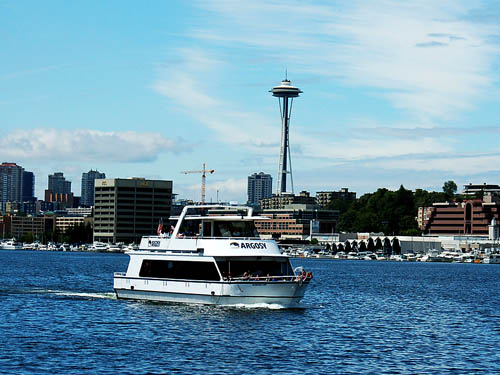
The mountains and lakes of the Northwest are a pleasure to behold. A friend took me for a cruise on Lake Washington where he pointed out the houses of the rich and famous of the business, sports, and entertainment world.

Seattle. Photo by Ferrell Jenkins.

Seattle. Photo by Ferrell Jenkins.

I enjoyed speaking to appreciative audiences at the Kirkland Church of Christ Sunday and Monday evenings. The illustrated lessons included discussions of Bible history, archaeology, and the Bible world. Quite a few friends from the past were present.

Thanks to those of you who check the blog regularly. Hopefully by the first of the week I can get back to posting some photos of the Bible world.

Excitement in Silcon Valley

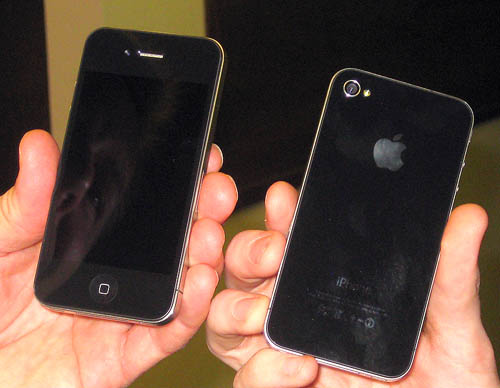
This evening (Wednesday, June 23) at the Miller Avenue lectures in San Jose I saw three new iPhone 4’s. There may have been more. Living in the Silicon Valley has its advantages, you know. Some people get this new toys early.

iPhone 4 in San Jose - June 22, 2010

iPhone 4 in San Jose - June 23, 2010

You can see from the smudges that the phones have been handled by a group of admiring friends.

There is a lot of excitement at the Miller Avenue Church of Christ lectures this year, too. Don Truex is speaking twice each day on some practical bible themes. I am presenting illustrated lectures each morning on Exploring the Bible World. In the evening the presentation are on Bible History and Archaeology. There is an additional speaker each morning.

This is why the posts have been sparse this week. Add to the lectures, some social appointments, reviewing the lessons, a little nap in the afternoon, and there is not much time left to blog.

Tel Kassis (Qassis or Qashish) slideshow

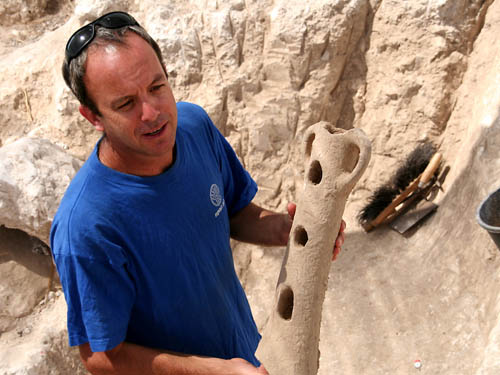
Discovery News has posted a nice slide show with narration by Edwin van den Brink here. He comments on the items found in the recent emergency dig at Tel Kassis and speaks of the end of the Canaanite culture in a fierce conflagration.

Dr. Edwin van der Brink show an incense stand. Photo: Assaf Peretz, IAA.

Edwin van den Brink shows an incense stand. Photo: Assaf Peretz, IAA.

The commentary in Discovery News says,

Most likely, the priests buried the temple’s furniture in order to protect the items from destruction during an incursion of the ancient Egyptians.

That is not a bad idea. Several Canaanite cities were burned by fire when the Israelites came into the country under the leadership of Joshua (Joshua 6:24; 7:15; 7:25; 8:8; 8:19; 11:11). We are not able with the info available to say that Israel destroyed Tel Kassis (Helkath), but I am pointing out that this would cause a cultural break.

Many cities were not destroyed at the time. In fact, the LORD told Israel that he would give them “great and good cities” which they did not build (Deuteronomy 6:10).

HT: Joseph I. Lauer

Remembering the Dead

Memorial Day, originally called Decoration Day, is a day of remembrance for those who have died in our nation’s service. There are many stories as to its actual beginnings, with over two dozen cities and towns laying claim to being the birthplace of Memorial Day. (Memorial Day History)

When I was a kid, growing up in the American South, the day we now call Memorial Day was called Decoration Day. Families went to the local cemeteries to clean up the grave sites of relatives and leave fresh flowers. If it was known that there were no family members left in the community, those graves also were cleaned. I don’t recall when I first began to hear, or think, that the day was intended to honor those fallen in war.

Like many holidays, the original purpose has changed. Memorial Day, Independence Day, Labor Day, Christmas, Easter, and other holidays, have become times for picnics, trips, vacations, and assorted non-related practices. Every holiday has become a time for stores to have sales.

I like the idea of Memorial Day. I am pleased to join in the remembrance of troops fallen in battle, and all of the dead who have played a significant role in my life.
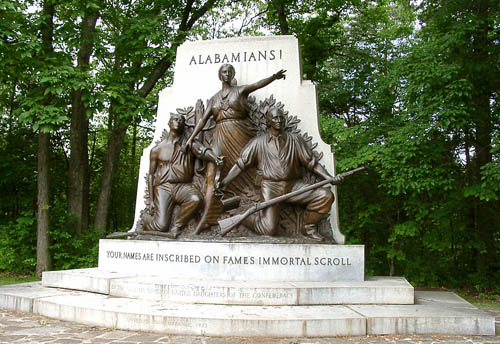
Honoring the Fallen from Alabama at Gettysburg. Photo by Ferrell Jenkins.

Honoring the Fallen from Alabama at Gettysburg. Photo by Ferrell Jenkins.

Our header today is a photo I made at Normandy a few years ago.

For Christians, every Lord’s Day is a special day of remembrance. We gather to remember the death of the Lord Jesus for our sins.

23 For I received from the Lord that which I also delivered to you, that the Lord Jesus in the night in which He was betrayed took bread;
24 and when He had given thanks, He broke it and said, “This is My body, which is for you; do this in remembrance of Me.”
25 In the same way He took the cup also after supper, saying, “This cup is the new covenant in My blood; do this, as often as you drink it, in remembrance of Me.”
26 For as often as you eat this bread and drink the cup, you proclaim the Lord’s death until He comes. (1 Corinthians 11:23-26 NAU)

Israel Museum set to open in two months

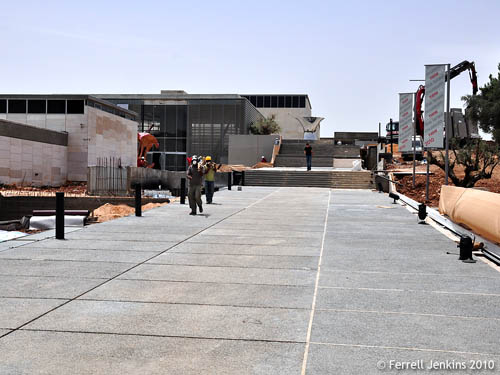
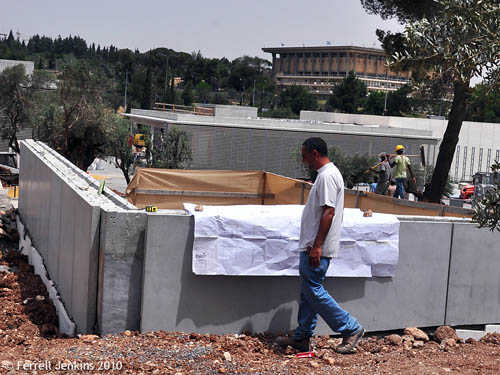
The Bible Places Blog reports here that the Israel Museum, after a lengthy and expensive renovation, is scheduled to reopen July 26. Twice, during the recent trip to Israel, I visited the grounds of the Israel Museum. The last visit to the Second Temple Model was ten days ago. At that time I made a few photos of the work going on outside the museum.

Construction at the Israel Museum - May 17, 2010. Photo by Ferrell Jenkins.

Construction at the Israel Museum - May 17, 2010. Photo by Ferrell Jenkins.

From the outside the Museum looks much the same as before, especially the long, uphill walk to get to the entrance.

Reading the Blueprint at the Israel Museum - May 17, 2010. Photo by Ferrell Jenkins.

Reading the Blueprint at the Israel Museum - May 17, 2010. Photo by Ferrell Jenkins.

The already impressive location of the Museum campus with the Shrine of the Book, the Second Temple Model and the nearby Israeli Knesset building is sure to be even more impressive.

I look forward to my next visit to Jerusalem when I may again see the wonderful exhibits inside the Museum. The great museums of the world with biblical collections, the British Museum, the Louvre, the Metropolitan in New York, the Istanbul Archaeological Museum, the Oriental Institute of the University of Chicago, the University of Pennsylvania, the National Museum in Athens, and the Pergamum Museum in Berlin, allow photographs of their exhibits. It would be great to see the Israel Museum follow the practice of these outstanding museums. Then, only the museums in Amman, Cairo, and Damascus would be out of step.

HT: Bible Places Blog

Samson and the Sorek Valley

Samson is often described as a man of great physical strength, but one lacking in moral character. After outwitting the Gazites and taking away the door of the gate of the city he became involved with a Philistine woman named Delilah.

After this he loved a woman in the Valley of Sorek, whose name was Delilah. (Judges 16:4 ESV)

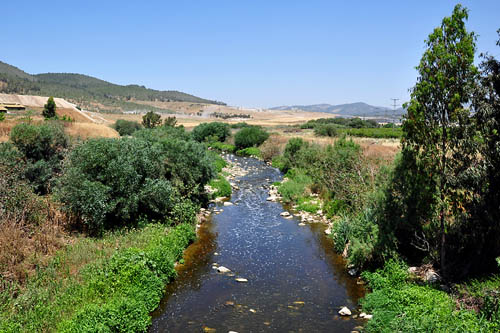
The Sorek River flows east from the mountains of Judea through the Sorek Valley, past Beth-shemesh and Timnah. Today the brook is polluted, as you may be able to detect in the photo. At this point, near Beth-shemesh, there is a terrible odor associated with the area around the river. I think it comes from the chicken or turkey farms in the valley.

No longer a nice place to take a date.

The Sorek River in the Sorek Valley near Beth-shemesh. Photo by Ferrell Jenkins.

Sorek River in the Sorek Valley near Beth-shemesh. Photo by Ferrell Jenkins.

Roman altar excavated at Ashkelon

It happens with regularity in Israel. Someone is building. The builder encounter ancient ruins. The Israel Antiquities Authority is called. (I wonder how many times they are not called.) Construction is halted while an emergency excavation is conducted. Amazing discoveries are often uncovered.

This time it happened at Ashkelon during construction of an Emergency Room at the Barzilai Hospital. Here is the account provided by the IAA.

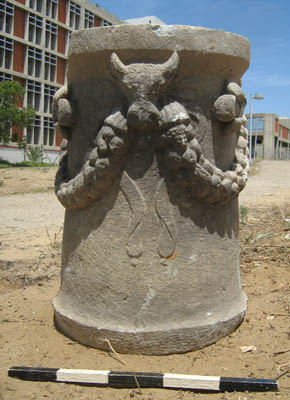
The development work for the construction of a fortified emergency room at Barzilai Hospital, which is being conducted by a contractor carefully supervised by the Israel Antiquities Authority, has unearthed a new and impressive find: a magnificent pagan altar dating to the Roman period (first-second centuries CE) made of granite and adorned with bulls’ heads and a laurel wreaths. The altar stood in the middle of the ancient burial field.

According to Dr. Yigal Israel, Ashkelon District Archaeologist of the Israel Antiquities Authority, “The discovery further corroborates the assertion that we are dealing with a pagan cemetery. It is an impressive find that has survived 2,000 years. The altar is c. 60 centimeters [24 inches] tall and it is decorated with bulls’ heads, from which dangle laurels wreaths. There is a strap in the middle of each floral wreath and bull’s head. The laurel wreaths are decorated with grape clusters and leaves. This kind of altar is known as an “incense altar”. Such altars usually stood in Roman temples and visitors to the temple used to burn incense in them, particularly myrrh and frankincense, while praying to their idols. We can still see the burnt marks on the altar that remain from the fire. The altar was probably donated by one of the families who brought it to the cemetery from the city of Ashkelon”.

Roman altar discovered at Ashkelon. Photo: IAA.

Roman altar discovered at Ashkelon. Photo: IAA.

More information is available from the IAA here.

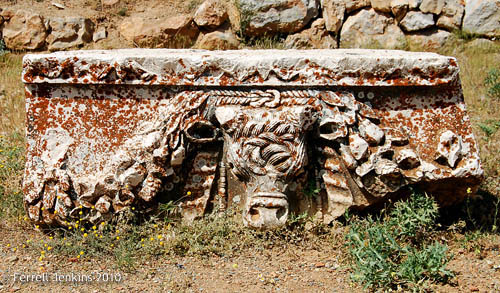
The motif on this altar is common in the Greco-Roman world. The photo below shows a similar bull’s head on what appears to be part of an architectural frieze in the Augustan Imperial Sanctuary at Pisidian Antioch.

From Augustan Imperial Sanctuary at Pisidian Antioch. Photo by Ferrell Jenkins.

From Augustan Imperial Sanctuary at Pisidian Antioch. Photo by Ferrell Jenkins.

The Archaeological Museum in Thessalonica exhibits an altar from the Roman Imperial age (35 B.C.) that, according to the inscription on it, was reused as a pedestal in the temple of Isis in the 2nd century A.D.

Roman Imperial Altar. Thessalonica, Greece, Museum. Photo by Ferrell Jenkins.

Roman Imperial Altar. Thessalonica Museum. Photo: Ferrell Jenkins.

These stones showing garlanded animals remind me of what happened to Paul and Barnabas at Lystra in Lycaonia.

And the priest of Zeus, whose temple was at the entrance to the city, brought oxen and garlands to the gates and wanted to offer sacrifice with the crowds. (Acts 14:13 ESV)

HT: Joseph Lauer and numerous blogs. Note especially the comments on the current religious/political comments by Jim West and Aren Maeir about the Ashkelon altar at Zwinglius Redivivus.

From Jerusalem to the Dead Sea

We got a late start this morning from Jerusalem. Our evening destination was the southern end of the Dead Sea (near Sodom) at En Boqeq. We took the long way to get here by traveling south around Bethlehem, then west to the Elah Valley, Bethshemesh, and Gath. Eventually we got on Highway 6, a wonderful toll road named in honor of the late Prime Minister Yitzhak Rabin. The road runs south ending a few miles north of Beersheba. From there we went down past Arad to the Dead Sea.

We saw numerous camels along the way. This is the region known in the Bible as the Negeb (Negev, South).

And Abram journeyed on, still going toward the Negeb. Now there was a famine in the land. So Abram went down to Egypt to sojourn there, for the famine was severe in the land. (Gen 12:9-10 ESV)

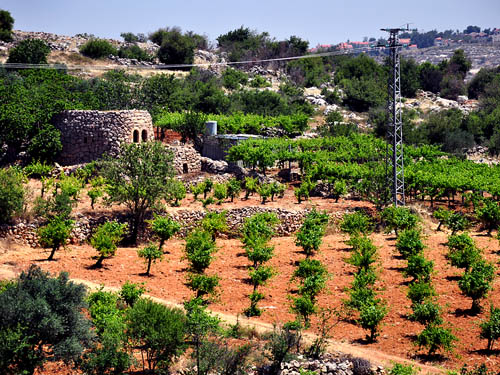
There are nice vineyards a few miles southwest of Bethlehem that remind me of Isaiah 5 and Matthew 21:33-46.

Let me sing for my beloved my love song concerning his vineyard: My beloved had a vineyard on a very fertile hill. He dug it and cleared it of stones, and planted it with choice vines; he built a watchtower in the midst of it, and hewed out a wine vat in it; and he looked for it to yield grapes, but it yielded wild grapes. And now, O inhabitants of Jerusalem and men of Judah, judge between me and my vineyard. (Isaiah 5:1-3 ESV)

Vineyard with a Watchtower SW of Bethlehem. Photo by Ferrell Jenkins.

Vineyard with a Watchtower SW of Bethlehem. Photo by Ferrell Jenkins.

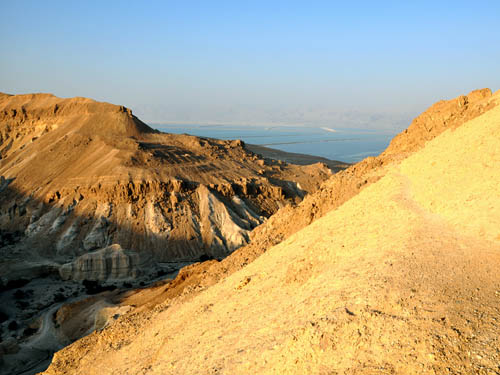
The sun was low as we approached the Dead Sea. This is the view from the Sodom-Arad Road. The rugged bad lands (the wilderness of Judea) begins a few miles north of Jericho and continues south until it finally blends with the Sinai peninsula.

The Dead Sea from the Sodom-Arad Road

The Dead Sea from the Sodom-Arad Road. Photo by Ferrell Jenkins.