Category Archives: Culture

Exploits of Samson

The exploits of Samson are well known to Bible students. Samson was a strong man who was unable to control his own desires. One of the best known stories about him is recorded in Judges 15.

So Samson went and caught 300 foxes and took torches. And he turned them tail to tail and put a torch between each pair of tails.  And when he had set fire to the torches, he let the foxes go into the standing grain of the Philistines and set fire to the stacked grain and the standing grain, as well as the olive orchards. (Judges 15:4-5 ESV)

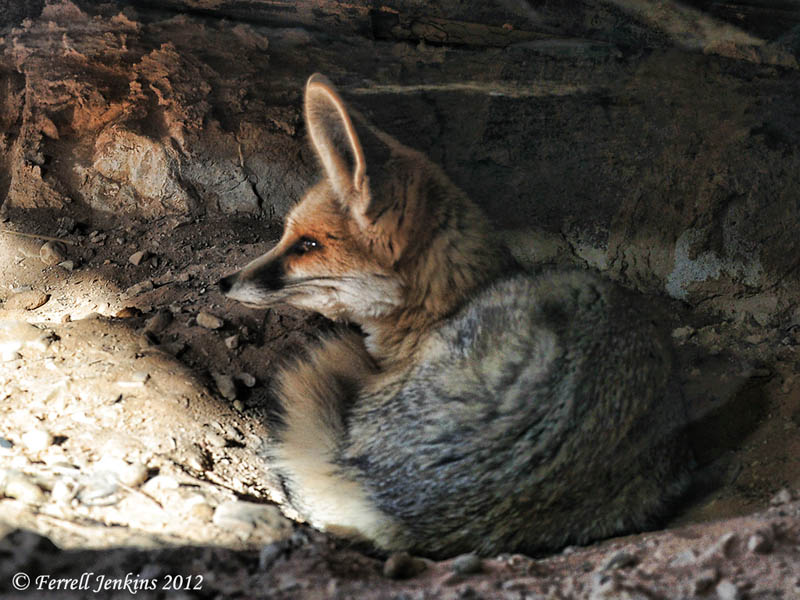
The photo below is of a Sand Fox. Samson used 300 similar foxes to destroy the wheat fields of the Philistines.

A Sand Fox at the Hai Bar Reserve, north of Eilat. Photo by Ferrell Jenkins.

A Sand Fox at the Hai Bar Reserve, north of Eilat. Photo by Ferrell Jenkins.

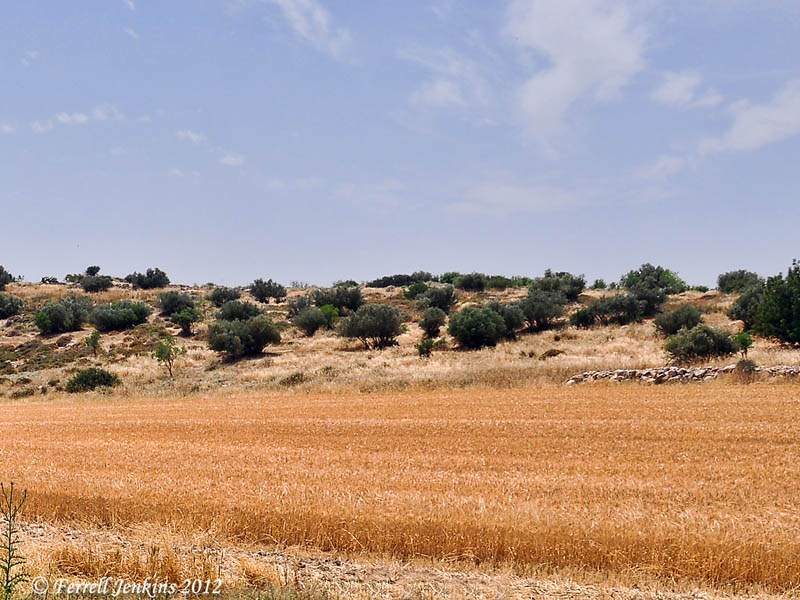
Our next photo is of a wheat field near Maresha, not far from the Sorek Valley, and typical of many fields in the Shephelah. It is typical in modern Israel for an area between the road and the field to be cleared. This is done to protect the grain from fire in the event that someone tosses a lighted cigarette along the edge of the road. Imagine the damage of the 150 pair of foxes in the ripe grain as they tried to release themselves from the burning torches.

Wheat field near Maresha in the Shephelah. Photo by Ferrell Jenkins.

Wheat field near Maresha in the Shephelah. Photo by Ferrell Jenkins.

I enjoy hearing from teachers who find this material helpful in their classes.

Should Herod’s tomb be rebuilt?

The Israel Nature and Parks Authority and the Gush Etizion Regional Council has announced plans to rebuild the tomb of Herod the Great at the Herodium.

An article published Sunday in Ha’aretz describes the plan:

The plan, which is being promoted by the Israel Nature and Parks Authority and the Gush Etzion Regional Council, includes building a lavish mausoleum in its original size out of light plastic material, and turning it into a visitor’s center. The plan is the first of its kind in the realm of Israeli archeological digs, as most sites consist of either miniaturized or renovated historical sites that use the original materials found at the site.

Miniature model of Tomb of Herod. Photo: Israel Nature and Parks Authority.

Miniature model of Tomb of Herod. Photo: Israel Nature & Parks Authority.

One archaeologist, who wished to remain anonymous, said,

“It’s crazy — Archaeology is not Disneyland, you don’t take an archeological site and make a joke out of it.”

The entire article may be read here.

We have called attention to the Herodium and the work of the late Ehud Netzer numerous times. Just use the search box to location the posts.

HT: Joseph I. Lauer

Mary and Joseph went a day’s journey. Where did they stop?

After his presentation in the Temple, there is no record of Jesus returning to Jerusalem until he is 12 years of age.

Now his parents went to Jerusalem every year at the Feast of the Passover.  And when he was twelve years old, they went up according to custom.  (Luke 2:41-42 ESV)

When the Feast of the Passover ended, his parents began the return to Nazareth. We can easily imagine that a large caravan of people were traveling together on this trip that would take several days. Jesus stayed behind in Jerusalem spending time among the teachers, “listening to them and asking them questions.” Because Mary and Joseph had relatives and acquaintances in the caravan they assumed that Jesus was among them until the end of the first day.

Keener provides some background on caravan travel.

Caravans, which afforded protection from robbers, were common on pilgrimages for the feasts in Jerusalem. Traveling with a caravan, in which neighbors from their town would watch the community children together, Mary and Joseph might assume that the near-adult Jesus was with companions, especially if by now they had younger children to attend to. If we assume a pace of twenty miles per day (though perhaps slower, depending on transportation and the children), Nazareth would be a little over three days’ journey along the shortest route. (Keener, C. S., The IVP Bible background commentary : New Testament)

Where did Mary and Joseph stop at the end of that first day of travel? We can not be certain of the route taken from Jerusalem to Nazareth. Travel from Galilee to Jerusalem was often through Perea on the eastern side of the Jordan Valley. We later find Jesus traveling north along the central mountain range through Samaria (John 4).
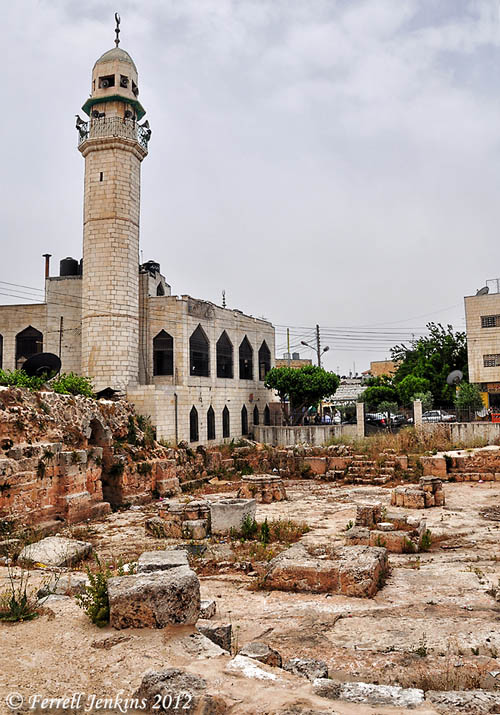
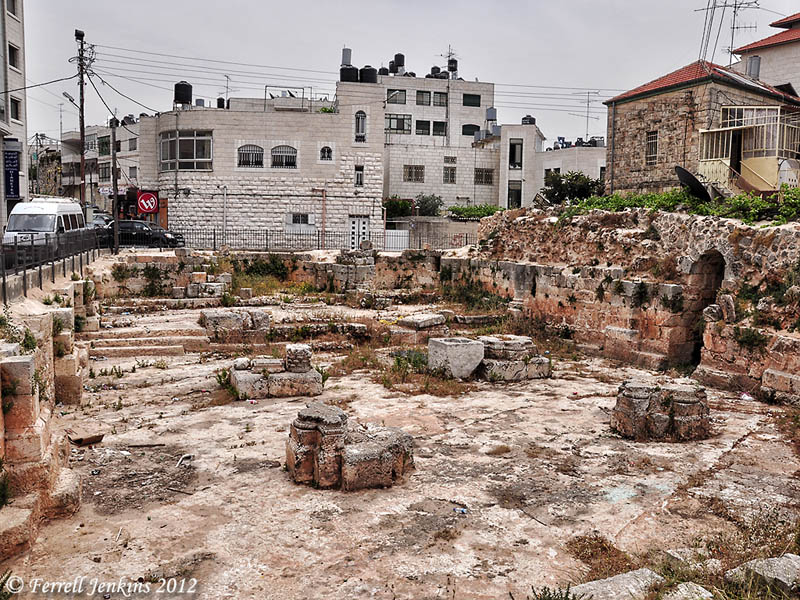
Ruins of medieval church beneath a Mosque in El Bireh. Photo by Ferrell Jenkins.

Ruins of medieval church beneath a Mosque in El Bireh. Photo by Ferrell Jenkins.

Tradition identifies the stop at El Bira. Tradition has it that the first day’s stop after leaving Jerusalem was at a place now known as El Bira (or Bireh) east of Ramallah. El Bira is an Arab town. There is a spring and ruins of a medieval church. The Hachette World Guides: The Middle East (1966) says that the tradition associating this event with El Bireh dates to the 16th century. Eugene Hoade says it is probable that this church was built in 1146 “in memory of” the event mentioned in Luke 2 (Guide to the Holy Land). The apse of the church is visible in the photo below. The Hachette World Guide says the building was destroyed in 1915 and the stones were used for building bridges along the mountain route.

This site is only about 8 miles north of Jerusalem, but with a large caravan including women and children it is possible that a short distance was covered the first day. It was necessary to stop where water and various food supplies were available (John 4:6-8; Luke 9:51-53).
Ruins of the medieval church in El Bireh. Photo by Ferrell Jenkins.

Ruins of the medieval church in El Bireh. Photo by Ferrell Jenkins.

Is this Beeroth? Since the time of explorer Edward Robinson (1867), some scholars have identified El Bireh with the Old Testament Gibeonite city of Beeroth. The word Beeroth indicates the presence of a well. Biblical references include Joshua 9:17, 18:25, Ezra 2:25, and Nehemiah 7:29. Beeroth was considered part of the tribe of Benjamin (2 Samuel 4:2).

David Dorsey, after surveying the scholarship on the matter, says,

At present, therefore, the site of biblical Beeroth remains a matter of dispute. The most likely candidate would still seem to be the one originally proposed by Robinson, i.e., el-Bireh. (The Anchor Yale Bible Dictionary)

John wore a garment of camel’s hair

Now John wore a garment of camel’s hair and a leather belt around his waist, and his food was locusts and wild honey.  (Matthew 3:4 ESV)

Emmerson comments on the type of garment worn by John:

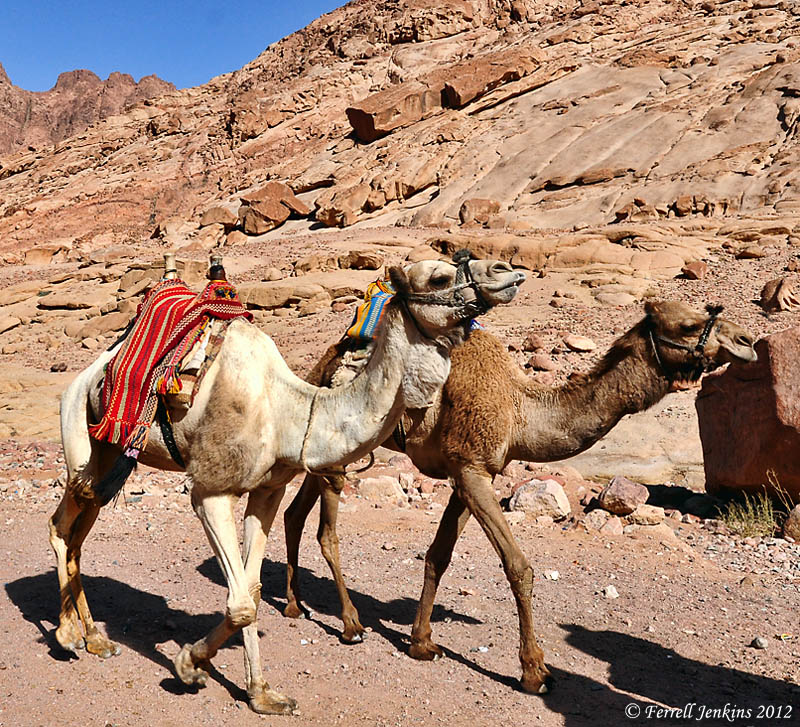
Hair from the back and hump of the camel was woven into a harsh material, and a softer cloth was produced from the finer hair taken from underneath the animal. The natural variations in the color of the hair could be woven into a pattern. (The International Standard Bible Encyclopedia Revised, 1:584).

Camels in the Sinai Peninsula. Photo by Ferrell Jenkins.

Camels in the Sinai Peninsula. Photo by Ferrell Jenkins.

John did not wear the soft clothing typical of those who dwell in royal palaces.

What then did you go out to see? A man dressed in soft clothing? Behold, those who are dressed in splendid clothing and live in luxury are in kings’ courts. (Luke 7:25 ESV)

Bible students immediately remember similarities between John and the prophet Elijah (2 Kings 1:8; cf. Luke 1:7).

John was a voice in the wilderness

There may be some question about the location of the wilderness mentioned in Luke 3:2. The term wilderness (eremos) is described by BDAG as “an uninhabited region or locality, desert, grassland, wilderness (in contrast to cultivated and inhabited country).” The same term is translated deserts in Luke 1:80, where it seems to refer to an isolated area of Judah.

When John begins his ministry, it is clear that he was working in the wilderness between Jerusalem and the Jordan River/Dead Sea.

And he went into all the region around the Jordan, proclaiming a baptism of repentance for the forgiveness of sins.  As it is written in the book of the words of Isaiah the prophet, “The voice of one crying in the wilderness: ‘Prepare the way of the Lord, make his paths straight. (Luke 3:3-4 ESV)

Matthew’s account names the area of John’s preaching as “the wilderness of Judea” (Matthew 3:1).

This stretch of wilderness is well known as a region of rugged and desolate badlands. Our first photo shows a portion of the wilderness in bright sunlight on the way from Jerusalem to Jericho. The view is toward the west. Peter Walker describes the Judean Desert:

It is a place of austere beauty and an almost deafening silence; a place where human beings are acutely conscious of their frailty and utter dependence on water for brute survival. And yet in biblical times it was also a place where people went to find solitude and space, to hear the voice of God addressing them above the cacophony of other competing demands and voices. John the Baptist had begun his ministry here, ‘a voice of one calling in the desert’ (Isaiah 40:3).… (In the Steps of Jesus, Zondervan: 52)

Wilderness of Judea on way from Jerusalem to Jericho. Photo by Ferrell Jenkins.

Wilderness of Judea on way from Jerusalem to Jericho. Photo by Ferrell Jenkins.

One of the fascinating things about the wilderness is the constant change of the view, especially as clouds move over it from West to East

Wilderness of Judea. View toward east with rain clouds on mountain range. Photo by Ferrell Jenkins.

Wilderness of Judea. View west with clouds on the mountain range. Photo: F. Jenkins.

The road from Jerusalem to Jericho and the Jordan River was used even by pilgrims coming from Galilee for the various feast days in Jerusalem. Luke’s parable of the good Samaritan speaks of a man “going down from Jerusalem to Jericho” (Luke 10:30). Luke also records that Jesus traveled this way in the opposite direction (Luke 19). John records that Jesus traveled this way from Bethany beyond the Jordan to the Bethany near Jerusalem (John 11).

Zacharias asked for a writing tablet

When John was born, the neighbors and relatives thought they would call the child “Zacharias, after his father.” His mother, Elizabeth, said that he should be called John. The guests made signs to the mute Zacharias to have him say what he wanted the child called. Luke says,

He asked for a writing tablet and wrote, “His name is John.” And they were all amazed.  (Luke 1:63 NET)

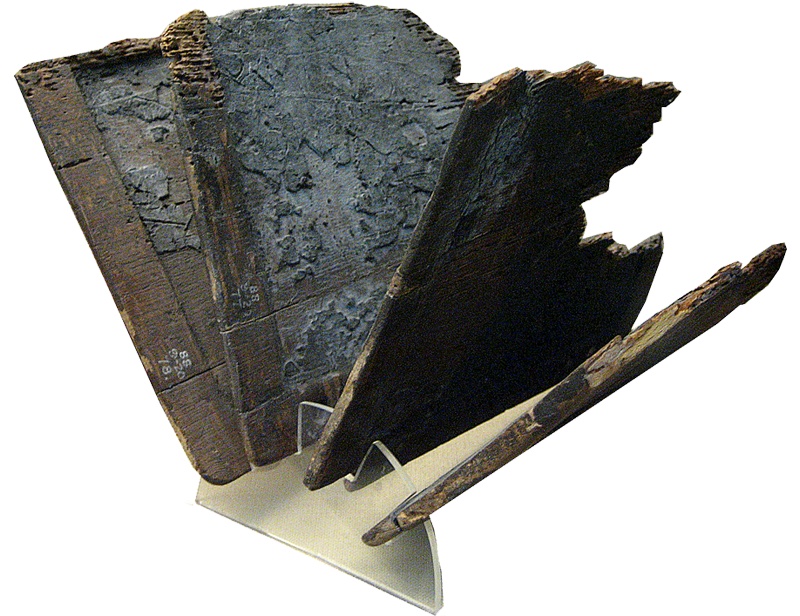
The Greek word Luke used for tablet is pinakidion. It is used only here in the New Testament. BDAG Lexicon says the term is used of a “little (wooden) tablet esp. of a writing-tablet for notes.”  Louw-Nida says the word describes “a small writing tablet (normally made of wood).” The Study Note in the NET Bible points out that “The writing tablet requested by Zechariah [Zacharias] would have been a wax tablet.”

Four leaves of a wooden writing tablet. Roman period from Hawara, Egypt. British Museum.

Wooden writing tablet (Roman period from Egypt). British Museum. Photo by F. Jenkins.

Ralph Earle comments on the tablet:

It was a wax-coated, small, wooden “writing tablet” (NIV)—something quite different from a “writing table” (KJV). — Word Meanings in the New Testament.

A little insight into the culture of the time makes the Bible come alive.

Origen, c. 185–c. 254, comments on this verse in his Commentary on Matthew Bk. XIII.

Men who honor themselves. Exhibit one: Absalom

Both Old Testament and New Testament provide illustrations of men who honor themselves, and the folly of doing so. The elder John wrote of a man named Diotrephes “who loves to be first” among his brethren (3 John 1:9).

In the Old Testament no case is more prominent than that of Absalom the rebellious son of David.

Now Absalom in his lifetime had taken and set up for himself a pillar which is in the King’s Valley, for he said, “I have no son to preserve my name.” So he named the pillar after his own name, and it is called Absalom’s Monument to this day. (2 Samuel 18:18 NAU)

In earlier times it was common for pilgrims to the Holy Land to be told that this or that structure belonged to a certain Biblical character or event.  I will show you one such example.

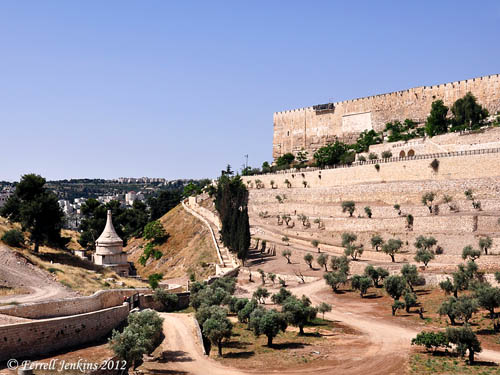
The photo below was made in the Kidron Valley with a view to the south. On the right you see the eastern wall of the Old City of Jerusalem. On the left of the photo, where the valley becomes narrow, you can see the top of the monument called Absalom’s Pillar. An image suitable for presentations is available here. This photo would look good in PowerPoint. There is room on the upper left side sky to include appropriate scriptures.

Kidron Valley View South. Absalom's Pillar on left. Wall of Jerusalem on right. Photo by Ferrell Jenkins.

Kidron Valley view to the south. Photo by Ferrell Jenkins.

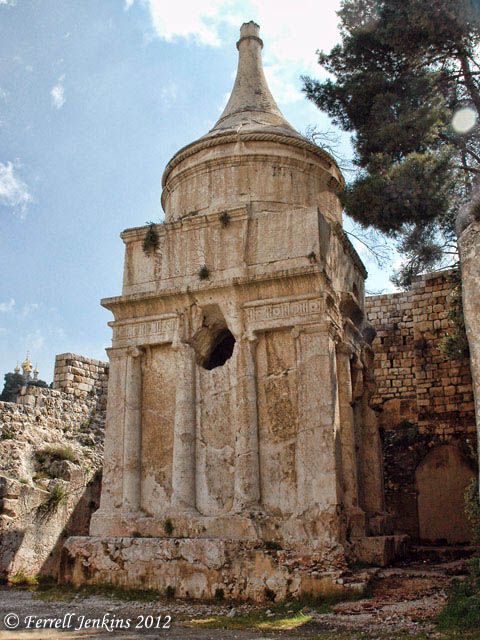
In AD 1170 Benjamin of Tudela associated this monumentsin the Kidron Valley with the monument of Absalom. The monument actually belongs to the early first century B.C., and not to the time of Absalom. It is a funerary monument in front of an eight-chambered tomb.

A closeup view of the monument may be seen in the following photo.

Absalom's Pillar. Photo by Ferrell Jenkins.

Absalom's Pillar. Photo by Ferrell Jenkins.

Soon I plan to explain what this monument might have to do with Zacharias, the father of John the Baptist.

2011 in review — according to WordPress

The WordPress.com stats helper monkeys prepared a 2011 annual report for this blog.

Here’s an excerpt:

London Olympic Stadium holds 80,000 people. This blog was viewed about 270,000 times in 2011. If it were competing at London Olympic Stadium, it would take about 3 sold-out events for that many people to see it.

Click here to see the complete report.

Personal Note: Thanks to the readers who keep me going. You are literally scattered all over the earth. Your interest is appreciated. We are thankful for anyone who has been instructed or encouraged.

Please forgive our failure to answer all of the requests for info and photos. We do as many as we can, but to borrow from and paraphrase Jesus, “Sufficient unto the day are the Emails thereof.”

Was Jesus born in winter?

One of my readers left a comment on facebook saying the Bible indicates that Jesus was “born in winter.” She added, “That could be anytime between mid-October and mid-March.” Another reader said, ” I didn’t know the Bible said he was born in winter — I know shepherds were grazing their sheep when he was born…does this happen in winter in that part of the world?”

I am not aware of any suggestion in the Bible regarding the time of the year when Jesus was born. Luke tells us that shepherds were out in the field at the time.

And in the same region there were shepherds out in the field, keeping watch over their flock by night. (Luke 2:8 ESV)

Some writers have suggested that the birth was not likely in December. They say that shepherds did not watch flocks by night during December. In my outline study about Christmas, available here, I have a quotation by the late Dr. William Arndt, (of Bauer, Danker, Arndt, Gingrich fame) replying to this suggestion:

“Scholars have pointed out that the considerably lower altitude of the field may not be without significance, but may explain why even in winter shepherds would not find these fields too cold for their flocks.”  (From the Nile to the Waters of Damascus, p. 52)

In fact, when I first began traveling to Israel and Jordan in the mid-60s it was common for Bedouin shepherds to move with the seasons. In the summer we would see them in the mountains of Lebanon. In winter months they would move to warmer, desert areas. Today, we find many Bedouin shepherds watching their sheep on the eastern slopes year round, including the winter months.

The temperature around Jerusalem and Bethlehem is fairly temperate in the winter. Only a small amount of rain falls on the eastern slopes of the central mountain range. Both Jerusalem and Bethlehem are located on this ridge. We have written about the watershed ridge here and here.

The average monthly temperature for Jerusalem ranges from 47° to 56°. Rain can make it chilly.

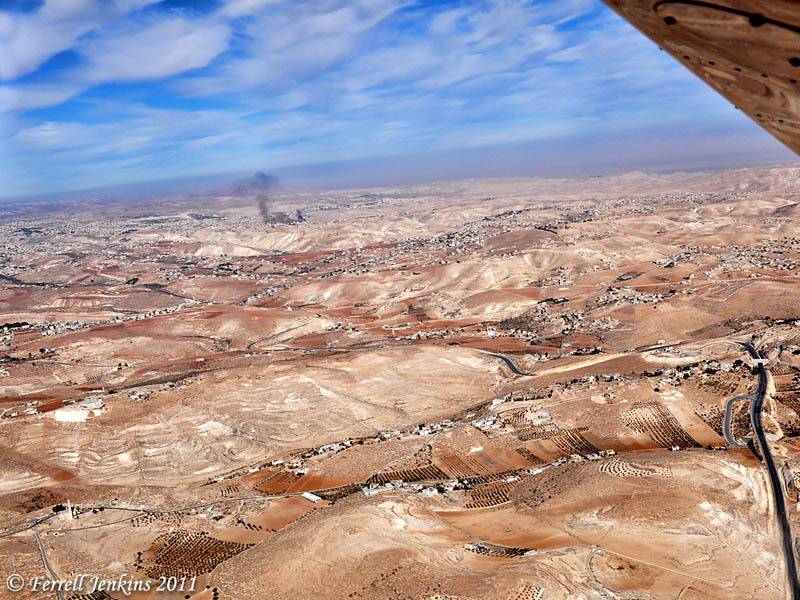
The photo below provides an aerial view from over the Herodium (about 3 miles east of Bethlehem). This illustrates the terrain where shepherds might care for their flocks.

View east toward the Dead Sea and the the land of Moab in Jordan from over the Herodium. Photo by Ferrell Jenkins.

View east toward the Dead Sea and the the land of Moab in Jordan from over the Herodium. Photo by Ferrell Jenkins.

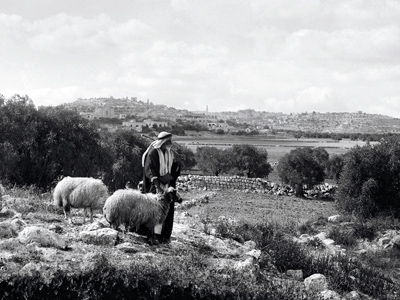
The American Colony and Eric Matson Collection of photos includes some photos of shepherds with their flocks in the Bethlehem area on Christmas day. (Information about the collection is available at LifeintheHolyLand.com.) The photo below was made sometime between 1898 and 1946. It was taken either by the American Colony Photo Department or its successor, the Matson Photo Service.

Shepherds with sheep on Christmas day. Bethlehem on the ridge. Photo: LifeintheHolyLand.com.

Shepherds with sheep on Christmas day. Bethlehem is on the ridge. Photo: LifeintheHolyLand.com.

I am not saying that Jesus was born in December. Only that the common misunderstanding about Bethlehem winters is based on our lack of knowledge about the local terrain.

Discovery of rare Second Temple inscription announced

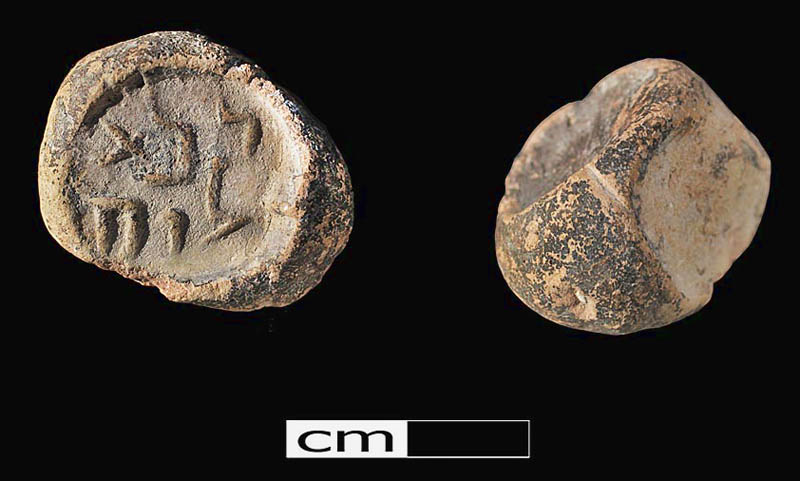
Announcement was made by the Israel Antiquities Authority in Jerusalem today of the recent discovery of an inscribed “seal” bearing a shortened version of the name of God (Yahweh).

The small fired clay object was discovered from the soil collected during the recent excavations at the southwest corner of the temple mount enclosure which we mentioned here about a month ago.

"Pure for G-d" Inscription Seal. IAA photo by Vladimir Naykhin.

"Pure for G-d" Inscription Seal. IAA photo by Vladimir Naykhin.

A portion of the press release by the IAA reads,

Layers of soil covering the foundations of the Western Wall, c. 15 meters north of the southwestern corner of the Temple Mount, were excavated beneath Robinson’s Arch in archaeological excavations of the Israel Antiquities Authority in the Jerusalem Archaeological Garden. On top of these layers, dating to the first century CE (the late Second Temple period), was paved the Herodian street which was the main road of Jerusalem at that time. From the very start of the excavations in this area the archaeologists decided that all of the soil removed from there would be meticulously sifted (including wet-sifting and thorough sorting of the material remnants left in the sieve). This scientific measure is being done in cooperation with thousands of pupils in the Tzurim Valley National Park, and is underwritten by the ʽIr David Association. It was during the sieving [sifting] process that a tiny object of fired clay, the size of a button (c. 2 centimeter in diameter [about 3/4 of an inch]) was discovered.

The Aramaic inscription, consisting of two lines, has the word for pure, a preposition and a shortened form of the word for G-d. Jews do not write the name of God. Many of our English versions of the Bible use the word LORD for the translation of the Tetragrammaton YHWH. The short form on this object has only YH.

The excavators, Elie Shukron and Ronny Reich, explain,

“The meaning of the inscription is “Pure for G-d”. It seems that the inscribed object was used to mark products or objects that were brought to the Temple, and it was imperative they be ritually pure. This stamped impression is probably the kind referred to in the Mishnah (Tractate Shekalim 5: 1-5) as a “חותם” (seal). To the best of our knowledge, this is the first time that such an object or anything similar to it was discovered in an archaeological excavation and it constitutes direct archaeological evidence of the activity on the Temple Mount and the workings of the Temple during the Second Temple period”.

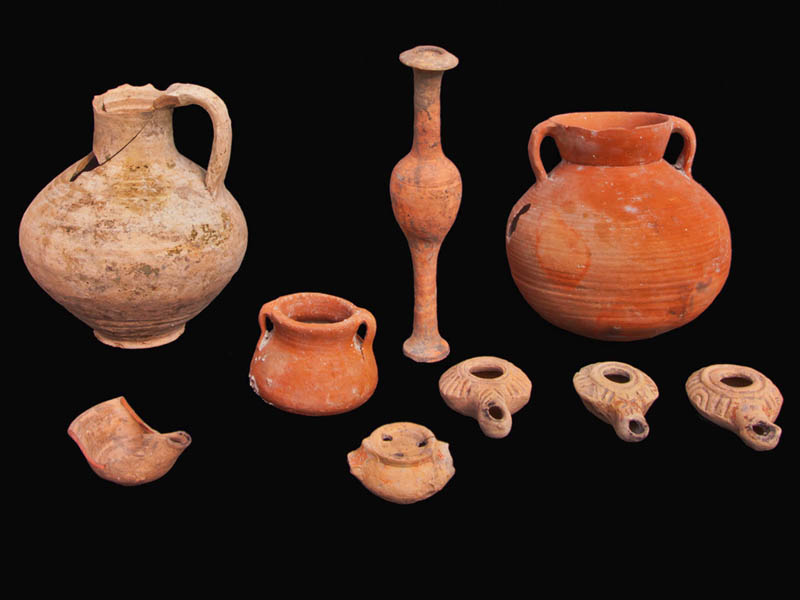
Other artifacts dating to the Second Temple period included some from the Hasmonean Period. In the photo below you will see “oil lamps, ceramic cooking pots and a fusiform juglet [the object in the top middle] that may have contained oils and perfume.” Coins minted in the days of Alexander Jannaeus (102-76 B.C.) and John Hyrcannus (135-104 B.C.) were also discovered.

The complete IAA Press Release may be read here.

Second Temple (Hasmonean Period) vessels. IAA photo by Vladimir Naykhin.

Second Temple (Hasmonean Period) vessels. IAA photo by Vladimir Naykhin.

Just a suggestion. Perhaps a seal such as the one mentioned above would have been used in the case mentioned by Jesus in the Sermon on the Mount.

So if you are offering your gift at the altar and there remember that your brother has something against you, leave your gift there before the altar and go. First be reconciled to your brother, and then come and offer your gift.  (Matthew 5:23-24 ESV)

HT: Joseph Lauer