Category Archives: Culture

Thomson’s “The Land and the Book” on Logos community pricing

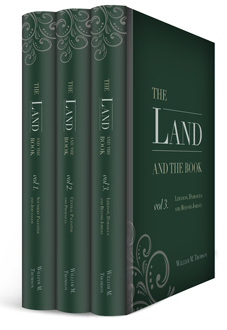
William Thomson’s 3-volume set, The Land and the Book, is now on community pricing at Logos.

http://www.logos.com/product/26753/the-land-and-the-book

Thomson - The Land and the Book

The Land and the Book

This set of books was published by Harper & Brothers between 1880 and 1886.

Thomson spend many years living in Beirut and traveling throughout the region. This is one of the excellent books telling of travel in those days, and of the then-current understanding of the location of various sites.

I am delighted that this book is now on community pricing for $18. If enough people place a bid the price could be lower. Place your bid today.

HT: Brooks Cochran

Acts 13 — Photo Illustrations # 2

During the trip to Israel I got a little behind in the photo illustrations for the chapters of Acts.

When we come to Acts 13 and 14, there are so many places to consider that it could take weeks to cover them all in detail. In fact, if you use the search box you will see that we have posts on most of the places mentioned in these chapters.

It seems that Paul and Barnabas did not stop to preach in Perga on the outgoing portion of the first journey. The text says, almost casually, that “going on from Perga, they arrived at Pisidian Antioch” (Acts 13:14).

Here we have one of the longer sermons of the book of Acts — Paul’s sermon in the Jewish synagogue. While it appears that we have a vibrant Jewish community in Pisidian Antioch, we also find a receptive Gentile audience. When the Jews rejected the message of the risen Christ, Paul and Barnabas said,

“we are turning to the Gentiles.” (Acts 13:46 ESV)

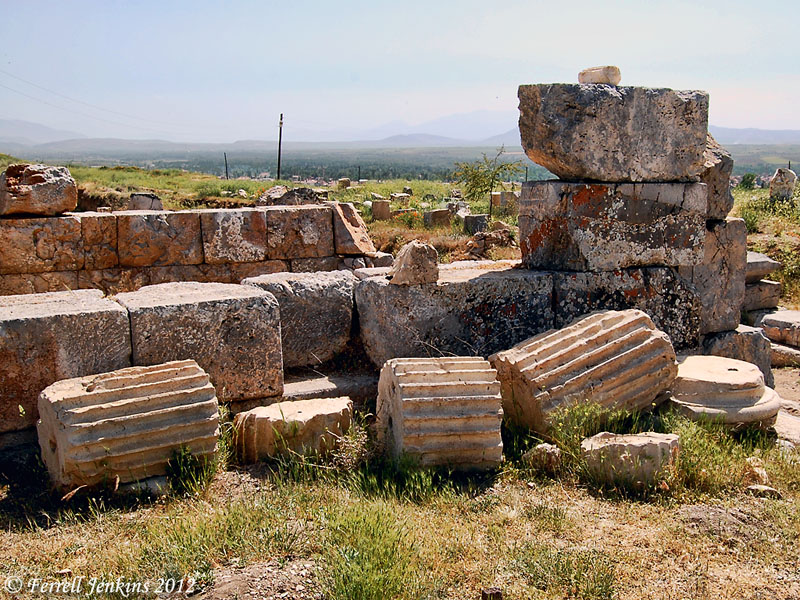
Pisidian Antioch was a city of numerous idol temples. There was a sanctuary or temple dedicated to the Emperor Augustus (30 B.C. – A.D. 14) built by Tiberias (A.D. 14-37).

Ruins of the Augustus Imperial Sanctuary at Pisidian Antioch. Photo by Ferrell Jenkins.

Ruins of the Augustus Imperial Sanctuary at Pisidian Antioch. Photo by Ferrell Jenkins.

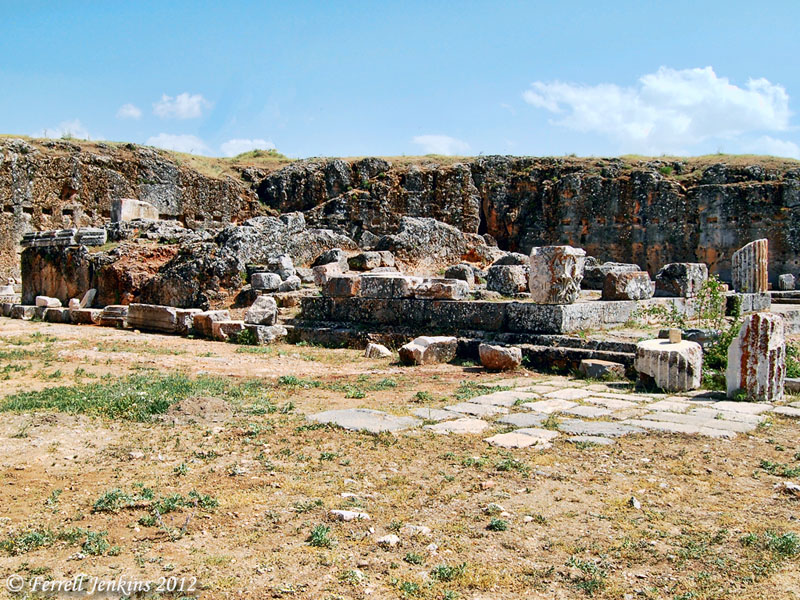
The foundation of the sanctuary is cut from the solid bedrock.
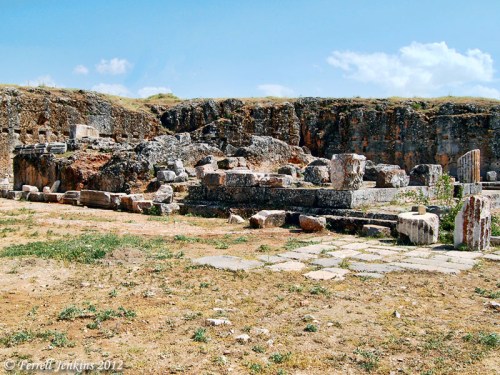
The Augustus Imperial Sanctuary at Pisidian Antioch. Photo by Ferrell Jenkins.

The Augustus Imperial Sanctuary at Pisidian Antioch. Photo by Ferrell Jenkins.

Peter Walker describes the temple,

Beyond the propylon was a large, semicircular courtyard, surrounded by colonnades, the eastern part of which was cut out from the hill-side’s rock. And standing in the centre, towards the back, was the sanctuary of Augustus’ temple. Though quite small – some 15 by 30 feet (4.5 x 9 m) – it was set on a high foundation of natural rock and approached by a further twelve steps. Antioch’s residents were expressing in impressive fashion their gratitude to the emperor for their city’s increased prestige under his rule. However, for Paul it demonstrated the daunting challenge ahead. What room would there be for his own message, focused on a rival world-ruler, in a city where this imperial cult was evidently growing at such a pace? (In the Steps of Paul, 87,89).

Maps. In your study of Acts you might enjoy the use of the Digital Map of the Roman Empire available here. This map, based on the Barrington Atlas, includes the road system. Because the maps show the terrain, you can get some concept of the difficulties encountered by Paul and his companions as they traveled from place to place.

Thanks to Dr. Rasmussen for the lead to this map.

Let the New Year begin

This evening at sundown the New Year began according to the Jewish calendar. Today is known as Rosh HaShanna — the head or first of the year.

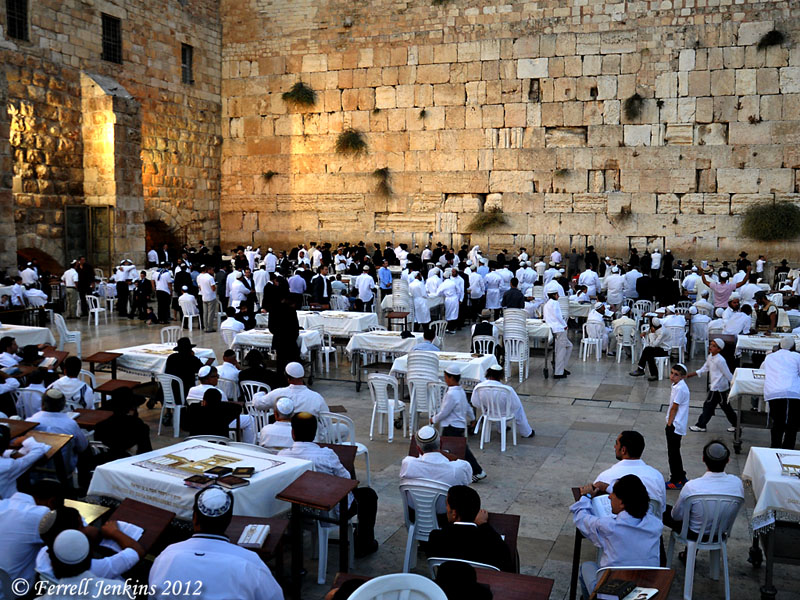
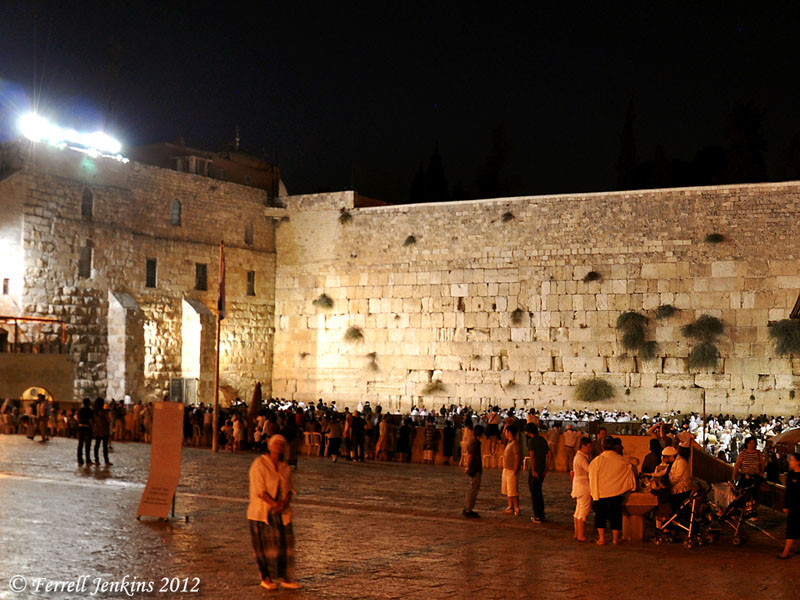
Late this afternoon I went to the Western Wall to observe some of the festivities of the beginning of the New Year.

The Western Wall on Rosh HaShanna. Photo by Ferrell Jenkins.

The Western Wall on Rosh HaShanna. Photo by Ferrell Jenkins.

Finally, when the sun went down just a few minutes after 7 p.m., the new year had arrived to the sound of chanting and dancing.

The Western Wall at the beginning of Rosh HaShanna. Photo by Ferrell Jenkins.

The Western Wall at the beginning of Rosh HaShanna. Photo by Ferrell Jenkins.

Now in the seventh month, on the first day of the month, you shall also have a holy convocation; you shall do no laborious work. It will be to you a day for blowing trumpets. (Numbers 29:1 NAU)

Blow the trumpet at the new moon, At the full moon, on our feast day.
(Psalm 81:3 NAU)

We expect to hear the blowing of shophars during the next couple of days.

No work is to be done this day. Our hotel was again filled with Jews celebrating the New Year. The head waiter told me there were approximately 900 served in the dining room this evening.

Modern Jews no longer follow the commands of the following verses in Number 29 requiring the offering of a burnt offering, a grain offering, a drink offering, etc.

The horn or trumpet under consideration is the shophar or ram’s horn. For more about the ram’s horn, see here.

Sabbath in Jerusalem

Jerusalem is an interesting city for many reasons. At the moment I will limit myself to some cultural reasons. Friday evening and Saturday our hotel was filled with Jews who are “observing” Shabat (Sabbath). Instead of preparing food in advance at home, many register in a local hotel and let someone else prepare everything.

But when I went to East Jerusalem I saw kids on the way to/from school, shops open, and people moving about doing their shopping. If they took a weekly holiday, it was Friday.

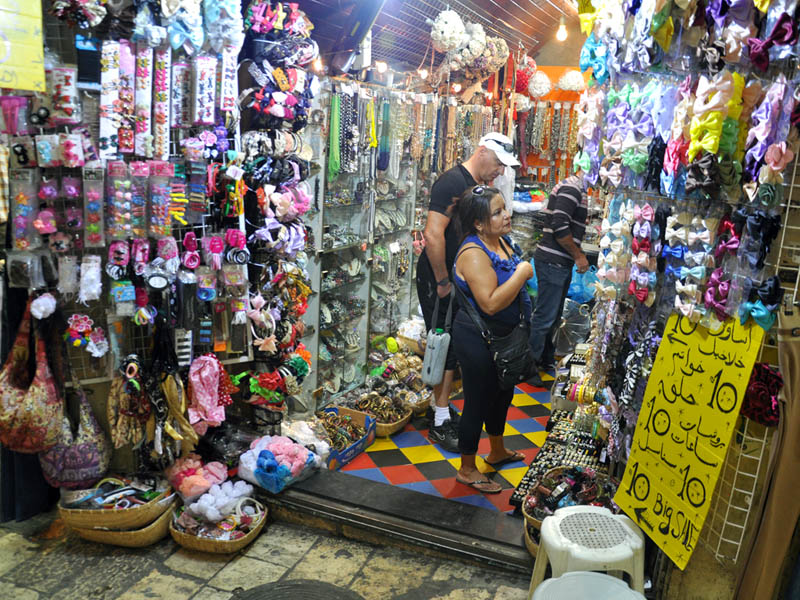
When I walked from Damascus Gate to Jaffa Gate and Zion Gate, I found all of the Moslem and Christian shops open and bustling with activity. Many Christian shops will be closed Sunday.

Colorful shop in the Moslem Quarter of Jerusalem. Photo by Ferrell Jenkins.

Colorful shop in the Moslem Quarter of Jerusalem. Photo by Ferrell Jenkins.

During the day I visited Damascus Gate, Zedekiah’s Cave (Solmon’s Quarry), the Russian Excavations, Jaffa Gate area, the roof of the Petra Hotel to see Hezekiah’s Pool, the Armenian Cathedral of St. James, “Mount Zion”, and maybe a few other places I don’t recall.

We get Fox News at our hotel. Several times we have seen reports about the anti-American riots and demonstrations in 21 countries including Israel (Tel Aviv and East Jerusalem). I am not saying it did not happen somewhere, but I was out all day and saw on indication of any such unrest. Perhaps the cameras had already left by the time I got out!

Benjamin plateau, Israel Museum, and the Garden Tomb

This morning we went out to Nebi Samwil [prophet Samuel], a site suggested as the location of Mizpah by some scholars. Others suggest Tell en-Nasbeh, a mound located at Al Bira in the West Bank. (See Jeffrey Zorn, “Mizpah: Newly Discovered Stratum Reveals Judah’s Other Capital.” BAR 23:05 (Sep/Oct 1997).

  • Samuel, the last judge of Israel, called all of the people of Israel to Mizpah and judged them (1 Samuel 7:5-6).
  • Samuel also anointed Saul to be the first king of Israel at Mizpah (1 Samuel 10:1).
  • Mizpah became the headquarters of Gedaliah as governor of Judah after the Babylonian destruction of Jerusalem  (2 Kings 25:23).

From the hill, we were able to look north to the Benjamin plateau. Both King Saul and Saul of Tarsus (Paul) were from the tribe of Benjamin. El Jib, the tell of Gibeon, is also visible from Nebi Samwil.

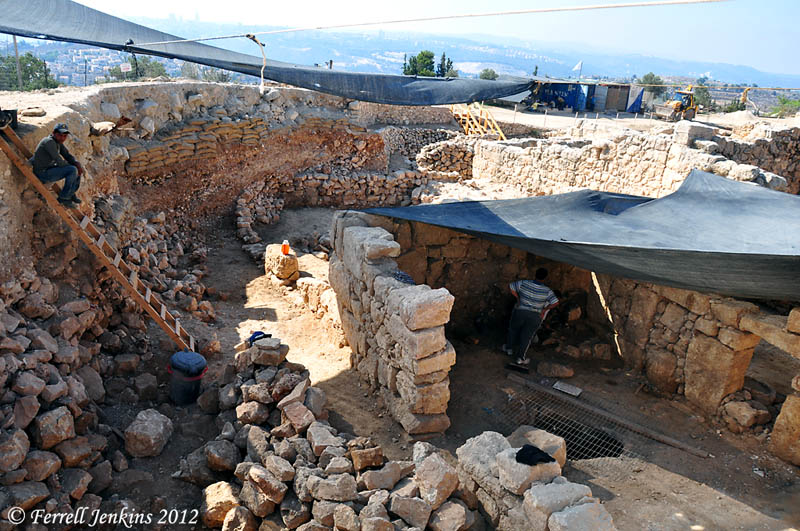
Some new excavations were underway under the direction of the National Parks Authority. We were told that Hasmonean ruins has been excavated, and there was some evidence from the Persian and Babylonian periods.

Excavations at Nebi Samwil - Sept. 13, 2012. Photo by Ferrell Jenkins.

Excavations at Nebi Samwil – Sept. 13, 2012. Photo by Ferrell Jenkins.

After Nebi Samwil we went to the Israel Museum campus for a visit of the Second Temple Model, the Shrine of the Book, and the Israel Museum. This is the first time I have been in the Museum since photos (without flash) have been allowed.

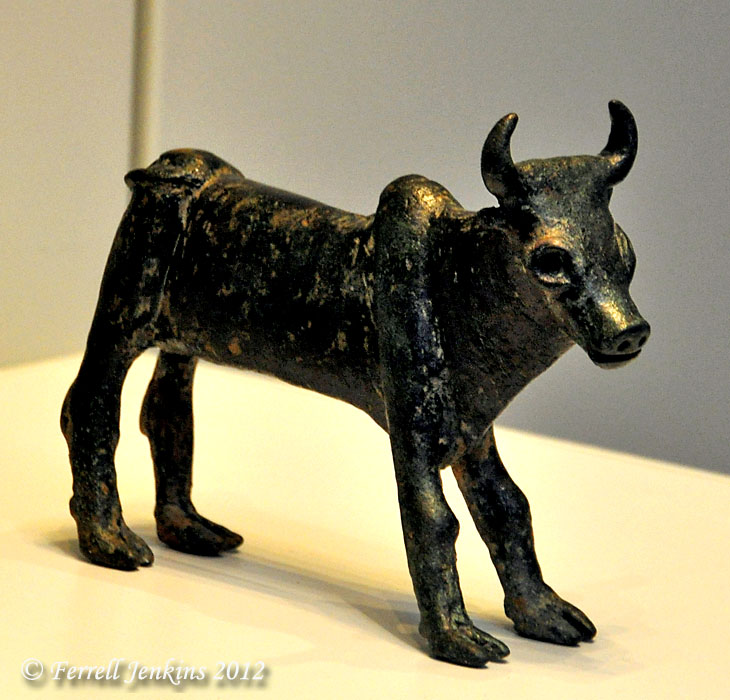
I will share one photo that I am pleased to have in my collection. It shows a bronze bull, dating to the 12th century B.C., found in the Samaria region.

Bronze Bull from Samaria Region - Israel Museum. Photo by Ferrell Jenkins.

Bronze Bull from Samaria Region – Israel Museum. Photo by Ferrell Jenkins.

This bull, and others those that have been found at Ashkelon and Hazor, remind us of the calf at Sinai (Exodus 32:24) and the calves set up by Jeroboam at Dan and Bethel (2 Kings 10:29).

The information posted with the statuette says,

Canaanite in inspiration, it attests to Israelite adoption of Canaanite motif. For the Israelites it may have symbolized God, or the pedestal of an unseen God.

Thank you, Israel Museum, for allowing photos.

In the late afternoon we visited The Garden Tomb. While this tomb is clearly not the tomb of Jesus, it provides a good illustration in a natural setting — far different from the Holy Sepulcher.

A new Archaeology Museum in Turkey

Turkey is a marvel of historical sites, and many of them have their own archaeological museum. A new museum has opened in Aydin, due east of Kusadasi (near Ephesus). Here is a description of the museum and its contents.

Aydın Provincial Culture and Tourism Director Nuri Aktakka said around 3,000 historical artifacts are on display in the 2,500-square-meter museum. “Most of the artifacts were discovered at the Tralleis, Magnesia, Alinda, Nysa, Alabanda and Ortasia historical sites in Turkey. We hope to increase the number of artifacts in the museum in the future. We have many historical sites in Aydın, and excavations are under way to discover more artifacts,” he said.

Aktaka also said 11,000 archeological and 45,000 numismatic and 4,000 ethnographic artifacts are currently registered at the museum and they will be on display by turns.

Read the full news article here. The name that first caught my attention is Nysa (also Nyssa). Back in 2006 my friend Leon Mauldin and I were driving from Kusadasi to the Hierapolis area. I think I am correct in saying that neither of us knew anything about Nysa, but when we saw the usual brown sign that marks archaeological sites we decided to take the short detour to visit Nysa. It was a pleasant stop.

Nysa (Nyssa), Turkey, archaeological excavation. Photo by Ferrell Jenkins.

Nysa (Nyssa), Turkey, archaeological excavation. Photo by Ferrell Jenkins.

Nysa is also known as Nysa Ad Maeandrum, and became famous as an educational center. The Meander River flows past the city only a few miles south. The city was the home of the ancient geographer Strabo (63 B.C. – A.D. 25).

Another museum to visit.

HT: Jack Sasson

Acts 10 & 11 — Photo Illustrations

Cornelius was the first Gentile convert to the faith. This case illustrates clearly that morality alone is not adequate to save one. It was necessary for Cornelius to hear and obey the word of God (Acts 11:14).

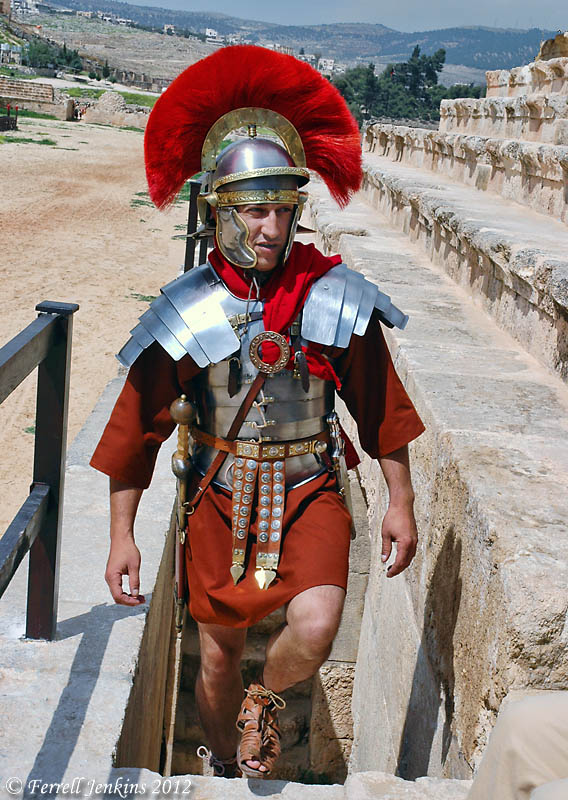
A centurion enters the hippodrome. An actor in the RACE show at Jerash, Jordan. Photo by Ferrell Jenkins.

An actor playing the role of a centurion in the RACE show at Jerash, Jordan, enters the hippodrome. Photo by Ferrell Jenkins.

A centurion in the Roman army normally had charge of 100 men (= to Army captain). A regular cohort was one tenth of a legion and had a paper strength of 600 men. An auxiliary cohort was usually comprised of 1,000 men. Cornelius was of the Italian cohort. There is inscriptional evidence for the “Italian cohort” from Syria (See Bruce, The Book of Acts in NICNT, 215). When Paul set sail from Caesarea for Rome he was accompanied by a centurion of the Augustan cohort named Julius (Acts 27:1).

The centurions mentioned in the New Testament make a favorable impression:

  • At Capernaum – Matthew 8:5-13; Luke 7:2-10
  • At the crucifixion – Luke 23:47.

This was not true of soldiers generally (Luke 3:14).

Felucas on the Nile

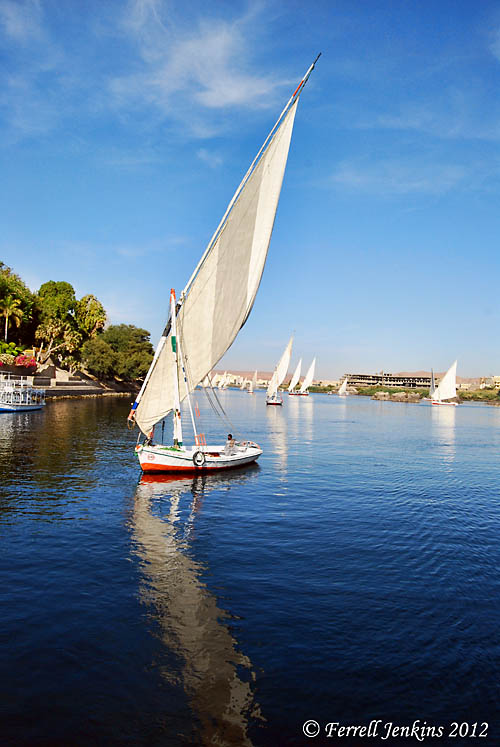
Felucas are common on the Nile in Egypt. The wooden sailing boat is moved by the wind. It seems to take two men to control the sail and the rudder. Many Nubians find work running these boats. See here. The photo below was made at Aswan, Egypt. Aswan is known as Syene in Ezekial 29:10 and 30:6.

Kitchener’s Island is visible on the left, and Elephantine Island is on the right.

A feluca on the Nile at Aswan. Photo by Ferrell Jenkins.

Felucas on the Nile at Aswan. Photo by Ferrell Jenkins.

Whether at Aswan or Cairo, an afternoon ride aboard a feluca is a pleasant and relaxing experience.

The Rosetta Stone

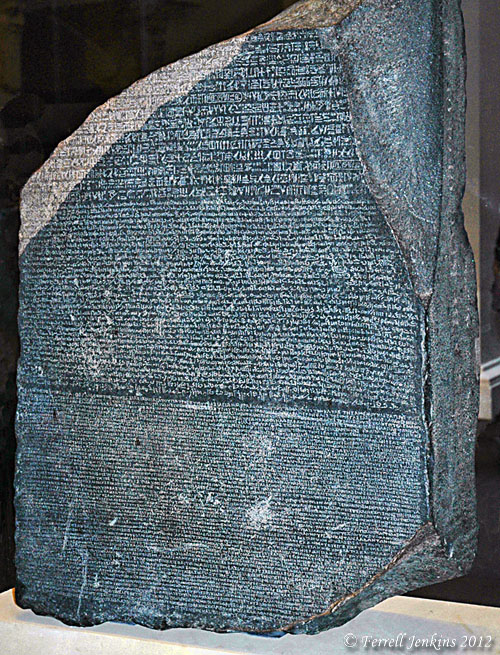
The Rosetta Stone was found by Napoleon’s soldiers in Egypt in 1799. It was read by Jean-François Champollion in 1822, and thus became the key to unlock Egyptian hieroglyphics. The Rosetta Stone is now displayed in the British Museum in London, where it has been since 1802.

The Rosetta Stone in the British Museum. Photo by Ferrell Jenkins.

The Rosetta Stone in the British Museum. Photo by Ferrell Jenkins.

Candace Keener writes the story of the Rosetta Stone in HowStuffWorks here.

HT: Jack Sasson

Could there be an “Internet Use Disorder”?

A headline in today’s New York Times caught my attention. It says, “Silicon Valley Says Step Away From the Device.” The article by Matt Richtel begins,

Stuart Crabb, a director in the executive offices of Facebook, naturally likes to extol the extraordinary benefits of computers and smartphones. But like a growing number of technology leaders, he offers a warning: log off once in a while, and put them down.

In a place where technology is seen as an all-powerful answer, it is increasingly being seen as too powerful, even addictive.

A leader from each of the giants in this field is quoted. Facebook, Twitter,  Zynga (FarmVille), Google (YouTube).

This is a worthwhile article which you may read in full here.

A few weeks back, Dr. Rod Decker commented on an article by Kevin Bauder. If this subject intrigues you, you might enjoy reading what they have said. Click here for Decker, and here for Bauder.

Self-control is a fruit of the Spirit (Galatians 5:23). Note Peter’s admonition in his reminder epistle to Christians.

Now for this very reason also, applying all diligence, in your faith supply moral excellence, and in your moral excellence, knowledge, and in your knowledge, self-control, and in your self-control, perseverance, and in your perseverance, godliness, and in your godliness, brotherly kindness, and in your brotherly kindness, love. (2 Peter 1:5-7 NAU)

Meanwhile, be sure to check back here tomorrow. 🙂