Category Archives: Church History

JERUSALEM in IMAX

Friday morning my wife and I joined three Biblical Studies faculty from Florida College, and a handful of other people, in the MOSI IMAX giant screen theater in Tampa to see the National Geographic Entertainment presentation of JERUSALEM.

The original producers of this film have been promoting it for several years, as you can see from the video that we posted nearly three years ago here. The current production is about 45 minutes in length. The thing that really makes the difference is the IMAX giant screen presentation.

JERUSALEM features three young ladies representing the three religions claiming Jerusalem as the home of their origin: Judaism, Christianity, and Islam. The girls guide the viewers through the crowded, winding streets of the Old City to the various religious sites of the city. There are a few scenes in other parts of the country: Capernaum, Caesarea Maritima, Joppa, Masada, and the Dead Sea. The only scholar represented in the film is Dr. Jodi Magness. She provides informed commentary about the archaeology of Jerusalem, but it is limited. Views of the Givati garage excavation are shown, but no historical context is provided.

For my part, the hoards of people scurrying through Damascus Gate, or to the Church of the Holy Sepulchre, or to the Western Wall is overdone. The three young ladies who serve as guides almost come face to face in one scene, but admit that they still know very little about one another.

The best feature of the film (not shown at all in the video below), is taking ruins that remain and building reconstructions of the city in biblical times. One scene begins at the corner of the temple mount at Robinson’s Arch and builds into a model of the the biblical temple.

I don’t know if the film will be shown in Tampa, but it is showing in several cities. A full list, and other info about the film, is available here.

Jerusalem | Filmed in Imax 3D from JerusalemGiantScreen on Vimeo.

Having spent much time walking in the old city and viewing it from above, I knew where I was (in the film), but I am not sure that those who have little or no acquaintance with the city will find it anything but confusing.

The aerial photo below was made from the east. It shows the western slopes of the Mount of Olives, the Kidron Valley, the Temple Mount, and a portion of the Old City buildings.
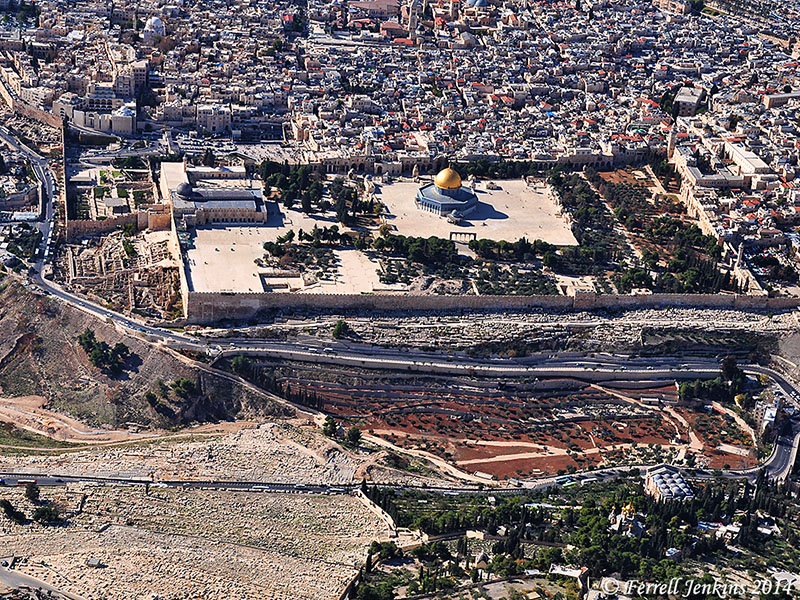
Aerial view of Jerusalem from the east. Photo by Ferrell Jenkins.

Aerial view of Jerusalem from the east. Photo by Ferrell Jenkins.
 

Traveling in Turkey

“Turkey? Why would you want to go to Turkey?” That is a question I have been asked a number of times over the years since my first visit in 1968. My response usually goes something like this. If you are interested in Bible history, Turkey is very important both for the Old Testament and the New Testament. Of course, the land was not called Turkey at the time of the Bible, but had various names depending on the historical period and the geographical region.

Think of the Old Testament history.

  • It is possible that the Garden of Eden was located somewhere in the mountains of eastern Turkey near the source of the Tigris and Euphrates Rivers (Genesis 2:10-14).
  • For sure, Noah’s Ark came to rest on the mountains of Ararat (ancient Urartu) (Genesis 8:4).
  • Haran, and the region known as Padan-aram in Mesopotamia, became the ancestral home of Abraham and his family before he went to the land of Canaan (Genesis 28:2; et al.).
  • Bible kings were involved in battles with world powers at the town of Carchemish (Jeremiah 46:2).
  • The Hittites lived in central and eastern Turkey (1 Kings 10:28-29; 2 Kings 7:6). Kue designates Cilicia in Turkey.
  • Both the Assyrians and Babylonians, enemies of Israel, were active in this region (Isaiah 10:9; Jeremiah 46:1-2).
  • The Euphrates and the Tigris, great rivers of Turkey, were important in Bible times (Isaiah 27:12; Genesis 2:14; Daniel 10:4). The Euphrates is often designated simply as the River (Isaiah 11:16).

Think of New Testament history.

  • Paul was a native of Tarsus in Cilicia (Acts 21:39). Timothy was a native of Lystra (Acts 16:1).
  • From Acts 11 onward throughout the New Testament, most of the events take place in Roman Asia Minor.
  • The town we know as Antioch in (the Roman province of) Syria is now located in the Hatay province of Turkey (Acts 11; Galatians 2:11).
  • Paul, Barnabas, and John Mark sailed from Seleucia to begin the first missionary journey (Acts 13:4).
  • With the exception of Salamis and Paphos in Cyprus, all of the places associated with the first journey are in Turkey (Acts 13-14).
  • Many of the towns visited on the second and third journey are in Turkey (Acts 15-16).
  • Paul made stops at the coastal town of Myra on the voyage to Rome (Acts 27:5).
  • Paul’s letters to the Galatians, Ephesians, Colossians, and Philemon were address to churches or persons in Asia Minor.
  • Peter’s two letters were addressed to Christians in Pontus, Galatia, Cappadocia, Asia, and Bithynia, now in Turkey (1 Peter 1:1; 2 Peter 3:1). Peter also visited Antioch in Syria (Galatians 2:11).
  • The apostle John spent some of his latter years in Ephesus, and addressed the book of Revelation to seven churches in Asia (Revelation 1:4, 11).
Hot air balloons are moved by the wind over the lunar-like landscape of Cappadocia while the pilots control their altitude. Photo by Ferrell Jenkins.

Hot air balloons are moved by the wind over the lunar-like landscape of Cappadocia while the pilots control their altitude. Photo by Ferrell Jenkins.

Post New Testament church history.

  • The Book of Revelation describes events that would affect the saints of Asia (Revelation 1:4). The information we have about the Roman Emperors and the temples erected to their honor throughout Turkey fit perfectly with what we read in Revelation.
  • The Ecumenical Councils met in the place we now call Turkey in the following cities: Nicaea, Constantinople, Ephesus, Chalcedon.
  • Some of the better known early church fathers are associated with places in Turkey.

Good enough reasons to visit Turkey, I’d say.

Note: This is intended only as a suggestive list; not a complete one.


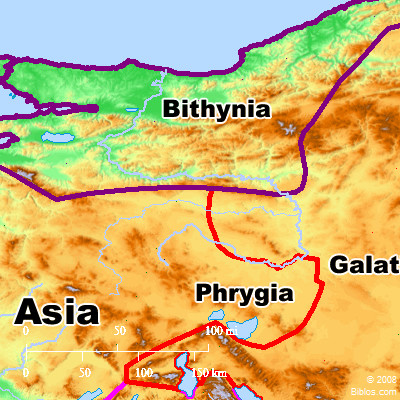
A visit to Nicaea in Bithynia.

Today  my friend Leon and I made a 10 hour trip from Istanbul to Iznik, Turkey. Iznik is the name of ancient Nicaea (Nicea) in Bithynia. This is a region of Asia Minor into which Paul was not allowed by the Spirit to travel. Instead, he was directed to go down to Troas where he received the call to come over into Macedonia.

And when they had come up to Mysia, they attempted to go into Bithynia, but the Spirit of Jesus did not allow them. So, passing by Mysia, they went down to Troas. (Acts 16:7-8 ESV

Bithynia is across from Istanbul on the south side of the Sea of Marmara. It is a beautiful mountainous region with valleys filled with olive trees and fruit orchards.

The Epistles of Peter are addressed to saints living in Bithynia, but no specific towns are mentioned (1 Peter 1:1; 2 Peter 3:1).

The Roman province of Bithynia. BibleAtlas.org.

The Roman province of Bithynia. BibleAtlas.org.

The modern town of Iznik utilizes the layout of ancient Nicaea. Nicaea was the site of the first and seventh of the ecumenical councils held between 325 and 787 A.D. Hopefully I will be able to write more about these councils and their importance in the history of Christianity at a later time.

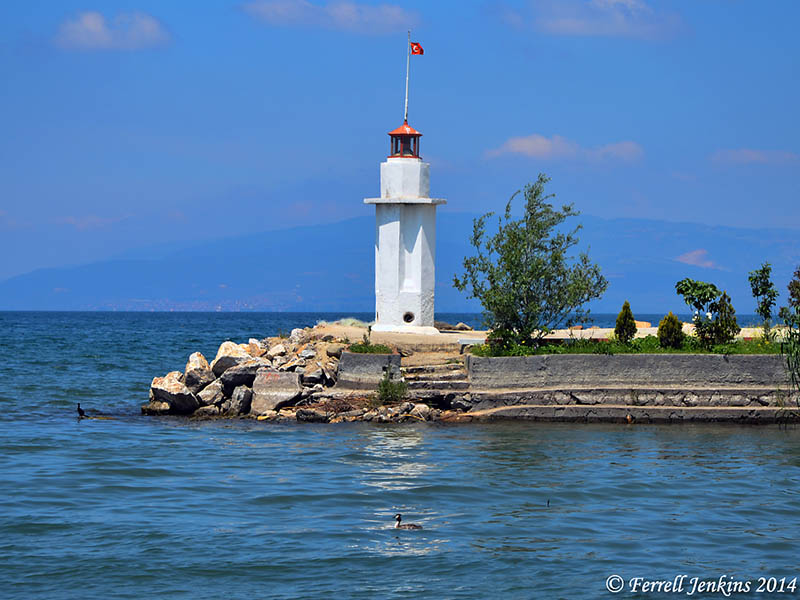
For today I wanted to share a photo I made of a little lighthouse in the fresh water Lake Iznik.

Lighthouse in Lake Iznik. Photo by Ferrell Jenkins.

Lighthouse in Lake Iznik. Photo by Ferrell Jenkins.

Excavations at Derbe

The first excavations ever have begun at the ancient city of Derbe. Derbe was visited by the Apostle Paul and Barnabas on the first preaching journey (Acts 14:20-21). Paul returned with Silas on the second journey (Acts 16:1).

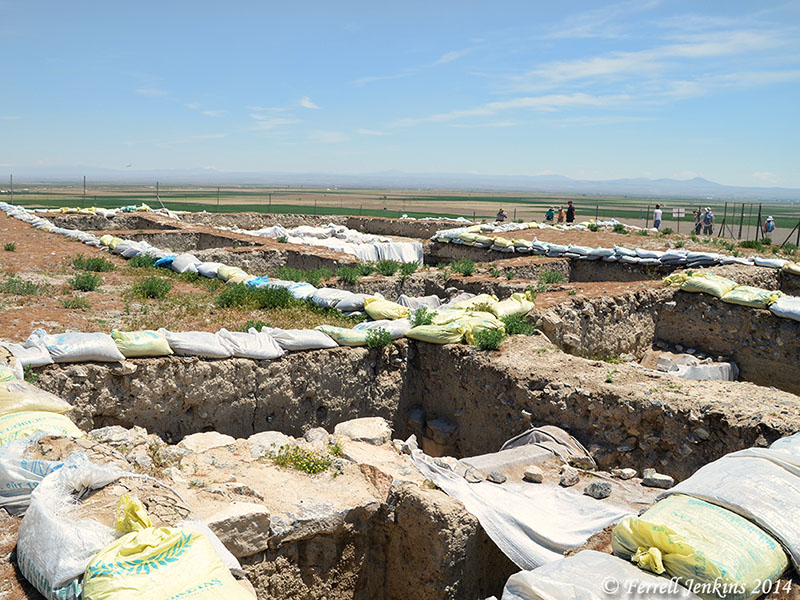
Today our tour group visited Kerti Hüyuk, the site widely believed to be ancient Derbe. Several squares were opened on the top of the mound in 2013.

Recent excavation at Derbe. Photo by Ferrell Jenkins, May 14, 2014.

Recent excavation at Derbe. Photo by Ferrell Jenkins, May 14, 2014.

The report in a Turkish newspaper quotes Associate Professor Mehmet Tekocak of Selçuk University:

So far the excavations have unearthed ancient wall remains. “There are brick and stone walls. We found graves and skeletons inside the walls. Anthropologic works will reveal the ages and genders of these skeletons and how they died. Works show us that this place received a lot of damage, and most architectural materials were removed for use in other places. This place was seen as a kind of stone quarry. We found the remains of a church-like structure, and we believe that we will find new structures as excavations continue. Even these remains alone show us that a Christian society lived in this tumulus,” Tekocak said.

There is no hint as to the age of the church-like structure.

See the report in Hurriyet Daily News here. We look forward to future reports from Derbe.

HT: HolyLandPhotos Blog.

The tour photo

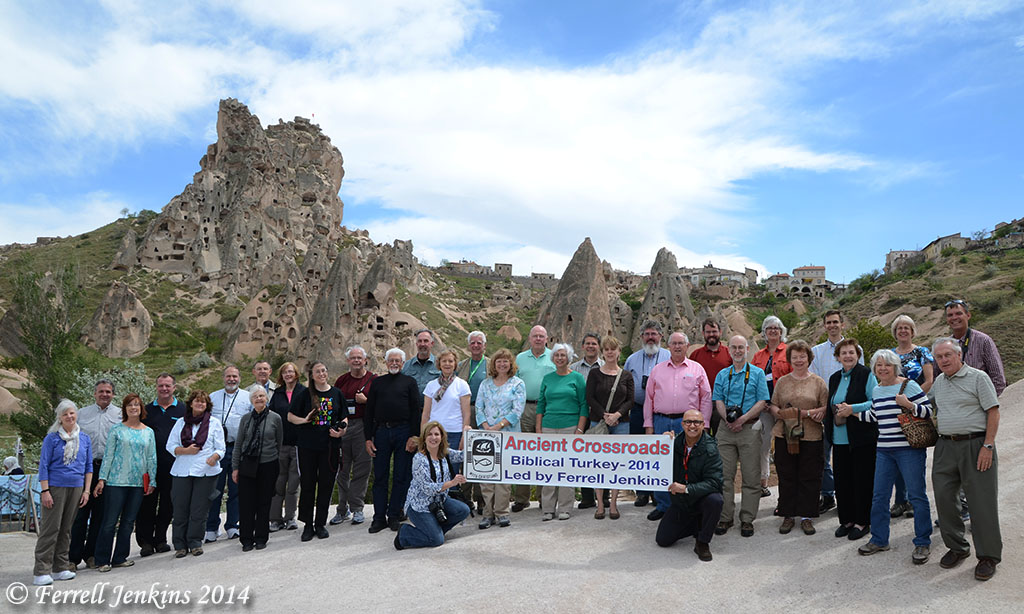
We spent the full day in Cappadocia. As usual with our tour, we have a local photographer to make a group photo at one of the interesting spots we visit. Our photo this time was made at Uchisar. Do you know anyone in our group?

Ancient Crossroads Tour of Biblical and Historical Turkey. Photo taken at Uchisar in Cappadocia. Photo by Ferrell Jenkins.

Ancient Crossroads Tour of Biblical and Historical Turkey. Photo taken at Uchisar in Cappadocia. Click on photo for a larger image.

The Bible tells us that Jews of Cappadocia were present in Jerusalem on the day of Pentecost (Acts 2:9). Peter wrote his epistles to saints scattered throughout Cappadocia and other places in Roman Asia Minor (modern Turkey).

Peter, an apostle of Jesus Christ, To those who are elect exiles of the dispersion in Pontus, Galatia, Cappadocia, Asia, and Bithynia,  2 according to the foreknowledge of God the Father, in the sanctification of the Spirit, for obedience to Jesus Christ and for sprinkling with his blood: May grace and peace be multiplied to you. (1 Peter 1:1-2)

John Freely describes Cappadocia in these words:

“Most of this part of Cappadocia is covered with a deep layer of tufa, a soft stone of solidified mud, ash and lava which once poured down from the now extinct volcanoes on Hasan Dagi and Ericiyes Dagi, the two great mountain peaks of Cappadocia. In the eons since then the rivers of the region have scoured canyons, gorges, valleys and gulleys through the soft and porous stone, and the elements have eroded it into fantastic crags, folds, turrets, pyramids, spires, needles, stalagmites, and cones, creating a vast outdoor display of stone sculptures in an incredible variety of shapes and colours” (The Companion Guide to Turkey, 238).

In the centuries after New Testament times many Christians settled in this volcanic region of perhaps 50,000 cones.

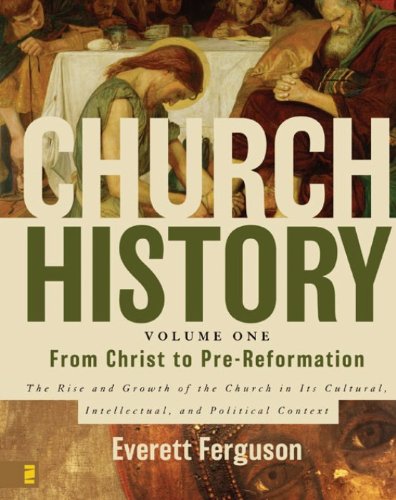
Church History book available for Kindle

Do you have a good book on Church History? I have observed that many church members are generally ignorant of church history. A few months ago I learned that two books by Zondervan were to be available in Kindle format for $3.99 each. The second volume in the series was available, but there was some delay in getting the first volume online. Volume two is available today for $3.99. For how long I do not know.

51YVjpXge3L

Everett Ferguson’s Church History ,Volume One: From Christ to Pre-Reformation: The Rise and Growth of the Church in Its Cultural, Intellectual, and Political Context: 1, is currently available for the Kindle for $3.99. The regular price for the Kindle edition is $44.99. This book begins with the historical setting for the coming of Christ and the establishment of the church. It ends at about 1300 A.D.

Ferguson is widely respected as a scholar in early church history. With a Ph.D. from Harvard, he is professor emeritus of Bible and distinguished scholar-in-residence at Abilene Christian University. He is author of several books on early Christianity.

An eBook like this could be helpful for travelers visiting the Bible lands. In Turkey, for example, one sees the development of the Church Councils. In Italy there is the rise of the papacy and Catholicism. The Crusades involved numerous countries, including Israel. Sections on monasticism and the rise of Islam can be helpful as well. Ferguson also covers the “Dark Ages” and sets the stage for the earliest Reformation efforts.

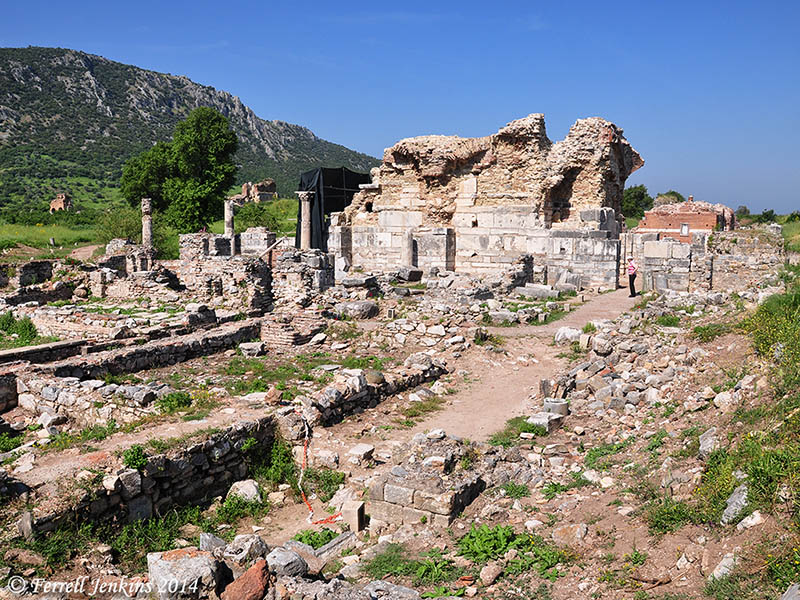
Our photo shows ruins of The Church of Mary, also called the Church Council Church, at Ephesus. In A.D. 431 the Council of Ephesus was conducted here.

Church Council Church at Ephesus. Photo by Ferrell Jenkins.

Church of Mary (Church Council Church) at Ephesus. Photo by Ferrell Jenkins.

HT: Brooks Cochran

Visiting the shepherd’s fields near Bethlehem

After the birth of Jesus in Bethlehem, Luke records that an announcement of His birth was made to shepherds in the field at night.

And in the same region there were shepherds out in the field, keeping watch over their flock by night. And an angel of the Lord appeared to them, and the glory of the Lord shone around them, and they were filled with great fear. And the angel said to them, “Fear not, for behold, I bring you good news of great joy that will be for all the people. For unto you is born this day in the city of David a Savior, who is Christ the Lord. (Luke 2:8-11 ESV)

There was enough distance that the shepherds said, “Let us go over to Bethlehem and see this thing that has happened, which the Lord has made known to us.” (Luke 2:15 ESV)

We do not know the exact time of the birth of Jesus. We have a reasonable degree of certitude about the place of His birth, but places such as the field of the shepherds are not certain. As a result, traditions have risen about the place. Here I will mention three places that one can visit a short distance east of Bethlehem, near the wilderness of Judea. This area is known as Beit Sahour.

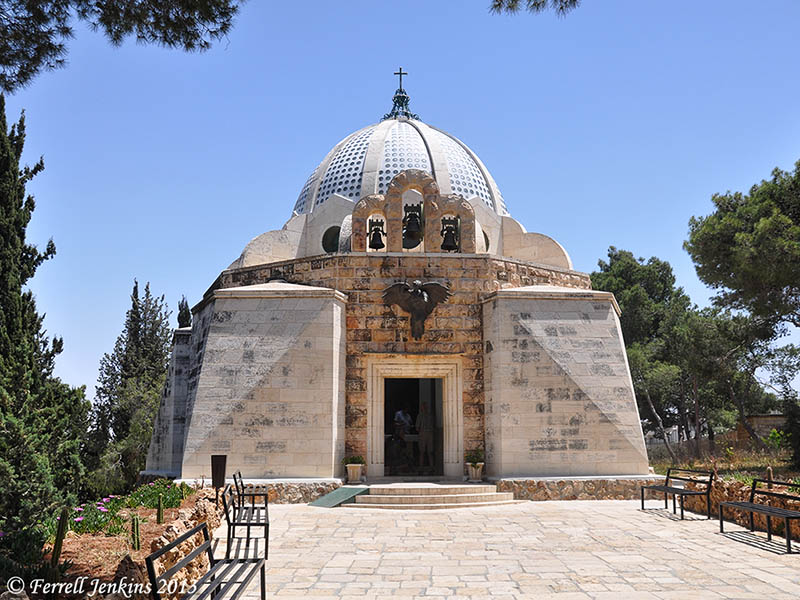
The first place is the Shepherd’s Field of the Franciscan Custody of the Holy Land (a Roman Catholic site). The photo shows the modern church built over a cave.

The Shepherd's Field of the Franciscan Custody of the Holy Land. Photo by Ferrell Jenkins.

The Shepherd’s Field of the Franciscan Custody of the Holy Land. Photo: F. Jenkins,

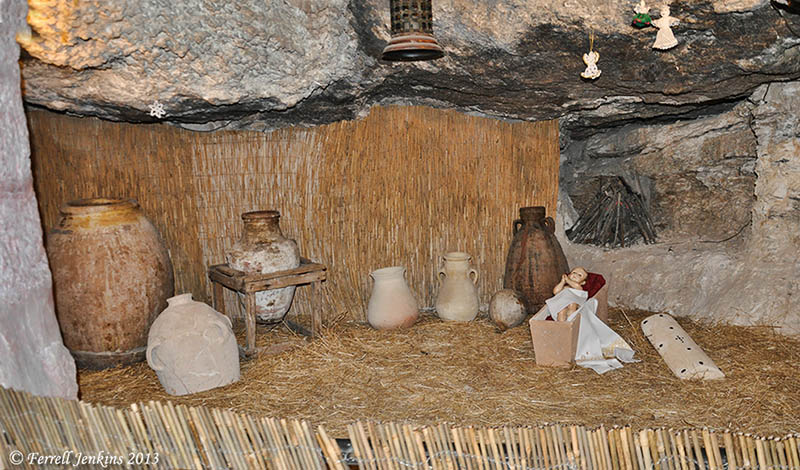
Under the church there is a large cave. These caves are not uncommon in the central mountain range. A display illustrating the birth of Jesus can be seen in the cave. One little note of interest. It is often pointed out that the manger of Luke 2:7 might be a feeding trough cut from stone. In this display the baby is placed in an ossuary! Notice the lid to the right.

Display in cave at Shepherd's Field. Photo by Ferrell Jenkins.

Display in cave at Shepherd’s Field. Photo by Ferrell Jenkins.

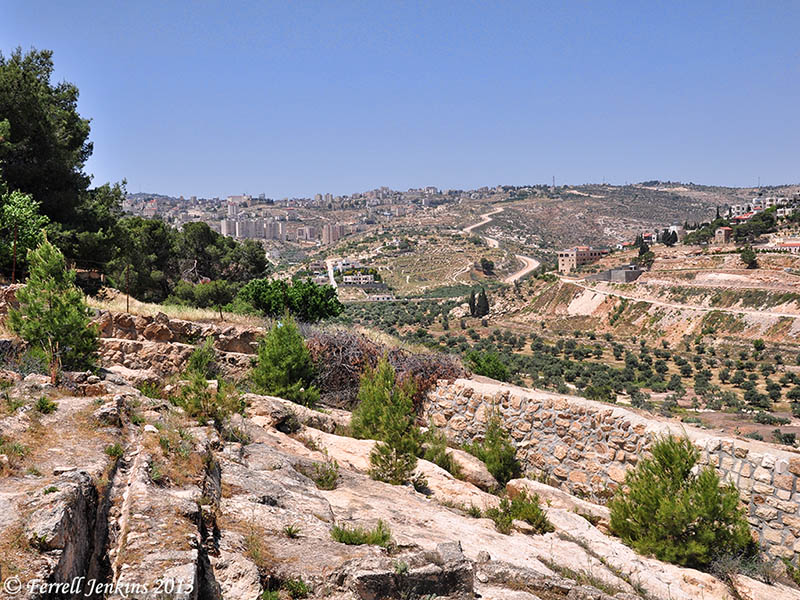
Outside one sees fields and olive groves.

Shepherd's fields at Beit Sahour. Photo by Ferrell Jenkins

Shepherd’s fields at Beit Sahour. Photo by Ferrell Jenkins.

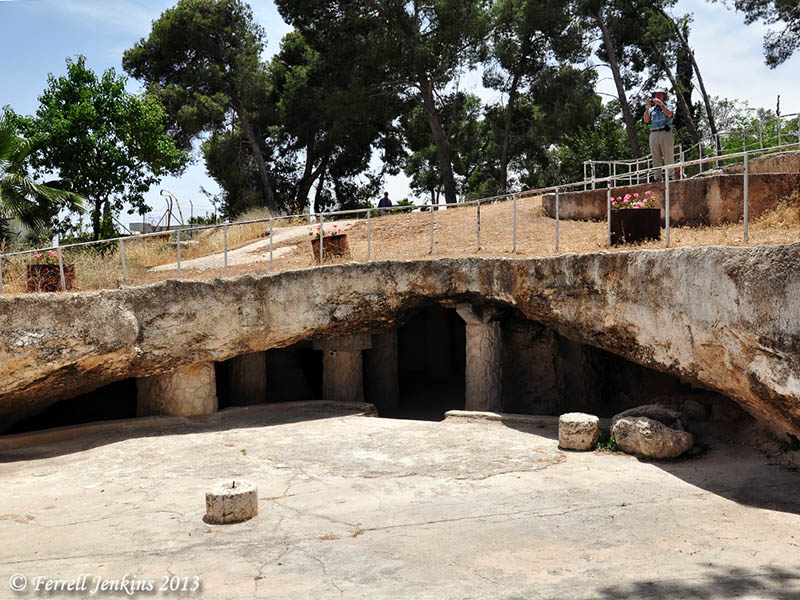
Not far away is the Shepherd’s Field of the YMCA. Some call it the Protestant Shepherd’s Field. There is a large cave on the property overlooking the fields of the region.

Caves at YMCA Shepherd's Field. Photo by Ferrell Jenkins.

Caves at YMCA Shepherd’s Field. Photo by Ferrell Jenkins.

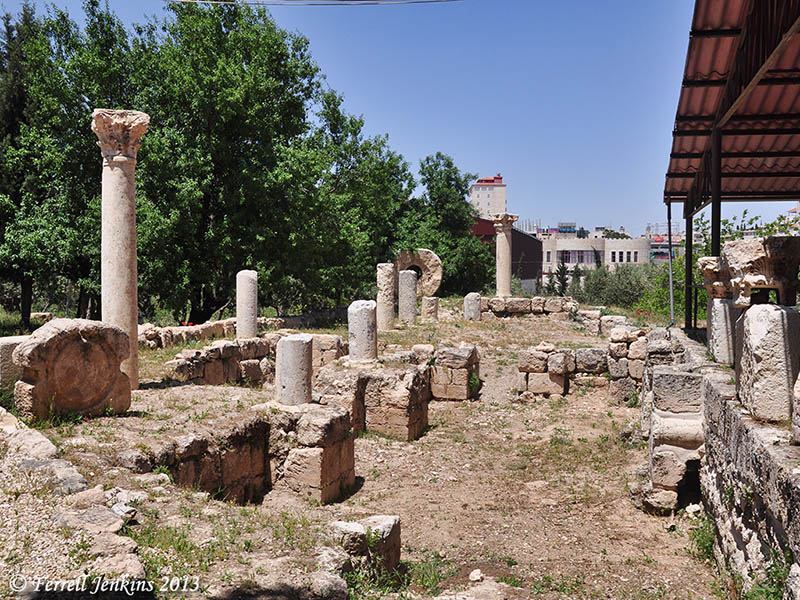
The Greek Orthodox site features ruins of a Byzantine church dating from the 5-7th centuries.

Byzantine church ruins at the Greek Orthodox site of the Shepherd's field. Photo by Ferrell Jenkins.

Byzantine church ruins at the Greek Orthodox site. Photo by Ferrell Jenkins.

Carl Rasmussen wrote about the “3 Christmases in Bethlehem” here, and Mark Ziese wrote about the Milk Grotto here. We have written about the Church of the Nativity several times, including here.

If not Tell Ḥesbân, where is Heshbon?

If Tell Ḥesbân is not biblical Heshbon, then the pool uncovered by S. H. Horn is likely not the pool mentioned in Song of Solomon 7:4.

If Tell Ḥesbân is not biblical Heshbon, then where is biblical Heshbon?

A sign at Tell Ḥesbân, erected by the excavators, lists evidence of occupation during the following periods:

  • Ajarmah [local tribe] village – ca. AD 1870-present
  • Ottoman Village
  • Mamuluk Regional capital – AD 1260-1500
  • Abbasid pilgrim rest. – AD 750-1260
  • Umayyad market town – AD 650-750
  • Byzantine Ecclesiastical center – ca. AD 350-650
  • Roman temple town – ca. 63 BC – AD 350
  • Hellenistic fortress – ca. 198 BC – 63 BC
  • Ammonite citadel – ca. 900 – 500 BC
  • Proto Ammonite village – ca. 1200 – 900 BC
  • Traditional Ammorite Stronghold.
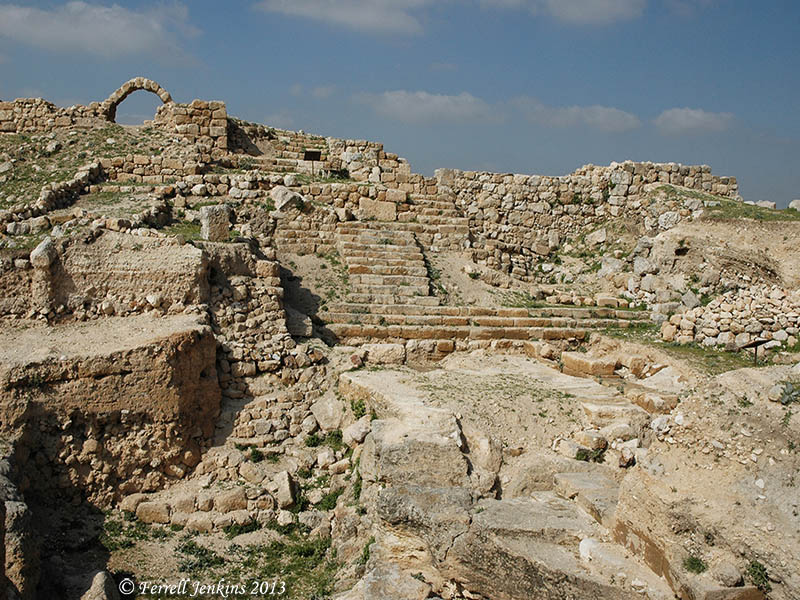
Roman steps and market area at Tell Ḥesbân. Photo by Ferrell Jenkins.

Roman steps and market area at Tell Ḥesbân. Photo by Ferrell Jenkins.

Remember that we are looking for a town of Moab, and there is no evidence of the Moabites at Tell Ḥesbân.

Because not every reader of this blog speaks Bronze Age and Iron Age, I think I should list the general dates of these archaeological periods (following J. A. Thompson, The Biblical World (ed. Charles Pfeiffer).

  • Early Bronze (EB) — ca. 3200 – 2100 BC
  • Middle Bronze (MB) — ca. 2100 – 1550 BC – period of the Patriarchs
  • Late Bronze (LB) — ca. 1550 – 1200 BC – period of Moses, the Exodus, and the Conquest
  • Iron I — ca. 1200 – 900 BC – period of the Judges & the United Kingdom
  • Iron II — ca. 900 – 600 BC – period of the Divided Kingdom
  • Iron III — ca. 600 – 300 BC – period of Exile and Return
  • Hellenistic (Grecian) — ca. 300 – 63 BC – Between the Testaments
  • Roman — ca. 63 BC – AD 323 – New Testament & early Christian period

We are looking for a city belonging to the period of Moses, the Exodus, and the Conquest (the Late Bronze archaeological period). [*see note below]

After the disappointment at Tell Ḥesbân, those associated with Horn formed the Madaba Plains Project in order to continue the search for Heshbon. One of the great things about Todd Bolen’s Pictorial Library of Bible Lands is the fact that many of the photos include brief documentation with the photos. With one of the Tell Ḥesbân photos he says,

After this disappointing series of digs, the Madaba Plains Project was formed and the search for Heshbon continued.  Four Late Bronze sites were found within a 6 mile (10 km) radius of Tel Hesban; Tel Jalul is the biggest and thus the most promising site. Tel Jalul is the largest site in Jordan south of Amman.
Three possibilities exist for the location of biblical Heshbon: Tel Hesban, Tel el-Umeiri, and Tel Jalul. Hesban preserves the name, which makes it a good candidate, but it lacks archaeological evidence.
The PLBL collection includes photos of all of these places. The Institute of Archaeology Siegfried H. Horn Museum at Andrews University maintains a helpful web site that includes information about the Madaba Plains Project here.
Byzantine church at Tel Hesban. Photo by Ferrell Jenkins.

Byzantine church at Tel Hesban. Photo by Ferrell Jenkins.

The photo above shows the ruins of the Byzantine church at Tell Ḥesbân. Tel Jalul may be seen in the distance. Look for the long, plain “hill”, on the top of the hill on the far left of the photo.
Added Note: In the original post I stated that “We are looking for a city belonging to the period of the Patriarchs (the Late Bronze archaeological period).” A friend called my attention to the oversight. The chart above shows that the period of the Patriarchs is the Middle Bronze Age. I should have said, as now corrected above, that “We are looking for a city belonging to the period of Moses, the Exodus, and the Conquest (the Late Bronze archaeological period).”

More on the Vandalization of the Protestant Cemetery in Jerusalem

This is a brief follow-up on our report here of the vandalization of the Protestant Cemetery. Trent Dutton, “Our man in Jerusalem”, reports that once AP released a story about the vandalism, several Middle East and American news outlets have come to the cemetery for photographs, and have re-posted the story.

Fox News: http://www.foxnews.com/world/2013/10/09/vandals-damage-graves-in-jerusalem-in-latest-attack-against-christians/?intcmp=latestnews

Washington Times: http://www.washingtontimes.com/news/2013/oct/9/jerusalem-grave-vandals-set-christians-edge/

Ma’an News (Jordanian) discusses this in the context of the general problem faced by some Arabs: http://www.maannews.net/eng/ViewDetails.aspx?ID=634823

YouTube: http://www.youtube.com/watch?v=4GY6D02dksI

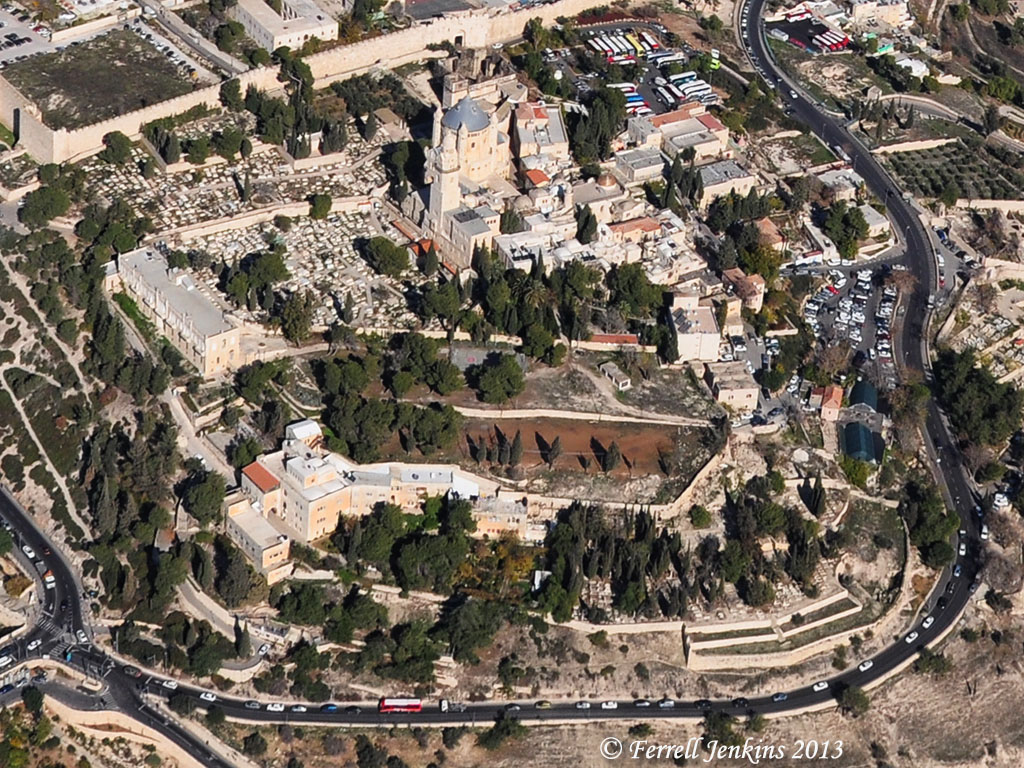
The aerial photo below shows the Church of the Dormitian, the Catholic, Armenian, and Greek cemeteries in the upper left portion. Along the bottom of the photo, overlooking the road along the south of the Old City where it joins with the Hebron Road, is the Jerusalem University College. The Protestant Cemetery can be seen among the trees just above our copyright notice. Click on the photo for a larger image.

Aerial photo of the Protestant Cemetery. Photo by Ferrell Jenkins.

Aerial photo of the Protestant Cemetery. Photo by Ferrell Jenkins.

You can probably see that it would be rather easy for one to enter the cemetery from the road below.

HT: Trent Dutton

Huge columns said to be 1900-years-old found buried at Laodicea

Hurriyet Daily News reported today the discovery of a large number of “1,900-year-old huge columns” at Laodicea.

Excavations in the Aegean province of Denizli’s ancient city of Laodicea have revealed 1,900-year-old huge columns seven meters underground. The columns were found in the area known as the northern agora, one of the oldest faith centers in Anatolia.

The head of the excavations, Professor Celal Şimşek, said the northern agora had been discovered last year and they were continuing restoration and conservation work there. He said the area was one of the largest agoras in Anatolia. “The columned galleries here are in a rectangular shape on an area of 35,000 square meters. We previously revived the columned galleries that we call the eastern porch. This year we found the extension of these columns seven meters underground. They were in the same condition as when an earthquake ruined them. The columns date back to 1,900 years ago. Dust erosion and residue have filled the earth here and preserved the columns.”

Şimşek said their goal was to finish the excavations by the end of the year and to revive the columns in the beginning of the next year. He said the ancient city of Laodicea had served as a religious center.

“When the columned galleries are completely unearthed, there will be a very nice touring area. Tourists will have the chance to see traces from the past up close.”

A nice gallery of photos illustrate the article. One is a drawing showing how the area may have looked before being destroyed by earthquake. We are given no hint how the age of the columns was determined and whether the earthquake that felled them was also about 1,900 years old. Mark Wilson says,

Because of earthquakes the city was rebuilt numerous times during its history. A devastating earthquake during the reign of Focas (AD 602-10) finally caused the site to be abandoned. The residents founded a new city called Ladik, now the Kaleiçi district of Denizli. — Biblical Turkey, 247.

Laodicea is mentioned only in Paul’s epistle to the Colossians (2:1; 4:13-16) and in the Book of Revelation (1:11; 3:14). Paul says that Epaphras worked diligently for the saints in Colossae, Laodicea, and Hierapolis. These were cities of the Lycus River valley.

We have visited Laodicea several times over the years and been delighted with the archaeological reconstruction underway. The city should be on everyone’s list of “must see” sites of Turkey. Turkey has approximately 1100 historical sites, and the country has made considerable progress in preparing some of them for visitors. Use the search box on this blog to locate previous entries about Laodicea.

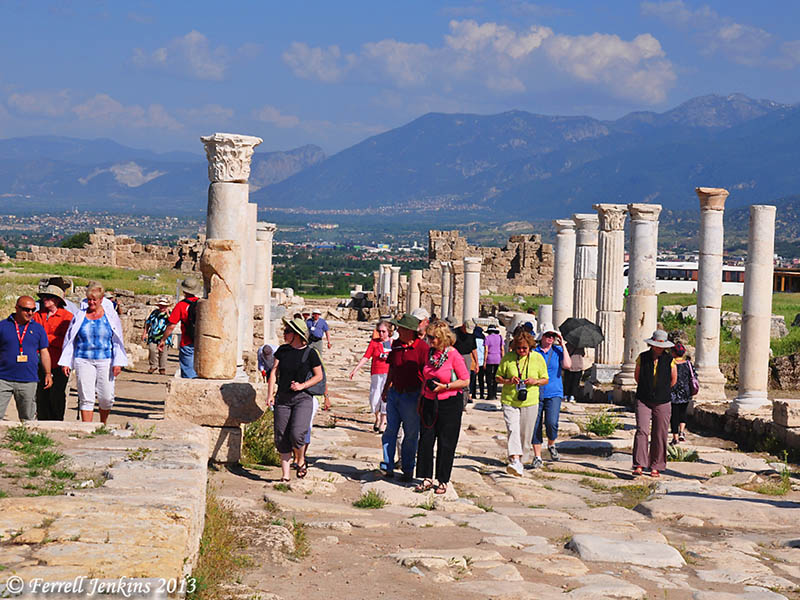
Tourists on the Syrian Street at Laodicea. Colossae is located at the foot of Mount Cadmus, seen in the distance to the east. Photo by Ferrell Jenkins.
Tourists on the Syrian Street at Laodicea. Colossae is located at the foot of Mount Cadmus, seen in the distance to the east. Hierapolis is to the north (our left as we view the photo). Photo by Ferrell Jenkins.

HT: Joseph I. Lauer