Category Archives: blog

Friends traveling in Israel on the Sabbath

Luke Chandler recently returned from participating in the excavation at Khirbet Qeiyafa. Before leaving Israel he spent a few days with Trent and Rebekah who are excavating at Azekah. Luke reports on some of the fun the three Gentiles had on an Israeli Sabbath. See here.

Two observations

Safety. Constantly I am asked if it is safe to travel in Israel. Usually I respond by saying that I would rather be in Israel than downtown [name any town you wish]. Look at these young people. Do they look frightened? You have the answer.

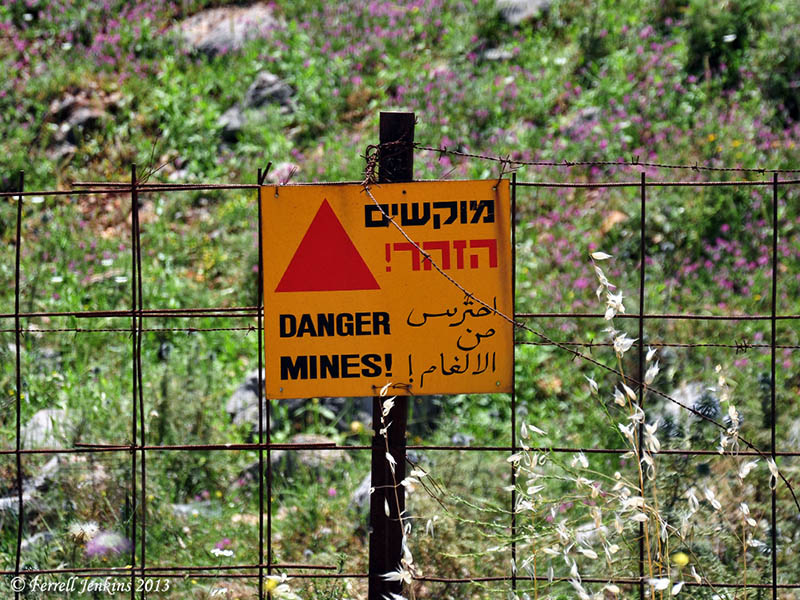
There are some places one should not go, like a field in which the landmines have not been cleared. The sign below is on Highway 99 between Dan and Banias (Caesarea Philippi).

A sign along Hwy 99 between Dan and Banias. Photo by Ferrell Jenkins.

A sign along Hwy 99 between Dan and Banias. Photo by Ferrell Jenkins.

Israel on the Sabbath. From mid-afternoon on Friday until Saturday sundown many Israeli hotels are jam-packed with Israelis who are observing the sabbath and allowing others to do the work. Don’t get the wrong impression. Many secular Israelis are visiting the beaches and parks of the country. But, early on Saturday, until mid-afternoon, is a great time for those who are not observing the sabbath to travel on the highways and visit sites of interest.

Excavating at Ashkelon – and other places

My friends Trent and Rebekah, participating in the archaeological dig at Ashkelon this summer, have posted a survey of the history of Ashkelon in two parts. In their most recent post which they call “Archaeology 101” they answer some of the common questions they received from acquaintances as they began this project.

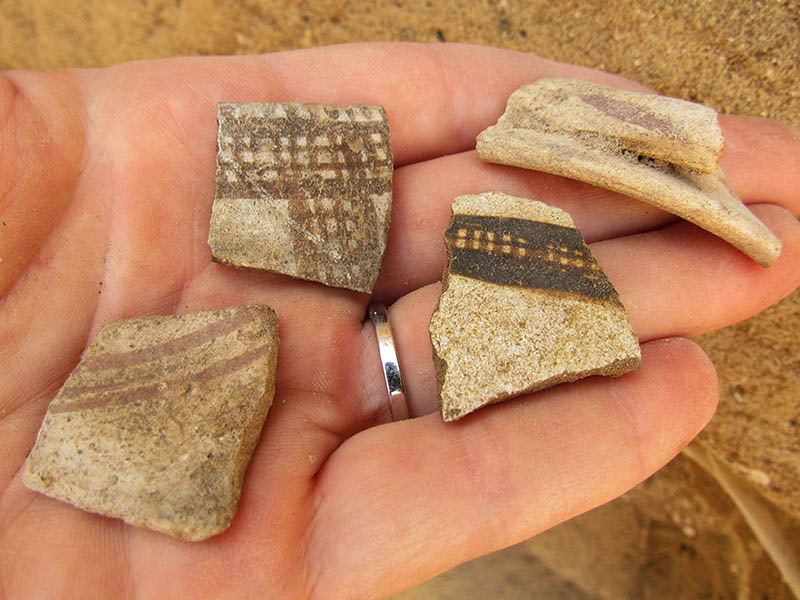
Ashkelon is known best to many of us as a Philistine city (1 Samuel 6:17). Trent and Rebekah show us some pottery sherds typical of the period of the Philistines.

Examples of Philistine Pottery Sherds (Left to Right): Philistine Monochrome, Cypriot Milk Jar, another Cypriot Milk Jar, Monochrome Bell Jar Rim and Handle. Photo: Trent and Tebekah

Examples of Philistine Pottery Sherds (Left to Right): Philistine Monochrome, Cypriot Milk Jar, another Cypriot Milk Jar, Monochrome Bell Jar Rim and Handle. Photo: Trent and Tebekah

They explain how their understanding changes as they work at Ashkelon:

Before your eyes, the Philistines transform from the wicked, Samson-hating enemies of Israel to a sophisticated and powerful people–who were also Israel’s enemies.

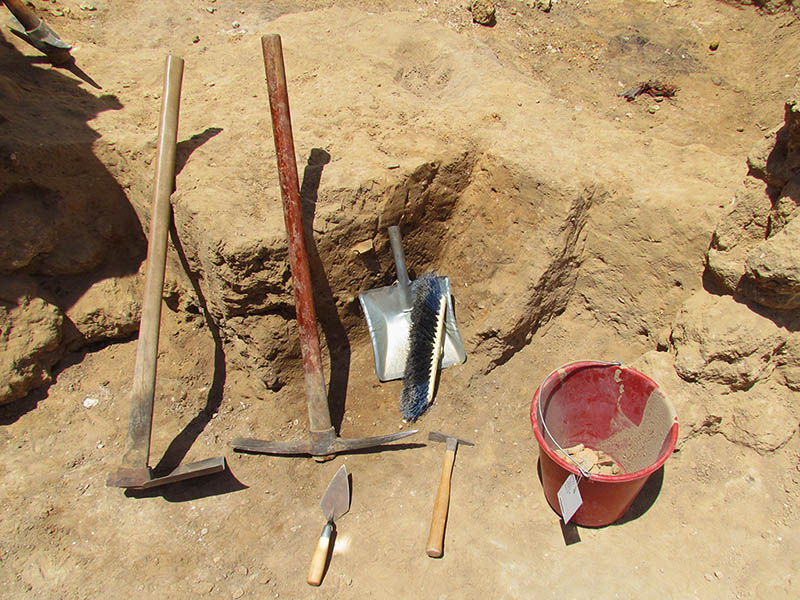
The tool used by the archaeologist are fascinating to the uninitiated who expect to see a bulldozer and a bull whip. Here are the tools typically found in a square.

Tools of the Trade (Back): Turia, Pickaxe, Brush and Dustpan, (Front) Trowel, Patich, Pottery Bucket. Photo: Trent and Rebekah.

Tools of the Trade (Back): Turia, Pickaxe, Brush and Dustpan, (Front) Trowel, Patiche, Pottery Bucket. Photo: Trent and Rebekah.

Read all about it, and see more photos, at TrentandRebekah.wordpress.com.

Trent and Rebekah were able to meet up yesterday with another friend of mine, Luke Chandler, and (re)visit En Gedi, Dead Sea, and Masada. Luke is working at the Shephelah site of Khirbet Qeiyafa.

I wish the excavation directors at Ashkelon and Khirbet Qeiyafa provided a web site with a few updates on their activities.

Meanwhile, at Tell es-Safi/Gath, Professor Aren Maeir does the best job of anyone I know to keep interested readers informed, and create excitement about archaeology and the dig at Gath. Take a look at his posts during the first week of work at the site. Notice the excitement in the faces of those students who have found a basalt mortar and a bead.

Facebook site for Tell el-Amarna

Some archaeological projects have Facebook pages. Check out this one on the Egyptian site of Tell el-Amarna here.

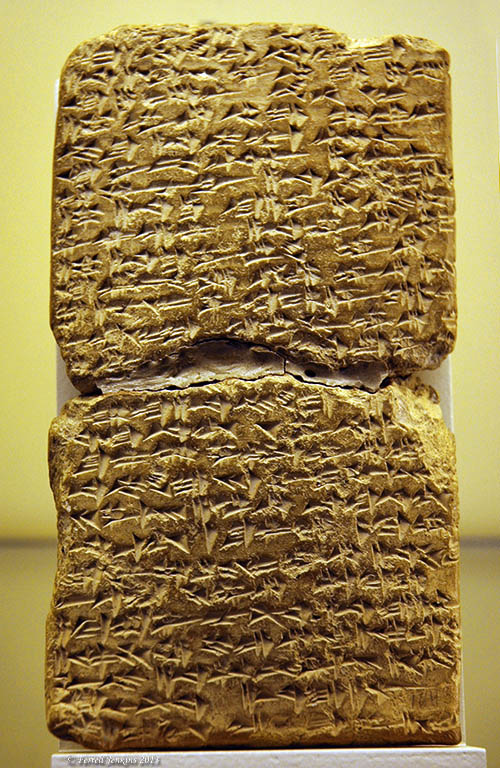
Amarna Letter from the Egyptian ruler of Jerusalem to Amenophis III. Pergamum Museum, Berlin. Photo by Ferrell Jenkins.

Amarna Letter from the Egyptian ruler of Jerusalem to Amenophis III. Pergamum Museum, Berlin. Photo by Ferrell Jenkins.

This letter dates to the reign of Amenophis III (1391-1353 B.C.).

Ashkelon excavation underway

‘Tis the season for archaeological digs. At Ashkelon, the Leon Levy Expedition runs from June 8 – July 19 this year. It is sponsored by Harvard’s Semitic Museum, Boston College, Wheaton College, and Troy University.

I have two young friends, Trent and Rebekah, who are working in the dig. They will not be writing up any marvelous new discoveries that might be made. This is always reserved for the directors of a dig to announce, and then later to publish. My friends are sharing some general information about their participation in the dig as time permits. They are there as part of Dr. Daniel Master’s team from Wheaton College.

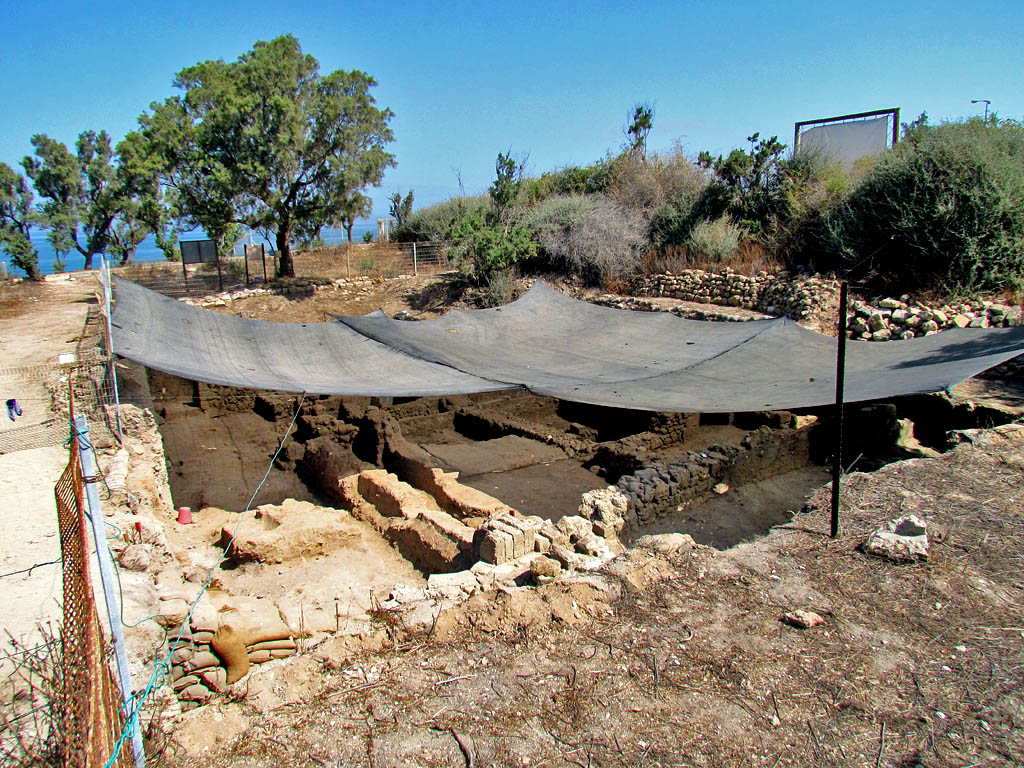
Trent has allowed me to use one of his photos of Grid 51. This is the Grid he has been working in during the past week. He informs me that this is about 1/4 mile southwest of the Canaanite Gate, and belongs to the Persian period. At the time Ashkelon was an important port aligned with Tyre and occupied by Phoenicians.

Grid 51 of the current Ashkelon excavation. Photo by Trent Dutton.

Grid 51 of the current Ashkelon excavation. Photo by Trent Dutton.

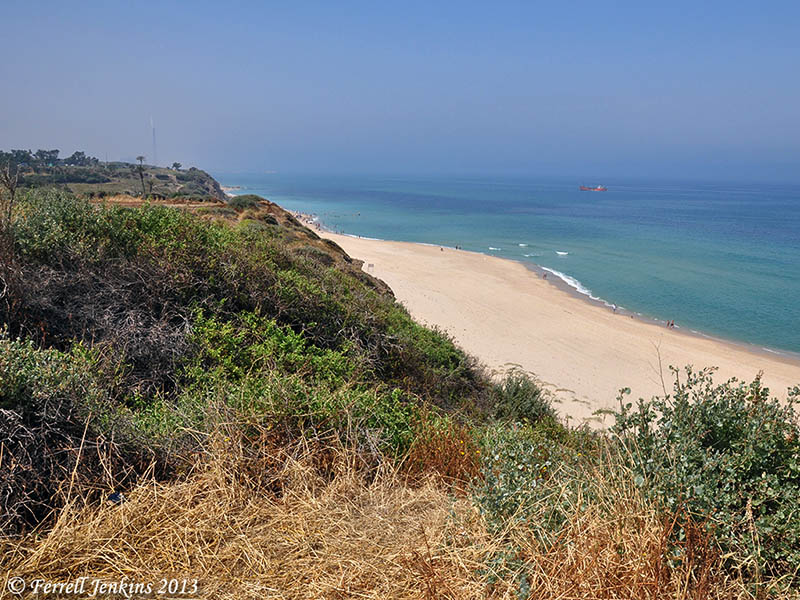
Notice that the Mediterranean Sea is visible to the west. The photo below shows the view south toward Gaza and Egypt and may include Grid 51.

View south along the beach at Ashkelon. Photo by Ferrell Jenkins.

View south along the beach at Ashkelon. Photo by Ferrell Jenkins.

According to 1 Samuel 6:17 there were five important Philistine cities: Ashdod, Gaza, Ashkelon, Gath, and Ekron. Ashkelon had a long history including occupation by Canaanites, Egyptians, Philistines, Phoenicians, Greeks, Romans, Byzantines, Muslims, Crusaders, and finally by Mamelukes.

If you would like to follow what Trent and Rebekah are able to share, see their blog here.

Overview of Jerusalem from the Haas Promenade

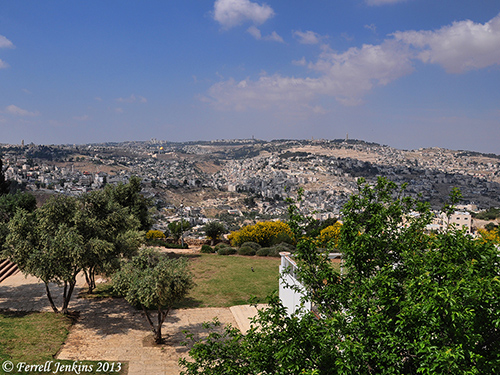
The Haas Promenade is fairly easy to reach from the Hebron Road (Derech Hevron) on the south side of Jerusalem. From there one has a beautiful view of the Old City of Jerusalem and the surrounding area. Those who know the city will enjoy this photo more than those who do not.

View of Jerusalem from the Haas Promenade. Photo by Ferrell Jenkins.

View of Jerusalem from the Haas Promenade. Photo by Ferrell Jenkins.

In this photo you can see the entirety of the southern wall of the Old City. From left to right notice the Church of the Dormition, the Dome of the Rock, the depression of the Kidron Valey, Mount Scopus, and the Mount of Olives. You can see the three towers of Olivet.

Because I have not been posting very much lately, and to show my appreciation for those of you who subscribe and continue to visit the blog, I have linked the image above to one large enough to use in PowerPoint presentations. I hope you and your viewers will enjoy.

As the mountains surround Jerusalem, so the LORD surrounds his people, from this time forth and forevermore. (Psalm 125:2 ESV)

A synagogue on the island of Delos

In the previous post we mentioned that there were numerous synagogues used by Jews of the Diaspora. Paul visited synagogues in many of the cities where he preached.

During his Spring travels, Dr. Carl Rasmussen visited the Greek island of Delos. Delos is one of those places that can only be reached with much effort. Carl has graciously granted permission for me to use a couple of his photos here. The first one shows a view to the west, southwest, showing various rooms of the synagogue. Note the “Moses Seat” in the upper right of the photo. The entrance is visible in the lower left.
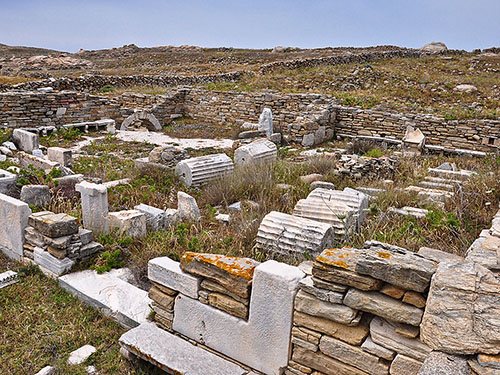
Delos synagogue. Photo by HolyLandPhotos.

Delos synagogue. Photo by Carl Rasmussen, HolyLandPhotos.

The second photo shows a close up of the “Moses Seat” and the marble seats on each side. You may click on the photos for larger images provided by Dr. Rasmussen at the HolyLandPhotos’ Blog.
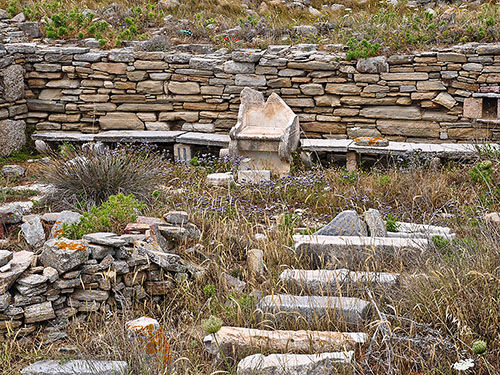
Delos synagogue. Photo by Carl Rasmussen, HolyLandPhotos.

Delos synagogue. Photo by Carl Rasmussen, HolyLandPhotos.

This large synagogue dates to the mid-second century B.C. Two inscriptions found in 1979-80 indicate that the worshipers here (Israelites) were likely Samaritans who revered Argarizein (Mount Gerizim). (See Kraabel, “New Evidence of the Samaritan Diaspora has been Found on Delos.” BA 47:1; 1984).

The Moses Seat. We commonly identify a special seat like the one in this synagogue as the Seat of Moses. Jesus may have made reference to such a seat (Matthew 23:2-3). For more information about the “Moses Seat” see here. Michael White suggests at least the possibility that this seat may be a “Proedrion, either for the major donor (or patron) or for the leader of the group” (HTR 80:2 (1987). I don’t see that this changes the fact that a reader and teacher of the Law might sit here.

If you have any interest in the synagogues scattered over the Mediterranean world, you will want to visit the HolyLandPhotos’ Blog here.

Tradition has it that Delos is the birthplace of Apollo, the son of Zeus, and his twin sister Artemis.
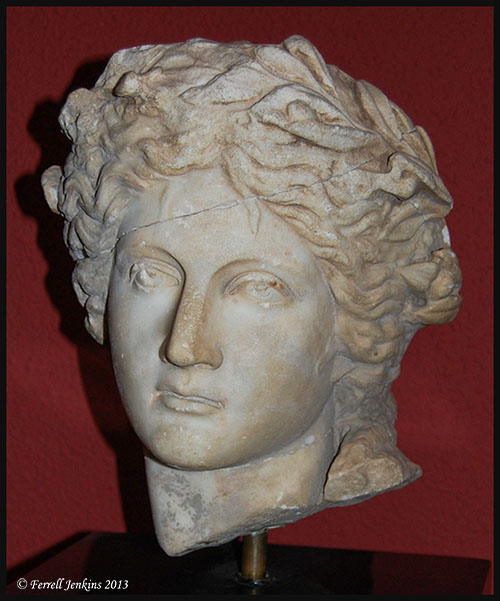
Marble head of Apolls from Perga. Second century A.D. Photo by Ferrell Jenkins.

Marble head of Apolls from Perga. Second century A.D. Photo by Ferrell Jenkins in the Antalya Archaeological Museum.

An article by Gordon Franz a few years ago piqued my interest in Delos. He wrote on “The Synagogue On The Island Of Delos And The Epistle Of James” in Bible and Spade (18:3; 2005). Franz provides the history and geography of the island. He includes a photo of the “Samaritan inscription,” and then proceeds to use the synagogue of Delos to illustrate two passages from the Epistle of James. He discusses James 2:2-4 and selected verses from James 3.

For those who have an interest in visiting Delos, Prof. Rasmussen explains exactly how to reach the synagogue from the Delos Museum. Rasmussen is author of the Zondervan Atlas of the Bible, and provides nearly 4000 thousand photos at the Holy Land Photos archive.

The Bet Qama discovery

Numerous discoveries are made in Israel during the process of building a house, a road, or some other construction project. It becomes necessary to call the Israel Antiquities Authority so that an emergency excavation can be conducted.

Israel has a wonderful toll road (Highway 6) running from Galilee to the Negev. During preparatory work to extend the highway to the south, a settlement covering almost 1½ acres was uncovered in the fields of Kibbutz Bet Qama (Beit Kama) a few miles north of Beersheba. Shmuel Browns, Israel guide and blogger, attended a briefing by the IAA earlier in the week. He describes the discovery:

The site seems to have consisted of a large estate that included a tower, a church, residential buildings, presumably an inn for travelers, and storerooms, a large cistern, a public building and pools surrounded by farmland. Also found was a stone with a Byzantine cross in secondary usage.

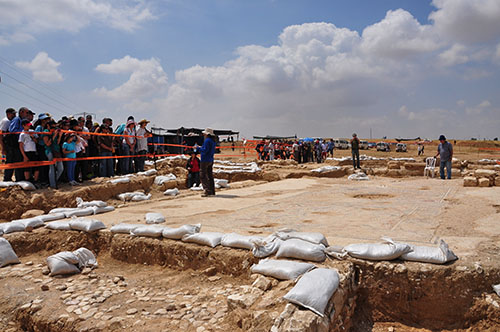
Browns think this would be a good candidate for a monastery. He has granted permission for us to share this photo that he made during the IAA briefing.

The IAA explains the Beit Qama discovery. Photo by Shmuel Browns.

The IAA reports on the Beit Qama discovery. Photo by Shmuel Browns.

Take a look at the blog post with a half dozen nice photos by Shmuel Browns here.

The Press Release by the IAA may be read here.

I see that Carl Rasmussen has posted a blog here about the 5th century synagogue that was discovered during construction work in 1993 at Sepphoris. This site is only 3½ miles north of Nazareth, the early home of Jesus.

There is still a lot to be uncovered in the Near East. See my post about “Know but mostly unknown” here.

Syrian archaeological site endangered — a look at Ebla

During the course of the bloody civil war in Syria we have heard of damage to various archaeological sites such as Aleppo and Palmyra. A recent article in The New York Times here includes a report specific to Tell Mardikh in northern Syria, about 30 miles SW of Aleppo.

The headline tells the story, “Grave Robbers and War Steal Syria’s History.” An excellent video illustrates what both of these factors (vandalism and war) are doing to destroy the ancient site.

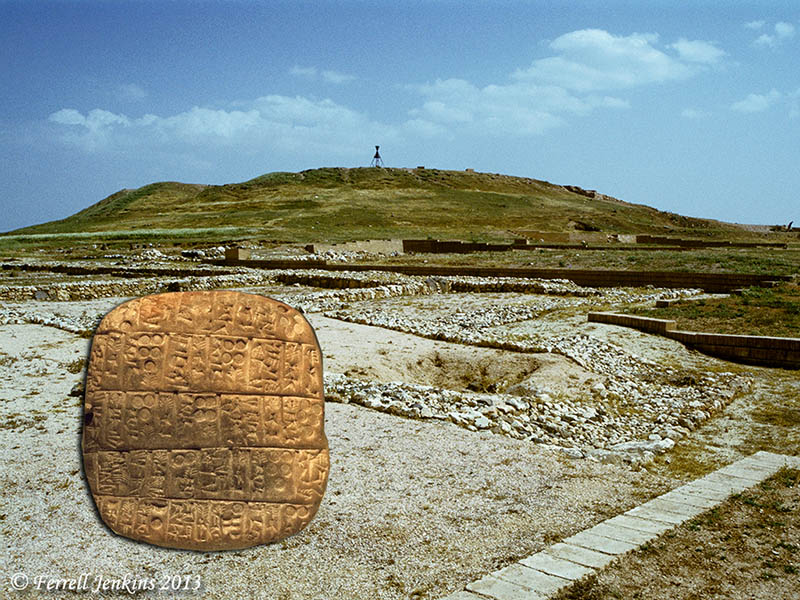
Tell Mardikh, ancient Ebla, and one of the tablets discovered in 1975. Photo by Ferrell Jenkins.

Tell Mardikh, ancient Ebla, and one of the tablets discovered in 1975. Photo by Ferrell Jenkins.

We have previously written about Ebla, and the Ebla tablets, here, and here.

More than 17,000 cuneiform tablets were discovered in 1975. They date to the mid-third millennium B.C. when Ebla was the capital of a great Canaanite empire. Scholars state that there are important affinities between the Eblaite language and biblical Hebrew, both being members of the Northwest Semitic family.

The first golden age of Ebla is dated to 2400–2250 B.C. This is long before the time of Abraham who lived north of Ebla at Haran in Padan Aram for a time. Haran is about 150 miles north of Ebla.

So Abram went, as the LORD had told him, and Lot went with him. Abram was seventy-five years old when he departed from Haran.  (Genesis 12:4 ESV)

The death and destruction that has been going on in Syria is almost beyond comprehension. When we destroy our ancient history we become what Elton Trueblood called the Hippie generation, “a cut-flower generation.”

Conrad Schick — architect, explorer, model builder

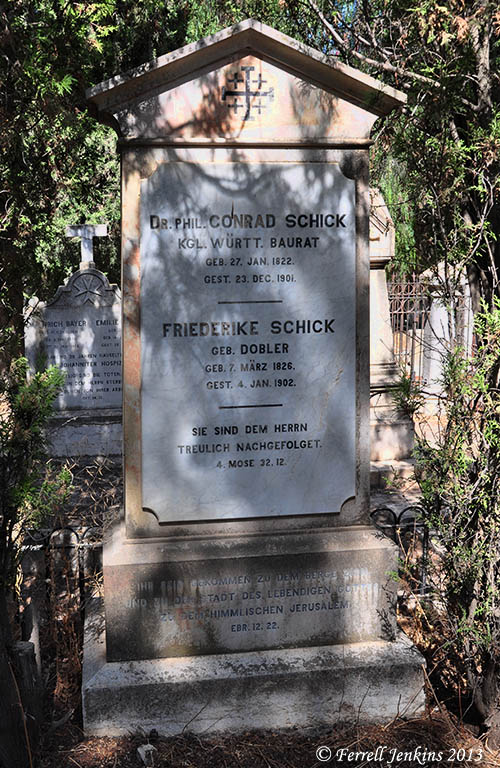
Conrad Schick was born in Switzerland and first came to Jerusalem with a group of men who planned to teach the local young people vocational trades. This group soon disintegrated, and Schick eventually married Friederike Dubler, a German missionary.

Schick became well known as an architect and city planner. He also became involved with some of the late 19th century explorers. He surveyed significant parts of the Old City, and built models of the temple mount and other structures in Jerusalem to use in teaching.

Schick and his wife are buried in the Protestant Cemetery on Mount Zion.

Grave marker for Conrad and Frederike Schick. Photo by Ferrell Jenkins.

Grave marker for Conrad and Frederike Schick. Photo by Ferrell Jenkins.

Epitaphs are often fascinating. This grave stone includes two Scriptures in German.

… for they have wholly followed the LORD (Numbers 32:12)

But you have come to Mount Zion and to the city of the living God, the heavenly Jerusalem … (Hebrews 12:22)

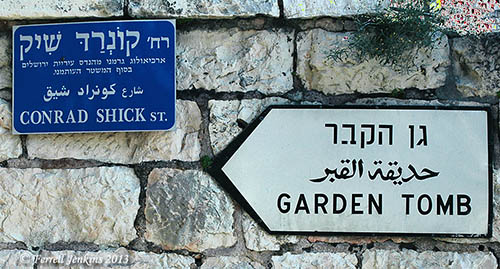
The short lane leading from Nablus Road to the Garden Tomb is named for Conrad Shick [Schick].

Conrad Schick Street leads to the Garden Tomb. Photo by Ferrell Jenkins.

Conrad Shick Street leads to the Garden Tomb. Photo by Ferrell Jenkins.

Tom Powers has prepared an article about Conrad Schick, and I have made use of it in this post. The entire paper is fascinating. See here.

There is also a page devoted to Schick here.

Special Note: If you have any interest in the American Colony, and other people buried in this cemetery, please take a look at the comments by Tom Powers (Outremer) following the two earlier posts about the Spaffords.

2012 in review, according to WordPress

The WordPress.com stats helper monkeys prepared a 2012 annual report for this blog. We have readers in 204 countries.

Here’s an excerpt:

About 55,000 tourists visit Liechtenstein every year. This blog was viewed about 410,000 times in 2012. If it were Liechtenstein, it would take about 7 years for that many people to see it. Your blog had more visits than a small country in Europe!

Click here to see the complete report.

Happy New Year to Each Reader.