Category Archives: blog

Good reading for the weekend

Noah

There has been much discussion in the past few weeks about the Noah movie. In last Saturday’s roundup, Todd Bolen called attention to the blog of Dr. Brian Mattson. In a post entitled “Sympathy for the Devil” Mattson comments about the movie. He reminds us of the following important point: The Bible is not the text for this movie. Several writers, and speakers, have pointed out that about the only things in common between the Noah movie and the Noah/Flood story of the Bible are a man named Noah, an ark, and water.

Mattson claims and documents the philosophical background of the director of the movie in Gnosticism and Kabbalah. I am certain that many people will see the movie and have no awareness of that, just as many ready Paul’s epistle to the Colossians, and John’s epistles without understanding how they are responding to early Gnostic doctrines.

Here is the link to Mattson’s articles:

The Wife of Jesus, again.

It is almost Easter, so we can expect a rerun on various strange views about Jesus. I first called attention to this speculation about the wife of Jesus back in September, 2012, here. Todd Bolen recently commented on the same material that is now getting new attention. Here, he provides links to the article in the New York Times, and the Harvard Theological Review article by Dr. Karen King (available for download). The Times of Israel article is available here.

Papyrus fragment possibly claiming that Jesus has a wife. Photo: Harvard University, Dr. Karen L. King.

The GJW (Gospel of Jesus Wife) papyrus fragment possibly claiming that Jesus had a wife. Photo: Harvard University, Dr. Karen L. King.

Bolen summarizes the pertinent material, showing that the document tells us nothing about 1st century events:

An initial radiocarbon analysis dated the fragment to 404–209 BC; a second analysis gave a mean date of AD 741. King concludes with a date in the 7th or 8th centuries AD. As far as being a reliable witness to 1st century events, it is not. The author notes that the fragment should be studied in light of the Muslim view that prophets were usually married.

In King’s reading, “The main point of the GJW (Gospel of Jesus Wife) fragment is simply to affirm that women who are wives and mothers can be Jesus’s disciples.”

Larry Hurtado has written three posts about the papyrus document. Begin here and then scroll back for the other two.

Wild Boar at Caesarea Philippi

Carl Rasmussen’s recent Israel student group encountered a herd of about 15 wild boar at Caesarea Philippi. He provides some nice photos to back up his claim, and discusses the various Biblical references about swine. Access the HolyLandPhotos’ Blog here.

Using Google Books

Rob Bradshaw is making many books and journals available in PDF format. I check his BiblicalStudies.org.uk site regularly for materials that might be helpful in my study. Recently he called attention to a short video by Tim Bulkeley on how to access Bible commentaries without a library. The helpful, brief video is here.


Reading the Blogs # 4

Do you rob temples?

You who say that one must not commit adultery, do you commit adultery? You who abhor idols, do you rob temples? (Romans 2:22 ESV)

Charles Savelle has a helpful chart at BibleX on Romans 2:22. What does the text mean? The chart allows the student to see various interpretations at a glance, with observations to enhance understanding.
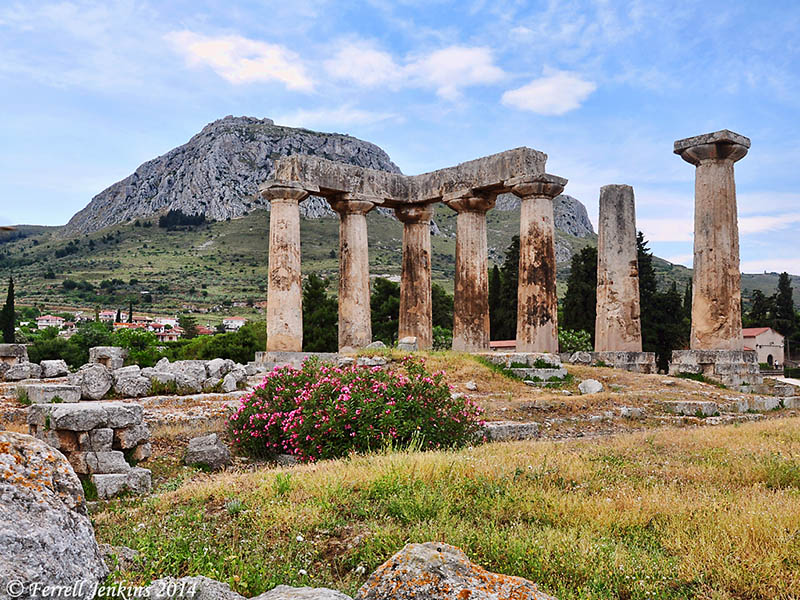
Ruins of the temple of Apollo at Corinth. Photo by Ferrell Jenkins.

Ruins of the temple of Apollo at Corinth. Photo by Ferrell Jenkins.

— • —

God’s fellow-workers. Daniel B. Wallace responds, on his blog, to the question, “What Does ‘We are God’s fellow-workers’ in 1 Corinthians 3:9 Really Mean”. Dr. Wallace says,

The King James Version in 1 Cor 3.9 reads, “we are labourers together with God…” This unambiguously suggests that Paul and Apollos were considered in some sense on the same level with God. Of course, ‘in some sense’ covers a multitude of possibilities, but there nevertheless seems to be an underlying tone of synergism and mutual credit.

After discussing 38 works (translations and commentaries), Wallace provides a “Table of Interpretations and Translations of 1 Cor 3:9.” The three views of the meaning of this verse are,

  1. Paul and Apollos are co-workers with God.
  2. The statement is ambiguous, tending toward the first view.
  3. Paul and Apollos are co-workers with each other in the service of God.

Then Greek-language illustrations from writers such as Josephus, Philo, and Justin Martyr are provided along with other Biblical references that might shed light on the subject.

Wallace concludes that the “co-workers” are the ministers who belong to God.

Too many Bible classes overlook the difficult passages of Scripture without any explanation. Dr. Wallace provides a good illustration of how to deal with these verses. Tables and charts usually help the teacher and the student.

— • —

“The Authenticity of the James Ossuary” is a technical article on the archaeometric analysis of the James Ossuary from the Open Journal of Geology. The article by Rosenfeld, Feldman, and Krumbein is scholarly and technical, but may be of interest to some readers.  Download the PDF here.

— • —

Wadi Zin comes to life. “The  river doesn’t flow every year, and it has been several years since it last came to life.” The Times of Israel includes a short video showing the wadi (nahal, brook) coming to life in a powerful way. See it here. See the same video at examiner.com.
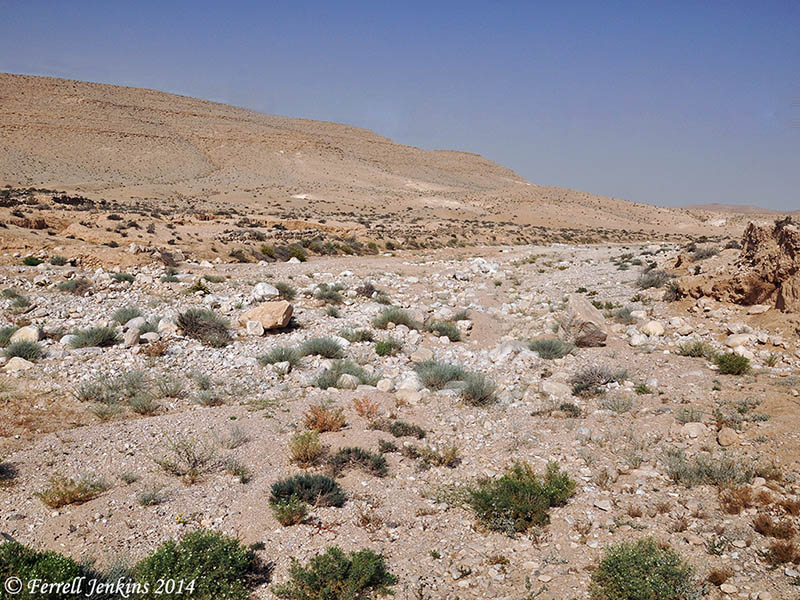
A dry wadi in the wilderness of Zin. Photo by Ferrell Jenkins.

A dry wadi in the wilderness of Zin. Photo by Ferrell Jenkins.

The Israelites wandered in the Wilderness of Zin (Deuteronomy 32:51). See more here.
Reading the Blogs # 3

Michael J. Kruger (canon fodder) has written a review of each episode of the History Channel’s Bible Secrets Revealed. He says the series has reminded him of two critical truths:

1. Our popular culture is prone to distort and misrepresent the teachings of the Bible. I was struck again by how sensationalistic and misleading popular-level programming can actually be when it comes to the Bible.  Although this series had some good moments, as a whole I was disappointed to see the History Channel offer the standard Da Vinci Code-style approach to the Bible.

2. The church must be equipped to respond to these sorts of critiques.  Given the high-profile nature of the History Channel (and similar style programming), the average person we are trying to reach is going to be exposed to this type of material.  And we need to be ready to offer some answers if we expect non-Christians to give the biblical message a hearing.

The six reviews cover a wide variety of topics of interest to many people.

  1. Lost in Transmission
  2. The Promised Land
  3. The Forbidden Scriptures
  4. The Real Jesus
  5. Mysterious Prophecies
  6. Sex and the Scriptures

Begin here on canon fodder for links to each of the reviews.

Kruger is President and Professor of New Testament at Reformed Theological
Seminary, Charlotte. You will find much useful material on this blog.

HT: Brooks Cochran

Çatalhöyük. Polish archaeologists have discovered containers of barley, said to be 8,200 years old from the Neolithic period, at Çatalhöyük in Turkey.

The largest so far known in the Middle East amount of grain of the Neolithic period in a perfect state of preservation has been discovered by Polish archaeologists in Çatalhöyük, a famous archaeological site in Turkey. Çatalhöyük is one of the largest urban centers of first farmers and one of the most famous archaeological sites in the world.

Read the report, with photo, here.

Preserving Tal Al Umayri in Jordan. Many archaeological sites are in danger of destruction. Tal Al Umayri, south of Amman, Jordan, is going to become an archaeological park. The site is on private property. Now the owners have agreed to give the land for the project. Details here.

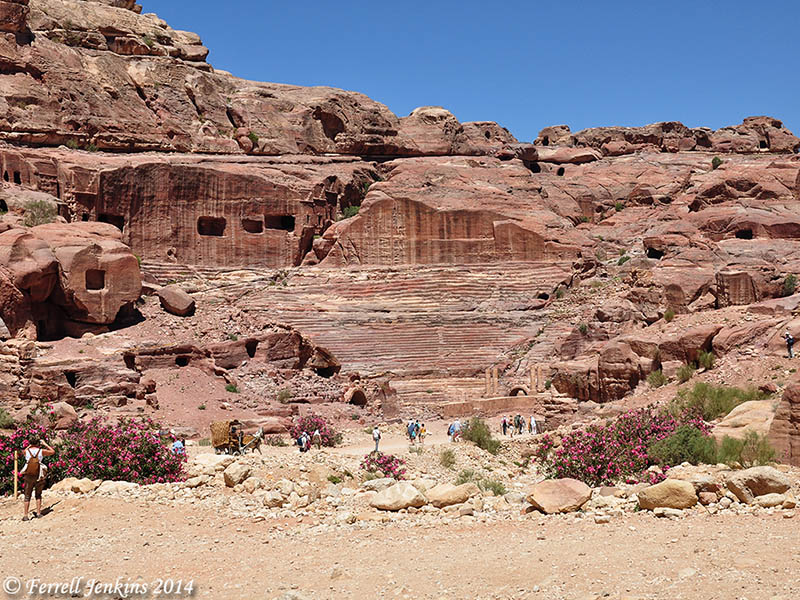
New Museum in Petra, Jordan. The report here says,

According  to the Petra National Trust, it was visited by around 450,000 people in  2013, though this was a significant drop from 2010’s record number of 975,000 visitors. Officials hope the new museum will encourage tourists to spend more time in the ancient city. It will present the history of Petra and the Nabataeans, as well as house antiquities, but it is unclear what this means for the site’s two existing museums: the Petra Nabataean Museum, opened in 1994, and the Petra Archaeological Museum, opened in 1963.

HT: Steven Braman

The Roman Theater at Petra. Photo by Ferrell Jenkins.

The Roman Theater at Petra. Photo by Ferrell Jenkins.

Old Testament Bibliography by Ray Clendenen. Here is the info from Charles Savelle at Bible X.

You can access Ray Clendenen’s recently revised 385-page Old Testament bibliography here. Note: you have to have an account with academia.edu to access it but if you don’t already have an account,signing up is free.

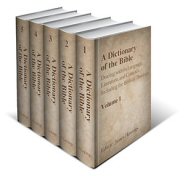
A Dictionary of the Bible. This five-volume set is now on Community Pricing at Logos. A bid of $15.00 will secure a set in Logos digital format. Information is here.

A Dictionary of the Bible, James Hastings.

A Dictionary of the Bible, James Hastings. The work will be in digital format for use with Logos Bible Software.

It is true that this is an old work first published between 1893 and 1905, but it contains some excellent material. The five volumes contain 4,718 page. The projected price of $15 is less than you might pay for a paperback with one good idea in it.

I have owned the hardback set for many years and am anxious to include these volumes in my Logos 5. Logos needs some more orders to produce this set of books. Let’s pull together. Once the work is published in digital format the price will be $99.95.

Hiking Abraham’s footsteps

The full title of this Haaretz article is “Hiking in Abraham’s footsteps, from Turkey to the Holy Land.” Sounds incredible at the moment. To hike this complete trail from Haran (Genesis 12:4) to Beersheba (Genesis 21:31) (not to mention the trip to Egypt) requires travel in Turkey, Syria, Jordan, Israel, and the Palestinian Authority (West Bank).

Among the leaders back of the concept is David Landis and his wife Anna Dintaman, developers of the Jesus Trail from Nazareth to the Sea of Galilee. Their book, Hiking the Jesus Trail and Other Biblical Walks in the Galilee, is worthwhile even for those who do not plan to walk the trail.
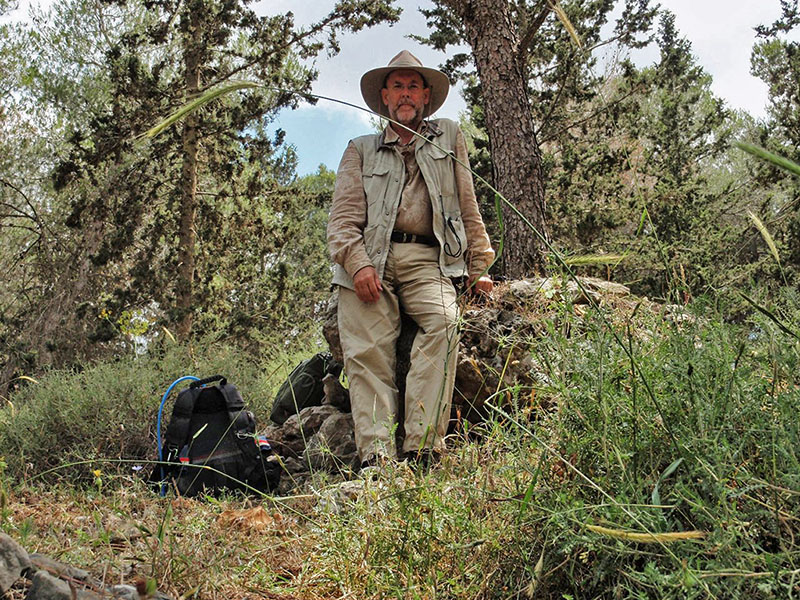
Larry Haverstock walked the Jesus Trail in 2011. I see that Larry’s posts about the experience is still available on his blog. See the 3rd Journey. You will find some fascinating stories along with beautiful photos you may never see from a bus or car.

Larry Haverstock in the Zippori Forest north of Nazareth.

Larry Haverstock in the Zippori Forest north of Nazareth.

The link to the Haaretz article may be accessed here. In order to read the full article you must register for free access to 10 articles a month.

Don’t expect to walk the Abraham Path from Haran (in Turkey) to Beersheva [Beersheba], but you might be able to walk small portions of the trail everywhere except the part going through Syria.

There are many hiking trails in Israel, but most of these avoid contact with the Palestinian Authority. The new plan seeks to involve the local people in the development of facilities useful to hikers.

If you like hiking, or if you appreciate the geography of the Bible lands you will probably enjoy the article. Abraham Path has a nice web site with maps and photos here.

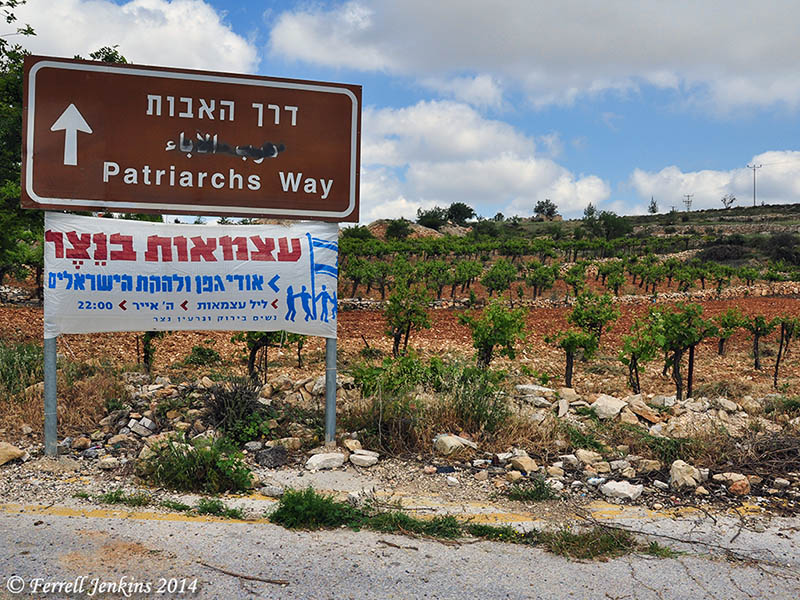
I don’t know what, if any, relationship there is between the Abraham  Path and the Patriarchs Way, a trail that is said to run from Beersheba to Nazareth. The defacing of the sign to eradicate the Arabic indicates one of the problems either trail might face. One often sees this sort of thing on signs pointing to Christian sites.

Sign pointing to Patriarchs Way off Hebron Road (Hwy. 60) south of Bethlehem . Photo by Ferrell Jenkins.

Sign pointing to Patriarchs Way off Hebron Road (Hwy. 60) south of Bethlehem . Photo by Ferrell Jenkins.

Walk the Land : A Journey on Foot through Israel, by Judith Galblum Pex, is a fascinating account of a couple who walked the Israel Trail from Eilat to Dan.
2013 in review (according to WordPress)

The WordPress.com stats helper monkeys prepared a 2013 annual report for this blog.

Here’s an excerpt:

The Louvre Museum has 8.5 million visitors per year. This blog was viewed about 260,000 times in 2013. If it were an exhibit at the Louvre Museum, it would take about 11 days for that many people to see it.

Click here to see the complete report.

NOTE: This little summary is something provided (robotly, I suppose) by WordPress. You may count it as your light reading of the day.

Reading the blogs #2

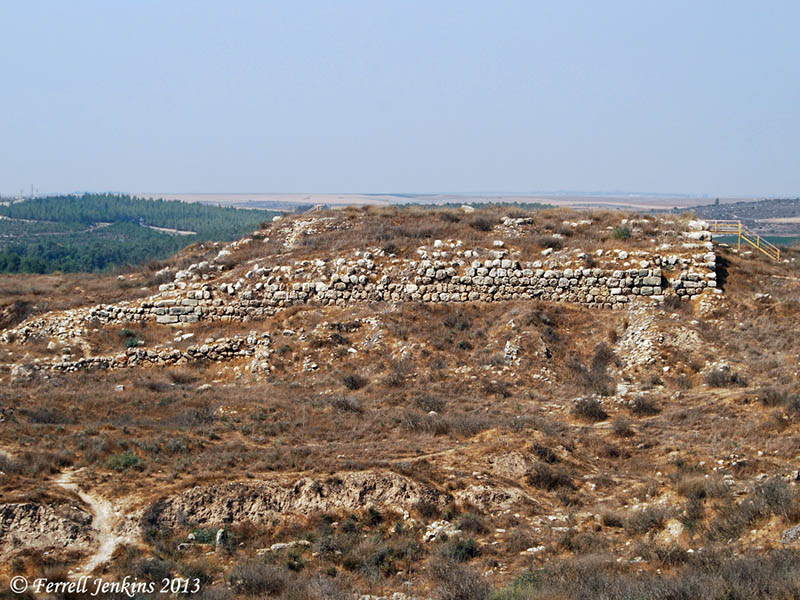
Michael G. Hasel of Southern Adventist University will join Yosef Garfinkel and Martin G. Klingbeil as co-directors of The Lachish Expedition in 2014. Southern has begun a web site devoted to the dig here. Categories include Project Overview, Goals and Strategy, History of Research, and Staff. We wrote about the Lynn H. Wood Archaeological Museum, at Southern, here.

The Judean fort at Lachish. Photo by Ferrell Jenkins.

The Judean palace-fort at Lachish is the largest Iron Age structure in Israel. Photo by Ferrell Jenkins.

Associates for Biblical Research announced here the death of ABR founder Dr. David Livingston. An issue of Bible and Spade devoted to the work of Dr. Livingston has been made available in PDF. Dr. Livingston gave much attention to locating Biblical Ai. I am hopeful Ancient Days, the web site devoted to his writings, will be maintained here.

Check ORBIS here. This is the Stanford Geospatial Network Model of the Roman World. Lot’s of possibilities here in studying Paul’s journeys.

The BBC reports on how some maps of the modern Middle East were drawn here.

Tom Powers has left Jerusalem for North Carolina. Hopefully he will maintain his View From Jerusalem web site. Now would be a good time to check “My Articles” and download his research material on the ancient aqueduct system, Conrad Schick, American Colony, and some ossuaries.

My friend Steve Wolfgang is trained as a historian and is a minister with a wide range of interests. This is reflected in his blog, ἐκλεκτικός.

I enjoy Larry Hurtado’s Blog. Check “Where did Earliest Christians Meet?” here. If you thought they always met in private homes, you might learn something.

One of my favorite blogs, checked regularly, is Charles Savelle’s Bible X, a blog devoted to all things Bible Exposition. Charles surveys material helpful to teachers and ministers. He recently included a link to online tools for creating Infographics, Self-Editing for Better Writing, and lots of brief book reviews.

I like to check on Dr. Rod Decker’s NT Resources. Rod has been diagnosed with cancer. One of his colleague’s is dealing with TN — “a nonterminal condition that produces some of the most excruciating pain known to medical science, and that on a very frequent basis.” Recently the two of them spoke in chapel before their students on the general theme “When Your World Crashes Down.” Their comments are available for download.

For sure I have mentioned Biblical Studies and technological Tools by Mark Hoffman. This is a great resources. The most recent post evaluates online backup and data syncing options.

For a few years now I have been using Dropbox for syncing material between my study computer and my traveling laptop. If you click here you will get 2.25 gig free, and I will get .25 gig addition. Click here.

Reading the blogs

The majority of the content of this blog deals with biblical studies, archaeology, travel and photography. Concentration is especially on travel in the Bible World. As a result of this I follow several blogs that are extremely helpful. These include:

Bible Places Blog. Todd Bolen’s Weekend Roundup, and Midweek Roundup are extremely helpful, as are his insightful comments on recent archaeological announcements.

HolyLandPhotos’ Blog by Carl Rasmussen covers numerous lesser known places. Recently he has covered some sites visited, or probably visited, by Paul on his journeys through Asia Minor (modern Turkey).

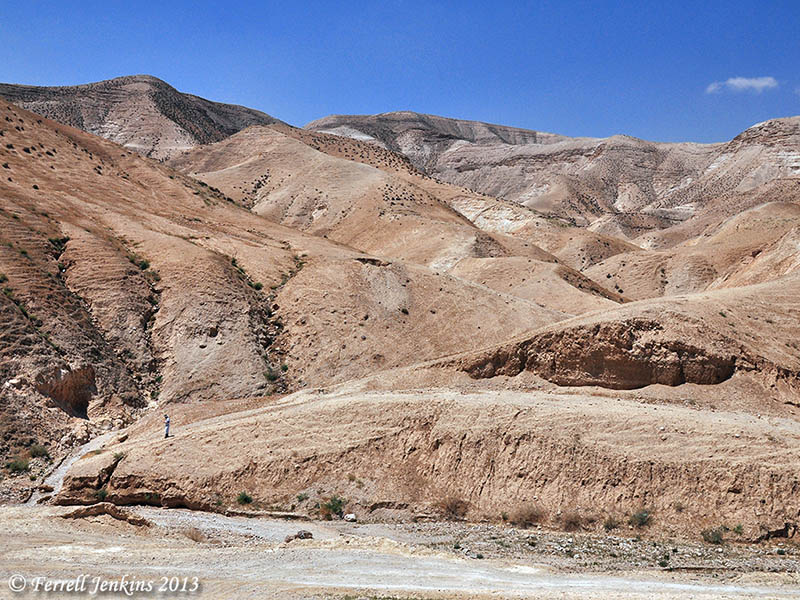
The wilderness of Judea. Photo by Ferrell Jenkins.

The wilderness of Judea. Photo by Ferrell Jenkins.

I have a few former students  who write about these areas. You might enjoy taking a look at Leon’s Message Board (Leon Mauldin), Exploring Bible Lands (Barry Britnell), Luke Chandler’s Blog. Leon recently posted photos of the gathering of olives at Shechem. Trent and Rebekah, former tour members, have posted some helpful articles during their six months in Israel.

Gordon Franz writes less frequently on his Life and Land Seminars, but most of his material reflects a considerable amount of research. As part of his ongoing Cracked Pot Archaeology series he posted a response to the theory that the Arabia of “Mount Sinai in Arabia” (Galatians 4:25) is in modern Saudi Arabia.

Leen Ritmeyer,  Ritmeyer Archaeological Design, writes about the way the buildings looked in Bible times as well as recent discoveries and developments.

Wayne Stiles seeks to connect the Bible and its Lands to Life. In a recent post he discussed the “Top 5 Gifts for Bible Lands Study.”

Shmuel Browns, Israel-tourguide, has an interesting blog with great photos. A recent post features fascinating photos of Nahal Prat or Wadi Qelt. This may be where Jeremiah was told to go and bury his loincloth (shorts) (Jeremiah 13:4-7). Most English versions use the word Euphrates for the Hebrew term Perath. The NET Bible transliterates the term. Nahal Prat is near Jeremiah’s hometown Anatot (Anathoth). We wrote about a morning with Shmuel here.

Recently I learned of two new blogs dealing with the Bible lands and customs. Mark Ziese writes Bible Lands Explorer. Mark’s most recent post is about the Milk Grotto in Bethlehem. Yep, a place dedicated to Mary feeding baby Jesus. Willis Britt writes on Lessons From The Land. A recent series deals with Preaching and the Land.

Believe me, there is quite an education in reading these blogs.

I keep links to these and other blogs on the Scholarly page at the Biblical Studies Info Page.

Chester Beatty papyri digitized by CSNTM

The Center for the Study of New Testament Manuscripts (CSNTM) announces that they have filmed the Chester Beatty papyri. Here is the press release signed by Dr. Daniel B. Wallace, Executive Director of CSNTM:

The Chester Beatty papyri, published in the 1930s and 1950s, are some of the oldest and most important biblical manuscripts known to exist. Housed at the Chester Beatty Library (CBL) in Dublin, they have attracted countless visitors every year. It is safe to say that the only Greek biblical manuscripts that might receive more visitors are Codex Sinaiticus and Codex Alexandrinus, both on display at the British Library.

The Center for the Study of New Testament Manuscripts (CSNTM) is pleased to announce that a six-person team, in a four-week expedition during July–August 2013, digitized all the Greek biblical papyri at the Chester Beatty Library. The CBL has granted permission to CSNTM to post the images on their website (www.csntm.org), which will happen before the end of the year.

The New Testament papyri at the CBL include the oldest manuscript of Paul’s letters (dated c. AD 200), the oldest manuscript of Mark’s Gospel and portions of the other Gospels and Acts (third century), and the oldest manuscript of Revelation (third century). One or two of the Old Testament papyri are as old as the second century AD.

Using state-of-the-art digital equipment, CSNTM photographed each manuscript against white and black backgrounds. The result was stunning. Each image is over 120 megabytes. The photographs reveal some text that has not been seen before.

Besides the papyri, CSNTM also digitized all of the Greek New Testament manuscripts at the CBL as well as several others, including some early apocryphal texts. The total number of images came to more than 5100.

CSNTM is grateful to the CBL for the privilege of digitizing these priceless treasures. The staff were extremely competent and a joy to work with. Kudos to Dr. Fionnuala Croke, Director of CBL, for such a superb staff! This kind of collaboration is needed both for the preservation of biblical manuscripts and their accessibility by scholars.

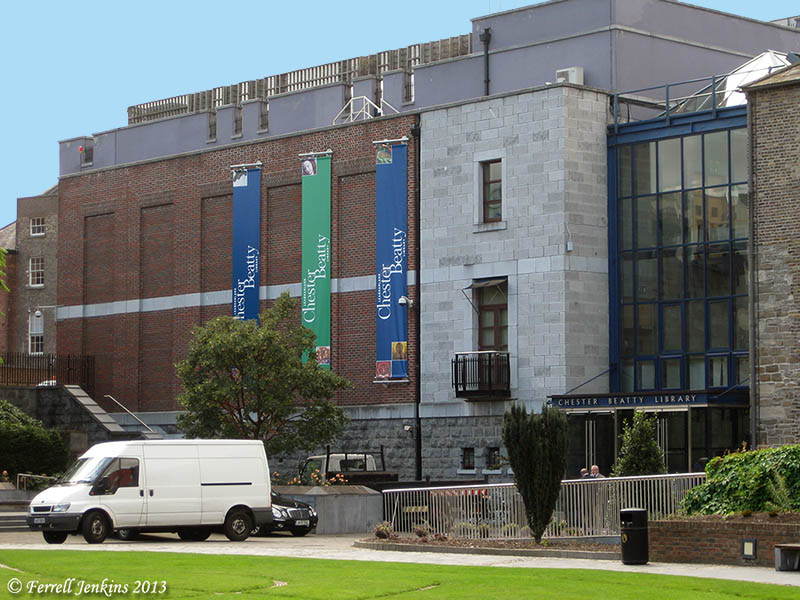
Chester Beatty Library in Dublin, Ireland. Photo by Ferrell Jenkins.

Chester Beatty Library in Dublin, Ireland. Photo by Ferrell Jenkins.

Larry Hurtado tells a little more about the background of this project here. If you wish to see the quality made possible by the CSNTM, see these pages from a 3rd century papyri at the University of Pennsylvania here.

Huge columns said to be 1900-years-old found buried at Laodicea

Hurriyet Daily News reported today the discovery of a large number of “1,900-year-old huge columns” at Laodicea.

Excavations in the Aegean province of Denizli’s ancient city of Laodicea have revealed 1,900-year-old huge columns seven meters underground. The columns were found in the area known as the northern agora, one of the oldest faith centers in Anatolia.

The head of the excavations, Professor Celal Şimşek, said the northern agora had been discovered last year and they were continuing restoration and conservation work there. He said the area was one of the largest agoras in Anatolia. “The columned galleries here are in a rectangular shape on an area of 35,000 square meters. We previously revived the columned galleries that we call the eastern porch. This year we found the extension of these columns seven meters underground. They were in the same condition as when an earthquake ruined them. The columns date back to 1,900 years ago. Dust erosion and residue have filled the earth here and preserved the columns.”

Şimşek said their goal was to finish the excavations by the end of the year and to revive the columns in the beginning of the next year. He said the ancient city of Laodicea had served as a religious center.

“When the columned galleries are completely unearthed, there will be a very nice touring area. Tourists will have the chance to see traces from the past up close.”

A nice gallery of photos illustrate the article. One is a drawing showing how the area may have looked before being destroyed by earthquake. We are given no hint how the age of the columns was determined and whether the earthquake that felled them was also about 1,900 years old. Mark Wilson says,

Because of earthquakes the city was rebuilt numerous times during its history. A devastating earthquake during the reign of Focas (AD 602-10) finally caused the site to be abandoned. The residents founded a new city called Ladik, now the Kaleiçi district of Denizli. — Biblical Turkey, 247.

Laodicea is mentioned only in Paul’s epistle to the Colossians (2:1; 4:13-16) and in the Book of Revelation (1:11; 3:14). Paul says that Epaphras worked diligently for the saints in Colossae, Laodicea, and Hierapolis. These were cities of the Lycus River valley.

We have visited Laodicea several times over the years and been delighted with the archaeological reconstruction underway. The city should be on everyone’s list of “must see” sites of Turkey. Turkey has approximately 1100 historical sites, and the country has made considerable progress in preparing some of them for visitors. Use the search box on this blog to locate previous entries about Laodicea.

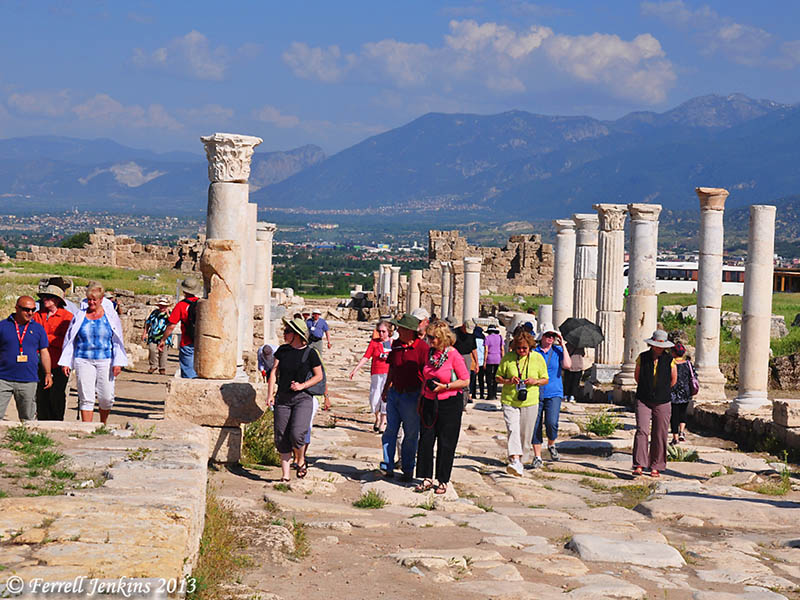
Tourists on the Syrian Street at Laodicea. Colossae is located at the foot of Mount Cadmus, seen in the distance to the east. Photo by Ferrell Jenkins.

Tourists on the Syrian Street at Laodicea. Colossae is located at the foot of Mount Cadmus, seen in the distance to the east. Hierapolis is to the north (our left as we view the photo). Photo by Ferrell Jenkins.

HT: Joseph I. Lauer

Ninth century B.C. chalices uncovered at Gath

A few chalices dating to the time of the destruction of the Philistine city of Gath by Hazael, king of Aram (Syria), have been announced during the current excavation at Tel es-Safi/Gath. The most recent, larger than usual, chalice was announced by Prof. Aren Maeir on Monday and Tuesday. Follow the excavation reports here.

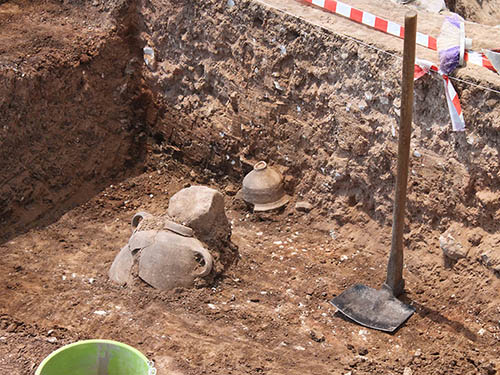
Jar and chalice in Area D at Tel es-Safi/Gath. Photo: Tell es-Safi/Gath Archeological Project.

Jar and chalice (upside down beside the balk) in Area D at Tel es-Safi/Gath. Photo: Tell es-Safi/Gath Archeological Project.

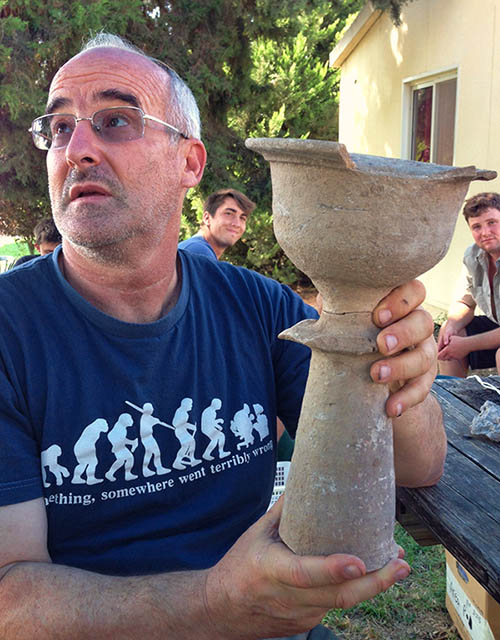
Prof. Maeir displays the large chalice after the stand was excavated. (I like the T-shirt. Maybe there is another step down — a human stooped over with a mobile phone.)

Prof. Aren Maeir displays the large chalice uncovered this week at Tel es-Safi/Gath. Jar and chalice in Area D at Tel es-Safi/Gath. Photo: Tell es-Safi/Gath Archeological Project.

Prof. Aren Maeir displays the large chalice uncovered this week at Tel es-Safi/Gath. Jar and chalice in Area D at Tel es-Safi/Gath. Photo: Tell es-Safi/Gath Archeological Project.

Vessels of this type were sometimes used for burning incense.

Gath was one of five cities of the Philistine Pentapolis (1 Samuel 6:17). The city was destroyed by the Aramean King Hazael shortly after the middle of the 9th century B.C.

At that time Hazael king of Syria went up and fought against Gath and took it. But when Hazael set his face to go up against Jerusalem, (2 Kings 12:17 ESV)

Joseph Lauer calls attention to a nice article about the find in The Jerusalem Post here. The author of the article is Joshua Lipson. Joshua volunteered at the Tel es-Safi/Gath excavation a few years ago.

And thanks to Prof. Maeir for posting the nice photos. No good reason to hide discoveries like this.