Category Archives: Bible Places

Nabonidus, the last king of Babylon — 556–539 B.C.

Evil-Merodach (562-560 B.C.) was assassinated by Nergal-Sharezer, who ruled as king of Babylon for four years. Nothing about his reign is recorded in the Bible, but he is mentioned in Jeremiah 39:3 and 13 from the time of the destruction of Jerusalem (587 B.C.). At that time he served as one of the officials of Nebuchadnezzar.

After four years on the throne, Nergal-Sharezer was followed by his son, Labaši-Marduk, who ruled only 9 months.

Nabonidus, who is not named in the Bible, came to the throne in 556 B.C. According to Wiseman the king,

… campaigned in Syria and N Arabia, where he lived at Tema for 10 years while his son BELSHAZZAR acted as co-regent in Babylon. About 544 his people and the kings of Arabia, Egypt and the Medes being favourably disposed, Nabonidus returned to his capital…, but by this time the country was weak and divided. (New Bible Dictionary (3rd ed.), 115).

The mother of Nabonidus was made a high priestess in the temple of Sin at Harran. Our first photo shows the top of a stela from Harran. Nabonidus is portrayed standing before symbols of the principle gods he served. Incidentally, the museum at Sanliurfa, Turkey, has a nice collection of archaeological artifacts tastefully displayed.

Nabonidus Stela in Sanliurfa Museum, Turkey. Photo by Ferrell Jenkins.

Nabonidus Stela in Sanliurfa Museum, Turkey, near Harran. Photo by Ferrell Jenkins.

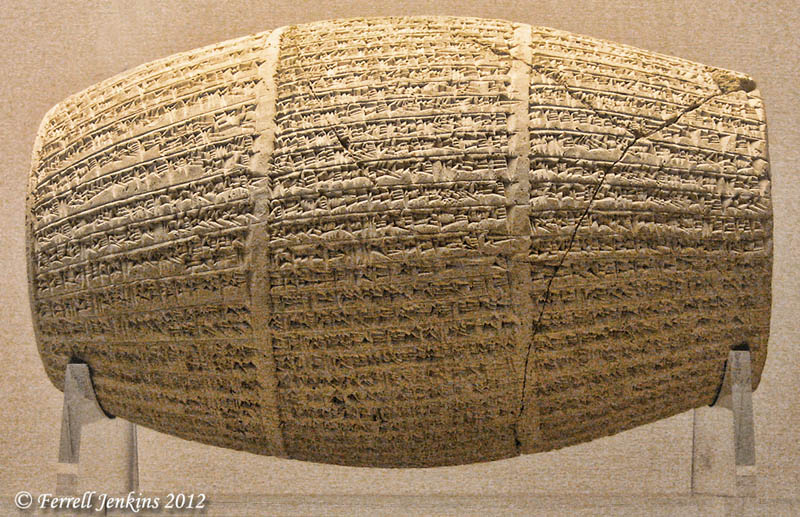
The next photo shows a terracotta foundation cylinder of Nabonidus. The sign accompanying the cylinder in the British Museum tells us that “this document records the reconstruction of temples to the Moon-god at Harran and to the Sun-god and the goddess Amunitum at Sippar.”

Nabonidus Cylinder in British Museum. Photo by Ferrell Jenkins.

Nabonidus Cylinder in British Museum. Photo by Ferrell Jenkins.

In a future post we plan to comment on the relationship of Nabonidus and Belshazzar.

Evil-merodach (562-560) graciously freed Jehoiachin

Evil-merodach came to power in Babylon upon the death of his father Nebuchadnezzar in 562 B.C. There are only two references to him in the Bible, and these are parallel accounts. Evidence suggests that Jehoiachin (Jeconiah, Coniah), the king of Judah who was taken to Babylon in 597 B.C., was treated like a king in exile during most, or all, of his time in Babylon. The kindness of Evil-merodach receives special attention.

27 And in the thirty-seventh year of the exile of Jehoiachin king of Judah, in the twelfth month, on the twenty-seventh day of the month, Evil-merodach king of Babylon, in the year that he began to reign, graciously freed Jehoiachin king of Judah from prison. 28 And he spoke kindly to him and gave him a seat above the seats of the kings who were with him in Babylon. 29 So Jehoiachin put off his prison garments. And every day of his life he dined regularly at the king’s table, 30 and for his allowance, a regular allowance was given him by the king, according to his daily needs, as long as he lived.  (2 Kings 25:27-30 ESV; cf. Jeremiah 52:31-34)

It is interesting that we have a biblical record mentioning Evil-merodach’s treatment of Jehoiachin (about 560 B.C.), and we have archaeological evidence of similar treatment at an earlier period. Four tablets mentioning Jehoiachin and his sons date to the period 595–570 B.C.

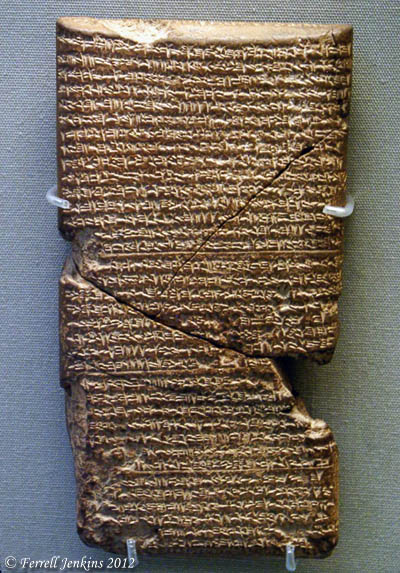
These tablets record rations that were given to the exiled king, his sons, and eight men of Judah. The one shown here is usually displayed in the Museum of the Ancient Near East (Vorderasiatische Museum), also called the Pergamon Museum, in Berlin (VAT 16378).
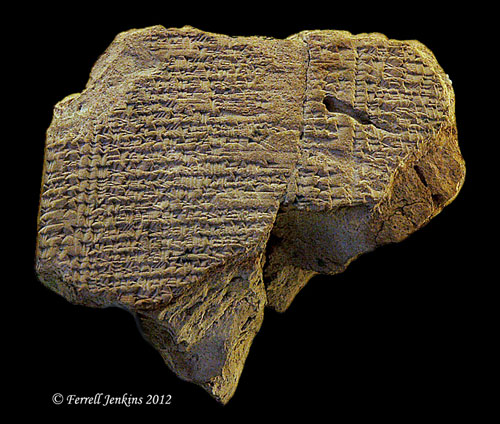
Babylonian ration tablet naming Jeconiah. Berlin. Photo by Ferrell Jenkins.

Babylonian ration tablet naming Jeconiah. Pergamum Museum. Photo by Ferrell Jenkins.

A trip to Berlin is worthwhile for many reasons, but one of the best is to visit the Museum of the Ancient East. Even though it could stand some revisions, you should find my Biblically Related Artifacts in the Museums of Berlin helpful. It is available in PDF here.

Here  is what I wrote about this tablet:

“Jehoiachin (Jeconiah, Coniah) was the young king of Judah who was taken captive to Babylon by Nebuchadnezzar in 597 BC. (2 Kings 24:15). The date of the capture of Jerusalem (March 16, 597 BC) was learned in 1955 when Donald J. Wiseman, then of the British Museum,  read a cuneiform tablet from Babylon. About 300 cuneiform tablets, dating between 595 and 570 BC, were found near the Ishtar Gate in Babylon. They contain lists of rations such as barley and oil paid to the captives and craftsmen. Persons from various countries are mentioned: Egypt, Philistia, Phoenicia, Asia Minor, Judah, etc. Some Biblical names are included: Gaddiel, Semachiah, and Shelemiah (a name mentioned prominently in Jeremiah 36-37). The most interesting name is Yaukin, king of the land of Yahud (Judah), along with five royal princes. The name, pronounced Yow-keen, is known to be an abbreviation for Jehoiachin. One document in which his name occurs is dated to 592 BC. These tablets show that the Babylonians continued to regard Jehoiachin as the legitimate king of Judah and gave him special treatment while he was in captivity (2 Kings 25:27-30; Jeremiah 52:31-34). The tablets were read by E. F. Weidner in the basement of the Kaiser Friedrich Museum, Berlin, after 1933.

[For those with access to this type of material:] Some Sources: Albright, BA 5 (1942), 49-55; ANET, 308 for translation; DOTT, 84-86; JFLAP, 225-227; IDB, II:811-13; Werner Keller, The Bible as History, 285-287;  Wiseman, Illustrations from Biblical Archaeology, 73 for photo [showing both the reverse and the obverse of the photo above].”

More Recent Source: Fant, Clyde E. and Mitchell G. Reddish, Lost Treasures of the Bible, 217-220.

Nebuchadnezzar, king of Babylon — 605-562 B.C.

Nebuchadnezzar, king of the Neo-Babylon empire for more than 40 years, is one of the best known royal personages of the Bible. His name occurs more than 90 times. He was responsible for huge building projects throughout his empire.

The arrogance of Nebuchadnezzar is seen in the comment attributed to him in the Book of Daniel.

The king uttered these words: “Is this not the great Babylon that I have built for a royal residence by my own mighty strength and for my majestic honor?” (Daniel 4:30 NET)

The Babylonians left many inscriptions bearing testimony to the building programs of the various kings.

Our first photo shows one of the cylinder annals of Nebuchadnezzar that mentions building projects of temples in Babylon, Borsippa, Larsa and Sippar for the gods Marduk, Nabu, Shamash and Ishtar. It also recounts rebuilding city walls. This annal is displayed in the Istanbul Archaeology Museum.

Nebuchadnezzar Cylinder Annal. Istanbul Archaeology Museum. Photo by Ferrell Jenkins.

Nebuchadnezzar Cylinder Annal. Istanbul Archaeology Museum. Photo by Ferrell Jenkins.

Building bricks bearing the name of the king, along with his titles, have been discovered in the various cities of Babylon. The one below comes from Sippar. It is displayed in the British Museum (BM90081).

Brick of Nebuchadnezzar (605-562 B.C.). British Museum. Photo by Ferrell Jenkins.

Brick of Nebuchadnezzar (605-562 B.C.). British Museum. Photo by Ferrell Jenkins.

The museum sign associated with this artifact describes the nature of these building bricks.

 “Nebuchadnezzar made extensive use of baked bricks in his many buildings. They are usually square, and often bear inscriptions, generally stamped but occasionally written by hand, which give the king’s name, titles, and patronym.”

A list of the major biblical events during the reign of Nebuchadnezzar should prove helpful for Bible students.

  • 605 BC — Nebuchadnezzar defeats Egypt, and Pharaoh Neco, at Carchemish.
  • 605 BC — Daniel and his friends taken from Judah to Babylon (Daniel 1).
    • Daniel was in Babylon during the entire reign of Nebuchadezzar (Daniel 1-4).
  • 597 BC — Jerusalem captured by Nebuchadnezzar.
    • March 16, 597 BC, according to a Babylonian Chronicle.
    • The young Judean king, Jechoichin (Jeconiah, Coniah), taken captive to Babylon (2 Kings 24:6-15; 2 Chronicles 36:8-10).
    • Mattaniah-Zedekiah becomes puppet king in Judah (2 Kings 24:17).
    • Many Judeans, including the prophet Ezekiel, taken captive to Babylon.
  • 587 BC — The fall of Jerusalem (2 Kings 25; Jeremiah 52).
    • Zedekiah rebelled; city destroyed; Zedekiah taken to Riblah (Ribleh in modern Syria) where his sons were slaughtered. Zedekiah’s eyes put out, and he was taken captive to Babylon.
The Correct MLA Way to Cite This Article

“Nebuchadnezzar, King of Babylon – 605-562 B.C.” Ferrell’s Travel Blog, 6 Feb. 2012, ferrelljenkins.blog/2012/02/06/nebuchadnezzar-king-of-babylon-605-562-b-c/.

The pollen is blowin’ in the wind

The unseasonably warm weather here in Florida has already begun to affect allergy sufferers, including yours truly. The pollen is not as high as it will be, but high enough to cause sniffling, sneezing and stuffiness. That’s nothing new. Keep reading.

The excavations at Ramat Rachel, between Jerusalem and Bethlehem, reveal evidence of etrogs and myrtle from the ancient royal garden. A word of explanation might be appropriate for some readers. English readers know Sukkot as the Feast of Booths, Tabernacles, or Temporary Shelters – Leviticus 23:34).

Ha’aretz reports here today:

The earliest evidence of local cultivation of three of the Sukkot [commonly know to English readers as the Feast of Booths or Tabernacles,  holiday’s traditional “four species” has been found at the most ancient royal garden ever discovered in Israel.

The garden, at Kibbutz Ramat Rachel in Jerusalem, gave up its secrets through remnants of pollen found in the plaster of its walls.

The garden was part of an Israelite palace at Ramat Rachel that has been excavated for many years, most recently in a joint dig by Prof. Oded Lipschits and Dr. Yuval Gadot of Tel Aviv University and Prof. Manfred Oeming of Heidelberg University. The palace existed from the time of King Hezekiah until the Hasmonean period in the second century B.C.E.

The excavations revealed that the garden must have had a beautiful – and strategic – view, but it lacked its own water source. Thus the ancient landscape architects had to build channels and pools to collect rainwater for irrigation.

The archaeologists discovered that the garden’s designers had removed the original hard soil and replaced it with suitable garden soil. But until recently, they had no idea what was grown there.

Then, Lipschits said, he and his colleagues had a “wild thought”: If plasterers had worked on the garden walls in springtime, when flowers were blooming, breezes would have carried the pollen to the walls, where it would have become embedded in the plaster.

Enlisting the aid of Tel Aviv University archaeobotanist Dr. Daphne Langot, they carefully peeled away layers of the plaster, revealing pollen from a number of plant species.

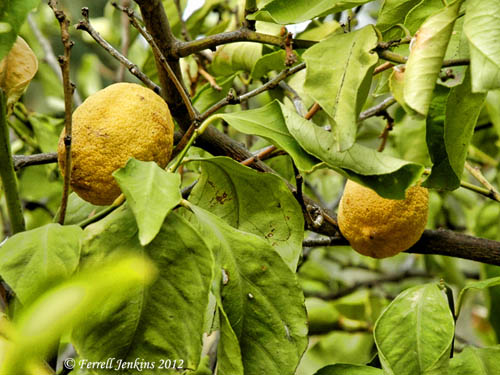
Etrog late in the season at Qatzrin. Photo by Ferrell Jenkins.

Etrog late in the season at Qatzrin. Photo by Ferrell Jenkins.

The article continues,

Most of the plants were wild, but in one layer of plaster, apparently from the Persian period (the era of the Jewish return from the Babylonian exile in 538 B.C.E. ) they found pollen from ornamental species and fruit trees, some of which came from distant lands.

The find that most excited the scholars was pollen from etrogs, or citrons, a fruit that originated in India. This is the earliest botanical evidence of citrons in the country.

Scholars believe the citron came here via Persia, and that its Hebrew name, etrog, preserves the Persian name for the fruit – turung. They also say royal cultivation of the exotic newcomer was a means of advertising the king’s power and capabilities.

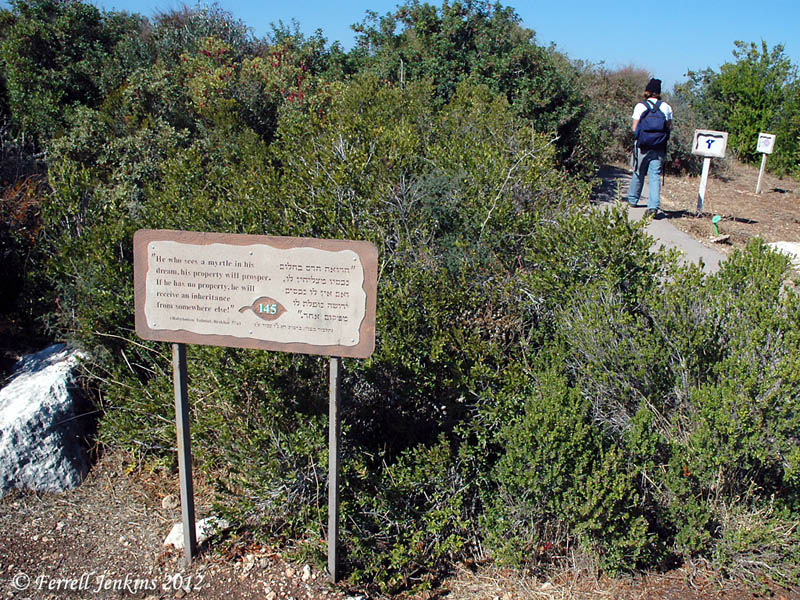
The garden at Ramat Rachel is also the first place in the country to yield evidence of the cultivation of myrtle and willow – two more of the four species used in Sukkot rituals.

Myrtle growing at Neot Kedumim in Judean Hills. Photo by Ferrell Jenkins.

Myrtle growing at Neot Kedumim in Judean Hills. Photo by Ferrell Jenkins.

For an earlier post on the royal garden at Ramat Rachel, read here.

HT: Joseph Lauer

Nabopolassar, father of Nebuchadnezzar, destroyed Nineveh

Babylonian king Nabopolassar ruled over the rising empire from about 626 to 605 B.C. The Babylonian Chronicle for the years 615-609 B.C. tells of the fall of Nineveh in 612 B.C. The wounded Assyrian Empire would collapse seven years later at the battle of Carchemish. The British Museum item number is BM 21901.

Babylonian Chronicles for years 615-609 B.C. British Museum. Photo by Ferrell Jenkins.

Babylonian Chronicles for years 615-609 B.C. British Museum. Photo by Ferrell Jenkins

The name of Nabopolassar is not recorded in the Bible, but the events of this period of time are highly significant.

The Chronicle of Nabopolassar describes the activity of the king for the years 608-605 B.C. The struggle of the Babylonians with the Egyptians (Pharaoh Necho) for control of the western portion of the Assyrian Empire is also described. This included the kingdom of Judah and Jerusalem. The crown-prince Nebuchadnezzar, the most celebrated Babylonian king mentioned in the Bible, became the leader of the Neo-Babylonian Empire at the battle of Carchemish (605 B.C.). The British Museum item number is BM 22047.

Chronicles of Nabopolassar. British Museum. Photo by Ferrell Jenkins.

Chronicle of Nabopolassar. British Museum. Photo by Ferrell Jenkins.

The prophet Nahum describes the fall of Nineveh in vivid language.

Woe to the city guilty of bloodshed! She is full of lies; she is filled with plunder; she has hoarded her spoil!
2 The chariot drivers will crack their whips; the chariot wheels will shake the ground; the chariot horses will gallop; the war chariots will bolt forward!
3 The charioteers will charge ahead; their swords will flash and their spears will glimmer! There will be many people slain; there will be piles of the dead, and countless casualties– so many that people will stumble over the corpses.
4 “Because you have acted like a wanton prostitute– a seductive mistress who practices sorcery, who enslaves nations by her harlotry, and entices peoples by her sorcery–
5 I am against you,” declares the LORD who commands armies. “I will strip off your clothes! I will show your nakedness to the nations and your shame to the kingdoms;
6 I will pelt you with filth; I will treat you with contempt; I will make you a public spectacle.
7 Everyone who sees you will turn away from you in disgust; they will say, ‘Nineveh has been devastated! Who will lament for her?’ There will be no one to comfort you!”  (Nahum 3:1-7 NET)

Exploits of Samson

The exploits of Samson are well known to Bible students. Samson was a strong man who was unable to control his own desires. One of the best known stories about him is recorded in Judges 15.

So Samson went and caught 300 foxes and took torches. And he turned them tail to tail and put a torch between each pair of tails.  And when he had set fire to the torches, he let the foxes go into the standing grain of the Philistines and set fire to the stacked grain and the standing grain, as well as the olive orchards. (Judges 15:4-5 ESV)

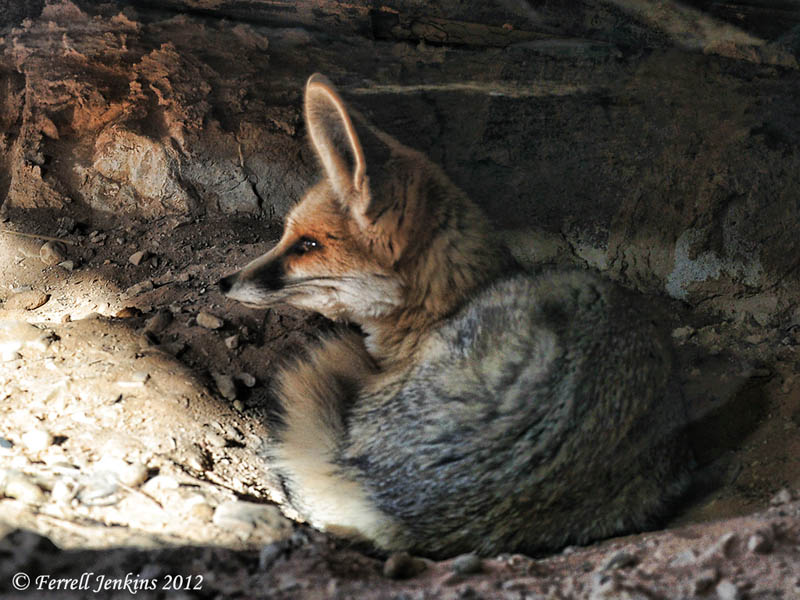
The photo below is of a Sand Fox. Samson used 300 similar foxes to destroy the wheat fields of the Philistines.

A Sand Fox at the Hai Bar Reserve, north of Eilat. Photo by Ferrell Jenkins.

A Sand Fox at the Hai Bar Reserve, north of Eilat. Photo by Ferrell Jenkins.

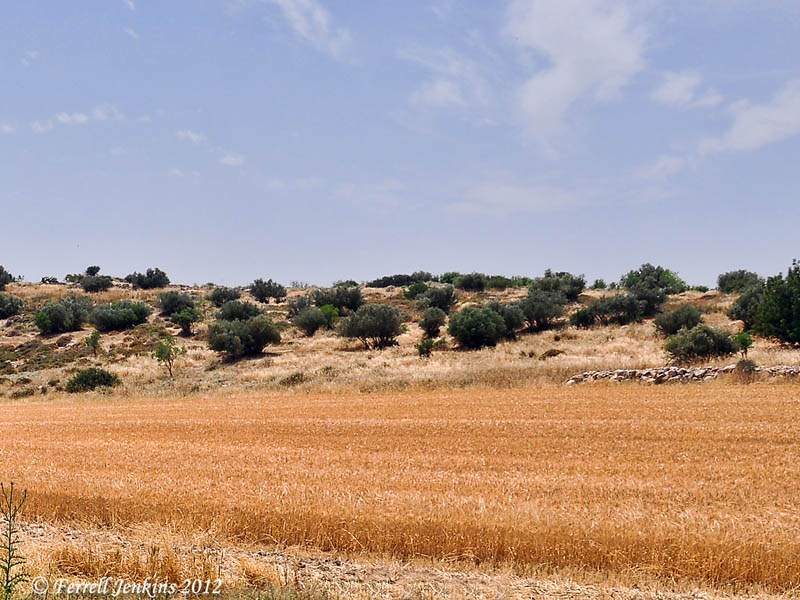
Our next photo is of a wheat field near Maresha, not far from the Sorek Valley, and typical of many fields in the Shephelah. It is typical in modern Israel for an area between the road and the field to be cleared. This is done to protect the grain from fire in the event that someone tosses a lighted cigarette along the edge of the road. Imagine the damage of the 150 pair of foxes in the ripe grain as they tried to release themselves from the burning torches.

Wheat field near Maresha in the Shephelah. Photo by Ferrell Jenkins.

Wheat field near Maresha in the Shephelah. Photo by Ferrell Jenkins.

I enjoy hearing from teachers who find this material helpful in their classes.

Mary and Joseph went a day’s journey. Where did they stop?

After his presentation in the Temple, there is no record of Jesus returning to Jerusalem until he is 12 years of age.

Now his parents went to Jerusalem every year at the Feast of the Passover.  And when he was twelve years old, they went up according to custom.  (Luke 2:41-42 ESV)

When the Feast of the Passover ended, his parents began the return to Nazareth. We can easily imagine that a large caravan of people were traveling together on this trip that would take several days. Jesus stayed behind in Jerusalem spending time among the teachers, “listening to them and asking them questions.” Because Mary and Joseph had relatives and acquaintances in the caravan they assumed that Jesus was among them until the end of the first day.

Keener provides some background on caravan travel.

Caravans, which afforded protection from robbers, were common on pilgrimages for the feasts in Jerusalem. Traveling with a caravan, in which neighbors from their town would watch the community children together, Mary and Joseph might assume that the near-adult Jesus was with companions, especially if by now they had younger children to attend to. If we assume a pace of twenty miles per day (though perhaps slower, depending on transportation and the children), Nazareth would be a little over three days’ journey along the shortest route. (Keener, C. S., The IVP Bible background commentary : New Testament)

Where did Mary and Joseph stop at the end of that first day of travel? We can not be certain of the route taken from Jerusalem to Nazareth. Travel from Galilee to Jerusalem was often through Perea on the eastern side of the Jordan Valley. We later find Jesus traveling north along the central mountain range through Samaria (John 4).

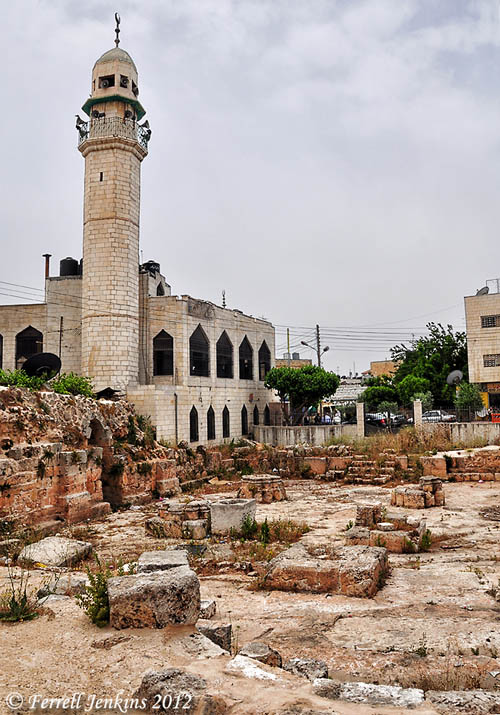
Ruins of medieval church beneath a Mosque in El Bireh. Photo by Ferrell Jenkins.

Ruins of medieval church beneath a Mosque in El Bireh. Photo by Ferrell Jenkins.

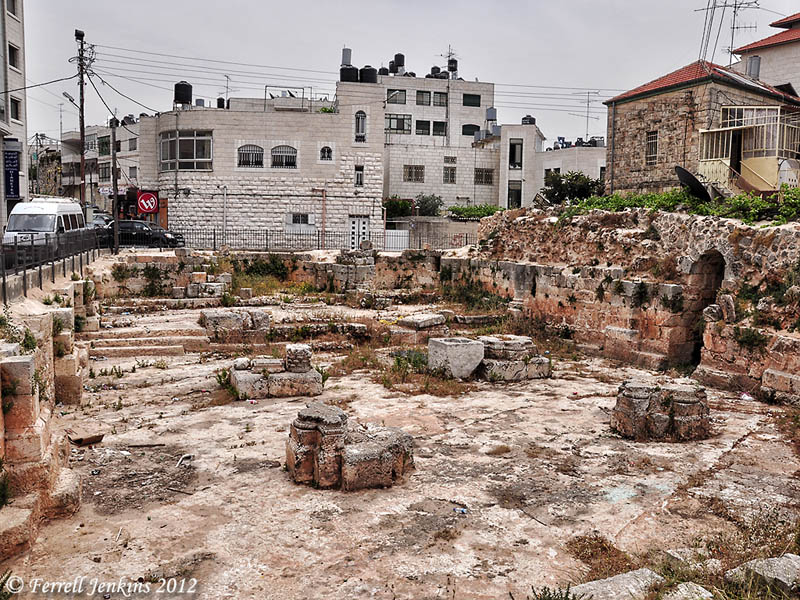
Tradition identifies the stop at El Bira. Tradition has it that the first day’s stop after leaving Jerusalem was at a place now known as El Bira (or Bireh) east of Ramallah. El Bira is an Arab town. There is a spring and ruins of a medieval church. The Hachette World Guides: The Middle East (1966) says that the tradition associating this event with El Bireh dates to the 16th century. Eugene Hoade says it is probable that this church was built in 1146 “in memory of” the event mentioned in Luke 2 (Guide to the Holy Land). The apse of the church is visible in the photo below. The Hachette World Guide says the building was destroyed in 1915 and the stones were used for building bridges along the mountain route.

This site is only about 8 miles north of Jerusalem, but with a large caravan including women and children it is possible that a short distance was covered the first day. It was necessary to stop where water and various food supplies were available (John 4:6-8; Luke 9:51-53).

Ruins of the medieval church in El Bireh. Photo by Ferrell Jenkins.

Ruins of the medieval church in El Bireh. Photo by Ferrell Jenkins.

Is this Beeroth? Since the time of explorer Edward Robinson (1867), some scholars have identified El Bireh with the Old Testament Gibeonite city of Beeroth. The word Beeroth indicates the presence of a well. Biblical references include Joshua 9:17, 18:25, Ezra 2:25, and Nehemiah 7:29. Beeroth was considered part of the tribe of Benjamin (2 Samuel 4:2).

David Dorsey, after surveying the scholarship on the matter, says,

At present, therefore, the site of biblical Beeroth remains a matter of dispute. The most likely candidate would still seem to be the one originally proposed by Robinson, i.e., el-Bireh. (The Anchor Yale Bible Dictionary)

John baptized in the river Jordan

John the Baptist proclaimed the coming Messiah in the Wilderness of Judea. The Gospel accounts point out that many people from Jerusalem and all Judea and the region about the Jordan came to be baptized. These were Jews who were being called to repent and confess their sins.

Then Jerusalem and all Judea and all the region about the Jordan were going out to him,  and they were baptized by him in the river Jordan, confessing their sins. (Matthew 3:5-6 ESV)

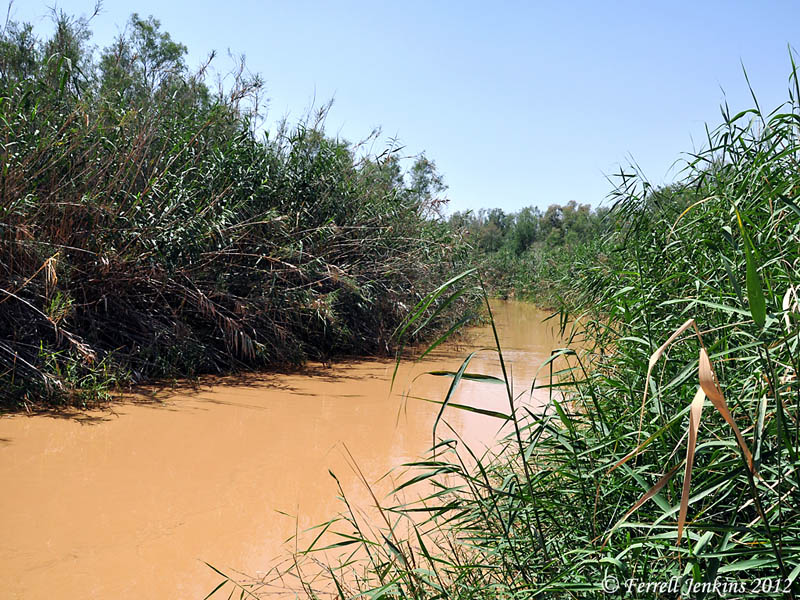
The photo shows a view of the River Jordan at the traditional site where John was baptizing. This photo was made in the spring of the year when the river shows the flow of mud as a result of the spring rains.

Jordan River (view south) at traditional site where John baptized. Photo: Ferrell Jenkins.

Jordan River (view south) where John baptized. Photo by Ferrell Jenkins.

Jesus was baptized by John, not because he was a sinner, but because it was part of God’s plan for him “to fulfill all righteousness.”

Then Jesus came from Galilee to the Jordan to John, to be baptized by him. John would have prevented him, saying, “I need to be baptized by you, and do you come to me?” But Jesus answered him, “Let it be so now, for thus it is fitting for us to fulfill all righteousness.” Then he consented. And when Jesus was baptized, immediately he went up from the water, and behold, the heavens were opened to him, and he saw the Spirit of God descending like a dove and coming to rest on him; and behold, a voice from heaven said, “This is my beloved Son, with whom I am well pleased.” (Matthew 3:13-17 ESV)

John was a voice in the wilderness

There may be some question about the location of the wilderness mentioned in Luke 3:2. The term wilderness (eremos) is described by BDAG as “an uninhabited region or locality, desert, grassland, wilderness (in contrast to cultivated and inhabited country).” The same term is translated deserts in Luke 1:80, where it seems to refer to an isolated area of Judah.

When John begins his ministry, it is clear that he was working in the wilderness between Jerusalem and the Jordan River/Dead Sea.

And he went into all the region around the Jordan, proclaiming a baptism of repentance for the forgiveness of sins.  As it is written in the book of the words of Isaiah the prophet, “The voice of one crying in the wilderness: ‘Prepare the way of the Lord, make his paths straight. (Luke 3:3-4 ESV)

Matthew’s account names the area of John’s preaching as “the wilderness of Judea” (Matthew 3:1).

This stretch of wilderness is well known as a region of rugged and desolate badlands. Our first photo shows a portion of the wilderness in bright sunlight on the way from Jerusalem to Jericho. The view is toward the west. Peter Walker describes the Judean Desert:

It is a place of austere beauty and an almost deafening silence; a place where human beings are acutely conscious of their frailty and utter dependence on water for brute survival. And yet in biblical times it was also a place where people went to find solitude and space, to hear the voice of God addressing them above the cacophony of other competing demands and voices. John the Baptist had begun his ministry here, ‘a voice of one calling in the desert’ (Isaiah 40:3).… (In the Steps of Jesus, Zondervan: 52)

Wilderness of Judea on way from Jerusalem to Jericho. Photo by Ferrell Jenkins.

Wilderness of Judea on way from Jerusalem to Jericho. Photo by Ferrell Jenkins.

One of the fascinating things about the wilderness is the constant change of the view, especially as clouds move over it from West to East

Wilderness of Judea. View toward east with rain clouds on mountain range. Photo by Ferrell Jenkins.

Wilderness of Judea. View west with clouds on the mountain range. Photo: F. Jenkins.

The road from Jerusalem to Jericho and the Jordan River was used even by pilgrims coming from Galilee for the various feast days in Jerusalem. Luke’s parable of the good Samaritan speaks of a man “going down from Jerusalem to Jericho” (Luke 10:30). Luke also records that Jesus traveled this way in the opposite direction (Luke 19). John records that Jesus traveled this way from Bethany beyond the Jordan to the Bethany near Jerusalem (John 11).

John was a man of history

In recent posts we have called attention to Luke’s account of the events surrounding the birth of John the Baptist. Some readers may treat Zacharias, Elizabeth, John, and even Jesus, as fictional. Luke deals with the characters and events as historical.

Notice especially how Luke deals with the beginning of the ministry of John.

Now in the fifteenth year of the reign of Tiberius Caesar, when Pontius Pilate was governor of Judea, and Herod was tetrarch of Galilee, and his brother Philip was tetrarch of the region of Ituraea and Trachonitis, and Lysanias was tetrarch of Abilene,  in the high priesthood of Annas and Caiaphas, the word of God came to John, the son of Zacharias, in the wilderness.  (Luke 3:1-2 NAU)

Luke treats John as a man of history by placing him at a specific place (“the district around the Jordan” – v. 3), and a specific time, in the reign of specific political and religious leaders.

  • In the 15th year of reign of Tiberius Caesar
  • Pontius Pilate was governor of Judea
  • Herod [Antipas] was tetrarch of Galilee
  • Herod Philip was tetrarch of the region of Ituraea and Trachonitis
  • Lysanias was tetrarch of Abilene
  • High priesthood of Annas & Caiaphas

In the absence of a calendar such as the one we use, one could hardly be more precise. All of these are historical characters. They are known in other written records, by coins bearing their image, by inscriptions, by statues, and one is know by his ossuary (burial bone box).

There is too much here for us to deal with each of these characters at this time. Let’s look at Pontius Pilate. Pilate is known in written records aside from the New Testament (more than 50 times), and Josephus (more than 20 times). Tacitus, the Roman historian, says that “…Christ, was put to death by the procurator Pontius Pilate…” (Annals XV.44.2).

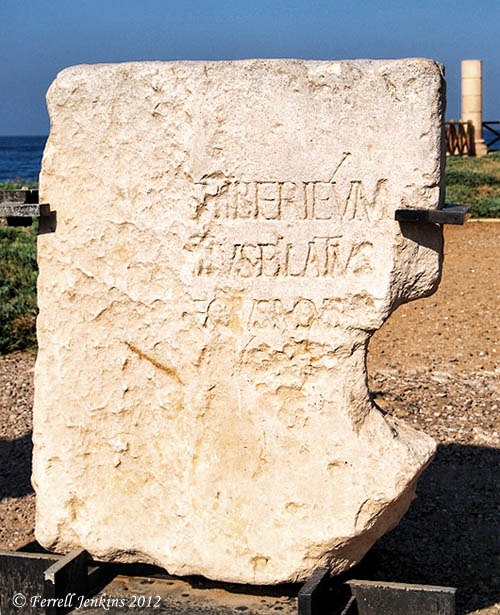
Use our search box to locate other posts we have written about Pilate. Begin with this one. The photo below shows the replica of the inscription bearing Pilate’s name that was found at Caesarea Maritima in 1961. The original is in the Israel Museum, Jerusalem.

Replical of inscription bearing the name of Pontius Pilate.Photo by Ferrell Jenkins.

Replica of inscription bearing the name of Pontius Pilate.Photo by Ferrell Jenkins.

For accounts in which Pilate played an important role, read Matthew 27, Mark 15, Luke 23, and John 18.