Category Archives: Bible Places

Professor Maeir on the cease fire and Tell es-Safi/Gath

Earlier in the week at the SBL meeting I visited a few minutes with Prof. Aren Maeir, excavator of Tell es-Safi/Gath. He is back home in Israel, and writes this morning about the cease fire between Gaza and Israel.

Well, thank g-d a cease fire has been declared and that it appears to be holding.

I have heard an unconfirmed report that the Palestinians even shot a missile at Tell es-Safi/Gath! I’ll have to check this out, but perhaps someone in the Hamas does not like what we are finding at the site? (is nothing sacred? 🙂

UPDATE: Uri Kaizer, the warden for the Tell es-Safi/Gath region from the Israel Nature and Parks Authority has informed me that the missile did not hit the site, but rather fell a km or two to the west.

In any case, I pray that things will stay quiet and we can all get back to living our regular lives.

I would be nice if in the future, when describing the period following this last round of fighting, the following could be said: “The land was quiet for forty years”…

Follow his blog here.

You will recognize the last phrase in Maeir’s post as the common refrain from the book of Judges.

So the land had rest forty years. (Judges 3:11a ESV)

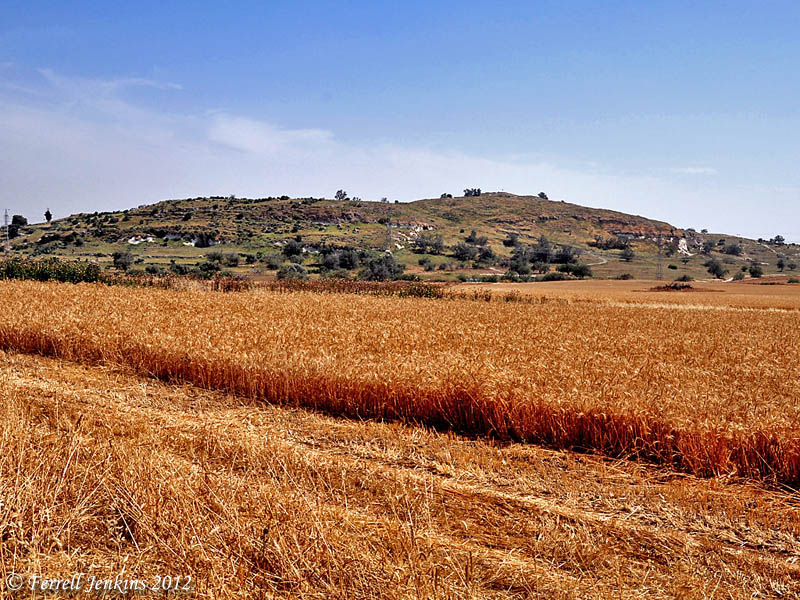
The following photo of Tel es-Safi/Gath shows the abundant wheat fields in the plain to the west of the tel.

Tel es-Safi/Gath with wheat fields in the plain to the west. Photo by Ferrell Jenkins.

Tel es-Safi/Gath with wheat fields in the plain to the west. Photo by Ferrell Jenkins.

The Annual Meetings # 2 (NEAS)

Attending the annual meetings of professional organizations allows one to keep up with the latest scholarly efforts of various scholars. When I was teaching I attended sessions dealing with the subjects I was teaching. I have always attended sessions dealing with archaeology because these help be to keep abreast of the field. On my tours, I am often able to tell the guides about discoveries that they have not yet learned about.

Some affiliated smaller organizations meet under the auspices of the larger one. The NEAS (Near East Archaeological Society) meets with ETS. I attended most of the sessions of the NEAS. Let me give you some idea about what I heard.

Charles Ailing, Did Moses Learn His Monotheism From Akhenaten? Mostly likely not. According to the Biblical chronology, Moses was earlier than Akhenaten.

Douglas Petrovich, Identifying the Tower of Babel and (Re-)Locating the Site of Its Construction. He suggested Eridu. Doug began his paper with a prayer in which he said, “Thank you for the thrill of learning, and thank you for the truth.”

Randall Price reported on “the Final Season of Excavation on the Qumran Plateau.” I did not hear his presentation about the search for Noah’s Ark. Seth Rodriquez looked at how archaeology provides insights into Psalm 144.

Morten Jensen, from Denmark, spoke about “Religious Motivation in the Archaeological Record of First-century Israel.” A paper on Metallurgy was read for a scholar who was unable to arrive from Germany.

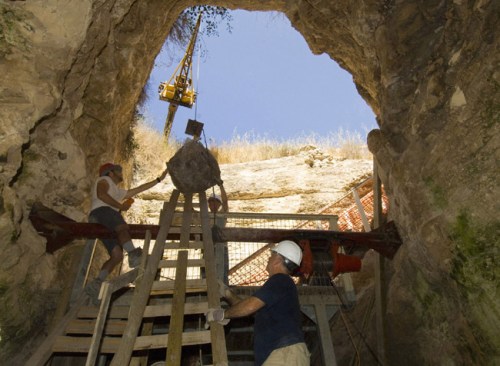
We had two presentations by excavators at Gezer. Steven Ortiz spoke about the recent excavations. Daniel Warner spoke about the fabulous new find of the Gezer Water System. See our earlier report on this water system here.

Gezer Water System

Excavating Gezer Water System. Photo: Art Beaulieu. Courtesy BP & NOBTS.

The sessions last about three hours and have at least five presenters in each. One session was devoted to Wheaton College’s Contribution to Biblical Archaeology from Joseph P. Free to the Present. Alfred J. Hoerth, who served as chair of the department of archaeology, spoke of the contributions from Free to the present. Other speakers, all of whom attended and/or taught at Wheaton included Daniel Master (Ashkelon), John Monson, and Tom Davis. This was an extremely worthwhile session.

Free is known for his book about archaeology, but also for his excavation of the biblical site of Dothan. One interesting tidbit: Free purchased the tell of Dothan from the Jordanian landowner. I think this would be impossible today.

Dothan is known as the place where Joseph’s brothers sold him into slavery (Genesis 37:12-36).

Perhaps I can get to a few comments about the SBL meeting after I return home.

He “guided them in the wilderness like a flock.”

The Psalmist describes the LORD’S care for His people under the figure of a shepherd and his sheep.

But He led forth His own people like sheep And guided them in the wilderness like a flock;  He led them safely, so that they did not fear; But the sea engulfed their enemies.  So He brought them to His holy land, To this hill country which His right hand had gained. (Psalm 78:52-54 NAU)

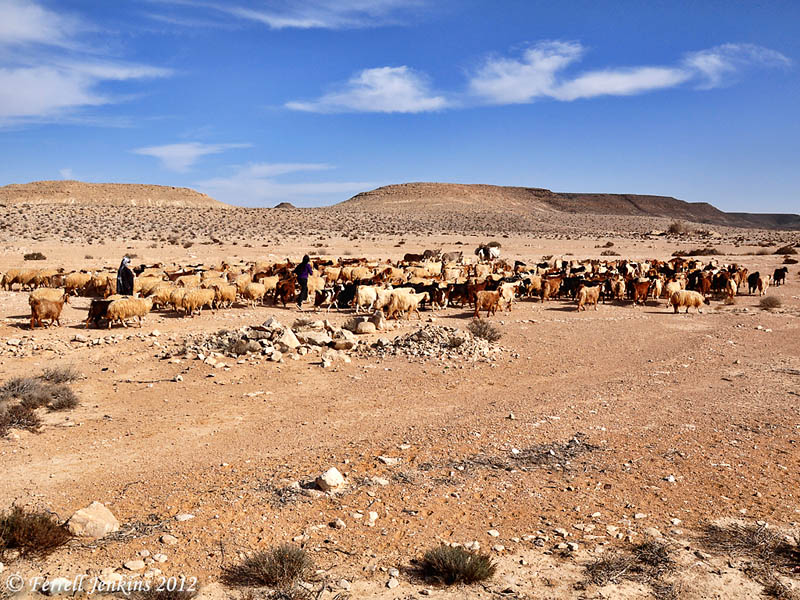
Shepherds south of Avedat in the Wilderness of Zin. Photo by Ferrell Jenkins.

Shepherds south of Avedat in the Wilderness of Zin. Photo by Ferrell Jenkins.

The photo above was made a few miles south of Avedat, Israel, in the Wilderness of Zin. The Israelites lived in this wilderness (or desert) prior to entry into the land that the LORD promised to the seed of Abraham (Genesis 12:7).

Acts 22 — Photo Illustrations — the Antonia

As a result of the unjustified beating of Paul by the Jews in the temple precinct, Paul was rescued by the commander of the Roman cohort. Orders were given for Paul to be bought into the barracks. The KJV and the NKJV use the word castle. The CEB use of military headquarters probably conveys the correct idea. (Acts 21:27-40). The parembole served as headquarters for the Roman troops in Jerusalem (BDAG).

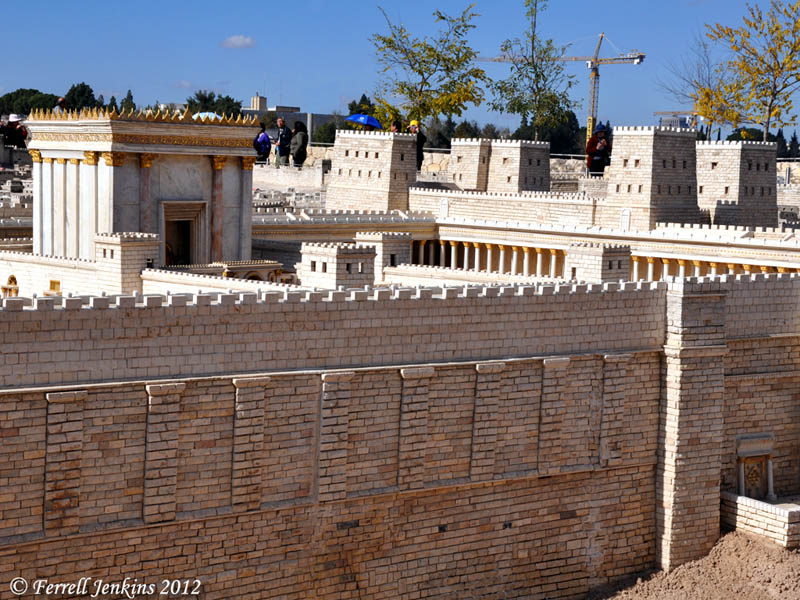
The building under consideration in Acts 21 is the Fortress of Antonia. The massive structure was built by Herod the Great and named in honor of Mark Anthony. Murphy-O’Connor says the fortress “both protected and controlled the Temple” (The Holy Land, 34). The temple was surrounded by the Kidron Valley on the east, the Tyropean Valley on the west, and a steep decline on the south. The area needing special protection was the northwest corner.

Second Temple Model, Jerusalem. The Fortress of Antonia stands on the northwest corner of the temple precinct. Photo by Ferrell Jenkins.

Second Temple Model, Jerusalem. The Fortress of Antonia stands on the northwest corner of the temple precinct. Photo by Ferrell Jenkins.

Josephus describes the “tower of Antonia” in the Wars of the Jews.

238 Now, as to the tower of Antonia, it was located at the corner of two cloisters of the court of the temple; of that on the west, and that on the north; it was erected upon a rock of fifty cubits in height, and was on a great precipice; it was the work of King Herod, wherein he demonstrated his natural magnanimity.  239 In the first place, the rock itself was covered over with smooth pieces of stone, from its foundation, both for ornament, and that anyone who would either try to get up or to go down it might not be able to hold his feet upon it.  240 Next to this, and before you come to the edifice of the tower itself, there was a wall three cubits high; but within that wall all the space of the tower of Antonia itself was built upon, to the height of forty cubits.  (JW 5:238-240)

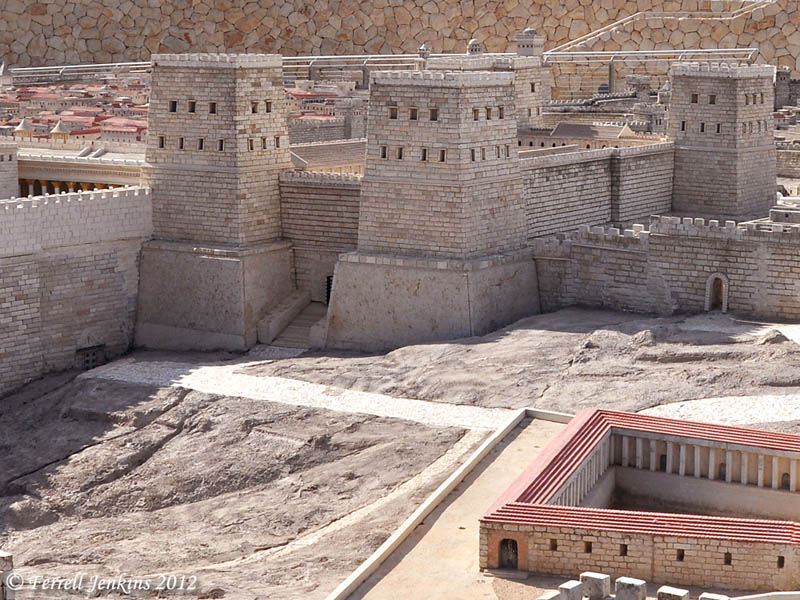
Fortress of Antonia in the Second Temple Model. Photo by Ferrell Jenkins.

Fortress of Antonia in the Second Temple Model. Photo by Ferrell Jenkins.

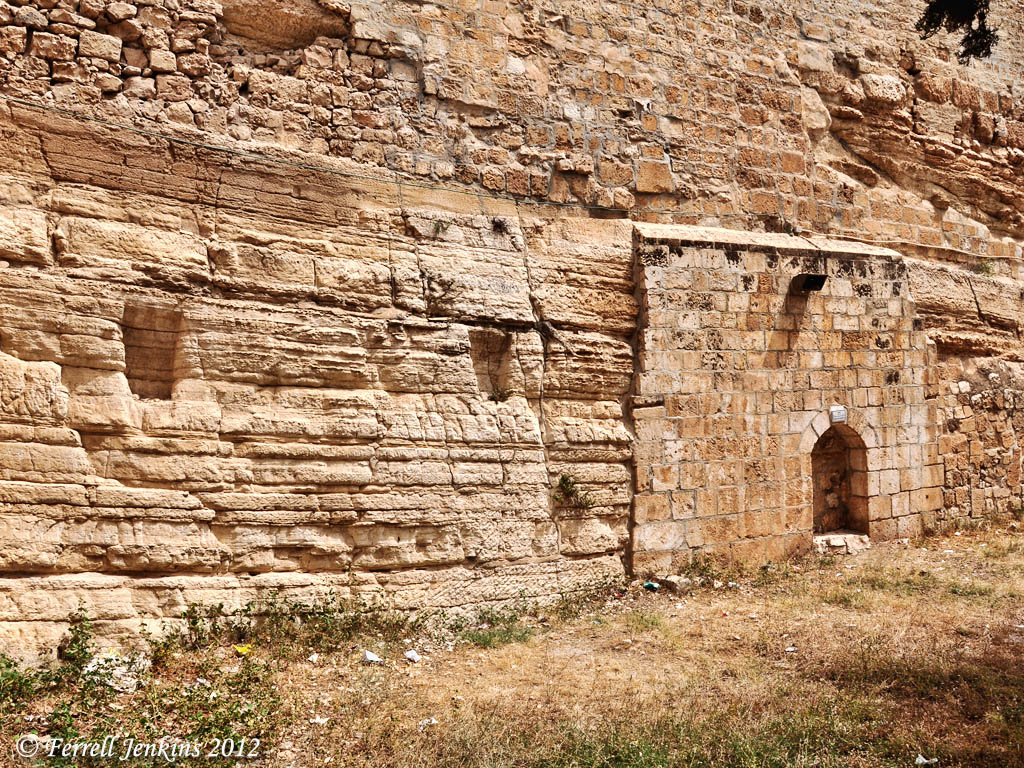
The photo above shows the Tower of Antonia built on the natural rock foundation at the northwest corner of the temple precinct. A portion of the Pool of Bethesda (John 5) is visible on the right.

Paul’s speech recorded in Acts 22 took place on the stairs leading up from the temple platform into the fortress. When the crowd drowned out Paul, the commander ordered that he be brought into the fortress (22:24). After Paul’s nephew informed the Roman officers about a planned conspiracy to kill Paul, he was sent to Caesarea where he would remain for two years (23:23; 24:27).

The photo below was made from inside the temple precinct. It shows the natural rock scarp in the northwest corner on which the Fortress of Antonia was built. See Leen Ritmeyer’s post about this, and his drawing showing the location of the steps mentioned in Acts 21. Ritmeyer sells digital images of his drawings.

The natural rock scarp at the NW corner of the Temple Mount. Photo by Ferrell Jenkins.

The natural rock scarp at the NW corner of the Temple Mount. Photo by Ferrell Jenkins.

Portions of Bond 007 Skyfall filmed in Turkey

An article at MI6 (here) about the Istanbul premier of Skyfall mentions Turkish sites used in the film.

Turkey has felt a noticeable increase in tourist enquiries. “Skyfall” showcases the famous rooftops and the Grand Bazaar of Istanbul, as well as the more rural and rugged landscapes of southern Turkey as the film’s second unit shot extensively in Adana.

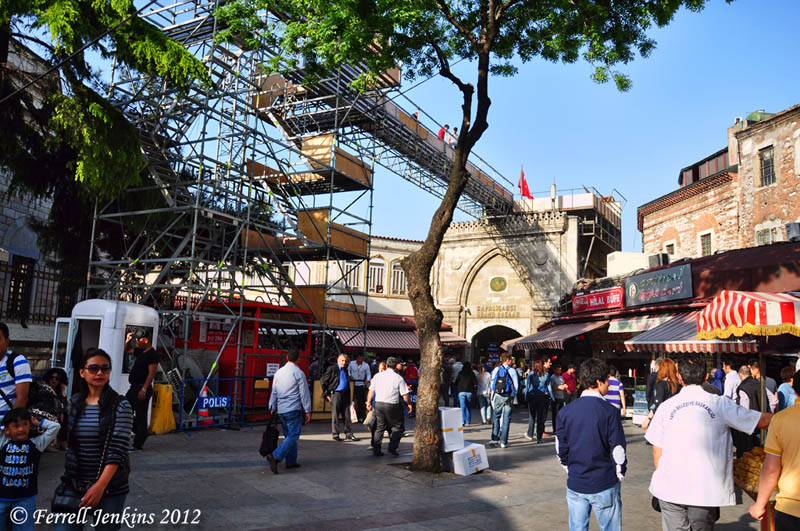
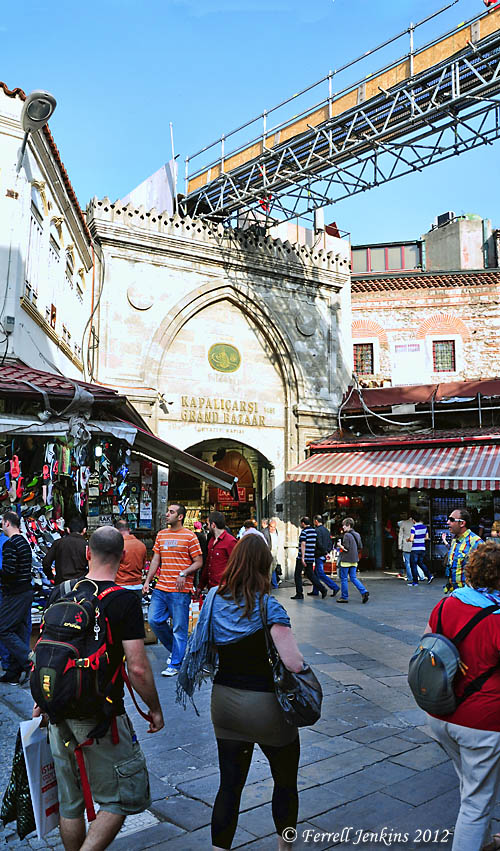
Almost every group that visits Turkey makes a stop in Istanbul. On our recent Steps of Paul and John Tour we also made a brief visit to the Grand Bazaar. At one entry to the Bazaar the scaffolding was in place for the filming of some of the scenes in the new Bond 007 Skyfall movie.

Istanbul Grand Bazaar set for the Bond 007 Skyfall movie. Photo by Ferrell Jenkins.

Istanbul Grand Bazaar set for the Bond 007 Skyfall movie. Photo by Ferrell Jenkins.

One of the reasons many people have enjoyed the Bond movies is for the opportunity to see many beautiful and exotic places that served as settings.

Skyfall scaffolding above the Grand Bazaar in Istanbul. Photo by Ferrell Jenkins.

Adana is located about 30 miles east of Tarsus, the native home of the Apostle Paul in the region of Cilicia.

But Paul said, “I am a Jew of Tarsus in Cilicia, a citizen of no insignificant city; and I beg you, allow me to speak to the people.” (Acts 21:39 NAU)

Acts 21 # 2 — Photo Illustrations – Tyre

Luke records the journey from Patara to Tyre in these words:

 2 and having found a ship crossing over to Phoenicia, we went aboard and set sail.  3 When we came in sight of Cyprus, leaving it on the left, we kept sailing to Syria and landed at Tyre; for there the ship was to unload its cargo.  4 After looking up the disciples, we stayed there seven days; and they kept telling Paul through the Spirit not to set foot in Jerusalem.  5 When our days there were ended, we left and started on our journey, while they all, with wives and children, escorted us until we were out of the city. After kneeling down on the beach and praying, we said farewell to one another.  6 Then we went on board the ship, and they returned home again.  7 When we had finished the voyage from Tyre, we arrived at Ptolemais, and after greeting the brethren, we stayed with them for a day.  (Acts 21:2-7 NAU)

Tyre was well known to the Old Testament writers, especially the prophet Ezekiel. In Ezekiel 26-28 you will find a proclamation against Tyre, a prophetic lamentation over the fall of the city, and a proclamation against the king of Tyre.

The ministry of Jesus took Him to the district of Tyre and Sidon (Matthew 15:21).

The disciples, with wives and children, escorted Paul and his companions out of the city. The group kneeled and prayed on the beach before saying farewell to one another.

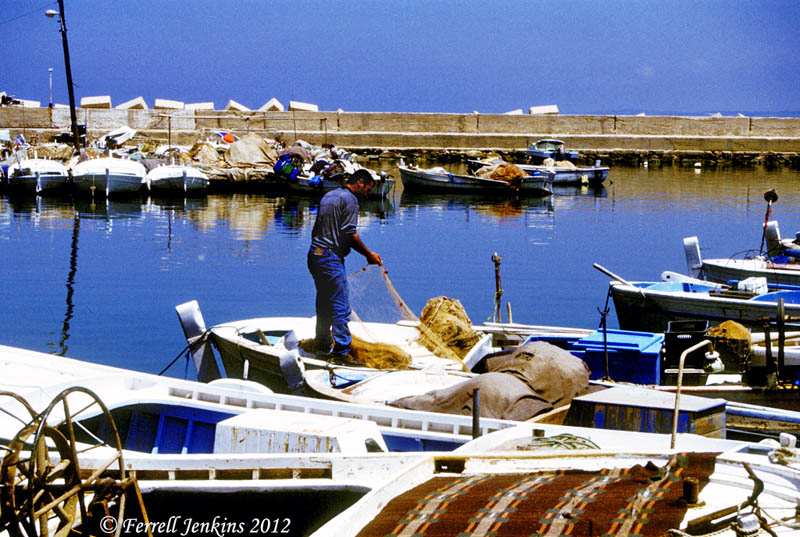
Tyre was once an important Phoenician city, but is now a small town known as Sur in Lebanon. It has a small fishing port that you see in the photograph below.

A fisherman works with his nets in the small harbor of Tyre. Photo by Ferrell Jenkins.

A fisherman works with his nets in the small harbor of Tyre. Photo by Ferrell Jenkins.

Acts 21 — Photo Illustrations – Patara

Patara is mentioned only once in the New Testament. When Paul and his companions sailed from Miletus on their way to Syria (Caesarea), they made stops at Cos, Rhodes, and Patara in the Roman province of Lycia in Asia Minor (Acts 27:5).

And when we had parted from them and set sail, we came by a straight course to Cos, and the next day to Rhodes, and from there to Patara. And having found a ship crossing to Phoenicia, we went aboard and set sail.  (Acts 21:1-2 ESV)

Patara is known as Gelemis (in Turkey) today, but the sign on the main highway from Fethiye to Kas points to the ancient site of Patara.

Wilson says,

Patara served as a way station for sea travelers, and Paul changed ships here to Phoenicia at the end of his third journey in AD 57 (Acts 21:1). (Biblical Turkey, 91).

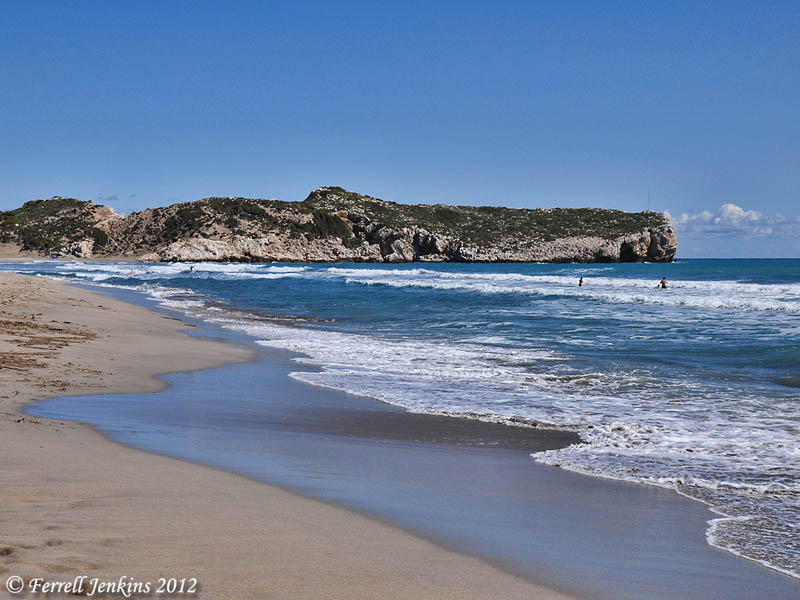
The beach at Patara is a popular leisure place for locals as well as visitors to the area. For this photo we drove the narrow road from the main highway through the ruins of the city to the water.

Beach on the Mediterranean Sea at Patara, Turkey. Photo by Ferrell Jenkins.

Beach on the Mediterranean Sea at Patara, Turkey. Photo by Ferrell Jenkins.

Patara already had a long history before Paul stopped there. Tradition has it that it was founded by Patarus, a son of Apollo. Persians used the port during the Persian Wars. The city later came under the control of Alexander the Great, the Ptolemies, and the Seleucids in succession before being given freedom by the Romans in 167 B.C. In 43 B.C. the city became part of the province of Lycia (Biblical Turkey, 90-91).

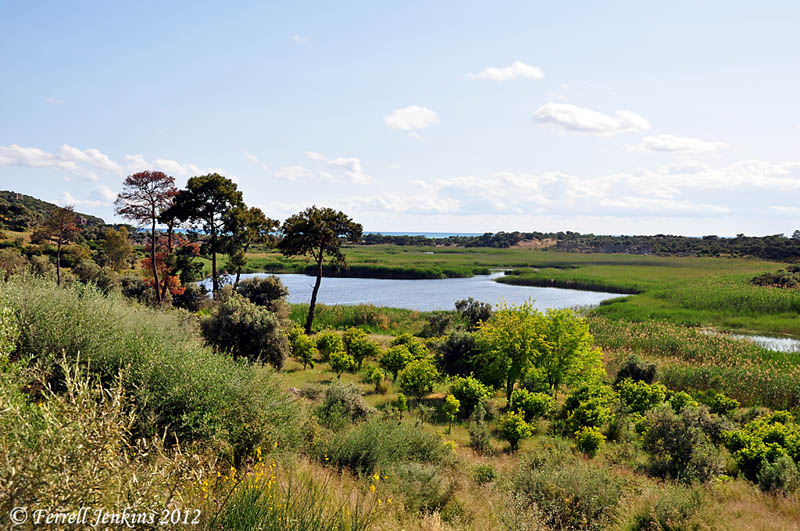
Our next photo shows the site of the silted up harbor of Patara. In the distance you will see a narrow sliver of blue between the trees and the sky. That is the Mediterranean Sea. Entrance to the harbor from the Sea is blocked. Ruins of granaries built in the days of Hadrian (A.D. 117-138) are visible on the west side of the harbor. Click on the photo for a larger image.

Silted up harbor at Patara. The Mediterranean Sea is visible on the horizon. Photo by Ferrell Jenkins.

Silted up harbor. The Mediterranean is visible on the horizon. Photo by Ferrell Jenkins.

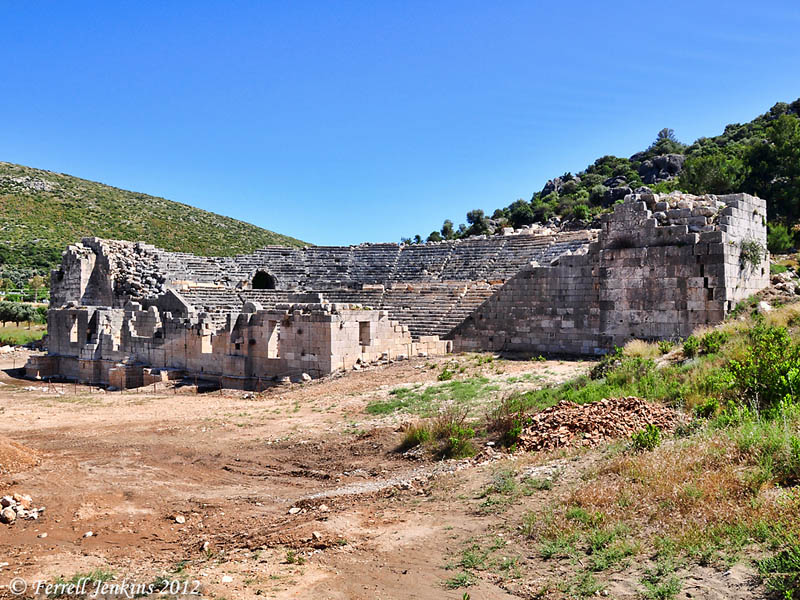
Our last photo shows the theater which was built in the Hellenistic period, but was rebuilt in the time of the Roman Emperor Tiberias (A.D. 14-37). It seated more than 6,000 people.

Theater at Patara. Photo by Ferrell Jenkins.

Theater at Patara. Photo by Ferrell Jenkins.

Use the search box for posts about some of the other places mentioned in Acts 21: Rhodes, Cyprus, Tyre, Ptolemais, and Caesarea.

Jesus returned “to the Sea of Galilee”

Mark tells us that Jesus made a trip to the region of Tyre and Sidon. There He met a Syrophoenician woman and healed her daughter. The text says that he returned “to the Sea of Galilee.”

Then he returned from the region of Tyre and went through Sidon to the Sea of Galilee, in the region of the Decapolis.  And they brought to him a man who was deaf and had a speech impediment, and they begged him to lay his hand on him.  (Mark 7:31-32 ESV)

Capernaum, Chorazin, and Bethsaida were cities around the Sea of Galilee. The region of Decapolis was located east of the Sea.
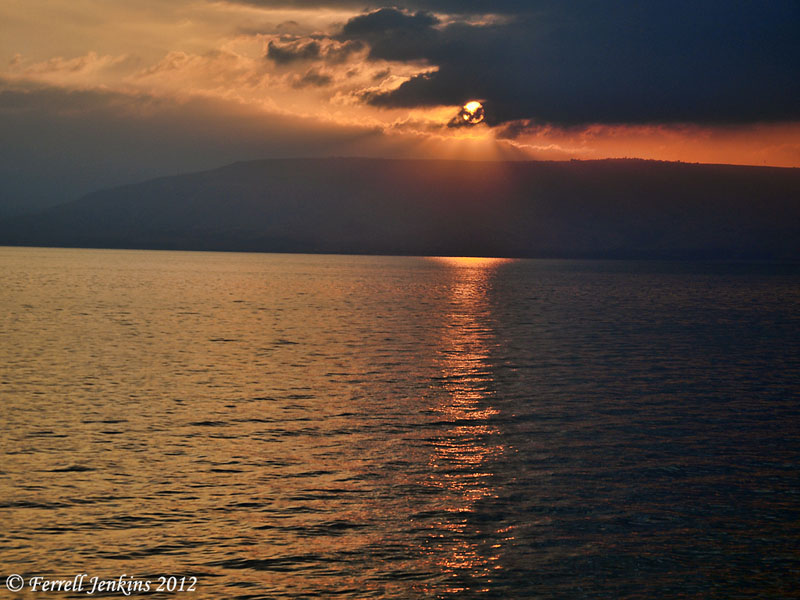
This rather unique sunrise photo gives a clear view of a least a portion of Decapolis.

Sunrise on the Sea of Galilee, view east toward Decapolis. Photo by Ferrell Jenkins.

Sunrise on the Sea of Galilee, view east toward Decapolis. Photo by Ferrell Jenkins.

In Decapolis, Jesus healed a deaf man with a speech impediment (Mark 7:31-37).

The Sea of Galilee has an attraction to people who love Jesus and the events that took place there. On a recent tour, I had one lady who made her second trip to Israel primarily to return to the Sea of Galilee. Every time I post a photo of sunrise on the Sea of Galilee I receive several communications from folks who say it is one of their favorite places.

Acts 20–21 — Paul’s Travel Itinerary with Photo Illustrations

The precision and chronological exactitude with which this journey is recounted is amazing. F. F. Bruce says,

The description of this critical journey of Paul and his disciples to Jerusalem is given in considerable detail; some have compared the detailed description in the Third Gospel of Jesus’ critical journey to Jerusalem with His disciples. But the kind of details is different; the chronological exactitude of this second “we” narrative of acts is due mainly to the fact that Luke was one of the party and kept a log-book. (The Book of Acts in the NICNT, 407).

Acts 20:6    —    Paul left Philippi “after the days of Unleavened Bread”(Passover). He was hurrying to be in Jerusalem “on the day of Pentecost” (20:16). This would be 50 days after Passover. He had been in Ephesus on Pentecost one year earlier (1 Cor. 16:8).
Acts 20:6    —    Paul came to Troas within 5 days. Tarried 7 days. A “door” had been opened for Paul at Troas less than a year earlier, but he was not able to enter it (2 Cor. 2:12).
Acts 20:7    —    On the first day of week — gathered together with the disciples to break bread.
Acts 20:11    —    Monday (or ? Sunday) — Paul departed. This depends on whether they followed the Jewish practice of sundown beginning the new day, or the Roman practice of mid-night to mid-night.
Acts 20:13-14    —    Assos. Paul’s companions went by boat from Troas to Assos. Paul traveled overland.
Acts 20:14    —    Mitylene (on the island of Lesbos).
Acts 20:15    —    Following day — opposite Chios.
Acts 20:15    —    Next day — Samos.

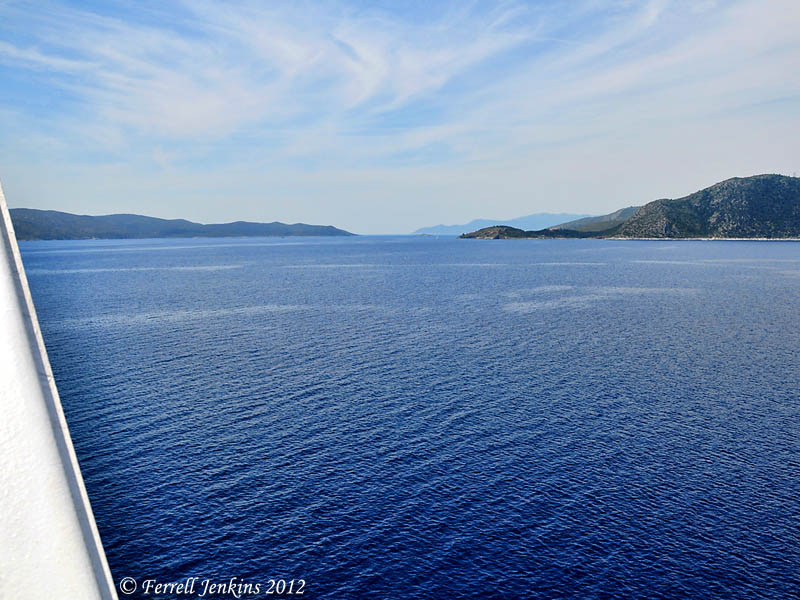
The photo below was made from a ship after it passed from north to south through the narrow strait between Samos (on the left) and the Turkish coast (on the right).  The ancient site of Trogyllium is located on the small peninsula extending into the Aegean Sea.
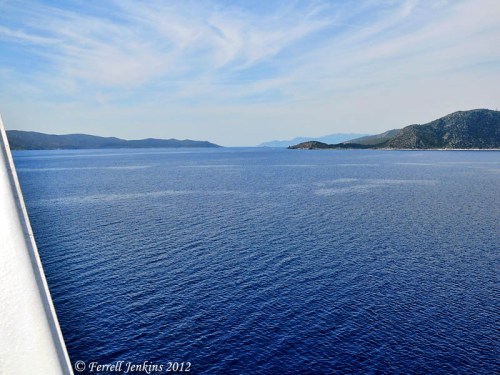
Samos-Turkey Strait. View North. Photo by Ferrell Jenkins.

View north of the Samos-Turkey Strait. Photo by Ferrell Jenkins.

Acts 20:15    —    Tarried at Trogyllium. (Appears in Western and Byzantine texts and in the KJV and NKJV.) The omission of the name in most manuscripts is explained by Bruce M. Metzger:

“Chiefly because of superior external attestation, a majority of the Committee preferred the shorter text” (A Textual Commentary on the Greek New Testament, 478).

Ramsay points out that the information is,

“in itself highly probable, for the promontory of Trogyllian or Trogylia projects far out between Samos and Miletus, and the little coasting vessel would naturally touch there, perhaps becalmed, or for some other reason” (The Church in the Roman Empire, 155).

Acts 20:15    —    The day following — Miletus.

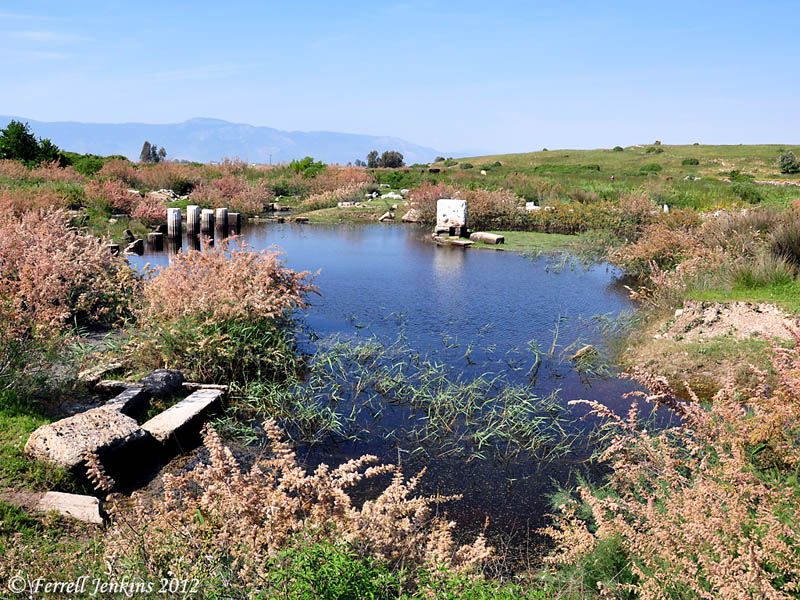
This photo shows some standing water in the Lion Harbor of Miletus.
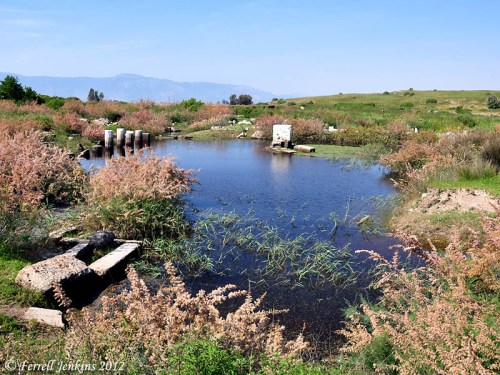
Ruins of the Lion Harbor at Miletus. Photo by Ferrell Jenkins.

Ruins of the Lion Harbor at Miletus. Photo by Ferrell Jenkins.

Acts 20:16    —    Paul had decided to sail past Ephesus — to be in Jerusalem on Pentecost (fifty days after leaving Philippi).

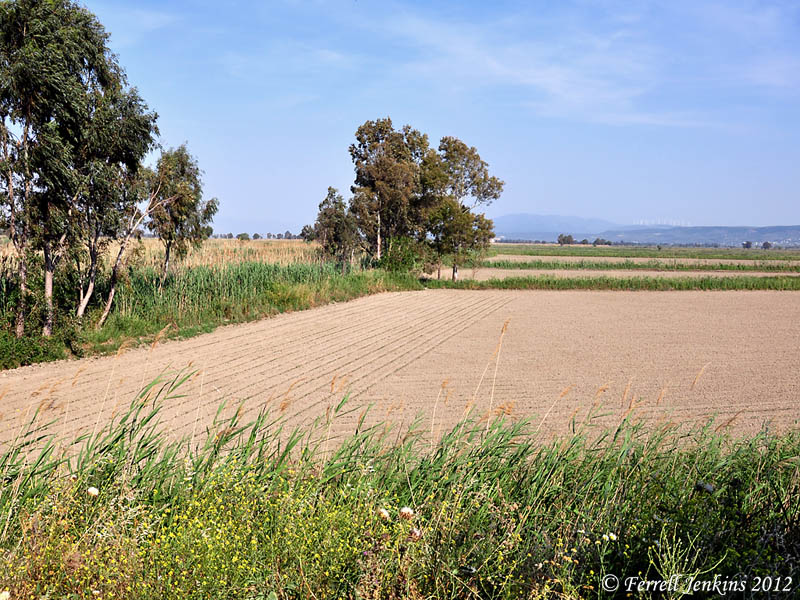
From Miletus Paul sent for the Ephesian elders. Consider the distance. How long would it take the courier to go to them and for them to come to him at Miletus? The distance was 63 miles by land or 38 if they went across the gulf of Latmos. This gulf is now silted up, leaving only a small inland lake.

The photo shows the site of the Gulf of Latmos which is now silted up. Turkish farmers grow rice in the area. The Meander River flows to the left of this photograph.
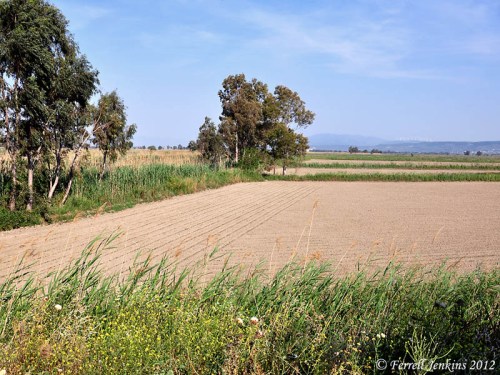
Site of Lake Latmos, now silted up, within two miles of Miletus. Photo by Ferrell Jenkins.

Site of the Gulf of Latmos, now silted up, within 2 miles of Miletus. Photo: F. Jenkins.

Acts 21:1    —    Set sail on a straight course to Cos.

  •  Next day to Rhodes. Tradition identifies this stop at St. Paul’s Bay at Lindos.
  • Patara.
  • Patara to Tyre. According to Chrysostom this trip took five days (Homily XLV.2; cf. Bruce, The Book of Acts in NICNT  421). They were always at the mercy of the wind. When they came within sight of Cyprus they sailed past to the south of the island as they headed to Syria (21:3).

Acts 21:4    —    Tyre — Paul tarried 7 days (note 20:6-7).
Acts 21:7    —    Ptolemais [modern Acre in Israel] — stayed one day.
Acts 21:8    —    Caesarea. They arrived the next day. The text does not say whether they went by boat or land. At Caesarea they stayed with Philip for “many days” (21:10).

Acts 21:15-17    —    Up to Jerusalem of Judea (cf. 21:10).

Acts 21:18    —    The following day Paul and the others visited James and the elders.

If our study of the Book or Acts, or any book of the Bible, is only a cursory one without attention to details, we miss much of what was intended for us.

Note: Use the Search Box to locate posts about Philippi, Assos and Mitylene, Ephesus, Miletus, Rhodes, Tyre, Ptolemais, and Caesarea.

The early rain damages Hai-Bar Yotvata Nature Reserve

According to The Jerusalem Post’s Sharon Udasin, heavy rains caused damage to the Hai-Bar Yotvata Nature Reserve located in the Arabah (Arava) north of Eilat.

The heavy rains that drenched the Eilat mountains and southern Arava region on Sunday night led to the flooding of the Hai-Bar Yotvata Nature Reserve, the Israel Nature and Parks Authority (INPA) said on Monday.

Over the course of the night, park workers evacuated animals that were in danger of drowning, and others worked all night to rebuild fences that had collapsed during the flood.

By Tuesday, the nature reserve will be open as usual to visitors, an INPA statement said.

Despite the damage caused to the nature reserve, the rains brought with them “many blessings” as they watered the acacia trees – which are “a source of life in the desert” – and created a “rare, breathtaking site,” according to the INPA.

“The desert is now beautiful and gleaming, and this is the best time to hike in it and to enjoy the rich and spectacular landscape it has to offer,” said Doron Nissim, the Eilat district manager at the INPA.

More information about the weather expectations for this year is available here.

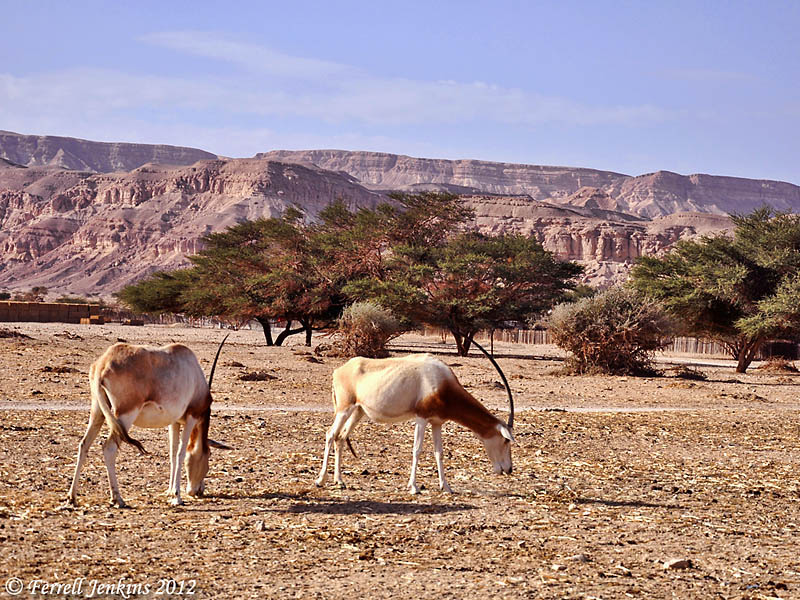
The photo below shows the Arabian Oryx, thought to be the reem of the Hebrew Bible. English versions typically translate this word with “wild ox” (Numbers 23:22; 24:8; Deuteronomy 33:17, et al. The King James Version uses the word unicorn.

Arabian Oryx at Hai-Bar Nature Reserve. Photo by Ferrell Jenkins.

Arabian Oryx at Hai-Bar Nature Reserve. Photo by Ferrell Jenkins.

If one travels in the desert during the summer months he will see a dry, desolate bad land with only an isolated acacia or tamarisk tree or a shrub where the last water of the winter rain flowed. In the winter it can be different. Israel has two dominant seasons: winter and summer. The summer is dry and the winter is wet. The early rains begin about mid-October and continue till the late rains of early April. See Deuteronomy 11:14; Psalm 84:6; Joel 2:23; James 5:7.

 “And if you will indeed obey my commandments that I command you today, to love the LORD your God, and to serve him with all your heart and with all your soul,  he will give the rain for your land in its season, the early rain and the later rain, that you may gather in your grain and your wine and your oil.  And he will give grass in your fields for your livestock, and you shall eat and be full. (Deuteronomy 11:13-15 ESV)

You might enjoy reading our earlier post about “Rivers in the Desert” here.

HT: Todd Bolen, Bible Places Blog. This Wednesday Roundup is especially full of helpful information.