Category Archives: Bible Places

Visualizing Isaiah 38: a cake of figs for medication

King Hezekiah was at the point of death, but the LORD heard his prayer and extended his life by 15 years. There are several visual illustrations in this chapter. I have selected the one in verse 21.

Now Isaiah had said, “Let them take a cake of figs and apply it to the boil, that he may recover.” Hezekiah also had said, “What is the sign that I shall go up to the house of the LORD?” (Isaiah 38:21-22 ESV)

The IVP Bible Background Commentary: Old Testament offers this comment on the use of fig cakes at 2 Kings 20:7:

Fig cakes may have been used as condiments and for medicinal purposes at Ugarit. Both later rabbinical Jewish and classical sources (e.g., Pliny the Elder) shared the belief that dried figs had medicinal value. Poultices were sometimes used for diagnosis rather than for medication. A day or two after the poultice was applied, it would be checked for either the skin’s reaction to the poultice or the poultice’s reaction to the skin. One medical text from Emar prescribes the use of figs and raisins for such a process. They helped determine how the patient should be treated and whether or not he would recover.

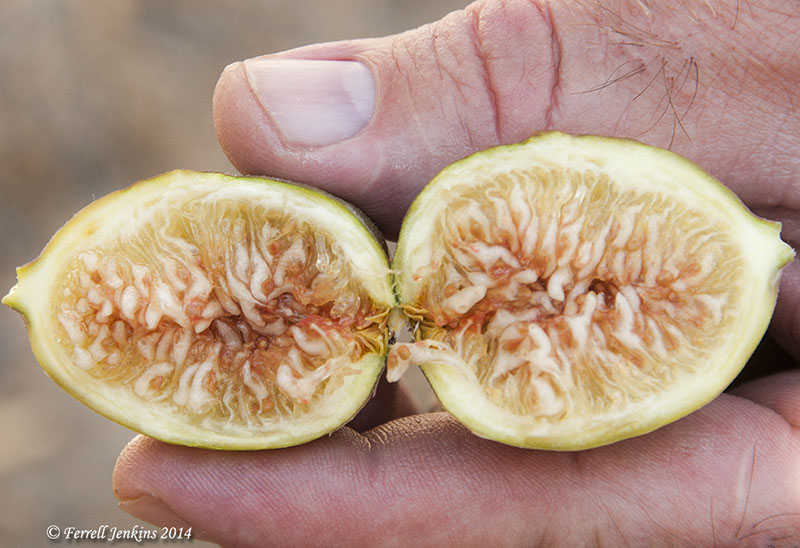
The photo below shows a freshly cut fig from Shechem.

A fresh fall fig from Shechem. Photo by Ferrell Jenkins.

A fresh fall fig from Shechem. Photo by Ferrell Jenkins.

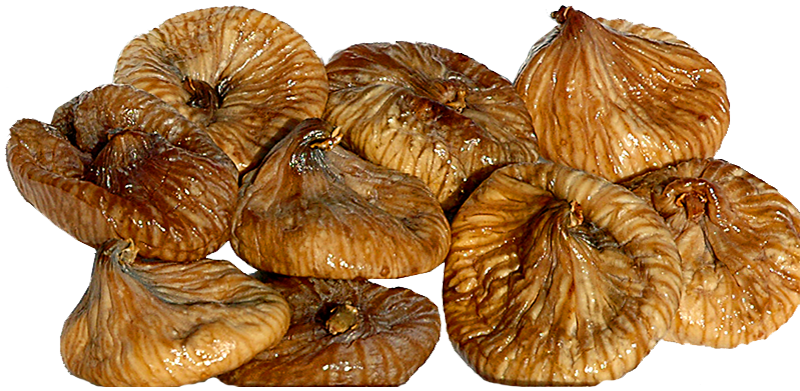
The next photo shows dried figs from Jericho.

Dried figs from Jericho. Photo by Ferrell Jenkins.

Dried figs from Jericho. Photo by Ferrell Jenkins.


Visualizing Isaiah 37: Sennacherib’s assassins escape to the land of Ararat

After the LORD struck down 185,000 of the Assyrians who were camped outside Jerusalem, Sennacherib returned home and lived at Nineveh. In the final verse of this chapter we are told that his sons killed him and fled to the land of Ararat.

Then Sennacherib king of Assyria departed and returned home and lived at Nineveh. And as he was worshiping in the house of Nisroch his god, Adrammelech and Sharezer, his sons, struck him down with the sword. And after they escaped into the land of Ararat, Esarhaddon his son reigned in his place. (Isaiah 37:37-38 ESV; see also 2 Kings 19:37)

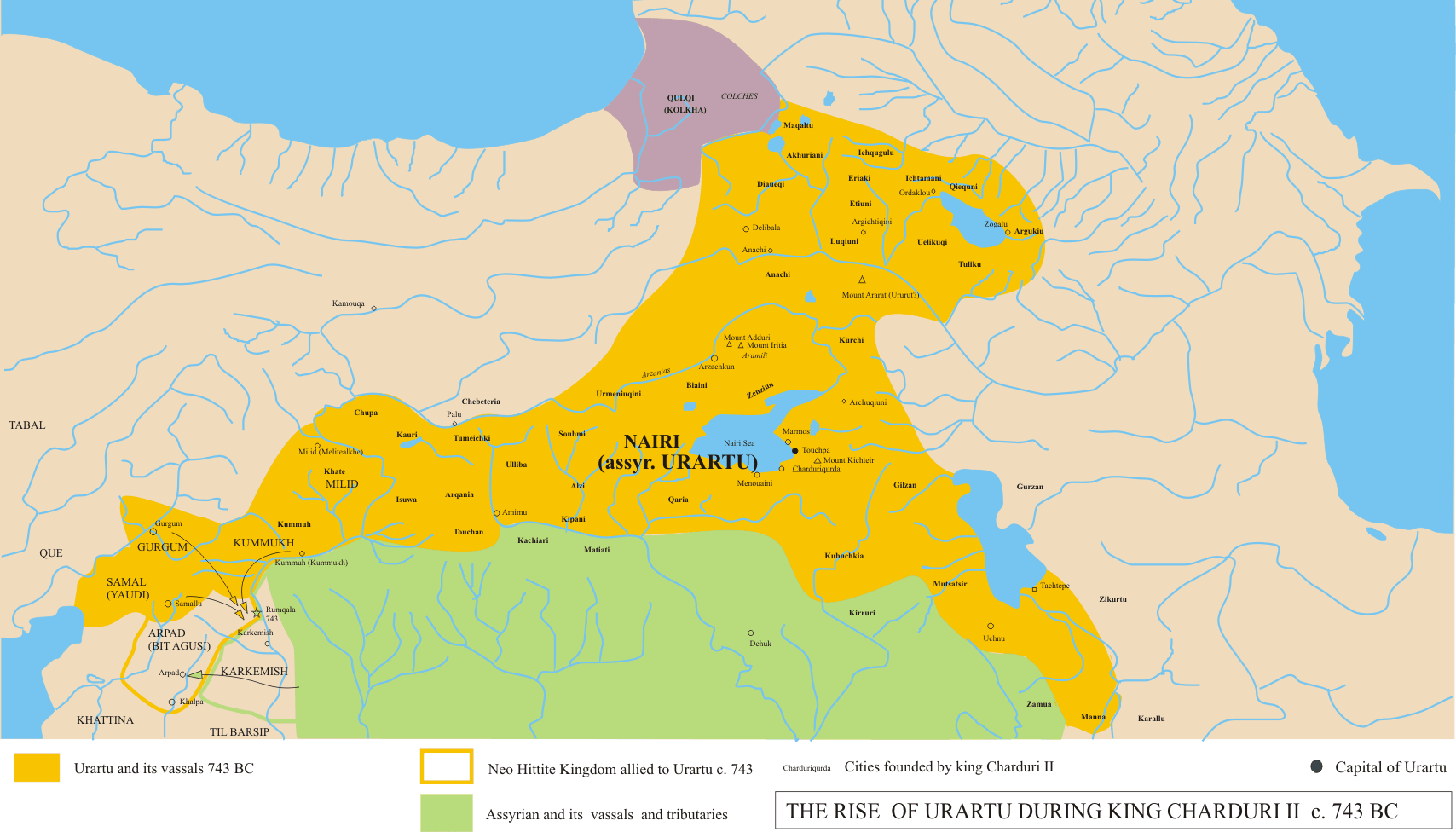
The Biblical land of Ararat (Urartu) is located in modern eastern Turkey. We might think of the land of Urartu being centered in Lake Van. From Nineveh to Van is an air distance of about 150 miles. The map below is from the Wikipedia entry on the Urartu-Assyria War. Click the map to enlarge. Lake Van is 5737 feet above sea level.

Wikimedia Commons.

Map of the Urartu-Assyrian war in 743 B.C. Wikimedia Commons.

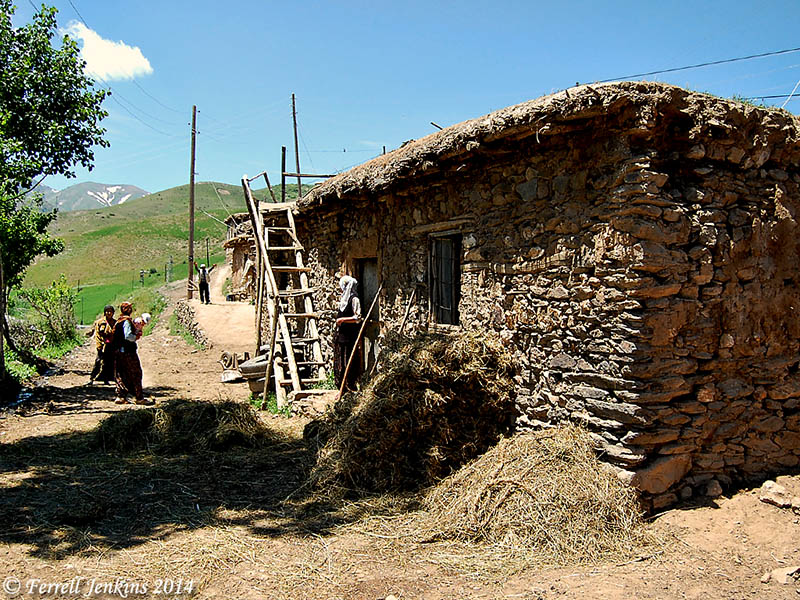
The entirety of the land of Urartu is mountainous. Our photo below shows the region between Van and Batman in Turkey. Note the snow-covered slopes in the distance.

A house in Turkey between Van and Batman. In ancient times the area was known as Urartu (Biblical Ararat). Photo by Ferrell Jenkins.

A house in Turkey between Van and Batman. In ancient times the area was known as Urartu (Biblical Ararat). Photo by Ferrell Jenkins.

Use our search box to look for more entries dealing with Urartu. Remember that the ark built by Noah came to rest on the “mountains of Ararat” (Genesis 8:4).

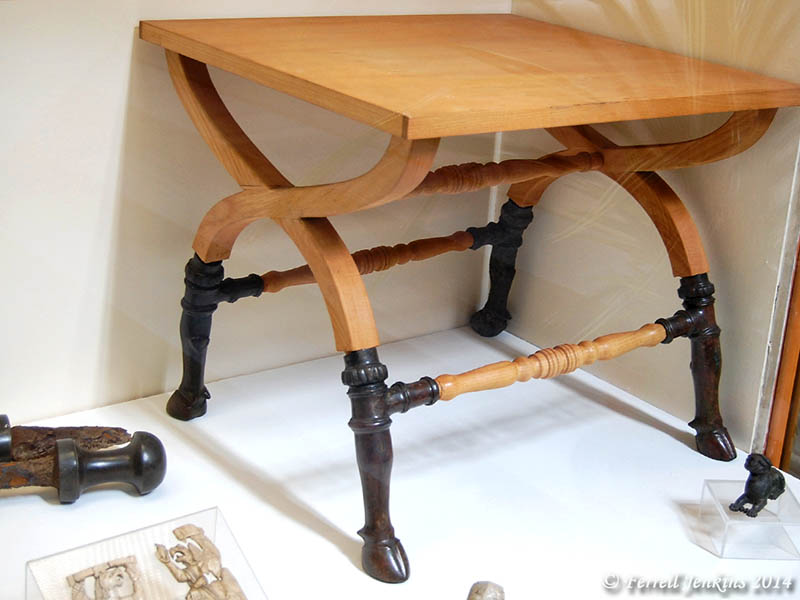
The photo below was taken in the Anatolian Civilizations Museum in Ankara, Turkey. It shows (the metal legs of) some Urartian furniture. In the left bottom corner you should see some of the ivory pieces that decorated walls and furniture.

Urartian furniture displayed in the Anatolian Civilization Museum. Photo by Ferrell Jenkins.

Urartian furniture displayed in the Anatolian Civilization Museum. Photo: F. Jenkins.


Visualizing Isaiah 36: Hezekiah and Sennacherib

Two significant historical characters are mentioned together in Isaiah 36. Sennacherib, the king of Assyria from 704–681 B.C., claims to have taken 46 cities of Judah in the days of Hezekiah. The biblical account says,

In the fourteenth year of King Hezekiah, Sennacherib king of Assyria came up against all the fortified cities of Judah and took them. (2 Kings 18:13 ESV)

There are three known clay prisms in which Sennacherib mentions Hezekiah, king of Judah.

  1. The Taylor Prism, in the British Museum
  2. The Oriental Institute Prism in Chicago
  3. The Jerusalem Prism, in the Israel Museum

Sennacherib admits in the prism-account that Hezekiah did not submit to his yoke, but was “shut up in Jerusalem” like a caged bird.

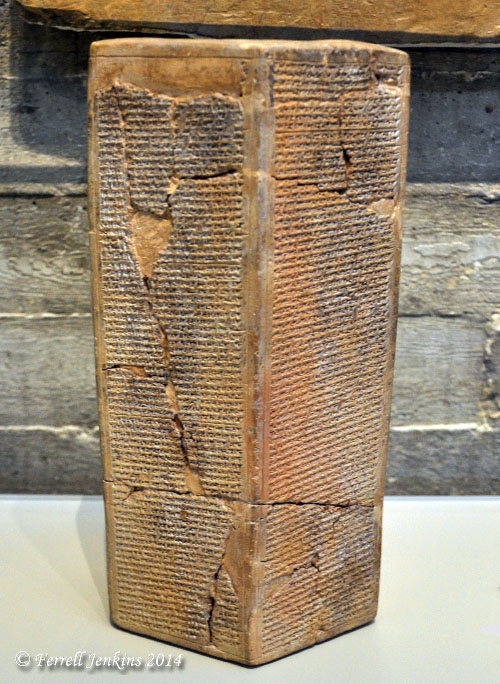
The Jerusalem Prism, now displayed in the Israel Museum, is perhaps the least well-known of the three documents. Our photo shows that document displayed under the replica of the relief of the siege of Lachish.

The Jerusalem Prism mentioning Hezekiah. Photo by Ferrell Jenkins.

The Jerusalem Prism mentioning Hezekiah. Photo by Ferrell Jenkins.

The account in Isaiah 36 is rooted in history.


Visualizing Isaiah 35: the desert shall rejoice

Isaiah prophesies the return of the redeemed to Zion, a promise that would be fulfilled with the return from the Babylonian exile. The illustration is one that would be vivid to those who lived on the ridge above the wilderness of Judah.

The wilderness and the dry land shall be glad; the desert shall rejoice and blossom like the crocus; it shall blossom abundantly and rejoice with joy and singing. The glory of Lebanon shall be given to it, the majesty of Carmel and Sharon. They shall see the glory of the LORD, the majesty of our God. (Isaiah 35:1-2 ESV)

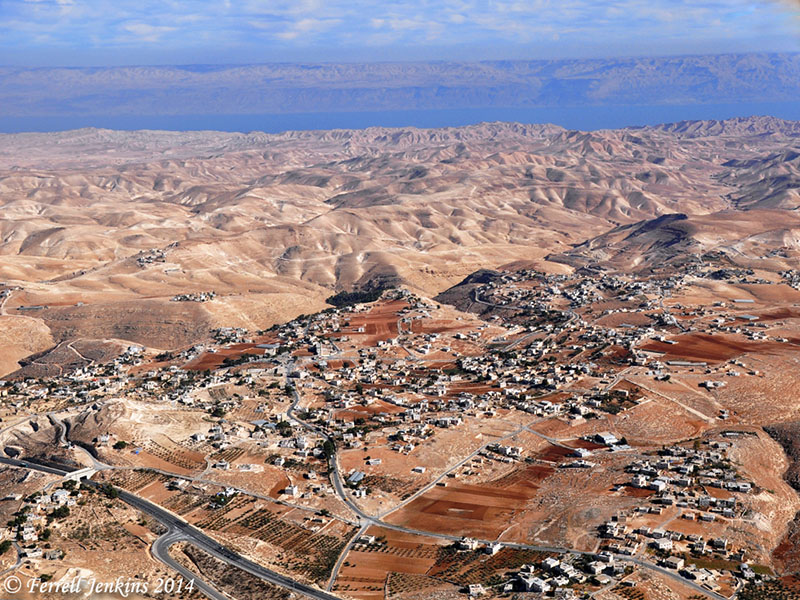
Our aerial view  was made toward the east from a location a few miles south of Jerusalem. In the distance you will see the Dead Sea and the Transjordan plateau. At this point it is the Biblical land of Moab.

Aerial view east across the wilderness of Judah and the Dead Sea to the Transjordan Plateau. Photo by Ferrell Jenkins.

Aerial view east across the wilderness of Judah and the Dead Sea to the Transjordan Plateau. Photo by Ferrell Jenkins.

For illustrations of the streams in the desert, see here (Isaiah 35:5-7).

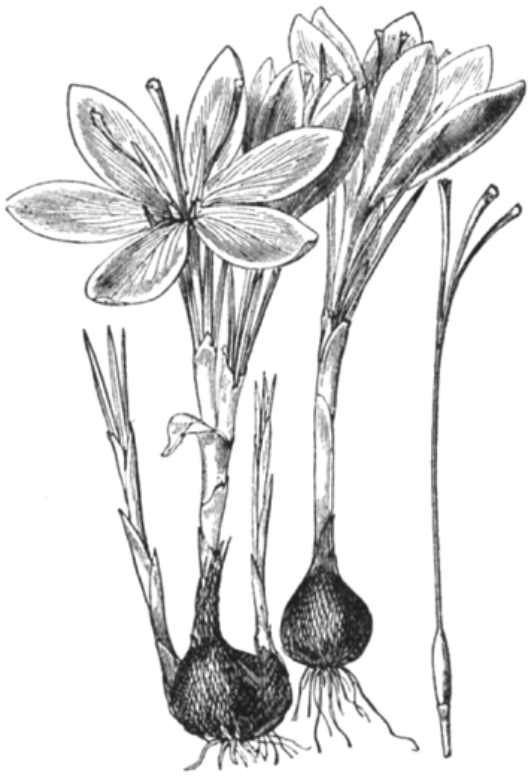
Saffron Crocus. The Illustrated Bible Treasury.

Saffron Crocus. The Illustrated Bible Treasury.

When I first began to travel, during the early days of the State of Israel, it was rather common for tour operators to include a phrase such as “See the desert blossom as a rose” in the tour brochure. The word rose came from the King James Version of Isaiah 35:1. The Hebrew term here is chabatstseleth. BDB defines it as a “meadow-saffron or crocus.”

Identifying plants and animals of Bible times is not easy. One common mistake is to find a plant of a certain name in our local language and identify it with one we read about in the Bible.

The point is rather simple. Places that were dry and barren would become watered and beautiful with the return of the redeemed.


Visualizing Isaiah 34: Judgment upon Edom

The judgment upon Edom is mentioned prominently in chapter 34 (verses 5, 6, 9; cf. the city of Bozrah, v. 6).

The most prominent place today within the ancient territory of Edom is Petra. Most people visit Petra to see the sculpted structures of the Nabateans. But the Nabateans came much later. The area was originally settled by the descendants of Esau, the brother of Jacob (Israel).

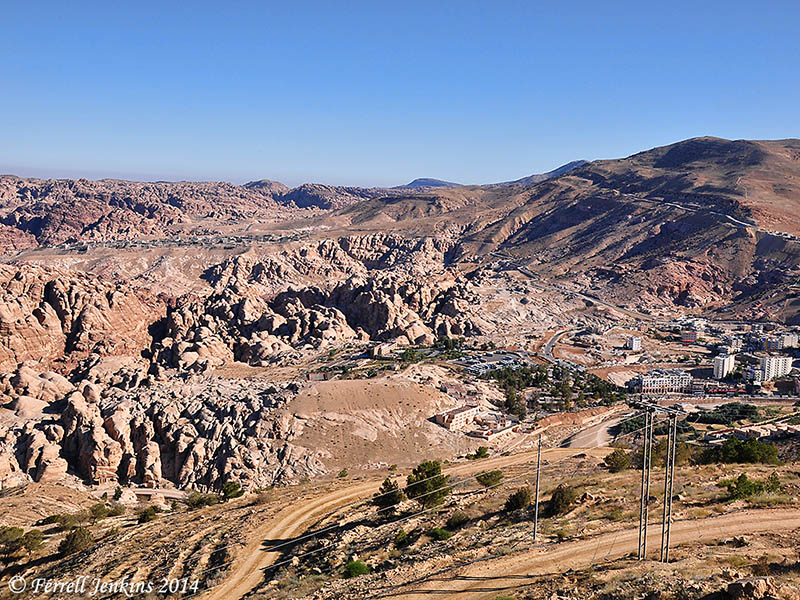
Our first photo, showing the desolate nature of the area, was made from a higher spot where several tourist hotels are located. To the right of center you will be able to see the parking lot and some of the buildings associated with the operation of the national park of Petra.

Petra is located within this ancient territory of Edom. Photo by Ferrell Jenkins.

Petra is located within this ancient territory of Edom. Photo by Ferrell Jenkins.

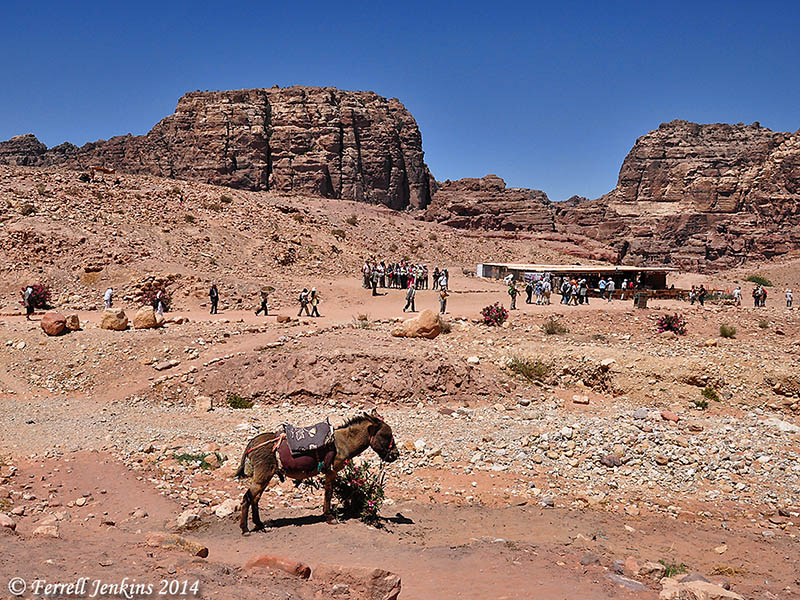
Our next photo was made inside Petra, but our attention is drawn to the large, high, steep-sided, flattop mountain named Umm el-Biyarah. From this vantage the ancient Edomites felt impregnable.

Umm el-Biyarah, the ancient stronghold of Esau. Photo by Ferrell Jenkins.

Umm el-Biyarah, the ancient stronghold of Esau. Photo by Ferrell Jenkins.

For those who wish to see a more comprehensive discussion about Edom, I call your attention to the succinct discussion by J. Alec Motyer in the Tyndale Old Testament Commentaries.

Edom is presented as a case in point. Even though Esau himself had no capacity for sustained animosity (Gen. 33:4–16), it was with him that relations with Jacob were soured (Gen. 27:41) and by the time of Numbers 20:14–21 hostility had become an established pattern. Saul made war on Edom (1 Sam. 14:47). David became the only king to subdue and annex Edom (2 Sam. 8:14; cf. 1 Kgs 11:15–16). Edom rebelled against Solomon (1 Kgs 11:1–17, 23–25) and was still rebelling a century later (2 Kgs 8:20). Fifty years further on, there was still fighting (2 Kgs 14:7, 10), and at the fall of Jerusalem the bitter hostility of Edom became notorious (Ps. 137:7; Obad. 10–14). Consequently Amos’ accusation (1:11) of perpetual hatred is well founded. Jeremiah 49:7–22 shows that, even prior to Edom’s behaviour at Jerusalem’s fall, the idea of judgment on Edom was part of the prophetic worldview. Obadiah saw Edom as both a place and a symbol: meriting judgment in its own right but also picturing the judgment which would mark the Day of the Lord. He was not innovating: in Psalms 60:8; 83:6, Edom had already a symbolic place in the theme of hostility to Zion. Two factors make Edom specially fit to stand as a motif for the whole world in the final judgment: first, its ceaseless hostility to the Lord’s people, and secondly the fact that it was only to David that it ever really succumbed. Thus Ezekiel, foreseeing the coming David (34:23), moves immediately to the conquest of Edom (35:1–15). Isaiah stands in this same tradition by following his forecast of the King (ch. 33) with the rout of Edom in the final judgment (cf. 11:14; 63:1–6). Recollecting 29:22 and the establishing of the family of Jacob, the overthrow of Edom/Esau makes the End the exact fulfilment of the beginning (Gen. 25:23). The purposes of God according to election stand.

The Empty Tomb

The Gospel of Mark provides a brief account of the events of the first day of the week after the crucifixion of Jesus. The women went to the tomb of Jesus to anoint his body. The approach of the Sabbath did not allow this on Friday.

1 When the Sabbath was past, Mary Magdalene, Mary the mother of James, and Salome bought spices, so that they might go and anoint him.
2 And very early on the first day of the week, when the sun had risen, they went to the tomb.

These grieving women were concerned about the removal of the large stone that had been rolled over the tomb opening and sealed by the Roman authorities. They were surprised when they discovered that the stone had already been removed.

3 And they were saying to one another, “Who will roll away the stone for us from the entrance of the tomb?”
4 And looking up, they saw that the stone had been rolled back–it was very large.

Perhaps they thought that some others, unknown to them, had come to provide the same service. They were alarmed to see the young man in a white robe.

5 And entering the tomb, they saw a young man sitting on the right side, dressed in a white robe, and they were alarmed.

The message was an unexpected one, but one that they were to share with his disciples and Peter and to tell them to update their appointment calendar to include a meeting with Jesus in Galilee.

6 And he said to them, “Do not be alarmed. You seek Jesus of Nazareth, who was crucified. He has risen; he is not here. See the place where they laid him.
7 But go, tell his disciples and Peter that he is going before you to Galilee. There you will see him, just as he told you.”
8 And they went out and fled from the tomb, for trembling and astonishment had seized them, and they said nothing to anyone, for they were afraid. (Mark 16:1-8 ESV)

The message that these women took with them was that the tomb was empty and that Jesus had risen from the grave. From this time forward He would be acknowledged by believers as Lord and Christ (Acts 2:36).

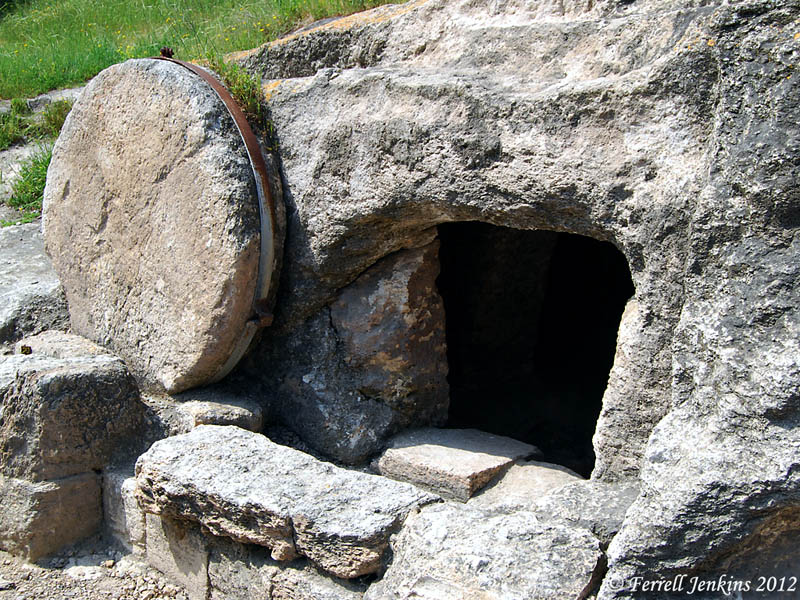
An empty Roman period tomb with a rolling stone. Photo by Ferrell Jenkins.

An empty Roman period tomb with a rolling stone. Photo by Ferrell Jenkins.

This is a rerun from April 8, 2012, but I think it is one that is still relevant.

Book on the resurrection available free today

J. Warner Wallace is a cold-case homicide detective. As a former atheist he rejected the claims of the resurrection, but after examination of the evidence he came to believe.

This book is available free in Kindle format today. Click on the book image for the link to the book.

HT: Brooks Cochran

Visualizing Isaiah 33: Lebanon, Sharon, Bashan and Golan

The fruitful land, the Lebanon range, the plain of Sharon, and the regions of Bashan and Carmel are used by Isaiah to describe what happens in Israel due to the Assyrian invasion.

Behold, their heroes cry in the streets; the envoys of peace weep bitterly. The highways lie waste; the traveler ceases. Covenants are broken; cities are despised; there is no regard for man. The land mourns and languishes; Lebanon is confounded and withers away; Sharon is like a desert, and Bashan and Carmel shake off their leaves. (Isaiah 33:7-9 ESV; see similar language in 2:13)

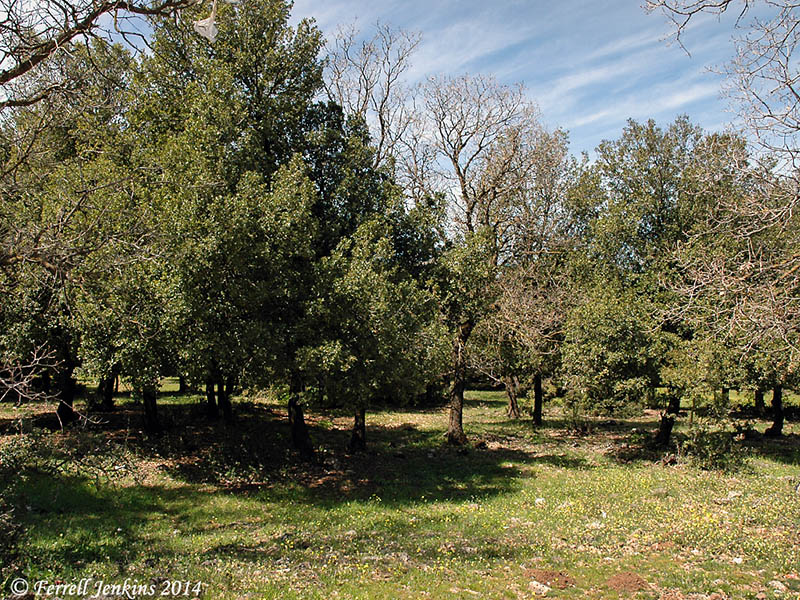
Oaks in Bashan (Golan Heights). Photo by Ferrell Jenkins.

Oaks in Bashan (Golan Heights). There is a nice stand of oaks east of Highway 98, south of Mas’ada near the border with Syria. Photo by Ferrell Jenkins.

Homer Hailey comments on this text,

The language is figurative, suggesting that the land reflects the spirit of the people whom the invaders are overrunning and devastating. Four ordinarily flourishing sections of the country are described: Lebanon, the mountain range to the north, noted for its majestic beauty and mighty cedar and fir trees, is confounded and withereth away; Sharon, the verdant and flower-rich plain extending south from Carmel until it melts into the Shephelah of western Judea, is like a desert; and Bashan, extending northwest from the Sea of Galilee, noted for its oak groves and rich grazing land, and Carmel, the verdant mountains or hill that juts into the Mediterranean Sea, shake off their leaves, so that the trees are bare. The picture is one of dejection, of both people and land (A Commentary on Isaiah With Emphasis on the Messianic Hope, 280).

When the redeemed return to Zion these once glorious and verdant regions shall once again be majestic.

The wilderness and the dry land shall be glad; the desert shall rejoice and blossom like the crocus; it shall blossom abundantly and rejoice with joy and singing. The glory of Lebanon shall be given to it, the majesty of Carmel and Sharon. They shall see the glory of the LORD, the majesty of our God. (Isaiah 35:1-2 ESV)

Mount Carmel near Murakah. Photo by Ferrell Jenkins.

Mount Carmel near Murakah. Photo by Ferrell Jenkins.

For our most recent comments on the Cedars of Lebanon, see here.

Wealthy Canaanite coffin discovered in Jezreel Valley

The Israel Antiquities Authority announced today the discovery of a “3,300 year old coffin” at Tel Shadud on the north side of the Jezreel Valley.

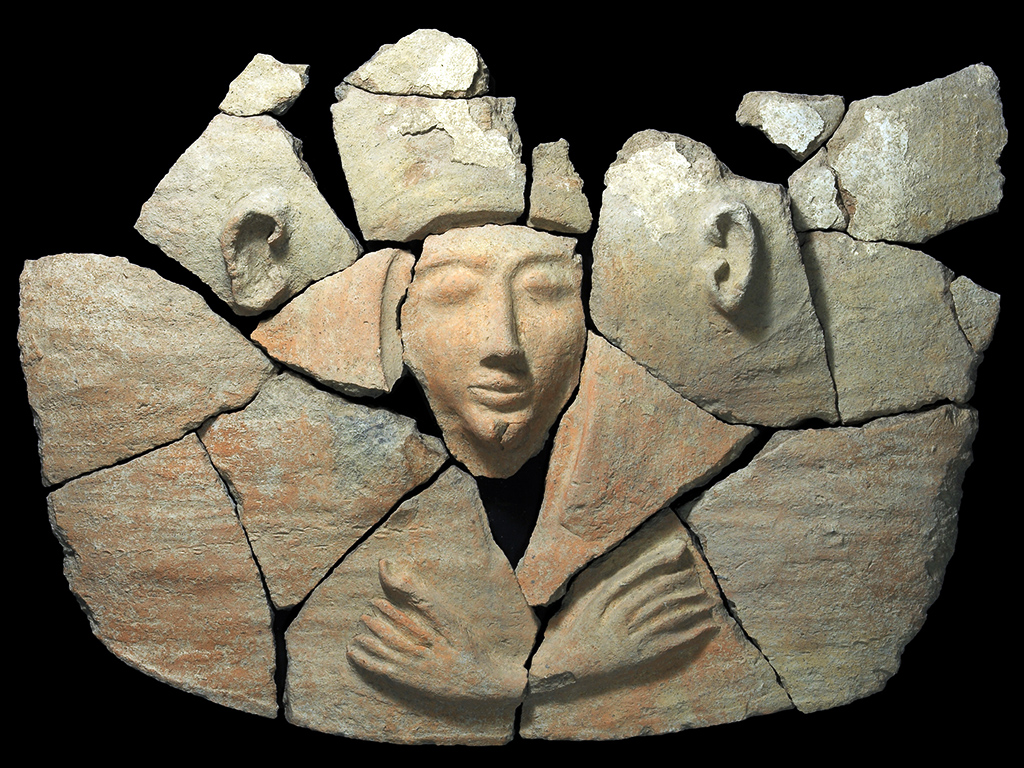
Part of a burial site dating to the Late Bronze Age (thirteenth century BCE) was exposed in an excavation at the foot of Tel Shadud. According to the excavation directors, Dr. Edwin van den Brink, Dan Kirzner and Dr. Ron Be’eri of the Israel Antiquities Authority, “During the excavation we discovered a unique and rare find: a cylindrical clay coffin with an anthropoidal lid (a cover fashioned in the image of a person) surrounded by a variety of pottery consisting mainly of storage vessels for food, tableware, cultic vessels and animal bones. As was the custom, it seems these were used as offerings for the gods, and were also meant to provide the dead with sustenance in the afterlife.” The skeleton of an adult was found inside the clay coffin and next to it were buried pottery, a bronze dagger, bronze bowl and hammered pieces of bronze. “Since the vessels interred with the individual were produced locally”, the researchers say, “We assume the deceased was an official of Canaanite origin who was engaged in the service of the Egyptian government”. Another possibility is that the coffin belonged to a wealthy individual who imitated Egyptian funerary customs. The researchers add that so far only several anthropoidal coffins have been uncovered in the country. The last ones discovered were found at Deir el-Balah some fifty years ago. According to the archaeologists, “An ordinary person could not afford the purchase of such a coffin. It is obvious the deceased was a member of the local elite”.
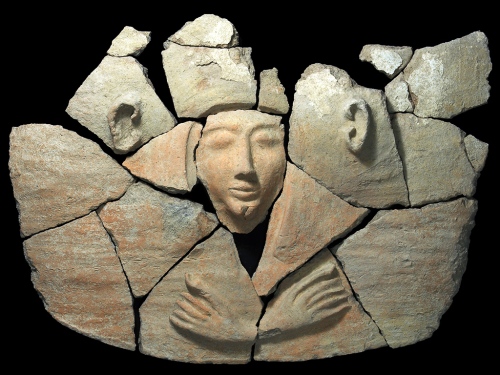
Coffin lid from Tel Shadud. Photo: Clara Amit, courtesy of the Israel Antiquities Authority.

Anthropoid coffin lid from Tel Shadud. Photograph: Clara Amit, courtesy of the Israel Antiquities Authority.

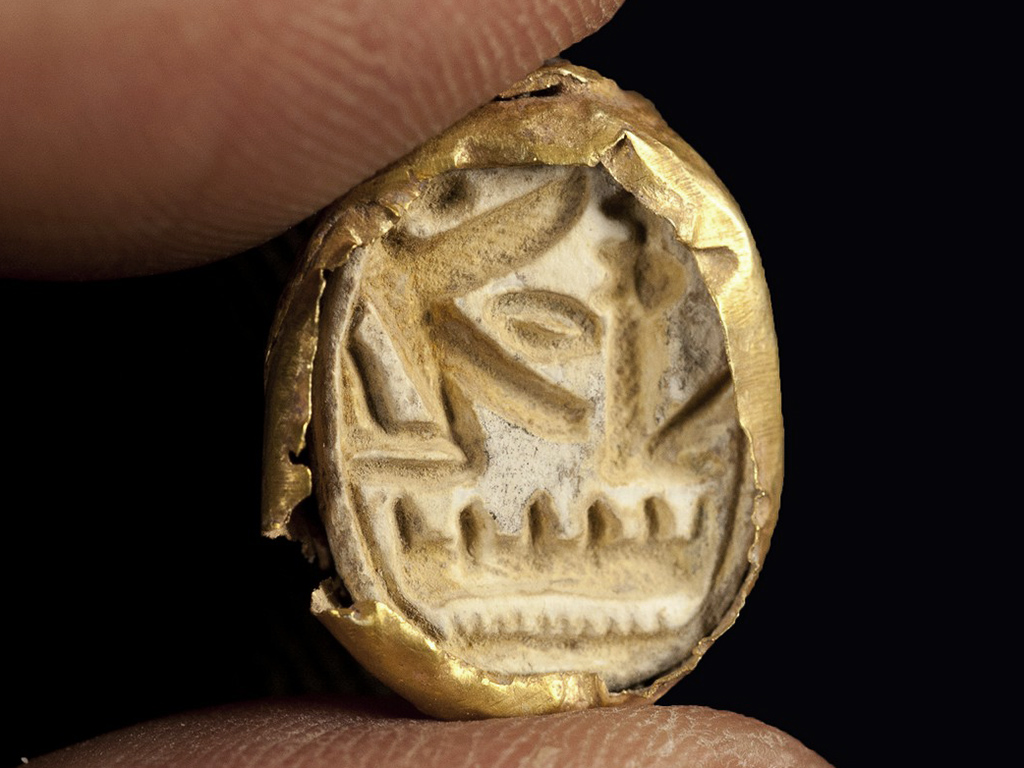
The graves of two men and two women who may have been members of his family were also located near the coffin. The discovery of the coffin at Tel Shadud is evidence of Egyptian control of the Jezreel Valley in the Late Bronze Age (thirteenth century BCE). During the period when the pharaohs governed the country, Egyptian culture greatly influenced the local Canaanite upper class. Signs of Egyptian influence are occasionally discovered in different regions and this time they were revealed at Tel Shadud and in the special tomb of the wealthy Canaanite. A rare artifact that was found next to the skeleton is an Egyptian scarab seal, encased in gold and affixed to a ring. The scarab was used to seal documents and objects. The name of the crown of Pharaoh Seti I, who ruled ancient Egypt in the thirteenth century BCE, appears on the seal. Seti I was the father of Ramses II, identified by some scholars as the pharaoh mentioned in the biblical story of the Israelites’ exodus from Egypt.§ Already in the first year of his reign (1294 BCE) a revolt broke out against Seti I in the Bet Shean Valley. Seti conquered that region and established Egyptian rule in Canaan. Seti’s name on the seal symbolizes power and protection, or the strength of the god Ra – the Sun God – one of the most important deities in the Egyptian pantheon. The winged Uraeus (cobra), protector of the pharaoh’s name or of the sovereign himself, is clearly visible on the seal. The reference to the pharaoh Seti on the scarab found in the coffin aided the archaeologists in dating the time of the burial to the thirteenth century BCE – similar to the burials that were exposed at Deir el-Balah and Bet She‘an, which were Egyptian administrative centers.

§ Other scholars date the exodus from Egypt about two centuries earlier than Ramses II.
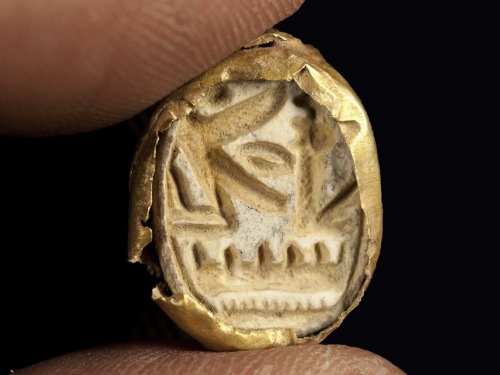
Gold Scarab of Egyptian Pharaoh Seti I. Photograph: Clara Amit, courtesy of the Israel Antiquities Authority.

Gold Scarab of Egyptian Pharaoh Seti I. Photograph: Clara Amit, courtesy of the Israel Antiquities Authority.

Tel Shadud, often called Tel Sarid, is identified with the Biblical site of Sarid included within the territory of Zebulun.

The third lot came up for the people of Zebulun, according to their clans. And the territory of their inheritance reached as far as Sarid. Then their boundary goes up westward and on to Mareal and touches Dabbesheth, then the brook that is east of Jokneam. From Sarid it goes in the other direction eastward toward the sunrise to the boundary of Chisloth-tabor. From there it goes to Daberath, then up to Japhia. (Joshua 19:10-12 ESV)

The offspring of Abraham were given the land of the Canaanite.

You found his heart faithful before you, and made with him the covenant to give to his offspring the land of the Canaanite, the Hittite, the Amorite, the Perizzite, the Jebusite, and the Girgashite. And you have kept your promise, for you are righteous. (Nehemiah 9:8 ESV)

The IAA news release, with more photos, is currently available here. See the report in Arutz Sheva, the Israel National News, here.

HT: Joseph Lauer, traveling in Israel.



Visualizing Isaiah 32: like the shade of a great rock in a weary land

Isaiah again looks beyond the exile and the return to the time of the Messiah. In the kingdom of righteousness every person who wishes will be able to find a hiding place or shelter. This speaks of the spiritual blessings available.

Behold, a king will reign in righteousness, and princes will rule in justice. Each will be like a hiding place from the wind, a shelter from the storm, like streams of water in a dry place, like the shade of a great rock in a weary land. (Isaiah 32:1-2 ESV)

We have shown several instances of streams in the desert (begin here). Our photo below shows a “great rock” in the weary land of the wilderness (or desert) of Paran. These gigantic sandstone pillars are located in the Timna Valley about 15 miles north of Eilat. Ruins of an Egyptian temple and evidence of copper mining have been found in the area. I can tell you from personal experience that one feels very small standing among these vast pillars.

Solomon's Pillars at Timna in the desert of Paran. Photo by Ferrell Jenkins.

Solomon’s Pillars at Timna in the desert of Paran. Photo by Ferrell Jenkins.

The rest and protection provided between these pillars reminds us of the wonderful Christian hymn “Rock of Ages.”