Category Archives: Bible Places

The Arch of Titus once had a golden menorah

Many who have visited the Roman Forum have seen the Arch of Titus at the southeast of the Forum. Mark Cartwright describes the Arch in the Ancient History Encycl0pedia here. There are many links within this quotation for those interested in following them.

The Arch of is a Roman Triumphal Arch which was erected by Domitian in c. 81 CE at the foot of the Palatine hill on the Via Sacra in the Forum Romanum, Rome. It commemorates the victories of his father Vespasian and brother Titus in the Jewish War in Judaea (70-71 CE) when the great city of Jerusalem was sacked and the vast riches of its temple plundered. The arch is also a political and religious statement expressing the divinity of the late emperor Titus.

The Arch of Titus in the Roman Forum commemorates the Roman victory of the Jews in A.D. 70. Photo by Ferrell Jenkins.

The Arch of Titus in the Roman Forum commemorates the Roman victory over the Jews in A.D. 70. Photo by Ferrell Jenkins.

The original inscription on the opposite side reads,

SENATUS
POPOLUS QUE ROMANUS
DIVO TITO DIVI VESPASIANI F
VISPASIANO AUGUSTO

The inscription attributes divinity to both Vespasian and his son Titus.

One of the large panels inside the arch shows Roman soldiers parading items taken from the Temple in Jerusalem in triumph through the streets of Rome. You will see the table of showbread, and the Menorah. One of the placards carried by the soldiers mentions the laws of the Jews.

Josephus, the first century Jewish historian, provides a first person account of the procession in Jewish Wars.

… and for the other spoils, they were carried in great plenty. But for those who were taken in the temple of Jerusalem, {c} they made the greatest figure of them all; that is, the golden table of the weight of many talents; the lampstand [Menorah] also, that was made of gold, though its construction was now changed from that which we made use of;
149 for its middle shaft was fixed upon a basis, and the small branches were produced out of it to a great length, having the likeness of a trident in their position, and had everyone a socket made of brass for a lamp at the tops of them. These lamps were in number seven, and represented the dignity of the number seven among the Jews;
150 and the last of all the spoils was carried the Law of the Jews.
151 After these spoils passed by a great many men, carrying the images of Victory, whose structure was entirely either of ivory or of gold.
152 After which Vespasian marched in the first place, and Titus followed him; Domitian also rode along with them, and made a glorious appearance, and rode on a horse that was worthy of admiration. (JW 7:148-152)
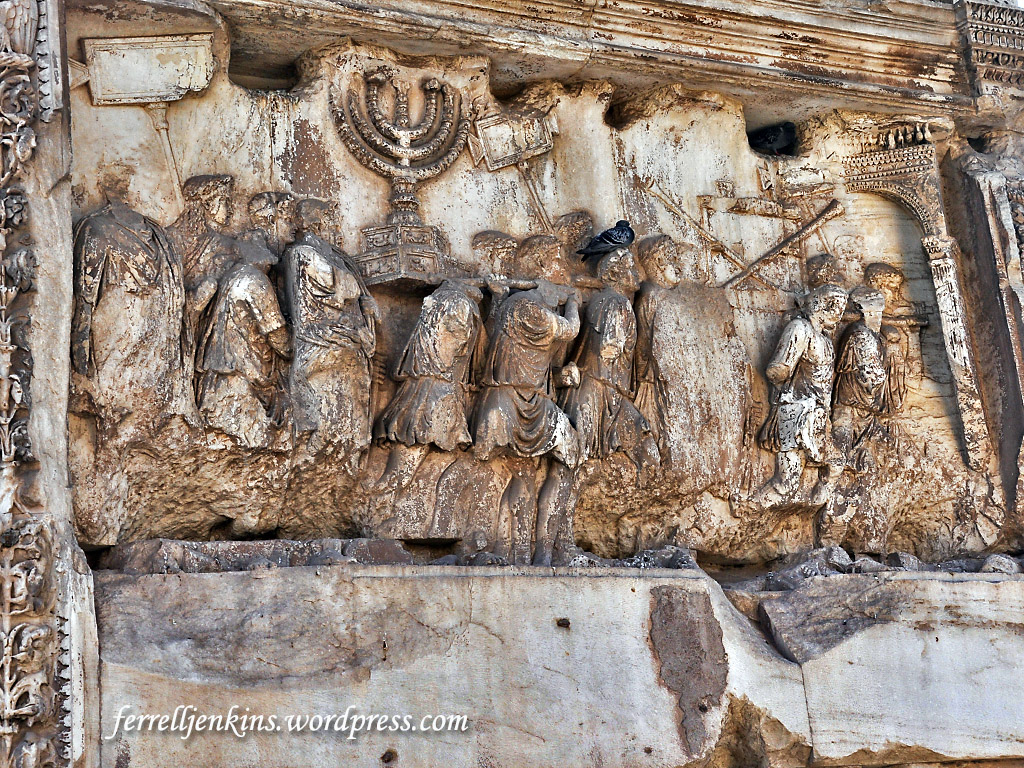
Arch of Titus relief showing Roman soldiers carrying the items taken from the Temple in Jerusalem in A.D. 70. Photo by Ferrell Jenkins.

Arch of Titus relief showing Roman soldiers carrying the items taken from the Temple in Jerusalem in A.D. 70. Photo by Ferrell Jenkins.

It appears that the first soldier carrying the Menorah on his shoulder is also carrying a pigeon, perhaps for an offering.  <grin>
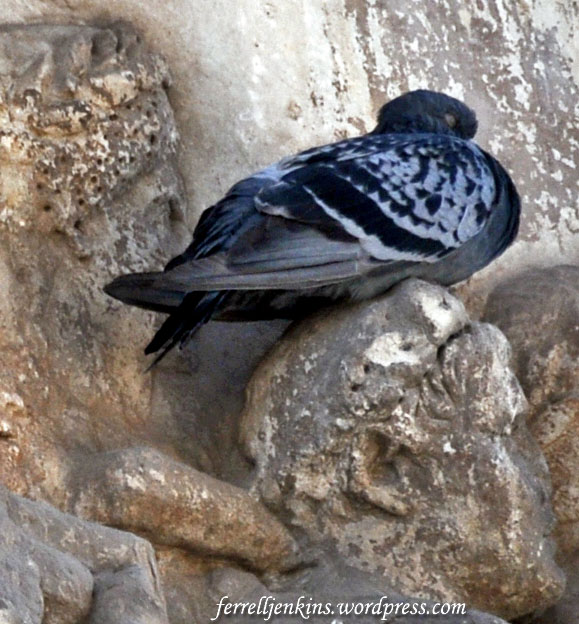
Live pigeon on head of Roman soldier. Photo by Ferrell Jenkins.

Live pigeon on head of Roman soldier. Photo by Ferrell Jenkins.

For many years Dr. Steven Fine of Yeshiva University has been pursuing his interest in the Menorah. This, of course, led him to the Arch of Titus in Rome where the Menorah is depicted. The most recent results of his study,

includes the Digital Restoration Project, which in 2012 discovered the original yellow polychromy of the Arch menorah; numerous studies of the Arch and its menorah by Professor Fine, an upcoming exhibition and international conference on the Arch organized by Yeshiva University Museum (Summer, 2017), a free online Coursera course, The Arch of Titus: Rome and the Menorah, a 2016 summer seminar in Rome under the auspices of the Schottenstein Honors Program, and courses taught in Revel, Yeshiva College and Stern College.

Take a look at the Arch of Titus in color based on the 3D scan of the reliefs here. You will find a neat video showing the spoils panel in color, and a lecture by Dr. Fine presented at New York’s Metropolitan Museum of Art. There are also links to various articles about the project.

The emblem of the State of Israel is based on the Menorah depicted on the Arch of Titus.

The view from Mount Nebo

Our photo today was made on Mount Nebo in Jordan. The view is west across the northern end of the Dead Sea, the wilderness of Judea, and the central mountain ridge (or water-parting route).

View of the Dead Sea, the wilderness of Judea, and the central mountain range from Mount Nebo in the Transjordanian Plateau. Photo by Ferrell Jenkins.

View of the Dead Sea, the wilderness of Judea, and the central mountain range from Mount Nebo in the Transjordanian Plateau. Photo by Ferrell Jenkins.

Mount Nebo is the place from which Moses viewed the land that the LORD had promised to Abraham’s seed (Deuteronomy 34:1-8).

In the next photo the northern tip of the Dead Sea is visible on the left of the photo. This photo looks NW from Mount Nebo across the Jordan Valley (the plain of Moab) and toward the highlands of the promised land.

View from Mount Nebo NW across the Jordan Valley. Photo by Ferrell Jenkins.

View from Mount Nebo NW across the Jordan Valley. Photo by Ferrell Jenkins.

Moses saw this and much more, and probably more clearly. Both of our photos are sized for use in PowerPoint presentations.

Have you seen “Following the Messiah”?

Many of our readers have likely seen some of the new videos produced by Appian Media. Following a fundraising campaign a small group, including two professional producers and a cinematographer, visited Israel to film places associated with the ministry of Jesus.

Jeremy Dehut, a minister in Alabama, was so impressed with his visit to Israel a few months earlier with Barry Britnell he convinced his brother Craig, Stuart Peck, and Jet Kaiser, to join him and Britnell in this undertaking. These guys are not filming with their iPhone. Take a look as they get organized for one of their international flights. When you view some of the videos you will see the quality.

The Appian Media film crew gets ready for an international flight.

The Appian Media film crew gets ready for an international flight.

After a fundraiser this team made their trip to Israel and then spent months editing the large amount of video into this series of videos called “Following the Messiah.”

Go to the web page of Appian Media here and take a look at some, or all, of the videos. You may even download them for your own use in teaching.

The Appian Media team is engaged in their 2017 fundraising campaign in anticipation of another trip that will concentrate on the final days of Jesus in Jerusalem. The web page explains how you can participate in this effort.

Search for @appianmedia on Facebook or in Messenger to find the Appian Media page easily.

Appian Media is a 501(c)(3) non-profit organization designed to create FREE quality Biblical video content and other resources and make them available to everyone!

Take a look. You will be able to see where many of the events in the earthly ministry of Jesus took place, and your Bible reading will take on a new dimension.

Dead Sea study reveals “epic” droughts

The Dead Sea has received much attention in the past few years due to the fact that it is the lowest body of water on earth, and that body of water is drying up. Melanie Lidman, writer for The Times of Israel, prepared a series of three articles about the Dead Sea drying up last month here, here, and here.

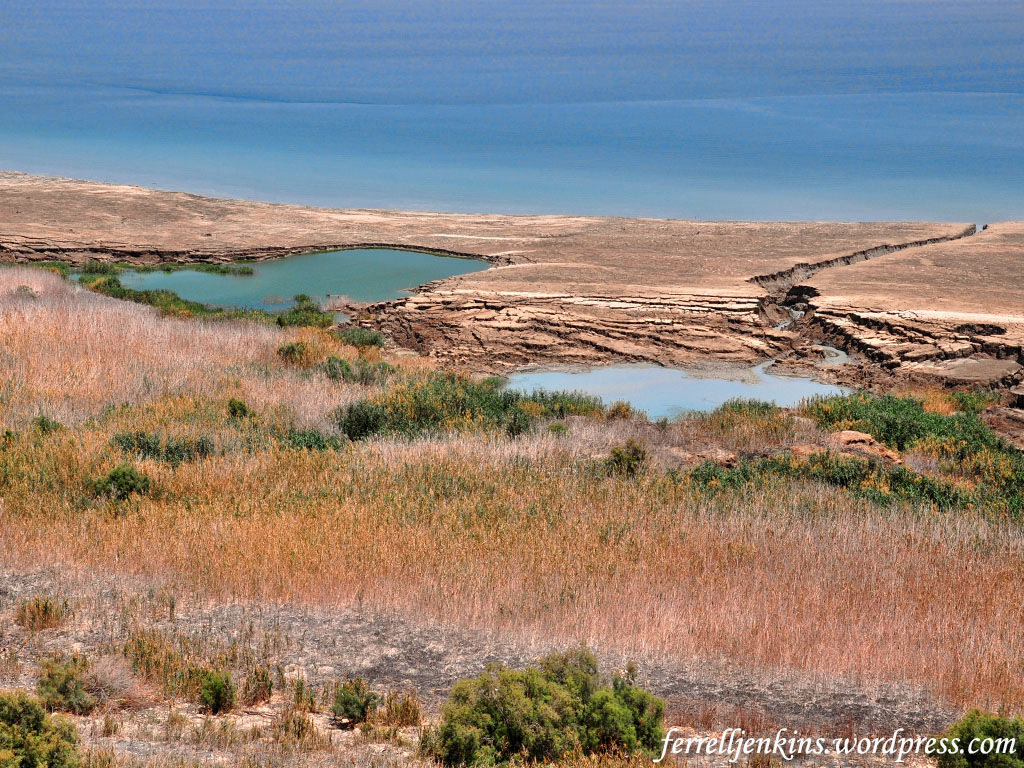
Sinkholes along the shore of the Dead Sea. Photo by Ferrell Jenkins.

Sinkholes along the shore of the Dead Sea. Photo by Ferrell Jenkins.

Today Lidman writes about a study done by Columbia University’s Lamont-Doherty Earth Observatory and published in the past few days. For a period of 40 days and nights in 2010 scientists drilled 1500 feet into the floor of the Dead Sea. What they found was fascinating. Let Lidman tell the story:

Scientists who drilled 450 meters (1,500 feet) into the floor of the Dead Sea announced this week that the region may have been affected by “epic” centuries-long droughts, much worse than researchers previously believed.

The study, led by Columbia University’s Lamont-Doherty Earth Observatory and scientists from six countries, examined a geological sample revealing more than 200,000 years of climate history in the Dead Sea region.

The scientists studied the thickness of the salt layers, as well as liquid bubbles trapped in the layers of salt, to determine precipitation and runoff to the Dead Sea, uncovering some alarming trends.

According to the study, the region experienced two major drought periods when rainfall and runoff patterns were at some points less than 20% of the average rainfall for the 20th century.

You must go to the article here to see the photograph of a sample of the geological core from the Dead Sea. A report with the same photograph made be found on the page of the Lamont-Doherty Earth Observatory here.

Last year we called attention here to a fabulous article by Nir Hasson in Haaretz.

Salt on the rocks along the shore of the Dead Sea. Photo by Ferrell Jenkins.

Salt on the rocks along the shore of the Dead Sea. Photo by Ferrell Jenkins.

A question about dolmen

A reader who read our report on the dolmen field in the Golan Heights ask on Facebook if these structures could be the high places or altars mentioned in the Old Testament. The simple answer is “No.” They are thought to be tombs.

This photo of a dolmen was made at Gamla in the Golan Heights.

Dolmen at Gamla in the Golan Heights. Photo by Ferrell Jenkins.

Dolmen at Gamla in the Golan Heights. Photo by Ferrell Jenkins.

In an article about the Golan Archaeological Museum at Qatzrin in the Golan Heights, Nemlich and Killebrew make these comments:

Another strange sight on the Golan is fields of dolmens. Throughout the Golan, hundreds of dolmens are visible on the horizon. They are made of huge unworked basalt slabs and resemble giant stone tables. In fact the word dolmen derives from two Old Breton words—dol, meaning table, and men, meaning stone.

Dolmens were built to serve as tombs. Because of the absence of any associated contemporary house remains, we infer that the dolmen builders were nomadic or seminomadic tribesmen.

The Golan dolmens vary in size, ranging from those built of three or four large boulders to the giants measuring over 20 feet wide and rising to heights of over 10 feet. Some dolmens are free-standing, but many others are partially—or completely—covered by stone heaps, or tumuli. Still others are surrounded by circles of stones.

Beneath each table-like structure is a rectangular underground chamber with a paved floor and a roof made with heavy slabs. Apparently, this chamber was used for a secondary burial: About a year after death, when the flesh of the deceased had decayed, the bones were reburied in the chamber beneath the dolmen, together with a few funerary gifts of pottery vessels and weapons, usually of copper. Many dolmen chambers were reused as ready-made tombs, both in ancient and modern times. The earliest artifacts found in them, however, enable us to date them to the period archaeologists call Middle Bronze I—about 2200–2000 B.C. (a little before the most commonly dated period for the patriarchal age). (Nemlich, Shlomit and Ann Killebrew. “Recovering the Ancient Golan—The Golan Archaeological Museum.” Biblical Archaeology Review.  Nov/Dec 1988.)

There are other suggestions about the purpose of the dolmen. David E. Graves left this comment, with photos, on our Facebook page:

In 2009 we excavated an undisturbed dolmen in Jordan at Tall el-Hammam and recovered 16 EB whole vessels. We did not discover any skeletal remains and so hypothesis they were family memorials and used the table top to de-flesh the remains before reburial.

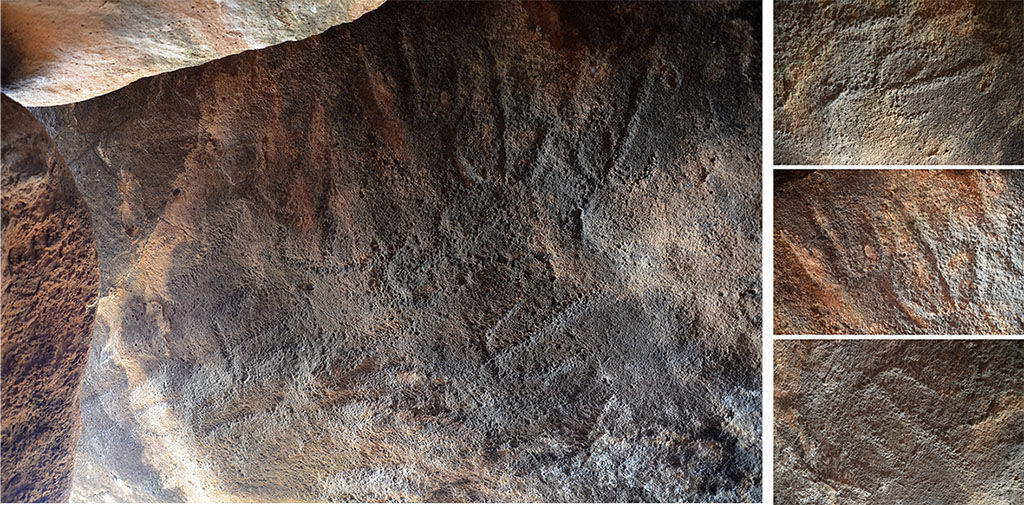
Perhaps the most fascinating thing about the recently announced discovery reported this past week is the images inscribed on the dome of the dolmen. The recent IAA Press Release says this,

The chamber inside the dolmen where the engravings were found on its ceiling is large, measuring 2 × 3 meters, and the stone covering it is also huge, weighing an estimated fifty tons at least! This is one of the largest stones ever used in the construction of dolmens in the Middle East. The dolmen was enclosed within an enormous stone heap (tumulus) c. 20 meters in diameter, and its stones are estimated to weigh a minimum of 400 tons. At least four smaller dolmens that were positioned at the foot of the decorated dolmen were identified inside the stone heap. In other words, what we have here is a huge monumental structure built hierarchically (with a main cell and secondary cells). This is the first time such a hierarchical dolmen has been identified in the Middle East.

The engravings that were exposed on the inside of the built chamber. Photographic credit: Gonen Sharon, Tel Hai College.

The engravings that were exposed on the inside of the built chamber. Photographic credit: Gonen Sharon, Tel Hai College.

There is much more to learn about the dolmen.

Second century A.D. Roman road uncovered

Tuesday brought another press release from the Israel Antiquities Authority. The headline of the release calls this “a 2,000 Year Old Road,” but the text states that its’ construction is dated to the time of the Roman Emperor Hadrian (A.D. 117-138).

Aerial photographs of the road. Photographic credit: the Griffin Aerial Photography Company, courtesy of the Israel Antiquities Authority.

Aerial photographs of the road in the lower right corner of the photo. Photographic credit: the Griffin Aerial Photography Company, courtesy of the Israel Antiquities Authority.

The Press Release follows.

— “ —

A wide and impressive 2,000 year old road dating to the Roman period, in an extraordinary state of preservation, was revealed last February in archaeological excavations of the Israel Antiquities Authority near Highway 375. The excavation was conducted prior to laying a water pipeline to Jerusalem, at the initiative of, the Bet Shemesh water corporation “Mei Shemesh”. Students from “Ulpanat Amit Noga” in Ramat Bet Shemesh volunteered to participate in the dig.

The excavation director, Irina Zilberbod, at the site. Photographic credit: the Griffin Aerial Photography Company, courtesy of the Israel Antiquities Authority.

The excavation director, Irina Zilberbod, at the site. Photographic credit: the Griffin Aerial Photography Company, courtesy of the Israel Antiquities Authority.

According to Irina Zilberbod, director of the excavation on behalf of the Israel Antiquities Authority, “The road that we discovered, which 2,000 years ago passed along a route similar to Highway 375 today, was up to 6 meters wide, continued for a distance of approximately 1.5 kilometers, and was apparently meant to link the Roman settlement that existed in the vicinity of Beit Natif with the main highway known as the “Emperor’s Road”. That road was in fact a main artery that connected the large settlements of Eleutheropolis (Bet Guvrin) and Jerusalem. The construction of the Emperor’s Road is thought to have taken place at the time of Emperor Hadrian’s visit to the country, circa 130 CE, or slightly thereafter, during the suppression of the Bar Kokhba revolt in 132-135 CE. The presence of a milestone (a stone marking distances) bearing the name of the emperor Hadrian which was discovered in the past close to the road reinforces this hypothesis”.

Coins were discovered between the pavement stones: a coin from Year 2 of the Great Revolt (67 CE), a coin from the Umayyad period, a coin of the prefect of Judea, Pontius Pilate, dating to 29 CE and a coin of Agrippa I from 41 CE that was minted in Jerusalem.

The ancient coins that were discovered in the excavation. Photographic credit: Clara Amit, courtesy of the Israel Antiquities Authority

The ancient coins that were discovered in the excavation. Photographic credit: Clara Amit, courtesy of the Israel Antiquities Authority. The coin at the top is from the Umayyad period (A.D. 661-750). Bottom row (left to right): Herod Agrippa I – A.D. 41; Pontius Pilate – A.D. 29; Jewish Revolt – year 2 – A.D. 67-68.

Up until 2,000 years ago most of the roads in the country were actually improvised trails. However during the Roman period, as a result of military and other campaigns, the national and international road network started to be developed in an unprecedented manner. The Roman government was well aware of the importance of the roads for the proper running of the empire. From the main roads, such as the “Emperor’s Road”, there were secondary routes that led to the settlements where all of the agricultural products were grown. The grain, oil and wine, which constituted the main dietary basis at the time, where transported along the secondary routes from the surroundings villages and then by way of the main roads to the large markets in Israel and even abroad.

According to Amit Shadman, the Israel Antiquities Authority district archaeologist for Judah, “The ancient road passed close to the Israel National Trail and we believe that it will spark interest among the hikers. The Israel Antiquities Authority and Mei Shemesh Corporation have agreed that the road will be conserved in situ, for the public’s benefit”.

— ” —

Just a few days ago Todd Bolen called attention to David Bivins reports on the gradual destruction of the Roman road from Jerusalem to Emmaus here. The situation there is tragic. I have witnessed some deterioration of the Roman road near Golani Junction in just a few years. Let’s hope that the situations here will be reversed, and that this road will be preserved for many to see.

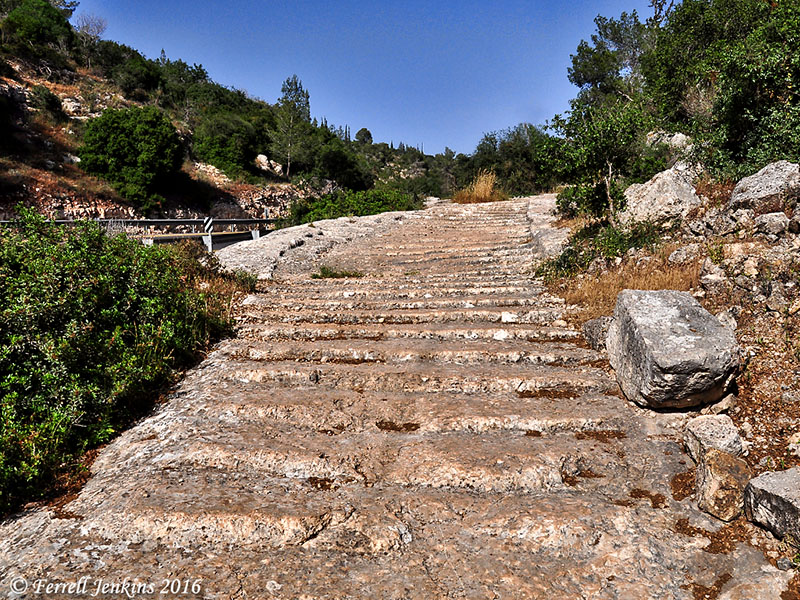
This recently uncovered road apparently connected with the road we described here.

Roman Road 4.2 km W of Mata on Hwy 375. S of Hwy. Photo by Ferrell Jenkins.

Roman Road 4.2 km W of Mata on Hwy 375. S of Hwy. Photo by Ferrell Jenkins.

I find it especially interesting that coins from A.D. 29, 41, and 67-68 should be found on a road constructed in circa A.D. 130. Others can fill in possible answers.

The roman roads that we see in Israel today were not built until about the time of the first revolt – ca. A.D.66, and mostly in the second century under Trajan and Hadrian.

Israel Roll writes,

The Roman road network in Judaea was not constructed at once, but evolved gradually from the First Revolt onward. Until then the Roman administration used roads that had been built during or prior to the reign of Herod. Our knowledge of those roads is scanty. and is based essentially on isolated written sources– mainly in the New Testament and Josephus. These sources do not
mention anything relating to road construction or maintenance before the beginning of the rebellion in 66 C.E. We may conclude, therefore, that the subject was not of central concern to the Roman procurators. (Israel Roll, “The Roman Road System in Judaea,” Jerusalem Cathedra 3 (1983): 138.

My thought is that the later Roman roads generally followed paths that were already in use by the people.

HT: Joseph Lauer

Ossuaries of interest

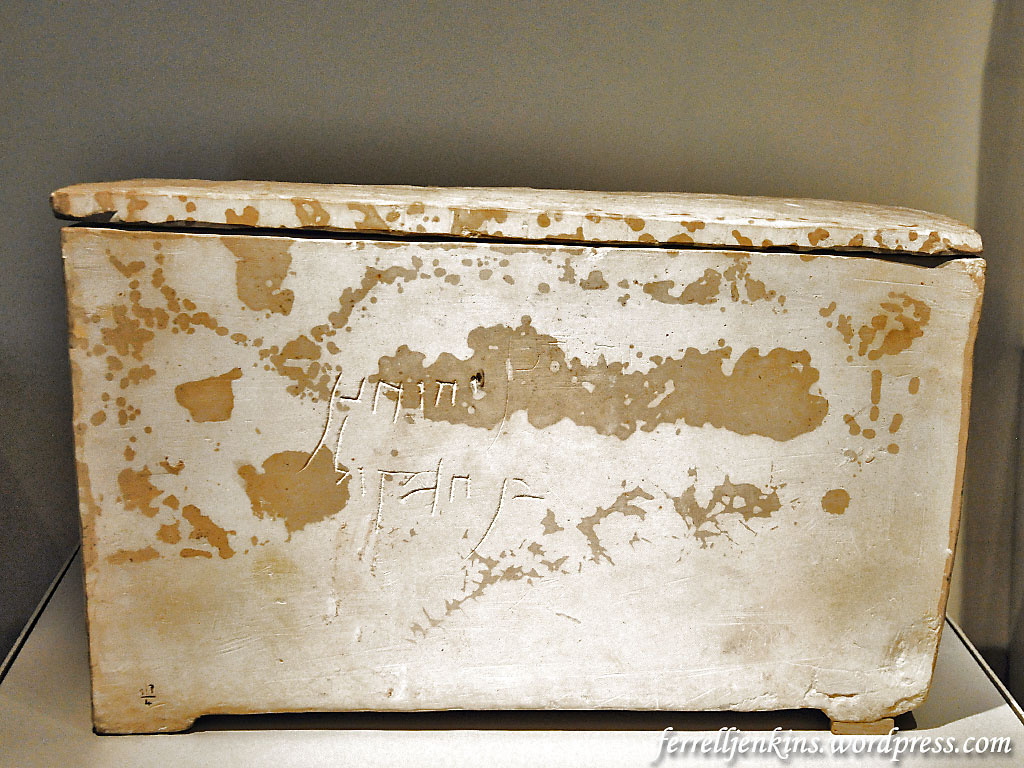
Many known ossuaries are undecorated. This means that after a while most people may not remember whose bones are contained therein. But there are some notable exceptions.

Caiaphas was the son-in-law of Annas. He was appointed high priest by Valerius Gratus, procurator of Judea, in A.D. 18 and deposed by Vitellius, legate of Syria, in A.D. 36 at the same time Pilate was removed as procurator of Judea. Caiaphas was the Jewish high priest before whom Jesus was tried (John 18:13-14, 24).

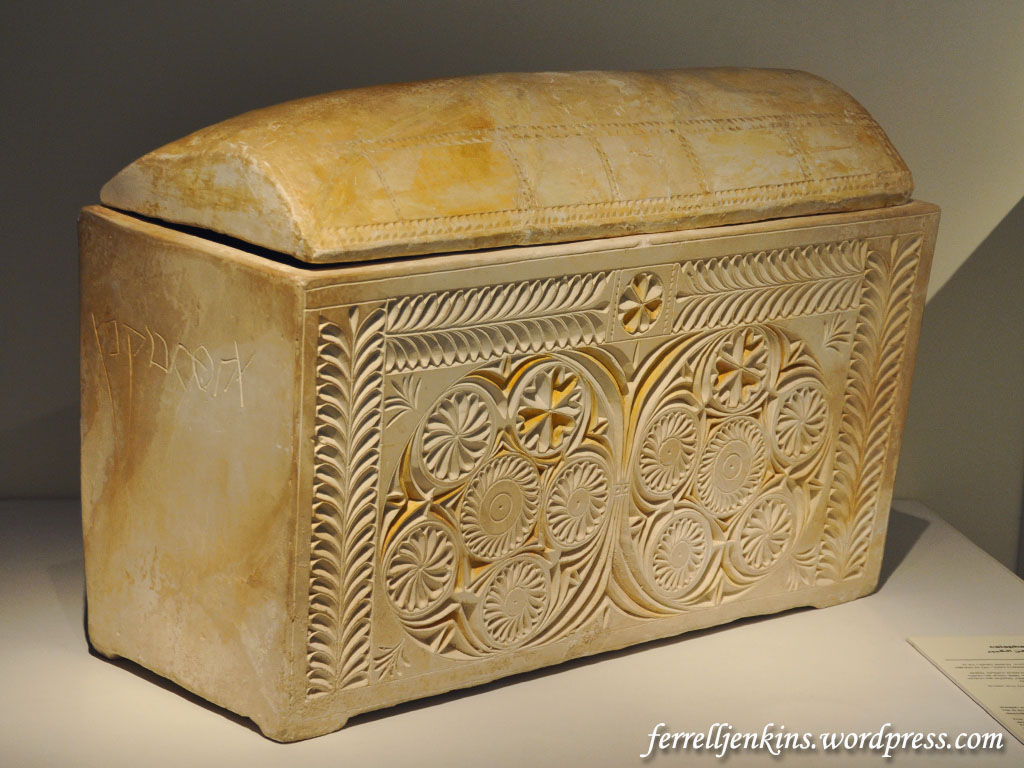
In November, 1990, a burial cave was found accidentally during construction of a water park at a promenade overlooking the Peace Forest just south of the old city of Jerusalem. The cave contained 12 ossuaries, two of which contained the name of the well-known family of the high priest Caiaphas. One ossuary bore the inscription Qafa, and the other bore the name Yehosef bar Qayafa (Joseph, son of Caiaphas) and Yehosef bar Qafa (Joseph, son of Caiaphas). Inside this beautiful ossuary was found the bones of six different people: 2 infants, a child between 2 and 5, a young boy between 13 and 18, an adult woman and “a male of about 60 years!”

According to Josephus, Caiaphas was named Joseph Caiaphas (Ant. 18.2.2).

The Caiaphas ossuary is on display in the Israel Museum. (See articles: Zvi Greenhut, “Burial Cave of the Caiaphas Family,” BAR 18.5 (1992): 29-36. Ronny Reich, “Caiaphas Name Inscribed on Bone Boxes,” BAR 18.5 (1992): 38-44.)

Ossuary of Caiaphas displayed in the Israel Museum. Photo by Ferrell Jenkins.

Ossuary of Caiaphas displayed in the Israel Museum. Photo by Ferrell Jenkins.

Simon the Builder. According to Mare “there are Herodian family tombs on Mount Scopus, just to the north of the Mount of Olives.” He says that one of the ossuaries has an Aramaic inscription naming a certain Simon, who is honored as “Builder of the temple” (The Archaeology of the Jerusalem Area, p. 198).

Ossuary of Simon the Builder displayed in the Israel Museum. Photo by Ferrell Jenkins.

Ossuary of Simon the Builder displayed in the Israel Museum. Photo by Ferrell Jenkins.

The first archaeological evidence of crucifixion was uncovered in 1968 when, during a controlled archaeological dig under the direction of the late Vasillios Tzaferis, an ossuary (bone box, or receptacle) was found north of Jerusalem, in the same tomb mentioned above, containing the bones of a man who had been crucified. His name was “Yehohanan, the son of Hagakol.” He is thought to have been between 24 and 28 years of age, and was about 5 feet 6 inches in height. His heel bone was recovered with an iron nail in it.

Ossuary of Yehohanan son of Hagkol displayed in the Israel Museum. Photo by Ferrell Jenkins.

Ossuary of Yehohanan son of Hagkol in the Israel Museum. Photo by Ferrell Jenkins.

Nothing is quiet as touching as the burial of child. The ossuary pictured below is a small one likely used for the bones of an infant or small child. It is displayed on the grounds of the Trappist Monastery at Latrun Abbey in Israel.

Ossuary for an infant displayed at the Latrun Abbey. Photo by Ferrell Jenkins.

Ossuary for an infant displayed at the Latrun Abbey. Photo by Ferrell Jenkins.

These three articles should provide a little insight into burial practices of the Jews at the time of Jesus.

I have found the chapter on “Tombs and Burial Customs” in Jodi Magness’ Stone and Dung, Oil and Spit, helpful.

The Ossuaries at Dominus Flevit

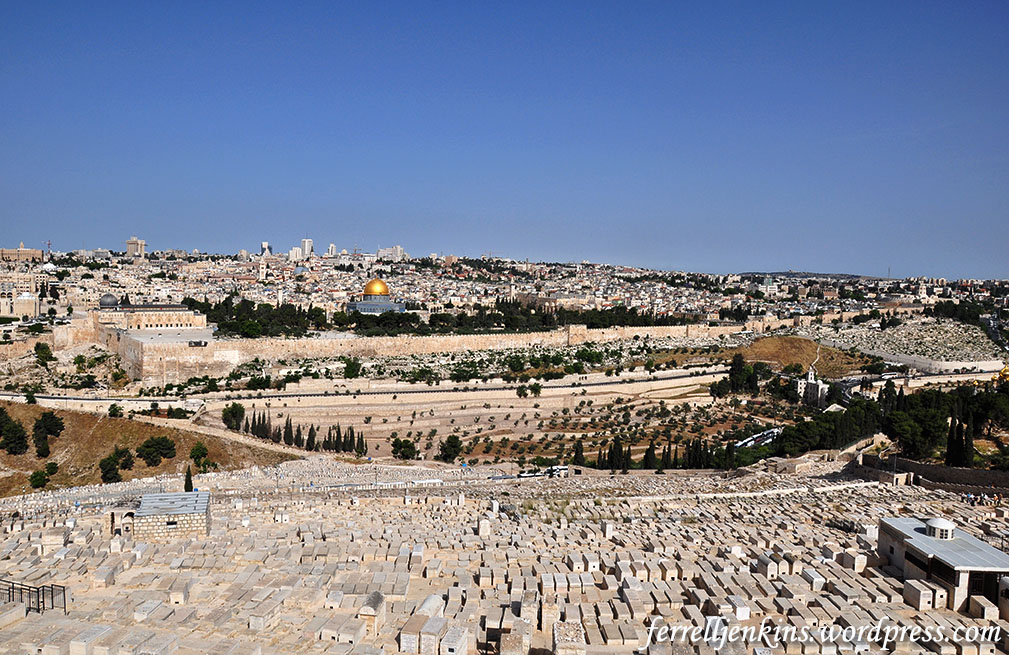
Thousands of Jewish graves are visible on the western slope of the Mount of Olives. Some of the grave markers are visible in this photo made from the Mount of Olives to the west. The Old City of Jerusalem is visible in the top half of the photo. I don’t know how old these graves are, but some of them are fairly recent.

Jewish graves visible on the western slope of the Mount of Olives. Photo by Ferrell Jenkins.

Jewish graves visible on the western slope of the Mount of Olives. Photo by Ferrell Jenkins.

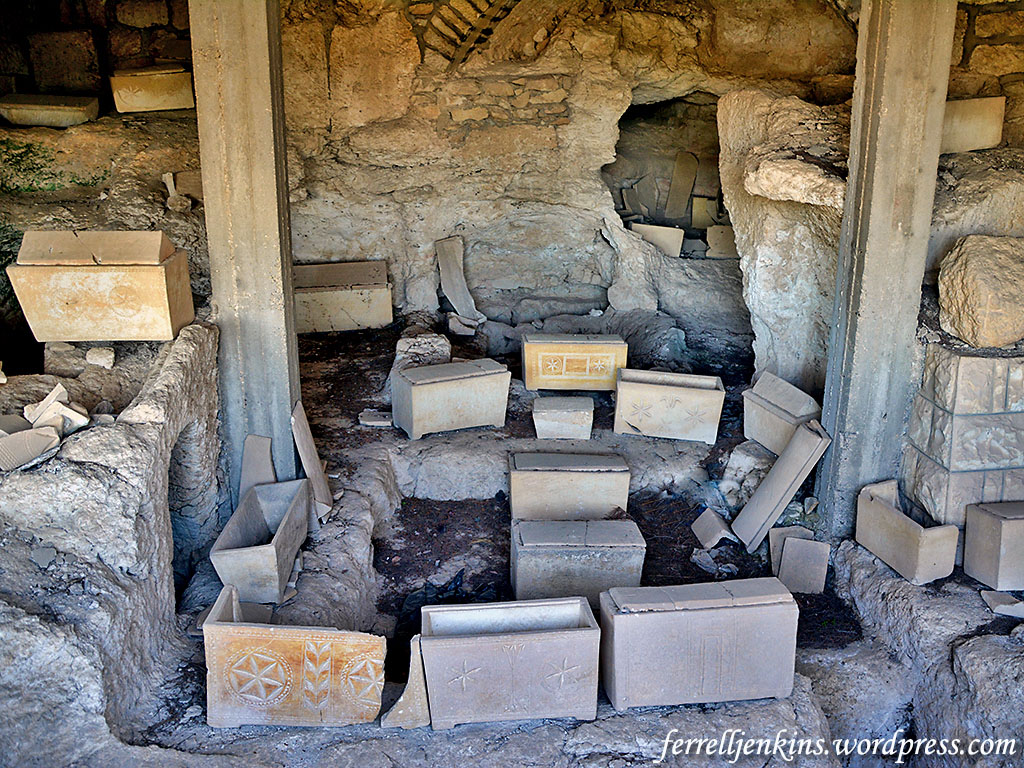
But there are older graves in the area. If you have walked down from the observation plaza on the Mount of Olives, where the peddlers and camel jockeys abound, to the Garden of Gethsemane, you have likely passed the entrance to the Franciscan chapel of Dominus Flevit. Tradition has it that this is where Jesus stopped to weep over Jerusalem.

And when he drew near and saw the city, he wept over it (Luke 19:41 ESV)

Ossuaries in one of the tombs at Dominus Flevit on the western slope of the Mount of Olives. Photo by Ferrell Jenkins.

Ossuaries in one of the tombs at Dominus Flevit on the western slope of the Mount of Olives. Photo by Ferrell Jenkins.

The Dominus Flevit cemetery complex contains three tombs. Murphy-O’Connor says,

The first two on the right (counting from the entrance gate) are typical kokhim graves of the period 100 BC–AD 135, the dead were buried in narrow horizontal shafts and later their bones were collected in beautifully made stone boxes (ossuaries) in order to make room for others. (The Holy Land, 5th ed. p. 145)

Harold Mare describes the content of the cemeteries,

Beside seven sarcophagi, many ossuary (bone) boxes were excavated at the Dominus Flevit cemetery. The ossuary boxes, made of stone or wood and averaging 25 inches long, 15 inches wide, and 13 inches high, were decorated with inscribed designs on the sides and tops and often had names inscribed on them as well. Examples of these boxes can be seen in site in the excavation area at the Dominus Flevit and at the Israel Museum, Jerusalem. These boxes were used to contain the bones of the dead in secondary burials after the disintegration of the flesh. They were evidently used in Jerusalem until A.D. 70 or possibly until 135. (Mare, W. Harold. The Archaeology of the Jerusalem Area. Grand Rapids: Baker, 1987. p. 198.)

Mare also points out that several biblical names are found on various ossuaries. This does not mean that the ossuaries belonged to a known biblical character, but that the names were common during the period. John McRay gives a list of names found at this site:

Also found on the ossuaries were forty-three inscriptions. Written in Hebrew, Aramaic, and Greek, the inscriptions contain names familiar to readers of the New Testament– Yeshua (Aramaic for Jesus), Miriam (Mary), Martha, Eleazar (Lazarus), Judas, Salome, Matthew, Joseph, Jairus, John, Mattia (Matthias), Sapphira, Menahem (Manaean), Simeon, and Zechariah. (McRay, John. Archaeology and the New Testament. Grand Rapids: Baker, 1991. p. 197.)

Both of our photos are sized for PowerPoint use in teaching.

Ossuaries in ancient Jerusalem and Judea

From about 30 B.C. to A.D. 70 (some scholars extend these dates to as late as A.D. 135), ossuaries were used by the Jews in secondary burials. Numerous of these stone receptacles have been discovered. Most of the dead were first buried in caves or rock-cut tombs. After the flesh had decayed, the bones were placed in an ossuary or “bone box.” This provided space for more burials.

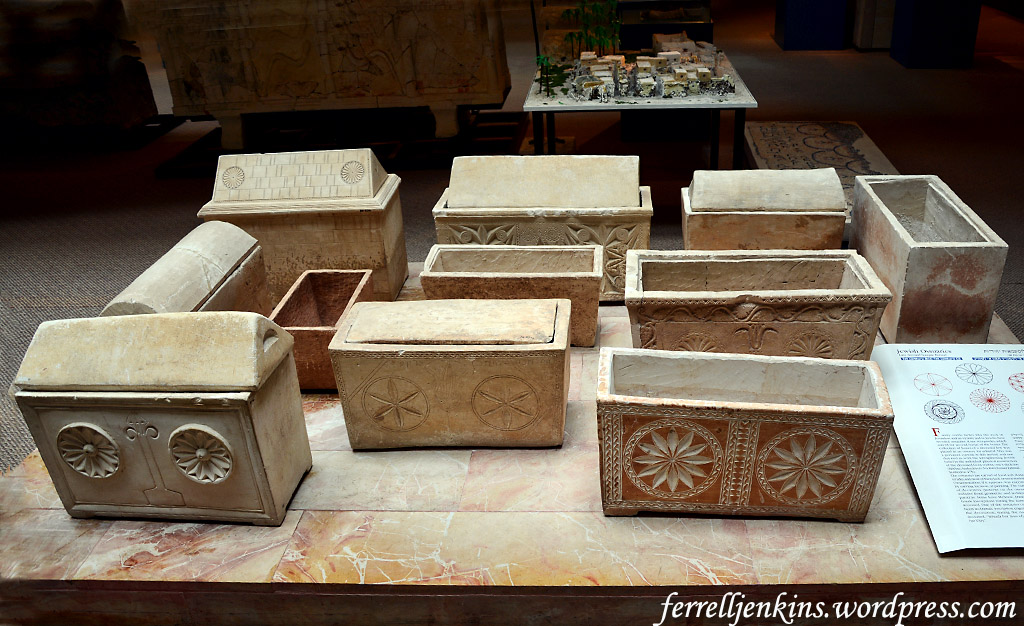
The Hecht Museum at Haifa University has a nice display of ossuaries. Six of these have lids on them. The lid is missing on five others.

Display of Jewish Ossuaries in the Hecht Museum. Photo by Ferrell Jenkins.

Display of Jewish Ossuaries in the Hecht Museum. Photo by Ferrell Jenkins.

The sign with the display states that,

This was a prevalent custom in this period, and one that tied in with the strengthening Jewish belief in the individual, physical resurrection of the deceased from within one’s skeleton (Mishna, Sanhedrin 6:5-6; Babylonian Talmud, Sanhedrin 47b).

This is the description of the ossuaries.

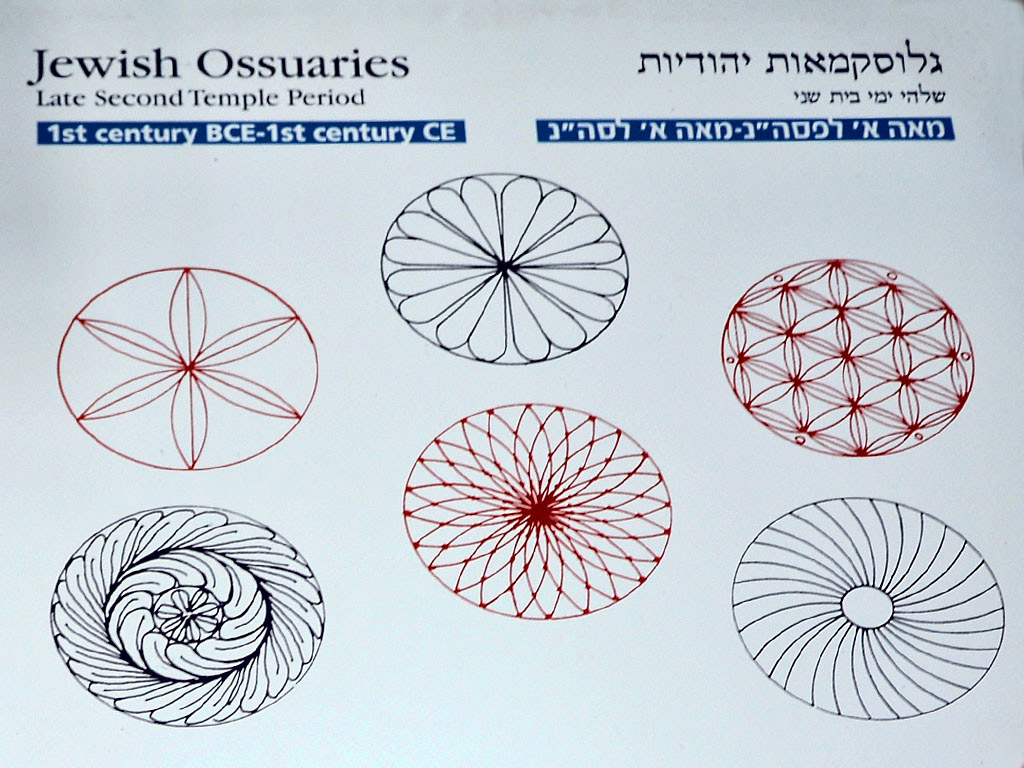
The ossuaries are carved of local soft stone (chalk), and most of them lack ornamentation. Ornamentation, if it appears, was executed by carving, incision, or painting. The variety of decorative patterns on the ossuaries includes floral, geometric and architectural patterns. Some have Hebrew, Aramaic, or Greek inscriptions stating the name of the deceased.

The top of the sign shows some of the decorations found on ossuaries. Note above, the statement that most ossuaries lacked ornamentation.

Decorations found on Jewish Ossuaries. Photo by Ferrell Jenkins.

Decorations found on Jewish Ossuaries. Photo by Ferrell Jenkins.

Rachel Hachlili describes the typical ossuary:

These ossuaries are small limestone boxes approximately 20 inches long, 10 inches wide and 12 inches high. Usually they have a flat, gabled, or rounded lid. All these ossuaries were used for secondary burials; approximately a year after the original burial, when the body had decomposed, the bones of the deceased were collected and placed in the ossuary. (BAR, July/Aug. 1979).

Stone cutting was one of the main occupations of ancient Israel, and some stone cutters evidently specialized in made-to-order ossuaries.

In a future post I plan to show a cemetery filled with ossuaries.

12th Dead Sea Scrolls Cave found, but the scrolls are gone

Early this morning, February 8, 2017, I received a press release from Hebrew University in Jerusalem.

— “ —

Hebrew University archaeologist Dr. Oren Gutfeld: “This is one of the most exciting archaeological discoveries, and the most important in the last 60 years, in the caves of Qumran.”

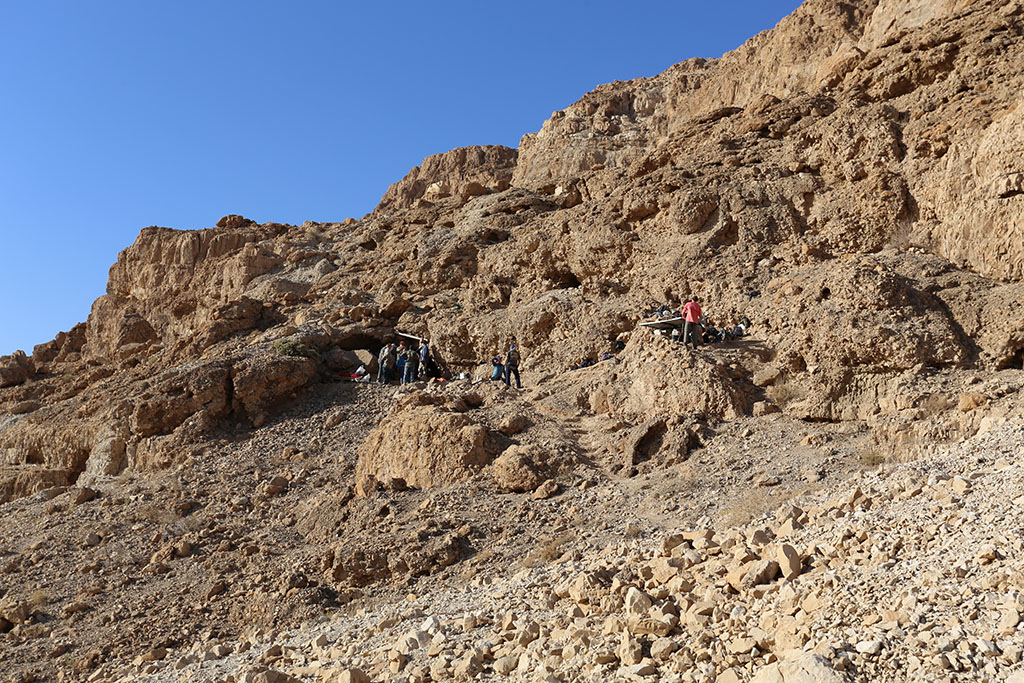
Excavations in a cave on the cliffs west of Qumran, near the northwestern shore of the Dead Sea, prove that Dead Sea scrolls from the Second Temple period were hidden in the cave, and were looted by Bedouins in the middle of the last century. With the discovery of this cave, scholars now suggest that it should be numbered as Cave 12.

Fault cliff and entrance to Cave 12 (on left). Photos: Casey L. Olson & Oren Gutfeld.

Fault cliff and entrance to Cave 12 (on left). Photos: Casey L. Olson & Oren Gutfeld.

The surprising discovery, representing a milestone in Dead Sea Scroll research, was made by Dr. Oren Gutfeld and Ahiad Ovadia from the Hebrew University of Jerusalem’s Institute of Archaeology, with the help of Dr. Randall Price and students from Liberty University in Virginia USA.

The excavators are the first in over 60 years to discover a new scroll cave and to properly excavate it.

The excavation was supported by the Civil Administration of Judea and Samaria, by the Israel Nature and Parks Authority, and the Israel Antiquities Authority (IAA), and is a part of the new “Operation Scroll” launched at the IAA by its Director-General, Mr. Israel Hasson, to undertake systematic surveys and to excavate the caves in the Judean Desert.

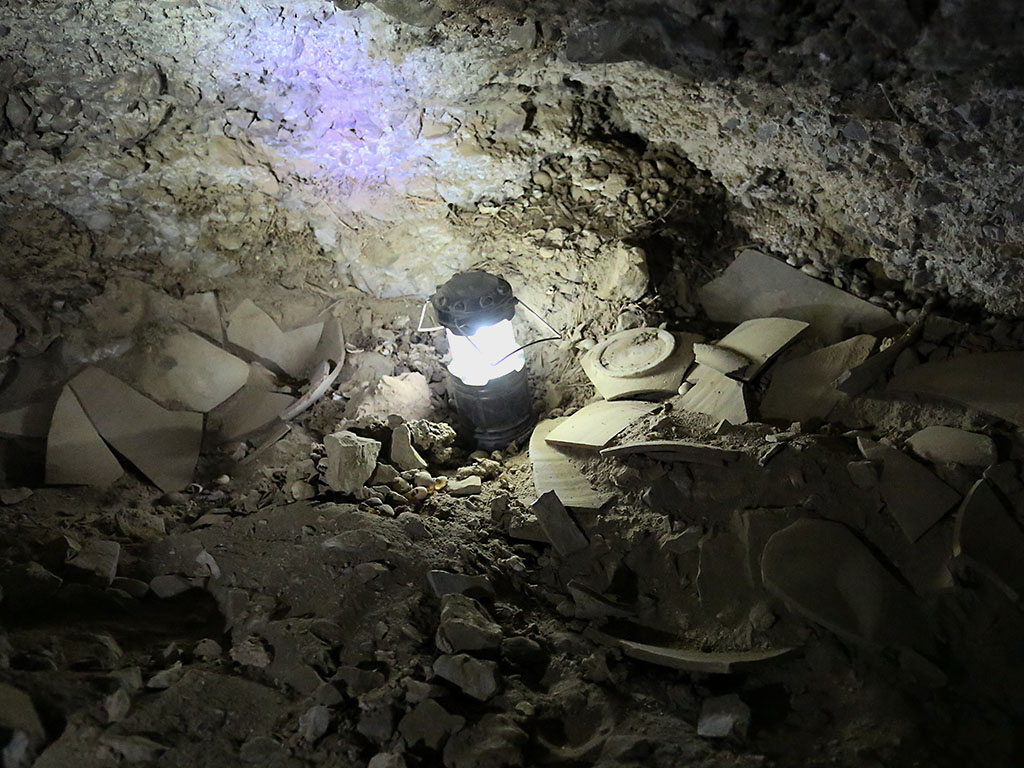
Fragments of jars that contained scrolls. Photos: Casey L. Olson & Oren Gutfeld.

Fragments of jars that contained scrolls. Photos: Casey L. Olson & Oren Gutfeld.

Excavation of the cave revealed that at one time it contained Dead Sea scrolls. Numerous storage jars and lids from the Second Temple period were found hidden in niches along the walls of the cave and deep inside a long tunnel at its rear. The jars were all broken and their contents removed, and the discovery towards the end of the excavation of a pair of iron pickaxe heads from the 1950s (stored within the tunnel for later use) proves the cave was looted.

Until now, it was believed that only 11 caves had contained scrolls. With the discovery of this cave, scholars have now suggested that it would be numbered as Cave 12. Like Cave 8, in which scroll jars but no scrolls were found, this cave will receive the designation Q12 (the Q=Qumran standing in front of the number to indicate no scrolls were found).

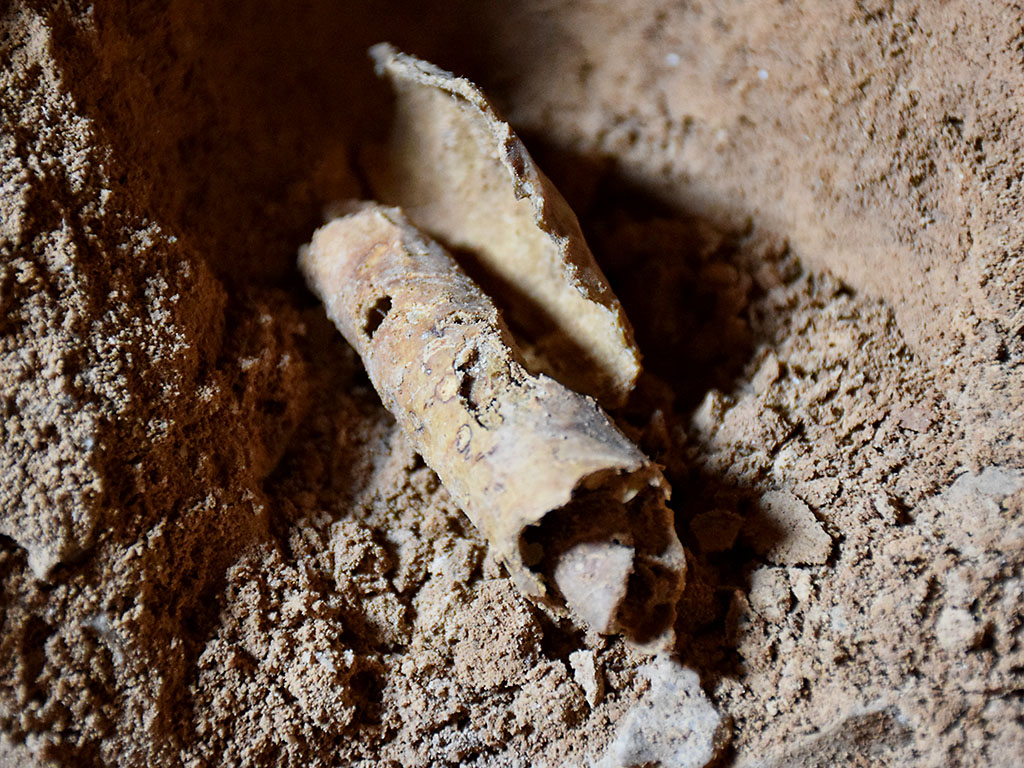
“This exciting excavation is the closest we’ve come to discovering new Dead Sea scrolls in 60 years. Until now, it was accepted that Dead Sea scrolls were found only in 11 caves at Qumran, but now there is no doubt that this is the 12th cave,” said Dr. Oren Gutfeld, an archaeologist at the Hebrew University’s Institute of Archaeology and director of the excavation. “Although at the end of the day no scroll was found, and instead we ‘only’ found a piece of parchment rolled up in a jug that was being processed for writing, the findings indicate beyond any doubt that the cave contained scrolls that were stolen. The findings include the jars in which the scrolls and their covering were hidden, a leather strap for binding the scroll, a cloth that wrapped the scrolls, tendons and pieces of skin connecting fragments, and more.”

Remnant of scroll found in Cave 12. Photo: Casey L. Olson & Oren Gutfeld.

Remnant of scroll found in Cave 12. Photo: Casey L. Olson & Oren Gutfeld.

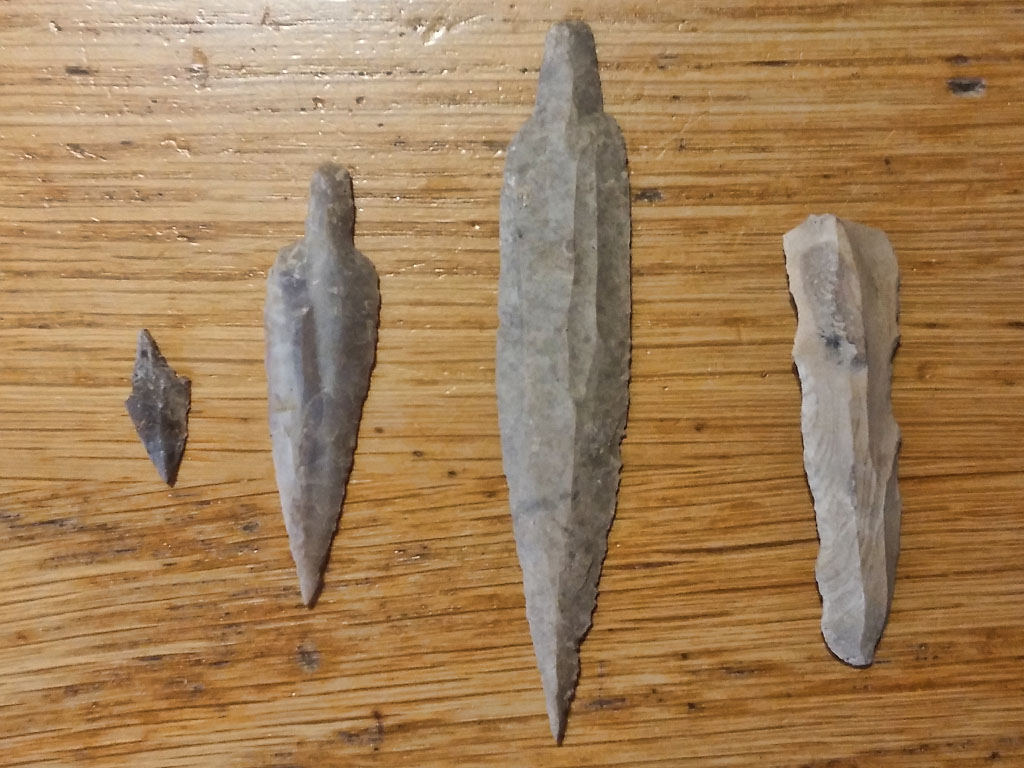
The finds from the excavation include not only the storage jars, which held the scrolls, but also fragments of scroll wrappings, a string that tied the scrolls, and a piece of worked leather that was a part of a scroll. The finding of pottery and of numerous flint blades, arrowheads, and a decorated stamp seal made of carnelian, a semi-precious stone, also revealed that this cave was used in the Chalcolithic and the Neolithic periods.

Neolithic flint tools found in the cave. Photos: Casey L. Olson and Oren Gutfeld.

Neolithic flint tools found in the cave. Photos: Casey L. Olson and Oren Gutfeld.

This first excavation to take place in the northern part of the Judean Desert as part of “Operation Scroll” will open the door to further understanding the function of the caves with respect to the scrolls, with the potential of finding new scroll material. The material, when published, will provide important new evidence for scholars of the archaeology of Qumran and the Dead Sea caves.

“The important discovery of another scroll cave attests to the fact that a lot of work remains to be done in the Judean Desert and finds of huge importance are still waiting to be discovered,” said Israel Hasson, Director-General of the Israel Antiquities Authority. “We are in a race against time as antiquities thieves steal heritage assets worldwide for financial gain. The State of Israel needs to mobilize and allocate the necessary resources in order to launch a historic operation, together with the public, to carry out a systematic excavation of all the caves of the Judean Desert.”

— ” —