Category Archives: Bible Lands

Cache of Bar-Kokhba coins found

Arutz Sheva, Israel National News, reports the discovery of a treasure chest of Bar-Kokhba period (132-35 AD) coins in the Judean Hills.

The largest-ever known number of coins from the time of Bar-Kokhba, the Jewish leader against Roman invaders, has been discovered in the Judean Hills by cave researchers from Hebrew and Bar-Ilan universities.

The research team found three batches of bronze, silver and gold coins in a deep cavern in a nature reserve. Pottery and weapons also were discovered during a research project by Prof. Amos Frumkin of Hebrew University and Prof. Hanan Eshel and Dr. Boaz Zissu of Bar-Ilan.

They found the approximately 120 coins in a “hidden wing” of the cave where the only opening is via a narrow and dangerous approach. Beyond the opening, a small chamber leads to a hall where Bar-Kokhba’s army apparently hid.

Most of the coins are in excellent condition, and Bar-Kokhba’s followers imprinted their own designs over the currency, which is of Roman origin.

Bar Kokhba coins. Photo: Jerusalem University & Israeli Government.

Bar Kokhba coins polished for presentation. Israeli news photo, Sasson Tiram.

The Arutz Sheva report is here. A G News report, with beautiful photos, is here.

HT: Joseph Lauer

Luke Chandler’s interview on The Book & the Spade

Over the past month we have called attention to Luke Chandler’s Blog while he was working as a volunteer at the Khirbet Qeiyafa excavation in Israel. Others have taken notice of his blog. Now Gordon Govier of The Book & the Spade radio program has interviewed Luke. There are two parts to the interview. Part one is already available on The Book & the Spade web site here. Part 2 will be available next week.

Luke’s report about the interview is here. Luke describes the interview:

The Book and Spade program is in its 26th year and has featured many well-known archaeologists and scholars, including Yossi Garfinkel (chief excavator of Khirbet Qeiyafa) who was interviewed on the program from Harvard last Fall. To put it in archaeological terms, I am not in the same stratum with these eminent scholars. I was invited to share my perspective as a volunteer excavator who participated in one of the hottest current digs.

The interview discussed a range of topics, from the experiences of a first-time excavator to the relevance of the site. It will be broadcast in two parts. Part 1 is freely available now, and for the duration of this week (August 11th and following). Part 2 of the interview will be broadcast next week.

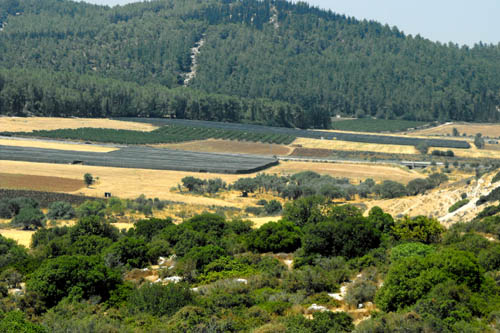
Luke has been kind enough to supply me with several photos during his time at Khirbet Qeifaya. The photo below was made from Khirbet Qeiyafa (the Elah Fortress). Notice the bridge in the extreme right of the photo. That bridge is build over the bed of the Brook of Elah. The brook is dry except during the rainy season.

Elah Valley from Khirbet Qeiyafa. Photo by Luke Chandler.

Elah Valley from Khirbet Qeiyafa. Photo by Luke Chandler.

For the background of this whole story read 1 Samuel 17.

Mount Hermon

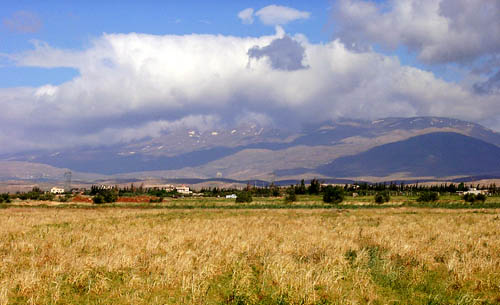
Mount Hermon is the southern end of the Anti-Lebanon mountain range. The mountain is about 20 miles long and has three peaks. At 9,232 feet above sea level it is the highest mountain of Canaan, or Roman Syria, named in the Bible. The mountain now is shared by the countries of Lebanon, Syria, and Israel. The photo below shows mount Hermon from the east, a few miles south of Damascus toward Quneitra. This photo was made the middle of May, 2002. There was more snow on the west side of the mountain in Lebanon than you see here.

View of Mount Hermon from the East. Photo by Ferrell Jenkins 2002.

View of Mount Hermon from the East. Photo by Ferrell Jenkins 2002.

The first biblical reference to Mount Hermon is found in Moses’ account of the Israelite conquest of transjordan (Deuteronomy 3:8). He says that Israel took the land from the hand of two Amorite kings “from the valley of Arnon to Mount Hermon.” The Sidonians, of ancient Phoenicia, called the mountain Sirion, and the Amorites called it Senir (Deuteronomy 3:9). The half-tribe of Manasseh lived in the area of Bashan which is south of Mount Hermon (1 Chronicles 5:23). The Mountain of Bashan is probably a reference to Mount Hermon (Psalm 68:15). Hermon is mentioned in four references in the poetic books of the Old Testament (Psalm 42:6; 89:12; 133:3; Song of Solomon 4:8).

The heavens are yours; the earth also is yours; the world and all that is in it, you have founded them. The north and the south, you have created them; Tabor and Hermon joyously praise your name. (Psalm 89:11-12 ESV)

One sows and another reaps

Jesus took advantage of the opportunity to teach the woman of Samaria at the well where they met (John 4). She went into the city and told the men about Jesus (John 4:28-29). When the disciples of Jesus returned from the city where they had gone to buy food they encouraged Jesus to eat. He said, “I have food to eat that you do not know about.” The disciples misunderstood this, thinking He had reference to material food. This conversation led Jesus to say,

Do you not say, ‘There are yet four months, then comes the harvest’? Look, I tell you, lift up your eyes, and see that the fields are white for harvest. Already the one who reaps is receiving wages and gathering fruit for eternal life, so that sower and reaper may rejoice together. For here the saying holds true, ‘One sows and another reaps.’ I sent you to reap that for which you did not labor. Others have labored, and you have entered into their labor.” (John 4:35-38 ESV)

The disciples apparently did not know that Jesus had been teaching the woman, and that she had gone into the city to tell others about Him. Jesus is reminding the disciples of a common thing in the agricultural practices of that time. One sows and another reaps. It may have been sowing time, but some were ready to be reaped. The fields were ready to be harvested.

The words of the prophet Amos provide insight into this episode. He said,

“Behold, days are coming,” declares the LORD, “When the plowman will overtake the reaper And the treader of grapes him who sows seed; When the mountains will drip sweet wine And all the hills will be dissolved. (Amos 9:13 ESV)

In modern times, with the use of some mechanical farm equipment, it is becoming difficult to find scenes exactly like the practices of the time of Jesus. But we still see things that remind us of these teachings. The photo below shows a field in Jordan just above the Jordan valley floor near Deir Allah. On a clear day one could see the valley.
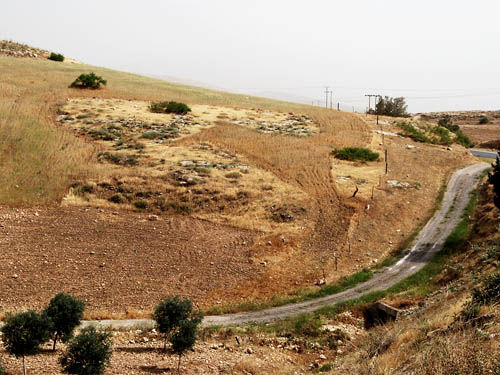
The field has been plowed while grain grows nearby. Photo by F. Jenkins.

The field has been plowed while grain grows nearby. Photo by F. Jenkins.

Notice the rocks in the field. The plowman has worked around them. In the days of broadcast sowing, like in the parable of the sower (Luke 8), this scene has all of the elements. Good soil, rocky soil, road, and certainly thorns.

Extend our view to the left in the photo above. You will see, in the photo below, sheaves in the field that has been plowed. Indeed, the plowman overtakes the reaper.
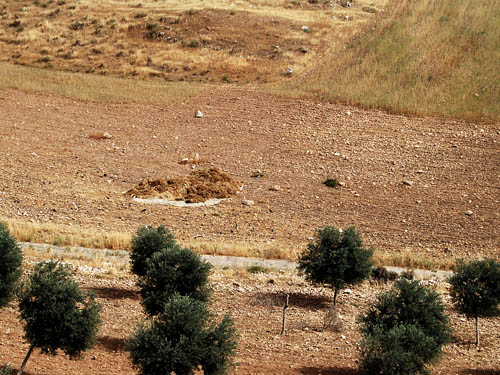
Harvested grain in a field already plowed for sowing. Photo by Ferrell Jenkins.

Harvested grain in a field already plowed for sowing. Photo by Ferrell Jenkins.

It is true today in the preaching of the gospel. One plows and another reaps. Paul says, “I planted, Apollos watered, but God was causing the growth” (1 Corinthians 3:6).

If we had more sowing, there would be more reaping.

Churning produces butter

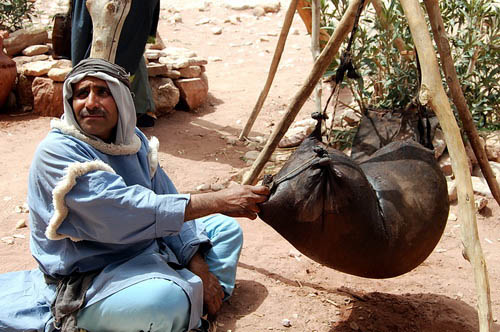
One of the new things I noticed in a visit to Petra last year was the Bedouin actors demonstrating various aspects of daily life. Many of these customs are similar to those we read about in the Bible. This photo shows a man using an animal skin as a churn.

Using an animal skin for producing butter. Photo by Ferrell Jenkins.

Using an animal skin for producing butter. Photo by Ferrell Jenkins.

The writer of Proverbs speaks of churning in giving advice about those who stir up strife.

If you have been foolish in exalting yourself Or if you have plotted evil, put your hand on your mouth. For the churning of milk produces butter, And pressing the nose brings forth blood; So the churning of anger produces strife. (Proverbs 30:32-33 NAS)

When the three men came to the Patriarch Abraham to announce the birth of Isaac, Abraham showed hospitality to them. He provided water so they could wash their feet. He told Sarah to prepare bread. He took a young calf from the herd and had the servants prepare it. Then the text says,

He took curds and milk and the calf which he had prepared, and placed it before them; and he was standing by them under the tree as they ate. (Genesis 18:8 NAS)

Read Genesis 18 for the complete account.

From Egypt to New York in 12 hours

We arrived in the USA yesterday afternoon, and got a good night of rest. Typically it takes about a day for every hour in time change to get over jet-lag. We look forward t0 making our way to Florida this afternoon.

Delta now has a non-stop New York/Cairo flight. The service was good in both directions, and the flights were on time. We felt fortunate yesterday to have quite a few empty seats that allowed passengers to spread out over the plane. We know that other members of the tour group arrived in the USA last Monday. We have heard from most of them after arrival at their homes. For this we are thankful.

Our tour members repeatedly said that the trip was a real adventure,  just as we had advertised. It was fun, but primarily it was a real educational and spiritual experience. We not only learned about ancient and modern Egypt, but we related this to the biblical characters who called Egypt home for a while.

Elizabeth and I went to Alexandria on Tuesday. We traveled along the high desert road from Giza to Alexandria. The area is filled with new housing, factories, and agricultural area made possible by modern irrigation.

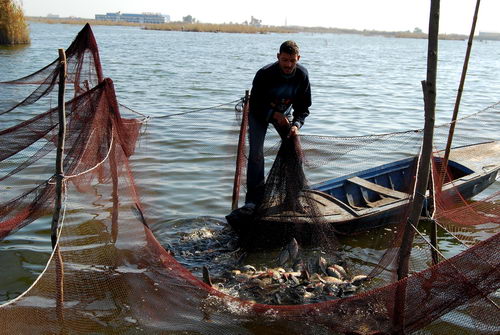
Shortly before we reached Alexandria we passed an area filled with bulrushes. We stopped to watch some fishermen pull in their nets. We were told that these fish are farm fish.

An Egyptian fisherman working the nets. Photo by Ferrell Jenkins.

An Egyptian fisherman working the nets. Photo by Ferrell Jenkins.

I also made some similar photos along the Nile and the canals of Egypt. As we think of ancient Egypt we recall the oracle against Egypt in Isaiah 19. I suggest you read the entire chapter. For now, note these verses.

The bulrushes by the Nile, by the edge of the Nile And all the sown fields by the Nile Will become dry, be driven away, and be no more. And the fishermen will lament, And all those who cast a line into the Nile will mourn, And those who spread nets on the waters will pine away. (Isaiah 19:7-8 NAS)

References like these from the Old Testament prophets were fulfilled in the centuries before the coming of Christ. Remember that the ancient Hamitic Egyptian disappeared long ago. The modern Semitic Egyptians are caretakers of an antiquity they had nothing to do with.

Zaccheus climbed up into a sycamore tree

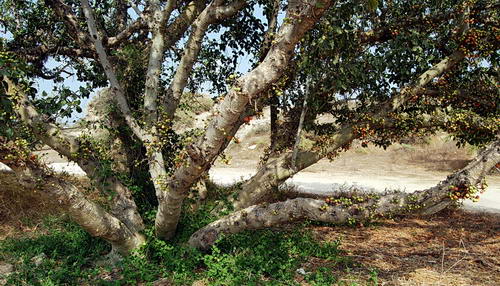
The sycamore (Ficus sycomorus) is a type of tree growing only in the Jordan Valley and near the Mediterranean coast. The sycamore is pictured as growing in abundance in the shephelah (lowland, 1 Kings 10:27). This is in contrast to cedars which Solomon planted in Jerusalem.

The sycamore is not the same as the tree by that name that grows in North America. The sycamore tree belongs to the nettle family, like the mulberry and fig trees. The fruit looks like a fig, but the taste is unpleasant. It is eaten by the poor. See Fauna and Flora of the Bible, 179-81.

Zaccheus climbed up into a sycamore tree at Jericho (Luke 19:4). Here is a sycamore tree at Ashkelon that reminded me of Zacchaeus. The limbs are low. Even a child could climb into the tree to get a better view.

Sycamore tree at Ashkelon. Photo by Ferrell Jenkins.

Sycamore tree at Ashkelon. Photo by Ferrell Jenkins.

Amos the prophet, who lived at Tekoah on the edge of the Judean wilderness, spoke of working with the sycamore fruit.

Amos replied to Amaziah, “I was not a prophet by profession. No, I was a herdsman who also took care of sycamore fig trees. (Amos 7:14, NET Bible).

This photo shows the sycamore figs on the tree.

Sycamore figs. Photo by Ferrell Jenkins.

Sycamore figs. Photo by Ferrell Jenkins.

China Olympics opening is spectacular

I suspect that everyone reading this post saw either the opening ceremony of the Beijing 2008 Olympics or at least a few news clips about it. The Olympics originated with the Greeks centuries before Christ. The Isthmian games were conducted at Isthmia, a few miles from Corinth.

Paul used several illustrations relating to athletics in the epistles to the Corinthians.

Do you not know that those who run in a race all run, but only one receives the prize? Run in such a way that you may win. Everyone who competes in the games exercises self-control in all things. They then do it to receive a perishable wreath, but we an imperishable. Therefore I run in such a way, as not without aim; I box in such a way, as not beating the air;  but I discipline my body and make it my slave, so that, after I have preached to others, I myself will not be disqualified. (1 Corinthians 9:24-27 NASB)

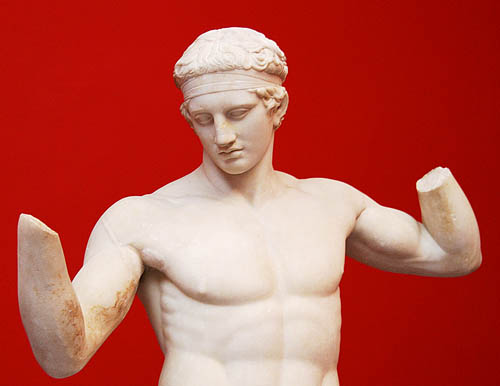
The Greeks had two words for crown. The diadema was the crown of the king. The stephanos was the crown of the victor in the races. This is the term used by Paul in the text above (the word wreath). Here is a photo of a nice sculpture displayed in the Athens National Archaeological Museum showing a young athlete wearing the stephanos. Incidentally, the stephanos was often made of olive branches, or other perishable items.

Young athlete wearing a crown (stephanos). Athens National Archaeological Museum. Photo by Ferrell Jenkins.

Young athlete wearing a crown (stephanos). Athens National Archaeological Museum. Photo by Ferrell Jenkins.

John also speaks of the stephanos. To the saints at Smyrna (modern Izmir in Turkey) he says,

Be faithful until death, and I will give you the crown of life. (Revelation 2:10).

Enjoy the Olympics, but think of the more important spiritual lessons.

From the mountains of Ararat to the island called Patmos

Or, from Genesis to Revelation. I did not make an intentional plan to do so, but within the past twelve months I have visited areas of the Bible world, from the mountains of Ararat to the island of Patmos. What a blessing to have the opportunity to spend about four weeks in Turkey, covering most of the sites mentioned in the Bible, about 10 days in Greece, more than a week in Israel, and a week in Jordan.

This means that I have been able to visit some of the most significant portions of the Bible world. Better than visiting the area alone, I have been able to share the area with other teachers (both men and women) who will be incorporating this information into their lessons for years to come.

When I first reflected on the past year and realized that I had been to Mount Ararat, in the mountains of Ararat, and on the Island of Patmos, I realized that this covers from Genesis 6 to the book of Revelation. Of course, this doesn’t mean that I have visited every place in between, but it does give a sense of comprehensive overview.

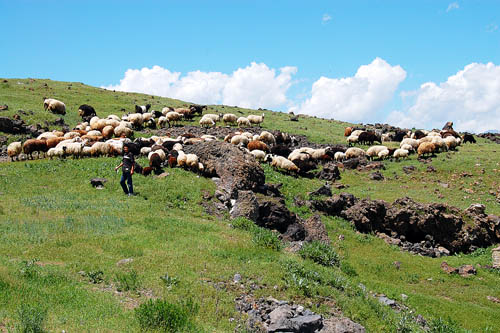
Here are a couple of photos I trust you will find helpful. The first is of a shepherd with his sheep in the mountains of Ararat. Remember that the book of Genesis records that Noah’s ark rested “upon the mountains of Ararat” (Genesis 8:4).

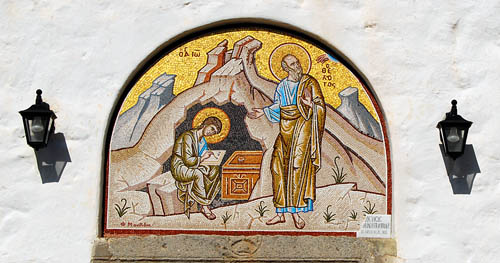
This photo was made at the entry to the cave of the Apocalypse on “the island called Patmos” (Revelation 1:9). John was exiled here during the reign of the Roman emperor Domitian. Whether the book of Revelation was written on Patmos, or after John’s release, we can not say with certainty. The mosaic over the entry to the cave shows John dictating the revelation given to him by the Lord.

It is my conviction that Bible land travel can enhance one’s Bible study and improve one’s understanding of the text. This, in turn, needs to be converted to action in obedience to the will of the Lord, and in service to Him.

Journeys with Jane

Recently I encouraged those who will be traveling with us on tour to the Bible lands this year to think about starting a blog. Jane has taken the plunge. She describes her blog this way:

I am neither an author nor a scholar…just a grandmother and a Bible class teacher, so my blog will be neither scholarly nor a great literary work. However, I hope to write entries in my blog while we are on this trip so family at home (grandchildren in particular…along with the students in my fifth grade Bible Class, and the group of teenage girls I lovingly refer to as the “Salt Shakers”) can keep up with where I am, and what I am seeing and learning.

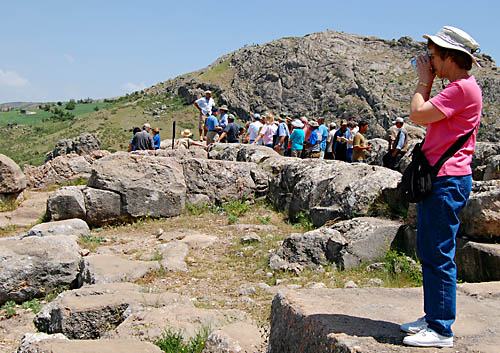
Jane and Olen have been on several of my tours, and she is always one of the best prepared to learn. Both of them are good photographers. Here is a photo of Jane among the Hittite ruins at ancient Hattusas in Turkey.

Jane at Hattusas, home of the Hittites. Photo by Ferrell Jenkins.

If you have children, grandchildren, or if you teach a class of young people, I am sure you will enjoy Jane’s posts. Click here to go to journeyswithjane.blogspot.com.