Category Archives: Archaeology

Acts 16 — Photo Illustrations

The Apostle Paul came to Philippi on his second preaching journey. Luke accurately describes the city with these words:

So putting out to sea from Troas, we ran a straight course to Samothrace, and on the day following to Neapolis; and from there to Philippi, which is a leading city of the district of Macedonia, a Roman colony; and we were staying in this city for some days. (Act 16:11-12 NAU)

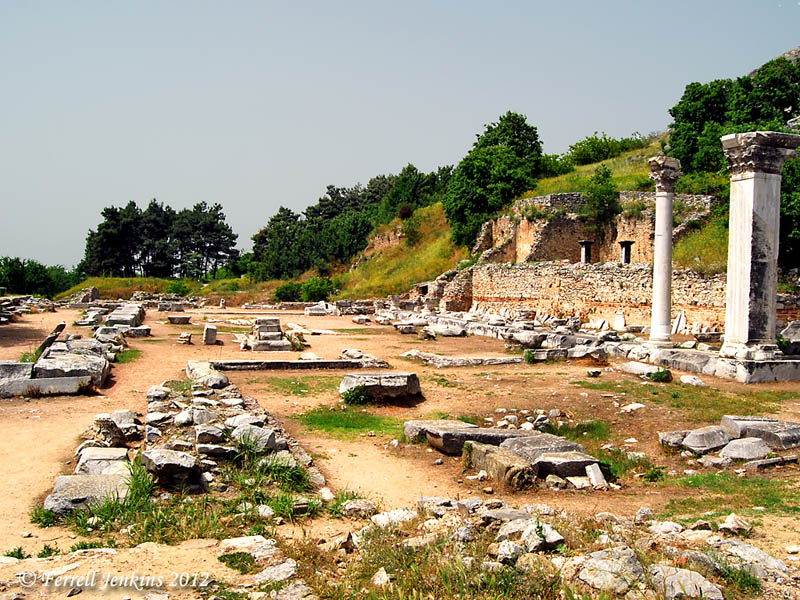
The photo below shows ruins of the forum (or agora) of the city where much of the activity took place. Portions of the famous Egnatian Way may be seen at the edge of the forum, but partially buried under the earth and modern road on the right. [See correction here.]

Forum of Philippi. Photo by Ferrell Jenkins.

The Forum (Agora) of Philippi. Photo by Ferrell Jenkins.

At Philippi, Paul preached to and baptized Lydia and her household, and the jailer.

6 year old palm from 2000 year old seed

A few date palm seed were uncovered by Professor Yigael Yadin during his excavation of Masada. Six years ago one of these seed was planted at the Arava Institute in Israel. The seed sprouted, and has grown into a nice little six year old palm.

Yishai Fleisher of EyeOnZionTV interviews Dr. Elaine Solowey at the Arava Institue about this seed and plant. In addition to the information about the palm, I especially like the way Dr. Solowey refuses to fall for some of the speculative journalistic questions.

The photo below shows one of the modern date palms on the southwestern shore of the Sea of Galilee.

Date Palm growing near the Sea of Galilee. Photo by Ferrell Jenkins.

Date Palm growing near the Sea of Galilee. Photo by Ferrell Jenkins.

Jericho is mentioned as “the city of palm trees” in Deuteronomy 34:3.

The righteous are compared to the palm tree.

The righteous flourish like the palm tree and grow like a cedar in Lebanon. (Psalm 92:12 ESV)

HT: Jack Sasson

New Assyrian town discovered in northern Iraq

An article in Al Arabiya informs us that foreign archaeologists have discovered a new Assyrian site near the Arbil (Erbil) city center. Arbil is located southeast of the modern Kurdish city of Mosul, the area of Assyrian cities such as Nineveh, Calah, and Khorsabad.

Archeologists working in northern Iraq have discovered a new Assyrian site in the vicinity of the historic Arbil city center, the head of the antiquities office in the Kurdish Province of Arbil, Haydar Hassan, was quoted as saying in an Iraqi newspaper.

The Assyrian civilization flourished in northern Iraq between 1000-700 B.C., archeologists were led to discover the site when they exhumed a burial ground, complete with mud brick grave heads.

To further unearth this site the foreign archeological team had to study and remove two more layers of civilization under which the Assyrian structure was buried, according to a report published by Iraq’s al-Zaman on Monday.

The excavations have shown that the Assyrian graves were covered by remains belonging to the Sassanid Persian Dynasty that ruled Iraq before being dislodged by Muslim Arab tribes from the Arabian desert in the 7th century A.D., said Haydar Hassan.

So far only the brick arches and corridors of the Assyrian layer have been brought to the surface.

Although archaeological teams from Italy, the U.S., Germany, Holland, Poland and Greece are currently working in northern Iraq, Hassan did not say which foreign archaeologists were working on the newly discovered Assyrian site in Arbil.

The article may be accessed here.

Assyria was a threat to Israel from 853 B.C., when they defeated Ahab at the battle of Qarqar, until the LORD defeated them at Jerusalem in 701 B.C., and the final defeat at the battle of Carchemish in 605 B.C. The prophet Isaiah warned the people of God about the Assyrian threat.

Therefore thus says the Lord GOD of hosts: “O my people, who dwell in Zion, be not afraid of the Assyrians when they strike with the rod and lift up their staff against you as the Egyptians did. For in a very little while my fury will come to an end, and my anger will be directed to their destruction.  (Isaiah 10:24-25 ESV)

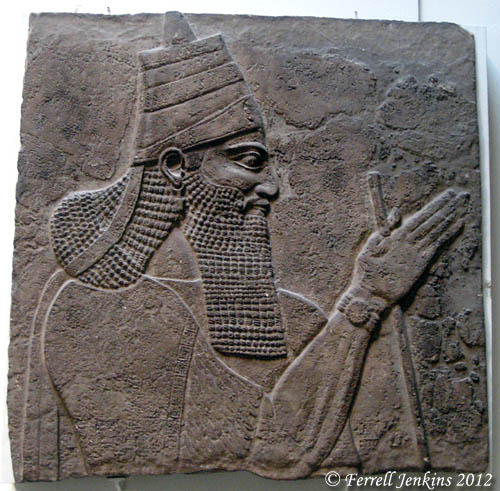
The photo below is of the Assyrian king Tiglath-Pileser III (745-727 B.C.). It was discovered in the central palace at Nimrud, and is now displayed in the British Museum.Tiglath-Pileser III is mentioned in 2 Kings 16:7, 15:29, and a few other references.

Who knows what new things may come from other cities yet to be excavated?

Tiglath-Pileser III, king of Assyria, from Nimrud's central palace. Now displayed in the British Museum. Photo by Ferrell Jenkins.

Tiglath-Pileser III, king of Assyria, from Nimrud. Now displayed in the British Museum. Photo by Ferrell Jenkins.

HT: Agade List

Acts 14 — Photo Illustrations

G. Walter Hansen comments on the religious life of Galatia and the importance of Zeus and Hermes to the people who lived there.

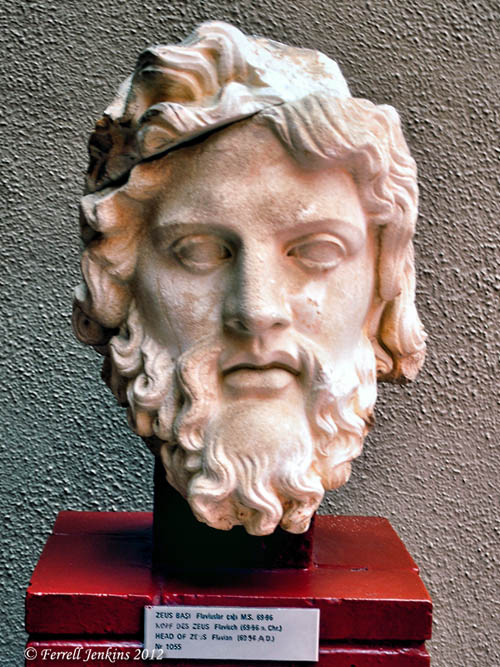
Zeus was the most widely worshipped god in Galatia; temples to Zeus were ubiquitous. Zeus was often linked with other gods. In the territory of Lystra there are carvings and inscriptions which show Zeus accompanied by Hermes. An inscription found near Lake Sugla is a dedication to Zeus of a sundial and a statue of Hermes. The names of the dedicators are Lycaonian. A stone altar near Lystra is dedicated to “the Hearer of Prayer [presumably Zeus] and Hermes.” A relief near Lystra depicts Hermes with the eagle of Zeus. In Lystra a stone carving shows Hermes with two other gods, G and Zeus. (Gill and Gempf, The Book of Acts in its First Century Setting, Vol. 2: Graeco-Roman Setting, 393)

This evidence, says Hansen, provides the setting for the events of Paul and Barnabas at Lystra. Luke describes the reaction of the Lystrans when they saw Paul heal a lame man.

When the crowds saw what Paul had done, they raised their voice, saying in the Lycaonian language, “The gods have become like men and have come down to us.”  And they began calling Barnabas, Zeus, and Paul, Hermes, because he was the chief speaker.  The priest of Zeus, whose temple was just outside the city, brought oxen and garlands to the gates, and wanted to offer sacrifice with the crowds.  (Acts 14:11-13 NAU)

Bruce reminds us that “Zeus was the chief god in the Greek pantheon; Hermes, the son of Zeus by Maia, was the herald of the gods” (The Book of the Acts, NICNT, 292).

Our photo of Zeus is of a bust displayed in the archaeological museum at Ephesus.
Image

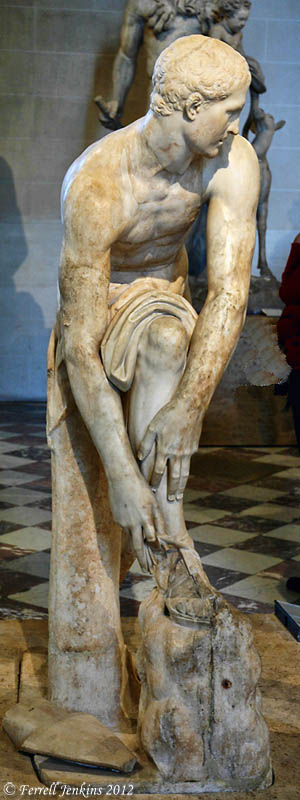
Paul was called Hermes because he was the chief speaker. Hermes was the messenger of the gods. How appropriate that our word hermeneutics, coming from the name Hermes, is used to describe the important work of interpreting the Scriptures. I have heard some speakers make fun of the word and then proceed to say that a certain phrase in the Scripture means … ! The photo below shows Hermes tying on his sandal in preparation for delivering a message. Some may recognize Hermes as the Latin Mercury, who is used as the symbol for the floral industry.

Image

The King James Version used the Latin terms Jupiter and Mercurius in Acts 14:12. Bruce says this is “due to an old and foolish fashion of replacing Greek proper names by their Latin equivalents in English translations from the Greek.”

This post is reprinted from December 1, 2011, with improved photos.

More about Magdala

Yesterday we called attention to the Magdala synagogue and table. We noted that it was impossible to get any good photos at the site. I didn’t even try.

We visited the site on the most recent tour, but everything is covered in a way that make it difficult or impossible to make sense of it.

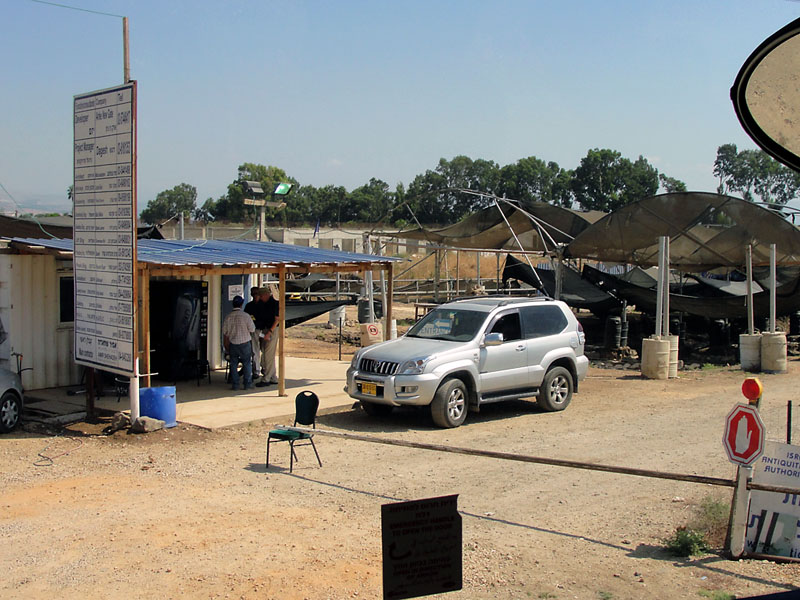
Overnight I received a photo from Steven Braman who was with us on the tour. He shared a photo he made from the bus window while our guide was negotiating a visit. I had been turned away on two previous attempts to see the site.

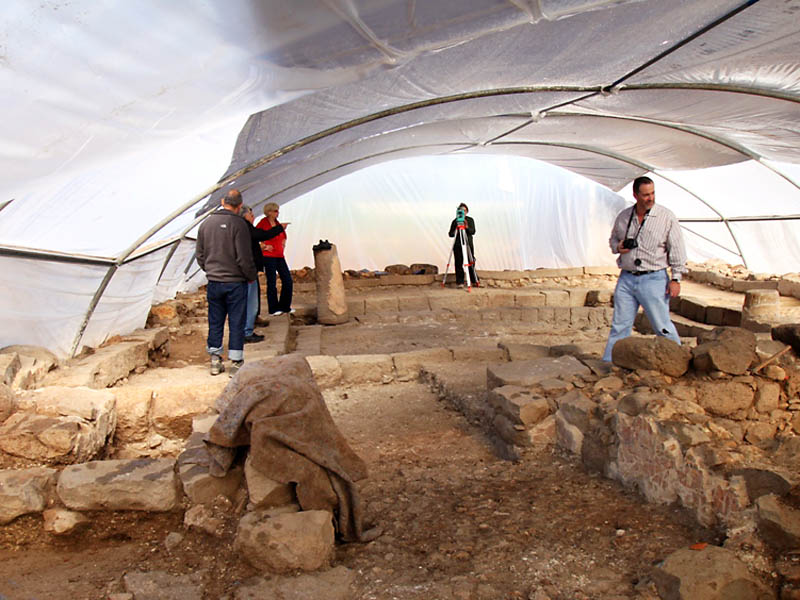
Site of the Magdala synagogue. Photo by Steven Braman.

Site of the Magdala synagogue. Photo by Steven Braman.

This looks like a construction site. It is. Notice the new buildings in the background of the photo. The Franciscians, under the name Galilee Project, are building a hotel, media center, cathedral, et al. In fact, the synagogue might not have been found for decades had it not been for the construction project. Hundreds of emergency excavations are conducted each year in Israel as a result of construction projects, the widening of roads, laying of pipe lines, and improving sewer systems.

The Magdala synagogue and table

Several times in the past few years we have called attention to the site of Magdala (Migdal). In September, 2009, we noted the announcement by the Israel Antiquities Authority of the discovery of a synagogue from the Second Temple period (50 BCE—100 CE).

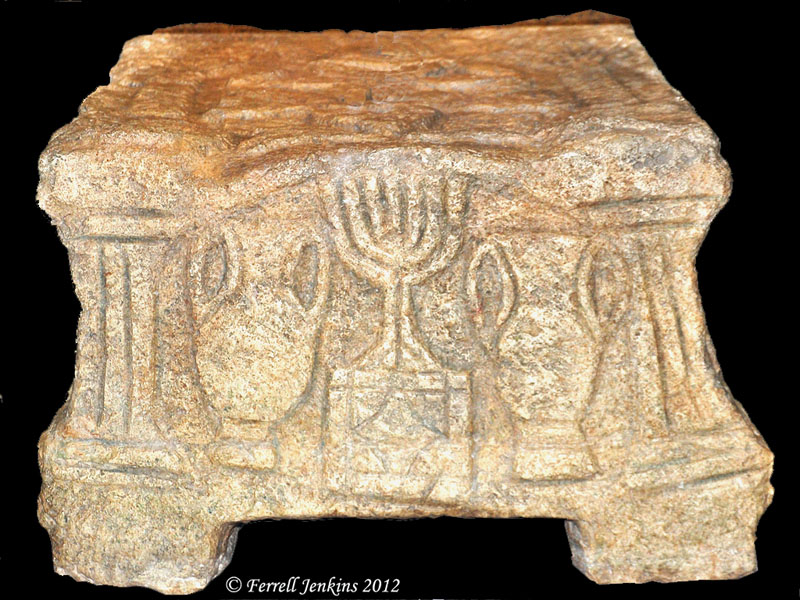
A synagogue from the Second Temple period (50 BCE—100 CE) was exposed in archaeological excavations the Israel Antiquities Authority is conducting at a site slated for the construction of a hotel on Migdal [Magdala] beach, in an area owned by the Ark New Gate Company. In the middle of the synagogue is a stone that is engraved with a seven-branched menorah (candelabrum), the likes of which have never been seen. The excavations were directed by archaeologists Dina Avshalom-Gorni and Arfan Najar of the Israel Antiquities Authority.

The town of Magdala is not mentioned in the Bible, but Mary Magdalene is mentioned a total of 12 times in the four gospels. This place may have been her birthplace or her home. A few late manuscripts mention Magdala (Matthew 15:39 KJV), but earlier manuscripts read Magadan. Magdala is located about 4 miles north of Tiberias on the western shore of the Sea of Galilee.

The Hebrew word Magdala means tower. In New Testament times the city had become Hellenized and bore the Greek name Tarichea because of the importance of the salted-fish industry there. Mendel Nun located a harbor at the site. He says,

“In ancient times, pickled sardines were an important element of diet throughout the country–especially for those who lived near the lake” (BAR, Nov/Dec 1993).

Josephus had his headquarters at Magdala during the first Jewish Revolt against Rome (A.D. 66-70). He was able to get a group of at least 230 boats to go from Magdala to Tiberias (Jewish Wars 2.635-637). Vespasian attacked the town from the sea and destroyed it.

We visited the site on the most recent tour, but everything is covered in a way that make it difficult or impossible to make sense of it. We are fortunate to have a photo made by Jim Joyner a few years ago.

The Magdala/Migdal Synagogue. Photo by Jim Joyner.

The Magdala/Migdal Synagogue. Photo by Jim Joyner.

There is a replica of the “table” that was found in the synagogue at the site. The glare on the case was bad, but I followed the tip of Dr. Carl Rasmussen (Holy Land Photo’s Blog), I went to the Notre Dame Hotel and made a photo of the replica there. Since his photo, the table has been put in a case. Notice the menorah.

Magdale Synagogue Table - Notre Dame Hotel, Jerusalem.

Magdala Synagogue Table – Notre Dame Hotel, Jerusalem. Photo by Ferrell Jenkins.

We were told at the site that the original is now in the Rockefeller Museum. Whether on display or being examined by the IAA, I do not know.

Understanding the Land

Charles Savelle, over at Bible X calls attention to a Wall Street Journal article on the importance of geography in understanding world affairs. Read the article here. It might help you to understand better some of the situations going on in Russia, China, Iran, and Syria.

Later, Charles quotes from a new book on Joshua about the same subject and adds his comments about the importance of geography here. I want to share the paragraph he cites from Coleson’s commentary on Joshua in the Joshua, Judges, Ruth (Cornerstone Biblical Commentary)

“Because humans live on the surface of the earth, geography is always important. Because every ancient Israelite, humble or great, lived in close and intimate relationship with the land, if we wish to understand ancient Israel, we need to learn ancient Israel’s geography. Canaan was the Land of Promise God gave to Israel through the events recorded in Joshua; if we want to understand the message of Joshua, we need to study both the physical and the human geography of ancient Israel God’s grand plan of redemption for the human race may transcend both time and space, but God has so far worked it out in a very definite, limited place through a sequence of events in history. To understand God’s plan and its fulfillment, it helps to understand the timeline and the map” (Joshua, Judges, Ruth, p. 33).

I could not agree more.

The archaeologist who lost his head

July 30th was the 70th anniversary of the death of Sir Flinders Petrie.

On [July 30, 2012] the Israeli Antiquities Authority conducted an unusual memorial service, to mark the 70th anniversary of the death of the British archaeologist and Egyptologist Flinders Petrie. Only one of the people who attended the ceremony at the Protestant Cemetery on Jerusalem’s Mount Zion, Israeli archaeologist Shimon Gibson, had ever met the deceased – or at least his head. In 1989, while Gibson was working at the Palestine Exploration Fund in London, he was contacted by the Royal College of Surgeons. “They asked me,” Gibson said at the ceremony, “to help identify a head preserved in a jar. They weren’t sure it belonged to Petrie,” Gibson related.

Gibson explains how he was able to identify Petrie’s head.

Petrie was born in England in 1853 and died in Jerusalem in 1942. His headless body was buried in the Protestant Cemetery on Mount Zion. He is widely regarded as the progenitor of modern archaeology. He laid the foundations for Egyptology, the study of ancient Egypt, and was the first biblical archaeologist in Palestine.

The story of how it came to be that Petrie’s body is in Jerusalem, and his head in London, is explained briefly in the Haaretz article here.

Petrie is sometimes described at the “father of archaeology.” He is noted for his discovery of the Merneptah Stele in Egypt. This is the stele that contains the name of Israel. For the importance of the stele to biblical studies, see here.

But Petrie’s most important contribution to archaeology is the knowledge that pottery can be used to date the layers of a tell (archaeological mound).

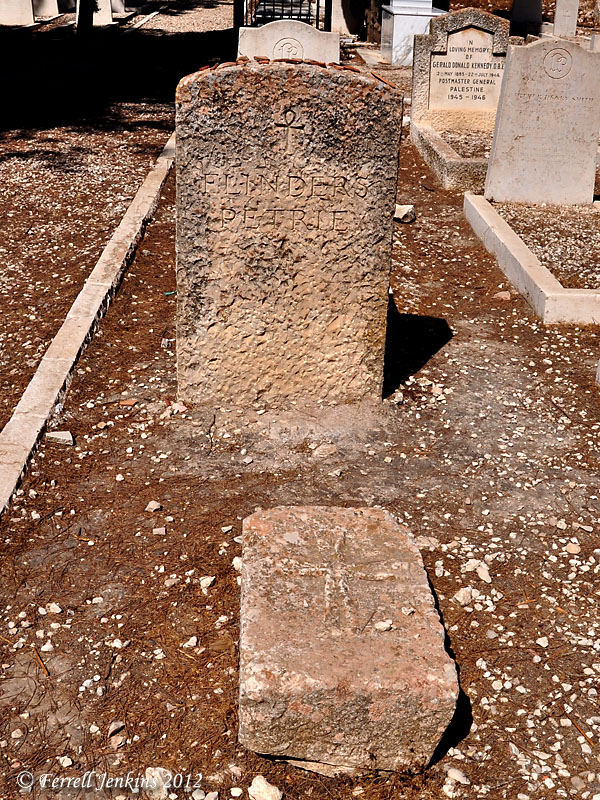
Today I visited the Jerusalem Protestant Cemetery to see the tomb of Petrie, as well as several other well-known persons of the past. Here is a photo of Petrie’s grave marker.
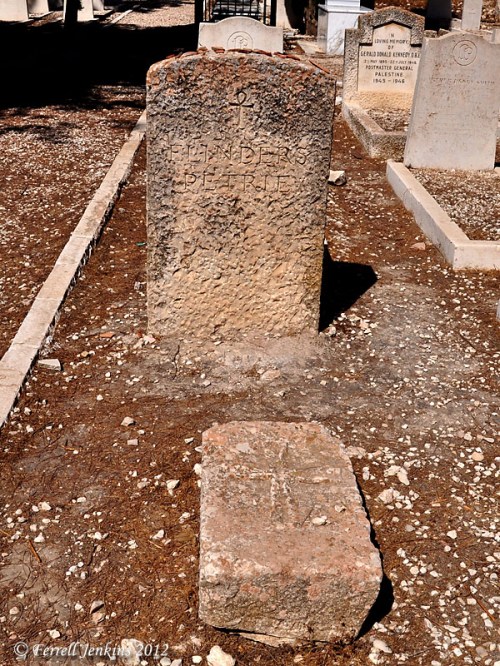
Grave marker for Flinders Petrie in Jerusalem Protestant Cemetery. Photo by Ferrell Jenkins.

Grave stone for Flinders Petrie, Jerusalem Protestant Cemetery. Photo: Ferrell Jenkins.

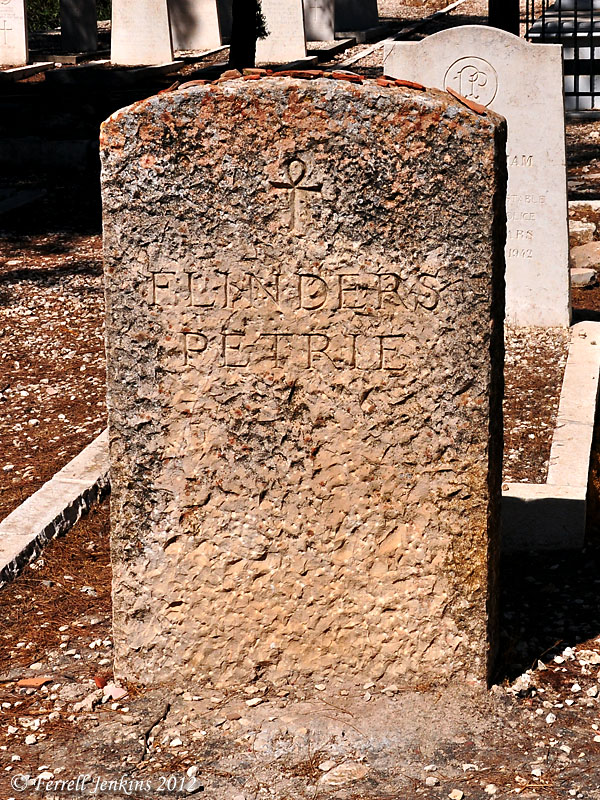
Besides the simplicity of the marker — only his name, there are two other things I find interesting. There is an ankh symbol (the life symbol) from ancient Egypt above the name. When Jews visit a tomb, small stones are left to show respect. Instead of stones, this marker has potsherds, pieces of broken pottery, on the top of it. I suspect that these were left by the visitors on the anniversary of his death.
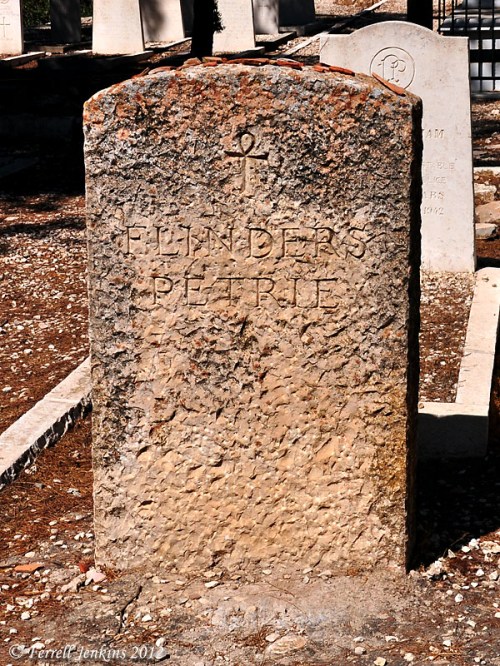
Flinders Petrie Grave in Jerusalem. Photo by Ferrell Jenkins.

Close up of Petrie’s grave marker in Jerusalem. Photo by Ferrell Jenkins.

In another post, perhaps later, I plan to tell you about some of the other persons of interest who are buried in the same cemetery

Camels figure prominently in the life of Isaac

When Abraham’s servant went from Canaan to far-away Mesopotamia to arrange a bride for Isaac, he took ten camels with him. These camels figure prominently in the account in Genesis 24.

Then the servant took ten of his master’s camels and departed with all kinds of gifts from his master at his disposal. He journeyed to the region of Aram Naharaim and the city of Nahor. (Genesis 24:10 NET)

The Hebrew Aram Naharaim of the text is often translated Mesopotamia in English versions.

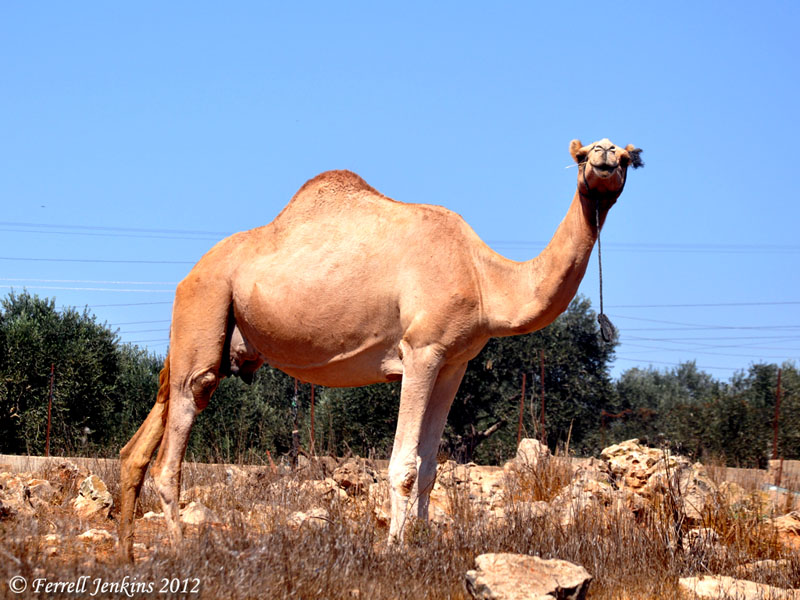
Yesterday I saw a nursing camel with her big “baby” as we drove north from Jerusalem toward Shiloh. This was a little east of the main north-south highway. I took the photo to share with my grandson, but I thought I would share it with you also.

A camel in the West Bank near the edge of the wilderness. Photo by Ferrell Jenkins.

A camel in the West Bank near the edge of the wilderness. Photo by Ferrell Jenkins.

Today we traveled south from Jerusalem past Bethlehem, Hebron, and into the Negev. We went west to the site of Gerar and Wadi Gerar. Later I will try to prepare some of the photos from these regions for the blog.

Visiting Mount Gerizim

Today we rented a car that could be driven in the West Bank and drove north to Nablus (site of ancient Shechem) and Mount Gerizim, the home of the Samaritans. Samaritans believe the temple was to be built on Mount Gerizim rather than Jerusalem. They think Abraham offered Isaac on the mountain. They accept only the first five books (the Pentateuch) of the Old Testament.

The blessings and curses of the Mosaic Law were to be read on Mount Gerizim and Mount Ebal once the children of Israel crossed into the promised land.

“It shall come about, when the LORD your God brings you into the land where you are entering to possess it, that you shall place the blessing on Mount Gerizim and the curse on Mount Ebal.” (Deuteronomy 11:29 NAU) cf. Joshua 8:33-35.

It is fairly easy to get to the new archaeological park except for a few bad places in the road in the modern Samaritan village of Kiryat Luza.

Rather than deal with the archaeological information, I thought I would share a couple of photos of some places of significant to the Samaritans. These are within the park.

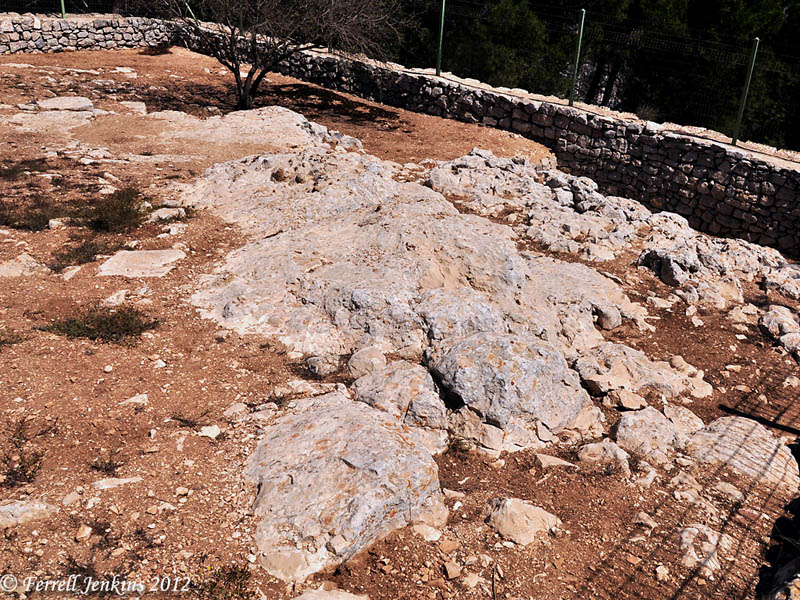
The first photo shows what according to Samaritan tradition is the altar on which Abraham was commanded to offer Isaac (Genesis 22:1-3). Remember that the Samaritans believe that this is Mount Moriah.

Altar of Isaac on Mt. Gerizim (Samaritan View). Photo by Ferrell Jenkins.

Samaritan tradition identifies this rock as the Altar of Isaac where Abraham began to offer Isaac. Photo by Ferrell Jenkins.

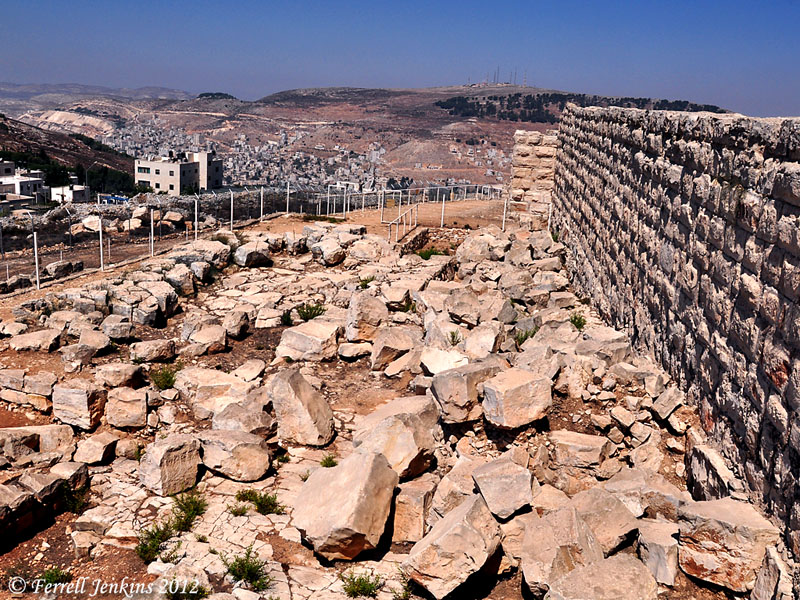
The next photo shows what the Samaritans call the “Twelve Stones.” Samaritans says that the Israelites built the altar they were commanded to built when they crossed the Jordan (Deuteronomy 27:4).

The Twelve Stones, according to Samaritan tradition. Photo by Ferrell Jenkins.

The Twelve Stones, according to Samaritan tradition. Photo by Ferrell Jenkins.

For more information about the archaeological park and the Samaritans see here. The park is under the direction of the Judea and Samaria Civil Administration and the (or of the) Israel Nature and Park Authority.

If you have an interest in the historical information about the temples on Mount Gerizim, check this article by Yitzhak Magen, the recent excavator, here. An attractive brochure is available at the entrance to the park with text by Magen. It is a pleasure to see a brochure written by a knowledgeable person.