Category Archives: Archaeology

Herod the Great and the Emperor Cult

Herod supported Mark Antony against Augustus in the Roman civil war. When Augustus was victorius at the battle of Actium (31 B.C.), Herod convinced Augustus that he was loyal to him. Herod, who already ruled Judea, was granted authority over Galilee and Iturea.

 “In turn, Herod ingratiated himself to Augustus by building monuments and temples in the emperor’s honor. Temples dedicated to the emperor in the early Roman period (20 B.C.E.–120 C.E.) were part of an empire-wide phenomenon known as “the emperor cult.” This Roman imperial institution played a pivotal role in spreading imperial propaganda and encouraging allegiance to the emperor, who was portrayed as a god, or imbued with the spirit of a deity. (Overman, Olive, and Nelson,“Discovering Herod’s Shrine to Augustus.” BAR 29:02).

Herod erected three temples to Augustus: (1) Caesarea Maritima; (2) Samaria, which he named Sebaste, Greek for the Latin Augustus; (3) Near Paneion (Caesarea Philippi; Banias] at the fountain of the Jordan (JW 1:404).

Josephus says,

So when he had conducted Caesar to the sea, and was returned home, he built him a most beautiful temple, of the whitest stone, in Zenodorus’ country, near the place called Panion. This is a very fine cave in a mountain, under which there is a great cavity in the earth, and the cavern is abrupt, and prodigiously deep, and full of a still water; over it hangs a vast mountain; and under the caverns arise the springs of the river Jordan. Herod adorned this place, which was already a very remarkable one, still further by the erection of this temple, which he dedicated to Caesar. (Ant 15:363-364)

We are concerned here with the third temple near Panion (Paneion). We know the same site as Caesarea Philippi because the city was built by Herod Philip and named to honor Caesar and himself. Excavators at Caesarea have identified a structure there, at the entrance of the cave, as the temple to Augustus. Other scholars suggest that this is part of a monumental entrance to the cave of Pan.

Josephus’ expression “near the place called Panion” [Banias, later Caesarea Philippi] indicates a place closer to the Pan temples. However, the Greek term used in Matthew 16:13 (meros) can be translated district, region, or geographical area.

In the drawing below we see an artistic reconstruction of the Pan temenos at Panias (Banyas). The Temple to Augustus is the building on the left that backs up to the cave.
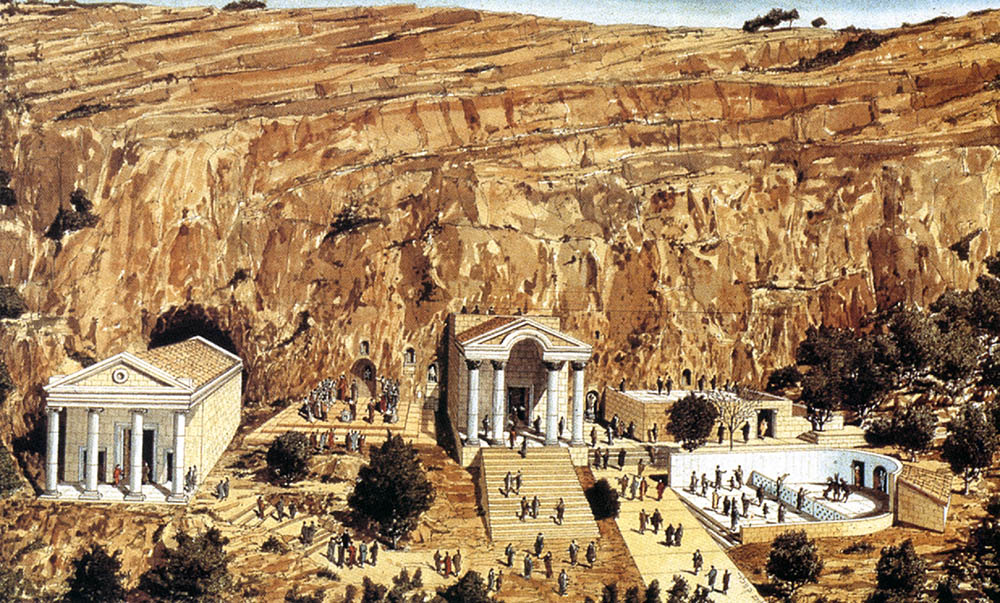
Reconstruction of the Pan temenos at Panias. From Archaeological Sites in Israel, published by the Israel Information Center, Jerusalem, 1998.

Reconstruction of the Pan temenos at Panias. From Archaeological Sites in Israel, published by the Israel Information Center, Jerusalem, 1998.

Archaeologists from Macalester College and Carthage College, working since 1999, have suggested that the third temple was built at Omrit, about three miles southwest of Banias on a bluff overlooking the Hula Valley from the east. If this is correct, then this may be the site of Caesarea Philippi (Mt. 16:13; Mk. 8:27).
Currently the site of Omrit is practically impossible to reach by car, but you can reach the area and then walk to the excavation.
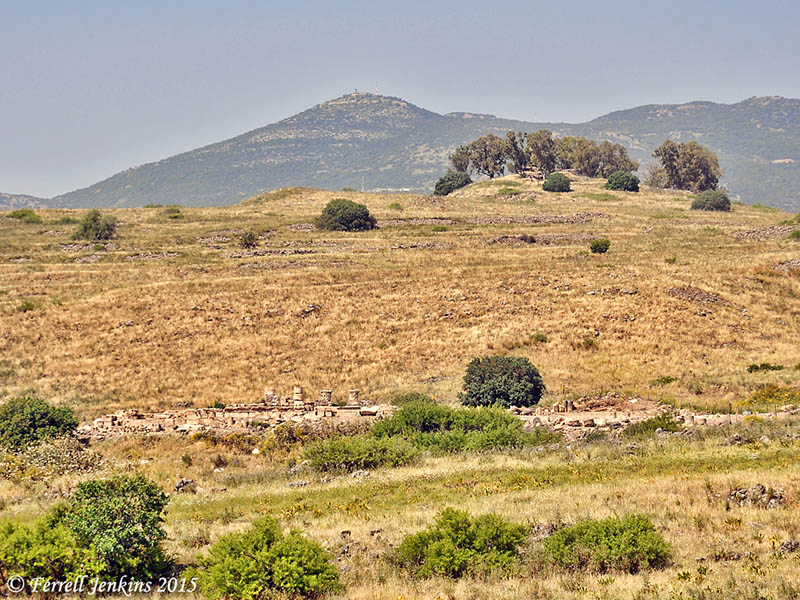
View of the site of Omrit from the south. Photo by Ferrell Jenkins.

View of the site of Omrit from the south. Photo by Ferrell Jenkins.

If we look West from Omrit we have a good view of the northern end of the Hula Valley.
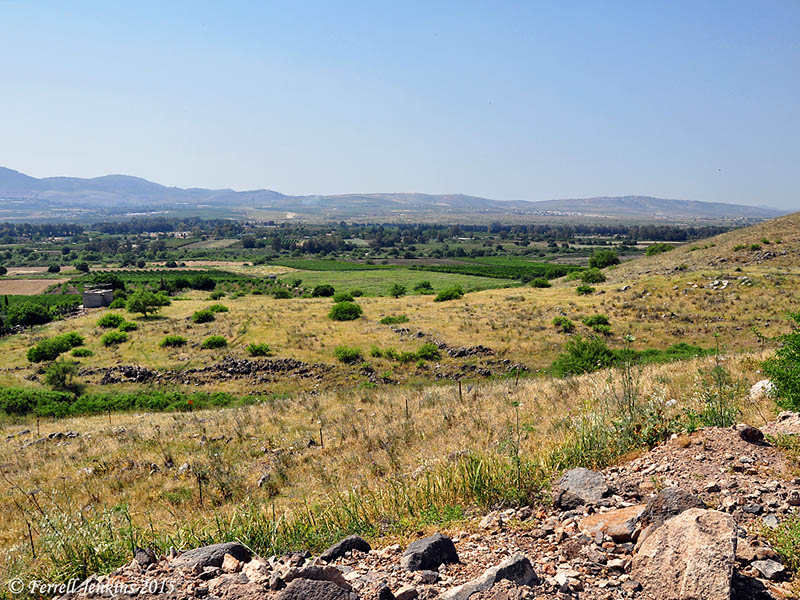
A view NW to the Hula Valley from Omrit. Photo by Ferrell Jenkins.

A view NW to the Hula Valley from Omrit. Photo by Ferrell Jenkins.

According to the excavators, a total of three ornate Roman temples were built at Omrit over a period of about 120 years. The steps we see below belong to the third temple erected near the end of the first century A.D.
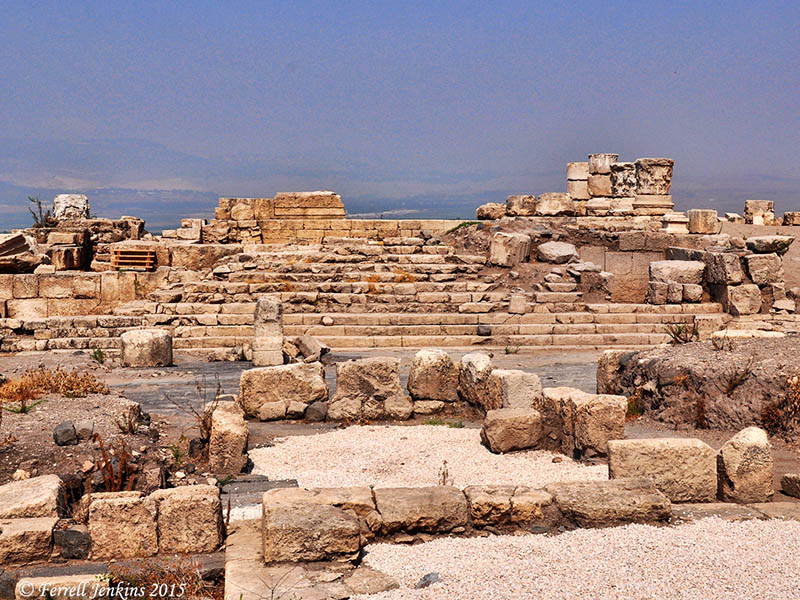
Temple steps at Omrit. Photo by Ferrell Jenkins.

Temple steps at Omrit. Photo by Ferrell Jenkins.

The photo below looks below the ground level to the earlier temples or monumental buildings that are now covered to protect them.
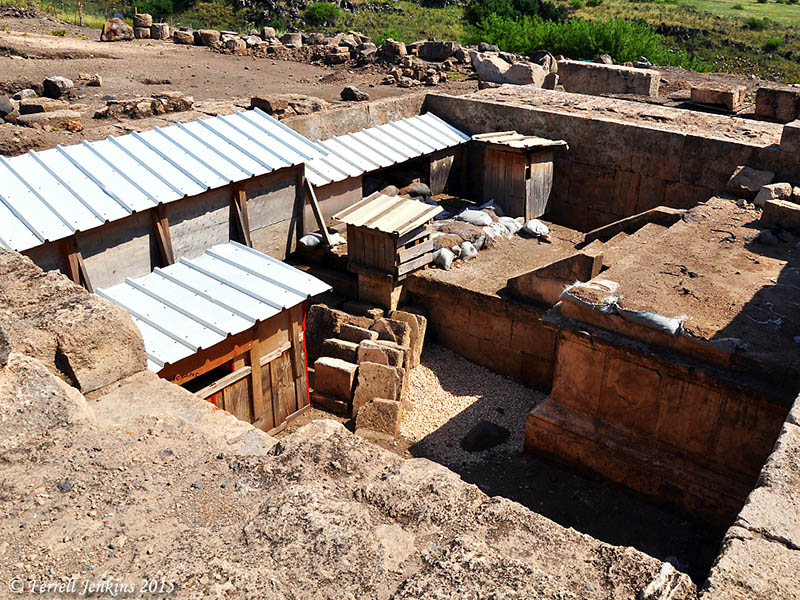
The earlier temples at Omrit. Photo by Ferrell Jenkins.

The earlier temples at Omrit. Photo by Ferrell Jenkins.

A brochure, Omrit A Unique Archaeological Site in the Upper Galilee, is available in PDF here. Note that it presents the viewpoint of the excavators that this is the site of Herod’s Augusteum (p. 5).

In “Debate: Where Was Herod’s Temple to Augustus” BAR 29:05 (Sept./Oct. 2003), Andrea Berlin argues that Banias is still the best candidate for the Augustan temple. Overman, Olive, and Nelson reply and reaffirm their preference for Omrit.

A third suggestions is made by the late Ehud Netzer that an opus reticulatum (latice-type stone work) building at Banias is the site of Herod’s temple to Augustus. This site is about 100 yards west of the Cave of Pan.

Carl Rasmussen calls Omrit his favorite site in Israel here.
Post-traumatic stress as early as 1300 B.C.

A team of scholars at Anglia Ruskin University in the East of England released a report showing evidence of post-traumatic stress as early as 1300 B.C. The study involved documents from ancient Mesopotamia.

Accounts of soldiers being visited by “ghosts they faced in battle” fitted with a modern diagnosis of PTSD.

The condition was likely to be as old as human civilisation, the researchers concluded.

Prof Jamie Hacker Hughes, a former consultant clinical psychologist for the Ministry of Defence, said the first description of PTSD was often accredited to the Greek historian Herodotus.

The brief notice is available at BBC here. I found it interesting that the photo associated with the article shows an Assyrian king of the 9th century B.C. with a bow and arrow, and two others with javelins. In fact, this is not a war or battle relief. A view of the entire relief shows that it was the king is on a lion hunt. But, that has nothing to do with the validity of the report.

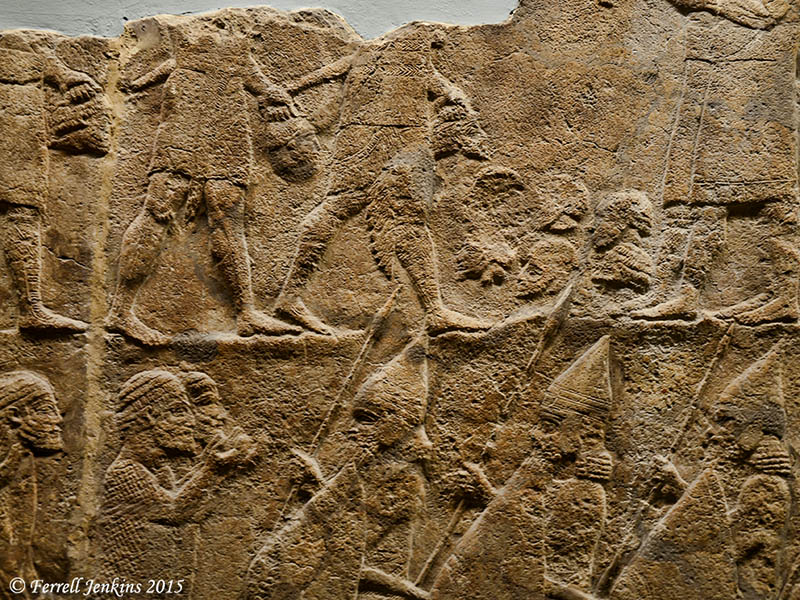
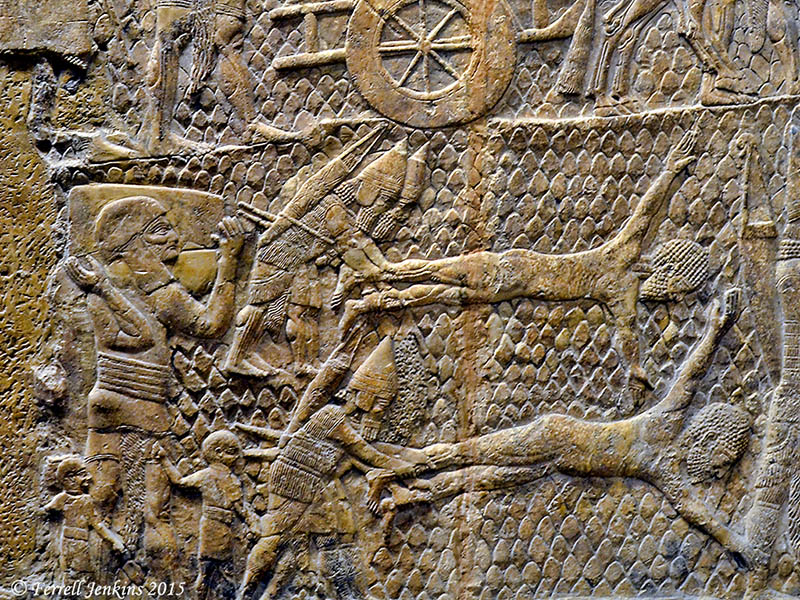
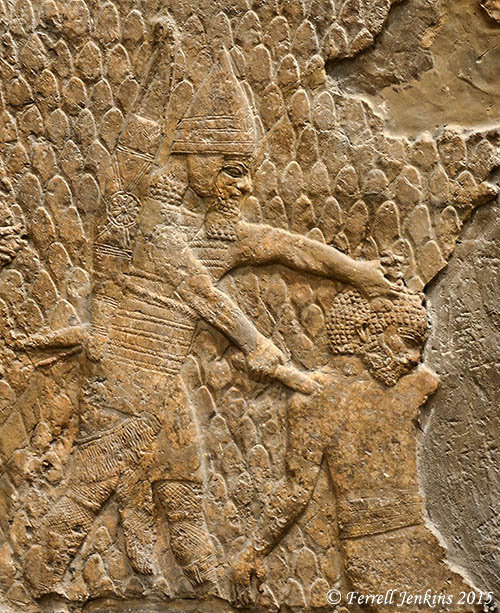
Several examples of the cruelty of war in ancient times is the limestone relief of the siege of Lachish which was found in Sennacherib’s (704-681 B.C.) palace at Nineveh. A replica of the relief may be seen in the Israel Museum, but the original is in its own designated room in the British Museum.

An Assyrian warrior kills one of the locals at Lachish. Photo by Ferrell Jenkins.

An Assyrian warrior kills one of the locals at Lachish. Photo by Ferrell Jenkins.

The Bible mentions the siege of Lachish in several places, including 2 Chronicles 32:9-10.

After this, Sennacherib king of Assyria, who was besieging Lachish with all his forces, sent his servants to Jerusalem to Hezekiah king of Judah and to all the people of Judah who were in Jerusalem, saying, “Thus says Sennacherib king of Assyria, ‘On what are you trusting, that you endure the siege in Jerusalem? (ESV)

Counting the heads of the dead at Lachish. Photo by Ferrell Jenkins.

Counting the heads of the dead at Lachish. Photo by Ferrell Jenkins.

Some scholars suggest that the next panel portrays the Assyrians flaying the Judeans.

Bodies of the dead at Lachish. Photo by Ferrell Jenkins.

Bodies of the dead at Lachish. Photo by Ferrell Jenkins.

One panel shows local citizens being impaled on poles. After a day of impaling, beheading, or counting heads, it might be easy enough to see “ghosts”.

We can desire that all men come to accept the teaching of Jesus when one of His disciples used a sword to advance the cause of the Lord.

Then Jesus said to him, “Put your sword back into its place. For all who take the sword will perish by the sword.” (Matthew 26:52 ESV)

HT: Agade list

Flying over Beit She’an, Bethshan, Beth-shan

The Israelis call it Beit She’an, but English Bible readers will know it as Bethshan. The town is mentioned only a few times in the Old Testament. The English Standard Version uses both Beth-shan and Beth-shean to identify this town. Other English versions use a variety of spellings including Bethshan.

From atop the ancient tell, called Tell el-Husn or Tel Beth She’an, one has an impressive view of the area. Occupational levels date back at least to 3000 B.C. Artifacts from Canaan, Egypt, Anatolia, north Syria, and Mesopotamia have been uncovered from the mound.

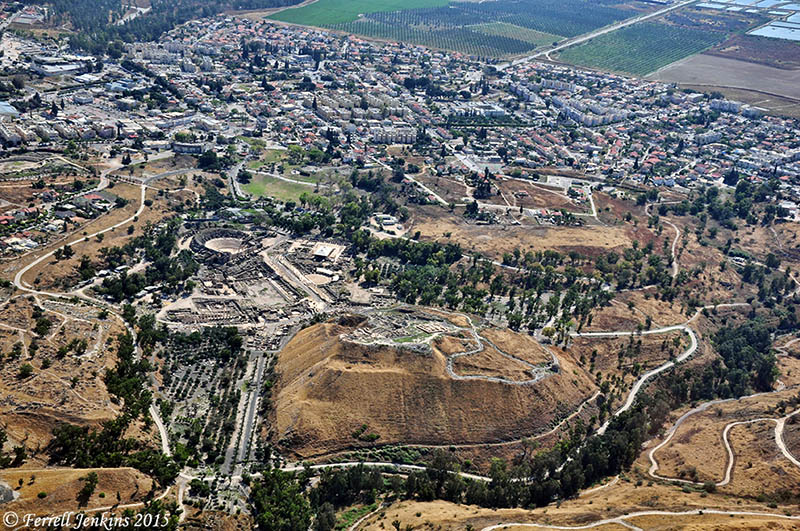
The photo below was made from the air with a view northeast. A small portion of the Harrod Valley, with some fish ponds, is visible in the top of the photo. The River Harod flows to the east of the tel hidden by the line of trees.

Tel Husn (Bethshan) is visible in the bottom of the image. Photo by Ferrell Jenkins.

Tel Husn (Bethshan) is visible in the bottom of the image. Photo by Ferrell Jenkins.

For many Bible students the first event that comes to mind is the defeat of King Saul at the hands of the Philistines. After his death on nearby Mount Gilboa, Saul’s body was taken to Beth-shean and fastened to the wall of the city (1 Samuel 31).

During the Greek period the city was named Scythopolis (city of the Scythians) and expanded to the foot of the tell.

In 63 B.C. the Romans, under the general Pompey, made the city part of the Decapolis (a league of ten cities; Matthew 4:25; Mark 5:20; 7:21). This was the only city of the Decapolis west of the Jordan River. The city was populated by gentiles, Jews and Samaritans.

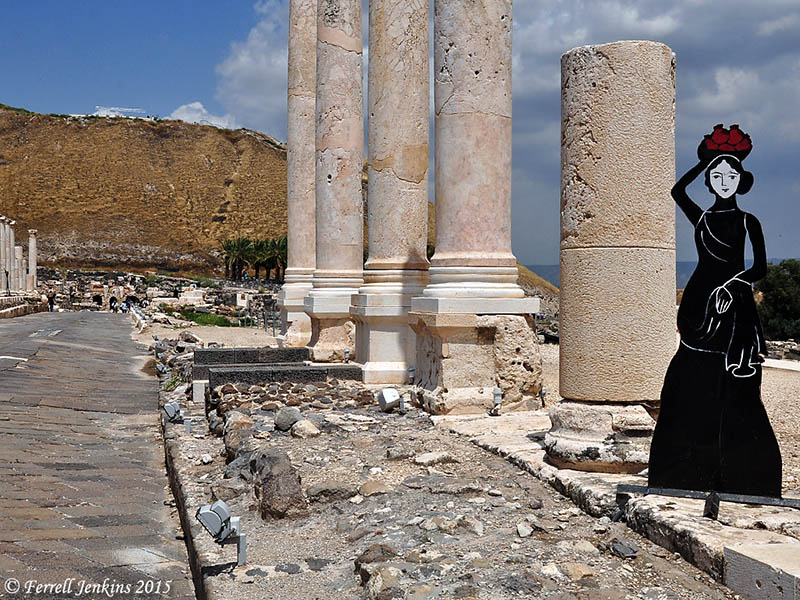
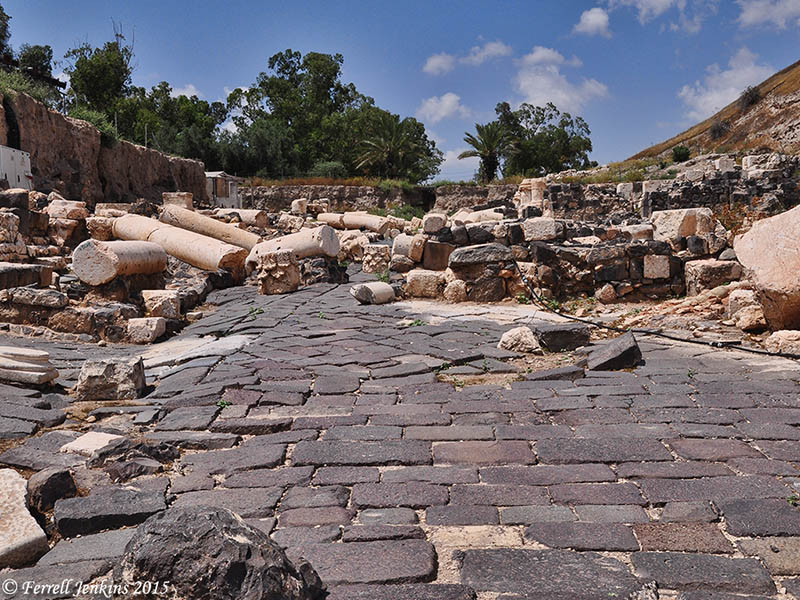
The main street of the Byzantine city. The tel of ancient Bethshan is visible at the end of the street. Photo by Ferrell Jenkins.

The main street of the Byzantine city. The tel of ancient Bethshan is visible at the end of the columned street. Photo by Ferrell Jenkins.

The city grew to its largest size during the Byzantine period as a “Christian” city. It came under Muslim control in A.D. 636, and was destroyed by an earthquake in A.D. 749.

Some of the earthquake damage at Bethshan. Photo by Ferrell Jenkins.

Some of the earthquake damage at Bethshan. Photo by Ferrell Jenkins.

The destroyed Byzantine city lies between the theater and the mound. That’s a lot of history in one small place.

A miscellany of topics

In the past few weeks I have been occupied trying to get some out-of-print material ready for reprint. Occasionally I read something that I think should be shared. Take a look at these.

Ephesus Museum Open. Carl Rasmussen reports on his HolyLandPhotos’Blog that the Ephesus Museum in Seljuk is open after being closed for renovation.

Gentile References in Matthew. Charles Savelle presents a list of “Gentile References in Matthew” at BibleX.

Bible Places Blog. Todd Bolen’s Weekend Roundups have been extremely helpful the past couple of weeks. See here for the most current one.

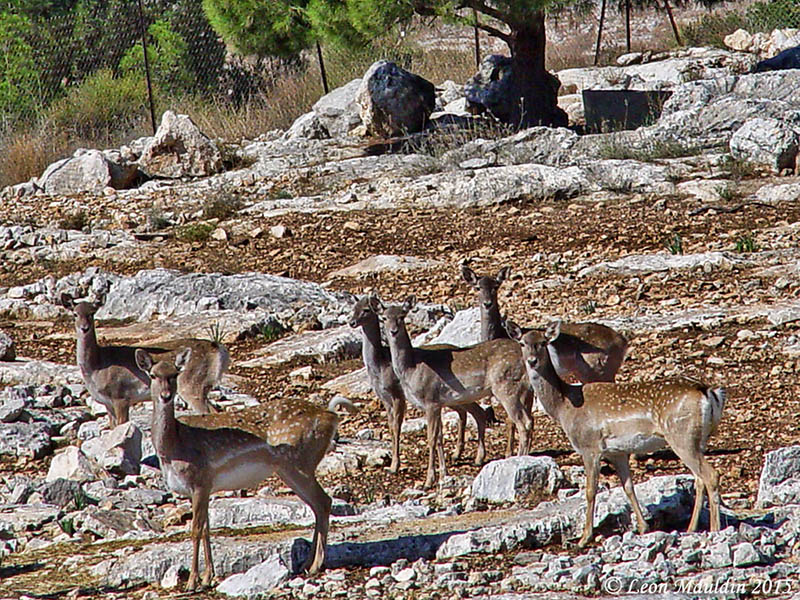
The Fallow Deer. Shmuel Browns writes about how the Fallow Deer was reintroduced into Israel from Iran. Fascinating story with photos here. Browns does not say where he made his photos, but mentions that some of the deer were taken to Neot Kadumim. When Leon Mauldin and I visited Neot Kedumim in 2005 the deer there were young. I note that they are not as gray as those in Shmuel’s photos. Perhaps the age accounts for the difference.

Young fallow deer at Neot Kedumim. Photo by Leon Mauldin.

Young fallow deer at Neot Kedumim. Photo by Leon Mauldin.

Using Maps in Bible Study. Wayne Stiles writes about “The Value of Using Maps in Your Bible Study” here.

Mount Gilboa. The Times of Israel carries an article here with beautiful photos, of the Gilboa Mountains and the wildflowers growing there in the winter and spring.

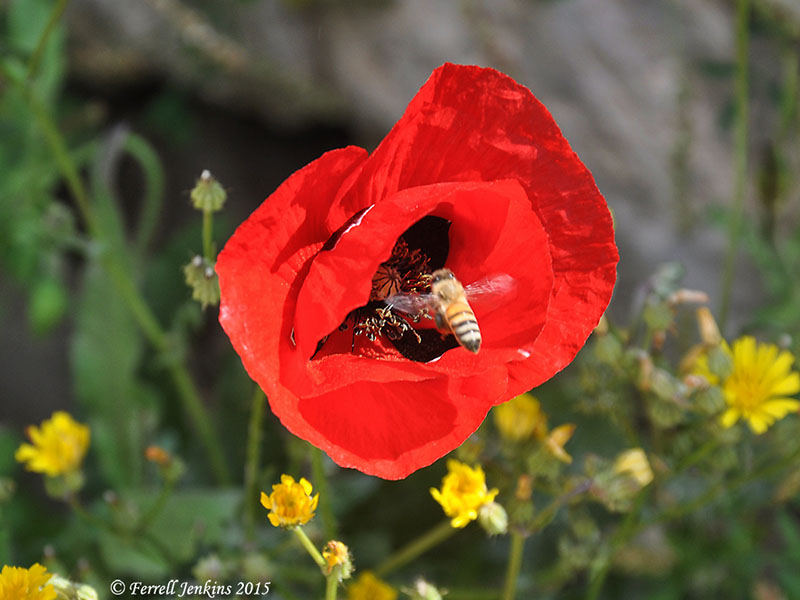
A poppy and a bee at the Pool of Bethesda, Jerusalem. Photo by Ferrell Jenkins.

A poppy and a bee at the Pool of Bethesda, Jerusalem. Photo by Ferrell Jenkins.

Responding to Newsweek. Darrell L. Bock has two more responses here to the Newsweek article on The Bible.

How Many Saviors? Amazon has Ronald Nash’s Is Jesus the Only Savior? available in Kindle format for $1.99 for a limited time. This book can be very helpful in this time of emphasis on pluralism and inclusivism.
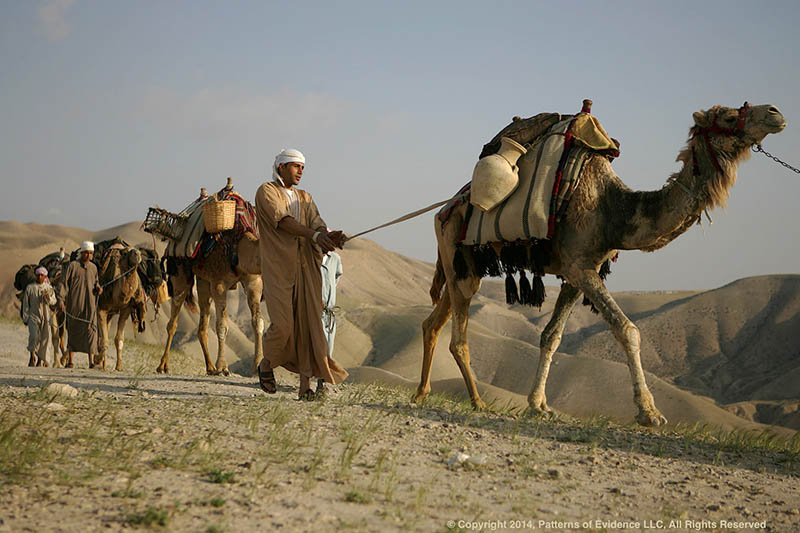
The Exodus. Last Friday I heard Gretchen Carlson’s interview with filmmaker Tim Mahoney on Fox News. It was the first I had heard of the film Patterns of Evidence: Exodus. The film is debuting Monday, January 19 at select theaters nationwide.

A wide variety of scholars are interviewed in the film, including Charles Aling, Manfred Bietak, John Bimson, Israel Finkelstein, James K. Hoffmeier, David Rohl (who has advanced a revised chronology ancient Egypt and Palestine),
Bryant Wood, and others.

For info on the film and places it will be shown see Patterns of Evidence: The Exodus. Here is the trailer.

A few nice photos are available for download.

From Patterns of Evidence.

From Patterns of Evidence.

You are on your own to see/hear and evaluate.

Added Note (Jan. 19, 2015). Todd Bolen calls attention to a review of the film by Larry Largent. This review confirms my suspicions that the flim was an effort to push a revised chronology. Take a look at this review at Biblical Remains.

Ancient underground city discovered in Cappadocia

Turkey’s Central Anatolian province of Nevşehir is known for the unusual rock formations. Now comes a new report that a previously unknown underground city has been found during destruction of some buildings in preparation for new buildings around the Nevşehir fortress.

The city was discovered by means of Turkey’s Housing Development Administration’s (TOKİ) urban transformation project. Some 1,500 buildings were destructed located in and around the Nevşehir fortress, and the underground city was discovered when the earthmoving to construct new buildings had started.

TOKİ Head Mehmet Ergün Turan said the area where the discovery was made was announced as an archeological area to be preserved.

“It is not a known underground city. Tunnel passages of seven kilometers are being discussed. We stopped the construction we were planning to do on these areas when an underground city was discovered,” said Turan.

The city is thought to date back 5,000 years and is located around the Nevşehir fortress. Escape galleries and hidden churches were discovered inside the underground city.

Stating that they were going to move the urban transformation project to the outskirts of the city, Turan said they had paid 90 million Turkish Liras for the project already, but did not see this as a loss, as this discovery may be the world’s largest underground city.

Hasan Ünver, mayor of Nevşehir, said other underground cities in Nevşehir’s various districts do not even amount to the “kitchen” of this new underground city.

“The underground city [was found] in the 45 hectares of the total 75 hectare area that is within the [urban] transformation project. We started working in 2012 with the project. We have taken 44 historical objects under preservation. The underground city was discovered when we began the destruction in line with the protocol. The first galleries were spotted in 2013. We applied to the [Cultural and Natural Heritage] Preservation Board and the area was officially registered,” said Ünver.

The newly discovered underground city will be the biggest among the other underground cities in Nevşehir that have been discovered so far.

The brief Hurriyet Daily News report is available here.

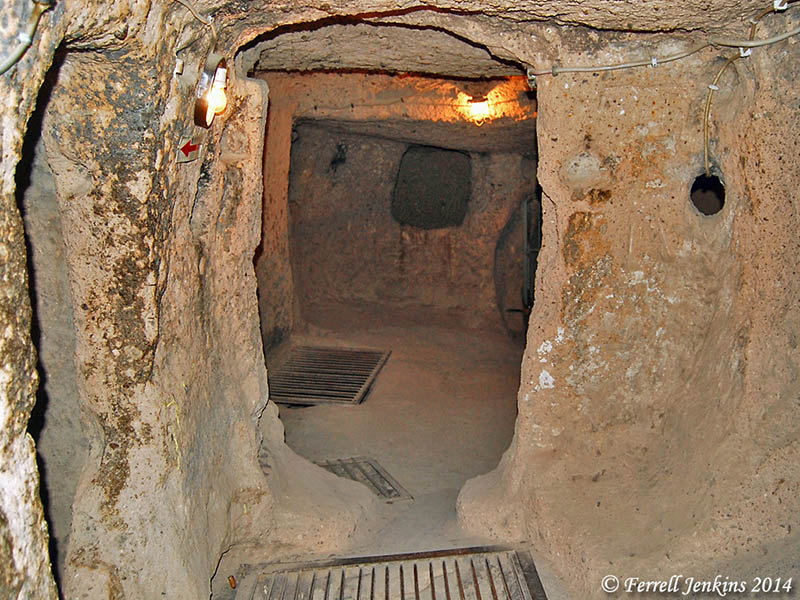
Several underground cities are open to the public. Our photo below was made at Kaymakli, a site registered on the World Heritage List in 1985.

Kaymakli Underground City in Cappadocia. Photo by Ferrell Jenkins.

A room in the Kaymakli Underground City in Cappadocia. Photo by Ferrell Jenkins.

The Bible tells us that Jews of Cappadocia were present in Jerusalem on the day of Pentecost (Acts 2:9). Peter wrote his epistles to saints scattered throughout Cappadocia and other places in Roman Asia Minor (modern Turkey; 1 Peter 1:1-2).

HT: Jimmy Dan Alexander


The Herodium becomes more complex

The information below comes from a news release today from the Herodium Expedition at the Hebrew University of Jerusalem. The Herodium, built by Herod the Great, is located near Bethlehem, the birthplace of Jesus. See our recent Index of articles on Bethlehem and the birth of Jesus for numerous links about the Herodium.

— ♦ —

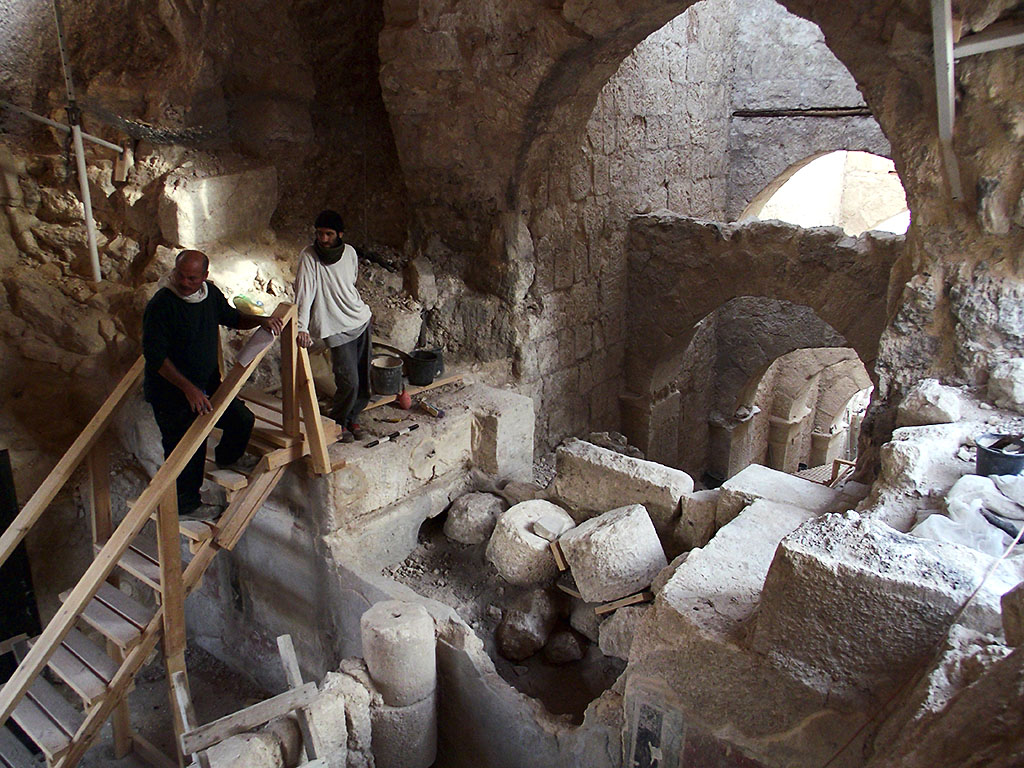
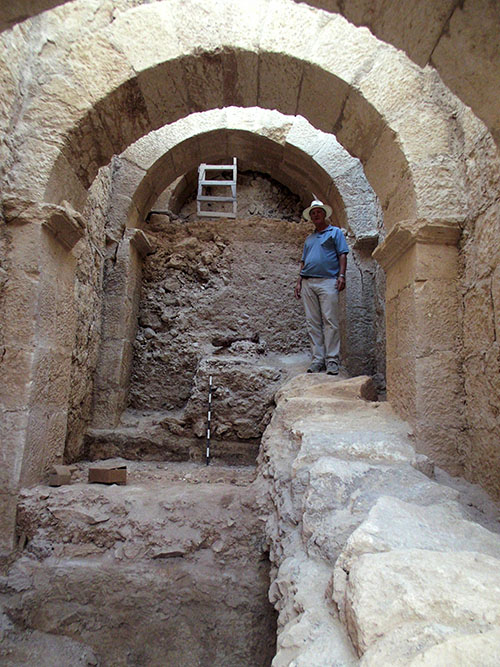
Archaeologists from The Hebrew University of Jerusalem’s Institute of Archaeology have discovered a monumental entryway to the Herodian Hilltop Palace at the Herodium National Park. The unique complex was uncovered during excavations by The Herodium Expedition in Memory of Ehud Netzer over the past year, as part of a project to develop the site for tourism. Photo of unique palace entry complex discovered at Herodian Hilltop Palace by Hebrew University archaeologists.

Photo of unique palace entry complex discovered at Herodian Hilltop Palace by Hebrew University archaeologists. (Credit: The Herodium Expedition at the Hebrew University of Jerusalem)

Photo of unique palace entry complex discovered at Herodian Hilltop Palace by Hebrew University archaeologists. (Credit: The Herodium Expedition at the Hebrew University of Jerusalem)

The main feature of the entryway is an impressive corridor with a complex system of arches spanning its width on three separate levels. These arches buttressed the corridor’s massive side-walls, allowing the King and his entourage direct passage into the Palace Courtyard. Thanks to the supporting arches, the 20-meter long and 6-meter wide corridor has been preserved to a height of 20 meters.   The Hebrew University archaeologists — Roi Porat, Yakov Kalman and Rachel Chachy — suggest that the corridor was built as part of Herod’s plan to turn Herodium into a massive artificial volcano-shaped hill, a vast and impressive monument designed to commemorate the architect-King.   Surprisingly, during the course of the excavations, it became evident that the arched corridor was never actually in use, as prior to its completion it became redundant. This appears to have happened when Herod, aware of his impending death, decided to convert the whole hilltop complex into a massive memorial mound, a royal burial monument on an epic scale.   Whatever the case, the corridor was back-filled during the construction of the massive artificial hill at the end of Herod’s reign. The upper section of a new monumental stairway stretching from the hill’s base to its peak, constructed during the course of this building phase, appears to have been built over it.   The excavators point out that not only was the arched corridor covered over in the course of the construction of the hill-monument, but also all the structures earlier built by Herod on the hill’s slopes, including the Royal Theater uncovered by the expedition in 2008, while still led by Prof. Ehud Netzer, since deceased.   The only edifice not covered over was the splendid mausoleum-style structure, identified by Netzer and the expedition as Herod’s burial-place. Together with the monumental cone-shaped hill, this constituted the unique Herodian Royal burial-complex.

Photo of unique palace entry complex discovered at Herodian Hilltop Palace by Hebrew University archaeologists. Credit: The Herodium Expedition at the Hebrew University of Jerusalem

Photo of unique palace entry complex discovered at Herodian Hilltop Palace by Hebrew University archaeologists. Credit: The Herodium Expedition at the Hebrew University of Jerusalem

During the course of the current excavations, the original impressive Palace vestibule, blocked when the corridor became redundant, was also exposed. This entry-room, decorated with splendid painted frescoes, had a magnificent entryway leading into it, and offered evidence of the rebel occupation during the Great Revolt (66-71 CE), including Jewish Revolt coinage and crude temporary structures.   In addition, the excavations in the arched corridor also turned up impressive evidence from the Bar Kokhba Revolt period (132-135/6 CE): hidden tunnels dug on the site by the rebels as part of the guerilla warfare they waged against the Romans. Supported in part by wooden beams, these tunnels exited from the hilltop fortress by way of the corridor’s walls, through openings hidden in the corridor. One of the tunnels revealed a well-preserved construction of 20 or so cypress-wood branches, arranged in a cross-weave pattern to support the tunnel’s roof.   In the future, according to Mr. Shaul Goldstein, Director of Israel’s Nature and Parks Authority, the excavation of the arched corridor will allow visitors direct access to the Herodium hilltop palace-fortress, in the same way that Herod entered it two thousand years ago. There are also plans to provide tourists direct access from the structures on the slope, the Royal Theater and the Mausoleum, via the earlier monumental stairway, to the hilltop Palace.

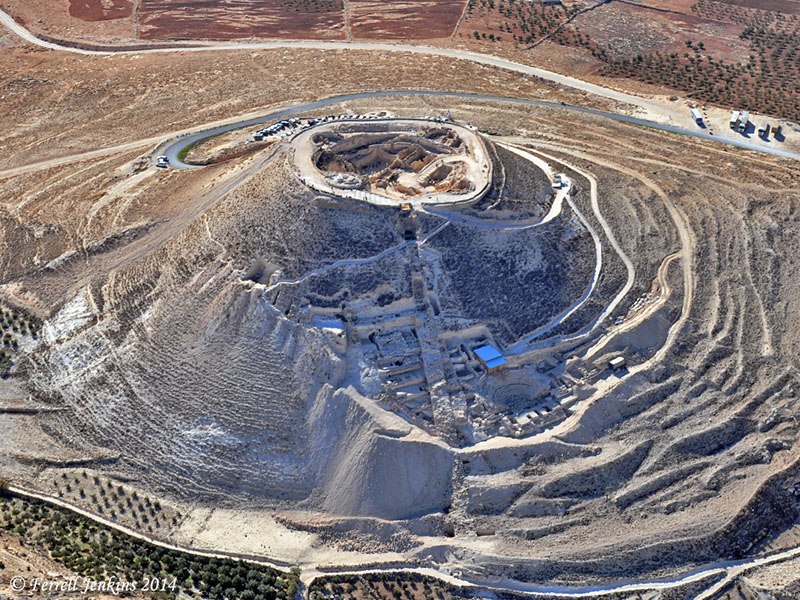
Aerial view of the Herodium. Photo by Ferrell Jenkins.

Aerial view of the Herodium. Photo by Ferrell Jenkins.

The Israel Nature and Parks Authority, the Heritage and Commemoration Department of the Prime Minister’s Office, the Israel Antiquities Authority, and the Etzion Bloc Regional Council and Civilian Administration are all co-partners in the development of the Herodium.   Ehud Netzer was a world-renowned professor at the Hebrew University’s Institute of Archaeology. Following several decades of excavations at the Herodium, Netzer discovered the tomb of Herod the Great in 2007. He died in 2010 at age 76 after being injured in a fall at the Heroudium archaeological site.

HT: Carl Rasmussen, HolyLandPhotos’ Blog; I see that Bible Places Blog has already posted information about this discovery.

Jesus visited Jerusalem during Hanukkah

The Gospel of John records more visits to Jerusalem by Jesus than any other of the Gospels. John is the only one to record the visit during the Feast of Dedication.

At that time the Feast of Dedication took place at Jerusalem. It was winter,  and Jesus was walking in the temple, in the colonnade of Solomon. (John 10:22-23 ESV)

BDAG translates the Greek term egkainia as “festival of rededication.” The feast is also known as Hanukkah and the Feast of Lights.

What is he Feast of Dedication? This feast, observed on the 25th of Kislev (roughly our December), had its origin in the period between the testaments. The desecration of the temple by the Seleucid ruler Antiochus Epiphanes took place in 168 B.C. The climax of the Maccabean revolt was the removal of all evidences of pagan worship from the temple. An eight day feast of dedication was observed in 165 B.C., and continued to be observed annually by the Jews.

At Modin, a village north-west of Jerusalem, on the way from Jerusalem to Lod, the Syrians tried to force an old priest by the name of Mattathias to offer a pagan sacrifice. The priest refused but another Jew volunteered to offer the sacrifice. Mattathias killed his fellow Jew and the Syrian officer. As word spread, Mattathias became a national hero. He was of the family of Hasmon (or Asmoneus). Thus began the Hasmoneans.

The discovery of a burial cave at Modin thought to have been used by the Maccabees and/or their descendants was reported in November, 1995. There are Israeli scholars who argue that this is not the true grave of the Maccabees. An article in Haaretz says,

Amit Re’em, an archaeologist of the Israel Antiquities Authority says all the evidence points to the fact that these graves are of Christians and pagans and that this burial site actually belongs to an ancient monastery.

Read the Haaretz article here.

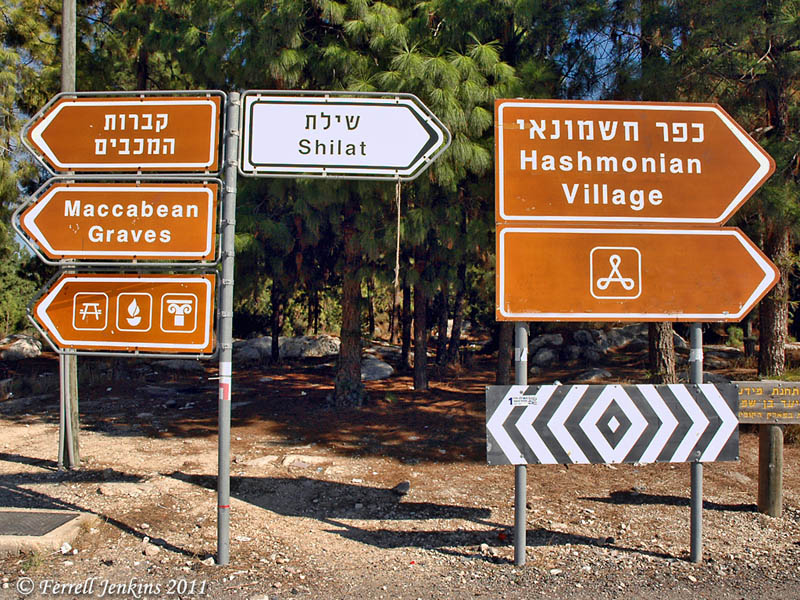
Near Modin, signs point to the Maccabean Graves. Photo by Ferrell Jenkins.

Near Modin, signs point to the Maccabean Graves. Photo by Ferrell Jenkins.

Even though the Feast of Dedication was not a feast authorized by the Mosaic Law, it became part of the Jewish heritage, and Jesus came to Jerusalem at that time — at least once.

Jesus cleansed the Temple on two distinct occasions. The first time is recorded in John 2:14-22. The second account is recorded in Matthew 21:12-13; Mark 11:15-18; and Luke 19:45-48.

• This is a golden oldie from December 24, 2011.

Fishing the Sea of Galilee

In previous posts we have looked at the fish of the Sea of Galilee, ports of the Sea of Galilee, and Tabgha (Heptapegon) which has been called the fishermen’s suburb of Capernaum.

In this post we will concentrate on how the fishing was done.

  • Some fishing was done by casting a hook into the sea (Matthew 17:27).
  • The cast-net could be thrown by an individual fisherman (Matthew 4:18).
  • The seine or dragnet required several workers (Matthew 13:47).
  • The trammel net involved tying together several nets (Mark 1:19-20).

The Hook. I suppose fish hooks are common enough not to need a photo but I will include them in this photo made in the Eretz Israel Museum, Tel Aviv. it shows a cast-net and some fishing hooks in the lower right corner. Note the lead weights on the bottom of the net. Lead weights such as these have been found at various archaeological excavations.

Cast-Net and fish hooks. Eretz Israel Museum. Photo by Ferrell Jenkins.

Cast-Net and fish hooks. Eretz Israel Museum. Photo by Ferrell Jenkins.

The Cast-Net. This photo shows a fisherman casting a net in the warm, shallow water near Tabgha. The cast-net can be thrown from the edge of the water or from a boat.

Fisherman casting a net in the warm water at Tabgha. Photo by Ferrell Jenkins.

Fisherman casting a net in the warm water at Tabgha. Photo by Ferrell Jenkins.

The Seine or Dragnet. In the parable of the net in Matthew 13:47-50, the Greek word for net is sagene. I note that the NAU and the NKJ use the term dragnet, while other versions use the generic net. This is clearly the seine which gathers all kinds of fish that must then be sorted by the fishermen.

I understand about the seine. As a youngster I visited an uncle and aunt who lived near New Hope, Alabama. My uncle set a seine on the Flint River. In the morning he would say, “Let’s go down to the river and see if we have caught anything.” But, I have not seen the seine in use on the Sea of Galilee except in older photos. Here is a photo from the American Colony and Eric Matson collection available from Life in the Holy Land.

Fishermen bringing in a seine (or dragnet). Photo: Life in the Holy Land.

Fishermen bringing in a seine (or dragnet). Photo: Life in the Holy Land.

The next photo is one that I have enhanced from the Eric Matson collection at the Library of Congress.

Fishermen using a seine. Photo: Eric Matson Collection, LOC.

Fishermen using a seine. Photo: Eric Matson Collection, LOC.

A modern adaptation of the seine or dragnet is seen in modern times. I learned that it is called the Purse Seine. The first photo, scanned from a 1992 slide, shows the seine is heavy with the catch of the night.

Fishing boat getting ready to unload a purse seine at Tiberias. Photo by Ferrell Jenkins, 1992.

Fishing boat getting ready to unload a purse seine. Photo by Ferrell Jenkins.

The next photo shows the fishermen getting ready to unload the catch.

Fishing boat using purse-seine on Sea of Galilee - March 1992

Fishing boat using purse-seine on Sea of Galilee – March 1992

The Trammel Net. Nun says that the net being used by the early disciples of Jesus is the trammel net (Mark 1:19-20). This type of net was made by tying together several cast-nets. You can locate many photo illustrations by searching for “trammel nets” in Google. Here is another photo from the Matson collection showing the mending of nets at Ain Geb (En Gev).

Girls of Ain Geb, a Jewish settlement on the east side of the Sea of Galilee. Girls of the settlement mending fishing nets. Photo: Eric Matson collection LOC.

Girls of Ain Geb, a Jewish settlement on the east side of the Sea of Galilee. Girls of the settlement mending fishing nets. Photo: Eric Matson collection LOC.


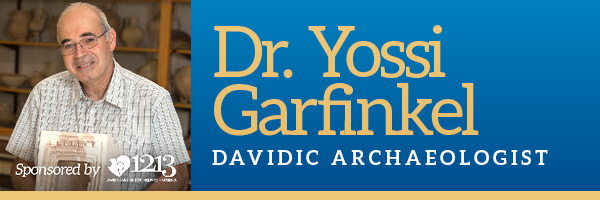
Prof. Yossi Garfinkel speaks in Tampa

Prof. Yossi Garfinkel speaks at Florida College

Prof. Yossi Garfinkel speaks at Florida College

Yosef Garfinkel is head of the Berman Center for Biblical Archaeology at Hebrew University in Jerusalem. He has been involved in numerous archaeological excavations in Israel. Last year he began the fourth archaeological excavation at Lachish. Prior to that he directed the dig at Khirbet Qeiyafa, a site overlooking the Elah Valley where David fought Goliath, from 2007 to 2013.

Garfinkel identifies Khirbet Qeiyafa as Biblical Shaaraim (Joshua 15:36; 1 Samuel 17:52; 1 Chronicles 4:31). He identifies two large buildings dating to the Iron Age at Khirbet Qeiyafa as a palace of David and a royal storeroom. We reported on this identification with photos here.

I think it is still impossible to say if Garfinkel’s identifications are correct, but I can say that his presentation will be interesting and enlightening. I have heard him speak at the Society of Biblical Literature annual meetings.

Florida College — Temple Terrace, FL
Puckett Auditorium
Tuesday, November 18 — 7:30 p.m.

This presentation is part of the Life Enrichment program at Florida College. These programs are intended primarily for students, faculty and staff of Florida College, but there should be some seats available for visitors who are interested in the subject.

Jesus taught the crowds from a boat

What kind of boat did Jesus sit in when he spoke parables to the multitudes gathered around the cove of the sower?

That same day Jesus went out of the house and sat beside the sea. And great crowds gathered about him, so that he got into a boat and sat down. And the whole crowd stood on the beach.  (Matthew 13:1-2 ESV)

We can not know details about the boat mentioned in this text. Only one boat from the Roman period has been discovered in the Sea of Galilee.

A boat that belonged to the Roman period (dated from the first century B.C. to the first century A.D.) was discovered buried in the mud on the shore of the Sea of Galilee in January, 1986, by two members of the Kibbutz Ginosar. Two years of drought made possible the discovery. The discovery was made south of the Kibutz and north of the Migdal, the traditional site of Magdala (or Tarichea in Greek).

The boat measures 26.90 x 7.55 feet. Shelly Wachsmann, nautical archaeologist for the Israel Antiquities Authority and Museums, says,

The boat was most likely used for fishing and transport of people and cargo. It could have been sailed, or rowed by a crew consisting of four oarsmen and a helmsman. – (An Ancient Boat Discovered in the Sea of Galilee, a brochure once sold at the Museum.)

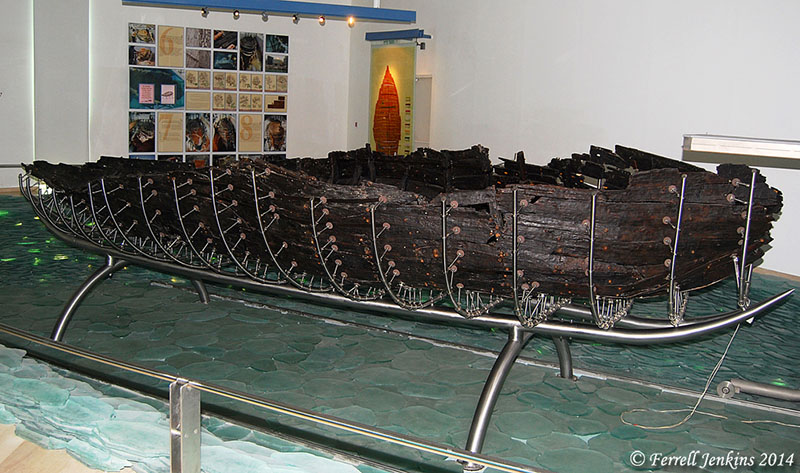
The boat is now displayed in the Yigal Allon Centre at Kibbutz Ginosar.

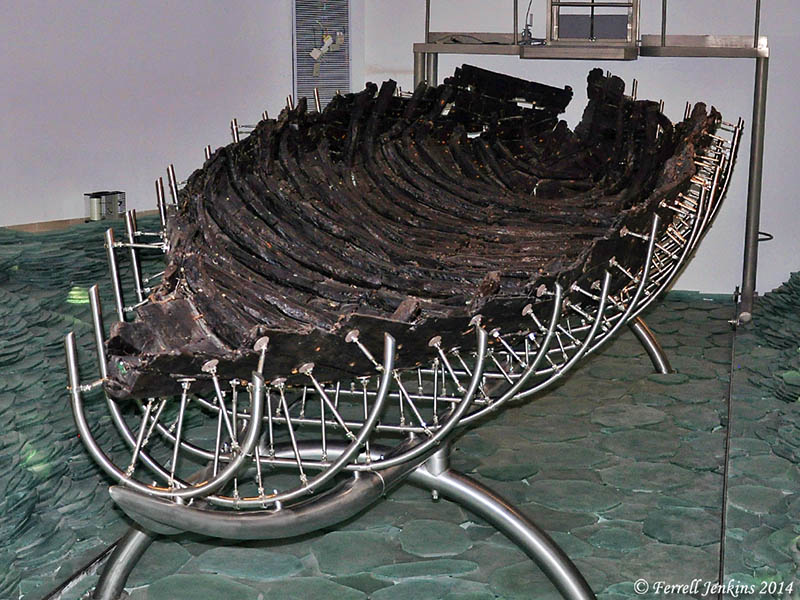
The Roman boat discovered in the Sea of Galilee in 1986. Photo by Ferrell Jenkins.

The Roman boat discovered in the Sea of Galilee in 1986. Photo by Ferrell Jenkins.

The photo below shows the side view of the boat. The display on the wall informs us that,

The boat is made mostly of oak and cedar, together with other types of wood, some recycled from disused boats. Thus far, laboratory tests have found eleven types of wood in the boat. Some were used to build the hull and others were added in smaller pieces later, to replace missing parts or repair faulty ones. The result is an intricate wooden patchwork vessel.

Twelve, not eleven, trees are shown on the display: Cedar, Tabor Oak, Christ Thorn, Carob, Aleppo Pine, Hawthorn, Plane Tree, Atlantic Terebinth, Sycomore, Laurel, Willow, and Judas Tree.

The Roman boat displayed in the Yigal Allon Museum. Photo by Ferrell Jenkins.

The Roman boat displayed in the Yigal Allon Museum. Photo by Ferrell Jenkins.

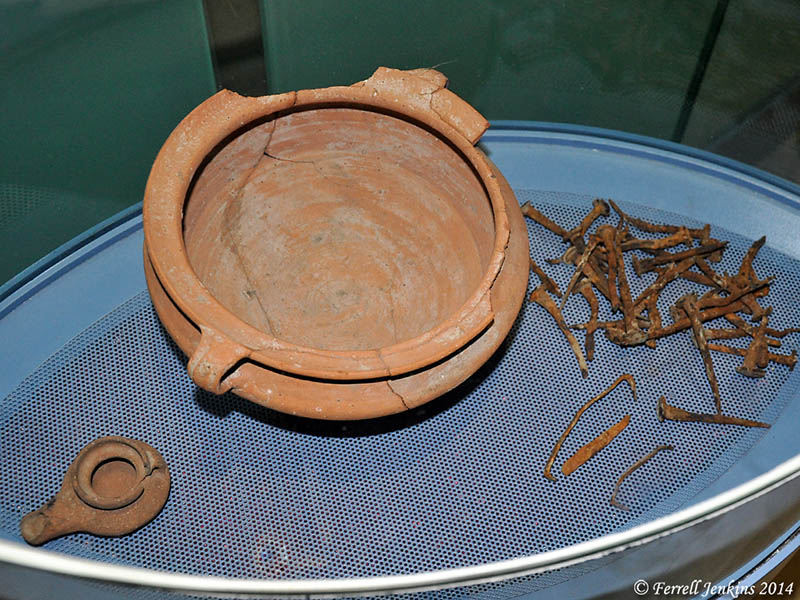
A pottery lamp was found inside the overturned boat, and a cooking pot was found outside the boat near the prow. These vessels, along with some nails from the boat, are displayed at the museum.

Pottery found in association with the boat, and nails from the boat. Photo by Ferrell Jenkins.

Pottery found in association with the boat, and nails from the boat. Photo by FJ.

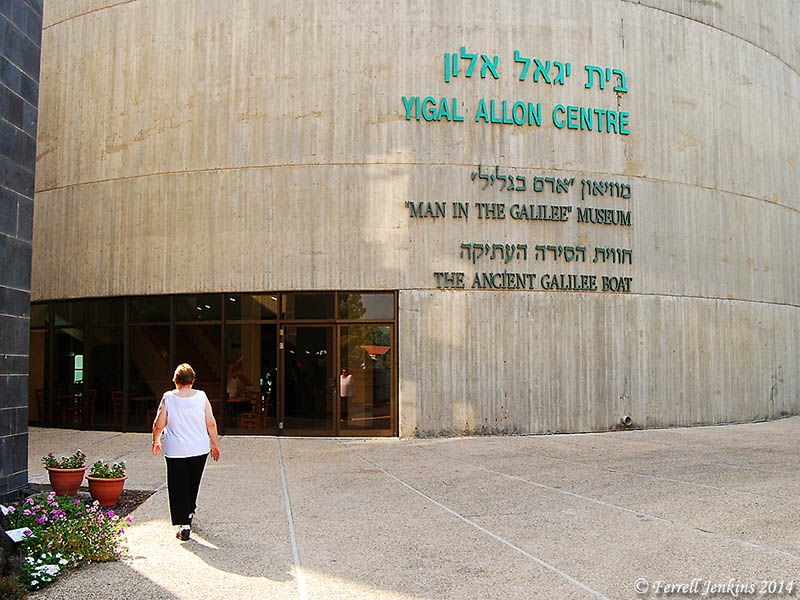
At first the boat was placed in a tank in a temporary building while the conservation took place. It is now beautifully displayed in the Yigal Allon Centre, a museum at Kibbutz Ginosar on the east shore of the Sea of Galilee.

Entrance to the Yigal Allon Center where the Roman boat is displayed. Photo by Ferrell Jenkins.

Entrance to the Yigal Allon Centre where the Roman boat is displayed. Photo by FJ.

The boat used by Jesus and the disciples would have been larger (John 6:22; Mark 4:38). But on some occasions Jesus had a boat standing ready for Him (Mark 3:9). Perhaps one like this one.

The story of the discovery of the boat is told by Shelly Wachsmann in the Biblical Archaeology Review (14:05; Sept/Oct 1988). This little tidbit might be of interest here:

On Sunday [February 9, 1986], we were startled to read newspaper reports of a wreck from Jesus’ time that had been discovered in the Sea of Galilee. Somehow the news had leaked. By Monday the press was writing in front page stories about the discovery of the “boat of Jesus.”

The media hype was soon overwhelming. The Ministry of Tourism actively promoted the “Jesus connection” in the hope of drawing pilgrims to Israel. In Tiberias, Ultra-Orthodox Jews, fearful that excavation of the boat would promote Christian missionary work, demonstrated against it.

During the Jewish War in Galilee the Roman Emperor Vespasian made headquarters in Tarichea (= Magdala) for a period of time. The Romans engaged the Jews in a fierce naval battle. The outcome was not good for the local residents. I suggest you consult Josephus’ Wars of the Jews, book 3, for details. Notice this brief account of the outcome.

529 but as many of these were repulsed when they were getting ashore, they were killed by the arrows upon the lake; and the Romans leaped out of their vessels, and killed a great many more upon the land: one might then see the lake all bloody, and full of dead bodies, for not one of them escaped. 530 And a terrible stink, and a very sad sight there was on the following days over that country; for as for the shores, they were full of shipwrecks, and of dead bodies all swelled; and as the dead bodies were inflamed by the sun, and putrefied, they corrupted the air, insomuch that the misery was not only the object of pity to the Jews, but to those who hated them and had been the authors of that misery. 531 This was the upshot of the naval battle. The number of the slain, including those who were killed in the city before, was six thousand and five hundred. (Jewish Wars 3:529-531)

The Ginosar about which we speak is on the shore of the region called the land of Gennesaret in the Gospels (Matthew 14:34; Mark 6:53). The lake is called the lake of Gennesaret in Luke 5:1.

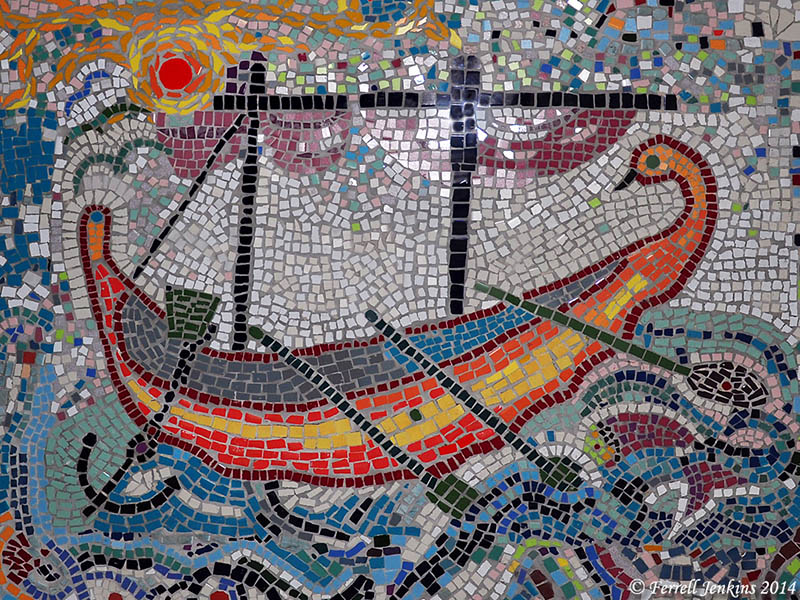
A mosaic with a similar boat had been found earlier at nearby Magdala. The original has been displayed at Capernaum for many years, but it was in poor condition the last time I saw it there. A modern replica, pictured below, may be seen in the Yigal Allon Centre.

Replica of a mosaic discovered at Magdala. Photo by Ferrell Jenkins.

Replica of a mosaic discovered at Magdala. Photo by Ferrell Jenkins.

Boats played an important role in life around the Sea of Galilee in the time of Jesus. They were important in His ministry as well.