Category Archives: Archaeology

Damascus Gate in Jerusalem

After dinner this evening we went to Damascus Gate to try our hand at some night shots of the Gate. Here is one of my resultant photos.

Damascus Gate at Night. Photo by Ferrell Jenkins.

Damascus Gate at Night. Photo by Ferrell Jenkins.

Damascus Gate is the main one of three gates on the north side of the Old City wall in Jerusalem. The gate we see was built over a gate from the early second century when the city was rebuilt by the Romans, and likely over the earlier gate from New Testament times.

The gate is called Damascus because this formerly was the way one would depart Jerusalem to head for the city of Damascus. Paul may have used an earlier gate when he made his way to Damascus to locate and bind followers of Christ and bring them to Jerusalem for trial (Acts 9, 22, 26).

The weather was pleasantly cool this evening. Earlier in the week in Tiberias we found the 104° to be uncomfortable.

Jesus visited His hometown

Early in His ministry Jesus left Nazareth and made Capernaum his base of operation. From there He went all over Galilee and as far away as Tyre and Sidon and the Decapolis.

In the course of time Jesus returned to His hometown. Here is the  account of the events associated with that visit as recorded in the Gospel of Mark.

He went away from there and came to his hometown, and his disciples followed him. And on the Sabbath he began to teach in the synagogue, and many who heard him were astonished, saying, “Where did this man get these things? What is the wisdom given to him? How are such mighty works done by his hands? Is not this the carpenter, the son of Mary and brother of James and Joses and Judas and Simon? And are not his sisters here with us?” And they took offense at him. And Jesus said to them, “A prophet is not without honor, except in his hometown and among his relatives and in his own household.” And he could do no mighty work there, except that he laid his hands on a few sick people and healed them. And he marveled because of their unbelief. And he went about among the villages teaching.  (Mark 6:1-6)

We often hear the expression, “You can never go home again.” We see this played out in many ways. The college student who has enjoyed the freedom of being away from home seldom feels comfortable back in the family basement.

Jesus’ expression is also  commonly repeated.  “A prophet is not without honor, except in his hometown and among his relatives and in his own household.”

The familiarity with Jesus in His pre-ministry years, knowledge of his work as a carpenter, and his family, caused the residents of Nazareth to reject Him.

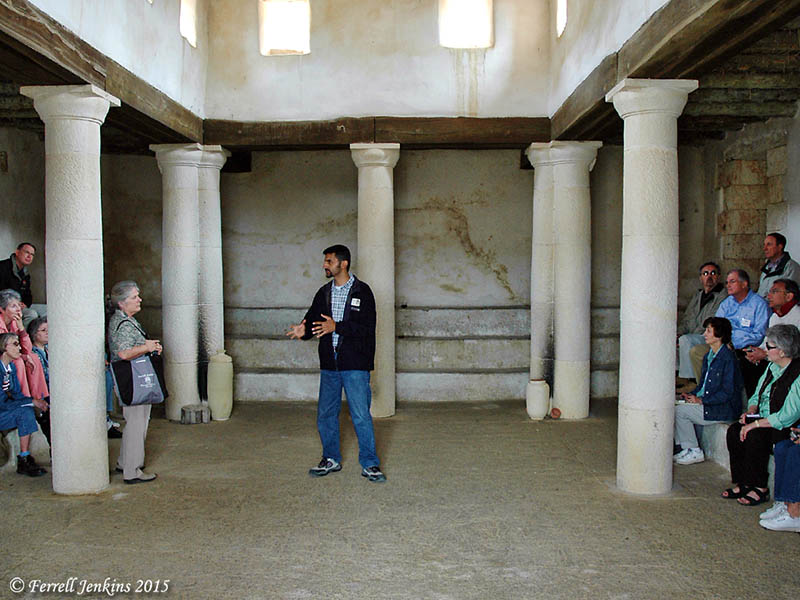
Our photo shows the interior of the synagogue at Nazareth Village. Perhaps the synagogue of Jesus’ time looked somewhat like this.

The Synagogue at Nazareth Village. Photo by Ferrell Jenkins.

The Synagogue at Nazareth Village. Photo by Ferrell Jenkins.

While we may not be able to return to the place where we grew up, we are always welcomed into the presence of the heavenly father.

Jesus taught in the synagogue at Capernaum

The gospel of Mark mentions Jesus teaching and performing miracles in the synagogue at Capernaum.

  • He taught in the synagogue and performed a miracle there (Mark 1:21-29)
  • He healed a man with a withered hand (Mark 3:1-5)
  • Jairus, one of the rulers of the synagogue, implored Jesus to make his daughter well. Jesus raised the young girl from the dead (Mark 5:22-43)

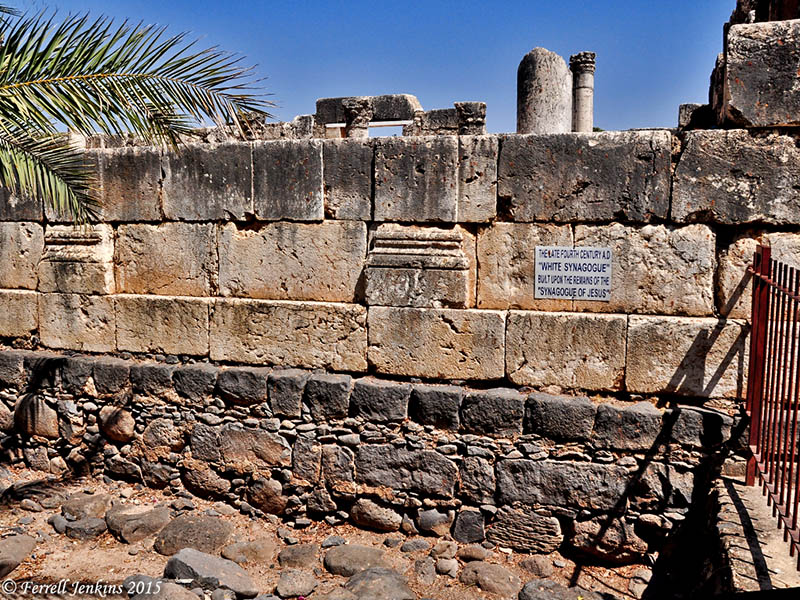
A synagogue has been partially reconstructed from the archaeological ruins at Capernaum. Scholars differ on the age of the synagogue with opinions ranging from the late second century to the fifth century. Italian archaeologists who excavated the site in 1981 say the synagogue dates to the Byzantine period (late fourth or early fifth century). Israeli scholars tend to place the synagogue in the second/third century.

The Italians think they have found the basalt ruins of the first century synagogue under the floor of the fourth/fifth century one. You can see part of that black basalt foundation to the left of the steps. They believe that this earlier synagogue is the one built by the Roman centurion (Luke 5:1-5).

The reconstructed synagogue at Capernaum. Photo by Ferrell Jenkins.

The reconstructed synagogue at Capernaum. Photo by Ferrell Jenkins.

Our photo below shows a closer view of the basalt foundation.

The black basalt foundation is visible under the white limestone building. Photo by Ferrell Jenkins.

The black basalt foundation is visible under the white limestone building. Photo by Ferrell Jenkins.

Several articles about the Capernaum synagogue are available in Biblical Archaeology Review (1982 and 1983).

Russian archaeologists say enclosure wall uncovered at Memphis, Egypt

Not much is left at the ancient Egyptian city of Memphis. This is not surprising to those who believe the Bible includes prophecy about various ancient nations.
The prophet Ezekiel has this to say about Memphis.

This is what the sovereign LORD says: I will destroy the idols, and put an end to the gods of Memphis. There will no longer be a prince from the land of Egypt; so I will make the land of Egypt fearful.  (Ezekiel 30:13)

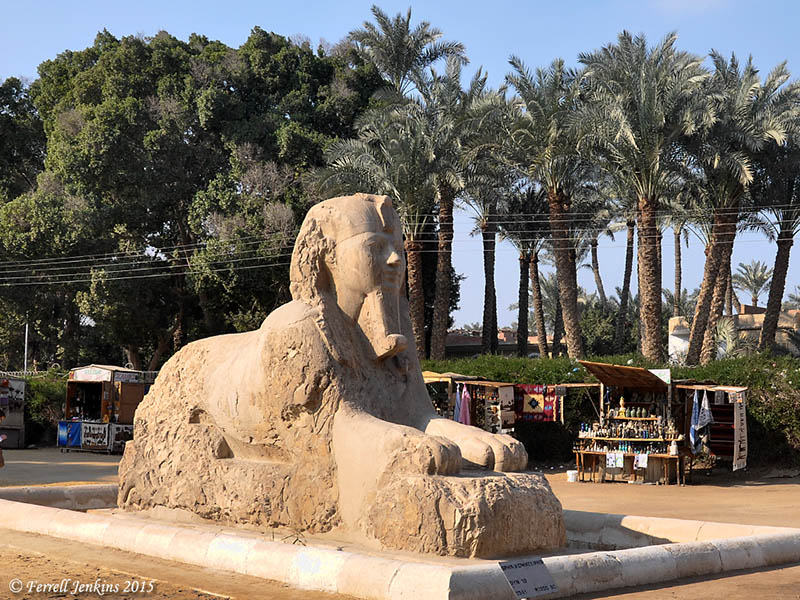
The alabaster sphinx of Rameses II  (13th century B.C.) is one of the nicest pieces on display at the open air museum. It is also one of the few artifacts to be seen. The prophecy has surely come to pass.

Alabaster sphinx of Rameses II at Memphis. Photo by Ferrell Jenkins.

Alabaster sphinx of Rameses II at Memphis. Photo by Ferrell Jenkins.

A recent article in The Cairo Post here reports that an archaeology team of the Russian Institute of Egyptology has uncovered ruins of the enclosure wall that surrounded Memphis about 3200 B.C.

The article includes a note saying the new Grand Egyptian Museum, being built near the Giza Pyramids, is scheduled to open in 2018. The uprising in Egypt that occurred in 2011 has caused the delayed opening of the Museum.

HT: Agade List

They removed the roof and let down the bed

During the ministry of Jesus at Capernaum four men brought a paralyzed man to see Jesus, likely seeking healing, but there were so many people in the house that it was not possible to get in to see Jesus.

And when they could not get near him because of the crowd, they removed the roof above him, and when they had made an opening, they let down the bed on which the paralytic lay. (Mark 2:4 ESV)

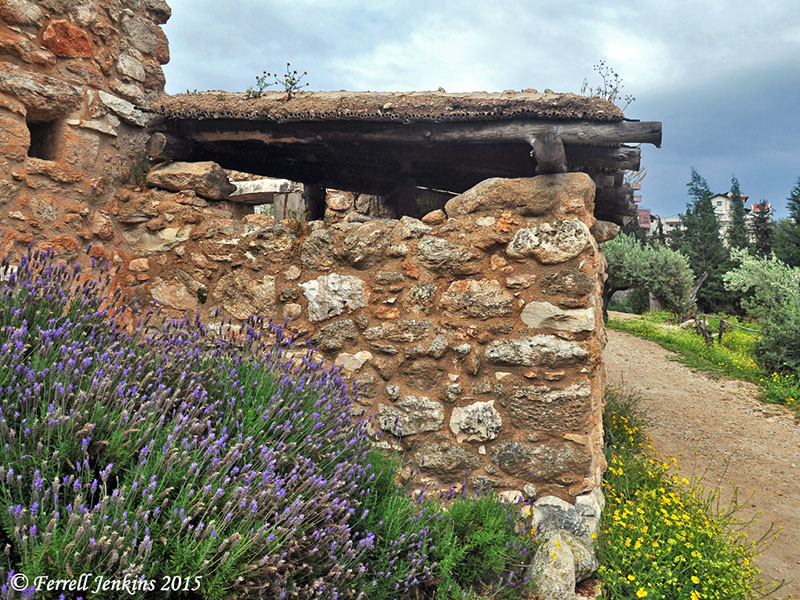
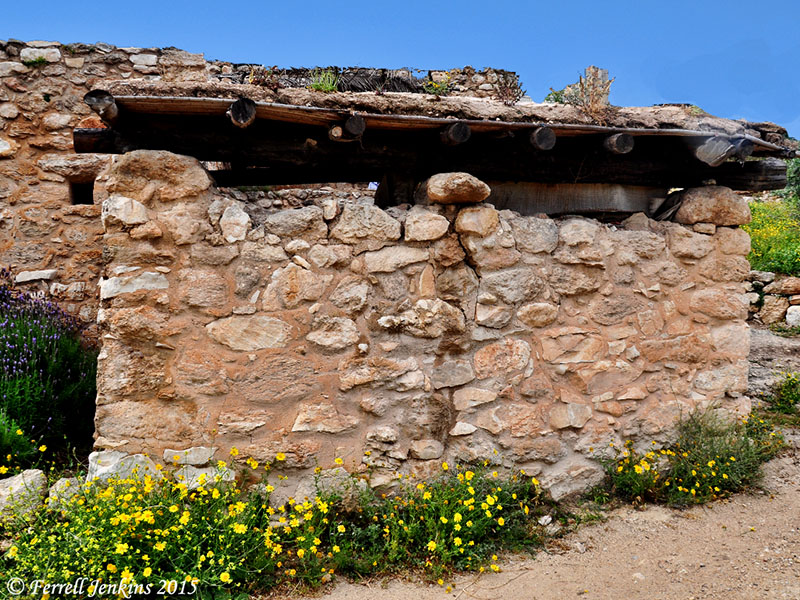
Reconstructed house at Nazareth Village showing roof construction. Photo by Ferrell Jenkins.

Reconstructed house at Nazareth Village showing roof construction. Notice the few weeds growing on the roof. Photo by Ferrell Jenkins.

Craig S. Keener describes the way the roofs of these houses were constructed.

The roof was approached by an outside staircase, so they could reach it unimpeded. The roof of single-story homes was sturdy enough for walking but was normally made of branches and rushes laid over the roof’s beams and covered with dried mud; thus one could dig through it. (The IVP Bible Background Commentary: New Testament)

M. J. Selman says,

Roofs were constructed from beams covered with branches and a thick layer of mud plaster, though the rafters were sometimes supported by a row of pillars along the middle of the room. Cylindrical stone rollers about 60 cm. [23.6 inches] long were used to keep the roofs flat and waterproof, though roofs needed to be re-plastered annually prior to the rainy season to seal cracks which had developed during the summer heat. (New Bible Dictionary, 3rd ed.)

The picture below shows a reconstructed house at Nazareth Village with a roof like the one mentioned above. Notice the beams made from small trees, the mud on the top, and some grass and weeds growing in it.

Reconstructed house at Nazareth Village showing roof construction. Photo by Ferrell Jenkins.

Reconstructed house at Nazareth Village showing roof construction. Photo by Ferrell Jenkins.

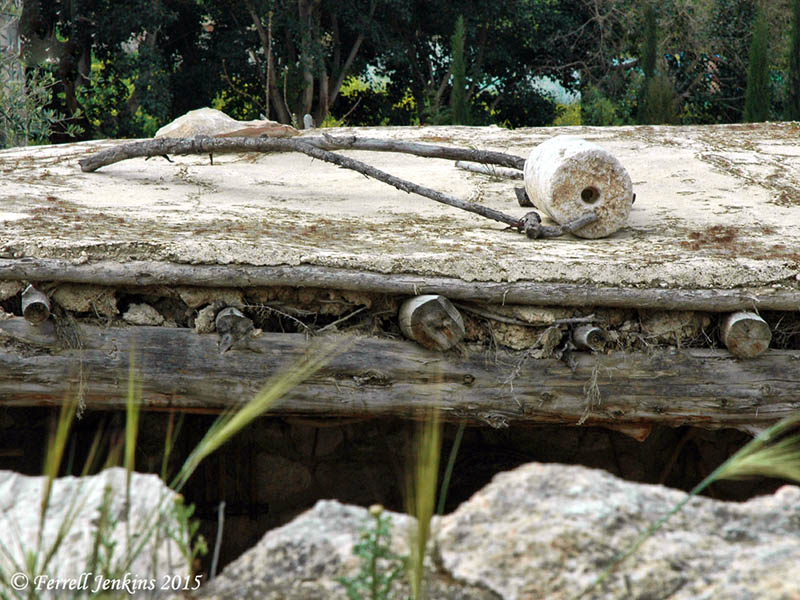
The next photo shows a portion of a roof made from wood and mud. You will also notice a roof roller on the roof. After the winter rains it was necessary to pack the roof with a roof roller. Roof rollers are commonly discovered during archaeological excavations.

Typical roof from NT times with roof roller. Nazareth Village. Photo by Ferrell Jenkins.

Typical roof from NT times with roof roller. Nazareth Village. Photo by Ferrell Jenkins.

The account of Luke, a gentile physician, adds an interesting point that creates a small problem in interpretation.

But since they found no way to carry him in because of the crowd, they went up on the roof and let him down on the stretcher through the roof tiles right in front of Jesus. (Luke 5:19 NET)

Did you notice the reference to roof tiles? One of the Translator’s Notes in the NET Bible discusses this problem.

There is a translational problem at this point in the text. The term Luke uses is keramos. It can in certain contexts mean “clay,” but usually this is in reference to pottery (see BDAG 540 s.v. 1). The most natural definition in this instance is “roof tile” (used in the translation above). However, tiles were generally not found in Galilee. Recent archaeological research has suggested that this house, which would have probably been typical for the area, could not have supported “a second story, nor could the original roof have been masonry; no doubt it was made from beams and branches of trees covered with a mixture of earth and straw” (J. F. Strange and H. Shanks, “Has the House Where Jesus Stayed in Capernaum Been Found?” BAR 8, no. 6 [Nov/Dec 1982]: 34). Luke may simply have spoken of building materials that would be familiar to his readers.

There are other possible interpretations, but I hope this information with the photos will help you better understand the biblical text.

Pay your taxes and do not fear the authorities

While reading Romans 13 I came to Paul’s admonition to the saints at Rome, “Would you have no fear of the one who is in authority? Then do what is good.” My mind immediately turned to the mosaic which was discovered during the excavation of the Byzantine public area at Caesarea Maritima.

The context in Paul’s Epistle to the Romans reads this way.

For rulers are not a terror to good conduct, but to bad. Would you have no fear of the one who is in authority? Then do what is good, and you will receive his approval, for he is God’s servant for your good. But if you do wrong, be afraid, for he does not bear the sword in vain. For he is the servant of God, an avenger who carries out God’s wrath on the wrongdoer. (Romans 13:3-4 ESV)

The sign at the site describes the building where the mosaic was found as a Tax Archive. The original is said to be on display at the Kibbutz Sdot Yam Museum. The edifice is identified as “Byzantine government offices where clerks recorded tax revenues.”

Mosaic Treasury at Caesarea Maritima. Photo by Ferrell Jenkins.

Mosaic Treasury at Caesarea Maritima. Photo by Ferrell Jenkins.

I suppose they did not understand that this is politically incorrect!

Passing through the grainfields on the Sabbath

All three Synoptic Gospels record the incident of Jesus and His disciples passing through the grainfields on a Sabbath.

On a Sabbath, while he was going through the grainfields, his disciples plucked and ate some heads of grain, rubbing them in their hands. But some of the Pharisees said, “Why are you doing what is not lawful to do on the Sabbath?” (Luke 6:1-2 ESV; See also Matthew 12:1-8; Mark 2:23-28)

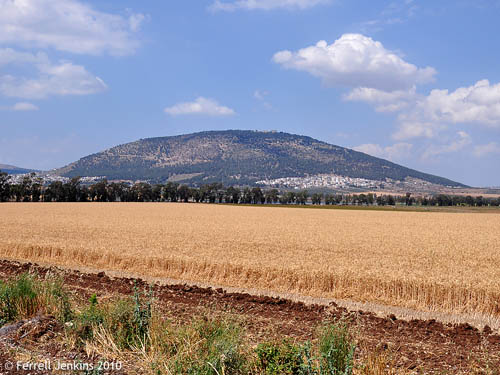
I thought I would put together some photos to help you visualize what happened here. First, we have a photo of a wheat field below Mount Tabor. The photo is made looking north west from near the site of ancient En-dor. The area is famous as the home of the medium visited by King Saul (1 Samuel 28:7).

Wheat field with view NW to Mount Tabor. Photo by Ferrell Jenkins.

Wheat field with view NW to Mount Tabor. Photo by Ferrell Jenkins.

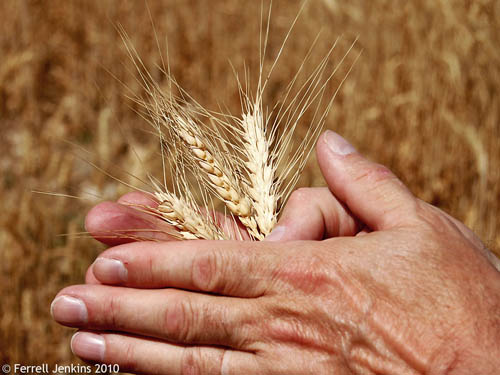
Now, imagine the disciples taking ripe grain in their hands.

Picking heads of grain. Photo by Ferrell Jenkins.

Picking heads of grain. Photo by Ferrell Jenkins.

And then rubbing the heads to separate the grain from the chaff.

Rubbing grain to separate the grain from the chaff. Photo by Ferrell Jenkins.

Rubbing grain to separate the grain from the chaff. Photo by Ferrell Jenkins.

The Mosaic law allows for plucking standing grain with the hand, but not using a sickle.

If you go into your neighbor’s standing grain, you may pluck the ears with your hand, but you shall not put a sickle to your neighbor’s standing grain. (Deuteronomy 23:25 ESV)

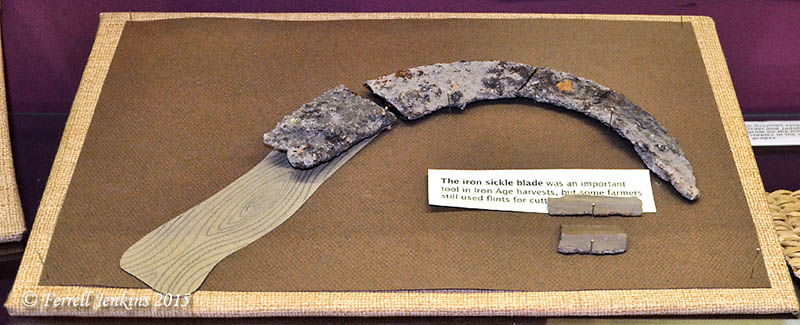
The sickle pictured below was excavated at Tell Beit Mirsim and dates to the Iron Age sometime between 925-701 B.C. It is displayed in the James L. Kelso Bible Lands Museum at the Pittsburgh Theological Seminary.

Sickle from the Iron Age at Tell Beit Mirsim. Kelso Bible Lands Museum, Pittsburgh Theological Seminary. Photo by Ferrell Jenkins.

Sickle from the Iron Age at Tell Beit Mirsim. Kelso Bible Lands Museum, Pittsburgh Theological Seminary. Photo by Ferrell Jenkins.

The Pharisees were claiming that what the disciples were doing was work prohibited on the Sabbath, but Jesus used the event to teach two important facts.

  • The Sabbath was made for man, not man for the Sabbath.
  • The Son of Man is Lord even of the Sabbath.

The last two photos of grain in the hand were made in the vicinity of Mount Nemrut in eastern Turkey. Larger images, suitable for use in teaching, are available by clicking on the photos.

Egyptian culture evident in discovery near Tel Halif

TTel Halif is located between Hebron and Beersheba in the Negev (Negeb, Negev region, South land or South country).

Abram continually journeyed by stages down to the Negev. (Genesis 12:9 NET)

Now Isaac had returned from Beer-lahai-roi and was dwelling in the Negeb. (Genesis 24:62 ESV)

Tel Halif (= Arabic, Tell el-Khuweifeh). In an article about the Biblical identity of Tel Halif, Oded Borowski points out that this was territory allotted “to the tribe of Simeon (Joshua 19:1-9) and later to the tribe of Judah (Joshua 15:20-32).” He discusses various efforts to equate the site with a site named in the Bible. Borowski narrows his discussion to four main candidates: Sharuhen, Hormah, Ziklag, and Rimmon. He think Rimmon (= En-Rimmon) is the correct choice (Biblical Archaeology Review, Vol. 51, Issue 1). Rimmon is mentioned five times in the Bible (Joshua 19:7; 1 Chronicles 4:32; Joshua 15:32; Nehemiah 11:29; Zechariah 14:10). I am not in a position to venture even a guess.

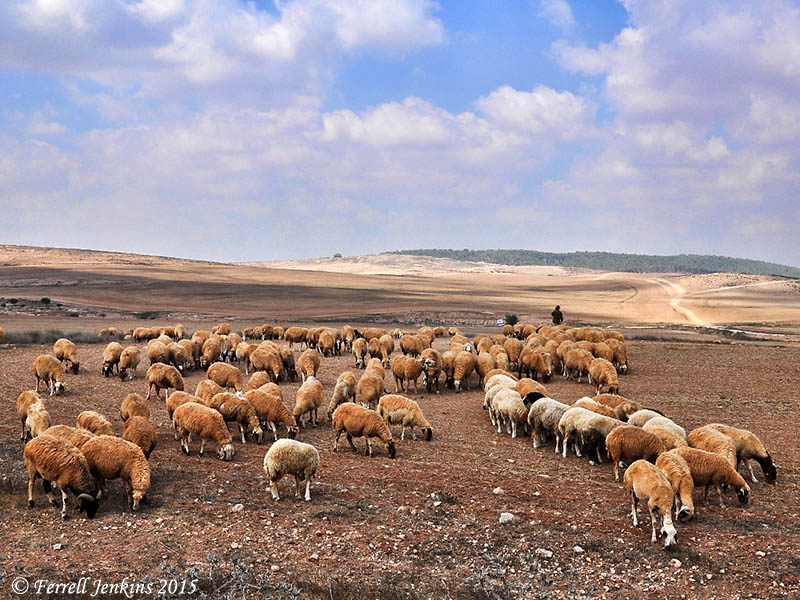
The photo below shows the terrain near Tel Halif, north of Beersheba.

Sheep in the Negev near Tel Halif. Photo by Ferrell Jenkins.

Sheep in the Negev near Tel Halif. Photo by Ferrell Jenkins.

The Israel Antiquities Authority announced today the discovery of artifacts excavated from a cave near Tel Halif, in the region of Kibbutz Lahav, in the south of Israel.

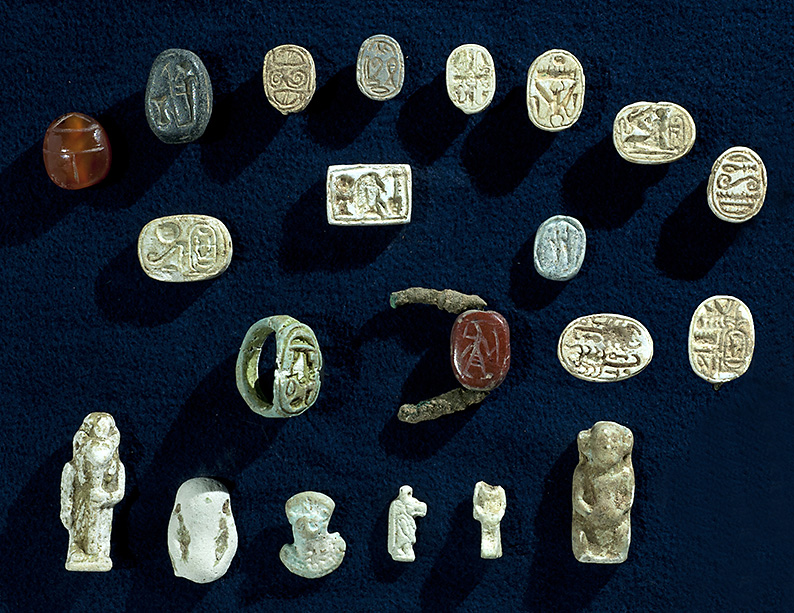
The artifacts included “seals, seal rings, figurines and amulets in the image of gods sacred to the Egyptian culture.” The archaeologists say,

The collection indicates “the presence of an administrative center that existed in the region.”

Other artifacts discovered included seal rings made of faience and a wealth of figurines and amulets in the image of gods sacred to the Egyptian culture.

A collection of artifacts with characteristics of the Egyptian culture, which were discovered in the excavation. Photographic credit: Clara Amit, courtesy of the Israel Antiquities Authority.

A collection of artifacts with characteristics of the Egyptian culture, which were discovered in the excavation. Photographic credit: Clara Amit, courtesy of the Israel Antiquities Authority.

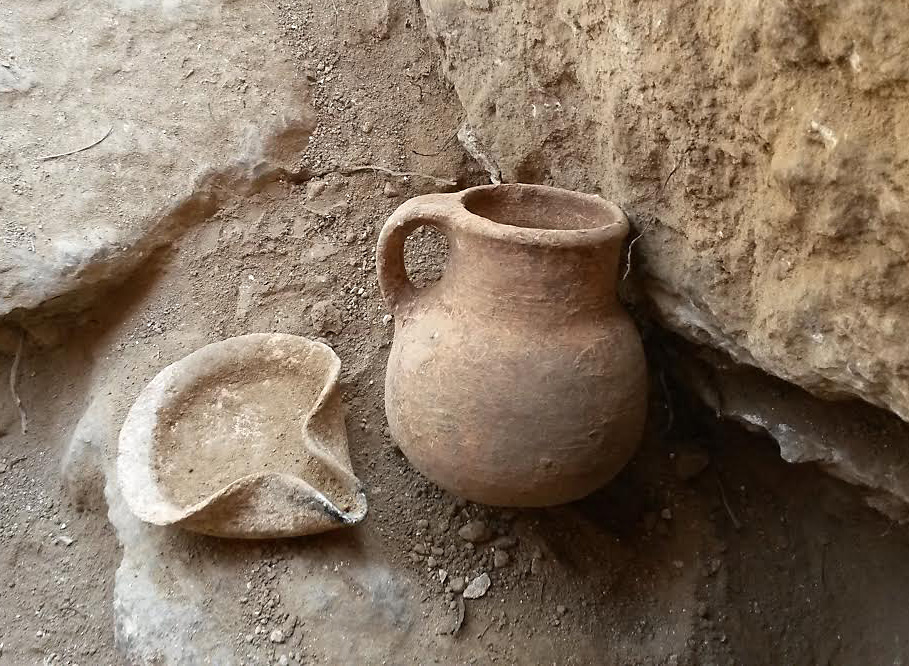
Items dating as late as the Iron Age were also found during the excavation conducted by the Unit for the Prevention of Antiquities Robbery of the IAA. The excavation followed the discovery that the cave had been plundered.

An oil lamp and a ceramic jar that date to the Iron Age, which were discovered in the cave. Photographic credit: the Unit for the Prevention of Antiquities Robbery of the Israel Antiquities Authority.

An oil lamp and a ceramic jar that date to the Iron Age, which were discovered in the cave. Photographic credit: the Unit for the Prevention of Antiquities Robbery of the Israel Antiquities Authority.

According to Dr. Daphna Ben-Tor, curator of Egyptian archaeology at the Israel Museum,

“Most of the scarab seals found in the excavation date to the fifteenth–fourteenth centuries BCE. During this period Canaan was ruled by Egypt”. Dr. Ben-Tor adds, “The names of kings appeared on some of the seals. Among other things, we can identify a sphinx lying opposite the name of the pharaoh Thutmose who reigned from about 1504–1450 BCE. Another scarab seal bears the name of Amenhotep who reigned from about 1386–1349 BCE. Still another scarab depicts Ptah, the principal god of the city of Memphis.”

The Biblical record indicates Egyptian influence in Israel as late as the Iron Age.

 (Pharaoh, king of Egypt, had attacked and captured Gezer. He burned it and killed the Canaanites who lived in the city. He gave it as a wedding present to his daughter, who had married Solomon.) (1 Kings 9:16 NET)

The prophet Isaiah warned about reliance on Egypt in the 8th century B.C. (Isaiah 30:1-5).

HT: Joseph Lauer


Solomon’s Quarries #2

Begin at Damascus Gate and walk east along Sultan Suleiman Street and you will soon come to the entrance to Solomon’s Quarries (also called Zedekiah’s Cave). See the previous post for a photo of the entrance and the history of how this underground quarry came to light in the 19th century.

At that point of the Old City north wall you will see the wall built high above a natural scarp of rock. Mackowski describes the stone here as Turonian limestone. He says,

Beneath these structures are the so-called Solomon’s Quarries, though we do not think that they should be looked for in the subterranean passages below, but in the area (through which the modern Sultan Suleiman Street passes) between this artificially cut rocky spur of Bethesda and its counterpart (opposite it to the north) which forms a part of Gordon’s Calvary and the traditional site of Jeremiah’s Grotto. (Jerusalem City of Jesus, Eerdmans, 1978, p.16).
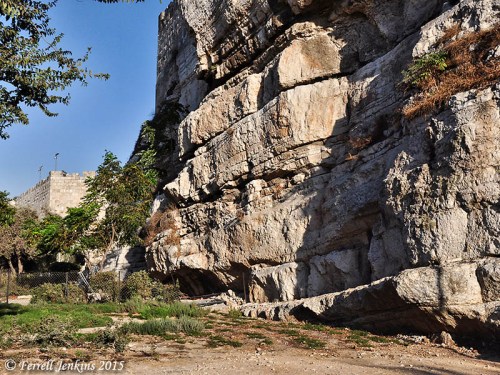
Portions of the north wall of the Old City of Jerusalem is built on a natural scarp of rock. Photo by Ferrell Jenkins.

Portions of the north wall of the Old City of Jerusalem is built on a natural scarp of rock. Photo by Ferrell Jenkins.

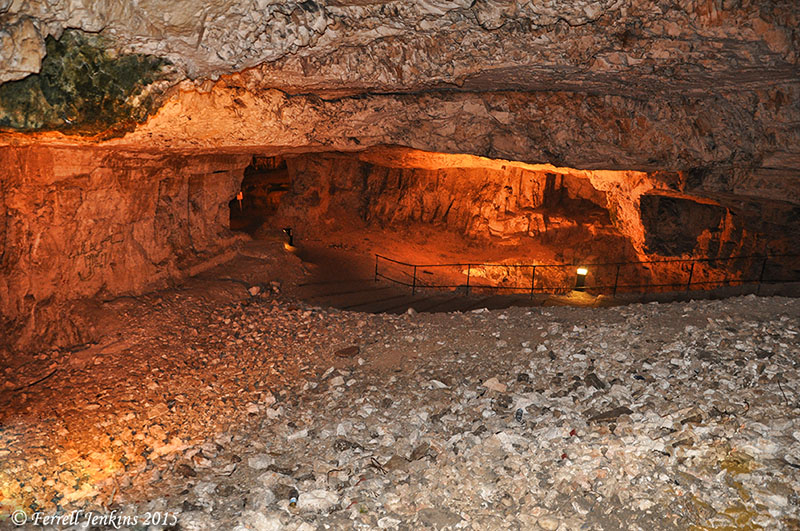
In this post we will follow-up the previous one about the modern discovery of Solomon’s Quarries with some photos. Our first photo shows the corridor leading from the entry south underneath the Old City.

Due to the artificial lighting each photo can look different due to the camera settings, and/or due to the adjustments in Photoshop.

Corridor leading south from the entry of Solomon's Quarries. Photo by Ferrell Jenkins.

Corridor leading south from the entry of Solomon’s Quarries. Photo by Ferrell Jenkins.

The next photo shows a wider area of the quarry, and you can see a fissure in the ceiling. Fissures like this one may account for Barclay’s description here:

Water was everywhere dropping from the lofty ceiling, which had formed numerous small stalactites and stalagmites—some of them very resplendent and beautiful, but too fragile to be collected and preserved. (The City of the Great King, p. 461)
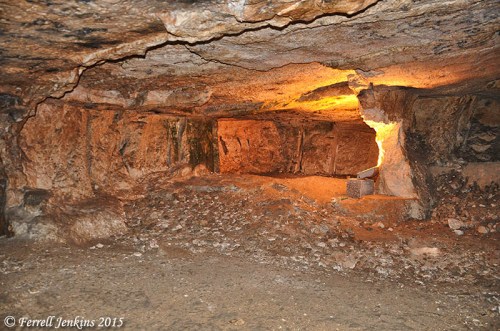
Solomon's Quarries. Notice the fissure in the ceiling. Photo by Ferrell Jenkins.

Solomon’s Quarries. Notice the fissure in the ceiling. Photo by Ferrell Jenkins.

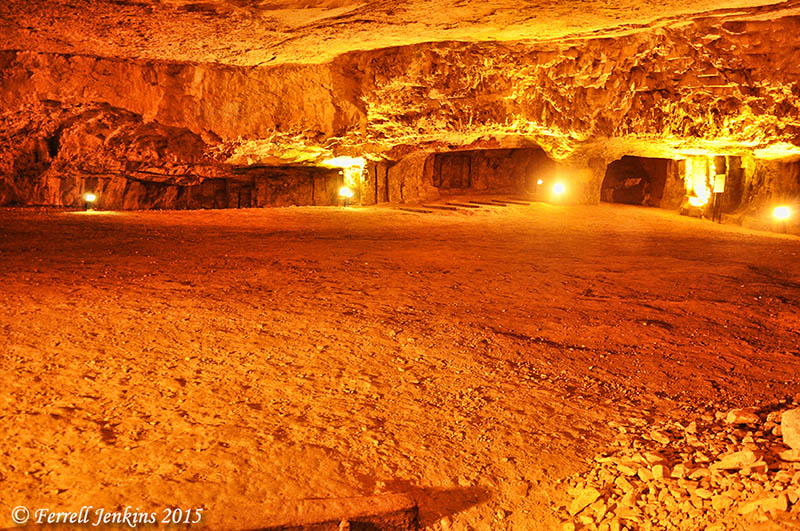
Next we move into the largest area of the quarries. I think it is in this area where the recent TV series Dig built a pool in which a couple of the characters went skinny dipping. If you have been tempted to watch the series to learn about the archaeology of Israel, you might want to think again. Or, you could read the review in The Times of Israel here.

Freemason's Hall in Solomon's Quarries. Photo by Ferrell Jenkins.

Freemason’s Hall in Solomon’s Quarries. Photo by Ferrell Jenkins.

Next we see the largest area of Solomon’s quarries. This large hall is called The Freemason’s Hall. A sign at the entry to the hall reads,

Members of the Freemason’s Society number among the many European tourists and visitors who have come to see the cave after it was rediscovered in the winter of 1854. The Freemasons regard King Solomon as the first biblical Freemason, and since the cave was popularly viewed as the quarry used by King Solomon in the building of the First Temple, the Freemasons have held their traditional ceremonies during the past century in the main chamber of the cave.

I suppose they would not mind if I take exception to the statement that Solomon was “the first biblical Freemason.”
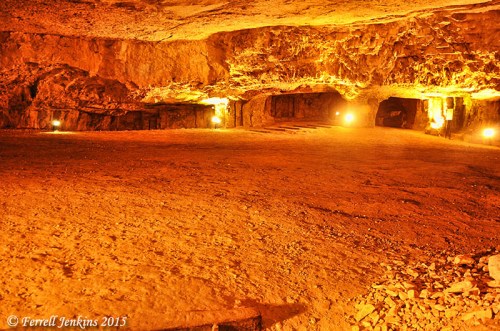
Freemason's Hall in Solomon's Quarries. Photo by Ferrell Jenkins.

The Freemason’s Hall in Solomon’s Quarries. Photo by Ferrell Jenkins.

Earlier we cited Mackowski who suggested that the quarry used by Solomon was probably where Sultan Suleiman Street is now — between the outcropping of rock we showed above and the traditional Gordon’s Calvary.

Lasor reminds us that there is no archaeological evidence for this being Solomon’s Quarries, but that the tradition is not unreasonable.

A tradition that the stone for the temple was quarried in the area near the modern Damascus Gate, known as Solomon’s Quarries, Royal Quarries, Royal Caves, King Solomon’s Mines, and the cave of Zedekiah, is without archeological support, but the tradition is not unreasonable (cf. 1 K. 6:7). (W. S. Lasor, “Jerusalem.” ISBE (Rev. ed.) Vol. II, p.1008).

Solomon’s Quarries discovered by American Medical Doctor J. T. Barclay

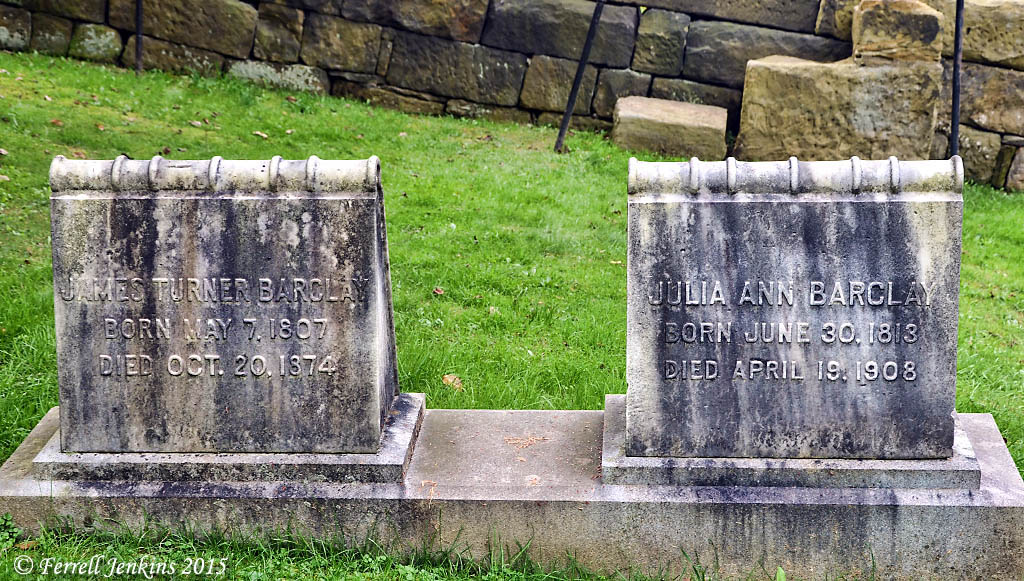
Dr. James Turner Barclay was sent to Jerusalem by the American Christian Missionary Society in 1851 as a medical and evangelistic missionary. During his first trip he stayed until 1854 and  returned for a second stint from 1858 to 1861. Barclay was active in medical work, treating more than 2,000 cases of malaria during his first year in the city.

Grave stone of James T. Barclay, and his wife Julia, in the Campbell Cemetery at Bethany, WVA. Photo by Ferrell Jenkins.

Grave stone of Dr. James T. Barclay, and his wife Julia, in the Campbell Cemetery at Bethany, West Virginia. Photo by Ferrell Jenkins.

Barclay wrote a book in 1858 about the city of Jerusalem under the title The City of the Great King; or, Jerusalem As It Was, As It Is, and As It Is To Be. In it he tells about some of his explorations in and around the Old City. In a section dealing with nether Jerusalem he discusses the discovery of what is commonly called Solomon’s Quarry. Dr. J. T. Barclay inserts an article written by Dr. R. G. Barclay, his oldest son, about the exploration and their conviction that this was the quarry from which stone for the temple was taken.

This, without doubt, is the very magazine from which much of the Temple rock was hewn—the pit from which was taken the material for the silent growth of the Temple (The City of the Great King; Or, Jerusalem as It Was, as It Is, and as It Is to Be. pp. 462-463).

One of my graduate professors, Dr. Jack P. Lewis, wrote a series of articles about nineteenth century explorers of the Bible Lands in the Biblical Archaeologist (and perhaps some other journals). His article about Dr. Barclay was published in 1988 (Vol. 51). The biographical portraits have been collected in Early Explorers of Bible Lands, published by Abilene Christian University Press in 2013.

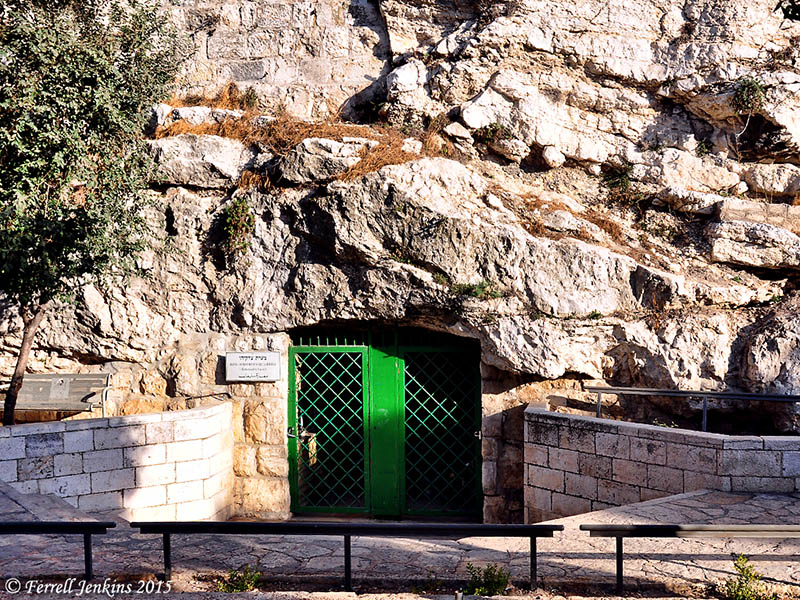
Entrance to Solomon's Quarries on Sultan Suleiman St. about a block east of Damascus Gate. Photo by Ferrell Jenkins.

Entrance to Solomon’s Quarries on Sultan Suleiman Street about a block east of Damascus Gate. The sign to the left of the door identifies the place as King Solomon’s Quarries (Zedekiah’s Cave). Photo by Ferrell Jenkins.

Lewis provides a brief summary of Barclay’s discovery of Solomon’s Quarries (also called Zedekiah’s Cave).

Barclay claimed credit for discovering the cavern under the north wall of the city near the Damascus Gate. Popularly known as Solomon’s Quarries, this area is called Zedekiah’s Grotto by Israelis in honor of the last king of Judah. According to legend, Zedekiah is said to have fled Jerusalem through this cavern upon the Babylonian conquest of the city in 587 BCE J. J. Simons, who has identified the area as the Royal Caverns mentioned by Josephus (The Jewish War, book 5, chapter 4, paragraph 2; see Thackeray 1961: 245) estimated that 350,000 cubic meters of stone were quarried there (Simons 1952: 13).

When Barclay heard rumors of a cavern under the north wall, he tried to locate an entrance to it. He and his two sons conducted their search at night in order to avoid detection by Moslems, who would have opposed such an expedition.

The group made their way into the blocked cavern through a hole started by the Barclay dog when it was digging for bones. Once inside the cave they discovered Hebrew and Arabic inscriptions that were too effaced to be deciphered (Barclay 1858: 461–62; Johnson 1858: 98–100). They also found crosses carved into the walls, indicating the presence of Christian pilgrims from an earlier period.

The Barclays were disappointed that they found no outlet to the Haram or the Antonia fortress but they were impressed by the vast piles of blocks and chippings over which they had to clamber and were convinced they had discovered the quarries from which the stones for Solomon’s Temple were cut.

In a future post we will include some photos of the interior of the Quarries.

For more about Dr. James Turner Barclay and his work, see TheRestorationMovement website here.