Author Archives: Ferrell Jenkins

Laodicea Photos

Laodicea is known to us from the book of Revelation (1:11; 3:14-22), and from Paul’s epistle to the Colossians.

For I testify for him that he has a deep concern for you and for those who are in Laodicea and Hierapolis. Luke, the beloved physician, sends you his greetings, and also Demas. Greet the brethren who are in Laodicea and also Nympha and the church that is in her house. When this letter is read among you, have it also read in the church of the Laodiceans; and you, for your part read my letter that is coming from Laodicea. (Col 4:13-16 NAU)

Ben Witherington has posted several nice photos recently made at Laodicea. Take a look here. These photo are high resolution and may be reduced and enhanced a bit for use in class and sermon presentation. Ben concludes his post with these words:

There is much more to be said, but let this be said at this juncture.  The archaeological evidence at Laodicea simply confirms what the NT suggests about the city– it was large,  rich in the first century, a city materially on the rise, but sometimes prosperity has a deadening effect on spirituality as John of Patmos reminds.   The reconstruction of the city today is a work still in progress— but then, so are we. If even Laodicea warrants a visit from the Master who knocks and promises to enter and sup with them, despite all its sin and shortcomings, then there is still hope for us.

The photo below is one I took showing what was labeled “North Temple” at the time. I see on the new sign Ben includes among his photos the structure (# 15) is labeled “Corinth Temple and North Basilica.” The white area on the hillside across the Lycus River valley marks the limestone formations of Hierapolis (Colossians 4:13; modern Pamukkale).
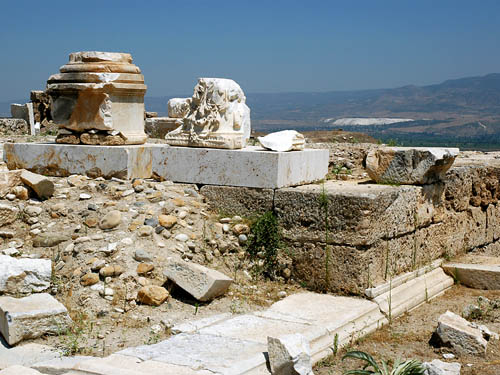
Temple ruins at Laodicea. View north to Hierapolis. Photo by Ferrell Jenkins.

Temple ruins at Laodicea. View north to Hierapolis. Photo by Ferrell Jenkins.

Thanks, Ben. We look forward to more good material from Turkey.

We called attention to the water distribution system of Laodicea here.

HT: Brooks.
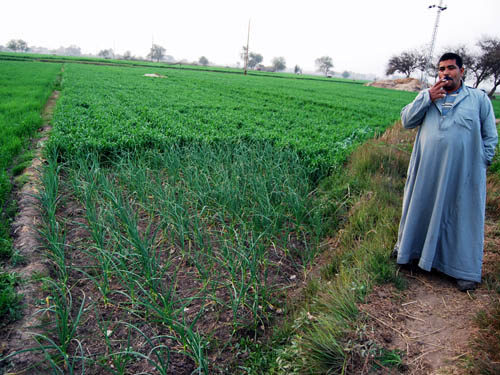
Leeks in the land of Goshen

Israel’s experience in the Sinai wilderness might be summarized by the two words complained and murmured. One such account is given in Numbers 11.

We remember the fish we ate in Egypt that cost nothing, the cucumbers, the melons, the leeks, the onions, and the garlic. But now our strength is dried up, and there is nothing at all but this manna to look at.” (Numbers 11:5-6 ESV)

The Land of Goshen, where the Israelites lived, was located in the eastern Nile Delta along the Pelusiac Branch of the Nile. The land is flat and fertile, and their are canals with water. Because water is rare in the wilderness (or desert) crops are also rare.

From the wilderness, the great meals of fish and vegetables in Egypt looked good to the Israelites. The hard days of oppression were overlooked. (A lot like the bondage of sin!) I had an opportunity to be in some of the fields in Goshen. The farmers grow crops for the cattle, but they use the corners of the fields to grow vegetables for their own use. I saw leeks and cabbage.

Field in the land of Goshen. Photo by Ferrell Jenkins.

Field in the land of Goshen. Photo by Ferrell Jenkins.

The white object in the field is one of the pieces of the colossal statue of Rameses that we mentioned in an earlier post. Smoking is widespread in Egypt.

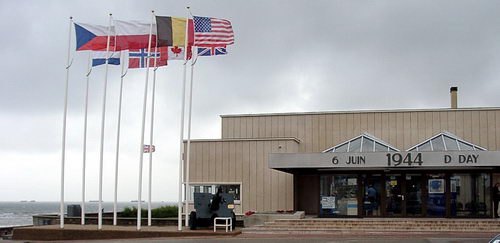
Remembering D-Day

The D Day Museum at Normandy. Photo by Ferrell Jenkins.

The D Day Museum at Normandy. Photo by Ferrell Jenkins.

The Samaritans

Samaritan Priest with Samaritan Pentateuch Scroll. Photo by Ferrell Jenkins.

Samaritan Priest with Samaritan Pentateuch Scroll. Photo by Ferrell Jenkins.

“Samaritans use modern means to keep ancient faith” is the title of an informative article about the modern Samaritans on Mount Gerizim at Reuters. A slide show of 10 good photos is included. I especially liked the one showing the priest in the museum with a painting of Jesus and the Samaritan woman at the well.

We recently wrote about the meeting of Jesus with the woman of Samaria at Jacob’s Well here. We wrote about Jesus passing through Samaria here.

Todd Bolen’s article on the Samaritan Passover may be read here.

Years back I made black and white photos for use in publications. This one shows a Samaritan priest displaying a copy of the Samaritan Pentateuch. He said it was the oldest book in the world. Textual scholars think it is no older than the 12th century A.D.

A Reuter’s Blog here gives some additional information about how the reporters got to Mount Gerizim. Check the video at the bottom of the page.

HT: Joseph Lauer; Paleojudaica.

“A new beginning” in the Muslim world

United States President Obama calls for “a new beginning” in the Muslim world in Cairo today.

We watched the presidential inauguration on Al Jazeera in Egypt last January. The Egyptian men were all excited about this change in America. For a day or two afterward we would be greeted with big smiles and chants of  “Obama, Obama.” One camel driver told a member of our group, “I like Obama; he’s my color.”

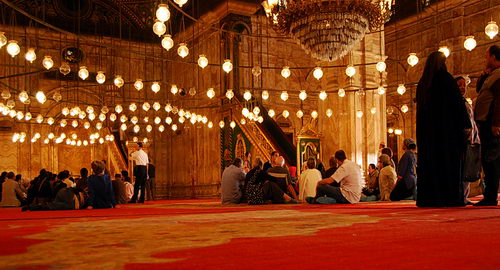
The Obama party is making visits to the pyramids and the Mohammed Ali Mosque. Typical tourist things to do. See our comments about the Mosque and a photo of the exterior of the building here. Below is a photo I made inside the mosque using a tiny tripod (about 6 inches high) on the floor of the mosque. Tourist groups are sitting on the floor listening to the history of the mosque.

Interior of Mohammed Ali Mosque in Cairo. Photo by Ferrell Jenkins.

Interior of Mohammed Ali Mosque in Cairo. Photo by Ferrell Jenkins.

Understanding is good. Let’s hope that this “new beginning” allows freedom for those in the Muslim world who profess Christ.

The full text of President Obama’s speech is available from The Guardian.

“Our IAA which art in Israel”

Tourist confesses to taking a stone from an Israel Antiquities Excavation 12 years ago.

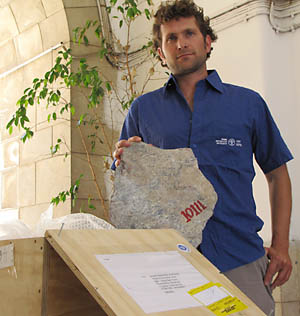
Twelve years after a stone disappeared from an Israel Antiquities Authority Excavation south of the Temple Mount, a tourist from New York confessed: “I Took It. My Conscience Bothers Me and I Am Asking for Forgiveness” The stone, which weighs 21 kilo, was returned to Jerusalem this week.

Here is part of the account released by the IAA in Jerusalem.

In 1997, a twenty one kilogram fragment of a marble column disappeared from one of the excavations the Israel Antiquities Authority was conducting south of the Temple Mount.

Several weeks ago, the IAA received an unexpected e-mail from a clergyman in the state of New York: “I am requesting forgiveness for a member of my congregation”, he writes. “The fellow confessed to me that twelve years ago he took a stone from Jerusalem and his conscience has bothered him ever since. I wish to return the stone to Israel and hope that you will forgive the man for his transgression”.
A letter from the fellow was attached to the heavy stone fragment, which arrived in Jerusalem in a wooden crate that was specially constructed for the flight back to Israel. “I came to Israel on an organized trip. As a student of archaeology, I was very excited when we visited an excavation south of the Temple Mount. I asked how I can purchase a stone from the excavation because I wanted a souvenir with which to pray for Jerusalem and was told it was not possible. On the last day of the trip our Israeli tour guide approached me and took the stone fragment from inside his coat. ‘Take it’, he said. ‘It’s a present from me’. I asked him how he obtained the stone and he replied, ‘It’s okay; don’t worry’. I was very happy and took the stone with me on my flight back to New York. Only later did I realize that he probably took the stone from the excavation without permission. For the past twelve years since then, rather than remind me of the prayer for Jerusalem, I am reminded of the mistake I made when I removed the stone from its proper place in Israel. I am asking for your forgiveness”.

Shay Bar Tura displays the package and the returned stone. Photo by IAA.

Shay Bar Tura displays the package and the returned stone. Photo by IAA.

Shay Bar Tura, Deputy Director of the Unit for the Prevention of Antiquities Robbery in the IAA, stated,

It should be emphasized that any activity conducted at an antiquity site requires permission from the IAA. Taking archaeological artifacts from antiquities sites constitutes a severe criminal offense which is punishable by law with imprisonment”.

Who was the tour guide?

HT: Joe Lauer

New discoveries in the land of Goshen

The storage city of Rameses was identified with Tanis in the past, but it is now identified with Tell el Daba in the eastern Nile Delta. Here is what the Bible says about Rameses in the land of Goshen:

  • It is called the land of Rameses (Genesis 47:11).
  • The Israelites built the storage cities of Pithom and Rameses (Exodus 1:11).
  • Rameses was the starting point of Israel’s exodus from Egypt (Exodus 12:37; Numbers 33:3, 5).

Prof. Dr. Manfred Bietak.

Prof. Dr. Manfred Bietak

Austrian archaeologists, under the direction of Professor Dr. Manfred Bietak and Irene Forstner-Mueller, have been working at Tell el Daba for several years. The history of this area may be divided into three periods:

  • Pre-Hyksos, when the city was named Rowaty (the door of the two roads).
  • Hyksos (about 1663-1555 B.C.), when the city was named Avaris.
  • Post-Hyksos, when the city was named Peru-nefer (happy journey).

The excavators recently uncovered a cuneiform letter written in southern Mesopotamian style. It is thought to date to the time of the Old Babylonian Kingdom of Hammurabi. The news release indicates a date of about 1600-1550 B.C. This illustrates a significant contact between Egypt and Mesopotamia.

Cuneiform Tablet from Tell el Daba.

Babylonian Cuneiform Tablet from Tell el Daba in the land of Goshen.

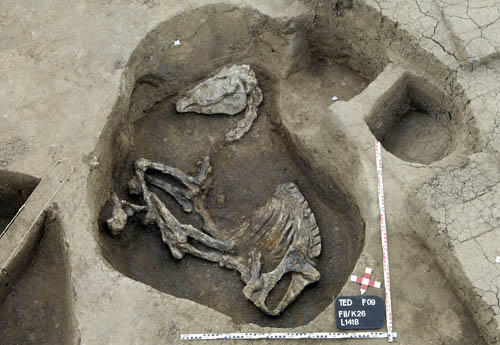
A second discovery was the burial of a horse, a mare likely used for breeding. Horses were introduced into Egypt by the Hyksos. The location of the burial near the palace of the Hyksos king Khayan suggests that this mare was a pet of the king.

Hyksos horse skeleton discovered at Tell el Daba.

Hyksos horse skeleton discovered at Tell el Daba.

The complete news release may be read in German here. Photos Copyright: Österreichisches Archäologisches Institut (ÖAI) Kairo. I had the pleasure of visiting Tell el Daba in January, 2009.

HT: Joseph I. Lauer

Another reason to attend Bible study

“Kansas girl rides ‘Laodicean’ to National Spelling Bee victory”

According to  USA Today, 13 year old Kavya Shivashankar won the national Spelling Bee championship by correctly spelling the word Laodicean. Several news reports say the word means lukewarm or indifferent in religion or politics, but they fail to mention that the concept comes from the Bible.

Laodicea was one of three cities of the Lycus River Valley in Asia Minor (Colossians 2:1; 4:15-16). Today this area is in Turkey. Toward the end of the first century the book of Revelation was distributed to several churches of Asia (Revelation 1:11).

The water of Laodicea came from hot springs immediately south of the city. By the time the water reached Laodicea it was lukewarm.  Jesus described the church as being like the water supply of the city.

I know your deeds, that you are neither cold nor hot; I would that you were cold or hot.  16 ‘So because you are lukewarm, and neither hot nor cold, I will spit you out of My mouth. (Revelation 3:15-16 NAS)

This photo shows part of the water distribution tower at ancient Laodicea. Mount Cadmus is seen in the distance.

Ruins of the water distribution tower at Laodicea. Photo by Ferrell Jenkins.

Ruins of the water distribution tower at Laodicea. Photo by Ferrell Jenkins.

We might also define Laodicean as a member of the body of Christ in the city of Laodicea.  Or, simply, a citizen in the city of Laodicea.

HT: Olen, Harriet

Paul in Ephesus

Paul taught in the school of Tyrannus during his stay in Ephesus. We need not think that Paul was assigned as an Associate Professor, or Lecturer. He may have simply used a rented facility or hall for his teaching.

But when some were becoming hardened and disobedient, speaking evil of the Way before the people, he withdrew from them and took away the disciples, reasoning daily in the school of Tyrannus. (Acts 19:9)

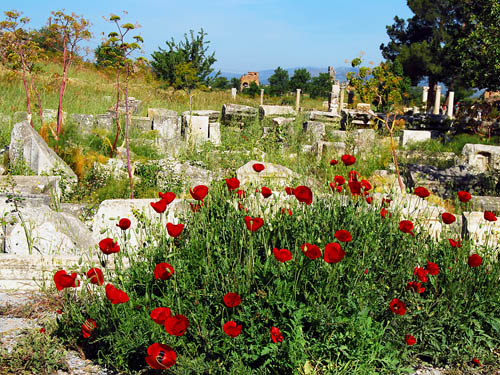
When we visit Ephesus today we see nothing but ruins and a few partially reconstructed buildings. We wonder about all of the things that happened to Paul, Apollos, Aquila, Priscilla, and Timothy in these places. Meditate on these things as you enjoy today’s photo.

Flowers blooming among the ruins at Ephesus. Photo by Ferrell Jenkins.

Flowers blooming among the ruins at Ephesus. Photo by Ferrell Jenkins.

Discovery of the Roman Pool of Siloam

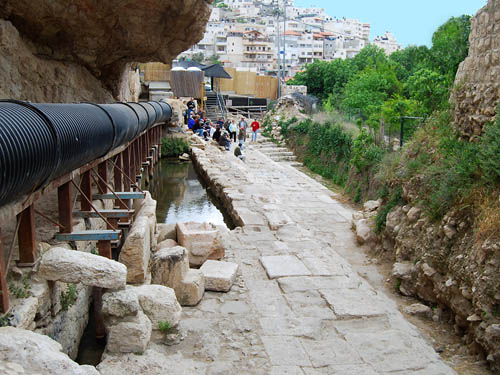
In early June, 2004, an announcement was made by Ronny Reich and Eli Shukron of the discovery of a pool dating to the Second Temple period (Herod’s temple). Continuing excavations have revealed three sets of stairs leading down into the pool. Most of the pool has not yet been uncovered. In November, 2005, I spoke with Professor Reich at the pool and he explained several things about the discovery.

A feature article was published in Biblical Archaeology Review, Sept.-Oct., 2005. Todd Bolen of BiblePlaces.com, who assisted in the excavations at the site, included some comments on his BiblePlaces Blog here in August, 2005. Many reports that appear in the news media are incomplete and sometimes misleading.

Pool of Siloam. View toward East. Byzantine pool is to our back. Photo by F.Jenkins.

Pool of Siloam. View toward East. Byzantine pool is to our back. Photo by F. Jenkins.

See Todd’s photos and comments about The Pool of Siloam Revealed at BiblePlaces.com.

Our photo shows the northern steps and the eastern corner of the pool. You can detect the present road level at the top of the wooden steps. In the distance, across the Kidron Valley, you can see a hill south of the Mount of Olives, sometimes called the Hill of Evil Counsel. Beyond that lies the Judean Wilderness.