Tag Archives: museums

Journalist accuses Turkey of Archaeology Blackmail

Owen Matthews, writing in Newsweek Magazine and The Daily Beast, says, “Turkey’s government is playing hardball to repatriate archaeological treasures.” He begins with the story of the German road engineer who excavated the Altar of Zeus at Pergamum (Pergamom) and arranged for the structure to be moved to Berlin and reconstructed in the museum there.

The Turkish government is now asking various museums around the world to return artifacts that  were taken from Turkey. Matthews mentions the Metropolitan Museum of Art in New York, the British Museum, and the Boston Museum of Fine Arts, along with others.
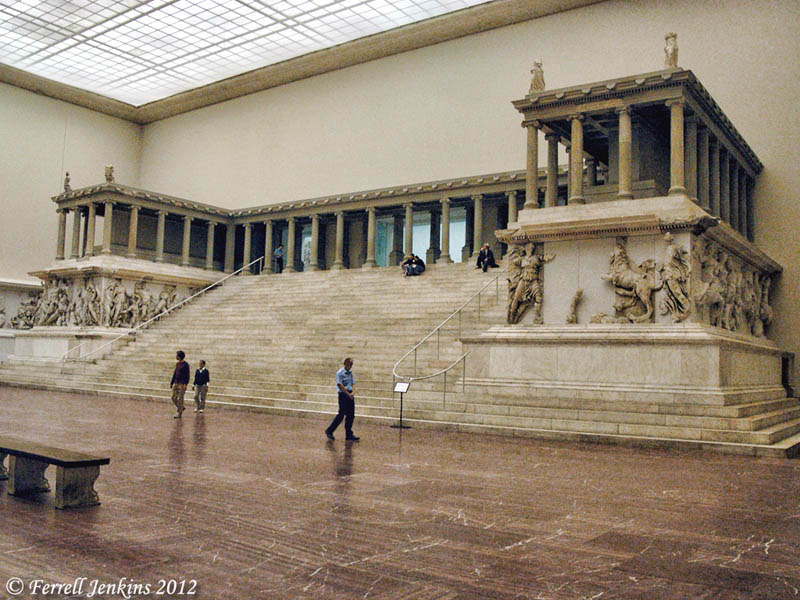
The reconstructed Pergamum Altar of Zeus in Berlin. Photo by Ferrell Jenkins.

The reconstructed Pergamum Altar of Zeus in Berlin. Photo by Ferrell Jenkins.

Today 30 young archeologists from all over the world work at Pergamon, uncovering new parts of the ancient city, meticulously recording, photographing, sketching, and cleaning the uncovered artifacts. The dig is considered the finest of its kind in the world. The state-of-the-art iDAI.field computer system for inputting real-time archeological data was pioneered here, along with many techniques for photographing, conserving, and mapping now considered standard across the world. In 2004 a complex of vulnerable newly discovered mosaics was enclosed in a beautiful wood, stone, and steel building designed by award-winning German architects and paid for entirely by the German government. The practice of hauling finds back to the home country was abandoned, of course, more than a century ago—today, all the finds remain in Turkey.

Despite a century of Germany’s investment in the fabric of Pergamon, the local authorities still view the Germans with suspicion. A recent mayor of Bergama ran on a ticket of returning the Altar of Zeus from Berlin, something the ministry itself hasn’t asked for (the paper trail clearly confirms that the altar was legally exported). And the DAI has come under pressure from tourism authorities to spend more resources rebuilding fallen temples to make them more photogenic to visitors rather than meticulously trowelling [sic] through ancient sewers and tombs.

Matthews says the Turkish authorities have decided “to play hardball” with various countries working in Turkey. Considering the remarkable work done by the Germans at Pergamum and Hattusha, the British at Carchemish, the Austrians at Ephesus, to mention just a few examples, this is an unfortunate situation. Read the article in its entirety here.

Turkish archaeologists have done significant work in numerous places throughout the country. But with more than a thousand archaeological sites, cooperation would be better.

Pergamum is the site of one of the churches addressed in the Book of Revelation (the Apocalypse) toward the end of the first century A.D. (Revelation 1:11; 2:12-17).

HT: Jack Sasson
Evil-merodach (562-560) graciously freed Jehoiachin

Evil-merodach came to power in Babylon upon the death of his father Nebuchadnezzar in 562 B.C. There are only two references to him in the Bible, and these are parallel accounts. Evidence suggests that Jehoiachin (Jeconiah, Coniah), the king of Judah who was taken to Babylon in 597 B.C., was treated like a king in exile during most, or all, of his time in Babylon. The kindness of Evil-merodach receives special attention.

27 And in the thirty-seventh year of the exile of Jehoiachin king of Judah, in the twelfth month, on the twenty-seventh day of the month, Evil-merodach king of Babylon, in the year that he began to reign, graciously freed Jehoiachin king of Judah from prison. 28 And he spoke kindly to him and gave him a seat above the seats of the kings who were with him in Babylon. 29 So Jehoiachin put off his prison garments. And every day of his life he dined regularly at the king’s table, 30 and for his allowance, a regular allowance was given him by the king, according to his daily needs, as long as he lived.  (2 Kings 25:27-30 ESV; cf. Jeremiah 52:31-34)

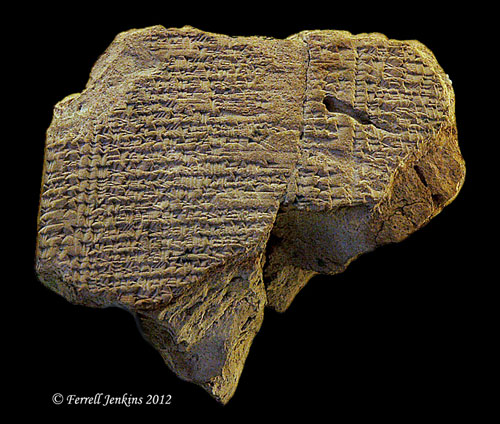
It is interesting that we have a biblical record mentioning Evil-merodach’s treatment of Jehoiachin (about 560 B.C.), and we have archaeological evidence of similar treatment at an earlier period. Four tablets mentioning Jehoiachin and his sons date to the period 595–570 B.C.

These tablets record rations that were given to the exiled king, his sons, and eight men of Judah. The one shown here is usually displayed in the Museum of the Ancient Near East (Vorderasiatische Museum), also called the Pergamon Museum, in Berlin (VAT 16378).

Babylonian ration tablet naming Jeconiah. Berlin. Photo by Ferrell Jenkins.

Babylonian ration tablet naming Jeconiah. Pergamum Museum. Photo by Ferrell Jenkins.

A trip to Berlin is worthwhile for many reasons, but one of the best is to visit the Museum of the Ancient East. Even though it could stand some revisions, you should find my Biblically Related Artifacts in the Museums of Berlin helpful. It is available in PDF here.

Here  is what I wrote about this tablet:

“Jehoiachin (Jeconiah, Coniah) was the young king of Judah who was taken captive to Babylon by Nebuchadnezzar in 597 BC. (2 Kings 24:15). The date of the capture of Jerusalem (March 16, 597 BC) was learned in 1955 when Donald J. Wiseman, then of the British Museum,  read a cuneiform tablet from Babylon. About 300 cuneiform tablets, dating between 595 and 570 BC, were found near the Ishtar Gate in Babylon. They contain lists of rations such as barley and oil paid to the captives and craftsmen. Persons from various countries are mentioned: Egypt, Philistia, Phoenicia, Asia Minor, Judah, etc. Some Biblical names are included: Gaddiel, Semachiah, and Shelemiah (a name mentioned prominently in Jeremiah 36-37). The most interesting name is Yaukin, king of the land of Yahud (Judah), along with five royal princes. The name, pronounced Yow-keen, is known to be an abbreviation for Jehoiachin. One document in which his name occurs is dated to 592 BC. These tablets show that the Babylonians continued to regard Jehoiachin as the legitimate king of Judah and gave him special treatment while he was in captivity (2 Kings 25:27-30; Jeremiah 52:31-34). The tablets were read by E. F. Weidner in the basement of the Kaiser Friedrich Museum, Berlin, after 1933.

[For those with access to this type of material:] Some Sources: Albright, BA 5 (1942), 49-55; ANET, 308 for translation; DOTT, 84-86; JFLAP, 225-227; IDB, II:811-13; Werner Keller, The Bible as History, 285-287;  Wiseman, Illustrations from Biblical Archaeology, 73 for photo [showing both the reverse and the obverse of the photo above].”

More Recent Source: Fant, Clyde E. and Mitchell G. Reddish, Lost Treasures of the Bible, 217-220.

Enduring Word Exhibit at the Museum of Biblical History

The Museum of Biblical History in Collierville, Tennessee, announces the Enduring Word Exhibit In Celebration of the King James Bible’s 400th anniversary.

Would you like to know more about Johannes Gutenberg and his famous printed Bible? Gutenberg was the first European to use movable type printing, in around 1439, and the global inventor of the printing press. If you go to the museum named after him in his hometown, Mainz, Germany, you can learn a lot about him. Instead, why not come to the Museum of Biblical History in Collierville, Tennessee, during our “Enduring Word” exhibit, open October 1 through 9, Sundays 1-5 PM, Monday-Saturday 10 AM-7 PM.

In addition to the Bible exhibit, a special feature of the exhibit is the operation of a full-scale working model of Gutenberg’s press.

By special arrangement Dr. Rusty Maisel will operate his full-scale, working model of Gutenberg’s press during this exhibit, in celebration of the King James Bible’s 400th year. He will print page facsimiles from Gutenberg’s famous Latin Bible of 1456 and from the first edition of the King James Bible of 1611. He will also exhibit his collection of ancient biblical manuscripts and early printed Bibles in our main museum gallery. Maisel, an international authority on the history of the Bible, can be with us for nine days only. Don’t miss this wonderful learning opportunity.

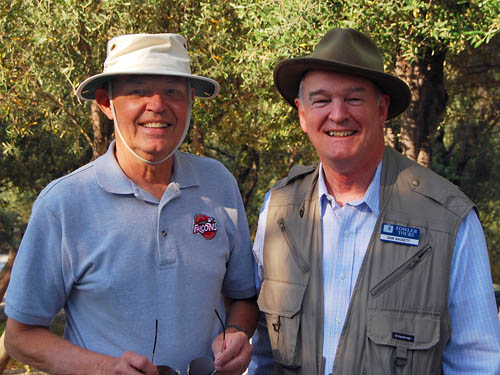
Ferrell Jenkins & Don Bassett at the Acropolis in Athens.

Ferrell Jenkins & Don Bassett at the Acropolis.

Details about the Museum of Biblical History, including this special exhibit, may be found on the Museum website here. Collierville is located a few miles southeast of Memphis, Tennessee.

Don Bassett is Chairman of the Museum of Biblical History. Don is a long time friend. Our tours crossed paths at the Acropolis in Athens, Greece a few years ago.

The Nimrud ivories

Ray Moseley writes an article for Al-Arabiya about the Nimrud Ivories in the British Museum. The exquisite ivories date to the time of the Assyrian empire.

The British Museum in London has recently saved for the nation a horde of the so-called Nimrud ivories—1,000 intact pieces, 5,000 fragments—after a public fund-raising campaign that netted £1.17 million. That was about a third of the value of the ivories, and another third of the collection was donated by the British Institute for the Study of Iraq. The remaining third is expected to be returned to Iraq.…

The first group of ivories, dating from the 9th and 8th centuries BC, was excavated by the archaeologist Austin Henry Layard in 1845 at Nimrud, just south of Mosul on the Tigris River. They came from the ruins of the palace of Shalmaneser III, who ruled from 859 to 824 B.C., and more came to light a few years later.

The complete article may be read here. Some readers will enjoy the connection with archaeologist Max Mallowan and his wife, crime-novelist Agatha Christie, who used a knitting needle and cold cream to clean some of the ivories.

“Oh what a beautiful spot it was,” the novelist wrote. “The Tigris just a mile away, and on the great mound of the Acropolis, big stone Assyrian heads poked out of the soil. In one place there was the enormous wing of a great genie.”

The earliest ivories belong to the reign of Ashurnasirpal, but the largest number came from Fort Shalmaneser, a palace/fort built by Shalmaneser III (858-824 B.C.). He is the Assyrian king who brags about defeating “Ahab the Israelite” at the battle of Qarqar in 853 B.C. (Monolith from Kurkh), and of taking tribute from the Israelite king Jehu (Black Obelisk). The writers of the Bible had no reason to include either of these facts in their writings.

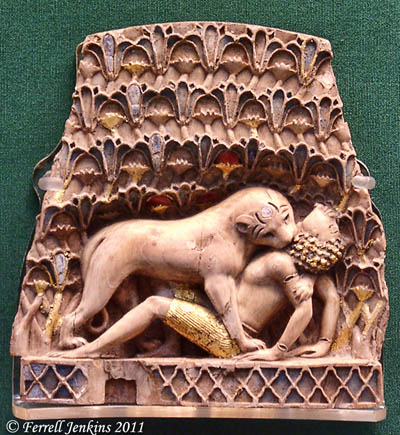
Our photo shows a relief in ivory of a lioness devouring a man with negroid features (a Nubian boy) in a thicket of stylized lotus and papyrus plants. This piece belongs to the Nimrud ivories displayed in the British Museum.

Assyrian Nimrud Ivory in British Museum. Photo by Ferrell Jenkins.

Assyrian Nimrud Ivory in British Museum. Photo by Ferrell Jenkins.

Moseley’s says the British Museum “recently put some of it’s collection on permanent display and intends to make other available for traveling exhibitions.”

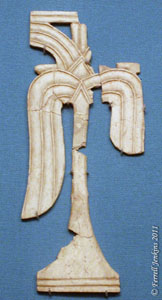
Samaria Ivory. British Museum. Photo: Ferrell Jenkins.

Samaria Ivory. British Museum. Photo: Ferrell Jenkins.

Bible writers spoke of Ahab’s ivory house at Samaria (1 Kings 22:39; Amos 3:15; 6:3-4). Both the British Museum and the Israel Museum display some of the ivories excavated at Samaria that follow the same general motif as those from Nimrud. The Israelites may have sent workers to learn from the Assyrians, Phoenicians, and Egyptians, or they may have hired foreign craftsmen to do their work, or imported the ivory pieces. The piece in the photo to the right is exhibited in the British Museum.

HT: Joseph Lauer

The joy of hidden treasures

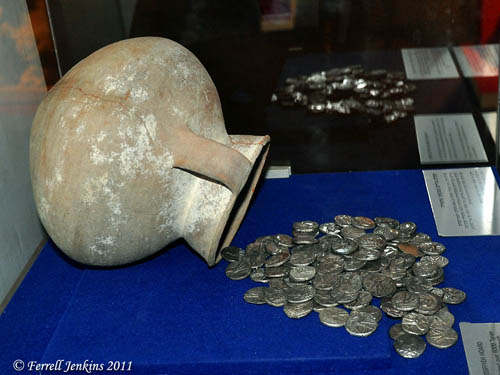
It doesn’t happen every day, but hoards of coins are sometimes found in archaeological excavations and other places by chance. The photo below shows a small portion of the Ussfiyeh Hoard of coins now displayed in the Erezt Israel Museum, Tel Aviv University, Israel. I think Ussfiyeh is a Druze town on Mount Carmel, but I have found nothing else about the site. If a reader knows more, please share.

Ussfiyeh Hoard of Tyrian Shekels & Other Coins. Eretz Israel Museum.

Ussfiyeh Hoard of Tyrian Shekels & Other Coins. Eretz Israel Museum.

The information sign with the display reads as follows:

The Ussfiyeh hoard originally contained 6000 Tyrian shekels, half-shekels and Augustaean denarii. Although Temple shekels bore pagan designs, they were accepted as Temple taxes in Jerusalem. The hoard probably represents a delivery of Temple tax intercepted and hidden away due to the events of the Jewish War which broke out in 66 C.E.

Jesus used an illustration related to a treasure found in a field.

The kingdom of heaven is like treasure hidden in a field, which a man found and covered up. Then in his joy he goes and sells all that he has and buys that field. (Matthew 13:44 ESV)

Click on the photo for a larger image suitable for use in teaching.

New Testament artifacts in the Israel Museum

There are some highly significant artifacts relating to the study of the New Testament in the Israel Museum.

  • The Pilate inscription from Caesarea Maritima (Acts 13:28; 1 Timothy 6:13).
  • The ossuary of the high priest Caiaphas (Matthew 26:3). An inscription on the ossuary reads “Yehosef bar Qafa” (Joseph the son of Caiaphas). There are several ossuaries bearing common names of the New Testament period such as Mary and Jesus.
  • The fragment of one of the warning inscriptions once in the wall separating the Court of the Gentiles from the Court of the Women (Acts 21:29; cf. Ephesus 2:14). The only full inscription discovered in Jerusalem is now in the Istanbul Archaeological Museum.
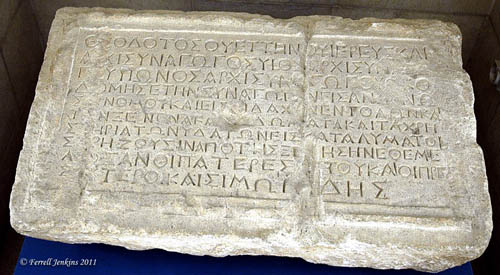
  • The Theodotus Inscription. This inscription came from a Synagogue of Freedmen (liberated slaves). Stephen contended with some men from this synagogue (Acts 6:9). This item was previously displayed in the Rockefeller Museum.
Theodotus Inscription now displayed in the Israel Museum.

Theodotus Inscription now displayed in the Israel Museum.

And more….

One item I failed to see (if it was on display) was the “Chair of Moses” from the Synagogue at Chorazin (Matthew 23:2). In some cases the replicas at the site of discovery are good — and they may be photographed. Examples are the chair of Moses and the Pilate inscription.

The Israel Museum should reevaluate the policy of not allowing photographs. There is nothing on display that has not already been published in numerous places. Teachers like to have their own photos to show their students.

Impressions about the “new” Israel Museum

Many groups visit the campus of the Israel Museum. There are now three areas of interest:

  • The Israel Museum
  • The Shrine of the Book where some Dead Sea Scrolls are displayed
  • The Second Temple Model

We wrote about the planned reopening of the Israel Museum here, and about the opening here. The Shrine of the Book remained open during the time the Museum was closed, and the Second Temple Model has been open since it was moved from the grounds of the Holyland Hotel in the middle of 2008. See here.

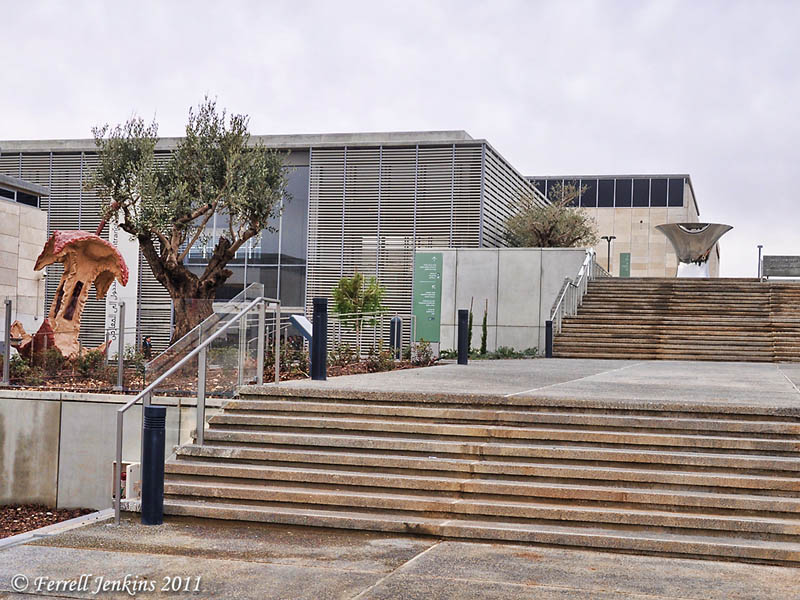
The  galleries devoted to archaeology remain in the same place as before, but there is a significant difference from before. The entrance to the galleries is not at the top of the steps, but about half way up by the apple core sculpture. There is a small cafe with snacks and drinks at the entrance. Tickets are purchased down below at the entrance to the entire complex.

Entrance to Israel Museum. Photo by Ferrell Jenkins.

Entrance to Israel Museum. Photo by Ferrell Jenkins.

Once inside the galleries entrance, the archaeology section is on the left. One is greeted by a display of seven standing anthropoid clay coffins from Deir el-Balah, a site south of Gaza city excavated by Trude Dothan in 1972. These coffins which bear the evidence of Egyptian influence date to the 13th century B.C.

Clay coffin (sarcophagus) from Deir el-Balah.

Clay coffin from Deir el-Balah

In the March, 1976, issue of Biblical Archaeology Review, Hershel Shanks closed an article about the discovery of these sarcophagi this way:

We may close on a Biblical note. “Aron”, or coffin, is used only once in the Bible (Genesis 50:26)—in connection with Joseph’s burial. Joseph, a high-ranking minister in the Egyptian government was naturally buried in accordance with Egyptian rites, including mummification and a coffin. It is likely that his coffin resembled the anthropoid coffins unearthed at Deir el-Balach.

Many sections of the archaeology section remains much the same as before. I will list a few of the items that I think are extremely important to biblical study.

  • The Tel Dan “House of David” Inscription (Isaiah 22:22, et al.)
  • The cult shrine from Hazor.
  • A few pieces of ivory from Samaria (1 Kings 22:39; Amos 3:15; 6:4).
  • Ekron inscription found at Tel Miqne, naming the city and five of its rulers (1 Samuel 6:17).
  • Silver plaques inscribed with the priestly blessing (Numbers 6:23-26). Also known as the Ketef Hinnom discovery.
  • The “Holy of Holies” from the temple at Arad.
  • The Edomite Shrine from biblical Tamar (aka Ein Hazevah).
  • The basalt stele showing a stylized figure of a horned bull from Geshur (aka New Testament Bethsaida).
  • Sennacherib’s siege of Lachish. The original is in the British Museum, but the replica in the Israel Museum has been enhanced to better show the scene (2 Chronicles 32:9).
  • Lachish Ostracon. I only saw one of the letters on display.

And much more…. My time was limited, but I look forward to returning for a longer visit in a few months.

A few things I had seen before, but did not see this time. (It may be that I missed some of these items.)

  • The broken inscription from Ashdod naming Sargon (Isaiah 20:1).
  • The inscribed ivory pomegranate mentioning donations for the priests of the house of the [LORD]. The Israel Museum declared the inscription a forgery in late 2004. There are scholars who believe it to be genuine.

General comments. The display are beautiful and the halls are spacious. Many of the artifacts are displayed in the open (without glass). Visitors are allowed to enter the museum with their cameras. In the past cameras had to be checked. I saw no signs about photography. Shortly after making my first photos I was admonished by one of the docents.

Information about location, hours, tickets, etc. is available at the museum website here.

In another post I will make reference to some of the items of importance to New Testament study.

Cyrus Cylinder loaned to Iran

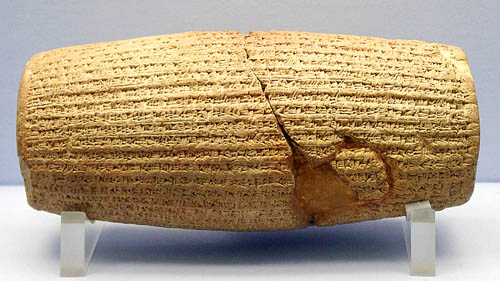
The Cyrus Cylinder came from ancient Persia. Now the British Museum, where it has been housed for many years, is loaning the artifact to the museum in Tehran, Iran.

Todd Bolen calls attention the the agreement, the historical significance of the Cyrus Cylinder, and the biblical reference (Ezra 1:1-4) to one of the events mentioned in the Cylinder.

The the account at the Bible Places Blog here, and be sure to follow the link to his list of the British Museum: Top 10, yeah 15.

If you plan to visit London, and you are interested in Bible study, be sure to download my short list of “Some Biblically Related Artifacts in the British Museum” here.

The Cyrus Cylinder in the British Museum. Photo by Ferrell Jenkins.

The Cyrus Cylinder in the British Museum. Photo by Ferrell Jenkins.

Israel Museum now open

The Israel Museum has been closed to the public while undergoing a complete renovation. We have noted this with construction photos here.

The museum is once again open. Here are links to a couple of reports about the refurbished museum.

The already impressive location of the Museum campus with the Shrine of the Book, the Second Temple Model and the nearby Israeli Knesset building is sure to be even more impressive. I anticipate my next visit.

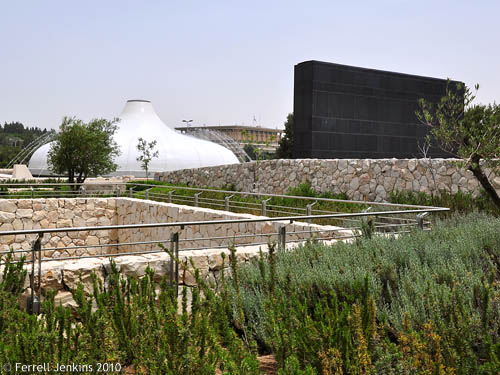
The Shrine of the Book at the Israel Museum. Photo by Ferrell Jenkins.

The Shrine of the Book at the Israel Museum. Photo by Ferrell Jenkins.

The Shrine of the Book and the Second Temple Model has been open during the museum renovation.

French to train Bethlehem museum staff

Ma’an News Agency reports here,

France and the Palestinian Authority Ministry of Tourism and Antiquities signed an agreement to build a museum in the city of Bethlehem, under a heritage preservation and promotion project.

The agreement, for some 700,000 Euro ($915,460 US), was signed on Wednesday in Bethlehem, and will finance the establishment of a national museum in the Old City of Bethlehem, the training of museographers in cooperation with French institutions including The Louvre and the French National Heritage Institution, as well as fund long-term planning and management.

The two year project is expected to begin this fall.

It has become difficult for tourists to visit Bethlehem. There are several reasons I can think of at the moment.

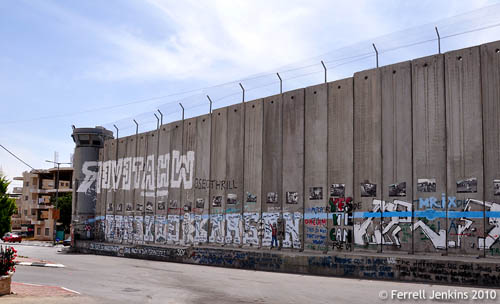
  • The security wall that Israel has built around Bethlehem. In order to visit Bethlehem the tour bus must pass from Israel into the Palestinian Authority controlled Bethlehem. Going in is often easier than coming out. Most of the time tourists are not required to leave the bus, but sometimes we must leave the bus and walk through the check point. Tourists probably only do this once or twice in their life, but honorable citizens of the PA must go through this every day they work in Israel.
  • The Palestinian Authority has not made it easy, either. Buses formerly parked in Manger Square near the Church of Nativity. I think it is good that they  now must park in a new parking garage. Drivers should be allowed to drive closer to the center of town to drop off passengers. Some older tourists find it difficult to climb the steep hill to visit the center.

Before I die I would like to see the wall that separates Bethlehem and Jerusalem dismantled and a portion of it placed in the Bethlehem museum as a reminder of the past. This requires an improvement in conditions now existing in the Middle East.

The Wall as seen in Bethlehem. Photo by Ferrell Jenkins.

The Security Wall as seen in Bethlehem. Photo by Ferrell Jenkins.

HT: Museum note, Joseph Lauer.