Category Archives: Turkey

Photo for the 20,000 winner

And the winner is Jennifer!

Back on January 30th we announced the winner of the digital photo for being the twenty thousandth visitor to the site. The winner has asked for a surprise photo from Turkey. So, I have decided to send her a photo of the waterfalls on the outskirts of Tarsus in Cilicia, the hometown of Saul (Paul, the Apostle). Here is a small copy of the image I am sending to the winner.
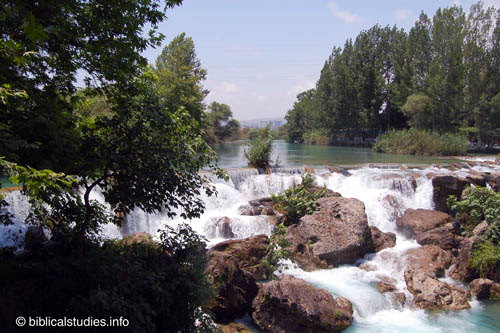
Waterfalls at Tarus in Cilicia, home of the apostle Paul. Photo by Ferrell Jenkins.

Tarsus was important historically. Because of its position on the River Cydnus near the Mediterranean about 30 miles below the Cilician Gates, Tarsus in Cilicia served as one of the great crossroads of history. Paul described his hometown as “no insignificant city” (Acts 21:39; 9:11; 22:3). It was a fortified city and trade center as early as 2000 B.C. It was captured by the Assyrian kings Shalmaneser III (833 B.C.) and Sennacherib (698 B.C.), and had seen the likes of Alexander the Great and Cleopatra.

Tarsus was commercially important. Ancient writers mention the linen woven here from flax which grew in the fertile plain. A material called cilicium was woven from goat’s hair and used to make coverings which would protect against cold and wet .

The city was culturally important. Strabo describes the people as being avid in the pursuit of culture. Tarsus was a university town, and was noted as the home of several well-known philosophers, especially of the Stoic school. Barclay says,

If a man was destined to be a missionary to the world at large, there was no better place in all the east for him to grow to manhood than in Tarsus” (The Mind of St. Paul, 25-26).

It is not difficult to imagine that famous leaders and armies stopped by this waterfall to be refreshed before (or after) making their way through the Cilician Gates. And it is easy to imagine that young Saul and his friends often visited the site.
Mount Nemrut in Commagene

Today I have posted an article on Mount Nemrut at biblicalstudies.info. I think you will find the article of interest.

The Kingdom of Commagene was important in the first century B.C., and has connections with Alexander the Great and Darius, and with one of the characters mentioned in the New Testament. I think you will enjoy it.

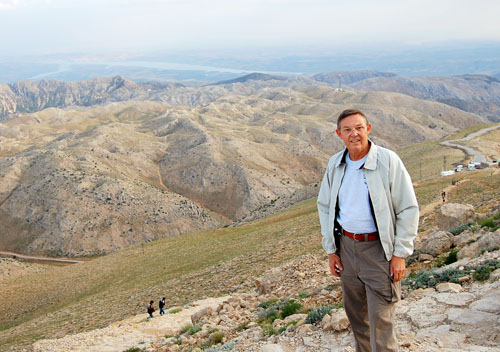
This photo shows the approach to the top of Mount Nemrut in Eastern Turkey. The Euphrates River valley is far below in the haze.

Approach the top of Mount Nemrut with the Euphrates Valley below.

Biblical Sites in Eastern Turkey

For the past two weeks I have been working on a presentation for a class at the Florida College Annual Lectures (February 5, 2008 at 9 a.m. in Puckett Auditorium). I plan to make a similar presentation at the Citrus Park Church of Christ, 5105 W. Ehrlich Road, Tampa, FL, Sunday evening January 27 at 5 p.m. If you live in the Tampa Bay area I would be pleased to have you present for this lesson.

I have visited biblical sites all over Turkey for many years. Two personal study trips have been made to the eastern part of the country, one in 1995, and another in June, 2007. Check the June archives for those blogs.

Our presentation will cover the land of Urartu (biblical Ararat), Mount Ararat, Mesopotamia, the Tigris and Euphrates Rivers, Harran, Carchemish, and a few other places. We will be looking at the biblical, historical, and geographical information that makes these places important in Bible history.

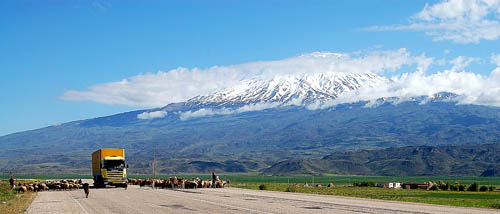
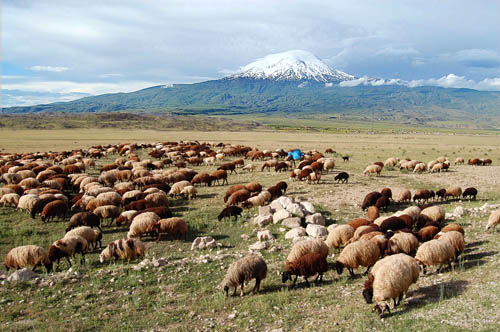
Here is a photo of Mount Ararat from June, 2007. The mountain is located near the Turkish border with Iran and Armenia, and many think it was the landing place of Noah’s ark (Genesis 6-9).

Mount Ararat in Eastern Turkey. Photo by Ferrell Jenkins

Resources on the Book of Revelation

Yesterday I received an Email from Dr. Georg S. Adamsen in Denmark, asking that I change the link to his Revelation Resources page on my Biblical Studies Info Page. First, let me say I appreciate his notifying me of the change. Many individuals ask to include a link but never notify us when they close down the page.

Revelation Resources is now presented in blog format. Adamsen describes the blog this way:

Revelation Resources – about 250 hand-picked references on valuable resources for the study of the Book of Revelation. Many topics have separate introductions…

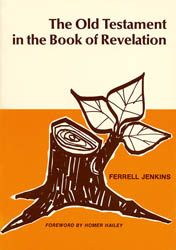
My Old Testament in the Book of Revelation has been included at Revelation Resources for several years. I was pleasantly surprised this evening when I was checking the URL to see that the book is featured on this page (January 7).

Because the current publisher of the book does not have a marketing strategy many people think the book is out of print. You may secure a copy from the Florida College Bookstore. I wasn’t able to locate the book on the website, but you can send an Email to bookstore@floridacollege.edu for information. I think the book now sells for $4.95. I saw a used copy on Amazon recently for $59.96!

Jenkins, The Old Testament in the Book of Revelation

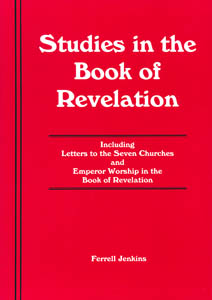
Florida College also recently reprinted my Studies in the Book of Revelation. It sells for $5.99. In my judgment this is an excellent source for a class study of the Revelation.

Jenkins, Studies in the Book of Revelation

Studies in the Book of Revelation (90 page paperback) is composed of these sections.

Introducing the Book at the End of the Bible
Worthy Is the Lamb
Saints Victorious
Does Revelation Teach Premillennialism?
Letters to the Seven Churches
Emperor Worship in the Book of Revelation

If you prefer to call Florida College Bookstore and speak to one of the friendly staff, use their toll free number (1-800-423-1648).

What does this have to do with travel, you wonder. The Revelation was written to the seven churches of Asia, the Roman province of Asia Minor, in the late first century A.D. The seven cities were Ephesus, Smyrna, Pergamum, Thyatira, Sardis, Philadelphia, and Laodicea. Several of them have significant ruins that can be visited. We have included them on several study tours we call Steps of Paul and John, including Turkey, Greece, and the Aegean Islands. During the course of this tour we spend some time lecturing on the setting of the Book of Revelation. We plan to do that in May when we again visit these and other cities associated with Paul and John.

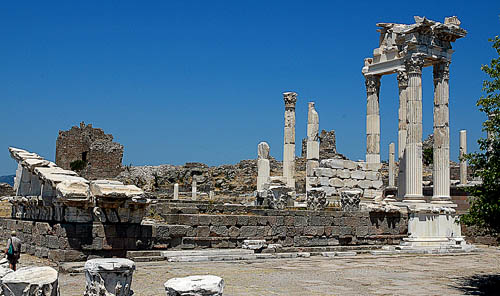
Temple of Roman Emperor Trajan at Pergamum. Photo by Ferrell Jenkins.

This photo shows the reconstruction of the Temple of (Roman Emperor) Trajan ( A.D. 98-117). This was the second temple in Pergamum dedicated to the Emperor. The first temple in all of Asia was erected to Augustus in 29 B.C. Altogether Pergamum had three imperial temples.

Some favorite travel photos of 2007

In the olden days of 35mm I made about 300 to 400 photos on each trip. Now, with digital photography I make 3000 to 4000. Out of that number I find a few good ones that can be used in various presentations. Pardon me for sharing with you a few of my personal favorites of our foreign tours in 2007.

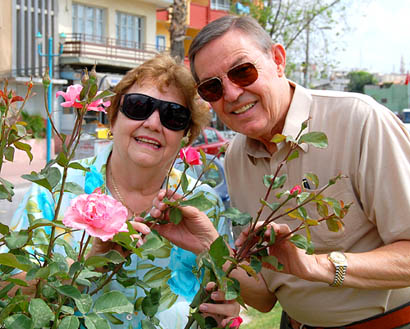
This photo was made in Tarsus of Cilicia (now in Turkey). This was the hometown of Saul, later the Apostle Paul. Elizabeth and I stopped to smell the roses. I think few of us really take enough time to do that. I don’t remember who made the photo. Maybe Larry or Olen. Leave a comment if you remember.

Ferrell and Elizabeth at Tarsus in Cilicia

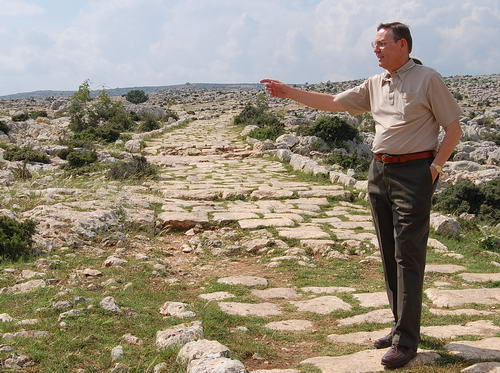
One of the highlights of the Ancient Crossroads Tour of Historical and Biblical Sites in Turkey was locating the ancient Roman Road north of Tarsus. I had known of this road for a long time but had been unable to get to it. What a thrill!

Ferrell Jenkins on the Roman Road North of Tarsus.

David Padfield made this photo. David is a great photographer and knowledgeable in photographic equipment and techniques. He also made the photo below. In fact, he has a little story behind it. This was made at Arsameia in the mountains of Eastern Turkey. This was the capital of the Kingdom of Commagene in the first century B.C. Elizabeth made David, Gene, and Leon promise that they would not let me fall off a cliff. David sent her an enlargement of this photo with a note that this was as close as he could get to me.

Ferrell Jenkins at Arsameia. Photo by David Padfield.

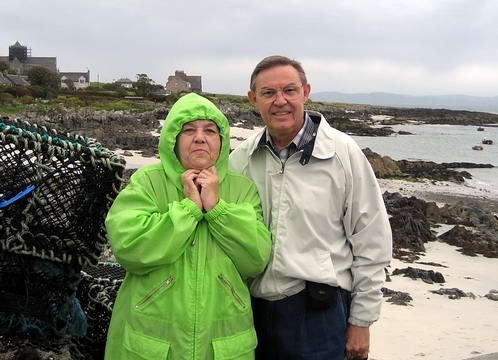
On our September trip to Scotland I enjoyed going to the Isle of Iona, site of a medieval monastery. It was an always misty, and often rainy, experience. I am not sure, but think Jim made this photo.

Ferrell and Elizabeth on the Isle of Iona in Scotland.

Those who traveled with us must have their own favorites. Send a comment to tell us about it.

We have been greatly blessed to travel to so many places on earth over the past 40 years, and to be able to share them with others. Thanks for the memories!

Where did Noah’s Ark land?

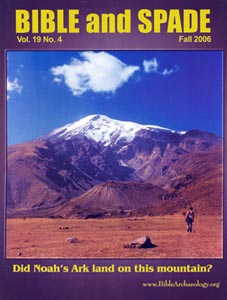
Bible and Spade has made the Fall 2006 issue available in PDF. The entire issue deals with questions of current interest to scholars about the landing of Noah’s Ark. Some recent claims that the ark might have landed in Iran are discussed. The evidence for the two main sites (or regions) in Eastern Turkey are discussed in detail.

One of the main sites is on, or near, Mount Ararat. The mountain is located just a few miles from the Iranian border in eastern Turkey. Here is a photo I made at Mount Ararat earlier in the summer.

Mount Ararat in Eastern Turkey. Photo by Ferrell Jenkins

The other location is Mount Cudi in southeastern Turkey near the border with Iraq. We were unable to visit this site due to the issues between Turkey and the PKK (very much in the news lately).

The Bible says the ark came to rest on the “mountains of Ararat” (Genesis 8:4). Either of these sites fall within that description.

You may download the Fall 2006 issue of Bible and Spade here in PDF (2.0 MB).

Bible and Spade - Fall 2006

I recommend Bible and Spade. I subscribe and have the back issues in Logos Libronix format for easy searching. Go here for more information about subscribing or securing the back issues. Dr. Bryant G. Wood is the editor of Bible and Spade.

Christmas, St. Nicholas, and Myra

Christmas is approaching. I would like to call your attention to an article I have written about Christmas. You may read it here. A more detailed outline, The Truth About Christmas, giving both biblical and historical information is available in PDF at BibleWorld.com. You are welcome to duplicate these articles for your own use. Please do not make changes in them.

Even by the end of the first century the church was beginning to move away from the apostolic pattern. One of the earliest departures was in church government. Instead of each church having a plurality of elders (bishops, overseers, pastors) (Acts 14:23; Philippians 1:1), it became popular to elevate one man to the position of Bishop over the elders.

In the fourth century there was a bishop at Myra, by the name of Nicholas, who was benevolent to those in need. From this historical person there arose the legend of Saint Nicholas, eventually Santa Claus.

Myra was a town of Lycia about 85 miles from Antalya, Turkey (biblical Attalia, Acts 14:25). The town is located a few miles away from the Mediterranean, but has a port. When Paul was being escorted by a Roman centurion from Caesarea Maritima to Rome, the ship sailed along the coast of Cilicia and Pamphylia, and landed at Myra in Lycia (Acts 27:5). There they found an Alexandrian ship sailing for Italy.

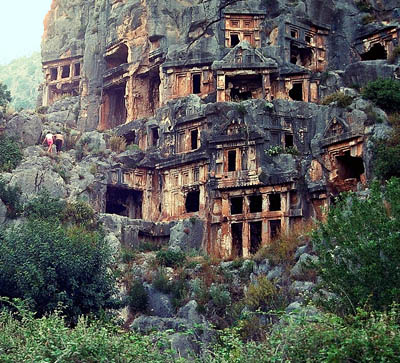
Whether Paul was close enough to see any of Myra we do not know. There are several interesting things that could have been seen. I have only visited Myra once, in 1987. I mention this to say that it was before the days of digital photos. Here is a photo of the house-type tombs in the cliffs at Myra dating from the 4th century B.C.

Rock Cut Tombs at Myra in Lycia

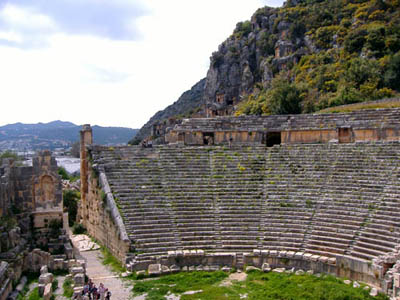
The theater at Myra dates from the 2nd century B.C., and had a capacity of 10,000 spectators. The following photo comes from the Wikipedia entry on Myra.

Theater at Myra in Lycia

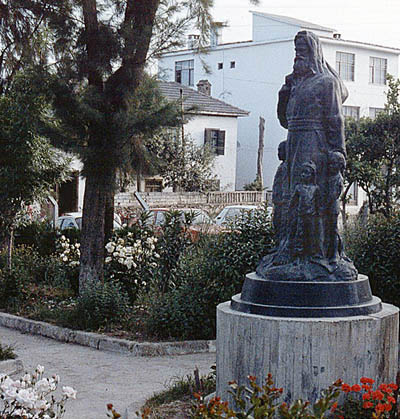
Ruins of the Church of Saint Nicholas can be seen at nearby Demre. Here is a photo I made of the statue of St. Nicholas in 1987.

St. Nicholar at Demre (Myra) in Lycia

And that’s how legend grows!

Good preachers could learn from a trip to Israel

Todd Bolen, of Bible Places fame, spent about 10 years teaching in Israel. In a recent blog at Todd’s Thoughts, he made this comment:

“…even really good preachers could learn something from a trip to Israel.”

How true! Occasionally I have a preacher tell me that he plans to retire in a year or two and hopes to travel with me to the Bible Lands. My thought is that a visit to the Bible Lands is a tool; not a crown!

The only thing I could add to Todd’s comment, and I think he would agree, “not only Israel, but Jordan, Egypt, Turkey, Greece, and other parts of the Bible world.”

Archaeological work at Ephesus might take centuries

Today’s Zaman, reports that the archaeological excavation at Ephesus may continue “for centuries.” The article says that work began at Ephesus 138 years ago. This reference seems to be to 1869 when the English architect J. T. Wood found the marble floor of the temple of Diana. Some research had been done as early as 1845.

Most of the archaeological work at Ephesus has been done by Austrians. They began the work in 1895 and have continued until the present time.

The article reports an interview with Dr. Fritz Krinziner, director of the dig and head of the Austrian Archaeology Institute. I note that Dr. Krinziner wrote Preface 2 in Ephesus: 100 Years of Austrian Research, published in 1996. Here are a few interesting comments from the article.

” He [Krinziner] stressed that it would be impossible to uncover the entire ancient city at once, underlining that only 10-15 percent of the site has been unearthed so far.”

“The excavation work may last for centuries. This is not an easy job. We focus on spots where we are likely to find something important as we cannot carry out the entire excavation at once.”

The article says that 1.5 million people visited Ephesus last year. An added note says that the Greater Izmir Municipality has announced plans “to establish an electric railway connection, similar to a tram, in Ephesus.”

The complete article may still be available here.

I speak to some people who seem to think that most of the archaeological work in various biblical cities has already been done. The work is complete! Think again.

Ephesus is visited by many tourists who have no interest in the Bible. They arrive on the cruise ships that dock at nearby Kusadasi. Others find the ruins interesting because the city was the site of Paul’s work (Acts 19). I think the tradition that the apostle John was here prior to being exiled to Patmos is a reliable one. The first letter within the book of Revelation is addressed to the church at Ephesus (Rev. 2).

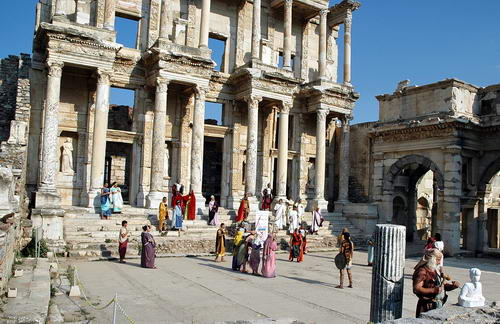
This photo shows the Library of Celsus and some costumed actors from one of the cruise ships putting on a show for the passengers.

Library of Celsus at Ephesus. Photo by Ferrell Jenkins.

The Library was built in A.D. 135, after the time of Paul and John. The first time I saw this area, in 1968, only the steps were visible. The Austrian excavators did a marvelous job of reconstruction between 1970 and 1978. It is estimated that the Library could hold between 9,500 and 12,000 rolls. The arch to the right leads to the ancient agora.

We visit Ephesus on our Steps of Paul and John tour.

Looking for Turkey or Scotland tour blogs?

If you are looking for the blogs and photos of our Ancient Crossroads tour of Biblical and Historical Turkey you need to click on the archive for May to begin the the journey. The tour continues in June.

The Best of Scotland tour blogs will be found in the September Archive.